Rhubarb is one of my favourite crops from the garden. It takes virtually no maintenance, comes up every year without any fuss and provides food from early spring to summer, for a one off payment for the plant.
To be honest, my rhubarb plant didn’t cost a penny. It was a division from my father-in-law’s garden. I’ve had it for at least 10 years, and he grew it in his garden from the moment he bought the house in the late 1950s. I love money-saving crops and ones that are easy to grow.
My rhubarb is growing in a semi-shaded spot under a hawthorn hedge. The secret to its success is the compost bins sited right next to it. All the nutrient-rich liquid feed seeps out from the bottom of the compost bins straight into my rhubarb patch. Rhubarb is a hungry plant and usually growers plant it on top of a pile of manure. I’ve not used manure here for many years as it brings in so many weed seeds. But my plants are healthy and thriving thanks to my home-made compost and liquid feed.
Let me know if you try out my recipe. The granola is especially useful as it can be used as a breakfast cereal, or sprinkled over fruit and cream or yoghurt, or even ice cream to add crunch, flavour and nutrition. The idea for the rhubarb cream came from Jill Fish, as mentioned in the magazine. Jill’s recipe used only rhubarb, but I had used most of my available crop and just had a small amount, so added an apple, and it worked perfectly!
Many thanks for reading my blog. Have a great gardening weekend!
I love helping the next generation get into gardening, so I was pleased to be asked to host the children’s planting sessions at Belvoir Castle’s May Garden Show.
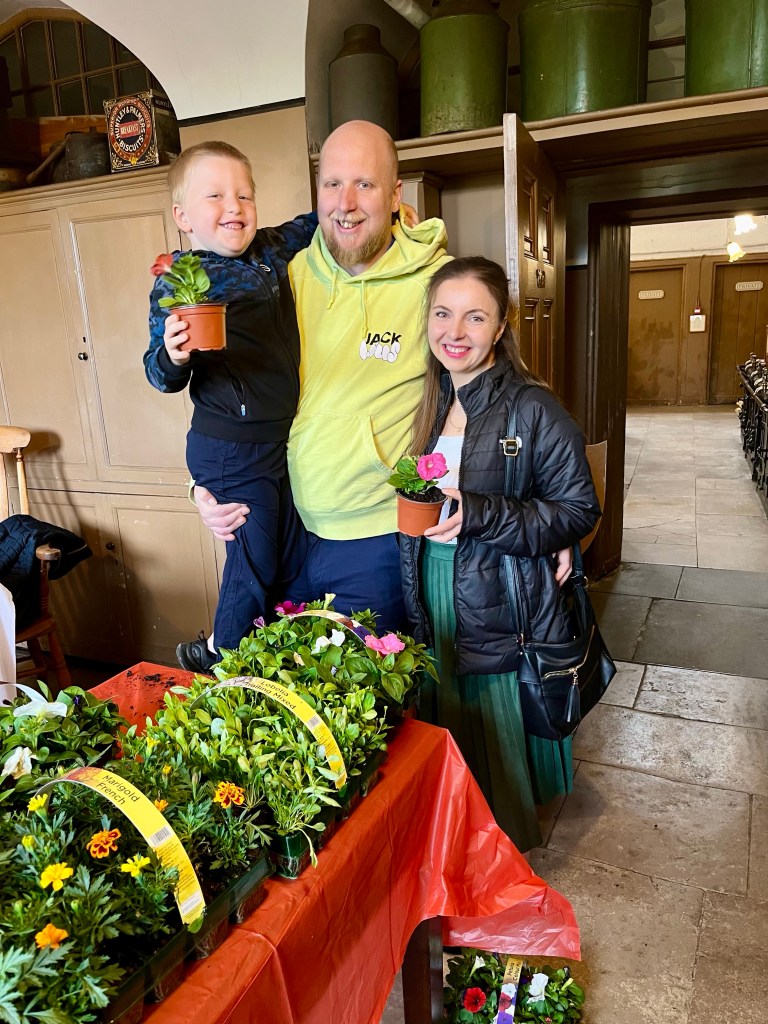
The Morley family with their potted plants. Parents gave permission for photos to be shared.
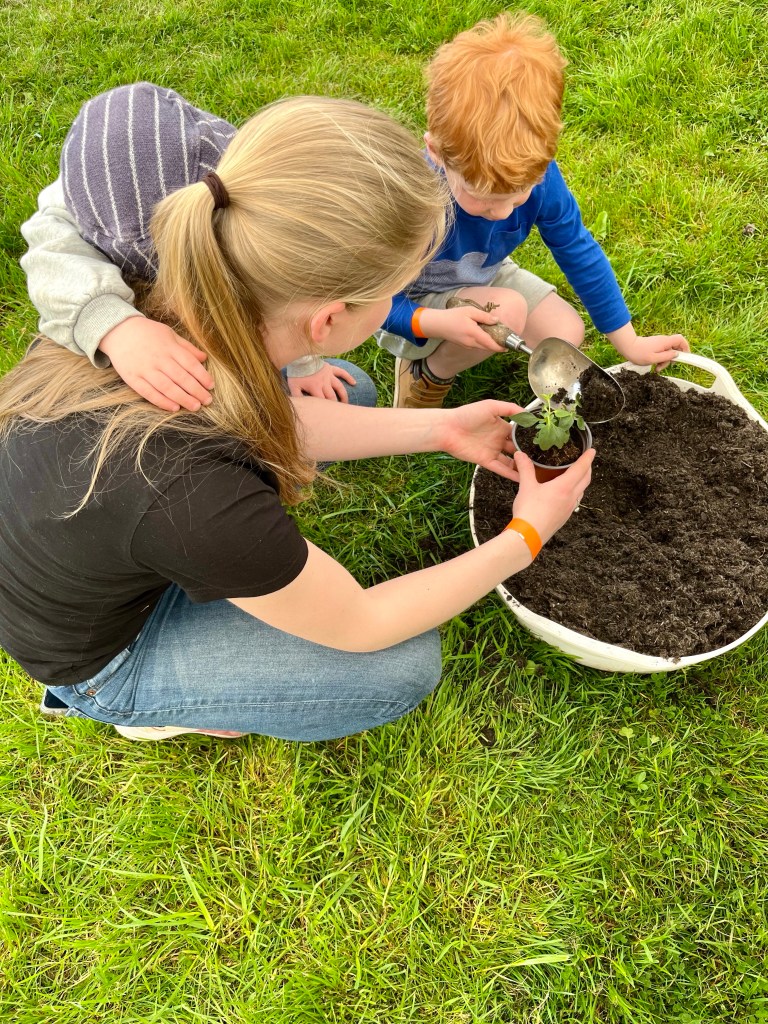
Nearly 400 children selected out bedding plants and potted them up into small pots to take home. What surprised me most was the children knew what the plants were. They recognised snapdragons, petunias, marigolds and verbena. Many of them had done some gardening before and were not at all tentative about getting their hands dirty and handling compost. They were straight into it! And they were careful with the little plants which had been growing in multi-cell trays. I didn’t have to say to a single child that the plants were delicate. They treated them kindly!
All ages joined in from babies to teenagers.Louis and his parents with their potted plants
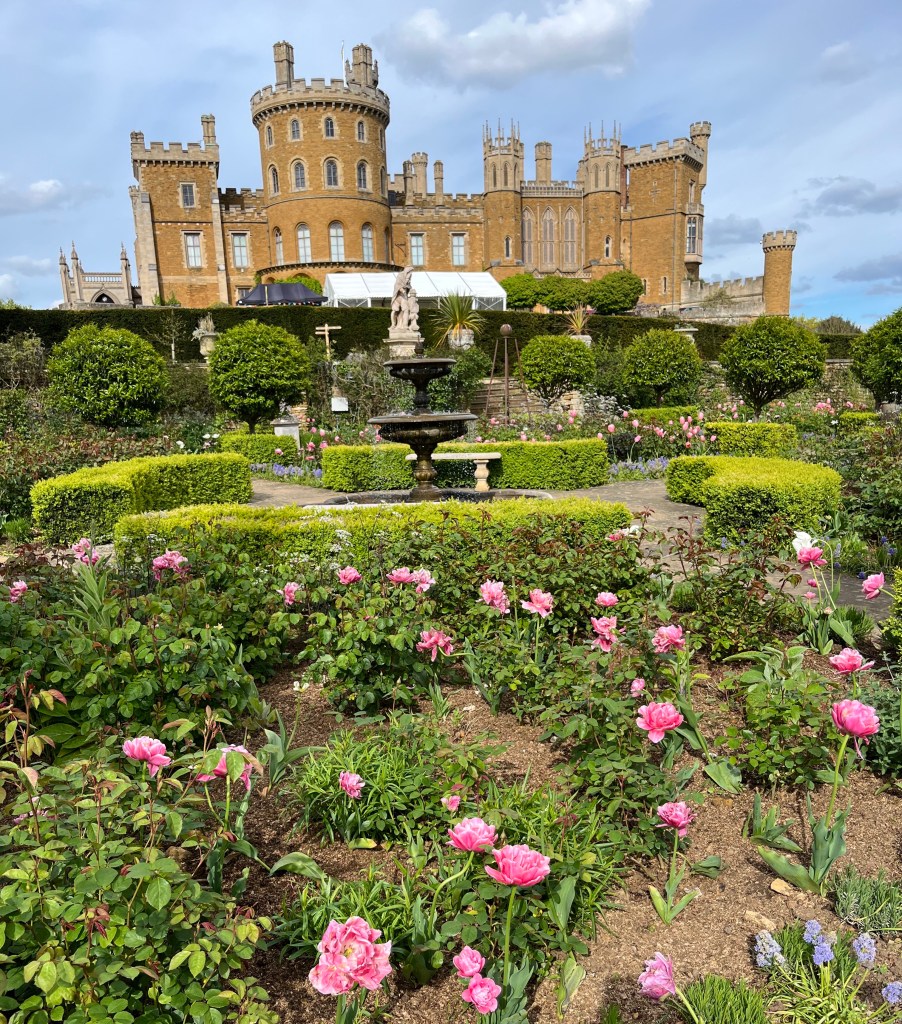
We started the sessions in the old kitchens as it was raining on day one. But by day two it was a lovely sunny day and we moved outdoors to a marquee on the castle front lawn. You really couldn’t get a better setting for a garden show, with the castle in the background.
A glorious setting for a spring garden show.
Children were also given the chance to select some seeds to take home to plant. These were flower, salad and vegetable seeds. Again, I was astounded at how knowledgeable the children were. One boy aged 8 was delighted to find a packet of seeds to grow cucamelons. “I love cucamelons!” he said. The sunflowers were popular. Children sifted through the seeds to find their favourites. Cucumber was a top choice, but also peas, cabbage and beetroot. One little boy took Italian globe artichoke seeds, and then told me the flowers are good for bees. One couldn’t decide between mangetout or climbing beans. I let him take both. Children listened really carefully to my instructions on looking after the plants and planting them out into bigger containers or the garden. Plants were carefully watered and labels written.
Between the planting sessions I ran mini-talks on getting children into gardening and helping pollinators and wildlife.
I was so pleased the planting sessions proved popular. But I also learned something too. Children are a lot more knowledgable about gardening and the environment than I thought. There seems to be just bad news on the television and in newspapers all the time. I’ve got bogged down and worried by it all. Many things I cannot change weigh heavily on my mind. But those children I met at the show were full of joy, positivity and confidence. They care about plants and nature and they are our future. After spending a few days with them, I feel buoyed up by their enthusiasm too. I’ll carry with me their smiles and their happy chatter for some time to come, and I’ll remember how happy I felt helping them to garden and chatting to them about our shared love of growing plants and helping wildlife.
The children’s planting sessions were sponsored by Dobbies Garden Centres. Here’s manager Paul Coley from Mountsorrel garden centre who fully supported the children’s planting event and helped select plants and products. All the plants, compost, seeds, labels and watering cans were donated by Dobbies. They also donated bug hotels and mini-planting kits as props for my talks and advice-desk sessions. Many thanks to them for their generous sponsorship and support.
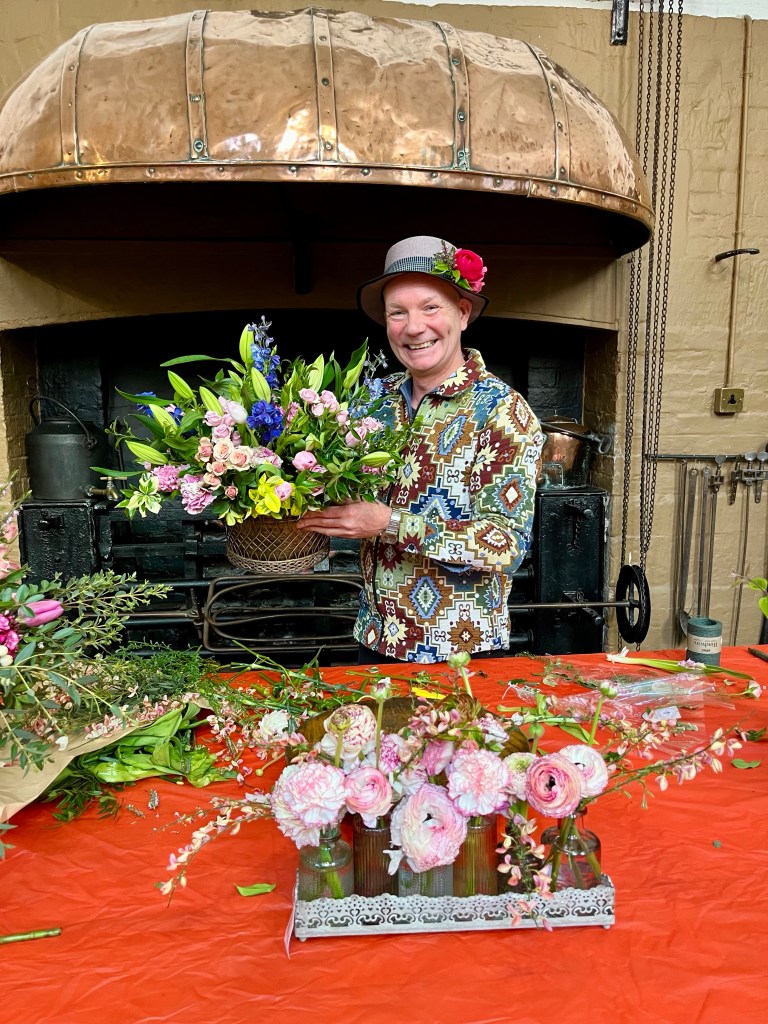
Celebrity speaker at the show was international florist Jonathan Moseley who gave me lots of hints and tips on giving talks to an audience. It’s thanks to him that I’m zooming around the garden club and u3a club circuit in the midlands giving talks on garden design and horticulture. Jonathan is a super-talented florist, but also a very kind and generous person. I’m very grateful for his help and encouragement. It’s amazing isn’t it how a few kind words and some genuine advice can propel you in a direction you never thought of!
Belvoir Castle – home to the 11th Duke and Duchess of Rutland in Leicestershire.
Thank you for reading my blog. You are amongst 1,200 readers a week! I’m grateful for your continued loyalty and support. Have any of you visited Belvoir Castle? Do you garden with your children or grandchildren? Please leave a comment in the box below. Have a great gardening weekend everyone!
I wrote about creating a show garden at Belvoir Castle here:
Following my recent post on the 60th anniversary celebrations of the Azalea Bowl at Exbury Gardens, here are further details of events for the rest of the year.
Highlights include:
June – In collaboration with the Friends of The New Forest Airfields, a children’s art exhibition to coincide with the 80th anniversary of D-Day. Exbury House was requisitioned by the Admiralty, commissioned as ‘stone frigate’ HMS Mastodon and used for D-Day planning.
Also in June will be the 300th anniversary of landscape designer William Gilpin’s birth. A proponent of the Picturesque style, he promoted the idea that ‘nature knew best’ and encouraged Exbury’s owner at the time, William Mitford, to open up a view from Exbury House to the Isle of Wight, install a ha-ha and create the Glade, all of which still remain today.
Dads can also get half price entrance to the Gardens on Father’s Day 16 June, plus there will be a Model Railway exhibition in the Engine Shed 15-16 June and an Austin Counties Car show 16 June. These are all free with garden admission.
July – For Dragonfly Week, experts Ruary Mackenzie Dodds and Kari de Koenigswarter will be leading walks and talks on these fascinating insects centred around Exbury’s Dragonfly Pond, a British Dragonfly Society hotspot.
August/September – seasonal spotlight on hydrangeas with guided tours by Exbury’s garden team, and over the summer holidays there will be Garden Games for younger visitors throughout the grounds.
Photo Stephen Studd
Exbury Gardens was created by Lionel de Rothschild, a member of the famous banking family, who bought the Exbury Estate in the New Forest in 1919. Within twenty years he had created a stunning woodland garden of some 200 acres, bred over 1200 hybrids – many of which still survive today – and helped introduce one of the most famous rhododendrons of all, R. yakushimanum. Lionel, who was a passionate plantsman, was fittingly described as ‘a banker by hobby but a gardener by profession’. He had an artist’s eye and a scientist’s brain.
This Exochorda or Pearl bush was looking spectacular when I visited.
Lionel’s team improved the New Forest soil at Exbury with spent hops to improve the naturally acidic soil and create the perfect growing conditions for the wonderful collection of rhododendrons, azaleas, camellias, cotoneasters, magnolias, viburnums and many other beautiful woodlanders. Twenty miles of pathway was laid, the same of irrigation buried, and a 100 ft water tower and reservoirs were built to help facilitate the much-needed watering of the gardens. One of the largest man-made rock gardens in Europe was constructed by installing a temporary railway to transport rocks to the 2 ½ acre site and took four years to build and plant.
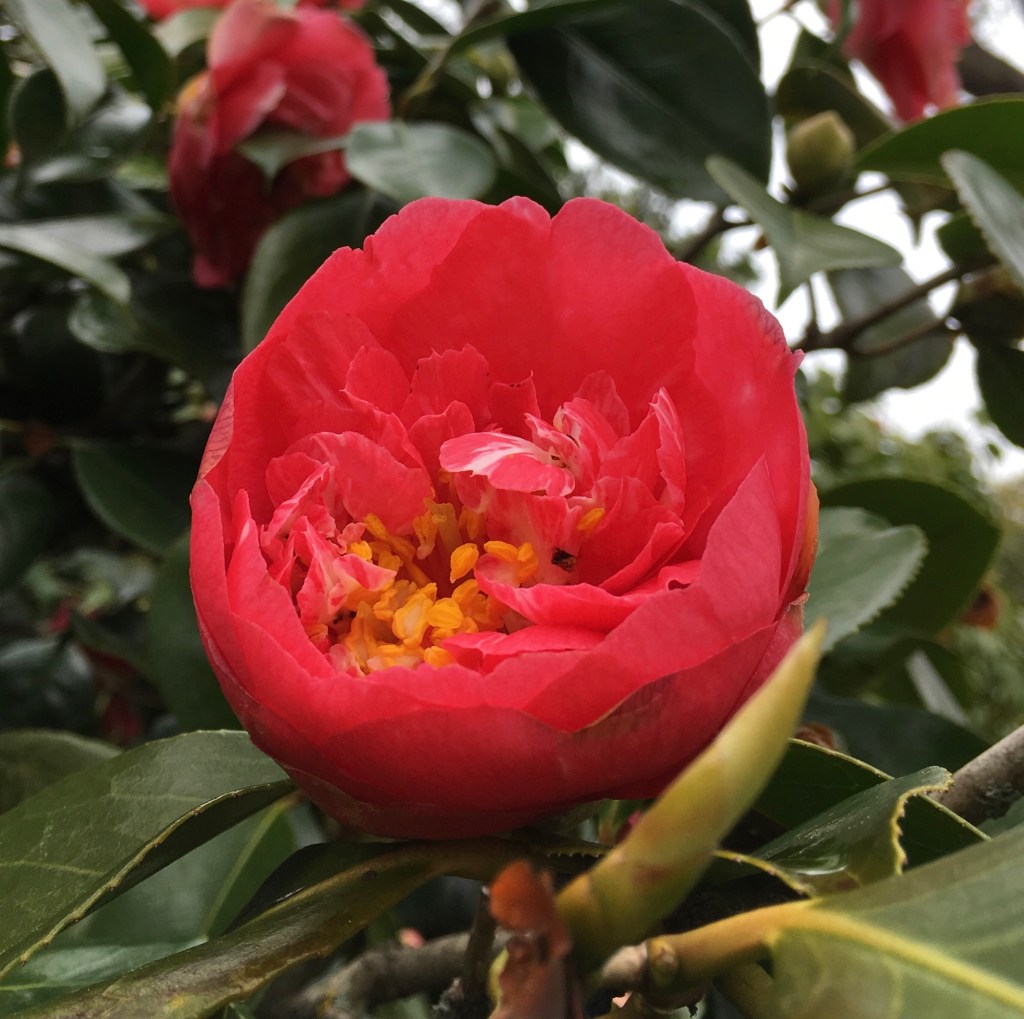
Camellias thrive at Exbury
Thousands of rhododendrons have been planted over the years and well over 1,000 hybrids have been raised by three generations of the Rothschild family. The gardens also boast many Champion and rare trees and National Collections for Nyssa and Oxydendrum. In recent years, the gardens have been further developed with a new generation of rare and unusual trees and shrubs, new vistas opened up, the season extended with more unusual summer flowering shrubs and strong emphasis on autumn colour, as well as an extension of its 1 ½-mile Rhododendron Line steam railway.
Exbury Gardens’ Azalea Bowl, a firm favourite of mine, is marking its 60th anniversary with the best ever flowering display, thanks to all the high rainfall we’ve had- and no harsh, late spring frosts. So far….
The Exbury Gardens’ gardening team – centre pic from left to right Emma Callan, Chloe Le Poidevin-Holmes, Tom Clarke, Adam Brooks and Emma Bouchard. Photo Cathy Baldock
Planted in 1964 by former head gardener Freddie Wynniatt, under the guidance of then owner Edmund de Rothschild, it surrounds a large pond in the Gardens. It has witnessed numerous marriage proposals and its peak flowering season is between April and May. This bank holiday weekend would be a perfect time to visit.
Photo by Cathy Baldock who works at Exbury. Lovely to see the very dedicated and talented gardening team celebrating the anniversary. I’ve included this second photos as it shows the Azalea Bowl planting. Mounds and waves of colour.
The Gardens’ team are running special azalea-themed guided tours and visitors are being encouraged to share their photographs taken in the Azalea Bowl over the years on social media, tagging #exburyazaleabowl.
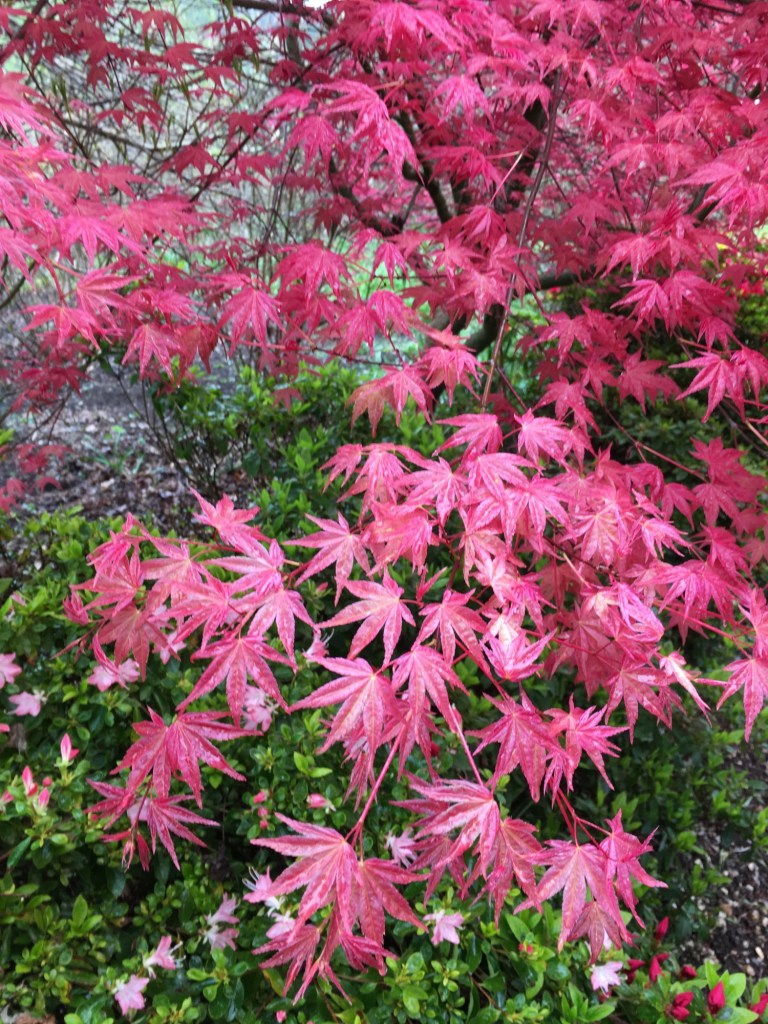
Vibrant acers planted in amongst the azaleas. Photos from my last visit to Exbury Garden
Head gardener Tom Clarke said: “The Azalea Bowl is such a magical place and when it’s in full bloom, it’s almost other-worldly. Very fitting that on its 60th anniversary, the plants are looking magnificent as we’ve had so much rain recently, with no late frosts. Our garden team and visitors are really enjoying the spectacle of it.”
Lovely white azalea I especially liked
During the rest of the year, the Azalea Bowl becomes a peaceful space in dappled shade where visitors can pause and reflect, and admire the tranquil beauty of the surrounding woodland landscape.
Paths are lined with vibrant azaleas, rhododendrons and camelliasCamellias flourish at ExburyAnother gorgeous double-flowering camellia
Seasonal spotlight tours, focusing on rhododendrons and azaleas, by the Gardens team will take place on 11 May. Tickets are priced £5 (£3 for Friends of Exbury) and can be booked via the Exbury Gardens website.
Site map of the gardens
Thank you for reading my blog. I loved my last visit to Exbury and am pleased to share my photos again which bring back such happy memories. Have a fabulous Bank Holiday weekend everyone!













 Bramble Garden