I’ve seen a lot of gardening injuries during my 20 years working in horticulture. Most recently, I was setting out plants for a new border at work when the gardener turned up with a massive bandage on his hand. Blood was seeping through and his face was scarlet and sweating from the pain. He told me he was cutting grass on a ride-on mower when the cutter deck became clogged up. The grass was damp, which meant it collected under the machine. Instead of stopping, switching off the mower and scraping the grass, to save time he leaned sidewards from his seat and used his hand to clear the grass. As a result, the mower blades sliced off the tips of all four fingers. Surgeons couldn’t reattach the severed finger tips as they’d been damaged by the blades and infection was a concern. “I didn’t think it through,” was the gardener’s comment. “It only took a second for the accident to happen.”
Over the years, I’ve also seen some ‘near miss’ accidents. This is one recent example:
Bridget’s eye injury
A friend, Bridget Blair, sent me photos of an eye injury she sustained while working in the garden. I’m sharing her story here as a reminder to take extra care when using bamboo canes as supports. Something we all do, and perhaps become a little blasé about.
This is in her own words.
“I was in the greenhouse and bent down to check on the cucumbers , but missed seeing a cane in one of the tomato plants until too late. It went straight my eye socket just above my actual eye, very forceful. The area became quite swollen quite quickly and within a day or so, the bruises came out. “
Bridget’s greenhouse
Did you seek any medical advice?
“No, I cleansed the area, monitored how I was feeling – a headache and my eyesight was slightly wobbly for an hour or so.”
Advice you’d give to help other gardeners?
“Use cane toppers on your bamboo canes! In my garden I recycle plastic bottles by using them on the top of the raspberry and bean canes, but hadn’t bothered in the greenhouse. A huge mistake…”
Bridget’s pain and bruising eased after a week or so, and fortunately there’s no long-term damage to the eye. But it’s a wake up call to all of us working in the garden to go around and analyse areas of risk, look at plant supports and check they are safe, and also stop and think before tackling any jobs. Analyse what safety equipment will be needed for each task, asking whether we should be wearing gloves or safety glasses, for example. And I would also add, take a moment to check that the job you’re just about to do is within your capabilities- or will it be stretching you too much and putting you in danger of injury. A moments thought could really help prevent illness, injury -or a trip to the hospital.
Bridget, a very keen gardener, describes her plot:
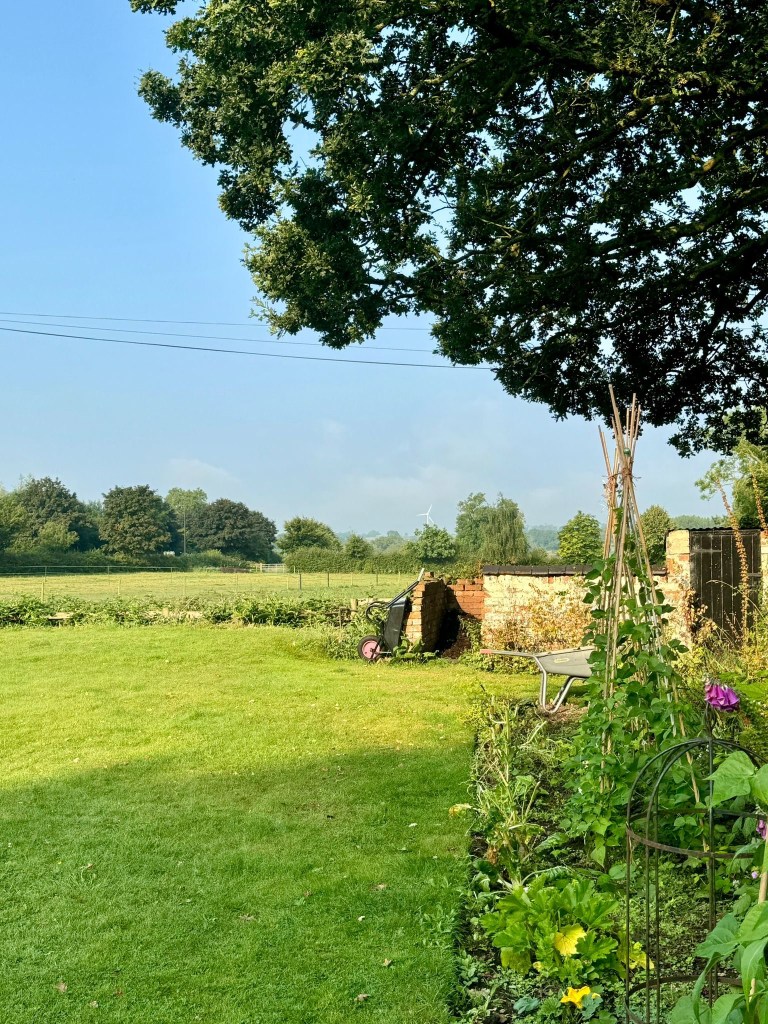
“There’s no garden at the front, our cottage dates from around 1665 but the rest of the quarter of an acre garden wraps itself around it.
Back garden view
“At the back, there is a lawn leading to a ha ha and open fields beyond. To the left, there’s a herbaceous border, with roses, peonies, Hydrangea Annabelle, variegated holly, apple tree, and honeysuckle, Lonicera Halliana. On the right hand side of the garden, a little courtyard leads through to the old privy- now a garden equipment store- and my greenhouse, and vegetable patch.
Bridget’s greenhouse and vegetable plot
“I’m a former BBC news journalist working in local radio which meant every day was different. Reading the news, making features, being a radio reporter and interviewing people at pivotal or exciting times in their lives. I also used to be the stand-in presenter for the weekly gardening programme, which I loved! What’s not to like about meeting lots of lovely gardeners, recording in gorgeous gardens, and presenting a gardening quiz across two counties! I also made features for Radio 4 programmes.
Ha ha and view from the garden
“I left the BBC a couple of years ago, but am still a member of the Garden Media Guild, so am still busy visiting gardens and meeting up with gardening friends. There’s also more time to spend travelling, reading and being in the garden, of course! It’s so rewarding being with my little grandchildren and seeing them so interested in ‘pretty flowers’ and growing food to eat.”
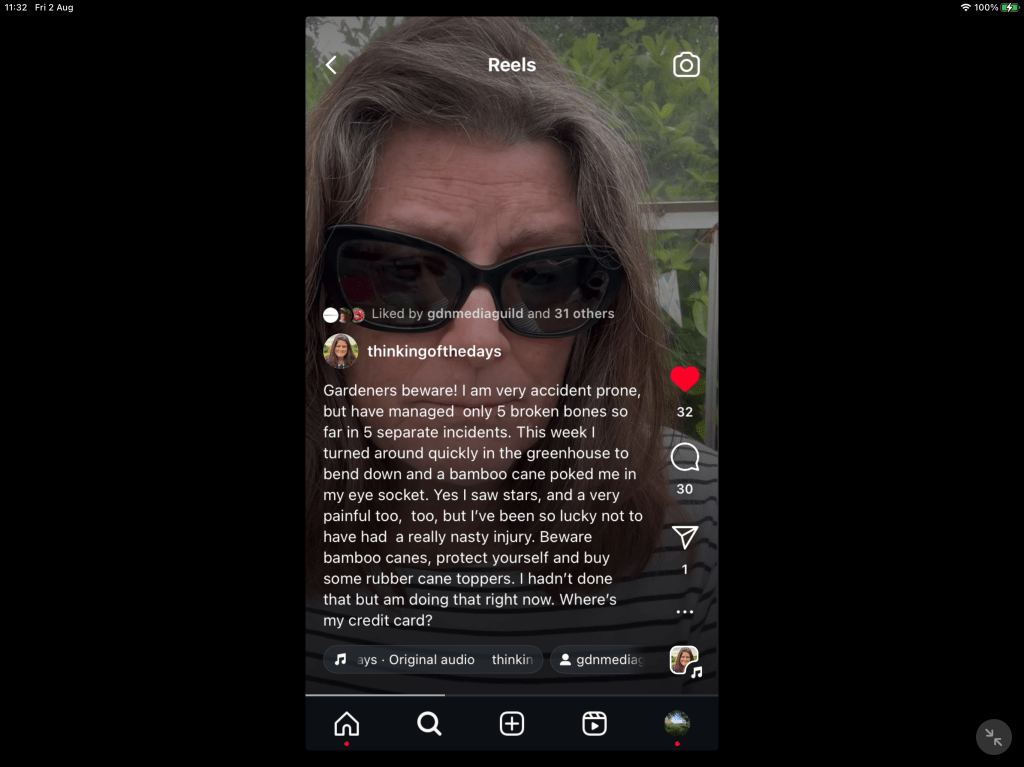
Bridget’s Foxgloves and wild flowers amongst the raspberriesBridget posted on Instagram to warn gardeners to take extra care when using bamboo canes as supports.
Bridget is on instagram, X, and writes a blog at ‘thinkingofthedays.’
The NHS website gives the following advice for eye injuries:
Get medical help if you have a chemical in your eye or something pierces it.
Immediate action required: Go to A&E or call 999 if:
a strong chemical, such as oven cleaner or bleach, is in your eye – keep rinsing your eye with water while waiting for medical help
a sharp object has pierced your eye
something has hit your eye at high speed – for example, while using power tools or mowing the lawn
there are any changes to your sight after an eye injury
you have a headache, high temperature or sensitivity to light
you’re feeling sick or being sick after an eye injury
you cannot move your eye or keep it open
blood or pus is coming from your eye
Do not drive to A&E. Ask someone to drive you or call 999 and ask for an ambulance.
Bring any medicines you take with you.
How to treat an eye injury at home
Do
wash your eye with clean water if there’s something in it
follow the advice on the packaging if any cosmetics or household products get in your eyes
take painkillers like paracetamol or ibuprofen to help ease any pain or discomfort
Don’t
do not try to remove any object that’s pierced your eye
do not touch or rub your eye until it’s better
do not wear make-up around your eye until it’s better
do not wear contact lenses until your eye is better
How to wash your eye
You should:
use clean water (not hot) – this can be from a tap, shower, or bottled water if you’re not at home
hold your eye open
run lots of water over your eyeball for at least 20 minutes
Make sure the flow of water is not too strong.
Urgent advice: Ask for an urgent GP appointment or get help from NHS 111 if:
you’ve injured your eye and it is not getting better after 24 hours
Gardening is good for you, physically and mentally, but there are some potential hazards. These can be reduced or eliminated by using appropriate protective clothing and equipment.
Quick facts
The HSE (Health and Safety Executive) webpage on PPE (Personal Protective Equipment) is for workplace situations, but contains information relevant to home gardeners.
Taking sensible precautions by using PPE ensures gardening is a safe and enjoyable pastime.
People have different reactions to allergens in plants; some individuals may be highly sensitive to them, resulting in a severe allergic reaction.
Thank you for reading my blog. Have any of you had an accident in the garden? Please leave a message below and share any information you think might be helpful to other readers. Have a happy- and safe- weekend in the garden.
Further reading: I wrote about Tamsin Westhorpe’s fall from a ladder which resulted in a fractured spine here:



 Bramble Garden