While visiting Barnsdale Gardens for the winter walk-and-talk, I had a chance to peek into the impressive kitchen gardens. Not only are the gardens beautiful, but they are highly productive too. They are gardened organically. Plants are put in closely together, and there are many little pathways meaning a lot of the work can be undertaken without stepping on the soil. Nick is a very good teacher. He explains everything in an easy to understand way with a lot of patience and humour.
Nick shared with me his advice and list of ‘top five’ winter vegetables:
Brussels sprouts – Generally eaten over the Christmas period, but if you grow your own then you could harvest this vegetable from August to at least March. As a child, I remember them as having a bit of a bitter, old socks taste, but those days are well and truly gone with the modern varieties being sweet and flavoursome. In order to get the continuity of cropping to give the longest harvest period I only need to grow two varieties, ‘Nelson’ and ‘Red Ball’.
Kale – A well-known superfood that not only gives us something to eat but, if you select the right variety, a very beautiful and interesting addition to the ornamental winter garden. I like to grow a variety called ‘Redbor’, which is widely available, but I do not grow it in the veg plot, preferring instead to move it around my ornamental borders. The reason I do this is because ‘Redbor’ has the most wonderfully deep coloured, red leaves that enhance in colour with the colder winter temperature, but then are elevated to another level during frosty weather.
Chard – A hardy, leafy leaf beet this is an excellent substitute for spinach. I have been bought up to try and eke out the most from everything in a garden, so choosing a variety that gives ornamental interest as well as excellent production is an absolute bonus. Such a variety is Chard ‘Bright Lights’, which comes up as a mixture of different colours of leaves in shades of yellow, green and red, all with a prominent white mid-rib.
Jerusalem Artichoke – What a fantastic winter veg to grow! I love it not just because it is adaptable in the kitchen but also because it is a tuber that is perfectly hardy, so can be left in the ground all winter and dug up as and when required. I grow a variety called Fuseau because it is less knobbly than others, so easier to peel. It does like to spread, so I control it by growing mine in containers that I sink into the ground and then lift when needed.
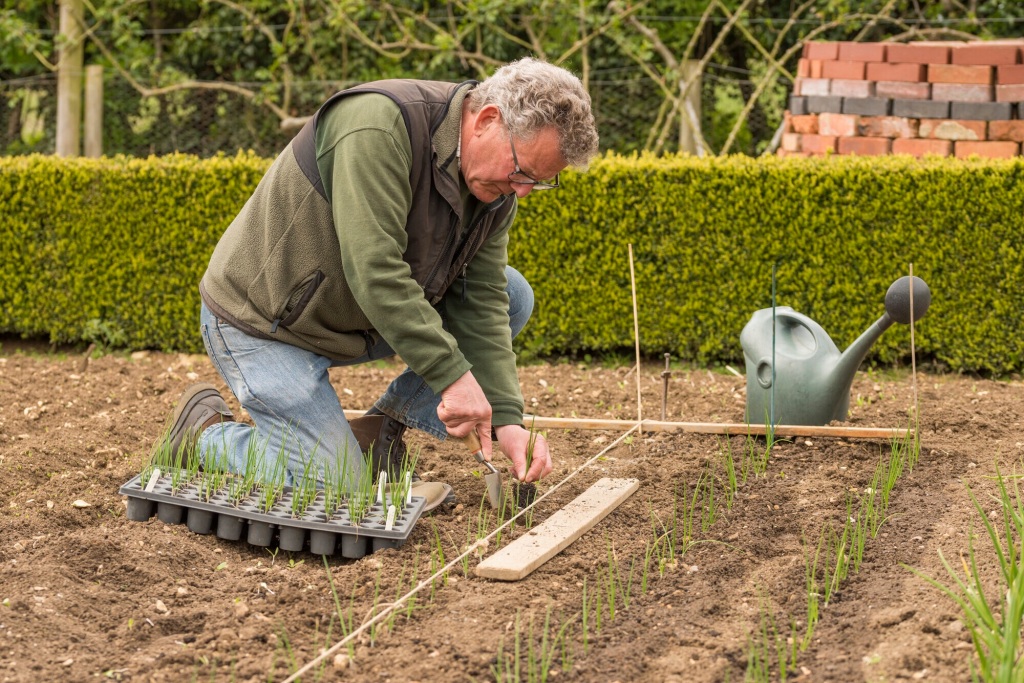
Leeks – I can’t imagine a winter without leeks adorning the culinary delights that appear from my kitchen. This year I have grown the varieties ‘Winner’, ‘Pandora’ and ‘Jolant’, which will give me a continuous harvest from August until April. Something my taste buds and stomach are very grateful for. We do have a couple of problems to deal with however, which is why we grow them, from sowing until the end of the crop, under an insect-proof netting to prevent attack by leek moth and/or Allium leaf miner.

Barnsdale Gardens is Britain’s largest collection of individually designed gardens based in the East Midlands. There are 38 gardens on show including the beautiful kitchen gardens. Courses run throughout the year on growing and planting fruit, flowers and vegetables, and there’s also courses on pruning and maintenance. See the website for opening times and course details. I’ve signed up for the newsletter which means I get all the news first and can plan my visits when there are special events happening.
I wrote about a Barnsdale’s winter gardens walk and talk here:
https://bramblegarden.com/2024/02/28/a-winter-walk-around-barnsdale-gardens/
What vegetables are you planning to grow?
I’m loving my white-stemmed chard and white kale. Here’s some I’m harvesting now, having sown the seeds in summer and planted them in a cold frame and unheated poly tunnel. They overwinter as small plants and start growing after Christmas. You can just see two eggs in the basket too. The hens have started to lay again! A sure sign that spring is well and truly on the way. Hurray!

Sweet, tasty, and pretty too!




 Bramble Garden