Overwintering Dahlias – BBC Radio Leicester phone-in questions for Saturday, November 6 2021

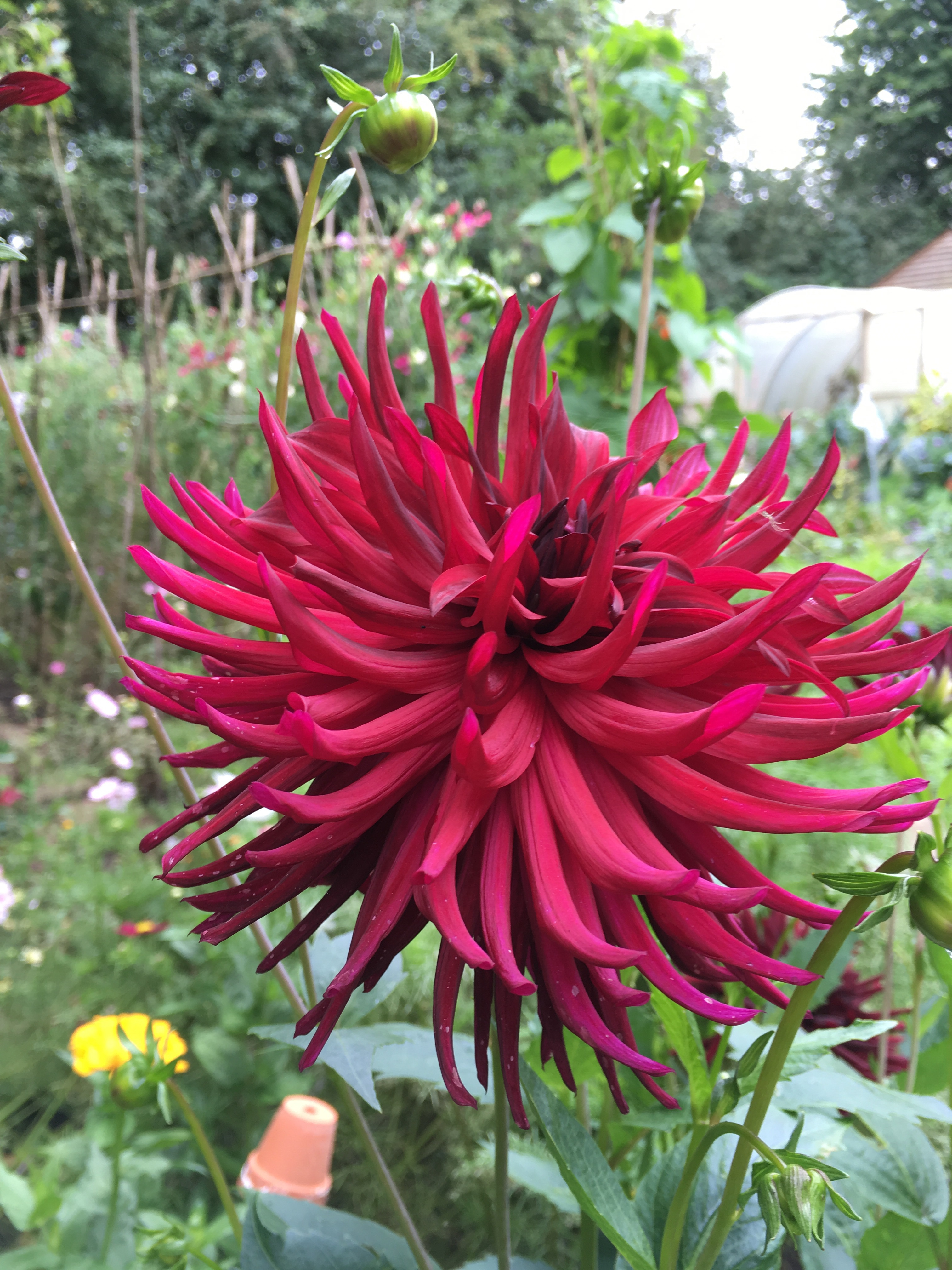
Dahlia Nuit D’Ete in my cut flower garden

Dahlias have been fabulous this year, giving masses of cut flowers from mid June until November. We’ve had unseasonably mild weather, which means we still have flowers today. But other areas in the county have had night-time frosts. So now is the time to dig up and protect your dahlia tubers for the winter.

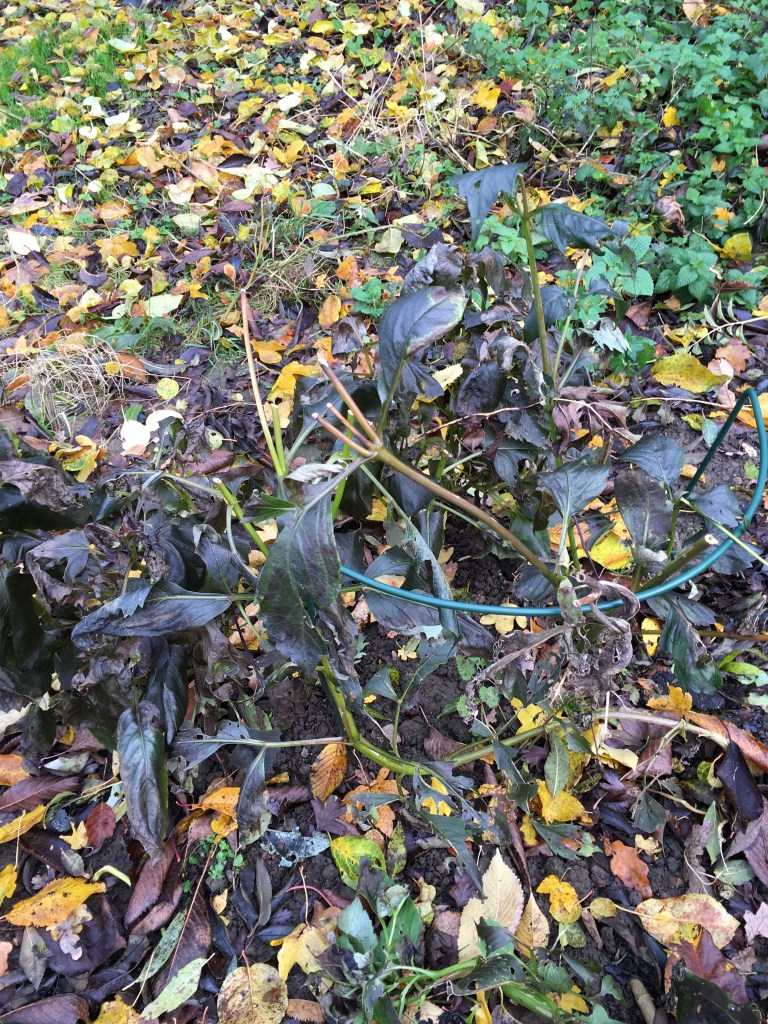
Frost-blackened foliage . Photos taken last autumn.

There are two methods for saving dahlias for next year. You can either dig them up and store them in a frost-free place, or you can leave them in the ground and cover them with dry leaves, straw or horticultural fleece. Leaving them in the ground is only possible is you have well-drained soil. In heavy clay, and or where gardens flood, the tubers will rot.

Method 1. Digging them up:
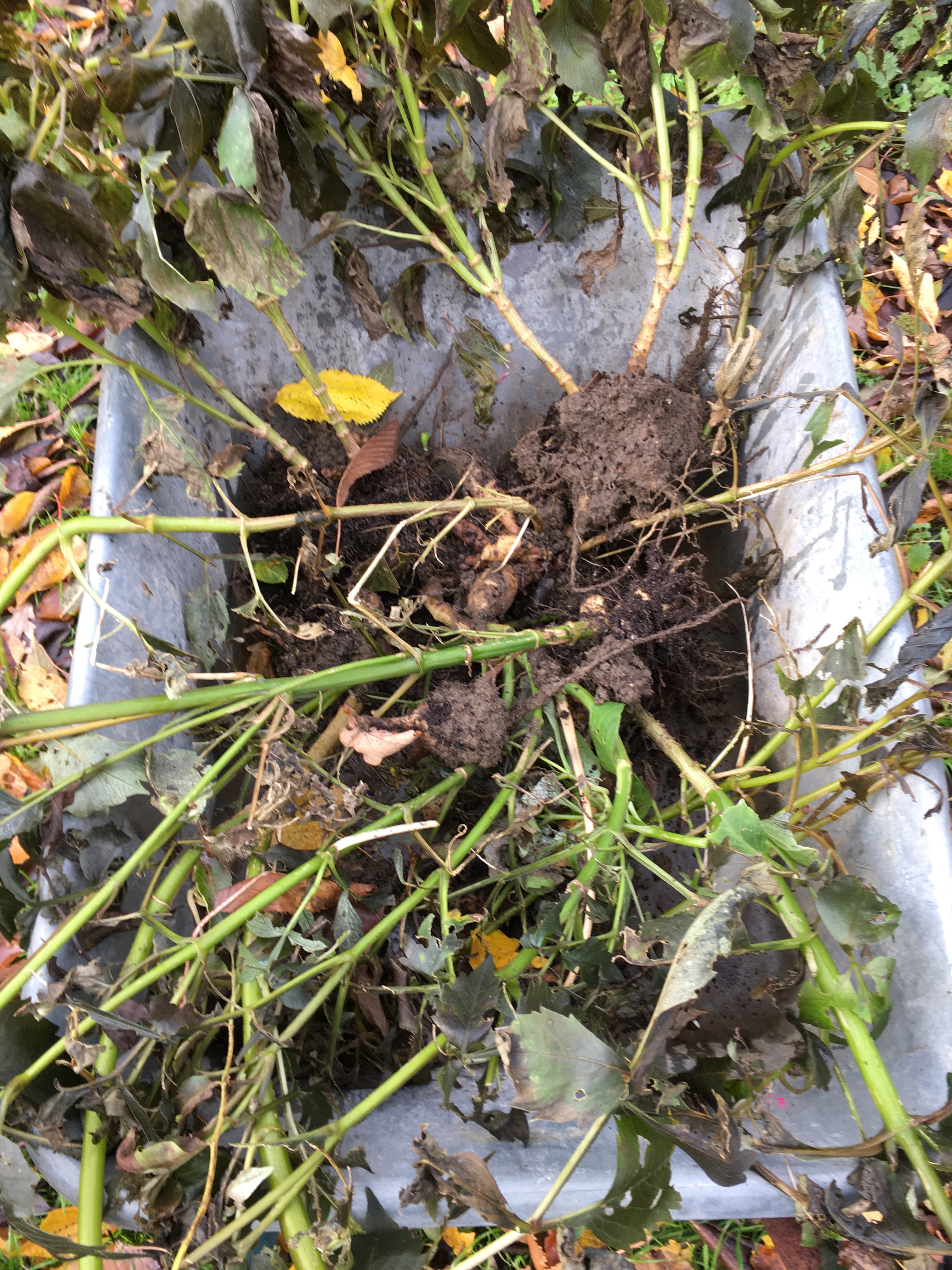
If you are planning to dig them up, wait until the foliage has been frosted. This makes the dahlias absorb goodness back into the tubers and sends instructions to become dormant.

Using a fork, carefully dig up the tubers, taking care not to damage them. Remember to keep any labels with the tubers. Brush off the soil if you can. If they are wet and muddy you can wash off the soil and use a soft brush to clean them up. Or you can put them in a shed to dry and brush the soil off in a week or two. Washing and brushing helps to remove slugs and earwigs and other soil-borne pests and diseases .

Cut back the stems leaving about 3”. Turn the tubers upside down so moisture drains out of the stems. After a week, turn the tubers the right way up and store them in pots or seed trays. You can use dry compost or horticultural fleece to cover them. Keep them in a cool, dry frost free place such as a garage or potting shed.

Tip: You can plant tulips in the space left behind in the garden. I dig up the tulips next spring to make way for the dahlias again.

Method 2. Leaving them in the ground:

If you have well-drained soil, you can try to leave some dahlias in the ground. In a very cold, wet winter, this is risky.

To leave them in the ground, do not cut off the stems. Fold the stems over and collapse them back onto the tubers, this will stop the stems becoming like ‘straws.’ Cut stems will direct water straight to the tubers, causing rotting.

Cover the tubers with a thick layer of dried leaves, straw or horticultural fleece. I usually try to keep them dry by covering them with sheets of recycled corrugated plastic or old compost bags. Plastic cloches can also be used.

Tubers will be started back into growth next spring.
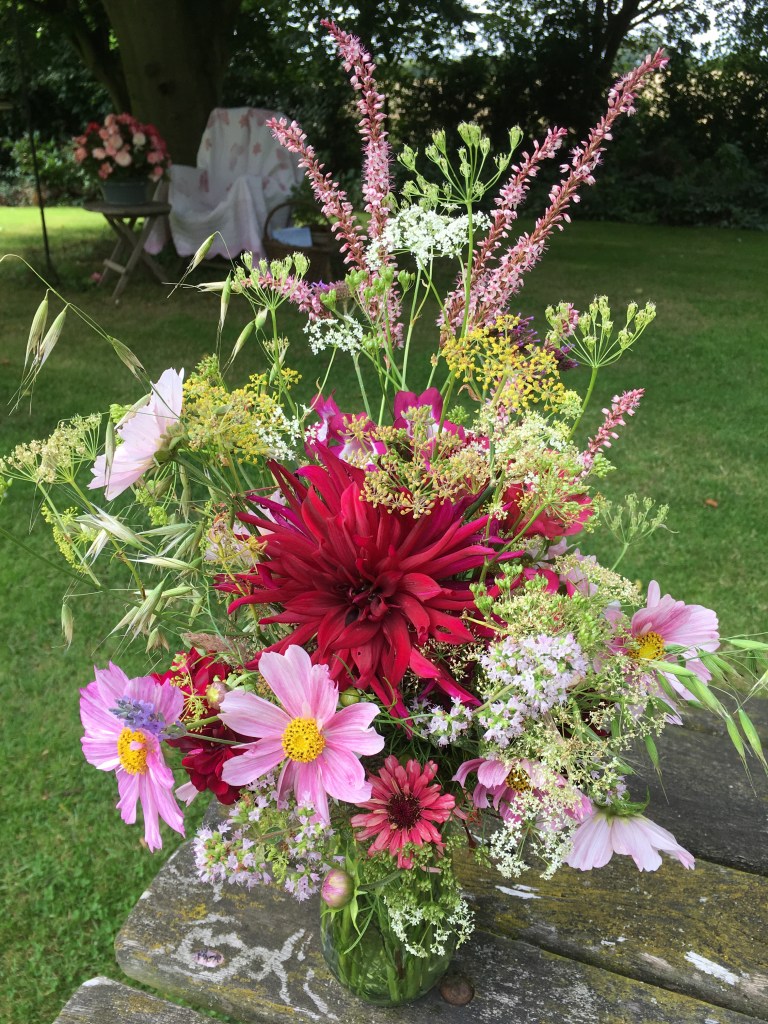
Here’s some dahlias from my plot. Nuit D’Ete with cosmos and persicaria.

My favourite orange dahlia, David Howard, shown here with chrysanthemum Swan.
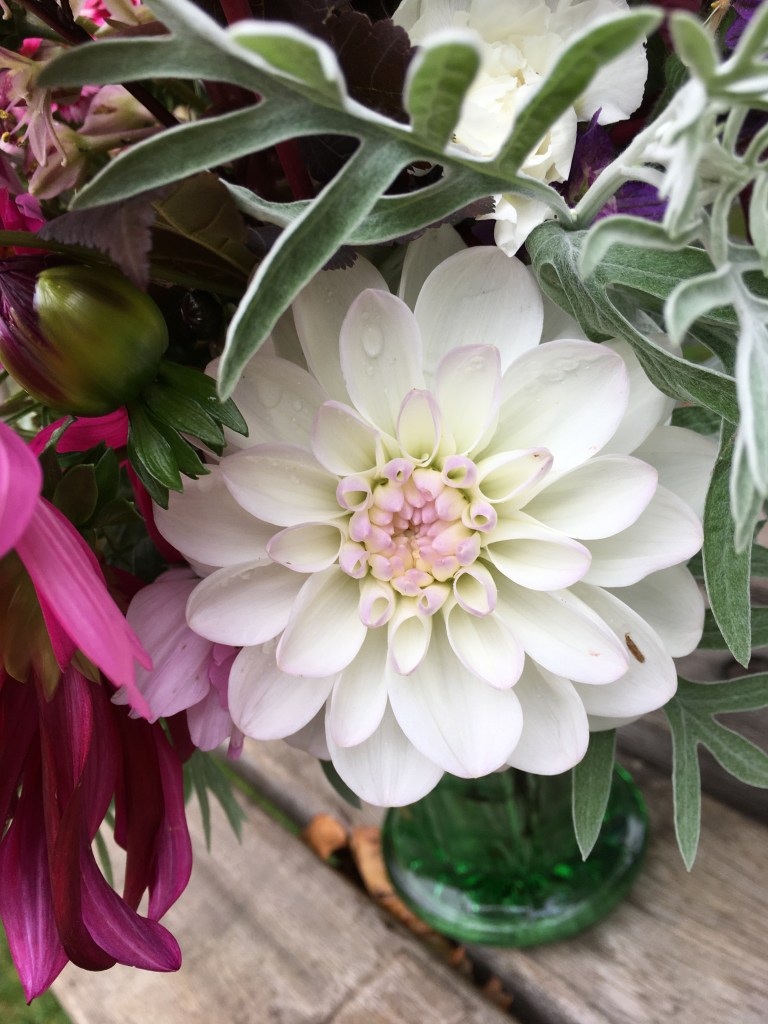
Dahlia Evelyn with carnations and senecio grey foliage from the plot.

Dahlias can also be started from seed in early spring . This was from a mixed packet which included lots of jewel-like colours. This summer I’ve grown the ‘Bishop’s Children’ range which has lovely bright reds, purple and orange with attractive, dark-coloured foliage.

I wrote about Naomi Slade’s new book on dahlias here: https://bramblegarden.com/2018/06/24/dahlias-beautiful-varieties-for-home-and-garden/

How have your dahlias fared this year? Which method are you using to save them over the winter? Do you have any further tips to share?

Thanks for reading my blog, and listening in to BBC Radio Leicester for the gardening show on Saturdays at 11am. If you have any questions for either me or Josie, please leave a message here or get in touch with producer Dale. We are very pleased to still have a gardening programme when many other stations have now cancelled them.

I am @kgimson on twitter and karengimson1 on instagram.

Dahlias -Overwintering Dilemmas- 19 November 2019

I’m not usually a ditherer. I have a plan of action and I just get on with it. But the weather this autumn has put a spanner in the works. Unprecedented amounts of rain mean we are five weeks behind schedule with all jobs in the garden. And I am only now managing to sort out and store my precious dahlia collection.

This year, I’ve decided to leave half in the ground – in a raised bed with free-draining soil- and bring half indoors. This way, I’ve cut my losses. I’ll have some plants indoors to take cuttings from next spring, even if the ones outdoors fail to survive.

Here’s what I’ve done with the ‘outdoor’ dahlias:

OVERWINTERING DAHLIAS IN THE GROUND

1. I’ve waited until all the foliage has been blackened by frost. This sends the plant instructions to go into dormancy.

2. I’ve removed half of the foliage and dead flower heads. The remaining foliage has been folded over to cover the plant. Stems are hollow, so if you cut back stems and leave them upright they act like straws, directing rainwater down to the tuber.

3. I’ve put a 3″ deep mulch of compost over the tubers, followed by 6″ of dry leaves or straw.

4. Dahlias need to be kept dry and frost free, so I’ve covered the bed with some cloches, and packed the ends with dried leaves. These 1.3m by 3m beds are mounded up like ridge and furrow farm land. They are no-dig which also seems to aid drainage over winter by protecting the soil structure. No-dig basically means adding a few inches of compost every time you harvest a crop, and simply re-planting through the compost. No back-breaking digging is required.

LIFTING DAHLIAS FOR INDOOR STORAGE

For my indoor ‘insurance policy’ dahlias I’ve done the following:

1. Waited until the frost has blacked the foliage. Checked the soil. It is like suet pudding, wet and claggy. Heavy clay. This is an area of garden due a lot of compost mulch over the winter.

2. I’ve gently dug out the dahlias, being careful not to bruise them. Wounds are vulnerable to rotting, so care needs to be taken.

3. I’ve cut the stems back to 3″ and turned the tubers upside down to drain. They will go into a frost free potting shed.

4. When drained, I’ll store the tubers in dry vermiculite, straw, or compost, in the dark, under the potting shed table. Temperatures need to be 2-3C. Dahlias will survive a few degrees of frost- if they are dry. If it gets very cold, I’ll throw some fleece or old blankets over the tubers.

In February, I’ll place the tubers in seed trays of compost in gentle heat to bring them back to life. When they have shoots 1″ tall, I will split the large tubers in half with a sharp knife, making sure both halves have some stem.

I’ll also take basal softwood cuttings when shoots are 1″ tall, using a sharp knife and taking a small sliver of tuber with the cutting. These will be grown on in a frost free greenhouse and planted out end of May. Cuttings will make good size tubers and will flower in one season.

You can lift and save tubers from seed-grown dahlias as well. Just save the best ones, as seed produces very variable results.

Which option are you taking with your dahlias?

A BIT ABOUT HISTORY

It’s fascinating to hear that dahlias have been grown in Europe for 200 years. They originally came from Mexico and were grown in the botanic gardens in Madrid towards the end of the 18th century.

Dahlias are named after Andreas Dahl, a Swedish botanist, scientist and environmentalist. Plants come in every colour -apart from blue! The smallest are the Lilliput Series and the largest are dinner plate sized, a foot in diameter.

Dahlias are categorised by their appearance; there are waterlily, Pompom, collarette and cactus types. Something for everyone, really.

Here’s some of my favourites from my cut flower garden.

Arabian Night. Deep, dark velvety red. A stunning dahlia for cut flower work.

Nuit de’Ete, a lovely deep red cactus type. Lasts two weeks in a vase.

Nuit de’Ete amongst cosmos, persicaria and Ammi.

An pretty un-named variety grown from a packet of seed. Single flowers are much loved by bees and butterflies.

Dahlia David Howard. The best orange variety. Strong growing with long lasting flowers. Very beautiful in low autumn sunshine.

A very good book on dahlias has been written by Naomi Slade. Highly recommended. Just beautiful to sit and peruse over the cold winter months to come. When we will all need something cheerful to look at.

There’s a review of the book here : https://bramblegarden.com/2018/06/24/dahlias-beautiful-varieties-for-home-and-garden/

My dahlia tubers come from Gee Tee Bulbs: https://www.gee-tee.co.uk/bulbs/dahlias

Links: National Dahlia Society: https://www.dahlia-nds.co.uk/

In a Vase on Monday ( although this is Tuesday- I still like to join in when I can ) https://ramblinginthegarden.wordpress.com/category/gardens/in-a-vase-on-monday/

Follow me on twitter @kgimson

On instagram at karengimson1

Thank you for reading. Please leave a comment below and let me know what you are growing in your garden at the moment.

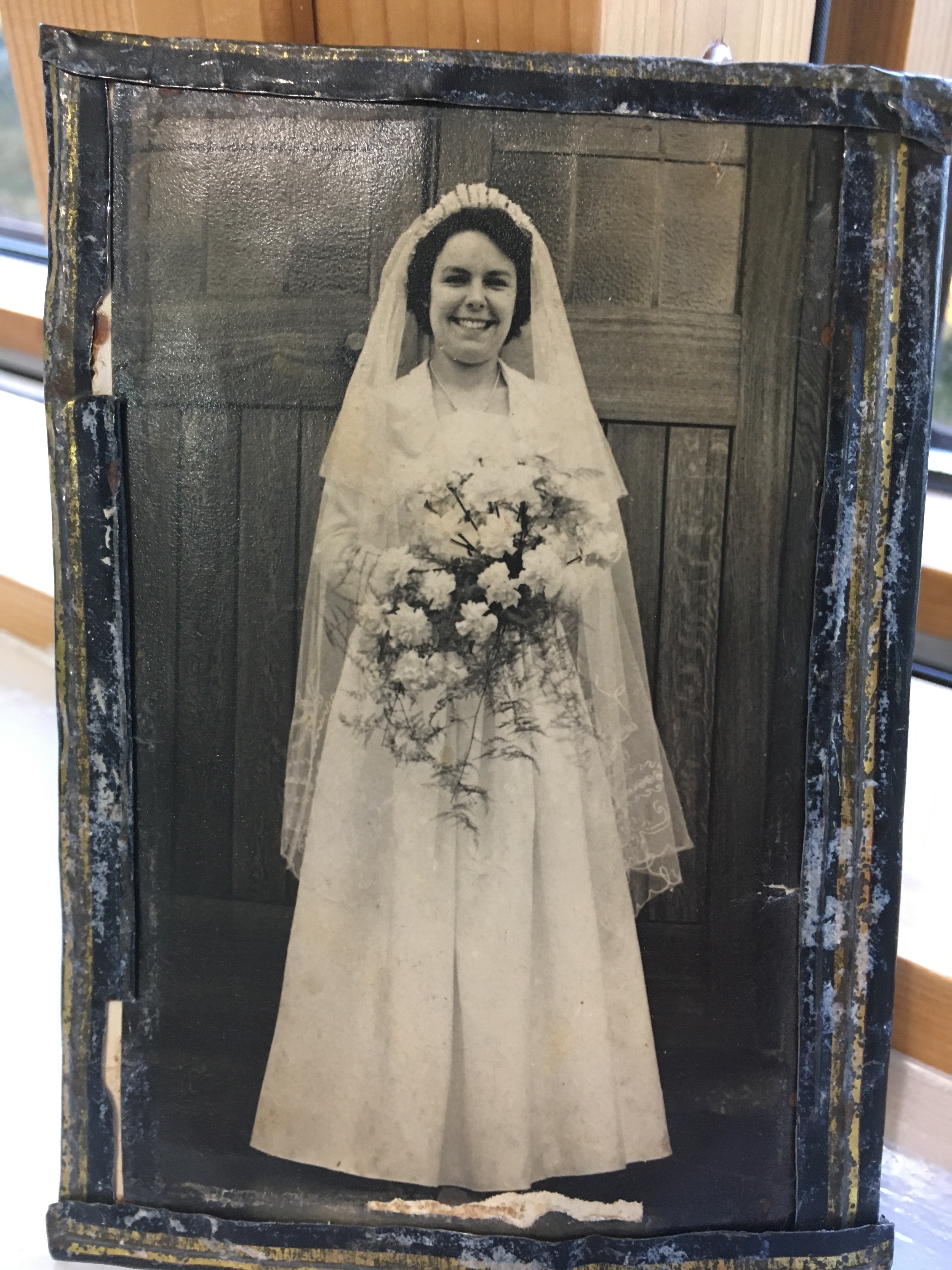
And, a photo I haven’t shared before. A picture of my mother in law Joan. Regular readers will know that I grow my cut flowers to keep a connection with Joan. It’s something we both love and it’s a way of sharing my garden with her now she is living in a care home.