I’m still talking on the radio once a fortnight – from the peace and quiet of my potting shed. It’s lovely to be at home rather than having to drive into Leicester. And when the music is playing between chats, I get on with a bit of watering or prick out a few seedlings, and nobody knows.

This week we talk about sweet peas. I’m growing new variety, Ripple Mixed, pictured above. It has mauve, pink, and purple markings on a pale pink background. The scent is strong, and stems are nice and long, making them ideal for cut flower posies. One to keep on my list for autumn sowing. I’m ordering seeds now to ensure I get the varieties I want. This year’s experience of buying plants and seeds – and the long delays receiving them- has taught me to plan ahead and order early.

Here’s a selection of sweet peas I’m putting in jam jars on the village green to raise money for Rainbows Hospice for children and young people. Rainbows cares for children with life-limiting illnesses and nearly all its funding comes from donations. The hospice has lost almost £1 million in fund raising this year, due to events being cancelled because of covid. I put leaflets alongside the flowers, hoping it might encourage someone to learn more about the hospice and make a regular donation. Every little helps.

Here’s the Wiltshire Ripple variety I mention, with its delicate picotee edge. I wouldn’t be without this one. Always a good strong performer.
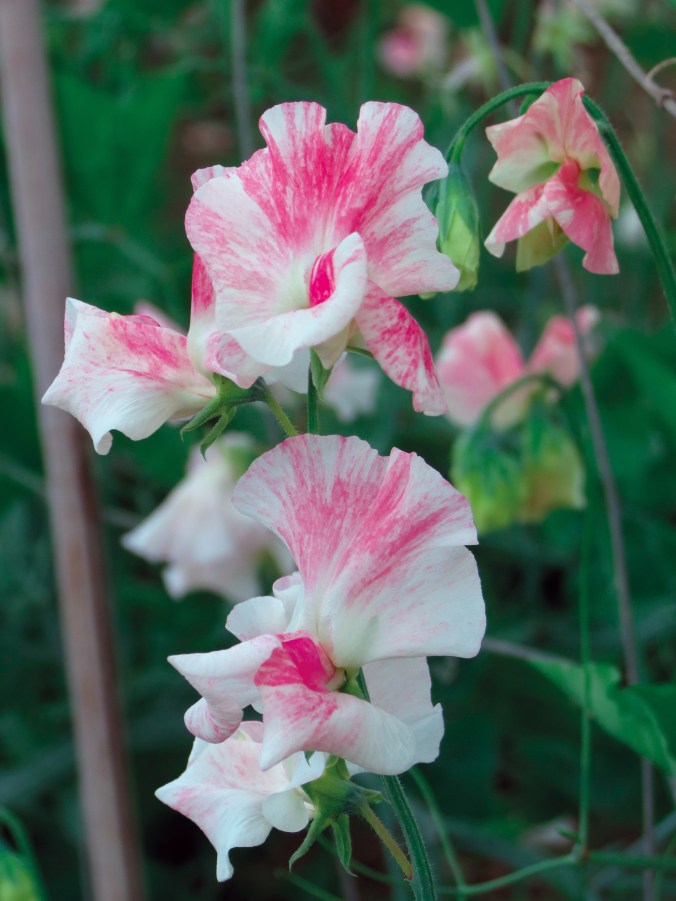
This is Mayflower 400, another new variety, celebrating the 400th anniversary of the Pilgrim Fathers sailing to the New World. It’s highly-scented and a good strong grower. Long stems, and flowers last a week in a vase.
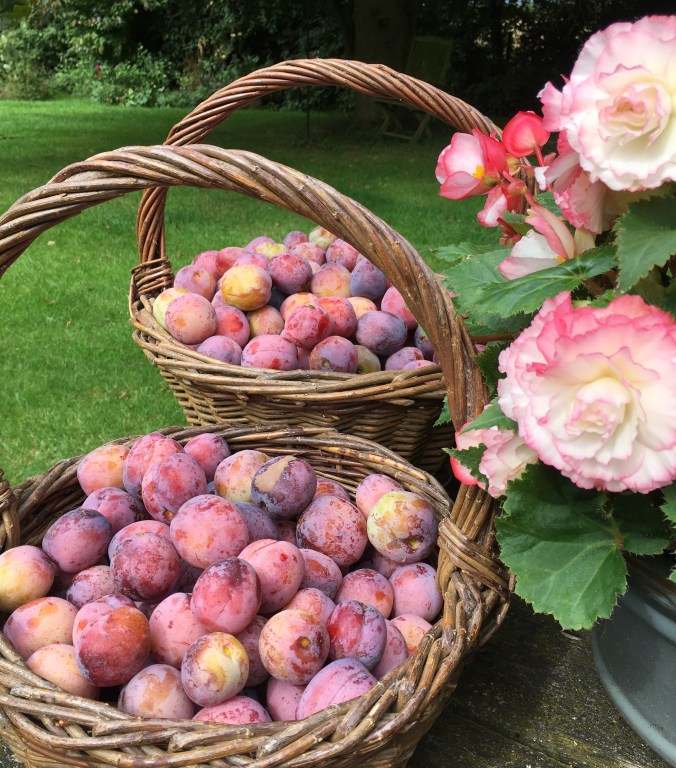
After talking about flowers, we move on to what I’m growing and harvesting from the plot. Plums are prolific again this year. This is Victoria, delicious and reliable. I’m making jam. It’s such a treat in winter to have a taste of summer. I stand the jars along the kitchen window and admire them. It’s like looking through pink stained glass. Very cheerful on a cold, dark day.
The recipe for plum crumble cakes and plum jam is here : https://bramblegarden.com/2017/08/22/peaches-and-plums-crumble-and-jam/

When my children were little, we fed them apple purée as their first solid food. BBC Radio Leicester programme host Naomi Kent is having a baby in two months, so we talk about the varieties of apple trees she might plant in her new garden.
I’m growing Spartan, a gorgeous deep red apple with a sweet honey taste. Apples are small and numerous, the perfect size for children’s lunch boxes. Lovely for juicing which is a somewhat messy process, but worth the effort.
I also grow Greensleeves (above) for cooking and eating. It’s sweet enough on its own, so you won’t need to add sugar for cakes, purée and puddings. Kept somewhere cool, apples will store until February.
Supermarkets often only sell a few apple varieties, typically Cox, Golden Delicious and Braeburn. Often they’ve been grown abroad and flown in. Sometimes they are coated with chemicals to improve their keeping qualities. And yet, in the UK, we have perfect conditions to grow your own apples. Traditionally, apple trees would have been 6m tall, but plant breeders have produced some compact varieties for small gardens and containers. Lubera have a range of ‘column’ fruit trees which have short side shoots and a narrow, vertical growing habit. I’m growing Malini Top Model which looks as if it will be about 50cm wide and eventually 3m tall. I’m growing it in a large plant pot and it has a good crop of apples in its third year. Lubera also have column types of pear, cherry and plum varieties on their website.
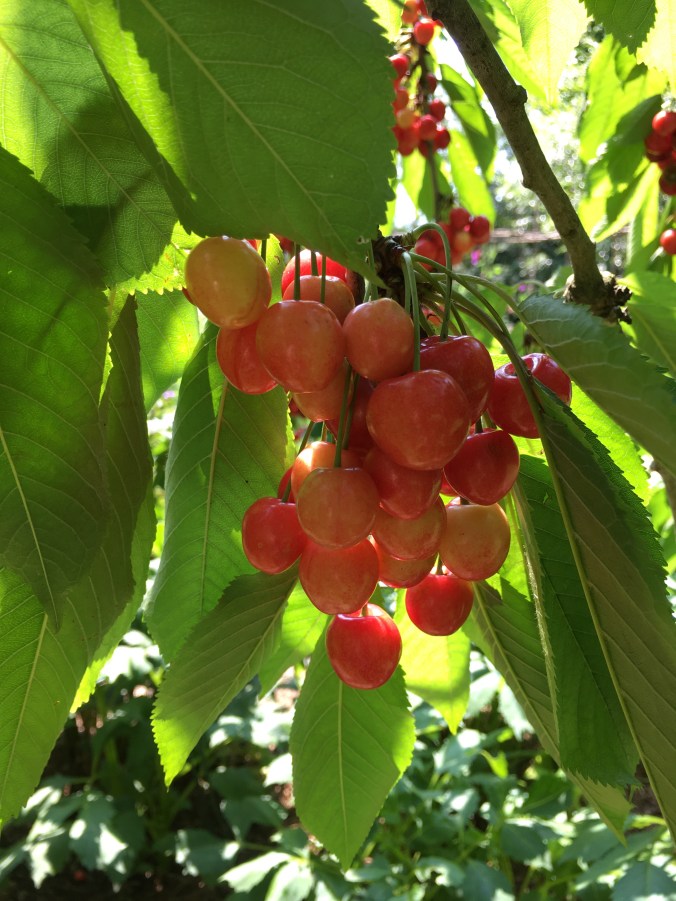
We had record amounts of cherries this year. I’ve been freezing them and preserving them in alcohol for winter treats. There’s a cherry marzipan chocolate recipe mentioned in the links at the end.
My cherry tree is Stella, a self fertile variety bred in Canada and introduced to Britain in the 1960s.
If you’ve got a small garden, opt for a cherry tree on dwarfing Gisela rootstock, which makes a compact tree. It’s much easier to protect trees from frost, if they are small enough to cover with fleece or an old bed sheet.
Good varieties to try include self-fertile Sunburst, Summer Sun and Celeste.

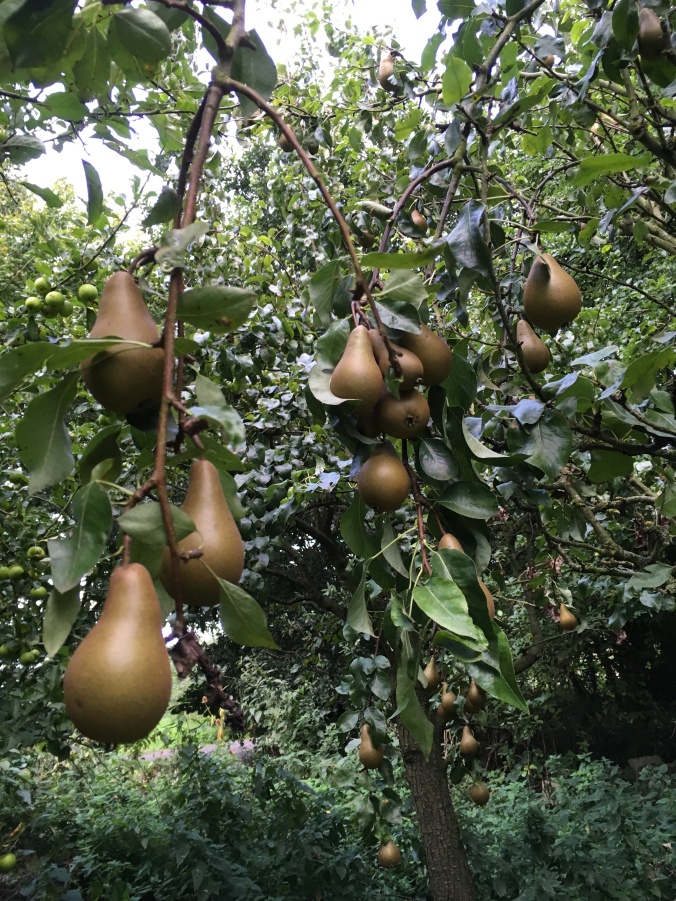
I’m fond of pears too. I have a Conference pear which provides plenty of fruit. If you are short of space, pears are easily trained along a fence or wall, in an espalier shape. Pears need more sunshine and warmth than apples, so it is a good idea to give them the protection of a warm wall. I’m going to plant a Concorde pear on the south wall of the house. Concorde is possibly a more reliable cropper than Conference.
If you have a more shadier garden, and you want to grow fruit, I’ve found success with Morello cherries, damson and quince, and crab apples for making jelly.

As well as apples, pears, plums and cherries, I wouldn’t be without my mini peach trees. I’m growing dwarfing variety Garden Lady and Bonanza in 45cm pots. We don’t get very many peaches yet, but the taste is so delicious and sweet. It’s a special treat to have home- grown ripe and tasty peaches.
I’d love to grow my own apricots. I’ve seen compact varieties Aprigold and Isabelle at nurseries. Our neighbour, Arthur, at our first house, had a fan-trained Moorpark apricot. He never did any other gardening, leaving it all to his wife Dorothy, but every day he fussed over his apricot tree, watered it and covered it up on cold nights. When it produced a magnificent crop each summer, he gave bags of fruit to his neighbours all along the little row of terraced houses. Happy memories of wonderful, kind neighbours. We have been so lucky to always have lovely people living next door.
So, to sum up, you don’t need a huge garden to grow fruit. It is possible to have a whole orchard- in pots on your patio. No need for rolling acres. Dwarfing varieties designed for growing in containers, some large pots, 45cm diameter, and John Innes no3 compost is all you’ll need. Set up an automatic drip watering system, or water the pots every day in summer. I add potash-rich seaweed feed every fortnight, and I refresh the top of the pots, taking out a small amount of compost and adding in some new compost, every year.
What fruit trees are you growing at home. Have you any recommendations for small gardens. Get in touch and let me know how you are getting on with your growing this summer.
Links:
Sweet pea seeds: https://www.mr-fothergills.co.uk/Flower-Seed/Tall_3/Sweet-Pea-Ripple-Mixed-Seeds.html#.XxrSvBB4WfA
Mayflower 400 : https://www.mr-fothergills.co.uk/Flower-Seed/Sweet-Pea-Seed/Sweet-Pea-Mayflower-400.html#.XxrS4hB4WfA
My plum jam recipe : https://bramblegarden.com/2017/08/22/peaches-and-plums-crumble-and-jam/
Apple and Almond Slice Recipe: https://bramblegarden.com/2019/11/07/apple-and-almond-slice-family-favourite-recipes/
Cherry marzipan chocolates: https://bramblegarden.com/2018/12/04/family-favourite-recipes-chocolate-marzipan-cherries/
BOOKS TO READ:
An Orchard Odyssey by Naomi Slade
https://bramblegarden.com/2019/09/27/an-orchard-odyssey-book-review-and-prize-draw/
The Creative Kitchen by Stephanie Hafferty
https://bramblegarden.com/2018/11/18/the-creative-kitchen-book-review/
BBC Radio Leicester : https://www.bbc.co.uk/sounds/play/p08jzr94. Gardening starts at 3.11.48 on the timeline.


 Bramble Garden