Belvoir Castle Show – Children’s Planting Sessions

I love helping the next generation get into gardening, so I was pleased to be asked to host the children’s planting sessions at Belvoir Castle’s May Garden Show.

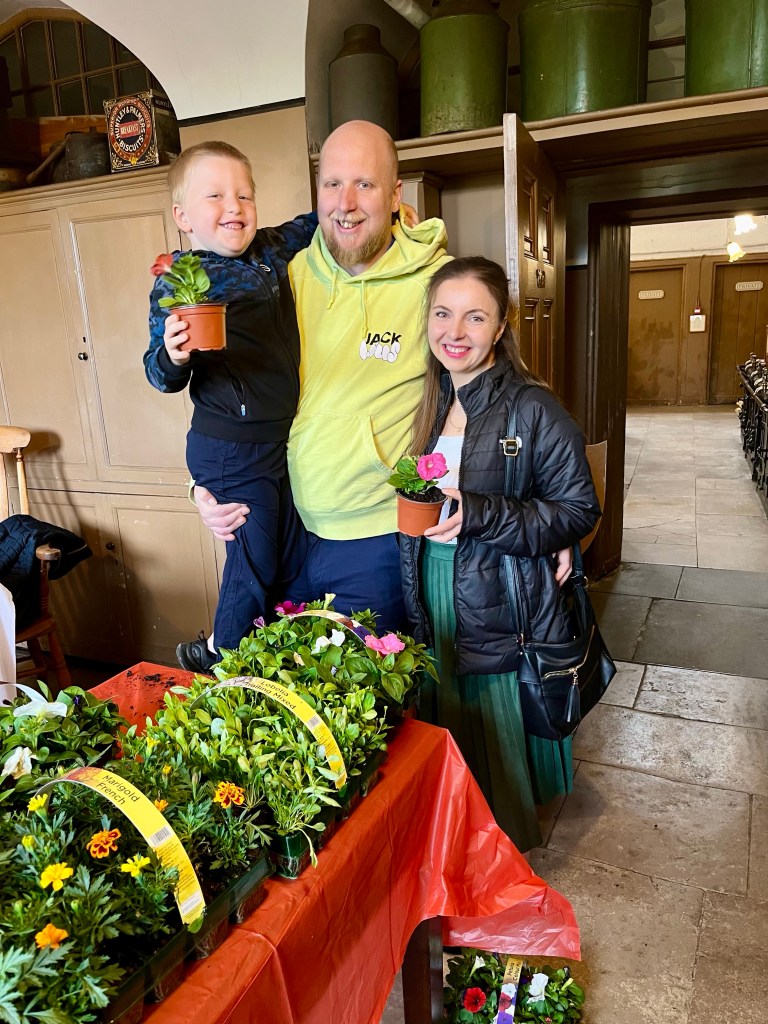
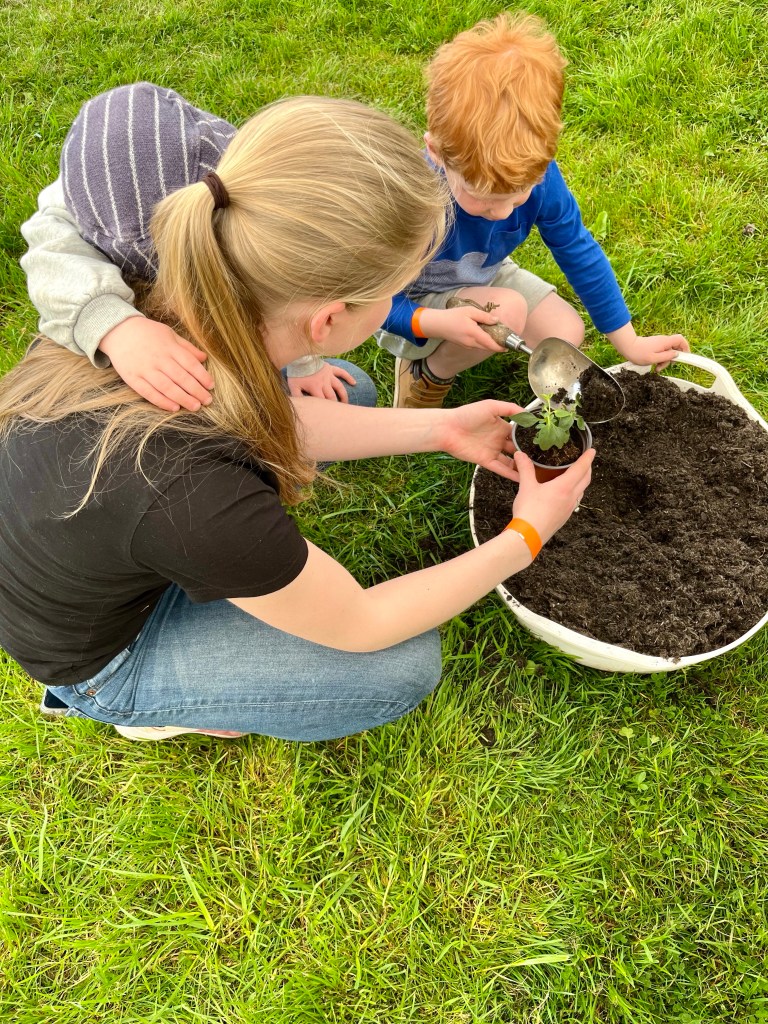
The Morley family with their potted plants. Parents gave permission for photos to be shared.

Nearly 400 children selected out bedding plants and potted them up into small pots to take home. What surprised me most was the children knew what the plants were. They recognised snapdragons, petunias, marigolds and verbena. Many of them had done some gardening before and were not at all tentative about getting their hands dirty and handling compost. They were straight into it! And they were careful with the little plants which had been growing in multi-cell trays. I didn’t have to say to a single child that the plants were delicate. They treated them kindly!

All ages joined in from babies to teenagers.
Louis and his parents with their potted plants

We started the sessions in the old kitchens as it was raining on day one. But by day two it was a lovely sunny day and we moved outdoors to a marquee on the castle front lawn. You really couldn’t get a better setting for a garden show, with the castle in the background.
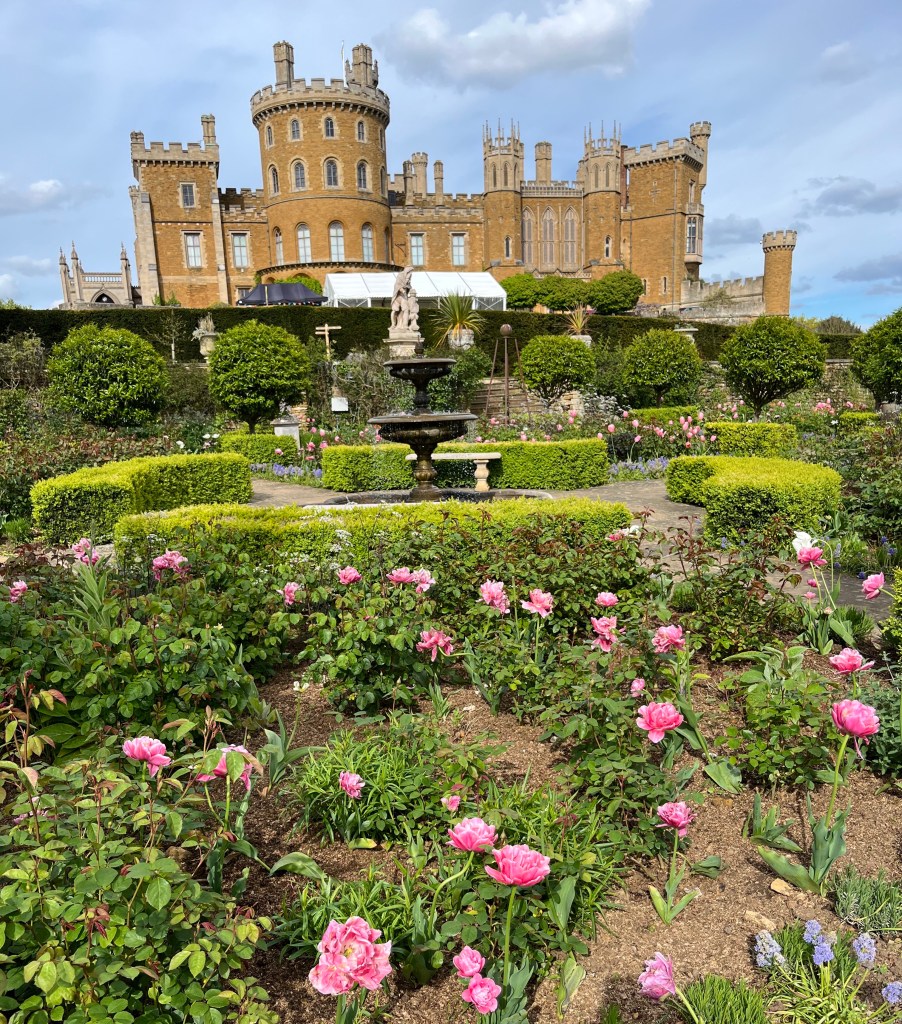
A glorious setting for a spring garden show.

Children were also given the chance to select some seeds to take home to plant. These were flower, salad and vegetable seeds. Again, I was astounded at how knowledgeable the children were. One boy aged 8 was delighted to find a packet of seeds to grow cucamelons. “I love cucamelons!” he said. The sunflowers were popular. Children sifted through the seeds to find their favourites. Cucumber was a top choice, but also peas, cabbage and beetroot. One little boy took Italian globe artichoke seeds, and then told me the flowers are good for bees. One couldn’t decide between mangetout or climbing beans. I let him take both. Children listened really carefully to my instructions on looking after the plants and planting them out into bigger containers or the garden. Plants were carefully watered and labels written.
Between the planting sessions I ran mini-talks on getting children into gardening and helping pollinators and wildlife.

I was so pleased the planting sessions proved popular. But I also learned something too. Children are a lot more knowledgable about gardening and the environment than I thought. There seems to be just bad news on the television and in newspapers all the time. I’ve got bogged down and worried by it all. Many things I cannot change weigh heavily on my mind. But those children I met at the show were full of joy, positivity and confidence. They care about plants and nature and they are our future. After spending a few days with them, I feel buoyed up by their enthusiasm too. I’ll carry with me their smiles and their happy chatter for some time to come, and I’ll remember how happy I felt helping them to garden and chatting to them about our shared love of growing plants and helping wildlife.

The children’s planting sessions were sponsored by Dobbies Garden Centres. Here’s manager Paul Coley from Mountsorrel garden centre who fully supported the children’s planting event and helped select plants and products. All the plants, compost, seeds, labels and watering cans were donated by Dobbies. They also donated bug hotels and mini-planting kits as props for my talks and advice-desk sessions. Many thanks to them for their generous sponsorship and support.
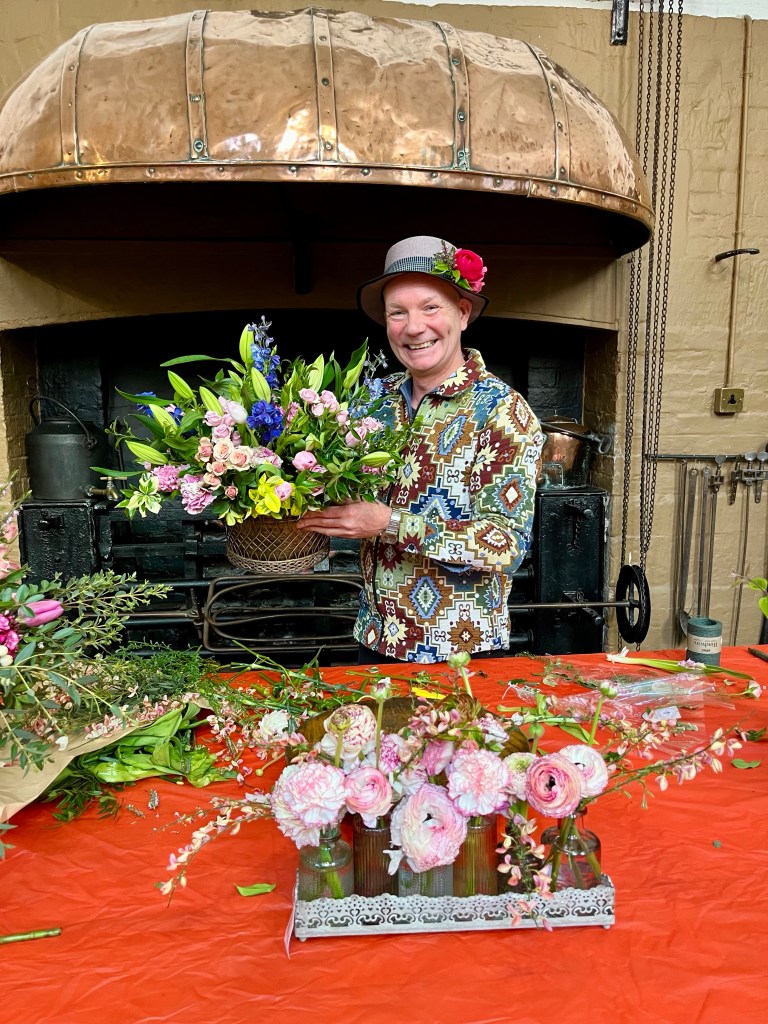
Celebrity speaker at the show was international florist Jonathan Moseley who gave me lots of hints and tips on giving talks to an audience. It’s thanks to him that I’m zooming around the garden club and u3a club circuit in the midlands giving talks on garden design and horticulture. Jonathan is a super-talented florist, but also a very kind and generous person. I’m very grateful for his help and encouragement. It’s amazing isn’t it how a few kind words and some genuine advice can propel you in a direction you never thought of!

Belvoir Castle – home to the 11th Duke and Duchess of Rutland in Leicestershire.

Thank you for reading my blog. You are amongst 1,200 readers a week! I’m grateful for your continued loyalty and support. Have any of you visited Belvoir Castle? Do you garden with your children or grandchildren? Please leave a comment in the box below. Have a great gardening weekend everyone!

I wrote about creating a show garden at Belvoir Castle here:

https://bramblegarden.com/2018/07/22/we-made-a-garden-for-rainbows-hospice-belvoir-show-2018/

Attracting Garden Pollinators – by Jean Vernon.

Book review and one copy to give away.

Published by White Owl, imprint of Pen and Sword Books

Published summer 2022

Hardback. £25

ISBN 1526711907

Please leave a comment at the end of the review if you would like to be put into the publisher’s prize draw for one copy of the book. Names will be chosen randomly.

Right by my front door, on a warm, sunny south-facing wall, we have a selection of bee ‘houses’ some home-made from cardboard tubes and garden canes, and some purchased at a local supermarket. These are a source of wonder and joy as clouds of solitary bees hatch out and start to forage in the front garden. Watching a new, baby bee hatching out of its winter cocoon is such an exciting and magical moment. Thanks to a new book on attracting pollinators to our gardens, I’ve been able to identify our bees. They are red mason bees; solitary bees that nest in wall cavities and readily use bee houses like ours. In Jean Vernon’s book I’ve learned these bees are fond of fruit tree nectar and pollinate apples, pears and other spring and summer-flowering trees. So I’m expecting a bumper crop of fruit this year. And I’ve learned these bees, like most solitary bees, do not sting, so there’s no danger to me or any visitors walking past the bees to get to the front door. Reading on, I learn that one way to help my bees is to leave a mud patch nearby so there’s plenty of material to seal their eggs cells. It’s completely calming and relaxing watching the bees going about their daily lives, and I want to do all I can to help them. It would be terrible to think of these bees emerging into the world and not finding anything nearby to eat. Jean points out that some solitary bees will only travel a few metres from their nests to find sustenance and they will starve if there’s not enough suitable plants flowering at the right moment.

Here’s a photo of a red mason bee in Jean’s book. (photo by Liam Olds).

Jean’s book is split into chapters on identifying and learning about specific pollinators such as butterflies, moths, bees, and hoverflies among others, and advice on which plants to grow to help pollinators.

Hoverflies are amongst the types of pollinators highlighted in the book.
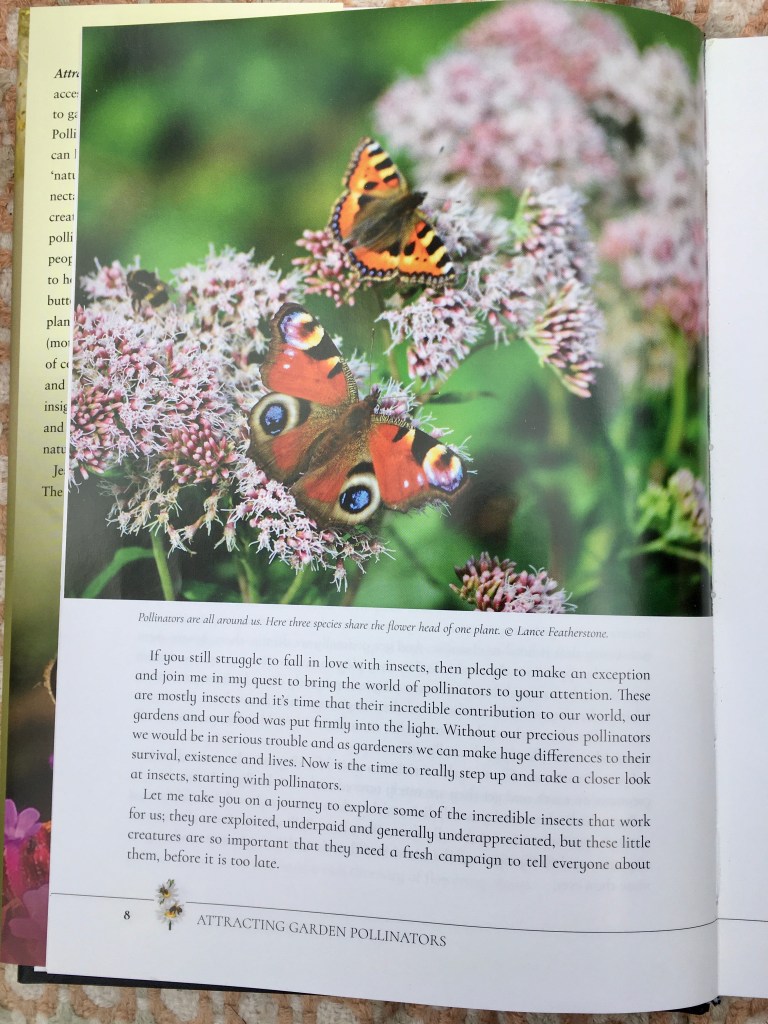
Butterflies and bees sharing the same plant.
Even small spaces can accommodate plants for pollinators. This year, I’ve taken Jean’s advice and planted my hanging baskets with calendula, lavender, nasturtium and marjoram.
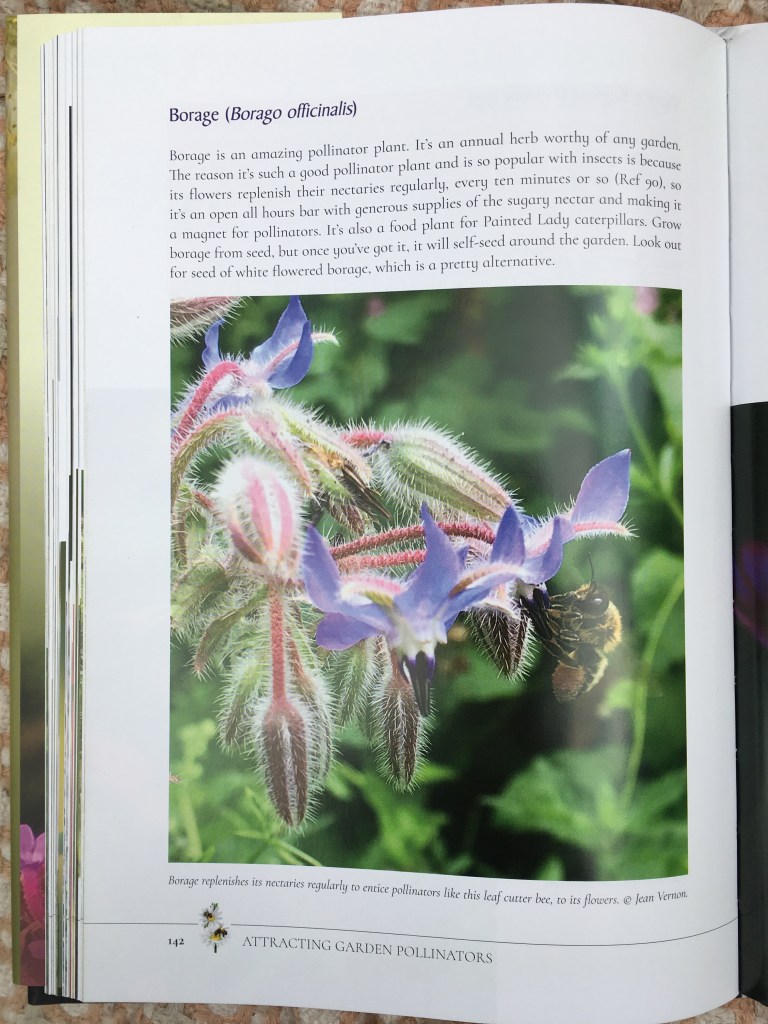
Borage is one of the ‘plants for pollinators’ highlighted in the book.
Cosmos is another favourite of mine and it’s good to know it will provide food for pollinators all through summer from June to October. Flat daisy-like flowers are good because there’s plenty of room for several insects to land and feed at the same time.

Photo of Jean by Hannah McVicar.

If you’ve been listening to BBC Radio Leicester you’ll know that Attracting Garden Pollinators has twice been my Book of the Week. I’m happy to recommend such an easy to read and information-packed book. Jean writes in a friendly and accessible way. Her passion for nature and wildlife shines through and you can’t help but get caught up and carried along by her enthusiasm for the subject. Simple ways to help pollinators are suggested, and you don’t need a huge garden to make a difference. Even a windowbox or container can be a five star diner!

I wrote about Jean’s other best-selling book here:

https://bramblegarden.com/?s=Secret+lives+of+bees

Please leave a comment in the box below if you would like to enter the publisher’s prize draw for one copy of the book. Names will be randomly drawn. I will only contact you on this page and no payment of any kind will be asked for. Please be aware of scams. Please also feel free to leave a comment if you don’t want to be included in the draw. Just let me know.

Signed copies of both books are available from the author’s website here : https://thegreenjeanie.com/shop/

Thank you for reading my blog and book reviews. Are you growing any plants with pollinators in mind? Have you tried making a bee house? I was fascinated to read you can buy red mason bee cocoons to hatch out in your garden. Alternatively, invest in some special mason bee tubes and install them in a nesting box . You can replace the tubes each year to keep the nest free from pests and parasites.

Tour of MrFothergill’s Seed Trial Grounds

Photo : Silene Blue Angel. New for 2018/19

Growing plants from seed is a passion for me. It’s an affordable way to bulk up annual, perennial and biennial displays in the garden. And each year I try something new, as well as sticking with tried and trusted old favourites.

Next spring, I’ll be adding Silene Blue Angel to my seed sowing plans. It’s one of the new varieties on offer at Mr Fothergill’s. And this week I was absolutely delighted to be invited to view the trial grounds at the company’s headquarters in Suffolk.

These are the plants that caught my eye. The silene was top of my list. A hardy annual, sown in March and planted out in early June. Plants form neat cushions 25cm tall. For a continuous display, I’ll sow a few seeds at two to three week intervals. I’m picturing drifts of electric blue flowers running through the borders and flowering all summer long.

Brachycome Blue Star is another new variety available for 2019. I’m going to partner it with this one I spotted from the Brachycome Blue/White Mix range. I’ve always loved any kind of daisy flower.

Regular readers know I also love sweet peas. I grow a range of heritage and modern varieties along a rather wonky hazel wigwam structure. Next year I will be adding new variety Capel Manor to the garden. It’s a pretty pinky blue and has a delicate, though not overpowering scent.

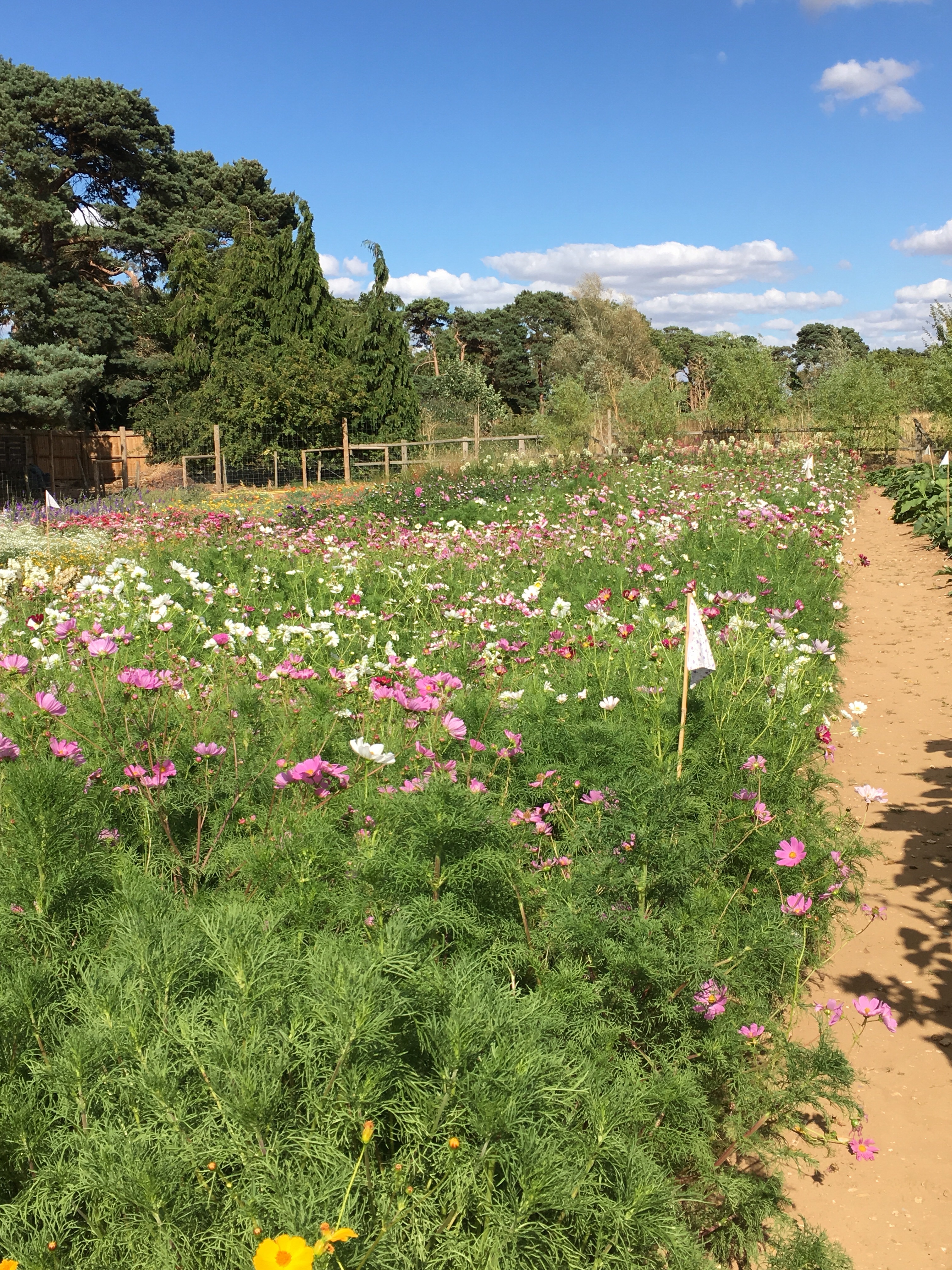
I always plant cosmos in the cut flower garden. They are easy to grow and provide flowers from early summer right through to the first frosts. I spotted this beautiful new white variety called Snow Puff. Bees seem to love cosmos, so that’s a bonus too. I’m always trying to find ways to help pollinators.

Here’s some photos of the trial grounds. It was fabulous to wander about amongst so many beautiful flowers, jotting down names for future planting plans. The scent in the heat of the day just added to the wow factor.

Mr Fothergill’s is celebrating its 40th anniversary. In May, the company won Product of the Year at RHS Chelsea for its new Optigrow range of seeds. Optigrow is a revolutionary non-chemical seed priming treatment that uses only water and air to get the seeds biologically ready for germination. I’ll be trying out some of the 19 vegetable varieties available – including tricky to grow parsnips- next spring. I’ll need to write another post about all the new vegetable varieties. There are quite a few I’ve made a note of. And there are many more new flower varieties. I’ve just picked out a few. I’ll definitely have to write another post soon….

Please share this via any social media you like, and don’t forget to say hello in the comments box below. Let me know what new seed you are planing to try out for the spring growing season. I am @kgimson on twitter and karengimson1 on instagram.