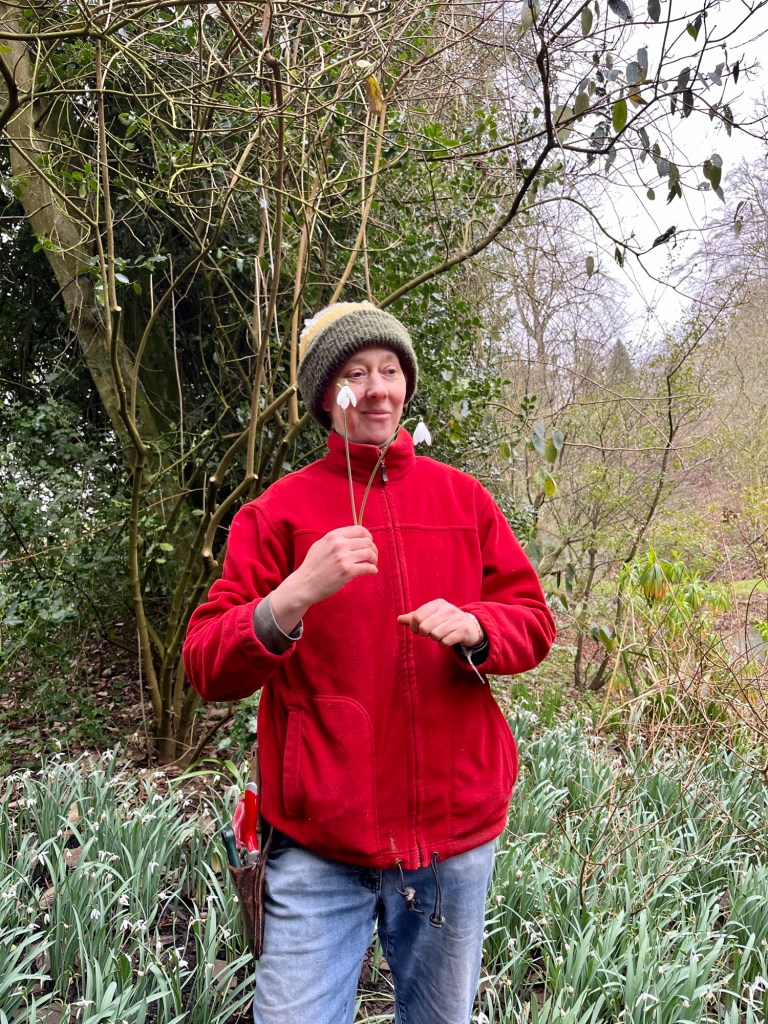
A Shepherd: A person who herds, tends and guards. Watches over and protects.
I looked up the word shepherd when deputy head gardener Emma Thick described herself as a ‘snowdrop shepherd.’ It’s an apt description. For Emma, who works at Thenford Arboretum, tends, protects and cares for over 1,500 varieties of snowdrop, some of them rare and unusual.
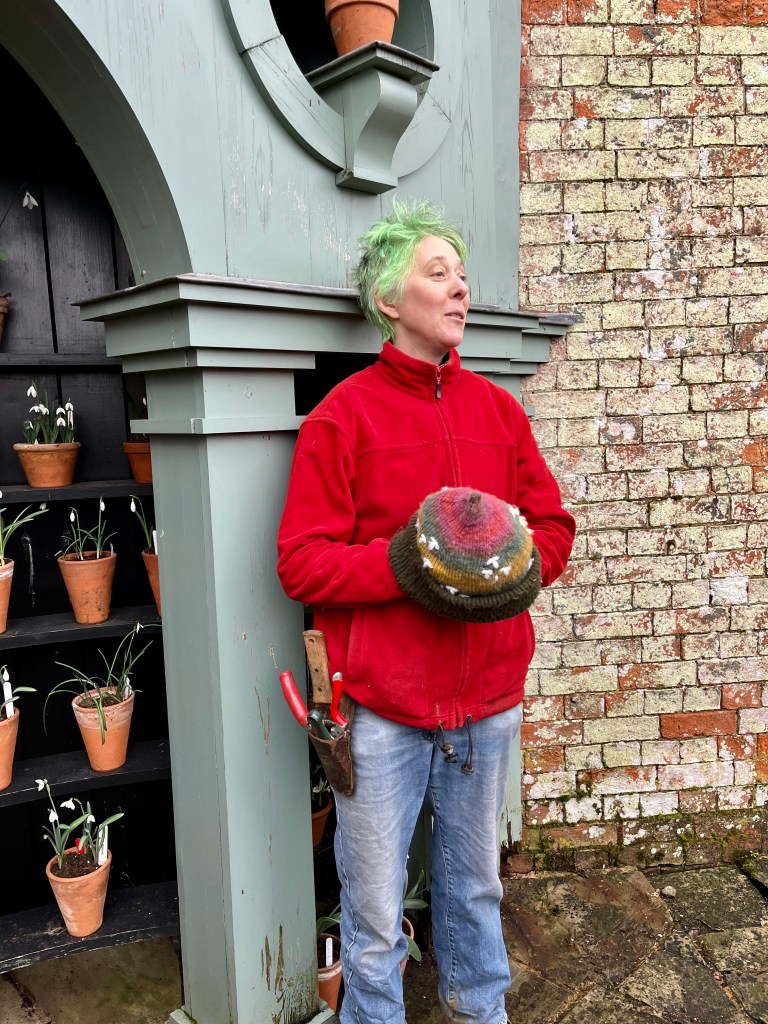
Emma has been in charge of the collection for ten years, and spending the day with her is a revealing and exciting journey of discovery. I ask Emma which is her favourite snowdrop, with so many to choose from. Immediately, she walks over to a patch of Galanthus ‘Mrs McNamara’ an elwesii variety. It starts flowering at Christmas and, in a cold winter such as this one, will still be in flower at the end of February. “It has big, broad, glaucus blue-green leaves, single inner-markings like a Chinese bridge, and is a very bright white. It sounds strange, but some snowdrops are not very white. This is a beautiful clear white flower. If I could only have one snowdrop it would be ‘Mrs McNamara’ always.”

When Emma first started working at Thenford, the owners Lord and Lady Heseltine, had amassed a collection of 350 types of snowdrop. Since then, the collection has grown, and in June 2023 Thenford was awarded National Collection status by Plant Heritage.

Snowdrops cluster around the base of specimen trees within the arboretum. But Emma says you don’t need to have a woodland setting or trees to grow snowdrops successfully. She has been trialling growing snowdrops at the base of hydrangeas. The shrubs take up water in the summer, giving snowdrops the period of dormancy they need. Then hydrangeas provide colour in late summer and autumn.

Emma recommends all hydrangea varieties for this plant partnership. At Thenford there are hundreds of mop-head, lacecap and paniculata types. These are low maintenance as well as being perfect planting companions for snowdrops.


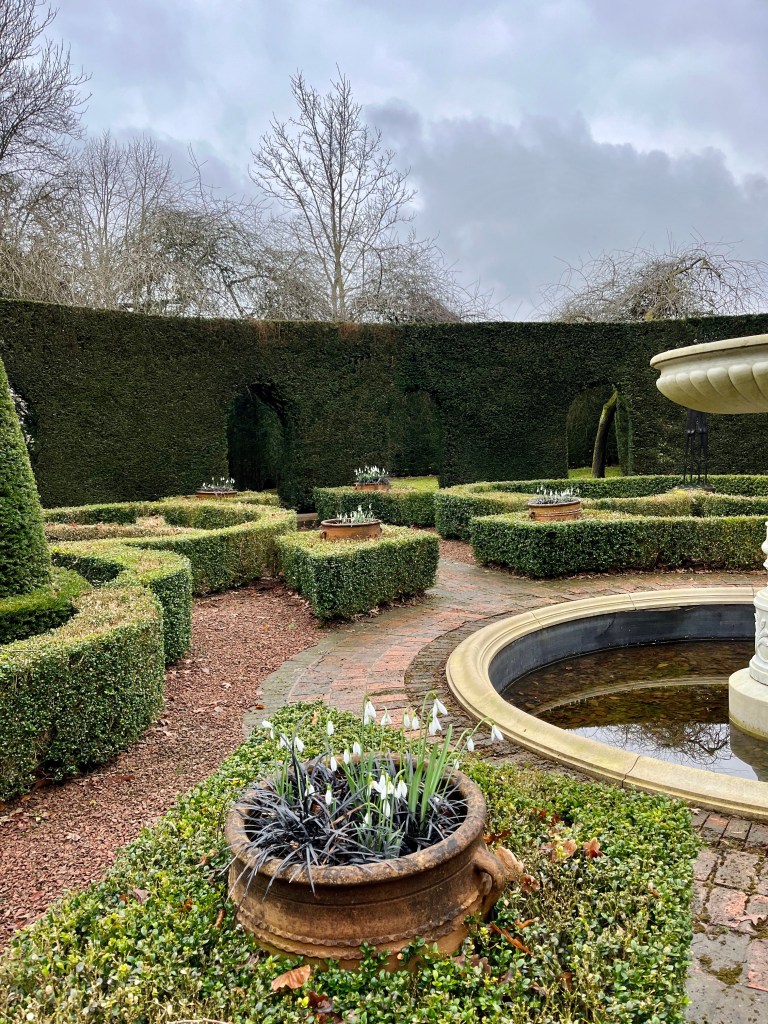
Snowdrops can successfully be grown in containers. Thenford has a topiary garden with a collection of Italian urns containing black grass, Ophiopogon planiscapus, and snowdrops.
There’s also a plant theatre, created for auriculas, but in winter it’s used for snowdops and daffodils.
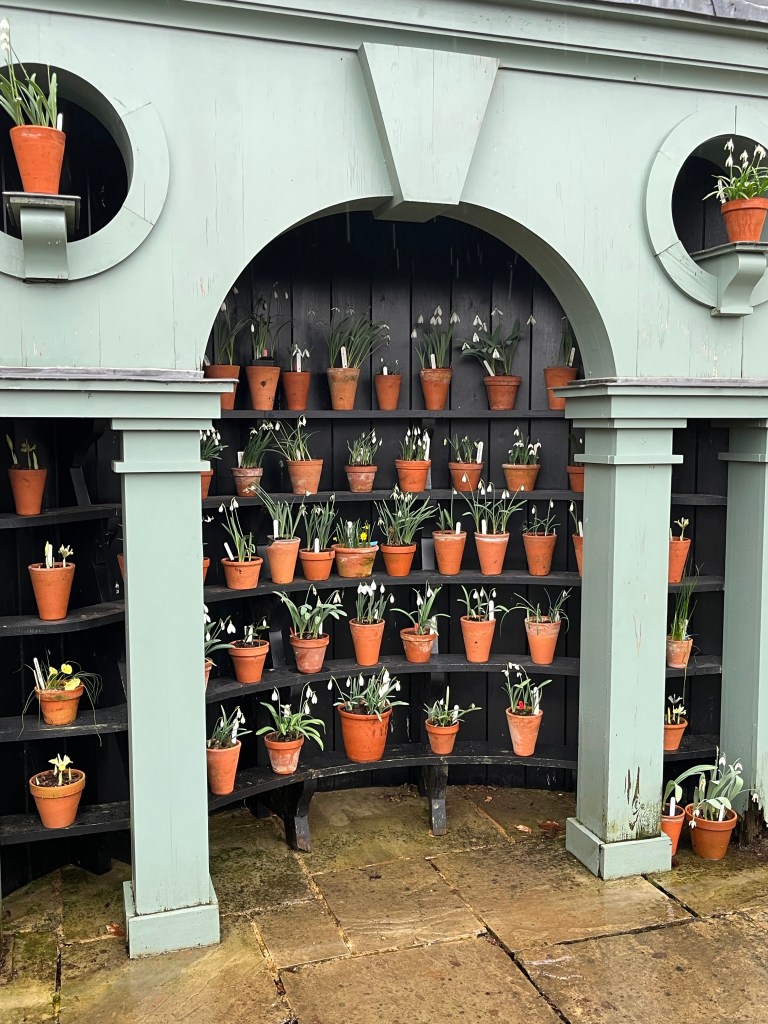
Snowdrops in teracotta pots look striking set against the black painted background, and it’s an opportunity to look closely and compare markings.


I asked Emma which other varieties would she recommend. Here’s her list of top snowdrops to grow.
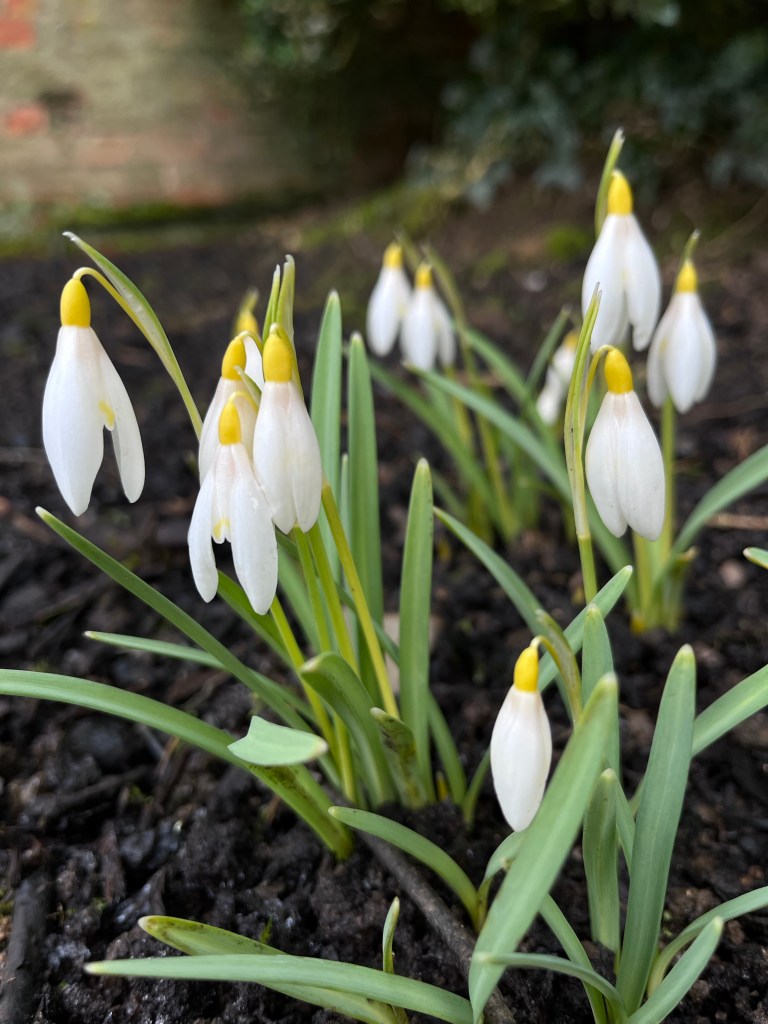
‘Daisy Sunshine’ is not a lot different from the horde of nivalis sandersii group but quite a good, reliable yellow. Again, love the name . Everyone could find room for a bit of ‘Daisy Sunshine’ to brighten a corner of a garden, says Emma.
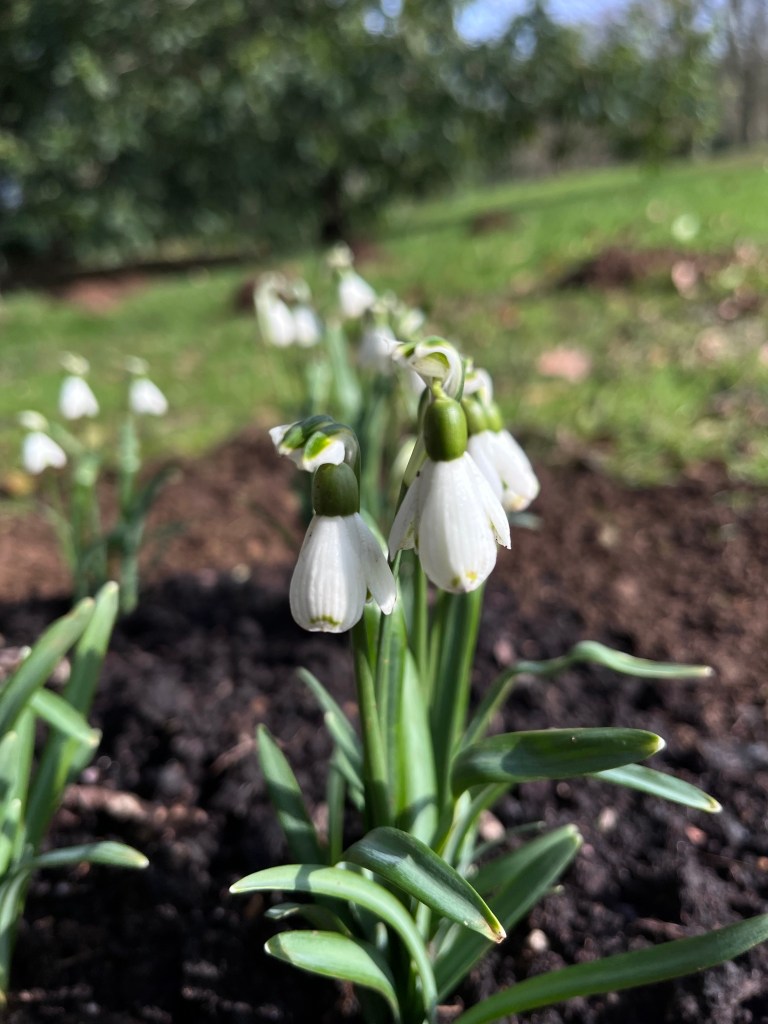
“Galanthus reginae-olgae subsp vernalis ‘Miss Adventure’. Again, great name, quirky snowdrop. The spathe has mutated to become petal like. Has the bonus of having the outer petals maker green too, so would probably count as an inverse poculiform or I-poc for short . We grow her sister ‘Miss Behaving’ near by.

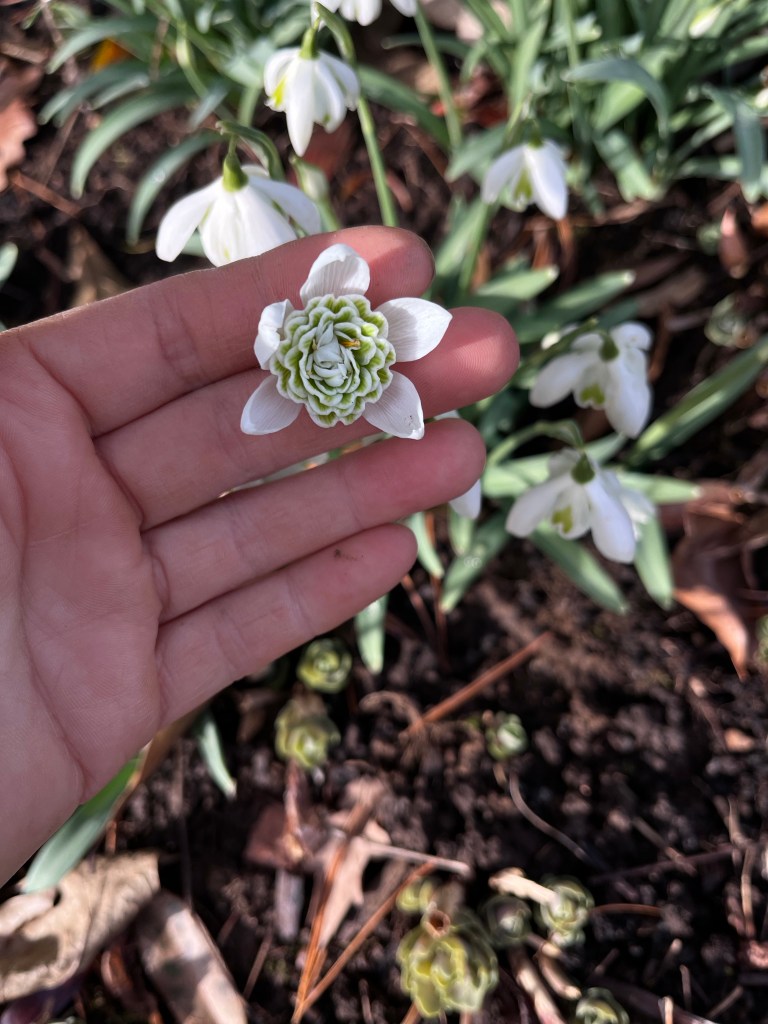
‘Hill Poe’. A very frilly full double that does nothing but want to grow. Looks great in a big clump.

‘E.A. Bowles’ is a pure white poculiform (inners and outers same length) almost shaped like a tiny lampshade. An exquisite beauty, not always the easiest to grow.
‘
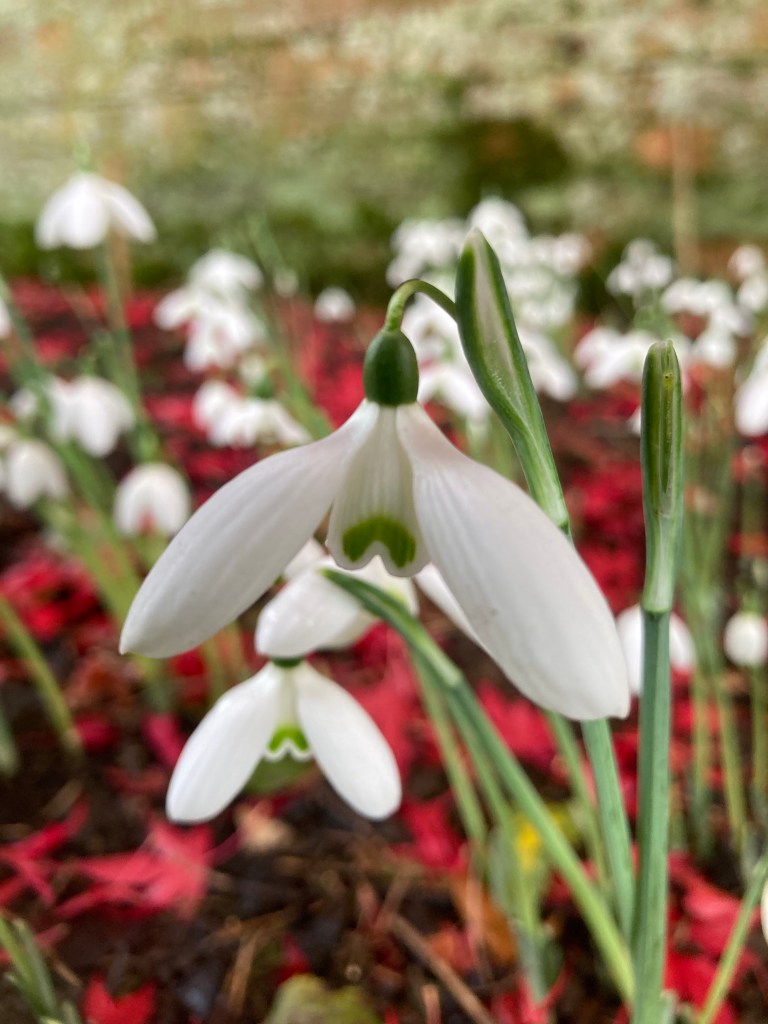
Galanthus reginae-olgae subsp reginae-olgae ‘Tilebarn Jamie’
Flowers in October. Perfectly normal for this subsp to do that. And happens to coincide with the red leaf fall of Acer palmatum ‘Skeeters Broom.’ Just exquisite and an unexpected delight on our October open days.

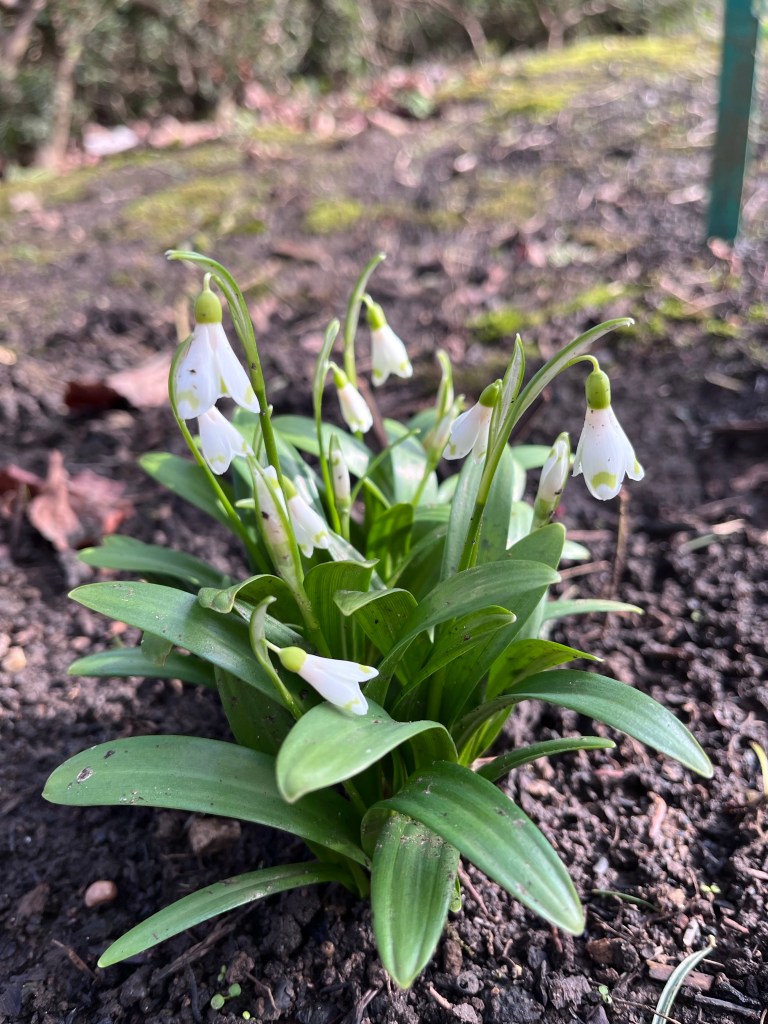
Woronowii ‘Cider with Rosie’ a green-tipped variety of Galanthus woronowii which I adore. One to admire up close as it is not the biggest or most dramatic.
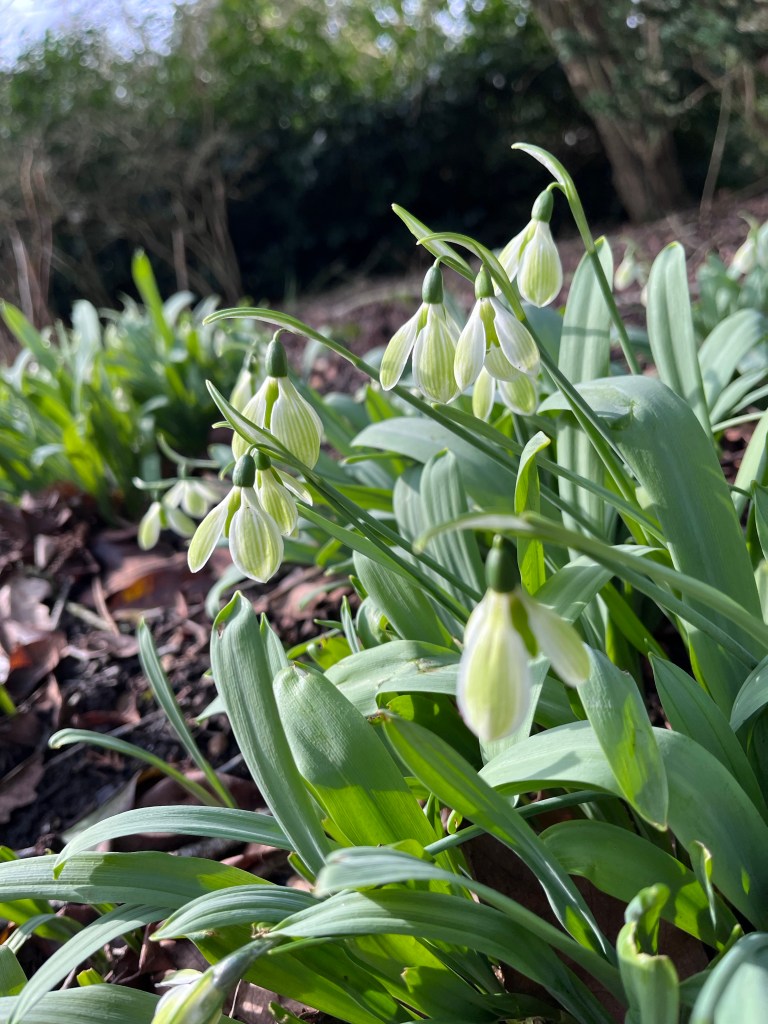
Galanthus elwesii ‘Rosemary Burnham.’ A virescent snowdrop which people probably either love or hate depending on how you like green flowers. Again, grows well here at Thenford but not for others. Best appreciated up close.
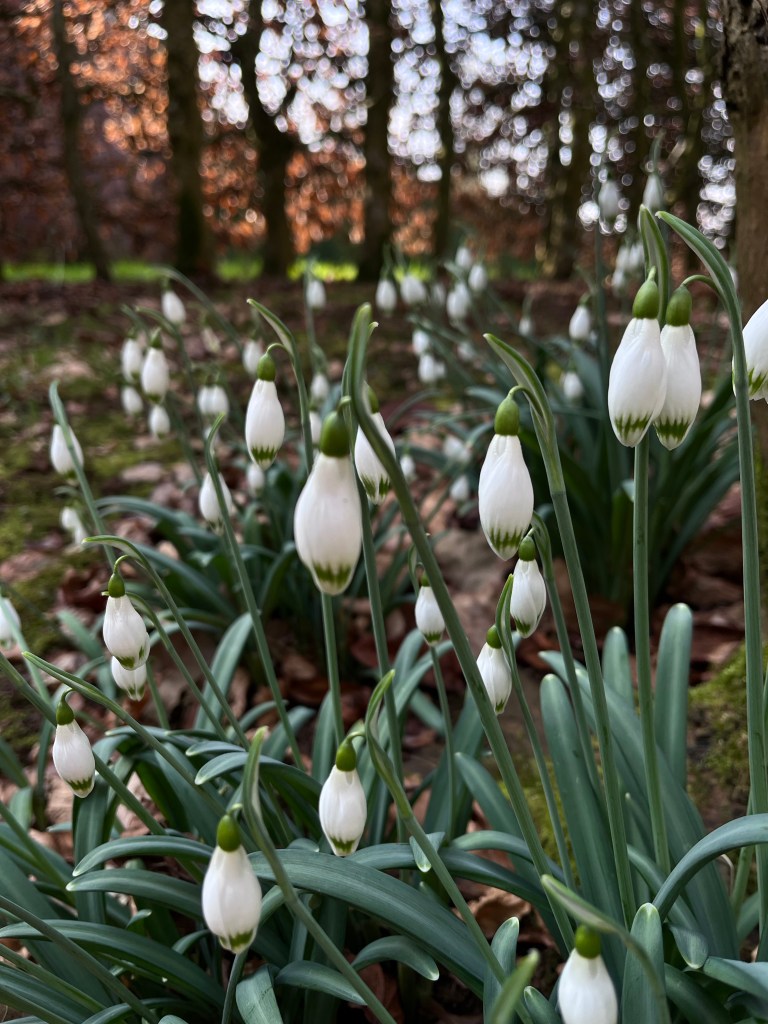
‘Greenfinch’ an excellent green tipped snowdrop. The green is really embedded in the outer petals so it appears very pinched.

‘Blewbury Tart’. Not a pretty flower really, but looks good in a clump. It is my mum Cherry Thick’s favourite. It was found by Alan Street in Oxfordshire. Again, best admired up close.”
I asked Emma for advice on planting snowdrops. She said wait until the bulbs are dormant before moving them. Snowdrops produce just one set of roots each year. Any damage to the roots while digging up or planting means the bulb will not be able to take up enough nutrient for the following year. This means the bulb will either fail to flower or die.
Thenford opens for 20 days a year. Rupert Heseltine explained his parents, Lord and Lady Heseltine purchased the house and it’s surrounding garden in 1976. Over the next 25 years, their priority was to restore the 40 acres of woodland. Debris was cleared, rotten or fallen trees removed and replaced with many rare and unusual varieties. The arboretum now extends to 70 acres with 3,000 trees and shrubs. There are 113 ‘Champion Trees.’ The medieval fish ponds and their interconnecting canal and lake have all been restored and two new lakes have been added.
The walled garden was being used as a sheep field when the Heseltines bought the property. It has now been restored and features trained fruit trees, step-over apples, and a range of greenhouses containing exotic plants and citrus.
To book tickets to visit Thenford, see the website:
https://thenfordarboretum.com/
The 2026 Snowdrop Spectacular will be held on Saturday, February 14.
Thank you for reading my blog. I hope you’ve enjoyed these photos and found the information from Emma inspiring. There’s an interview with Emma on my Instagram account at karengimson1.
I enjoyed every second of my visit to the gardens and I’m certainly looking forward to visiting again through the seasons, and to viewing the snowdrops again next February. It’s a ‘must visit’ on my calendar!
 Bramble Garden