Introducing Monty. 7th August 2020 – a new addition to Bramble Garden

I am typing this one-handed. The other hand is wrapped around a tiny tabby kitten. Usually, this blog is all about my garden and what I’m growing. I share with you my trials and tribulations as I coax seedlings into growth, set them out and watch over them. Just about everything seems determined to munch on, peck at and generally stunt my treasured seedlings. Gardening certainly teaches patience. Well, this time I am nurturing a kitten. We have called him Monty. And the process is rather like growing a delicate seedling. It requires plenty of patience. He has been a heap of trouble!
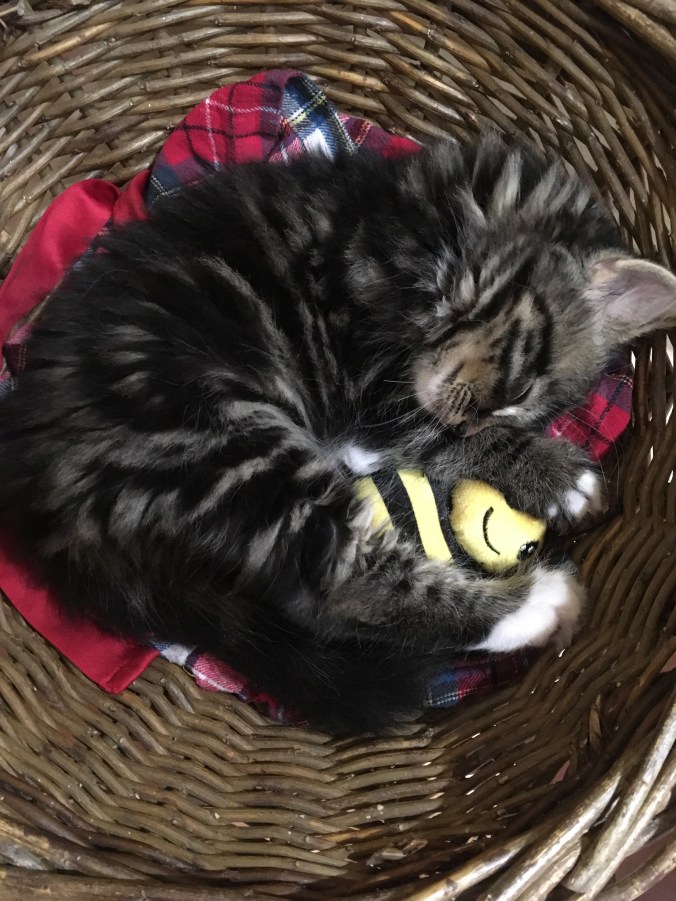
Monty had a life-threatening condition which wasn’t apparent until he arrived here. On his first morning, he was lively enough, but as the day wore on it was like watching a wind-up toy running out of power. He sort of wound down and stopped. I noticed he wasn’t eating anything, or using his litter tray. Luckily, I’d booked a vets appointment for vaccinations, but instead of getting his jabs he was put on a drip and given antibiotics. His problem turned out to be a blocked bowel.

While he was with his mother, in a familiar place, with his siblings, he survived. The mother’s milk sustained him. But taken away from his mother and moved to a new home, he crashed. I had never heard of this happening before and the vets warned kittens can sometimes die unexpectedly. The owner wouldn’t have known anything was wrong, so there’s absolutely no criticism being made here.

The crisis spurred me into full-speed rescue mode. Special baby milk arrived from the vets, complete with little bottles and teats. Monty became so weak he couldn’t lap the milk, so I measured out tiny amounts, 10ml at a time, and tipped him on his back. It was a struggle. Every few hours, I’d boil the kettle and mix the powder into a paste and then into a liquid. Any little lumps, and he wouldn’t drink it. Too cold, he’d refuse. He wasn’t at all helpful in this campaign. But I was determined he would survive.

There’s been so much I’ve not been able to change these past five months, so many things out of my control. I’m used to being able to do something to make things better. With covid, I felt I could do little to make a difference. But when Monty came along, I put all my efforts into encouraging him to live – it was something positive to do.

Now, after a few weeks, he is lapping milk and starting to eat.

Prescription kitten mousse arrived from the vets. Tiny amounts offered on the tip of my finger, to start with. Then I tapped the edge of the plate to encourage him.

After all this nursing, back and forth to the vets for subcutaneous fluids, Monty, is starting to thrive and is gaining weight. He’s still on the baby milk, and I’m reading -and re-reading the ‘ kitten paediatric weaning’ leaflets given to me by the vets to work out how to move him on to dried food. I’ve realised that nothing is going to be easy.

Carrying him around, and literally willing him to live, he is bonded to me now. I know all his funny little ways, and I expect he knows mine too.
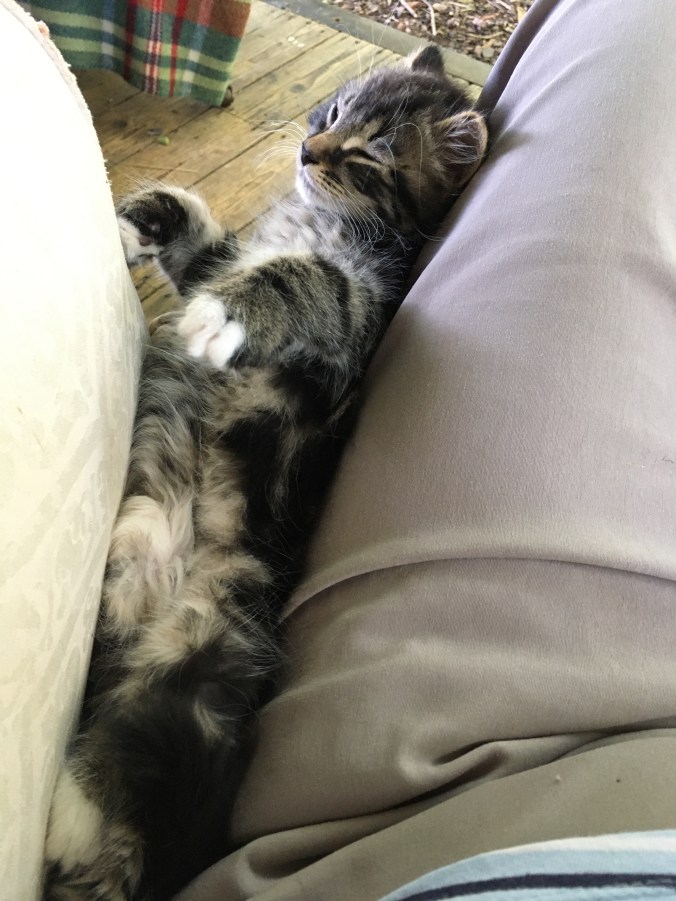
He likes to lie down the side of the armchair in the summerhouse, rather than on my knee. He is somewhat squashed in, but I assume he feels safe there.

Monty has been as much trouble to nurture as a rare and exotic flower. But just as rewarding as anything I’ve ever ‘grown.’

I hope you’ve enjoyed this diversion from the usual tour of the garden. Have you ever had to nurture something as much as I have with Monty? Isn’t it rewarding – and exhausting. But so worthwhile. Thanks, as ever, for reading the blog and keeping in touch through these difficult times. It is much appreciated.

Words and Pictures

THE GARDEN PHOTOGRAPHY WORKSHOP

Andrea Jones (Timber Press £17.99)

The postman arrived to find me wobbling at the top of a step ladder, peering through a piece of black cardboard with a square cut out of the middle. “I’m composing photos of my garden,” I heard myself saying. Oh dear. How mad does that sound! I rather sheepishly climbed down and made him a cup of tea while he chuckled away. 

Over tea and biscuits in the potting shed, I explained that my new photography workbook recommended using a piece of card to practise framing a view.  It works close up, as well as for landscape views. I just had to learn how to squint through the cut out square- while up a ladder, and while keeping my balance. The postman declared it could all end in tears.

Anyway, as he continued his round, laughing as usual, I went back to my new book. Andrea Jones has produced a fabulous masterclass giving hints and tips on the best ways of capturing the garden. 


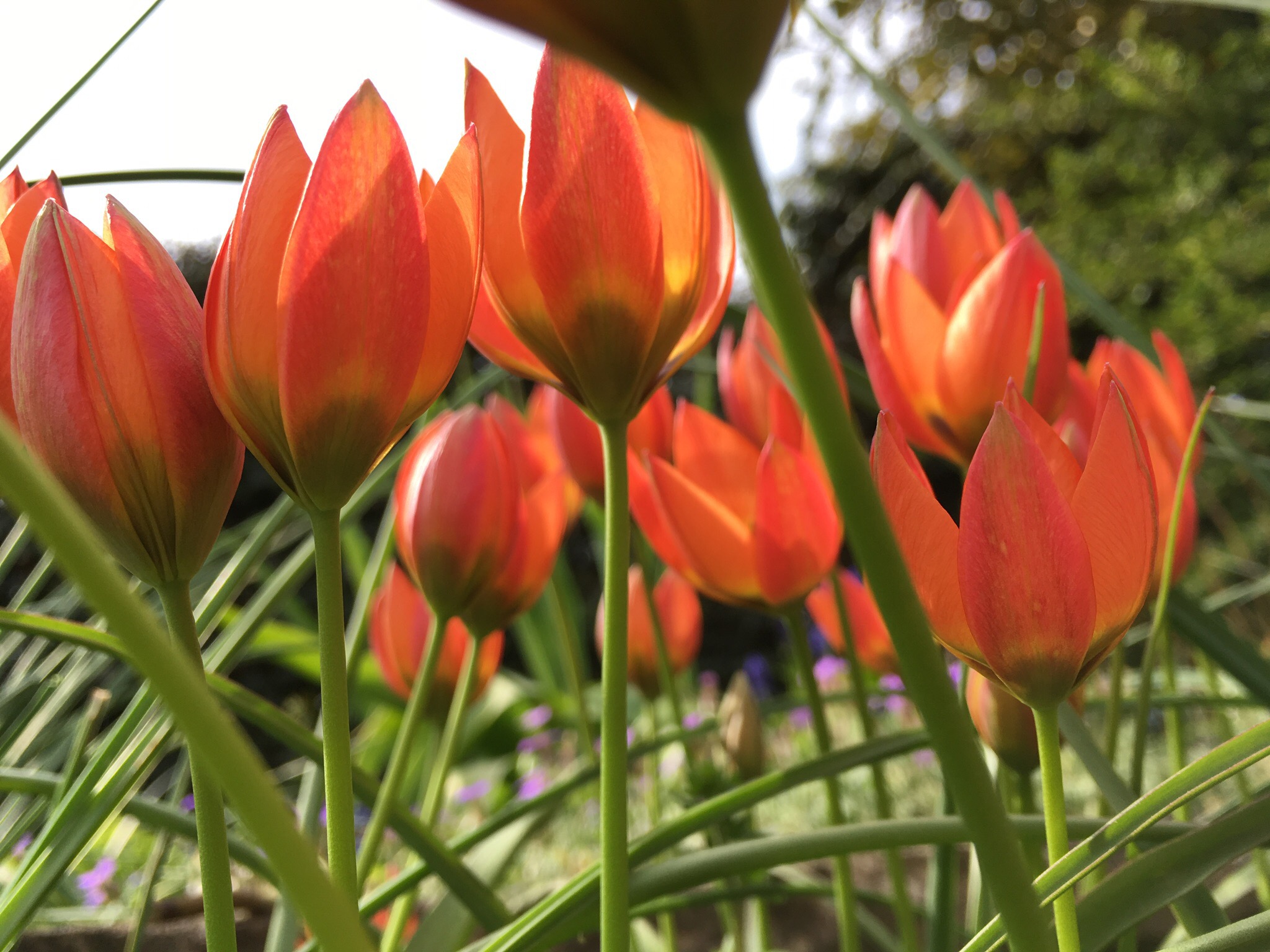
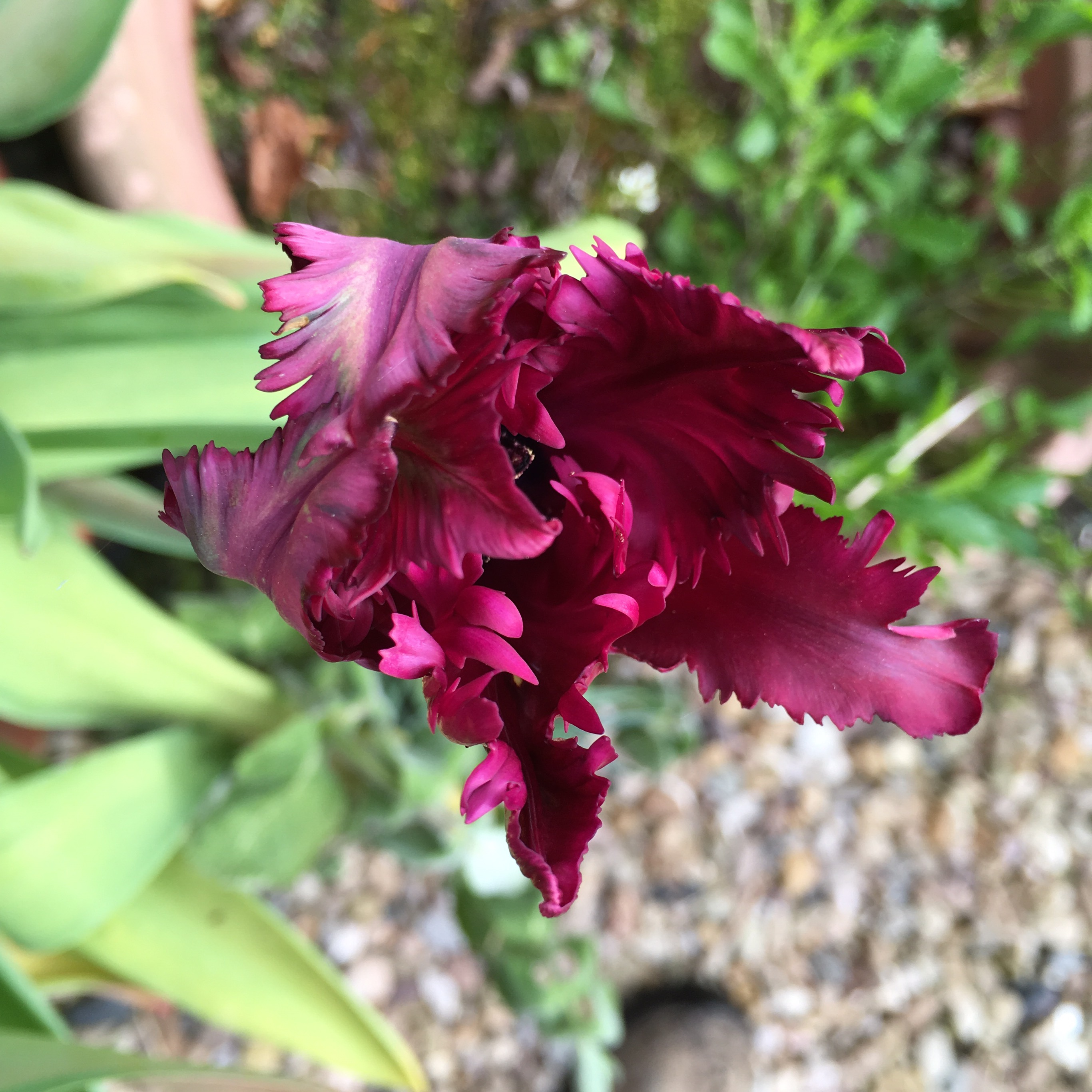
 Some of the ideas were a complete revelation. I had never heard of making a viewfinder to try out different angles. And I had never thought of looking down on my garden- or looking up.  Most of my photos are straight shots, taken from a standing position. So I tried it out on these tiny species rockery tulips. Looking down: 


Looking up. A worm’s-eye view. 

I haven’t quite got the best shot. They are so tiny, I needed to move some of the stems out of the way.  But it’s still an interesting view. I shall work on the idea. 

And here’s another photo I took from a standing position. A glorious garden at Burghley House near Stamford, open for the NGS scheme. 


And the worm’s-eye view, crouching down amongst the flowers: 

Over the past 25 years, Andrea has built an international reputation for her photography of landscapes, gardens and plants. Among the many awards, she was voted Photographer of the Year by her peers at the Garden Media Guild. Her website for more information is andreajones.co.uk

Andrea suggests making a plan of action- rather than just casually wandering  around the garden taking random shots (like I do now). Some of the best ideas I gathered from the book include:

Use a compass – a smart phone has a compass app- to get an idea of the light direction and potential shadows.

The best light for taking photos is the “golden hour” the first hour after the sun rises and the last hour of light before the sun sets. Use an online sunrise and sunset app to estimate the time. 

Tripods make a world of difference for taking good photos. But if, like me, you are using a camera phone, a small piece of tack or Plasticine can be used to position a phone temporarily on a secure surface to avoid camera shake. I tried this on top of the garden gate. 

If taking shots in bright, contrasty light, use your body to create a shadow and reduce the amount of light reaching the plant or subject of the photo.

Other headings in the book include: Photography in all Seasons, Photographing Pets and Wildlife, Working with Weather, Light, Macro, Micro, and Close-up, Essential Kit, and Catching the Moment. 

I am working my way through the rest of the book. There are 10 inspiring gardens featured with step-by-step lessons on observation, storytelling, composing, and editing. Andrea’s book helps you take your photography to another level, whether you are using a smart phone like me, or have the latest DSLR. It’s a master course on capturing the magic of gardens. 

Unfurling. My Black Parrot Tulip. A favourite this spring. Except, my foot is also in the photo. Sigh. I still have some work to do then. 


Thank you to Timber Press  for supplying The Garden Photography Workshop-  in exchange for an honest review. I will leave you with my cat Grace who shares my home- and garden- and who sits very patiently while I practise my new photography skills. 


Do you enjoy taking photographs of your garden?