
If you were listening in to BBC Radio Leicester for Gardens Hour today, I’ve written some notes to accompany the programme.
I’m working from home at the moment. The oak tree above has just burst into leaf. I can see the tree from the top of the paddock. The swallows returned here last Wednesday, and we’ve seen pipistrelle bats over the garden.
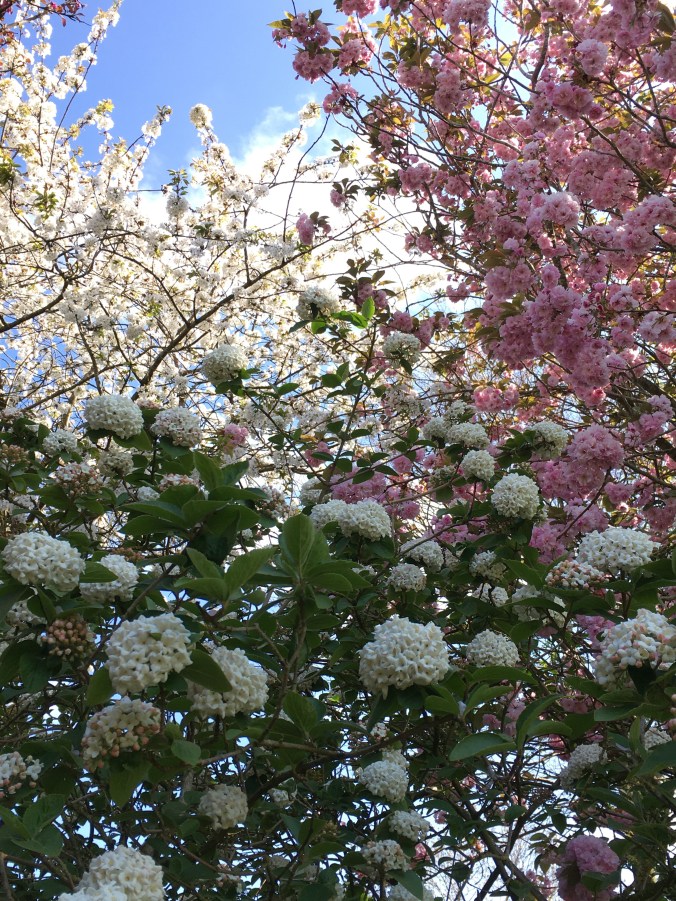
Blossom has been fabulous this year, with no rain to spoil the flowers. I’m sitting under this Prunus Kanzan cherry tree today to answer questions and talk about my gardening tasks.
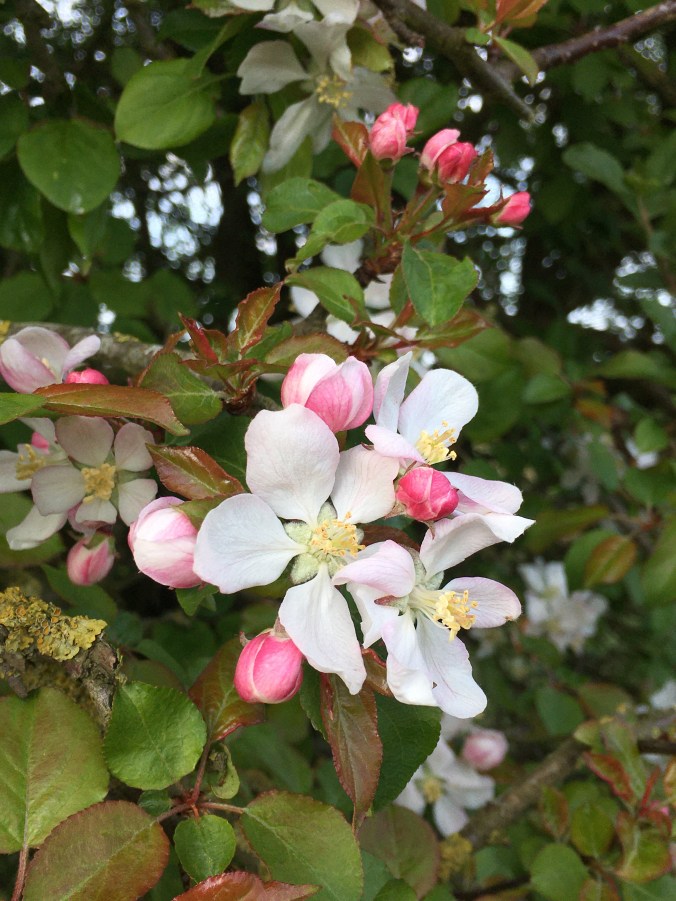
We had a question about an apple tree failing to establish.
If your tree is failing to thrive, it usually indicates a problem with the growing conditions. Poor growing conditions will stunt any tree or shrub.
Water any newly -planted trees well. Soil may be dry around the roots even when the surface appears moist. Check with a trowel to see how far the water is penetrating the ground.
Weeds and grass compete with trees for moisture. Keep a weed and lawn -free zone at least 1m in diameter around the plant.
Mulch locks in the moisture and helps feed the tree. Apply a mulch a good couple of inches deep around the tree, avoiding the trunk. (mulch piled up against the trunk can cause ‘drowning,’ so take care it doesn’t get pushed up against the tree).
You can use your own home-made compost or composted bark for the mulch. Do not apply to dry ground, as it can also lock -in drought.
You can place a drainage pipe in the ground alongside the tree at planting time, which helps water reach the roots. However, take care, as too much water can cause water logging, which is also detrimental.
Feed with a potash fertiliser, which promotes fruit and flowers.

Salix Flamingo – wiki commons photo.
We had a question about a Salix Flamingo willow tree failing to thrive. The tree has come into leaf and the leaves have shrivelled.
I’ve found this tree difficult to grow. It’s grown for its new, shrimp pink leaves which emerge in April. These leaves are delicate and easily damaged by cold winds and frost. Too much direct sunshine on emerging leaves can also cause them to shrivel. We have had a combination of high daytime temperatures, cold east winds, and plummeting night time temperatures. In a sheltered garden you would have no problems, but in a slightly more exposed spot, the tree struggles. Also, being from the willow family it requires plenty of moisture. We haven’t had any rain for several weeks and the ground is parched- despite all the record-breaking amounts of rain we’ve had over autumn and winter.
Usually, the tree recovers and produces a new set of leaves to replace the ones that have shrivelled. Watering and throwing some fleece over at night usually nurses it along until we get more even growing conditions in early summer. I’ve known them to suffer from a type of rust, and also canker. But apart from that, they are very pretty trees. They either like you, or they don’t though!
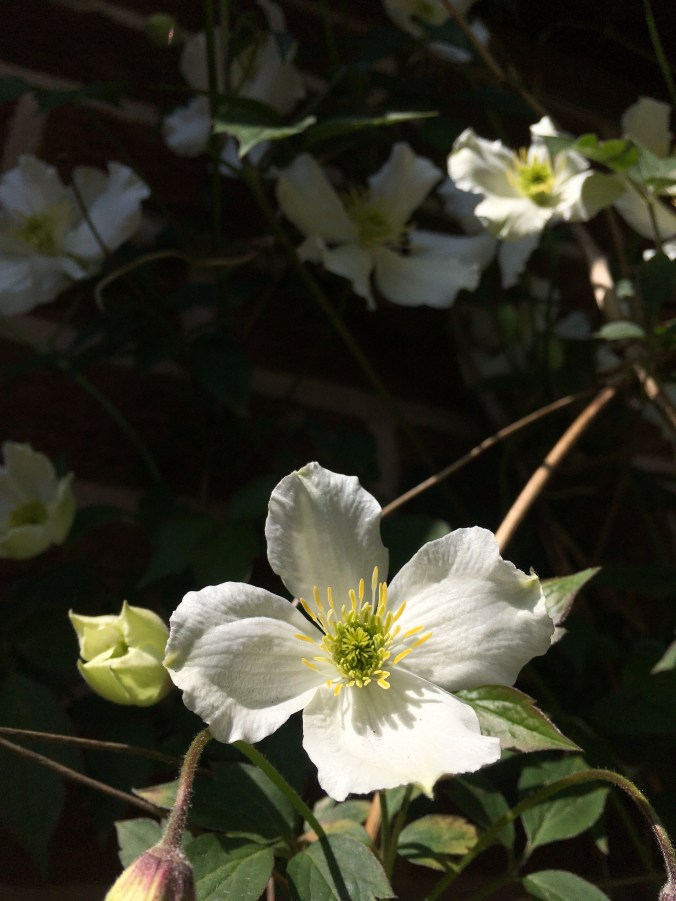
We had a question about a montana clematis failing to flower. This is my clematis Montana Wilsonii. The one the caller had was a pink variety, planted last year and growing in a pot next to an archway. The clematis on the other side of the arch was doing well.
Clematis montana flowers on the previous season’s wood. The caller hadn’t pruned it, but sometimes a montana clematis will take 2-3 years to settle into flowering as its first thought is to grow to the top of the archway.
Clematis don’t do as well in pots, unless they are a really good size and you can keep up with the watering requirements. So it would be best to plant the clematis in the ground and keep it well fed and watered. Potash feed, again, for flowers. And prune immediately after flowering, although I hardly prune my montana clematis to be honest. It’s pretty low maintenance, once established.

And finally, we had a caller wanting to buy a Venus fly trap. They are usually sold at local garden centres, which of course, are not open at the moment. However several are making deliveries, so it’s worth ringing round to source supplies of plants. I’ve found this one on line from QVC. I’ve bought various plug plants, bedding and bird food from QVC and found the service to be quick and reliable. However, I’ve never bought any fly trap plants from them, so can’t say more than I have managed to find a supplier.
I hope you’ve found these notes useful. Please listen in on Wednesdays at 12.30 with Ben Jackson and on Sundays (usually) with Dave Andrews at 1pm on your smart speaker, DAB 104.9FM or on BBC Sounds.
It’s great to be involved with local radio gardening and we try to offer something for experienced gardeners wanting to try new varieties and grow for shows, and also for those who have never grown anything before. All questions welcome. We will try our best to help. I am part of an experienced team.
Comments box is right at the bottom of the page, below hashtags, social media sharing and links.
BBC Sounds to listen back: https://www.bbc.co.uk/sounds/play/p088w205. At 2.37.30 on the timeline.
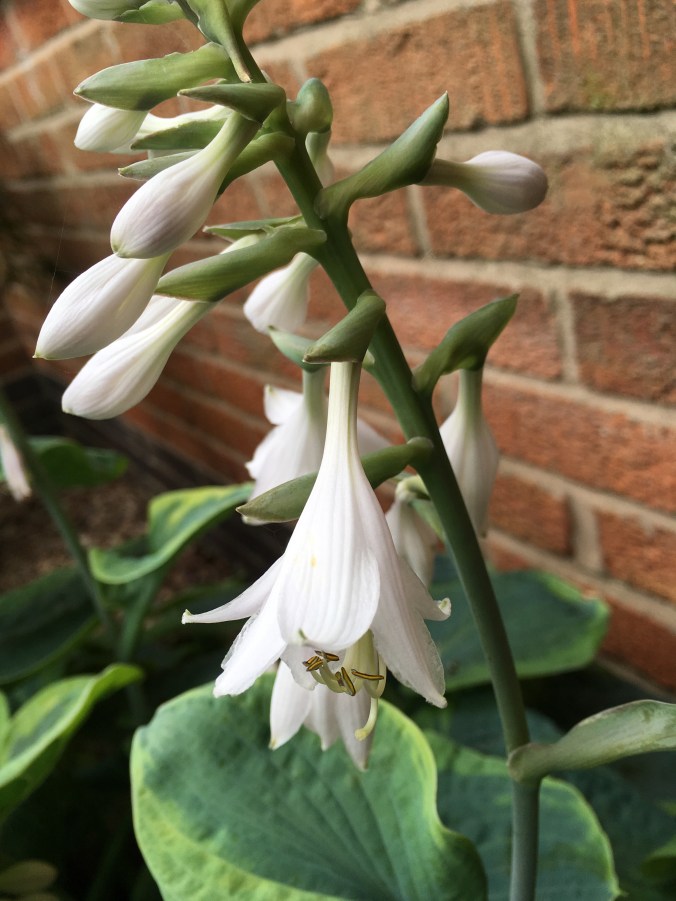


 Bramble Garden