Snowdrops at Thenford Arboretum

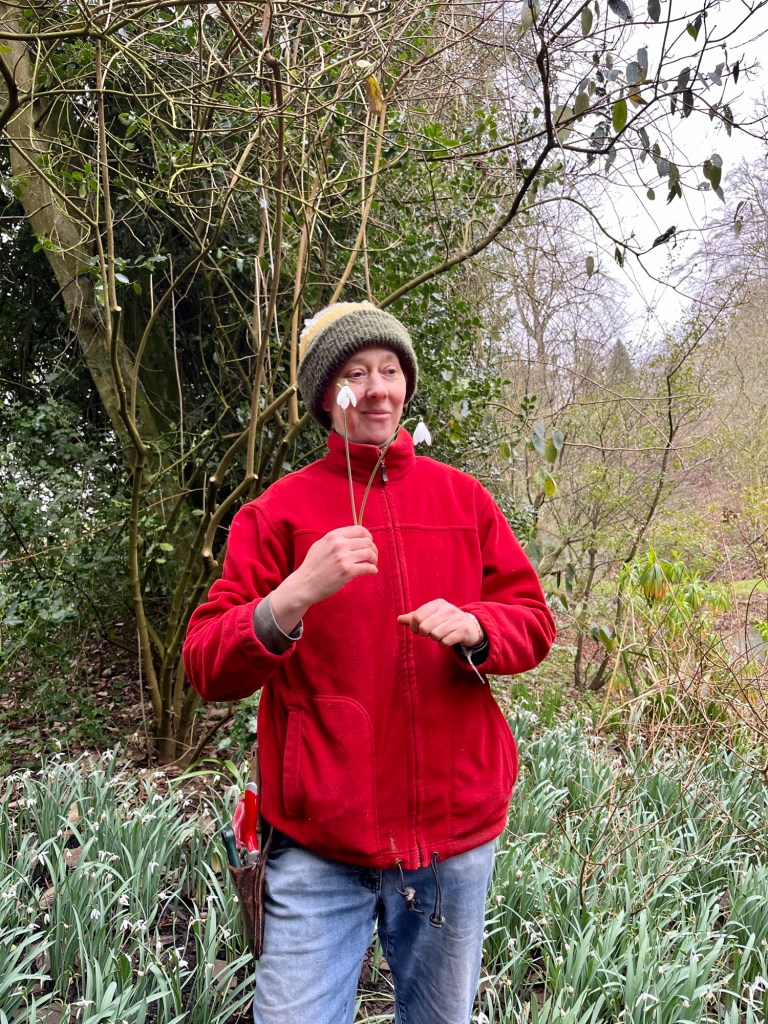
Emma Thick, deputy head gardener at Thenford Arboretum

A Shepherd: A person who herds, tends and guards. Watches over and protects.

I looked up the word shepherd when deputy head gardener Emma Thick described herself as a ‘snowdrop shepherd.’ It’s an apt description. For Emma, who works at Thenford Arboretum, tends, protects and cares for over 1,500 varieties of snowdrop, some of them rare and unusual.
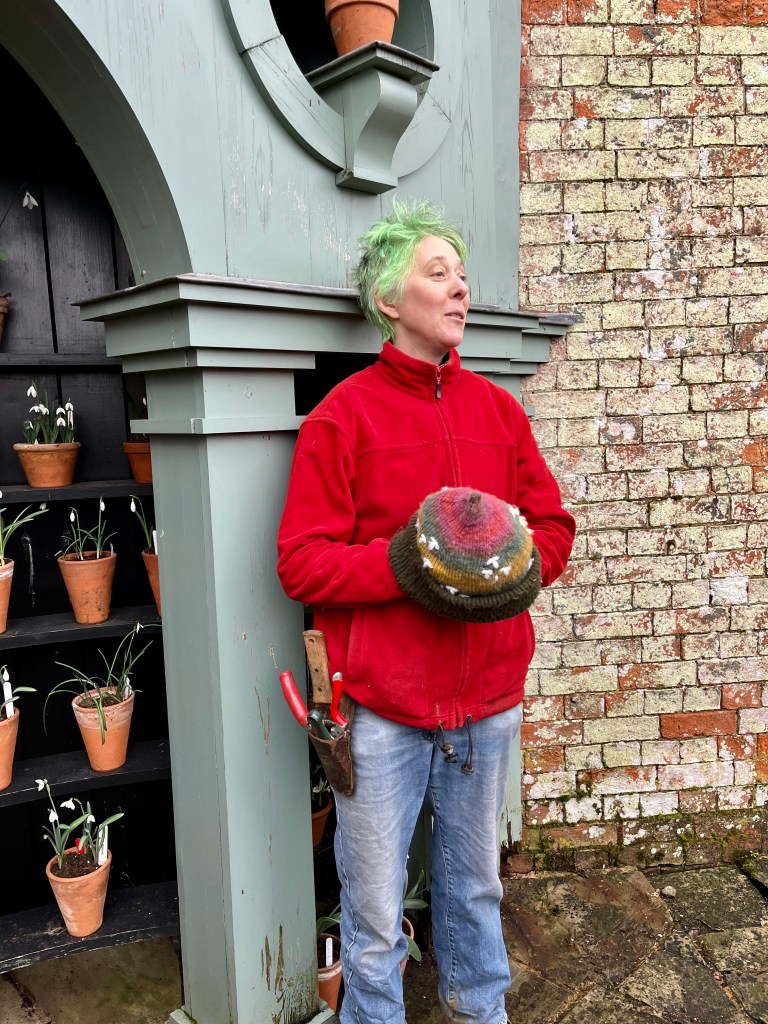
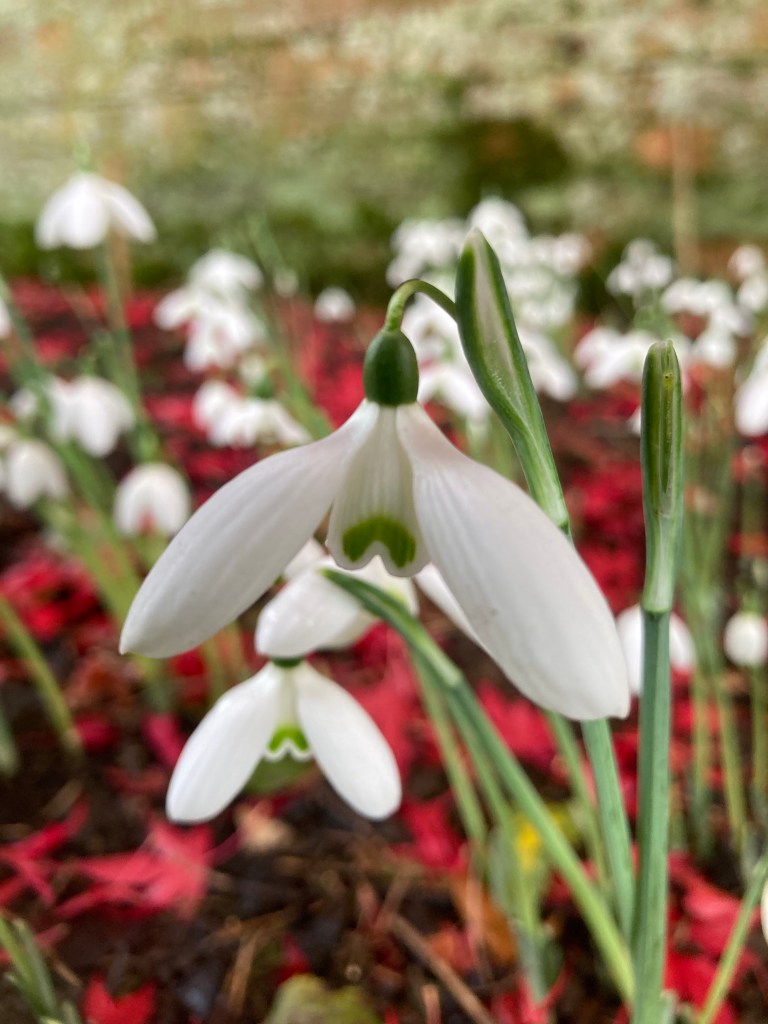
Emma has been in charge of the collection for ten years, and spending the day with her is a revealing and exciting journey of discovery. I ask Emma which is her favourite snowdrop, with so many to choose from. Immediately, she walks over to a patch of Galanthus ‘Mrs McNamara’ an elwesii variety. It starts flowering at Christmas and, in a cold winter such as this one, will still be in flower at the end of February. “It has big, broad, glaucus blue-green leaves, single inner-markings like a Chinese bridge, and is a very bright white. It sounds strange, but some snowdrops are not very white. This is a beautiful clear white flower. If I could only have one snowdrop it would be ‘Mrs McNamara’ always.”

The last few flowers of G ‘Mrs McNamara’.

When Emma first started working at Thenford, the owners Lord and Lady Heseltine, had amassed a collection of 350 types of snowdrop. Since then, the collection has grown, and in June 2023 Thenford was awarded National Collection status by Plant Heritage.

G. Plicatus ‘Henham no 1’

Snowdrops cluster around the base of specimen trees within the arboretum. But Emma says you don’t need to have a woodland setting or trees to grow snowdrops successfully. She has been trialling growing snowdrops at the base of hydrangeas. The shrubs take up water in the summer, giving snowdrops the period of dormancy they need. Then hydrangeas provide colour in late summer and autumn.

Emma recommends all hydrangea varieties for this plant partnership. At Thenford there are hundreds of mop-head, lacecap and paniculata types. These are low maintenance as well as being perfect planting companions for snowdrops.

G. ‘Pat Mason’ under a mop-head hydrangea
G. ‘James Backhouse’

Snowdrops can successfully be grown in containers. Thenford has a topiary garden with a collection of Italian urns containing black grass, Ophiopogon planiscapus, and snowdrops.
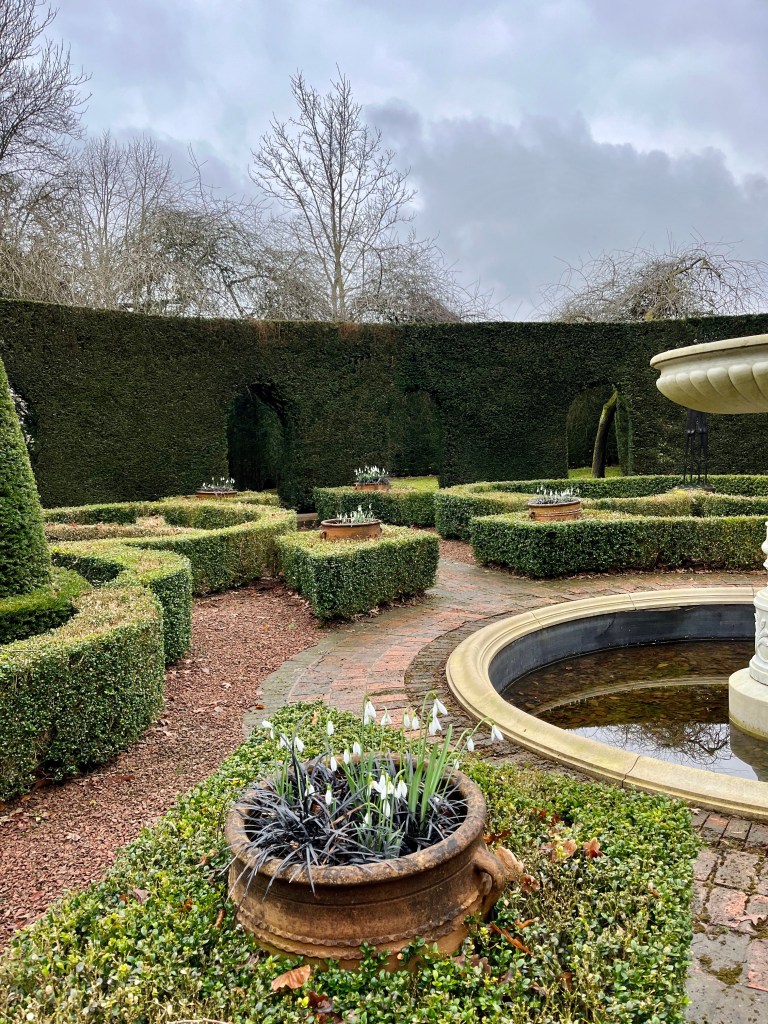
There’s also a plant theatre, created for auriculas, but in winter it’s used for snowdops and daffodils.
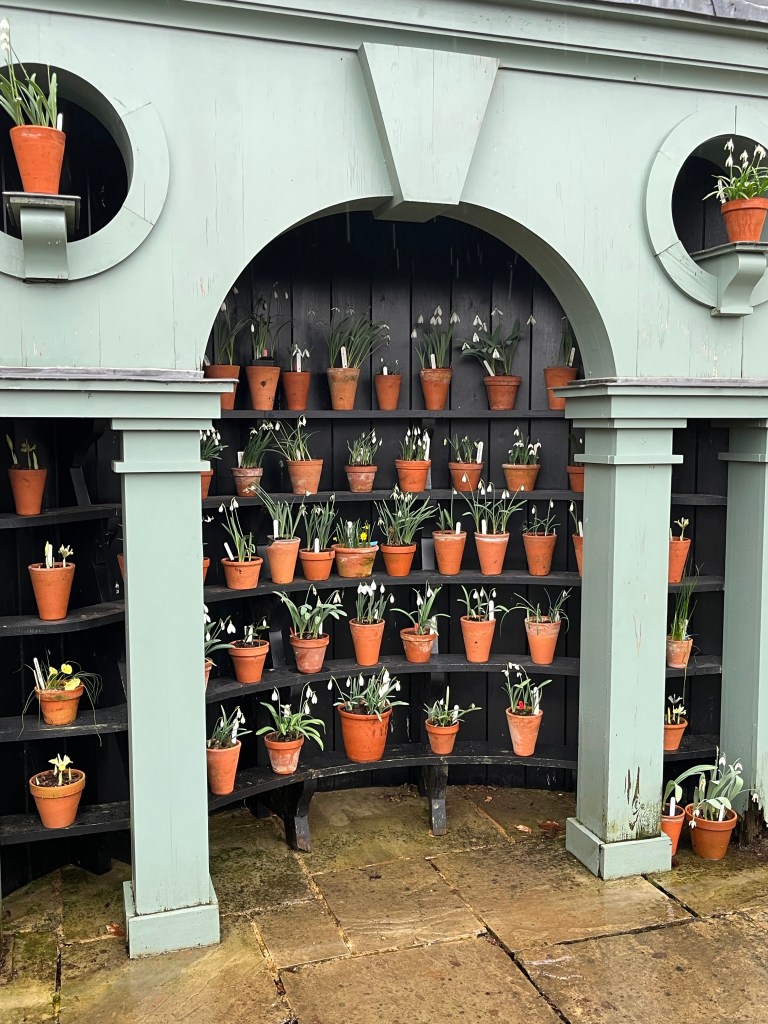
Snowdrops in teracotta pots look striking set against the black painted background, and it’s an opportunity to look closely and compare markings.

G. ‘Jedburgh’

I asked Emma which other varieties would she recommend. Here’s her list of top snowdrops to grow.
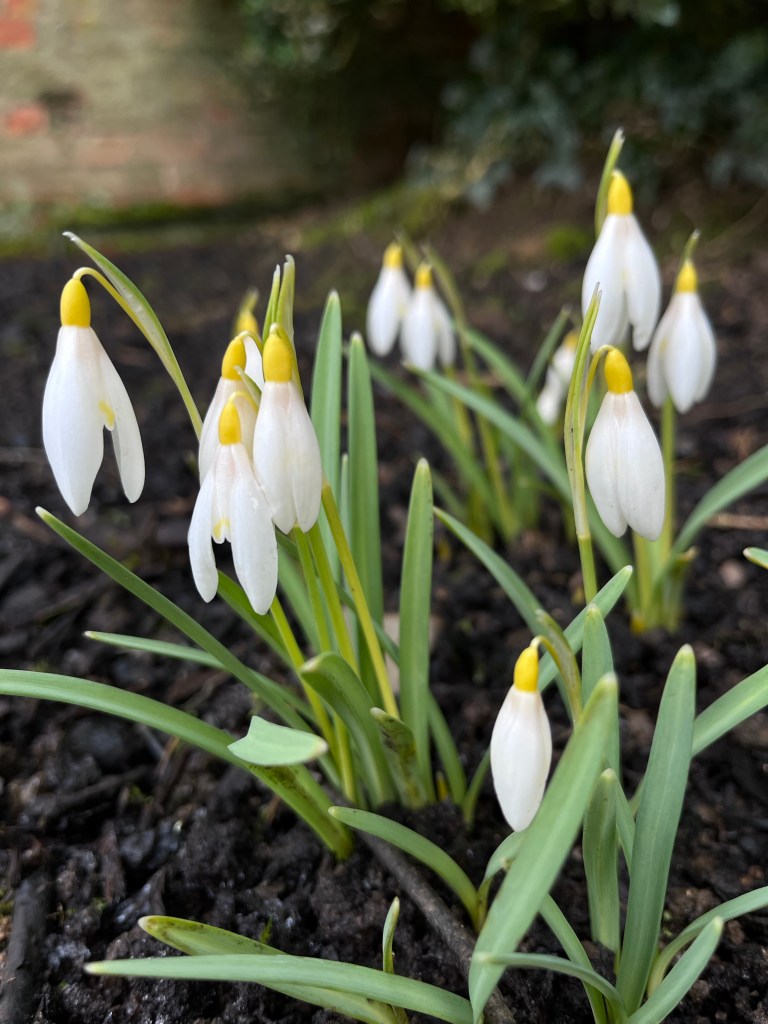
G. ‘Daisy Sunshine’. Snowdrop photos copyright Emma Thick.

‘Daisy Sunshine’ is not a lot different from the horde of nivalis sandersii group but quite a good, reliable yellow. Again, love the name . Everyone could find room for a bit of ‘Daisy Sunshine’ to brighten a corner of a garden, says Emma.
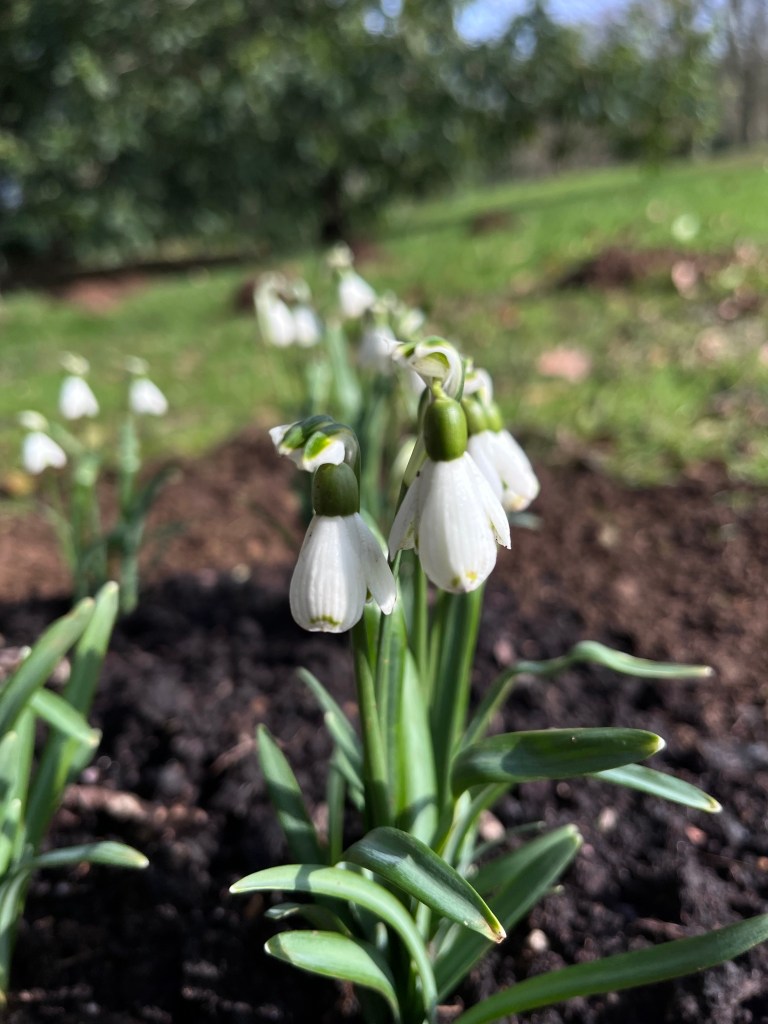
G. ‘Miss Behaving.’

“Galanthus reginae-olgae subsp vernalis ‘Miss Adventure’. Again, great name, quirky snowdrop. The spathe has mutated to become petal like. Has the bonus of having the outer petals maker green too, so would probably count as an inverse poculiform or I-poc for short . We grow her sister ‘Miss Behaving’ near by.

G. ‘Hill Poe’

‘Hill Poe’. A very frilly full double that does nothing but want to grow. Looks great in a big clump.
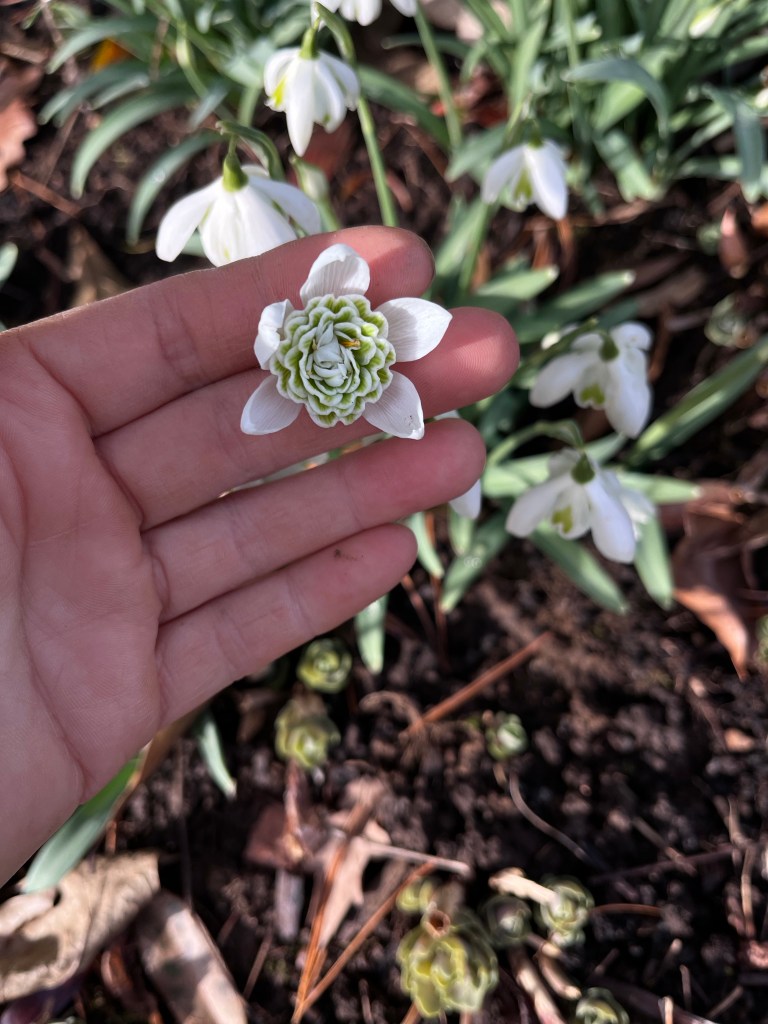
G ‘Hill Poe’
G. ‘E.A.Bowles’

‘E.A. Bowles’ is a pure white poculiform (inners and outers same length) almost shaped like a tiny lampshade. An exquisite beauty, not always the easiest to grow.

‘G. ‘Tilebarn Jamie ‘

Galanthus reginae-olgae subsp reginae-olgae ‘Tilebarn Jamie’ 

Flowers in October. Perfectly normal for this subsp to do that. And happens to coincide with the red leaf fall of Acer palmatum ‘Skeeters Broom.’ Just exquisite and an unexpected delight on our October open days.

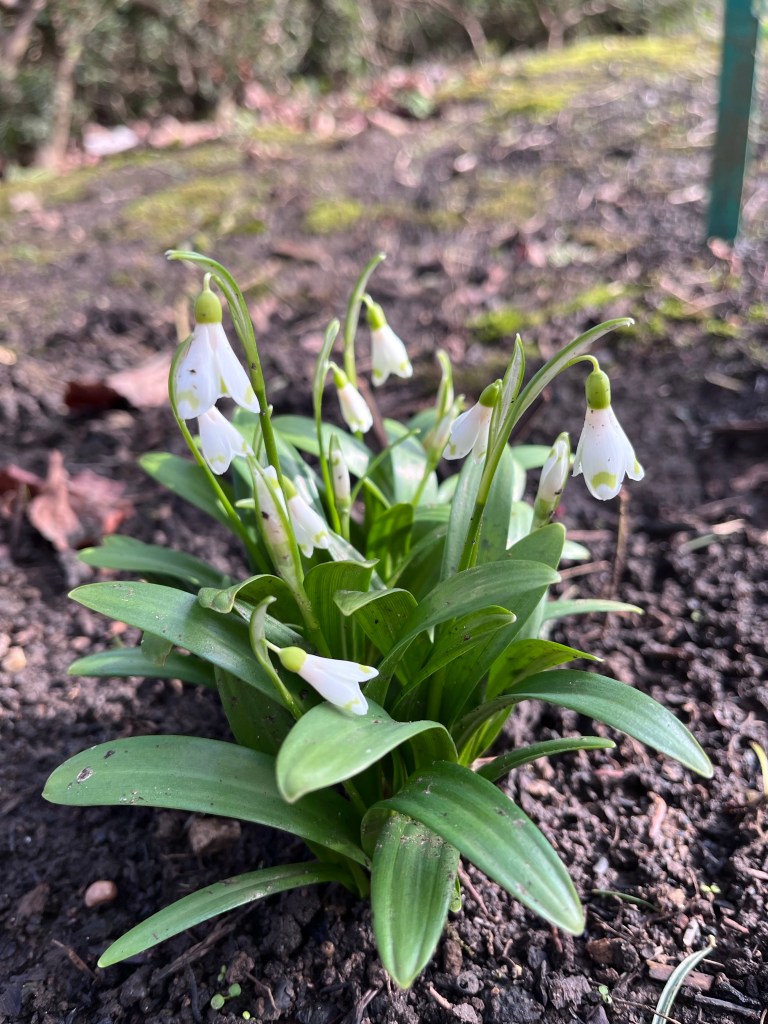
G. ‘Tilebarn Jamie’
G. ‘Cider with Rosie’

Woronowii ‘Cider with Rosie’ a green-tipped variety of Galanthus woronowii which I adore. One to admire up close as it is not the biggest or most dramatic.
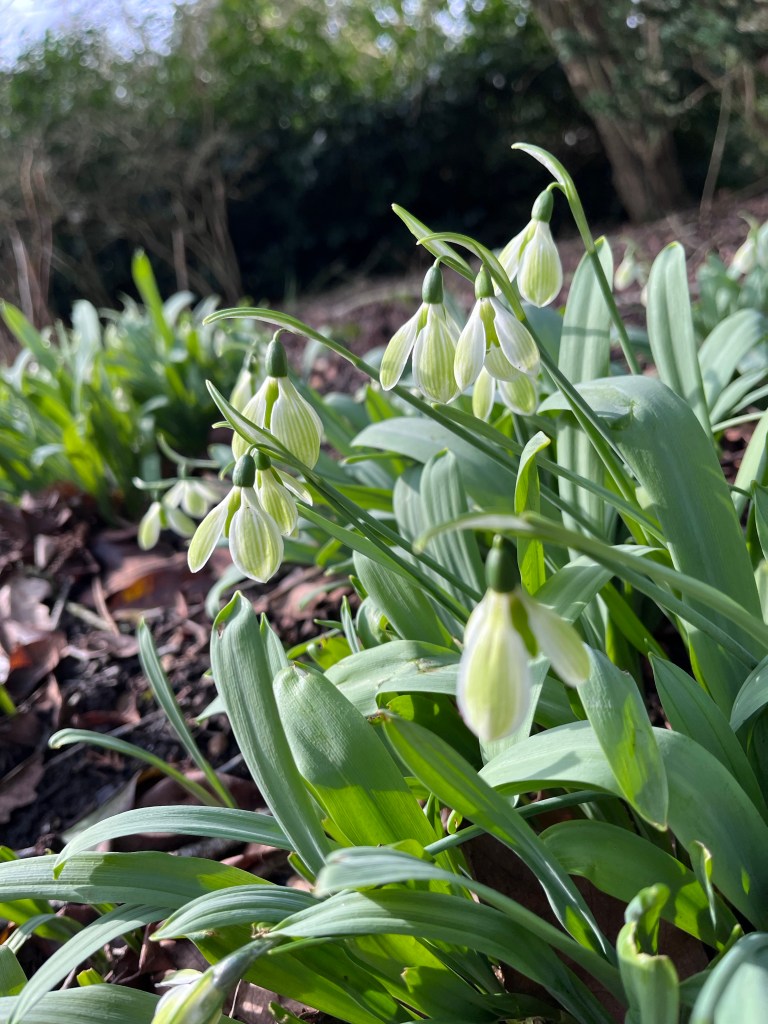
G. ‘Rosemary Burnham’

Galanthus elwesii ‘Rosemary Burnham.’ A virescent snowdrop which people probably either love or hate depending on how you like green flowers. Again, grows well here at Thenford but not for others. Best appreciated up close.
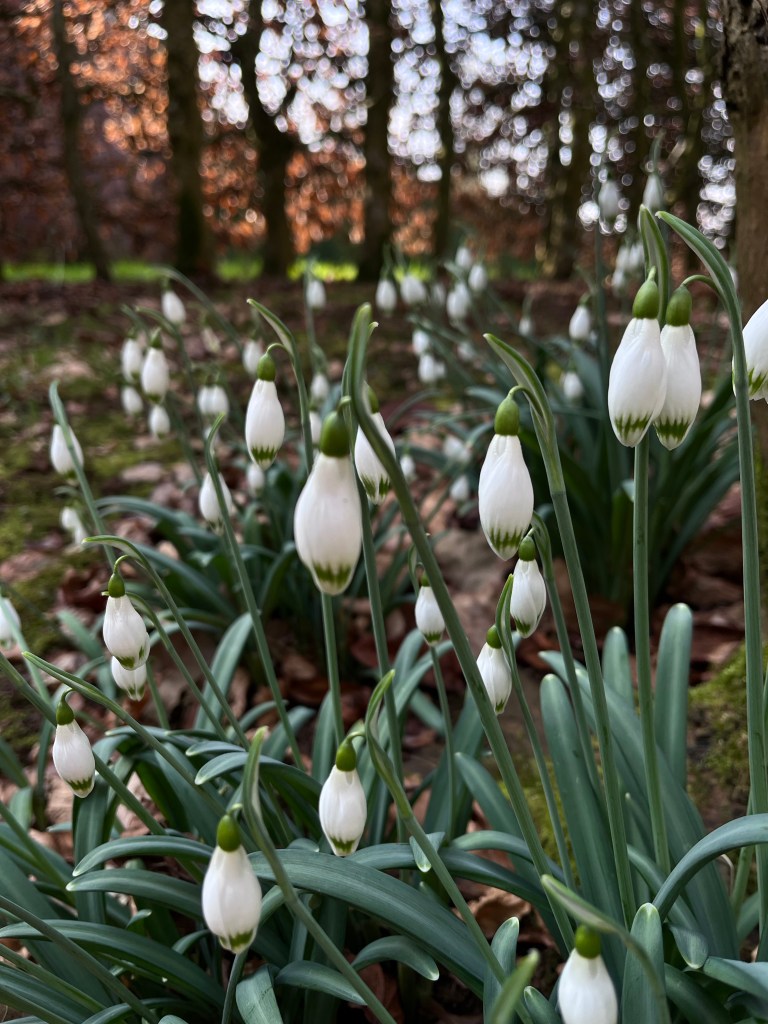
G. ‘Greenfinch.’

‘Greenfinch’ an excellent green tipped snowdrop. The green is really embedded in the outer petals so it appears very pinched.

G. ‘Blewbury Tart.’

‘Blewbury Tart’. Not a pretty flower really, but looks good in a clump. It is my mum Cherry Thick’s favourite. It was found by Alan Street in Oxfordshire. Again, best admired up close.”

I asked Emma for advice on planting snowdrops. She said wait until the bulbs are dormant before moving them. Snowdrops produce just one set of roots each year. Any damage to the roots while digging up or planting means the bulb will not be able to take up enough nutrient for the following year. This means the bulb will either fail to flower or die.

Thenford opens for 20 days a year. Rupert Heseltine explained his parents, Lord and Lady Heseltine purchased the house and it’s surrounding garden in 1976. Over the next 25 years, their priority was to restore the 40 acres of woodland. Debris was cleared, rotten or fallen trees removed and replaced with many rare and unusual varieties. The arboretum now extends to 70 acres with 3,000 trees and shrubs. There are 113 ‘Champion Trees.’ The medieval fish ponds and their interconnecting canal and lake have all been restored and two new lakes have been added.

The walled garden was being used as a sheep field when the Heseltines bought the property. It has now been restored and features trained fruit trees, step-over apples, and a range of greenhouses containing exotic plants and citrus.

To book tickets to visit Thenford, see the website:

https://thenfordarboretum.com/

The 2026 Snowdrop Spectacular will be held on Saturday, February 14.

Thank you for reading my blog. I hope you’ve enjoyed these photos and found the information from Emma inspiring. There’s an interview with Emma on my Instagram account at karengimson1.

I enjoyed every second of my visit to the gardens and I’m certainly looking forward to visiting again through the seasons, and to viewing the snowdrops again next February. It’s a ‘must visit’ on my calendar!

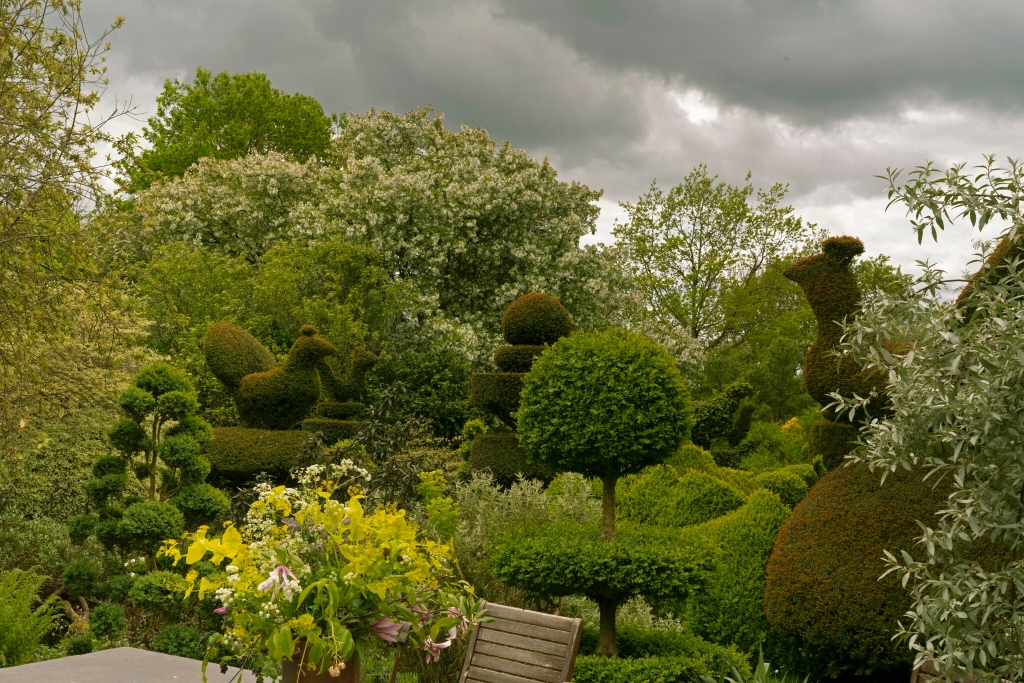
Book Review: Secret Gardens of the South East- A Private Tour. My BBC Local Radio book of the week

By Barbara Segall

Photos by Clive Boursnell

Published by Frances Lincoln, autumn 2022

Hardback RRP £22

ISBN 978-0-7112-5260-8

One of my favourite things is to jump in the car and travel to a garden I’ve not seen before. It doesn’t matter if the garden is large or small, there’s always some planting combination or landscaping idea I jot down in a notebook, hoping to replicate it in my own garden one day.

The gardens of the South East of England are still a mystery to me. My car hasn’t ventured that far yet. But I’ve just read Barbara Segall’s exciting new book featuring 20 gardens in that region, and I’m getting out the map book already!

Balmoral Cottage, Kent. Topiary created from cuttings.

One particular garden in the book struck a chord with me. Balmoral Cottage in Benenden, Kent, where the owners grew many of the plants from divisions and cuttings from their parents’ gardens. Charlotte and Donald Molesworth bought the cottage nearly 40 years ago. Barbara tells the story of how Donald, a professional gardener, had been working next door at The Grange, the former home of Collingwood ‘Cherry’ Ingram – the plant hunter credited with returning endangered cherries to Japan.

Barbara writes, “That moment when you meet your future down a little lane, see a gate and opening it find the rest of time ahead of you…..? Well, that is literally what happened when Charlotte and Donald Molesworth found and bought Balmoral Cottage in Benenden in 1983.

For eight years Charlotte had been living in and teaching art at Benenden School, and on walks around the village, often stepped along the rough track leading to this tiny house, which had the best sunsets imaginable. Probably named Balmoral to celebrate a visit of Queen Victoria to Benenden, it was the gardener’s cottage for the Grange.

The Molesworths brought with them to Balmoral Cottage the first of many animals to share their garden lives, including bees, rescue dogs, donkeys (there have been nine) and companion sheep, hens and a cockerel.

They knew that they would need plenty of plants to make their garden and, being thrifty and resourceful they brought many plants from their parents’ gardens. From Donald’s family came woodland trilliums, dog’s-tooth violets and narcissus pseudonarcissus which have self-seeded and spread down each side of that original track. Charlotte’s mother’s garden was packed with old fashioned roses, cottage-garden plants and topiary, so her contributions included double white primroses and several thousand box cuttings.”

I love the fact they have created a special and unusual garden on a shoestring. They avoid buying anything new, scouring reclamation yards for potential items for recycling. “It’s our policy for helping Mother Earth,” they say. It’s resulted in a garden that makes you feel anything is possible. It’s not dependent on how much money you have, but on ingenuity, patience and skill. A very reassuring message for any would-be gardener, and one I welcome entirely.

Gravetye Manor, East Grinstead, West Sussex

I’ve picked out just one of the 20 stunning gardens explored by Barbara Segall in this richly detailed book. There’s a lovely mix of the extremely grand to the small and intimate. All are privately owned. Some have been in the possession of the same family for many generations, whilst others have recently been acquired and transformed by new owners. There’s a wonderful diversity of landscaping styles and a range of planting from traditional herbaceous borders to fashionable and contemporary prairies.

Sussex Prairie Garden, near Henfield, West Sussex
Sussex Prairie Garden. Curving paths through the grand spiral of the borders bring you up-close so you can experience the undulation of the plants and their blocks of colour from within.

Barbara is a totally engaging writer who draws you into the gardens and skilfully sifts out the essence of what makes them special. Not a word is wasted and reading her books is so easy. It’s a pleasure to skip through the pages and be transported to these glorious places.

Town Place, near Sheffield Park, East Sussex

The book includes visitor information about the gardens profiled as well as several others in this garden-rich area of Kent, Sussex and Surrey. Some open for the popular National Gardens Scheme, while others are open privately, and in some cases, for just the occasional day for charity.

Arundel Castle, Arundel, West Sussex. Caught in the early morning mist, the windows of Arundel Cathedral provide a dramatic borrowed landscape to the annual allium, rose and salvia extravaganza.
Arundel Castle team and bulb-filled borders sweeping up to the battlements. I particularly liked seeing the teams of gardeners included in the book. Credit is due for the wonderful work they undertake, looking after these special places.

Special mention must be made of the photographs by Clive Boursnell who initially visited 40 gardens and travelled 12,500 miles for this stunning project. Sadly, only 20 could be included in the book. But he talks about the warm welcome he received at every garden, as he travelled about in his camper van, capturing the atmospheric dawn and dusk photos. He turned up during a daughter’s wedding that was taking place in one garden. The owners, not phased by his appearance in the middle of a celebration, made sure he could get his photos of a particular rose trellis at its peak. Such small details and asides give an insight into the characters behind the gardens, their passions and their personalities.

Long Barn, Sevenoaks, Kent. The barn wall provides a strong backdrop as well as a hotspot for California glory (Fremontodendron californicum). Together with the lime-green touches of Euphorbia characias subs. wulfenii, they offer a counterpoint to the closely clipped hedging and lawns on the main lawn.

Barbara writes: “I hope you will find much pleasure in the book and visit the gardens when possible…opening garden gates to find untold beauty.”

I know that I enjoyed every page and can’t wait to investigate the gardens further.

Clinton Lodge Gardens, Fletching, East Sussex. The view through the Cloister Walk arcades, clad with white wisteria and Clematis alba Luxurians, to the Wild Garden, with its spring tide of Narcissus poeticus Pheasant’s Eye and white tulips.
Munstead Wood and the Quadrangle, Godalming, Surrey. The main flower border, some 61 metres long, blooms in waves of colour following Gertrude Jekyll’s original iconic, complicated drawing.
87 Albert Street, Whitstable, Kent.
Malthouse Farm Garden, Hassocks, East Sussex.

The publishers are giving away one book in a prize draw to readers who leave comments below. One name will be randomly selected. Sorry, only open to UK entries due to postage costs. The draw closes at 6pm on 21st October.

I wrote about Barbara here:

https://bramblegarden.com/2021/01/10/herbs-cooking-and-reading-blogs-keeping-cheerful-through-lockdown/

And Barbara’s previous books:

https://bramblegarden.com/2017/08/14/words-and-pictures-3/

https://bramblegarden.com/2017/10/13/win-a-copy-of-secret-gardens-of-east-anglia-and-heres-an-update-on-my-fund-raising-plans-2/

Thank you for reading my blog. I hope you enjoy these words and photos from Barbara’s latest book. It was my book of the week on local radio gardening shows earlier this summer.

In a Vase on Monday-February 4th 2019

I’m starting to miss sunshine and warm weather. I’m muffled up with coat, scarves, gloves, two pairs of socks, and still the cold seeps in. There’s been such a cold wind. The ground is frozen and the pond iced over. And yet, mooching about looking for something cheerful, I find chinodoxa- untroubled by the cold, the colour of Mediterranean skies. A little bit of hope.

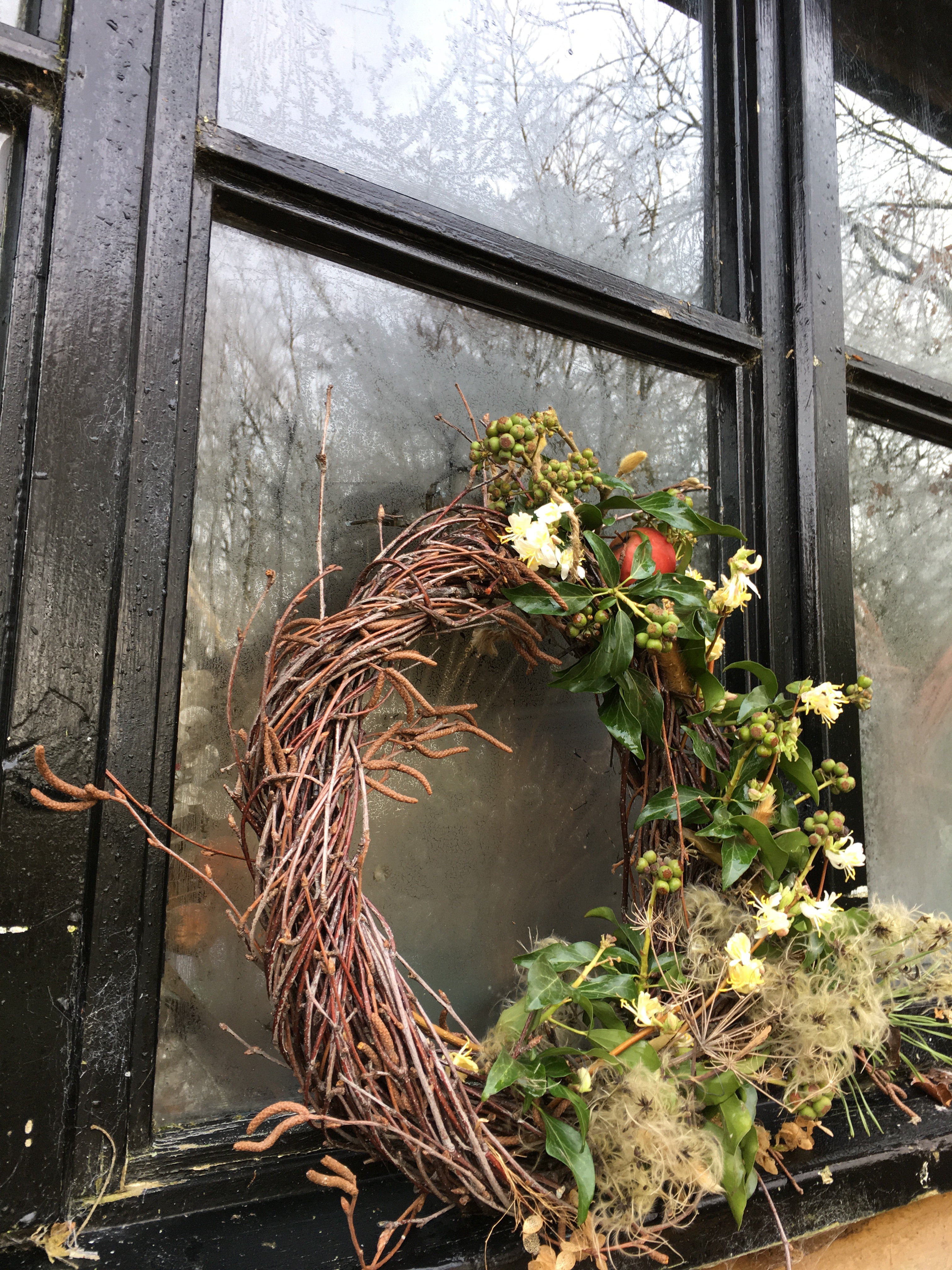
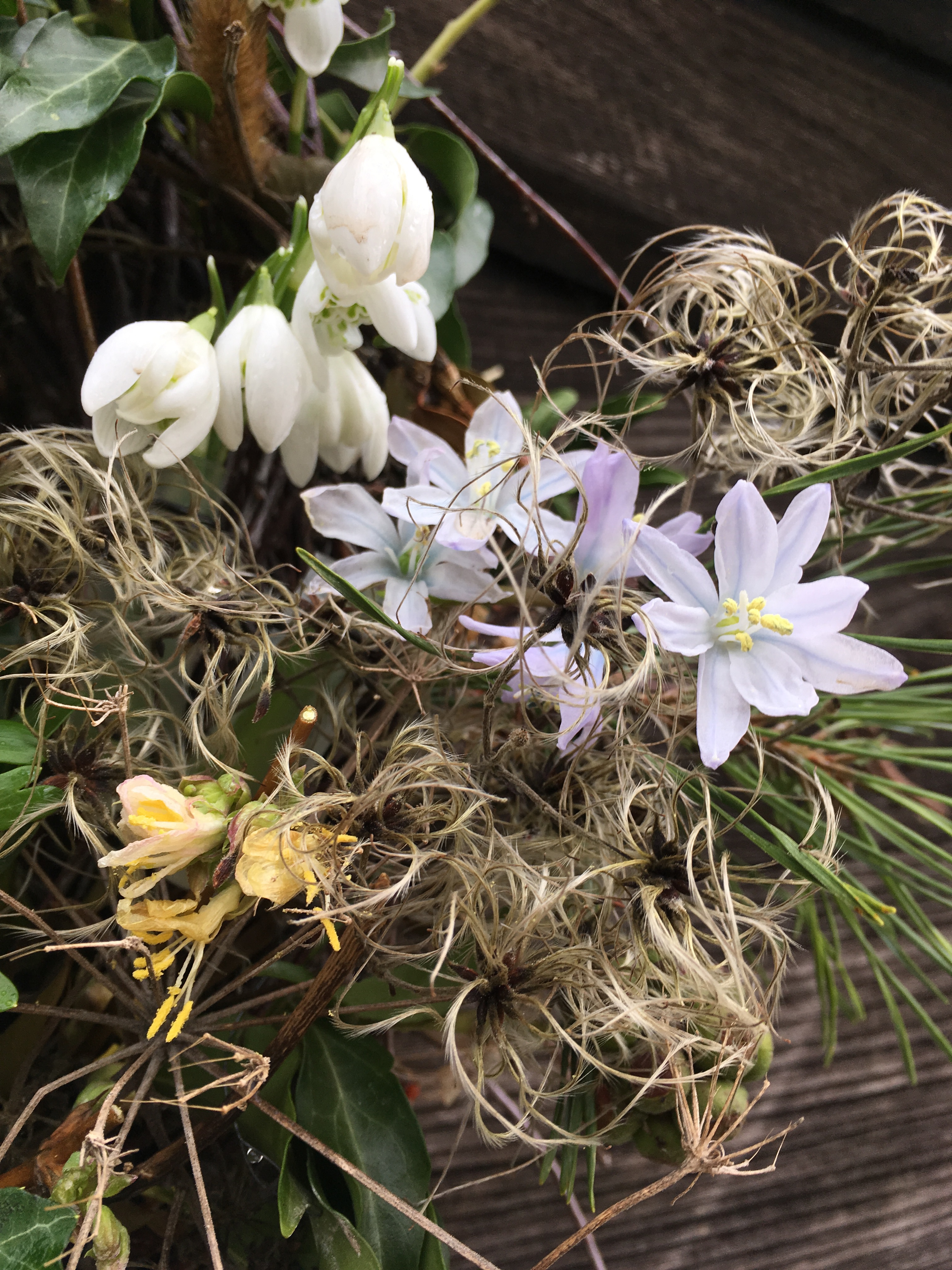
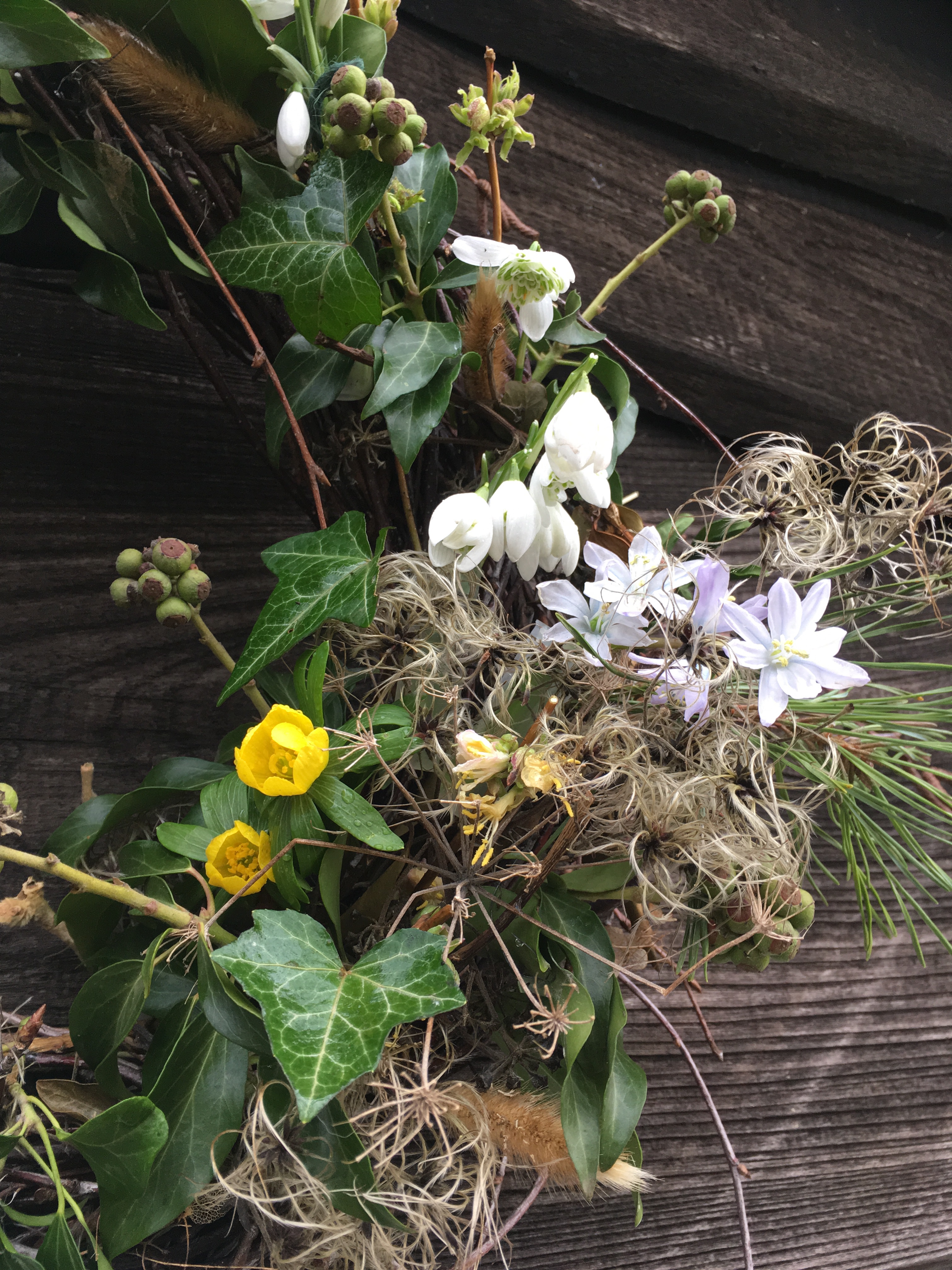
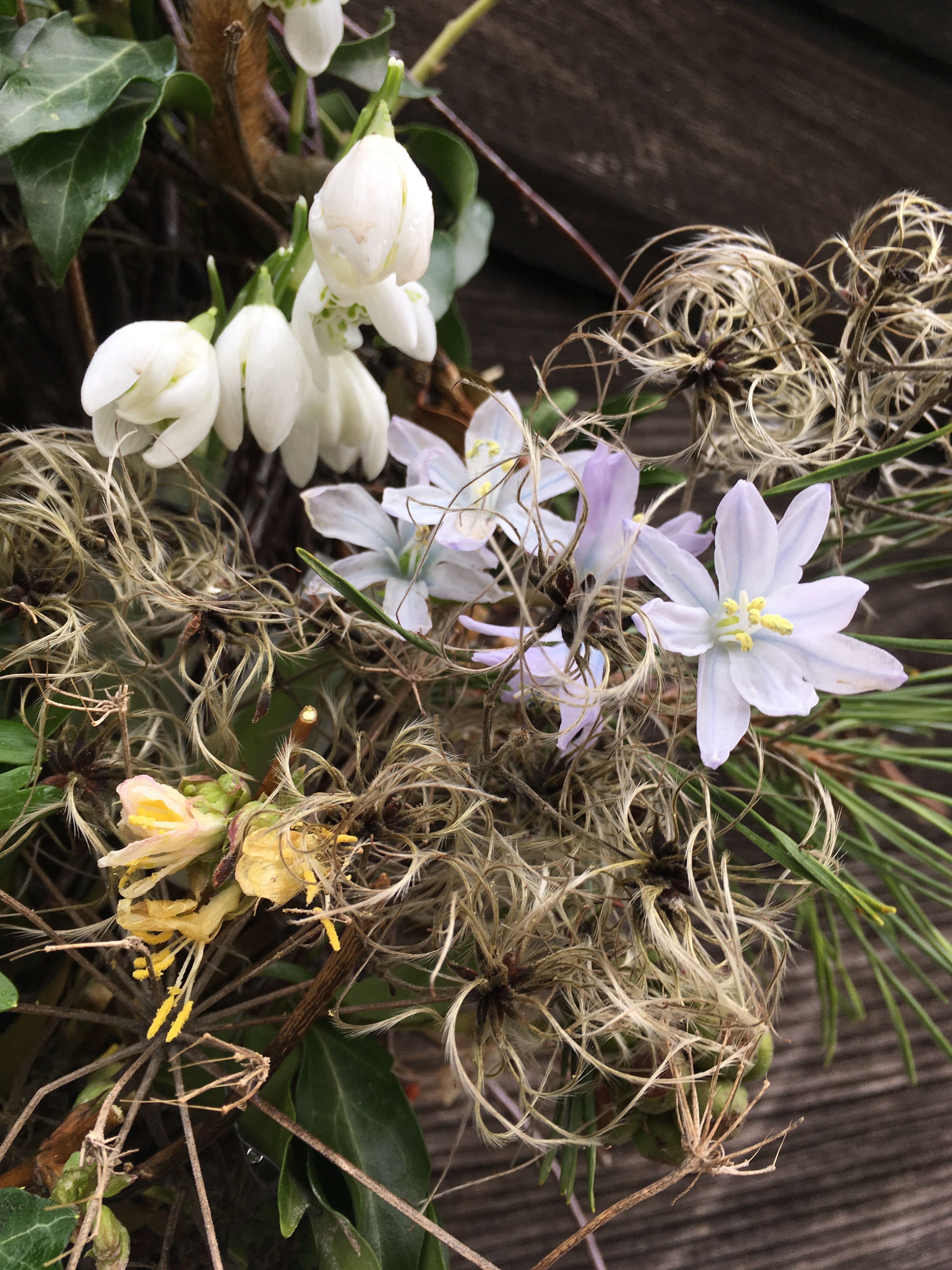
A circle of silver birch twigs makes a pretty background for spring flowers. I just twist the branches like rope and tie the ends together. I’m trying not to use florists’ foam as it’s currently not recyclable. I’ve found a solution. A friend sent me a box of orchids, each one with a 7cm test tube of water, keeping them fresh. Recycling them, I twist a piece of wire around the necks and stick them in amongst the twiggy coils. Topped with moss, and hidden with ivy, no one will know they are there. I just have to top up the water each morning, and at the same time, add fresh flowers as I please. The wreath here was made on Saturday with wild clematis -old man’s beard- ivy and winter flowering honeysuckle lonicera fragrantissima. It survived high winds, mostly. Silver honesty lasted a day, then blew into the back field hedge where it glistens like a tiny mirror. And the star-like cow-parsley seed heads have gone. It’s an arrangement that changes with the weather. I like that. It’s real life. A reflection of what’s happening in my garden today.

So this morning, I’ve picked some snowdrops and chinodoxa and added them to the arrangement. Chinodoxa known as “glory of the snow” seems untroubled by the cold north wind. Such a delicate flower, and yet so hardy.

To add my own sunshine, I’ve found some aconites, Eranthis hyemalis. We called these gold coins when we were growing up.

Snowdrops nestle amongst the foliage. I bought the single variety , galanthus nivalis, from Easton Walled Gardens. A little bit of history now growing in my wild garden. There’s been a garden at Easton for at least 400 years. A renovation project started almost 20 years ago, has rescued the garden for future generations to enjoy. The double snowdrops came from Hodsock Priory. Another favourite place to visit with my Mum.

My wreath sits above the doors on our 1930s turntable summerhouse. We’ve turned our backs to the wind and swung the summerhouse around to face the wild garden. There’s wild garlic thriving on the right, under the willow. I’m really pleased to see snowdrops I planted three years ago starting to form little clumps. How long, I wonder, before the scene is a sea of white. I shall have to wait and see.

Links :

I’m joining Cathy for her IAVOM meme. https://ramblinginthegarden.wordpress.com/2019/02/04/in-a-vase-on-monday-skinny/

Chonodoxa https://www.gee-tee.co.uk/bulbs/chionodoxa/chionodoxa-violet-beauty

Eranthis https://www.gee-tee.co.uk/bulbs/bulbs-in-the-green/eranthis-hyemalis-winter-aconite

Easton Walled Gardens https://www.visiteaston.co.uk/

Hodsock Priory snowdrops http://www.hodsockpriory.com/about-us/the-gardens/snowdrops/

NGS snowdrop gardens to visit https://www.ngs.org.uk/find-a-garden/snowdrop-gardens/

Lonicera fragrantissima https://www.rhs.org.uk/Plants/68665/i-Lonicera-fragrantissima-i/Details

Last Minute Christmas Presents for Gardeners

Here’s my last minute recommendations. I would love to receive any of these. They all last longer than Christmas Day. Prices vary, depending on special offers and discounts.

1. Vouchers for a course at Common Farm Flowers.

https://www.commonfarmflowers.com/workshops.html .

I joined the Grow Your Own Cut Flower Patch course a few years ago, and I’m self-sufficient in flowers for my friends and family. There was enough information to grow plants commercially, if I had wanted to. I’m delighted to be able to wander about my garden at any time of the year and create beautiful hand tied bouquets and pretty jam jar posies. There’s something special about home-grown flowers. It’s all a matter of planning and knowing what varieties to grow. Georgie is an excellent teacher. After attending one of her courses, you feel as if you can conquer the world. It’s a rather wonderful feeling!

Courses on offer range from £15 for a garden tour to £290 for a painting course.

Courses: Flower Farming, encouraging wildlife, social media for small businesses, starting a kitchen table business, grow your own wedding flowers, hand tied bouquets.

2. RHS Membership. From £61.

Develop your gardening skills with an RHS membership package. Membership includes unlimited entry to RHS gardens, discounts for show tickets, personalised advice, and entry to 200 partner gardens. The RHS magazine,The Garden, is worth the membership price alone. It is packed full of inspiring ideas and information. Written by experts we all trust. I always look forward to my copy, and it keeps me up to date with new plants, ideas for recycling, using less plastic in the garden and information on the latest research into plant diseases. It’s great to see The Garden magazine will be delivered in recyclable paper packaging instead of single-use plastic next spring.

https://www.rhs.org.uk/shop/special-offers/active-offers/rhs-gift-membership-offer

3. Support the Woodland Trust with a membership package. £48.

Explore 1,000 Woodland Trust woods. A walk in a wood lifts your mood and re-energises you. It will do you a power of good.

https://www.woodlandtrust.org.uk/membership/

4. Membership for St Tiggywinkles wildlife hospital. £36.

We all rely on our wildlife, hedgehogs in particular, to help us combat slugs. This is a wonderful way to support wildlife and learn more about them.

https://www.sttiggywinkles.org.uk/top-navigation/help-us/membership.html

5. Join The Hardy Plant Society. £17 a year.

A great way to discover more about hardy plants, find like- minded gardeners and join in with events such as talks and slide shows, conservation and plant sales. There’s two issues of the The Hardy Plant magazine a year, free advice and a chance to take part in the free seed distribution scheme.

http://www.hardy-plant.org.uk/whyjoinus

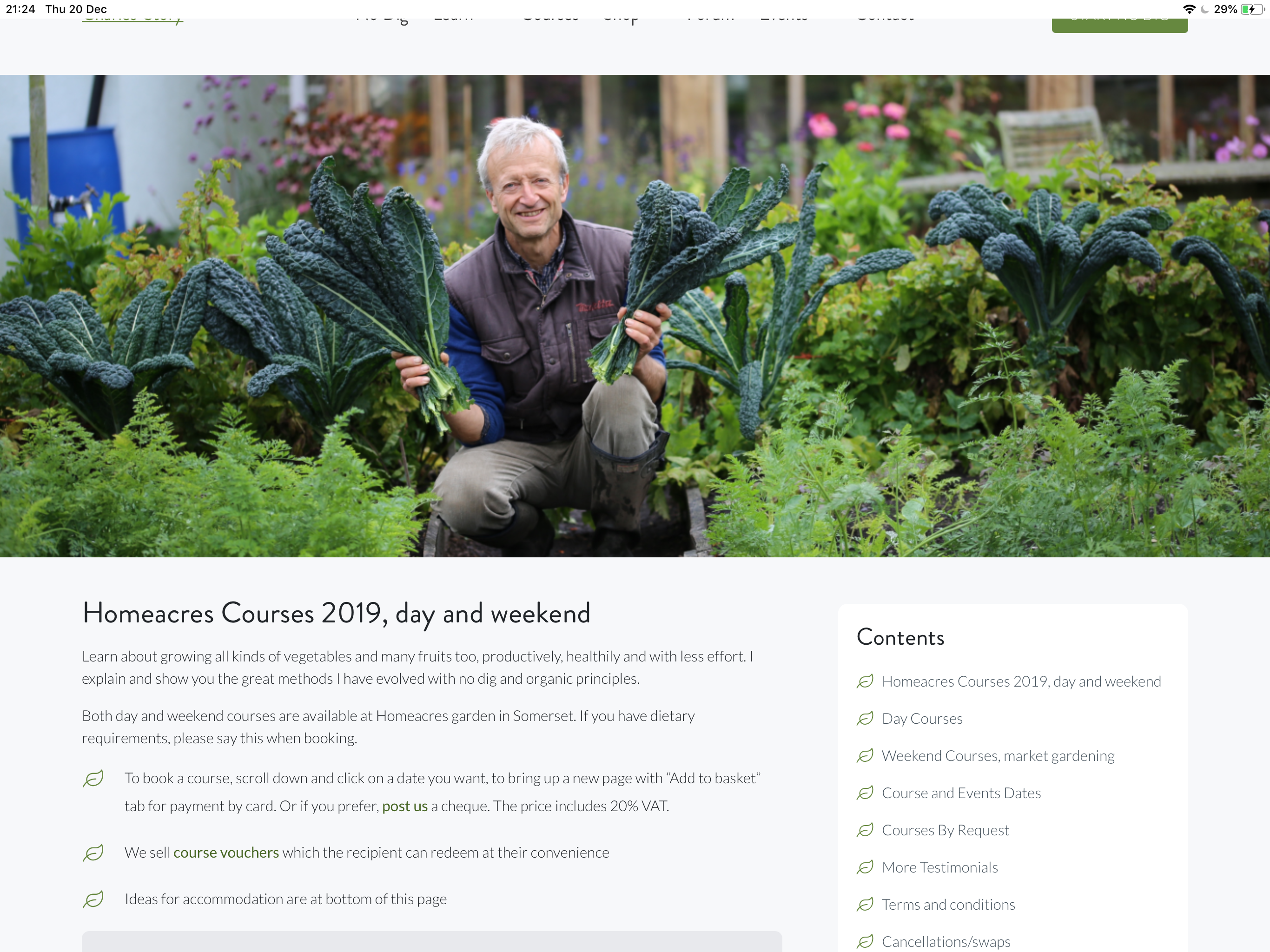
6. Charles Dowding No-dig course. Various prices. Approx £150 a day.

Learn all about growing all kinds of vegetables and fruit, productively and with less effort. Charles has helped me to garden with a poorly back. I fractured my spine in a car crash 15 years ago. Without his advice, I would probably have had to give up my one acre garden. With his no-dig techniques, I have managed to keep on top of weeds, and grow all the fruit, veg and flowers I want to, without aggravating my spinal injuries.

I hope these last-minute suggestions have been useful. If not for Christmas, they make a lovely birthday present.

What’s the best course, or membership, you would recommend? Let me know so I can share your ideas too.

Coming up in the new year, I’ve been invited to try out some weekend holidays for gardeners. I’ll let you know how I get on. I’ll be taking my Mum with me, of course. Something to look forward to in 2019.

Wordless Wednesday -Cosmos Snow Puff

I’ve had a wonderful day at the field trials ground at Mr Fothergill’s Seeds in Suffolk. This new cosmos caught my eye. Perfect for pollinators. More words to follow when I’ve recovered from the journey. I will be growing this and many other new seeds next spring.

Please feel free to share on social media, and say hello in the message box below.

A peek at my week. What I’ve seen- where I’ve been

Took Mum to Norfolk to see East Ruston Old Vicarage. A feast for the eyes. Loved this sunny wild flower meadow.


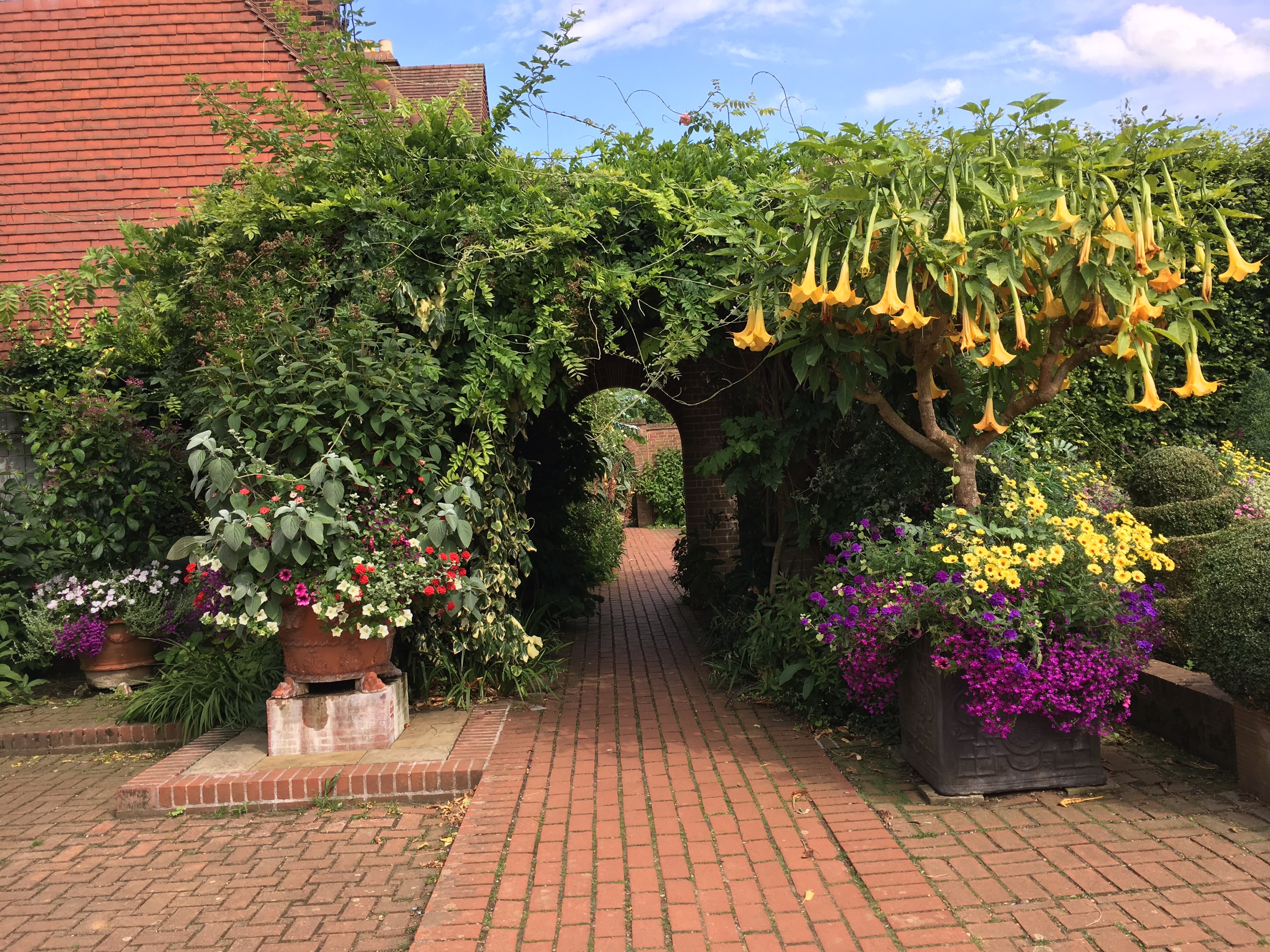
Got lots of container planting inspiration. Much scribbling down of names and taking of photos went on. Just look at the size of that brugmansia! You can see why it is called angel’s trumpets. The scent is out of this world. It’s underplanted with yellow argyranthemum, purple verbena, and lobelia. There’s even a grey-leaved melianthus squeezed in. Such an enticing entrance to an archway. 


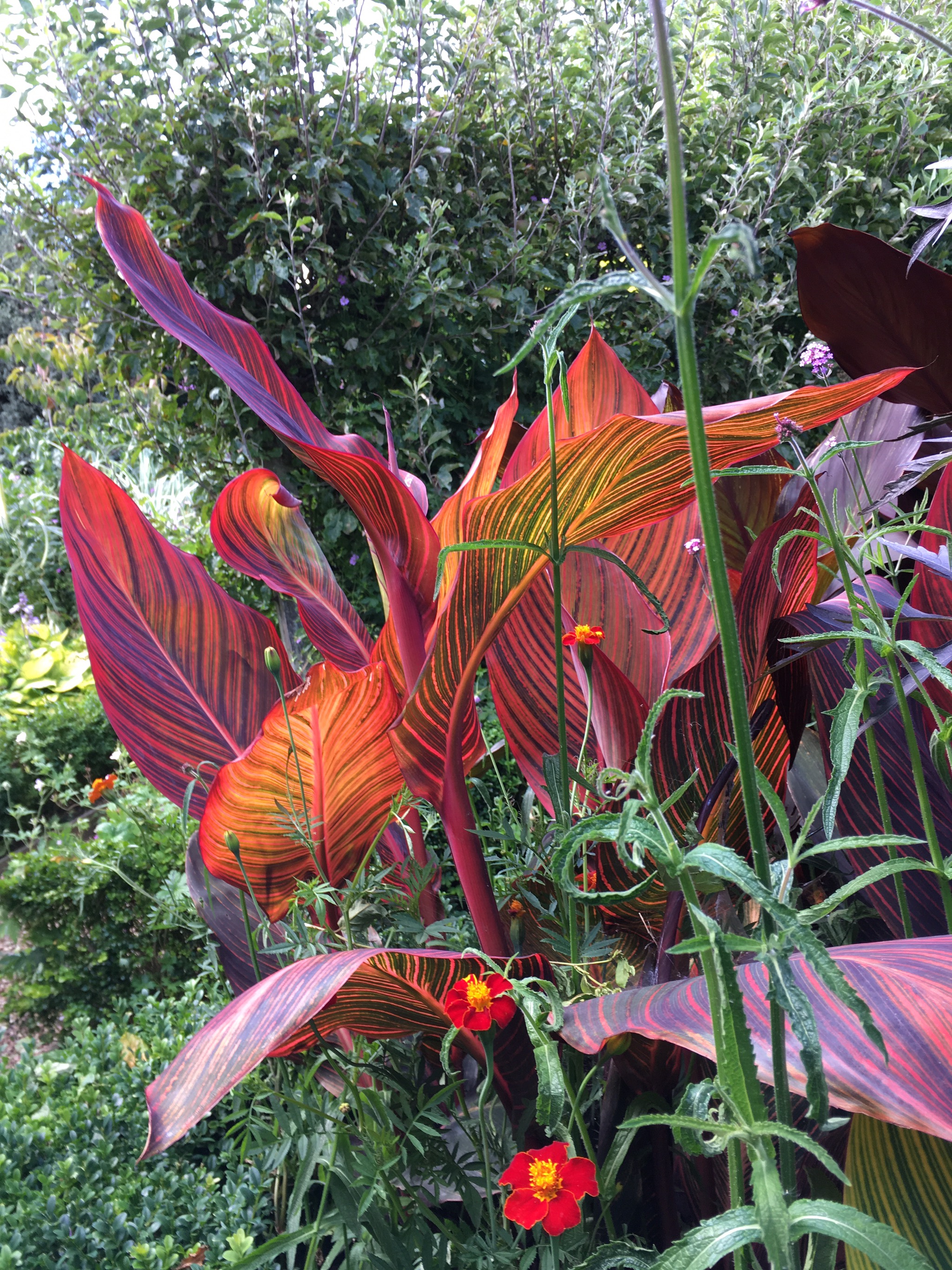
Every second word we used had “exotic” in front of it! Loved this avenue of cannas planted with blue verbena bonariensis and orange tagetes. 

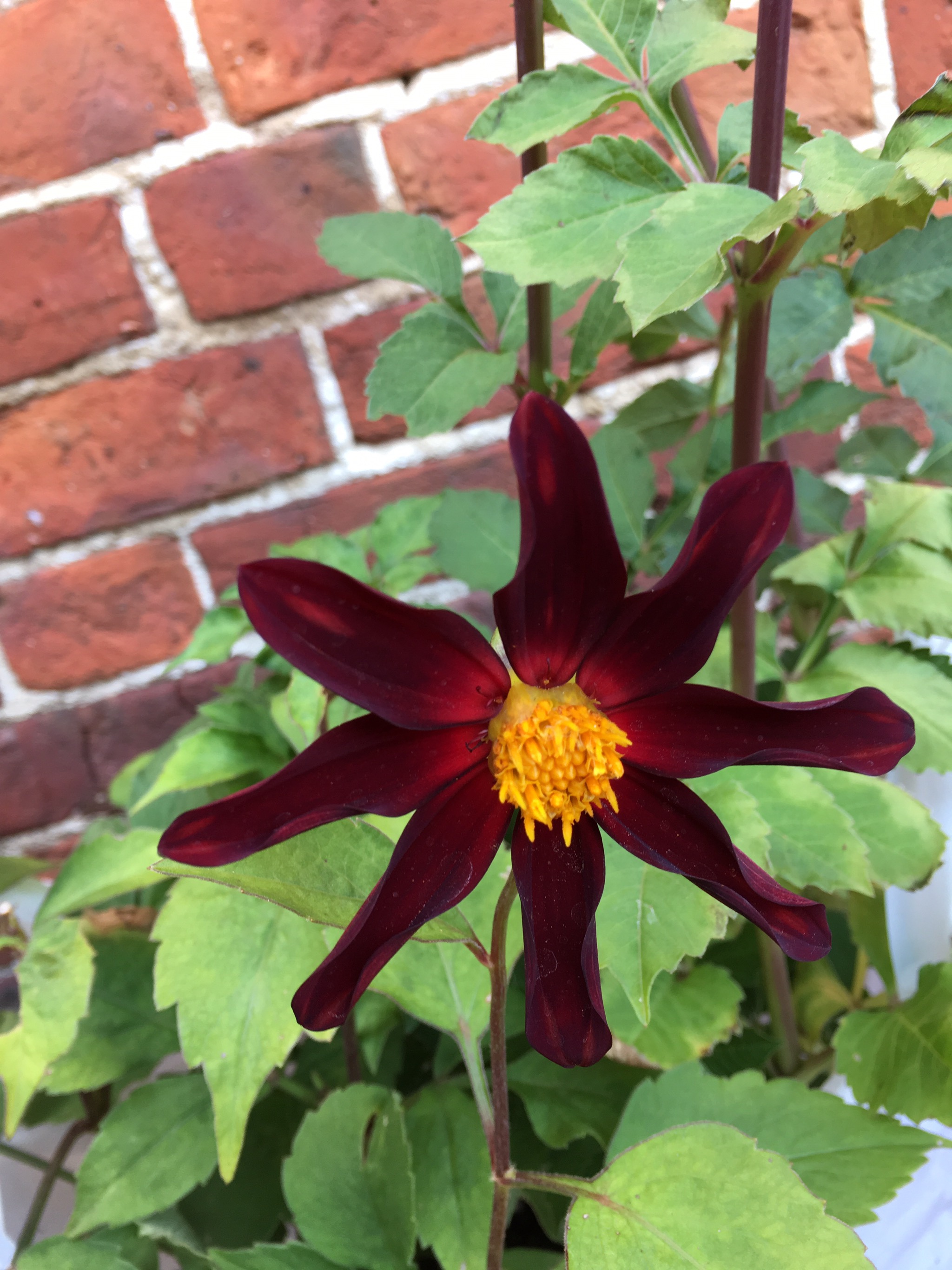
Saw two sumptuous deep red dahlias. Sadly no labels so we don’t know the names. I’m searching books though, so will post an update when I know for certain. 


I grow this tender purple-leaved Aeonium plant in the greenhouse at home. I might set it outdoors for the summer, now I’ve seen how lovely it looks. 

Also have this blue-tinged echeveria in a pot in my greenhouse. And I’ve got this Stewart Garden low planter which looks like stone, but is actually plastic. Much lighter to carry in and out of the greenhouse. 


Should NOT  have looked at the plant sales area. Fell in love with these two dahlias. Can’t wait to get home to plant them in my cut flower patch. 


Here’s a quick look at the barn we stayed in. It gets a five star rating from us. More information to follow. 


Do get in touch and let me know what you have been up to this week. It’s been sunny and hot in Norfolk and I’m expecting to arrive home to a lot of weeding and dead heading on the plot! 

A Peek at my week. What I’ve seen, where I’ve been….

What I’ve Seen:

This glorious sunset from the lane where I live. We can see these trees from our field gate. 


VISITED  some fabulous gardens at Smeeton Westerby near Market Harborough, open in aid of GEMS Charity. GEMS was founded in June 2012 by Sally and Andy Anderson after they had accompanied four close friends on weekly visits to the Osbourne Chemotherapy Suite at Leicester Royal Infirmary.
  Inspired by the hard work and dedication of the nurses, and the courage of their four friends, they set out to raise funds to make patients and supporters more comfortable during their treatment. The  funds have been used to buy specialist treatment chairs and refurbishing the waiting room. 

This is the view from one of the open gardens, Highfields. Green undulating countryside in the distance. 


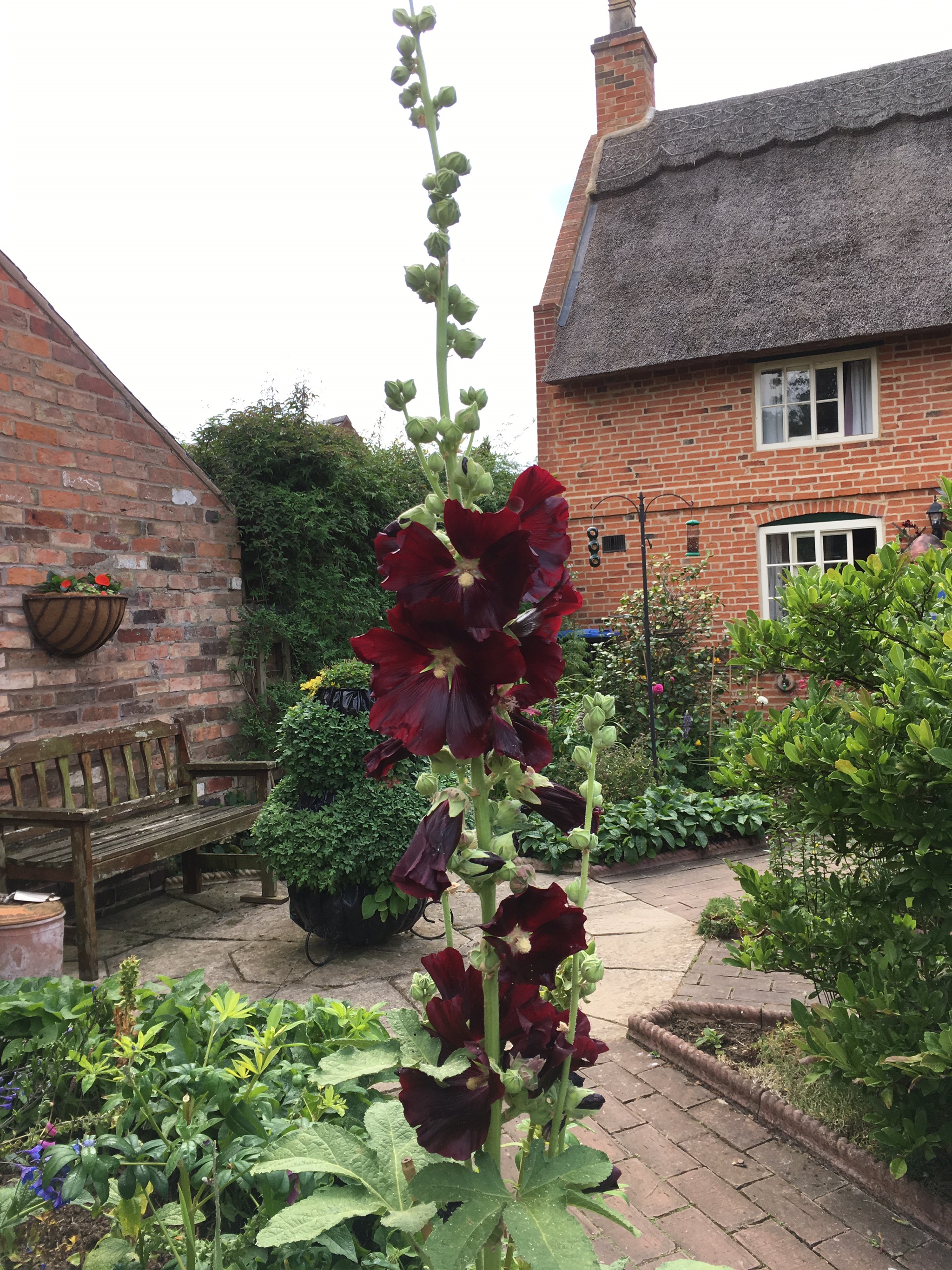
Chocolate box thatched cottage, overlooking the allotments in the village. Full of colourful plants including this wine-coloured hollyhock. 


Mooched around the allotments. Got lots of ideas for companion planting.


Mum and I sat in this pretty summerhouse, enjoying the peaceful scene.


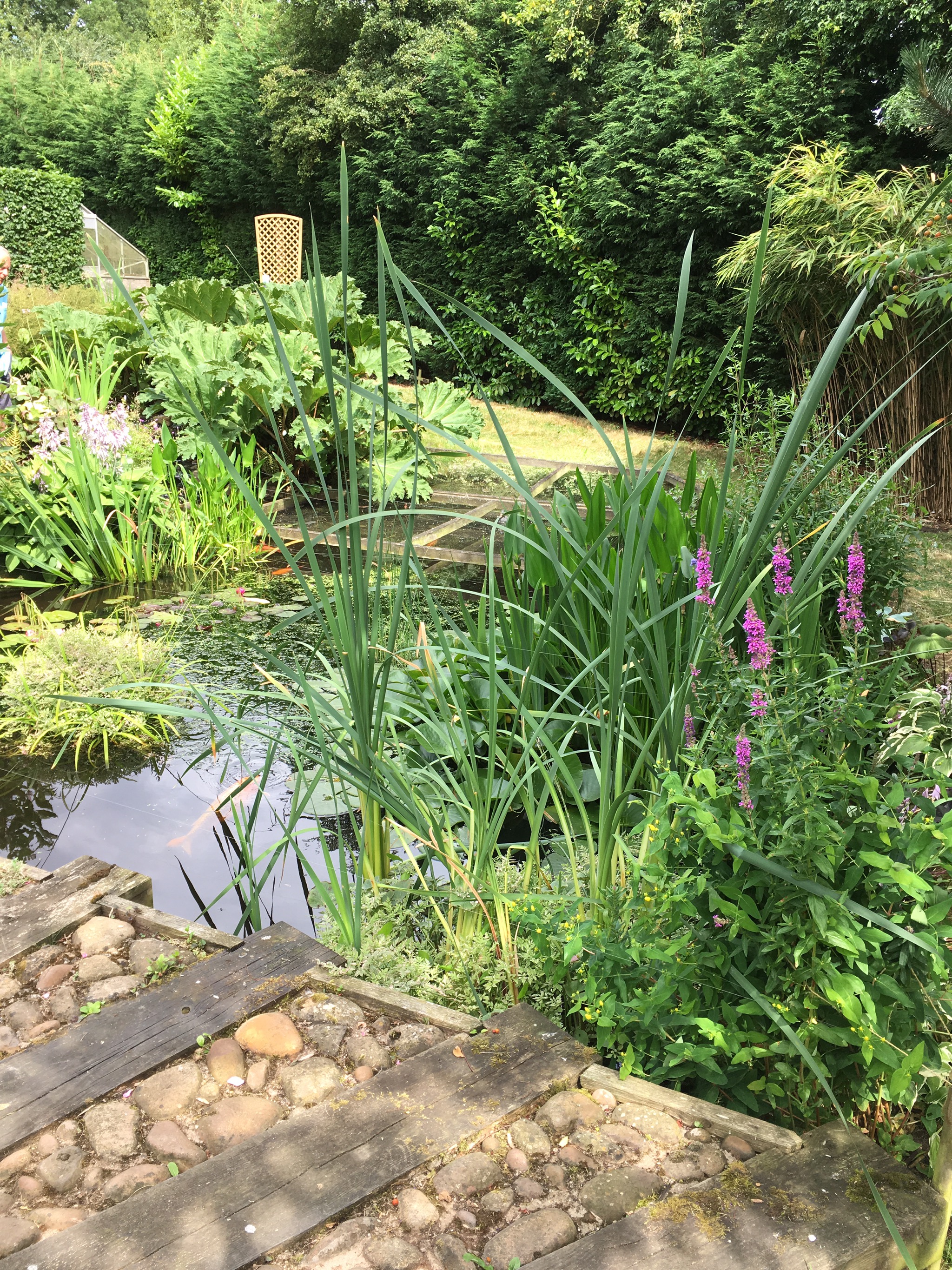
Sat on a bench encircled by water, under a shady tree. Heavenly.


Saw this beautiful late summer-flowering Clematis recta. A floppy, sprawling variety which looks good amongst perennials and wild flowers. Bees love it too.


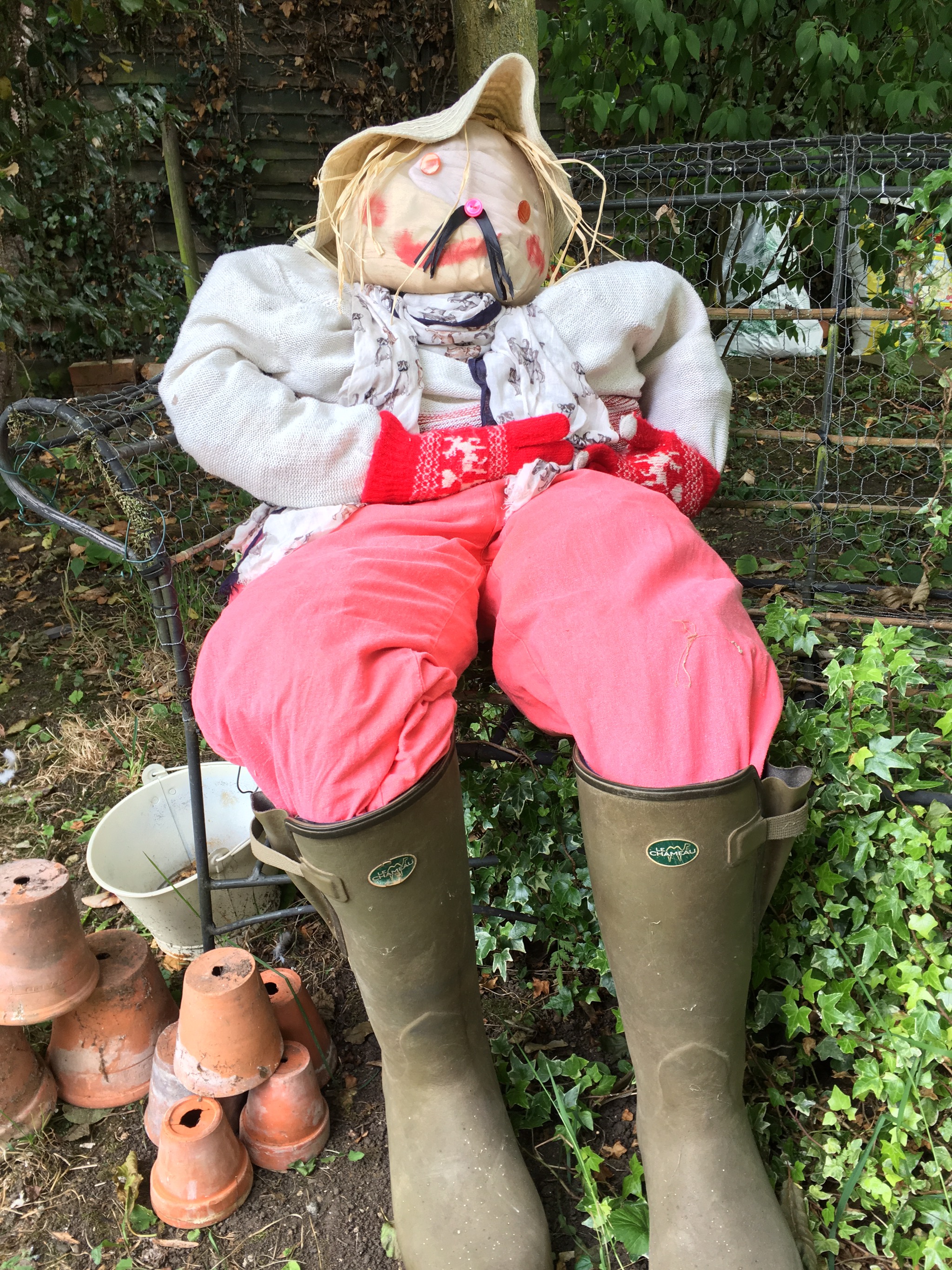
Laughed at this cheerful sight. Even the scarecrows in Smeeton Westerby are posh. This one is wearing Le Chameau welly boots!


Back home to spot two fledgling tawny owls in the wild garden. Made our day to find them in the cherry trees around the horseshoe pond. Watched them until dusk as they bumbled from one branch to another, flexing unfamiliar wings.  

More info on GEMS charity at www.gemscharity.com  

Donate online at virginmoneygiving.com

Email: gemscharity@gmail.com. 0116 279 3814