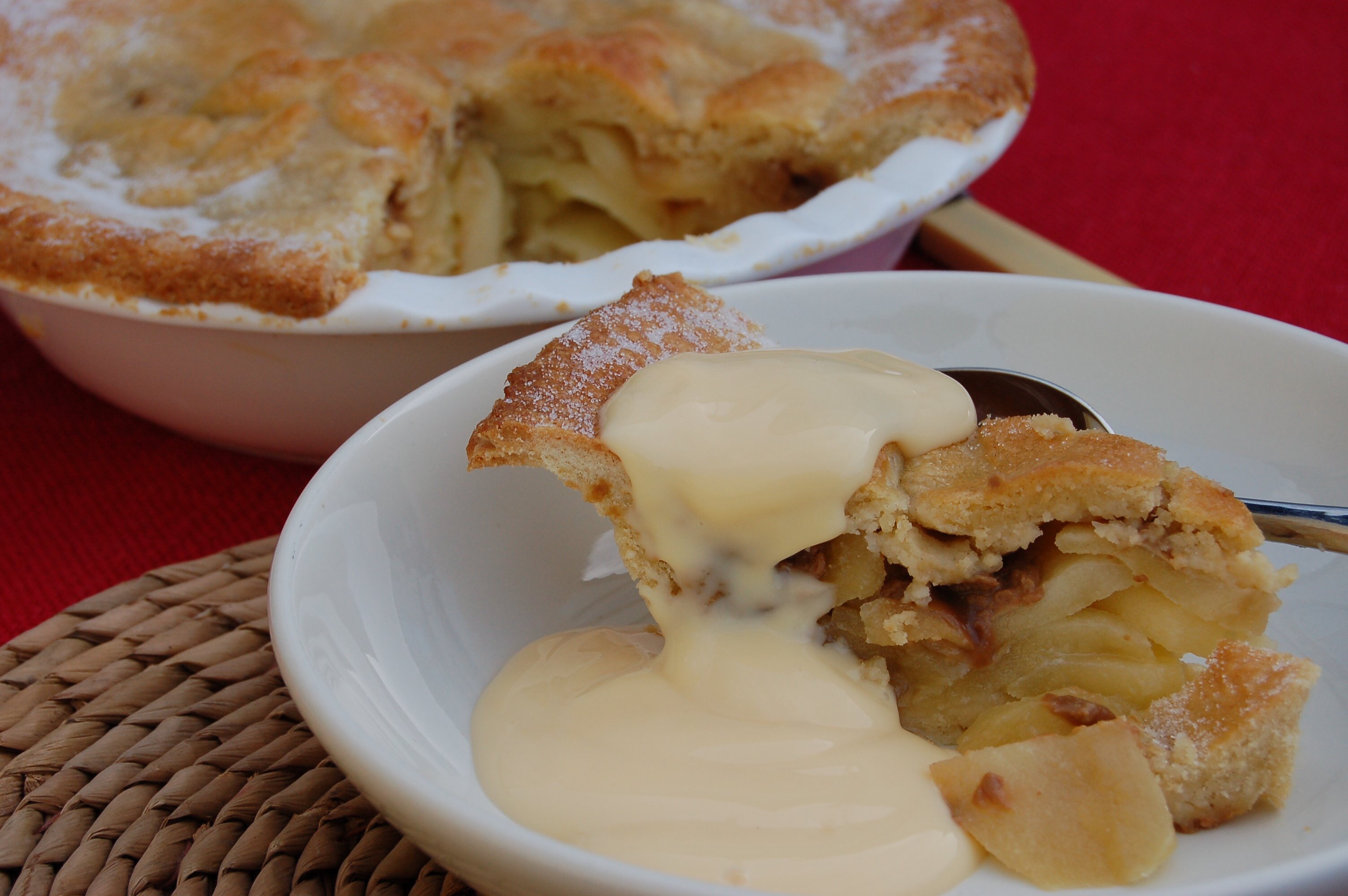
Spring recipes for Garden News Magazine

Rhubarb is one of my favourite crops from the garden. It takes virtually no maintenance, comes up every year without any fuss and provides food from early spring to summer, for a one off payment for the plant.

To be honest, my rhubarb plant didn’t cost a penny. It was a division from my father-in-law’s garden. I’ve had it for at least 10 years, and he grew it in his garden from the moment he bought the house in the late 1950s. I love money-saving crops and ones that are easy to grow.

My rhubarb is growing in a semi-shaded spot under a hawthorn hedge. The secret to its success is the compost bins sited right next to it. All the nutrient-rich liquid feed seeps out from the bottom of the compost bins straight into my rhubarb patch. Rhubarb is a hungry plant and usually growers plant it on top of a pile of manure. I’ve not used manure here for many years as it brings in so many weed seeds. But my plants are healthy and thriving thanks to my home-made compost and liquid feed.

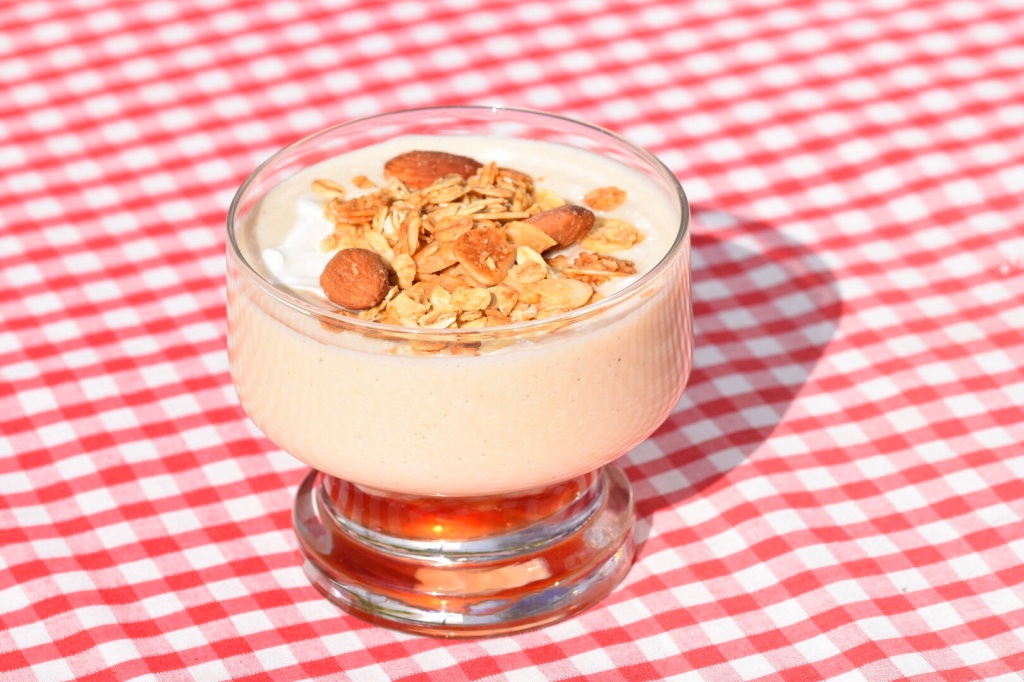
Let me know if you try out my recipe. The granola is especially useful as it can be used as a breakfast cereal, or sprinkled over fruit and cream or yoghurt, or even ice cream to add crunch, flavour and nutrition. The idea for the rhubarb cream came from Jill Fish, as mentioned in the magazine. Jill’s recipe used only rhubarb, but I had used most of my available crop and just had a small amount, so added an apple, and it worked perfectly!

Many thanks for reading my blog. Have a great gardening weekend!

Happy New Year! A soggy walk around my January garden.

Dried flower heads on hydrangea paniculata hybrid.

Welcome! I garden on a one acre plot in north Leicestershire. Most of the garden is planted with native trees and shrubs. There’s a small pond, a mini water meadow full of marsh marigolds and lady’s smock, a small vegetable plot, greenhouse and poly tunnel. I grow as many flowers, fruit and veg as I can in containers and small divided beds. I aim to have something to pick from the garden every week of the year. This post is for my mum who can’t easily visit at the moment and the photos give her a flavour of what the garden looks like today. You are welcome to join me on a slow stroll around the plot as I seek out anything cheerful at this time of the year!

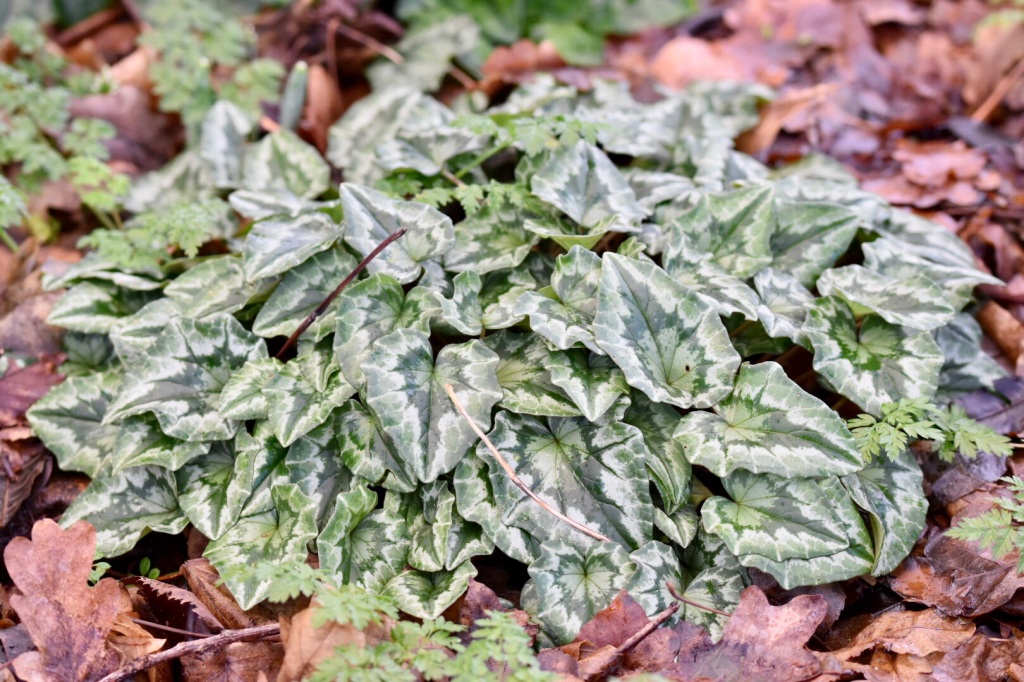
When there are plenty of flowers around, these cyclamen hederifolium barely get a second glance, but in January when everything is bare, the patterns on the leaves draw me in. I love moving from one plant to another comparing the intricate markings. No two plants are the same.

These grey-leaved cyclamen coum shine out in the shade under the ash trees. Soon they will have dainty white or bright pink flowers.

These are just starting to flower and there’s plenty of buds to open. They thrive under deciduous trees, flowering before the leaf canopy emerges.

I found some small brunnera plants. These have blue forget-me-not flowers in spring. They grow in deep shade alongside the cyclamen.

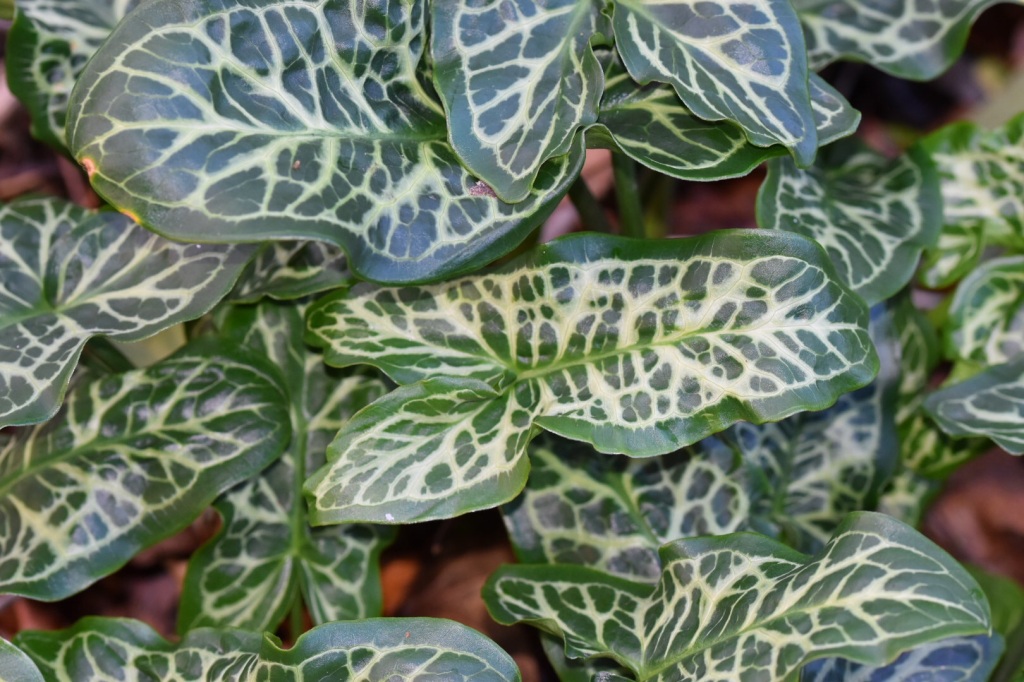
Arum italicum can be a thug, spreading all over the garden. But in deep shade, it is fairly well-behaved. It has bright orange berries and creamy white spathes. Good foliage for jam jar flowers.

Wild primroses are starting to push up through the leaf litter all over the plot. They seed about freely and provide pollen for early-emerging bumble bees.

When there’s not much to see, grasses provide a ‘stop and stare’ moment by the pond. These are beautiful all year round, and especially on a windy day.

I’ve never seen eranthis hyemalis flowering so early. Temperatures have been well above average all winter, but it’s also been extremely wet and most of the flower borders are under water again today. 2023 saw the wettest July to December period on record for the UK. Records started in 1890. With the ground already waterlogged, the recent rain has caused massive flooding in our area. The River Trent in Nottinghamshire burst its banks. Homes and businesses have been flooded out. It’s heartbreaking to see so much damage. So I won’t complain about my garden. It will drain away naturally and all will be well. Luckily I’ve taken cuttings of all the salvias and penstemons that are currently waterlogged, so there’s a back up plan if they don’t survive.

Shrugging off the wet weather, hellebores are starting to flower. These came from John Massey’s Ashwood Nursery near Birmingham. Some of these have been under water this week, with just the flower buds bobbing about in the air.

Early flowering snowdrops looking slightly muddy. Mrs Macnamara is a reliable variety and bulks up fairly quickly. Luckily it’s a very tall snowdrop – and as you can see, survives a few days under water. I think we can say it’s definitely robust!

The wildflower patch- now a bog! Luckily the greenhouse and poly tunnel are on higher ground. We have had to check for stranded goldfish as this area is alongside our pond.

Anyway, today there was sunshine. And the top of the willow trees look golden against a bright blue sky. A moment of joy after all that rain. Tiny grey pussy willow buds are starting to show. And there’s catkins on hazel and alder trees.

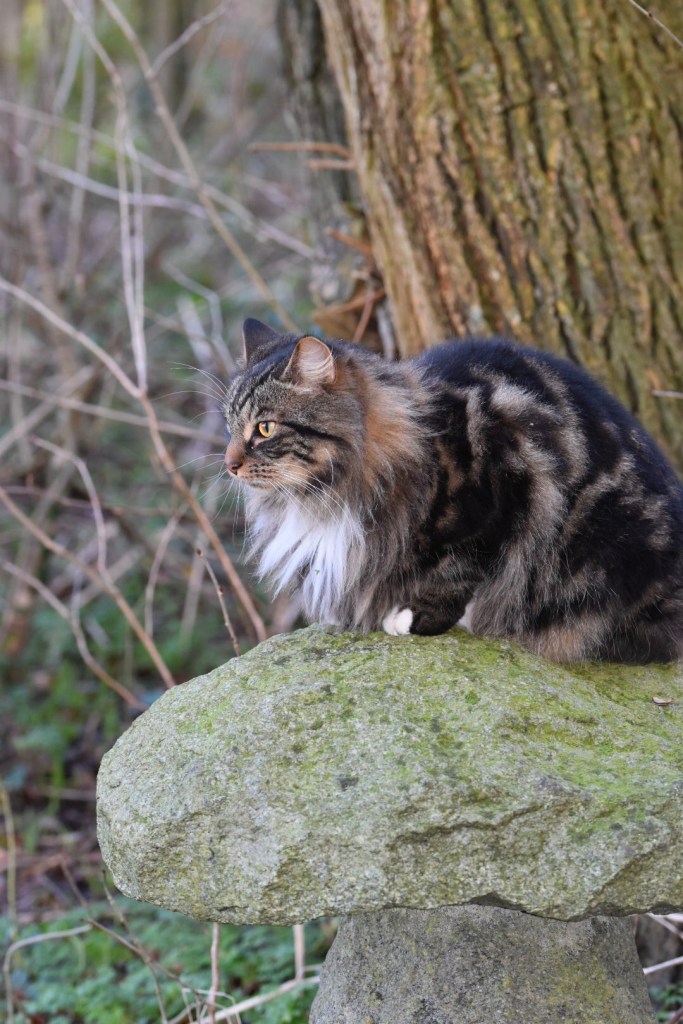
Monty is a good barometer for the weather. He’s been hibernating indoors during the rain. But today he emerged and set upon the straddle stone as a watch-out post, keeping his paws perfectly dry. Now as I write this he’s back in front of the fire, and I’ve checked the weather reports. Snow is forecast!

Snow will look pretty atop these black rudbeckia seed heads. I leave them for natural bird food and structure over winter.

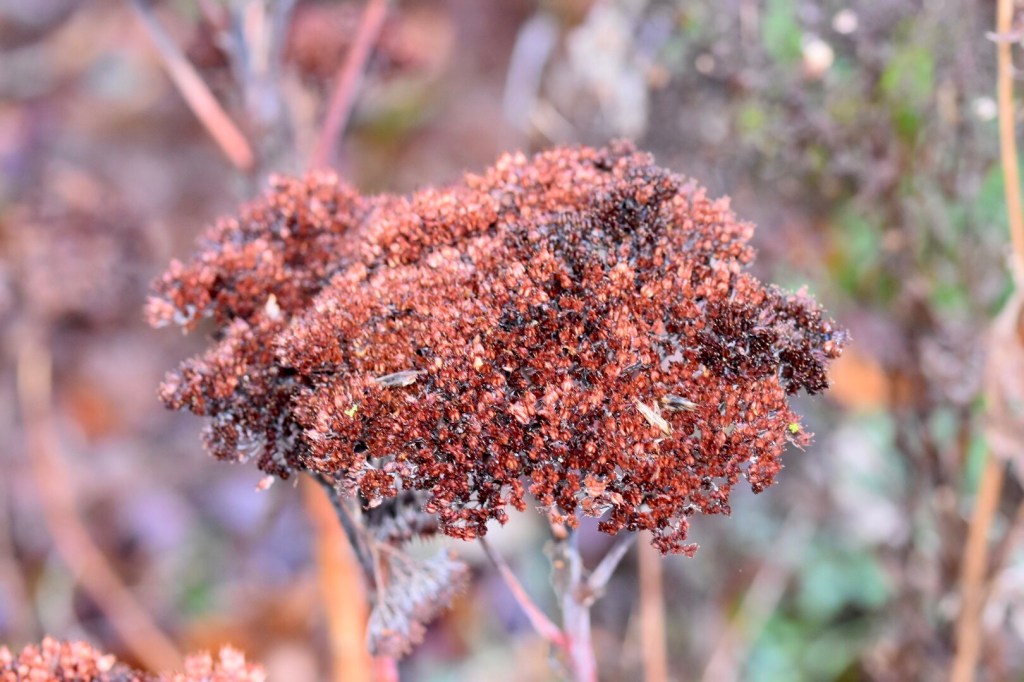
I’ve left the flat sedum heads too. I just can’t call them by their new name. Hylotelephinium sounds like a type of outdated phone rather than an ice plant!

Some feverfew seed heads remain. Nothing spectacular, but I feel like accepting any tiny glimmer of beauty at the moment. It’s a quiet time, and I’m not being too fussy. Just grateful.

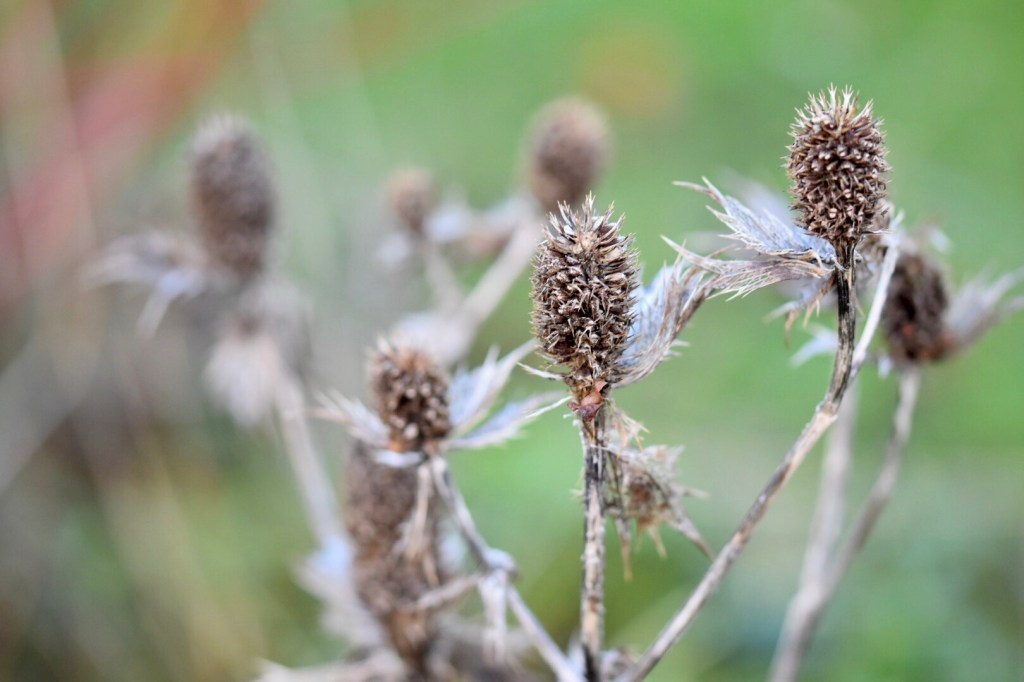
Eryngium Miss Willmott’s Ghost, looking more ghostly than usual. Looking closely, I found a ladybird and a lacewing, headfirst, nestled between the seeds. Peacefully may they slumber until spring.

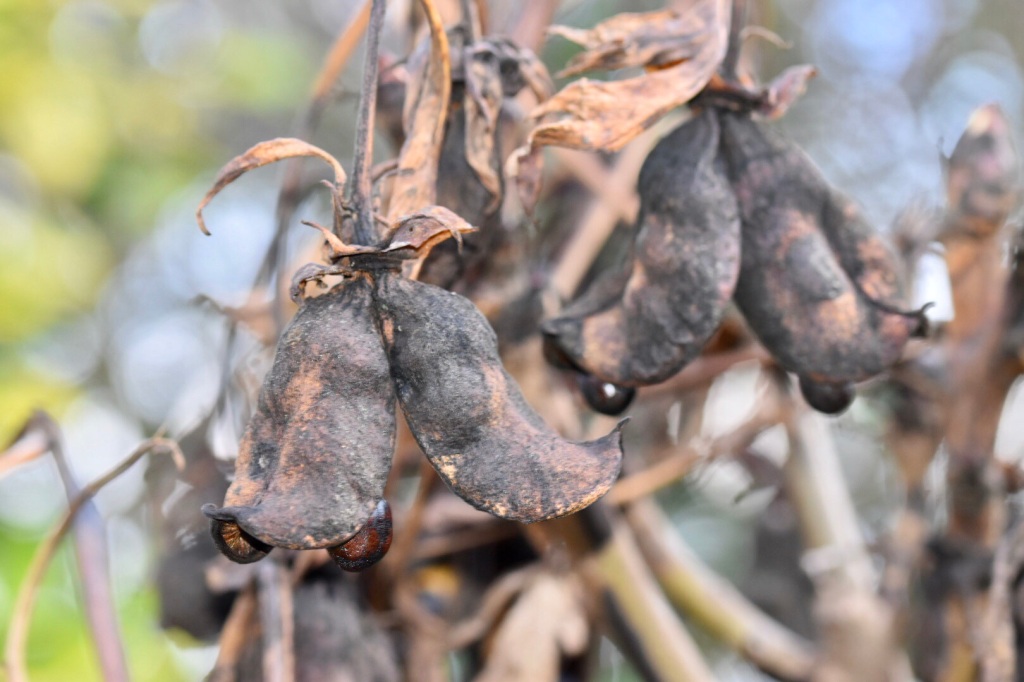
Well, even I admit these are ugly, but there’s a certain something in those dark brown seeds emerging from the peony lutea pods. They glisten like amber in sunshine. Mum grew some plants from these and they flowered for the first time last summer. Seven years after sowing!

Planted underneath, in deep shade, there’s plenty of Skimmia Kew Green. Such a gorgeous scent in spring. Much overlooked in modern planting plans.

A quick peek in the greenhouse. Always plenty of gorgeously-scented pelargoniums and citrus. Sadly, the big white patch at the end is polythene patching the glass due to storm damage just after Christmas. A big end panel will have to be replaced. And then a careful clear up as there are shards of glass in every plant pot.

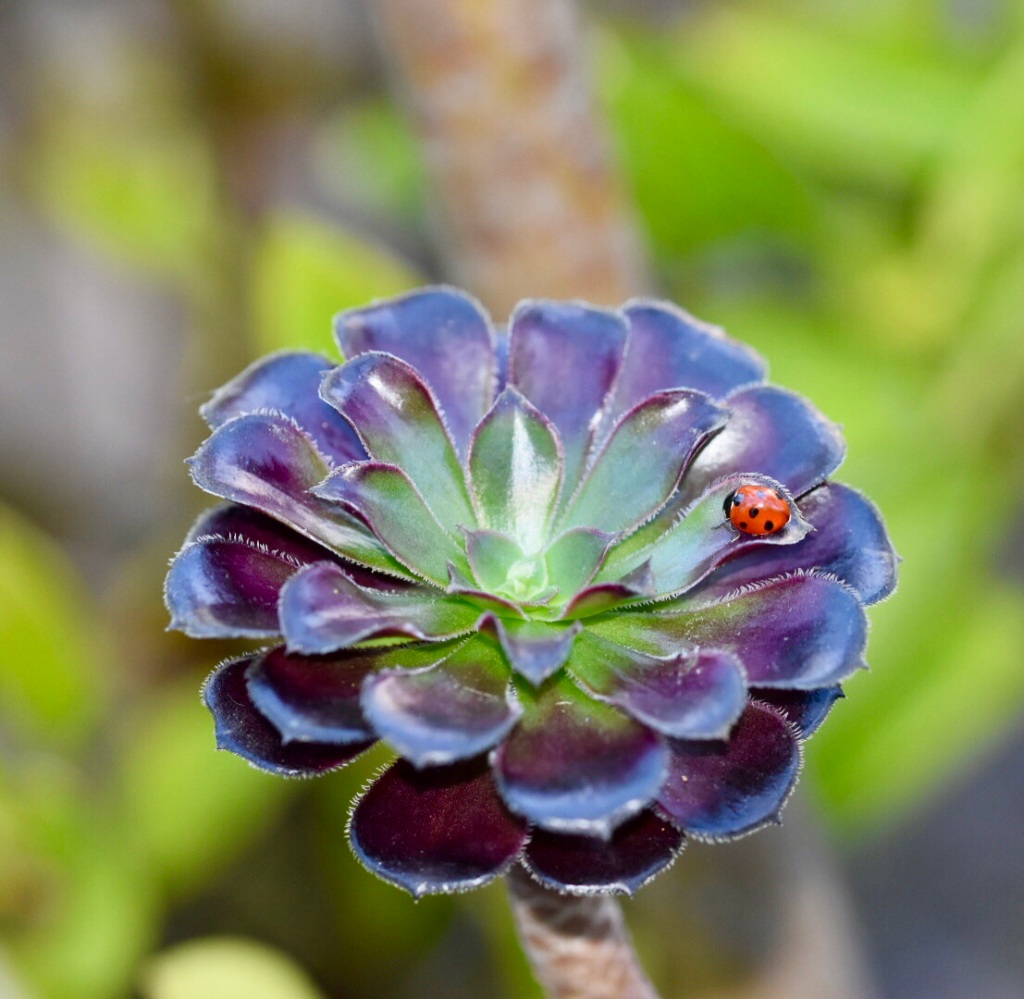
However, still seeking joy – I found a ladybird in an aonium.

And some pretty fuchsia leaves looking healthy in amongst the lemon trees.

A hairy, peppermint-scented pelargonium. To rub these leaves is to be transported.

There’s new shoots. Daffodils for cut flowers soon.

And food. Herbs such as thyme, marjoram, parsley, and micro greens. These are pak choi, sown in October. They can be eaten as tiny leaves now, or left to grow on. I take the leaves from the outsides, and the centre continues to grow.

Hens enjoy the heat in the greenhouse over winter too. They are only bantams, so don’t cause any damage and search out pests most assiduously, particularly vine weevils.

A ceramic bird I couldn’t resist. Bought from The Green Man in Staunton Harold. See my post on a pre-Christmas visit to Calke Abbey and Staunton Harold. Recommended for a day trip.

Ballerina rosehips

Thank you for joining me on this ramble around my garden. How has your plot fared in the rain? I hope you didn’t suffer too much damage in the recent storms. I haven’t been able to keep up with the names of the storms, there’s been so many! Please do leave a comment in the box below and sign up for e-mail notifications for new posts. Have a lovely weekend!

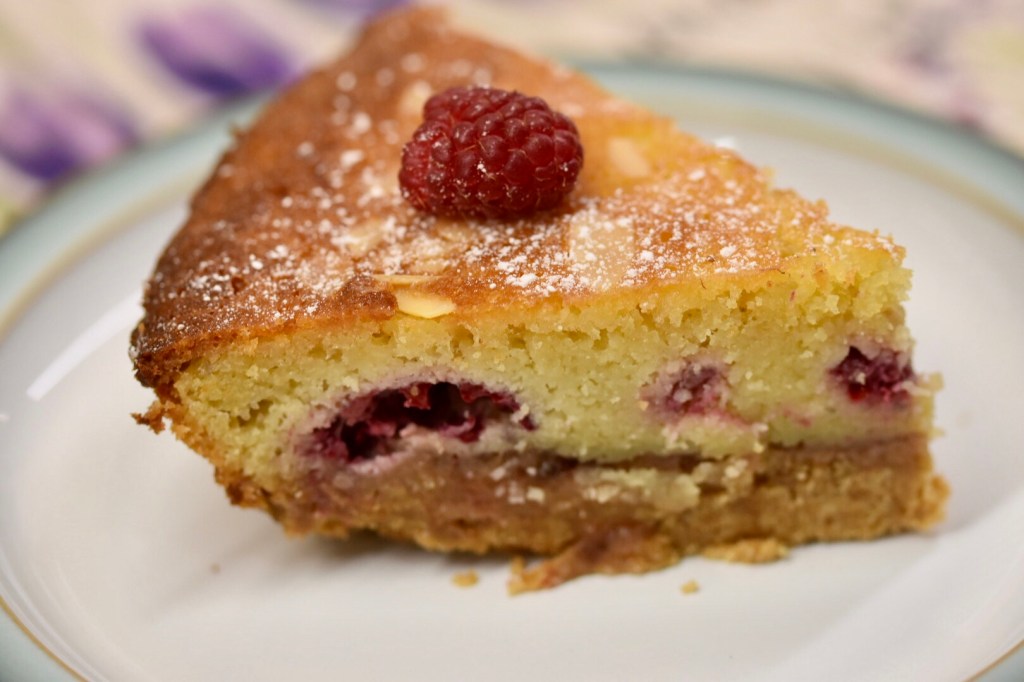
Raspberry Bakewell Tart

Last week’s Garden News Magazine recipe.

This delicious recipe came from a friend. I’ve been making this dish for 30 years. It’s a family favourite because it’s so quick and easy to make. No messing about rolling out pastry. The biscuit mix gives a lovely crunchy base to the fresh raspberries. The topping is the usual ground almond cake mix. And it freezes well too! So I always have a few slices to give to friends and family when they visit. Happy Gardening- and cooking everyone!

Plenty of raspberries filling the freezer this autumn.

Freeze in portions so you only have to defrost what you need.
Autumn Bliss

Apple, Raspberry and Blackberry Sponge

If you were listening to BBC Radio Leicester’s Ben Jackson on Tuesday at 3.10pm, here’s the recipe I mention, using windfall apples, autumn raspberries and blackberries foraged from the hedgerows around my garden. It’s this week’s recipe for Garden News Magazine.

It’s lovely to use fresh fruit from the garden which has cost nothing. I’m also trying to save energy by using the microwave more often. This sponge pudding only takes about 5-6 minutes to cook. You can brown the top by adding flaked almonds and briefly placing the pudding under a hot grill.

Autumn raspberries have produced a bumper crop this year. I have Autumn Bliss and Polka growing in the shade next to my compost bins. They appreciate rich soil, so must get some good liquid feed from the compost bins along side.

I’ve never known a year when the blackberries were so plump and juicy. The cooler, wet weather in July suited them. There’s a good reason my plot is called Bramble Garden; the boundary hedges are full of high, arching blackberry stems. Berries were exceptionally sweet and tasty this year. I’m going to weave some culinary varieties in amongst them to extend the season. You can grow early, mid-season and late blackberries and this summer has whetted my appetite for more!

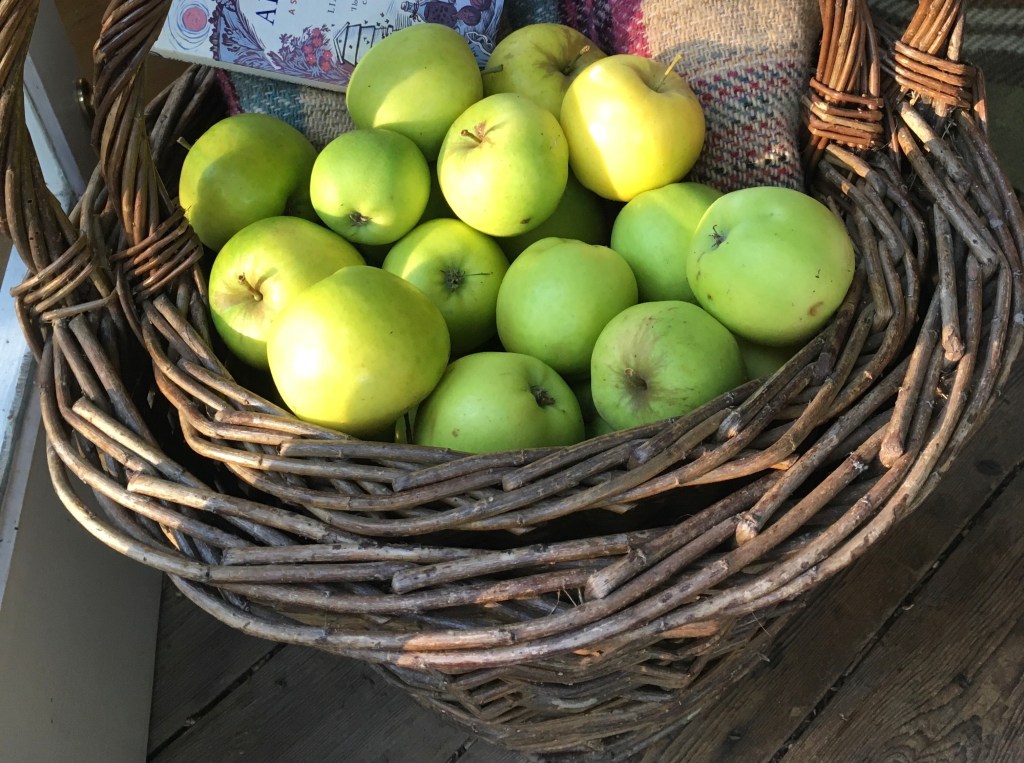
Apples have been more of a problem this autumn. The high winds caused them to fall from the trees before I had a chance to pick them. I have a huge amount of windfalls which need to be processed quite quickly as bruises cause rotting. The ‘good’ apples are not keeping as long as they usually do because we had a heatwave for the whole of October. Climate change is causing all sorts of challenges in growing, harvesting and storing fruit and vegetables. We will probably all have to have a re-think how we manage home food production.

I’ll leave you with the peaceful image of bantam hens Daphne and Daisy foraging for windfall apples in the small orchard. They don’t mind the bonanza of apples available for them to peck at! And on a positive note, their egg production went up in October due to the hot weather. So we’ve had a lot of cakes, pancakes and home-made custard to accompany all that fruit!

Sticky Pear and Date Pudding

This week’s recipe from Garden News Magazine. Each week I have a look around to see what I’ve grown in the garden, and I make something for the family. It’s not fancy food, just good old-fashioned, easy-to-make family favourites. I try not to use too many ingredients, and include common items anyone would often have in their kitchen cupboards. there’s nothing worse than buying an unusual ingredient for a recipe, and never using it again! If you have a go at making this, please let me know how you’ve got on and send a photo too. Happy cooking!

The printing never really does the food justice. It’s always prettier in real life.

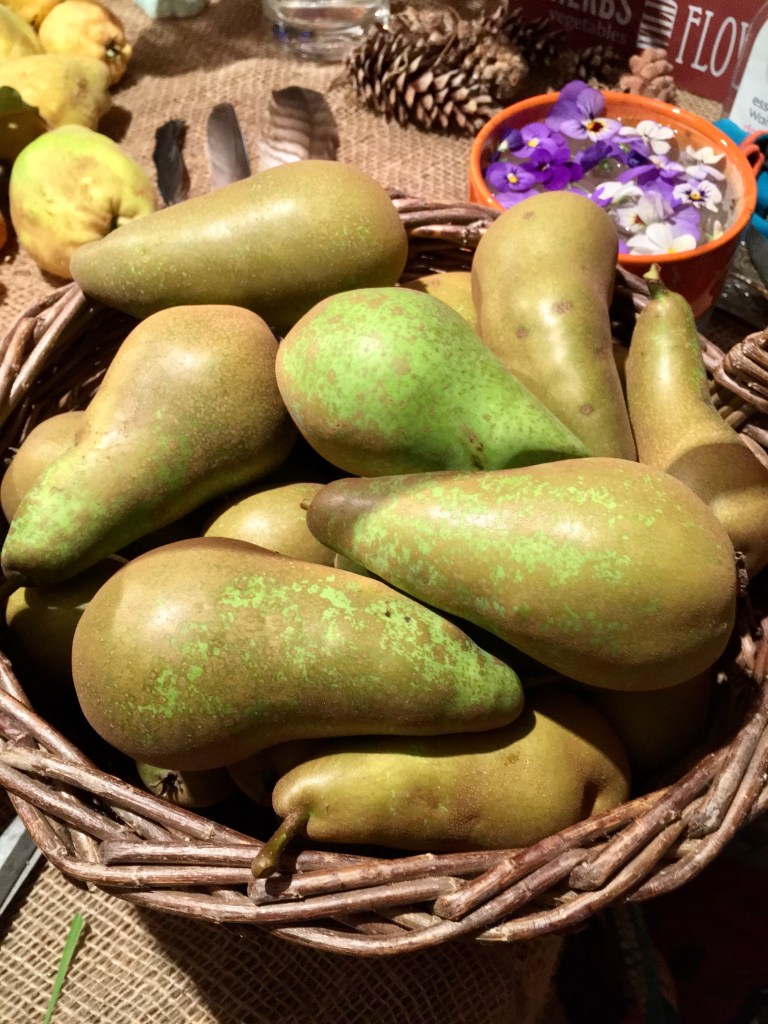
Potting shed pears

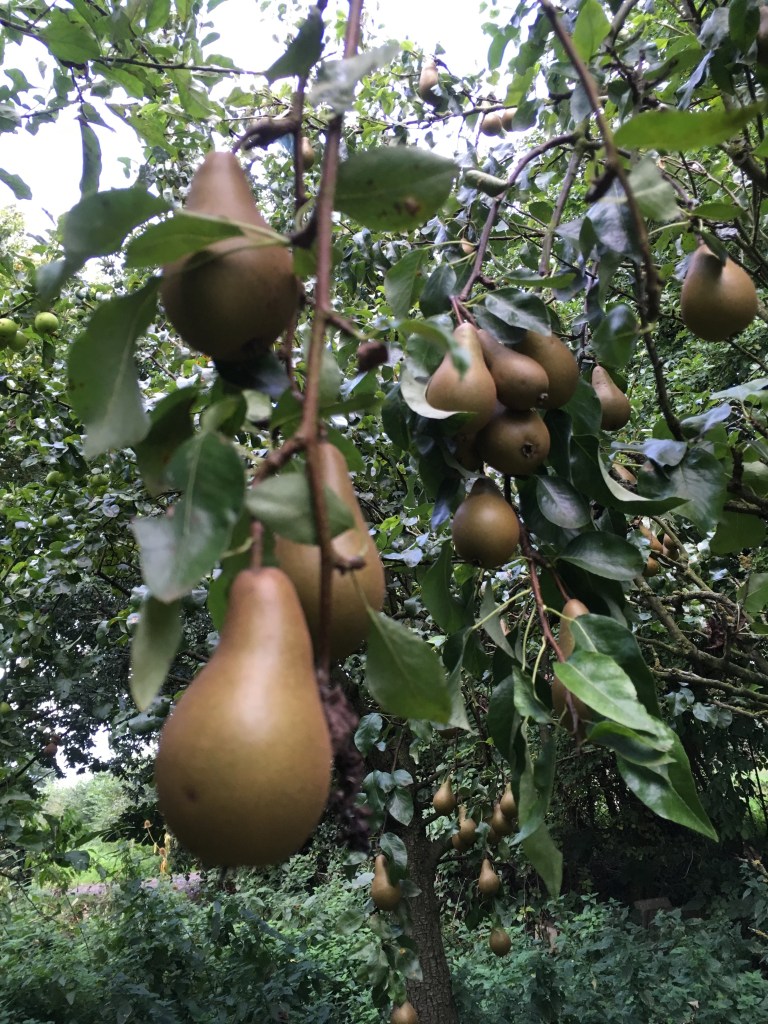
Conference pears growing in the orchard at home.

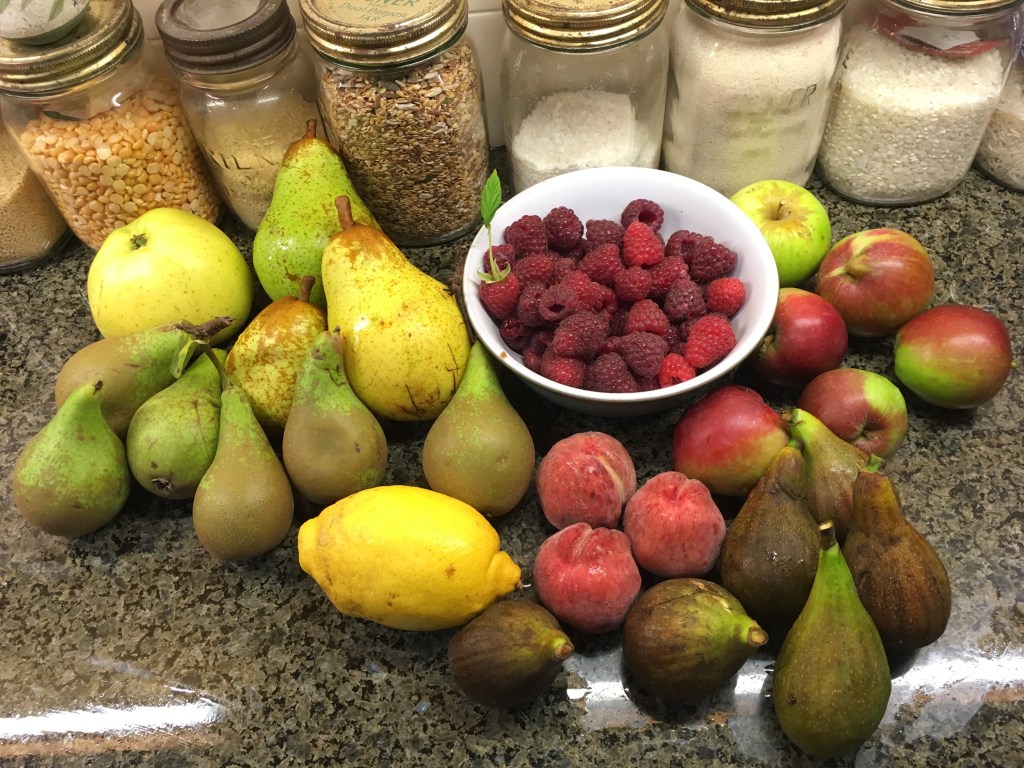
Fruit from the poly tunnel and garden.

Daphne and Daisy enjoying the windfall apples between storms and rain showers. They are safely tucked up in their house and covered run this afternoon. Torrential rain and high winds are shaking down the last of the apples.

Thank you for reading my blog. Please leave a comment in the box below (comment link is alongside the title, if you are reading on a phone). Please also sign up for updates and e mail alerts for new blogs.

Gooseberry Crumble- family favourite recipes

When I was a teenager, I was taken on as a trainee reporter at the Melton Times weekly newspaper. One of our jobs was to go out into the town and obtain comments from residents. These were called ‘doing a vox pop.’ We would ask for views on local planning applications, council proposals, and any controversial subjects the editor could think of. There were no mobile phones in those days, so with no-one keeping track of us, we would be out about about for hours. Vox pops were one of my favourite jobs because I loved chatting to people. We just knocked on doors, said who we were, where we were from, and people let us in! Two hours later, we would leave, with our one paragraph comments, nicely replenished with home-made cake and numerous cups of tea. One elderly gentleman that stays in my memory was called Albert. I can’t remember what the vox pop was about, but when I knocked on the door, he took me straight through to the garden where he showed me his fruit and vegetables. He had rows and rows of gooseberries- green ones, yellow, and red, glistening in the sunshine as if they had been polished. The pruning demonstration and growing advice took an hour, and at the end we sat down and had the most delicious crumble I’ve ever eaten, gooseberries flavoured with elderflower syrup and crunchy almonds on top. At that moment, I was happy. I think we store up such moments in our memories, and come back to them from time to time. I have a picture in my head of me, sitting on a dining room chair brought out into the garden, enjoying the sunshine, eating delicious food. Albert, a widower in his 90s, lived alone. For one afternoon, he had someone’s rapt attention while he talked about his passion for growing fruit. I was very glad that I’d knocked on his door. In those few short hours, I learned about the generosity of gardeners, how a love of growing things, and sharing with others, drives some people. And kindness. I learned a lot about kindness. Looking back, I’m grateful and relieved to say most people I’ve chanced to meet have been kind. I’ve tried to honour their memory in this blog.

Here’s my Gooseberry Crumble Recipe – with grateful thanks to Albert, and his two ginger cats, who made me equally welcome in their garden.

RECIPE – CRUMBLE TOPPING

8oz (225g) plain flour

5oz (150g) soft light brown sugar

3oz (75g) butter or dairy alternative

2 tbsp flaked almonds (optional)

1 level tsp. baking powder

METHOD

Place the flour and baking powder in a large bowl and add the butter. Using your fingertips, rub in the butter until it has all been dispersed fairly evenly and the mixture looks crumbly. Add the sugar and almonds and stir well to combine.

GOOSEBERRY CRUMBLE

Use 2lb (900g) gooseberries

2 tbsp elderflower syrup or cordial

Top and tail the fruit and place in a large pie dish. Sprinkle over the elderflower syrup and cover with the crumble mixture.

Bake in the centre shelf of an oven at 350F/ 180C/ gas mark 4 for 30- 40 minutes. Check to see if the topping is getting too brown after 30 minutes and cover with foil to finish cooking.

Keeps three days in a fridge, or can be portioned up and frozen for three months. Thaw before reheating.

Serve with custard, or thick double cream.

Enjoy!

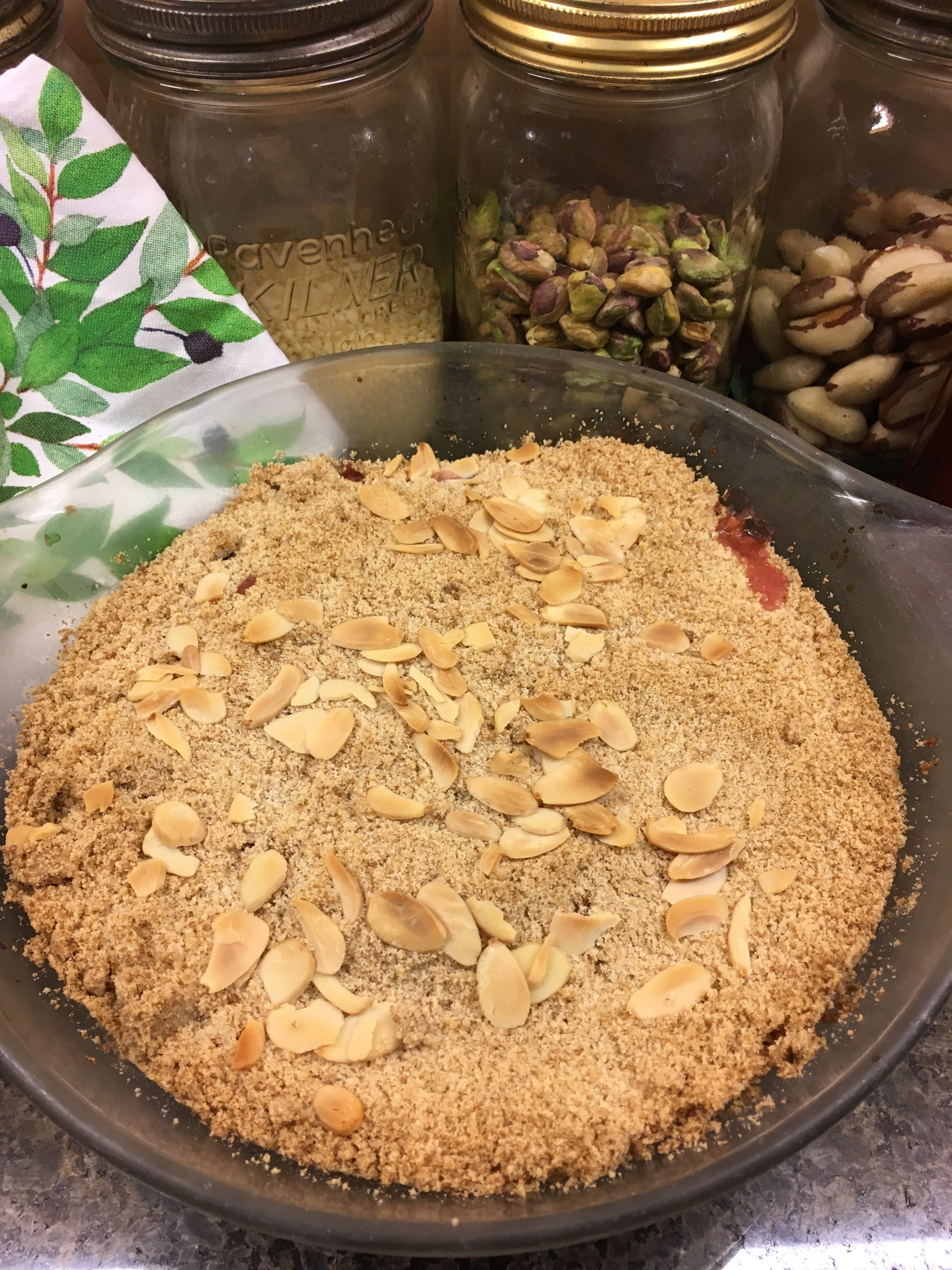
My crumble mixture. Without almonds as a guest had an allergy to nuts.

All that was left of our family gooseberry crumble. I was lucky to have this piece left for the photo!

Gooseberries from my garden.

I recommend Hinnomaki Red, green Invicta, and yellow Early Sulphur. These can be grown in a shaded position. Like many fruit that is ‘tart,’ sunshine isn’t needed to make high sugar levels. So you can grow gooseberries, blackcurrants, redcurrants, raspberries and sour cherries such as Morello in shade.

Gooseberries will grow in full sun, but they are tolerant of shade, so it’s much better to save your sunny beds and borders for peaches, sweet cherry (Celeste is a good variety) gages and plums.

Thank you for reading this blog. I hope you enjoy the recipes. Have a great gardening week. Karen ❤️

Links: You might like to read https://bramblegarden.com/2018/07/26/summer-fruit-harvest-and-making-garden-jam/

Also: https://bramblegarden.com/2019/08/20/plum-crumble-family-favourite-recipes/

Gooseberries: https://www.chrisbowers.co.uk/category/gooseberries/

Talking on the radio – notes and photos for wednesday 22 July, BBC Radio Leicester Gardens Hour

I’m still talking on the radio once a fortnight – from the peace and quiet of my potting shed. It’s lovely to be at home rather than having to drive into Leicester. And when the music is playing between chats, I get on with a bit of watering or prick out a few seedlings, and nobody knows.

This week we talk about sweet peas. I’m growing new variety, Ripple Mixed, pictured above. It has mauve, pink, and purple markings on a pale pink background. The scent is strong, and stems are nice and long, making them ideal for cut flower posies. One to keep on my list for autumn sowing. I’m ordering seeds now to ensure I get the varieties I want. This year’s experience of buying plants and seeds – and the long delays receiving them- has taught me to plan ahead and order early.

Here’s a selection of sweet peas I’m putting in jam jars on the village green to raise money for Rainbows Hospice for children and young people. Rainbows cares for children with life-limiting illnesses and nearly all its funding comes from donations. The hospice has lost almost £1 million in fund raising this year, due to events being cancelled because of covid. I put leaflets alongside the flowers, hoping it might encourage someone to learn more about the hospice and make a regular donation. Every little helps.
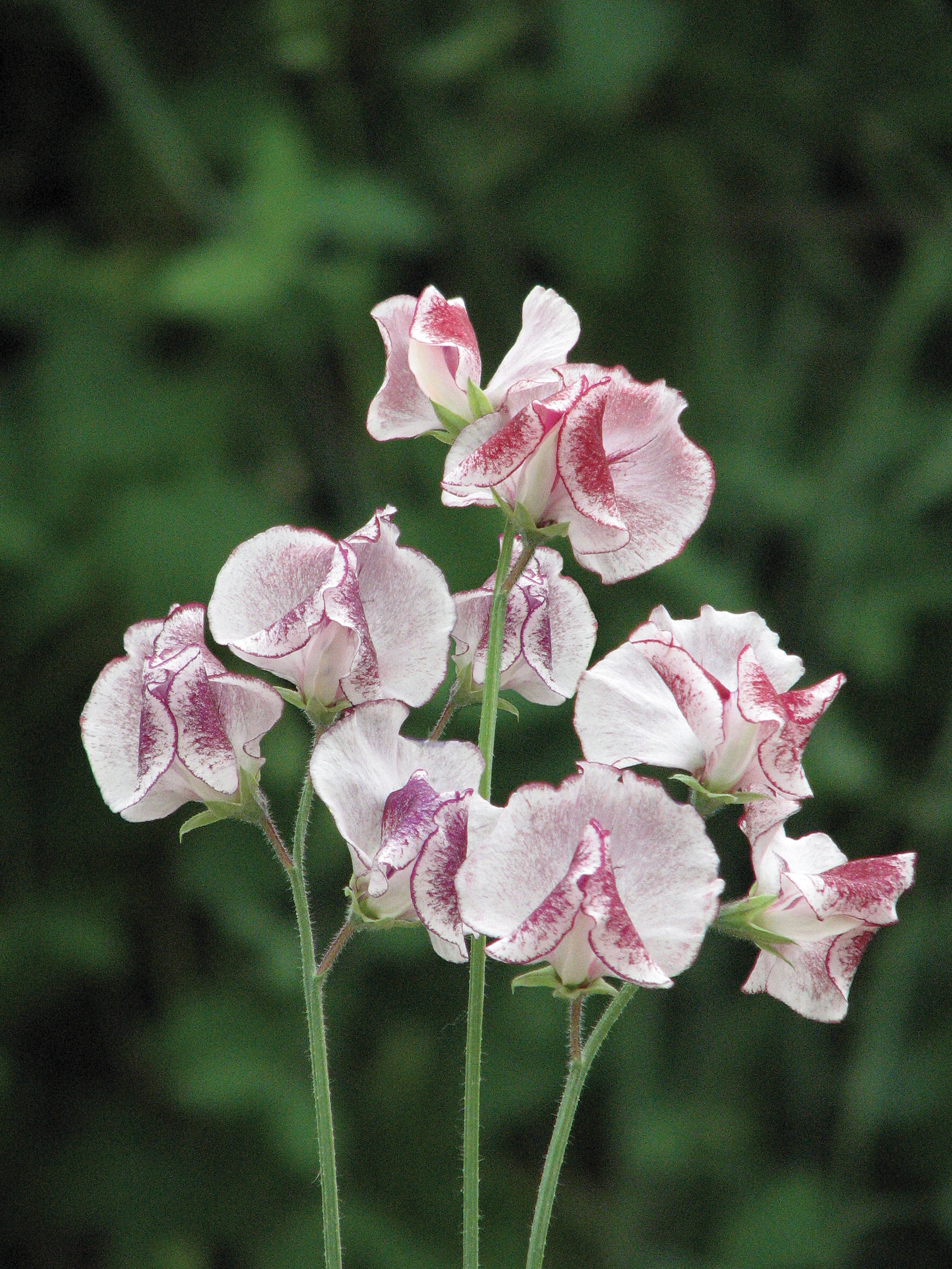
Here’s the Wiltshire Ripple variety I mention, with its delicate picotee edge. I wouldn’t be without this one. Always a good strong performer.

This is Mayflower 400, another new variety, celebrating the 400th anniversary of the Pilgrim Fathers sailing to the New World. It’s highly-scented and a good strong grower. Long stems, and flowers last a week in a vase.

After talking about flowers, we move on to what I’m growing and harvesting from the plot. Plums are prolific again this year. This is Victoria, delicious and reliable. I’m making jam. It’s such a treat in winter to have a taste of summer. I stand the jars along the kitchen window and admire them. It’s like looking through pink stained glass. Very cheerful on a cold, dark day.

The recipe for plum crumble cakes and plum jam is here : https://bramblegarden.com/2017/08/22/peaches-and-plums-crumble-and-jam/
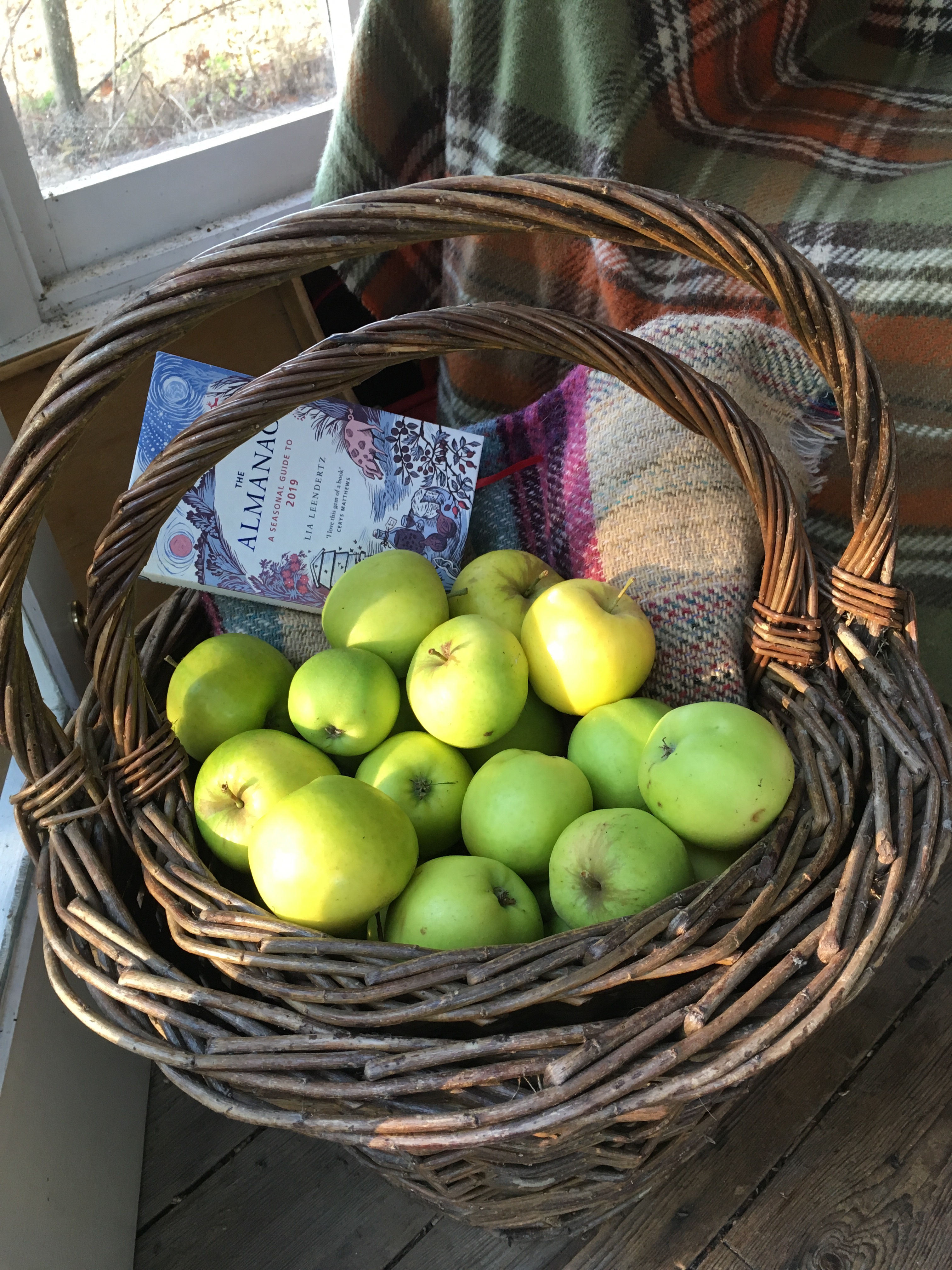
When my children were little, we fed them apple purée as their first solid food. BBC Radio Leicester programme host Naomi Kent is having a baby in two months, so we talk about the varieties of apple trees she might plant in her new garden.

I’m growing Spartan, a gorgeous deep red apple with a sweet honey taste. Apples are small and numerous, the perfect size for children’s lunch boxes. Lovely for juicing which is a somewhat messy process, but worth the effort.

I also grow Greensleeves (above) for cooking and eating. It’s sweet enough on its own, so you won’t need to add sugar for cakes, purée and puddings. Kept somewhere cool, apples will store until February.

Supermarkets often only sell a few apple varieties, typically Cox, Golden Delicious and Braeburn. Often they’ve been grown abroad and flown in. Sometimes they are coated with chemicals to improve their keeping qualities. And yet, in the UK, we have perfect conditions to grow your own apples. Traditionally, apple trees would have been 6m tall, but plant breeders have produced some compact varieties for small gardens and containers. Lubera have a range of ‘column’ fruit trees which have short side shoots and a narrow, vertical growing habit. I’m growing Malini Top Model which looks as if it will be about 50cm wide and eventually 3m tall. I’m growing it in a large plant pot and it has a good crop of apples in its third year. Lubera also have column types of pear, cherry and plum varieties on their website.

We had record amounts of cherries this year. I’ve been freezing them and preserving them in alcohol for winter treats. There’s a cherry marzipan chocolate recipe mentioned in the links at the end.

My cherry tree is Stella, a self fertile variety bred in Canada and introduced to Britain in the 1960s.

If you’ve got a small garden, opt for a cherry tree on dwarfing Gisela rootstock, which makes a compact tree. It’s much easier to protect trees from frost, if they are small enough to cover with fleece or an old bed sheet.

Good varieties to try include self-fertile Sunburst, Summer Sun and Celeste.

I’m fond of pears too. I have a Conference pear which provides plenty of fruit. If you are short of space, pears are easily trained along a fence or wall, in an espalier shape. Pears need more sunshine and warmth than apples, so it is a good idea to give them the protection of a warm wall. I’m going to plant a Concorde pear on the south wall of the house. Concorde is possibly a more reliable cropper than Conference.

If you have a more shadier garden, and you want to grow fruit, I’ve found success with Morello cherries, damson and quince, and crab apples for making jelly.

As well as apples, pears, plums and cherries, I wouldn’t be without my mini peach trees. I’m growing dwarfing variety Garden Lady and Bonanza in 45cm pots. We don’t get very many peaches yet, but the taste is so delicious and sweet. It’s a special treat to have home- grown ripe and tasty peaches.

I’d love to grow my own apricots. I’ve seen compact varieties Aprigold and Isabelle at nurseries. Our neighbour, Arthur, at our first house, had a fan-trained Moorpark apricot. He never did any other gardening, leaving it all to his wife Dorothy, but every day he fussed over his apricot tree, watered it and covered it up on cold nights. When it produced a magnificent crop each summer, he gave bags of fruit to his neighbours all along the little row of terraced houses. Happy memories of wonderful, kind neighbours. We have been so lucky to always have lovely people living next door.

So, to sum up, you don’t need a huge garden to grow fruit. It is possible to have a whole orchard- in pots on your patio. No need for rolling acres. Dwarfing varieties designed for growing in containers, some large pots, 45cm diameter, and John Innes no3 compost is all you’ll need. Set up an automatic drip watering system, or water the pots every day in summer. I add potash-rich seaweed feed every fortnight, and I refresh the top of the pots, taking out a small amount of compost and adding in some new compost, every year.

What fruit trees are you growing at home. Have you any recommendations for small gardens. Get in touch and let me know how you are getting on with your growing this summer.

Links:

Sweet pea seeds: https://www.mr-fothergills.co.uk/Flower-Seed/Tall_3/Sweet-Pea-Ripple-Mixed-Seeds.html#.XxrSvBB4WfA

Mayflower 400 : https://www.mr-fothergills.co.uk/Flower-Seed/Sweet-Pea-Seed/Sweet-Pea-Mayflower-400.html#.XxrS4hB4WfA

My plum jam recipe : https://bramblegarden.com/2017/08/22/peaches-and-plums-crumble-and-jam/

Apple and Almond Slice Recipe: https://bramblegarden.com/2019/11/07/apple-and-almond-slice-family-favourite-recipes/

Cherry marzipan chocolates: https://bramblegarden.com/2018/12/04/family-favourite-recipes-chocolate-marzipan-cherries/

BOOKS TO READ:

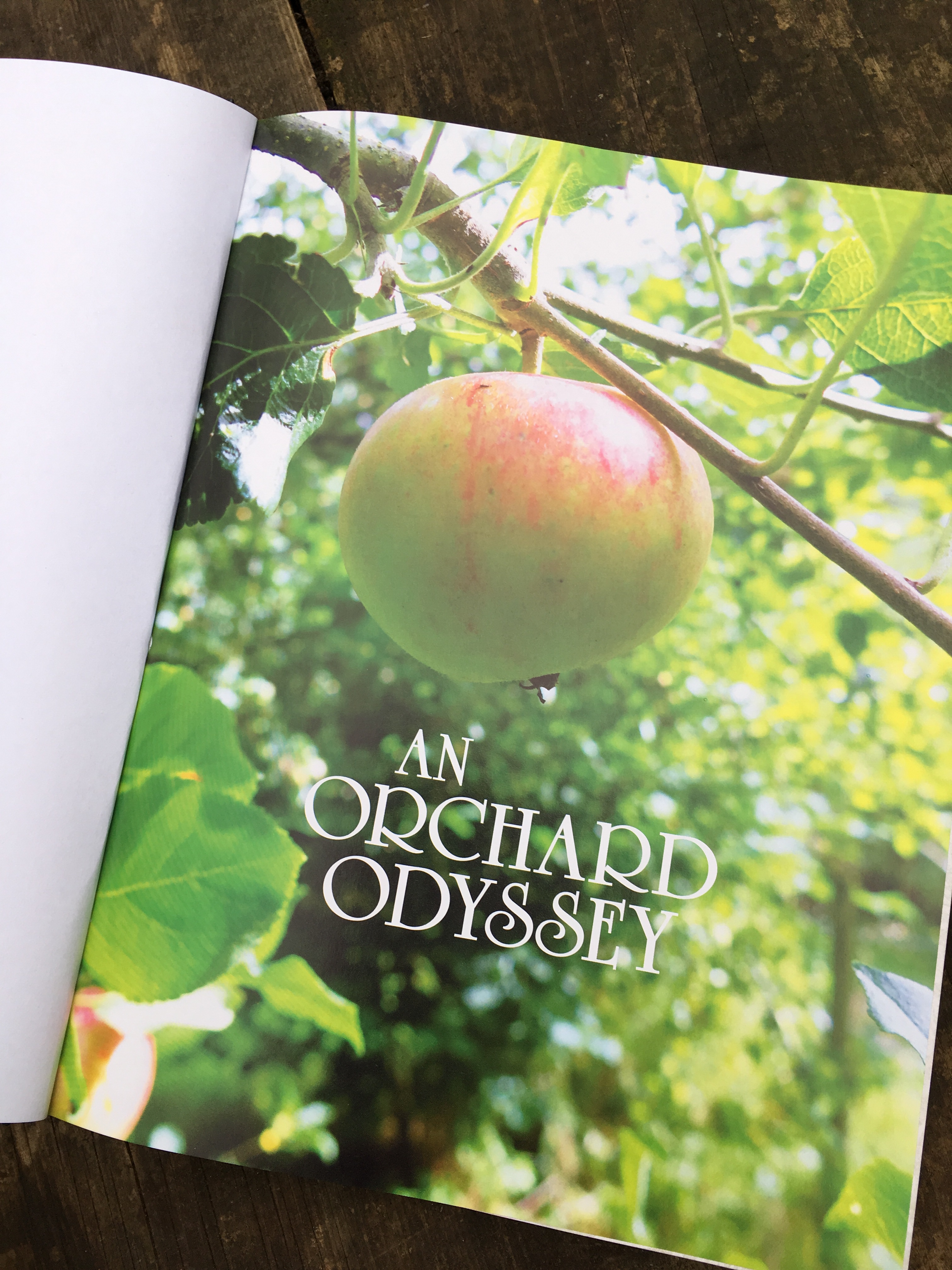
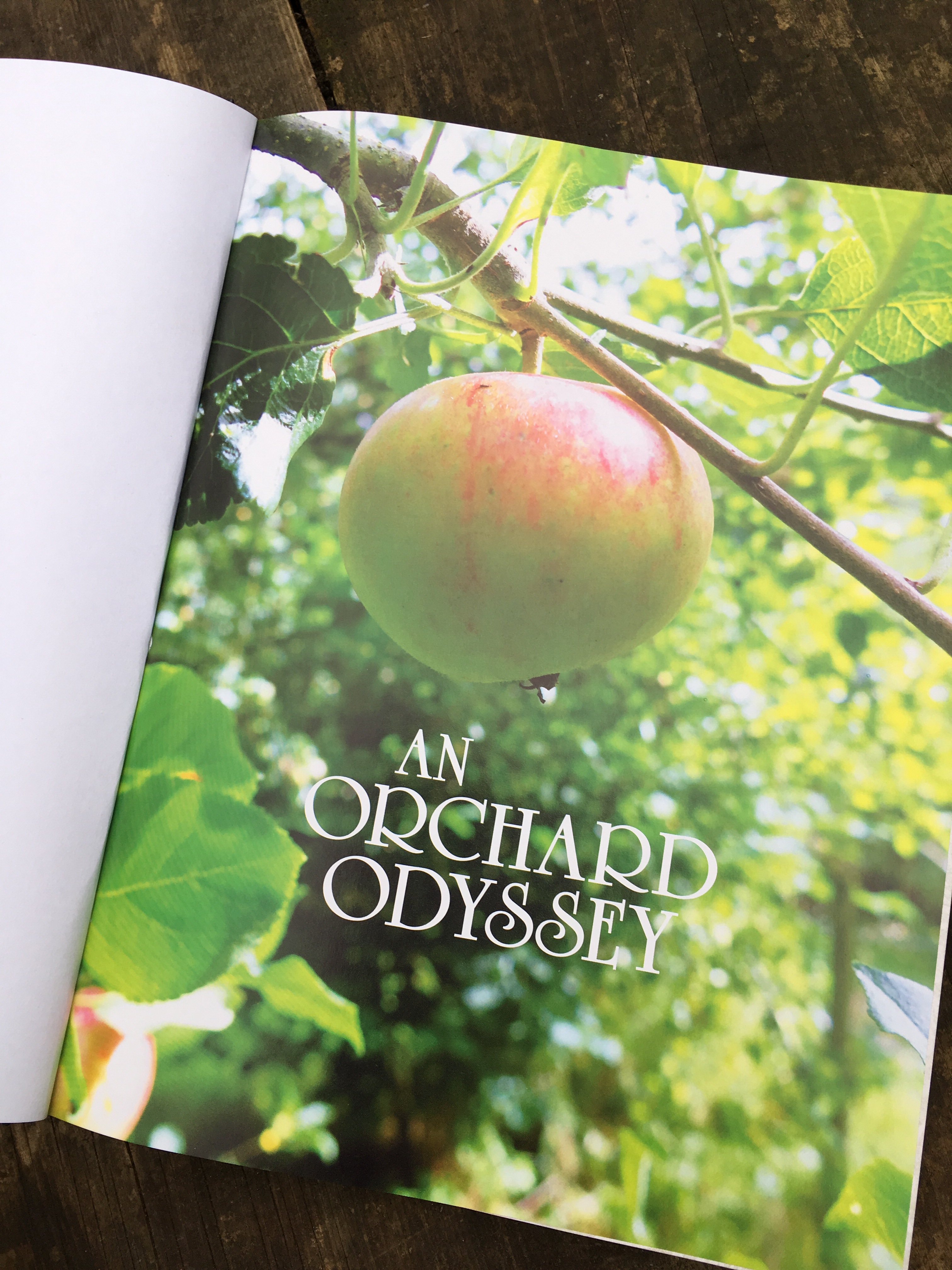
An Orchard Odyssey by Naomi Slade

https://bramblegarden.com/2019/09/27/an-orchard-odyssey-book-review-and-prize-draw/

The Creative Kitchen by Stephanie Hafferty

https://bramblegarden.com/2018/11/18/the-creative-kitchen-book-review/

BBC Radio Leicester : https://www.bbc.co.uk/sounds/play/p08jzr94. Gardening starts at 3.11.48 on the timeline.
Apple and Almond Slice- Family Favourite Recipes

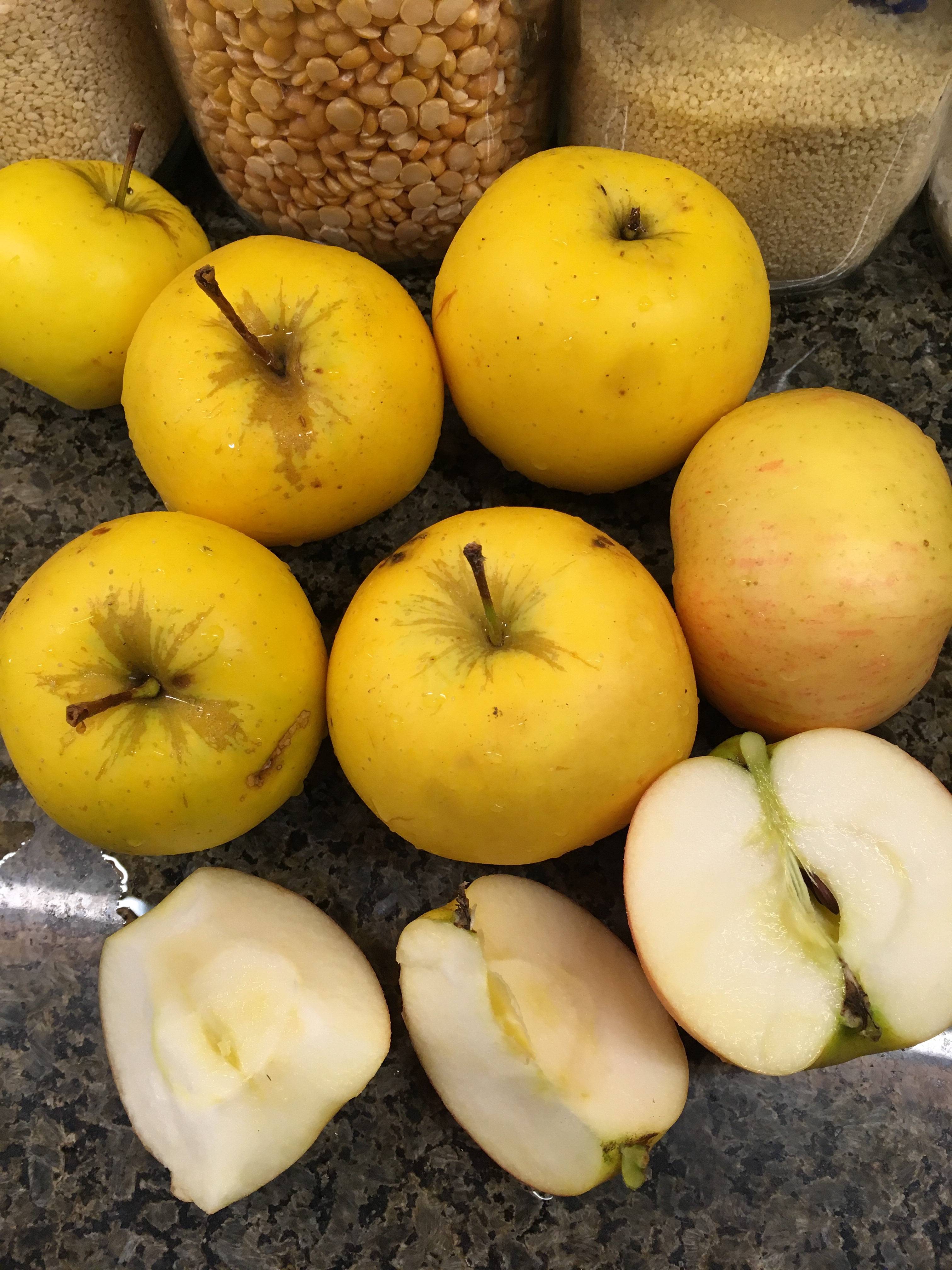
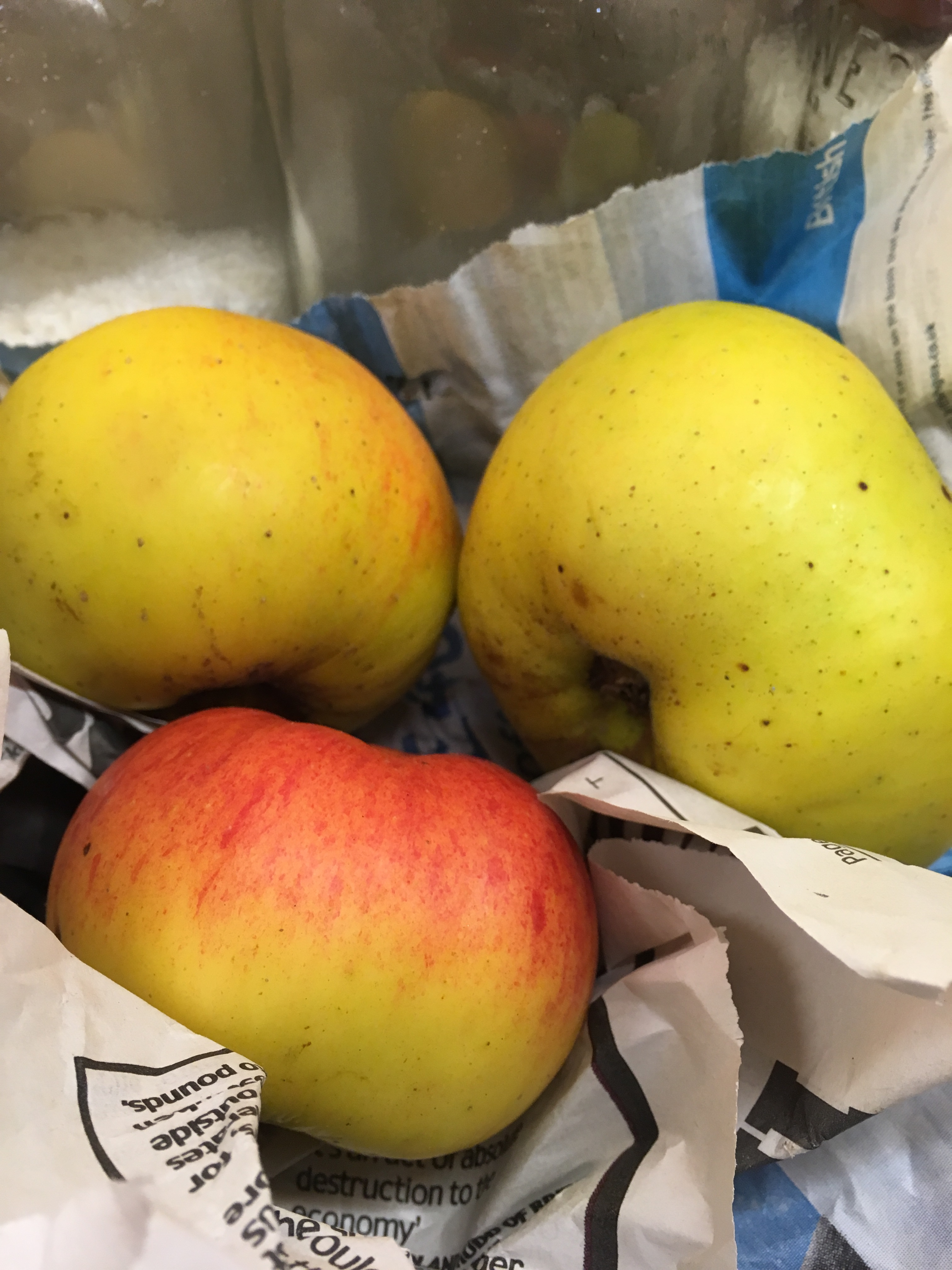
At this time of year, my kitchen work surfaces are covered with piles of apples. Little pyramids of golden cooking apples, tiny rosy red eating apples, giant Bramleys. My family complain. There’s nowhere for anyone to put anything down. I usually store them wrapped in newspaper in the potting shed, but I’m still trying to evict the mice, making many trips back and forth to the woods with my tunnel-like humane traps baited with peanut butter. I can’t kill them. They will take their chances in the leaf litter under the trees. I’m trying to ignore the tawny owl fledglings in the branches above, still being fed by harassed parents. I feel slightly guilty. But watching the mice run when I let them out, I think they stand a fair chance of surviving.

Meanwhile, I’m steadily working my way through the apples. My mother always says, if you’ve got an apple, you’ve got a pudding. It can be an apple pie, a crumble, a cake, or if you are pressed for time, just apple purée with lashings of creamy custard, or Devon clotted cream. A special treat.

Today’s recipe is another family favourite, an apple tray bake which is quick and easy to make and tastes of autumn. As usually, I’m recording it here for my children, in case they can’t find the scraps of paper these recipes are written on. It’s so lovely to see my grandmother’s best copper plate hand writing, as she lovingly wrote these recipes for me. Food, and cooking, bring back such special memories, don’t they.


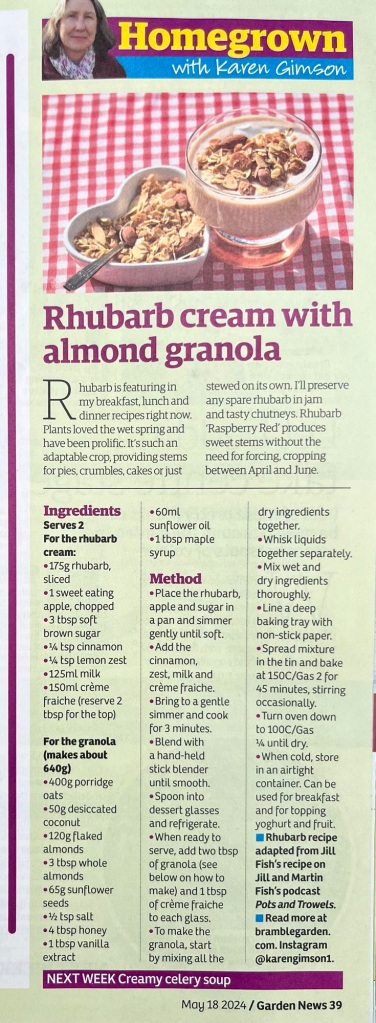
APPLE AND ALMOND SLICE:

INGREDIENTS – FOR THE TOPPING


30g butter or vegan margarine

30g SR flour

25g golden caster sugar

2 tbsp. Jumbo oats

1/2 tsp cinnamon

25g flaked almonds

METHOD

Mix the butter, flour and sugar together. Fold in the cinnamon, oats and flaked almonds to make a crumble topping. Place in the fridge while you make the base.

INGREDIENTS FOR THE BASE

150g SR flour

200g golden caster sugar

200g butter or margarine

3 eggs ( or use 6 tbsp. soya oat drink if vegan)

100g ground almonds

1/2 tsp baking powder

1/2 tsp almond extract

1/2 tsp cinnamon

2 large apples slices and tossed in lemon juice

100g any other fruit you have; blackberries, raspberries, blueberries, plums,

METHOD

Mix the flour, baking power , sugar and butter together. Whisk. Fold in the ground almonds and cinnamon. Add the beaten eggs.

Put half the mixture in the base of the tin. Put apples on top. Add the rest of the base moisture. Press the blackberries or other fruit on the top.

Cover with the crumble topping mixture.

Cook for 40-50 minutes, or until a skewer come out clean.

Gas mark 4, 180C oven, or 160C fan oven.

You’ll need a 20cm tray bake tin, at least 4cm deep, lined with baking parchment.

Put baking paper on top if it is browning too quickly. Leave to cool and slice into fingers.

Can be frozen for 3 months.

Enjoy!


You might also like : Review of Orchard Odyssey by Naomi Slade here :

https://bramblegarden.com/2019/09/27/an-orchard-odyssey-book-review-and-prize-draw/


Also The Creative Kitchen by Stephanie Hafferty https://bramblegarden.com/2018/11/18/the-creative-kitchen-book-review/

I’ll leave you with a photo of my 1930s summerhouse, looking autumnal today. There’s heaps of blankets to keep us warm when the temperatures start to dip. It’s quite cosy in here though.

An Orchard Odyssey- Book Review and Prize Draw

By Naomi Slade

Published by Green Books

Hardback 224 pages £24.99

ISBN: 978-0-85784-326-5

There are many things in life I’m not able to change at the moment. I’m sure some of you will be feeling the same. I am worried and unsettled by what’s happening in the UK, and around the world. I feel as if I’m just watching and waiting for people in power to start making some sensible decisions- or decisions I understand at least.

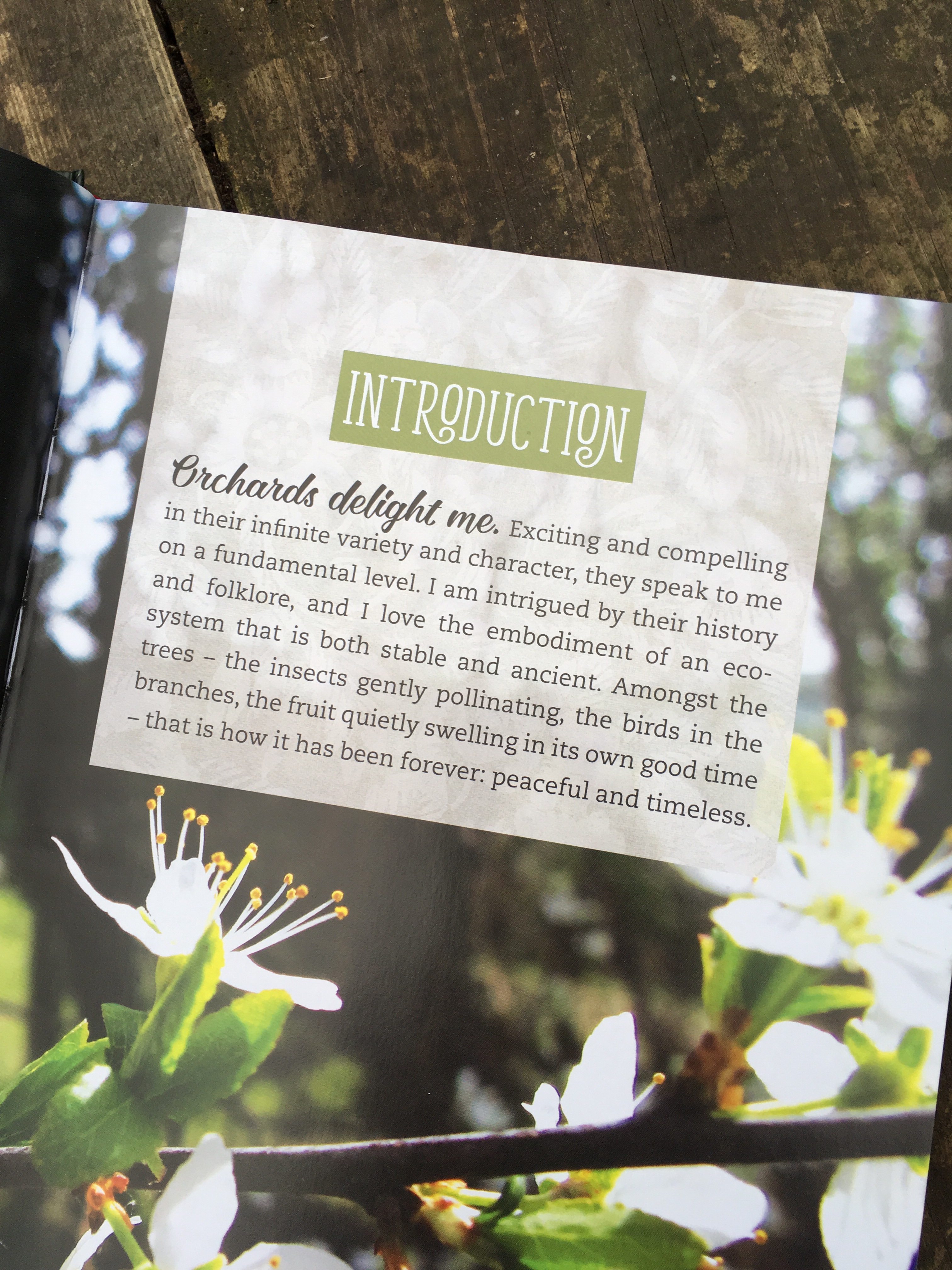
Focussing on something positive, I’ve decided to plant fruit trees. Reading through Naomi Slade’s book, An Orchard Odyssey, there’s hope written on every page. To plant a tree is to believe in a better future. I’m planning a community orchard. Something to bring people together. Sharing and caring is the way forward. I’ve been mulling this over for a while, and Naomi’s book gives me the answers I need to take the first steps.

It’s fascinating and reassuring to hear about restoration projects for old orchards. There’s a renewed interest in traditional methods of orchard management and on locally grown and heritage fruit . “Orchards are increasingly being reclaimed by communities and used in new ways. Not only are they a social resource, but as an archetype of sustainable agriculture there is also potential for enterprise, skills acquisition and learning activities- all on the back of biodiversity.”

I’m keen to know more about newly- planted orchards providing a shared resource and the book has a section on how to make a community orchard happen. There’s tips on creating a plan, getting local support, forming a group and thinking about management. There are activities for children and encouraging wildlife with log piles and bee hotels. Using the site as an exhibition area for local artwork sounds inspiring too.

I’ve been involved with many school gardens, designing and project managing builds. It’s something I loved doing. Naomi gives many fresh ideas, practical suggestions on planting and selecting varieties. What she also emphasises is that anyone can grow fruit. With modern dwarfing root stocks, fruit trees can be grown in small spaces. There are types which can be grown in a pot. You don’t even need a garden, some varieties can be grown on a balcony.

Naomi’s beautifully- illustrated book is packed with practical advice written with enthusiasm and passion. Sections on the history of orchards, the origins of apples, and gardening through the ages, contrast with modern breeding projects to develop new varieties and ways to combat pests and diseases.

Reading Naomi’s book should really be on prescription. It’s a joy. A few hours reading and my feeling of calm and sense of equilibrium has returned. Of course, the problems of the world have not gone away. But I feel as if I can do something to make a difference – even if it is planting just one tree. We have to believe small gestures, kindness, a willingness to make things better, actually work. I believe it works magic. What do you say?

The publishers have offered one copy to give away in a prize draw. Please leave a comment below to be included. No purchase is necessary, there’s no cash alternative and the publisher’s decision is final. Names will be randomly selected.

links: Green Books https://www.greenbooks.co.uk/an-orchard-odyssey

Plum Crumble- Family Favourite Recipes

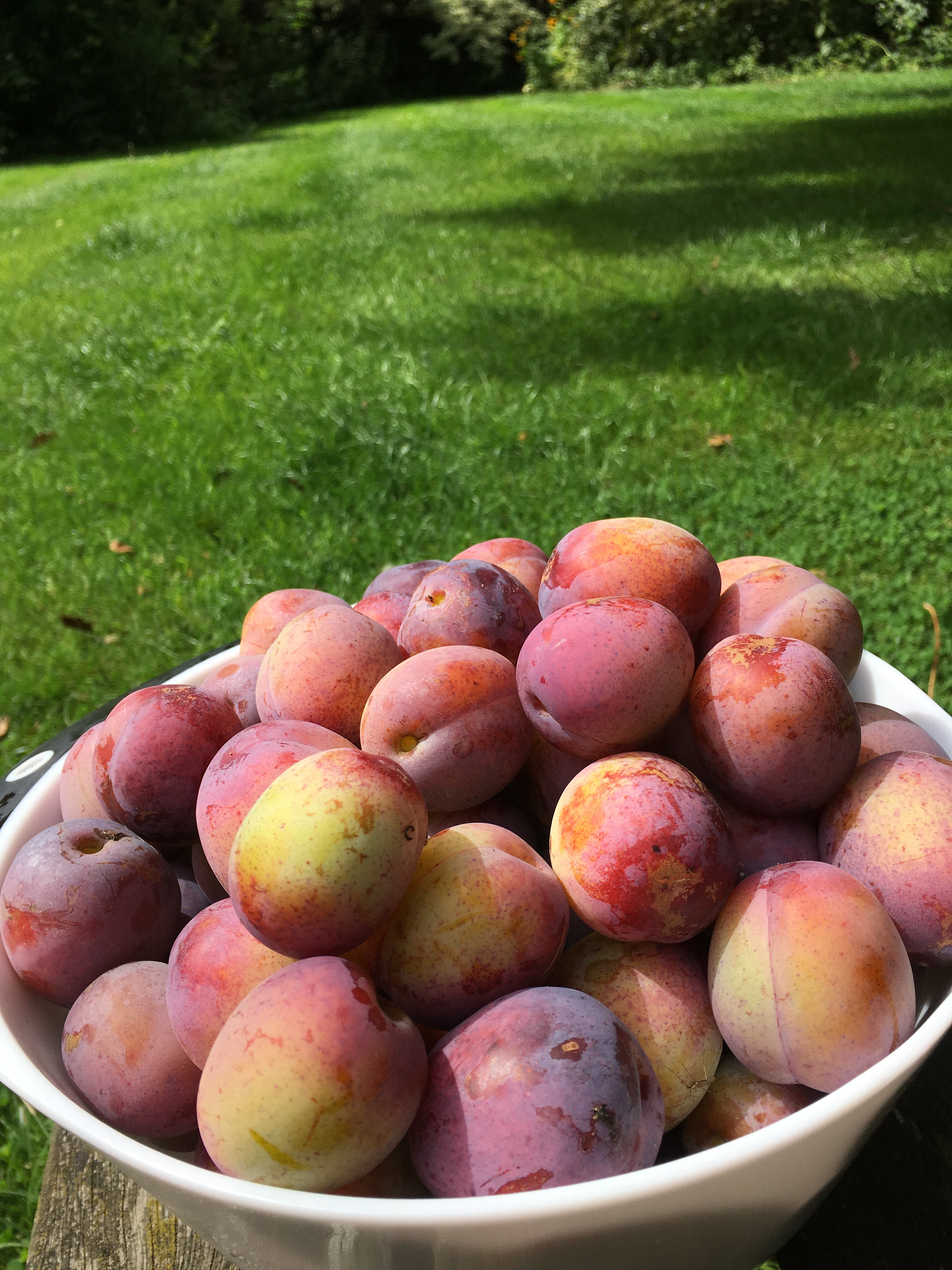
Crumbles are a simple family pudding which can be varied according to the fruits in season. At the moment, we have plums from our Victoria plum tree. We’ve filled the freezer and made jam. Here’s my favourite plum crumble, using a recipe that came from my grandmother.

BASIC CRUMBLE TOPPING

Ingredients:

225g (8oz) plain flour

150g (5oz) soft brown sugar

75g (3oz) butter

1 level teaspoon baking power

METHOD

Place all the ingredients in a food processor, or rub in with your fingertips, until combined.

You can freeze this mixture until needed, if required.

Sprinkle the mixture all over the fruit in a 1.75 litre (3 pint) pie dish, spreading it out with a fork.

Bake for 30-40 minutes or until the top is tinged with brown.

Oven temperature : 180C 350F gas mark 4

FRUIT SUGGESTIONS

Plum, Ginger and Almond : Add 1 teaspoon of powdered ginger to approx 900g plums cut in half with stones removed. Top the crumble mixture with a sprinkle of sliced almonds or chopped nuts. Take care not to burn the almonds.

Rhubarb and Ginger: 900g chopped rhubarb, 1 level teaspoon powdered ginger, 75g brown sugar.

Gooseberry: 900g fruit, topped and tailed. 6oz caster sugar.

Apple: 900g apples, 25g soft brown sugar, quarter teaspoon cloves, 1 level teaspoon ground cinnamon, 75g raisins. Cook all the ingredients in a saucepan until the apple is soft. Remove cloves and place apple mixture in a pie dish. Cover with the crumble topping.

Enjoy 😊

More fruit from the garden. Blueberries and blackberries. Can be added to apples for a delicious alternative crumble.

You might also like

https://bramblegarden.com/2017/08/22/peaches-and-plums-crumble-and-jam/

https://bramblegarden.com/2018/07/26/summer-fruit-harvest-and-making-garden-jam/

Gardening On the Menu -Book Review

MARTIN AND Jill FISH

2QT Ltd (Publishing ) rrp £15.99 -or £12.95 plus £3.95 postage direct from Martin.

ISBN: 9781912014569

This week I made the most delicious chocolate cake I’ve ever tasted, and it had a surprising ingredient: Beetroot! You couldn’t taste the beetroot, but it created a really moist and flavoursome cake.

Here’s the recipe, taken from Martin and Jill Fish’s new book Gardening on the Menu.

Ingredients

30g cocoa powder

180g plain flour

2 tsp baking powder

225g caster sugar

Pinch of salt

225g beetroot, boiled until tender and left to cool

200ml sunflower oil

1tsp vanilla essence

3 eggs, beaten

100g plain chocolate, chopped small in a food processor

2lb loaf tin, greased and lined.

Method

Sieve the flour, salt and cocoa powder together in a bowl. Stir in sugar and chocolate.

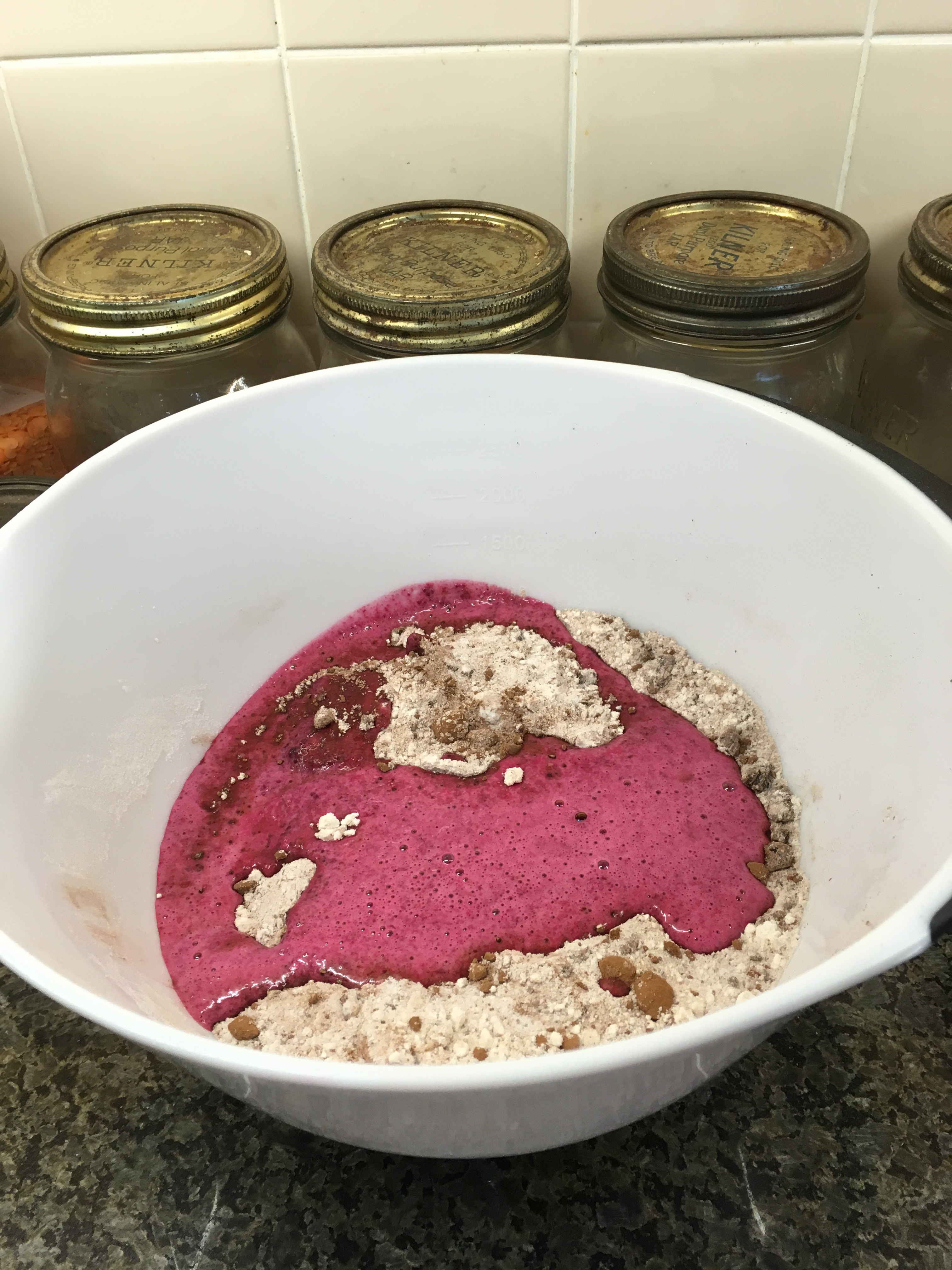
Peel and finely grate the betteroot. I whizzed it in a food processor then added the oil, eggs and vanilla essence and whizzed some more.

Make a well in the centre of the dry ingredients. Pour in the beetroot mixture. Fold in slowly and don’t over-work.

Pour the batter into a prepared loaf tin and cook at 180C, 160C (fan oven) gas 4 , for 1- 1 1/4 hours. It is cooked when a skewer comes out clean. I placed tin foil over the cake after 45 mins as it was burning on top. Leave to cool in the tin for five minutes, then turn out on a wire rack to cool. Sprinkle top with icing sugar.

I found mine kept for 2 days – it was so tasty everyone dived in and ate it! I froze some to see if that worked, and it was fine.

Here I am adding the beetroot mixture to the dry ingredients.

Looks a lovely colour

lovely for a picnic in the garden. Travels well, wrapped in foil.

I’m going to try the next recipe in the book – beetroot chutney, which looks delicious.

Martin Fish, who ran his own nursery, and presents gardening programmes on tv and radio, gives talks all around the country on growing all kinds of fruit and vegetables. For the last few years, his wife Jill has joined him for a talk called Gardening on the Menu. The cookery and gardening book is based on their talk.

Martin has been growing vegetables since he was a teenager and he draws on his many years of practical experience to give easy-to-follow tips and advice on getting the best from your crops.

Jill shares her selection of family favourites with recipes including roasted feta stuffed onions, red onion marmalade, parsnip cake, chilli jam, apple flapjack trifle, and raspberry chocolate pots.

Strawberry and Chocolate Muffins with a Cheesecake Topping

Toffee Apple Pie

Tomato Soup

Martin gives expert advice on choosing the varieties to grow, and how to get the best crops. There’s useful advice on what to do when things go wrong including how to deal with pests and diseases.

Here they are, giving a growing/ cookery talk and demonstration. I met them last summer when they spoke at a Rainbows Hospice fund-raising festival lunch.

Photo credit: the last five photos are by Jill and Martin Fish.

A really useful book, helping you grow better crops and showing you what to do with bountiful harvests. Highly recommended.

Links: www.martinfish.com

E mail : Martin@martinfish.com

Martin was show director for Harrogate Flower Show for five years, and now writes for various publications including the weekly Garden News and broadcasts for the BBC Radio Nottingham and BBC Radio York.

I have one free copy to give away in a prize draw. Please leave a comment below to be included. Do also say if you don’t want to be included in the draw. All comments are welcome. Please feel free to share this post.

End of the Month View – March 2nd 2018

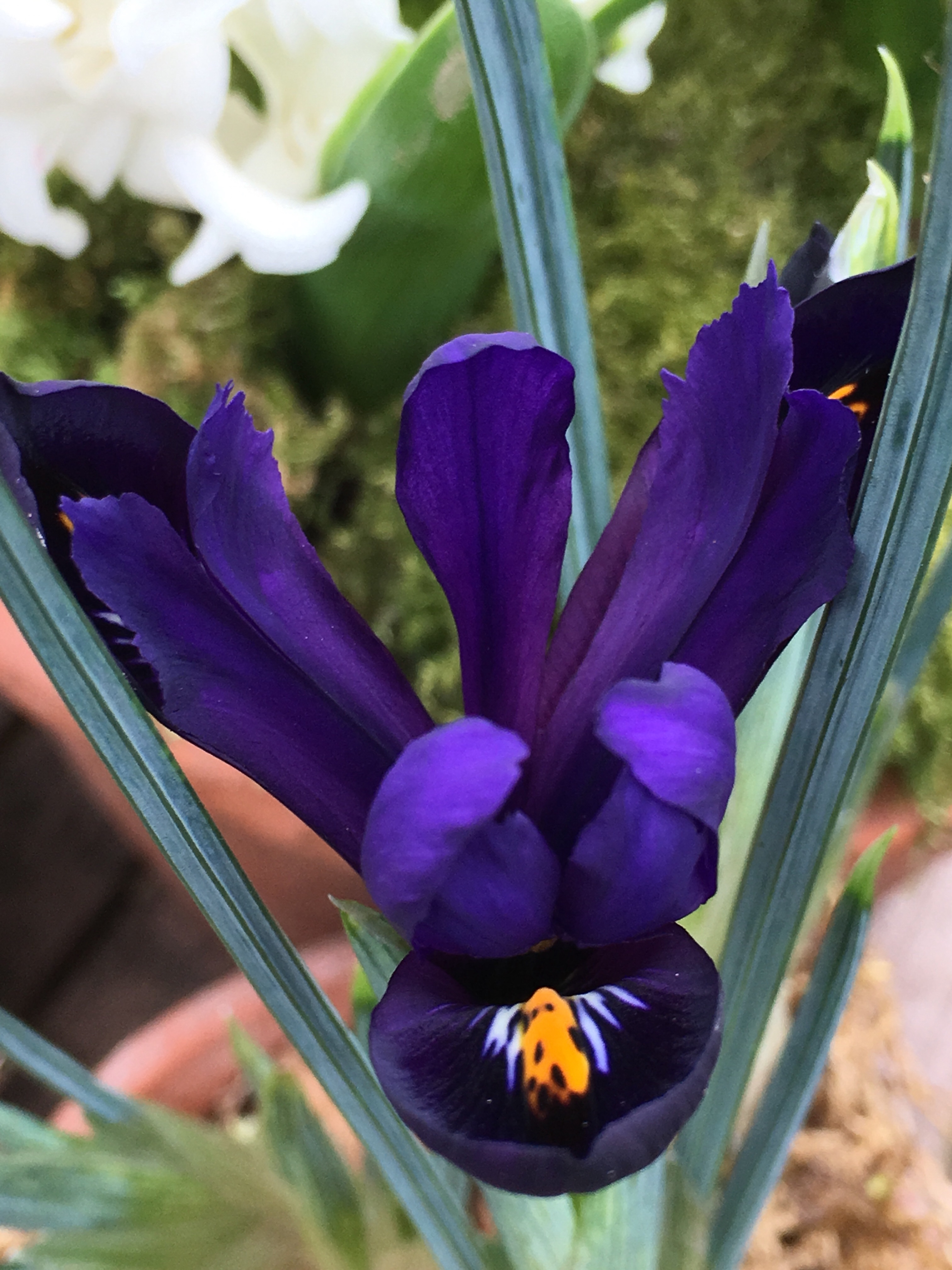
Thank goodness there’s some colour in the greenhouse right now. I planted these Iris reticulata last October. And just when I need something cheerful to look at, they’ve sprung open like a jack-in-a-box. As soon as the sun hit the greenhouse glass, they pinged open. A lovely moment. Glad I was there to see it.

Such an inky blue. I planted Iris Pixie and Harmony, and then somehow lost the labels. A common occurrence in my garden. I must address the problem of how to keep labels this year.

I’ve no need to tell you what the temperatures are like at the moment. One look out of the window and you can see for yourself. We are white over in the UK. So today I’ve been mooching in the potting shed and greenhouse.

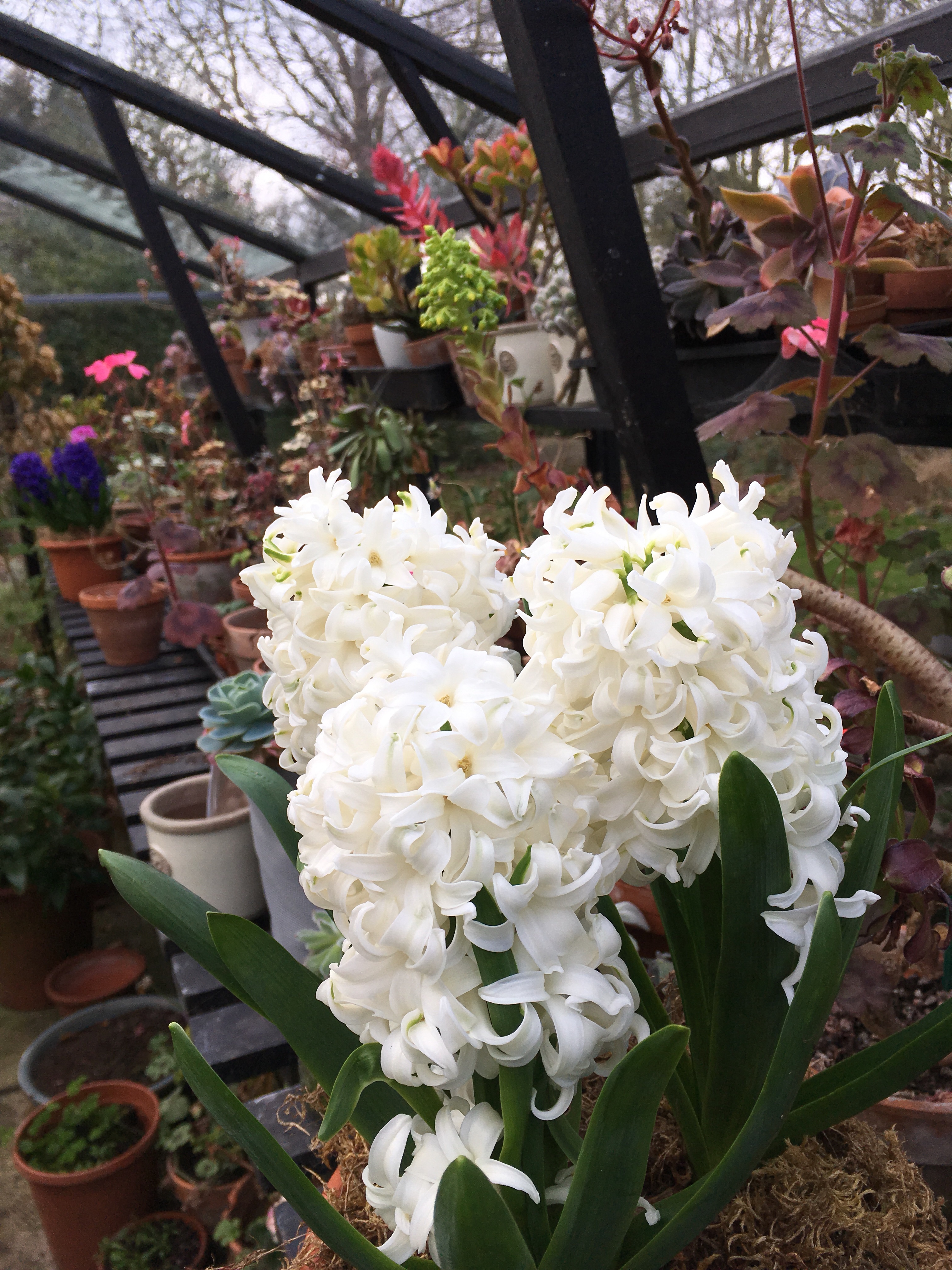
Planted last September, these Carnegie hyacinths are a joy for months. The buds are pretty, with just the green tips showing. I think there’s as much pleasure in anticipating what’s to come, as there is when the buds finally burst into bloom. The scent fills the whole greenhouse and makes it a pleasure to work in there on a freezing cold day. I heat the greenhouse to between 5 and 7 degrees. It is an old Alton Cedar greenhouse -second hand, renovated and painted black. Being cedar, the wood swells in the winter and cuts off any draughts – keeping it warm and cosy in there.

Prepared -or temperature treated bulbs – are planted in September in individual 3″ pots. The bulbs are given a cold period to fool them into thinking they have been through winter. We then put them in a cool, dark cupboard in the potting shed or garage for 20 weeks which finishes the treatment. Then, the bulbs are gradually brought out into a cool greenhouse and grown on. You can delay development by just keeping them cold and on the dry side, which is how I’ve managed to keep them flowering right through winter.

Choose bulbs that have flowers roughly the same size to plant into bowls and create displays for the house.

Today, I’m looking out at a snow, right across the back fields, and there’s icicles dangling from the greenhouse roof.

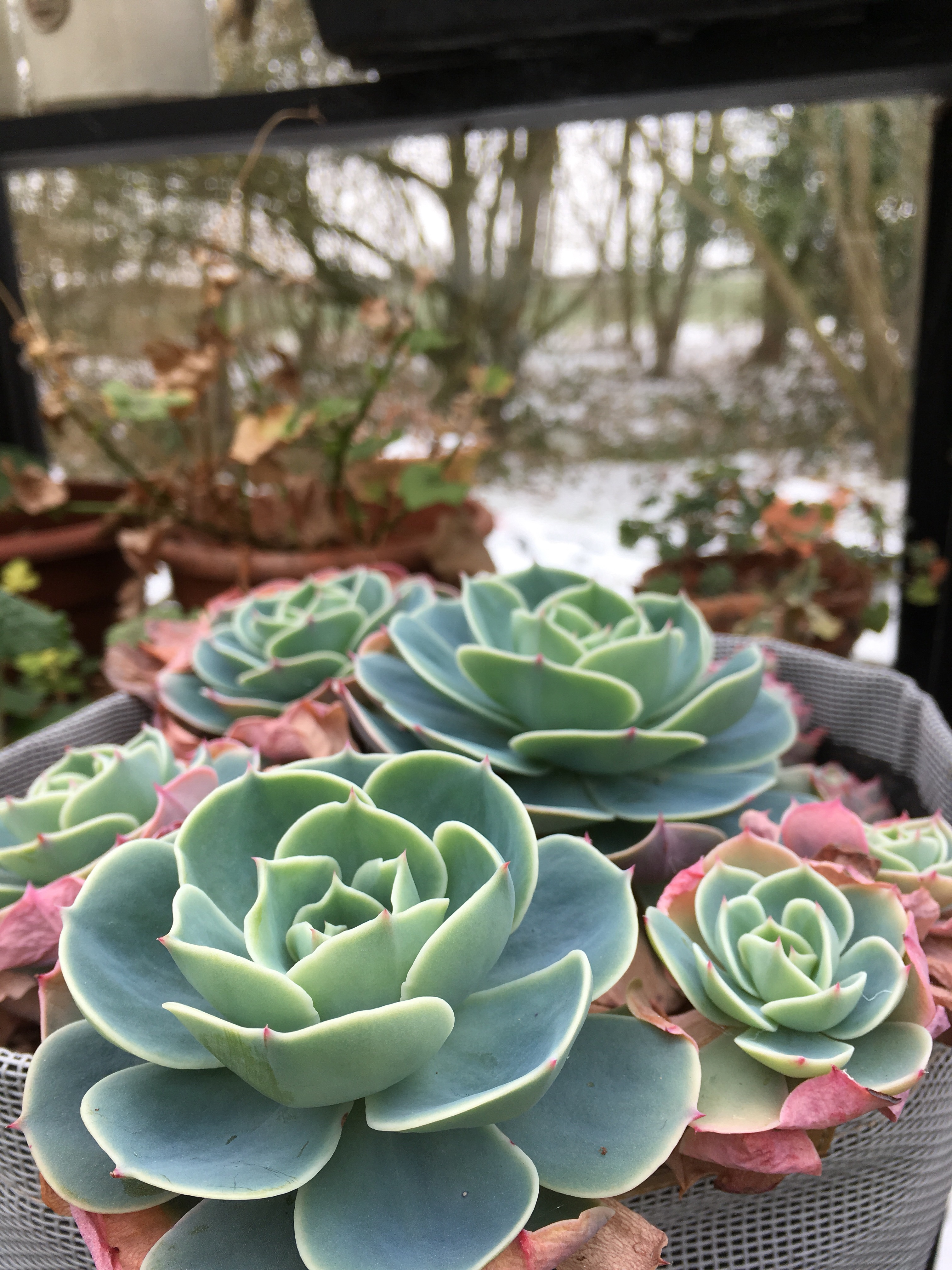
All along the top shelves are succulents and cacti- which need virtually no water between November and mid-March. These Echeverias have grey -blue leaves and striking orange flowers in summer.

The potatoes are starting to chit. Hard to believe, I will be planting them in a few weeks. I’m growing Charlotte and Lady Christl- both delicious. These varieties are on the RHS recommended list for growing in containers. If you are thinking of growing in containers, you need 8 litres of compost per potato. So put five in a 40 litre bag or 16″ -18″pot. Start off filling the bags with 20 litres of compost and 125g organic potato fertiliser. Sink the potatoes into the compost, and water. As the haulms or stems grow, add more compost to cover them and gradually fill up the pots. The secret to success is not to overwater. Soggy compost deprives the plants of oxygen and leads to stunted growth. Start feeding with potash when the leaves are out of the top of the pots. Other varieties I’ve tried and are RHS recommended include Casablanca, Golden Nugget, Sharpes Express, Maris Bard, Jazzy and Vales Emerald. I don’t grow Sharpes Express as much though, as it tends to disintegrate when it’s cooked and you end up with a pan full of soupy water.

Just behind the potatoes and bedding plant cuttings is a pot of wild rocket. I sowed the seed in autumn and now have lots of little pots like these from which I can pick a few leaves each day. Pick from the outer leaves, leaving the centre of the plants to keep growing.

Here’s a quick peek in the potting shed at dusk. The last of the Paper White narcissi are cheering up the potting bench. Another fabulous scented flower.

And in the potting shed window there’s snowdrops. This one is a very pretty Galanthus Viridapiece which has delicate green-tipped flowers. A favourite of mine.
Thank you to Helen at Patient Gardener for hosting this EOMV meme.
How are you coping with the weather? Get in touch and let me know how your garden is faring in the snow. Keep warm everyone.

BBC Radio Leicester Gardeners’ phone-in recipes

CITRUS MARMALADE AND ORANGE FLAPJACK

February is a cold, dark, short month. But everywhere there’s signs of spring. Wild violets and the first primroses pop up by the front gate. And snowdrops cheer up the hedgerow, pushing up through hats of curled, brown leaf mould.

It’s traditionally a month of self-denial and fasting. Many people give up something for Lent – chocolate, wine, or favourite foods. Shrove Tuesday or Pancake Day is a way of using up egg supplies before the fasting period begins. I make orange curd to use up eggs and butter.

But I also like to make marmalade now. An antidote to winter. I line up pots of marmalade along my kitchen window. A kind of ribbon of orange light. My own stained glass window. Here’s my favourite recipe, which I make with Seville oranges – and some citrus fruits from my heated greenhouse. Tucked up indoors and standing over a steaming pan of oranges makes for a heart-sing moment. And we need plenty of those in February. My grandmother’s old saying is usually true. As the days lengthen, the cold strengthens. I highly recommend staying indoors, keeping warm and making marmalade.

ORANGE MARMALADE

2lb or 900g fruit ( I used Seville oranges, and some kumquats and calamondin fruit from the greenhouse.)

1 lemon

4lb or 1.8kg granulated sugar, warmed

4 pints water

6 x 1lb jam jars

Square of muslin

Cut the lemon and oranges in half and squeeze out the juice. Put any pips or pith that cling to the squeezer into a square of muslin placed over a pudding bowl. Now cut the peel into quarters. Scrape off the pith and add to the muslin. Cut the quarters into thin shreds. Add the juice and peel to the water in a heavy-based preserving pan. Tie up the muslin square and tie loosely to the pan handle with the bag suspended in the water. The pith contains pectin which will help the marmalade set. Simmer gently uncovered for 2 hours until the peel is completely soft. Remove the muslin bag and set aside to cool. Put a plate in the freezer. Pour in the sugar and heat gently until the sugar crystals have melted. Squeeze the muslin bag to extract the jelly-like pectin. I used plastic gloves, or you can press it between two saucers. Increase heat. As soon as the mixture reaches a fast boil, start timing. After 15 minutes, spoon a little of the marmalade onto the cold plate and pop in the fridge. If it has a “set” the marmalade will crinkle when you push it with your finger. If not, continue to boil for another 10 minutes. Remove pan from heat and stand for 20 minutes. Add a tsp butter to disperse scum. Pop the jam jars in the oven to warm for five minutes. Pour the marmalade into jars with the aid of a funnel, cover with wax disks and seal while still hot. Label pots- and enjoy!

A visit to my mother-in-law’s house would always find us searching the pantry for the cake tin. Over the past 50 years, you could pretty much guarantee to find some flapjack in there. Joan recently gave me all her treasured recipe books. Here’s my own version, adapted from Joan’s family favourite. It travels well and is ideal for picnics.

ORANGE AND WALNUT FLAPJACK

250g or 9oz unsalted butter, chopped into pieces

250g or 9oz golden caster sugar

175g or 6oz golden syrup

425g or 15oz porridge oats

50g or 2oz walnut halves,slightly crushed.

Grated zest of 1 orange.

3 tbsp orange marmalade

160C gas / mark 4 for 30 minutes

28cm x 18cm shallow baking tin

Melt together in a microwave the butter, sugar, and golden syrup. Stir into the oats, walnuts, and orange zest. Tip the mixture into a lined tin and level it off. Bake for 30 minutes or until the edges are golden brown and the centre is still slightly soft. It will firm up as it cools. Mark into 12 pieces while it’s still warm. Leave to cool and then brush the top with melted orange marmalade. Keeps for a week in an airtight tin.

Each week on BBC Radio Leicester there’s a Gardeners’ Phone-in programme between 11am and 12 noon. I like to take in a posy from my garden, showing what’s in flower all year round. And I also take in something I’ve made using produce from my plot. This week it was a jar of marmalade and some flapjack. Tune in on the i player to listen to the programme which starts at 2.11.31 on the timeline at http://www.bbc.co.uk/programmes/p05t8n69. Meanwhile, I’ll leave you with a photo of my greenhouse from last summer. A reminder of lovely warm weather to come.

Blackcurrant Cheesecake

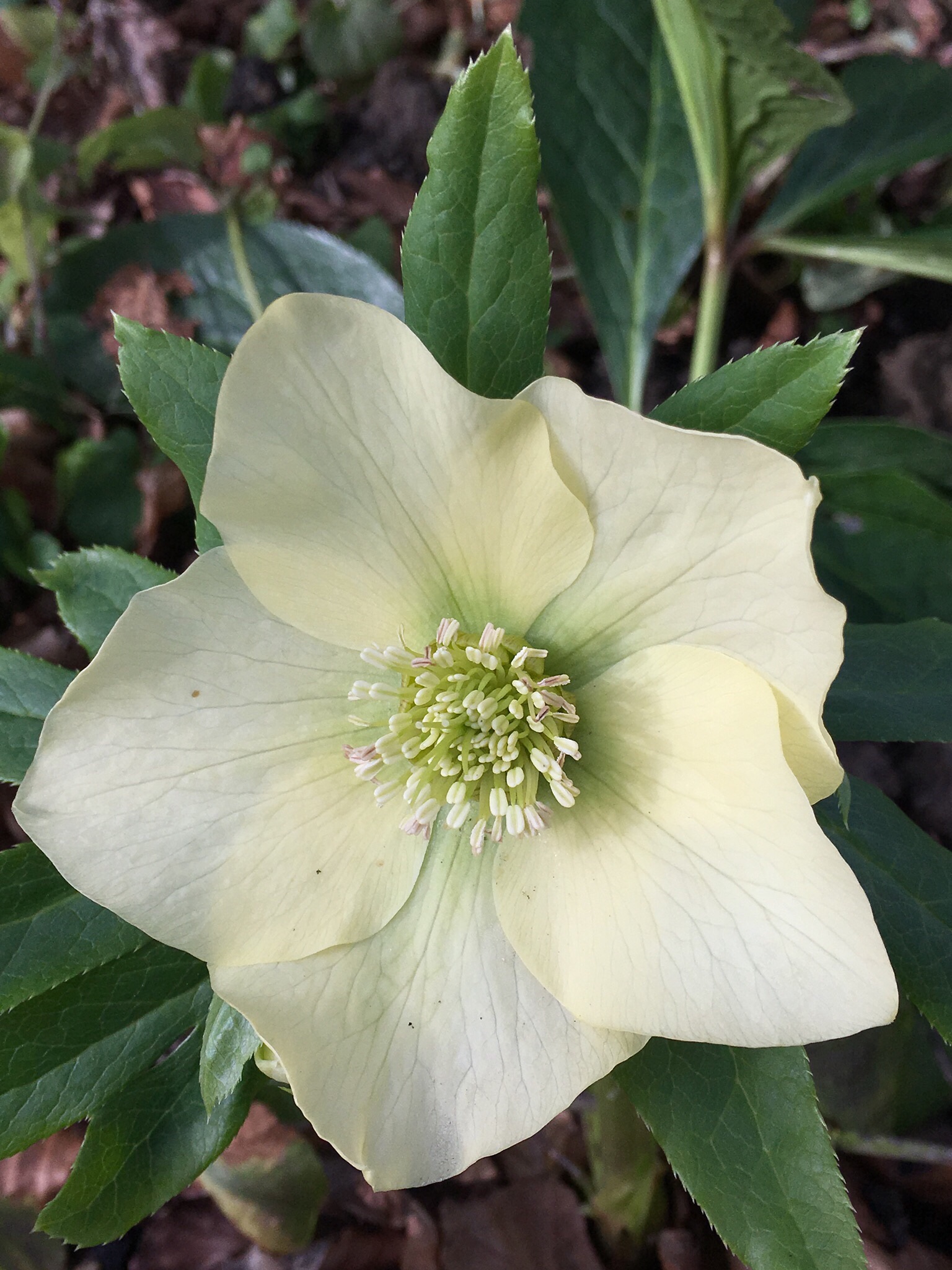
Just dashed in from the garden. Picked some hellebores for the kitchen table. Now for some cooking……

I’m standing at the cooker stirring a cauldron of blackcurrants. Outside the temperature has dipped to 1C and there’s a bitter north wind. But in the kitchen, it’s summer again. The scent of the blackcurrants transports me back to sunnier times. I’m making blackcurrant syrup. It is roughly equal amounts of fruit and sugar. The blackcurrants are first cooked and sieved. And then the sugar is added and the mixture simmers for 15 minutes. Add the justice of a lemon. When cooled, it can be added to yogurt, fruit sponges, or made into jam tarts. Today I’m making lemon cheesecake and topping it with the rich, full of flavour syrup. It will do us the world of good. We have been ill since Christmas, and the thought of all that vitamin C is cheering me up already.

Blackcurrant Cheesecake

500g packet of digestive biscuits

4oz or 113g butter. 1/3 cup in USA

4oz or 113g cottage cheese. 1/3 cup

8oz or 227g cream cheese. 2/3 cup

1/4pint or 142ml double cream.

3oz or 85g sugar. 1/4 cup

Juice and rind of one lemon

First whizz the biscuits in a food processor. Melt the butter and add the crushed biscuits. Press this mixture into the bottom of a glass Pyrex flan dish.

Sieve the cottage cheese and add the cream cheese and sugar. Whisk the double cream until it is firm and fold in to the mixture. Add the lemon juice and rind. Spoon the mixture on top of the biscuit base.

Drizzle the blackcurrant syrup over the top. Or you can add any fruit you like. It is lovely with strawberries, peaches, pineapple, raspberries, blueberries- anything you have spare.

Place in the fridge for at least four hours to set.

Growing Blackcurrants

Blackcurrants are easy to grow. The fruit forms on young wood, so now is a good time to prune out some of the old stems. I remove about 1/3 of the stems each year, leaving around 7 of the newer stems to develop. Mulch with well rotted compost, manure or mushroom compost. Blackcurrants can be grown in sun or semi-shade, but they hate being too dry. Incorporating humus into the soil will help. Plant deeply- about 6cm deeper than the plants were growing in their pots. I’ve found the best varieties to grow are anything with the prefix “Ben” – so Ben Connan, Ben Sarek, Ben Hope and Ben Lomond.

Today’s syrup was made from frozen fruit. They freeze well and are free flowing, so you only need to defrost a few at a time. A tip for preparing them. Freeze them straight from the garden. And when they are frozen, take them out and roll them carefully in a tea towel. All the stems and bottoms will come off easily and you can pop the fruit back in the freezer before they thaw out. This is much easier than trying to top and tail fresh, squashy fruit.

I’ll leave you with another view from the garden just now. I’ll be glad when the light returns. Meanwhile, every time I look in the freezer there’s a reminder of summer. It’s like opening a box of jewels.

Peaches and Plums – Crumble and Plum Jam

It’s been a brilliant year for stone fruits. We’ve had a record number of plums and peaches at home. They are the easiest fruit to grow- just plant them and harvest delicious home-grown organic produce.

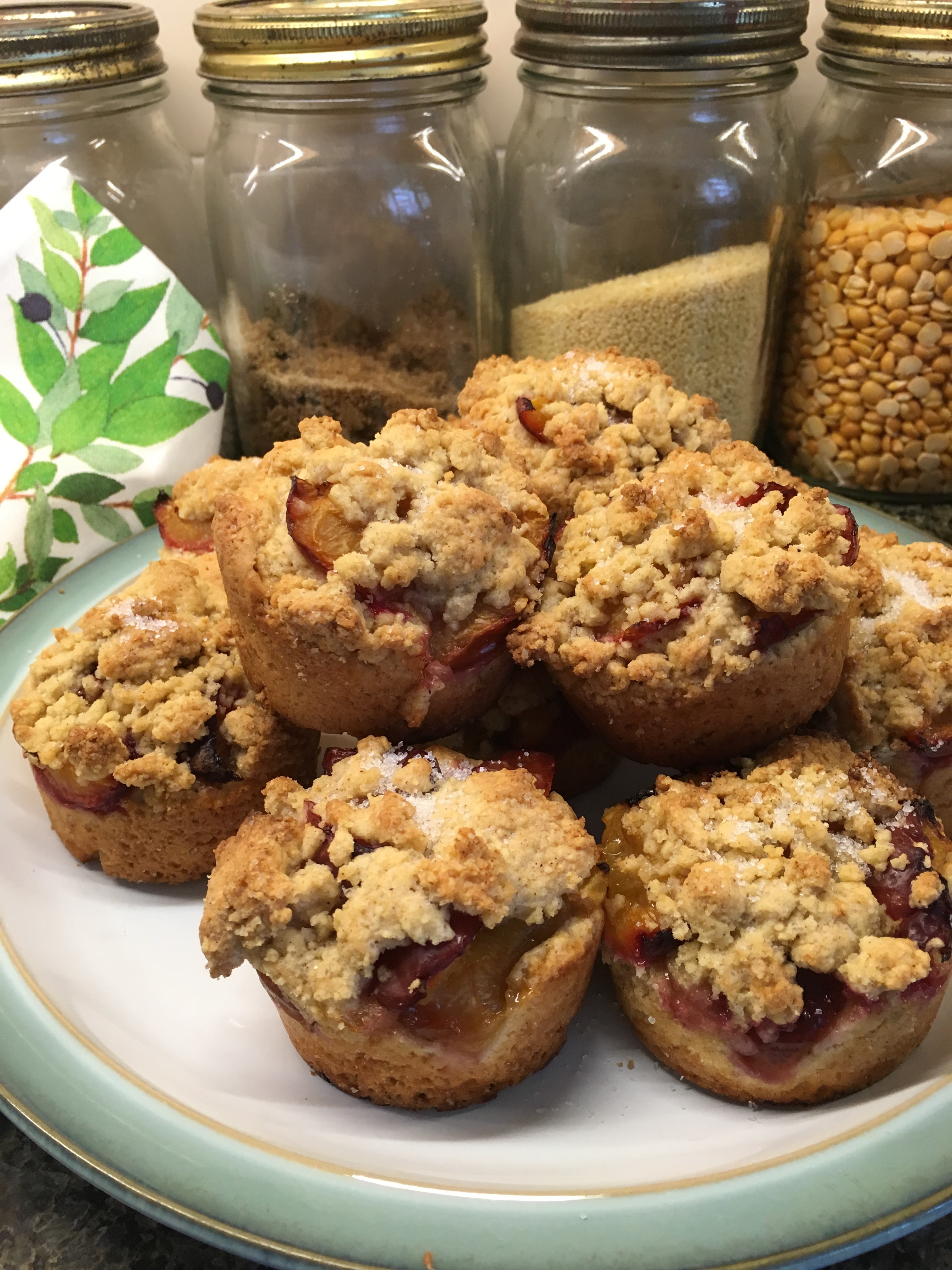
Here’s my favourite recipe for fruit crumble cake. You can use any fruit – peaches, plums apricots, apples. Takes only minutes to make, and can be frozen. The mini crumbles look fantastic for a party- or even a picnic.

FRUIT CRUMBLE CAKE

350g self-raising flour

2 level teaspoons mixed spice

175g butter

150g golden caster sugar

8 tablespoons milk (buttermilk if you have it)

1 teaspoon vanilla extract

5 peaches or a handful of plums

Icing sugar for dusting

A 12 hole pan, or 18 x 28cm tin lined with baking paper, or any 7″ pie dish

20 mins at 190c /gas mark 5

Using only 3 tablespoons of the milk – Put all the ingredients – apart from fruit- in a food processor and whizz to form crumbs.

Tip out into a bowl, and put two thirds of the mixture- and the rest of the milk- back in the machine. Blend to create a smooth cake-consistency.

Spoon the cake mixture into the pans and arrange chopped fruit over the top. Add the reserved crumble mixture on top, leaving some of the fruit uncovered.

Bake for about 20 minutes or until a skewer inserted into the centre of the cake comes out clean. Cut into chunky squares, if using the tin. Dust with icing sugar.

Note: You can used canned or frozen fruit, if fresh isn’t available

PLUM JAM

900g fruit

900g sugar

150ml water

Put all ingredients in a jam pan and cook gently until all the sugar is absorbed and the plums are soft. Gradually bring to a rolling boil. Check carefully to see that the jam isn’t burning on the bottom of the pan. After about 10 minutes put a tablespoon of the mixture onto a cold plate from the fridge. Leave to cool slightly and press with your finger or a spoon to see if the jam ripples. If it ripples it will set. If it stays soft and liquid it needs more boiling. This will fill about 4 or 5 jars which have been very thoroughly washed and warmed in the oven before filling. There are recipes with larger amounts of fruit, but this one works for me and is a manageable amount to cope with in one go.
Enjoy! Have you had a good year for fruit in your garden? And don’t forget to share your favourite recipes in the comments below.

Last chance to visit bluebell woods…..

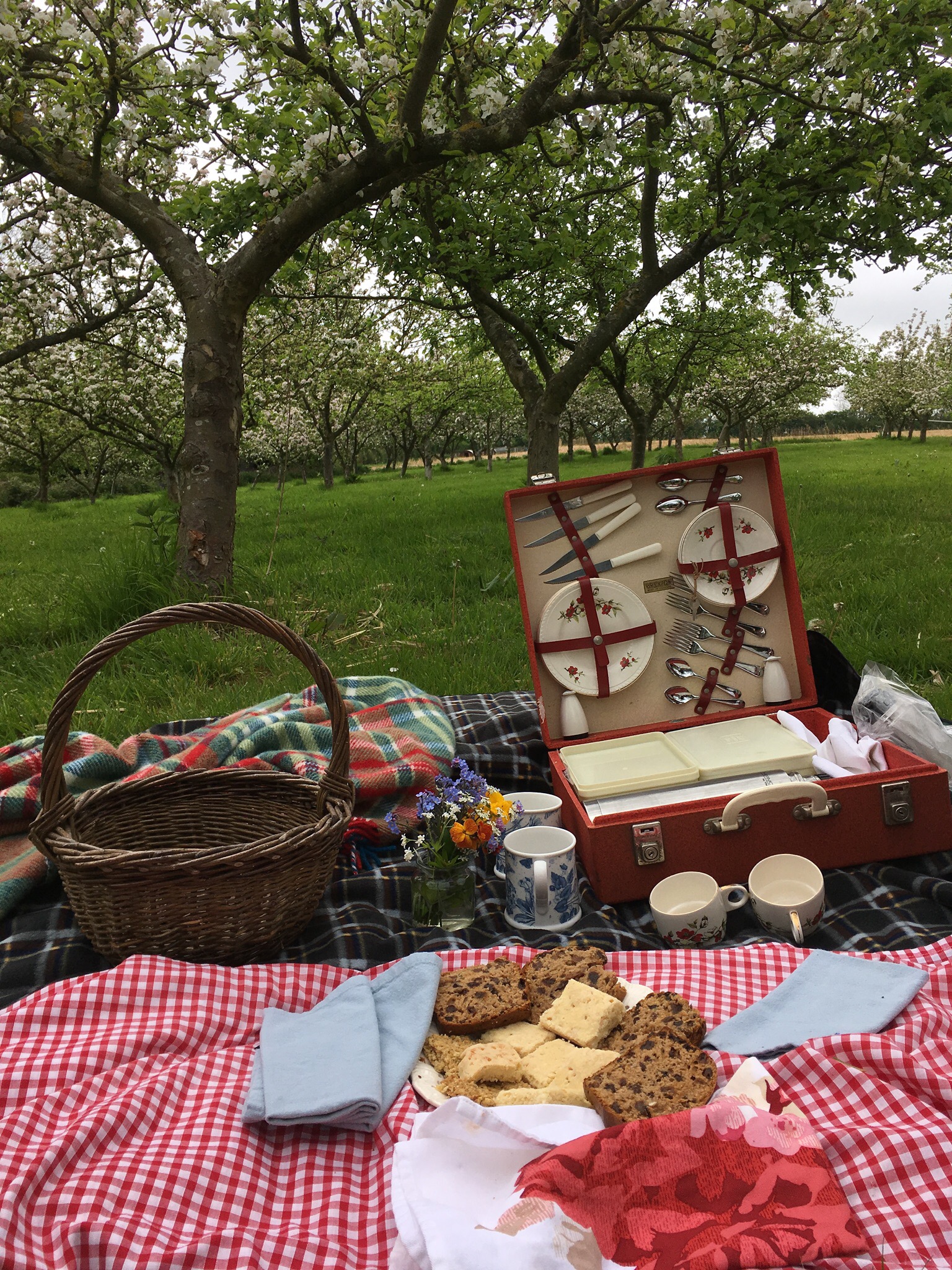
Cold weather has held back the bluebells this year. They are still looking glorious. Last chance to visit Coton Manor tomorrow.  Here’s some photos from our visit today. As usual, we started with a picnic. Spreading our rugs under the branches of some apple trees, we  tucked into home-made bread and warming soup, followed by an array of cakes and shortbread. A great start to our garden visit.


Our little haven can be found at the far end of the car park. Funnily enough, we’d never noticed the orchard before. But full of blossom today, we could hardly miss it. Next we set out to visit the bluebells.

img_3383-1
As you can see, the bluebells are at their peak of perfection. It’s a sight I’ll hold in my memory until next spring. That blue, with the unfurling lime green leaves, and the honey scent. Just glorious!

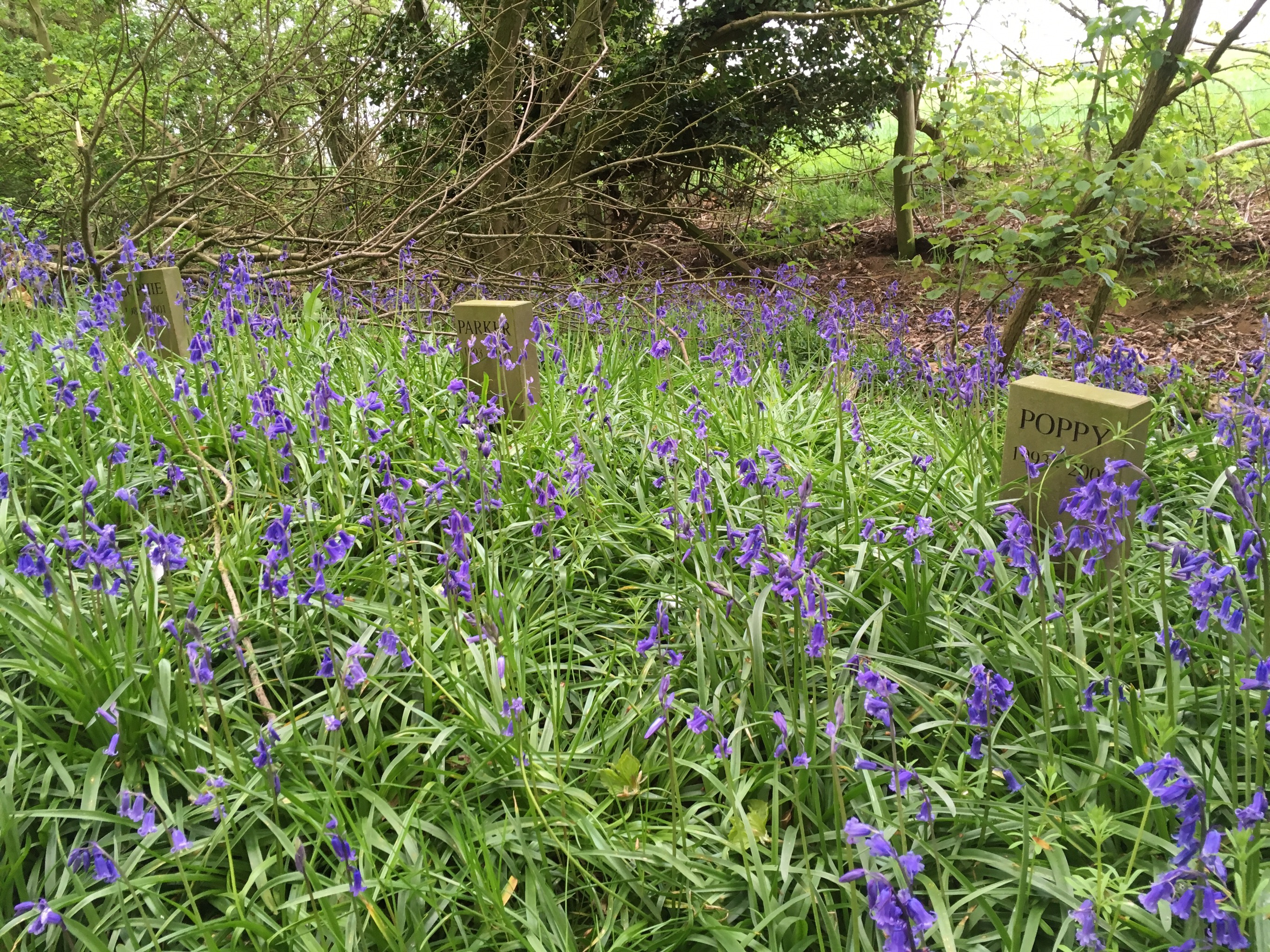
We found the dogs’ graves. What a peaceful resting place.


The gardens always provide breathtaking planting, deserving of a separate post. But for now, here’s a taster of what we found.  Luckily the wisteria escaped any damage from the recent hard frosts.


I love this view from the terrace steps.

img_3436
I wrote about visits to bluebell woods here mentioning Coton Manor  and Hodsock Priory .  For more information click on the highlighted words. Also look at the Woodland Trust website for bluebell woods all over the country.  Be quick to visit. They are at their best right now.

#wordlesswednesday 

There will be jam, and plum pudding, and cakes….. Mirabelle Ruby. Such a beauty. 

The largest fruiting mirabelle, with sweet, deep red flesh. Picking time is early September. A great way to move into autumn. A blossom delight in spring. 

#WordlessWednesday

Balanced. The last quince.


But there are new green buds.