If you were listening in to BBC Radio Leicester on Tuesday, you’ll have heard me talking about taking winter, or hardwood cuttings. We were taking dogwood cuttings this time.
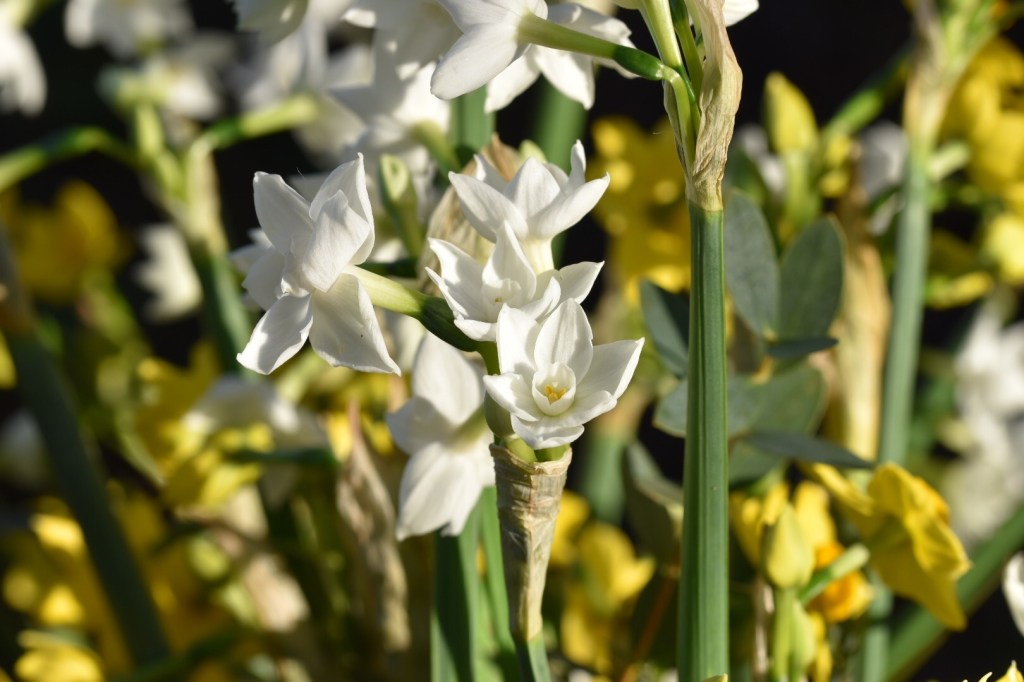
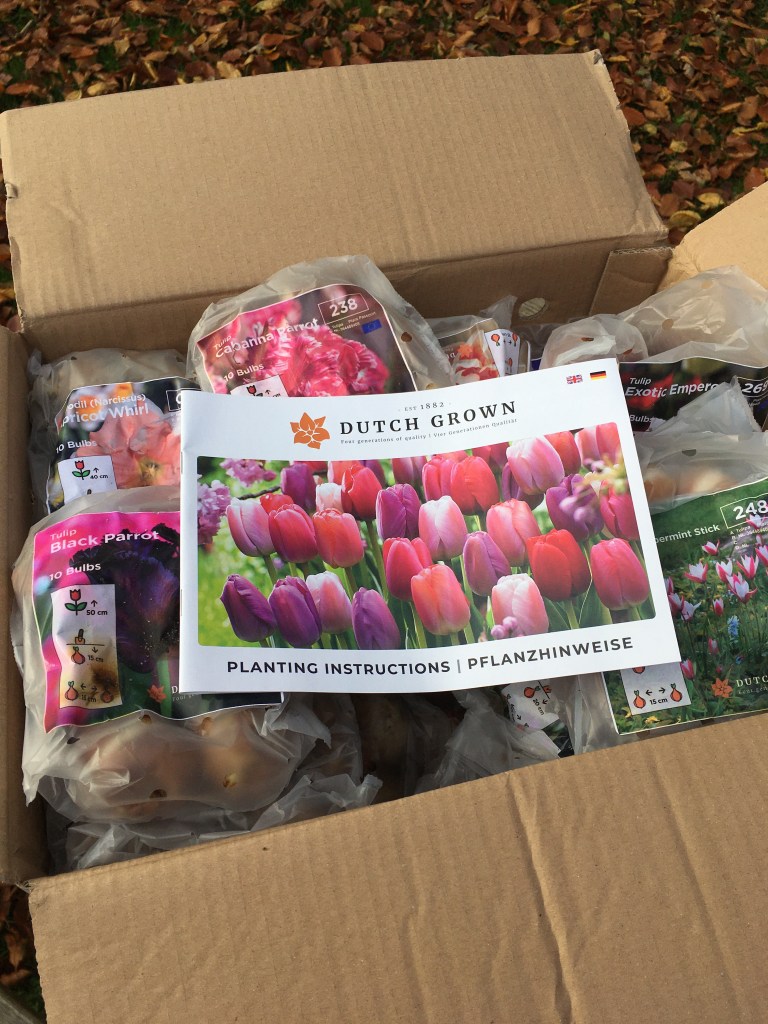
I use dogwood in almost all of my jam jar posies for my mum. It makes a lovely vertical accent, and helps to support the weaker flower stems. Here stems are supporting paperwhite narcissi and daffodils and tulips from the cut flower patch. These are Dutch Grown bulbs.
My favourite dogwood is the bright red Westonbirt which really glows all winter with sunlight behind it.
Here it is with Dahlia David Howard, persicaria, sedum and grasses. I love the red stems shining out and glowing in the jam jar water.
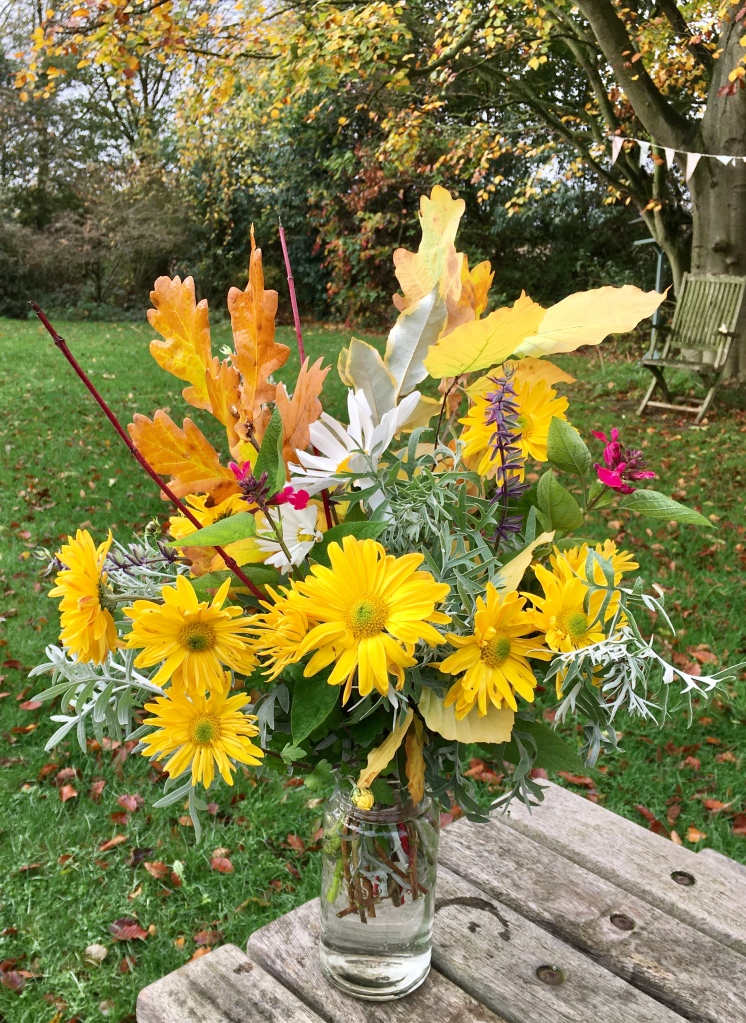
This time, the jam jar flowers are chrysanthemums and salvias set off with grey-leaved senecio viravira and golden oak leaves which dry and can be used all winter.
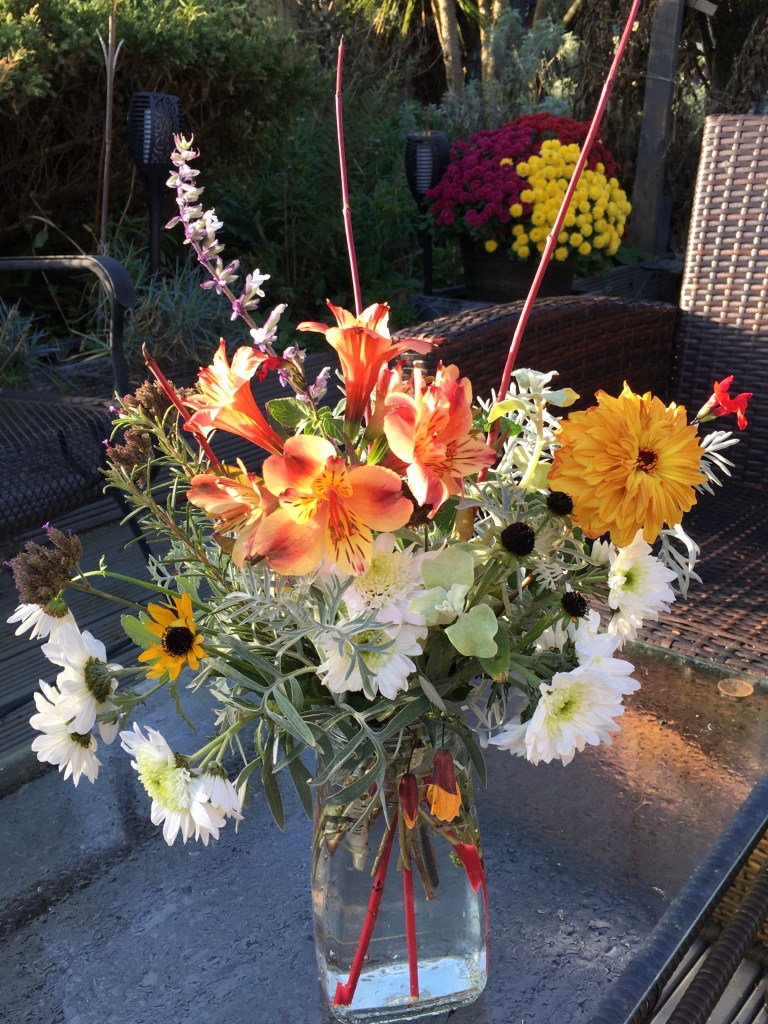
More dahlias including a red unnamed seedling, Alstromeria Indian Summer and cosmos Psyche White grown from Mr Fothergill’s seeds.
Salvia Phyllis’s Fancy, chrysanthemum Swan and the last of the dahlias and rudbeckia. And a tiny sprig of orange abutilon at the front.
Dogwoods have fabulous berries which look like pearls.
A warm welcome to members of Heath Garden Society! Thank you for inviting me to talk last night. Here are a few photos to inspire you with your bulb planting this autumn!
Snowdrops. Galanthus Nivalis is the common single snowdrop. I wait until they are coming into bud and then dig up a clump and pop them into my Sankey terracotta pots. These pots are special to me as my grandfather used them and gave them to me before he died. I love to use them and think of him gardening with them too. He enjoyed planting primroses, auriculas and miniature daffodils in them. I’ve planted Tete-tete in these and placed them on the potting shed window where I can look at them while I’m working.
I highly recommended Galanthus Madeline if you like a snowdrop with yellow markings. These were the three I bought from Thenford. A friend suggested we buy a pot and split it between us. This is a great idea if snowdrops are expensive. I think we paid £6 or £7 each, which turned out to be a bargain. The snowdrops bulk up quickly and are strong and reliable.
Within just a few years, my little clump has grown! I love something that thrives and shines out in the winter garden. These are planted under deciduous trees. They’ll flower before the trees come into leaf and then be protected from strong sunlight and heat by the tree canopy. We leave the tree leaves where they drop in autumn and snowdrops particularly love leaf mould.
I can also recommend new variety Polar Bear. These are huge flowers with unusual swept back petals and distinctive green markings. These flower later than the others in my garden and it’s lovely to extend the snowdrop season with something special like this. Luckily, these are usually on sale at Dobbies garden centre and are a fairly reasonable price, about £4-£6 a pot. Look out for them next February.
Snowdrops and miniature daffodils make a lovely button hole posy. These ones were put onto a willow wreath for my summerhouse.
These little posies are placed into tiny glass or plastic test tubes and wired into the silver birch wreath. It’s easy to make the wreath. Just cut a length of weeping silver birch stems and twist and wind them around, tying at the top. Wire in some 4” lengths of ivy, moss and wild clematis or ‘old man’s beard’ as we call it. Daffodils, iris, cyclamen and crocus will last a week in the test tubes if kept topped up and it’s simple to just add fresh flowers when needed.
Here’s another tiny posy with snowdrops, crocus, cyclamen and a blue flower I think is called squill. Perhaps you know it? There’s an amazing strong scent for such a small arrangement in a tiny glass vase. Winter flowers are often beautifully-scented as they have to work hard to attract the few pollinators that are about.
Talking of scent, I don’t think you’ll get anything with a stronger scent in winter than Paper White narcissi. We start ours off in plant pots at the end of September. Six bulbs to a 7” pot. They’ll take about nine weeks to flower, depending on temperatures. You can bring them on for Christmas by bringing them in from a cold greenhouse. Always start them off in a cool place, or they will grow tall and leggy and won’t root as well. You can extend the flowering season by bringing pots indoors in sequence right through to March. Paper Whites are not hardy so they won’t grow outdoors, but I start mine off in an unheated poly tunnel which gives them just the right amount of protection to grow well. If I want to make a big indoor display, I select pots with flowers all at the same stage and just place them in a large cache pot, topping them off with moss to hide the pots. No one would know that I’ve cheated! We use Dalefoot sheep wool and bracken compost specially created for bulbs. This compost is a favourite of mine as it gives Lake District farmers an income for their wool- which would otherwise go into landfill. Also the compost doesn’t break down and disintegrate like some other peat-free types. The other compost we use is Melcourt multi-purpose with added John Innes. We add grit and vermiculite to these, depending on what we want to grow.
Here’s some Paper White and Soleil d’Or brightening up January!
Such a lot of scent from such small flowers.
Planting a selection of varieties mean you’ll have daffodils from January through until May. Cedric Morris is first to flower outdoors. February Gold (above) usually flowers at the end of February. Tete a tete in March. The last daffodil to flower is Hawera in May.
Another new variety which has become a firm favourite is Snow Baby (above). This flowers for a long time, coping with strong winds, hail, snow. It starts out pale lemon and fades to white. Such a beauty on short, strong stems.
I like to have heritage types in the garden, along with the latest varieties on trial. Historically, fruit growers used to have daffodils amongst their apple and pear trees to give them a spring income, and fruit bushes such as redcurrants and blackcurrants for a summer income. I like to keep up traditions like this, so I’ve planted heritage narcissi Geranium under my trees. These make a lovely scented bouquet in spring.
Here I’ve combined the old with the new. Narcissi Geranium with a new tulip called Exotic Emperor. These are ‘lasagne’ planted. Four inches of compost is placed in the bottom of a large Italian pot, and 25 tulip bulbs set on top. Another 4” of compost is set with another 25 tulips. More compost and 25 daffodil bulbs. Another 4” and 25 more daffodils. Then top up with white Carnegie hyacinths, white Joan of Arc crocus and snowdrops. I’ll have flowers from February through to May. I only have one expensive Italian pot so I want it to work really hard for me. It’s placed under my office window so I can look out at it while I’m working.
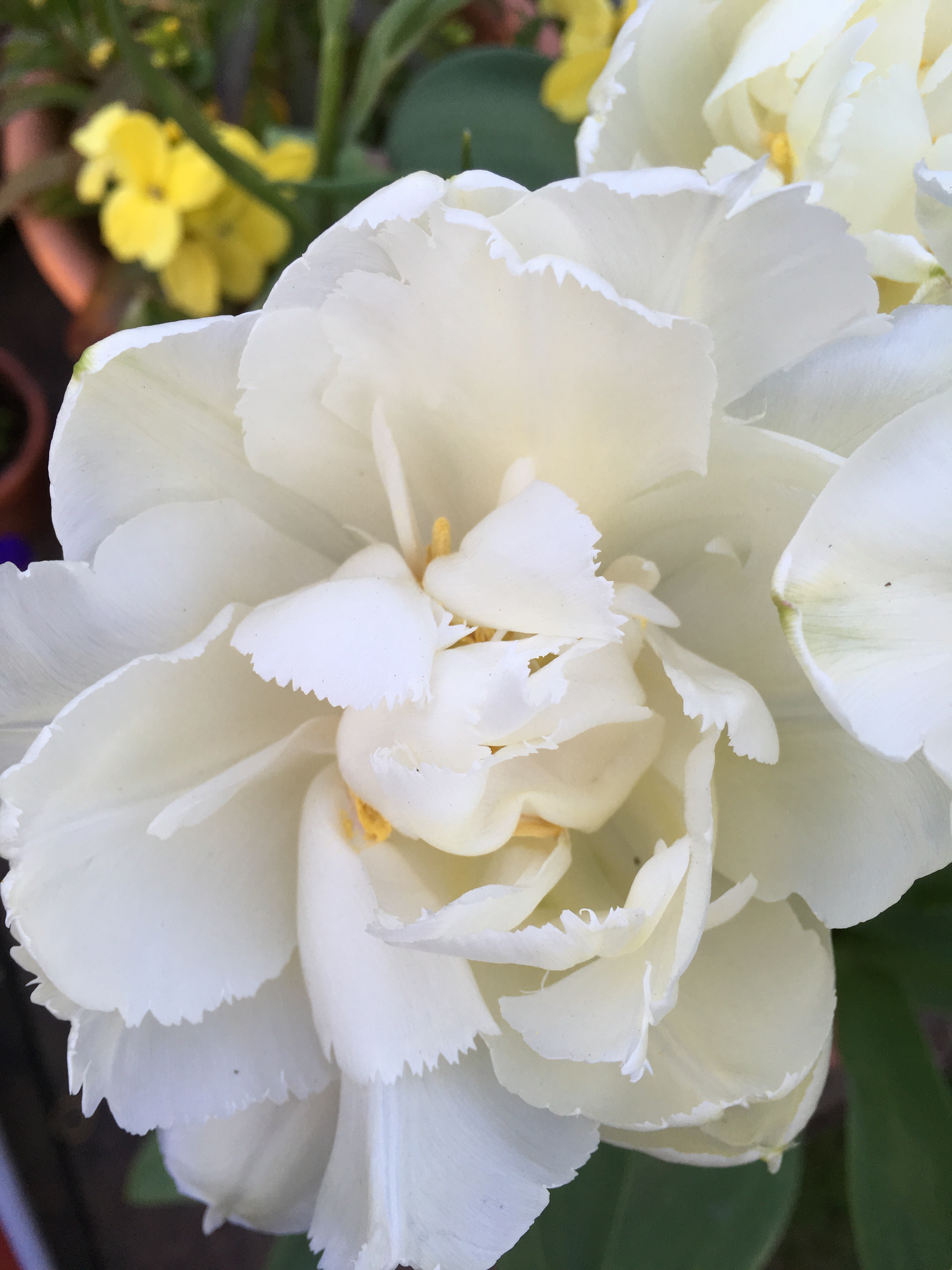
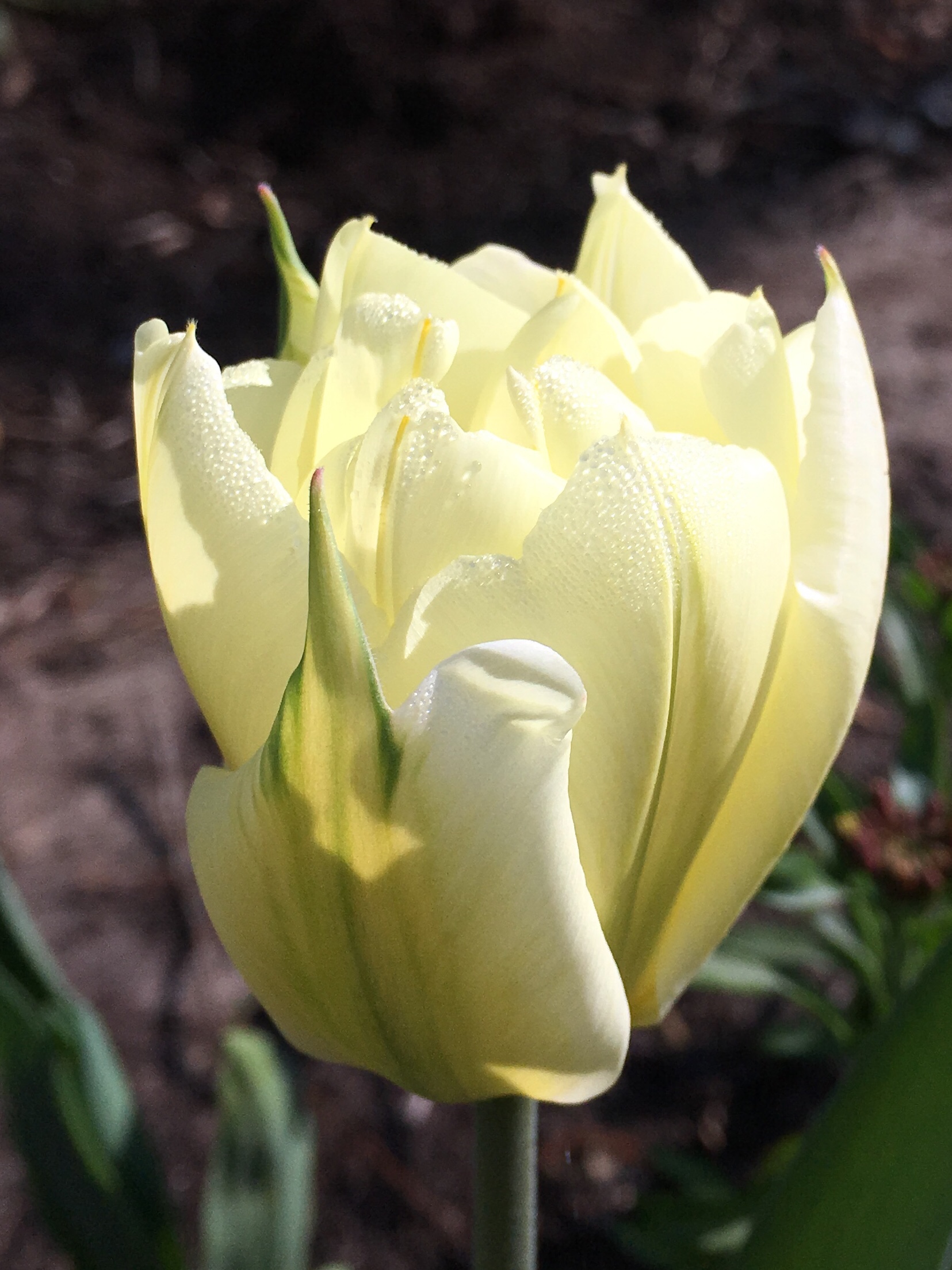
If I could only grow one tulip it would be Exotic Emperor. It reminds me of swan feathers. I love the green flash too. Double tulips last much longer than single tulips. There are more petals to open, which makes them good value.
Queen of Night is another tulip I use a lot in my garden design work. It’s long lasting and stands up to the weather.
Here it’s growing with Allium Purple Rain, a hybrid between Purple Sensation and Christophii. Highly recommended. Also look out for new summer-flowering allium Millennium. Hardy’s plant nursery sells this variety at flower shows and mail order.
For a pretty, fringed tulip, try Curly Sue. And my favourite pink tulip is Violet Beauty. We buy from Gee Tee Bulbs. Links to the nurseries are at the end of this blog post.
Rapidly moving on to autumn – as your talk was all about bulbs, corms and tubers- here’s Dahlia David Howard partnered with Alstroemeria Indian Summer. I leave my dahlias in the ground over winter, covered with a foot of dry leaves, some compost bags and finally, cloches. As long as they don’t get soaking wet and frozen, they will be fine.
Nuit D’Ete is another top favourite. I love the cactus flowering dahlias for their striking petals. This one also has tinges of deep plum red and black in the centre. A really striking and beautiful flower.
I’ll leave you with a picture of my 1920s summerhouse which is on a turntable. It originally lived in Derbyshire at Flower Lilies Hall. We spent a year renovating it and now love sitting inside looking out at the different views of the garden. Thank you for visiting my blog and reading about my garden. Please leave a message in the box below, and sign up for e mail notifications for further blog posts. I concentrate on growing food and flowers at home- I never have to buy any cut flowers for friends and relatives. It’s all about choosing the right varieties and getting a succession of produce all through the year. It’s a fun challenge and one I love to share with you all.
Here’s some links to the recipes I mentioned today, and ideas for home-made and home-grown Christmas decorations and presents.
Thanks to everyone who listens in on a Saturday morning at 11am, and thank you also for all your kind and encouraging comments. Many thanks to Tracey from Melton who says she feels like rushing out into the garden to do some gardening every time she hears us talking on the radio. It’s much appreciated.
We talked about:
Planting tulips
As regular readers know, I love to save money. If you wait until December, many tulips have been reduced in price. If you are looking for a bargain, try well-respected suppliers. I recommend:
Dutch Grown: (now sold out- but keep a note for next year)
If you are buying from garden centres, tulips will be sold in plastic bags with a cardboard front showing the photo of the variety and information about growing them. These are usually hanging up on racks. Gently squeeze the bulbs to make sure they are firm. Any soft mushy bulbs will fail to grow. They need to be firm and dry. Don’t buy any with a blue mould growing on them. Nice large, plump bulbs with the brown papery skin intact are best. I wouldn’t buy any that have been stored and displayed outside either, incase they’ve got frosted or wet. Choose ones stored inside the garden centre instead.
Here’s some inspiration for bulb planting from a previous blog I wrote. I’ll be planting my tulips up until the first week of January:
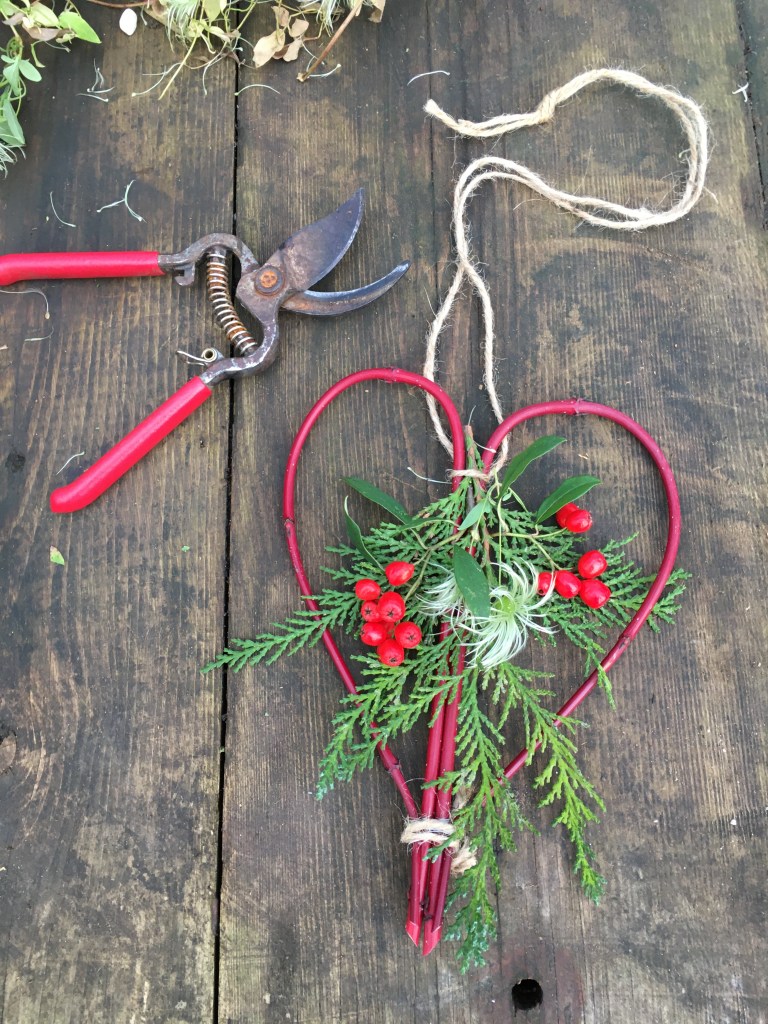
Dogwood hearts are really easy to make. Take two pencil thin stems of dogwood or coloured willow. Bend each side over to form the heart. Tie with florists’ reel wire or string to secure. Decorate with foliage and berries. I’ve used cotoneaster here. Add some fluffy seed heads, such as. ‘old man’s beard’ or wild Clematis Vitalba. I’ve used string, but you can use any type of ribbon to hang the decoration. These hearts can be any size. I make a giant one with four stems to create a double heart for decorating our five bar farm gate.
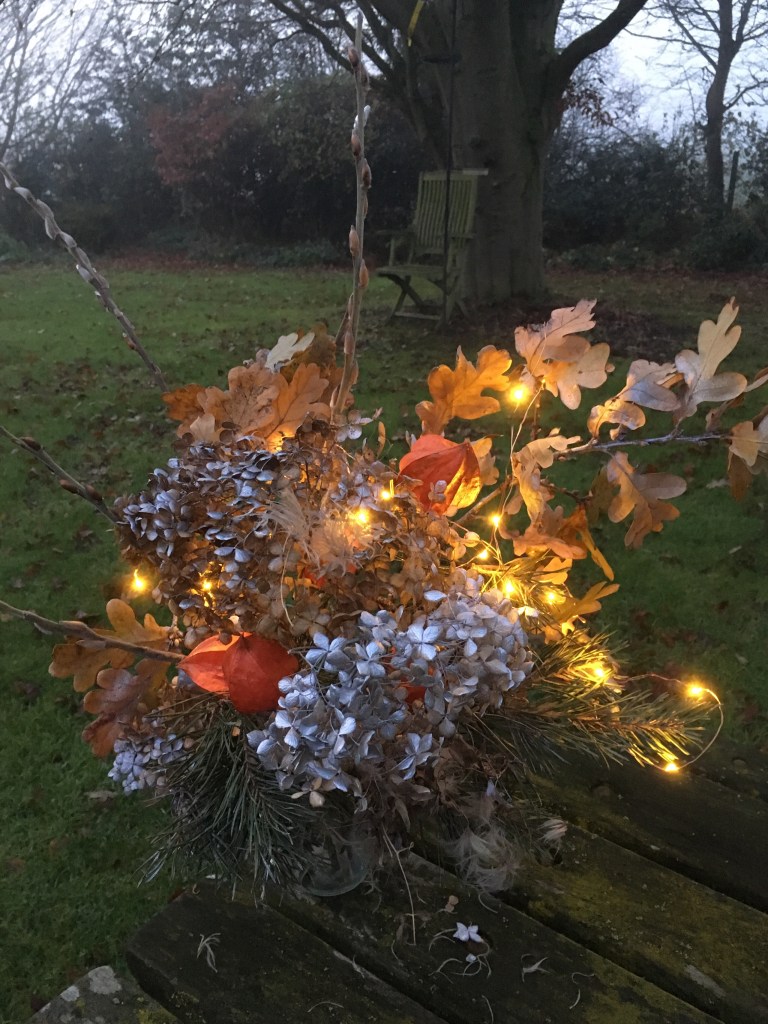
Some more ideas for using natural materials from the garden. I’ve threaded inexpensive, mouldable wire lights from Wilkos to these dogwood and willow stems. I sprayed hydrangea heads with florists’ silver spray.
My front door wreath also has flowers and foliage from the garden. The flowers are hellebores from the Gold Collection. There’s a whole range of them, all recommended. Hellebore Jacob flowers for Christmas and is pure white. This one is Winter Gold, with white hydrangea flowers which have dried lime green.
I learned how to make these willow wreaths on a course by the highly respected florist, author and social media/ you tube star Georgie Newbery. Workshops in flower farming, creating a cut flower patch, growing sweet peas, and floristry, are highly recommended. Would make a perfect present for a gardener. There are also many on-line courses. Have a look at the you tube channel and on instagram to get some wonderful, original ideas.
We talked about growing beetroot today. Most of my beetroot is stored in dry sand or recycled, dry compost over winter in the frost free potting shed. I grew it in the spring and summer. I’ve left some in the ground, but it’s easier to lift and store, as it can’t be harvested from frozen ground. The best variety to grow is Bolthardy, which does what it says; it grows well without bolting or running to seed. Did you know you can eat the leaves? You can use them in salads and stir fries. You can grow just leaves now on the windowsill. Look out for Bulls Blood variety sold as windowsill growing seeds. Mr Fothergills (Johnson’s seed) sell them on-line and in garden centres. You can grow them in 9cm pots on a sunny window and harvest shoots and leaves when they are 4” tall. They will re-grow several times, making a tasty addition to salads and sandwiches.
BEETROOT CAKE
We talked about baking with beetroot and making chocolate beetroot cake. Here’s my recipe for a rich fruit/ beetroot cake. It’s tasty and good for you!
Regular readers will know that my much loved wonderful mother-in-law Joan is in a care home in Oadby, Leicestershire. She suffers from mixed dementia. Before she became ill, I wrote down all the family favourite recipes and at Christmas I make them for her children, grand children and great grandchildren. It’s a wonderful way to ‘keep her with us’ even though, sadly, she can’t remember who we are.
Here’s the link for the blog piece with the recipe
We talked about cutting grass in winter. Twenty or thirty years ago we used to send our lawn mowers off to be serviced in October and we didn’t see them again until March. It’s an indication of climate change that nowadays we are cutting our lawns all year round. Grass grows when the temperature is above 6C. There is no harm in ‘topping’ grass if it needs it, providing the conditions are dry. Set the cutters high for winter, and don’t scalp the lawn. We don’t cut the grass if the ground is wet or frozen, as it damages the lawn and makes muddy skid patches where weeds will grow. Never walk on frozen lawns as it damages the base of the grass stems and leads to fungal diseases. I would collect clippings over the winter too, and not leave them lying on the grass. Best not to walk on very wet ground as it causes compaction, which grass doesn’t like. Remember to leave some areas of the garden with long grass as a winter habitat for caterpillars and insects – these will be food for frogs, birds and mammals. Just a strip down the edge of the lawn will help.
HOME MADE CHRISTMAS PRESENTS
I mentioned my mint sugar and rosemary salt recipes which make lovely home made presents. Nearly all my presents are made from things grown in the garden.
Take 5 stems of mint, thoroughly dry leaves on kitchen towel. Strip leaves from the stems and layer them in a clean jam jar with 350g sugar. Stir every day for two weeks. Tip the contents into a sieve and remove the leaves. Pour sugar into clean jam jars and use within a year. Lovely for hot chocolate and cakes.
I recommend Stephanie Hafferty’s book The Creative Kitchen for seasonal plant-based recipes for meals, drinks, garden and self care.
And finally, Arun mentioned that I had been shortlisted for Columnist of the Year for my Garden News magazine column, and Blog of the Year by the prestigious Garden Media Guild. I was delighted to be shortlisted in two categories. A really wonderful end to another challenging year. Thank you, every one of you, for reading this blog, listening to the radio on Saturdays, getting in touch and leaving encouraging comments, it is truly appreciated. Have a great gardening weekend!
You can listen back to the gardening show on BBC Sounds. It’s at 11.12.35 on the timeline. Or ask your smart speaker to tune in to BBC Radio Leicester on Saturdays from 11am. Questions are welcome via e mail, phone, text or WhatsApp. Start your message with the word Leicester, else it goes to other radio stations.
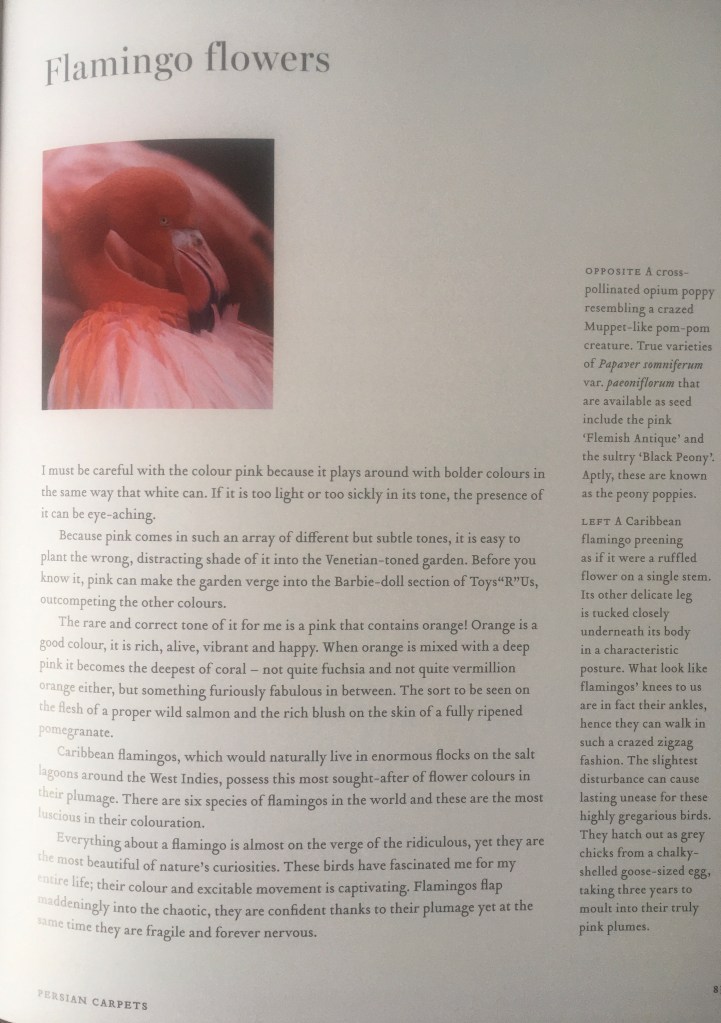
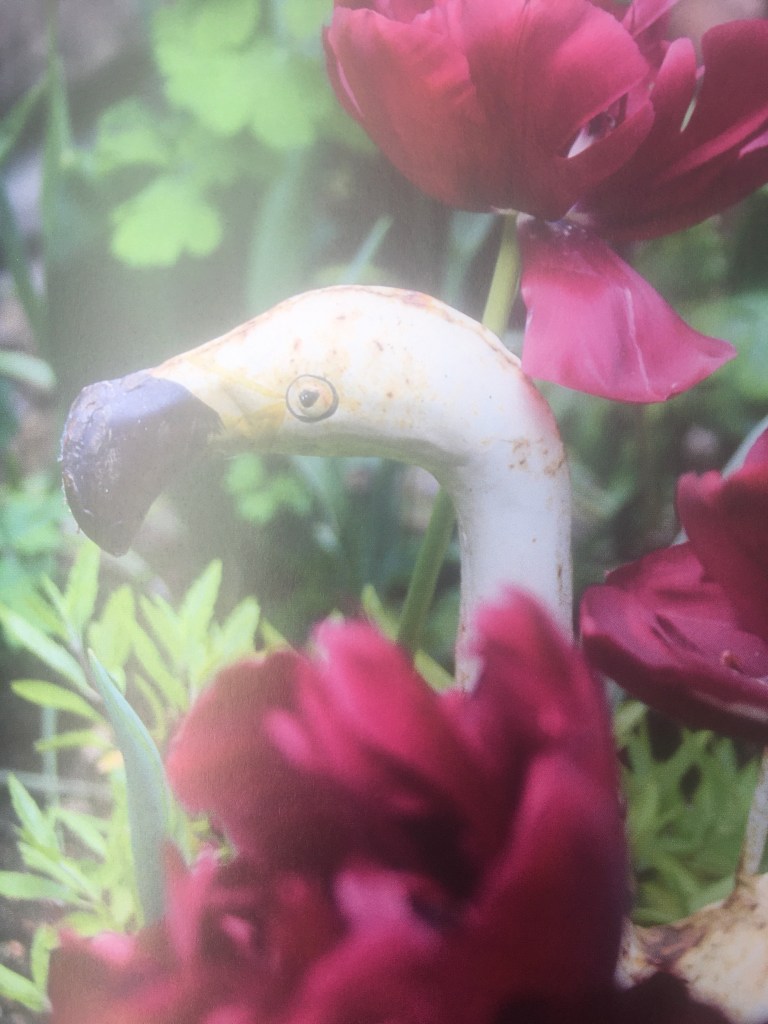
Open the pages of The Flower Yard and you’ll enter a world full of exotic parrot tulips, jewel-coloured dahlias- and flamingos…
You’ll learn much about creating flamboyant Venetian-coloured containers, but you’ll also hear about Caribbean flamingos. For the author, Arthur Parkinson, once had the choice between becoming a zookeeper and horticulture. He chose gardening, and a year’s training at Kew. But in his strange and colourful book, he says he hopes one day to go back to more zoological rather than horticultural pursuits.
To my mind, his latest book seems to combine the two loves of his life. The exotic parrot tulips, feathery grasses and plume-like dahlias are as colourful as birds. And to add to the effect, there’s often a fancy bantam – his other passion in life- nestled in amongst the plants.
Even his words have an avian ring to them. Parkinson talks about planting ‘a flock of dolly tubs’ in preference to acres of land.
“I am not, however, desperate for a larger garden. I find the challenge of conquering the restrictions of an urban environment hugely thrilling. I love small town gardens, by which I mean gardens where plants come first in abundance. I have no desire for endless herbaceous borders, which so easily become tired and full of perennial weeds. Give me a flock of dolly tubs any day, ideally on old bricks or York stone. An old orchard would be, admittedly, heaven though, for hens.”
Back on the subject of birds, Parkinson writes about his choice of colour for plants. Pink, he says can be too light and sickly: “Before you know it, pink can make the garden verge into the Barbie-doll section of Toys “R”Us, outcompeting the other colours.”
Parkinson’s garden was once described by a friend as ‘a path of pots.’ It is, in fact, only 5m (16ft) long and filled ‘cheek by jowel’ with containers on either side, leading to the front door. The book follows a year of growing to create specific displays of plants – one for each season.
One chapter is headed ‘Archipelagos of galvanised metal and terracotta’ and Parkinson says: “I garden in pots because I do not have a choice, but I rarely resent this as it is like having great living vases of growing flower arrangements. You can fill pots easily, cramming them with colour and textures, creating islands of flamboyance.”
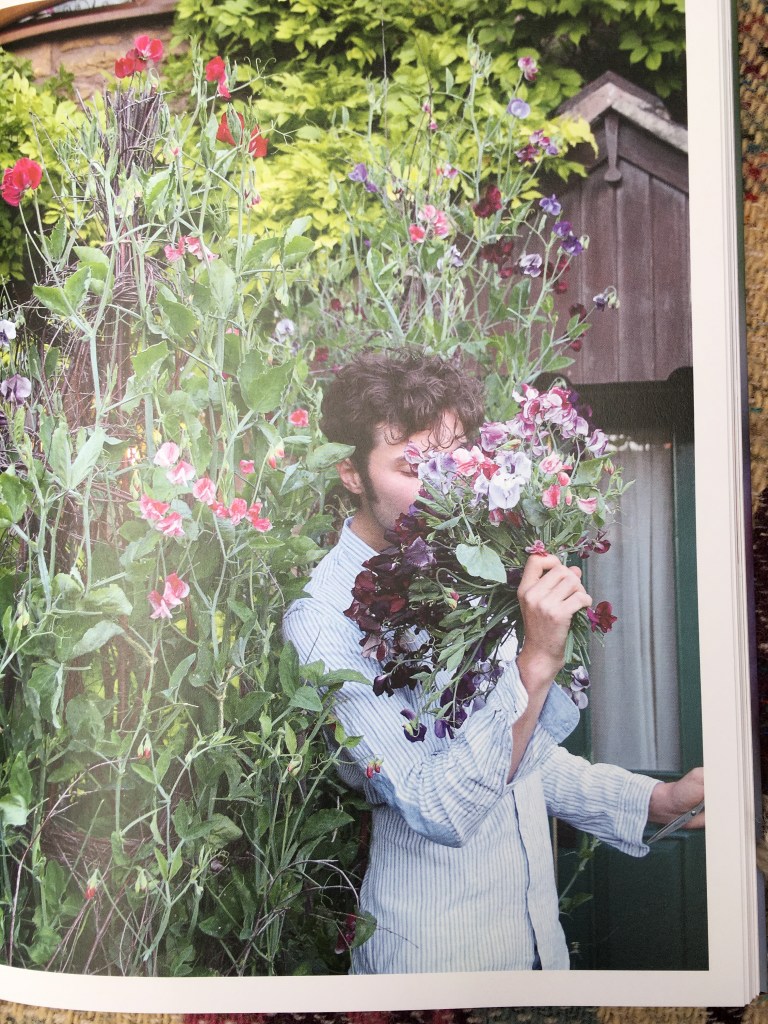
Arthur Parkinson’s brick path to the front door features rows of galvanised pots full of seasonal colour. Frizzle-feathered bantams feature in many of the garden photos. I believe Parkinson takes some of these with him when he travels to give flower arranging and planting demonstrations. The author appeared on BBC Gardeners’ World, and also assists Sarah Raven with her floristry. He previously worked for potter Emma Bridgewater, designing her acclaimed garden at the factory in Stoke-on-Trent. Photo shows ‘Amazing Parrot’ tulips in full flight with tulips ‘Black Hero’, ‘Antraciet’ and ‘Black Parrot’ giving striking contrast. Sweet peas for summer Peony ‘Rubra Plena’ supported by woven hazel with a pigeon-sized and ‘very talkative’ little Belgian Barbu d’Uccle Millefleur bantam hen. The breed’s beard-like plumes often need to be washed! An Instagram posting with the dahlia ‘Emory Paul’ which the author says, is “Like a flamingo wonderland croquet mallet, gorgeous in some ways but its flowers do look almost painfully ridiculous with some reaching the size of useless footballs upon what are quite tall stems.”
I’ve made lists of all the tulips and dahlias to grow for next spring and summer. I love the dark, rich colours he chooses. And now I need to nip out and find a supply of galvanised containers ASAP. Quite honestly, what Arthur Parkinson doesn’t know about planting in dolly tubs isn’t worth knowing. He’s opened a whole new beguiling world of colour, and I can’t wait to create my own ‘islands of flamboyance.’ If I can add the odd flamingo or two in there as well, I will.
The publishers have kindly sent one extra copy to give away in a prize draw. Please leave comments below and one name will be randomly selected by computer. Thank you for reading.
Please note, my I-phone photos of the pages do not adequately capture the bright colours and brilliance of the original photos which were taken by the author.
Please check back at 6pm Sunday to see who has won the prize draw copy.
I’m making these again today. I opened the kitchen cupboards and there was literally nothing cheerful in there! No biscuits, chocolate, cake. We’ve run out of everything. I wonder if we will look back on these times and ponder how we lived through this pandemic and learned to appreciate the simple things in life. I shall certainly never take for granted being able to just pop to the shops. Everything has to be so well organised. Lists on top of lists. All food is being delivered, for which I’m extremely grateful. But, oh, the dismay at discovering that I’ve forgotten something- just as I’ve pressed the button to order supplies. It’ll be a week before I can get another delivery. We do see an end in sight with vaccines on the way, so keep going everyone. Keep smiling. And make pastries, as there’s nothing nicer to cheer you up than the sight of these lovely tasty treats. Any fruit can be used, they are just as lovely with apples, frozen plums, raspberries, tinned peaches – any combination you like. Let me know what recipes are keeping you cheered up, and report back if you make any of these delicious pastries too.
And a photo of spring flowers to bring some joy as well:
White primulas. My favourites. Though I have seen some deep red double varieties mixed in with burnt orange which might look lovely in a blue China casserole dish…. if only I could get out to buy some.
Narcissi Geranium and cut flower collection tulips from last spring. All my tulips are poking through the ground now, and daffodils are in bud and flowering early. The veg patch is covered in forgetmenots. I use them as a green mulch to protect the soil and keep down weeds. Some are potted up to stand on the summerhouse steps. They are very easy to dig up as they have a shallow, fibrous root system. They do well when lifted and grown on in containers.
Daffodils make a very welcome return. I’ve watered them with potash or tomato fertiliser, having taken advice from a medal-winning grower. The liquid feed helps to strengthen the stems and enhances the colour, making them stronger and brighter. A good tip as we regularly seem to be getting stormy spring weather. It’s so sad to see daffodils flattened by the wind.
Eranthis hyemalis – winter aconite in the woodland garden. They won’t last long as temperatures are currently 13C.
Green-tipped Galanthus Viridapice looking pretty on the potting shed window. Snowdrops too have been a very welcome and joyous sight. But in the mild weather, they have opened right out and will be going over sooner than usual. I shall water these too with weak tomato fertiliser in the hope of boosting the size of the bulbs and increase the number of flowers for next year.
Have a lovely weekend everyone.
*I’m trying something new- doing Instagram live sessions from the greenhouse every day, essentially to keep in touch with my Mum and MIL Joan, and also to show my daughters how to grow plants from seed. Under normal circumstances I would be by their side helping them with their new houses and first gardens. But I can’t while we are in lockdown, so I’m doing what I can from home. I’m karengimson1 on instagram.
I’m sure spring flowers are more beautiful than they’ve ever been. We’ve had no rain for six weeks. It’s a problem in the veg garden where I’m trying to get broad beans and potatoes to grow. But for spring flowers, tulips and daffodils, it means they are looking pristine. And blossom has lasted longer than usual. Here’s a selection of flowers for my vase this week. Get in touch and let me know what’s looking cheerful in your garden just now.
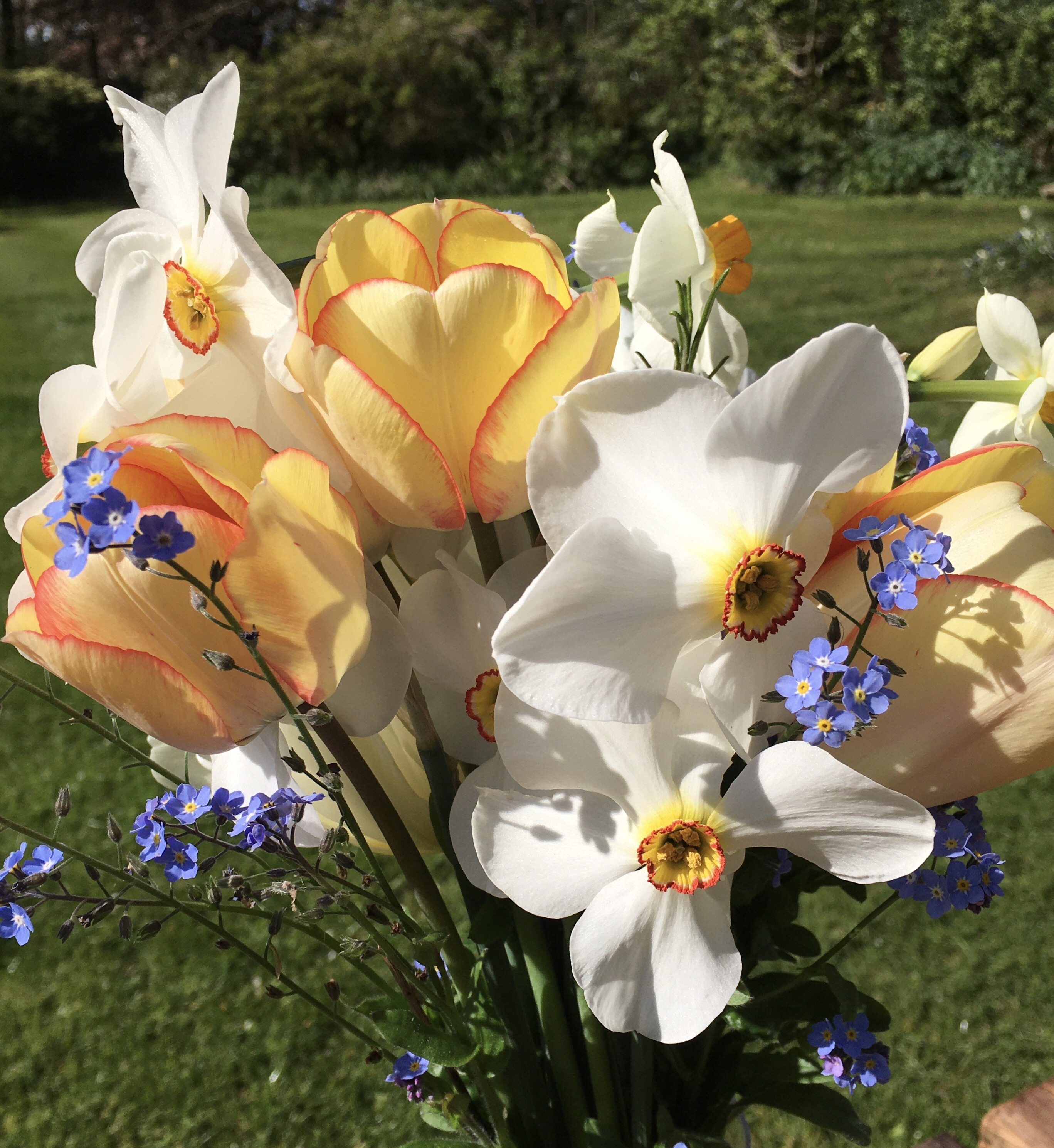
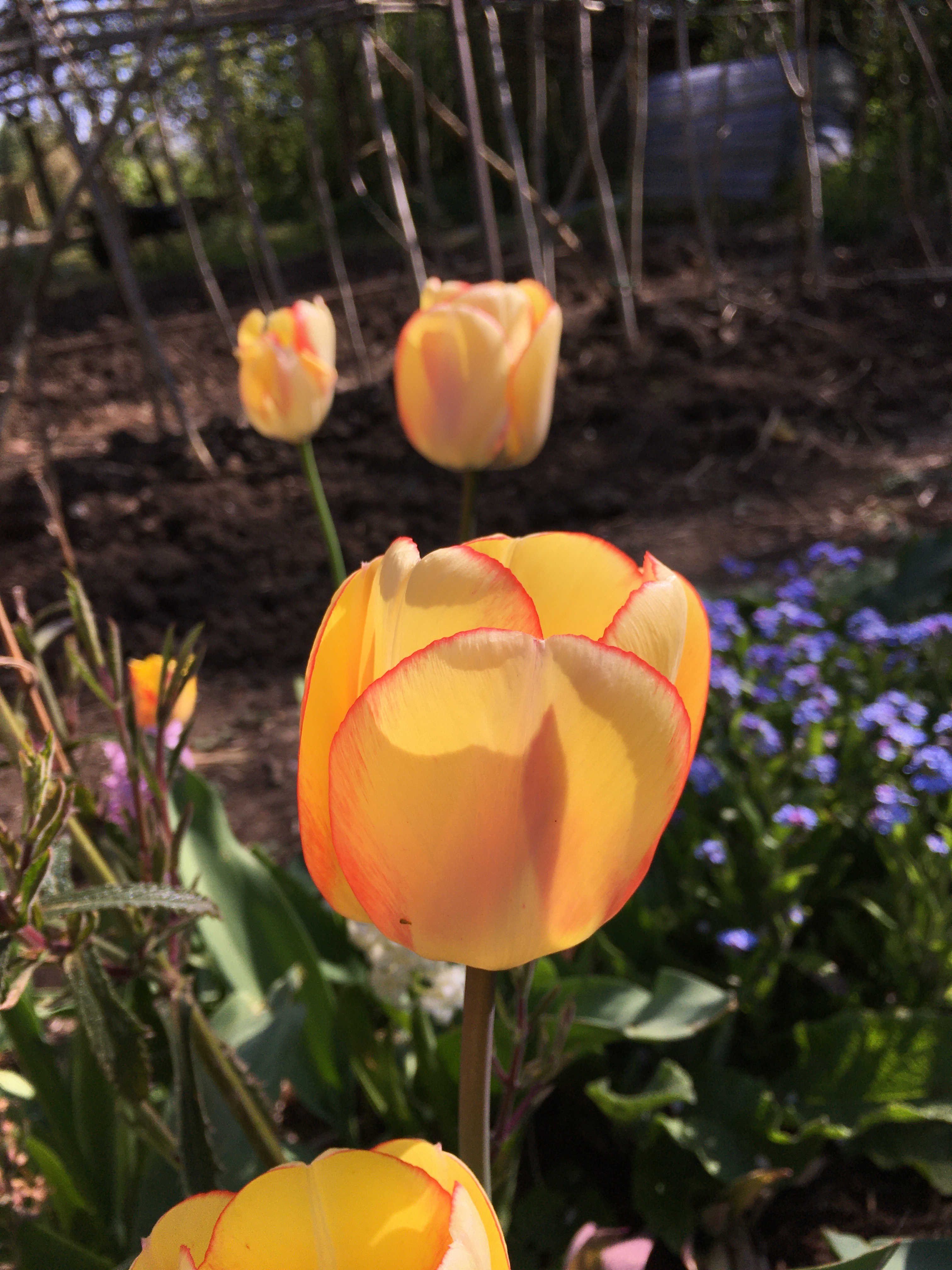
Sometimes luck has a lot to do with gardening. I spend time trying to work out clever combinations of colours. Then nature goes and does it better. Here is tulip Blushing Apeldoorn with the softest primrose yellow flowers. Overlapping petals are edged with a picotee orange. It’s a perfect match for narcissi Pheasant’s Eye. The tiny cup in the centre of the flower is rimmed with the exact same bright orange. It’s a picture, don’t you agree? And it has happened just by chance. I’ve taken note, and next year there will be several rows of these beauties lining my cut flower beds.
I love the way the light shines through the petals. It reminds me of a stained glass window in a church.
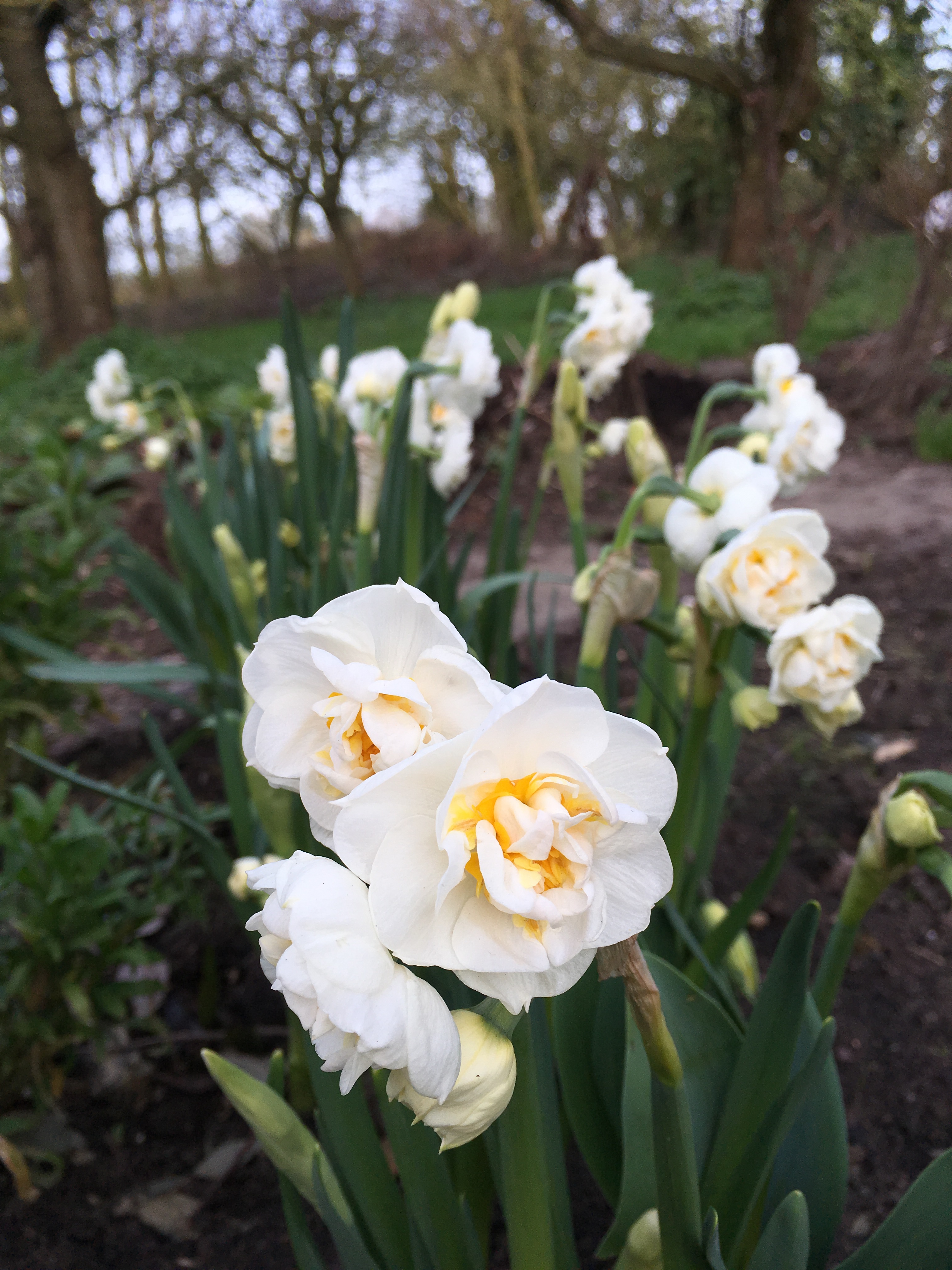
I’m also using an old favourite, Narcissi Geranium. The tangerine orange centre remind me of egg yolk, enhanced by pure white petals. The scent is a dream. Utterly gorgeous. I’d never be without this pretty, old- fashioned daffodil.
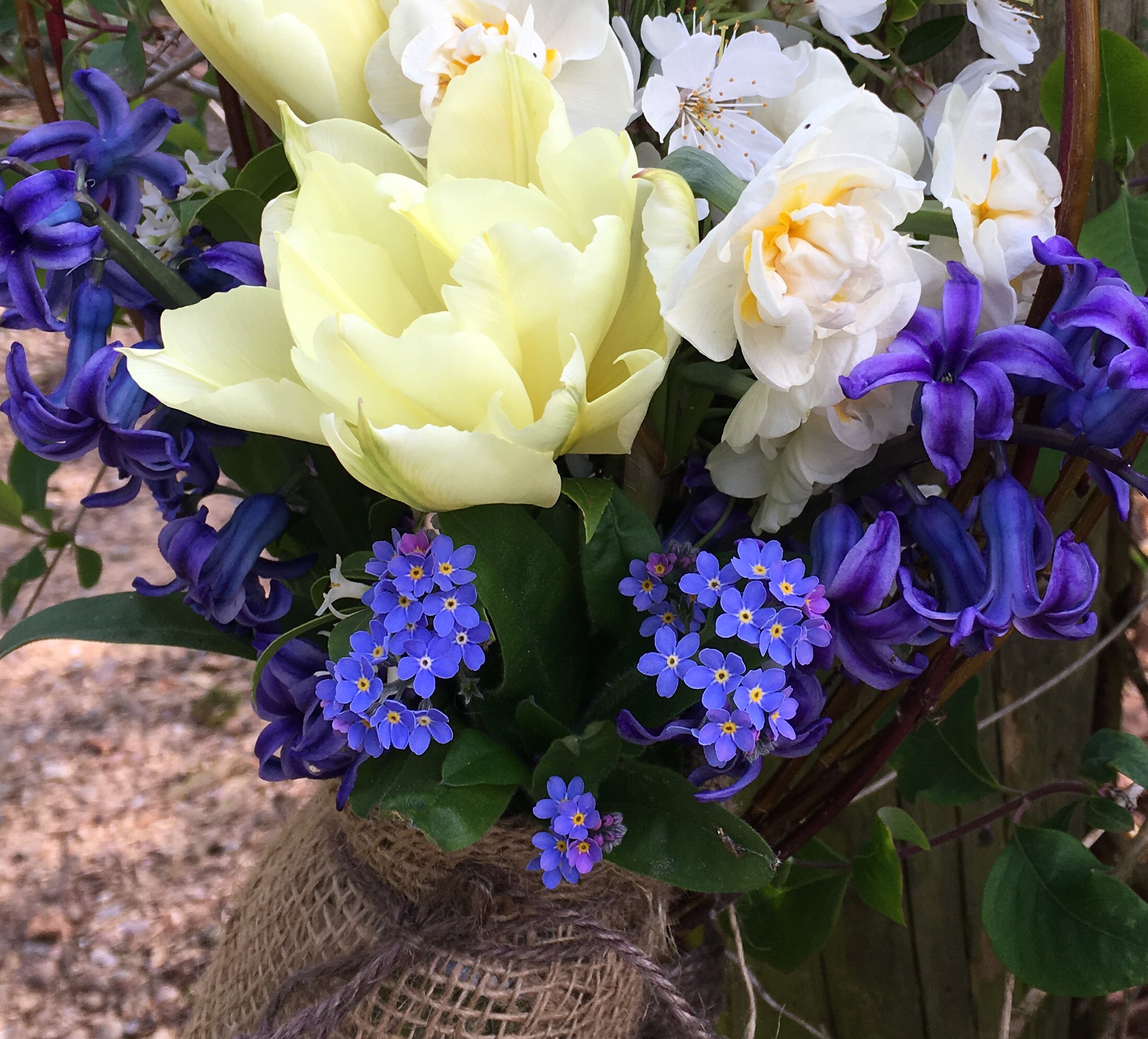
Forget-me-nots are such a good filler for any posy. The bright blue flowers seem to match the intensity of the sky this spring. And the yellow button ‘eye’ matches the daffodils.
Have you noticed how blue the sky is this spring? Climate scientists at Reading University say the reduction in traffic on roads has led to a fall in pollution, which is affecting the appearance of the sky. There’s fewer planes too. Skies look a richer brighter blue, much like you’d see over a tropical island. I’m enjoying the combination of blossom, spring bulbs and azure sky.
Thank you for reading. Get in touch by leaving a comment at the bottom of the page. And feel free to share these photos on any social media platform, kindly linking back to bramblegarden.com at the same time. You might ask, what’s the point of flowers at the moment with a covid pandemic going on. I’m just trying to focus on something positive and remind myself that nature often shows us the way to cope with all kinds of crisis in our lives. And cope we must, for some time to come, until the risks deminish enough for us to safely emerge and socialise again. When that will be, none of us can predict. Until then, I shall garden, plant my veg, pick my flowers and try to keep as upbeat as I can. You are very welcome to join me, virtually at least, at anytime you like.
Links : In A Vase on Monday. Cathy, thanks for hosting my favourite meme.
If you have been listening in to Gardens Hour on Wednesdays on BBC Radio Leicester, you’ll have heard our ‘ten minute tips’ recorded in Ben Jackson’s garden. I always come home and plant the same varieties in my windswept country garden. Ben’s plot is in a lovely sheltered walled garden in a village. His soil is beautifully free-draining, in a garden which must have been worked for 100 years. Mine is cold wet clay, created from farm land over the past 30 years. It’s an interesting contrast and I love to see how plants perform in both our gardens.
Here’s an update on plants, showing what they are looking like today.
We planted tulips for cut flowers on 29th October. These are Exotic Emperor, a new early-flowering tulip, a double form of the popular White Emperor. It has a long flowering period with delicately green flamed cream petals. Looks good for nearly six weeks.
We planted a ‘cut flower mix’ and mine included this lovely Tulip Flaming Purissima. This comes in a range of creams and pinks. Very pretty and reminiscent of the old fashioned flame tulips made famous in the Tulip-Fever era. Very long lasting, and weather resistant.
We planted bulbs ‘lasagna’ style in layers. Here’s my big Italian pot by my front door. This had snowdrops and dwarf iris in January, dwarf tete a tete daffodils in February, and now today has Hyacinth Blue Jacket, Exotic Emperor tulips and scented Geranium narcissi. When these are over, I’ll replant the pot with scented -leaved geraniums for summer.
In both our gardens we planted a range of daffodils to flower from February right through till the end of April. Here’s my pheasants eye narcissi planted under the cherry trees in the orchard. I’m so pleased with these, I’ll mass plant them in September for an even better display this time next year. I’ve gone round the garden making notes and taking photos to remind me where there are gaps and what changes I want to make. If I didn’t make notes, I’d forget by the time September arrives.
Talking about daffodils, we planted these Paperwhite narcissi on December 2nd. Some flowered at Christmas, but I held some pots back in the cold potting shed and brought them out a week apart so that I could have flowers for vases right through to the end of a March. Flowering times are dictated by amounts of daylight and heat. So plants can be manipulated to flower over a period of time.
We planted up our dahlias on 31st January. These were overwintered in a frost-free shed. I took 2″ cuttings in February and these have rooted in the propagator in 3″ pots at 18C. Above are the dahlias making really good growth in their seed trays, half filled with compost to start them off. They will stay in the greenhouse until the end of May.
We sowed our tomatoes on 28 February, and I pricked them out mid March. They are growing nicely just out of the propagator and on the greenhouse benches. I keep the greenhouse heated at 6C.
On 9th March we planted our tiny plug plants which cost about 60p each. We planted them individually in 3″ pots and put them on a sunny windowsill.
They have grown really well, and I’ve managed to take three lots of cuttings from the mother plants, which means lots of bedding plants for free. Taking cuttings makes them grow strong and bushy too, instead of tall and spindly.
We also planted up some impatiens plugs into 3″ pots. These are now in flower and I’m putting them into their summer containers to grow on. I didn’t pay for these plants. They were free samples from the grower, Ball Colgrave.
If you are listening in today, Wednesday 8th April, this is where I’m talking from because I’m isolating due to covid. I’ve got 100 cosmos seedlings in 3″ pots including a new variety Apricot Lemonade. I’m also growing calendula pot marigolds which are great for bees and butterflies. I’m growing the very pale lemon Snow Princess, and pretty calendula Orange Flash.
I’ve just planted my new potatoes, Charlotte and Lady Christl in two of the divided beds. They are planted 12″ (30cm) apart, 4″ (9cm) deep.
I’ve also planted my broad beans, De Monica which is a new variety specially bred for spring sowing. I’ve sown double rows, with plants and seeds 9″ (23cm) apart. Seeds were planted 2″ (5cm) deep.
And this is the view from the greenhouse and potting shed. Turn up the sound to hear the birdsong. There’s a bank of wild cherry trees on two sides of the garden.
I hope you’ve enjoyed this tour of my greenhouse and garden. Hopefully the photos have jogged your memory about what we’ve been growing for our ‘ten minute tips.’ I’ll keep you posted on the progress of all these plants. I’m hoping the garden is going to be quite productive and very colourful this summer. That’s three uses of the word ‘hope,’ but under the circumstances, I think we all need some hope, don’t we.
When I planted this walkway of trees, I never knew how essential they were going to be. I must meander along these paths at least 20 times a day, lost in thought.
I’m sharing as many cheerful photos as I can find today. The covid crisis initially knocked me for six. I am desperately worried about all our elderly relatives. For all those expecting babies in the summer. For my young daughters, one a newly qualified nurse, working with desperately ill patients right now. If I could solve everything with walking, I would have worn out my shoes. It’s the first time in my life I have no answers. I can’t do anything to make it ‘right.’ Normally I can think of something. In every other crisis, I have found a solution. Something to make things better.
So I am turning to what I know. Gardening. Giving out advice to anyone who needs it. Families have struggled to buy fresh salads and veg these past few weeks. I certainly haven’t managed to obtain what I’ve needed. I couldn’t find bread, flour or milk. It’s made me feel vulnerable and determined to be more self reliant when it comes to fruit and veg at least. So anyone who needs grow-your-own advice can contact me and I will help. For specific individual garden design advice, how to start a cut flower garden, grow a meadow, deal with a shady border, I am asking for a donation to Rainbows Hospice direct, any amount and I don’t need to know how much. All my garden club talks have been cancelled, and as you know, all my fees go to Rainbows. The clubs have all rebooked for next year, but I wanted to do something for this year to help. So anyone interested, please e mail me at k.gimson@btinternet.com for more information. I am learning to Skype and FaceTime live, and also using the phone and computer. Where there’s a will, there’s a way, as my grandparents used to say. Funny how their little sayings come back to you in times of trouble. It’s as if they are trying to help you, even though they are no longer here.
Enjoy the slide show of photos. I hope it lifts your spirits and makes a difference. From now on, I am solely focusing on people who are doing good, sharing information about what they are doing, supporting them in any way I can. That really is the only way forward for me.
I took this video from the garden gate last night. It’s so heartening to see farmers out and about working their fields after such a dire autumn and winter. If they are out there preparing seed beds, then we can too in our own gardens. I shall be glad to see the green shoots of seedlings after a winter of brown, barren fields.
Hedgerow blossom. This looks like a shooting star to me. Such a beautiful sight. A heart-sing moment. The hawthorn too is coming into leaf. Soon there will be clouds of May blossom to cheer us along.
Lots of daffodils at the top of the paddock. These were a sack I bought from Dobbies at Christmas, reduced from £24 to £3. I couldn’t resist the bargain price, and took a risk. They’d been stored cool and dry so were in good condition. I didn’t expect flowers this year, but they are looking stunning. Every bulb has come up. I’ll water with a potash liquid to feed the bulbs for next year. And if I see another £3 sack, I’ll certainly buy it!
Yellow flowers symbolise friendship, and that is certainly what we all need right now to get us through this crisis. I’m relying on phone calls and my twitter friends to keep upbeat. I’ve just added my name to a list of local volunteers to ring round anyone who lives alone and needs someone to chat to once a day.
Today, the wild cherry trees (prunus avium) started to flower. What a wonderful sight. These trees only flower for a week or two, but we will sit under them with our cups of tea, have picnics outdoors and revel in every single moment they are in bloom.
My cut flower tulips are in bud. Tulips in the sunny front garden are already flowering early. I’ll cut a huge bunch of daffodils and tulips for the front windows. Vases of flowers will cheer up anyone passing by, even though they can’t call in to visit.
These double creamy tulips, Mount Tacoma, are favourites. They remind me of swan feathers. So graceful.
Scented narcissi, Geranium and Pheasants Eye, are starting to flower. Fabulous with yellow hyacinths and the first wallflowers.
In the greenhouse, the succulents are starting to glow. I’ve started to water everything, and I’m pleased this aeonium has come through the winter.
There’s plenty of citrus fruit coming along. I’ll be able to make orange cakes and lemon meringues soon.
Would you believe it, my new Polar Bear snowdrop is still in flower – at the end of March. It’s a new elwesii type of snowdrop with huge rounded petals and short pedicels which make the flowers look up and out rather than hang down. It looks rather surprised to be out in the spring sunshine amongst daffodils. I wonder if next year it will flower much earlier.
There’s life in the pond. The tadpoles are forming. Lots of pond skaters, some newts, and we’ve even spotted a grass snake, on our new wildlife camera set up on bank.
I’ve mounted the camera on a log, so I can move it about the garden without it being knocked over. Tonight we are hoping to catch sight of the hedgehogs. They are out and about at dusk, making nests in the bottom of the ‘fedge’ and under the old disused hen house.
Ladybirds are much in evidence. Here they are on the phlomis. My army of pest control workers. I’ve left twiggy piles of stems all around the garden to give insects a place to hibernate. Hopefully they will repay me by eating the aphids.
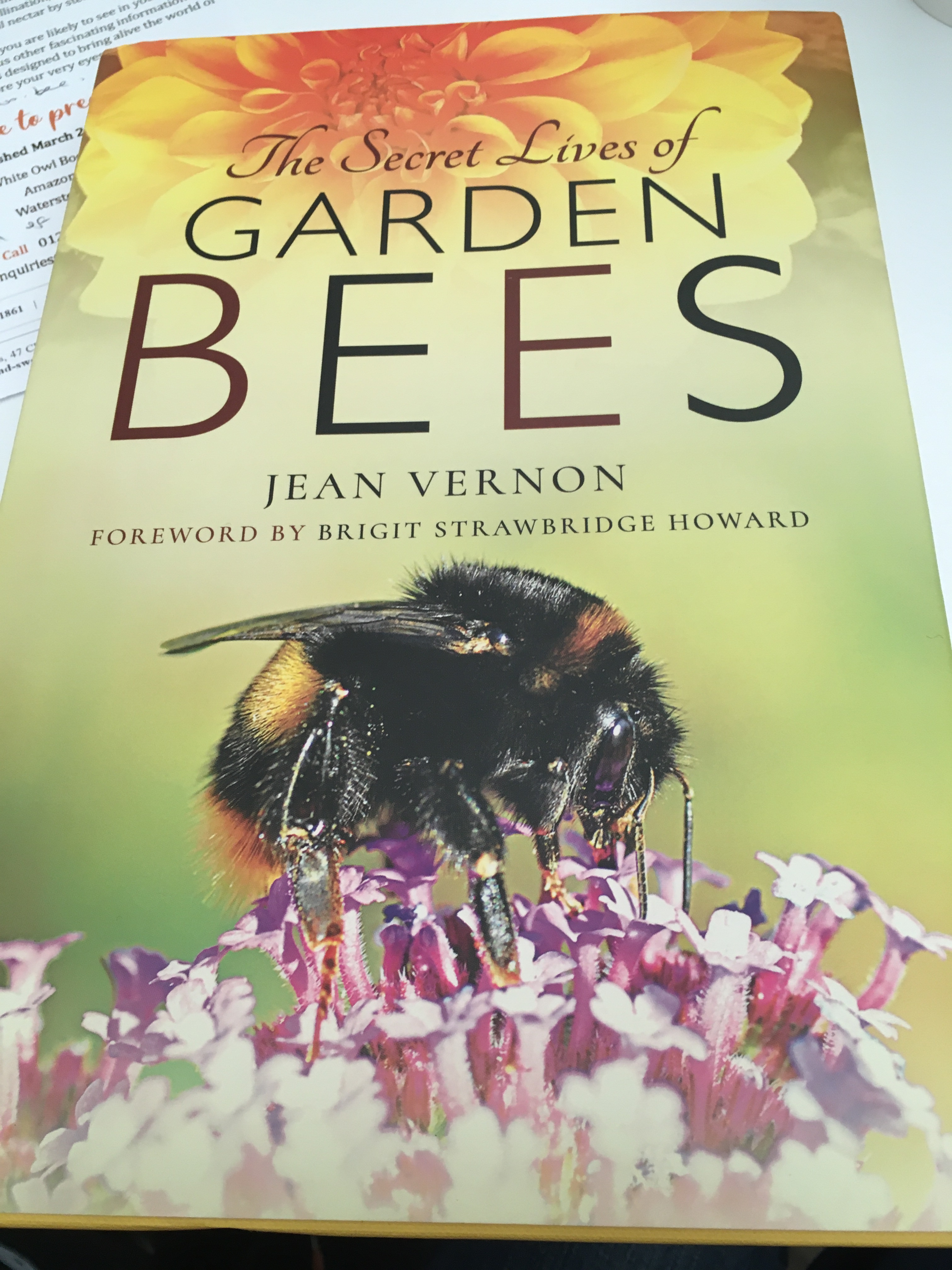
And there’s plenty of bees, thankfully. Bumble bees and solitary bees of all shapes and sizes. I have a new book to review, The Secret Lives of Garden Bees by Jean Vernon. I can think of nothing better than sitting under my cherry trees and loosing myself in a book. It will be something soothing and calming. Much needed at the moment.
Here’s an enormous bumble bee on the wild anemones. It’s lovely to have a book you can go to to learn more about the bees visiting your garden. And look at ways you can help them to thrive. Something positive to focus on.
I hope you’ve enjoyed this walk around my garden today. The sun is shining and it’s 30C in the greenhouse. All the windows and doors are thrown open. Get in touch and let me know what’s looking lovely in your garden today. And if you are feeling alone or sad, let me know. We are in this together. And be reassured that lots of people are doing wonderful things to help one another. You just have to look for the positives in life. As ever.
When it’s a freezing cold north wind and only 7C, the best place to be is in the greenhouse. So I’m starting this week’s tour of the garden, indoors.
Star of the greenhouse bench today is this bright pink amaryllis, or hippeastrum. It’s aptly named Flamingo. I’m not sure I’ve ever seen one with as many flowers before. The bulb came from Taylors in Holbeach during their centenary open day and sale. I’ll certainly visit them again next year for my summer bulbs. The quality is first class and all the bulbs are bargain prices. Like most things, it’s best to go direct to get the best deals.
My tulips are still looking colourful- despite the high winds. Most of the photos I took today are blurred because of the windswept conditions. It’s just starting to hail! I can hear it bouncing off the greenhouse roof. Luckily it’s nice and warm in here. A cedar greenhouse has few drafts in the winter; the wood expands with the cold wet weather and seals the gaps. A slabbed floor also absorbs any heat from the sun and act as a kind of storage heater.
I’ve nipped next door to the poly tunnel which is just 1m from the greenhouse and runs parallel. It was a 40ft tunnel when we bought it second hand, but we reduced it down to 20ft to match the greenhouse and fit the space. It has opening doors both ends through which the wind is billowing today. I can’t close them as I’m trying to harden off some plants to go into the veg plot. In one of the raised beds I’ve planted 50 mixed tulips for cut flowers. This one is either Uncle Tom or Hero. Either way, the double late tulips are fabulous this year. They are lasting a long time because of the cold.
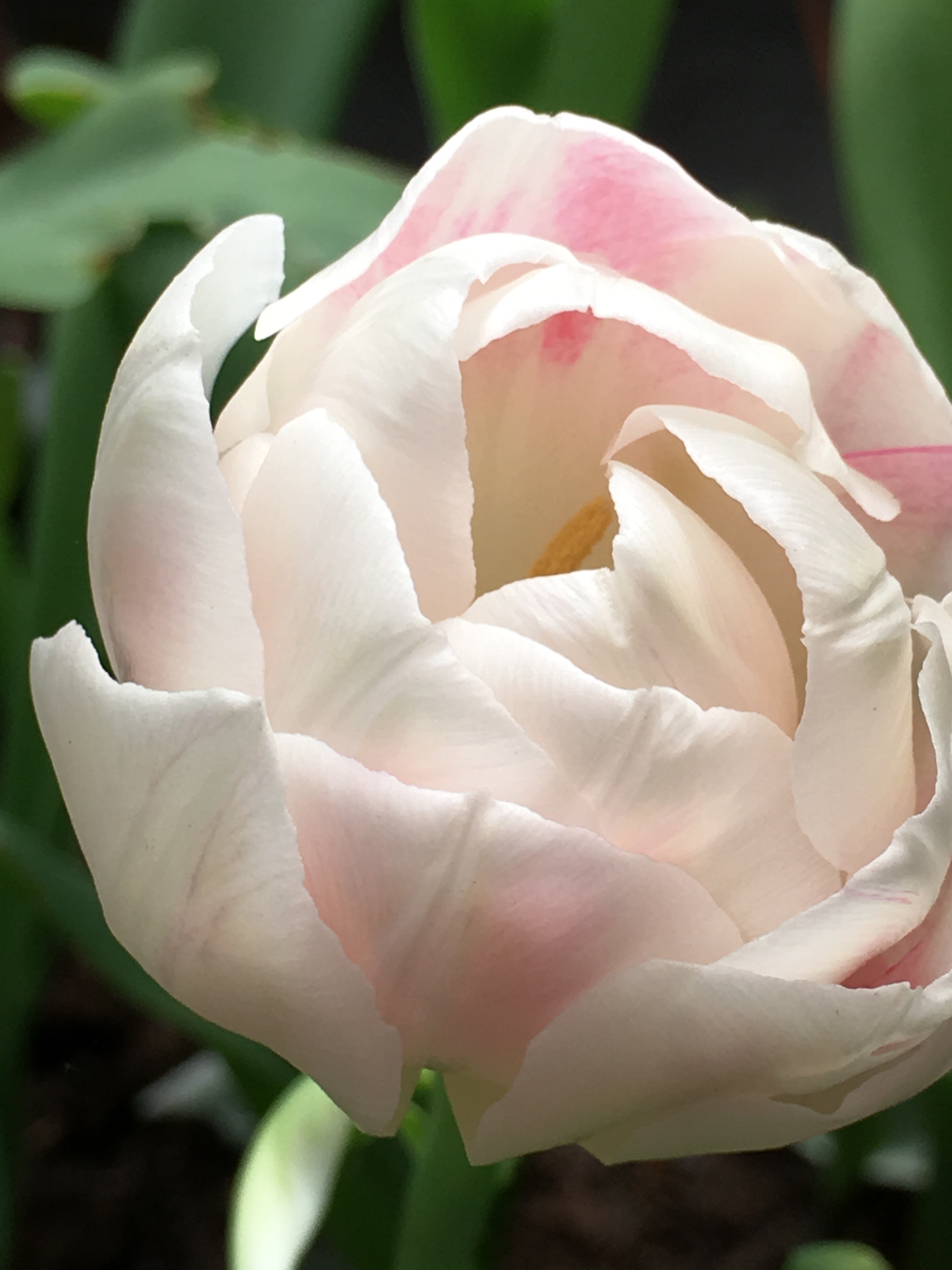
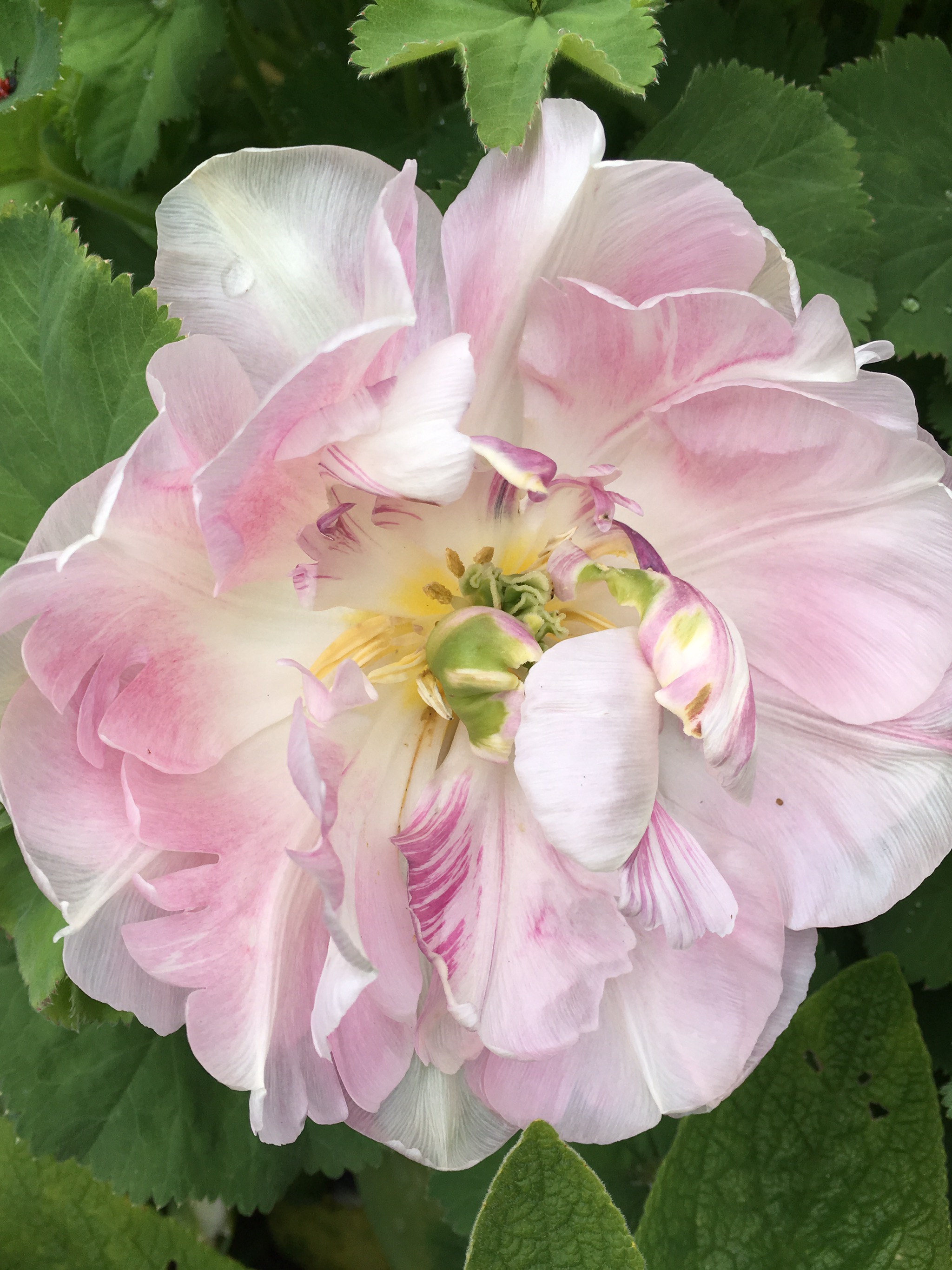
In the cutting mix is this delicate pink tulip. It looks a little like Angelique, or could be Upstar. The flower started a deeper pink and faded to this almost translucent shell colour in a week. Very pretty in a vase with blue forget me nots and white crab apple blossom.
Braving the weather, I’ve stepped outdoors to look at my latest acquisition, Agapanthus Fireworks from Wyevale Nurseries ( not to be confused with Wyevale garden centres). It’s in a terracotta pot, so I could whizz it indoors, but it seems to be standing up to the weather and looks pretty on the trolley outside the greenhouse doors. Wyevale also sent me a new raspberry, a dwarf patio variety called Yummy, to try out. I hope it lives up to its name.
Not at all bothered by the cold is this calendula/ pot marigold that’s come through the winter undeterred and is flowering beautifully now. It is a seedling of Sunset Buff. I was also growing Orange Fizz last year, so it could be a mix of the two, calendulas being prone to hybridising. I love the extra little petal in the centre of the flower. And I’m fond of petals that look as if they have been cut with pinking shears.
Finally, I’ve ventured to the top of the garden to watch the clouds skimming across the ridgeway. It’s too cold to go for a walk. I think I’ll stay in the warm and potter in the greenhouse. There’s plenty to do inside at this time of the year. What’s in flower in your garden right now?
I’d forgotten how sweetly scented some tulips can be. This one has a fruit salad, pineapple scent. Reminds me of the tropical trifle my Aunty Betty used to make, liberally decorated with sugar strand sprinkles. Such happy memories of family outings, picnics and seaside trips. A kind and much-loved lady who seemed to have a never-ending supply of fairy cakes, toffee apples and other sweet treats.
Three weeks of joy with these double tulips; they take a long time to unfurl. This one is called Peaches and Cream. I’ve never grown it before and have made a note to plant a whole row for next spring.
Tulips can be grown anywhere. These are in a 2ft by 3ft portable raised bed on wheels. I’ve grown these in the unheated poly tunnel for early flowers. They will be planted out in the orchard for an informal display next year.
Tulips are also planted 2″ apart in a cut flower bed. These were bought in the half price sale at Christmas and planted in January. They were described as a “mixed cut flower patch kit.” It’s a great idea for trying out new varieties.
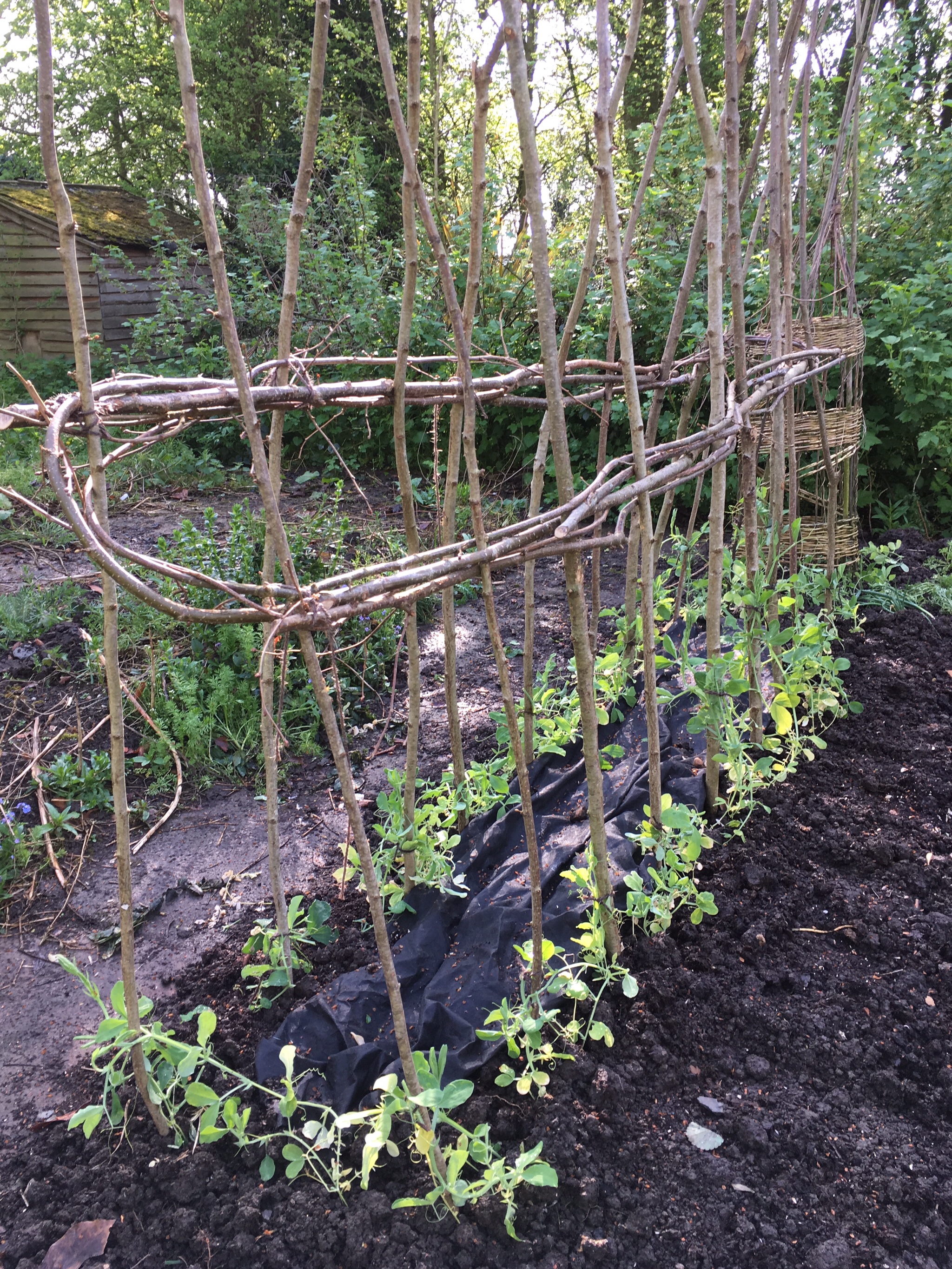
In the beds behind the tulips, there’s a rather rustic, ramshackle A -frame made from hazel rods. This week I finally planted out my sweet peas. These were sown in root trainers last October. There are heritage varieties such as creamy white Dorothy Eckford bred in 1904 at Wem in Shropshire by Henry Eckford and named after his daughter. How lovely to be immortalised as a beautiful, scented sweet pea. Also there’s new varieties such as Capel Manor which I’m trying out.
Step out of the gate at the top of the garden, and this is the view today. Yellow oil seed all across the ridgeway. You can see for miles around.
Thanks for joining me this week in my garden. What are you growing on your plot at this time of the year? Spring is my favourite season, with so much colour and frangrance all around.
A quick whizz around my garden today. I’m busy watering, watering, watering. We have had no rain for weeks and the water barrels are low.
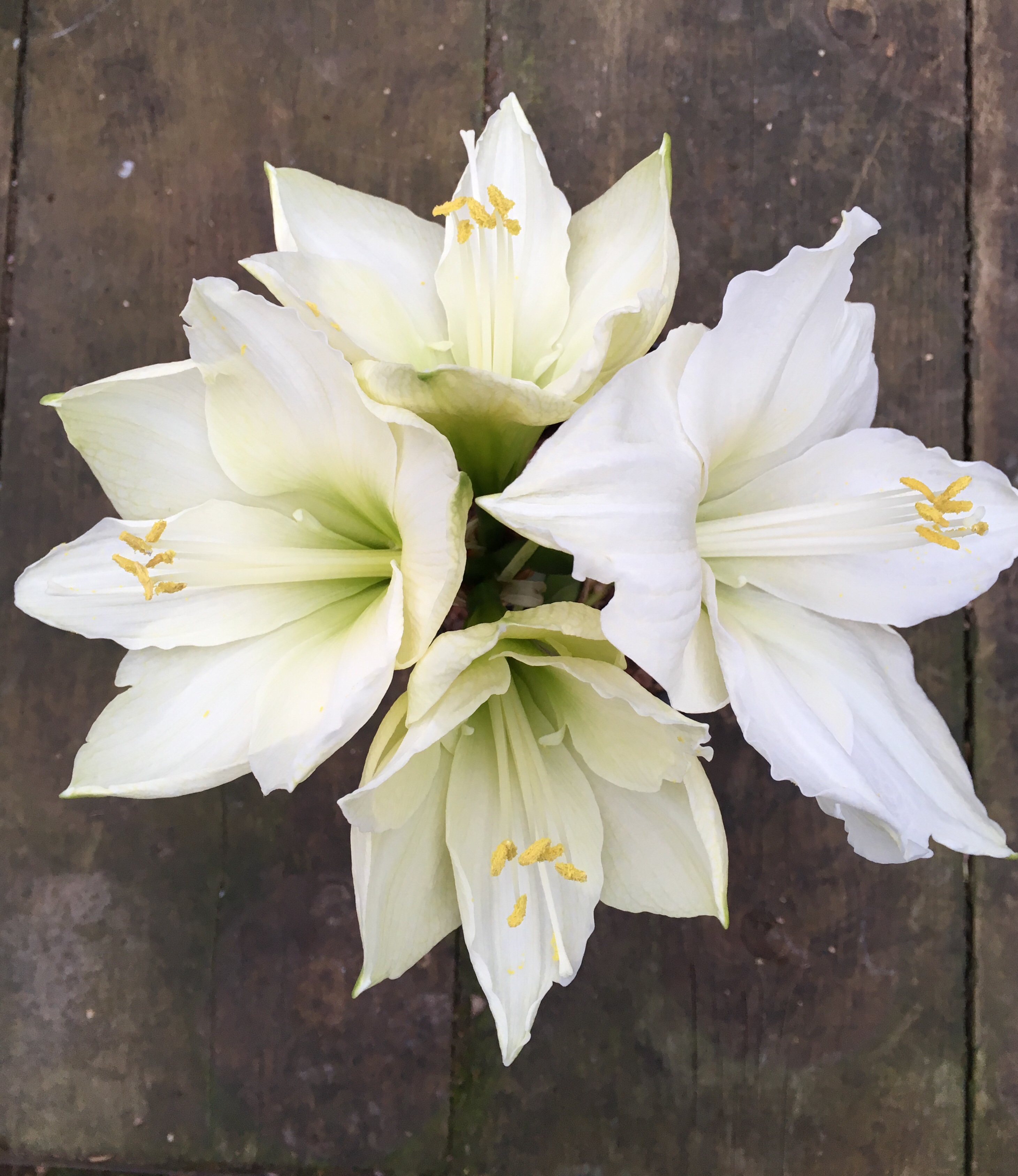
Amaryllis. Planted in October. Should have flowered at Christmas. I did all the right things, watered it, pampered it. I’m happy it is finally flowering in time for Easter. It was sold as Lemon Star. As with many spring bulbs, they sometimes turn out to be different from the name on the packet. Very pretty though. A table centre on its own, I think.
Tulip Mount Tacoma. Also just in time for Easter table arrangements. Fluffy, very double. As beautiful as a swan, wouldn’t you agree.
Forget me nots make a lovely ground cover for Mount Tacoma here.
Still on the theme of cream and white, new tulip Exotic Emperor. A delight to watch opening from a tight bud. I love the flashes of green on the edges of the petals. One I will grow again next year.
Here they are growing in a large Italian pot by my back door. A north facing position suits them well. They last longer out of the sunshine. Above them, the lime green new leaves of an Acer Palmatum Dissectum are just starting to unfurl. Perfect to complement the stripe in the tulips.
In the Exotic Daylily Border, my favourite quince is in flower. Chaenomeles speciosa Kinshiden starts off the colour of Devon clotted cream and fades to white. A lime green eye adds a simplicity to this beautiful double flower. 200 Tulip Orange Emperor form a backdrop. A recommended tulip for reliably coming back each year, and good for planting between low maintenance daylilies. I hardly ever have to work this border. It virtually looks after itself.
Wishing you all a very and happy and peaceful Easter. I hope you are getting some lovely sunny weather, as we are here. It’s 21C today- and 38C in the greenhouse! I have opened all the doors and windows! And now I must get back to that watering…. Enjoy your gardening.
I don’t know where the time goes. I’ve been trying to find a few spare minutes since Sunday. But every time I sit down, the phone rings, and that’s the end of any thoughts of escaping to the potting shed.
Anyway, apologies to Cathy for being late again with my IAVOM. Without further ado, and before the phone rings again, here are some photos of my jam jar flowers this week.
If you were listening in to Radio Leicester on Sunday, these are the flowers I took in to talk about. I’ve made a heart out of six stems of red dogwood and willow. It’s so simple to create. Basically, hold the stems in one hand. Bend three one way in a hoop and hold in the middle. Bend the other three the other way and hold in the middle. Bound with twine. Cut the long stems level at the bottom. Attach a jam jar wrapped in hessian or any pretty fabric around the middle of the heart. Then you can add whatever flowers you fancy.
I’ve used two stems of creamy white Exotic Emperor tulip. This is my new favourite. Its the colour of rich clotted cream. Outer petals have a beautiful green flash. In the heat of the radio studio the tulips opened flat like an orchid.
Here’s the same tulip with cherry blossom, Prunus Kojo-no-Mai, showing what it looks like as it opens. It reminds me of a peony.
Here’s where I’m growing them in the cut flower patch. I planted rows of tulips 10cm apart, mixed in with some Bridal Crown and Geranium narcissi. Rows of Blue Jacket hyacinths mingle with orange wallflowers. These were planted in November.
Planting closely in rows saves space. I never feel like picking the flowers in the main garden. It feels like I’m spoiling the display. These bulbs though are planted to be harvested for bouquets and vases.
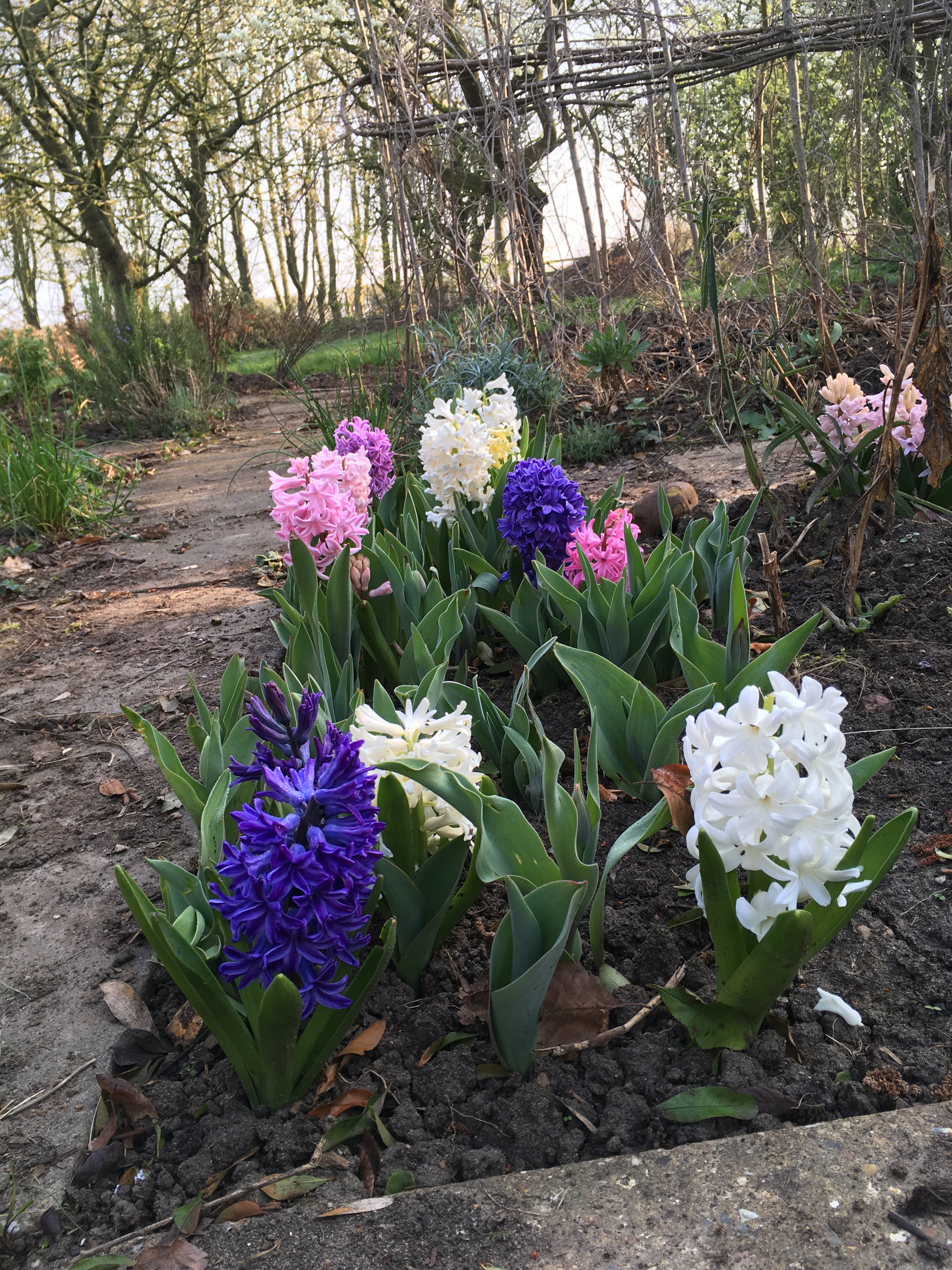
In January, I tipped some more bulbs into a trench. These aren’t deeply planted as they will be dug up and planted in the orchard when they’ve been cut. At the top end of the trench you can see I’ve stood the bulbs up and spaced them out. I popped hyacinth bulbs in between. It’s much denser planting than for permanent displays.
Here’s the hyacinths coming up, with tulips to follow. This is a cutting mix from Gee Tee Bulbs. If you wait until Christmas, prices are reduced by half. They come up just the same, for bargain prices.
Thanks to Cathy for hosting IAVOM. Why not go over and see what everyone else is growing and cutting for their vases and flower arrangements this week. I’m often surprised to see we are growing similar flowers, all around the world.
Please feel free to share this blog.
links : Radio Leicester Down to Earth programme at 1.10.56 on the timeline
Suddenly, there’s blossom and flowers everywhere. Sunny 17C days. Cold 1C nights. In the cut flower patch, there’s rows of double narcissi Bridal Crown and Winston Churchill. Single daffodil Geranium is a favourite. Wonderful in a vase. Highly scented. They seem to shout “spring is here.”
Tulips are a few weeks early. I hope there’s some to come for Easter. This one’s new to me. Exotic Emperor. Double creamy white with green feathering. A glorious sight at dawn, all covered in tiny beads of dew.
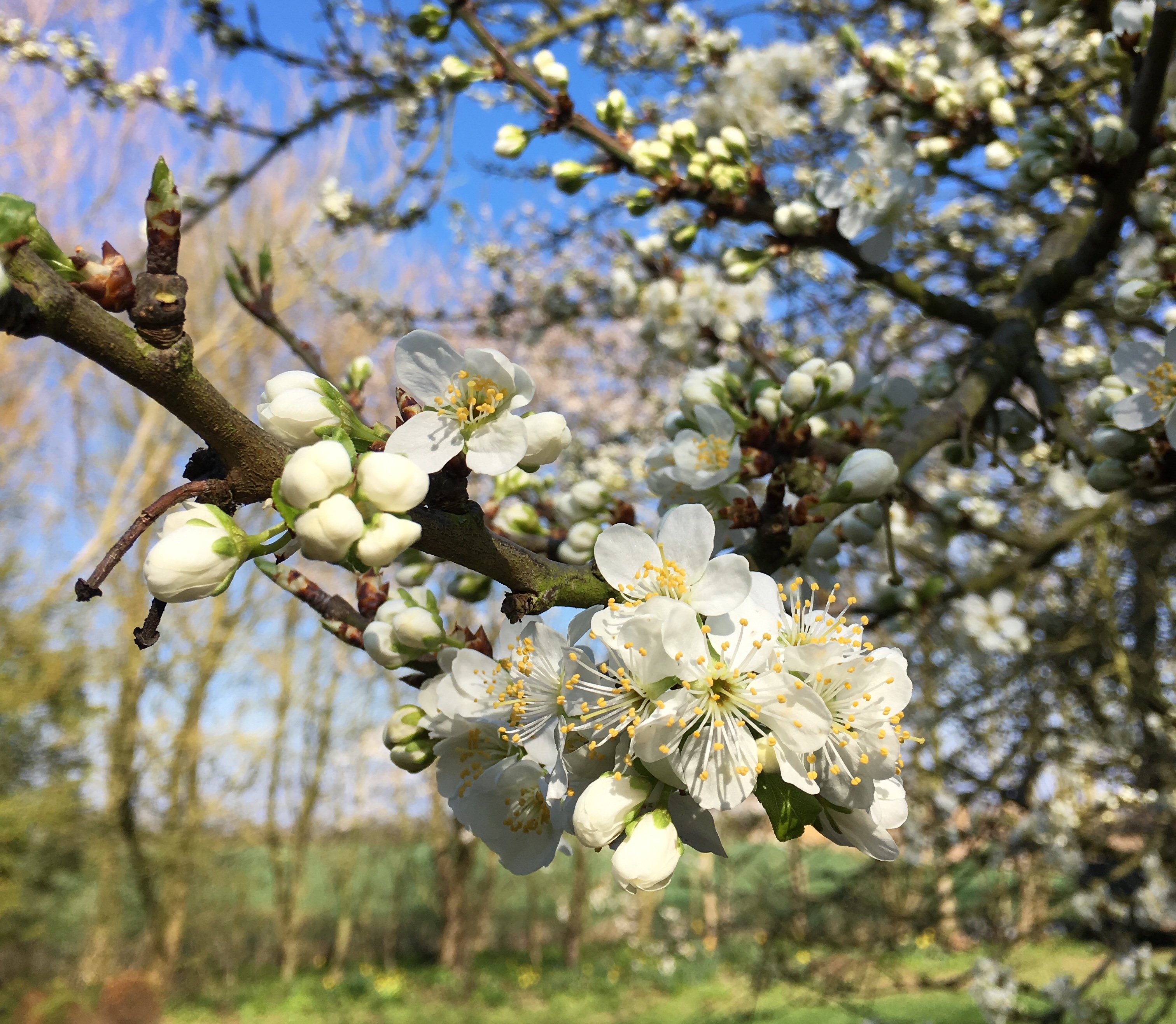
Above the cut flower beds, a plum tree spreads it’s branches. Such a wonderful sight on a beautiful sunny morning.
My plot is edged by a bank of wild cherry trees. There’s Tenby daffodils at their feet. Small and simple. They look “right” in their semi-wild setting.
Looking up, I can hear the bees working the pollen. There will be plenty of cherries this year.
I hope you’ve enjoyed a walk around my garden today. What flowers and trees are you seeing today?
We leave cold, wet April behind, and May finally brings some warm, settled weather.
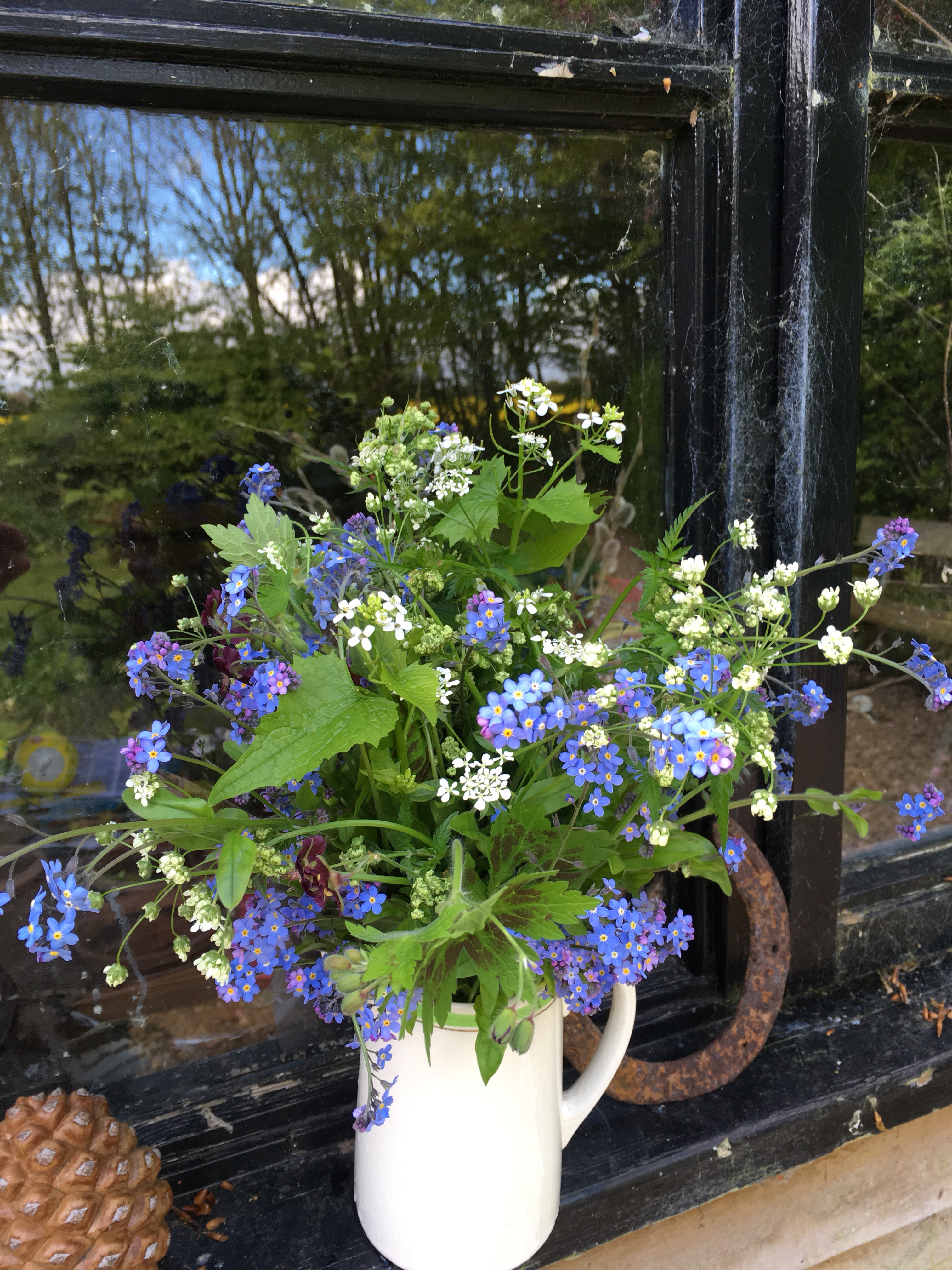
The potting shed window ledge soon has a jug of cow parsley and forget-me-nots from the wild garden.
We’ve waited for this display all winter. Wild cherry trees in the paddock. Alive with bees. An avalanche of white blossom.
Scented narcissi Geranium pop up in the long grass around the pond. I love the egg yolk centres.
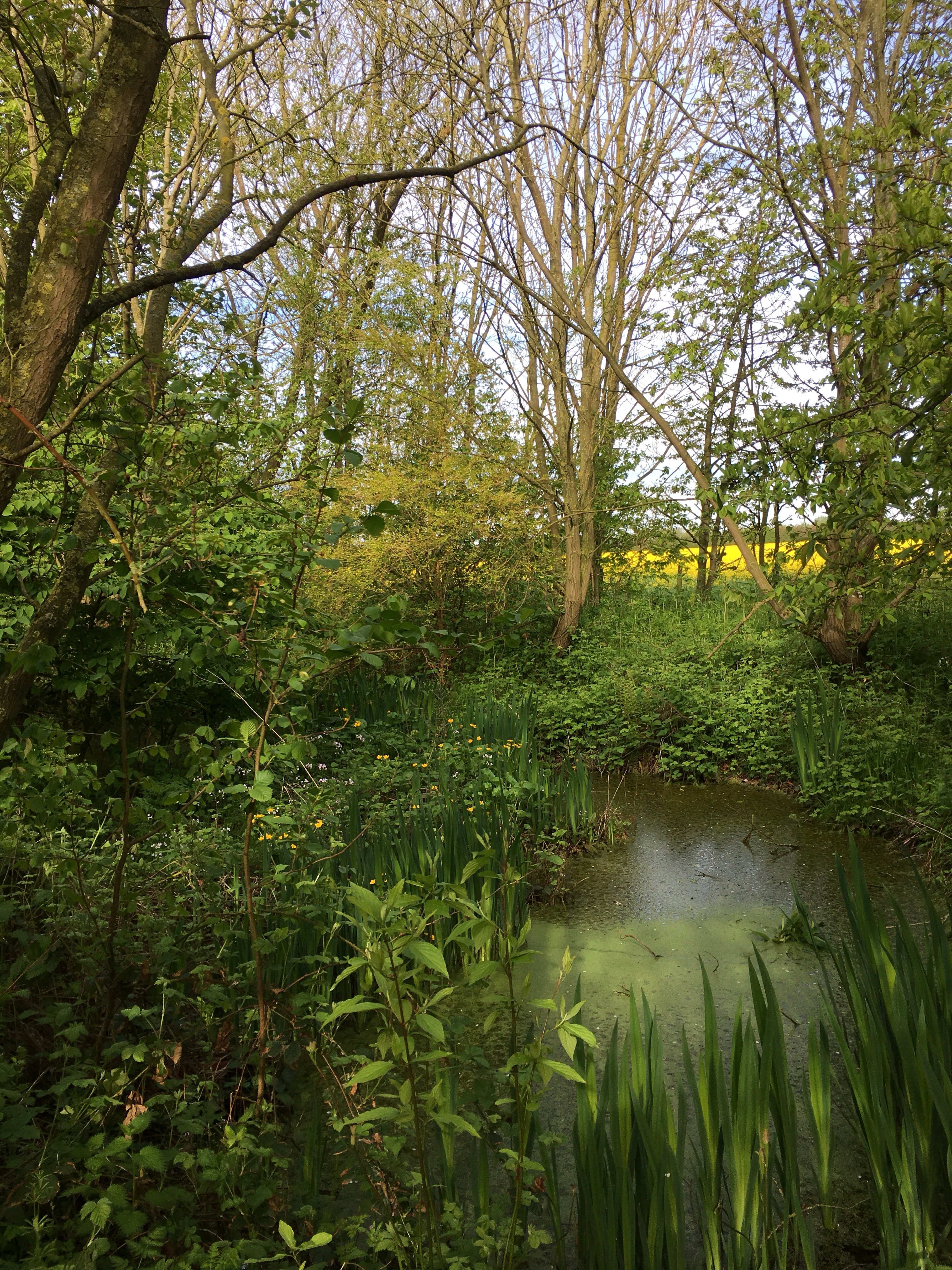
Needing some work this summer, the pond is ringed with marsh marigolds and lady’s smock wild flowers- and brambles and stinging nettles! A bit of cutting back and control is planned.
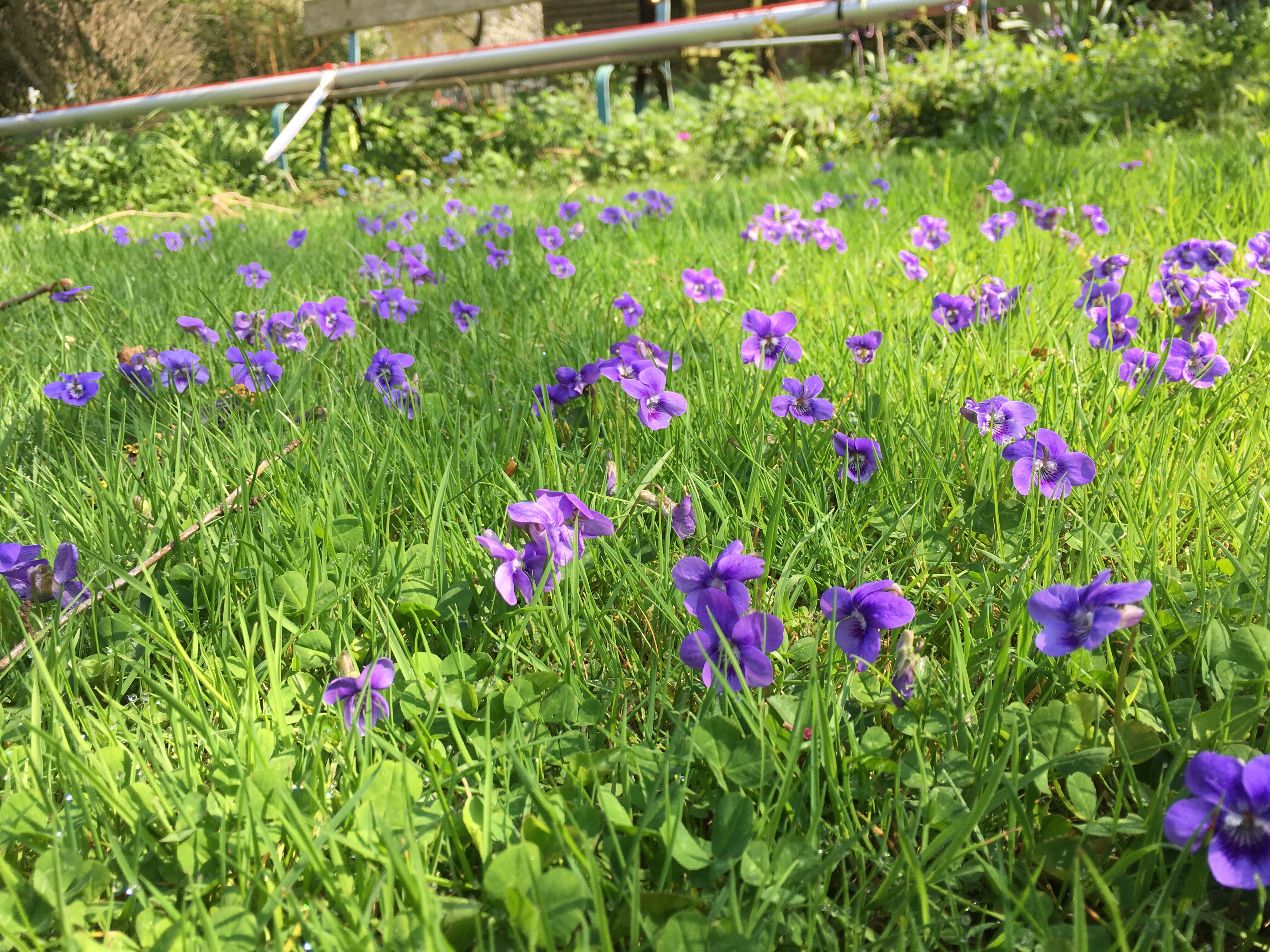
Our front lawn is a blue haze. My Grandfather Ted Foulds brought the first wild violets here, seedlings from his garden. They spread over the whole plot, and I love them.
I’ve planted my sweet peas. The hazel rods are a bit ramshackle, but they’ll soon be covered with flowers. I planted seed in October. I’m growing old favourites: High Scent, Wiltshire Ripple and creamy white Mrs Collier, plus heritage varieties from Easton Walled Gardens .
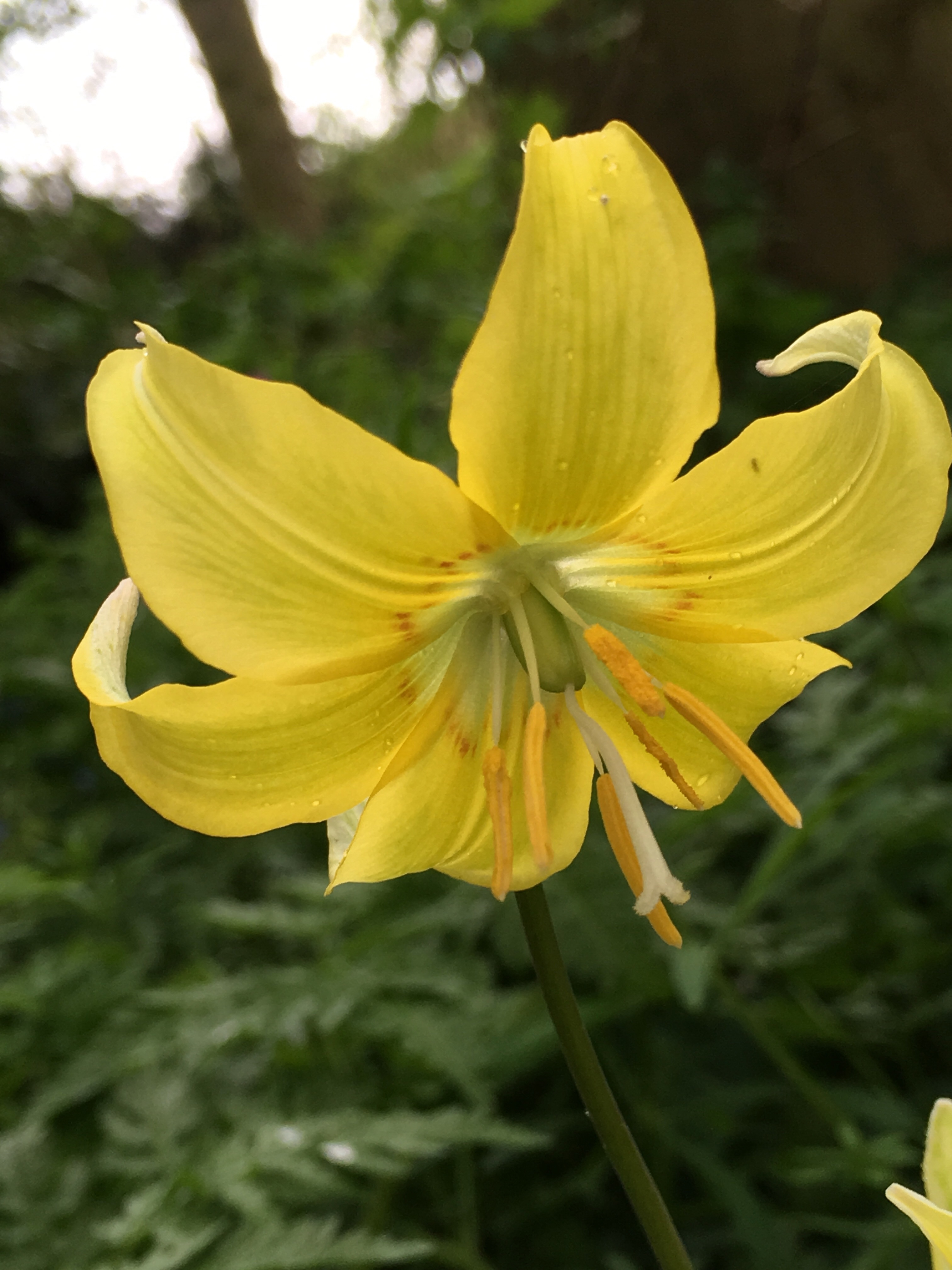
Suddenly, these dog’s tooth violets pop up through cow parsley in the woodland. I forget I’ve planted them – and then they emerge. Sunshine on a cold, cloudy day. Erythronium Pagoda is the variety growing here.
Shining out from the shade, Tulip Purissima. Reliably comes back every year. Copes with everything the weather throws at it.
I grow Orange Emperor tulips in the daylily bed in front of the greenhouse. Another good do-er. Always comes up every year if planted deeply on a bed of grit for drainage.
Favourite shrubs in flower at the moment are daphne and quince. This one is Japanese quince, Chaenomeles Kinshiden. Double flowers open pale lime green and change to clotted cream as they age.
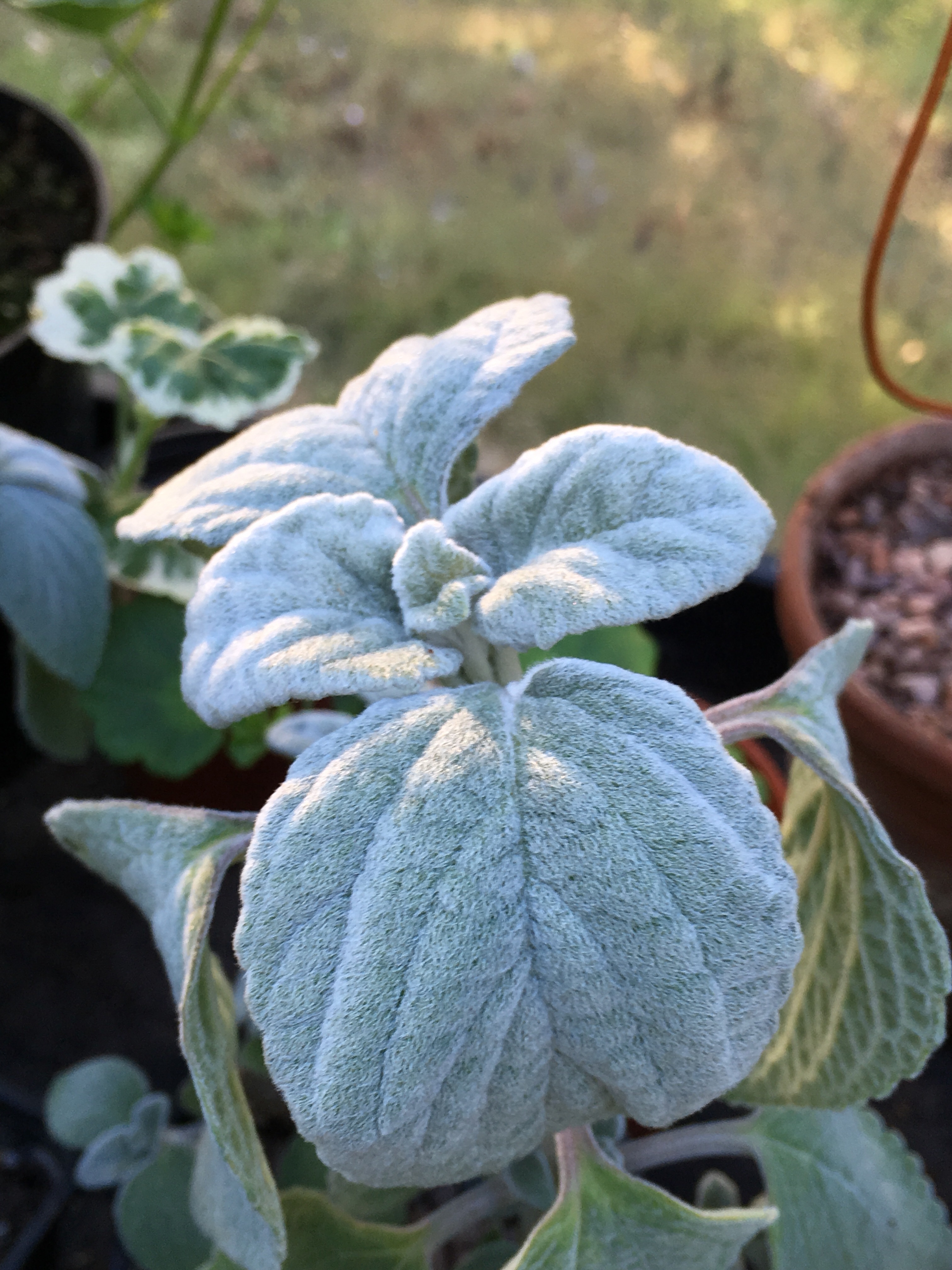
Pleased to see my plectranthus has survived the winter, tucked up in the greenhouse. A striking plant for summer containers. Easy to grow from cuttings.
There will be plenty of citrus fruit for summer preserves. This plant flowered all winter, filling the greenhouse with such a wonderful scent.
We do quite a bit of owl watching from the top of the garden. Delighted to report the barn owls and tawny owls have survived the freezing winter. We’re hoping they bring their fledglings into our garden again this summer.
Another cause for celebration. The hedgehogs- we think they are last year’s babies- also survived the cold, and have come out of hibernation, ravenous. They are doing a great job of clearing pests in the garden.
I hope you’ve enjoyed this slide show of my garden at the end of April and into the first week of May. Enjoy your Bank Holiday weekend. I’m hoping to spend some time just sitting in my favourite garden chair. If I can possibly ignore all the weeds growing rampant in the background!
Thanks to Helen Patient Gardener for hosting the EOMV. Why not go over and see how Helen’s garden looks at the end of April.
What are your plans for the garden over the coming weeks? Get in touch and let me know.
Flowers for my Mum this week. There’s nothing as beautiful as spring bulbs and ranunculus are among my favourites. They are easy to grow. Plant them 8cm deep and the same distance apart in bulb fibre or John Innes compost. I grow mine in pots, starting them off in the greenhouse for an early crop. But they can be grown outdoors in full sun and well-drained soil. Plant them with the “fingers” facing downwards. The RHS has a sale on – 12 corms for £1.60 instead of £4. Aviv Rose is an excellent variety. I also grow Purple Heart . They last for a week in a vase. I made a small posy for the kitchen table with mine.
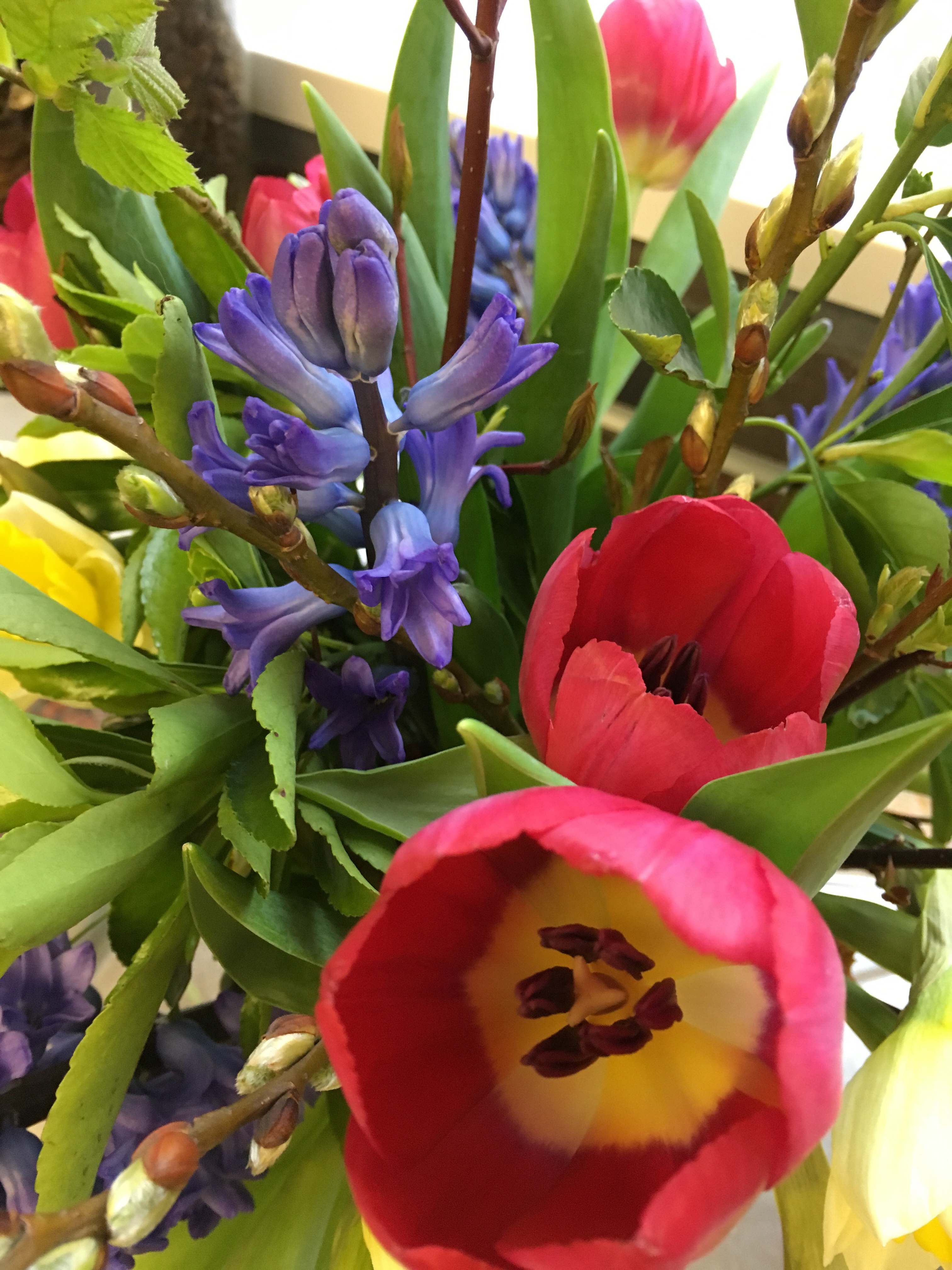
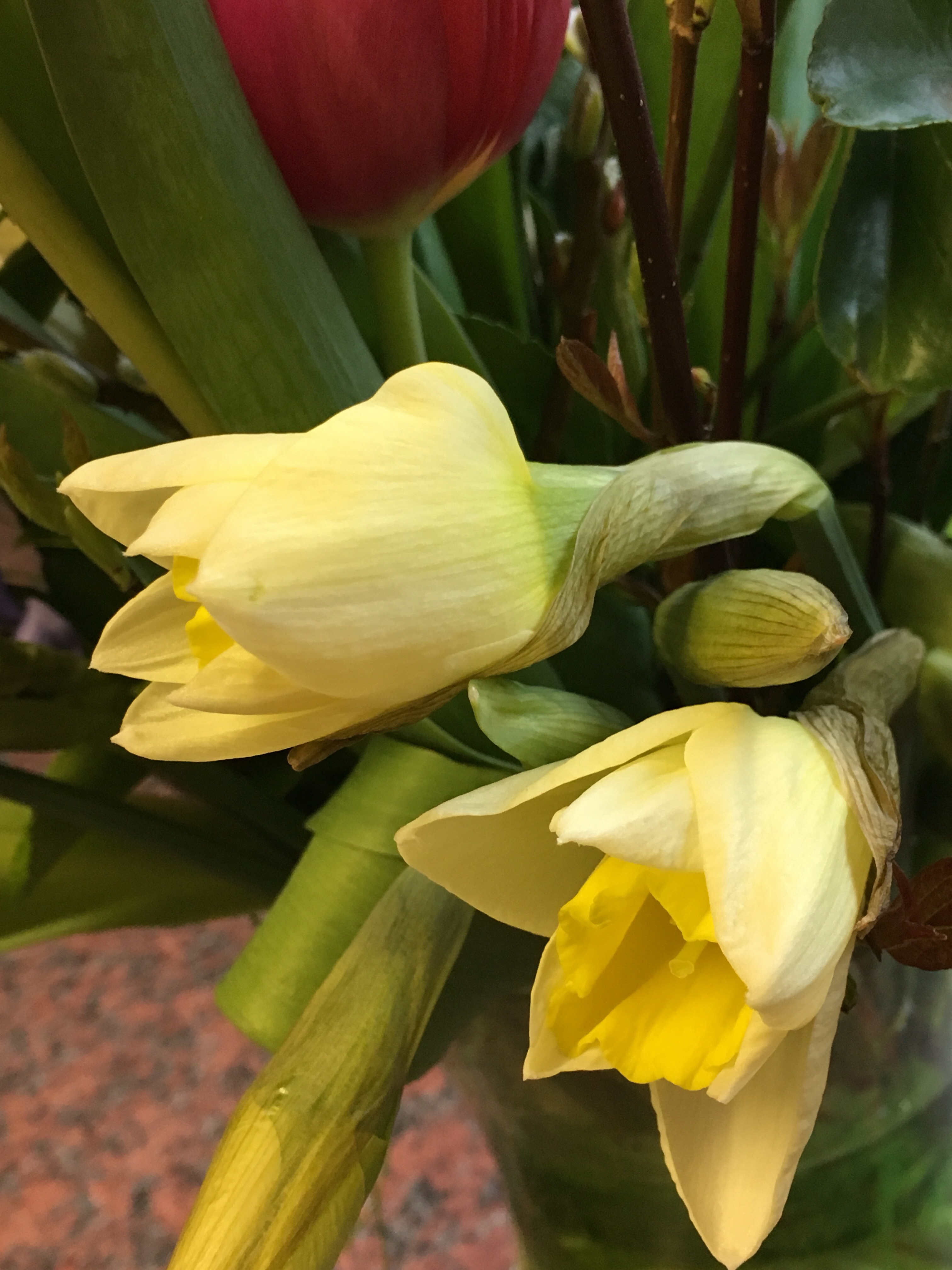
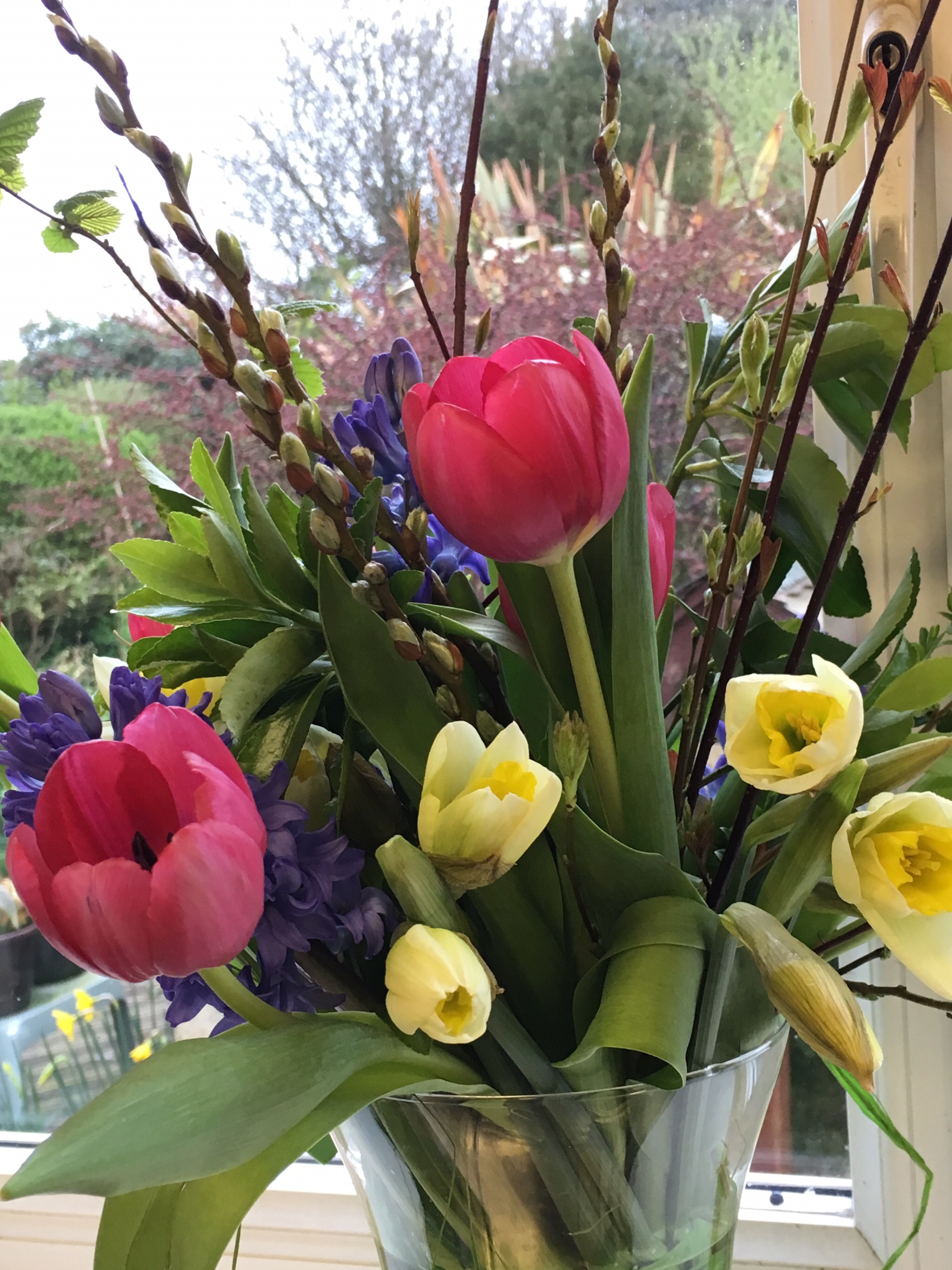
Red tulips look fabulous with blue hyacinths. I’ve placed these with lots of twigs from the garden. I’ve got grey catkins, red dogwood, spirea, and field maple. Some of the stems came from my new “Hedge in a Box” kit from Hopes Grove Nurseries. I wrote about planting my new florists’ hedge Here.
In amongst the stems are daffodils from Waitrose, grown in West Cornwall. “Surprise Bouquets ” contain 30 different stems for £4. You can’t tell what they are while they are in bud. The mystery is only revealed as they open. I love something a bit different and new marketing ideas to promote British flowers. Greenyard Flowers have been supplying Waitrose with daffodils for 23 years and grow more than 1,000 different varieties.
Some of the daffodils open up with creamy- white outer petals and a darker lemon trumpet. They have a delicate scent too.
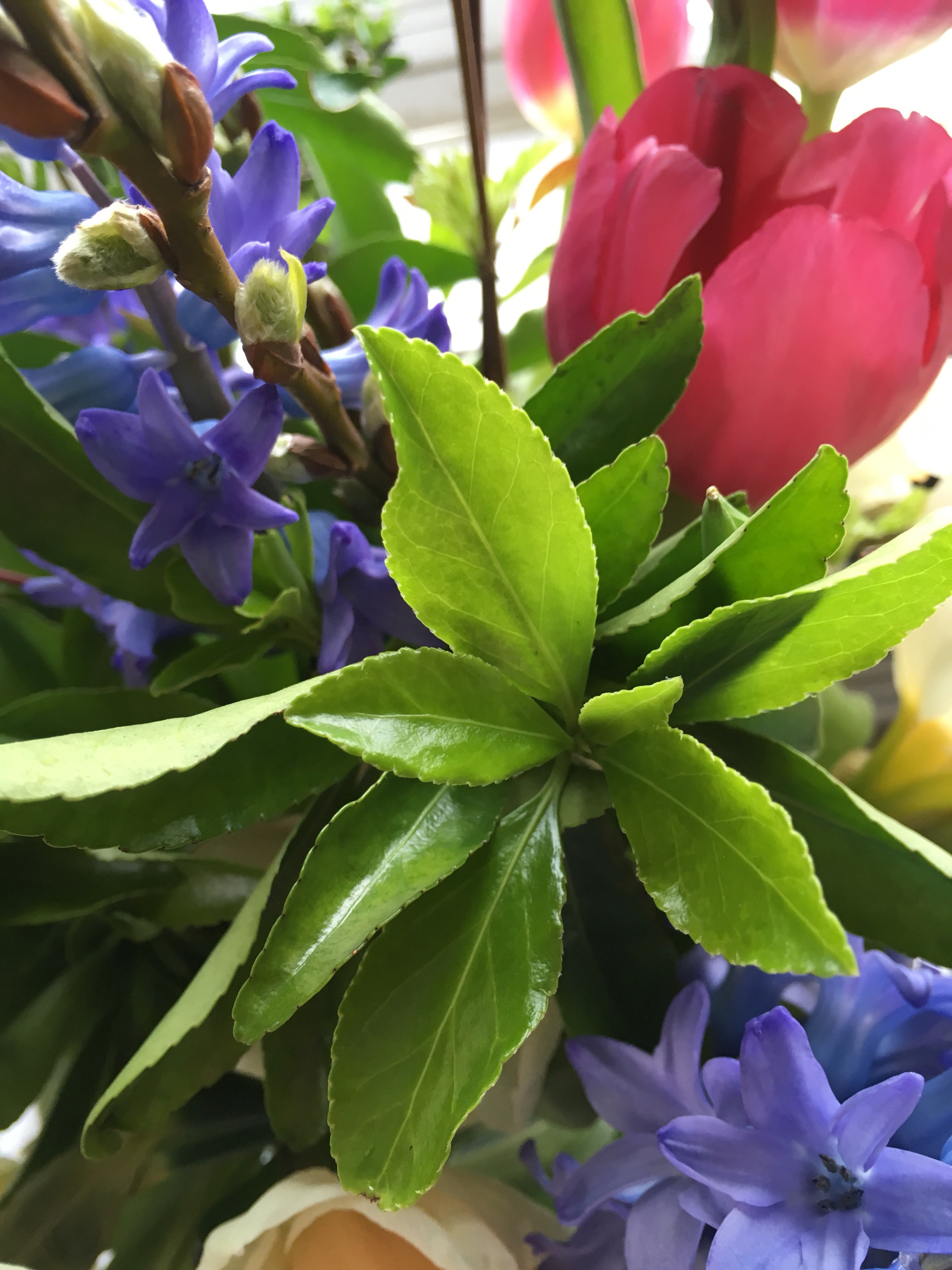
All my bouquets for friends and family contain some of this evergreen glossy-leaved shrub that originally came from my Grandfather Ted Foulds. It’s called Euonymus Japonicus. I loved his visits here each week. He would always bring a little pot of seedlings from his garden, or a cutting from one of his plants. It’s lovely to walk around the garden now and remember him from all the flowers and shrubs in my garden.
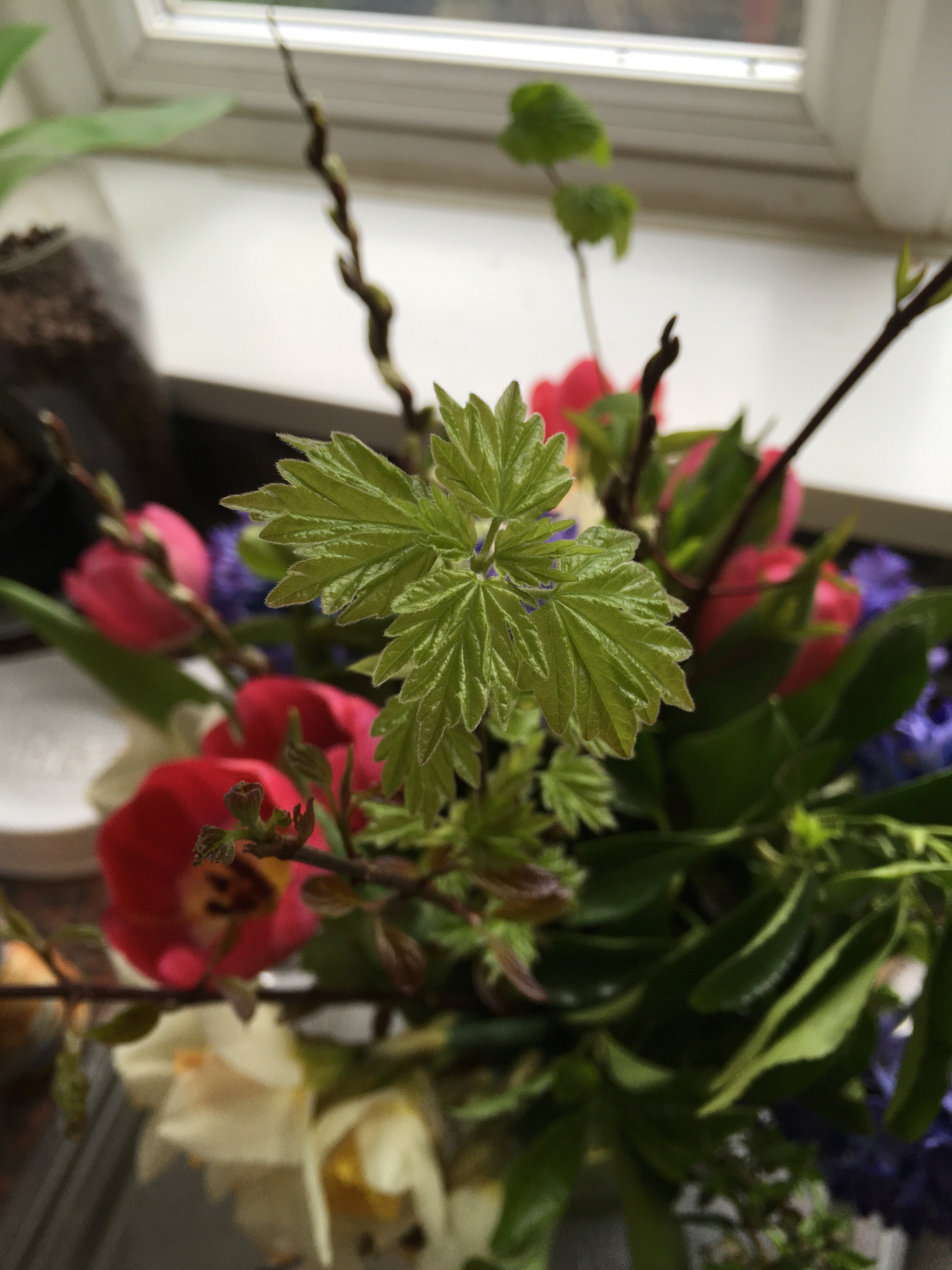
There’s nothing more cheerful than popping a few twigs in amongst the spring flowers and watching them burst into leaf in the heat of the windowsill. This one I think is common field maple. The lime green leaves are almost as beautiful as any flower.
Thank you to Cathy at Ramblinginthegarden for hosting this meme. Why not go over and see what Cathy and all the others are putting in their vases this week. It’s an international favourite.
This week I’ve potted up some prepared hyacinths. I started them off in a cold, dark potting shed in September. The bulbs were put through a cold treatment before I bought them – to trick them into thinking they had gone through winter. Putting them in a dark cupboard for 10 weeks completes the treatment. They grow fabulous roots in the dark and form a strong flower shoot. Some hyacinths were brought on in warmer conditions to flower for Christmas. But spare bulbs have been kept cold and dry to stagger the flowering display.
I grow them individually in 3″ pots. To create a display, I simply choose bulbs that have flower spikes about the same size.
I love the green edge on these Carnegie white hyacinths and the scent cheers up the potting shed. It’s a joy to work in there at the moment.
My grandfather Ted Foulds gave me these terracotta Sankey plant pots. I love using them and always think of him. Happy memories – I had a carefree childhood. For which I’m very grateful. They were simpler times then, when we made our own entertainment. Mud pie gardens, surrounded with stones and topped with flower heads. Making gardens in a biscuit tin lid, with tin foil ponds and tiny twig “trees.” Keeping snails as pets and feeding them lettuce; and great delight when the snails produced eggs, hatching into a family of miniature baby snails with translucent shells.
Here’s some hyacinths that have been flowering in the greenhouse for several weeks. They are such great value. Below, I’ve used foliage from the garden, dogwood stems, salix catkins and hazel lambs tails, with a single pink hyacinth flower and some double snowdrops.
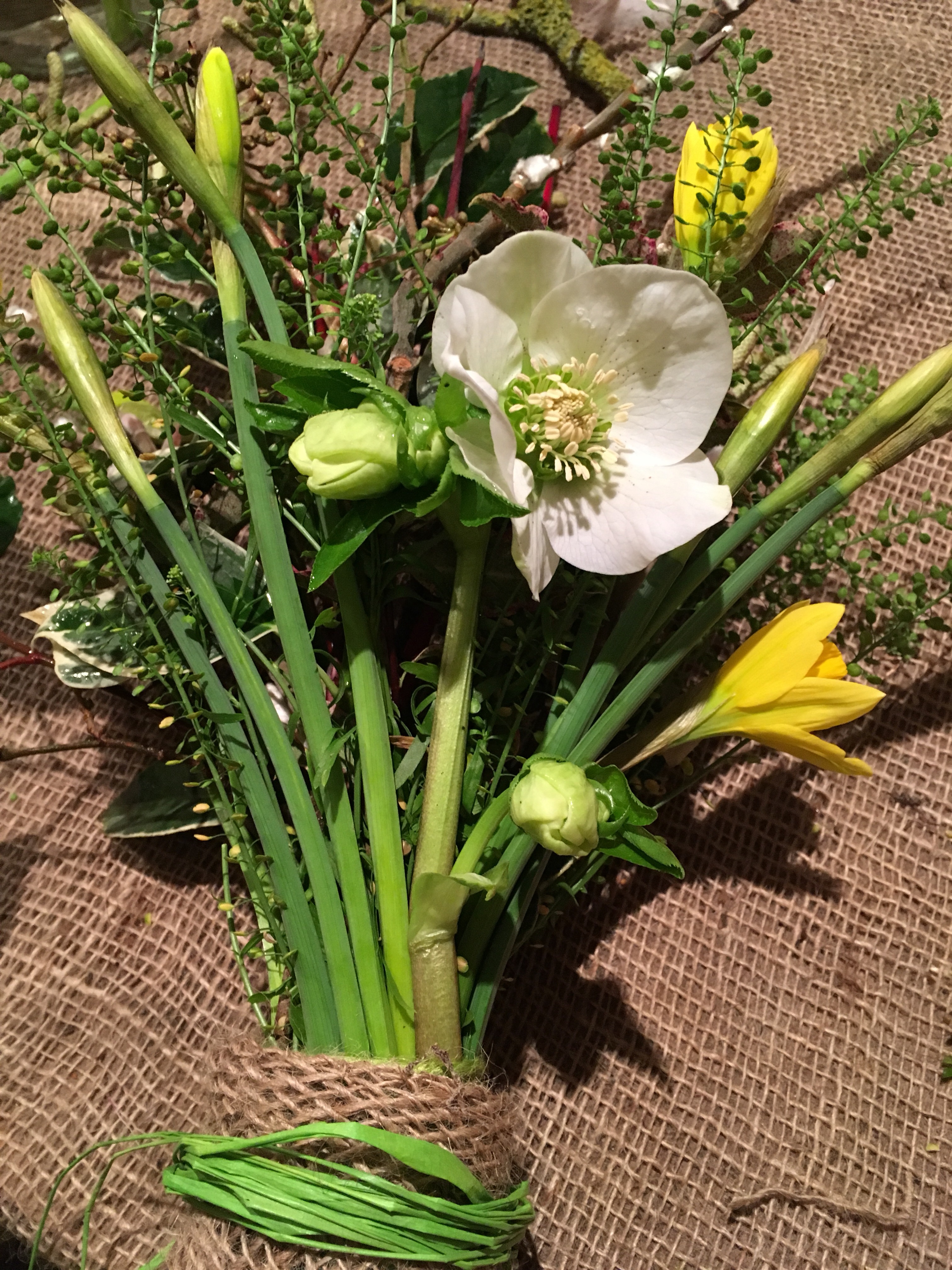
And finally, in my mother-in-law Joan’s posy, there’s white hellebores, and the first daffodils, surrounded with ivy, and twigs and some green foliage which is actually a weed. It’s known as shepherd’s purse, and has tiny hearts all along the stem.
Thank you to Cathy at Ramblinginthegarden for hosting this meme. Why not go over and see what Cathy and all the others are growing and using for their flower arrangements this week. As you can see, you don’t have to use a vase. Any container will do.
I hope you enjoyed a peek inside my potting shed. Get in touch and let me know what you are growing.
Haven’t the spring bulbs been gorgeous this year. They seem to have loved the cold April temperatures. March was mild and brought them into flower early. Then the cold weather and lack of rain made them last for weeks.
This is Leucocoryne ixiodes purpurea -or purple glory-of-the-sun. originating from Chile, these are bulbous perennials with grassy foliage and umbels of star-like purple, white or blue flowers in spring. The flowers are 2.5cm across and scented. Plant 10cm deep in very well drained soil, or in containers with lots of sharp sand.
And the tulips have had the longest flowering time I can ever remember.
Have the bulbs done well in your garden this year?
The postman arrived to find me wobbling at the top of a step ladder, peering through a piece of black cardboard with a square cut out of the middle. “I’m composing photos of my garden,” I heard myself saying. Oh dear. How mad does that sound! I rather sheepishly climbed down and made him a cup of tea while he chuckled away.
Over tea and biscuits in the potting shed, I explained that my new photography workbook recommended using a piece of card to practise framing a view. It works close up, as well as for landscape views. I just had to learn how to squint through the cut out square- while up a ladder, and while keeping my balance. The postman declared it could all end in tears.
Anyway, as he continued his round, laughing as usual, I went back to my new book. Andrea Jones has produced a fabulous masterclass giving hints and tips on the best ways of capturing the garden.
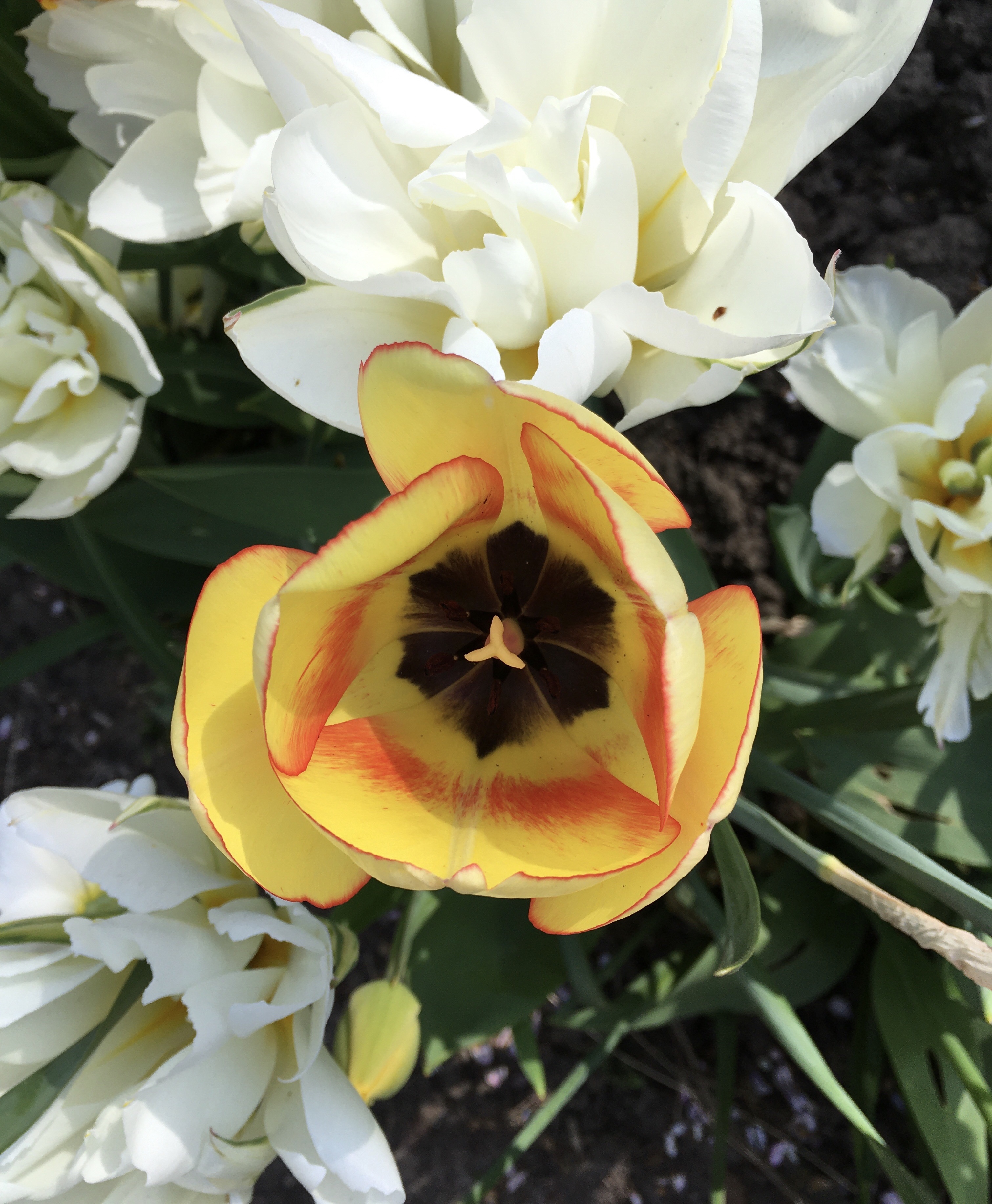
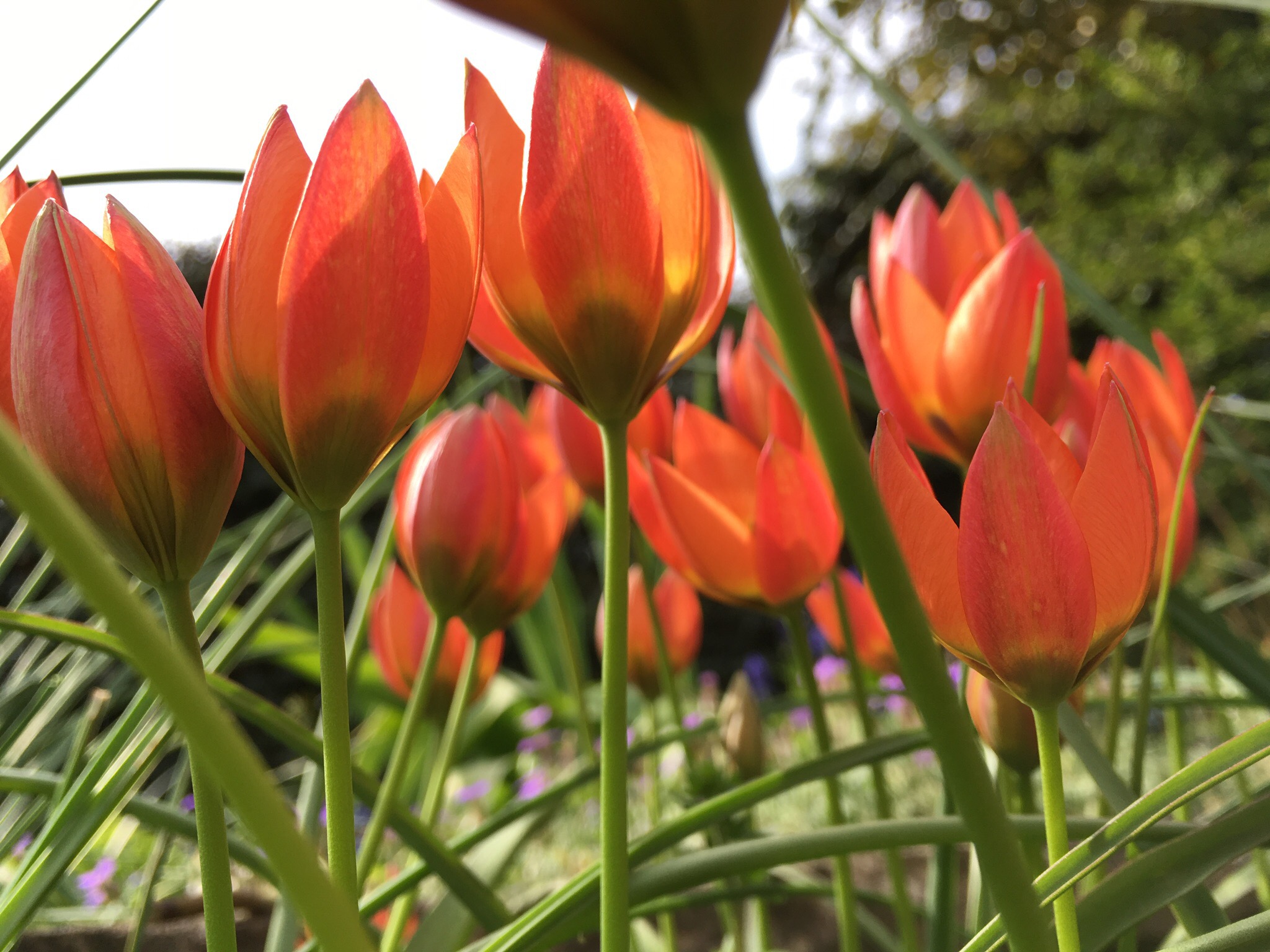
Some of the ideas were a complete revelation. I had never heard of making a viewfinder to try out different angles. And I had never thought of looking down on my garden- or looking up. Most of my photos are straight shots, taken from a standing position. So I tried it out on these tiny species rockery tulips. Looking down:
Looking up. A worm’s-eye view.
I haven’t quite got the best shot. They are so tiny, I needed to move some of the stems out of the way. But it’s still an interesting view. I shall work on the idea.
And here’s another photo I took from a standing position. A glorious garden at Burghley House near Stamford, open for the NGS scheme.
And the worm’s-eye view, crouching down amongst the flowers:
Over the past 25 years, Andrea has built an international reputation for her photography of landscapes, gardens and plants. Among the many awards, she was voted Photographer of the Year by her peers at the Garden Media Guild. Her website for more information is andreajones.co.uk
Andrea suggests making a plan of action- rather than just casually wandering around the garden taking random shots (like I do now). Some of the best ideas I gathered from the book include:
Use a compass – a smart phone has a compass app- to get an idea of the light direction and potential shadows.
The best light for taking photos is the “golden hour” the first hour after the sun rises and the last hour of light before the sun sets. Use an online sunrise and sunset app to estimate the time.
Tripods make a world of difference for taking good photos. But if, like me, you are using a camera phone, a small piece of tack or Plasticine can be used to position a phone temporarily on a secure surface to avoid camera shake. I tried this on top of the garden gate.
If taking shots in bright, contrasty light, use your body to create a shadow and reduce the amount of light reaching the plant or subject of the photo.
Other headings in the book include: Photography in all Seasons, Photographing Pets and Wildlife, Working with Weather, Light, Macro, Micro, and Close-up, Essential Kit, and Catching the Moment.
I am working my way through the rest of the book. There are 10 inspiring gardens featured with step-by-step lessons on observation, storytelling, composing, and editing. Andrea’s book helps you take your photography to another level, whether you are using a smart phone like me, or have the latest DSLR. It’s a master course on capturing the magic of gardens.
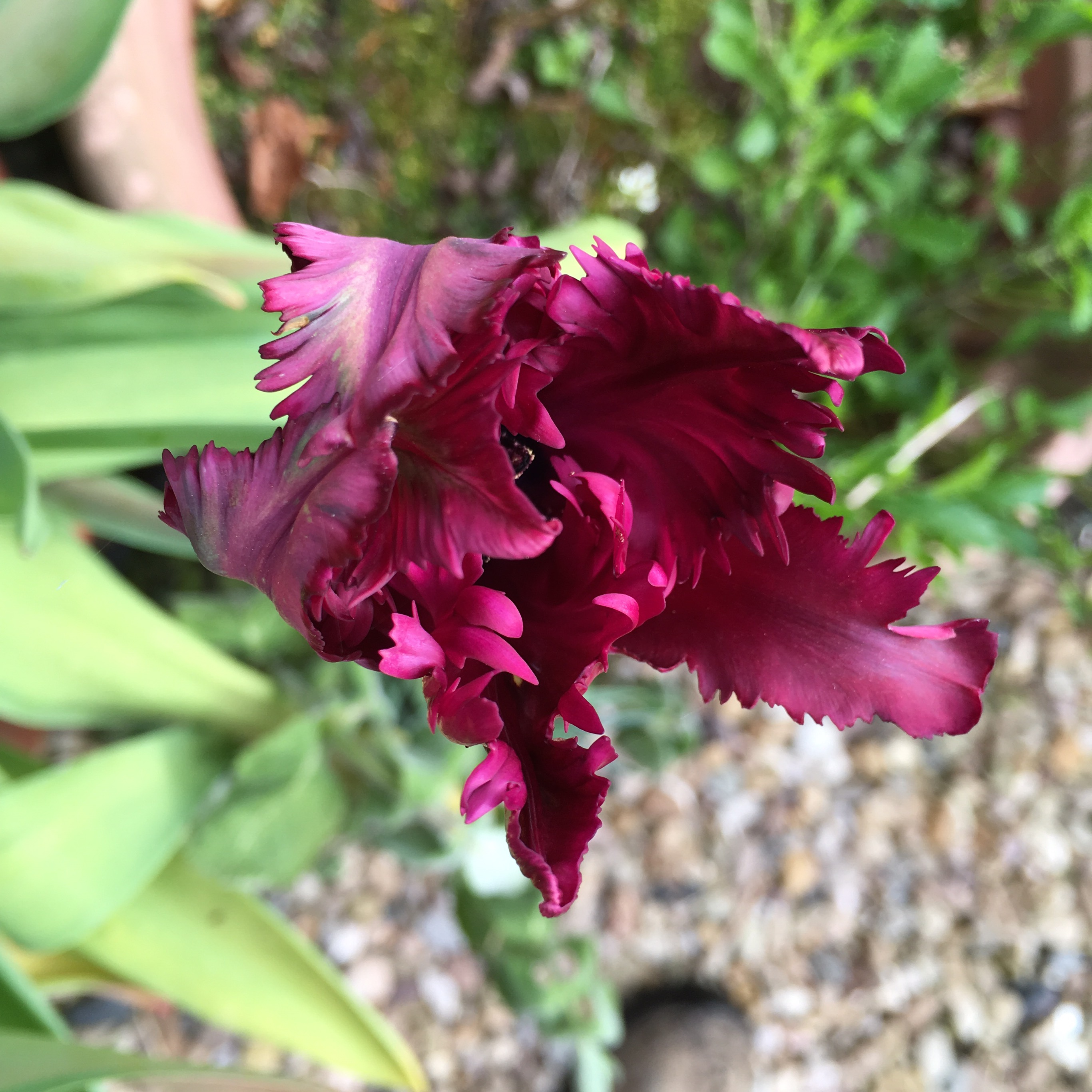
Unfurling. My Black Parrot Tulip. A favourite this spring. Except, my foot is also in the photo. Sigh. I still have some work to do then.
Thank you to Timber Press for supplying The Garden Photography Workshop- in exchange for an honest review. I will leave you with my cat Grace who shares my home- and garden- and who sits very patiently while I practise my new photography skills.
Finola. So graceful. Haven’t the tulips been wonderful this year. Such a joy at the end of a long, cold dark winter.
I love the creamy buds and green feathering on this double late, or peony-flowered tulip. We are all growing this variety in place of Angelique. Finola seems to be a stronger tulip. Grows to 50cm high and flowers in April and May. I’ve planted mine in a sea of blue forget-me-nots. Brunnera would be a good alternative if you are worried about the forget-me-nots seeding about. Good quality tulips and bulbs of all kinds are available from Bloms Bulbs and Peter Nyssen.
What tulips are you enjoying the most at the moment?
Everything in my garden has suddenly gone whoosh! I’m running round the plot at breakfast, lunch and tea break – finding flowers that I’m certain were not there earlier in the day. Plants just seem to pop up overnight.
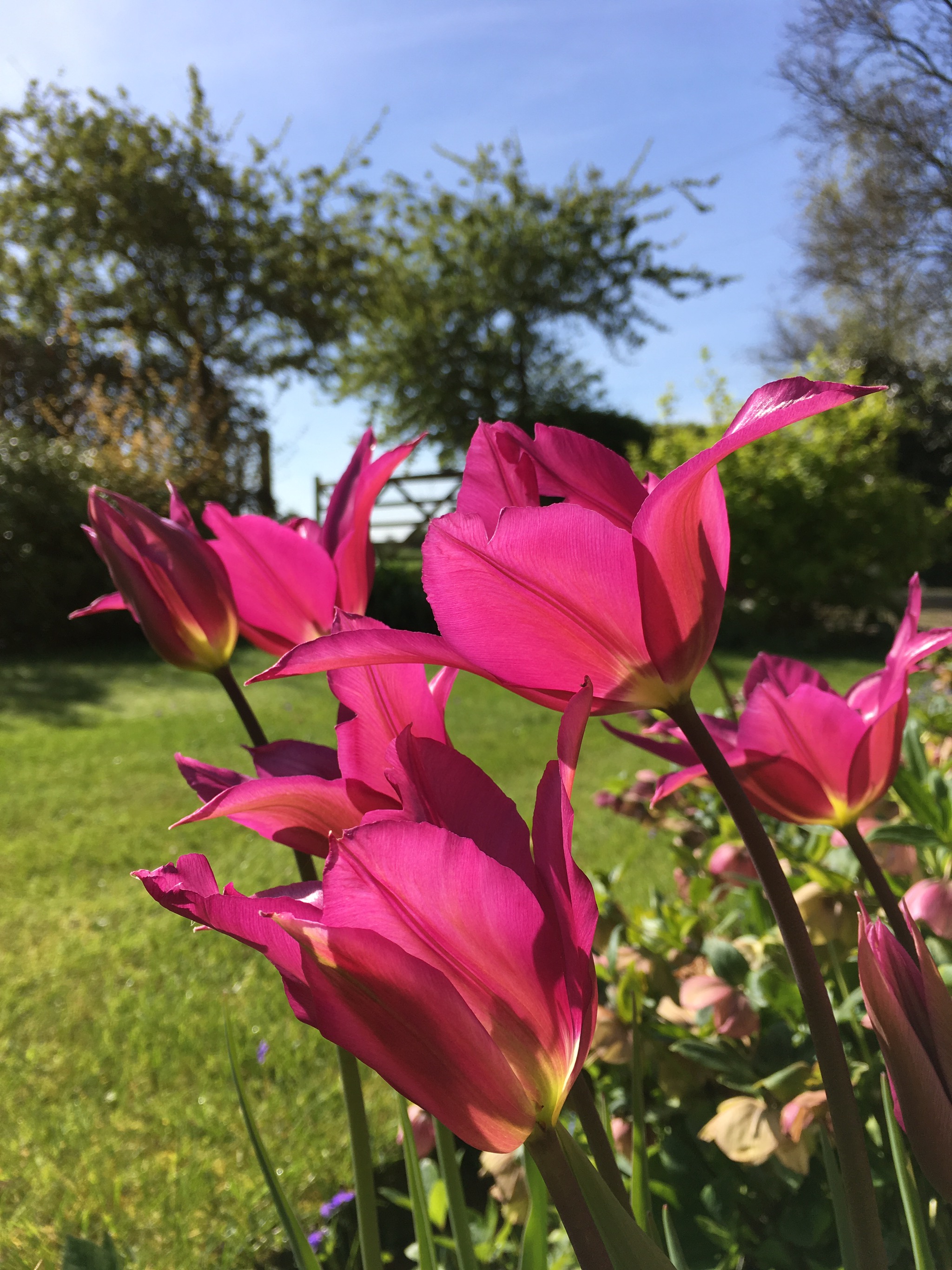
My favourite tulip, Burgundy, was only in bud for a day or two. Then by lunchtime, the flower was wide open. When the wind blows, they look like ribbons of silk scarves, dancing in the breeze. Lily-flower tulips have a certain elegance and movement. Much better than their stiff, cottage cousins, I think.
Hellebores make perfect ground cover in fading shades of purple and pink. As a contrast there’s tiny forget-me-nots in the borders, and the lawn is edged with a frill of scented wild violets. Blue and cerise pink make very happy companions.
Looking up, banks of cherries make a white cloud over the wild garden. There will be lots of fruit for the blackbirds- and us.
Hasn’t it been a fabulous year for blossom. Cold temperatures in January, followed by sunny, mild days in March, mean we’ve had the best year for cherries and magnolias for a long time. My planting is the wild cherry Prunus Avium. Simply beautiful- all year round.
If we don’t have any frost, there will be a record plum harvest. There’s enough to pick for the house too. Blossom on the breakfast table and by my bedside. One of the joys of spring.
Pieris Flaming Silver is planted in an enormous pot. It wouldn’t like my heavy clay soil, so I cheat with containers and ericaceous compost. It’s beautiful all year round with white heather, bell-like flowers and red new growth.
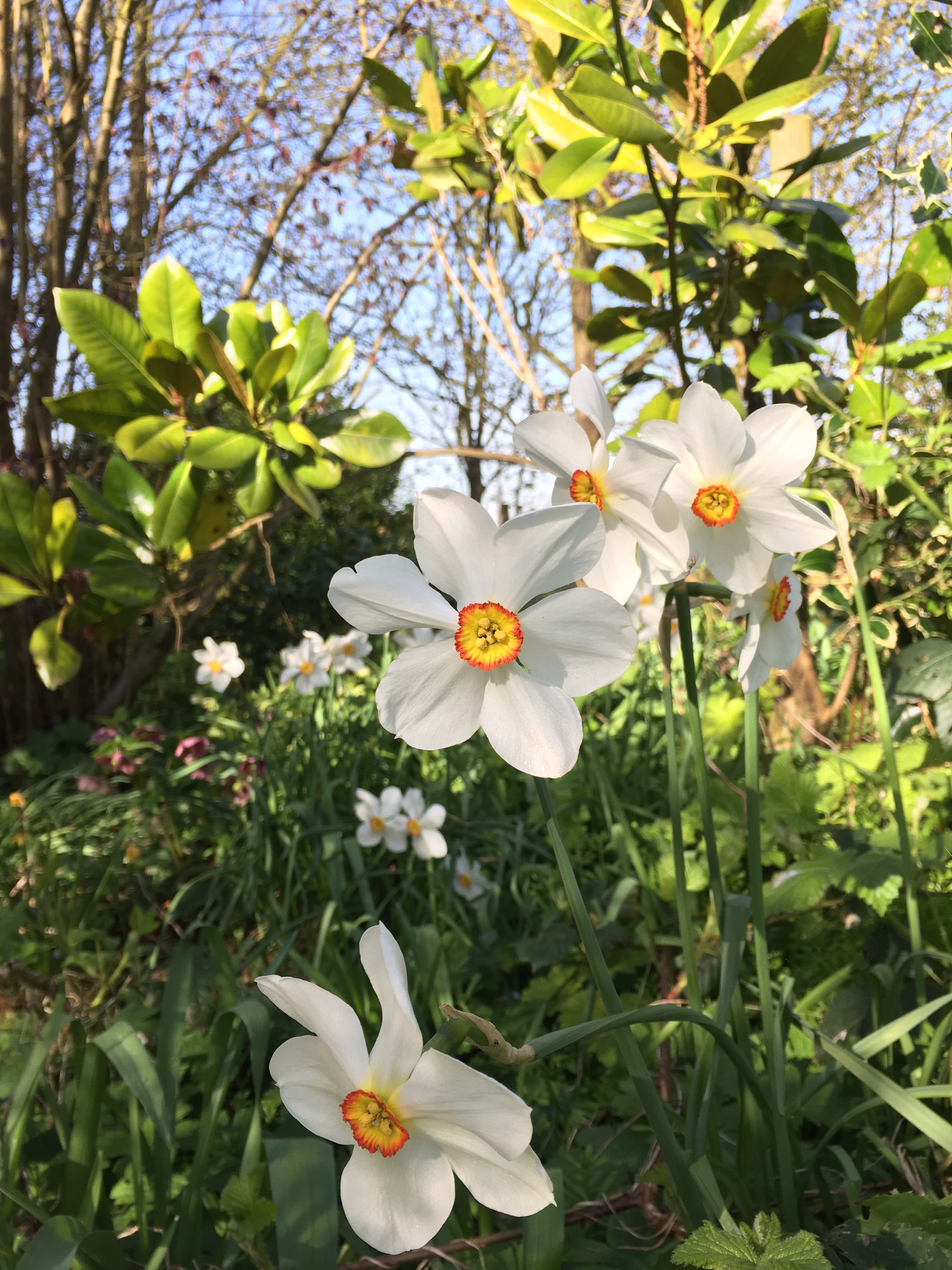
My favourite narcissi is white Pheasant’s Eye. Reliably comes back every year, and naturalises in borders and under trees.
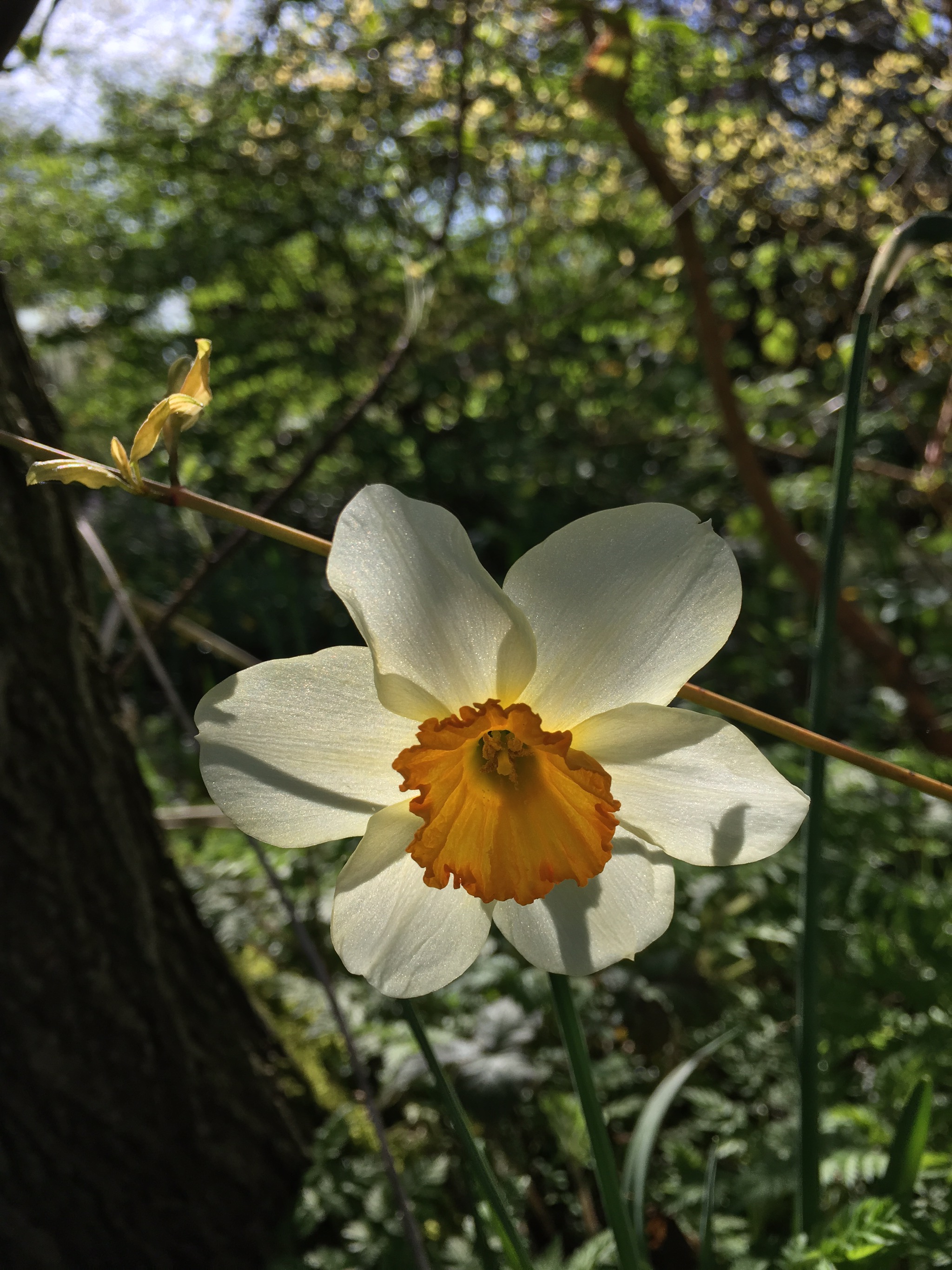
White, highly-scented Narcissi Geranium is another glorious treat. My children used to call it the poached egg flower.
Brightening up a dark corner- Devon Red. The petals look sugar-coated in sunshine. A hardy flower which copes with hail and high winds in my garden.
Narcissus Ice Follies, viewed from the summerhouse, replace the snowdrops and wild anemones. Cowparsley will soon compete with native bluebells. It’s an ever changing scene.
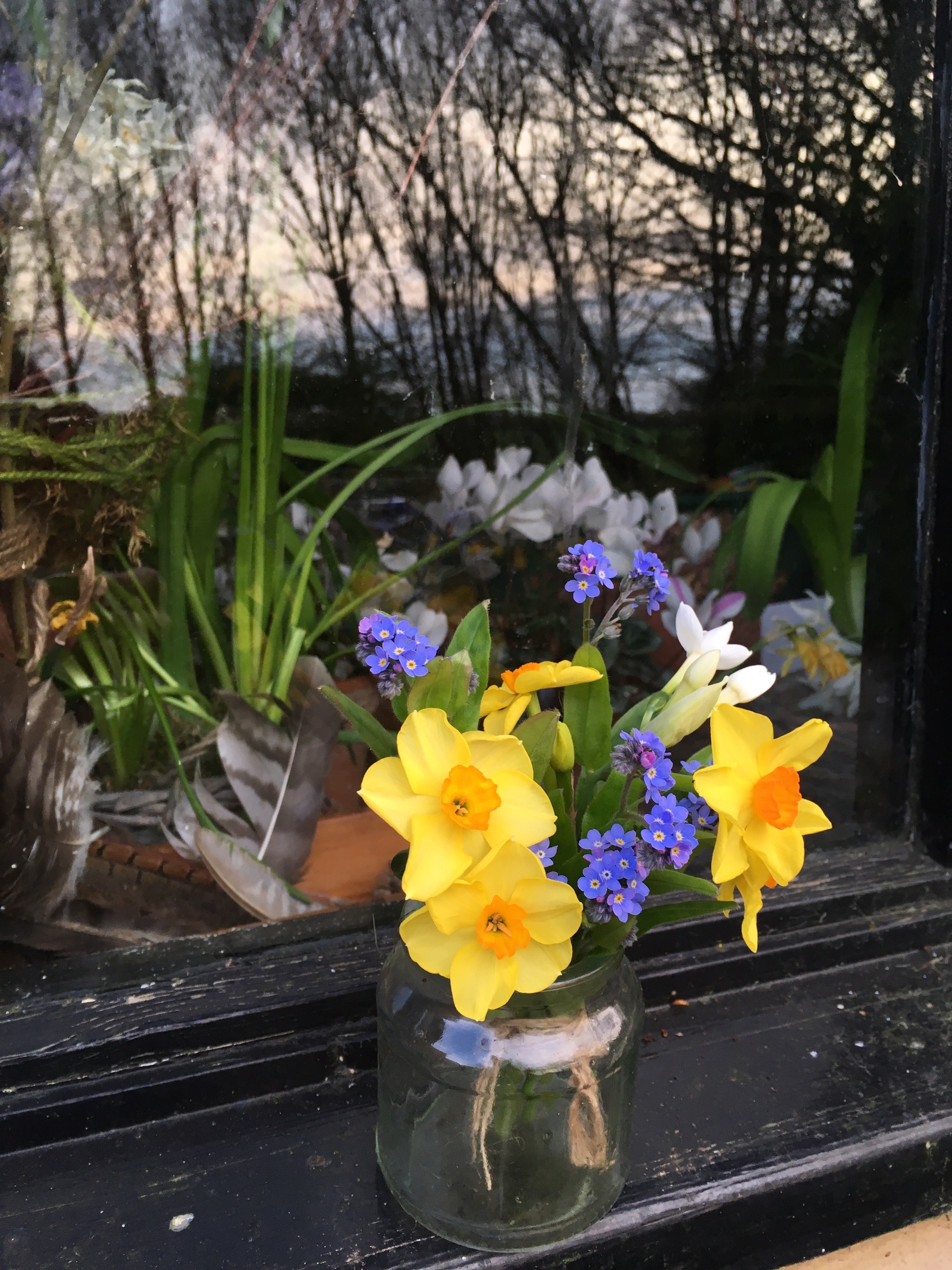
I love these cheerful jonquils on the potting shed windowsill. A perfect match for forget-me-nots, and just the right size for jam jar flowers. Trees by the pond show a reflection in the window. And the last of the paperwhites, hyacinths and cyclemen are pressing at the glass.
And I’ve got company again! Opposite the garden gate are these beauties, let out onto grass for the first time this year. They look on incredulous as I dig and weed.
What sights do you love to see in your garden in April? Do get in touch and let me know. Thanks to Helen for hosting this end of the month view. Click on the highlighted words for more information. They are not advertising or affiliate links.



















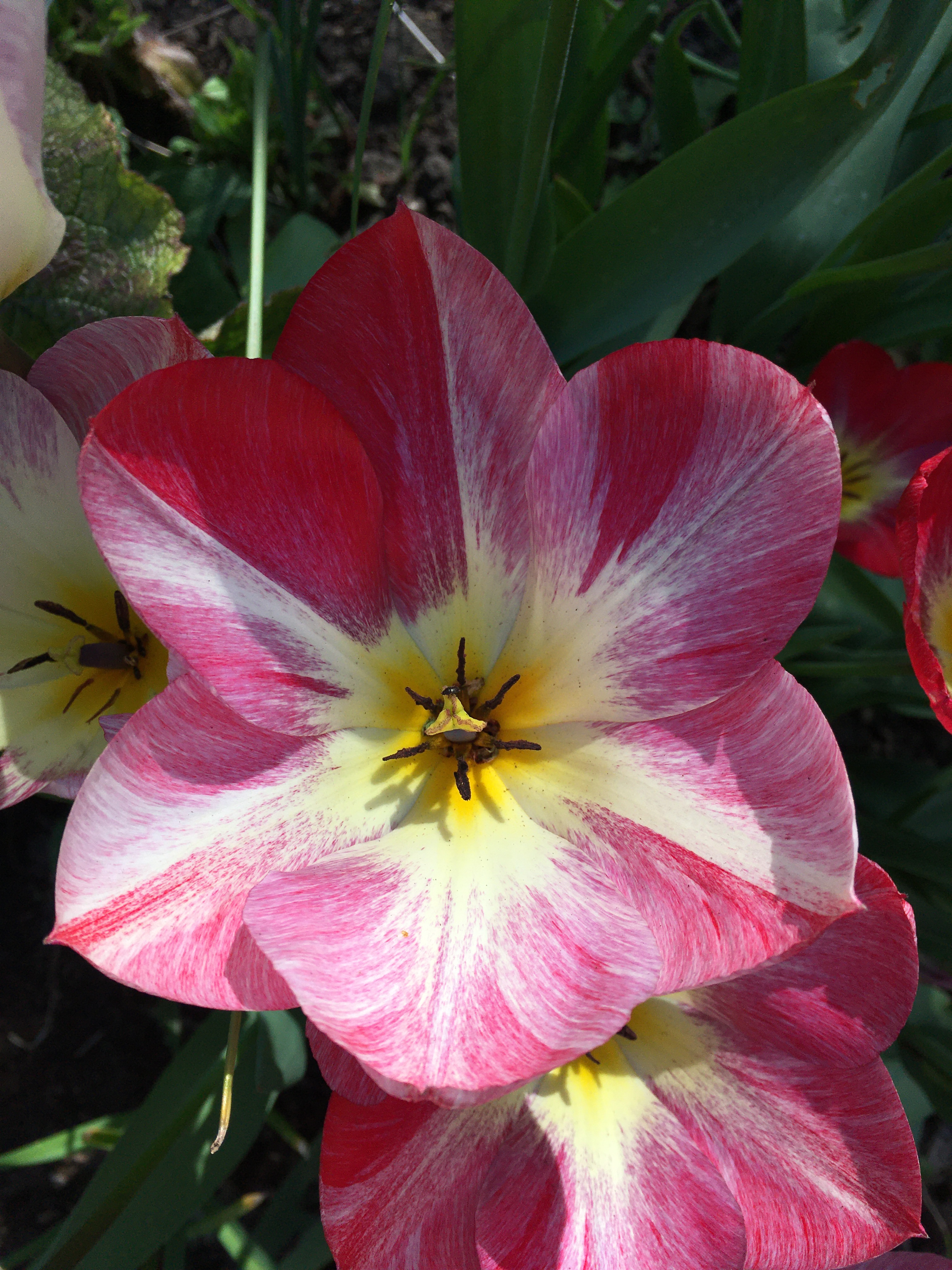


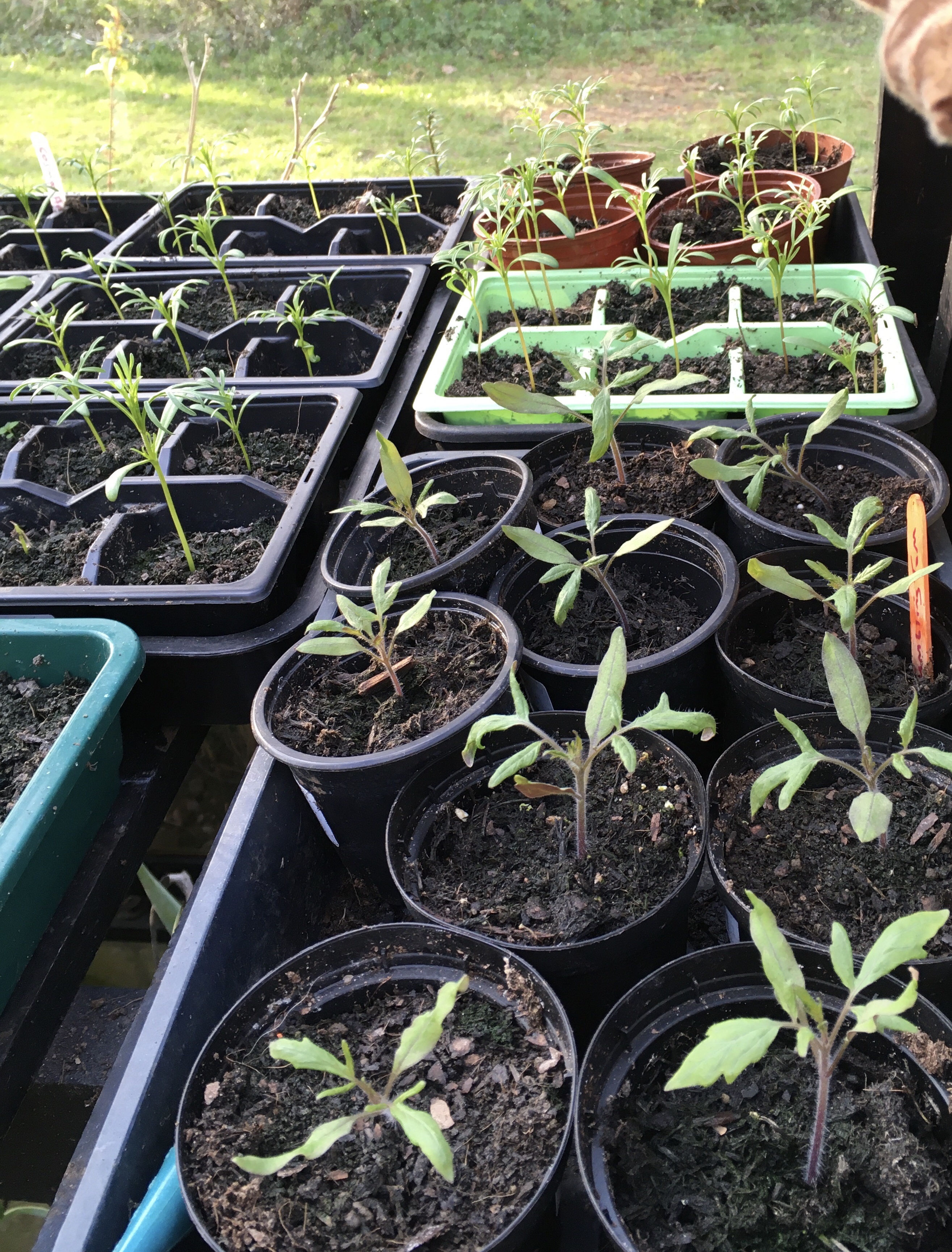


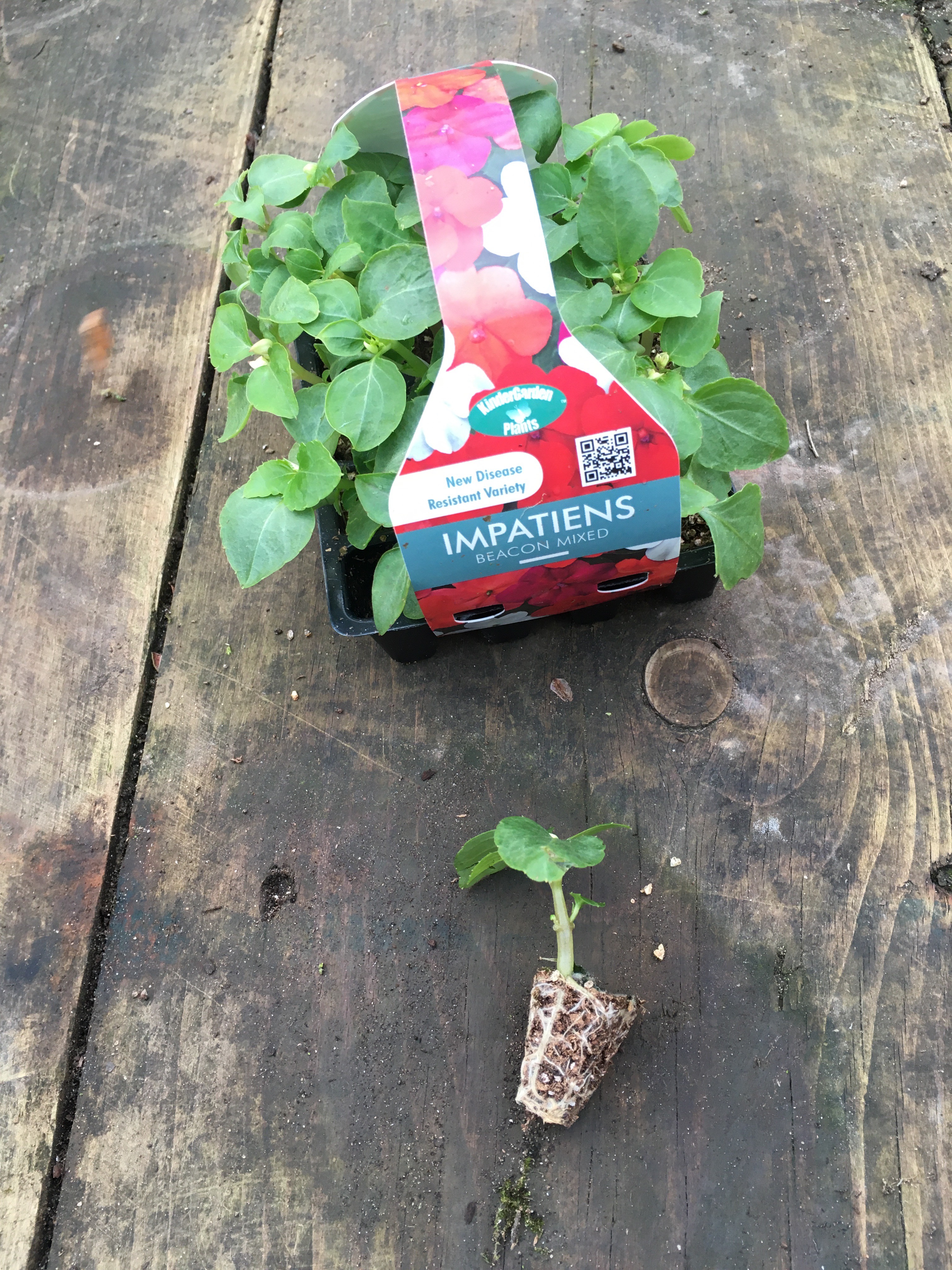

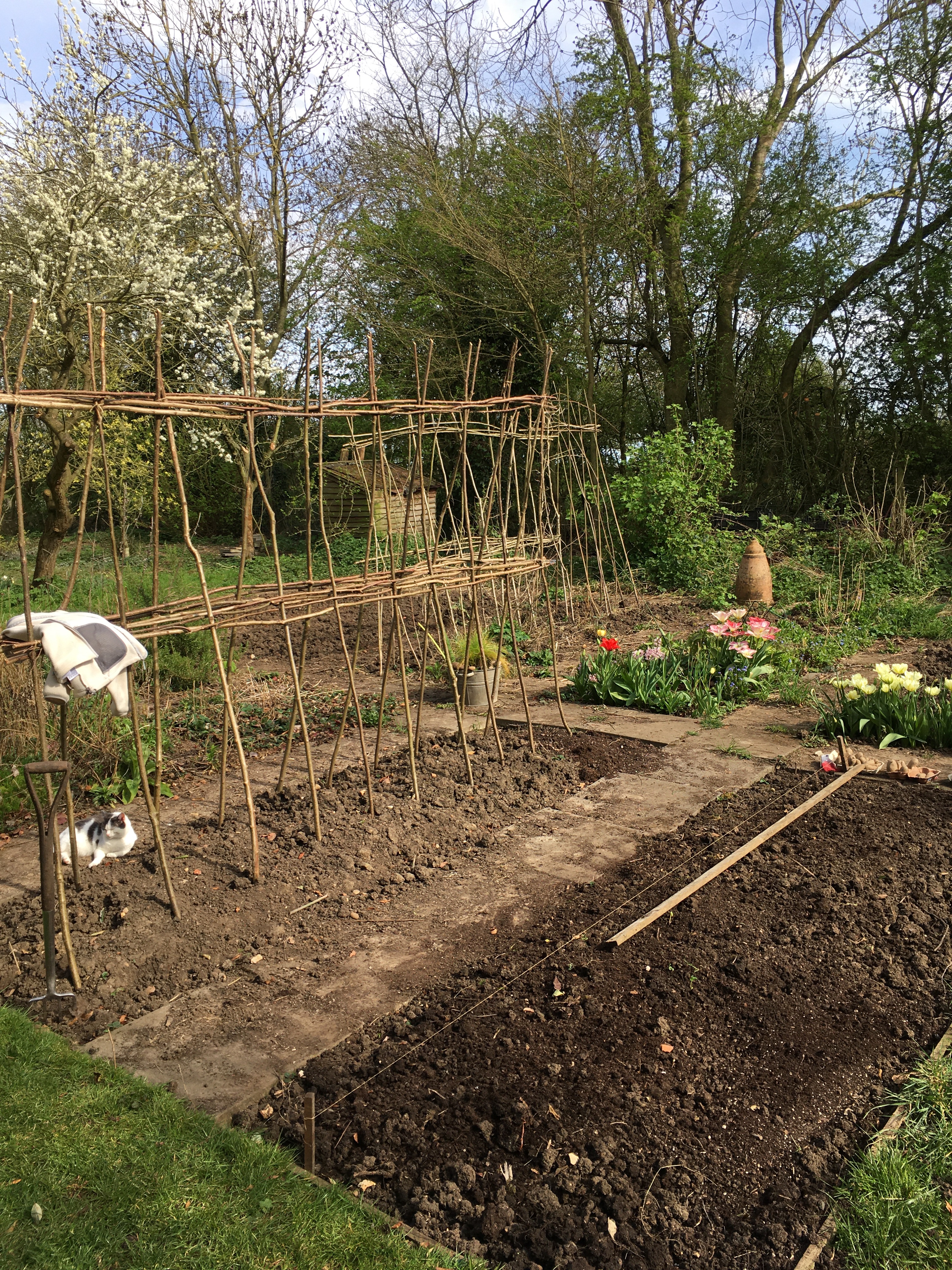
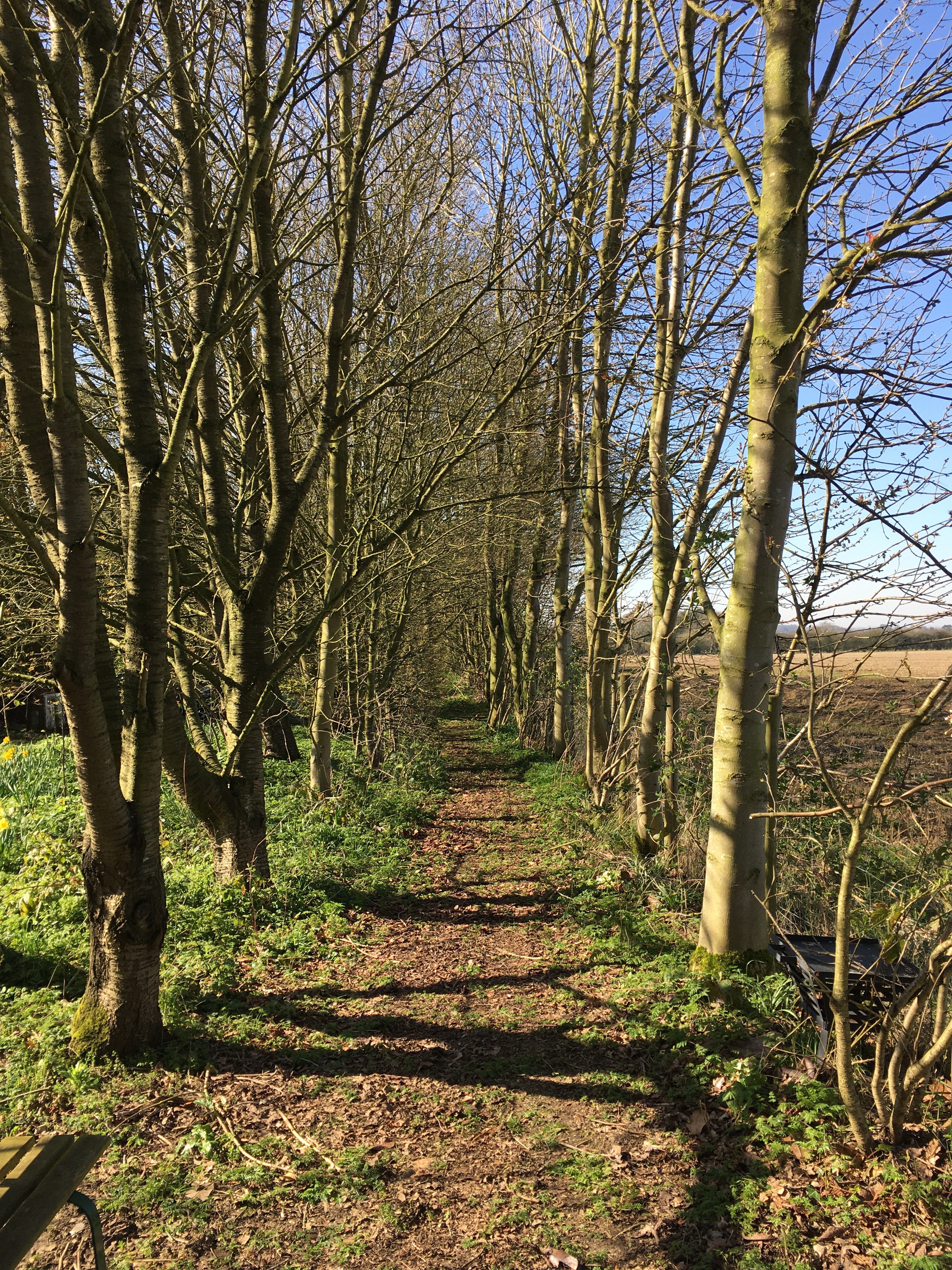


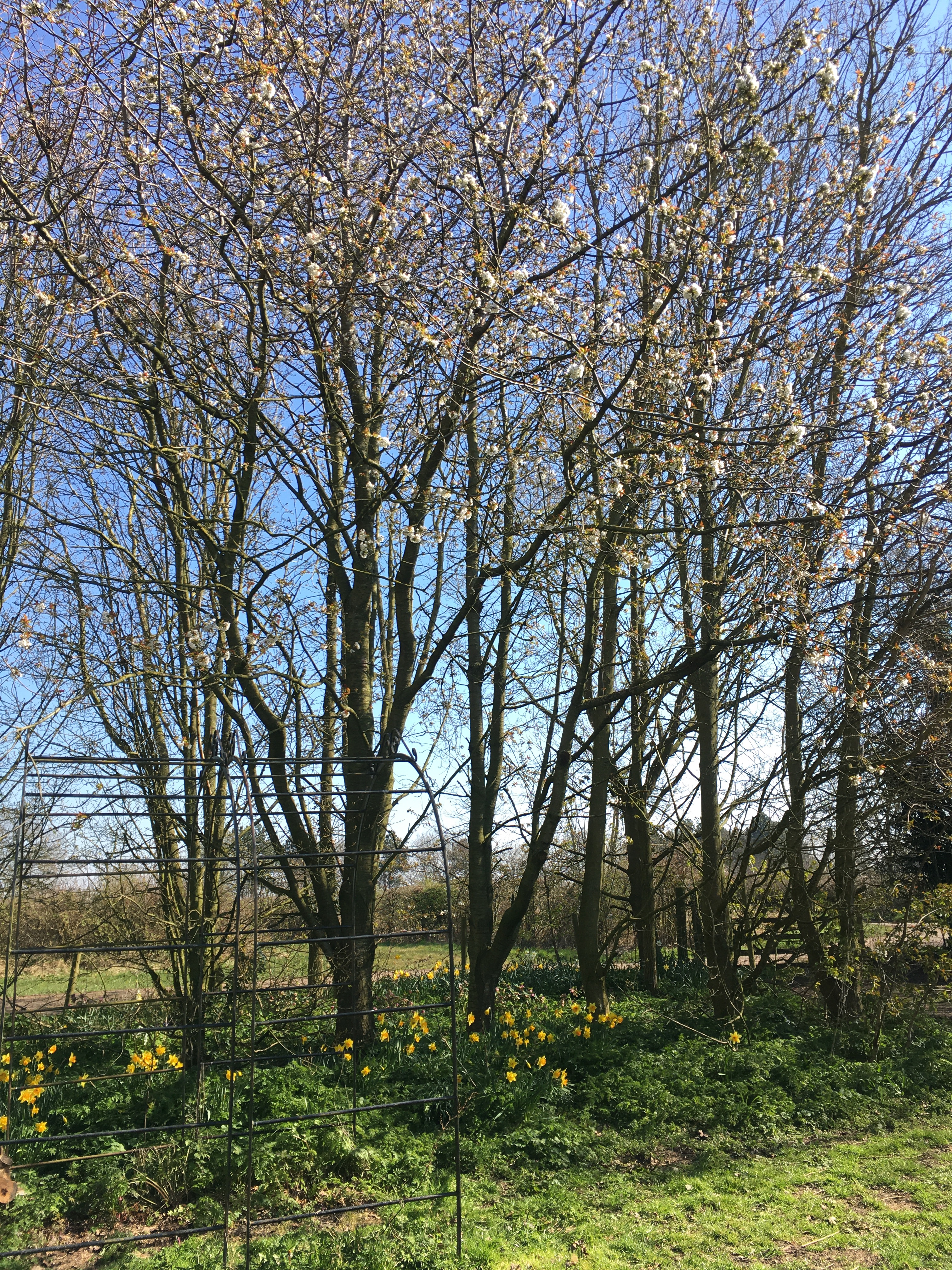
 My cut flower tulips are in bud. Tulips in the sunny front garden are already flowering early. I’ll cut a huge bunch of daffodils and tulips for the front windows. Vases of flowers will cheer up anyone passing by, even though they can’t call in to visit.


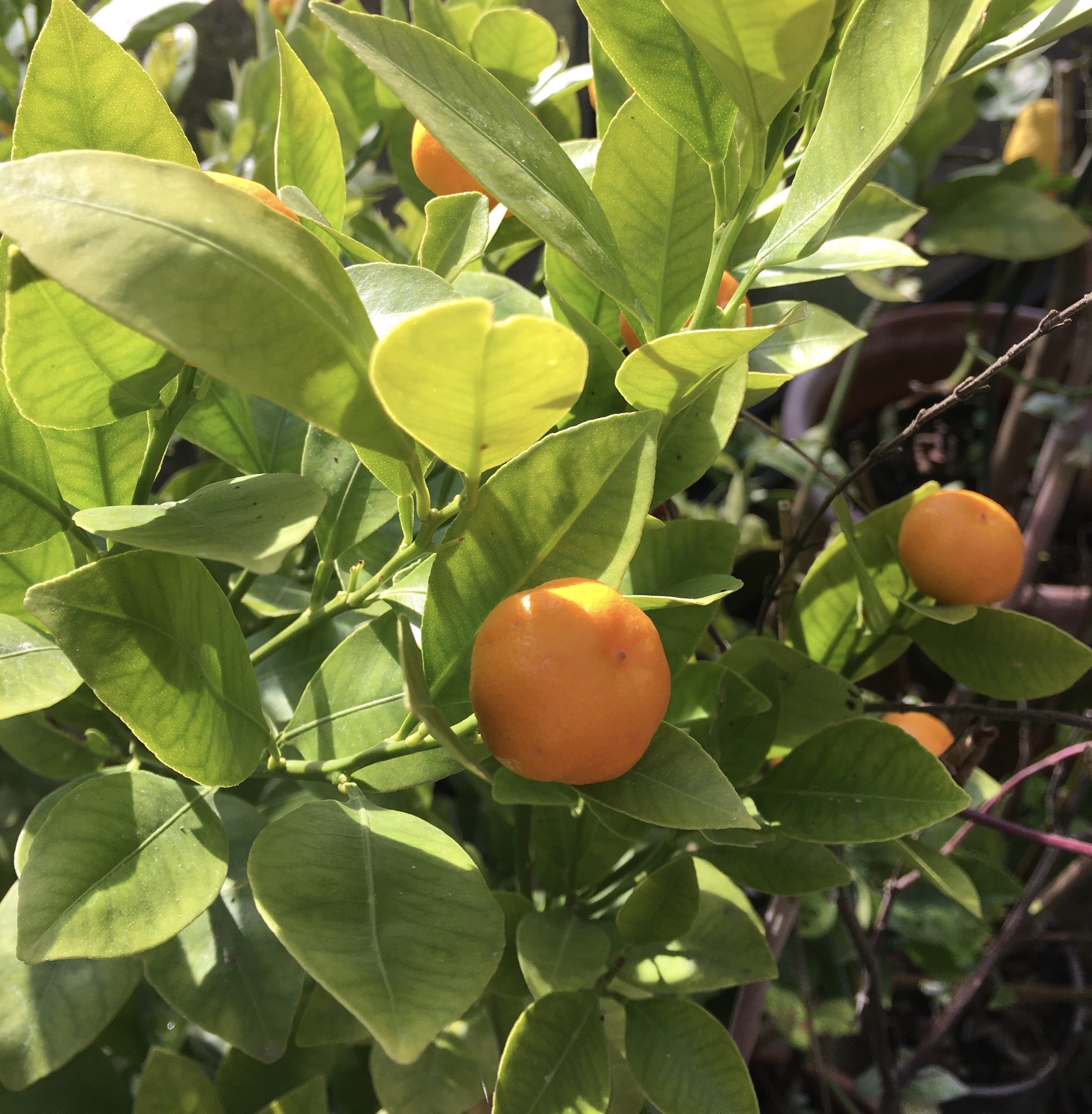

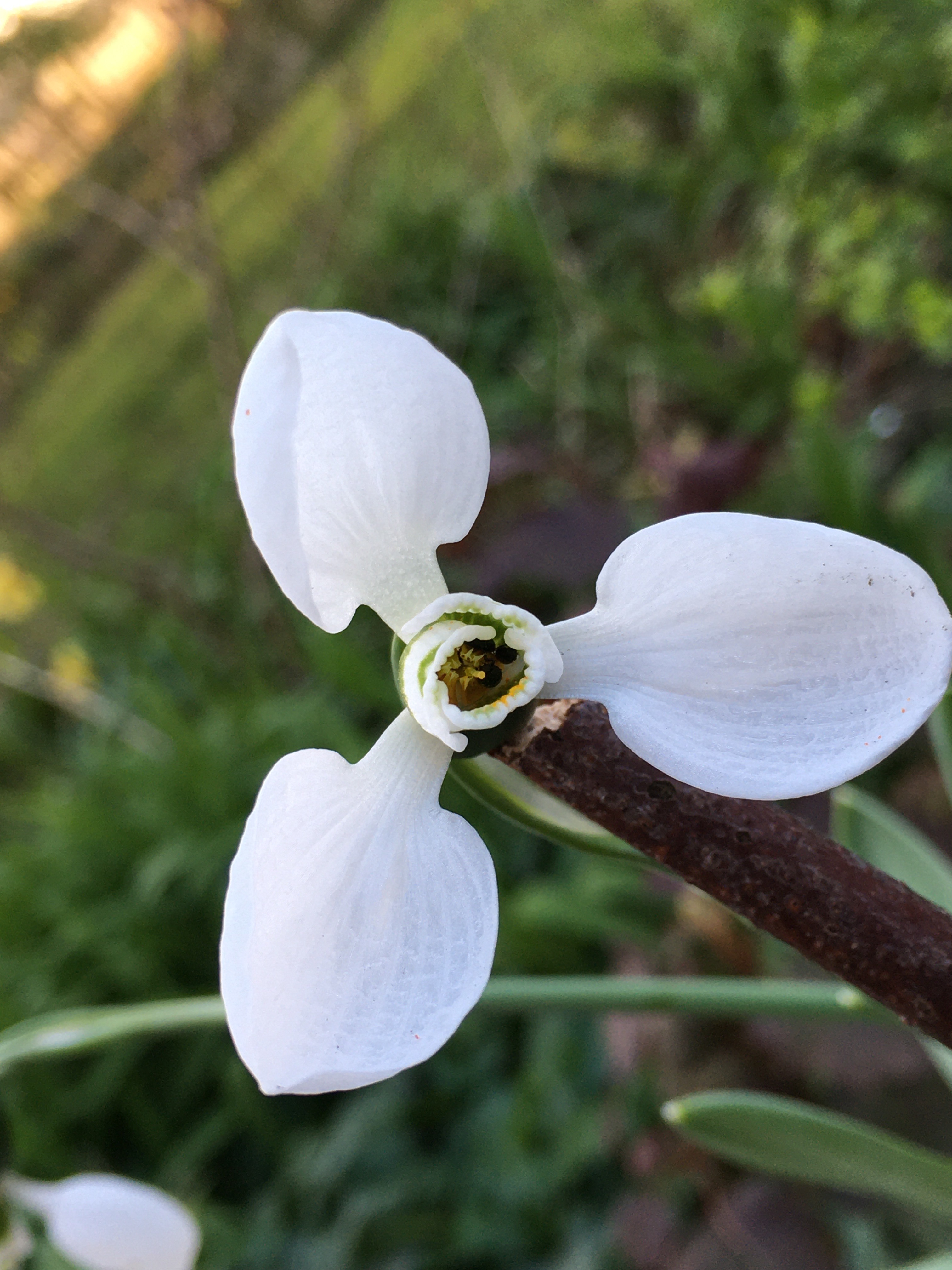






















 I hope you’ve enjoyed this slide show of my garden at the end of April and into the first week of May. Enjoy your Bank Holiday weekend. I’m hoping to spend some time just sitting in my favourite garden chair. If I can possibly ignore all the weeds growing rampant in the background!



















 Bramble Garden