#wordlesswednesday – BBC Gardeners’ World Live

Peony Gay Paree. From Kath’s Garden Plants display at the GWL show. Sumptuous colour. 


Of course, I ordered one from http://www.cathsgardenplants.co.uk. And brought home…. Peony Immaculee. Pure white double – and so scented. Dreamy.  Photo tomorrow. No internet tonight. Who else is growing peonies? 

Words and Pictures

THE GARDEN PHOTOGRAPHY WORKSHOP

Andrea Jones (Timber Press £17.99)

The postman arrived to find me wobbling at the top of a step ladder, peering through a piece of black cardboard with a square cut out of the middle. “I’m composing photos of my garden,” I heard myself saying. Oh dear. How mad does that sound! I rather sheepishly climbed down and made him a cup of tea while he chuckled away. 

Over tea and biscuits in the potting shed, I explained that my new photography workbook recommended using a piece of card to practise framing a view.  It works close up, as well as for landscape views. I just had to learn how to squint through the cut out square- while up a ladder, and while keeping my balance. The postman declared it could all end in tears.

Anyway, as he continued his round, laughing as usual, I went back to my new book. Andrea Jones has produced a fabulous masterclass giving hints and tips on the best ways of capturing the garden. 


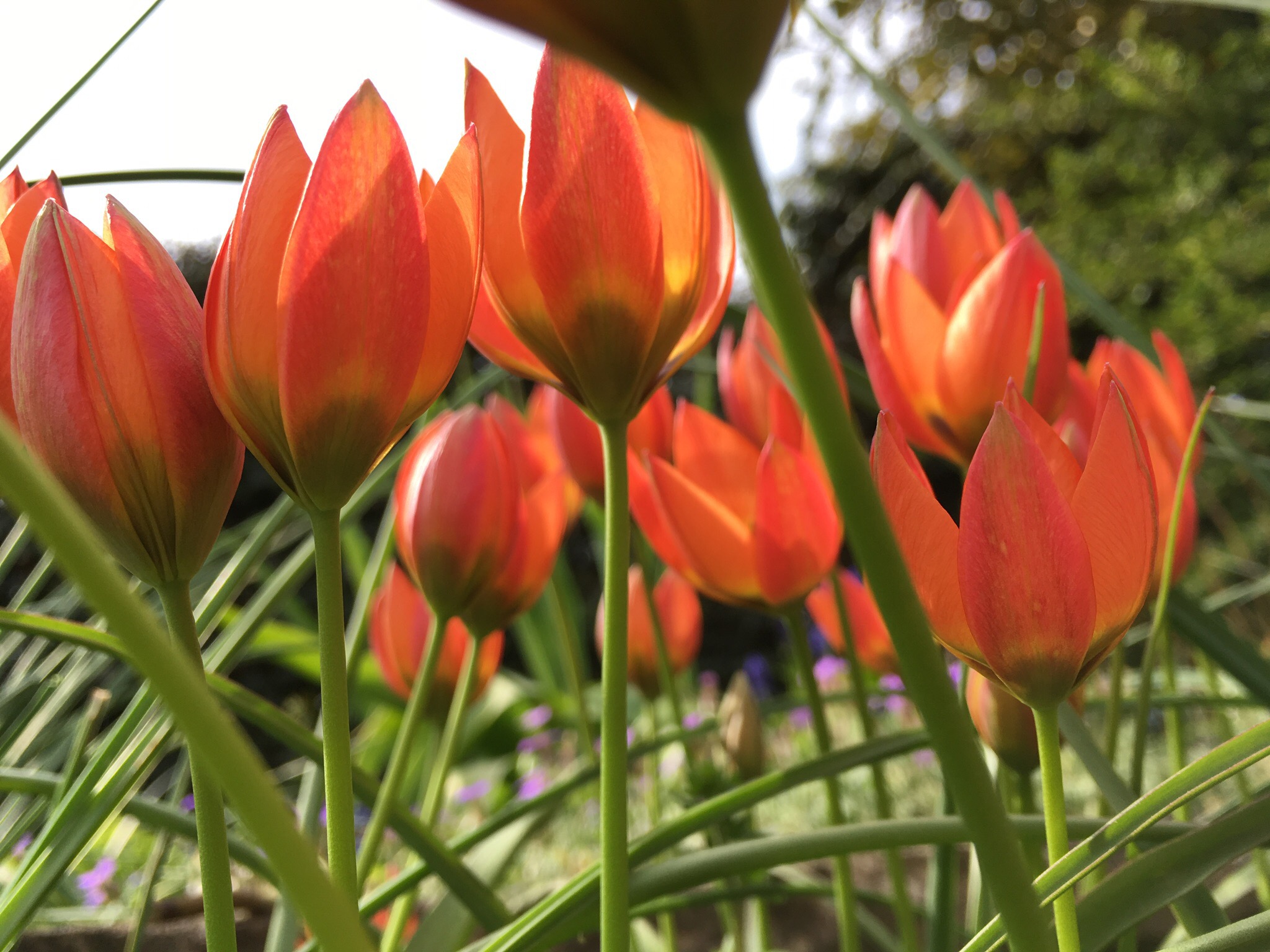
 Some of the ideas were a complete revelation. I had never heard of making a viewfinder to try out different angles. And I had never thought of looking down on my garden- or looking up.  Most of my photos are straight shots, taken from a standing position. So I tried it out on these tiny species rockery tulips. Looking down: 


Looking up. A worm’s-eye view. 

I haven’t quite got the best shot. They are so tiny, I needed to move some of the stems out of the way.  But it’s still an interesting view. I shall work on the idea. 

And here’s another photo I took from a standing position. A glorious garden at Burghley House near Stamford, open for the NGS scheme. 


And the worm’s-eye view, crouching down amongst the flowers: 

Over the past 25 years, Andrea has built an international reputation for her photography of landscapes, gardens and plants. Among the many awards, she was voted Photographer of the Year by her peers at the Garden Media Guild. Her website for more information is andreajones.co.uk

Andrea suggests making a plan of action- rather than just casually wandering  around the garden taking random shots (like I do now). Some of the best ideas I gathered from the book include:

Use a compass – a smart phone has a compass app- to get an idea of the light direction and potential shadows.

The best light for taking photos is the “golden hour” the first hour after the sun rises and the last hour of light before the sun sets. Use an online sunrise and sunset app to estimate the time. 

Tripods make a world of difference for taking good photos. But if, like me, you are using a camera phone, a small piece of tack or Plasticine can be used to position a phone temporarily on a secure surface to avoid camera shake. I tried this on top of the garden gate. 

If taking shots in bright, contrasty light, use your body to create a shadow and reduce the amount of light reaching the plant or subject of the photo.

Other headings in the book include: Photography in all Seasons, Photographing Pets and Wildlife, Working with Weather, Light, Macro, Micro, and Close-up, Essential Kit, and Catching the Moment. 

I am working my way through the rest of the book. There are 10 inspiring gardens featured with step-by-step lessons on observation, storytelling, composing, and editing. Andrea’s book helps you take your photography to another level, whether you are using a smart phone like me, or have the latest DSLR. It’s a master course on capturing the magic of gardens. 

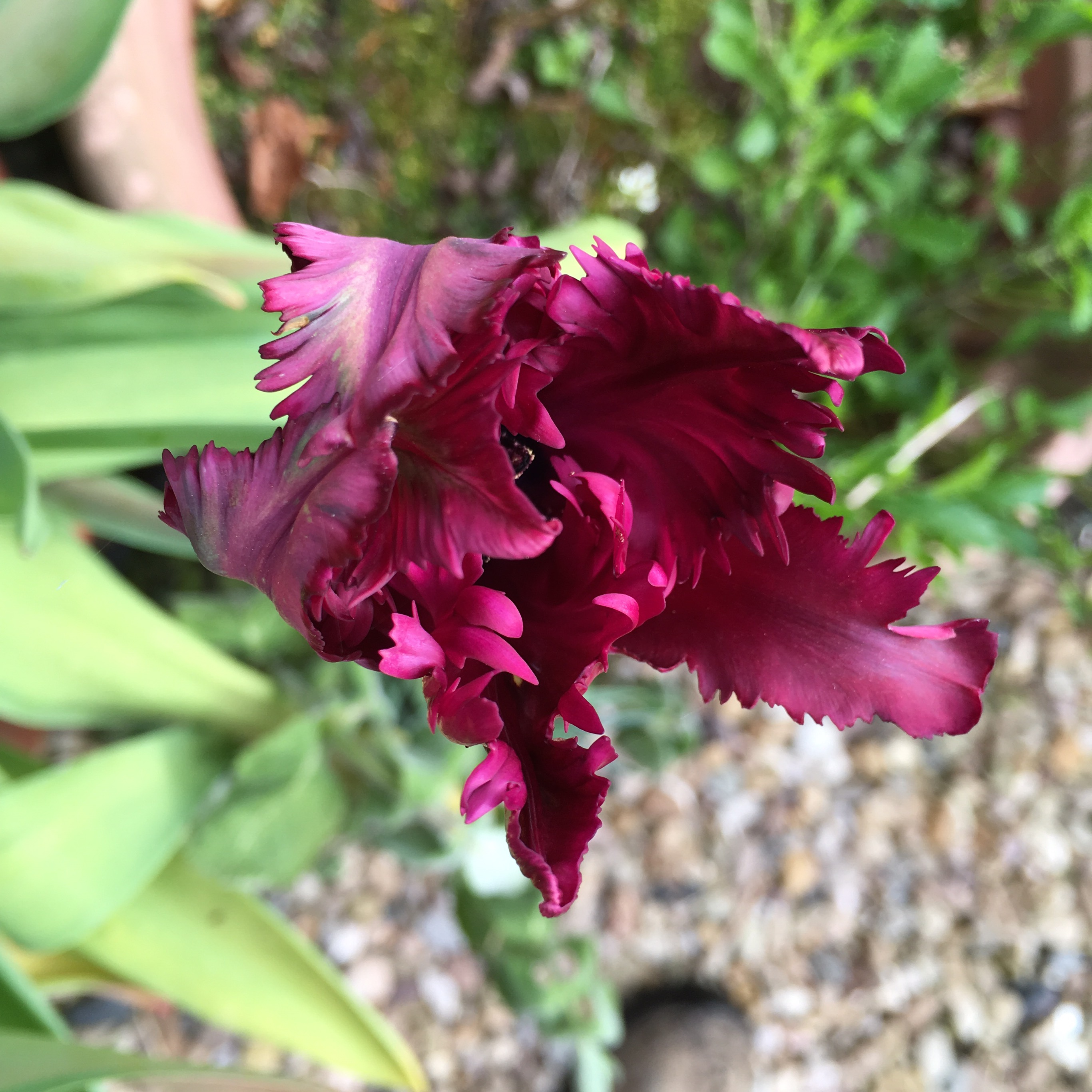
Unfurling. My Black Parrot Tulip. A favourite this spring. Except, my foot is also in the photo. Sigh. I still have some work to do then. 


Thank you to Timber Press  for supplying The Garden Photography Workshop-  in exchange for an honest review. I will leave you with my cat Grace who shares my home- and garden- and who sits very patiently while I practise my new photography skills. 


Do you enjoy taking photographs of your garden? 

#wordlesswednesday- honey in the garden

Glistening in the sunshine, Euphorbia Mellifera stopped me in my tracks today. Such a strong honey scent.  You feel you could almost spread it on toast! No wonder it is commonly called honey spurge. 


Grows in: sun/part shade up to 2m hight/spread

Flowers: March to May 

Soil: well drained

Hardiness: Needs winter protection. I throw fleece over the plant in January. 

Best for: making a dramatic statement. An architectural or structure plant. Stands out in the border. Evergreen leaves with red edge and white central stripe. 

Obtained from: crocus mail order

Warnings: not edible, despite the scent. Wear gloves as the milky sap is a potential irritant. 

What’s looking good in your garden today? 

#wordlesswednesday #tulip #love

Finola. So graceful. Haven’t the tulips been wonderful this year. Such a joy at the end of a long, cold dark winter.


I love the creamy buds and green feathering on this double late, or peony-flowered tulip. We are all growing this variety in place of Angelique. Finola seems to be a stronger tulip. Grows to 50cm high and flowers in April and May. I’ve planted mine in a sea of blue forget-me-nots. Brunnera  would be a good alternative if you are worried about the forget-me-nots seeding about.  Good quality tulips  and bulbs of all kinds are available from Bloms Bulbs and Peter Nyssen.

What tulips are you enjoying the most at the moment? 

End of the Month View 

Everything in my garden has suddenly gone whoosh! I’m running round the plot at breakfast, lunch and tea break – finding flowers that I’m certain were not there earlier in the day. Plants just seem to pop up overnight.


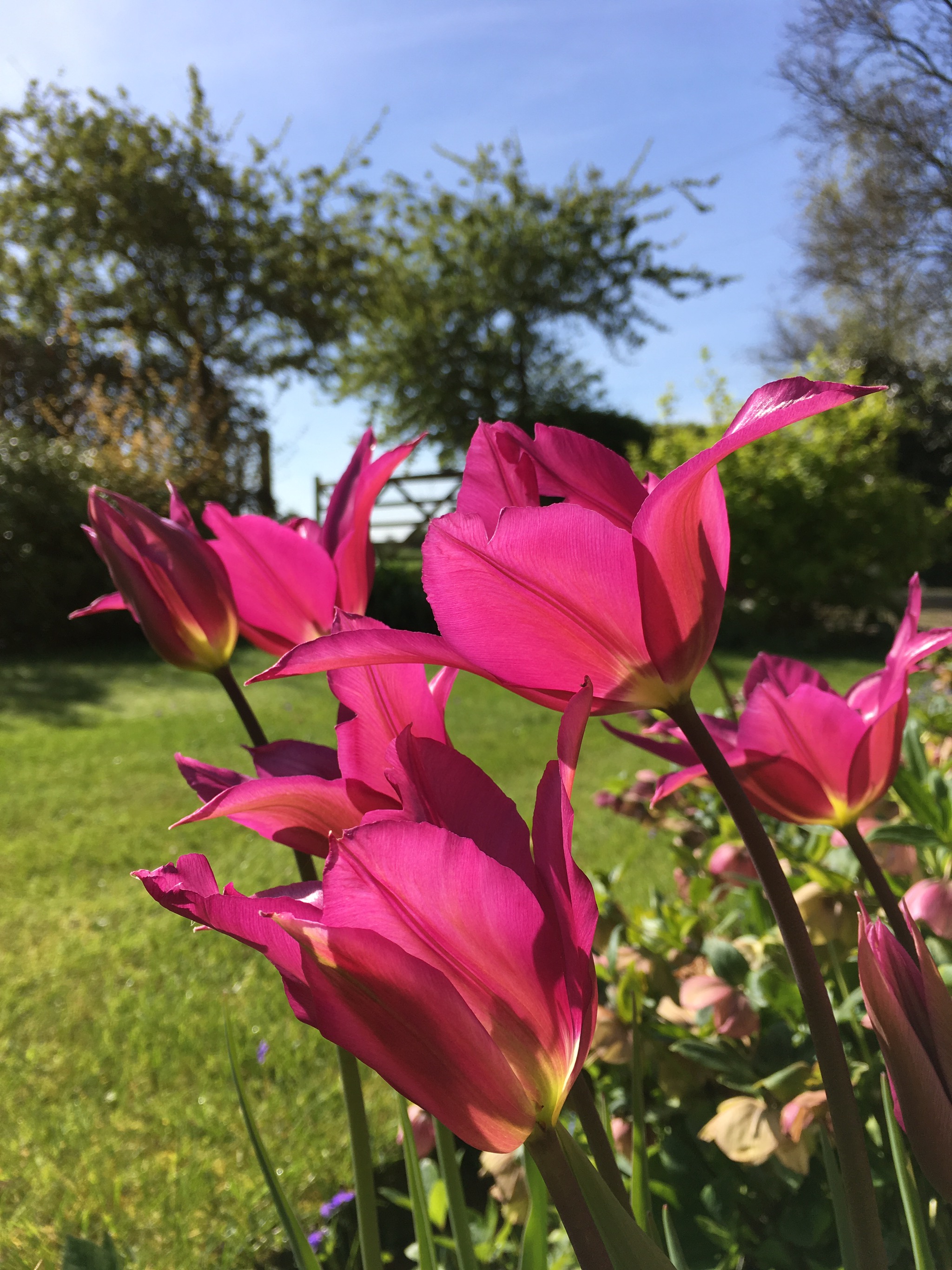
My favourite tulip, Burgundy, was only in bud for a day or two. Then by lunchtime, the flower was wide open. When the wind blows, they look like ribbons of silk scarves, dancing in the breeze. Lily-flower tulips have a certain elegance and movement. Much better than their stiff, cottage cousins, I think.


 Hellebores make perfect ground cover in fading shades of purple and pink. As a contrast there’s tiny forget-me-nots in the borders, and the lawn is edged with a frill of scented wild violets. Blue and cerise pink make very happy companions.


Looking up, banks of cherries make a white cloud over the wild garden. There will be lots of fruit for the blackbirds- and us. 


Hasn’t it been a fabulous year for blossom. Cold temperatures in January, followed by sunny, mild days in March, mean we’ve had the best year for cherries and magnolias for a long time. My planting is the wild cherry Prunus Avium. Simply beautiful- all year round. 


If we don’t have any frost, there will be a record plum harvest. There’s enough to pick for the house too. Blossom on the breakfast table and by my bedside. One of the joys of spring. 


Pieris  Flaming Silver is planted in an enormous pot. It wouldn’t like my heavy clay soil, so I cheat with containers and ericaceous compost. It’s beautiful all year round with  white heather, bell-like flowers and red new growth. 


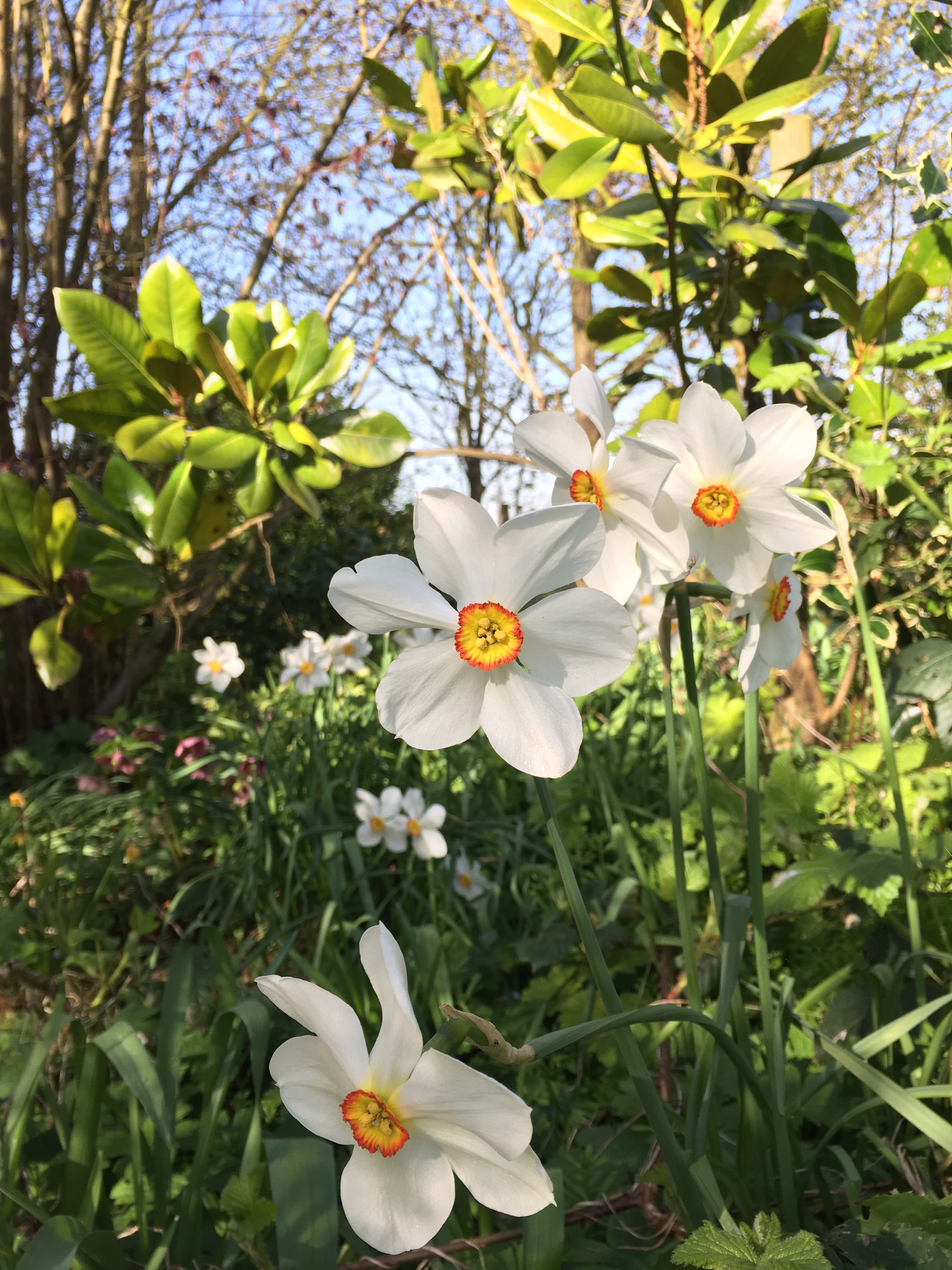
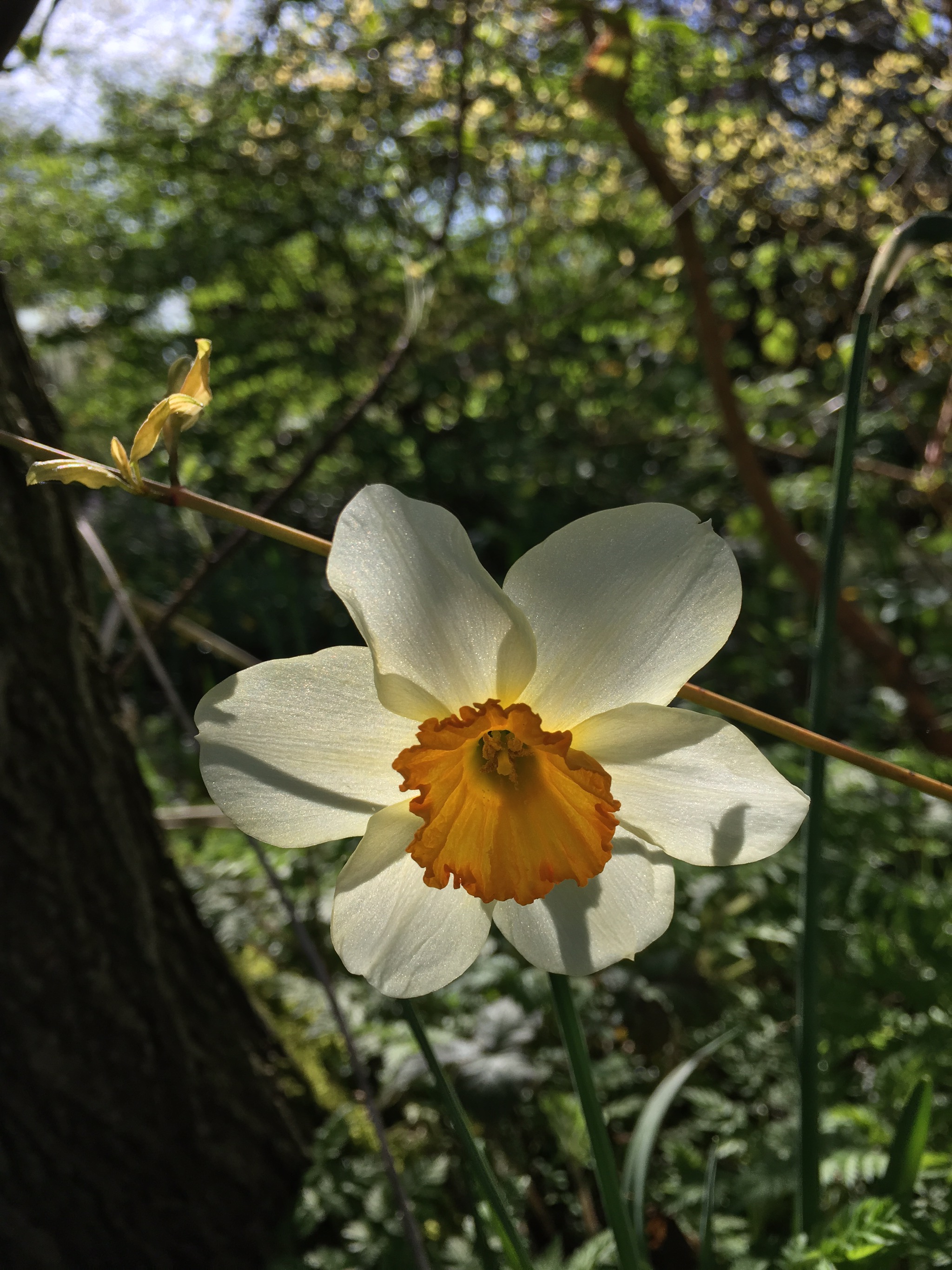
My favourite narcissi is white Pheasant’s Eye. Reliably comes back every year, and naturalises in borders and under trees. 


White, highly-scented Narcissi Geranium  is another glorious treat. My children used to call it the poached egg flower. 


Brightening up a dark corner- Devon Red. The petals look sugar-coated in sunshine. A hardy flower which copes with hail and high winds in my garden. 


Narcissus Ice Follies, viewed from the summerhouse, replace the snowdrops and wild anemones. Cowparsley will soon compete with native bluebells. It’s an ever changing scene. 

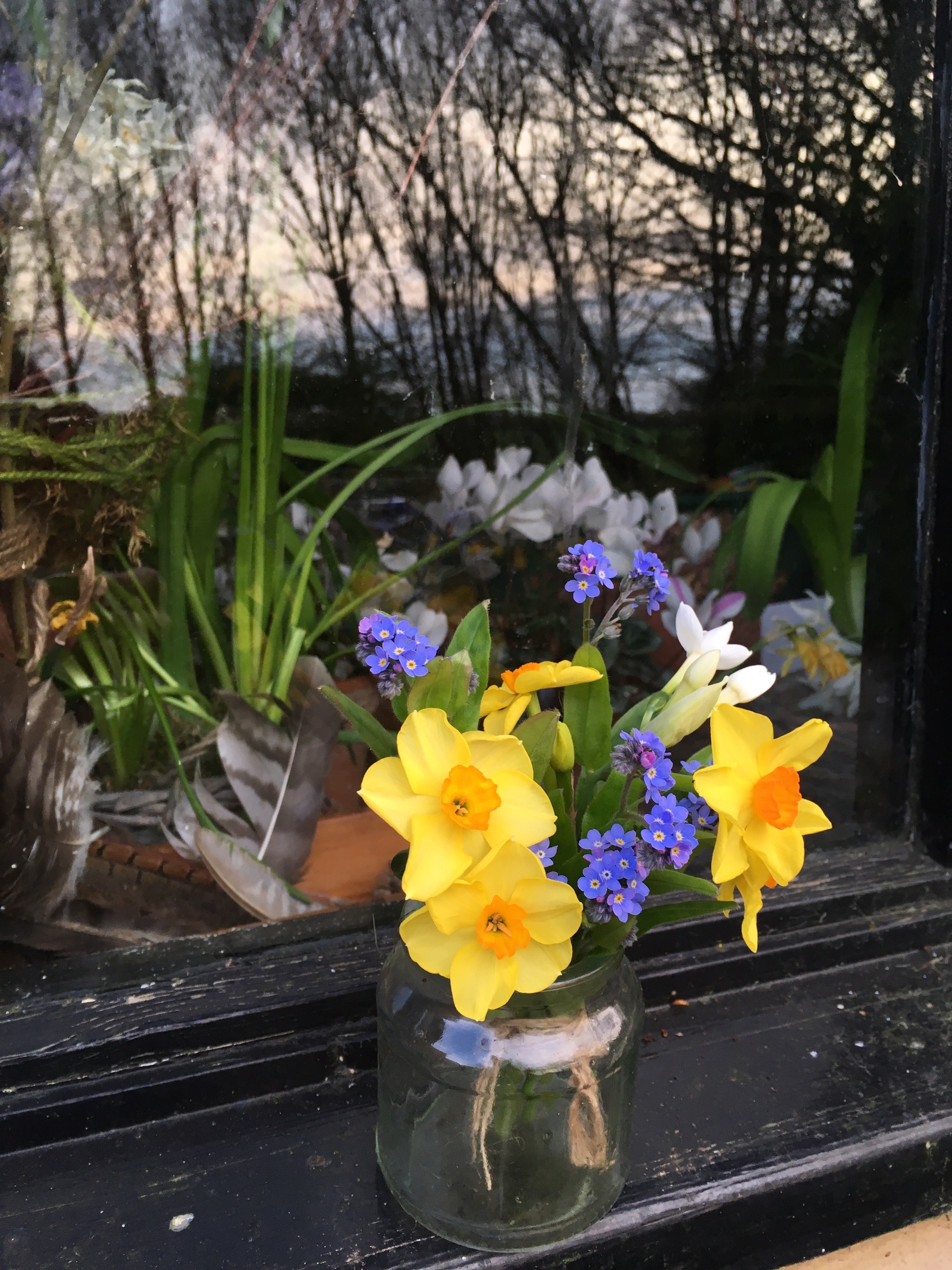
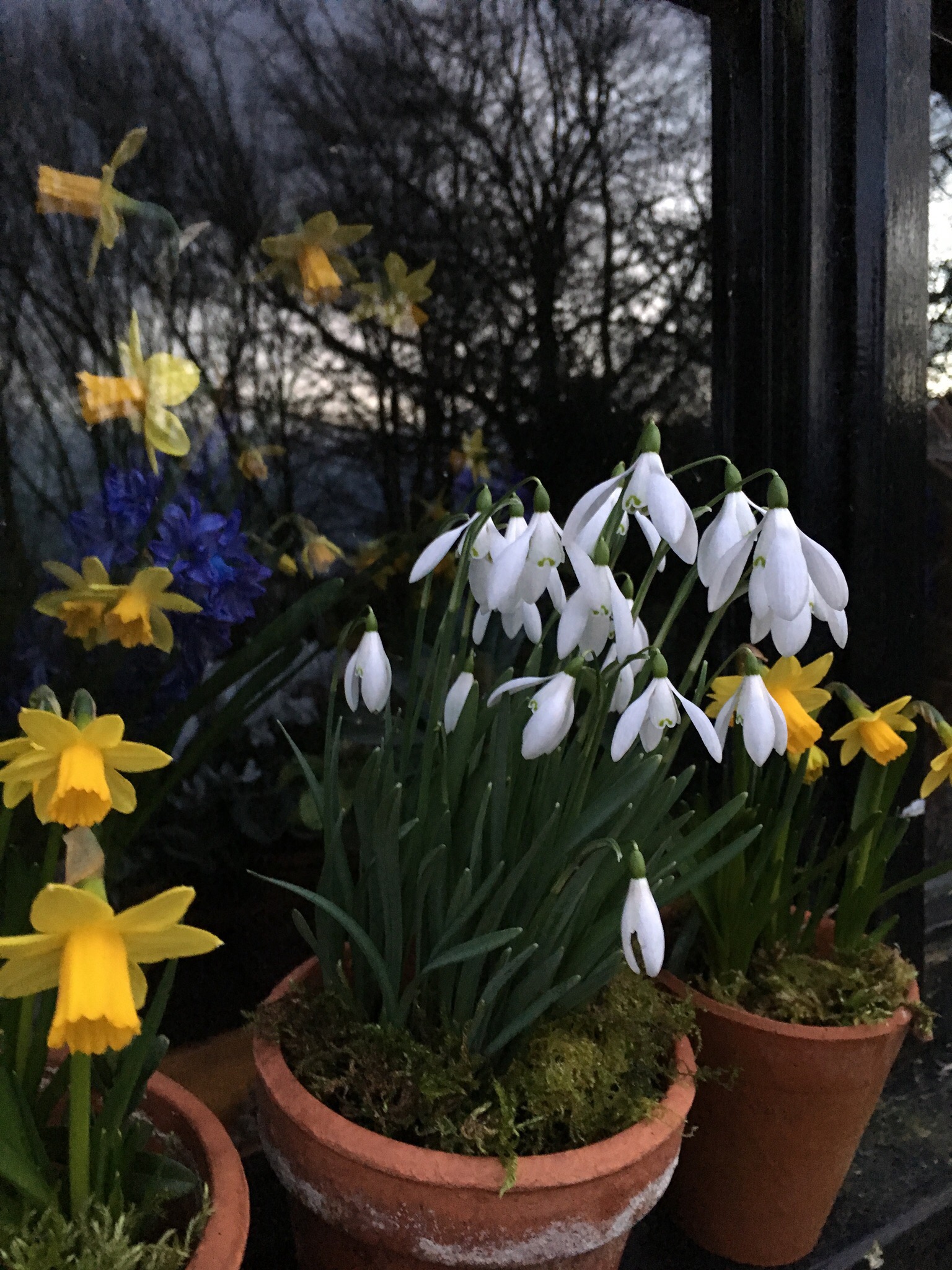
I love these cheerful jonquils on the potting shed windowsill. A perfect match for forget-me-nots, and just the right size for jam jar flowers. Trees by the pond show a reflection in the window. And the last of the paperwhites, hyacinths and cyclemen are pressing at the glass. 

And I’ve got company again! Opposite the garden gate are these beauties, let out onto grass for the first time this year. They look on incredulous as I dig and weed. 

What sights do you love to see in your garden in April? Do get in touch and let me know. Thanks to Helen for hosting this end of the month view. Click on the highlighted words for more information. They are not advertising or affiliate links. 

Wordlesswednesday 

Pulsatilla vulgaris Rose Bells joining the spring parade. Also known as Pasque flower. Love the hairy buds  and leaves. So much Pollen. Camera phone photo. 

In a Vase on Monday- the first day of spring 

If you could see me today you would notice a huge smile. Not only is it the first day of spring- the days are getting noticeably lighter- but it is also my youngest daughter’s birthday.

So for this happy day, I have dashed around the garden picking spring flowers and blossom to fill the house with colour and scent. I always put cherry blossom in every room  for my daughter’s special day. There’s little pots of scented violets and wild primroses on all the windowsills. And for the front door I’ve made a willow kokedama bouquet.


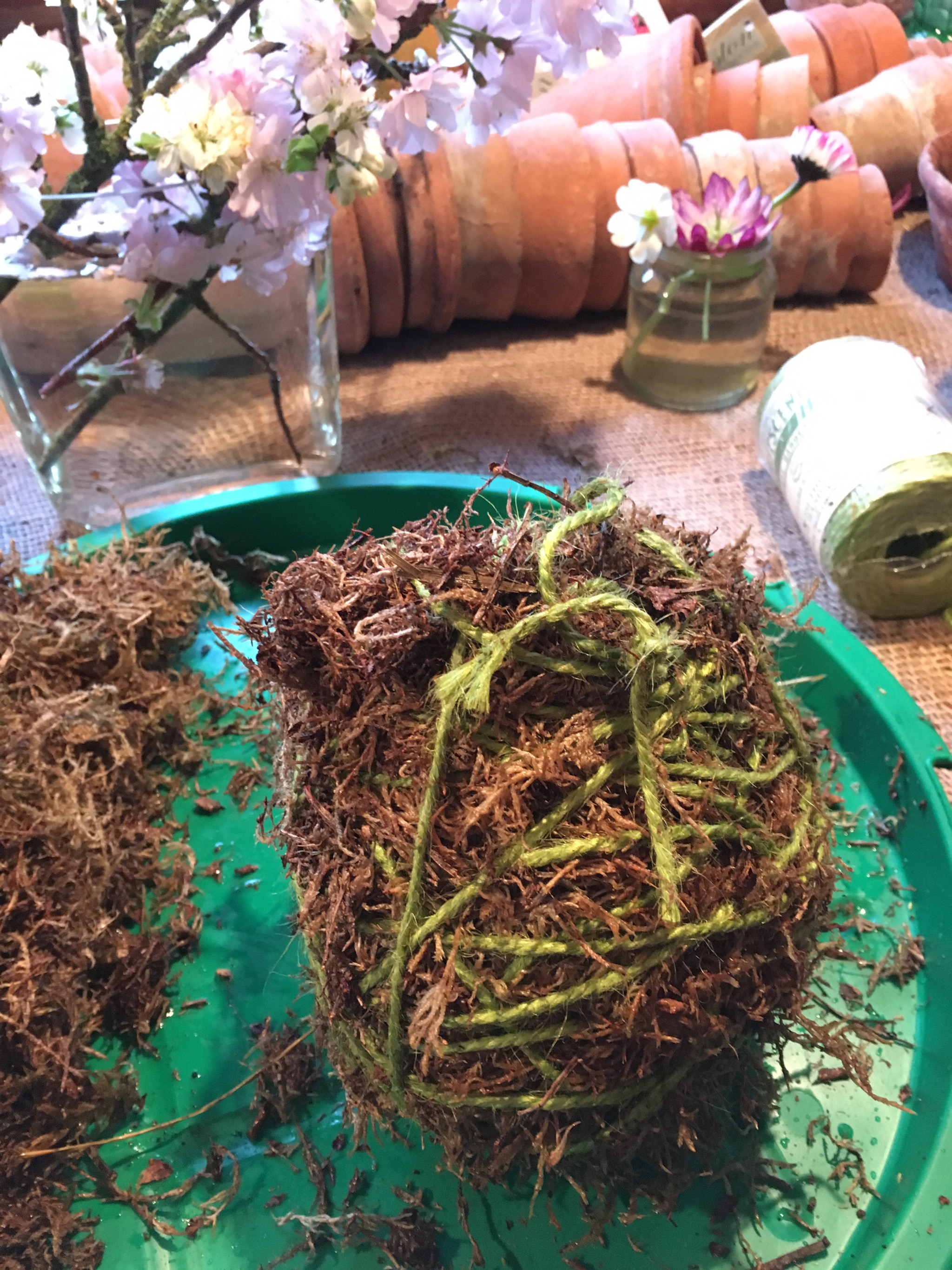
The “ingredients” for the kokedama comprise a willow heart I made last winter, a cut down plastic juice bottle, some moss from the garden and some twine. I spotted this  idea at  Easton Walled Gardens last month. Snowdops wrapped in moss and twine made strikingly beautiful displays. I made a note of how they were put together.


Here’s my ingredients in the potting shed. I used a Robinsons juice bottle cut down to 10cm for a vase and some lime green Nutscene heritage twine. 


I made a nest around the vase with wet moss, and simply wrapped back and forth until the moss was secured. It was much easier than I expected, and only took a few minutes to make. The vase was easily tied to the front of the willow heart. 


The mossy vase was packed with winter- flowering Algerian Iris Unguicularis, hellebore Ashwood hybrids, pulmonaria, comfrey, fogetmenot, Prunus Kojo no Mai and vinca. 


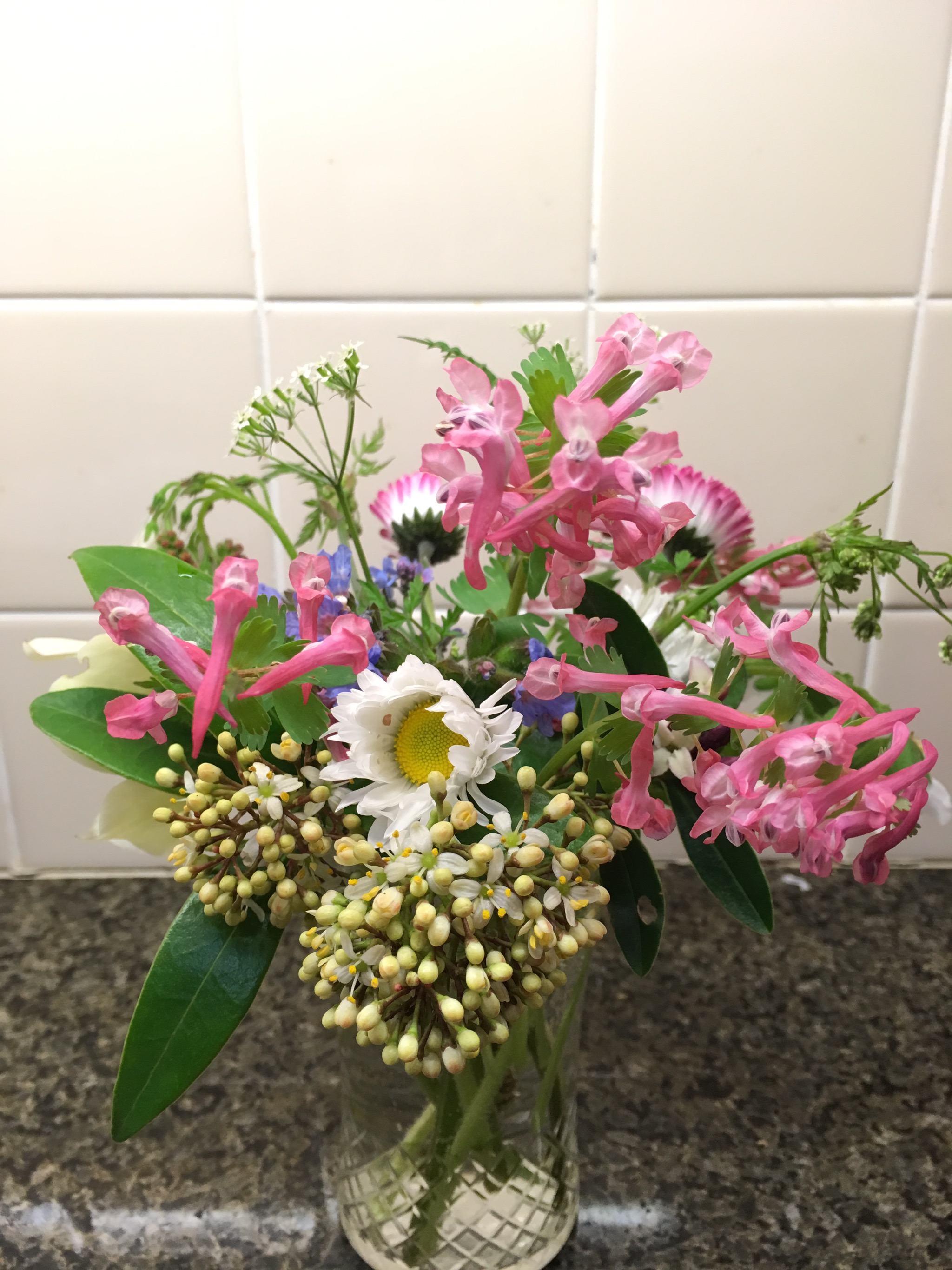
For the dining table posies, delicate Victorian glasses  were filled with  Sissinghurst white pulmonaria, bellis daisies, comfrey, cowparsley, and pink corydalis. 

Ŷ

And lots of glass jars of  pink and white blossom. 


You can never have too much blossom…..


Do you like making flower arrangements for special occasions at home?

 Many thanks to Cathy at Rambling in the Garden for hosting this meme. Each week Cathy encourages us to go out into our gardens and find material for In a Vase on Monday. Cathy is celebrating her 5th anniversary of blogging today. She was one of the first people I followed on here, and I’ve really appreciated her helpful support and advice from the start. Finding friends and sharing ideas and information is for me, the best reason for joining in. 

My Garden Right Now

Joining in with Michelle and her new meme celebrating what’s in flower in the garden right now.

img_9982
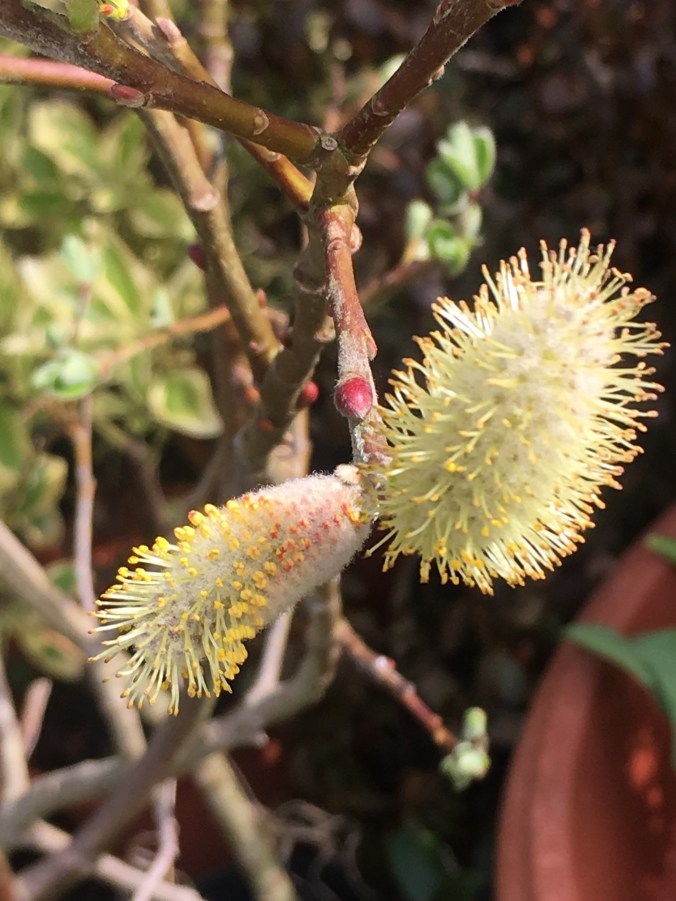
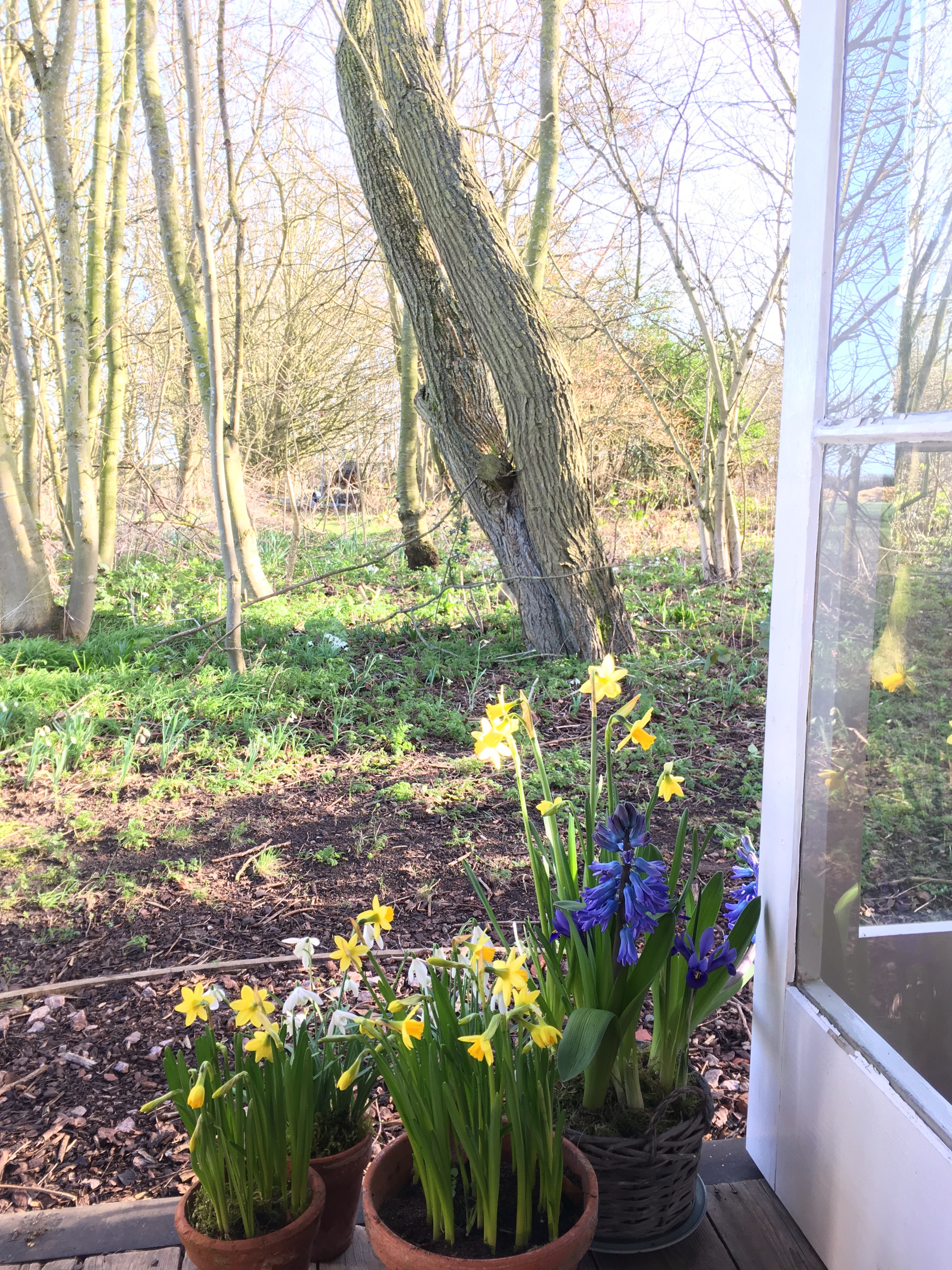
It’s been sunny and warm enough on a couple of days to open the summerhouse doors. Grace cat has appreciated the warm weather. I’ve propped up the blue hyacinths with hazel twigs. Catkins are a perfect match for spring bulbs. Tete a tete daffodils were planted in pots in October and put behind the pottingshed out of sight. Luckily I looked the other day, and they were in full flower. A week or two earlier than last year.


This is the current view looking out from the summerhouse. The mini-wood will soon be bursting into leaf.  Snowdrops bought at Hodsock Priory are starting to spread. There’s a patch of wild garlic I shall be harvesting soon to make a delicious soup.


It only takes a few years for the patches of snowdrops to bulk up. I will be dividing these in the next week or so. I will dig up a clump, break them into half, put half back in the planting hole and spread the others about, incorporating some grit and leafmould in the planting pockets.


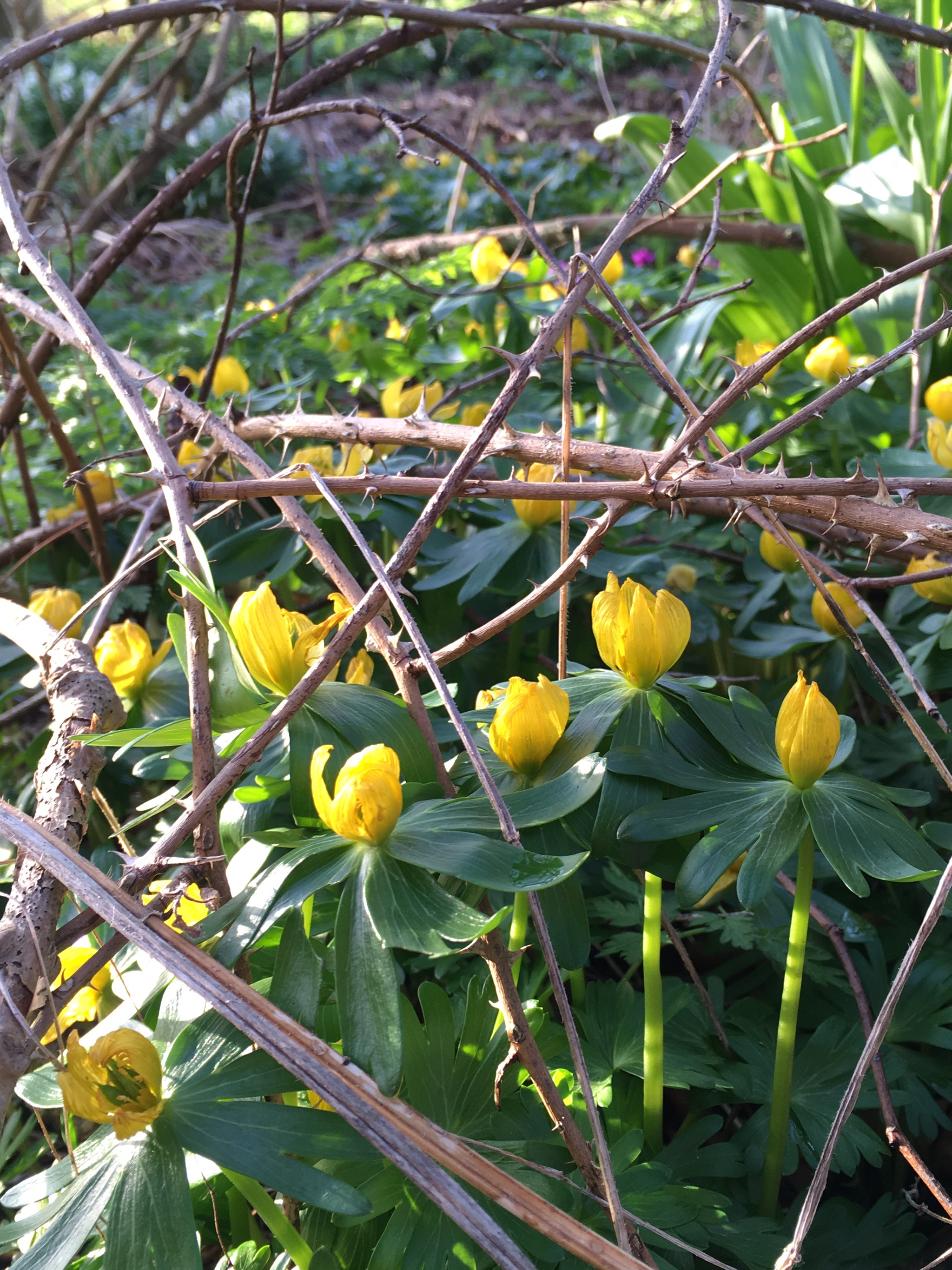
I’m saying goodbye to the aconite flowers for another year. Finally, after years of trying, they have taken off and are spreading across the wild garden. Incorporating lots of leafmould each year seems to be the answer. Plus patience. They really do only grow where they want to. I very nearly gave up to be honest.


At the side of the pottingshed there’s another wild garden where snowdrops and tiny  crocus   are making themselves at home. I love looking out of the side windows at this view.


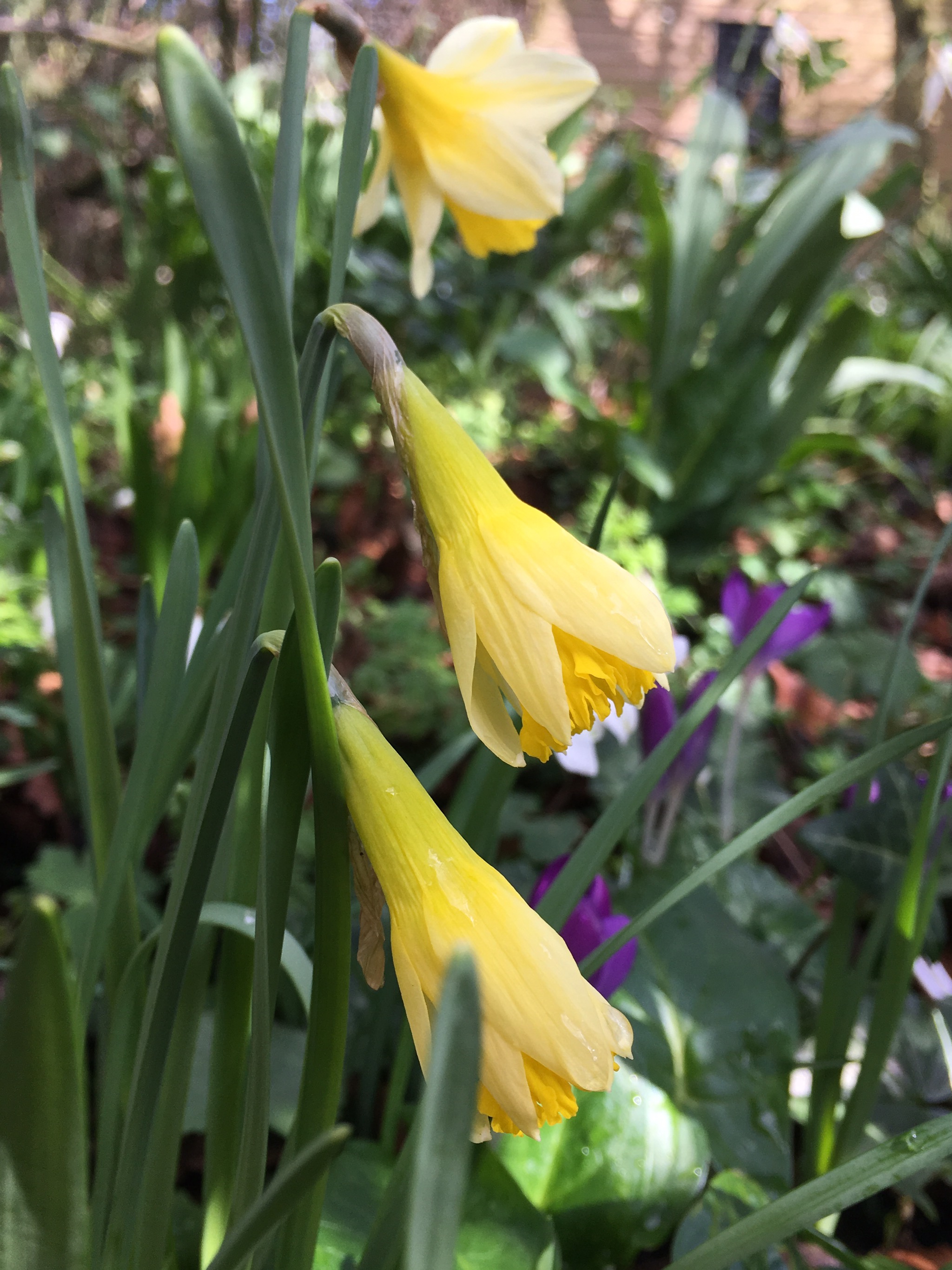
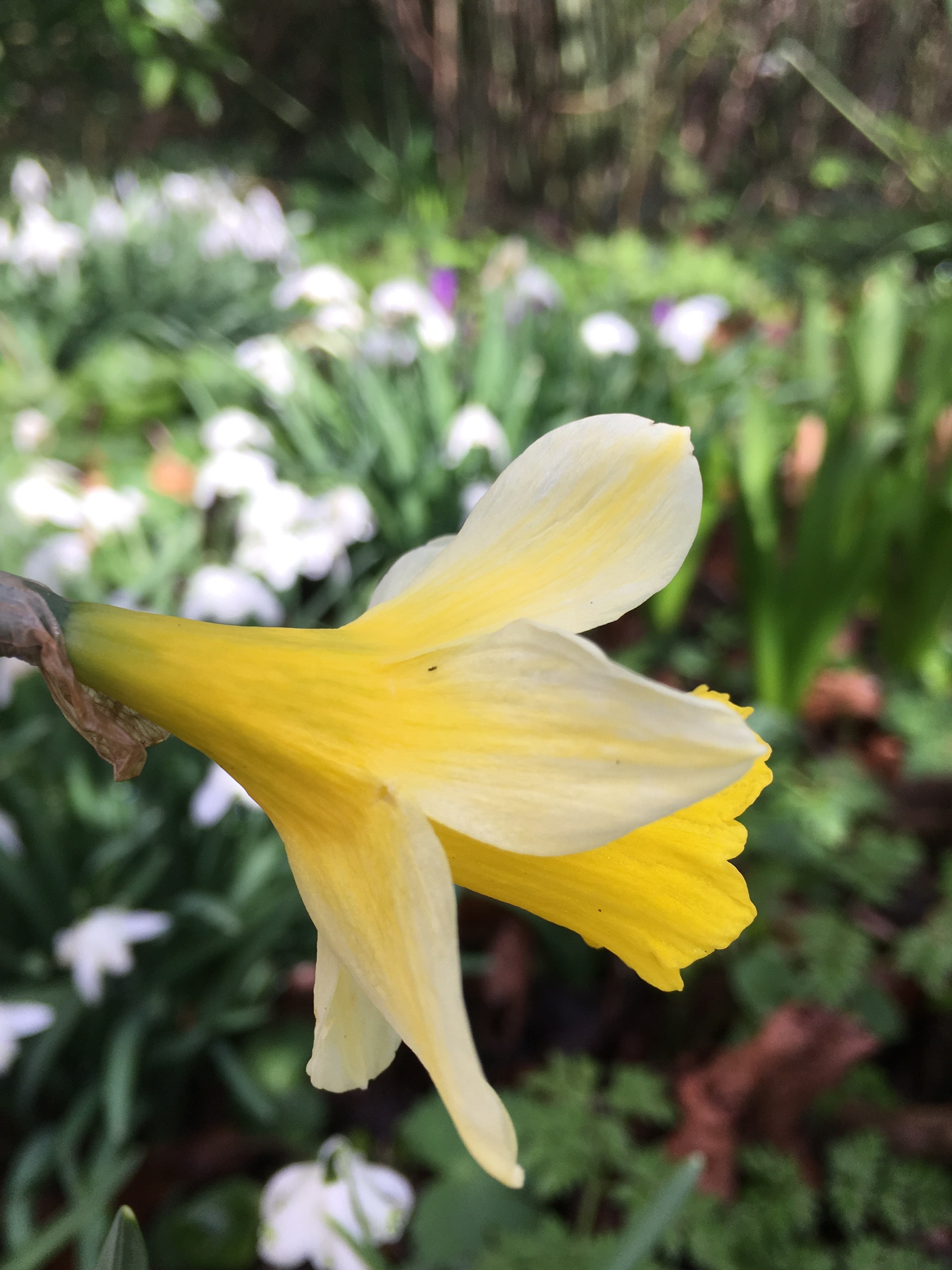
Wild daffodils are finally starting to spread too. This was just one flowerhead last year. I am really happy to see it settling in with three flowers this year.


I think it’s my favourite daffodil. Such a delicate flower.


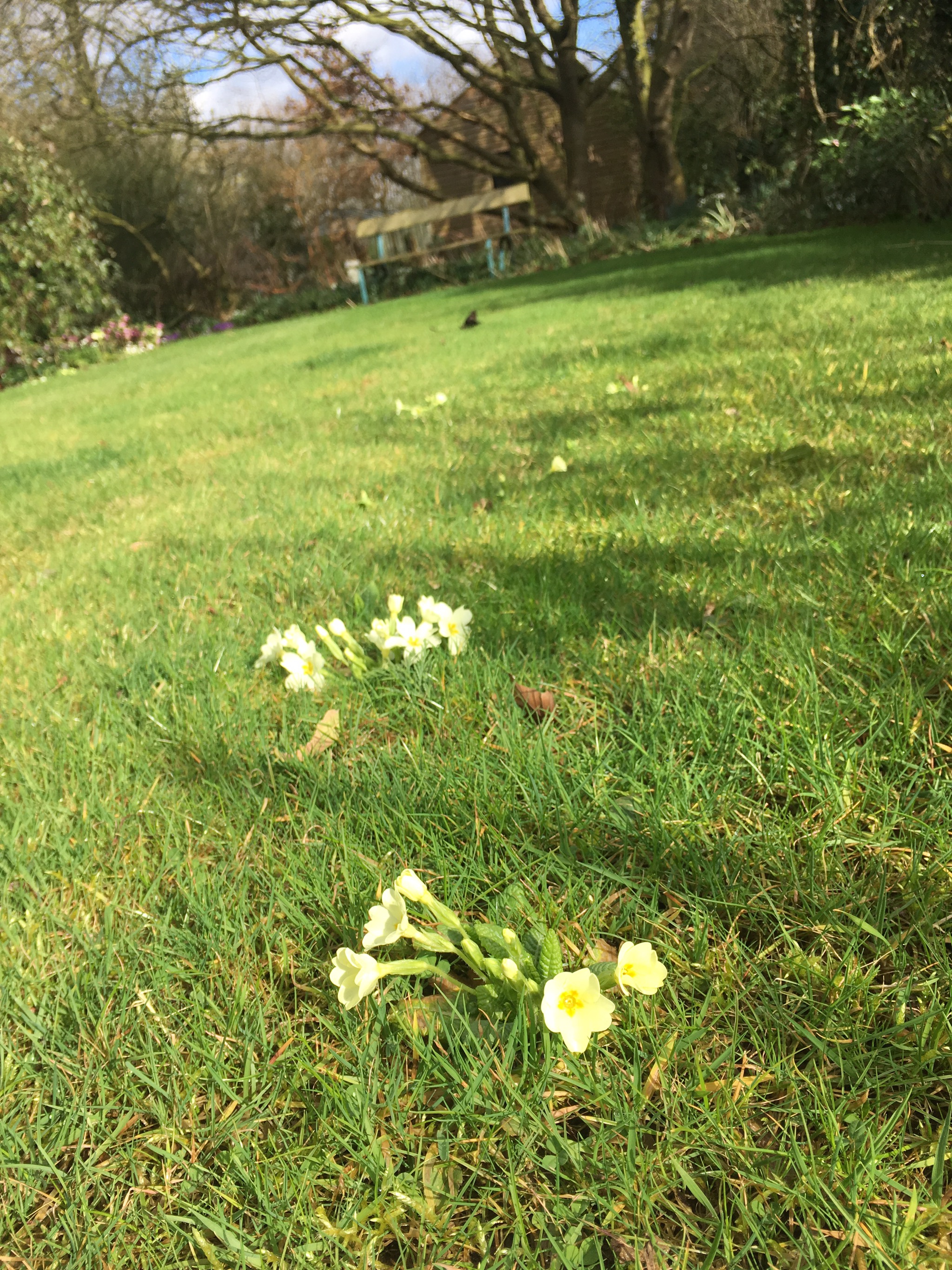
Primroses are escaping from the borders and making themselves at home in the lawn. A lovely consequence of giving up on the lawn feed and weed regime. Soon the whole front lawn will be awash with blue scented wild violets. They virtually pop up overnight. Such a wonderful sight to come home to.


There are violets by the front gate and all along the sunny front hedge bottom.


Eagerly awaited every spring- Prunus Okame is the first tree to flower in my garden. A blue sky is the perfect background for such a pretty pale pink flower.


A pink corydalis is thriving under the prunus and lives quite happily underneath the hellebores in shade.


My favourite hellebore right now. It reminds me of a stained glass window.


And finally, the pottingshed windowsill has pots of tiny tete a tete daffodils and single snowdrops. You can just see the blue hyacinths and matching daffodils inside the shed where the scent is intoxicating- mixed with smells of petrol for the mower and compost on the potting bench!

I hope you have enjoyed my whistle-stop  tour of the garden today. Thank you to Michelle for hosting this new meme. Why don’t you go over and see what’s looking good today in Michelle’s garden on www.http://vegplotting.blogspot.co.uk . Join in- all welcome!

A quick peek in my pottingshed tonight…..

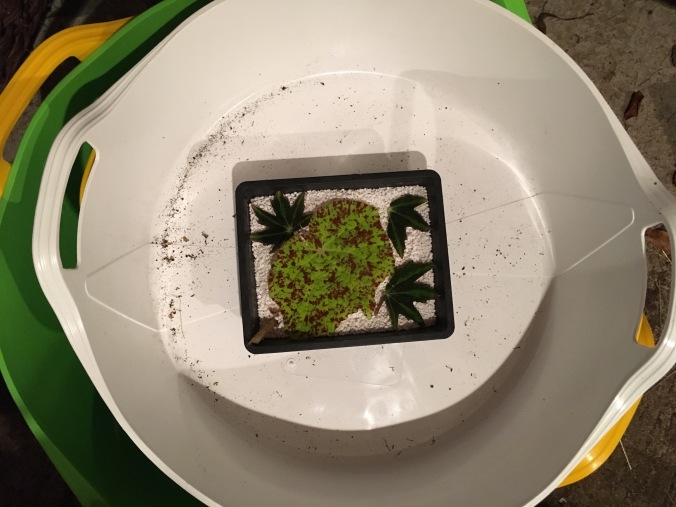
Here’s a quick peek in my pottingshed tonight. I’ve been having a go at begonia leaf cuttings.


I’ve never done this before.  I had a look on the RHS website.  Then I placed the leaves on a chopping board and, using a sharp knife, cut through the main veins. I filled a seed tray with compost, topped with perlite. Laid the leaves on top, and pinned them down with my daughter’s hair grips -the only wire I had in the house. Sometimes you just have to improvise.


I put the seed tray in my Rainbow shallow trug and left it to soak up water.  I’m finding these trugs really useful in the pottingshed. I use them for collecting foliage for flower arrangements, and as a moveable potting station when I’m sowing seeds.

img_7212
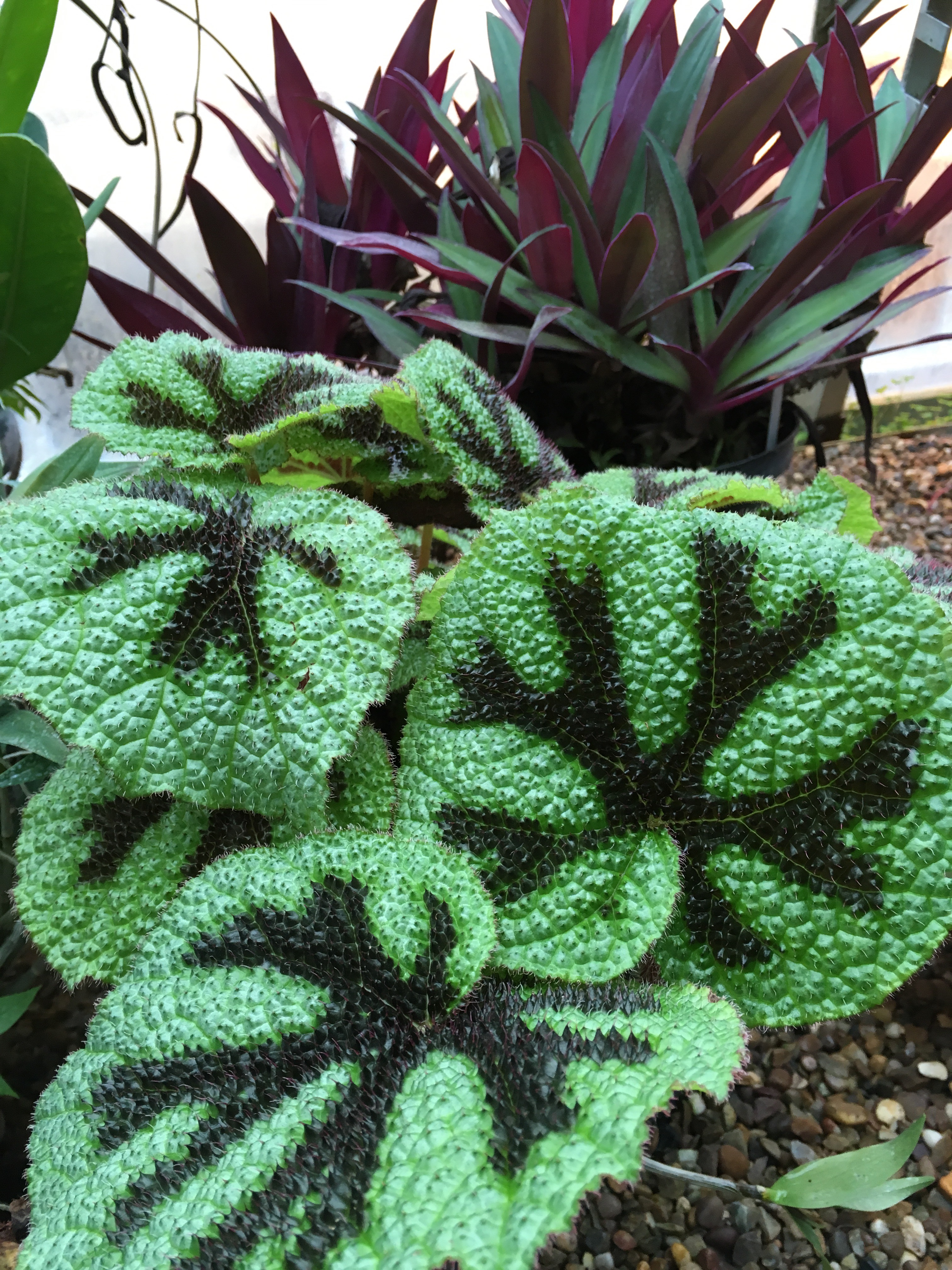
My cuttings  were popped into a plastic bag and into my propagator. The best time to take leaf cuttings is in the summer. But when a friend gave me these leaves, I couldn’t turn down the chance to have a go. You never know- they might grow lots of  new little plants. Then I’ll pot them up into 7cm pots- and display them at the shaded end of my greenhouse. I’ve always loved the foliage of begonias. This might be the start of a new collection for me.


The RHS website says leaf cuttings can be taken from streptocarpus and eucomis as well as begonia masoniana and x Begonia Rex hybrids. I also found the National Begonia society handbook a useful source of information.

It was getting dark by the time I’d finished. I just had time to look at these snowdrops on the pottingshed window. They’ve burst into flower today. Such a cheerful sight on the last day of January.

Have you tried any new gardening techniques recently, or have any collections of favourite plants? I’d love to hear about them.

img_7216

Working in the Garden- using battery powered machines 

I’m re-blogging this today as I’m currently trialling Stihl’s latest addition to the compact cordless range, a cute little lawn mower, MA 235. It should really be given a pet name. It’s such a delight to use, weighing only 14kg, and with no cable to get wrapped around your legs and trip you up! It is perfect for small to medium lawns up to 200m2. The grass box capacity is 30ltrs, and the machine is extremely easy to use. I’m in favour of anything lightweight. I don’t have to ask anyone for help. Plus, being battery powered it is quiet. It doesn’t scare the cat, or the wildlife I’ve been so keen to attract to the garden. More photos to follow. I’ve been given these machines by Stihl in exchange for an honest review. All views are my own and if I say nice things about them it’s because I  haven’t been pressured to do so.

Here’s what I wrote about the other machines in the range, including hedge trimmer, leaf blower, trimmer and chain saw. All are interchangeable.

Gardening is hard work-there’s no denying it. I sometimes think I must be mad to try to control an acre of ground. If I turn my back for five minutes the brambles are suddenly head high and thistles and stinging nettles look as if I’ve grown them on purpose.

It’s not a sensible hobby for someone who has no muscles to speak of. I am five foot tall and weigh 8 stone. Then in addition, I have dodgy knees and a bad back. I really ought to take up sewing or knitting or…well, anything not requiring strength and stamina.

But then, I have always been contrary. I never give up on a difficult task. I have only to delve into my family photo album to see where I get my streak of quiet determination.

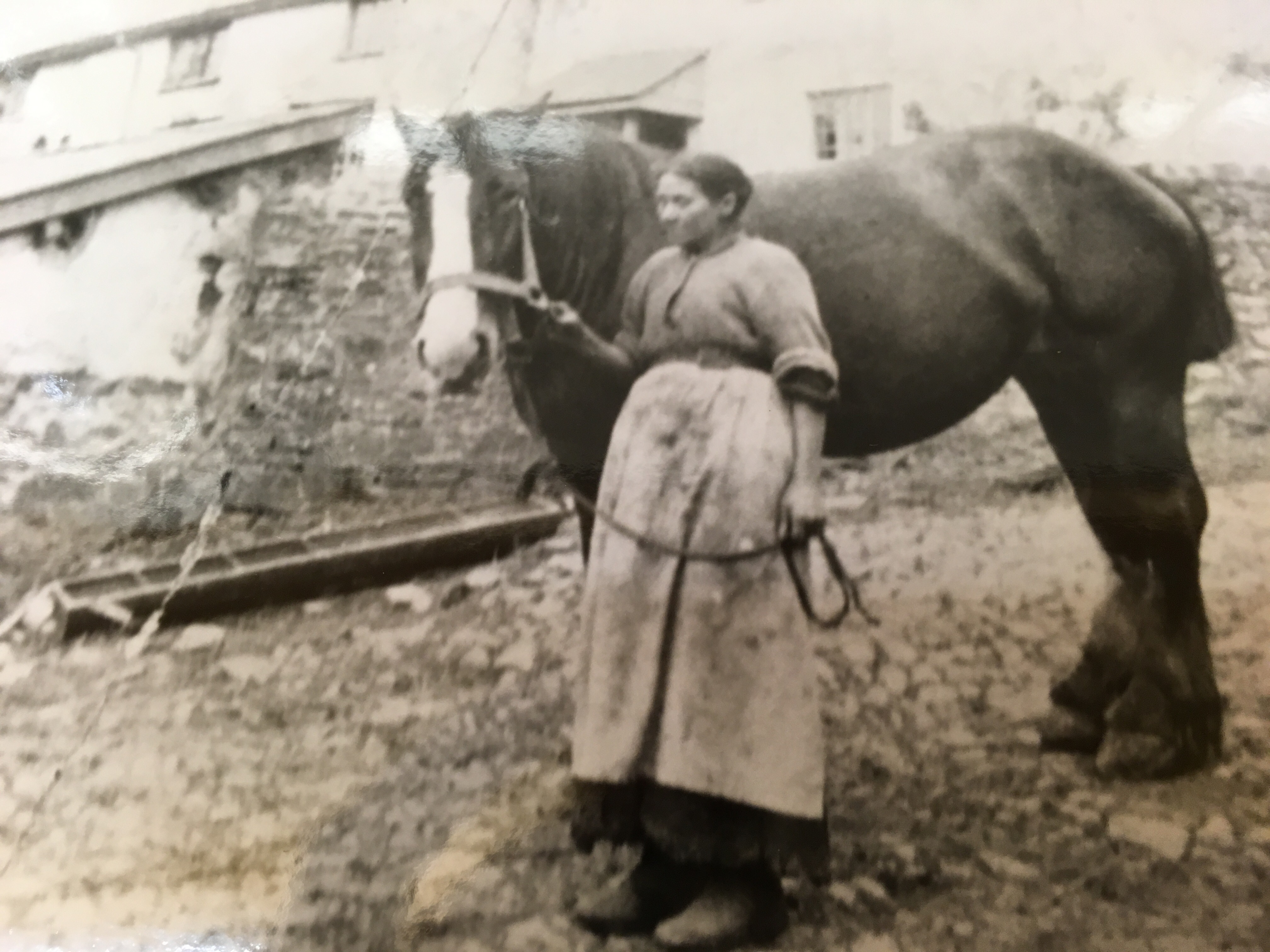
The oldest photos in the album show my great-great grandmother Charlotte Foxford, leading a shire horse down to the plough. There are pictures of her working the stony ground at the farm where she lived with her husband James in Oakford, Devon.


She looks exhausted. And I want to step back through time and give them a helping hand- modern medicine, health care – and machinery.

And yet, later in the album, I see them smartly dressed. Great-great grandfather James wears a suit and a jaunty hat. And I’m delighted to see them standing in the farmhouse doorway, with beautifully pruned roses around the porch. She had time to plant a garden- with all the cares she must have had to keep hearth and home together. And there are photos of them standing proudly next to the gleaming, well-groomed shire horses. Phew!They cared for their animals too. Such a reassurance and a welcome sight. And they are holding hands. They loved each other. A lesson in life in just 10 photos.

There’s one picture that makes me happiest of all. It is the one where Charlotte  sits holding a baby- my grandfather, Ted Foulds- and is surrounded by her family. She is smiling. Her happiness and contentment shines out from the page. A great relief to me.

I just wish I could tell her- we have all copied her example. We’ve continued the tradition. There’s a long line of tenacious and determined women in the family- and we have all thrived on hard work. We are good at finding solutions.

So I may be a physical weakling- but I never give up. And I never wait around for someone else to do a job, if I can do it myself.

My latest solution to the problem of coping with an unruly garden is the discovery of the new Stihl compact cordless range of power tools.

We already have petrol machines- but they are too heavy for me, I nearly wrench my arm out starting them up. Plus they are so loud they frighten me, and the cat, and the cows in the neighbouring field.

I was relieved and delighted  to find four battery powered machines that I could actually manage- all by myself. Lightweight and easy to use.

I used the chainsaw to tackle the hazel coppice. Usually I use a handsaw and loppers. But the Stihl chainsaw cut through them in minutes. I’ll use the hazel rods to make an A-frame support for sweet peas in the cut flower garden.


Next I cut through a low field maple branch that was growing over the drive. The logs will be used on our open fire.
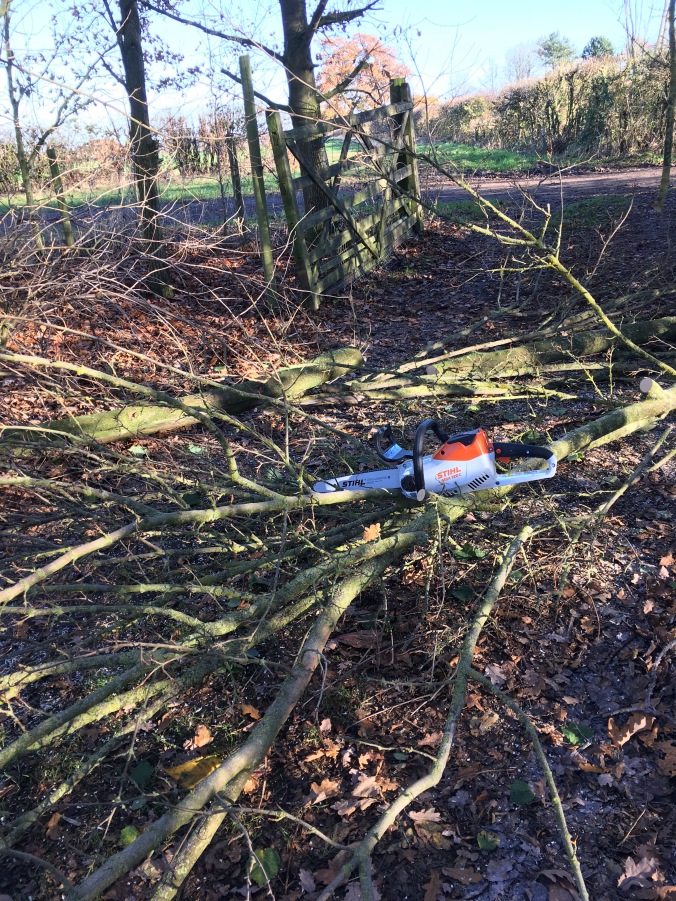

We will leave some brushwood and logs for wildlife habitats.


I’m going to tackle the apple trees next. Apple and pear logs are a special treat for Christmas. A gentle flame and no sparks from fruit wood- plus the whole house is scented with a most glorious, exotic perfume. No candles or chemicals can match it.
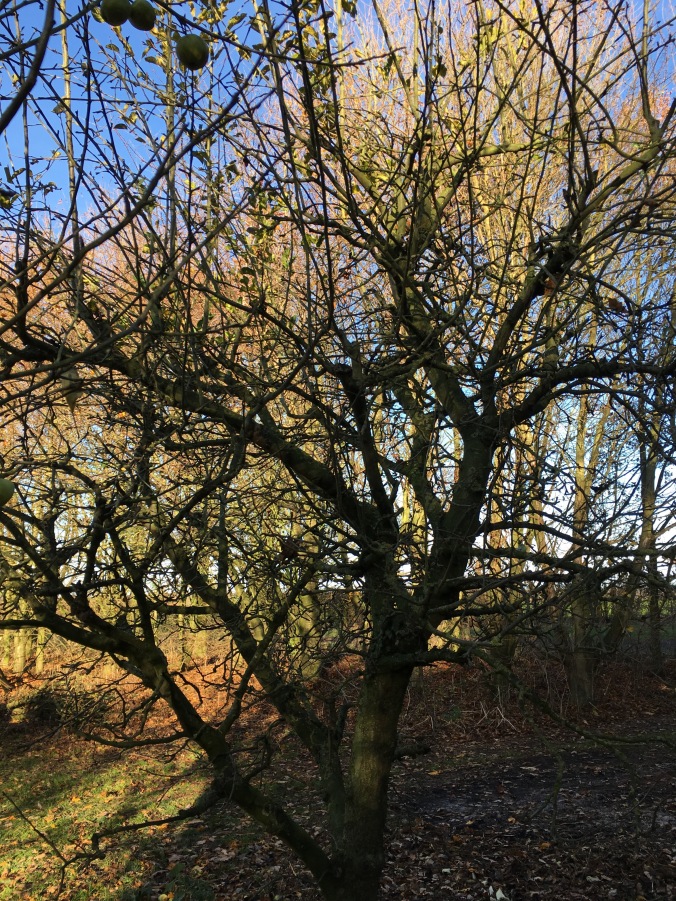
The chainsaw lasted about 45 minutes before the battery ran flat. I was ready for a cup of tea and a piece of cake by then, so I put it back on charge. It took about an hour or so to charge up again. I was busy tidying the logs, so I didn’t mind waiting.
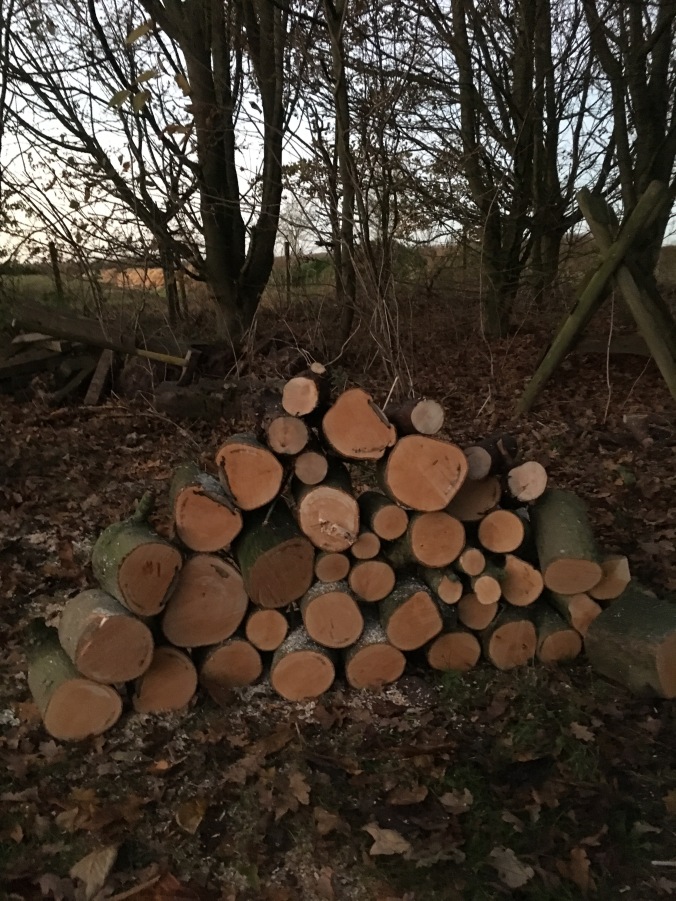

Here are my notes on the Stihl chainsaw MSA 120 C-BQ Compact Cordless Power System.

The brochure says the chainsaw is ideal for garden maintenance, cutting firewood, shrubs and branches.

1. Weighs 2.5kg without battery. Lithium-Ion battery weighs 1.2kg

2. Sound Level 94.0 dB A. Amazingly quiet. No ear defenders are needed. This is a good because  you can be more aware of what’s going on around you while you are working, if you can hear.

3. Battery Life : The brochure says  up to 35 minutes. Mine lasted 45 mins.

4. Cutting Performance: Up to 100 cuts in 10cm x10cm square timber.

5. Bar Length: 30cm

6.Chain Speed: 13.2 m/s (max)

7. Quick Chain Tensioning: Tensioning the chain without tools by turning the adjusting wheel. Even I could do it. The guide bar is automatically secured by tightening the sprocket cover.

8. Safety Feature: I liked the pop out battery, which meant you couldn’t accidentally switch the chainsaw on whilst carrying it around.

I chose Farol Ltd at Hinckley, Leicestershire, to commission the chainsaw. Special mention to Sarah Nottingham and Jacob Shellis who kitted us out with protective trousers, boots, gloves and glasses supplied by Stihl. They took such care to show me how to use the chainsaw, and the hedge trimmer, strimmer and leaf blower in the range. I was impressed by their knowledge and the time and care they took to explain everything in terms I understood. I feel as if I have a good back up team there. I can ring or go back and visit at any time if I have any problems or need advice.

Safety is a prime consideration. I did an assessment of the  work I planned and double checked my capabilities before starting. I will still need a qualified tree surgeon for larger projects in the garden.

Chain saw and other machinery courses can be found at Brooksby Melton College in Melton Mowbray, Leicestershire.

Have you found any solutions to your gardening problems ? I’d love to hear them.

Wordless Wednesday 23rd November 

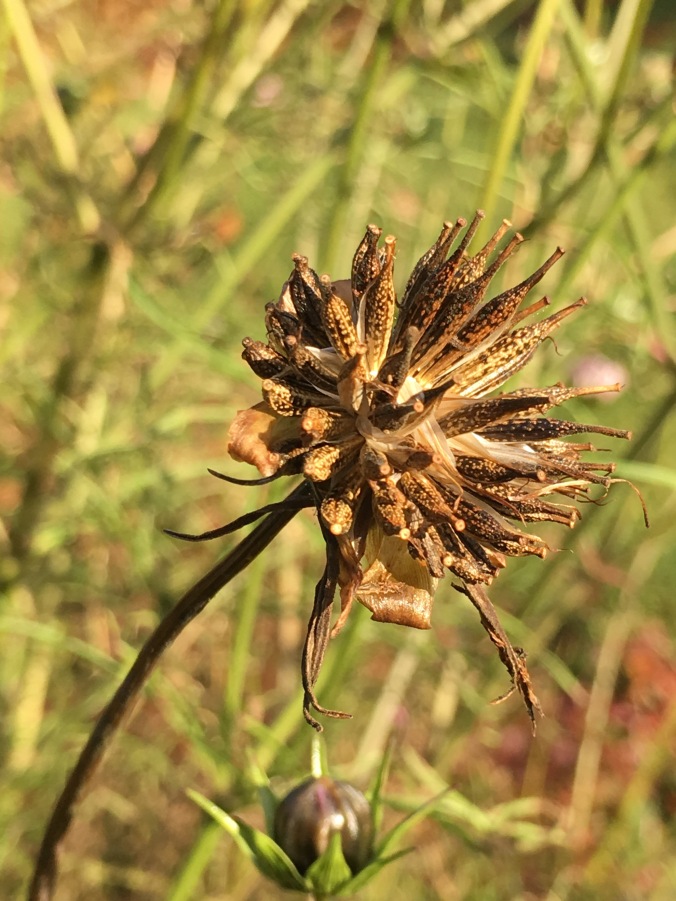
Cosmos seeds. Now safely gathered in.

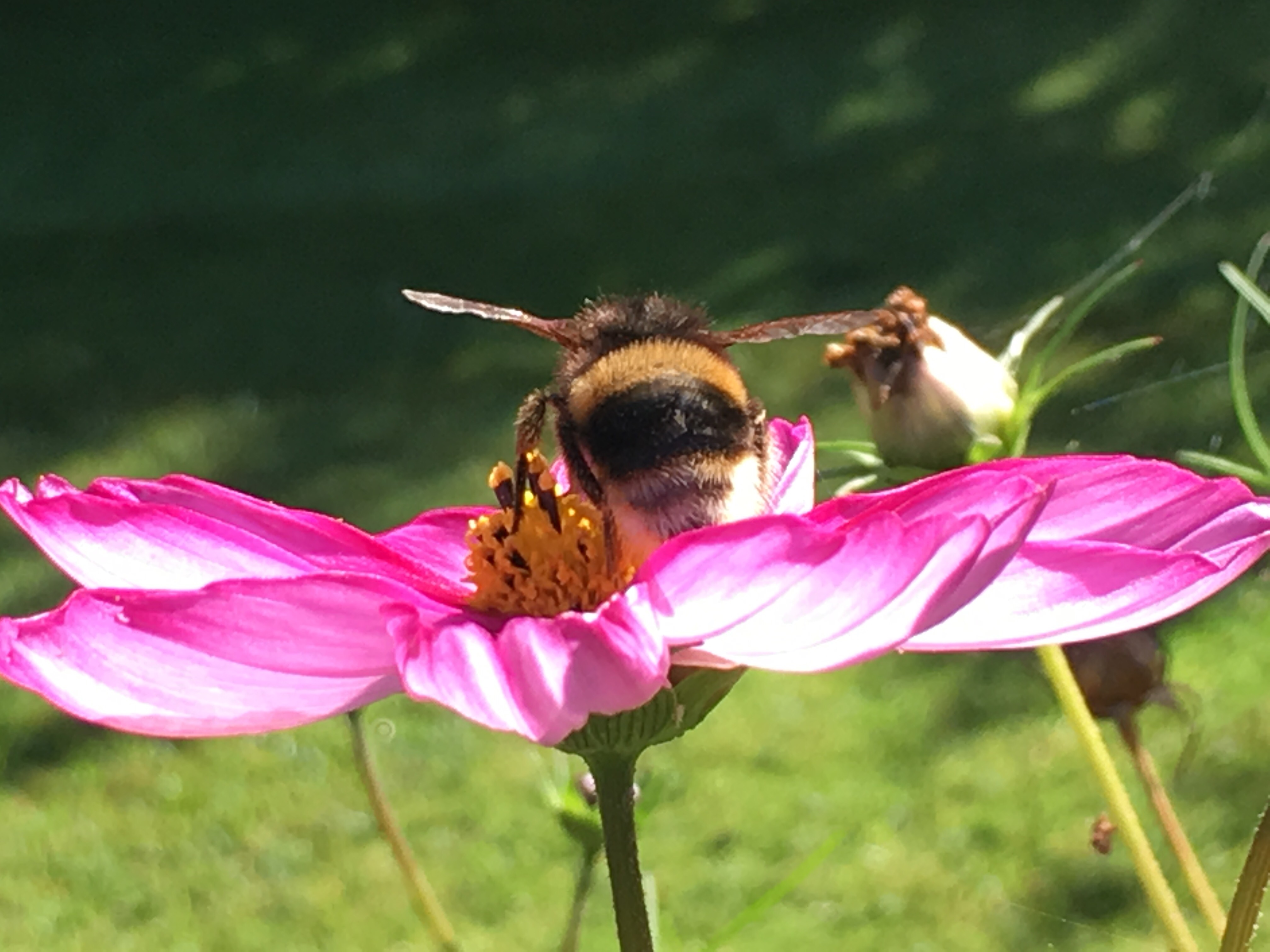
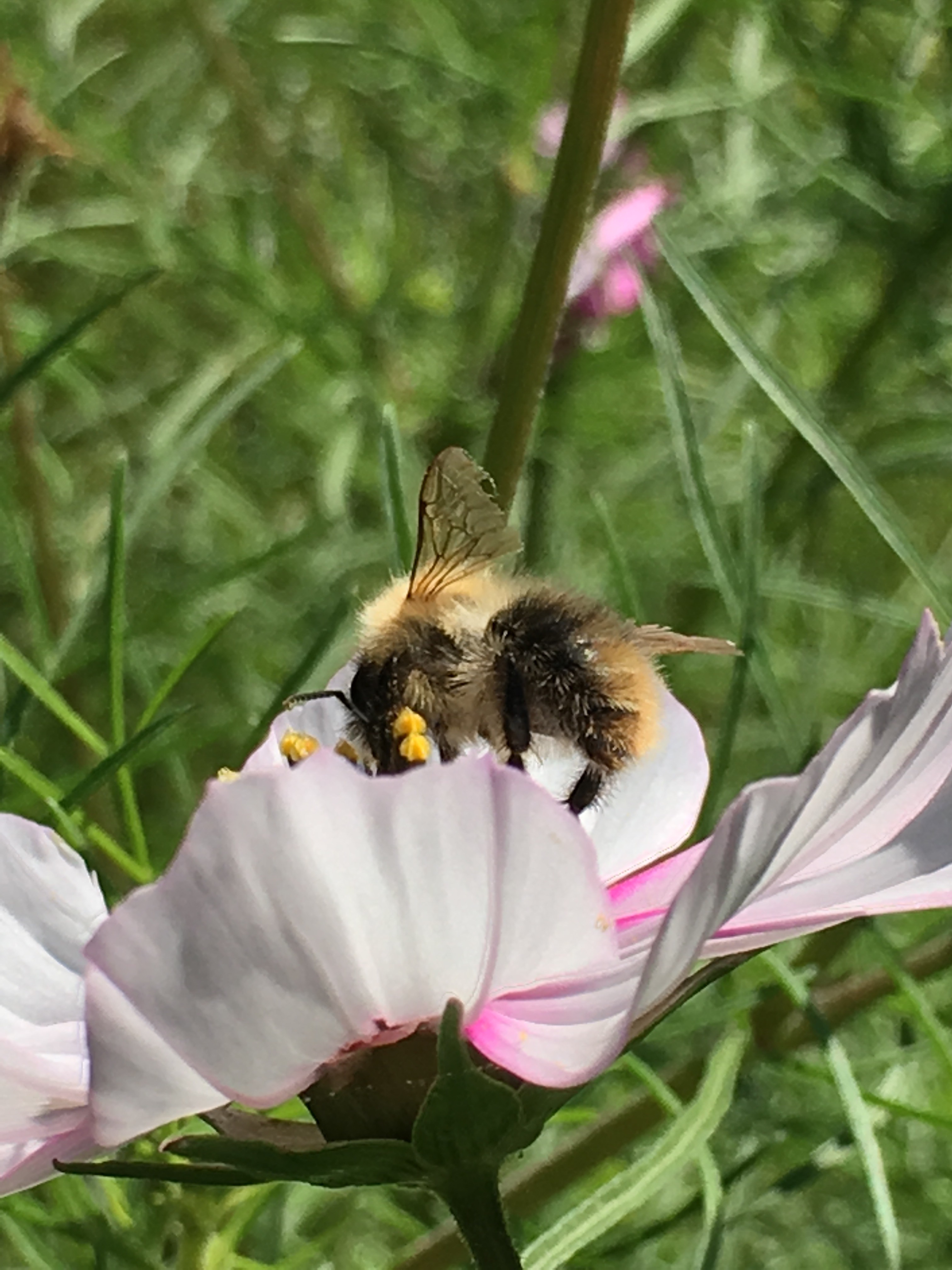
And after Christmas I will start sowing again, for a summer delight of bees and blooms.

My cut-flower-patch kit cost me about £20 from Ben at Higgledy Garden, mail order. Great value, to get me started. I shall re use my saved seeds, but I’m looking on the website to add new varieties for next year. What are you planning to grow in 2017? 

Wordless Wednesday 

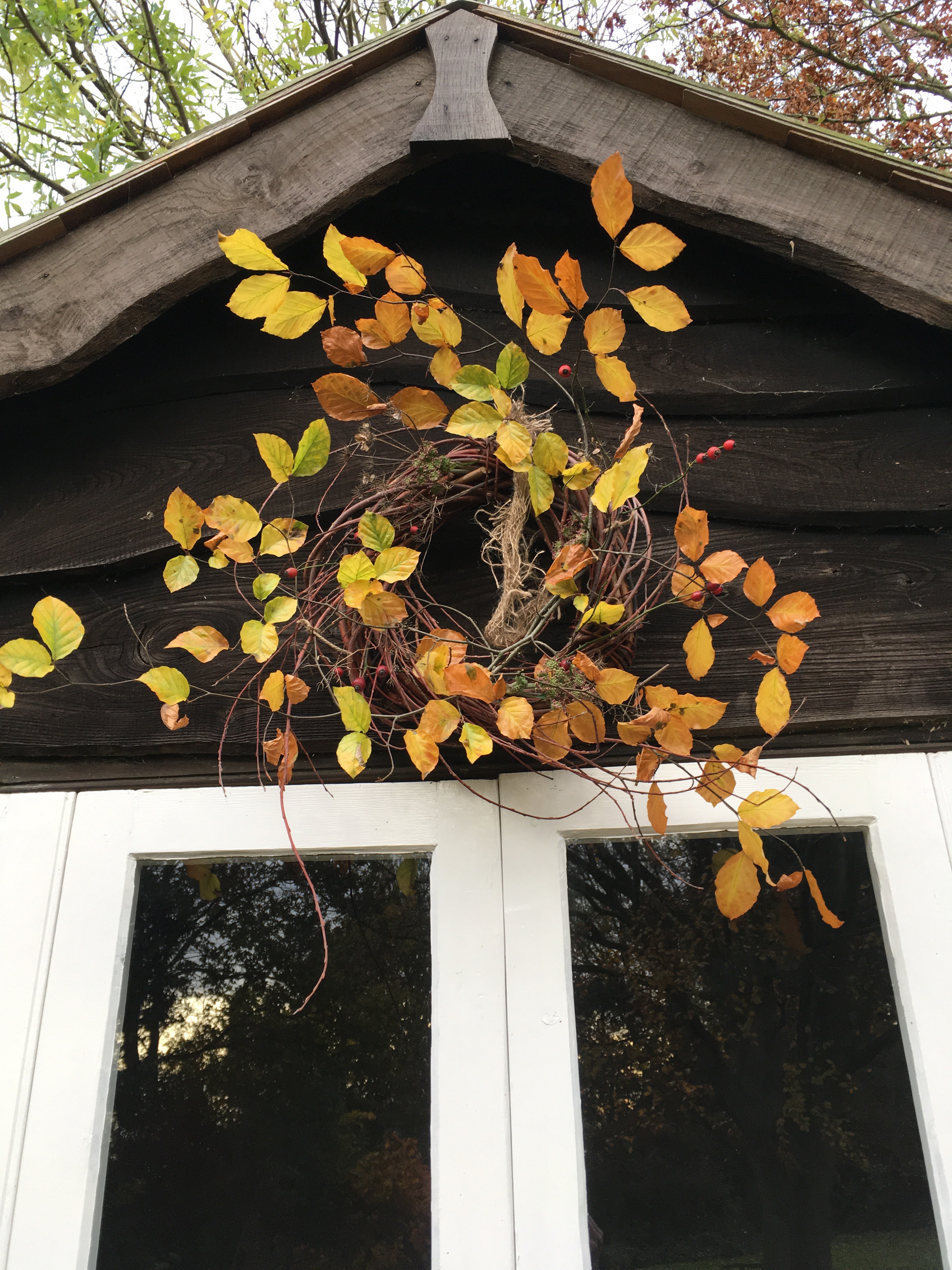
Still mild enough to sit in the summerhouse. Heaps of cosy woollen blankets to hide under. So I made an autumn wreath out of beech leaves, rosehips and cowparsley seed heads.


My wreath is made from a woven willow base. I learned how to make them from  Georgie Newbery at Common Farm Flowers. I can highly recommend the courses. I attended one for creating a cut flower patch and posy tying. I’ve never had to buy any flowers for my house and family since. I’m planning to attend one next year on growing flowers for weddings and special occasions. I’ve already bought my voucher for the course. It’s great to have something to look forward to as winter starts to bite.


The Persian ironwood shrub, Parrotia Persica still looks like a bonfire of colour.


Orange tulips, a present from a friend- the view inside the summerhouse today.

Have you got a favourite place you like to sit in the garden?

In a Vase on Monday – 14th November 2016 

I can’t believe I turned my nose up at chrysanthemums. It might have been the huge Pom Pom flowers that put me off. Some the size of a head. All stiffly growing in rows, marshalled into line by an army of stakes and string. 

Not my kind of gardening- and I’d probably have composted any cuttings or plants that came my way.

But this year I’ve had a change of heart. My father in law handed over a cutting of a yellow spider chrysanthemum. It’s a plant that has been passed around the family and grown for over 70 years. My father in law is struggling with mobility now and can no longer garden. In fact this year we’ve been running two gardens- theirs and our own. We’ve all worked like demons to keep their immaculate garden up to standard. And the reward has been the smiles and comments  from every carer, nurse and visitor to the house. Their glorious flower-and veg- filled garden has been preserved.

And so has their much-prized chrysanthemum. I couldn’t be the one to let the side down. I couldn’t let the family chrysanthemum -known as Aunty Doris- die out. So it’s been potted on and watered and fed, and generally fussed over all summer.  And I’m surprised to find that I totally love it. It has personality. The glorious sunny yellow flowers open like a sea anemone. It’s fascinating to watch. As the flowers grow, the centres turn a beautiful emerald green. 

After all that nurturing – the flowers are returning to my mother in law, Joan. Just as her husband of 66 years  has always grown them for her,  I’m growing them now.  


Chrysanthemum known in the family as “Aunty Doris.” 


I love its rather messy flowers. Beautiful from bud to open flower.


Luckily I’ve got lighting in my potting shed, so can create my flower posies for Joan after work.


In the posy this week is Chrysanthemum Stallion Yellow and white Swan from Cheshire family nursery Chrysanthemums Direct. Bought as plugs from RHS autumn show. I think they cost around £1 each, and have made good strong plants in a year. I’m an organic gardener, and on my potting shed table is some natural fertiliser I’m trying out from PlantGrow. I’ll let you know how I get on with it. 


Chrysanthemum Swan in the centre, surrounded by rosemary, verbena bonariensis, pittosporum silver queen, rudbeckia grown from seed, violas and grasses. The orange balls are sprays of seed from crocosmia, and the grey foliage is Artemisia Powis Castle. 


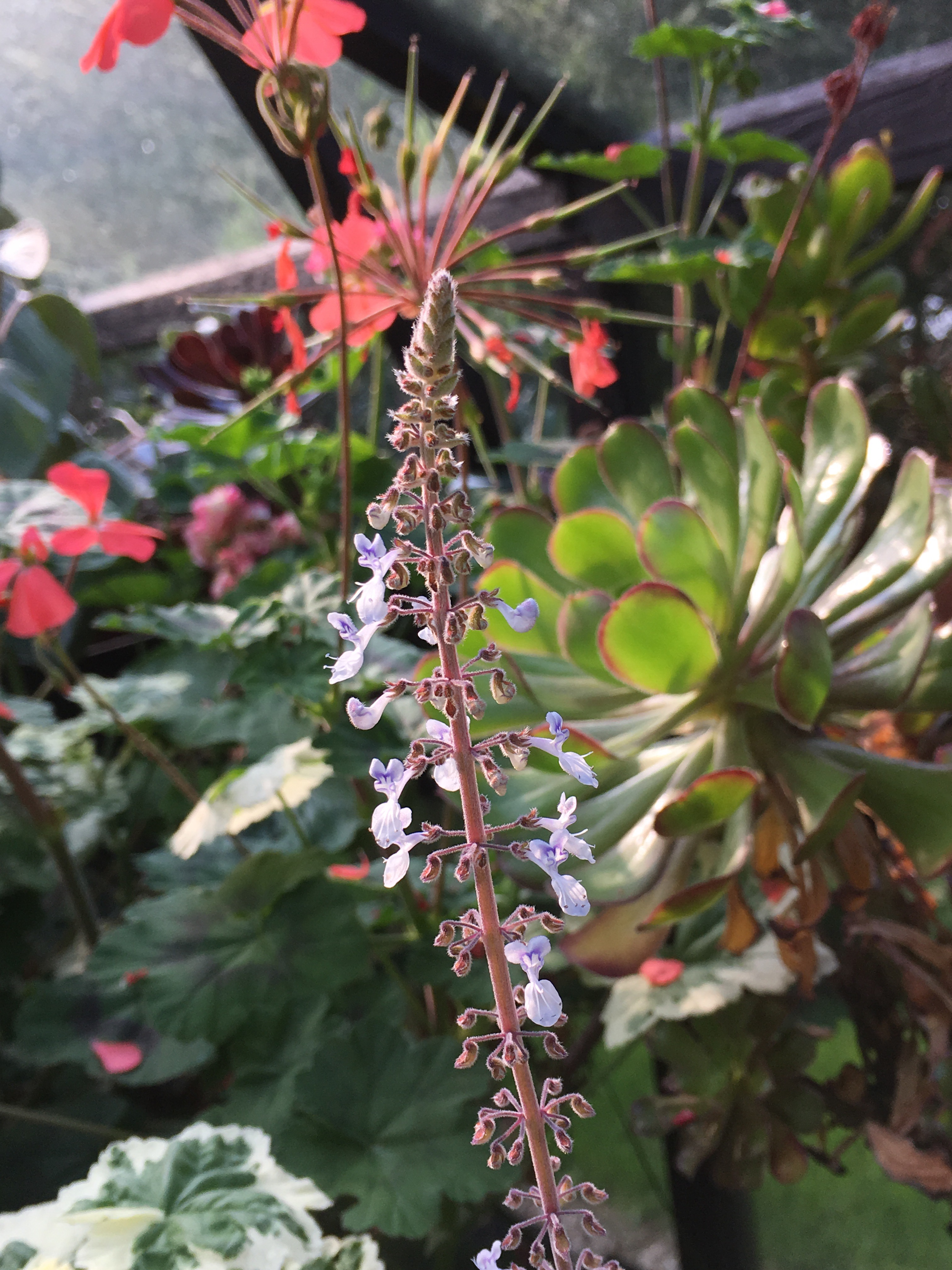
The blue flower spikes are Plectranthus Argentea which is now sheltering in the heated greenhouse for the winter and will provide flowers right through until February. This and many other plants in my greenhouse came from The Herb Nursery at Thistleton. Another family-run business I like to support. 

The good news is, there’s about 6 more weeks of Aunty Doris chrysanthemums to come. I expect we will even have them on our Christmas table. A reason to celebrate- to be sure. 

Have you ever tried to keep a family favourite flower or plant in circulation? Thanks as always to Cathy for hosting this In a Vase on Monday meme. Do take a look and  see what gardeners around the world are growing. 

Wordless Wednesday

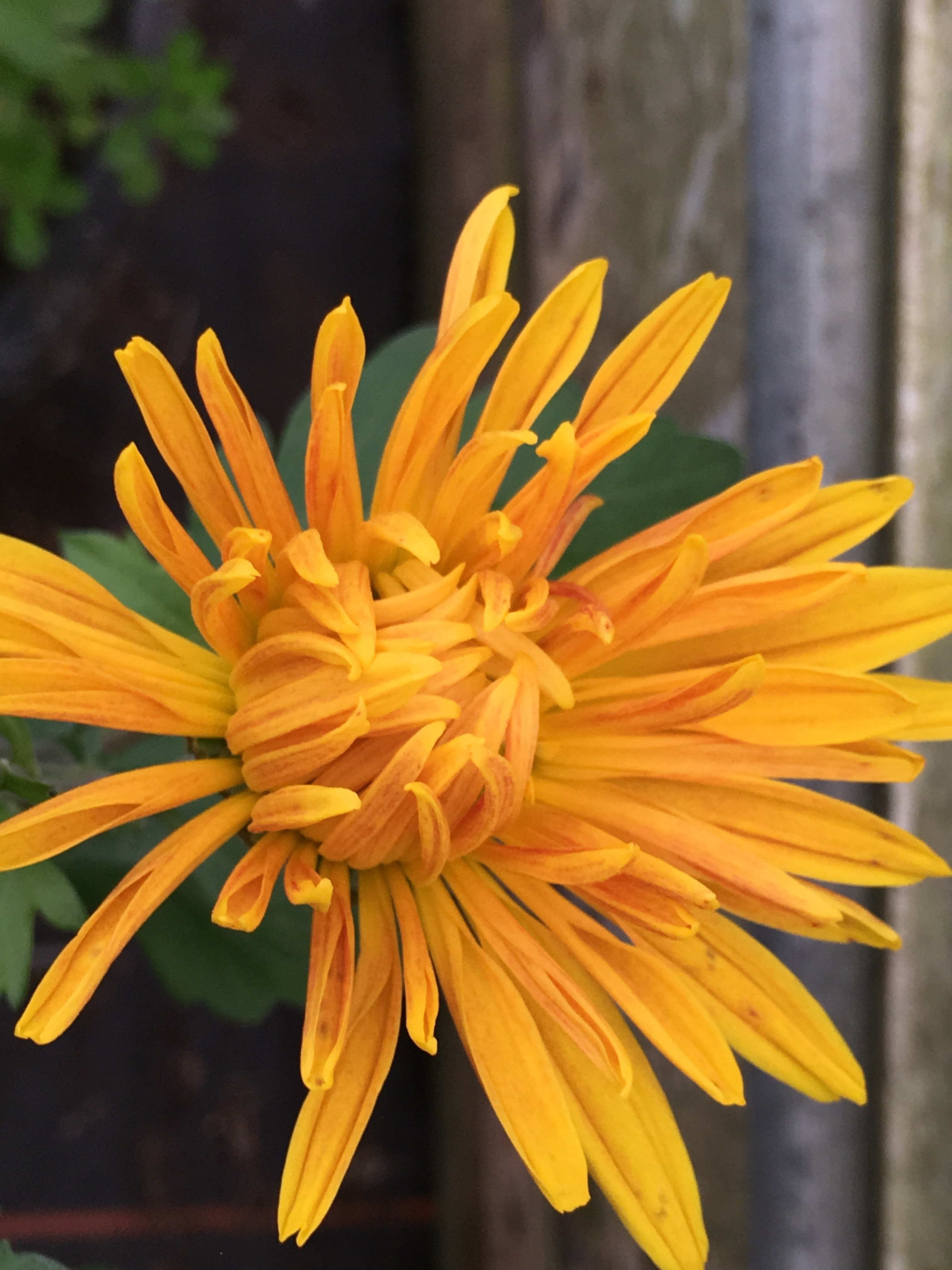
Chrysanthemum Mei-Kyo. November 9th 2016

Wordless Wednesday

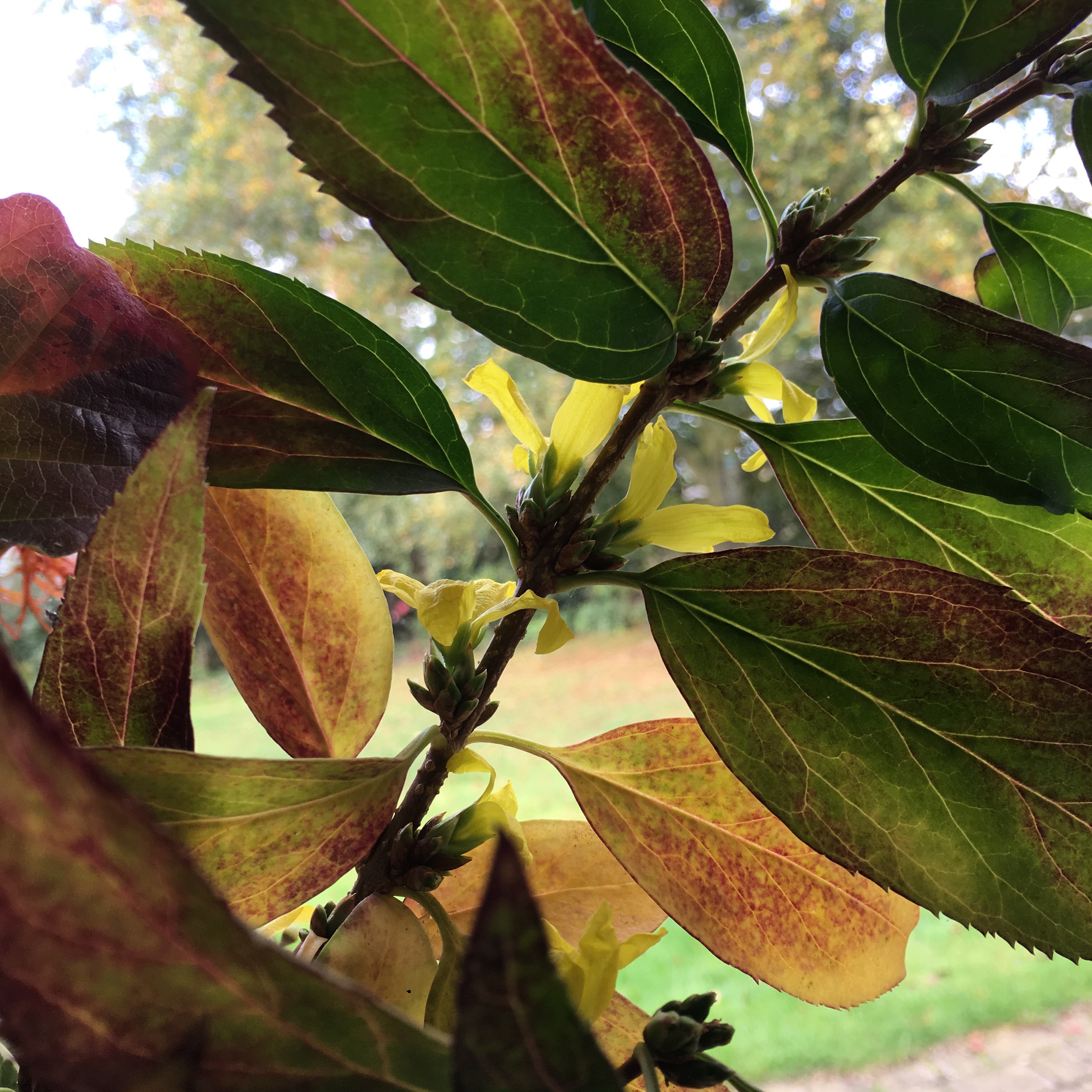
Forsythia.Flowers out of season are always a joy. And the foliage is a burnished bronze too. 

Wordless Wednesday


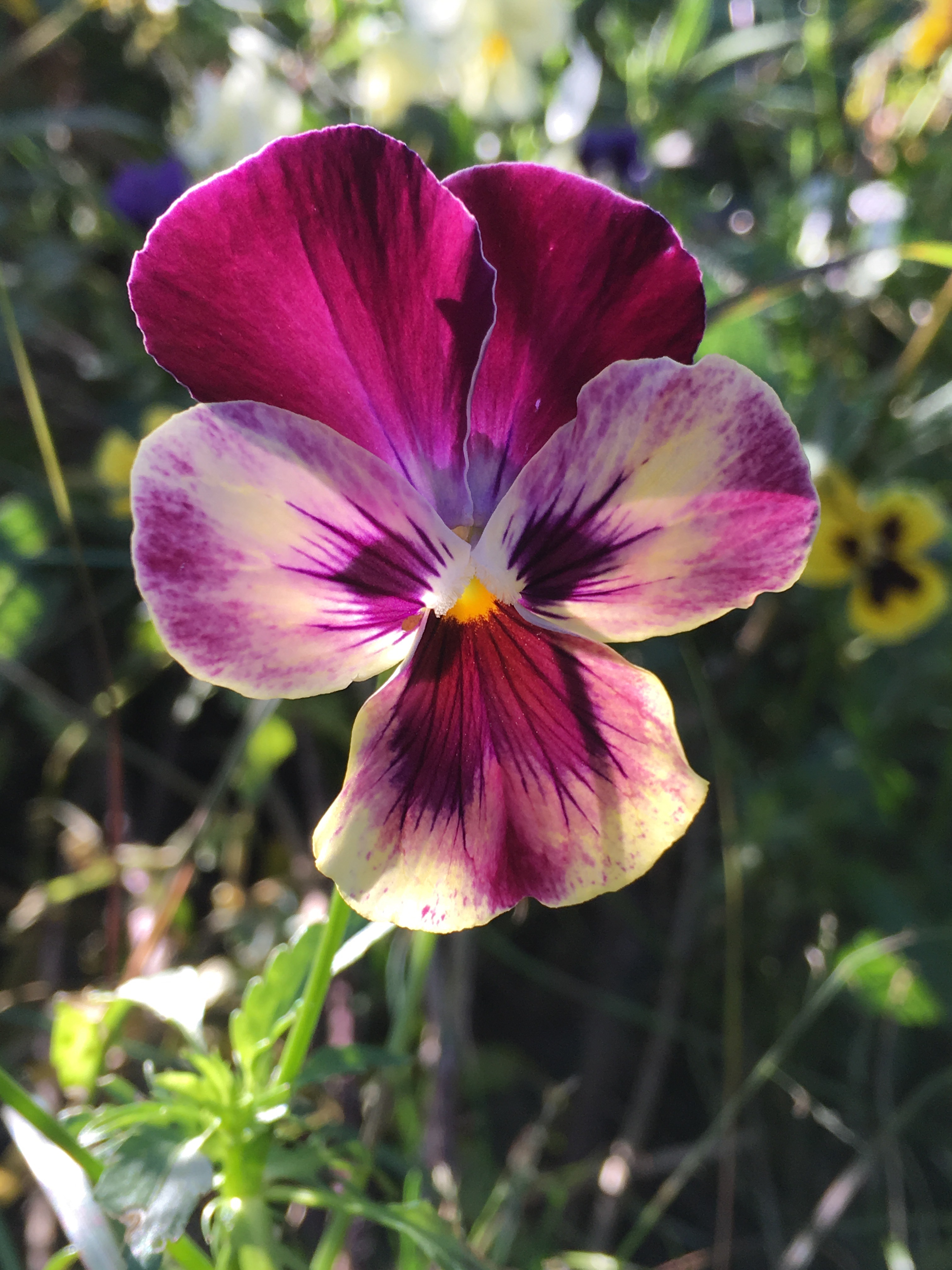
Back lit by sunshine. Autumn viola grown from seed. 

The Tuesday View- 25th October 

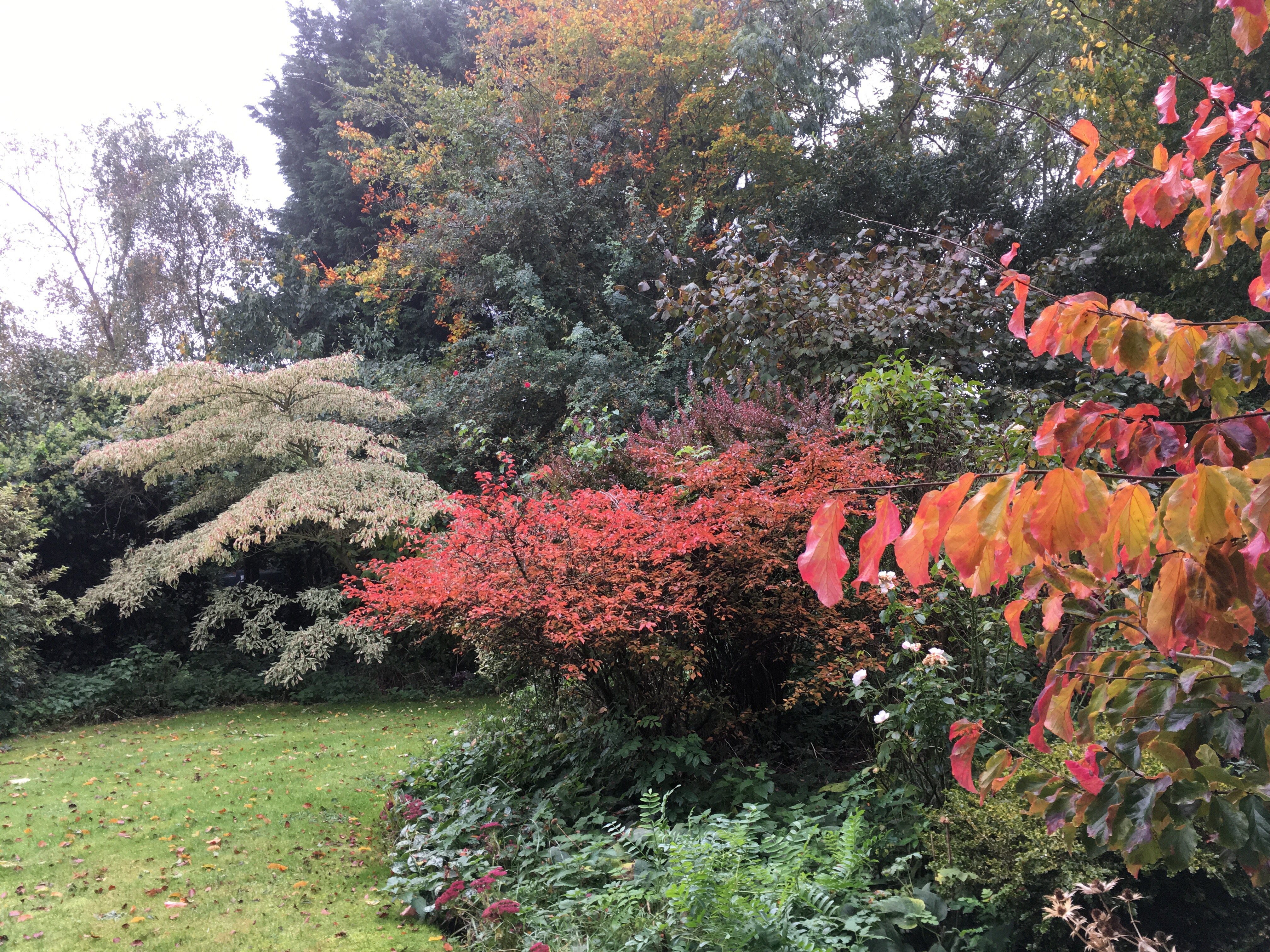
Autumn has always been my favourite season. Nature seems to gather up its glories for one last burst of beauty.  


The beech trees make a golden backdrop for the wedding cake tree – Cornus Controversa Variegata. Cotinus Grace is  starting to turn from chocolate to a glowing red.


Left to right, the wedding cake tree , prunus Kojo no Mai, and Parrotia Persica. Backbone shrubs that stand out in spring and autumn. Summer colour is woven through these plants.


Looking like it’s been varnished – Parrotia is also called the Persian ironwood tree. Its bark is a  beautiful mottled  iron grey.


Summerhouse in the mist. The field-side border contains eucalyptus, magnolia, flower carpet rose, and two matching crataegus prunifolia mop -headed trees  framing  the view. The 1920s summerhouse is on a turntable and facing the ploughed field today. Beyond the summerhouse is a small copse of trees where  a Spotted woodpecker nested this summer. 

My ancestors would have used different words for the seasons. 

Until the 1500s, autumn was called harvest. The word comes from the old Norse word for haust- which means to gather or pluck. 

The French gave us automne. And the Romans gave us the Latin name autumnus. But “autumn”didn’t come into common English usage until the 18th century.  

Cathy at Words and Herbs  Hosts the Tuesday View. Go along and see what’s happening in her garden and feel free to join in with photos of your garden too. 

When we came here we planted trees

Our garden was a field of wheat when we bought the house. We had to wait until the autumn harvest. Then the farmer ploughed our plot and we threw around handfuls of grass seed with wild flowers mix…

Source: When we came here we planted trees

Wordless Wednesday. The hedgerow 5th October. 


Clematis against an October blue sky.

The view today

It’s been torrential rain here all morning. The ditch has overflowed and resembles a fast flowing stream, and my veg plot is half under water.

I’ve been watching a young buzzard, sitting on our hedge. Every now and again, it shakes itself and raindrops go flying. 

Suddenly the downpour halts. The buzzard looks about and stretches its wings to dry them. And then it’s off. With only three flaps of its wings it is gliding over the hawthorn hedge. Such power. By the time I get to the gate post to watch, the buzzard is only a tiny speck high up in the sky. But we can hear the cat-like mewing sound.  And now there are three. The young buzzard has been joined by its parents. 

We’ve been watching these buzzards for the past few years. They’ve made a nest in a small wood in the fields at the back of our house. Last year there were two pairs nesting, and they each produced two chicks. 


We will take a walk there later to see if we can spot their nests-without getting too close to bother them.

Anyway, the sun’s come out now, and suddenly there’s activity all round. There’s bees buzzing in the cotoneaster around the office window, the fledgling swallows are making wobbly flights past. We hold our breath, in case they crash. They just miss, by inches. The busy, twittering sound they make reminds me that I must get going too. I must dash off to work, before the next deluge. 

I hope you’ve enjoyed this quick glimpse into my morning here in my garden. It’s our wildlife haven. 

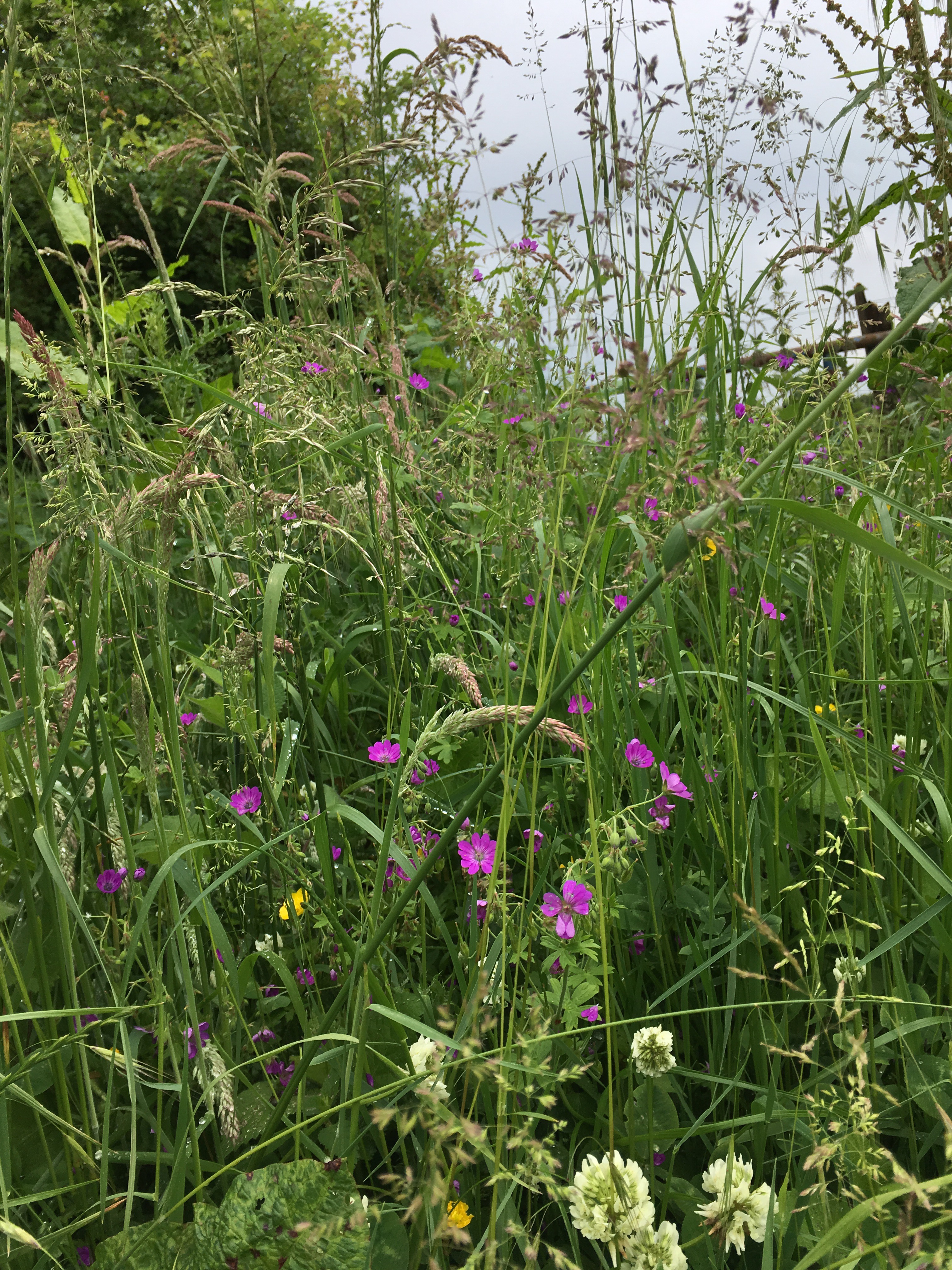
Wild geranium,tiny but Jewel like. White clover, buttercup and grasses. Perfect for bees, butterflies and insects.


Pink-tinged  cow parsley. As pretty as any cultivated flower. 


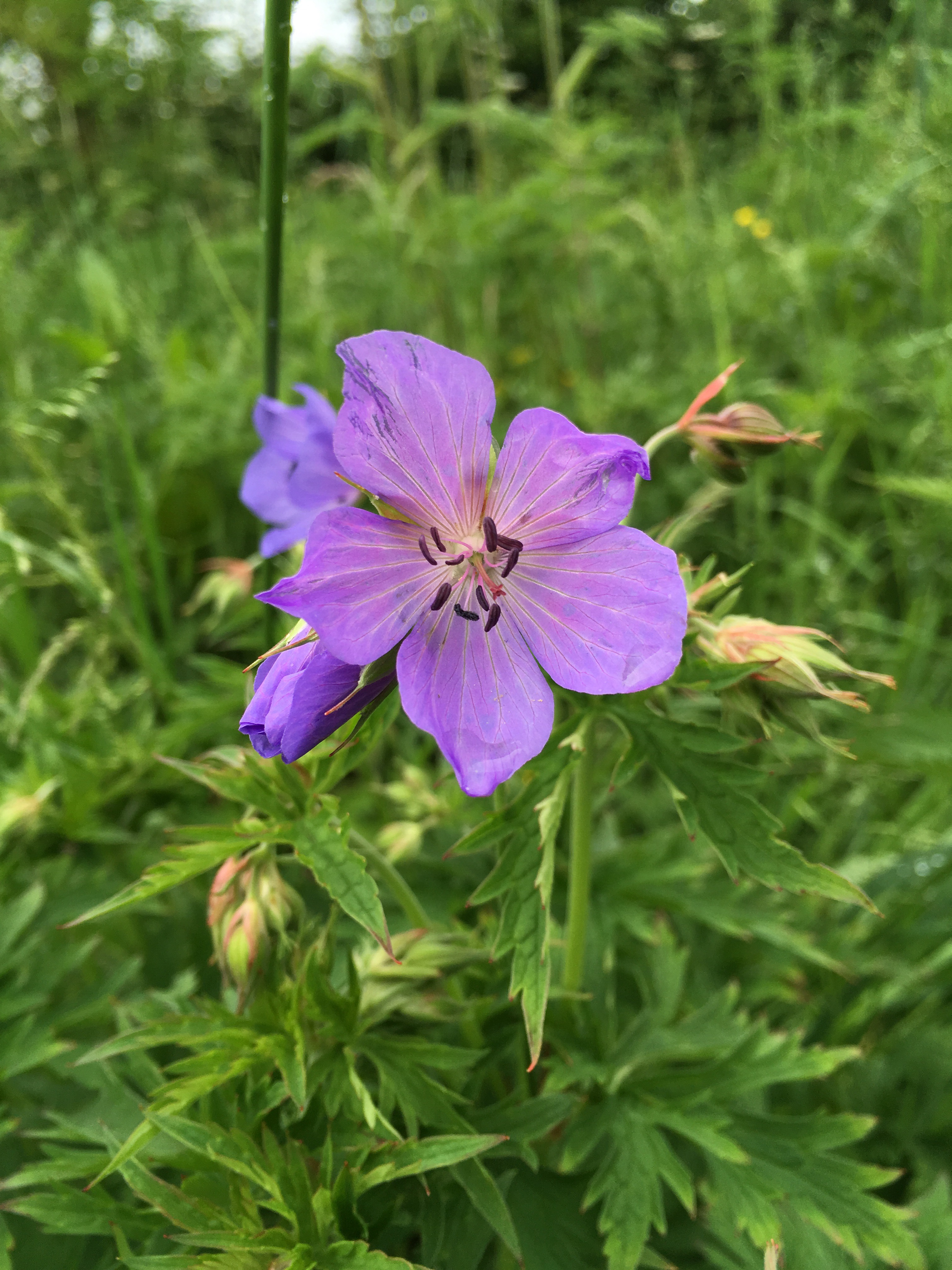
Wild geranium maculatum, like crinkled silk. Also known as cranesbill because of its seeds. As beautiful as garden form.

We made a pond

We made a pond.Twice . We hired a man with a JCB. He was very enthusiastic. We marked out the site, discussed the size and shape, waved our arms around windmill fashion – and then made a big mistake – we went away for a few days. When we returned, we found a huge straight-sided hole in the ground and massive rockery.

When we recovered from that financial and confidence sapping disaster -we hired another man with a JCB. This time we stayed put. My other half literally guided the bucket into position. I watched- ready to call an ambulance.

We bought a pond liner when we should have spent the money on carpets. We lived for some time with concrete floors.

img_3723

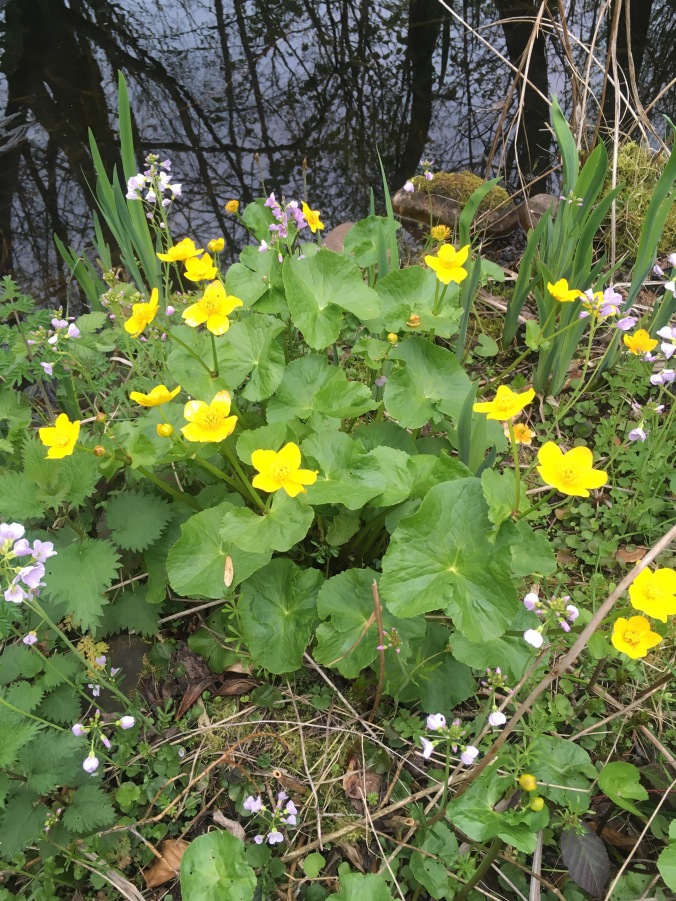
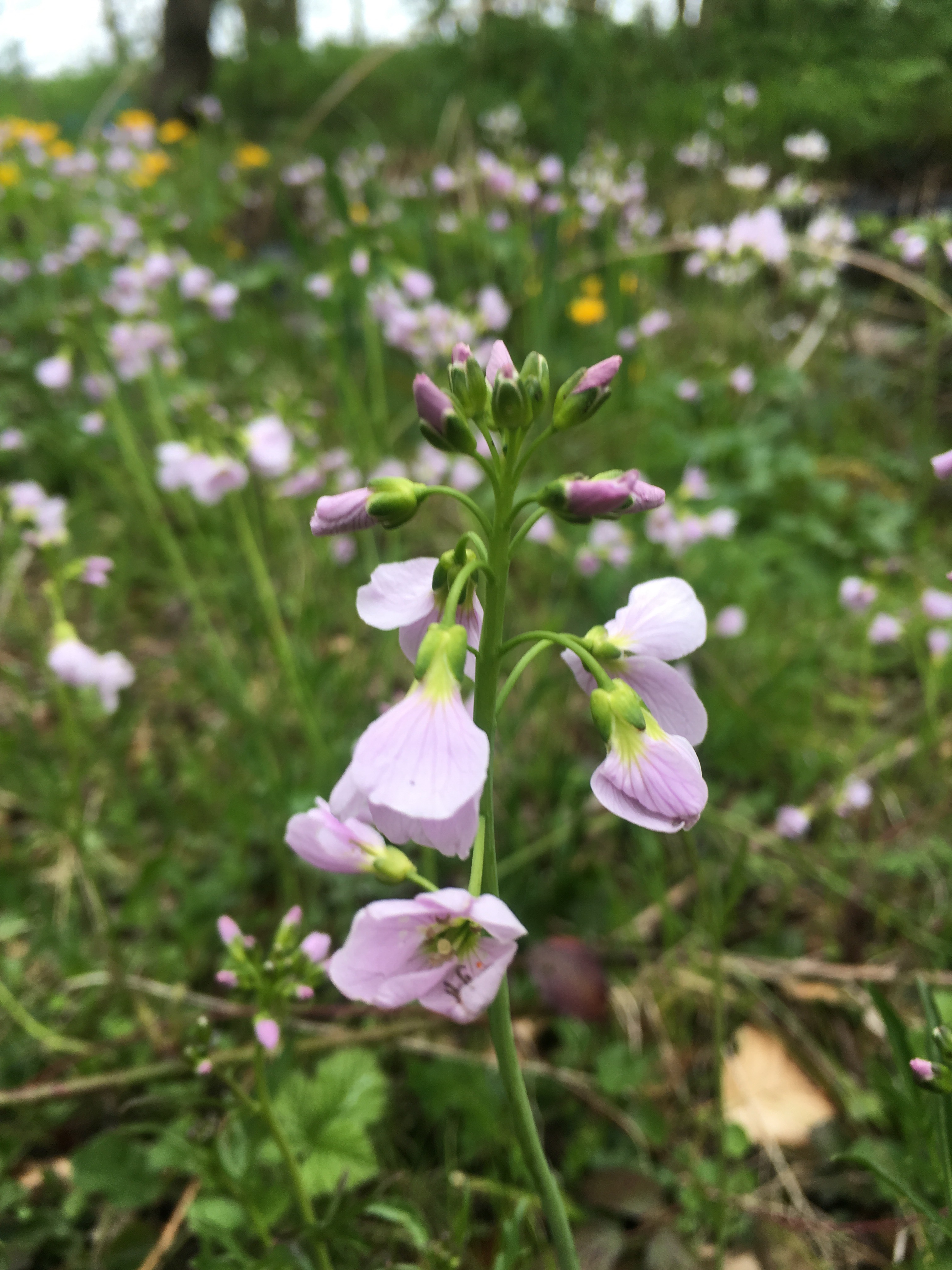
Cardamine pratensis or Lady’s Smock grows happily in the boggy margins.

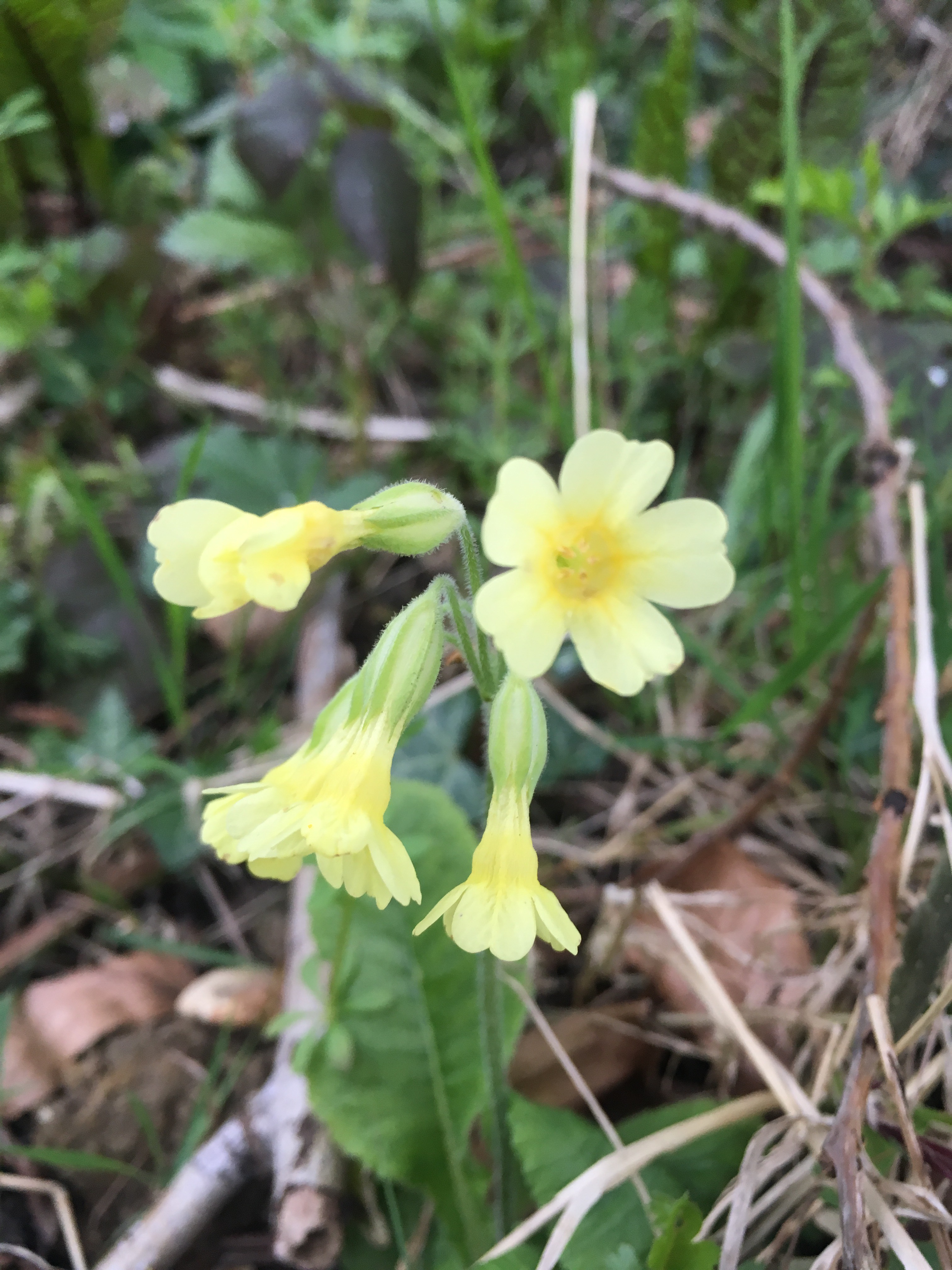
S oxslips grow along the sloping banks. such a delicate flower.

I’m  replanting the  iris and camassias around the edges and trying to control the stinging nettles and brambles. I don’t want to eradicate them completely- just keep on top of them. I garden with a light touch. I love the butterflies that hatch their eggs on the nettles. So gardening for me is a compromise.

Have you ever made a pond? What lessons did you learn along the way?  I hope you have enjoyed these photos of my garden. It’s a peaceful place where humans have to share with the wildlife.

When we came here we planted trees

Our garden was a field of wheat when we bought the house. We had to wait until the autumn harvest. Then the farmer ploughed our plot and we threw around handfuls of grass seed with wild flowers mixed in. We planted 250 sapling trees. Oak, ash, hornbeam, willow. And we waited. We planted a boundary hedge of hawthorn, crabapple and rowan for the birds.  Hazel for coppicing.

violets in a race against time to flower and set seed before cowparsley and campions tower over them

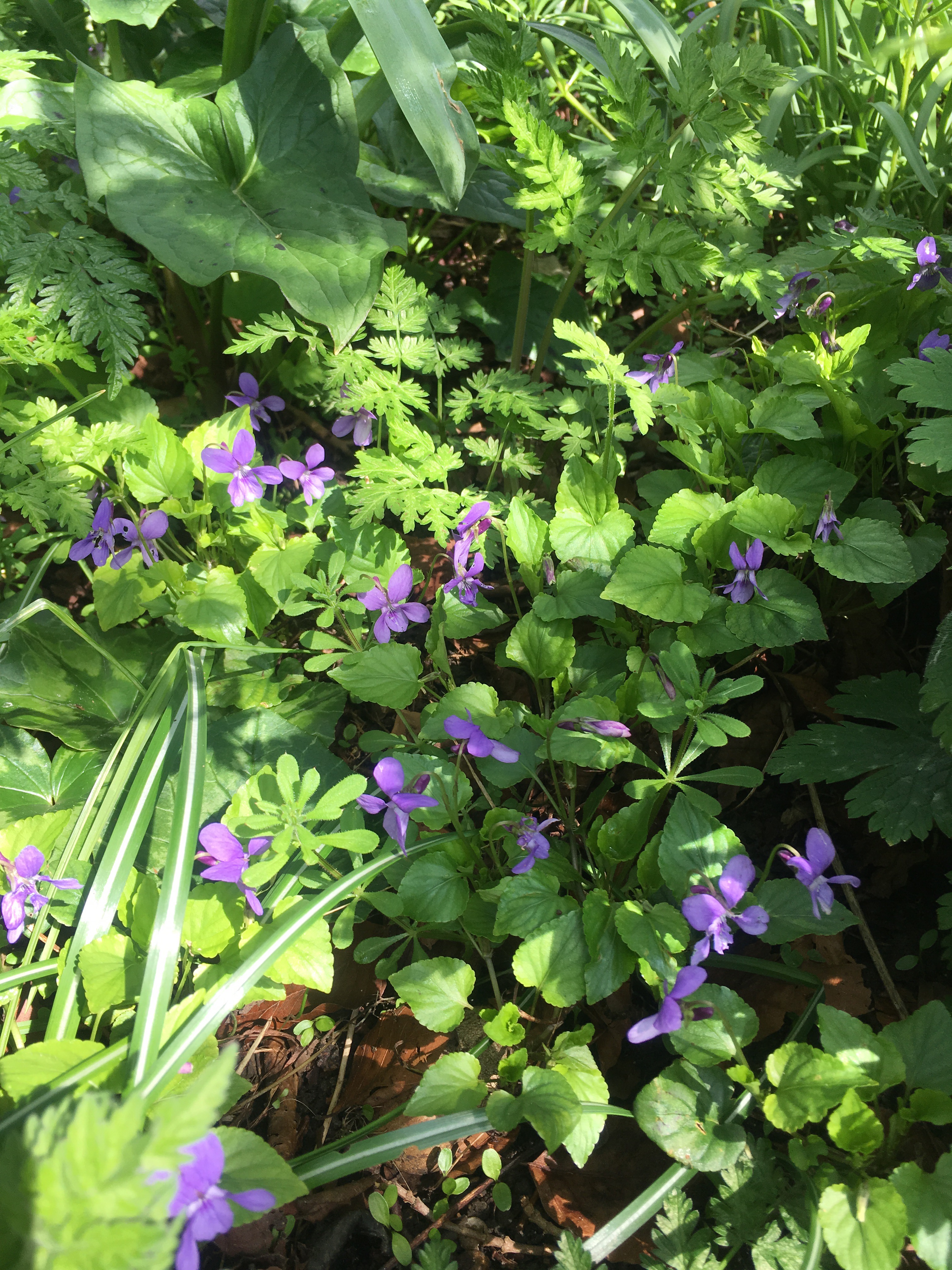
Violets in a race against time to flower and set seed before cow parsley and  campions tower over them. The violets have escaped from the woodland and are thriving in the lawn. For weeks in April and May, the lawn is studded with sweet-scented violets. We set the mower blades high, and skim over them.
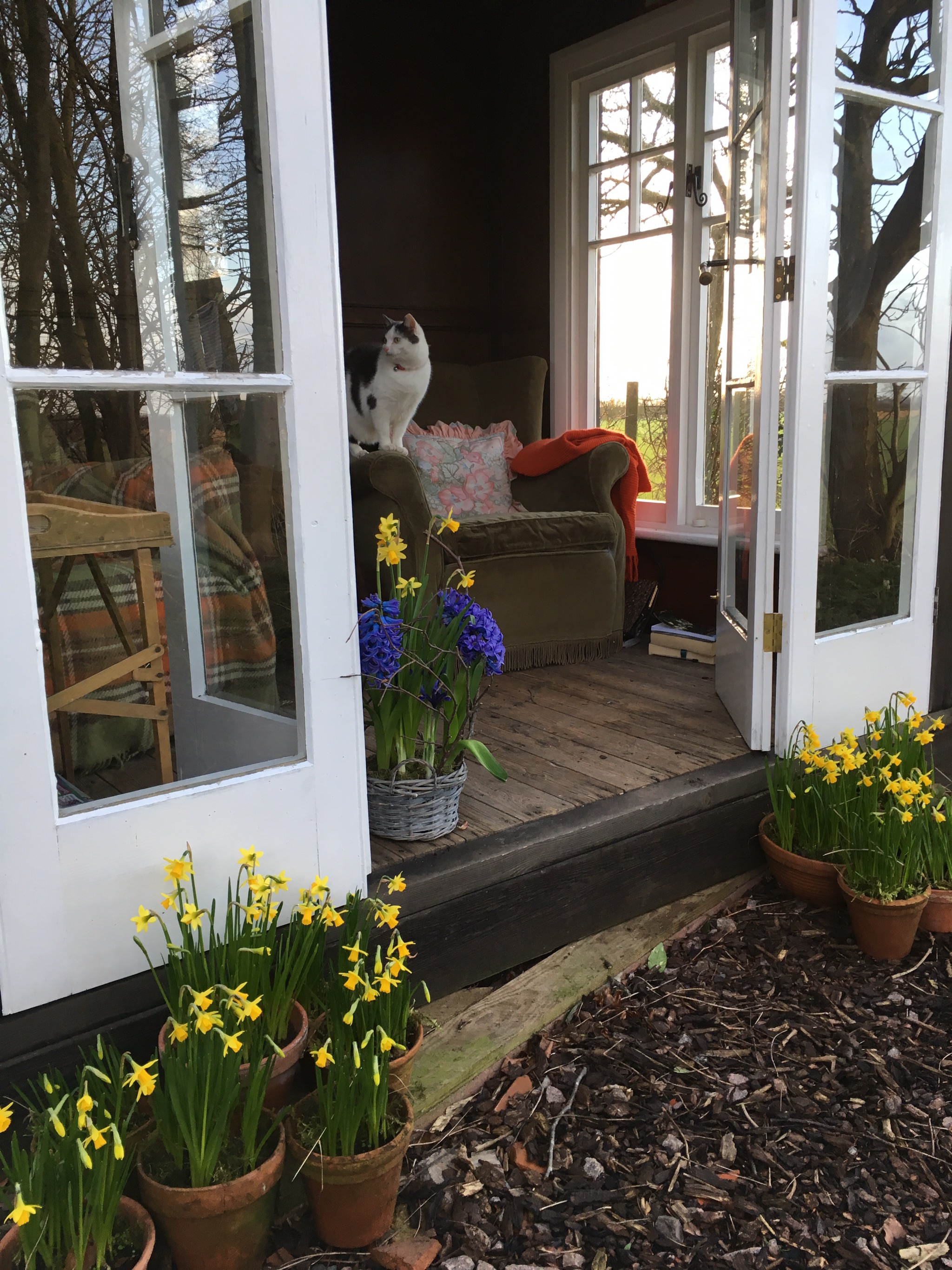
We planted closely, so each tree and shrub shelters its neighbour. This is a good way to create a “woodland” feel in a short space of time. We coppice the hazel and use the twigs for growing climbing beans and sweet peas. There’s always plenty of kindling for winter fires.

Wild anemones stream out along the woodland floor, searching for sunlight. I planted a few at one end of the wild garden. The anemones moved to where they were happiest. I often find that plants pop up in unexpected places. Sometimes they move from one side of the garden to the other. Nature seems to know best.

there will be cherries for the birds

We planted a bank of cherry trees- enough for us, and to share with the birds. There’s always enough for everyone.
Thanks for reading. Please stop by again to see the garden through the seasons. It’s a peaceful haven for wildlife and humans. I don’t mind sharing.