UPDATE: The free tickets have been won by Gary Legg. Thank you everyone who took part in the prize draw.
Thank you to everyone who took part in the recent prize draw for the NEC Gardeners World Live show.
Now there’s an opportunity to win two tickets for the Beaulieu show for Sunday May 4th.
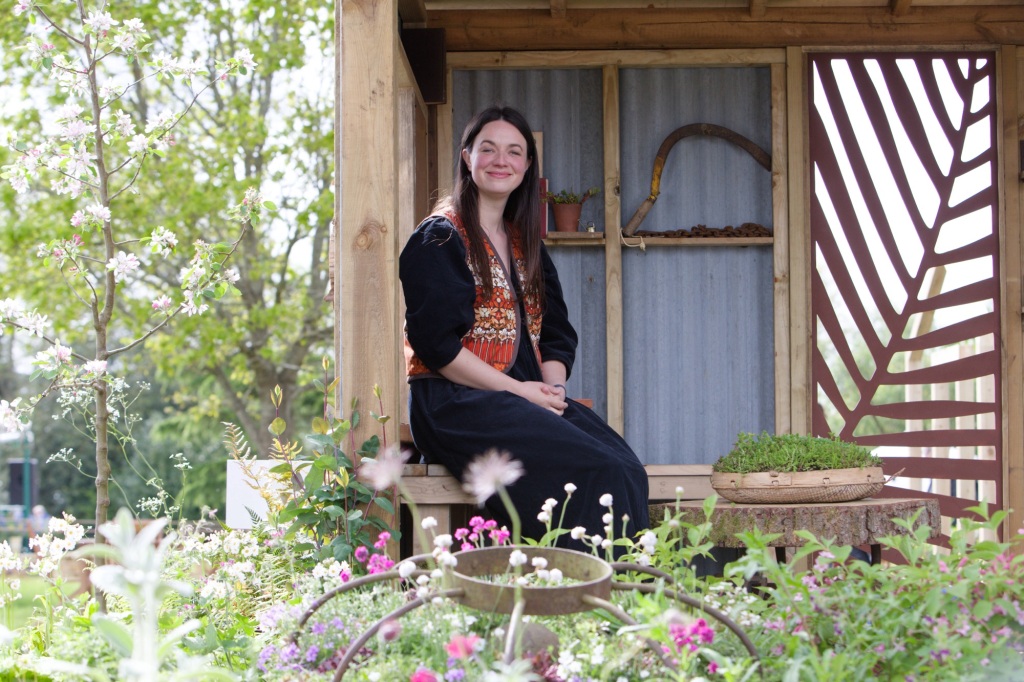
Frances Tophill presenting from one of the show gardens. Bug and butterfly hotels feature in this show garden at GW Live.
Gardeners World presenter Arit Anderson will be appearing at the show. She was recently presented with the RHS Veitch Memorial Medal, awarded to those who have made an outstanding contribution to the advancement of the science and practice of horticulture.
The show organisers say:
“We can offer a pair (one winner) of standard adult tickets for the BBC Gardeners’ World Spring Fair at Beaulieu. Tickets will be valid for Sunday 4th May, 9.30am entry. RRP £52.00 per pair.
The winner will be emailed a link to register online and will receive their tickets by email.
Tickets are non-refundable, non-exchangeable and non-transferable, and do not include travel, accommodation or expenses. There is no cash alternative. Details of giveaway and prize correct at time of print. Ticket terms and conditions apply https://www.immediatelive.com/ticket-terms-and-conditions .
To take part in the prize draw, please leave your name in the comments box below and a winner will be drawn randomly on Easter Monday at 6pm. Please include your name as otherwise the reply just says “someone.” And check back to see if you have won. If there’s no reply from the winner within 24 hours I’ll chose another name.
Please note, this competition is for the Beaulieu event only, and not for the NEC event.
Car parking
You’ll find information about parking at Beaulieu here and disabled parking here.
Good luck everyone and Happy Easter!
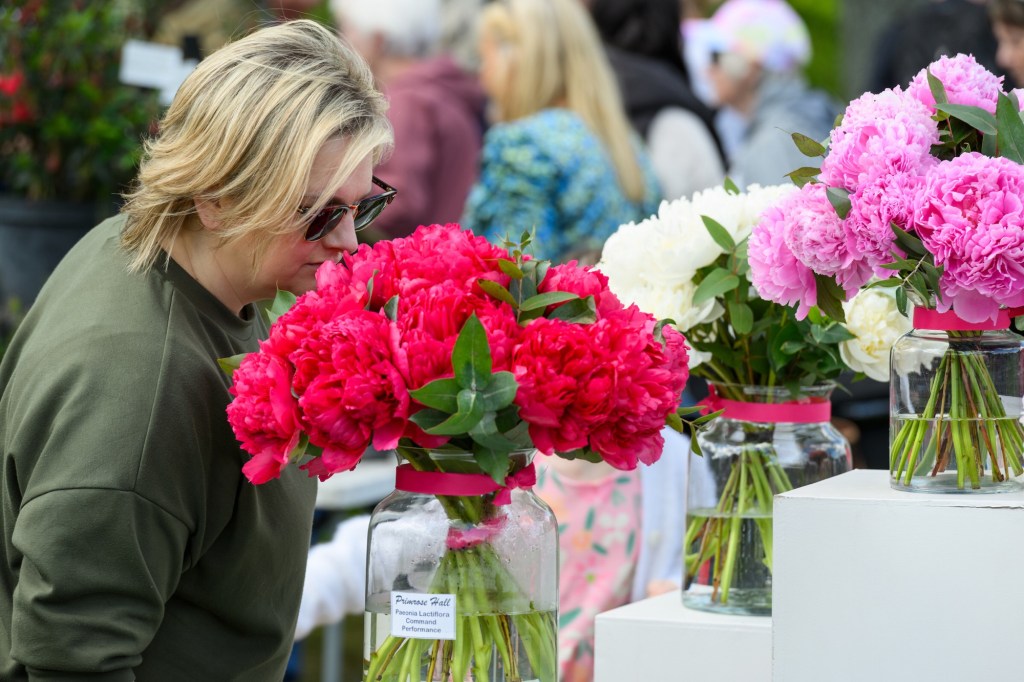
A quiet pool of water at the GWLive show.Primrose Hall Peonies.
Thank you everyone who read my review and left a comment on the blog. John Tilton has won the prize copy. Please get in touch John by sending an e mail to k.gimson@btinternet.com.
Many thanks to the publishers, Dorling Kindersley, for sending a copy of the book to give away.
I have no hesitation in recommending Lucy Chamberlain’s new book. If ever you’ve wanted to have a go at growing food, look out for the book. It will set you on the right path for success.
Lucy shows us how to analyse our gardens to create ‘zones.’ It’s then a case of right plant for the right place. There’s literally something to grow in any situation.
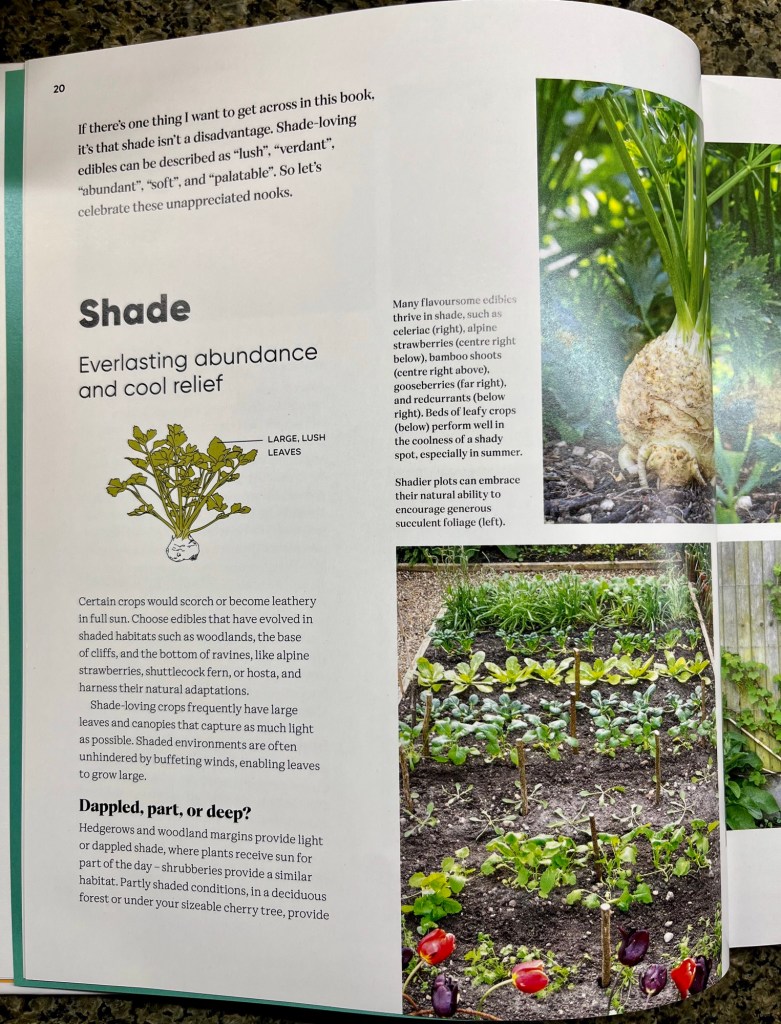
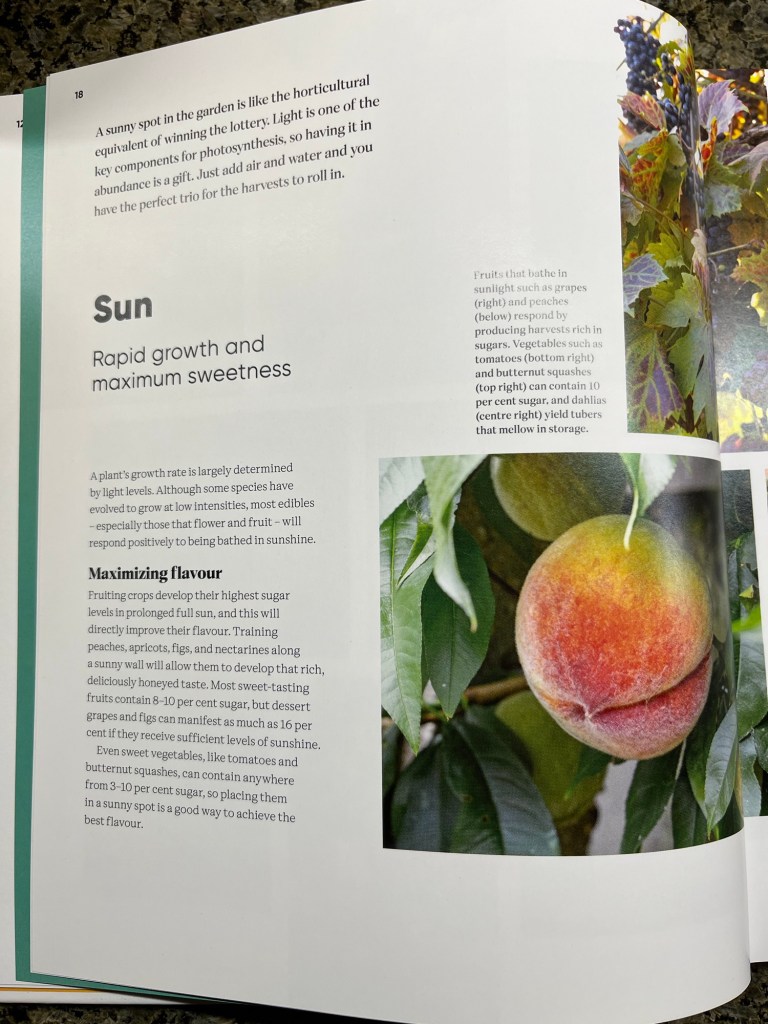
Sunny aspect suggestions Mapping your plotGive crops the best start in lifePart shade Lucy’s own garden as a case studyBeautiful as well as productive. I wrote this over on instagram at karengimson1 .
Thank you for reading my blog. Please sign up for e mails and notifications. More book reviews to follow…. Happy New Year! Karen
The publishers have kindly sent one copy to give away in a prize draw. Please leave your name in the comments box below to be included in the draw. UK entries only.
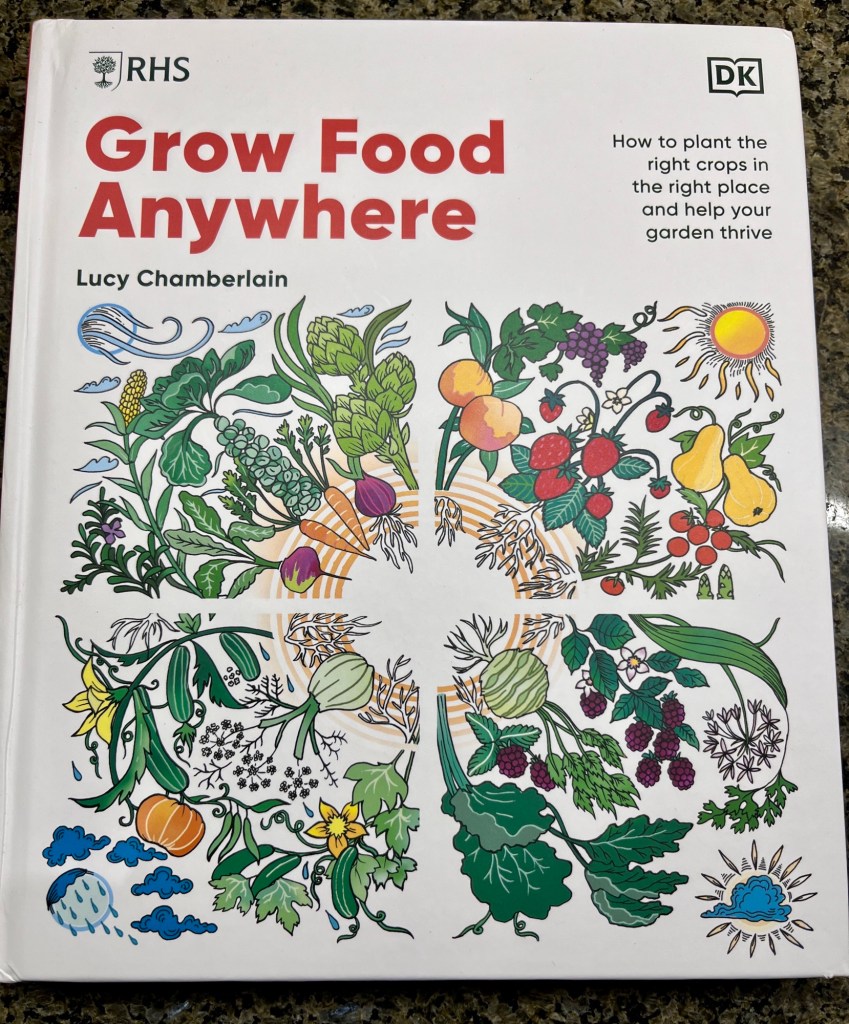
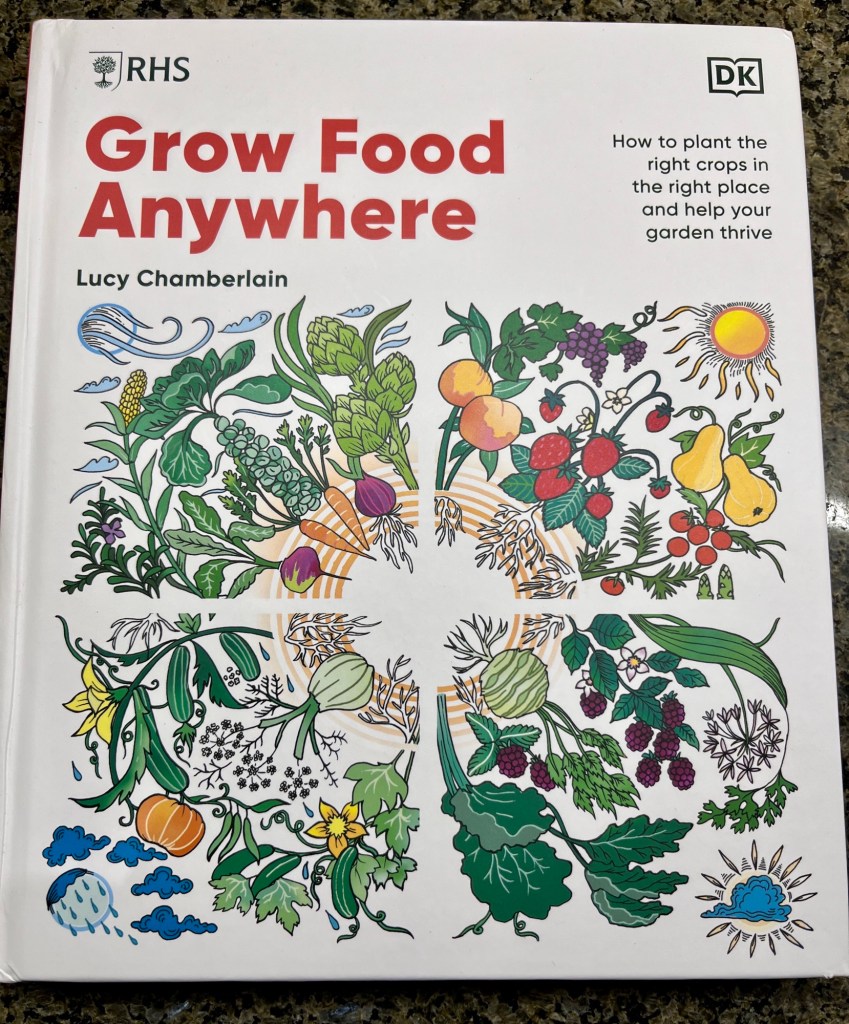
One of my favourite writers is Lucy Chamberlain who manages to capture the magic of gardening and makes us want to rush outside and get growing! In her new book published today she tells us exactly how to grow just about anything anywhere. And it’s all written in an easy to understand format, without being either too simple or too complicated. That’s the beauty of Lucy, she’s able to strike just the right note and make it relevant to all gardeners.
Lucy’s garden
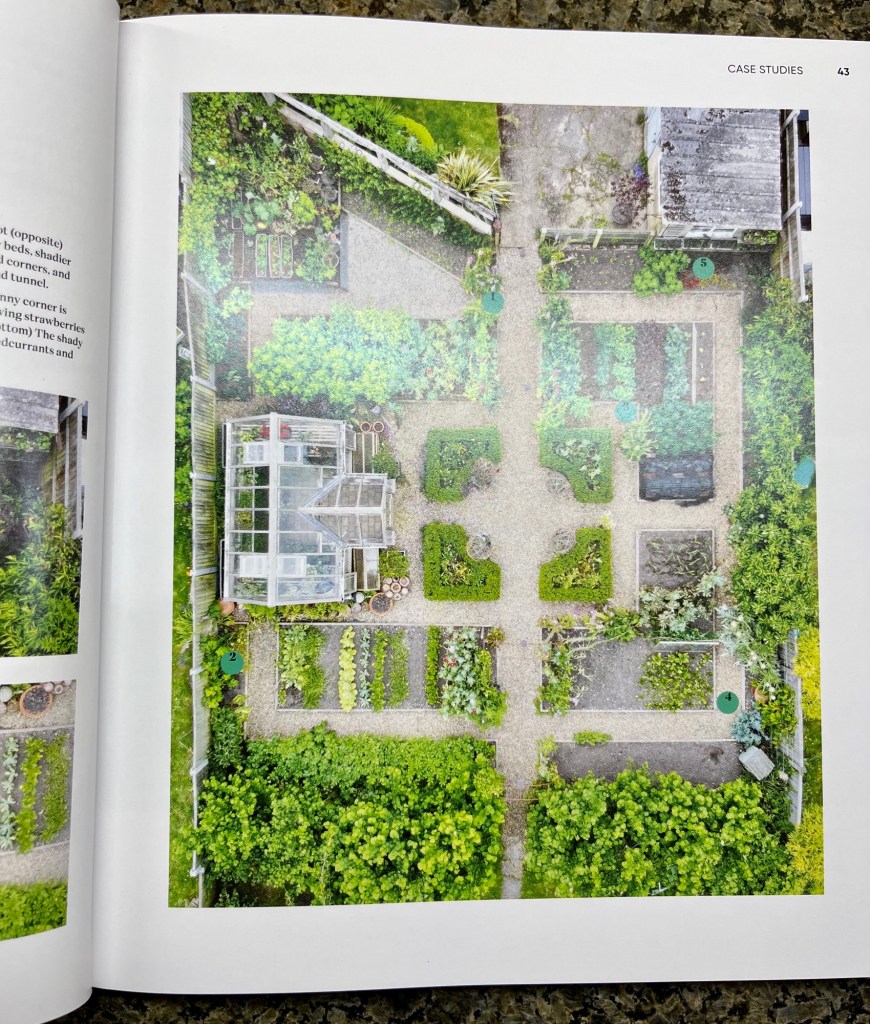
Lucy uses her own fruit and vegetable plot as a case study. I’ve watched Lucy create this garden over the past few years and admired just how much produce she manages to pack in there, as well as making it look beautiful with dwarf hedges, espalier apples and raised beds.
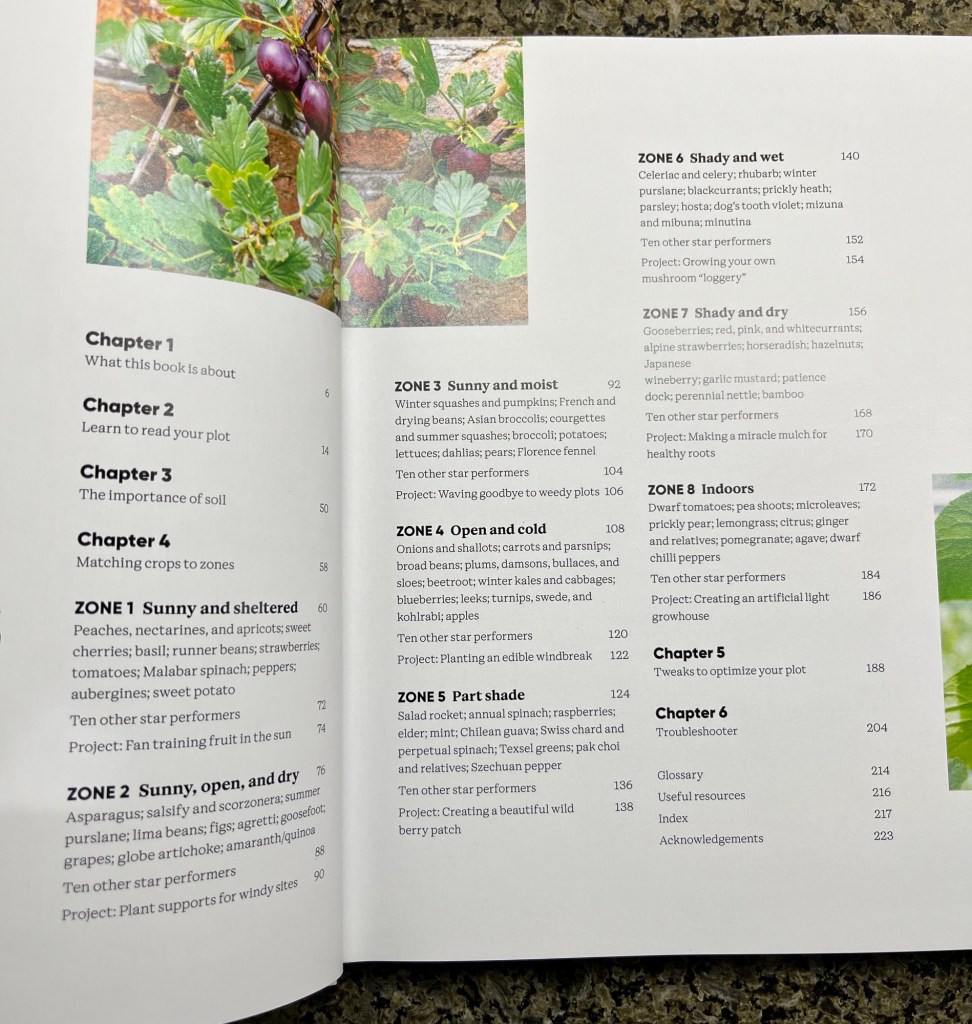
Contents page
Growing plants in the wrong place is one of the main reasons for crop failure. Lucy splits the book into ‘growing zones’ covering all the situations growers are likely to face when starting to garden. Sunny and sheltered, sunny and moist, open and cold, shady and wet, shady and dry, for example.
Several case studies are related, including a garden attached to large detached property, a compact garden, and an allotment. Lucy shows how to map areas of the garden to work out what will grow successfully in each position.
Mapping the plot What will grow in different areasChoosing plants to grow in full sunLucy’s garden where she grows 150 varieties of fruit, veg and herbs
In each area, top performing plants are suggested. I grow hazelnuts in dry shade, and each year I harvest a bumper crop of tasty nuts for making cakes and biscuits. They really are far more delicious than anything you can buy in the shops.
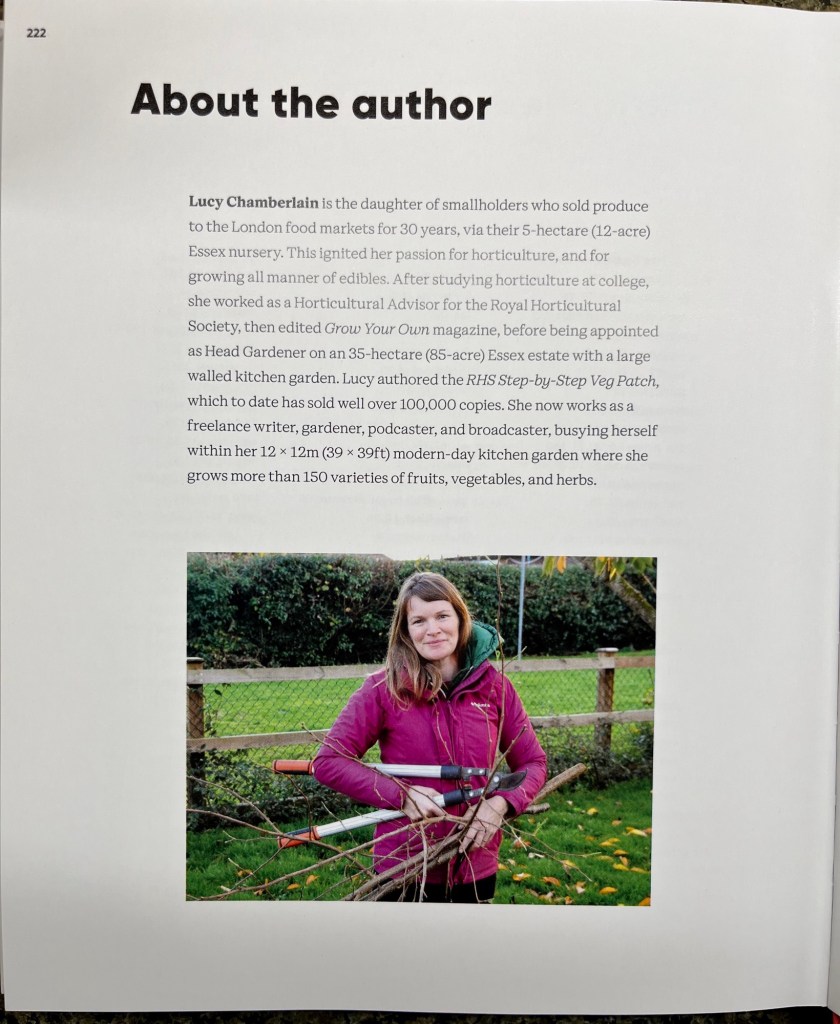
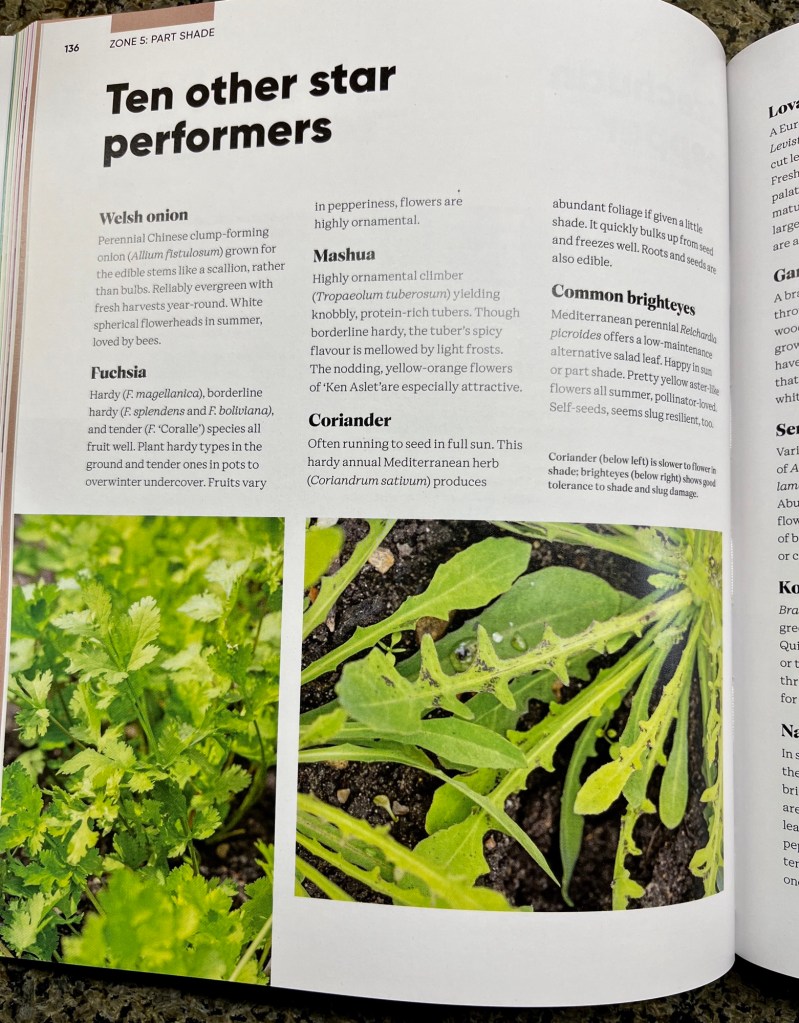
Other star performers for part-shadeAbout the author
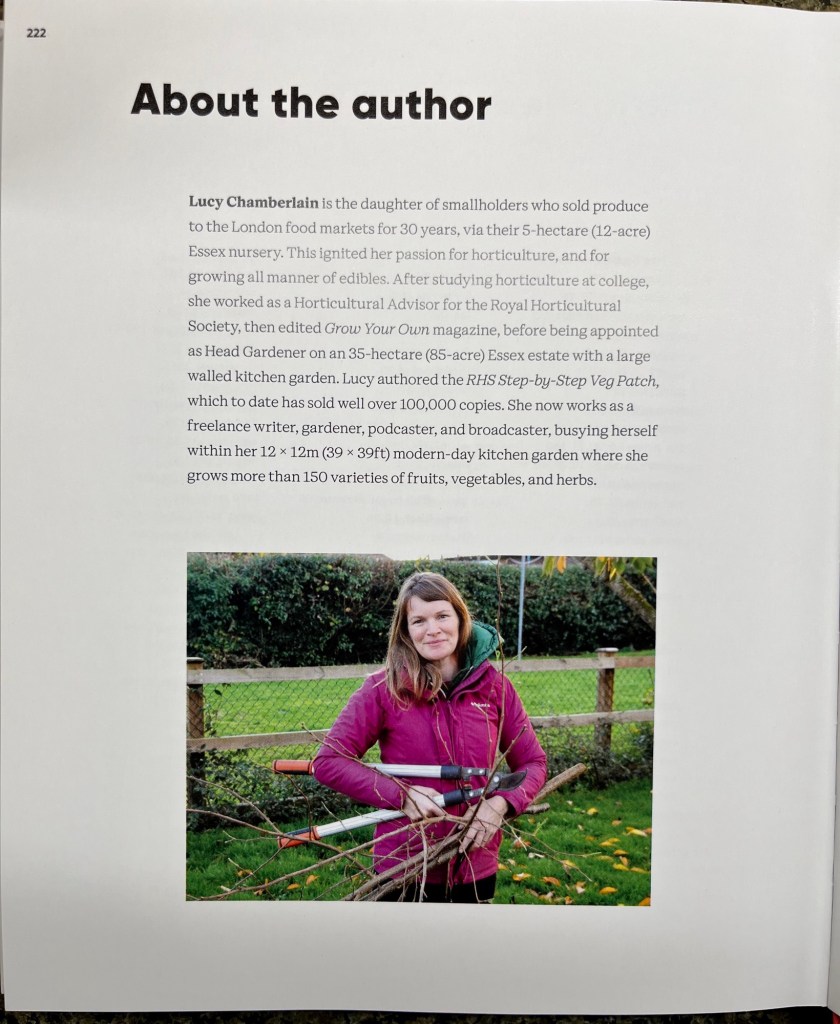
I’ve known Lucy for about 20 years and have always admired her get-up-and-go. Her enthusiasm for growing fruit and vegetables translates so well in her writing for newspapers, magazines and books. I also love the podcast ‘Talking Heads’ which she hosts with Saul Walker. Real gardeners, talking about real gardening. It’s a joy to listen to them, to be honest.
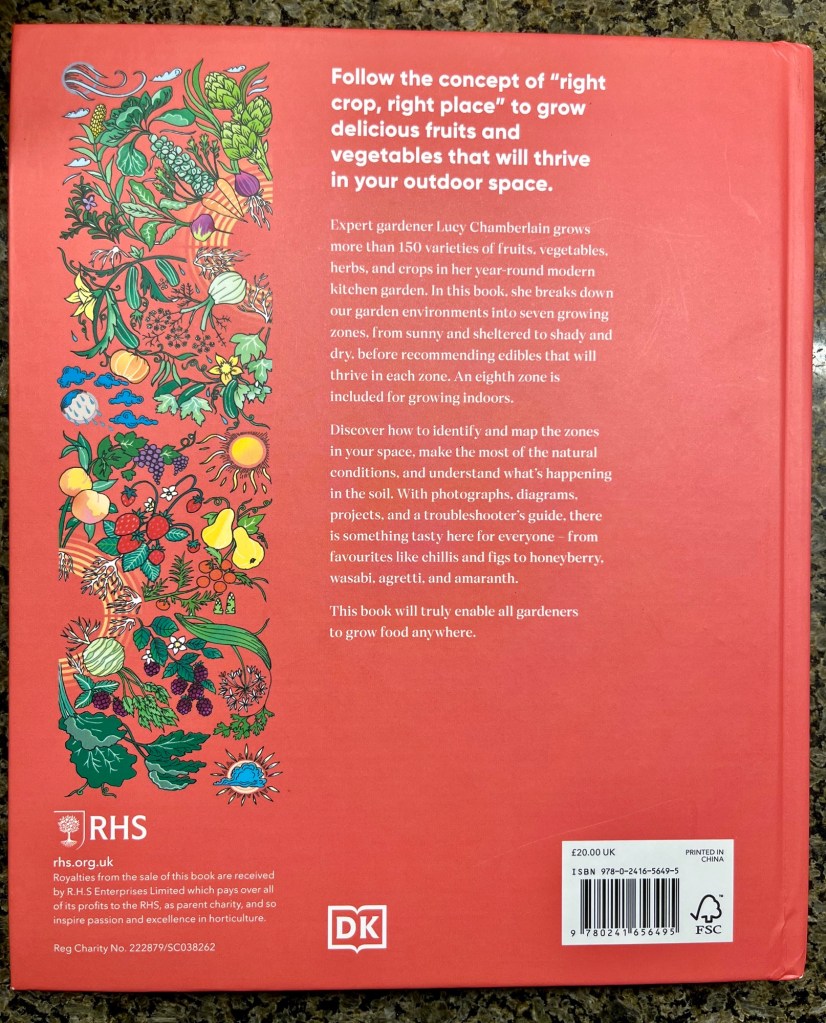
Back cover of the book
I have no hesitation in recommending Lucy’s latest book. The ‘right crop, right place’ principal is beautifully explained. Lucy breaks down the environments found in gardens into seven zones, even incorporating indoor spaces. The book is packed with expert guidance on maximising your growing through making the best of what you have. Grow Food Anywhere will soon get you harvesting fresh, healthy pesticide-free fruit, veg and herbs. What a great way to start 2025!
Please leave your name below and one winner will be randomly selected on Sunday 6pm. Editor’s decision is final and there’s no cash alternative.
Thank you for reading my blog and Happy New Year everyone!
Jane Wightman is the lucky winner of the prize draw for Barbara Segall’s new book. Thank you to to everyone who read my review and left comments. And thank you to the publishers Frances Lincoln/ Quarto for offering a free book to readers of my blog.
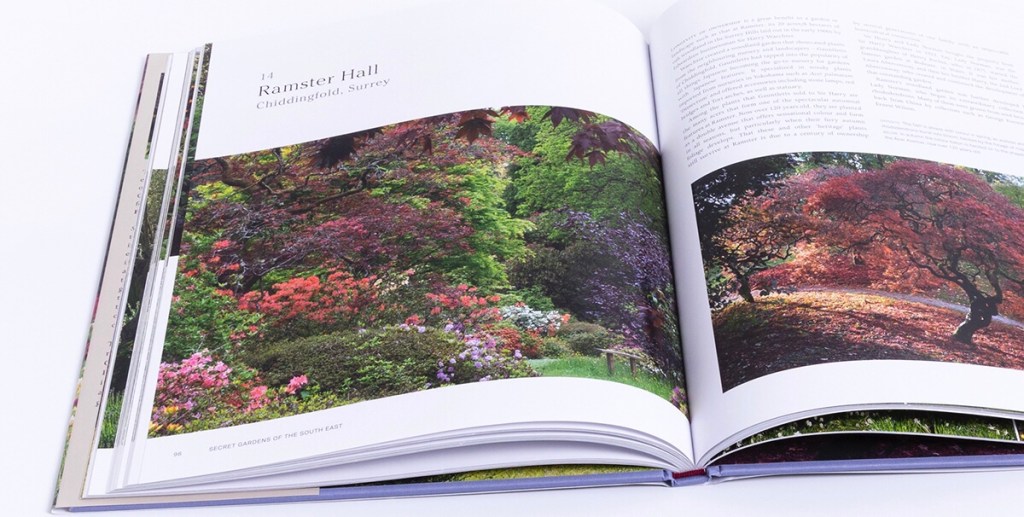
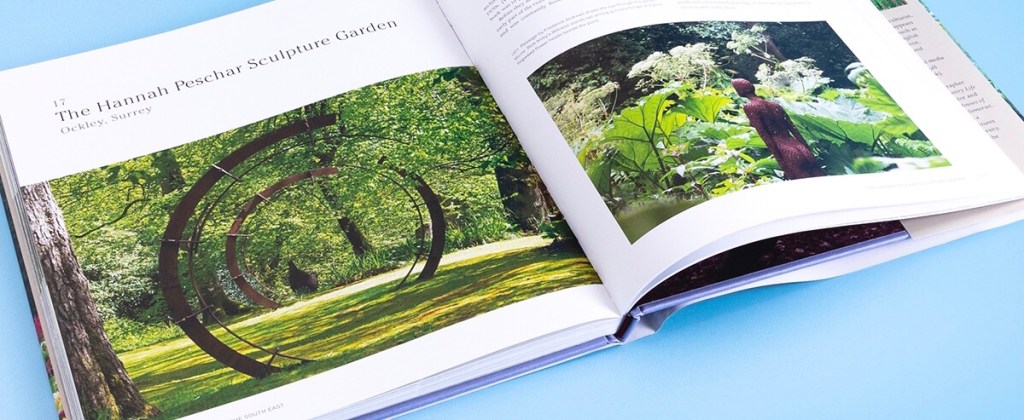
Ramster Hall, Surrey. 20 gardens feature in the book, Wonderful photos were taken by Clive Boursnell who travelled 12,500 miles for the project. The Hannah Peschar Sculpture Garden, Surrey Malthouse Farm Garden, East SussexMalthouse Farm GardenGravetye Manor, East Grinstead, West Sussex Vann, Godalming, Surrey
Thank you for reading the blog and leaving your comments. Look out for more book reviews and give-aways later this week. Suddenly there’s a steady stream of top quality gardening books arriving in the potting shed for tea break reading. To be honest, I’ve never seen such a wonderful array of subjects covered and superb garden writing. Tea breaks are getting longer and longer at bramble garden! I’ll keep you posted.
Gardeners’ World Live is a favourite show. I get the chance to see stunning show gardens, buy plants and meet friends for a catch up. Luckily, it’s a relatively short car journey to the NEC in Birmingham – there’s no travelling into London and battling for space on a seat on the underground. It’s a fairly straightforward journey and easy parking. It’s always a lovely relaxing experience, with plenty of space to move about.
The organisers have kindly offered two free tickets in a prize draw for readers of this blog. The tickets are for Sunday 29 August only, with an entry slot from 12pm onwards. To enter, just leave a comment below and your entry will be put into a computer random name generator to select the winner. Please note, if you wish to park, there is a charge. The prize only relates to the show entry ticket. Details below for parking. There is no cash alternative, and the organiser’s decision is final.
Here’s some photos I took when I last attended the GWL show in 2019. Enjoy the virtual tour!
The Watchmaker’s Garden won best in show in 2019. My sister in law Rozanne and her husband Paul grew some of the plants for the award-winning garden, including the watercress shown in the stone tank by the front door.
A contemporary garden. A rill water garden. A garden with en elevated seating area.
Prize winners will be announced on the blog on Monday evening 5th July. Please be aware of scams. No one will contact you about this, other than a message on my blog. It’s sad we have to worry about these things, but we just have to be careful.
Regarding parking, the organisers provided the following information:
Prize winners will need to redeem their e ticket by 19 August to attend on the 29th August.
Growing fruit, vegetables and herbs doesn’t require acres of ground. In fact, you can grow virtually anything in pots, on a balcony and even indoors- if you just have the right techniques and equipment. In Lucy Hutchings’ new book, Get Up and Grow, there’s tips on everything you need to step up your gardening to a new level and grow whatever you fancy in a fresh and exciting way. Judging by the photos in Lucy’s book, the results will not only be a feast for the table, but a feast for the eyes too. Everything looks absolutely stunning.
Here’s a selection of my favourite projects from the book:
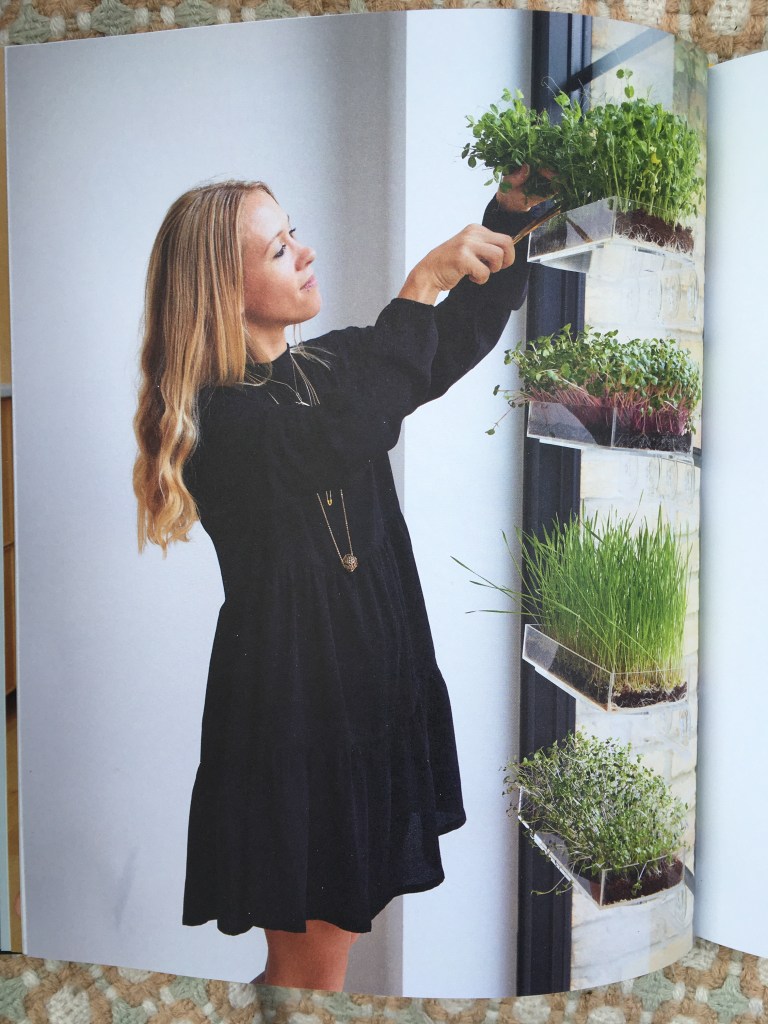
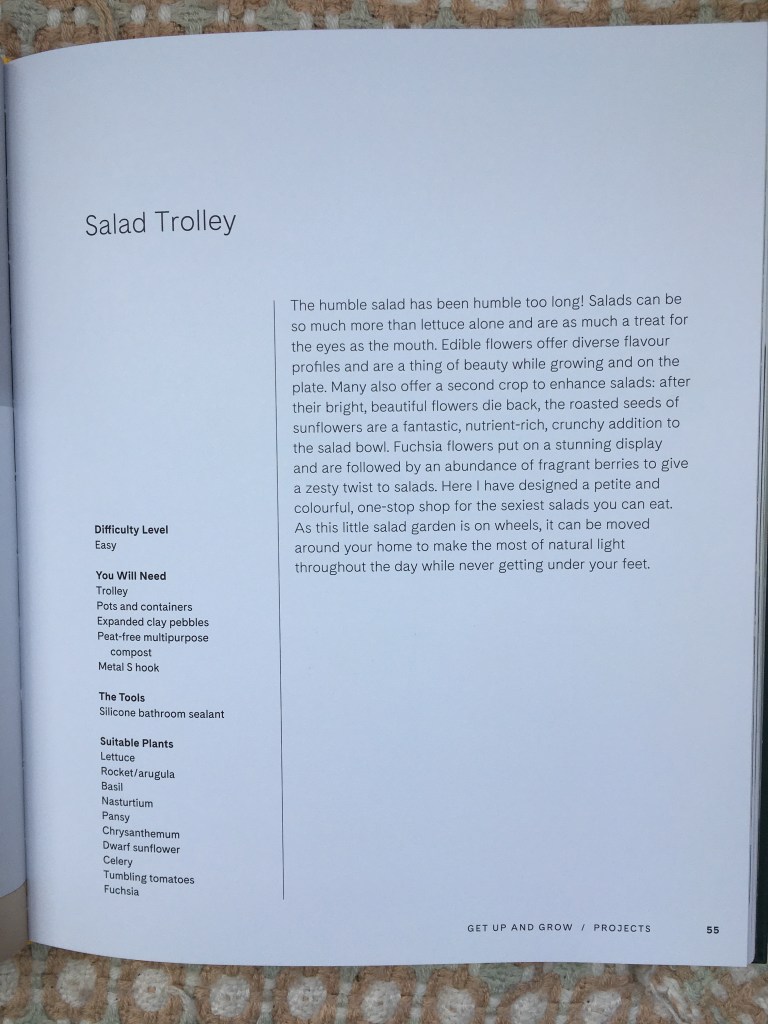
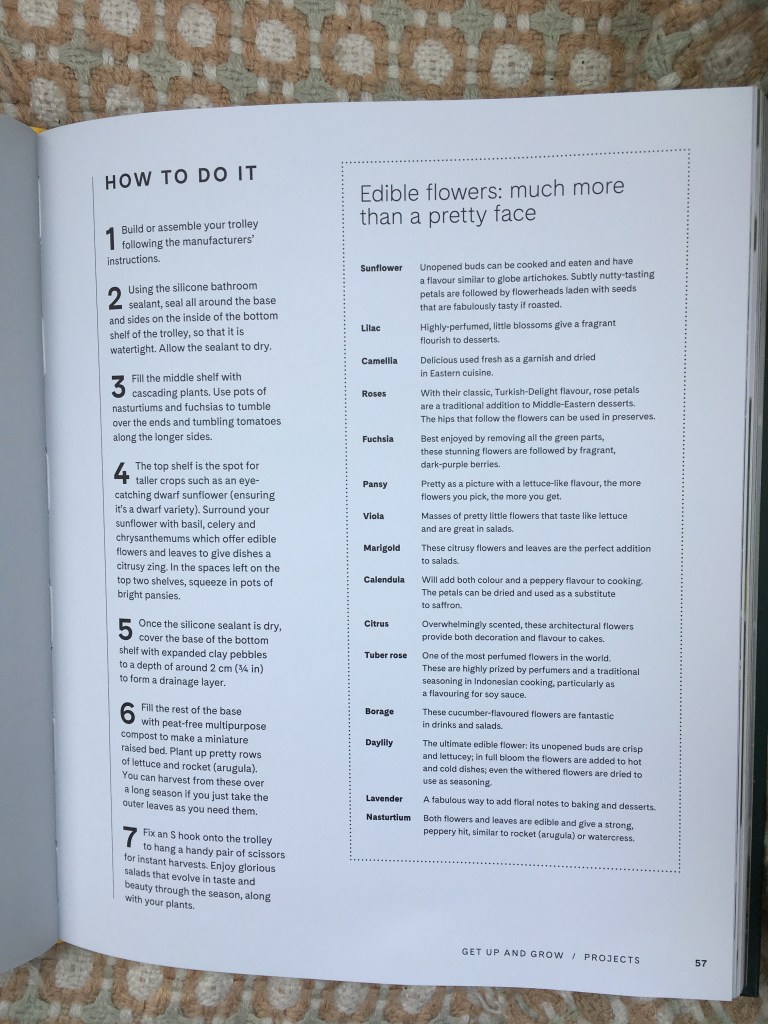
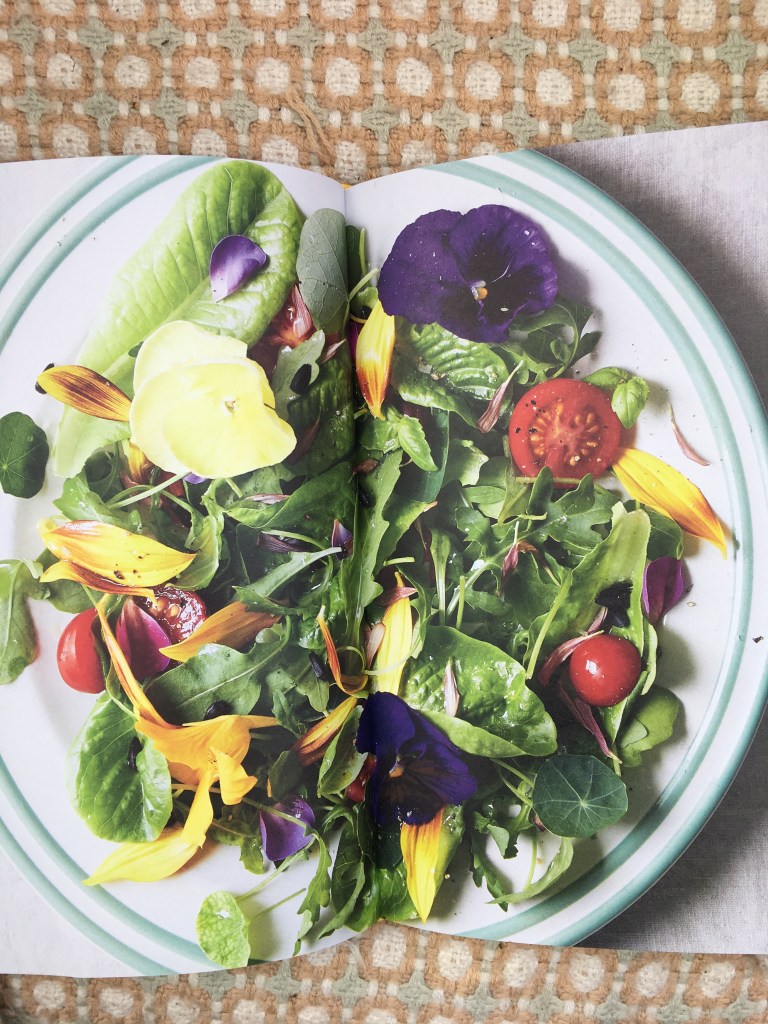
An indoor greenhouse, made from a glass display cabinet and fitted with full spectrum grow lights. IKEA sell similar cabinets or you could recycle some furniture. I love this idea – growing microgreens in self-adhesive window trays. These are the sort you can buy for showers. Usually they are used for storing shampoo and soap. Ingenious idea, using them for growing nutritious microgreens. Lucy also shows you how to convert an over-door hanging storage rack into a window herb garden. These can be moved around the house, or can be hung on a sunny wall or fence outdoors in the summer. Lucy has one hanging on her greenhouse sliding door, making use of all available space. A salad garden on wheels! It can be moved around the home to make the most of natural light, or be wheeled out on to the patio on sunny days.
More projects from the book. Lucy, a former couture jewellery designer, is @shegrowsveg on instagram and writes a blog at http://www.shegrowsveg.com
The book covers the basics of potting up, using lights, feeding, watering and trouble-shooting. Perfect for beginners, or more experienced gardeners looking for a bright and modern new way to garden. The ‘suppliers list’ at the end of the book is also quite a revelation with lots of suggestions I’d never even thought of. I can’t wait to get started on my own growing projects. With Lucy’s step-by-step illustrations and clear instructions, I should soon be growing kokedama oranges, having a go at hydroponics and making a ‘living wall.’ I’ll report back on my progress!
Thanks for reading my blog.
The publishers have kindly offered one copy for a prize draw. Please leave comments below to be included in the draw. A name will be randomly drawn on Sunday, 23 May at 6pm. There will be nothing to pay and I will contact you from my e mail which is k.gimson@btinternet.com.
Published by Quadrille, an imprint of Hardie Grant Publishing
RRP £26 Published spring 2021. Hardback. 272 pages
ISBN 978 1 78713 6359
Reading corner in the orchard, currently under cherry and pear blossom
At about five or six, I was given the task of ‘collecting the mint.’ My grandmother, who was cooking lunch, had a huge patch of mint in her farm garden. Basket in hand, I carefully plucked the sprigs of mint and laid them neatly in rows, tips all the same way. No higgledy piggledy stems for me. Even at that young age, I took things seriously. Given a task, I wanted to do it right. I smile now, looking back at what a serious little girl I was. The first grandchild, surrounded by adults, there were no siblings or cousins for five years. I listened intently to all the adults talking and took in every word. Through their conversations, I formed a view of the world. Many years later I can still hear their voices quietly reporting the day’s events, whispering a neighbour’s misfortune, a sadness, a death. Murmuring sorrow for some, and joy for another- a wedding, a birth, some good fortune achieved. Conversations at the kitchen table brought the world into the home. I listened and learned, but cocooned in the routine of work, gardening, farming, cooking and eating, nothing appeared to change for us. It seemed as if everything happened to other people, but my world stayed the same, stable and safe.
The scent of fresh-picked mint still has the power to transport me back to happy childhood days. My mint was sprinkled over home grown new potatoes, tiny and white, as shiny as pebbles, with creamy home-churned butter and a sprinkle of grainy salt. Something so simple, delicious and ultimately, memorable.
This last 12 months, many of us have found comfort in baking. Focussing on the past, perhaps I’ve attempted to bring back the security and safety I felt as a child. I’ve found myself cooking hearty soups, casseroles, and vegetable pies. The spicy, buttery Welsh cakes my Welsh grandmother cooked on a griddle. Rice puddings, fruit crumbles and sponge cakes. Separated from family and friends, these old favourite recipes have been a comforting presence. Sights, sounds and scents of cooking, recalled as if they were only yesterday.
However, we have now emerged from lockdown, and I’m looking for a new way forward. I’m keen to try new recipes and new ideas. I’m eager to welcome family and friends back into my home and garden and I’m looking forward to making new memories for them- and for me. While not forgetting all the echoes from the past.
Mark Diacono’s new book ‘Herb, a cook’s companion’ is a good starting place. Recipes such as Lemon Thyme and Leek Tart have a rich butter and egg pastry base with a leek and cream filling. Lemon thyme leaves and nutmeg add a delicious twist to a familiar recipe.
Here’s my first attempt. I must admit, it’s not perfect. My pastry needed to be folded over more firmly, as the lovely egg filling escaped over the side. My second attempt was better and everything held firm. I’ve never thought of adding herbs to the pasty base before, and it was a triumph. The lovely buttery lemon-thyme pastry melts in the mouth. A perfect complement to the leek and creme fraiche filling. Again, adding nutmeg and bay leaves lifts this recipe out of the ordinary. It looks beautiful too. Presentation is something I’m trying to improve on. This looks as good as it tastes and received thumbs up from the family.
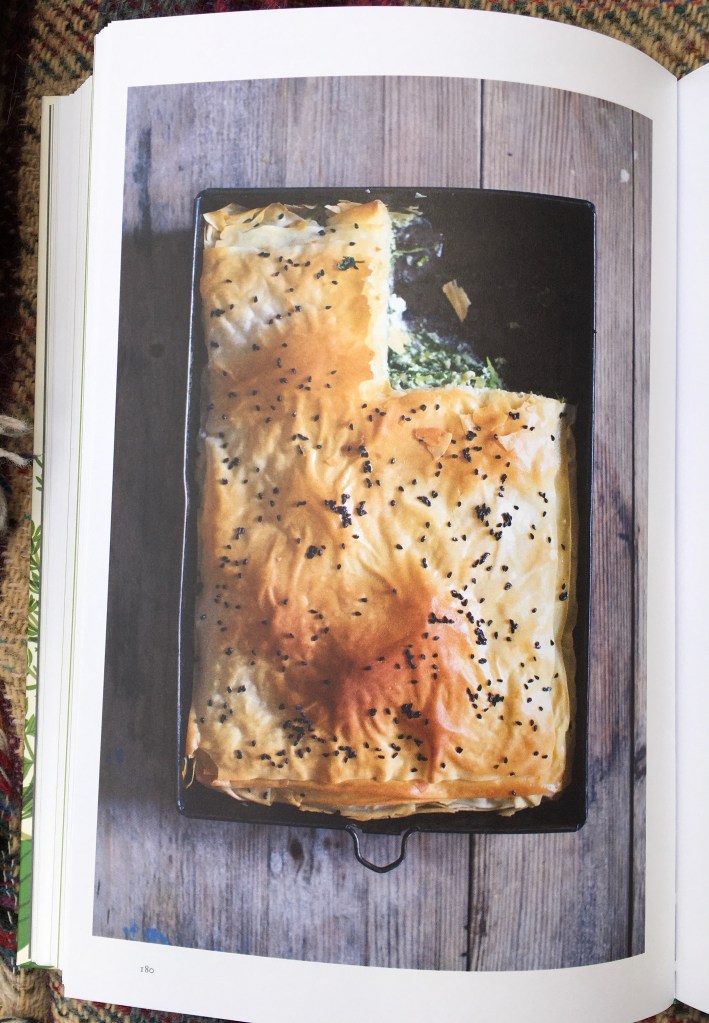
Greek Herb Pie.
Mark says: “This Greek summer favourite, aka Spanakopita, is so worth making a delicious regular. Heavy with spinach, salty feta and crisp laminations of filo, it’s as good cold as hot, early in the day as late. This version nudges the spinach (which can be a bit of a grump at times) towards the cheerful with the brightness of dill and mint in generous quantities, and parsley anchoring the leeks to the cheese. A delight.”
Herb Soda Bread
A buttermilk, oat and wholemeal flour bread, with a small bunch of chives or sweet cicely, or either of the savories, finely chopped.
Lemon Lavender Meringues
A twist on the usual meringue recipe. Between 5 and 8 lavender heads are whizzed with caster sugar in a spice grinder and added to whisked egg whites and lemon zest.
Fig Leaf and Lemon Verbena Rice Pudding.
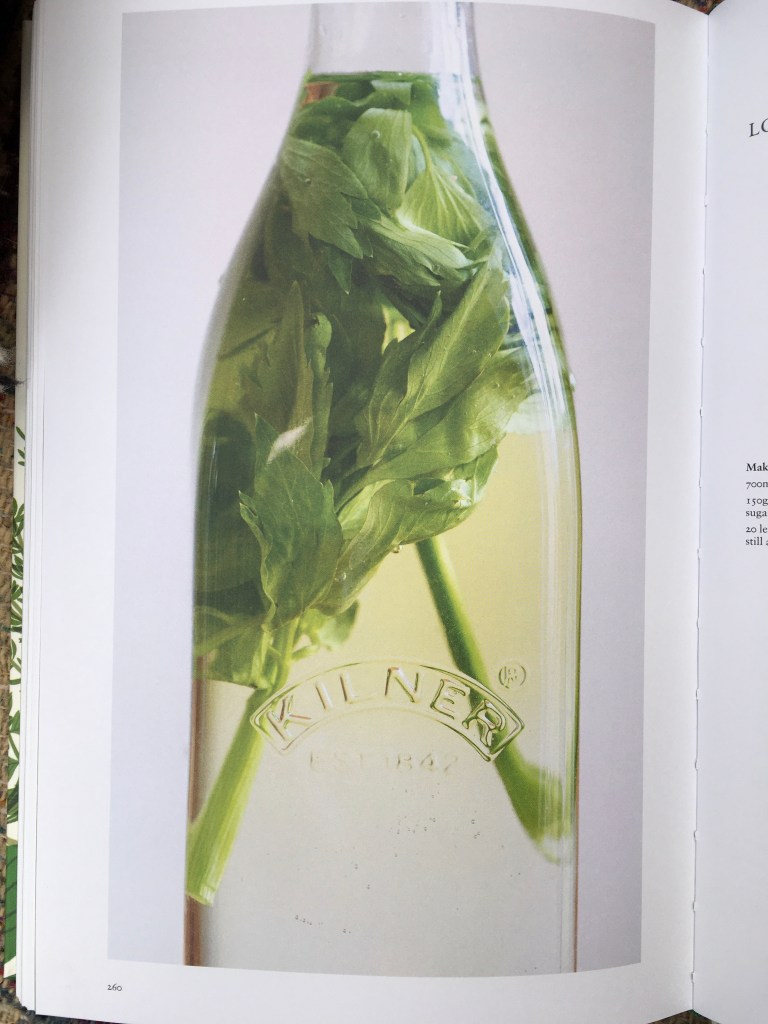
Even my family favourite rice pudding is given a new lease of life with the addition of fig-leaf infused milk and lemon verbena leaves. Such a lovely change from the usual.
The book covers how to grow and harvest herbs and how to preserve them in sugar, vinegar, oil and salt, and how to dry and freeze them.
There’s comprehensive coverage of choosing what to grow, how to grow herbs from seed, taking cuttings, propagation and planting out. There’s full plant descriptions of many popular herbs such as anise hyssop, Korean mint, basil, bay, chervil, chives and parsley for example. Then there’s suggestions for more unusual plants such as shiso or perilla – which I’ve always grown as a purple ornamental bedding plant. Seems it can be added to salads and used with recipes containing aubergines, grilled or barbecue prawns, and with eggs and avocado. I shall experiment!
Following the growing section, there’s recipes featuring soups and side dishes, main meals, puddings, biscuits and drinks. There’s something surely to please everyone – especially people like me, looking for a special dish to make for friends and family, as we start to reconnect.
The publishers have kindly offered one copy to give away. Please leave a comment in the box below to be included in the prize draw. A winner will be randomly selected. International entries are welcome.
Please look back on Wednesday 5th May to check if you have won a copy. I’ll announce it on the blog. (Please do not give out your address or any other details to anyone. Be aware of scams.)
Have you found cooking a source of comfort over the lockdown times? Are you, like me, looking to try something new this year, as we start to feel more positive and move forward. Get in touch and let me know your thoughts. And thank you, as ever, for reading my blog. It’s always appreciated.
* comments box is right at the bottom of the blog, past all the hashtags. Or click on ‘comments’ under the headline.
Thank you to everyone who read my Niwaki garden tools review. I got a message from WordPress saying my ‘stats were booming!’ Whatever that means! I am very grateful for all your support.
The winner for the prize draw for the Niwaki garden snips is Gardening Alice.
Keep an eye out for more reviews and prize draws. There’s plenty more to come…. Thank you again. And thanks to Niwaki for providing the garden snips.
I am @kgimson on twitter and karengimson1 on instagram. And karen gimson on Pinterest.
Do come over and say hello. There’s a thriving and supportive gardening network on social media. I don’t know what I would have done without my twitter friends these past five months. They have distracted me from worrying and helped me focus on gardening-related matters. It’s been like team work.
I don’t use chemicals in my garden. Some weeds are allowed to thrive, if they are useful to insects and pollinators. Dandelions are particularly good for bees, especially in early spring when pollen is scarce. There are some types of solitary bee that only feed on dandelions. I wouldn’t want to deprive them of their vital sustenance. But, I don’t want a lawn predominantly covered in dandelions. It’s all about striking a balance, so I start to thin them out in mid-summer. Niwaki sent a Hori Hori knife for a trial and It’s perfect for deep-rooted weeds such as dandelions. I was using a trowel before, which often didn’t get to the bottom of the tap root, and was hard work over a large area. The Hori Hori is sharp enough to easily slice through grass, and strong enough to gently lever weeds out of the soft wet ground. I notice, on the website, it says the knife is: “Mighty, but not invincible. It’s best not to stick it in heavy clay and yank back hard.”
When I’ve removed the dandelions, plantains and thistles, I pop a Seedball into the hole that’s left. Seedballs are wildflower seeds encased in clay. They can simply be scattered around the garden. They come in selections named bee, butterfly, poppy, urban, bat, bird and beetle. Hopefully, in time, I’ll end up with a flowering lawn, full of cowslips, self heal, wild marjoram and primroses. I’m aiming for a tapestry carpet effect.
The Hori Hori has a strong canvas holster which I think could be attached to a belt. The hand-forged carbon steel blade runs right through the handle, for strength. Tough and strong, it seems built to last. The handle is FSC beech wood and the blade is 7″ 17cm long.
As well as digging up weeds in the lawn, my knife is great for removing weeds from between paving slabs. I also spent a happy hour digging up ‘free’ plants which had self-seeded in the gravel. I found bellis daisies, perennial geraniums, sedums, erigeron daisies and several seedling trees- silver birch, maple and mountain ash. Much easier to lever them out with a sharp blade than using a trowel.
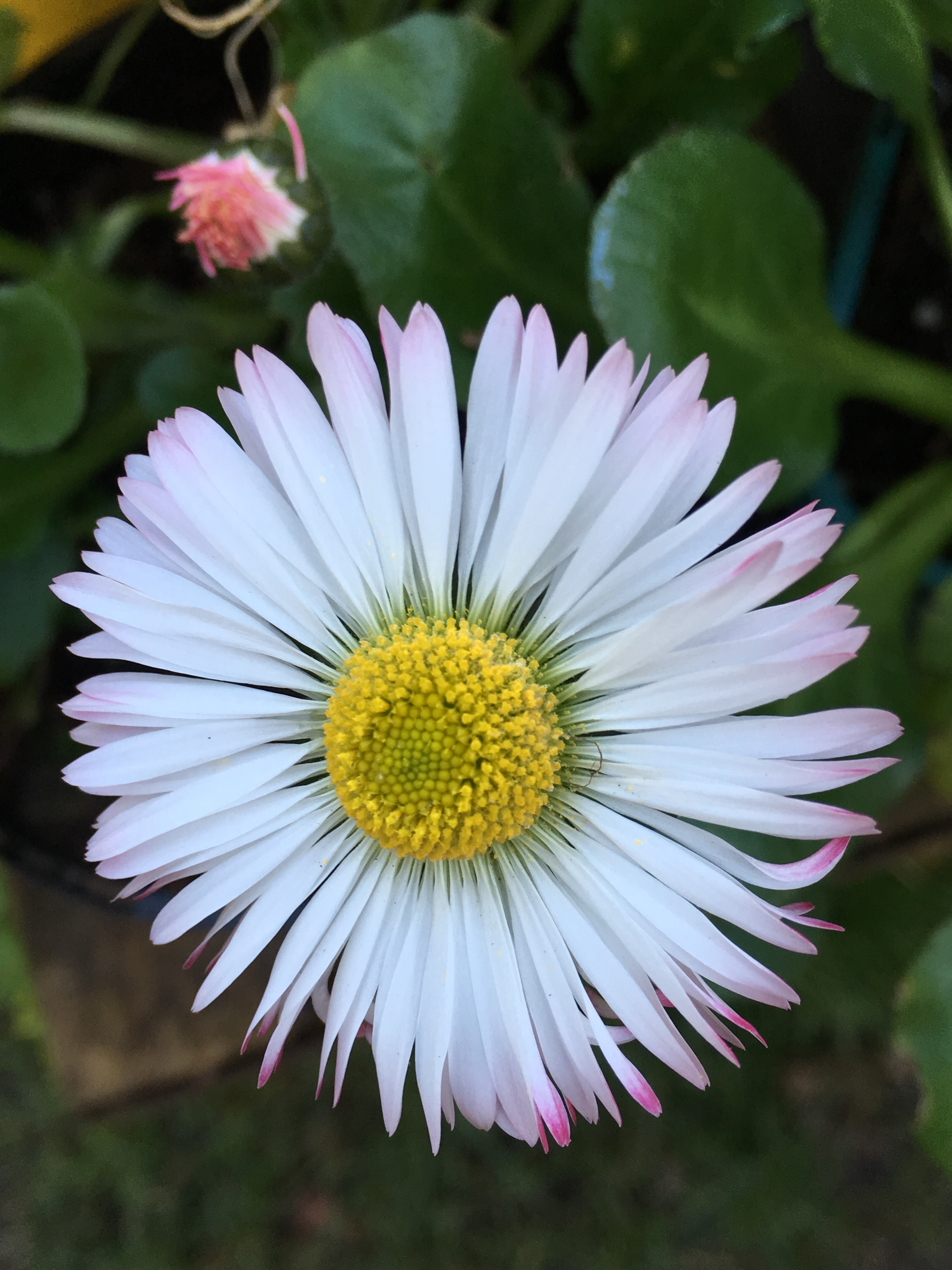
Bellis daisies seed readily around and make lovely bedding plants for borders and plant pots. Free plants are always welcome here.
Here’s a seedling mountain ash rescued from the gravel path. Beautiful spring flowers for bees, and autumn berries for birds. Great for any wildlife garden.
Erigeron karvinskianus also seeds readily between paving and in gravel. Another ‘free plant,’ dug up and transplanted into a 9cm pot.
My Hori Hori has quickly become a tool I reach for whatever task I’m doing, planting, weeding, slashing bramble roots. It’s comfortable to use and makes life much easier. And that’s what gardening is all about for me, managing the weeds, not totally obliterating them, just tipping the balance, and keeping me in charge, rather than always rushing around desperately trying to keep up.
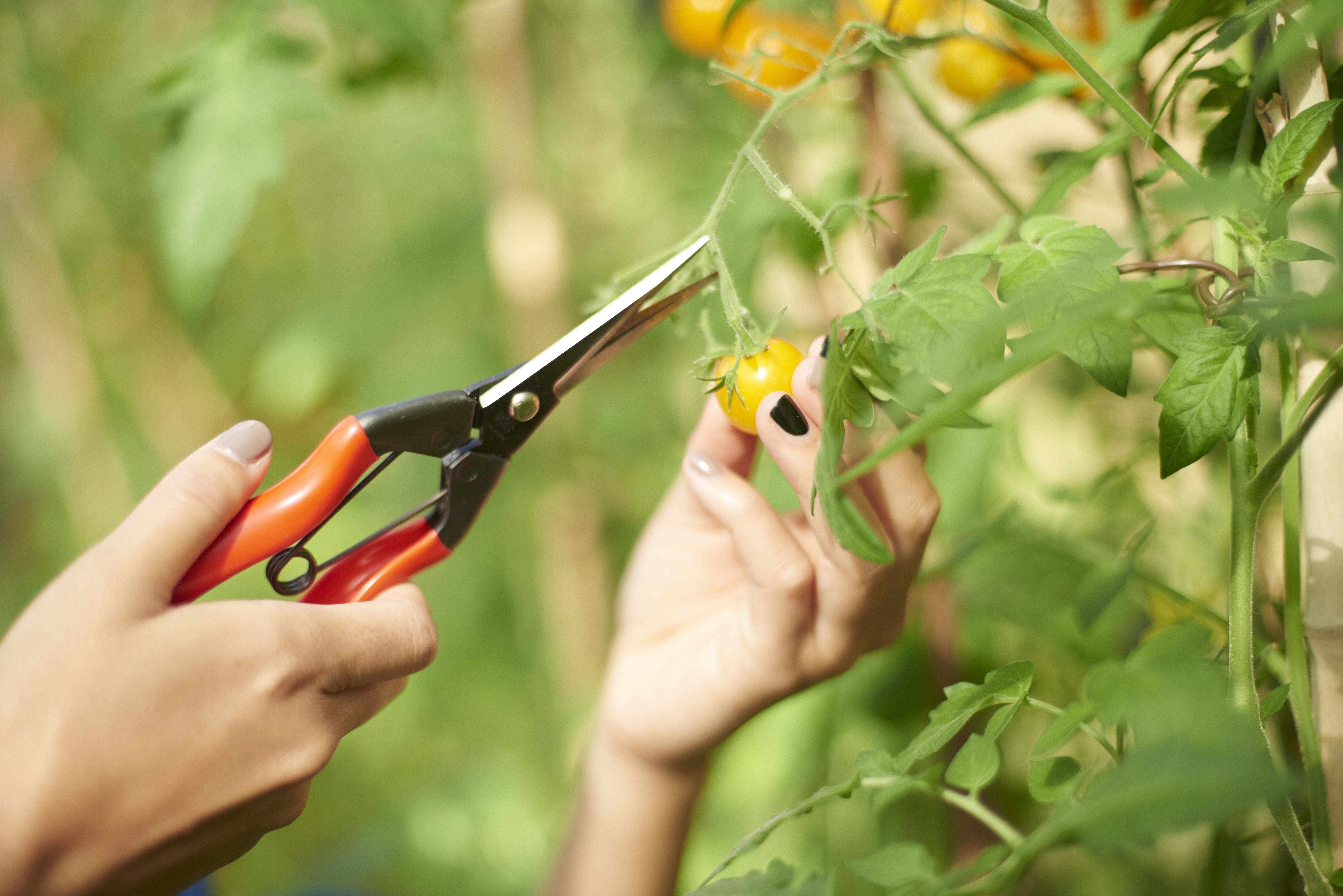
I’ve asked the team at Niwaki to offer a reader prize. They have currently sold out of Hori Hori knives, probably due to the upsurge of interest in gardening over the covid period. So they are offering some forged garden snips instead. Keep an eye on the blog, and when they send me another item to try, the Hori Hori will probably be back in stock for a prize at a later date.
Meanwhile, to enter for the garden snips, just leave a comment in the box below and Niwaki will randomly select a name. Usual rules apply. Niwaki’s decision is final and there’s no cash alternative.
A winner will be announced on Monday. Please check back. Thank you.
Do you have any favourite garden tools. Nearly all of mine belonged to my grandfather Ted Foulds. And some belonged to his father, so they date back to the 1930s. They have certainly stood the test of time, and I wouldn’t be without them.
Would SHIRLEY please get in touch. You left a comment on the blog for Naomi Slade’s new book Hydrangeas and you have won a copy. Many thanks for taking part in the prize draw. The publishers selected your name in a random draw. All the best, Karen at k.gimson@btinternet.com
Hydrangeas by Naomi Slade was won by Shirley . If she would kindly e mail me, I’ll ask the publishers to forward a copy of this gorgeous new book. k.gimson@btinternet.com.
I’m very grateful to all the gardening suppliers and companies offering prizes for readers. I love trying new ideas. I’ll try anything, providing it is suitable for organic gardening and doesn’t harm any living creature. I never accept payment for trying the samples. I prefer to be free to give my honest opinion.
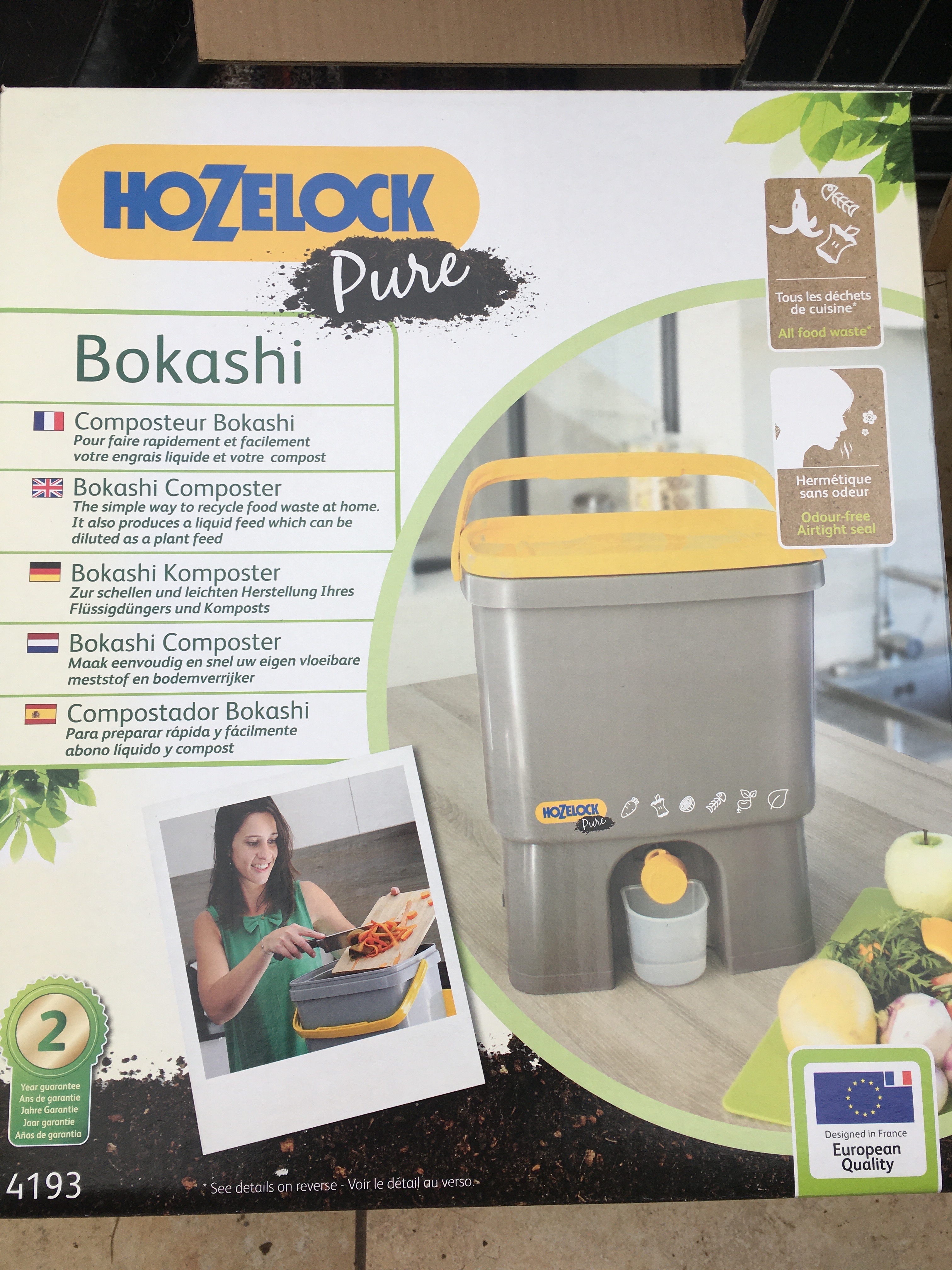
Thank you also for reading and for leaving comments. Look out for more gardening books on the horizon, a Hozelock liquid feed kit, some Japanese Niwaki garden secateurs and some new organic pest and weed control products. It’s interesting to see what’s available for gardeners in modern times. My grandfather would have been amazed by the wide choice of products. He would have loved trialling them as much as I do. Things certainly have changed since he gardened in the 1940s and 1950s. Many products make life a lot easier, all round.
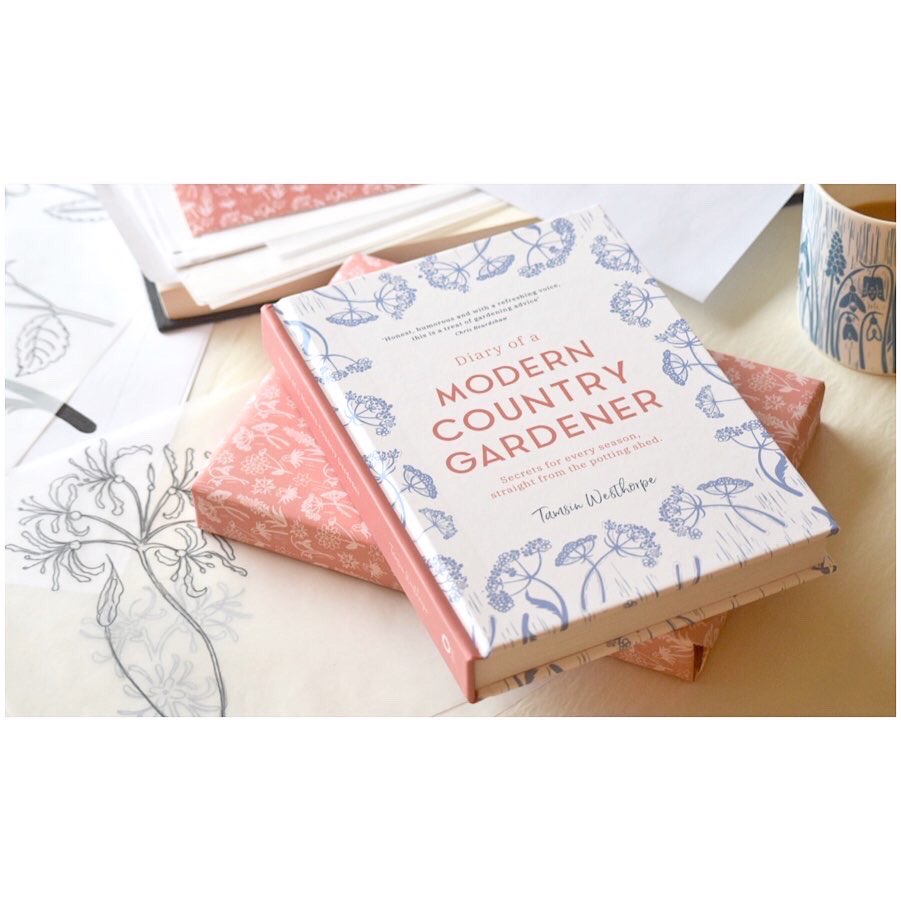
Secrets for Every Season Straight From the Potting Shed
By Tamsin Westhorpe
Orphans Publishing ISBN 9781903360422
Hardback. 248 pages. £20
Illustrations by Hannah Madden
Book review and prize draw. Please leave a comment to be included in the draw.
We are all standing at our house windows gazing on waterlogged, storm lashed gardens, aching to be outside gardening. It’s doesn’t matter what kind of gardening, anything, as long as we can run some compost through our fingers and see green shoots emerging. It’s been a long wet winter.
Luckily Tamsin Westhorpe has a beautiful new book which transports us immediately to gardening heaven- Stockton Bury in Herefordshire. It is a very welcome and timely escape.
Tamsin is the 5th generation to garden at her family’s farm. The four acre garden within the farm has fruit and vegetable plots, a stream and pond, ‘rooms’ with different planting themes and a dovecote dating back to the time of Henry 1. The land has been worked by the family for more than 100 years, and the much-acclaimed garden is open to the public.
In her new book, Diary of a Modern Country Gardener, Tamsin lets us into her world as we see her facing all kinds of gardening challenges, accompanied by lots of laughter.
There’s expert advice on growing cut flowers, staging summer garden parties, selecting and planting trees, planting bulbs, storing produce, keeping chickens, coppicing hazel and more. I particularly like the ‘tool kit’ panels detailing equipment and materials needed for the list of jobs suggested each month. A useful reminder before getting going on tasks. There’s nothing worse than starting something, and then having to stop to search for forgotten items to complete the project.
I also like the list of ‘must-have’ plants for each month. January suggests Cornus mas, crocus tommasinianus, cyclamen coum, eranthis hyemalis, hamamelis, hellebores, iris reticulata, mahonia, snowdrops, viburnum Dawn and narcissus Bowles Early Sulphur. You can almost smell these spring delights. There’s something cheerful on every page.
As we follow her daily life there’s lots of hints and tips on what to do and when. But this is much more than a ‘how to’ book. It’s a book about solving problems, dealing with gardening conundrums, interacting with people, and simply enjoying every single moment.
I love books where you can really hear the author’s voice. Tamsin’s voice is loud and clear and full of humour. Her stories are compelling. She makes you want to jump in a car and drive over to see what she’s getting up to today. You’d have a real good natter, and come away smiling and fired up with ideas to get going on your own plot. She’s that kind of person who makes anything feel possible.
Her diary does exactly what it says on the tin; it’s a daily insight into the workings of a country garden. There are plenty of ‘secrets’ to be told. I won’t spoil them by retelling them here. But there’s a very interesting story about what she wears in the garden! Apparently her mother set the trend. You’ll have to read the book to find out more. It’s perfect escapism. And the one place you’ll all want to be is in Tamsin’s garden.
The book is beautifully produced and bound by well-respected Orphans Publishing, accompanied by truly gorgeous illustrations by artist Hannah Madden. A thing of beauty. Highly recommended. You’ll soon forget all about the weather! I promise.
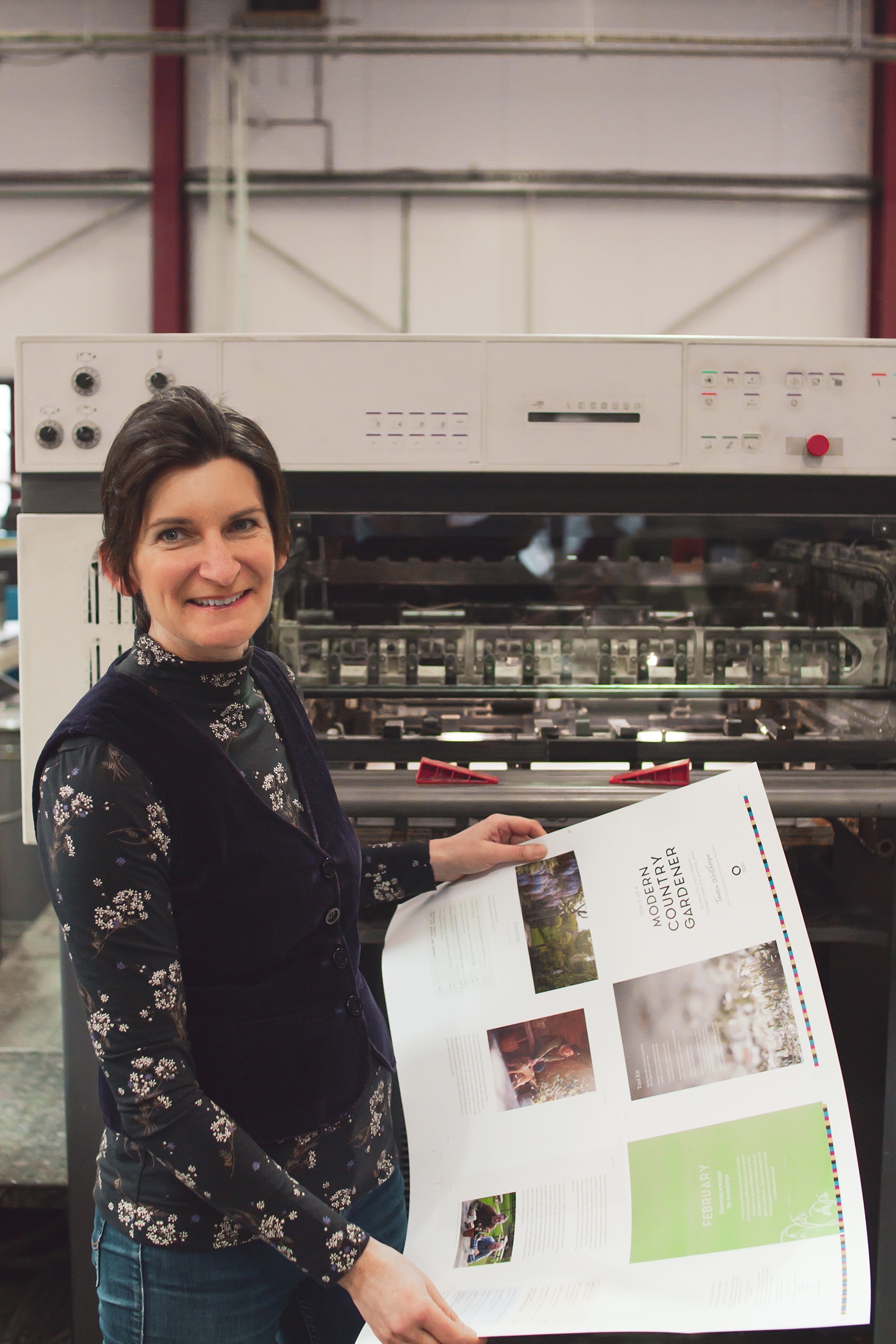
Tamsin going through the proofs at Herefordshire Orphans Publishing.
Tamsin and Hannah Madden celebrating their first copy of the book.
Some pages from the book, taken with my i-phone camera. The quality of the photography is much better than I’ve managed to capture here.
About the author, taken with my i-phone camera.
Excerpts from the book for March
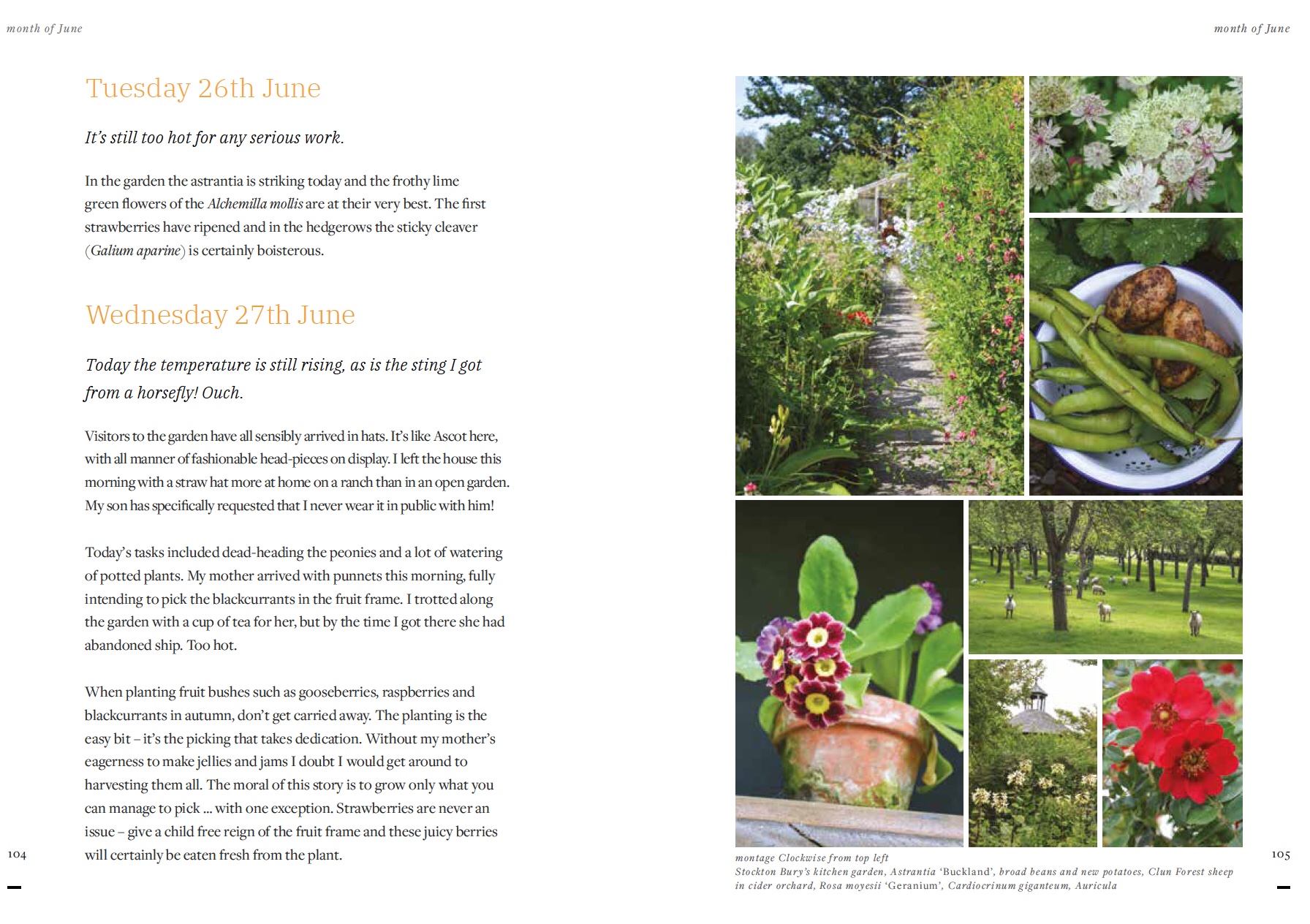
Excerpts for June
August
Tamsin Westhorpe’s diary was my book of the week on BBC Local Radio Gardening. It would make an excellent BBC Radio 4 read-aloud Book of the Week. A best seller, I think.
Thank you to Orphans Publishing for offering a free copy for our prize draw. Please leave a comment below to be entered in the draw. Please also comment if you do not wish to be entered in the competition, and let me know. Some of you may have already ordered a copy. The publishers will randomly select a winner. No cash prize alternative and usual rules apply.
Thank you for reading. I am very grateful for your 150,000 page views, all kind follows and shares. Please share this on any social media platform. It all helps me immensely.
Ever since my brush with blood poisoning earlier this summer, I’ve been extremely careful. I wear gloves for every gardening activity. I’m not taking any chances. I guard against thorns, insect bites and splinters.
Treadstone Products saw my post warning gardeners to take care:
It’s a warning that’s been read 150,000 times. Clearly a subject that resonates with many people, not just gardeners.
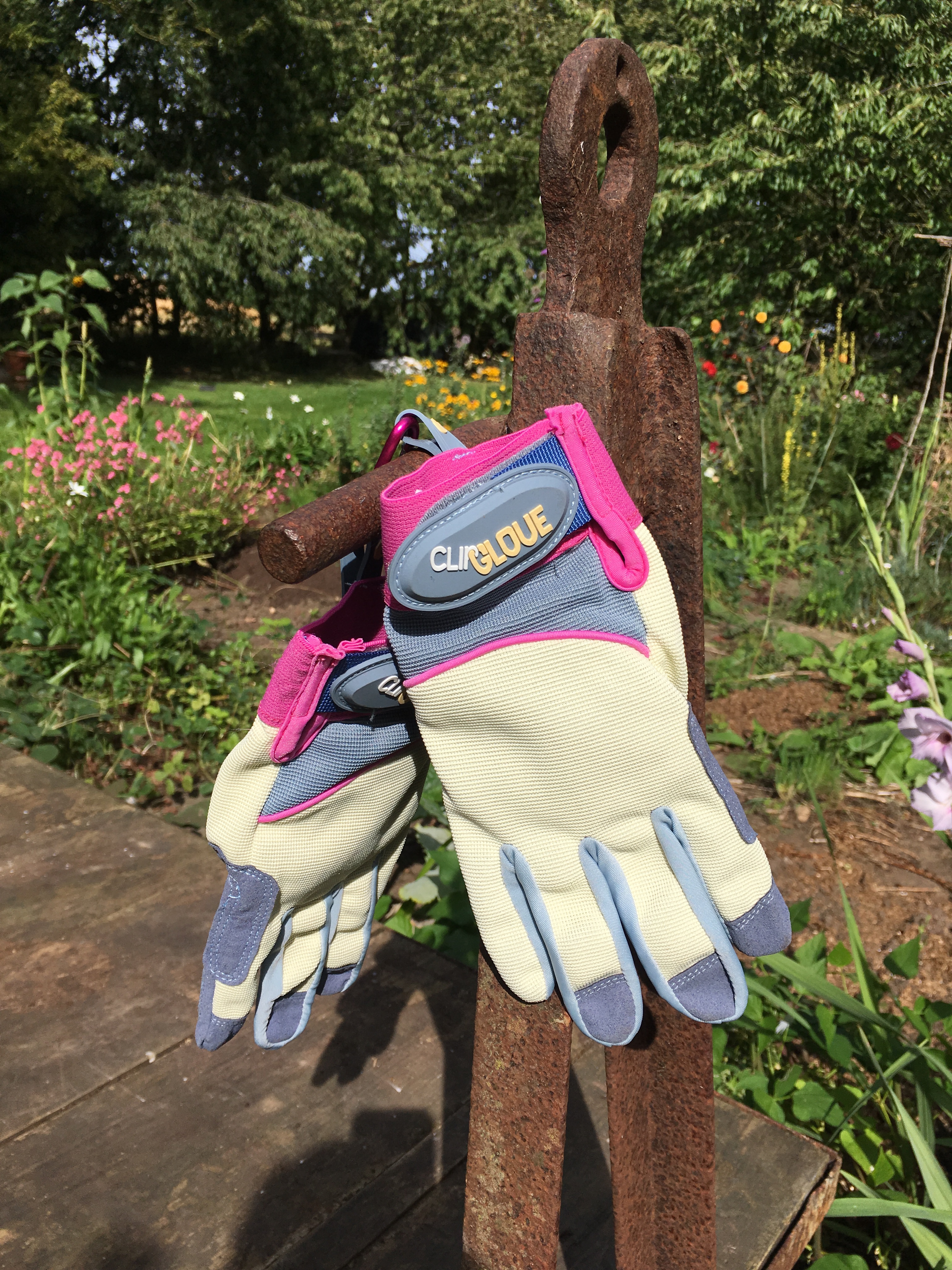
I’ve been trying out a range of different gloves. The latest is the Clip Glove, a new product from Treadstone. As usual, I’ve asked for a pair to give away in a prize draw. Please leave a comment at the end of the post to be included in the draw. Sorry, uk addresses only, due to postage.
What I like about the gloves:
Skin-friendly fabric. Cool and comfortable
Synthetic leather fabric. Hard wearing
Flexible enough to handle delicate cuttings and tiny weeds
Strong and durable materials
Special feature: clip attachment. Gloves can be clipped to belt, bag or for hanging up in the potting shed, or on the line to dryafter washing
Loops to help you pull the gloves on and off
Recent winners of the garden centre industry GIMA awards
A choice of sizes for hands
I used them to weed the cut flower patch and plant out some sweet williams and wallflowers. On a hot day, 21C, my hands didn’t feel uncomfortable. In fact, I forgot I was wearing them.
The little tabs are really welcome. There’s nothing worse than struggling to get gloves on and off. Elasticated cuffs stopped compost going inside the gloves.
Flexible enough to easily grip garden tools. Stiffer fabric gloves make my hands ache after a while. These were worn all day with no problems.
I harvested my spring -planted garlic. Small but incredibly tasty. I’m just about to plant some for overwintering. I buy them from the Garlic Farm, Isle of Wight.
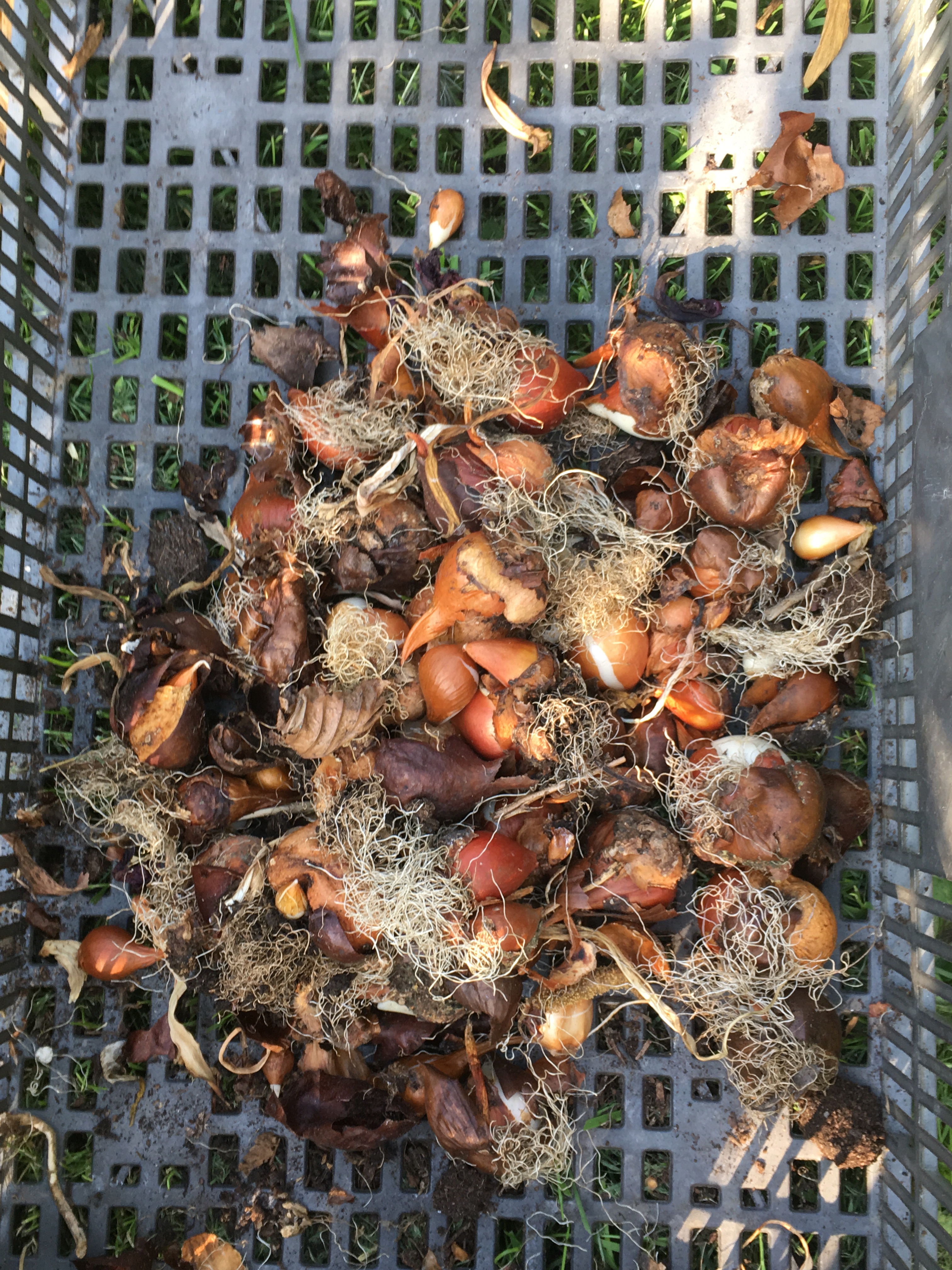
Sorted through my saved bulbs, removed old stems and placed them in paper bags ready for re-plating in November. These will be planted in the orchard, and fresh bulbs will go in winter containers,
Mixed some compost, added grit for drainage and filled terracotta pans ready for sowing winter micro-greens, herbs, salads, rocket, lambs lettuce, beetroot and watercress.
Weeded, tied in and mulched my favourite rose; Rosa Mutabilis ( https://www.classicroses.co.uk/mutabilis-shrub-rose.html ) This variety flowers on and off from spring to Christmas in various shades of peach and cream, opening cerise pink. Adorable and disease resistant. Good for pollinators, being a single flower. Just look at that golden pollen!
Note: Names will be put in a hat and randomly selected by Treadstone. There’s no cash alternative. One pair of gloves will be sent to the winner. No purchase is necessary. Usual rules apply.
Congratulations to Julie Skelton who has won a Hansford Coil Spring garden chair. Hansford’s James Samuels drew the name (out of a hat) at the Gardeners’ World Live Show where the garden furniture company staged a display.
Thank you to James for helping to organise the prize draw and supplying the chair.
Mine is perfect for relaxing after a long day in the garden. I particularly like the rocking element of the design, which is quite soothing if you suffer from a bad back. I’ve been sitting in mine while listening to the birds, watching the fledglings find their way around the wild garden. It’s been a joy this week. All the nests are now empty and I can report that the blackbirds who made precarious nests just 3ft off the ground, under the house windows, have successfully fledged their chicks.
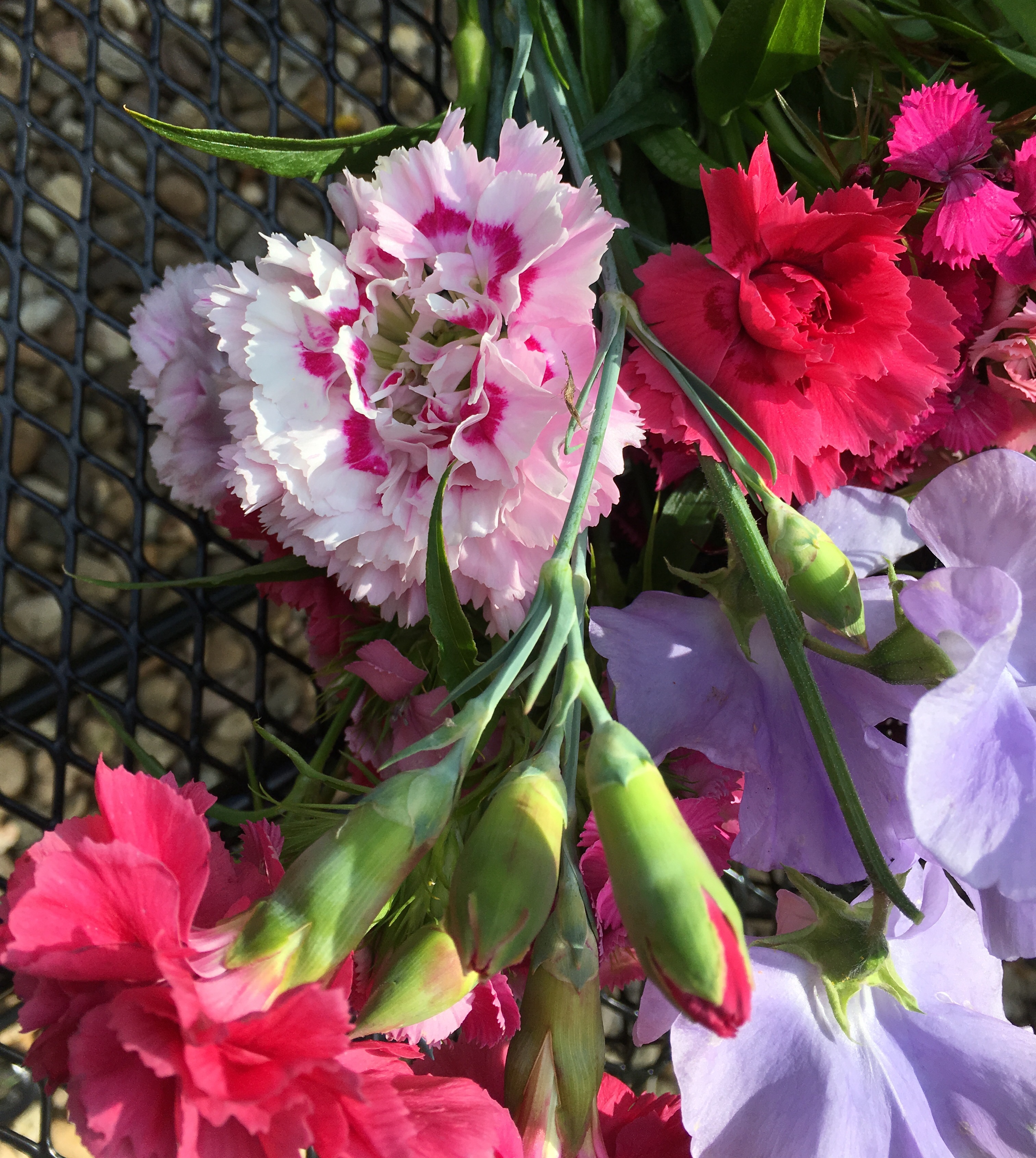
Today, mum came to visit, and we planted out the rest of the dahlias grown from cuttings. We planted anything we could find in the greenhouse. I like taking cuttings, but I’m slow to move plants on. They languish in little pots. Eventually, I take pity on them, and plant the whole pot in a clump. More or less thrown into the ground. It’s amazing how resilent plants are. Mum goes home with two posies we cut from the garden; one of white flowers, and the other sweet williams, pinks, carnations and sweet peas.
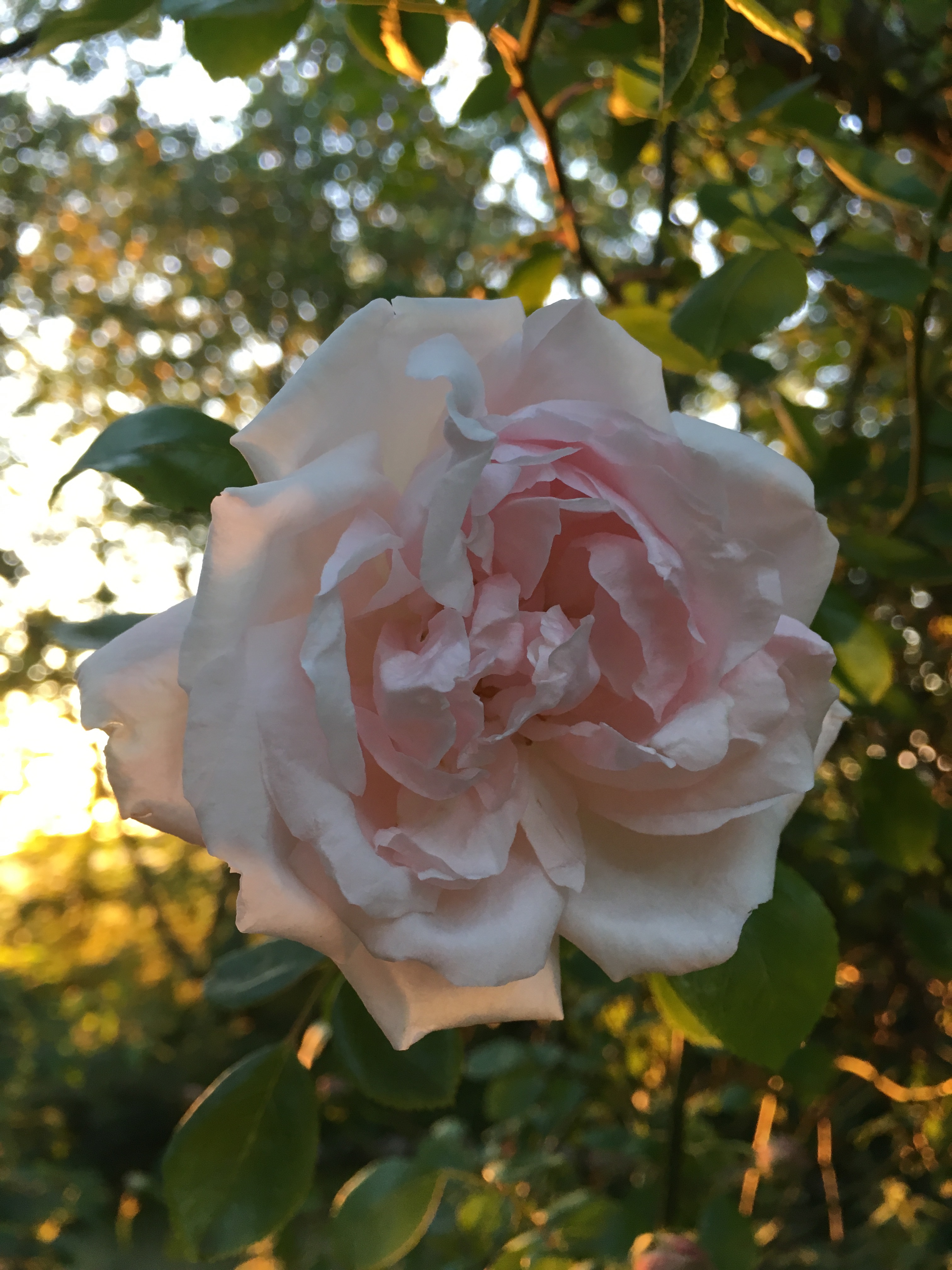
The chair is light enough to carry around the garden. When I’ve finished working on the plot, I move it under a cascading New Dawn Rose. The evening scent is fabulous.
I never prune or spray this rose, it just looks after itself. Wonderful as the sun sets behind it and shines through delicate shell pink petals.
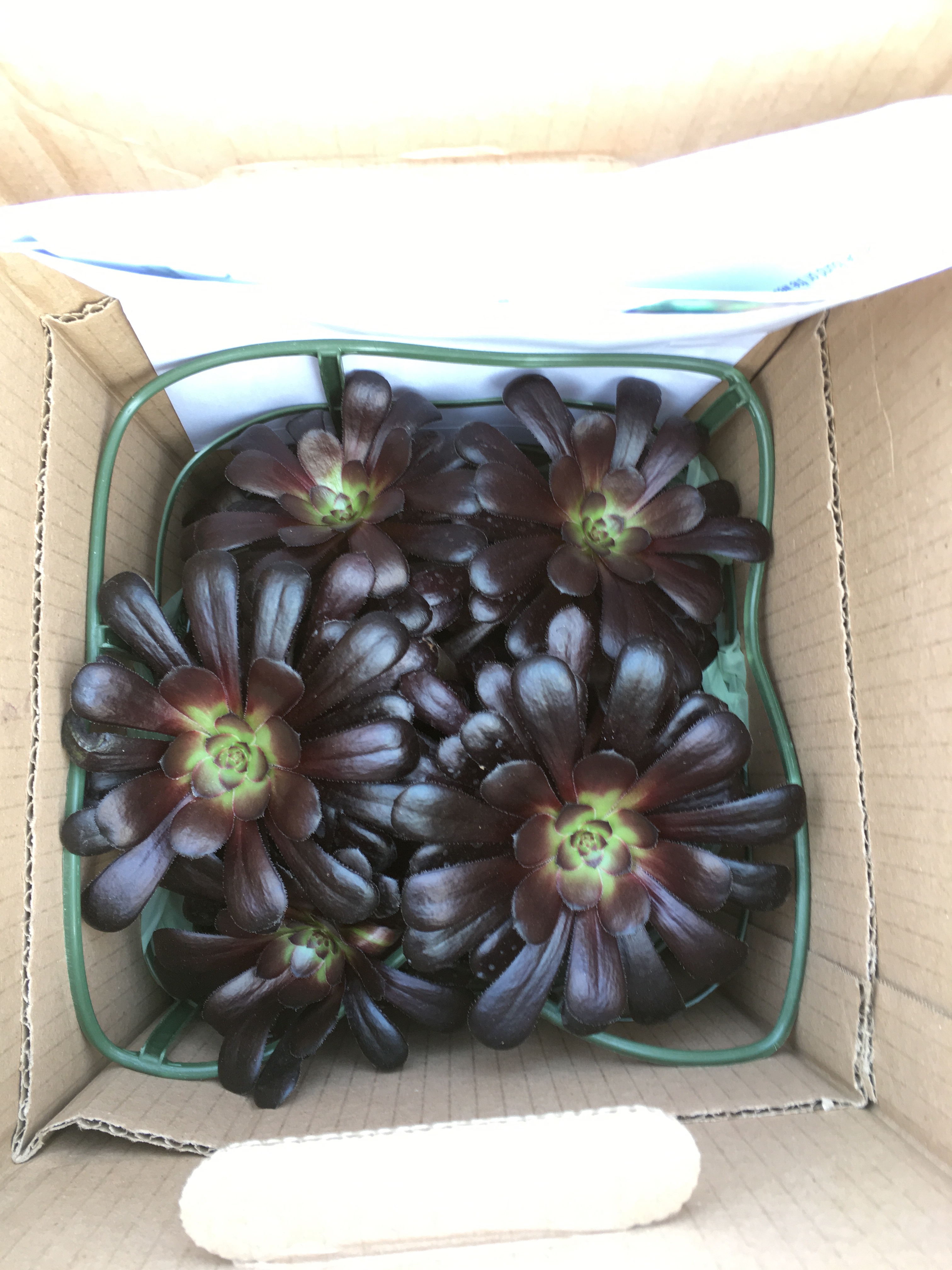
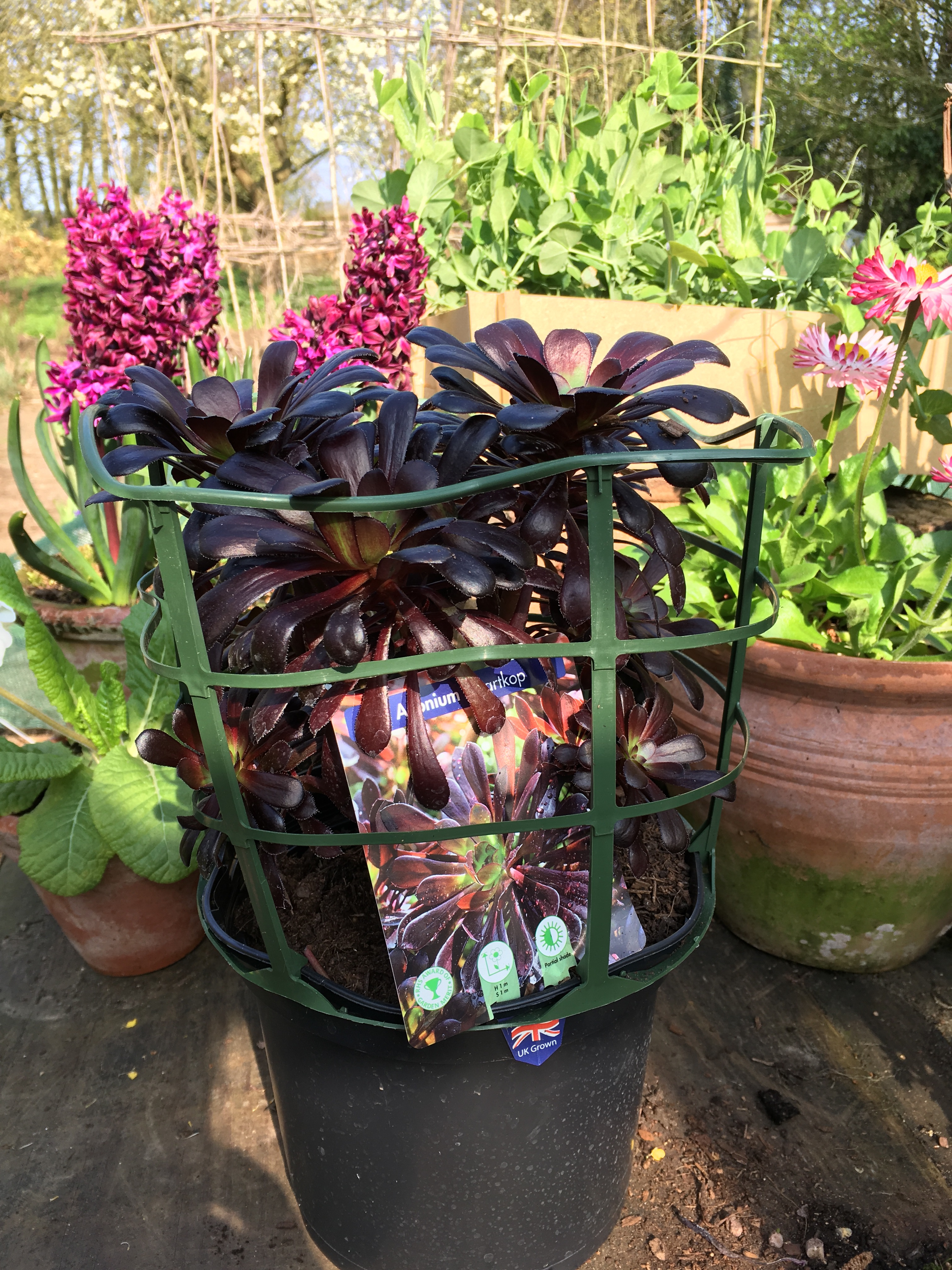
Who could resist the charms of Aeonium Swarzkopf. Not me! I spotted this beautiful plant on a stand at the Garden Press Event in February. It’s a glowing dark chocolate colour. I always think it looks as if it’s been polished.
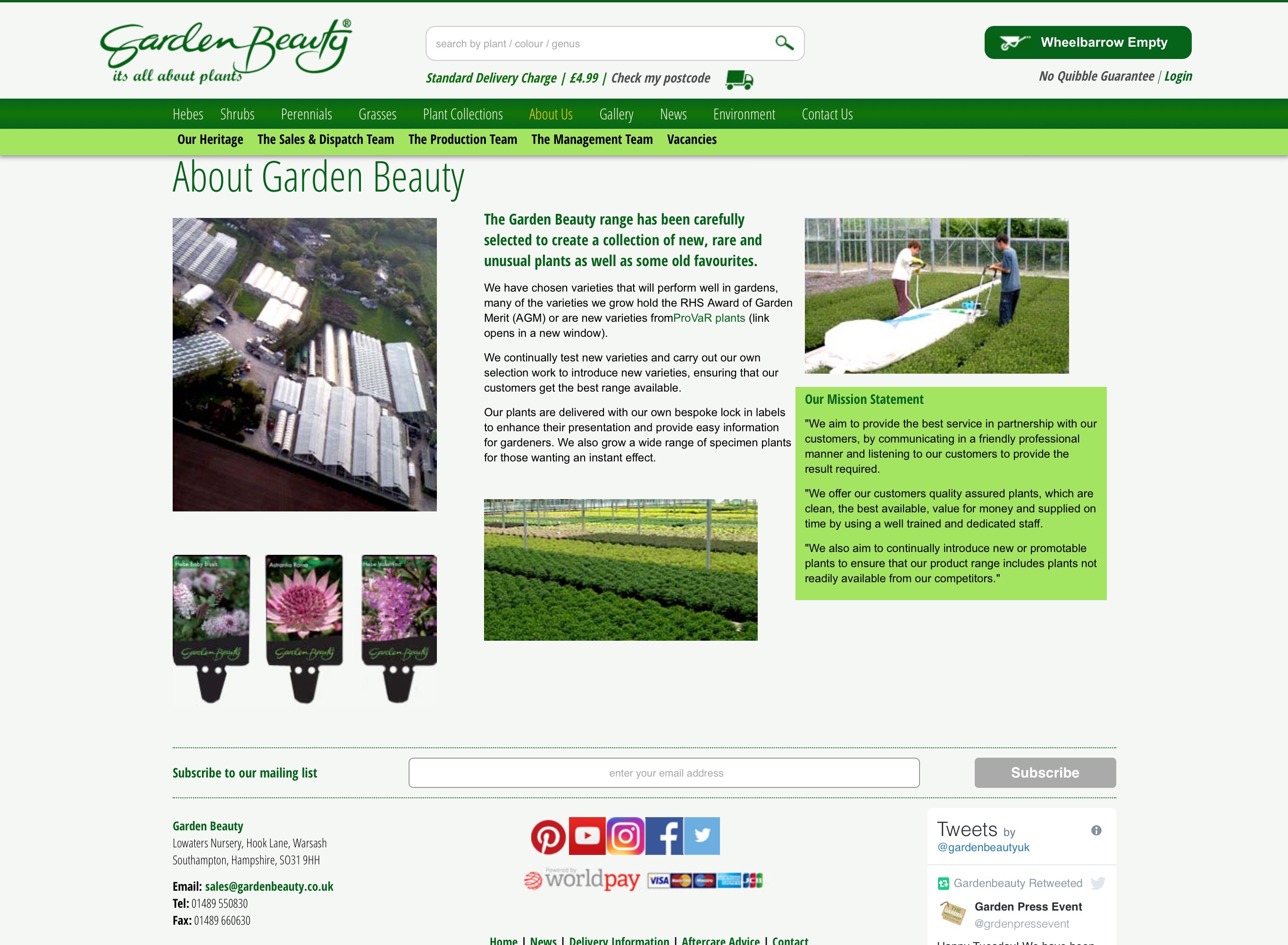
These plants were showcased by Garden Beauty web shop, part of Lowaters Nursery in Hampshire. The mail-order shop was launched in 2015 and specialises in hebes, Southern Hemisphere plants and new and unusual varieties.
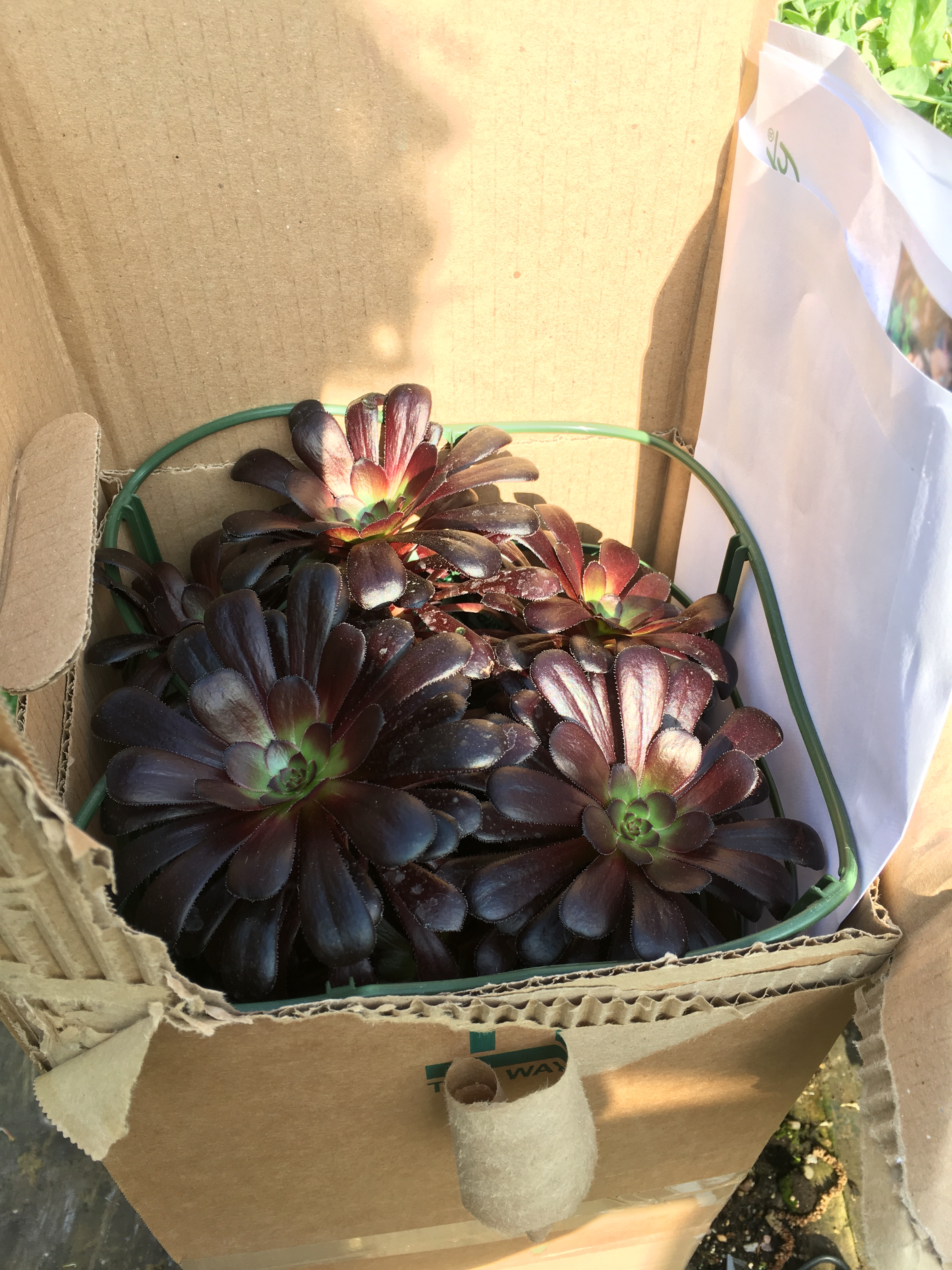
Plants arrive well-packaged in recyclable cardboard. There was no damage to the box, or the delicate plant inside.
Plants seem to fit snugly and there was no loose compost.
It is simple to get the plant out of the box without damaging it. The sides of the box “peel” away along perforated guidelines.
There’s a recyclable plastic frame support around the plant. I’ve taken it off and re-used it on another plant in the greenhouse.
The plant pot was contained in a plastic- type bag which is made from a material that’s fully compostable and biodegradable.
Garden Beauty sent this plant for review. As always, I’m giving my honest opinion of the plant and delivery service. Rather wonderfully, and to my complete surprise, after working quietly away in the gardening industry for 20 years, I find I’m being asked for my opinion on new plants and products. With this delivery from Garden Beauty, I couldn’t fault anything. The plant arrived in perfect condition and looks stunning on a table in my black painted greenhouse.
The company is offering one Aeonium in a 3L pot, for a prize draw for readers of this blog. No purchase is necessary to take part. Please leave a comment below to be included in the draw. Sorry, UK entries only as plants can’t be sent abroad. Garden Beauty will pull a name out of a hat to randomly select a winner. There’s no cash alternative and our decision is final. Also let me know if you don’t want to be included in the draw, but just wish to comment, as that is also fine. A winner will be chosen on Sunday 6pm.
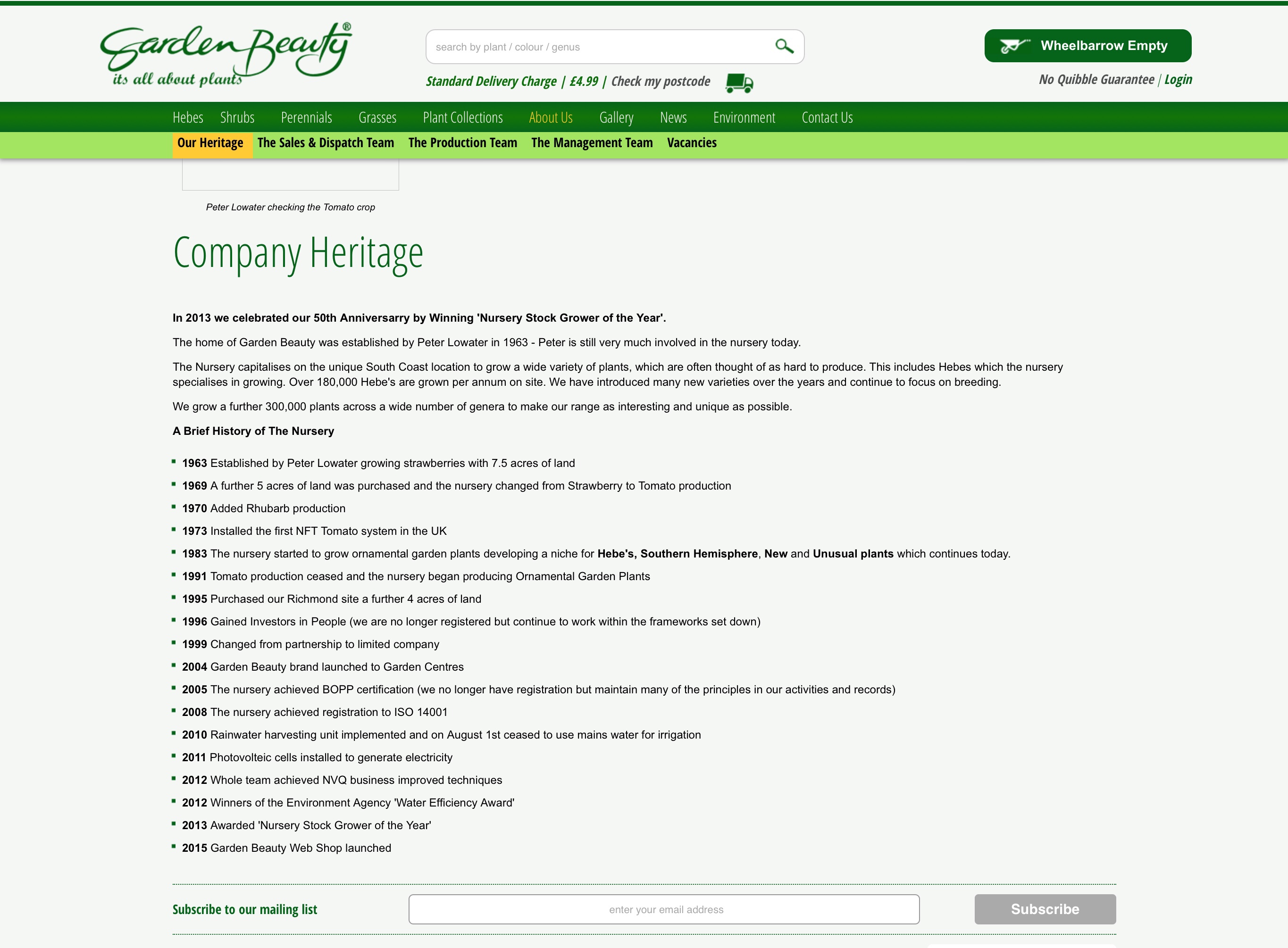
Here’s some snapshots from the Garden Beauty website. Lowaters was established in 1963 by Peter Lowater with initially 7.5 acres growing strawberries. In 1969 another 5 acres were acquired and they started growing tomatoes. In 1970 they added rhubarb. In 1983 they started growing ornamental plants and carved out a niche growing and selling hebes and rare and unusual plants.
Please feel free to share this blog post on any social media platform, kindly linking back to bramblegarden.com.
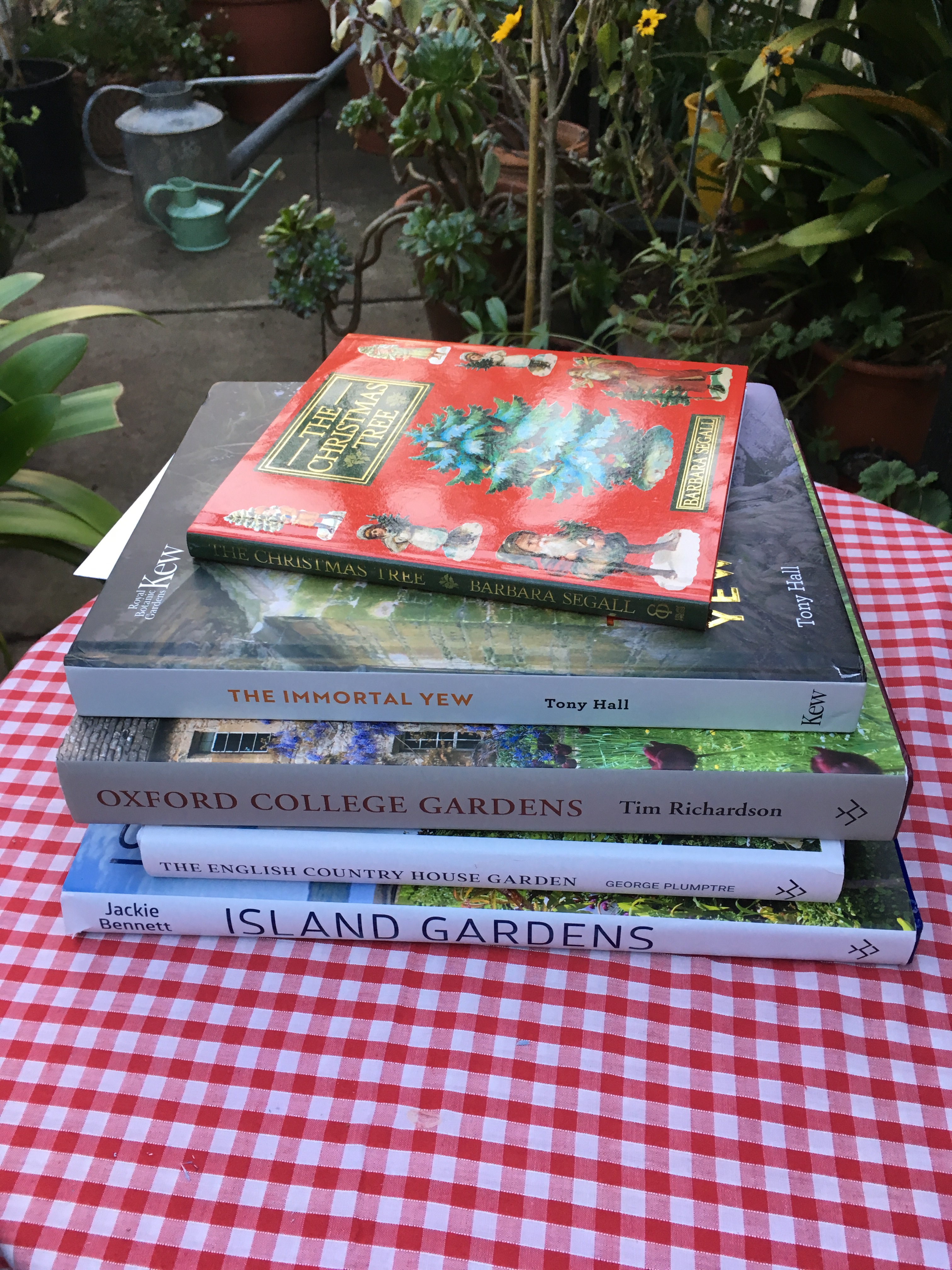
One of the pleasures of writing a blog is sharing a love of gardening with like-minded people. Books are also a passion of mine, particularly anything with a horticultural theme. So I was happy to be invited to write a review of The Immortal Yew, written by Kew Gardens manager Tony Hall. Stories of myths and legends surrounding yews dating back 2,000 years had me glued to the pages from start to finish. I was drawn in by the sight of the “lion’s paw” yews flanking the doors at St Edward’s Church, Stow-on-the-wold, a sight said to have inspired JRR Tolkien when he was writing about the gateway to Moria in Lord of the Rings. A photo of these strange, ancient yews provides the cover picture for the book. The publishers, Kew Publishing, very generously offered three copies for a prize draw on the blog. The winners, randomly selected, are Sharon Moncur, Philippa Burrough and Alison Levey. Thanks to everyone who left comments on the blog. If you didn’t win, please keep reading as there are many more books to follow over the next few weeks, including The Wild Remedy by Emma Mitchell, Island Gardens by Jackie Bennett, the English Country House Garden, George Plumptre, Oxford College Gardens, Tim Richardson, and The Christmas Tree by Barbara Segall. Winter is a great time to catch up with reading, before tasks in the garden entice us outdoors again.




















































 What books would you recommend to gardening friends? What are your favourite books?
 Bramble Garden