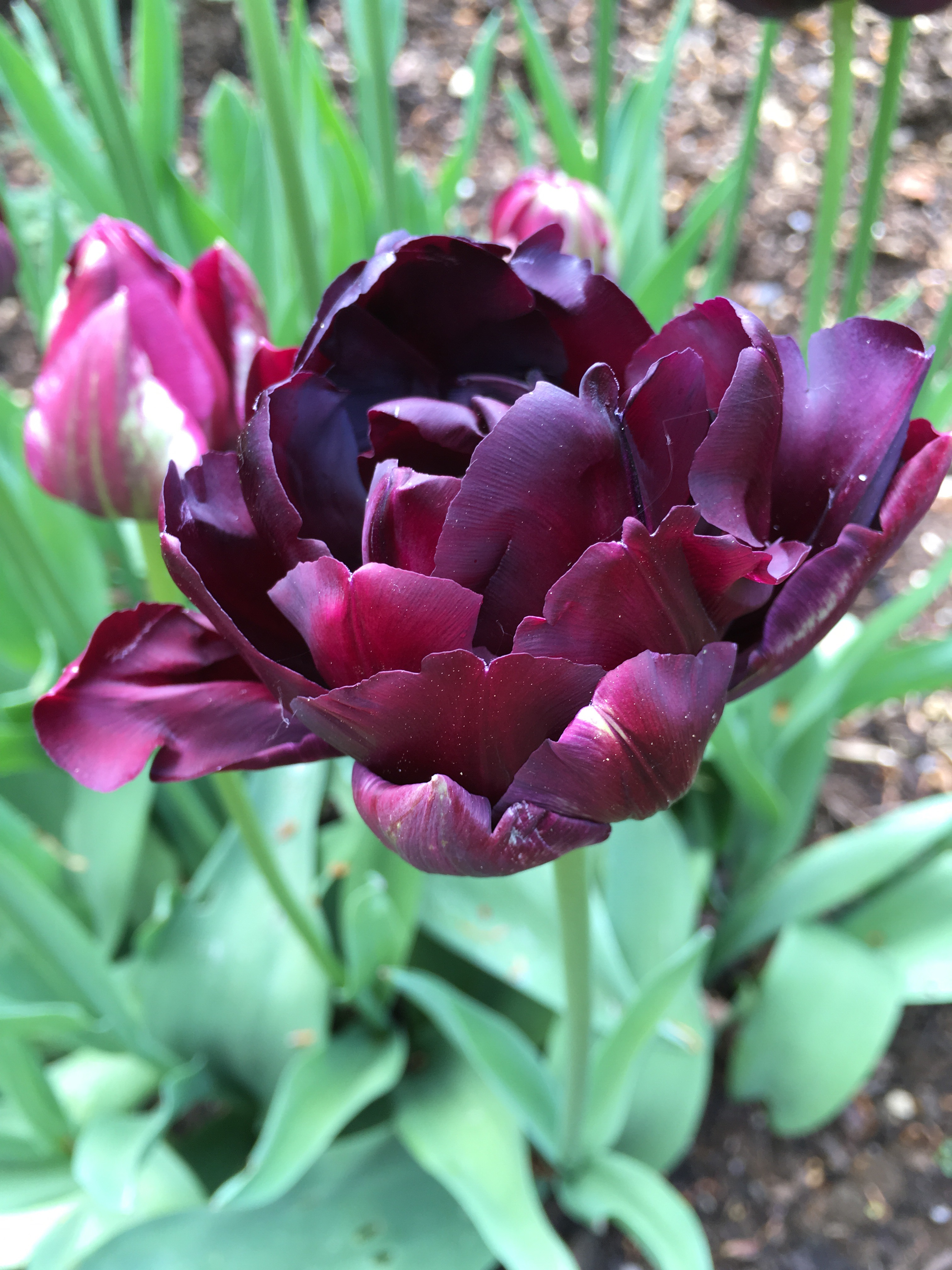
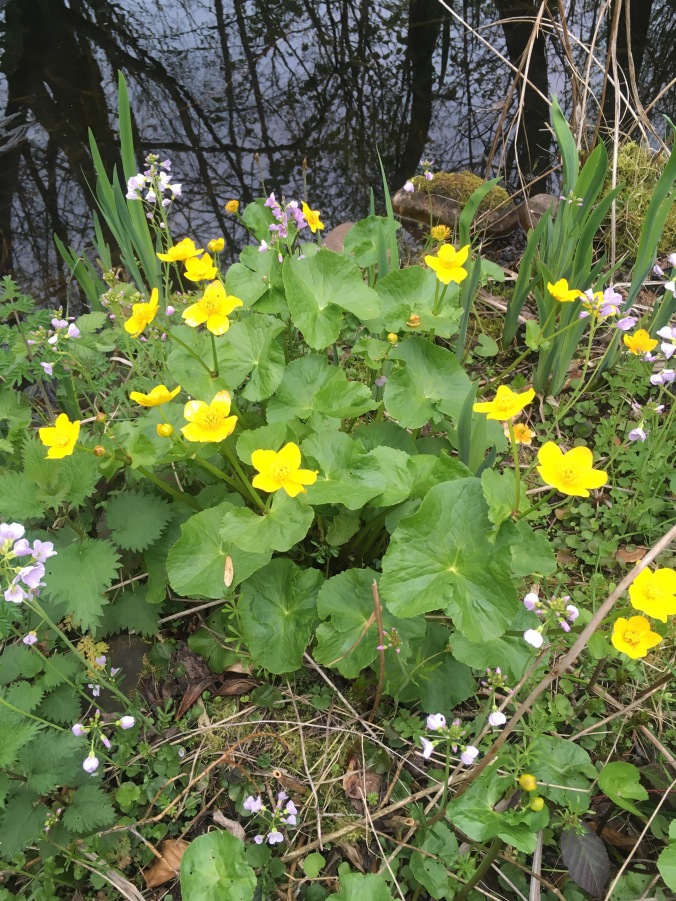
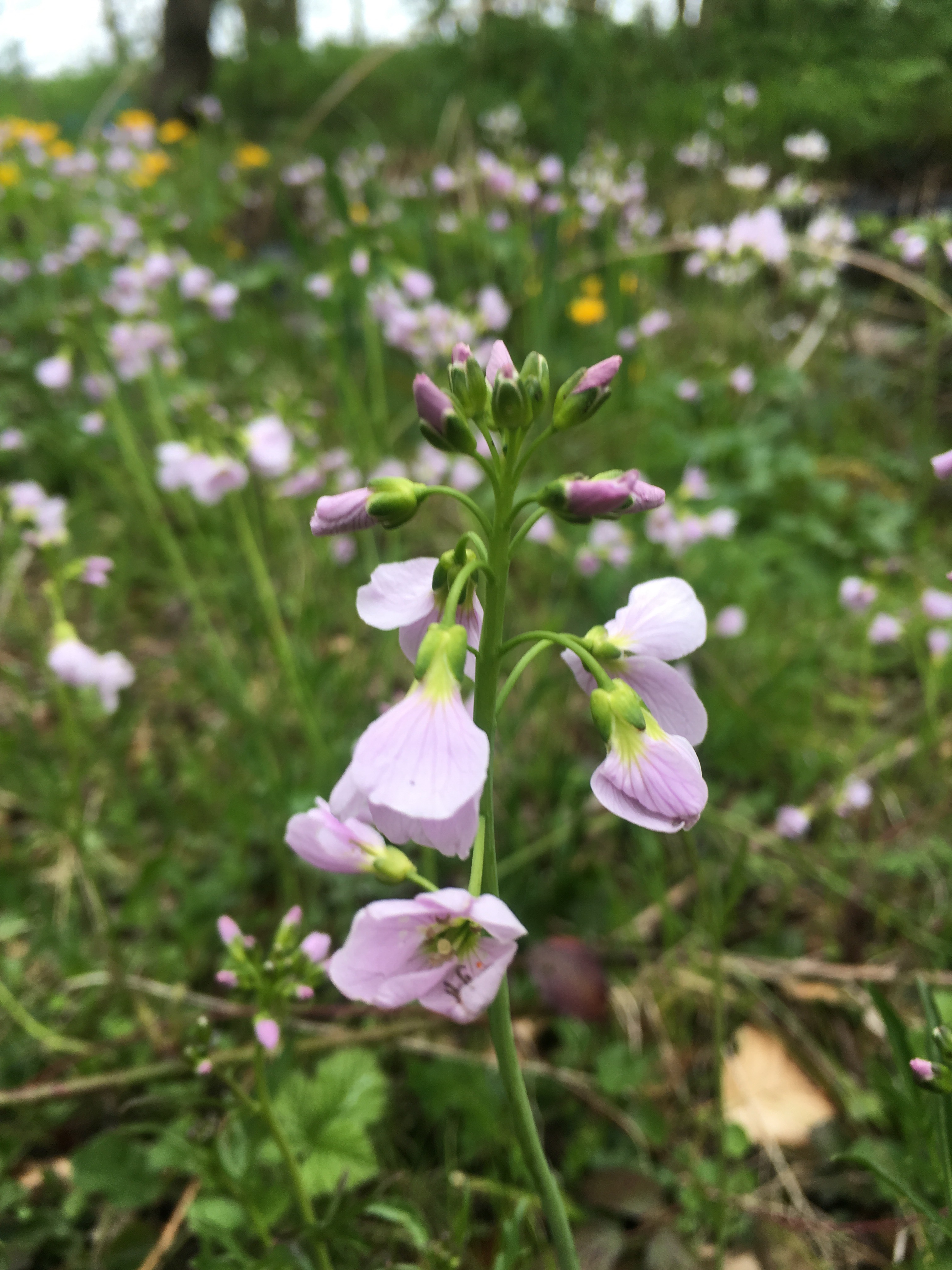
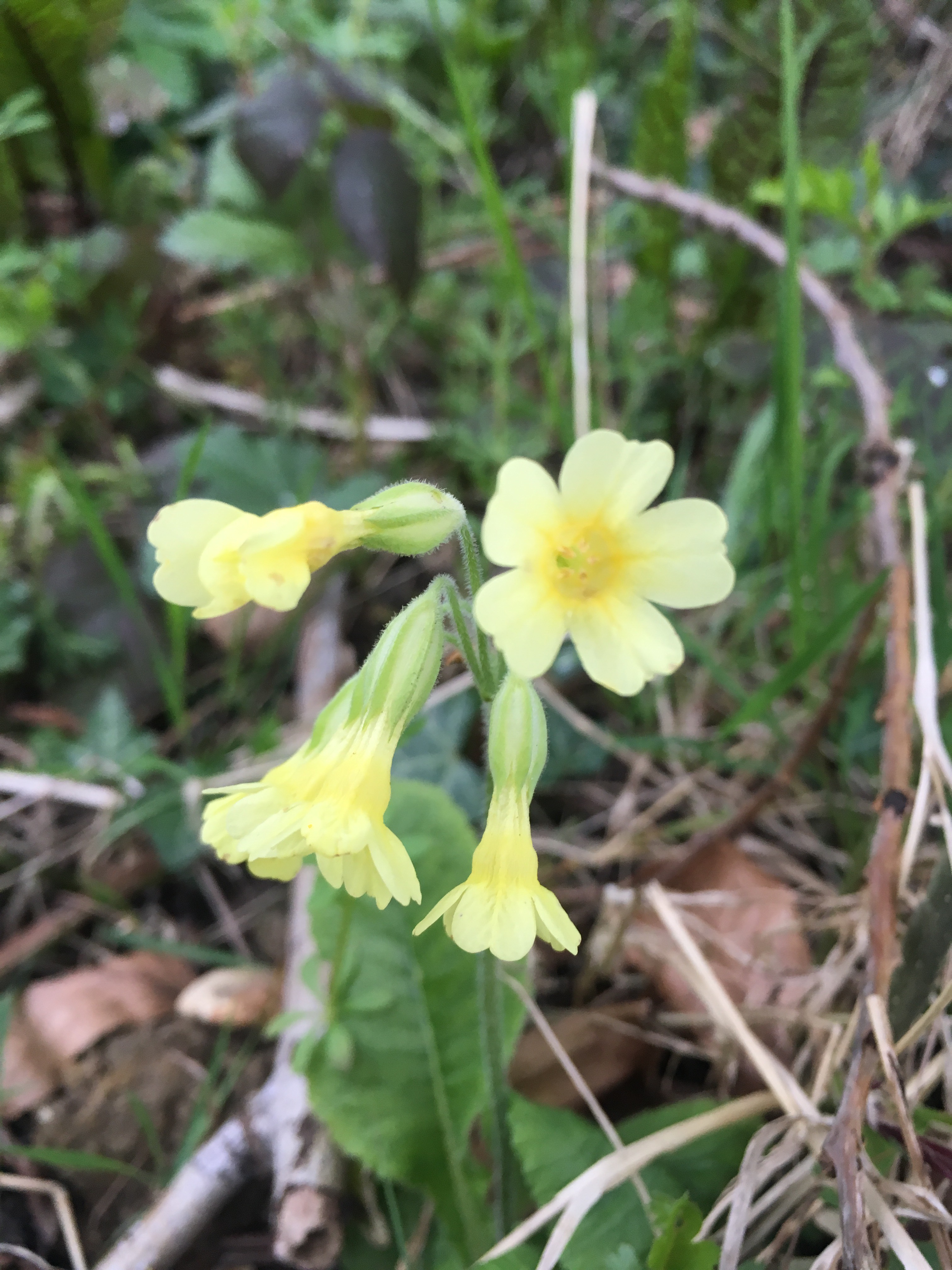
Wordless Wednesday 

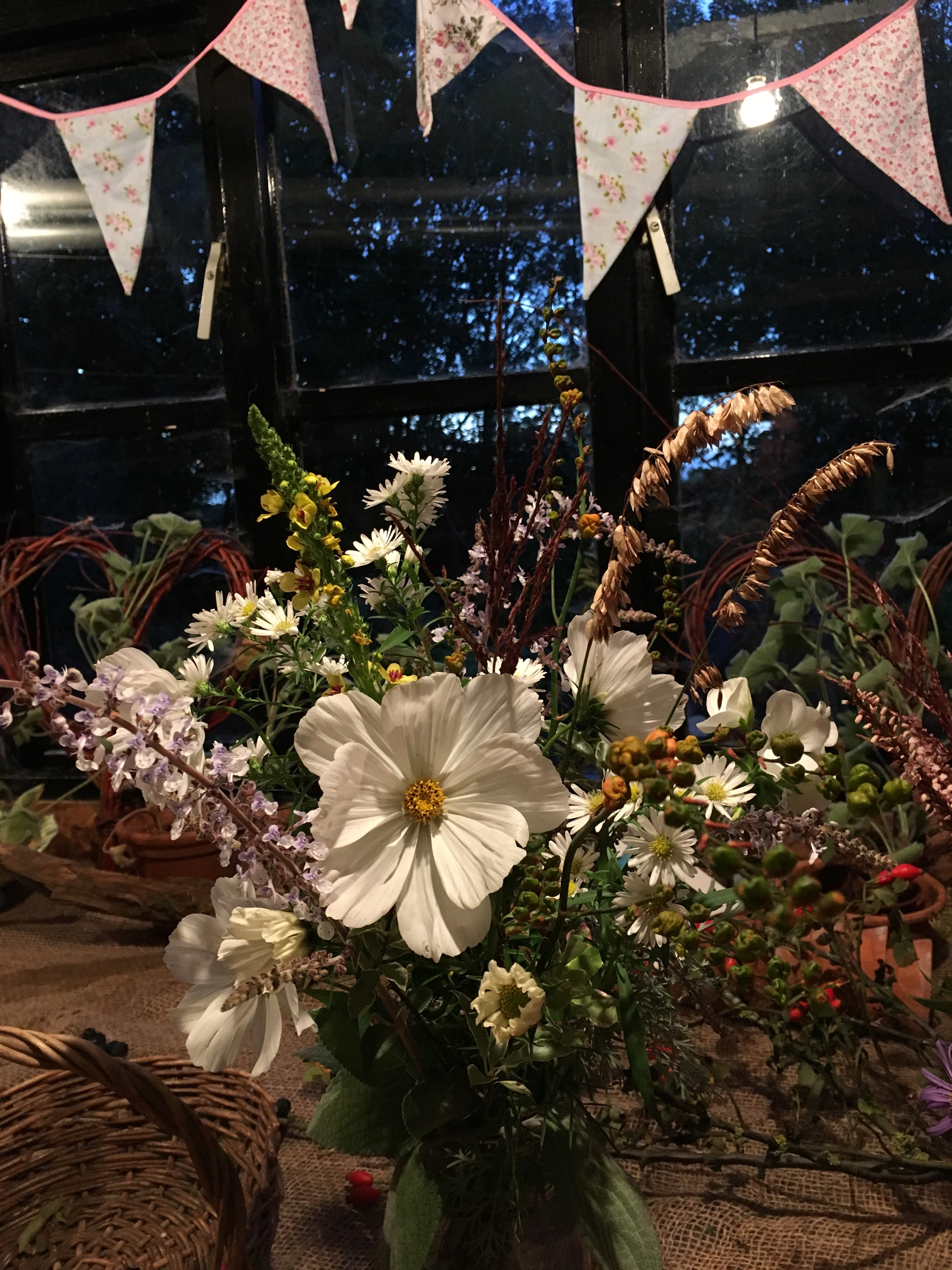
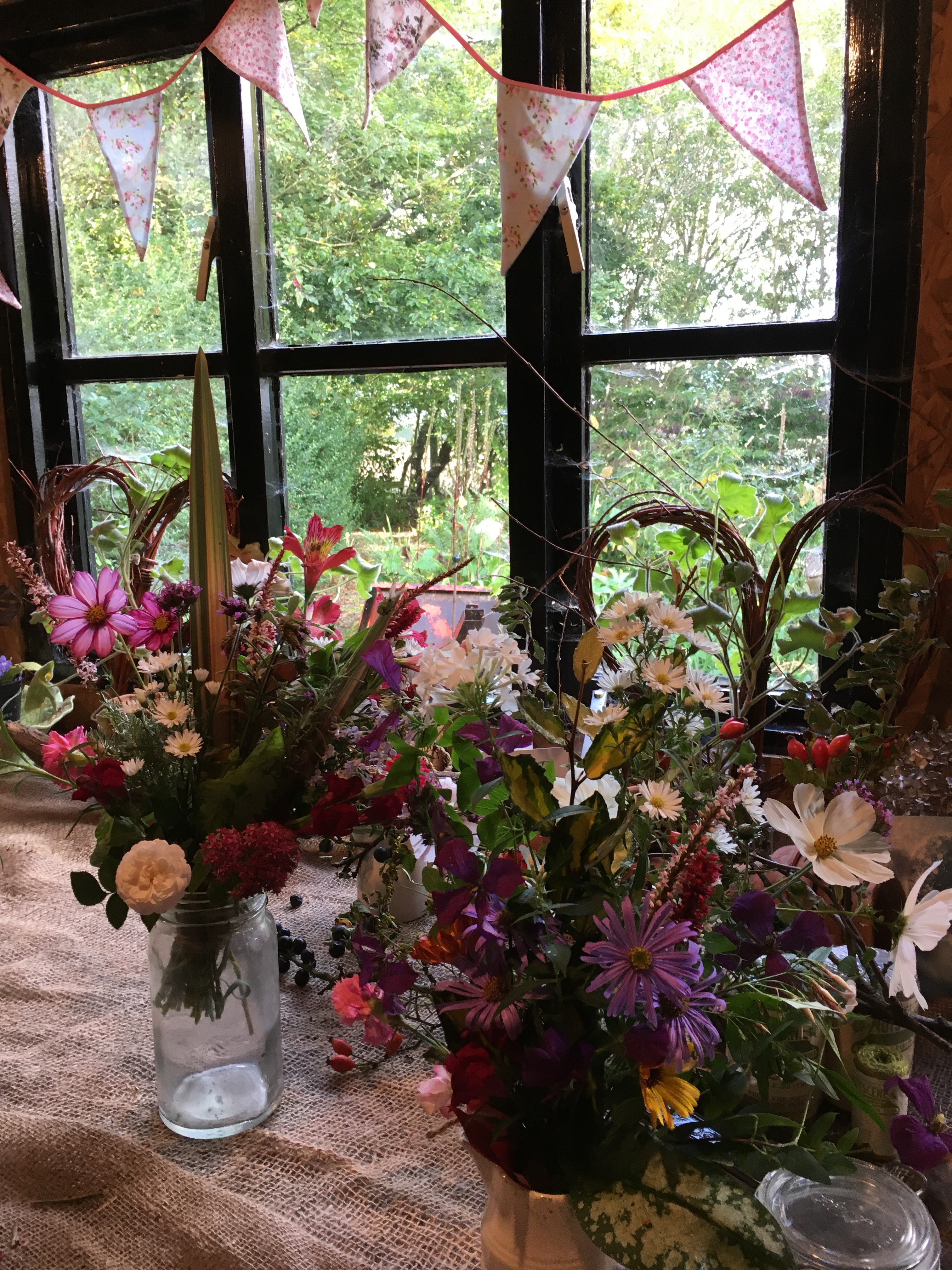
Still mild enough to sit in the summerhouse. Heaps of cosy woollen blankets to hide under. So I made an autumn wreath out of beech leaves, rosehips and cowparsley seed heads.


My wreath is made from a woven willow base. I learned how to make them from  Georgie Newbery at Common Farm Flowers. I can highly recommend the courses. I attended one for creating a cut flower patch and posy tying. I’ve never had to buy any flowers for my house and family since. I’m planning to attend one next year on growing flowers for weddings and special occasions. I’ve already bought my voucher for the course. It’s great to have something to look forward to as winter starts to bite.


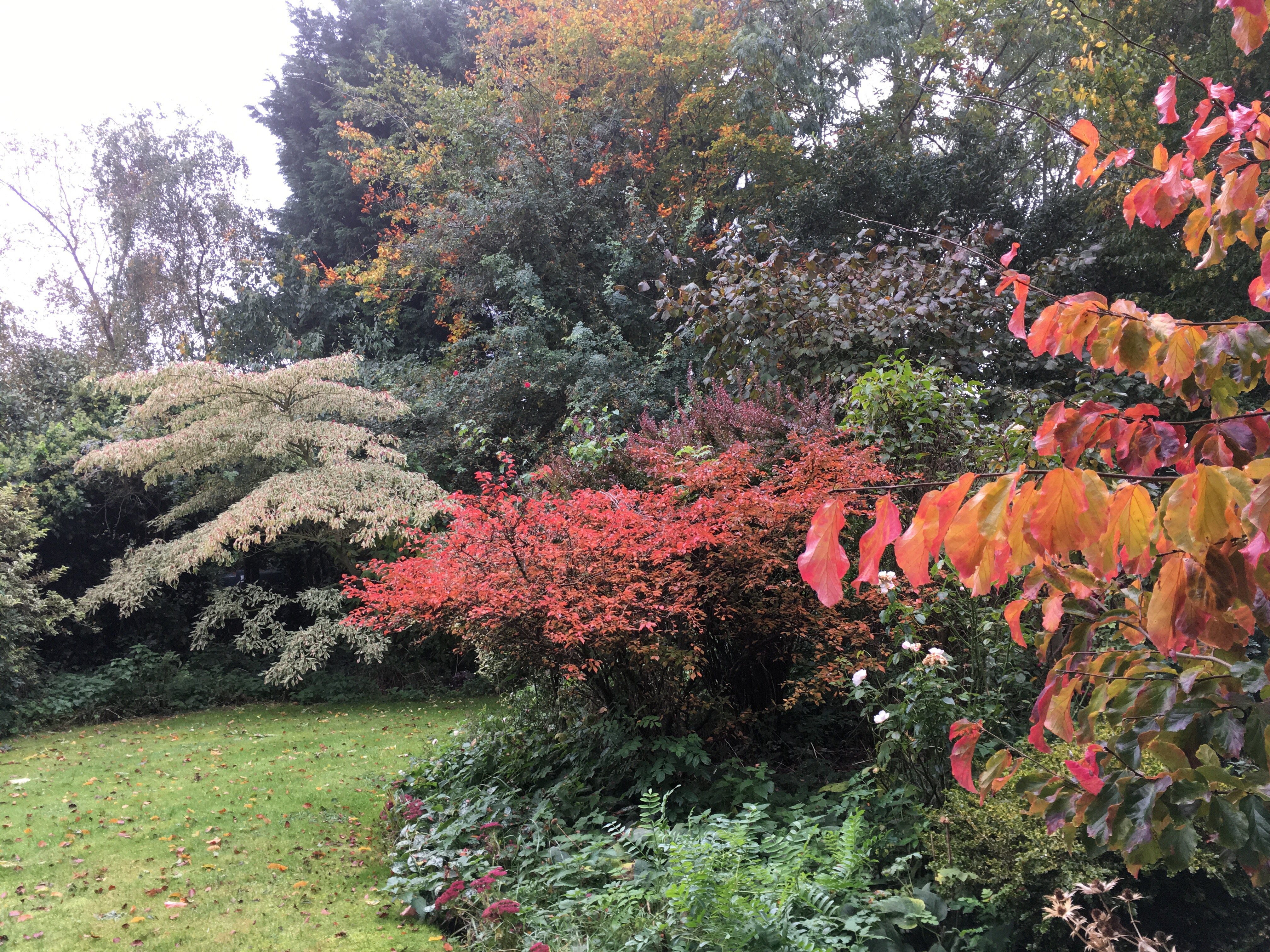
The Persian ironwood shrub, Parrotia Persica still looks like a bonfire of colour.


Orange tulips, a present from a friend- the view inside the summerhouse today.

Have you got a favourite place you like to sit in the garden?

Down to Earth – 23/10/2016 – @bbcleicester

http://www.bbc.co.uk/programmes/p049tj75

Whizz past the news to 44.00 on the timeline to hear me talking about my flower posies for mother in law Joan. I’m part of the garden question time team for local radio stations. Bit terrifying, as we never know what the questions will be. Lots of fun though. Programme starts at 7.00 on the timeline, just past the news and weather. 

In a Vase on Monday – 14th November 2016 

I can’t believe I turned my nose up at chrysanthemums. It might have been the huge Pom Pom flowers that put me off. Some the size of a head. All stiffly growing in rows, marshalled into line by an army of stakes and string. 

Not my kind of gardening- and I’d probably have composted any cuttings or plants that came my way.

But this year I’ve had a change of heart. My father in law handed over a cutting of a yellow spider chrysanthemum. It’s a plant that has been passed around the family and grown for over 70 years. My father in law is struggling with mobility now and can no longer garden. In fact this year we’ve been running two gardens- theirs and our own. We’ve all worked like demons to keep their immaculate garden up to standard. And the reward has been the smiles and comments  from every carer, nurse and visitor to the house. Their glorious flower-and veg- filled garden has been preserved.

And so has their much-prized chrysanthemum. I couldn’t be the one to let the side down. I couldn’t let the family chrysanthemum -known as Aunty Doris- die out. So it’s been potted on and watered and fed, and generally fussed over all summer.  And I’m surprised to find that I totally love it. It has personality. The glorious sunny yellow flowers open like a sea anemone. It’s fascinating to watch. As the flowers grow, the centres turn a beautiful emerald green. 

After all that nurturing – the flowers are returning to my mother in law, Joan. Just as her husband of 66 years  has always grown them for her,  I’m growing them now.  


Chrysanthemum known in the family as “Aunty Doris.” 


I love its rather messy flowers. Beautiful from bud to open flower.


Luckily I’ve got lighting in my potting shed, so can create my flower posies for Joan after work.


In the posy this week is Chrysanthemum Stallion Yellow and white Swan from Cheshire family nursery Chrysanthemums Direct. Bought as plugs from RHS autumn show. I think they cost around £1 each, and have made good strong plants in a year. I’m an organic gardener, and on my potting shed table is some natural fertiliser I’m trying out from PlantGrow. I’ll let you know how I get on with it. 


Chrysanthemum Swan in the centre, surrounded by rosemary, verbena bonariensis, pittosporum silver queen, rudbeckia grown from seed, violas and grasses. The orange balls are sprays of seed from crocosmia, and the grey foliage is Artemisia Powis Castle. 


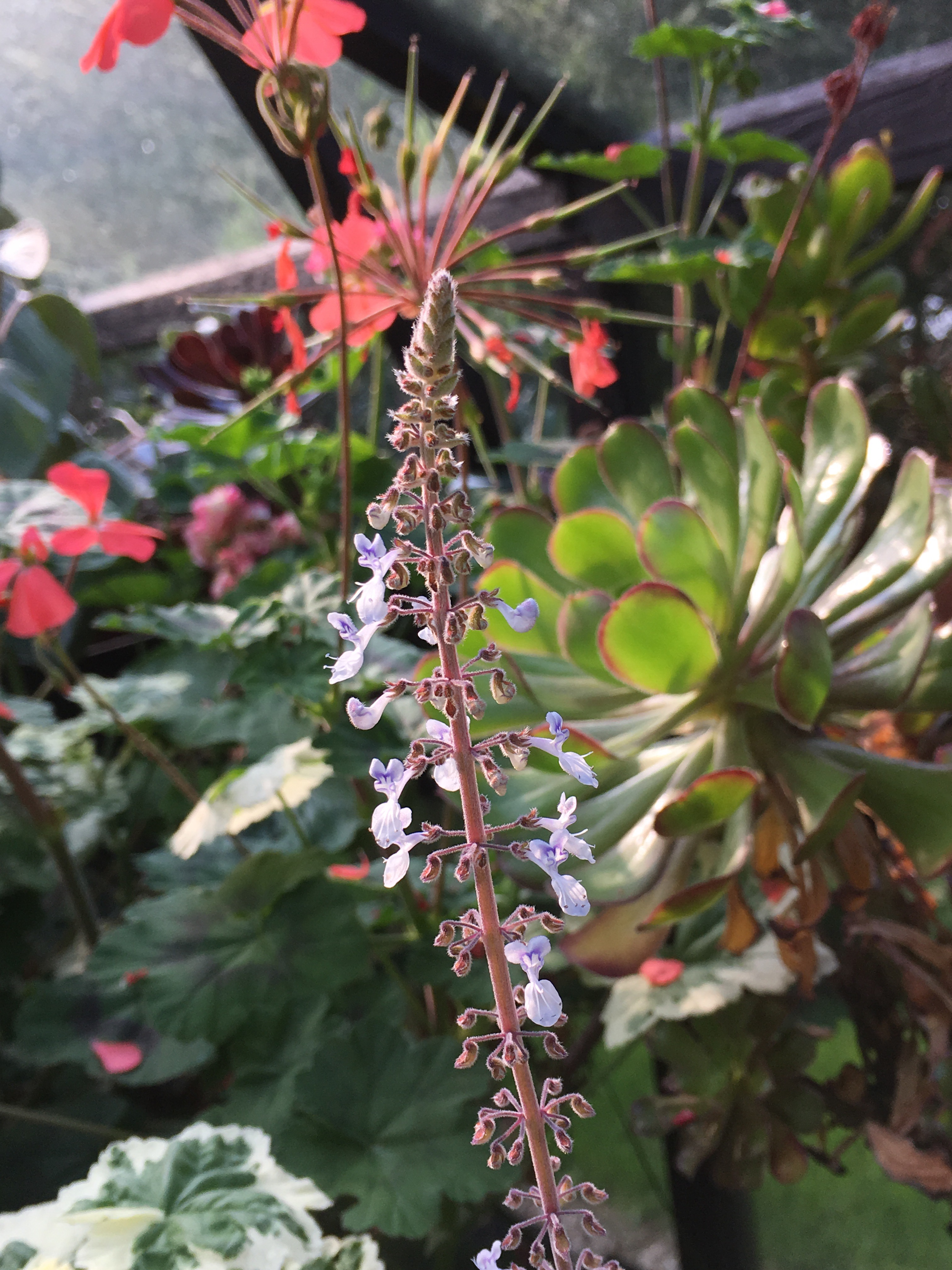
The blue flower spikes are Plectranthus Argentea which is now sheltering in the heated greenhouse for the winter and will provide flowers right through until February. This and many other plants in my greenhouse came from The Herb Nursery at Thistleton. Another family-run business I like to support. 

The good news is, there’s about 6 more weeks of Aunty Doris chrysanthemums to come. I expect we will even have them on our Christmas table. A reason to celebrate- to be sure. 

Have you ever tried to keep a family favourite flower or plant in circulation? Thanks as always to Cathy for hosting this In a Vase on Monday meme. Do take a look and  see what gardeners around the world are growing. 

Wordless Wednesday

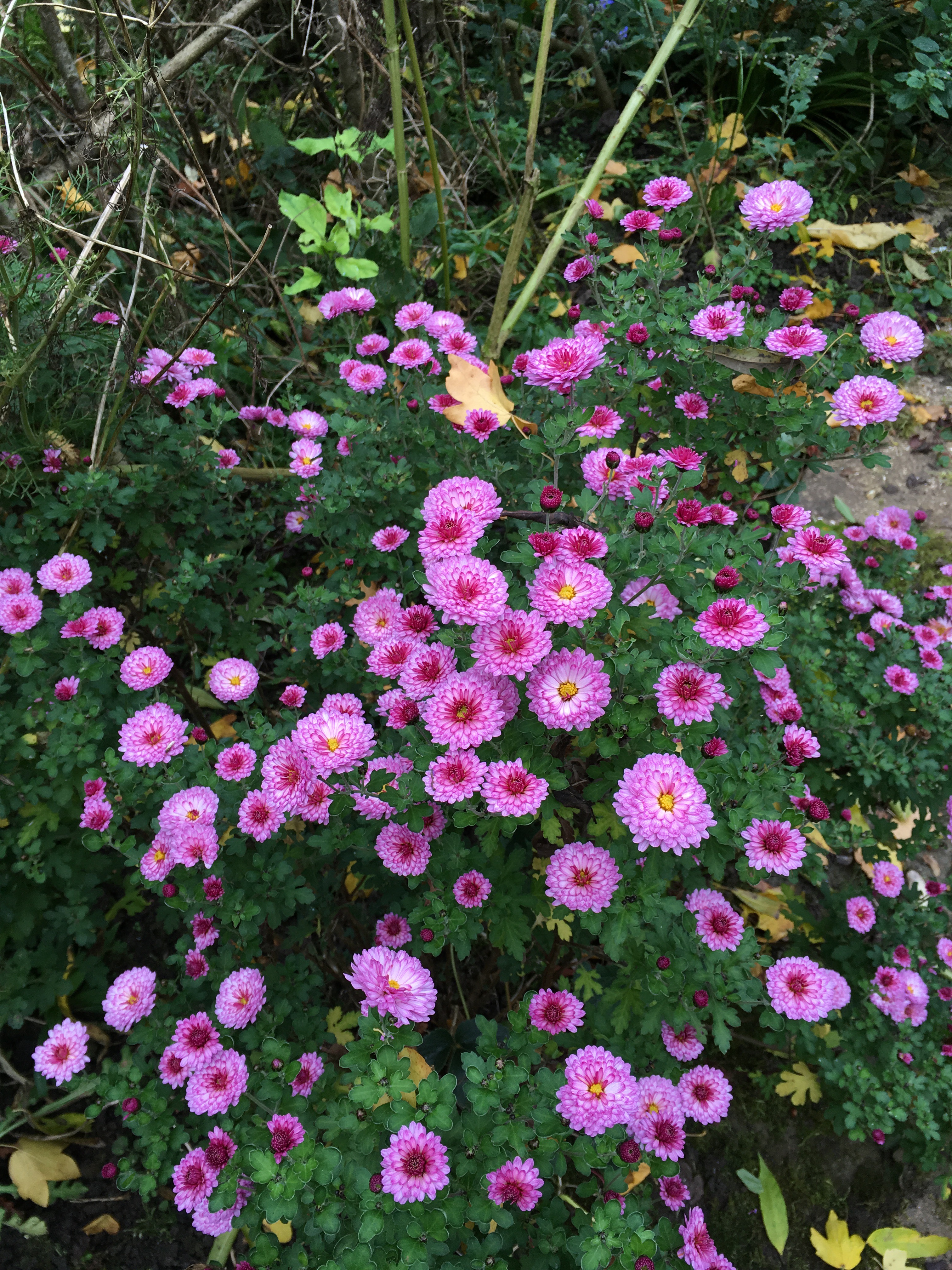
Chrysanthemum Mei-Kyo. November 9th 2016

In a Vase on Monday 

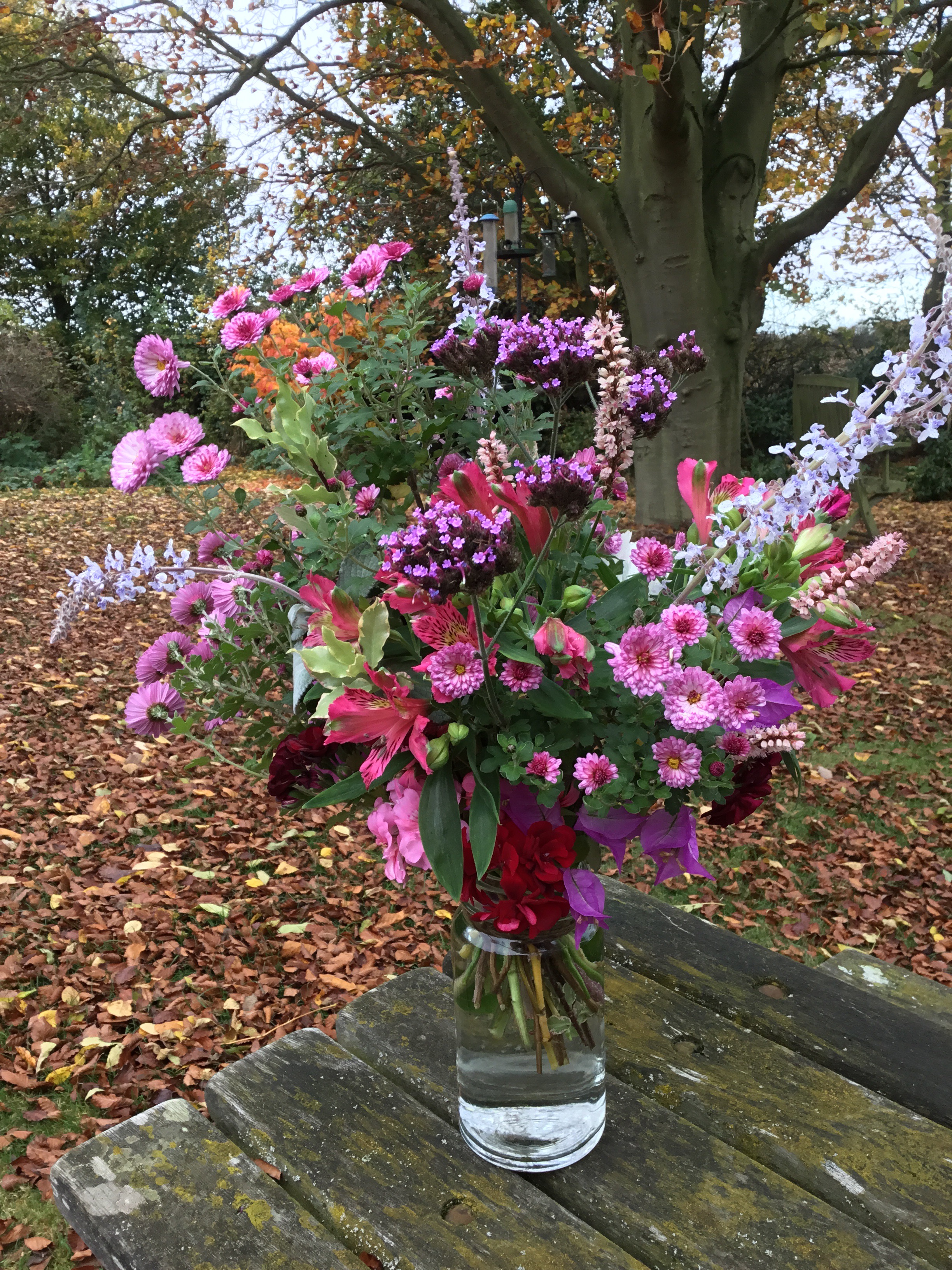
Our mild and sunny autumn has been a bonus for gardeners this year. Flowers usually past their best by the end of September have carried on into November. Here I am continuing my tradition of running around the garden once a week and picking whatever is in flower for my Mother-in-law, Joan. It’s a flavour of my garden that I am after – now my in laws are too elderly to visit us and see the garden for themselves. The flowers are loosely tied with string- and not arranged- as Joan takes great delight in making her own floral creations and placing them on the all the windowsills in the house.  


In the centre of the bouquet is some Verbena bonariensis grown from seed. It’s flowered virtually all summer and been a magnet for bees. Seeds for cut flowers come from Higgledy Garden.

There’s some spikes of  Persicaria Orange Field and deep red Persicaria Firetail. These flower July to October and are long-lasting in a vase. The spikes give a contrast to the daisy- like flowers of chrysanthemum Mei-Kyo.

 Chrysanthemum Mei-Kyo is one of the last to flower in my garden. It’s totally hardy here and doesn’t need staking. Flowers last for at least two weeks in a vase. 


My chrysanthemums grow at the base of the sweet pea canes on my cut flower bed. They do best in full sun, but these are growing on the north side of the hazel rod trellis. They grow to about 60cm high with a 50cm spread. Good quality plants come from Woottens plant nursery. I’ve been looking at their on-line catalogue for new additions to my plot and I rather fancy a chrysanthemum called Aunt Millicent- just for the name itself!  It’s a very pretty pale pink flower with a greeny yellow centre. More like a daisy than a chrysanthemum.


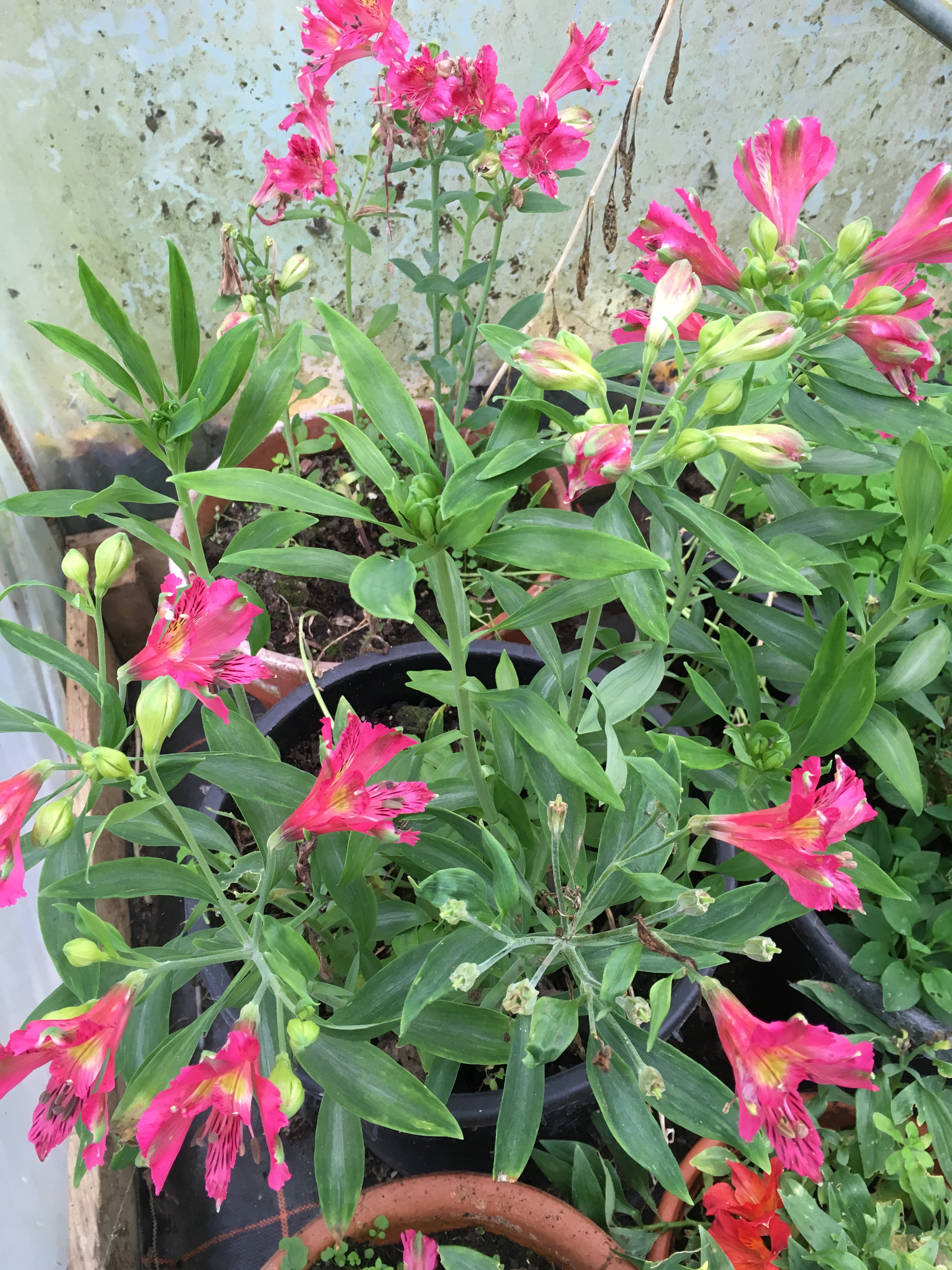
Bright pink alstroemerias are growing in large 40cm plant pots in my poly tunnel. These provide flowers nearly all year round. Flower stems are pulled rather than cut, and this encourages them to produce new flower stems. Tall stemmed varieties suitable for cutting are sold by Viv Marsh Postal Plants. I’m hoping to add a white variety called Blushing Bride to my collection next spring. The poly tunnel, bought second hand for £20, needs a good clean. Another winter job. It’s much harder to keep the polythene skin clear of algae than for a greenhouse. But it gives me a 20ft space to work during wet weather- and provides winter protection for a mini orchard  of peach trees.

Cathy at Rambling in the Garden started this meme three years ago, and it shows how gardeners from  all over  the world grow cut flowers and use them to decorate their homes.  I hope you’ve enjoyed this tour around my garden and the flowers grown for Joan. 

Wordless Wednesday

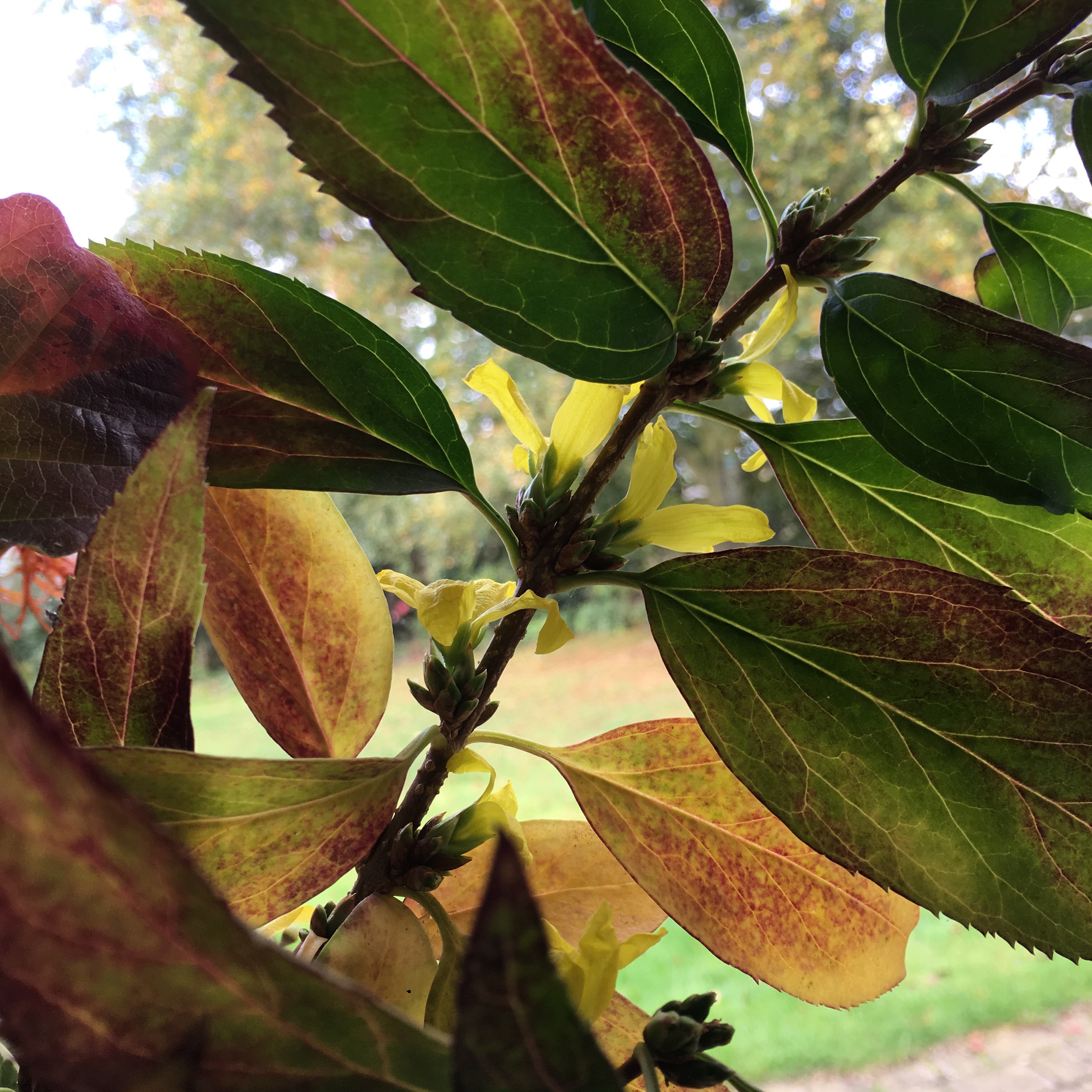
Forsythia.Flowers out of season are always a joy. And the foliage is a burnished bronze too. 

Wordless Wednesday


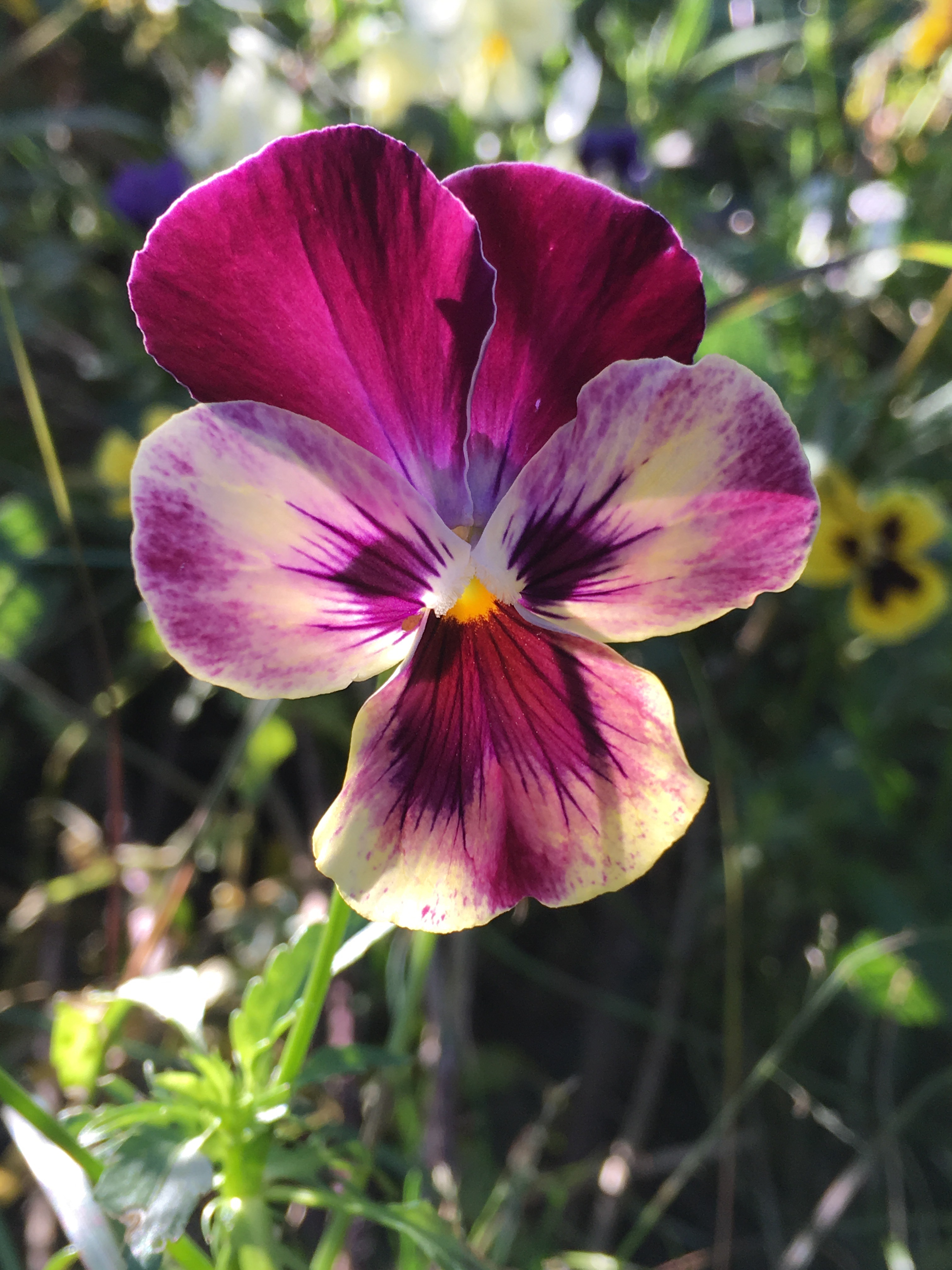
Back lit by sunshine. Autumn viola grown from seed. 

The Tuesday View- 25th October 

Autumn has always been my favourite season. Nature seems to gather up its glories for one last burst of beauty.  


The beech trees make a golden backdrop for the wedding cake tree – Cornus Controversa Variegata. Cotinus Grace is  starting to turn from chocolate to a glowing red.


Left to right, the wedding cake tree , prunus Kojo no Mai, and Parrotia Persica. Backbone shrubs that stand out in spring and autumn. Summer colour is woven through these plants.


Looking like it’s been varnished – Parrotia is also called the Persian ironwood tree. Its bark is a  beautiful mottled  iron grey.


Summerhouse in the mist. The field-side border contains eucalyptus, magnolia, flower carpet rose, and two matching crataegus prunifolia mop -headed trees  framing  the view. The 1920s summerhouse is on a turntable and facing the ploughed field today. Beyond the summerhouse is a small copse of trees where  a Spotted woodpecker nested this summer. 

My ancestors would have used different words for the seasons. 

Until the 1500s, autumn was called harvest. The word comes from the old Norse word for haust- which means to gather or pluck. 

The French gave us automne. And the Romans gave us the Latin name autumnus. But “autumn”didn’t come into common English usage until the 18th century.  

Cathy at Words and Herbs  Hosts the Tuesday View. Go along and see what’s happening in her garden and feel free to join in with photos of your garden too. 

When we came here we planted trees

Our garden was a field of wheat when we bought the house. We had to wait until the autumn harvest. Then the farmer ploughed our plot and we threw around handfuls of grass seed with wild flowers mix…

Source: When we came here we planted trees

Wordless Wednesday 

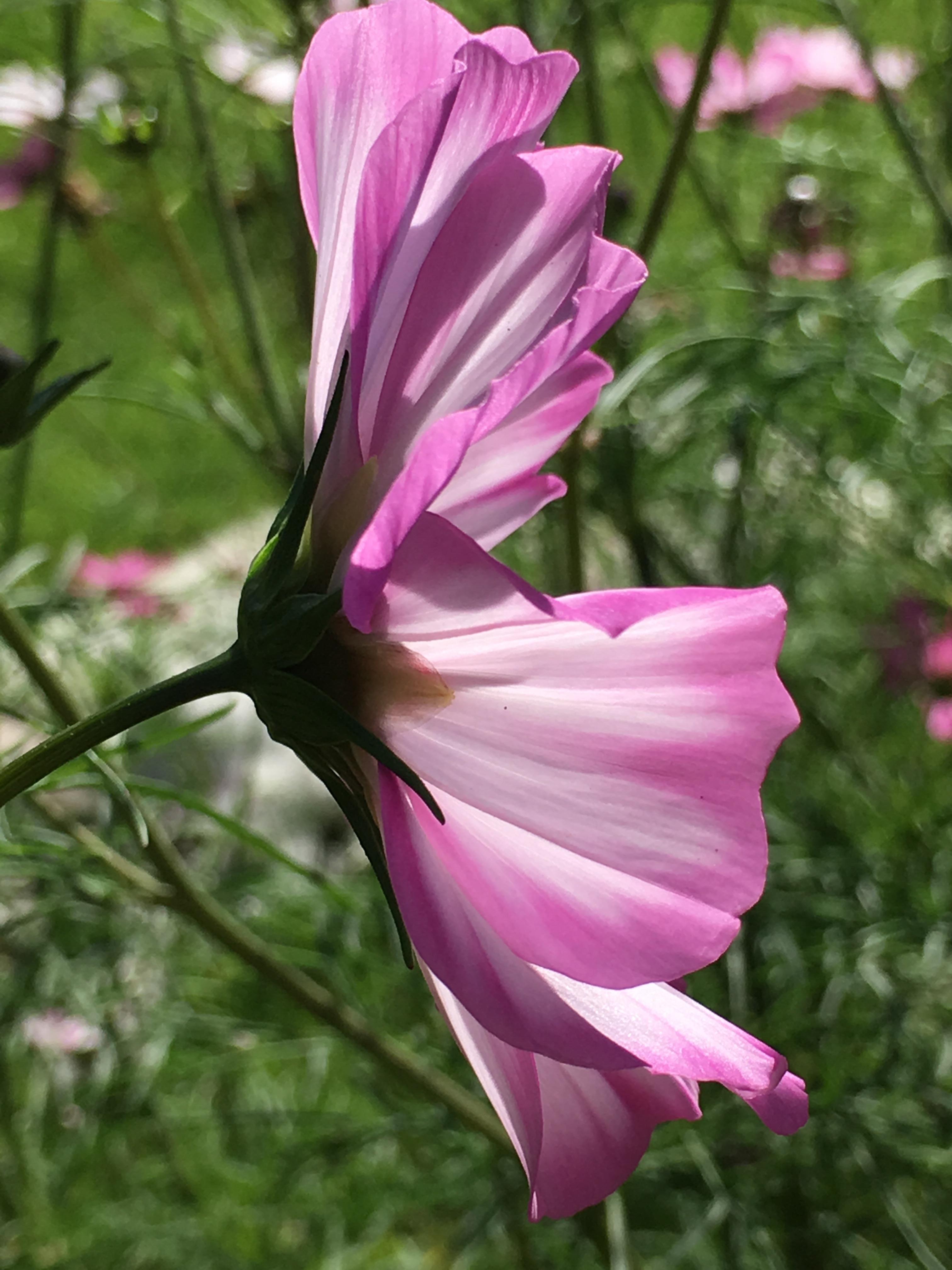
Fluffiest bee award in my garden goes to this tiny Common Carder bumble bee. Even the small cosmos flowers- the last of the season- are sought after. Flowers open smaller as the season winds down. And the bees should surely hibernate soon.


Cosmos Antiquity seed- sown in February this year. Still in flower October 19. 

In a Vase on Monday- the view from my potting shed.

Seeds are so inexpensive these days, there’s really no need to save our own. One packet of seed can produce hundreds of plants-for just a few pounds. And yet, there’s something about autumn that makes you want to dash round the garden gathering everything in. Every coat pocket at the moment contains a paper bag full of seeds of every shape and size. It’s my natural inclination to harvest, store up, preserve – to make ready for winter. I’m doing the same with jams and chutney. Capturing the summer. My defence against the cold. 

For this week’s Vase on Monday, there’s white cosmos, sweet peas, rudbeckias, verbascum, malmaison carnations and grasses  all grown this summer from seed. 


My favourite sweet pea is  the variety High Scent. It’s a deliciously creamy colour flower with a blue picotee edge. These were direct sown in June to give a late show until the first frosts. The scent is glorious on a sunny day, but at this time of the year it’s less evident in the garden. A posy on a bedside table in October though, is a joy. Heat from the log fire seeps right through the house,  bringing out the most wonderful scent. 


Rudbeckias flower all summer, whatever the weather. Reliable and long lasting in a vase. There’s usually a few stems to pick every day, until November. 


Seed originally came from Higgledy Garden. I’ve got my eye on some new seed – persicaria orientalis , and lavender larkspur for next year. But for now, my collected  seed is laid out in little containers in the potting shed, drying off and waiting to be sown again next season.  

Thanks to  Cathy for hosting this theme. 

Wordless Wednesday


Ligularia The Rocket. Seeds and leaves, 12th October 2016. 

In a Vase on Monday 

For the past two years, I’ve run round my garden on a Sunday and created a posy of “everything in flower” for my mother-in-law, Joan. Sadly, she can’t visit us as often as she would like. My father-in-law no longer drives, and they are both in their late eighties. So I try to create a series of mini- posies, one with scent, another with foliage. It’s a flavour of the garden that I’m after. They are simply tied with string and not arranged. Joan takes great delight in studying each stem and making her own creations.  It’s my way of sharing my garden with my in laws. Keeping the dialogue going and asking advice.  It’s become a kind of tradition. One I am happy to have started.


Blue Aster Monch, Clematis Polish Spirit, Persicaria, white Cosmos Purity and white Aster Monte Casino.


I  prepare the posies in my potting shed, stripping off the lower leaves and plunging the flowers in a bucket of fresh cold water for a few hours before tying them with string. Conditioning them like this means they will last for at least a week in the vase. More information on growing cut flowers and preparing them from  Georgie at Common Farm Flowers


Sweet pea High Scent, well named- and reliable. Blue Aster Monch, Diascia rigescens, and  Antirrhinum Black Prince. I’m sowing more sweet peas this week. Heritage varieties from  Easton Walled Garden, historic renovation project near Grantham, Lincs.


Verbena Bonariensis seeds itself around the cut flower patch and provides pickings from May to November. Alstroemeria flowers all year round in a cold poly tunnel.  

Gardening and growing flowers-  such simple pleasures-  much better when they are shared with someone. 

Thank you to   Cathy at Rambling in the Garden  for hosting In a Vase on Monday. 

Wordless Wednesday. The hedgerow 5th October. 


Clematis against an October blue sky.

Tuesday View 4th October. The view from my garden.

Step out of my garden gate, and cross the ploughed field at the back of the house and this is the autumn view.  Rich fertile farming land. Harvested now. And waiting. Ploughing sounds drone all around.  I can remember a time when the fields stood brown all winter. Now there’s barely a pause. Winter wheat, barley, oats and oil seed will be sown by November.


Hedgerows show the first  shades of autumn, while the oak and ash still stand as green as summer.


We stand and watch a kestrel quartering the fields. A rich hunting ground now the oil seed crop has been harvested. A set aside strip runs round the field margins.


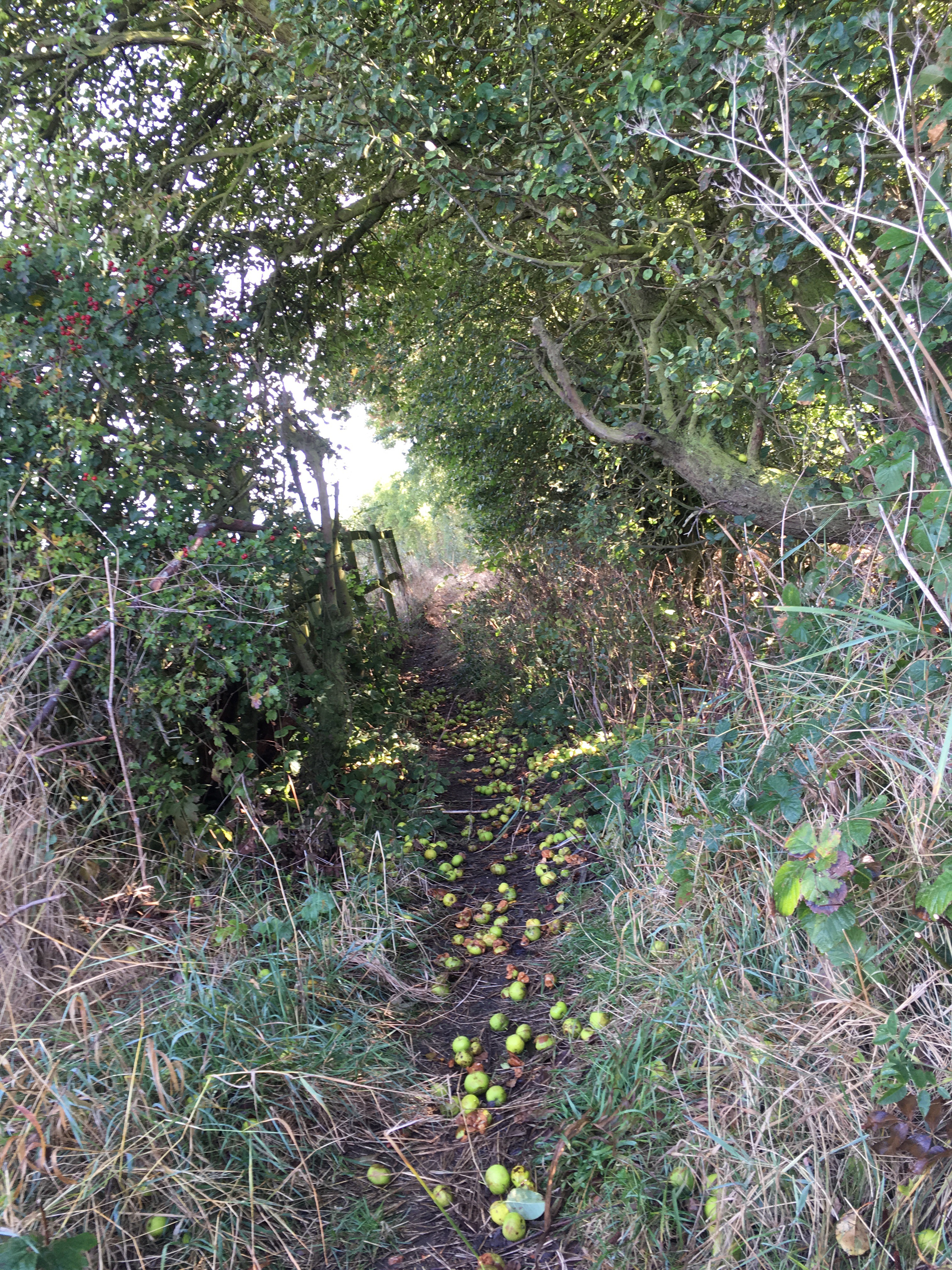
Along the hedgerow walk, there’s a delicious smell reminiscent of apple pie. Crab apple fruit gently cook in the heat. It’s been 20 degrees here today. We collect the ripening fruit to make jelly. Whenever I open my kitchen cupboard doors in the winter, the jars of pink jelly will be there to lift my spirits. Little things  matter in the dark depths of winter. 

Goldfinch  feast on thistle and teasel seeds. The flash of yellow brings more welcome cheer on cold dark days. 

Rosehips galore. The blackbirds love them. We still make rosehip syrup. I grew up on a spoon of rosehip syrup each day before school. It tasted of summer. 


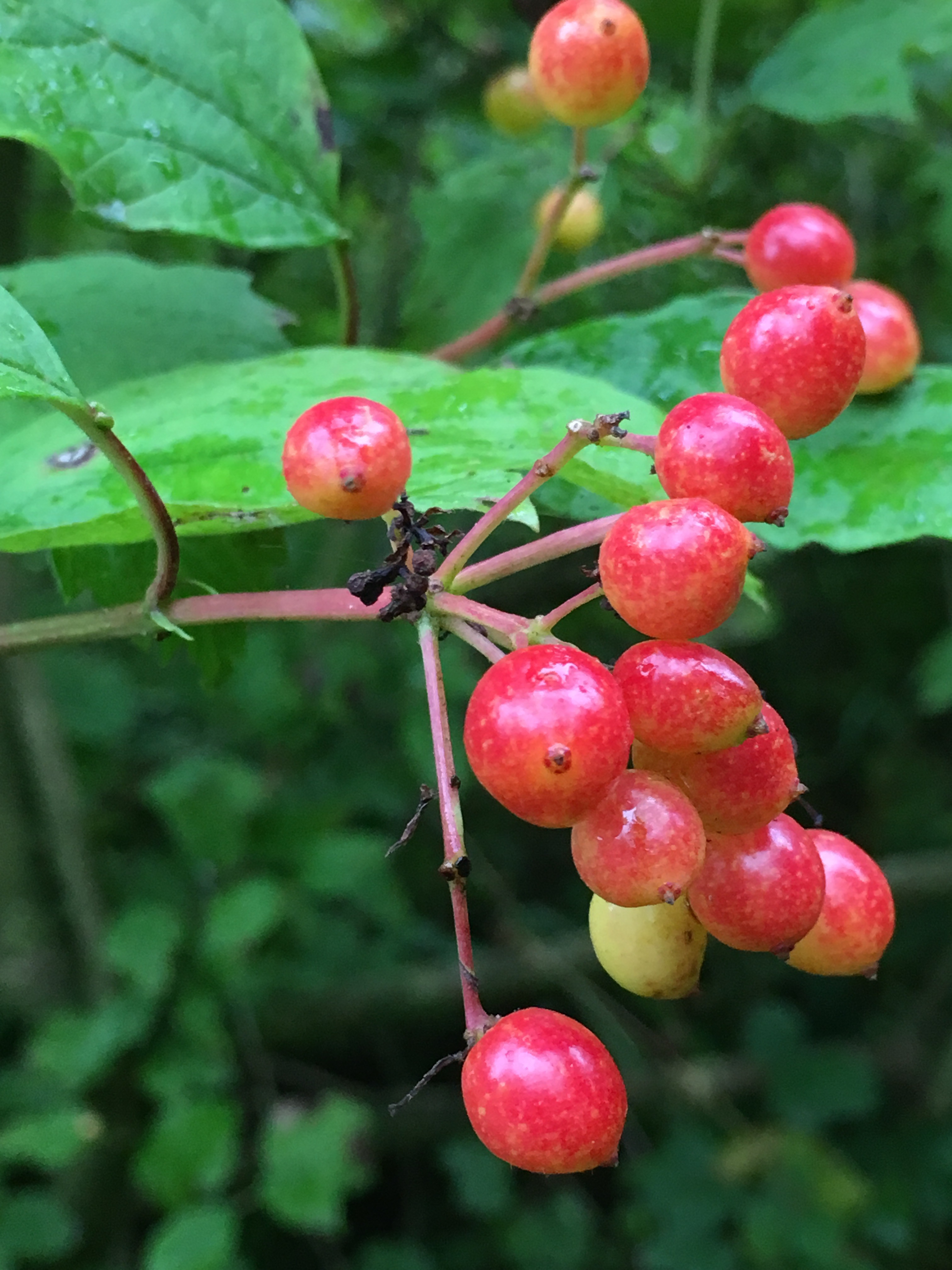
Viburnum opulus or Guelder Rose with sealing wax berries. As beautiful as any garden shrub. 

I hope you’ve enjoyed this walk along the hedgerows and the view from my garden. I have cheated really as Cathy at Words and Herbs asks us to share a view of our garden and  show how it changes throughout the year. My plot is mostly a wildlife garden with patches of brambles and stinging nettles. So as a first time contributor to this meme, I thought I would show you the setting for my garden. And hopefully then you will forgive my weeds and forgotten corners where I tread carefully and hedgehogs curl up in the leafmould with geranium leaves for a roof. 

End of the Month View 

Summers end- and the garden’s still glowing. Butterflies are feasting on fallen apples. Bats overfly the pond at night. And the borders fair rustle and crunch  to the sound of hedgehogs- surely the noisiest visitors to my garden after dark. 


The garden is still full of colourful blooms. 

And yet, the season has tipped over the balance. Michaelmas, on September 29th, traditionally signals the beginning of autumn- the shortening of days. My ancestors,who were servants to grand houses, would have been paid, hired or fired on Michaelmas day. And  for later generations, who were farmers, Michaelmas signalled the end of the productive season, a completion of harvests. The end of one cycle of growing  and  the start of a new one. 

Growing must be in my blood. I can’t be happy unless I am tending and planting food, flowers, fruit and veg. I often wonder if  this need for gardening  keeps me connected to the past, to those hard working and tenacious ancestors. 


I remember my Grandfather pointing out the Harvest Moon and speaking of the Autumnal Equinox- Softly spoken words that delighted me. I always had a fascination for such things. 

There are two equinoxes each year in September and March when the sun shines directly on the Equator and the length of day and night is nearly equal. In 2016 the Equinox was on Thursday 22nd September, when some of these photos were taken. Autumnal Equinox


Cosmos plants flower until the first frosts. 

Calendula pot marigolds seed themselves along the veg garden paths


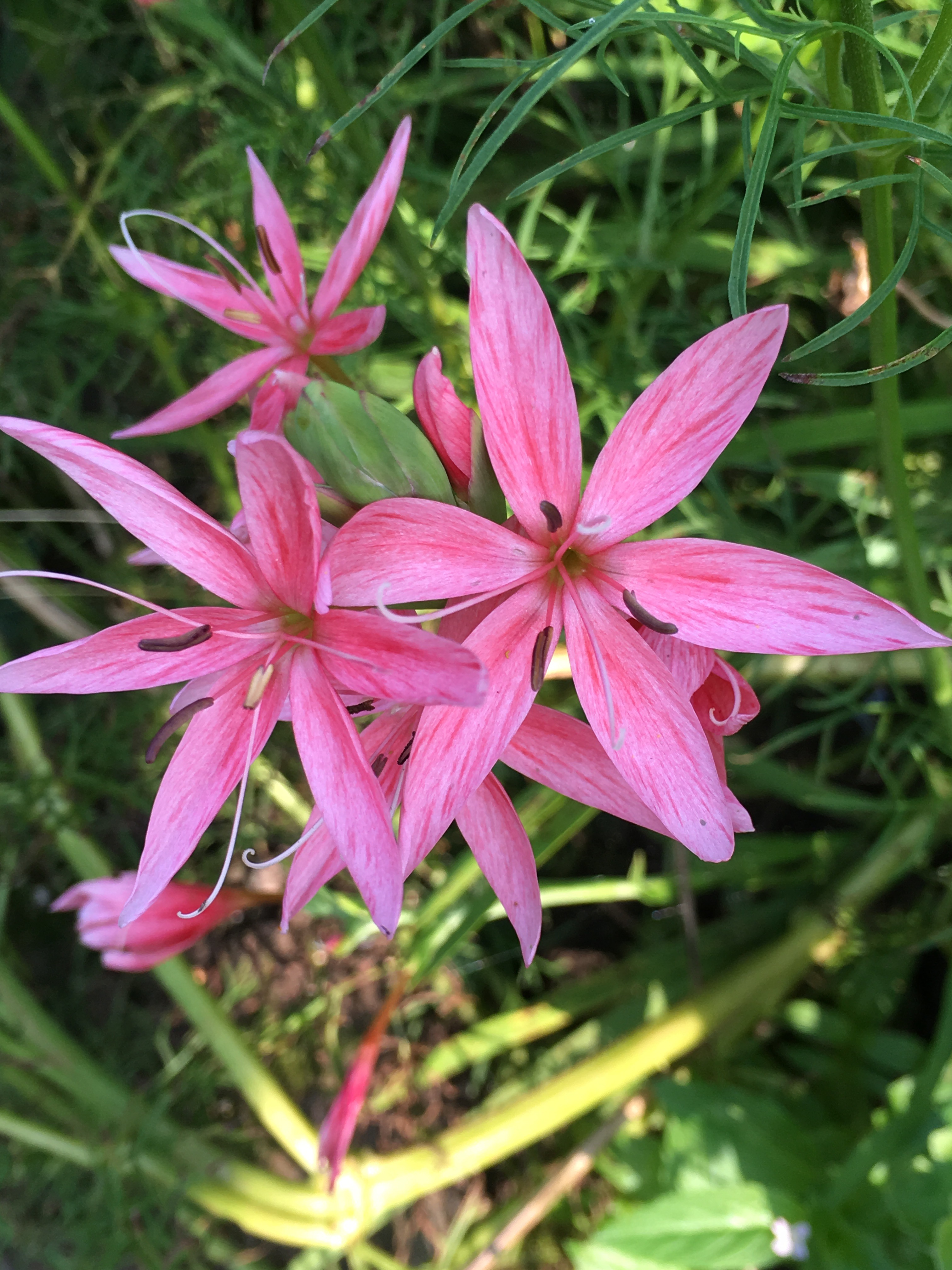
Schizostylis/ Hesperantha coccinea- a September glory. Also known as crimson flag lily.


Sweet peas sown late will flower until October. The scent combines with the late summer roses still blooming here. 


Dahlias left in the ground over winter did much better than potted plants kept in the greenhouse.Slugs seem to like the softer growth of the cosseted plants. 


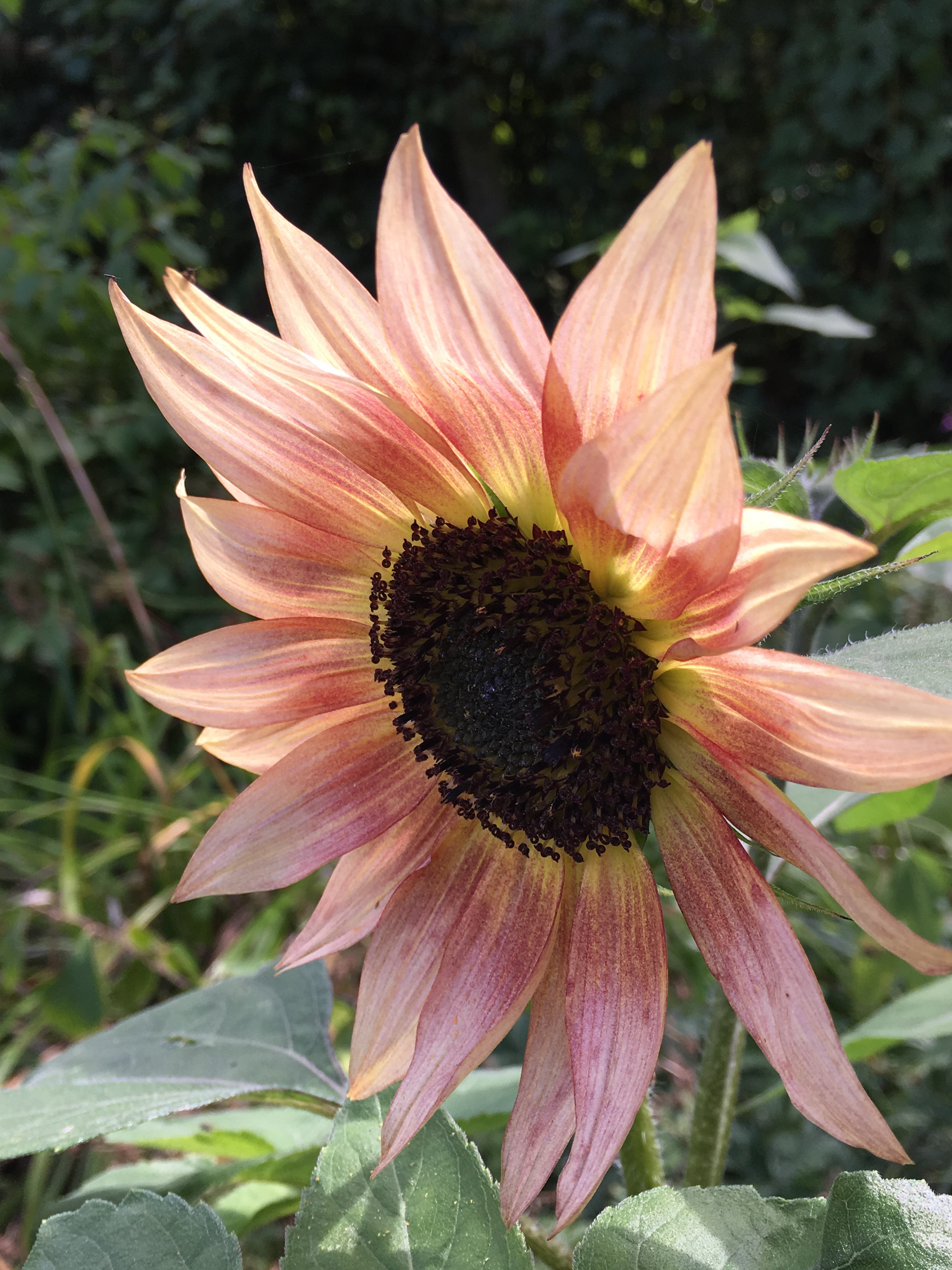
Sunflowers in such sumptuous colours. Seeds for the birds over winter. 


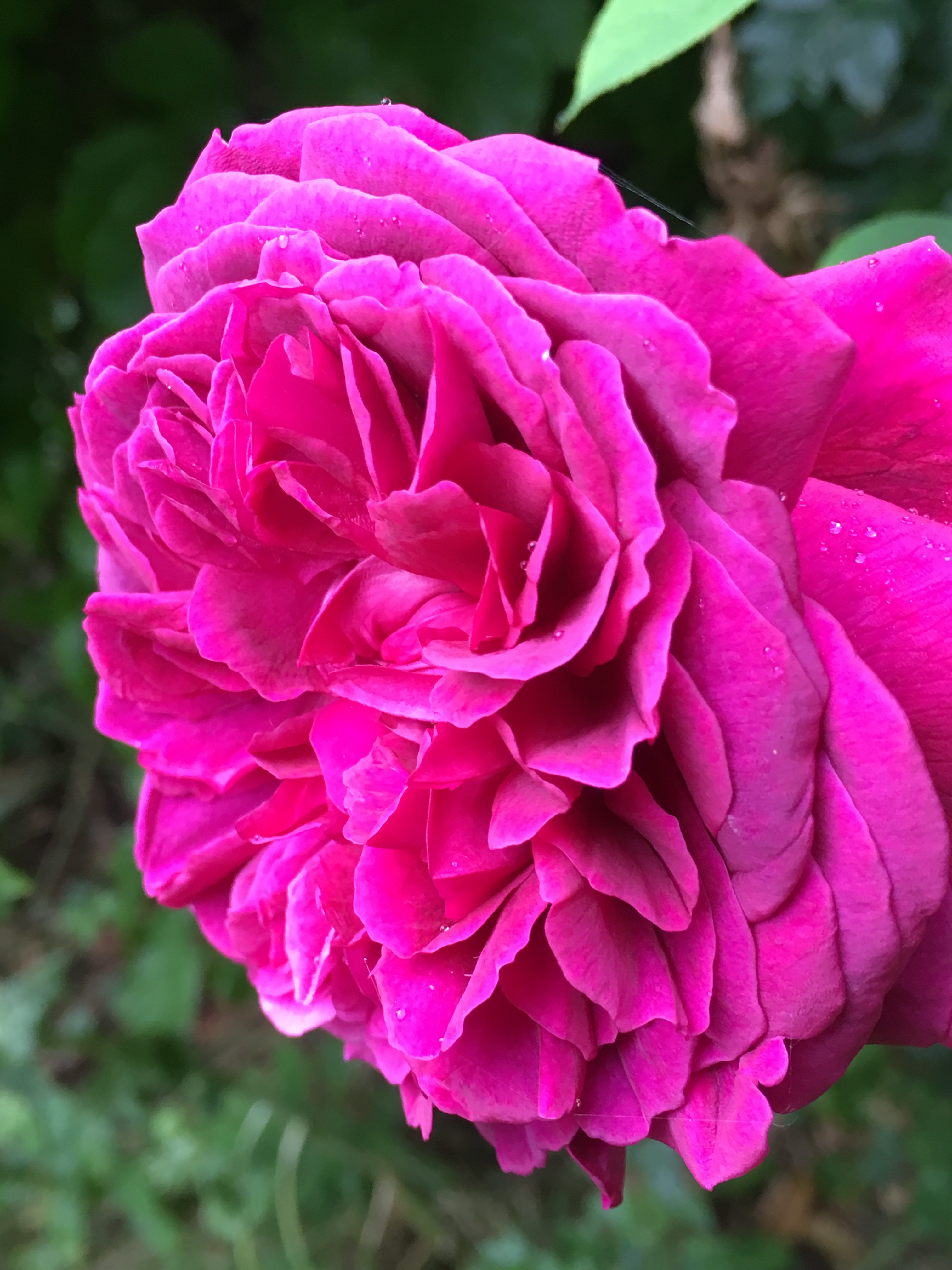
Rosa Shakespeare puts on a good late summer show, and the scent is reminiscent of old moss roses. 


Aster Monch. My favourite -totally reliable and a magnet for bees and butterflies. 


White phlox paniculata. Grown here in deep shade and poor soil at the back of the garage. Such a beautiful scent. A plant that shines out in dark places.


Sweet pea seeds came from Easton Walled Gardens where I had the most dreamy job last winter, promoting the gardens. It wasn’t difficult to say nice things about this glorious historic garden renovation project. 


Soon my garden will be full of seed heads- and I will treasure them just as much as the flowers that came before. 

Until then, to quote Alison :”It feels like autumn is holding its breath.”

Thanks to Helen for hosting this End of the Month View. 


Wordless Wednesday


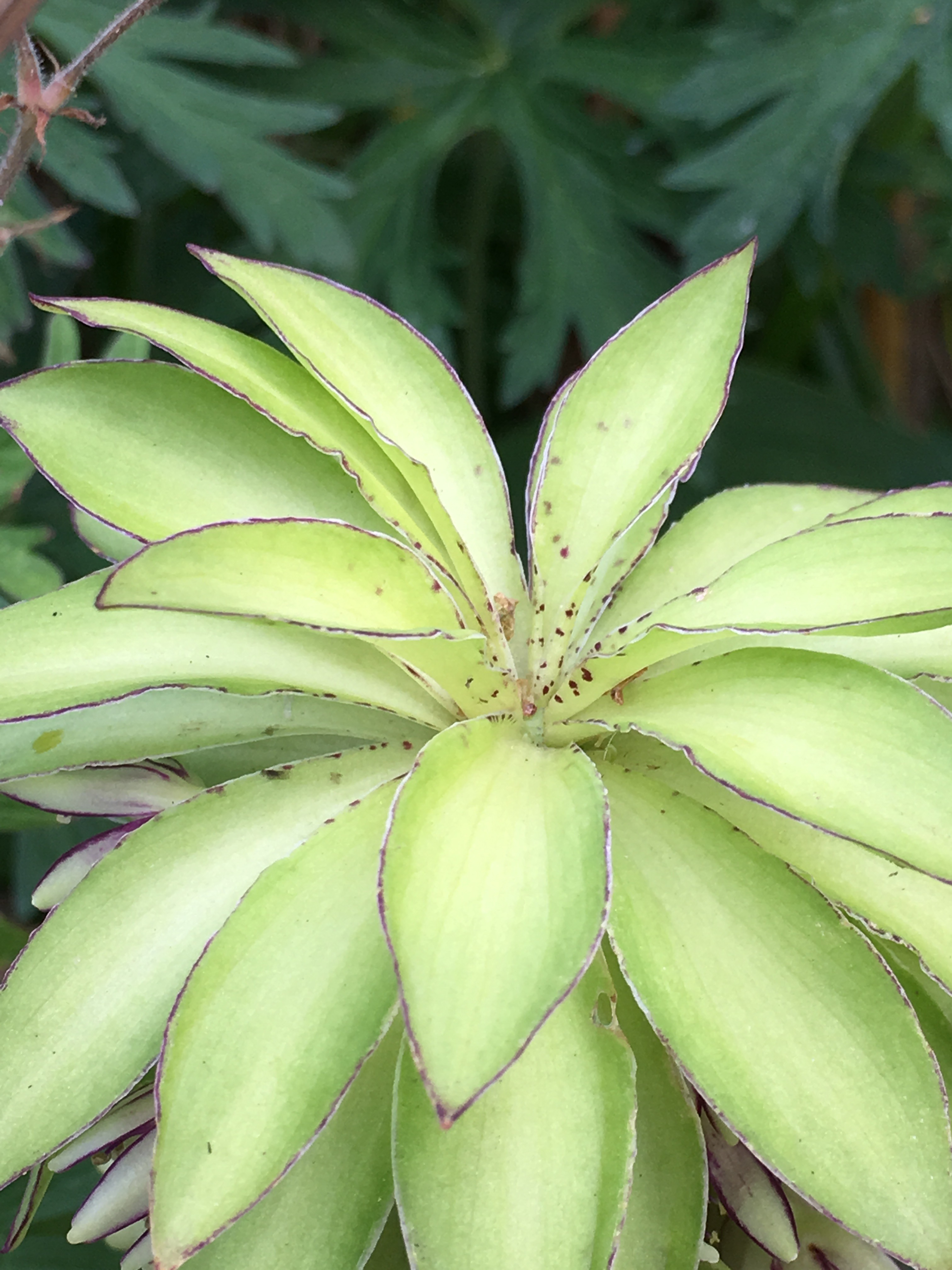
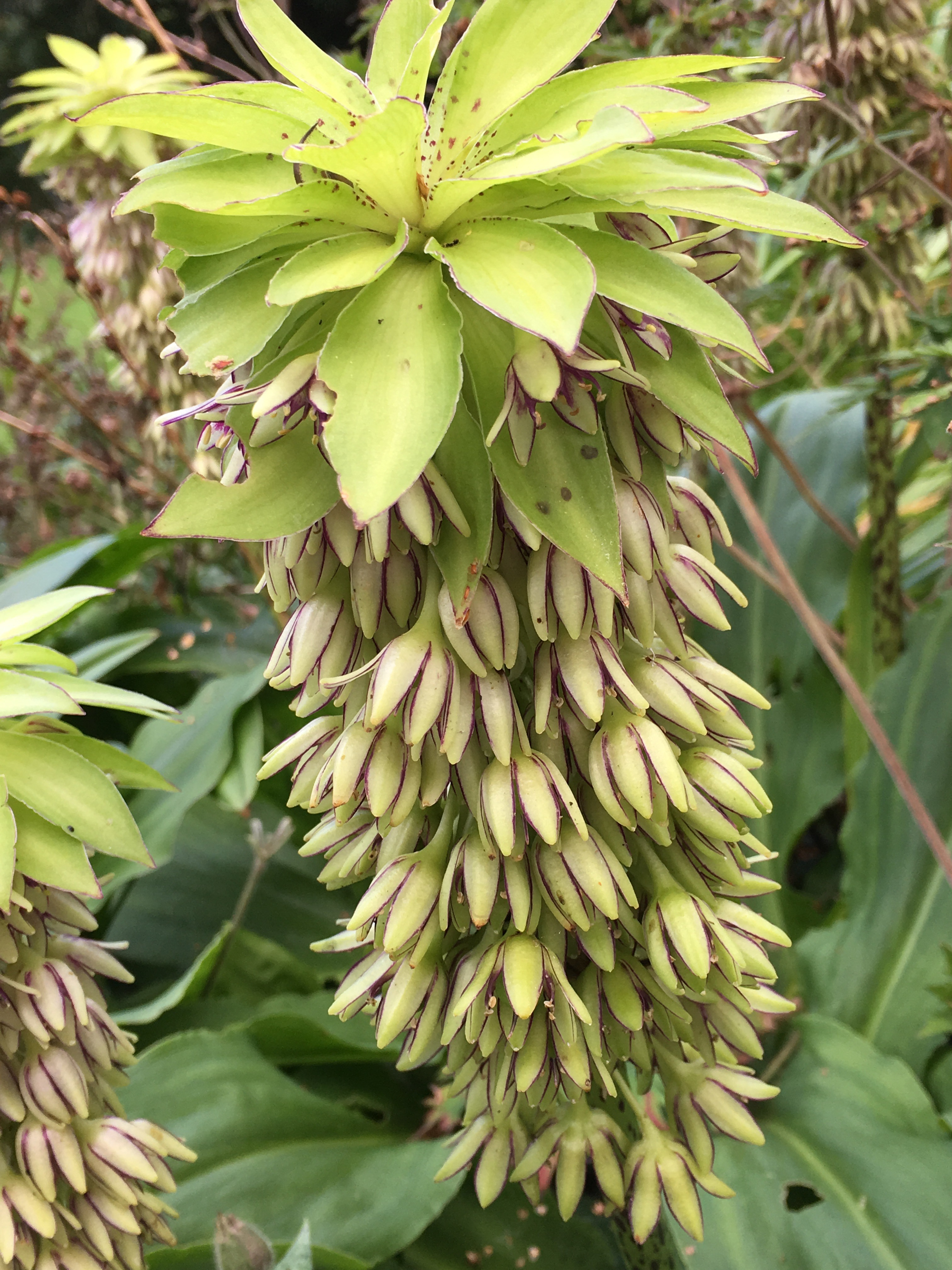
My favourite thing in gardening is finding unexpected treasures -or plants I’ve forgotten about. I planted this Eucomis bicolor  (pineapple lily)  years ago. Each autumn  it’s always a surprise- pushing up through an umbrella of geranium leaves. What plants have you “found” that have delighted you? 


Wordless Wednesday


Making its own light.  Calendula on a dark autumn morning. 

Wordless Wednesday


Echinacea White Swan. I could sit and gaze at this flower and bee all day. 

WordlessWednesday 


Echinacea Green Jewel. Mesmerising. 

Wordless Wednesday


Things I make. A welcome to the front door. 

Photos from my Pinterest pages….

http://pin.it/Qf7K07w

Wordless Wednesday


Pelargonium Appleblossom Rosebud. Perfectly named. Such beauty. 

This cultivar has been around for over 100 years. It grows well, with plenty of flowers, but needs lots of sunshine to provide a strong colour. My plant was at the shady end of the greenhouse, which is why it is a greenish-pink. But I love the delicate folds and pink-tipped flowers. They are perfect for flower arranging, lasting a week in water. It’s one of my favourites. This plant came from my Mum, but I can highly recommend Fibrex Nursery -holders of the national collection of pelargoniums- at Stratford, Warwickshire. Their mail order service is first class. I can spend many happy hours gazing at their gorgeous catalogue. http://www.fibrex.co.uk and on Twitter @FibrexNurseries 

Wordless Wednesday 


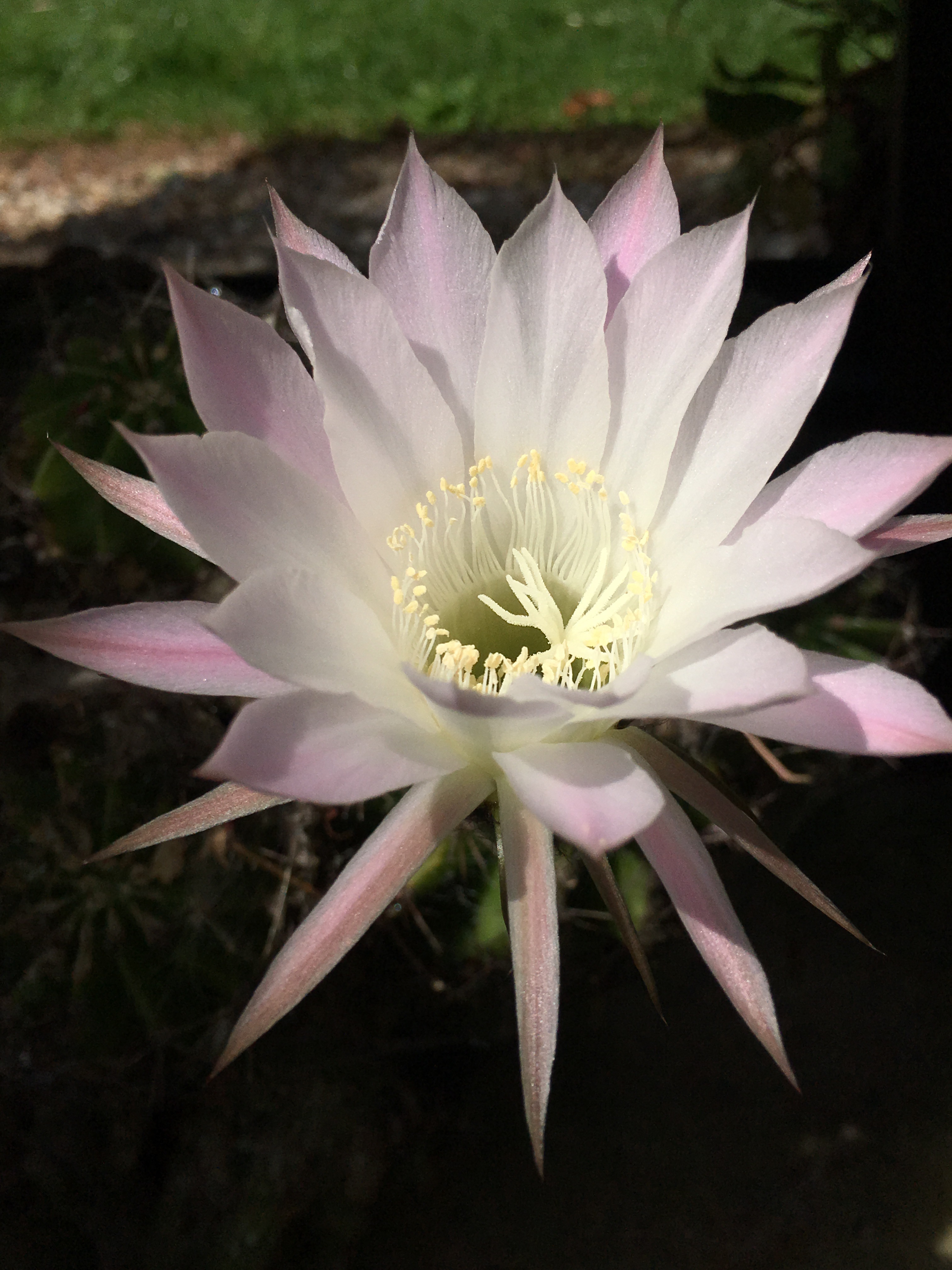
How can a tiny spiky cactus produce such a beautiful flower. Beauty is not always where you expect to find it. 

Wordless Wednesday


A self-seeded pot marigold, Calendula. While I fuss over and struggle with more exotic plants, this is a reminder that beauty sometimes just happens. 

Tree Following, August 2016

We live on a windswept ridge. On the plus side, there are views in all directions- rolling fields of corn, oats, and barley. On the minus side, in the winter we are battered by 70 mph winds. Every winter we lose one or two mature trees. Last winter, we lost a majestic willow with five stately branches. Now reduced to a stump.The  mature oak trees always suffer some damage. We anxiously check them after a storm. 

Step over our garden fence, and take 20 paces and you will come to my chosen tree following oak. 

It’s the tree in the centre of the picture.


The oak is about 200 years old and marks the start of a small wood where buzzards nest each summer. 

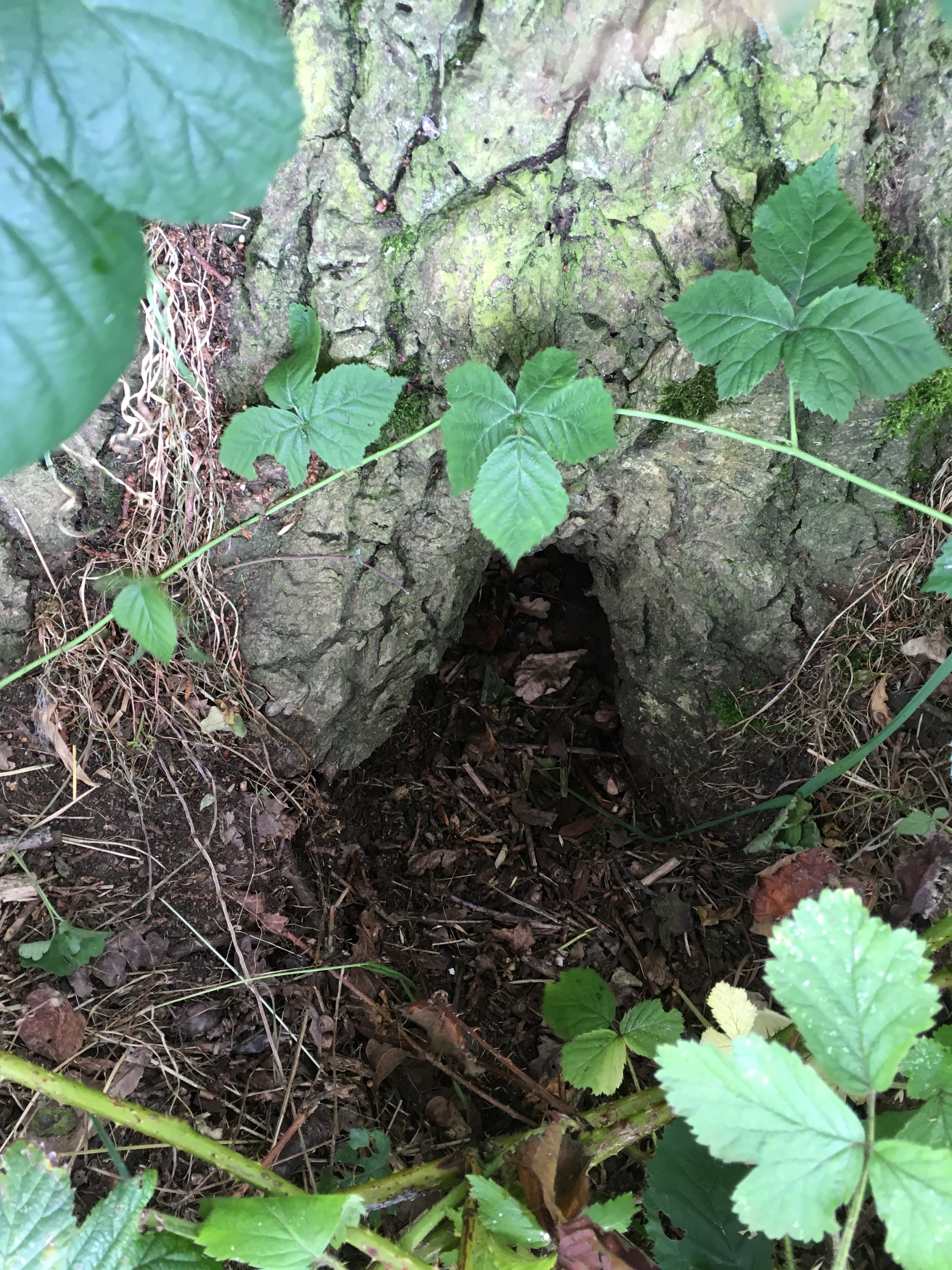
One of the branches, snapped in a storm, has been left dangling. We wonder what lives in the holes and crevices. 

Something must live in there. We see footprints in the winter. 


It’s a favourite spot for a picnic in summer. The wide-spreading canopy gives much welcome shade. 

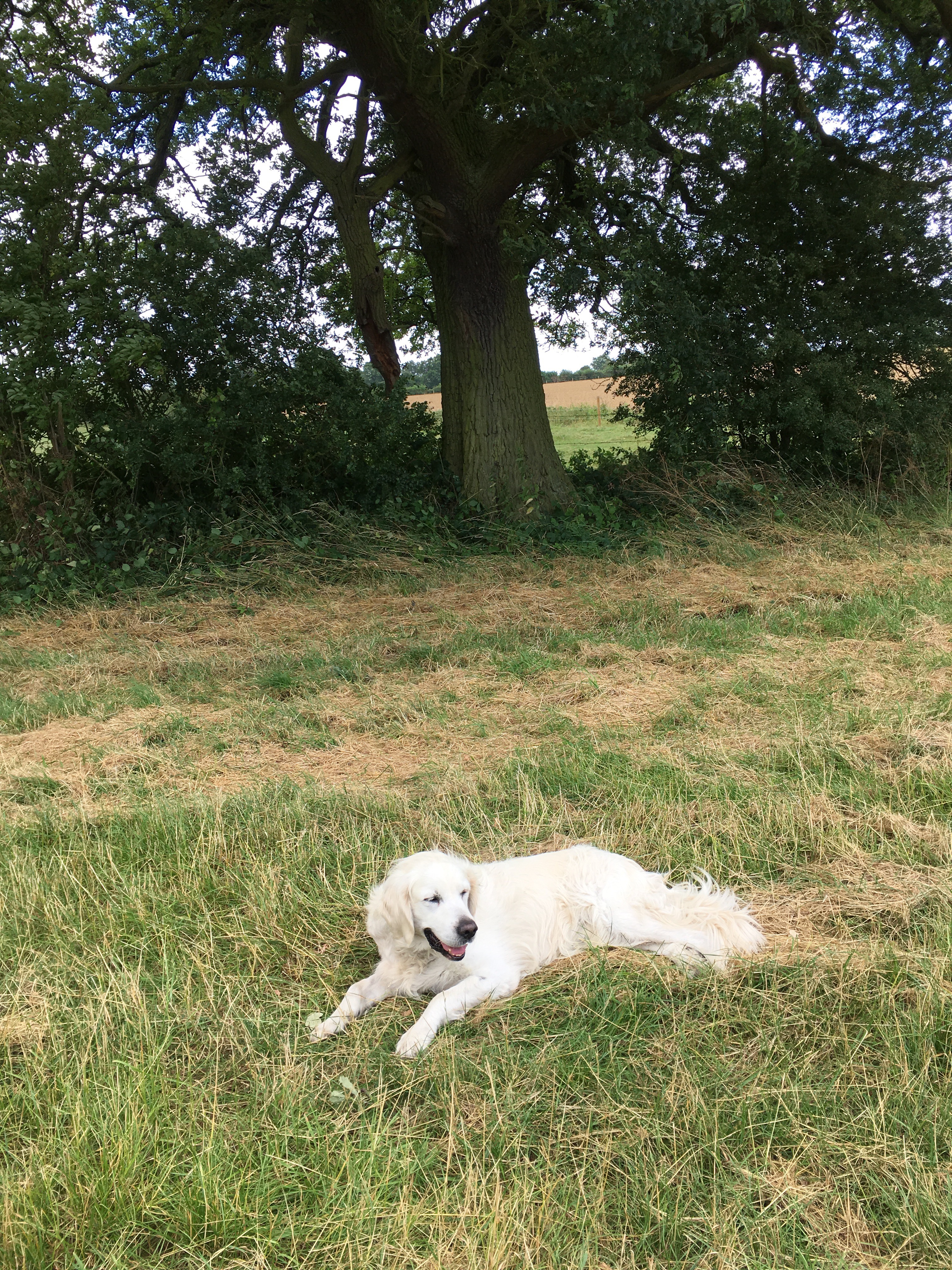
Here’s Arnie enjoying the cool shade during the  recent heatwave. 


And it’s not just us enjoying the shade. We watched these beauties being born and have enjoyed seeing  them grow. It’s a rare thing to see calves reared by their mothers these days. We get a lot of pleasure from seeing them caper around the fields. They seem to be as interested in us as we are in them. They line up along the hedge to watch me working on my vegetable plot.


Lammas Day is August 1st and our oak trees have put on the second flush of growth. Lammas leaves look so fresh  and green. It’s a reminder that the season is moving on.

We sometimes see a woodpecker on the trunk. The bark must contain a good supply of insects and grubs.


A beautifully scented dog rose wreaths around the sunny side of the tree. There will be plenty of rose hips this year. 


 Thank you  to https://squirrelbasket.wordpress.com/tree-following for hosting this meme. I was inspired to join in by Alison at The Blackberry Garden http://blackberrygarden.co.uk and Mike at Flighty’s Plot https:// flightplot.wordpress.com . Thanks for reading. 

Wordless Wednesday


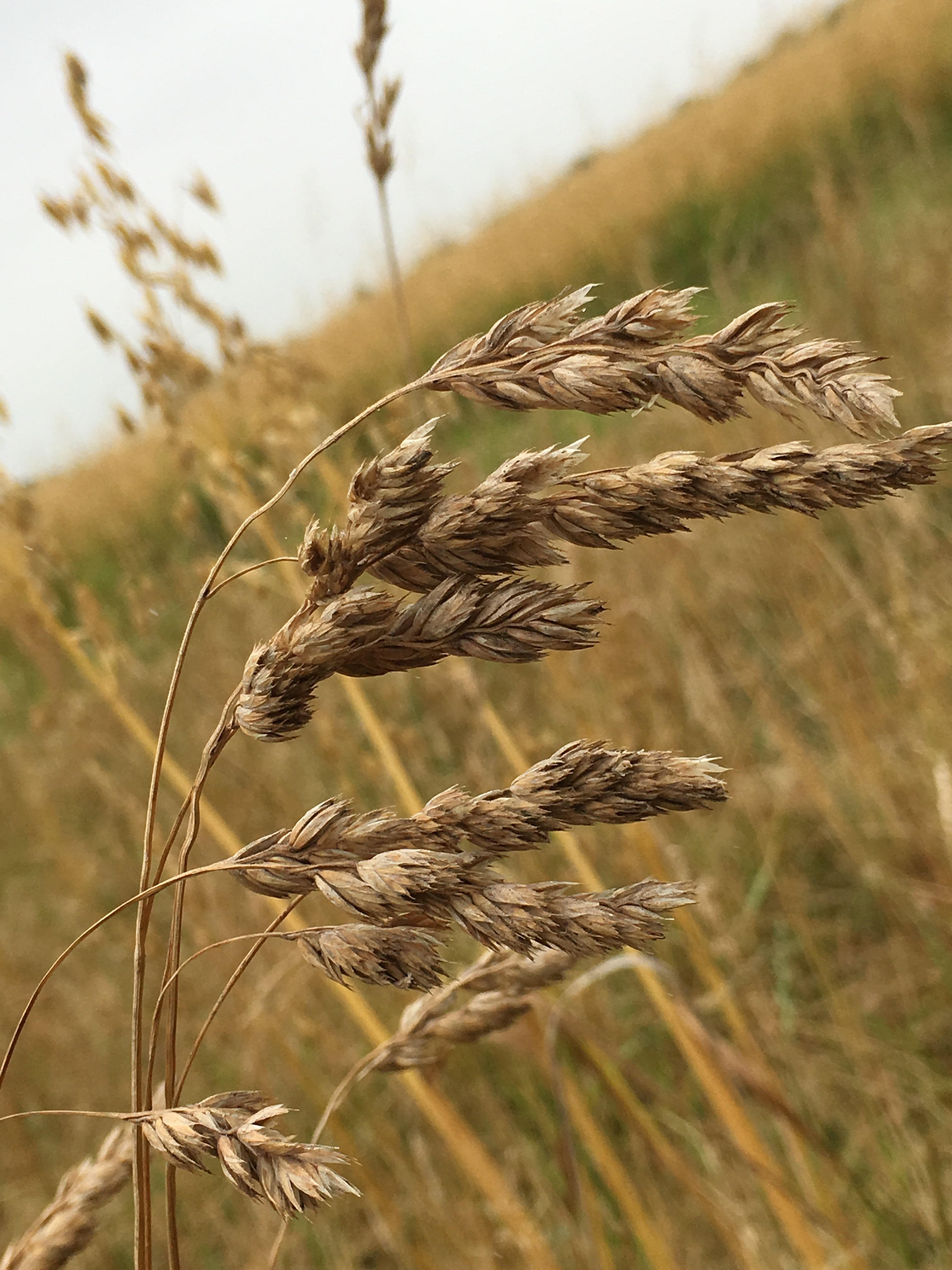
Wild grasses are as beautiful as flowers in my garden. Butterflies lay their eggs on blades of grass, and they are food plants for caterpillars.  

Who doesn’t love absent-mindedly stripping the seeds as you walk along, and scattering them along the way. It’s a favourite pastime of mine. So calming – and it’s free. 

Wordless Wednesday

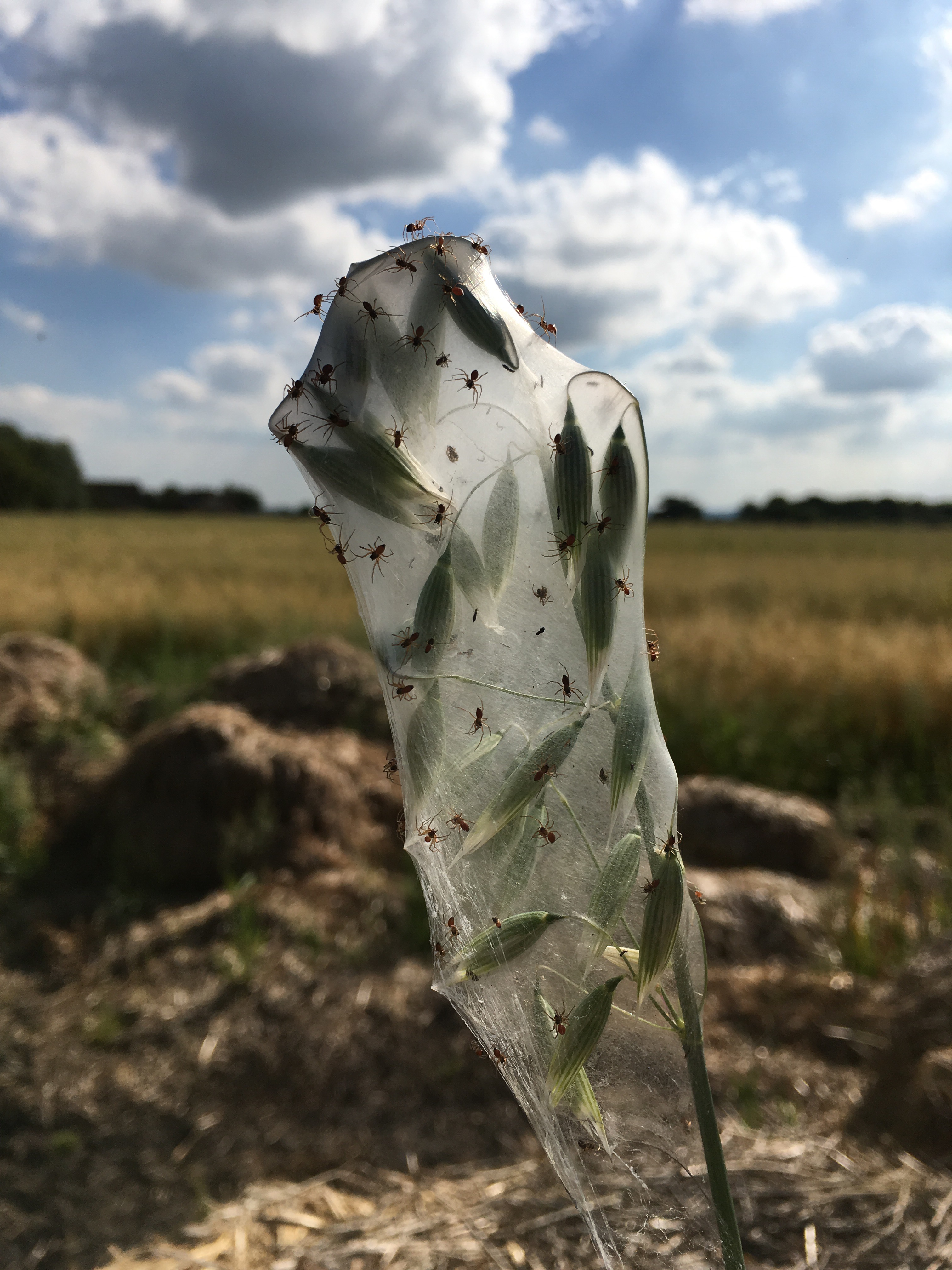
Hatchlings. 

I watched the spider weave this web. Watched the tiny dots hatch into tiny spiders. And then today, they emerged. It’s been a daily pilgrimage for me to check on the nest. I’m so pleased the web survived the farm tractors, dog walkers, stormy weather. I whispered good wishes to the babies as they drifted on the wind. And pondered on the things that make me happy. They are the simple pleasures in life. The things that money can’t buy. 

Wordless Wednesday


Geranium oxonianum seedling. A good weed smothering variety. Flowers all summer. And mounds of foliage make a perfect home for hedgehogs in the winter. We often find hedgehogs rolled up in a pile of dried leaves, tucked in amongst the geraniums. And there they stay until spring. 

Tiny bee on cow parsley

Photos from the lane outside my garden gate. 


Tiny bee and cow parsley. 


Sweet smelling dog roses in shades of white and pink 


Dog roses tumble from the Hawthorne hedgerows 


Dog roses as beautiful as any cultivated form


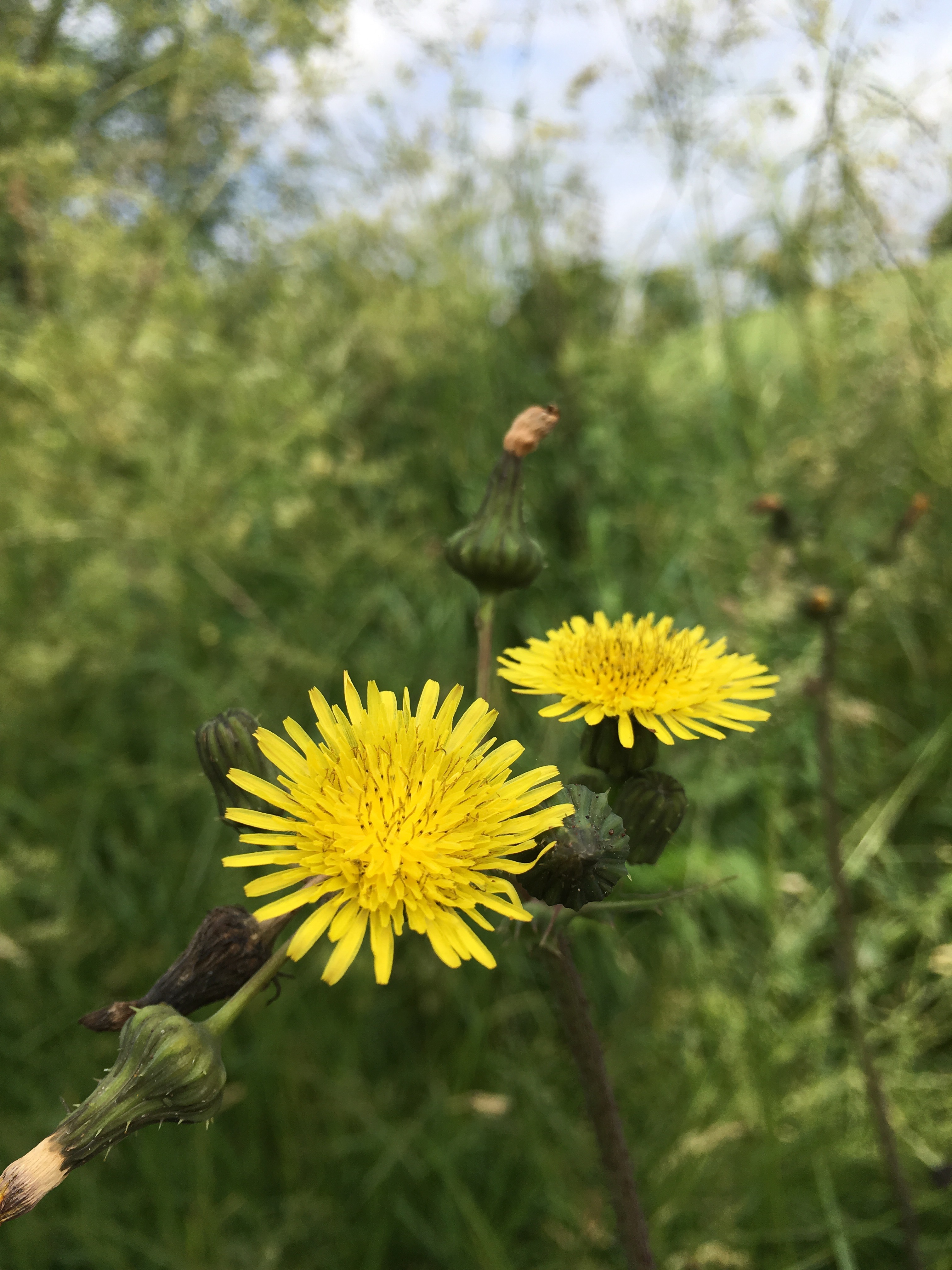
Loved by bees. I think this is called hawkweed. 


Wild sorrel. Leaves can be used for delicious soup.

Wild sorrel ripens to this beautiful red colour 


Pink cow parsley – as pretty as any garden flower 


Tiny wild geraniums  

I hope you’ve enjoyed a walk along our country lane in June. Are there any wild flowers when you live? 

Wordless Wednesday


Old fashioned  pink,  Dianthus Mrs Sinkins. Such scent! 

The view today

It’s been torrential rain here all morning. The ditch has overflowed and resembles a fast flowing stream, and my veg plot is half under water.

I’ve been watching a young buzzard, sitting on our hedge. Every now and again, it shakes itself and raindrops go flying. 

Suddenly the downpour halts. The buzzard looks about and stretches its wings to dry them. And then it’s off. With only three flaps of its wings it is gliding over the hawthorn hedge. Such power. By the time I get to the gate post to watch, the buzzard is only a tiny speck high up in the sky. But we can hear the cat-like mewing sound.  And now there are three. The young buzzard has been joined by its parents. 

We’ve been watching these buzzards for the past few years. They’ve made a nest in a small wood in the fields at the back of our house. Last year there were two pairs nesting, and they each produced two chicks. 


We will take a walk there later to see if we can spot their nests-without getting too close to bother them.

Anyway, the sun’s come out now, and suddenly there’s activity all round. There’s bees buzzing in the cotoneaster around the office window, the fledgling swallows are making wobbly flights past. We hold our breath, in case they crash. They just miss, by inches. The busy, twittering sound they make reminds me that I must get going too. I must dash off to work, before the next deluge. 

I hope you’ve enjoyed this quick glimpse into my morning here in my garden. It’s our wildlife haven. 

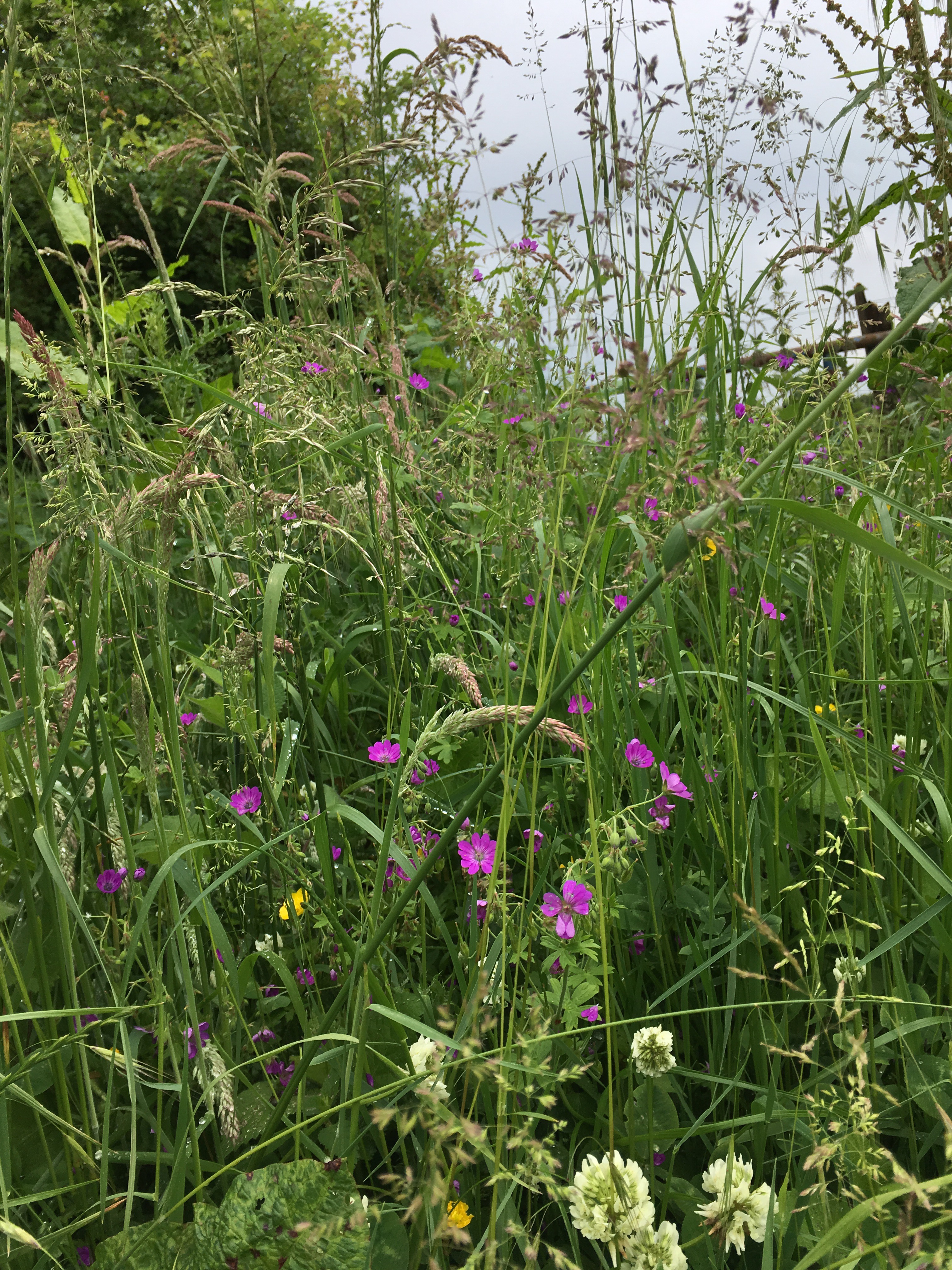
Wild geranium,tiny but Jewel like. White clover, buttercup and grasses. Perfect for bees, butterflies and insects.


Pink-tinged  cow parsley. As pretty as any cultivated flower. 


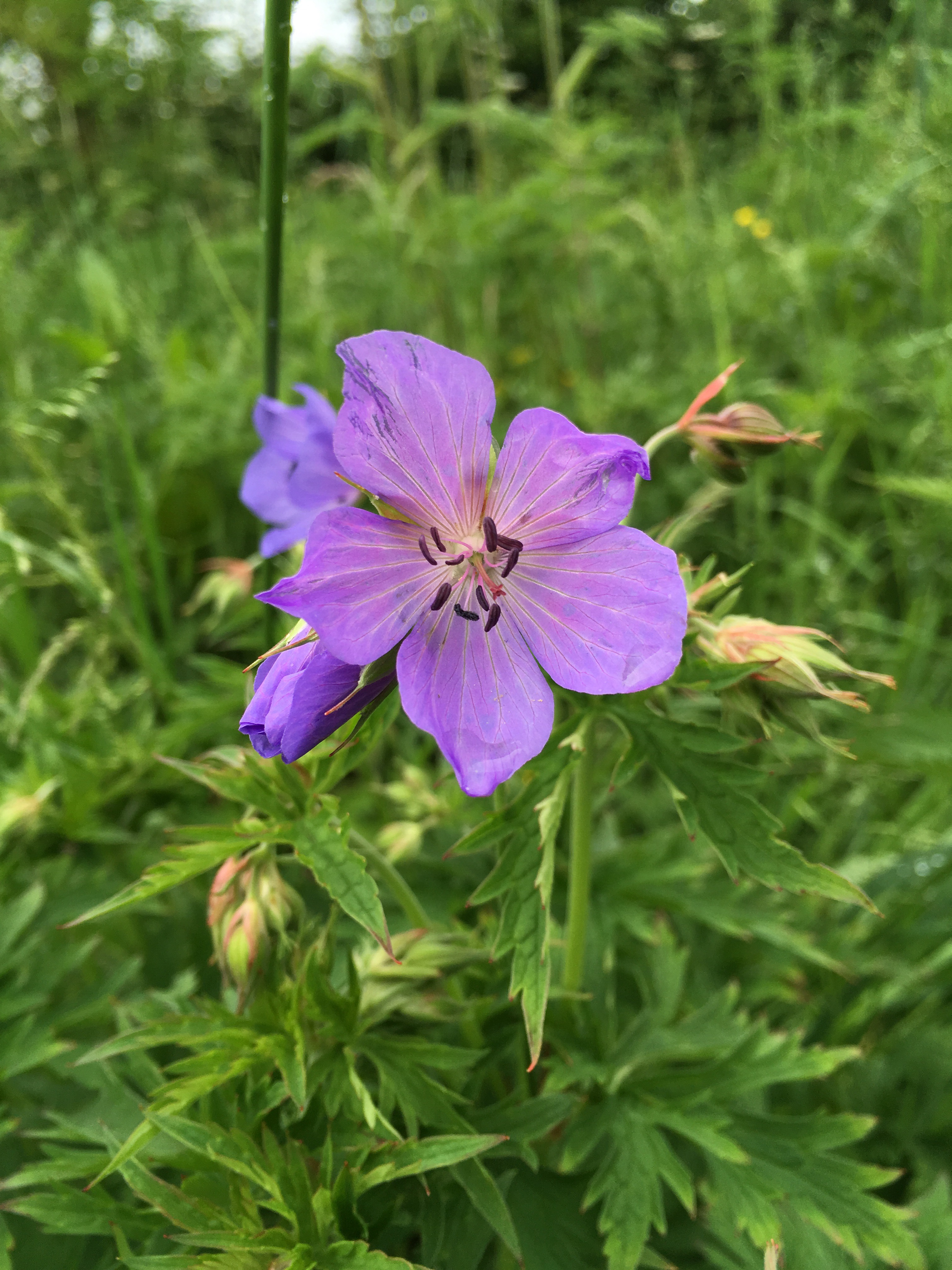
Wild geranium maculatum, like crinkled silk. Also known as cranesbill because of its seeds. As beautiful as garden form.

Wordless Wednesday


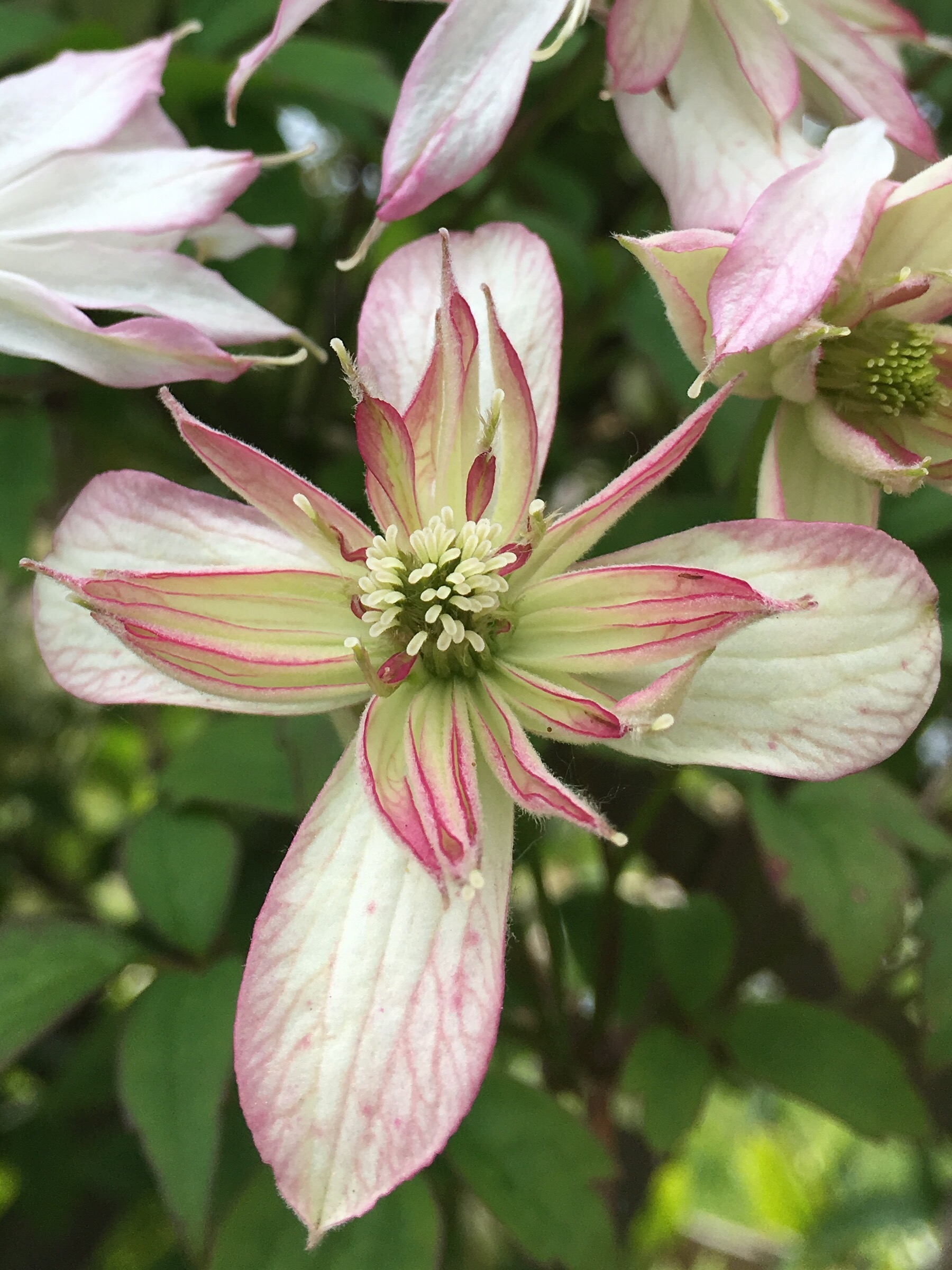
Clematis Montana Marjorie. A delicate double-flower. Scented in the evening to attract moths.

Hoby Open Gardens

On a still summer’s evening, the church bell sounded the hour, and a flock of geese took flight from the lake. 

I was standing on the edge of the ha ha at Glebe House,  looking over the pasture lands that would once have been owned by the clergy. It’s a sight that gladdens the heart. Undulating wildflower meadows with contented sheep asleep in the shade  of ancient oak and lime trees. 

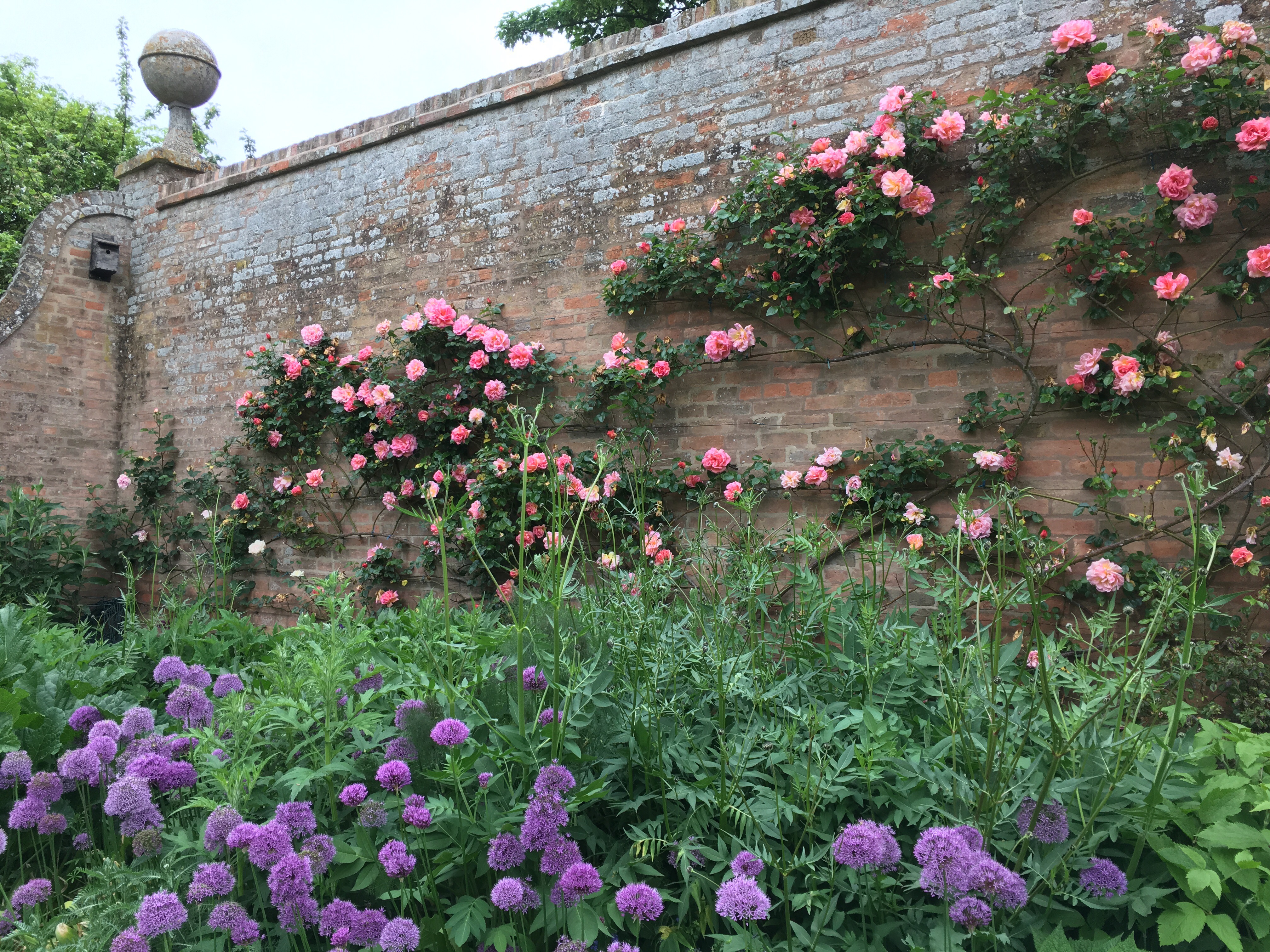
This is the perfect place to stand and survey the garden. Scent drifts from the roses planted all along the old brick walls. And there’s a tantalising view through an archway, wreathed with honeysuckle and climbing roses. 


Rosa Shot Silk makes a glorious background for the drifts of allium Purple Sensation. 
The hypocaust wall would have once had peaches, apricots and figs. Food for the clergy at the rectory next door.  Owners Steve and Diane  Horsfield say the clergy would have had rather a nice life here. They dined on shellfish from fishponds in the meadows below. The couple have been digging up quantities of shells all around the garden ever since they moved in. 


Rosa Mutabilis with euphorbia, alliums and nepeta. There’s a first floor garden room to take in the views.


The views from the ha ha. 


Rosa Crown Princess Margareta in the foreground.

Crown Princess Margareta. 

Glebe House in Hoby, Leicestershire, will be open on Saturday and Sunday 18th and 19th June 2016 from 11am t0 5pm along with 11 other gardens to raise funds for All Saints Church. Tickets cost £5.  There will be lunch in the village hall and cream teas at Glebe House and Redwood. Pimms, ice creams and  a plant stall  can be found around the village, and an art exhibition in the church. The car park will be in Thrussington Road (LE14 3EB) 

I was lucky enough to have a preview of the gardens when I joined the BBC Radio Leicester Down to Earth gardening team. You can hear more on the programme today  (12th June) at 12 noon on 104.9FM and on i player. 

A favourite of mine was Clematis Cottage.The Montana clematis (I think it’s Marjorie) seems to be trying to climb in through the bedroom window. Just heavenly! Don’t you agree?


Wordless Wednesday 


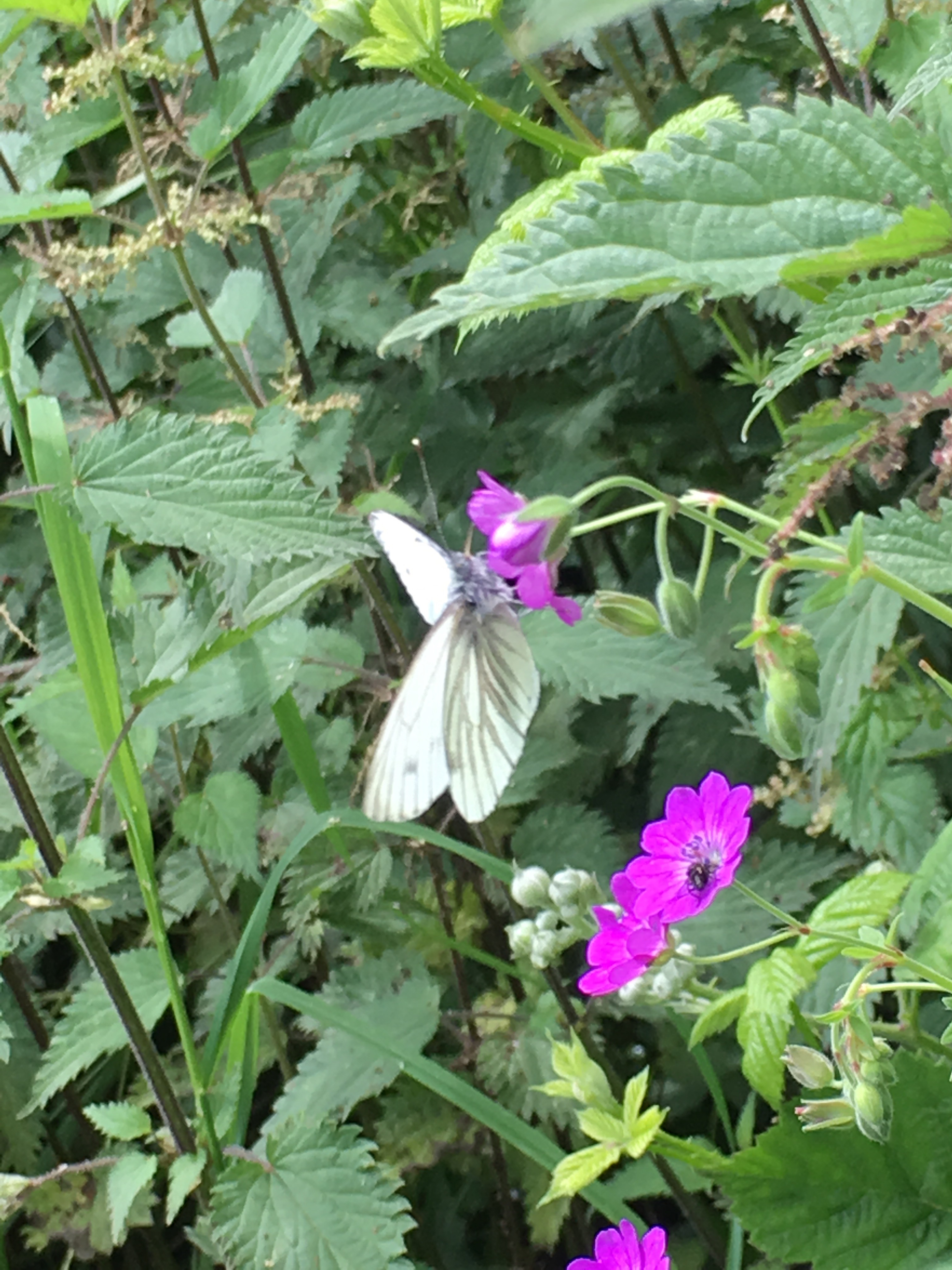
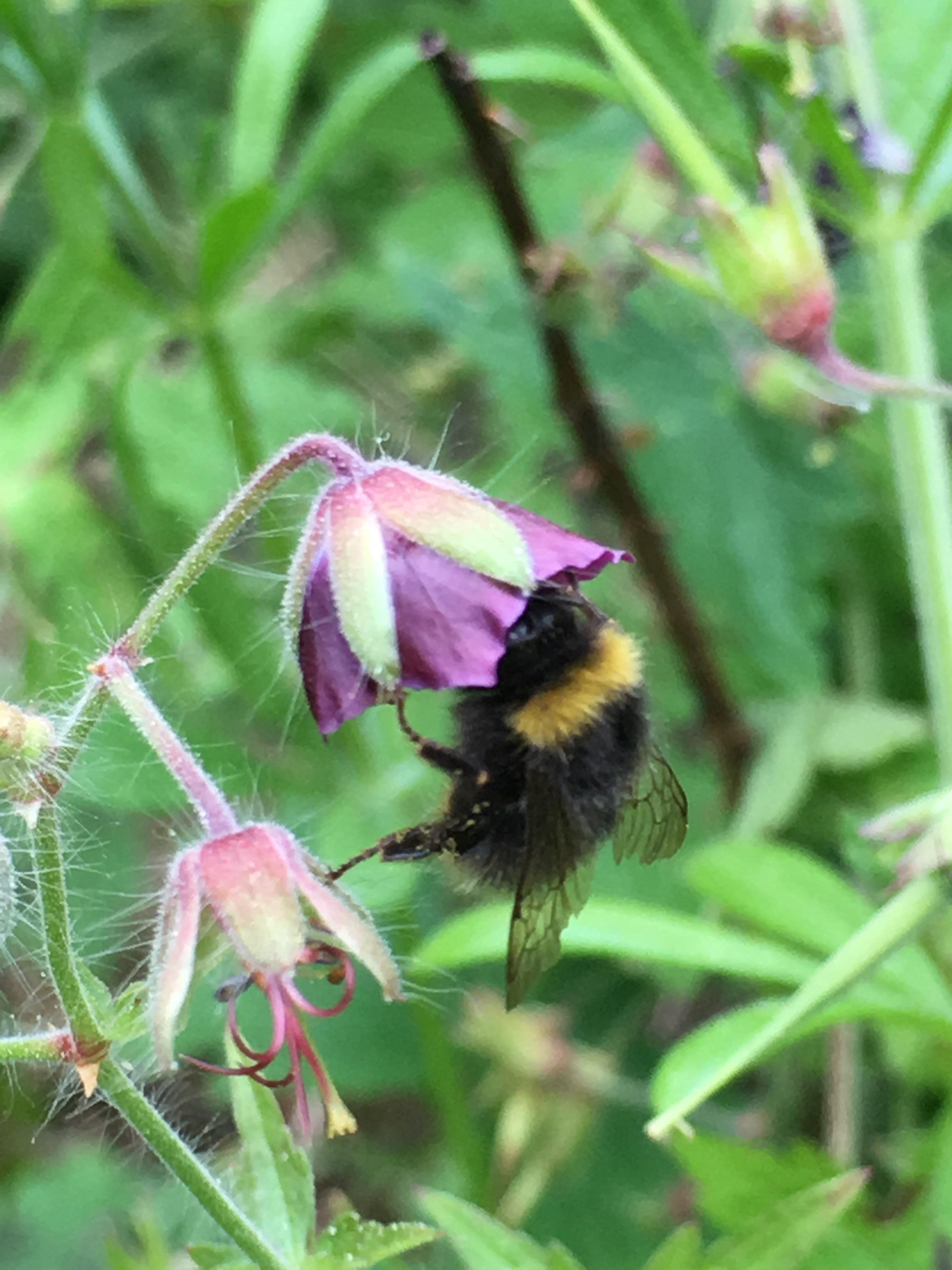
Balancing bee on a very hairy Geranium Phaeum. I have a nest of these tiny, harmless bees living in an old mouse nest under a rose bush. 

A Visit to the Garden of Ninfa

These photos are for anyone who, like me, can’t visit the RHS London Rose Show this weekend. 

Curated by Rachel de Thame, the second annual show at the RHS Lawrence Hall, promises to be a “celebration of England’s favourite flower.” I’m really sorry to miss out, as Rachel tends to have an eye for all things elegant, and is well known for her knowledge and passion for roses.

Instead, I’m beavering away at work – but in my tea break, I thought I’d share my photo album of Ninfa. 


I was lucky enough to be invited on an Italian gardens tour at the beginning of May. Family commitments and work means I’ve not ventured abroad for around 10 years. I’m not complaining, I love British countryside and gardens.

But when a friend decided to celebrate her birthday with a tour of gardens, and invited 12 pals along, I couldn’t turn down the chance to go along.

We spent a week touring the gardens of Lazio near Rome. On our last day, we visited Ninfa. 

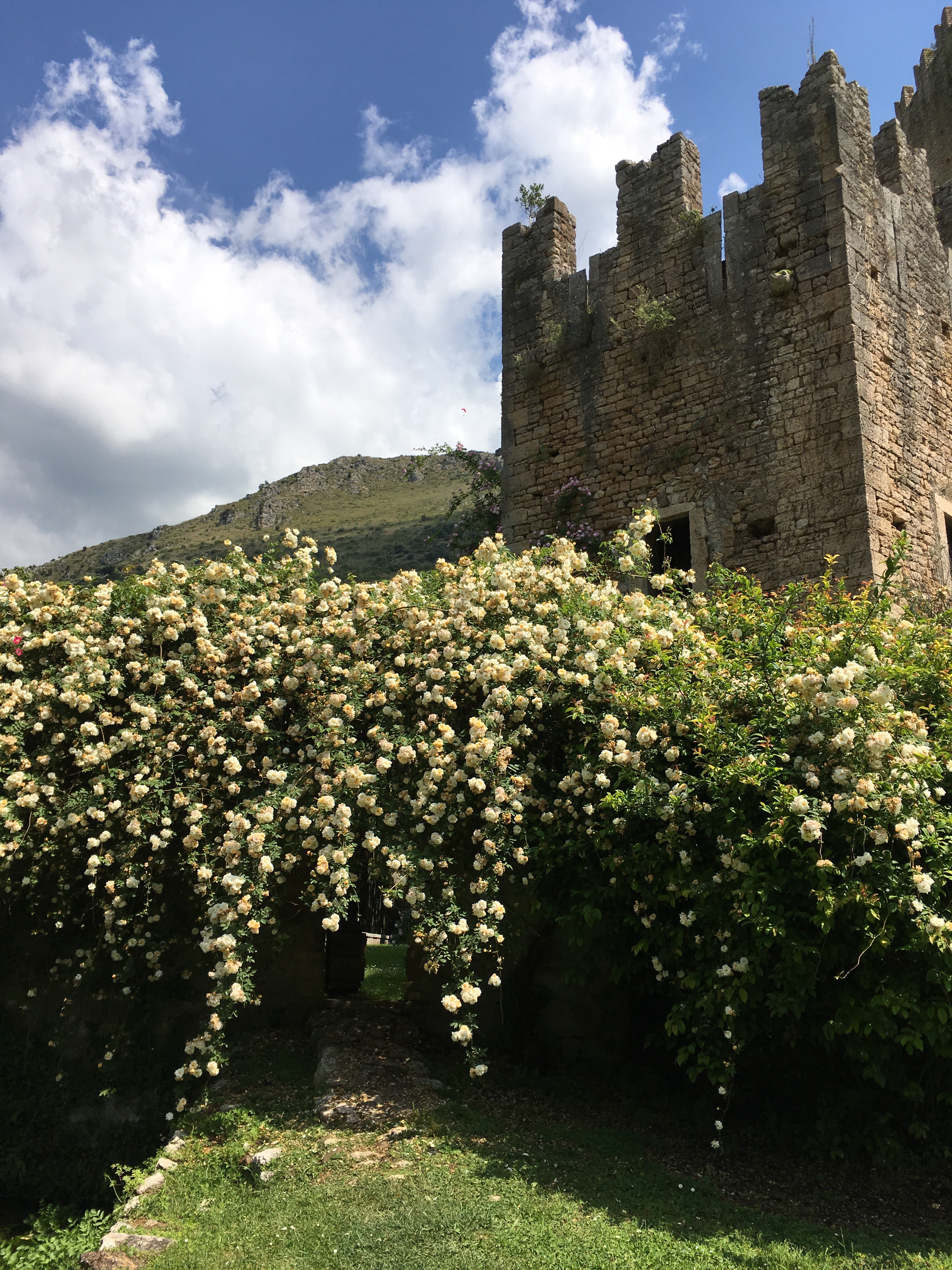
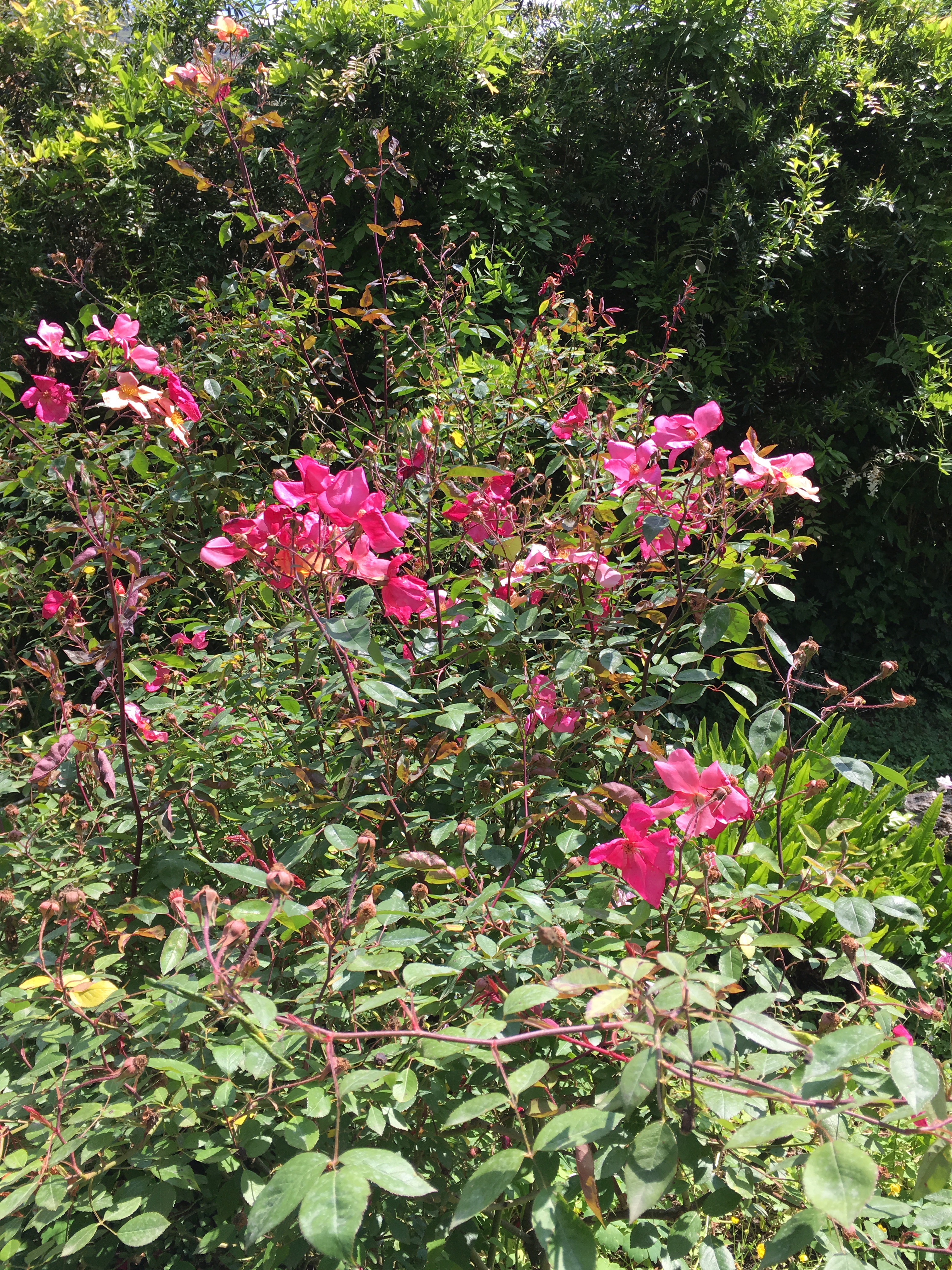
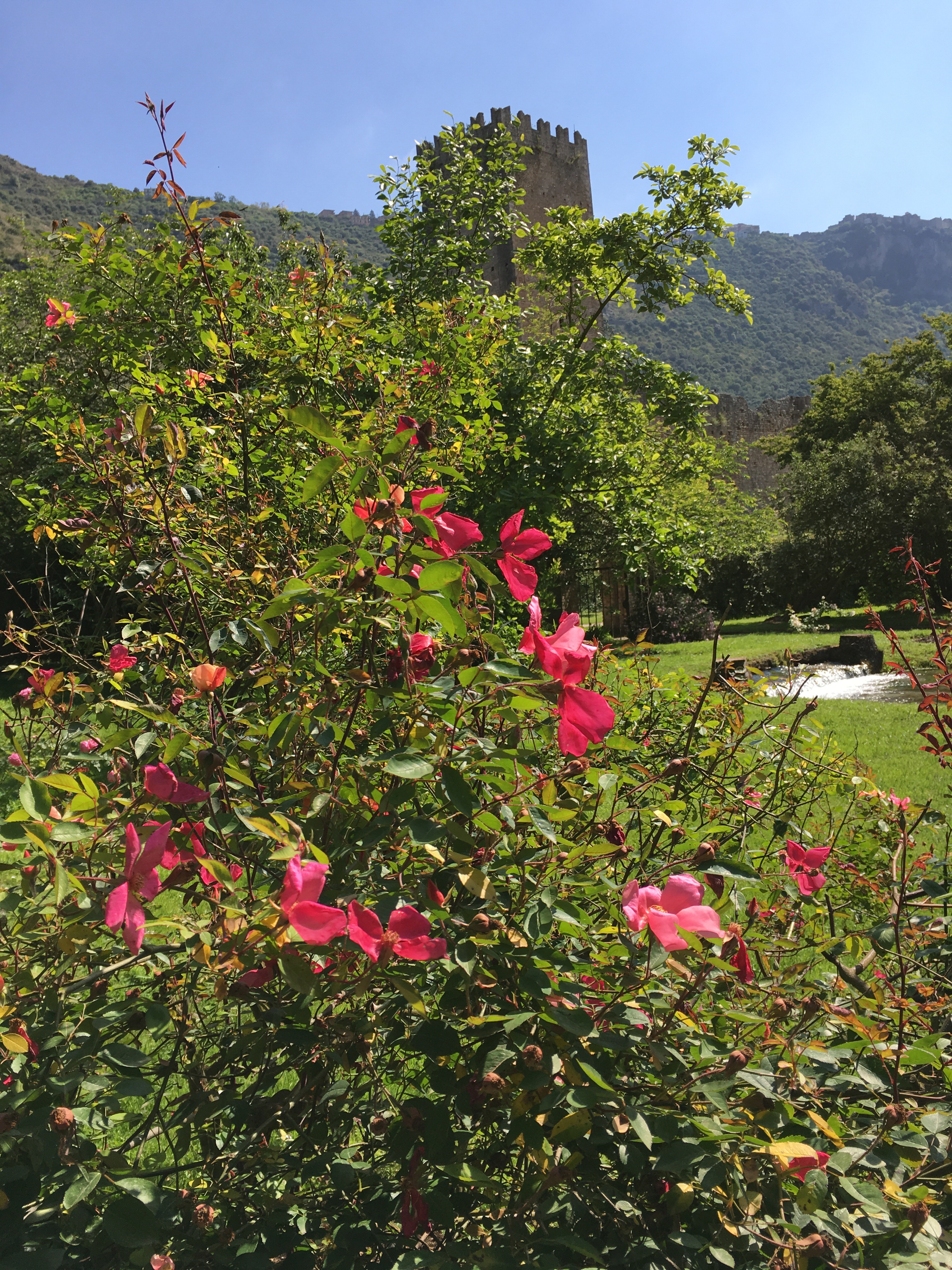
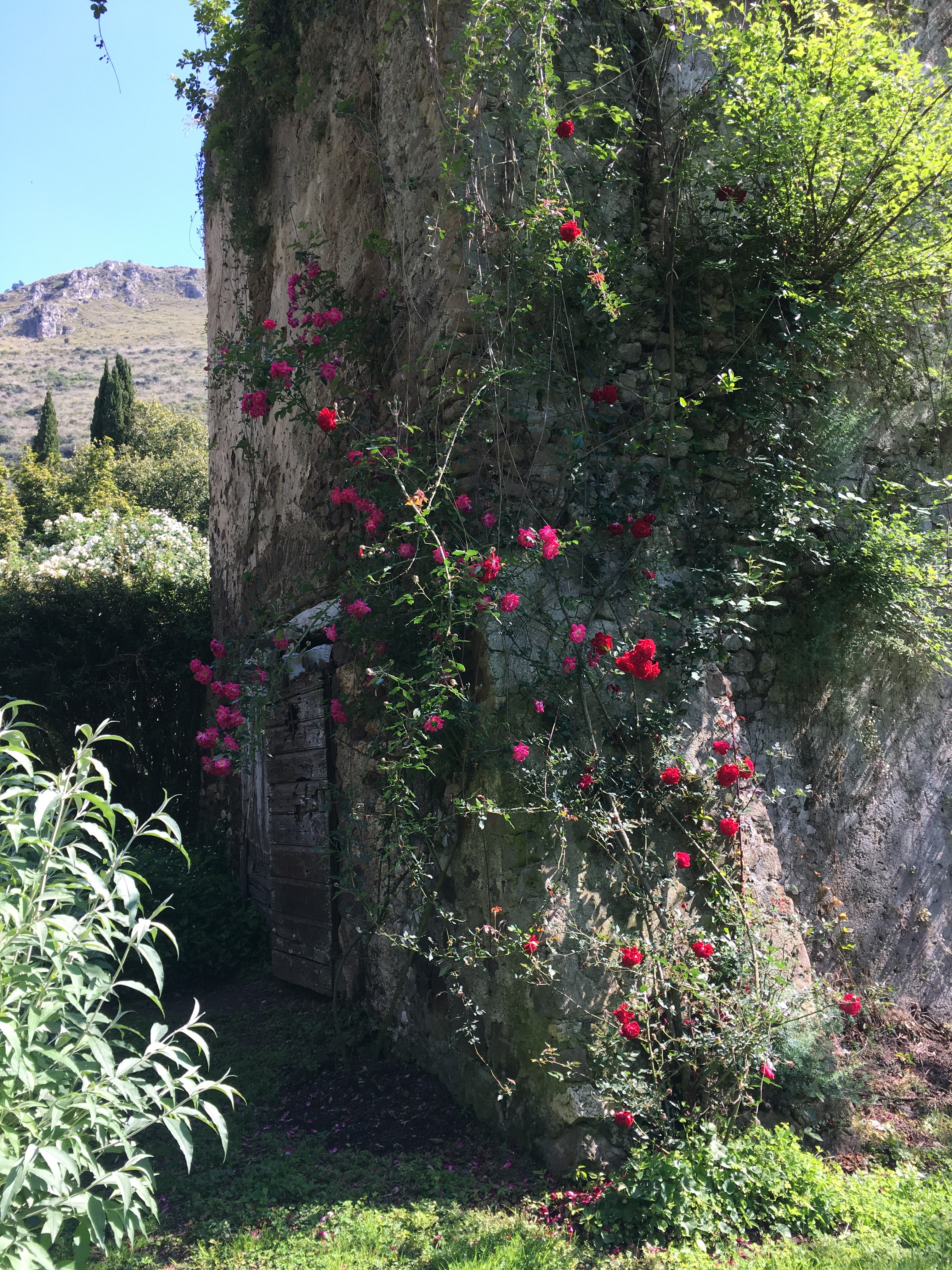
The garden planted among the ruins of the ancient town of Ninfa, is the work of generations of the Caetani family, most notably, Princess Lelia. Virtually every wall, tower and tree is draped in roses. They look as if they have grown naturally-all on their own- with no help from anyone. 

The approach to the garden is down a path with white rambling roses engulfing the boundary wall.

It was our lucky day. Our guide was the Director’s wife, Stella. Wherever there was a Sign saying no entrance, Stella lifted the rope barring our way and ushered us through. What a treat to see the secret areas of the garden, not open to the public. Such kindness is always appreciated, and never forgotten. 

The whole garden is filled with such fragrance. 
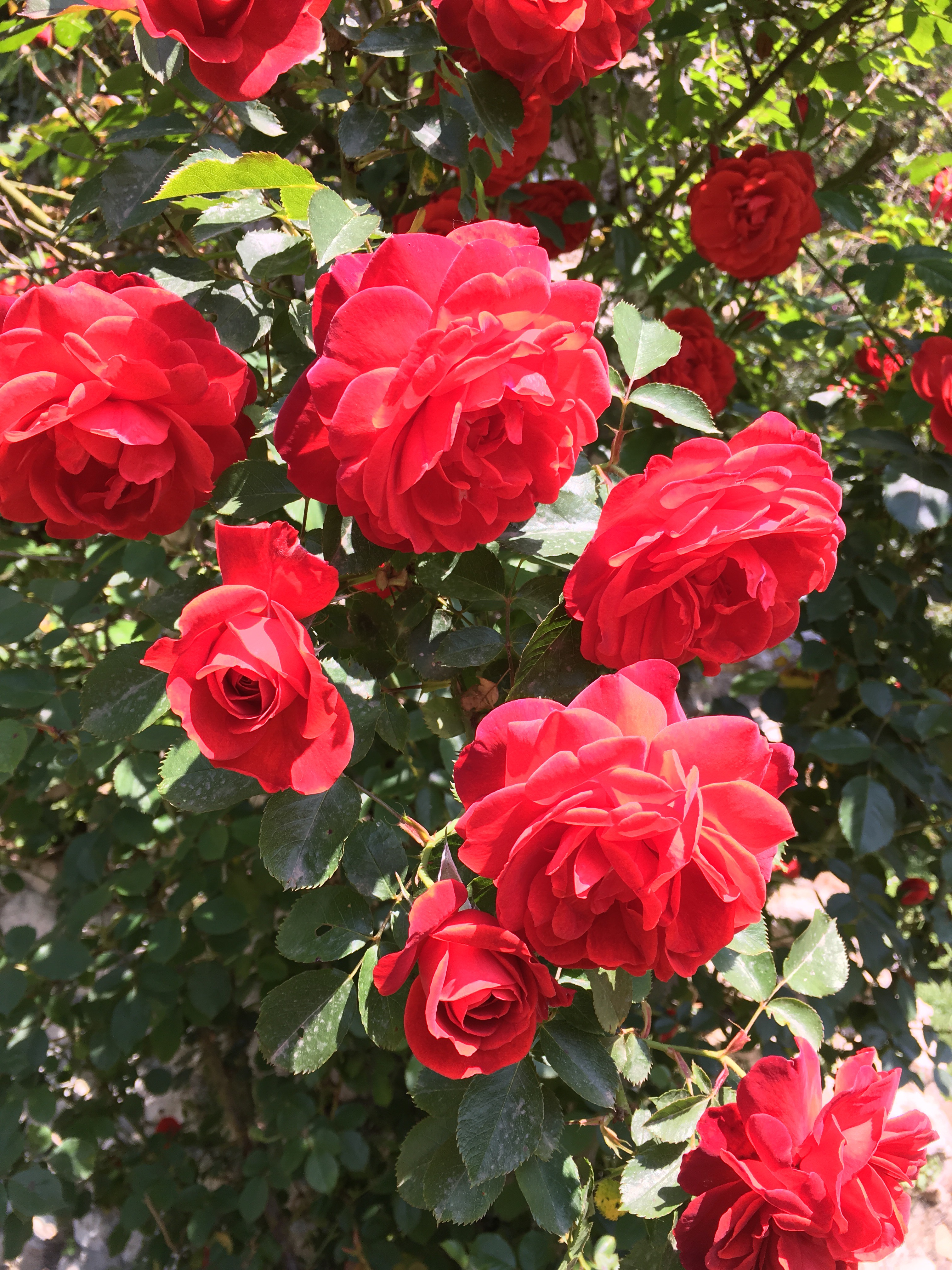
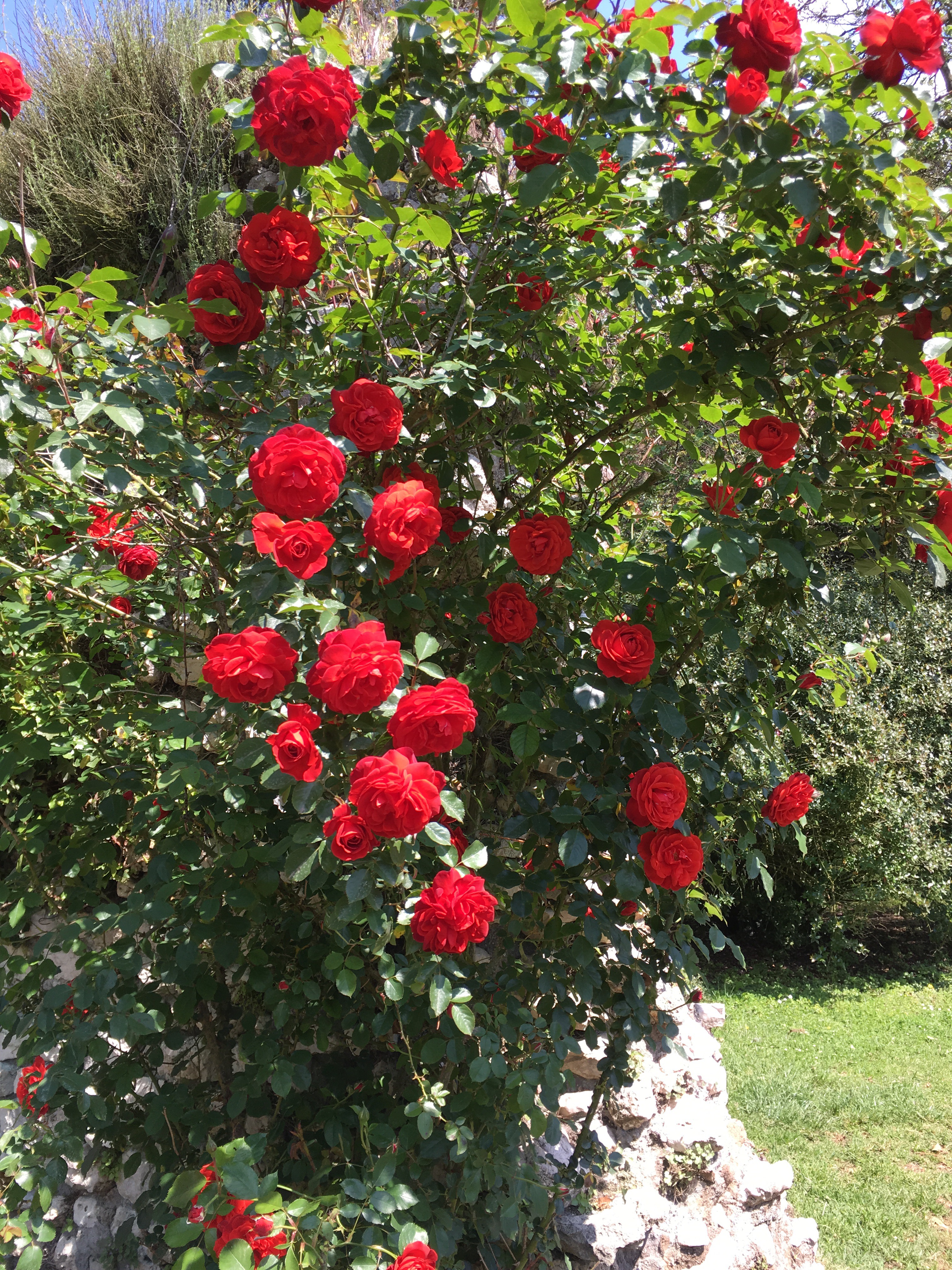
American Pillar, possibly. So beautiful against the blue/green walls. All the roses look so healthy.


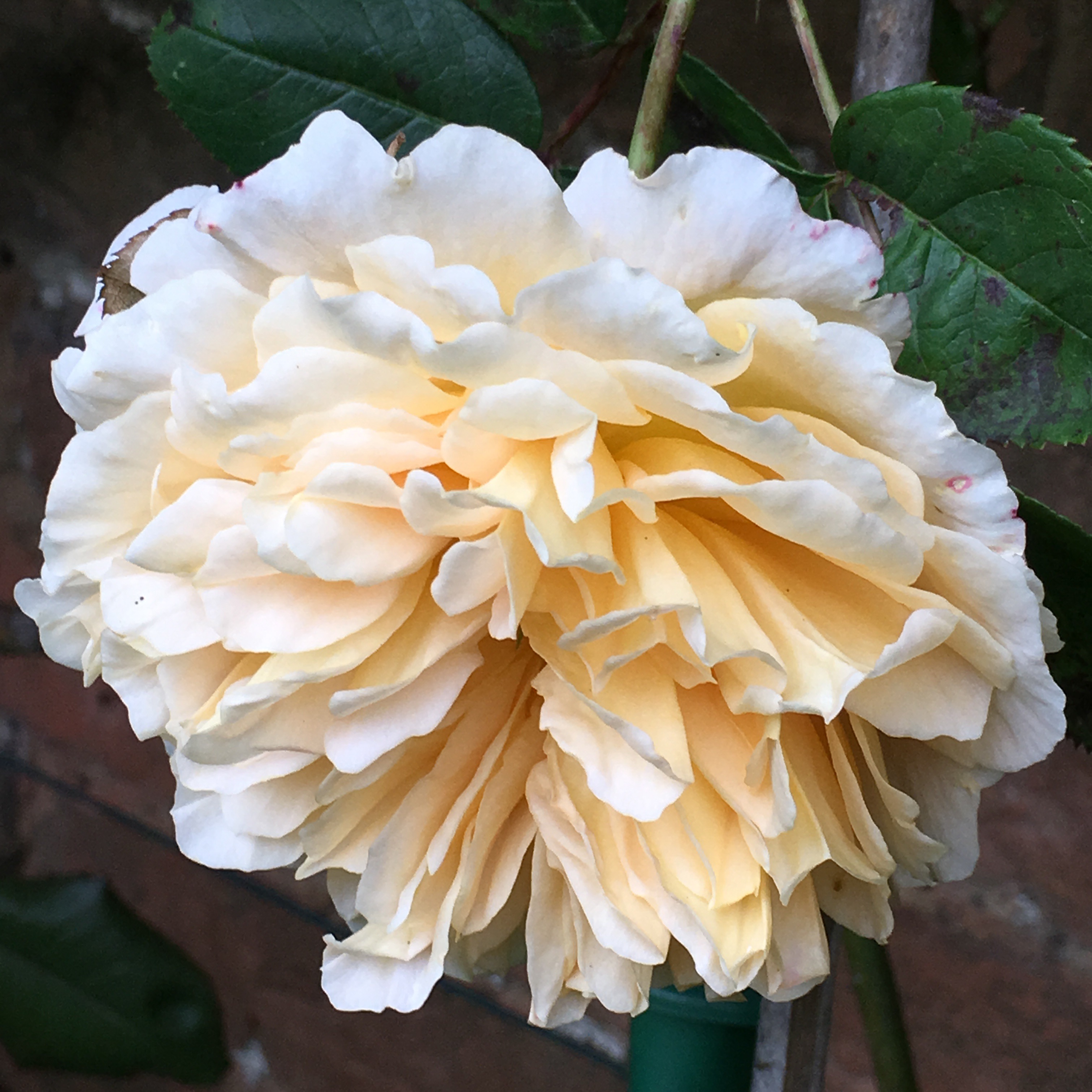
Rosa Mutabilis- an old fashioned China  variety-quite often called the butterfly rose. 


We ducked down under this cloud of tiny red roses to cross the bridge.

The garden of Ninfa is open infrequently to protect its delicate environmental balance. More information from http://www.fondazionecaetani.org. We travelled on a bespoke gardens trip organised by  Success Tours  www.successtours.com accompanied by tour manager  Wendy Viney. We had the most luxurious coaches ever  and the best driver, Enrico (who saved our lives at least five times a day).Coaches by http://www.corsiepampanelli.it . We stayed at Villa Vecchia Hotel http://www.villavecchia.it   

Read more about Ninfa in RHS Lessons from Great Gardeners by Matthew Biggs, published by Mitchell Beazley.  www.rhsshop.co.uk 

Look out for next year’s RHS London Rose Show. http://www.rhs.org/shows-events/rhs-london-shows/rhs-london-rose-show. I’m determined not to miss it next time.

Have you been to any gardens that have had a big impact on you?  

Wordless Wednesday


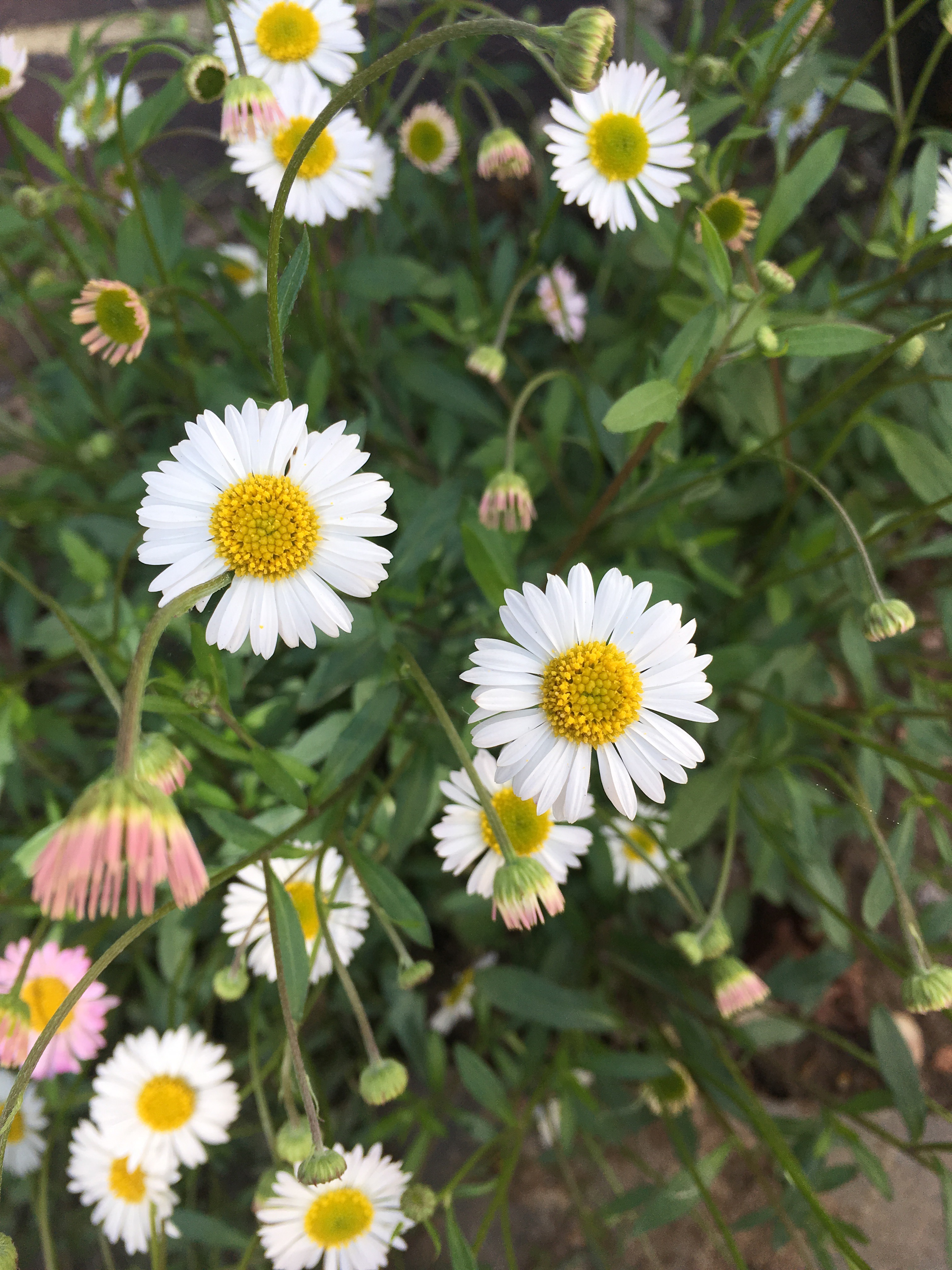
Erigeron karvinskianus. I love all daisies. They are making a  white frill all around my house, and up and down the steps and paving. 

My Favourite Photos from Chelsea 2016

These are the plants and gardens that caught my attention at Chelsea this year. 


I love these purple beech mounds. A masterclass in planting by Jo Thompson. I am not using box, because of blight. I’m experimenting with yew and ilex green gem, and will now add beech to the list to try out. 

I’m not going to pull up my wild geraniums after all. I love the woodland edge planting by Cleve West, inspired by his childhood memories of Exmoor National Park. 


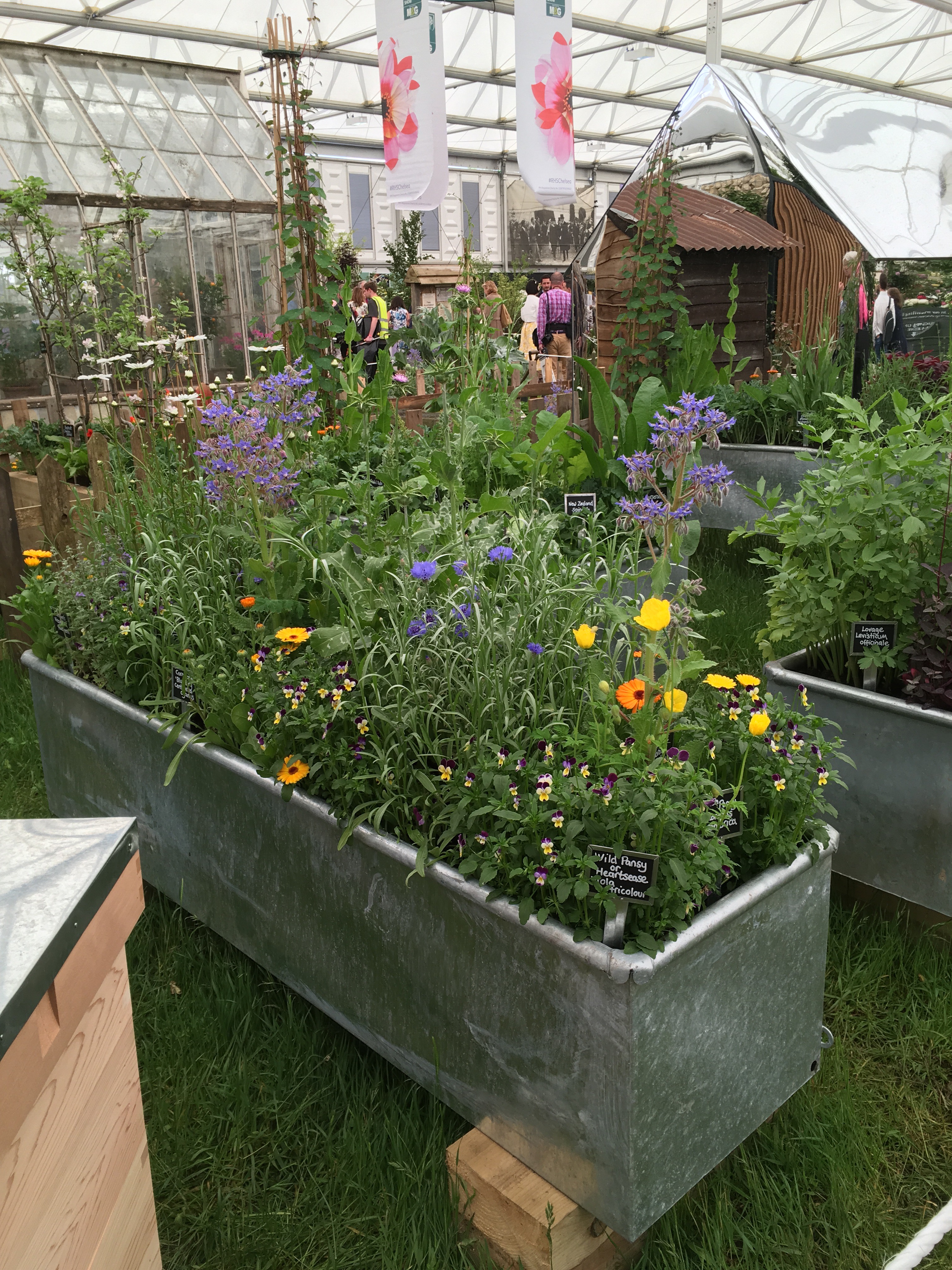
Step over fruit and the most glorious herbs in Jekka McVicar’s Modern Apothecary garden. 


I would love to grow more clematis plants 


More amaryllis for the greenhouse 


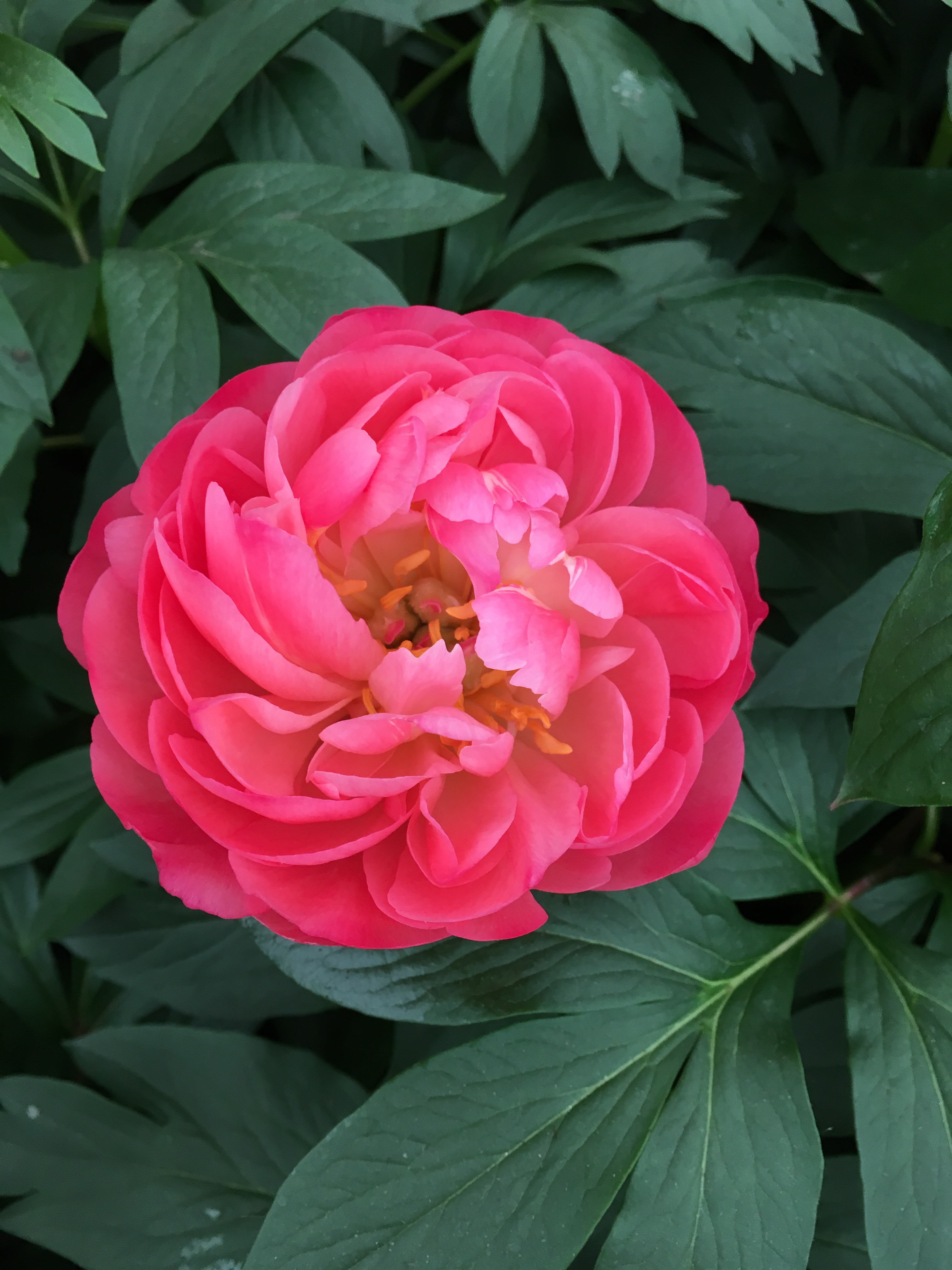
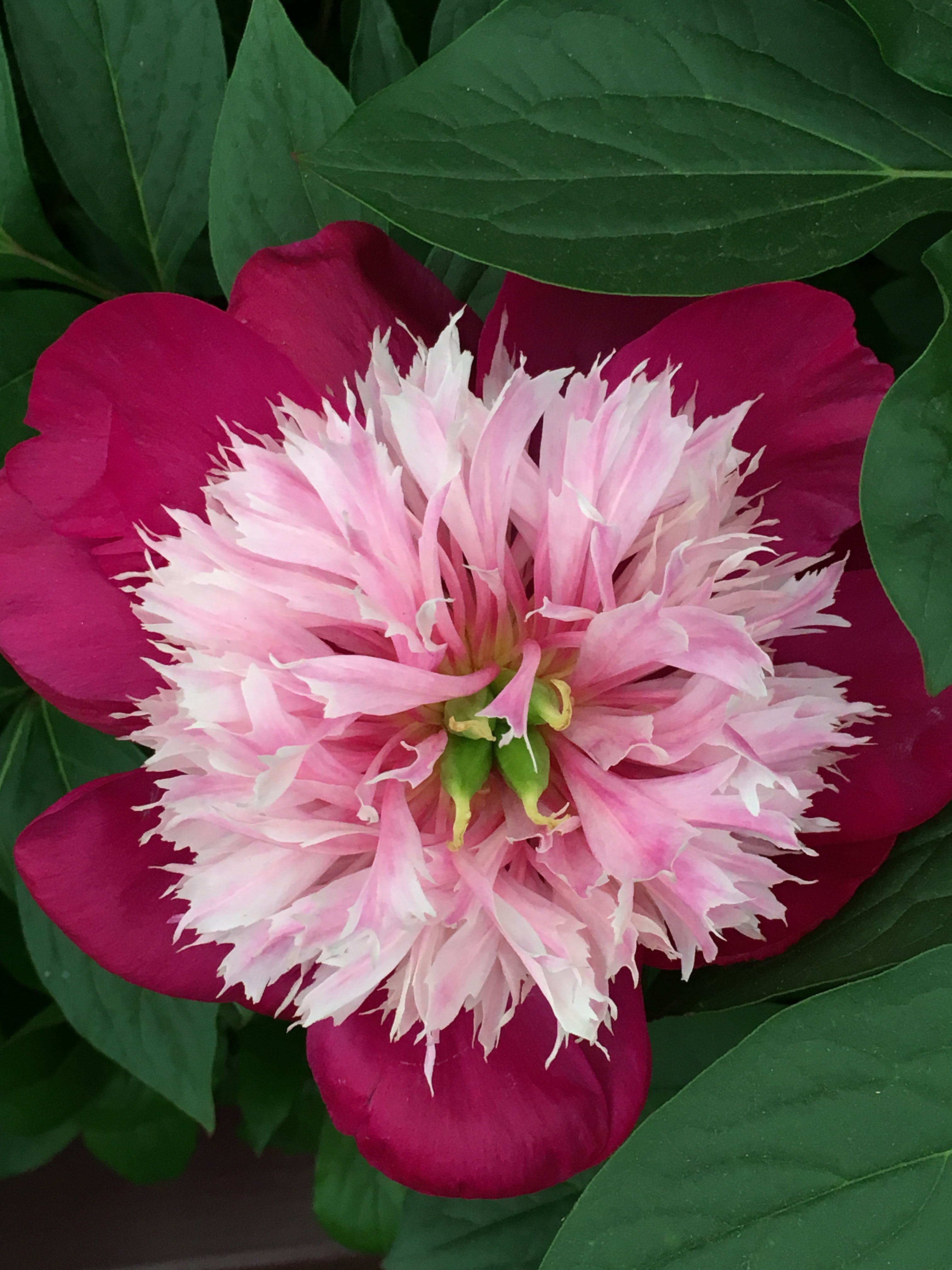
Peonies do well in my garden. They can be grown in shade, and don’t mind cold, windswept conditions.
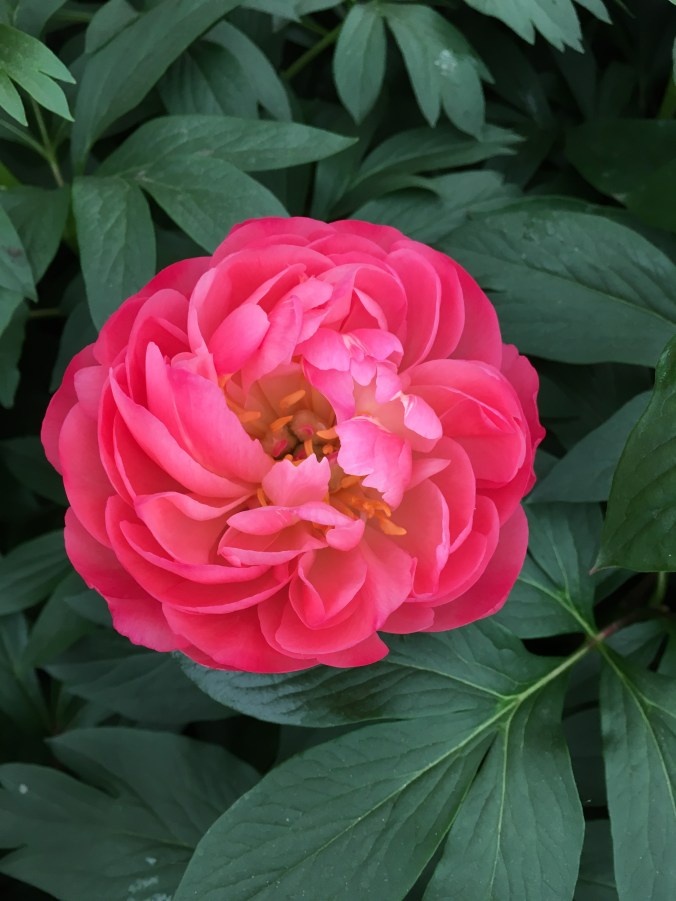

Such a beautiful colour. Coral Charm.

More tulips are on my shopping list for this Autumn. 
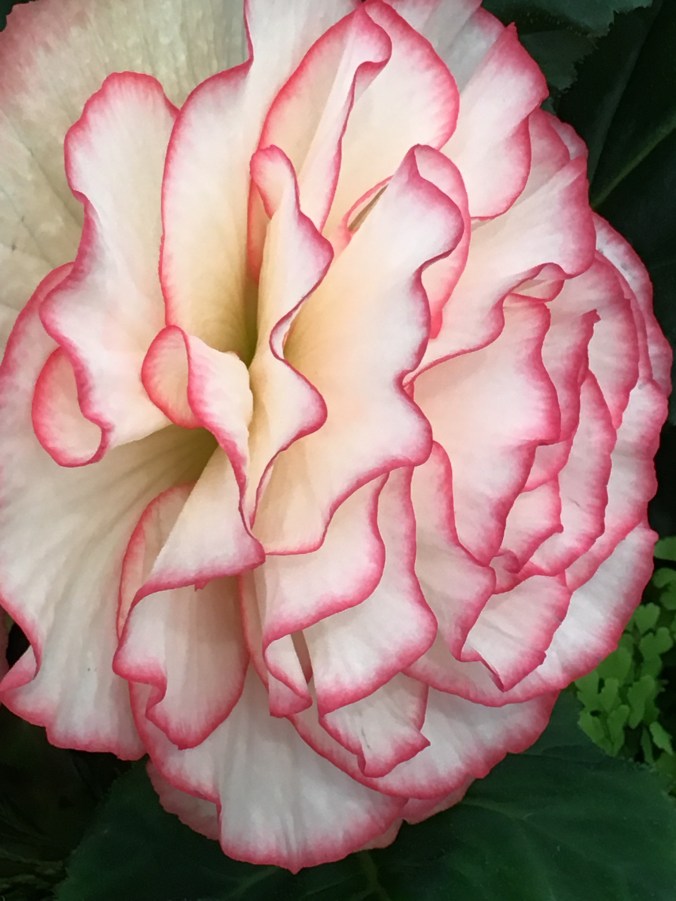

Mum grows begonias like this. Some are five or six years old. She just dries them out over the winter, and starts them back into growth in spring.


Delphiniums and begonias from Blackmore and Langdons. This beautiful pale lilac and  blue one is called Spindrift. http://www.blackmore-Langdon.com 


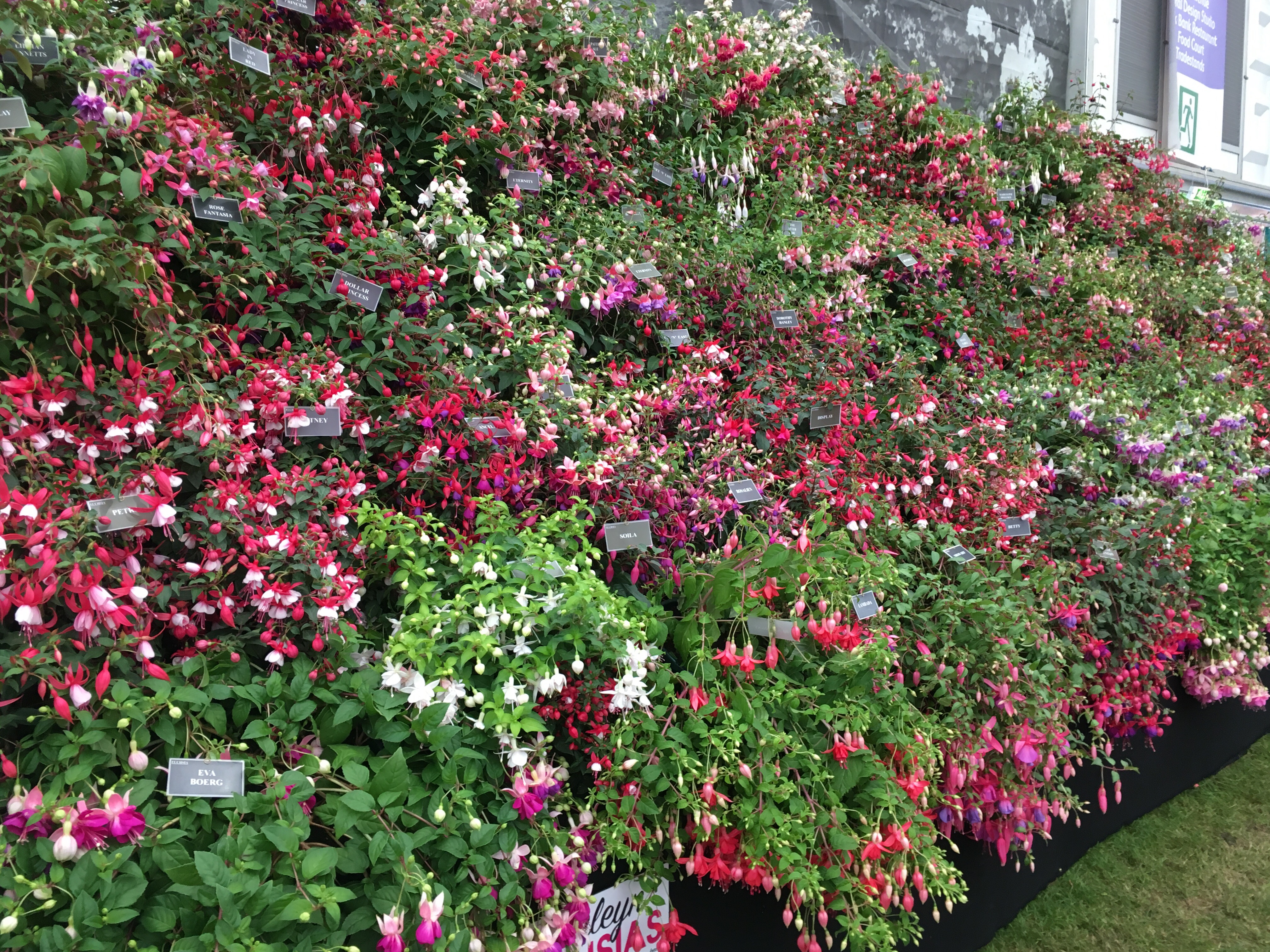
A few more fuchsias. This was the Roualeyn Fuchsias display, from Conwy, North Wales.


New pelargonium from Fibrex Nursery, a family run business from Stratford on Avon,UK. Holders of national collections of pelargoniums and hedera. 
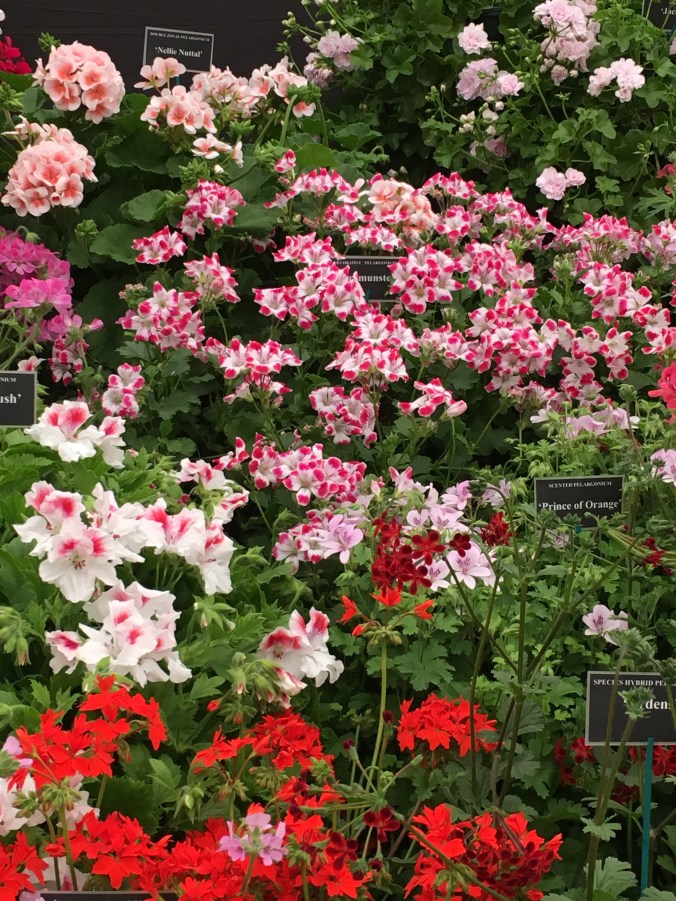


The scent from these violas was just amazing. From Wildegoose Nursery,  www.boutsviolas.co.uk.


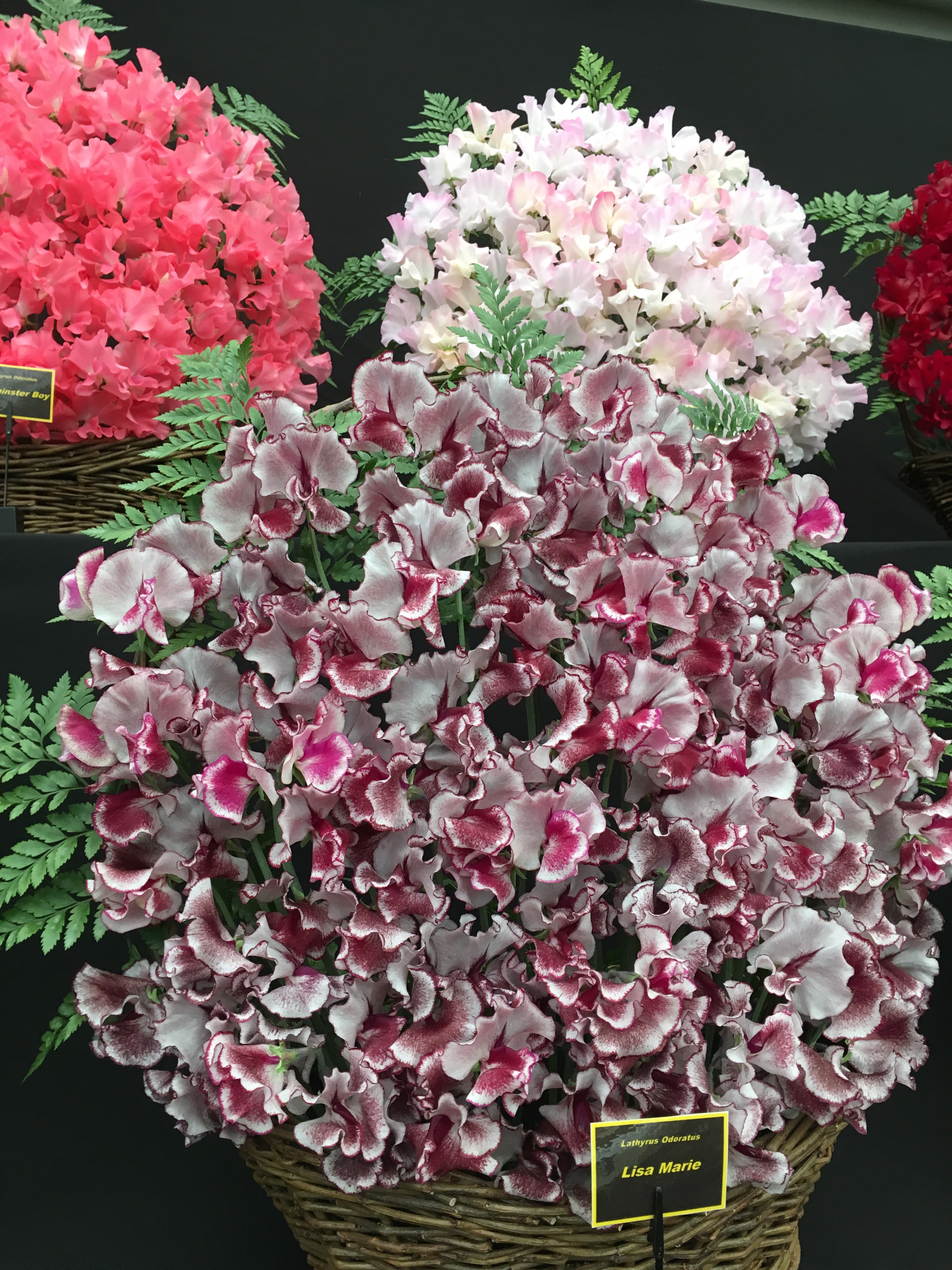
I lingered by these sweet peas for quite some time. This is a display by Eagle sweet peas, from Stafford. http://www.eaglesweetpeas.co.uk 


What a colour!


Foxgloves higher than me from The Botanic Nursery, Wiltshire . http://www.botanicnursery.co.uk 
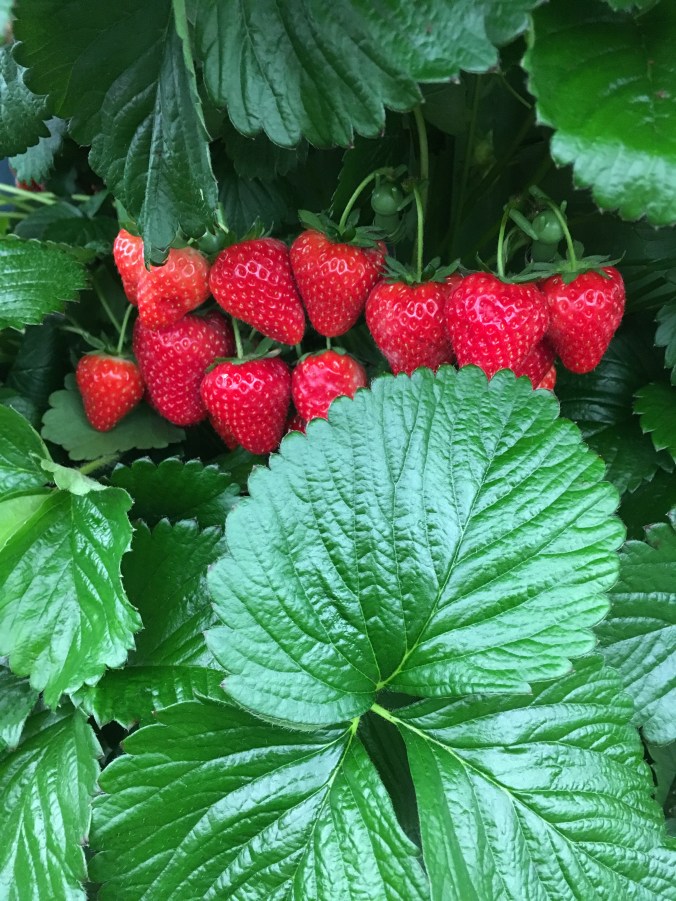

These caught my eye. A new strawberry called Cupid for a late cropping. From Ken Muir. 
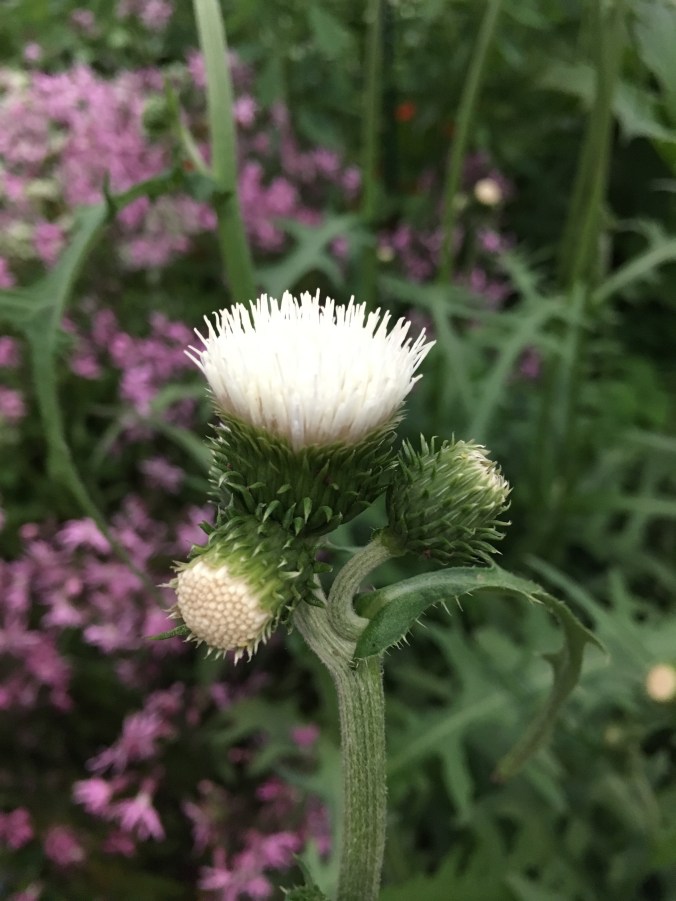
Hardy’s nursery new white Cirsium Frosted Magic. 

Hardy’s gorgeous white Centurea Montana Alba.
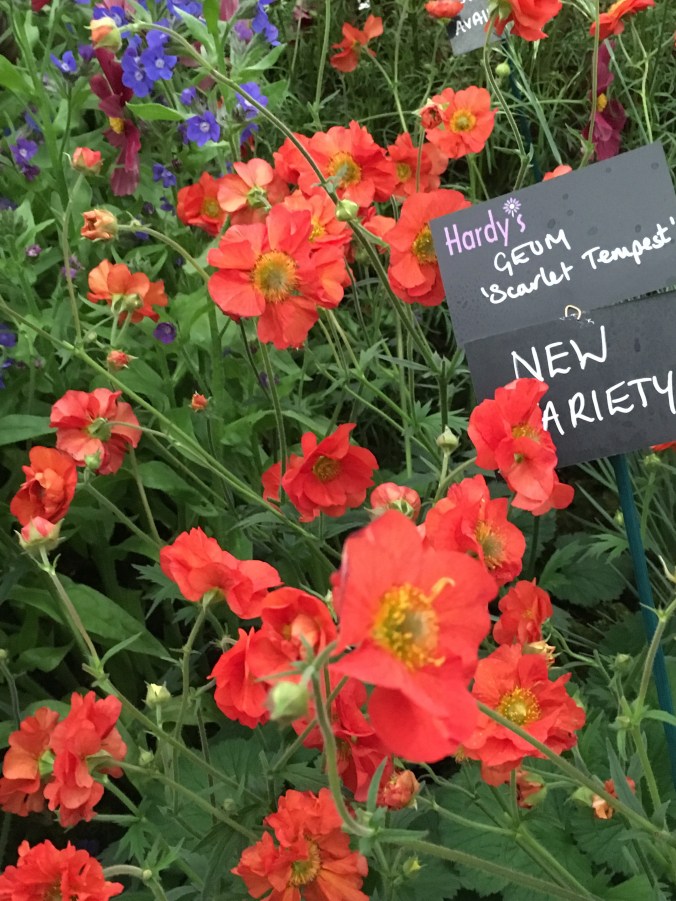

Hard to miss this Geum Scarlett Tempest. New for Hardy’s.  www.hardys-plants.co.uk 


Thyme path -A Modern Apothecary by Jekka’s Herb Farm.  This garden will be relocated to St John’s Hospice in London.  


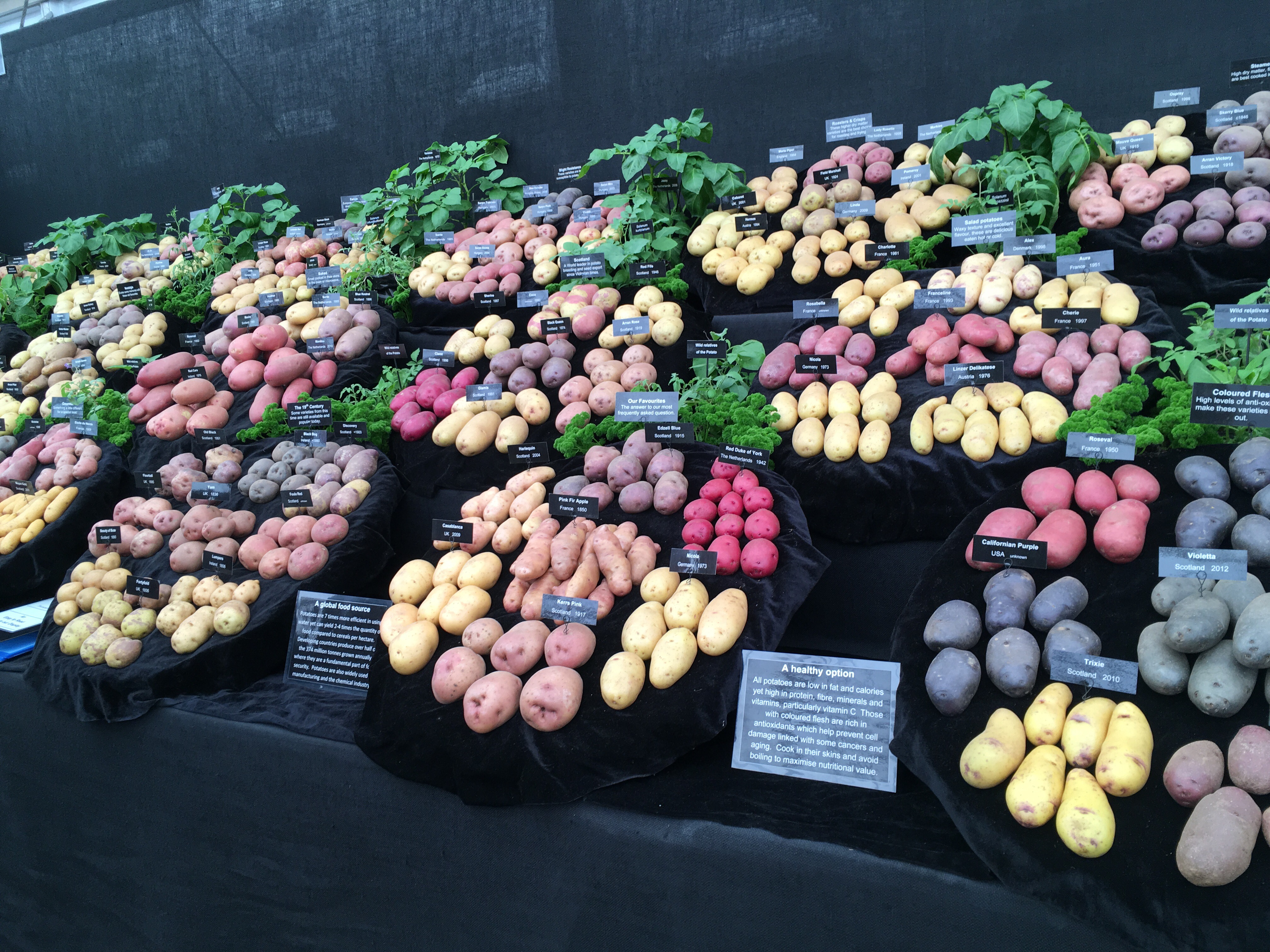
More potatoes – a display by the James Hutton Institute, Dundee.
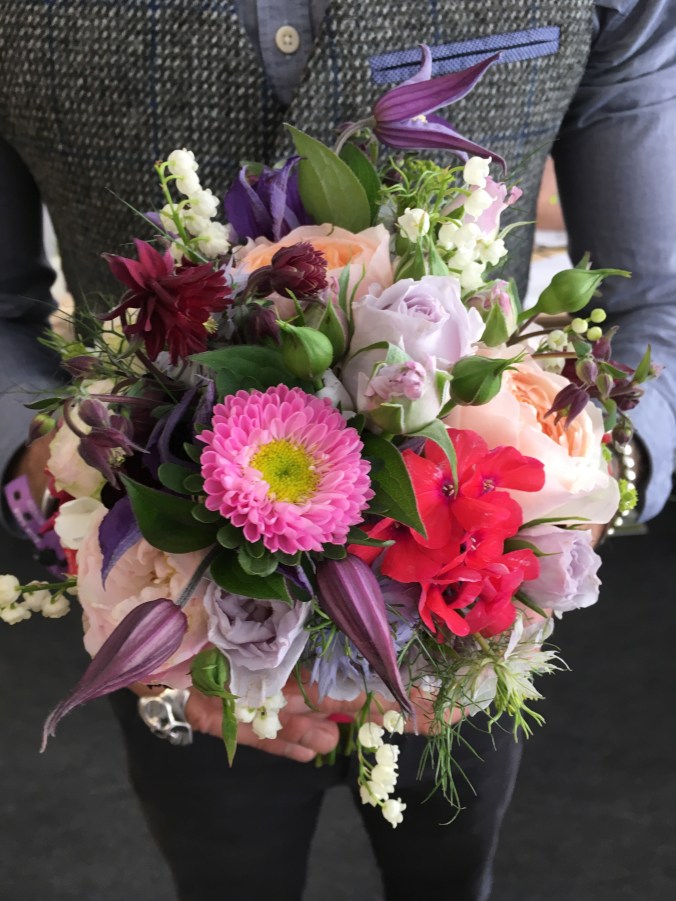

A bouquet for the Queen. I was lucky enough to watch this being created. 


Container heaven.


And finally. Where can I fit one of these in my garden. I’m sure I’ve got a space- somewhere…..

What were your favourites this year?

Chelsea Flower Show Highlights

Here’s my photo highlights of Chelsea 2016. If you have limited time and energy to see everything at Chelsea. Just follow this route to see my favourites. Start at Diarmuid Gavin’s Harr…

Source: Chelsea Flower Show Highlights

Chelsea Flower Show Highlights

Here’s my photo highlights of Chelsea 2016. If you have limited time and energy to see everything at Chelsea. Just follow this route to see my favourites.

Start at Diarmuid Gavin’s Harrod’s British Eccentrics Garden. You have to see it really. You just can’t go home without spying those twirling bay trees. And remember that while we are all worrying about box blight, Diarmiud has got mechanical failure to contend with. He’s got no one to blame but himself. 


You can’t hide in there, Mr Gavin. Diarmuid heads for the potting shed as the judges inspect his creation. 

Just along the Main Avenue is Ann-Marie Powell’s Greening Grey Britain garden, sponsored by the RHS.The  planting is a glorious combination of pink and orange. Wins my award for most cheerful garden at Chelsea, and there are lots of ideas to “borrow.” I love the edible planting in pots, the scaffolding pergola swathed in climbing Westerland Rose, and the seating where you can relax and watch the wildlife. It’s a  welcome change to be allowed to walk through a garden at Chelsea. That’s what we do in real life- we don’t stand at a barrier and just look into a garden.


Cross over the Main Avenue – and be transported to Provence. James Basson’s L’Occitane garden makes you feel as if you are standing right on the edge of a lavender field in sunnier climes. The scent is something you’ll remember long after the show. Wins my award for most relaxing garden at Chelsea. I needed to stand there for quite some time after battling my way on the train and underground.

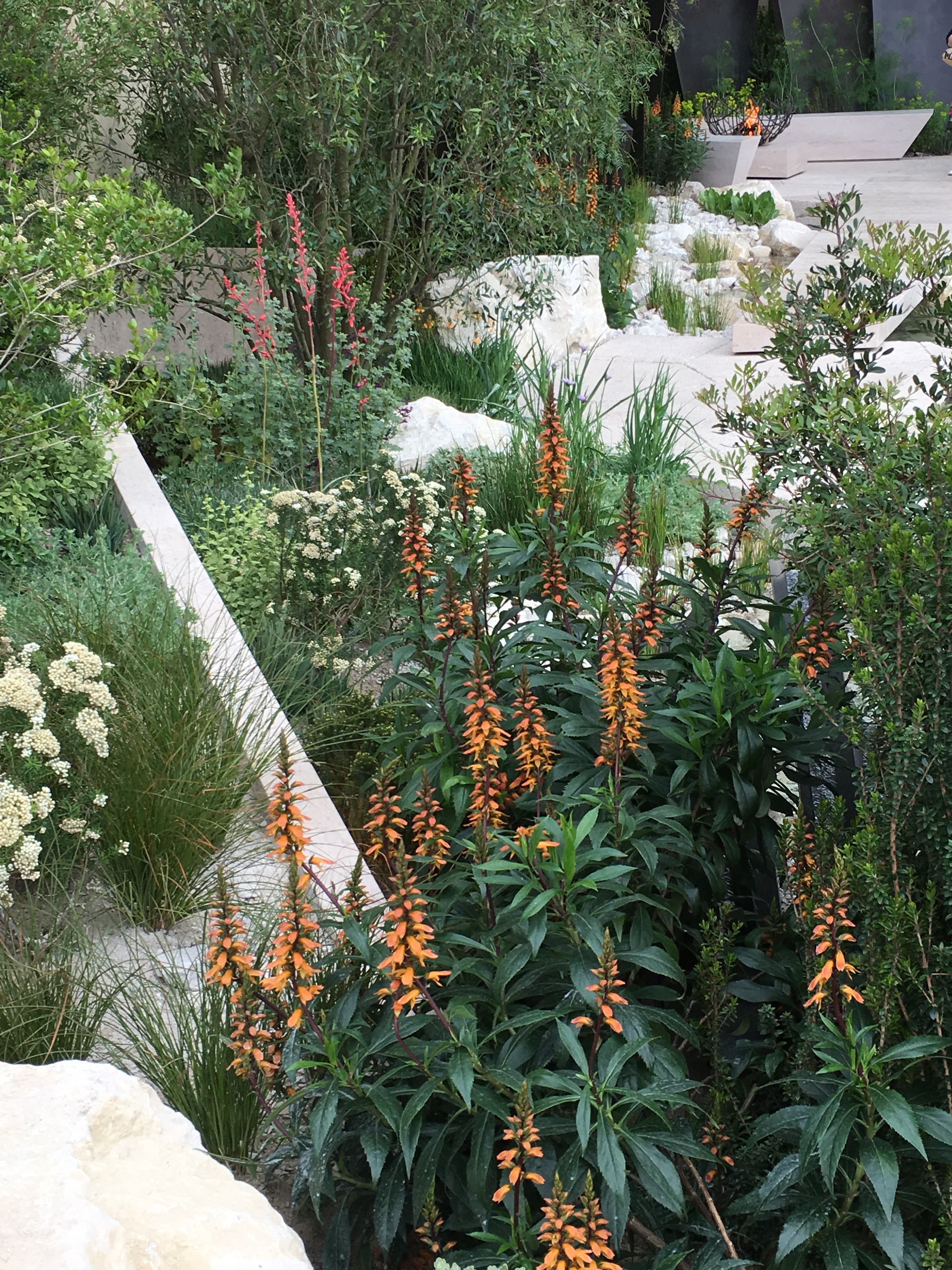
Also on Main Avenue, The Telegraph Garden by Andy Sturgeon takes you to the semi-arid foothills of the Andes in Chile. I love the orange isoplexis. Beautifully captures the spirit of the place. I stood in wonder.

Virtually next door on the Main Avenue is Cleve West’s M&G Garden, inspired by the ancient oak woodland of Exmoor National Park. I love the woodland-edge planting and the little pools of water in the rocks. 


Don’t  miss Rosy Hardy’s first show garden, on Main Avenue, the Brewin Dolphin Garden- Forever Freefolk. A reminder of the fragility of beautiful chalk streams- and a plea to value and protect them.


Turn the corner onto Royal Hospital Way and find Jekka McVicar’s first show garden, created for St John’s Hospice- called A Modern Apothecary. This is the garden  I most wanted to transport home. A place of calm in the midst of all the busy chaos.


And finally, on the Rock Garden Bank is Matthew Wilson’s triumph- A Garden for Yorkshire. It really is a sight to behold. Inspired by the Great East Window at York Minster, it simply transports you to God’s Own County. 


What are your highlights of Chelsea 2016? Let me know what you think of this year’s gardens. 

 Chelsea Flower Show 2016

The words Fun and Happiness sum up Chelsea 2016- for me.

Diarmuid Gavin, as always, provides the fun. And Ann-Marie Powell has the word Happiness written in 10 different languages all through her paving. 

The moment I set eyes on those words, I thought Ann-Marie  had perfectly summed up the mood for this year’s Chelsea Flower Show.

For the first time, it’s not all about how much money you’ve got to spend- it’s about making the best of what you’ve got- and just enjoying gardening.

Ann-Marie’s garden- commissioned by the RHS – perfectly captures the message that gardening is good for you. It’s good for mental and physical health. And it’s not all about big budgets. Or big spaces.  The rose covered pergola -is made from recycled scaffolding poles. And the potting shed roof is packed with containers growing fruit and veg. I even spotted a beehive up there.

As for the planting-it’s a joyous riot of pink and orange. It shouldn’t work- but somehow it does. Maybe because the pink is lychnis flos-cuculi- a wild flower that has such happy childhood memories for me. I grew up on a farm with water meadows- waist high in those pink flowers, commonly known as Ragged Robin,combined with bright yellow buttercups. Ann-Marie has partnered the wild flowers with orange geums which give the same bright meadow look- mixed in with lots of grasses. 

It’s a sight guaranteed to lift the spirits- and sets the scene for the rest of the flower show. If you are heading to Chelsea this week, Ann-Marie’s garden is located directly in front of the new-look RHS Hub. But to be honest- you really can’t miss it.

Cheerful combination of pink Ragged Robin with Orange Geum Prinses Juliana and tufted hair grass Deschampsia cespitosa. The bird feeders are made by blacksmith Alex Moore, mooredesigns.co.uk  @MooreDesignsUK. The benches are also made by Alex. If you are like me, and notice beautiful small details, you can also spot his work on the Jekka McVicar garden. The pretty rose arch and twisty metal border edging is by Alex.

Ann-Marie working on the planting on Sunday. The flowers include alliums, lupins,salvia, geraniums and aquilegia. This is a garden to walk through,rather than just look at from a distance. 


I loved this bright pink geranium (possibly palmatum) waiting to be planted on Sunday. How do they get it to look so perfect by Monday.

All finished by Monday-and still smiling. Ann-Marie Powell in front of the scaffolding pergola with climbing rose Westerland. The garden was commissioned to promote the RHS Greening Grey Britain campaign. I think it succeeded. 

And finally- a photo of Diarmuid Gavin’s British Eccentrics Garden, inspired by the cartoons of William Heath Robinson. It’s wacky, a bit  bonkers, and mesmerising for 10 minutes. But don’t take it too seriously. Go on- smile! It’s good for you! 

A Visit to Easton Walled Gardens

After  a visit to Easton Walled Gardens, I return to my own little patch, and feel like anything is possible- I can take on any challenge. 

Easton’s  Ursula Cholmeley has approached her major restoration project with so much courage and determination, spending a few hours in her company is all that’s needed to boost my enthusiasm.

Easton was lost under tree saplings and brambles until Ursula started work on the garden 16 years ago. The decline started when Easton Hall, the mansion house that used to stand on the site, was requisitioned at the start of the Second World War. The soldiers stationed there caused so much damage that restoration was not a viable option. There was talk of gunfire being heard in the house and grenades thrown into the greenhouses. 

As a result, the house was literally bulldozed down in 1951, and some of the stonework and debris has been left along one bank to show what conditions were like when Ursula took on the garden. Poignantly, only the gatehouse remains- and that only survived because the bulldozer broke down. It’s a tantalising glimpse of what glories have been lost. Photographs of the old house show magnificent tall glass windows and an orangery overlooking the terraces.

If you visit Easton, you can walk up the flight of stone steps and stand on the spot where there is just the ruins of a bay window left. Standing there, you can survey the scene, and imagine what it would have been like to live there.

Now, thanks to Ursula’s vision and hard work,  you can see a reconstruction of the gardens. Looking out from the terrace, you see the walled gardens in the distance with fruit trees and roses planted through a meadow. Mown paths represent the original paving. 

The terraced banks are full of wild flowers. They are yellow with cowslips today, and we think we spotted orchids.  We stood and watched the swallows, seemingly flying just a few inches above the terraces. Such a sight- and sound. That twittering noise has followed me home!  


A patch of blue Centaurea Montana shines out amongst the yellow cowslips. 

  Camassia bulbs are planted in the Cedar Meadow- taking over from the tulip and narcissi display. 

I particularly like this pale blue camassia in the Cedar Meadow. It looks like Camassia Cusickii 


Maybe I won’t pull up all those dandelions and cow parsley in my garden, after all. A lovely setting for the Meadow Retreat summerhouse. 


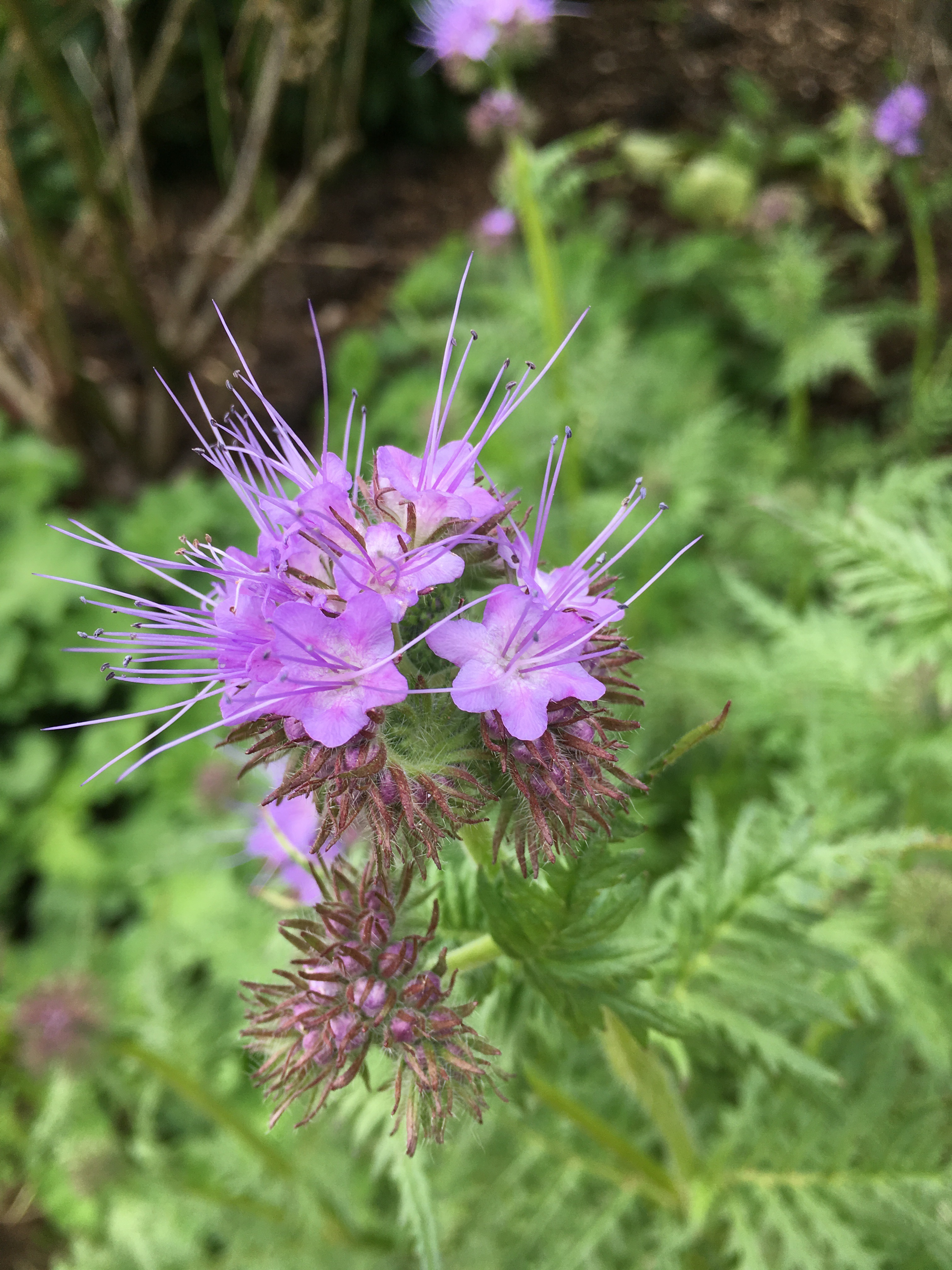
Phacelia tanacetifolia. Loved by bees. I’ve grown this as a green manure crop, and forgotten to turn it over in time. Such a happy accident. 
Records show  there has been a house here since 1592. What changes the gardeners must have seen over the past 400 years. 

Easton Walled Gardens  is just off the A1 near Grantham in Lincolnshire. Open from 2nd March to 30 October, and also for snowdrops. See the website for opening times and special events http://www.visiteaston.co.uk. Follow on Twitter @EWGardens and on Facebook. 

Are there any gardens that you visit for inspiration? 

Wordless Wednesday

Wordless Wednesday


A visit to Coton Manor

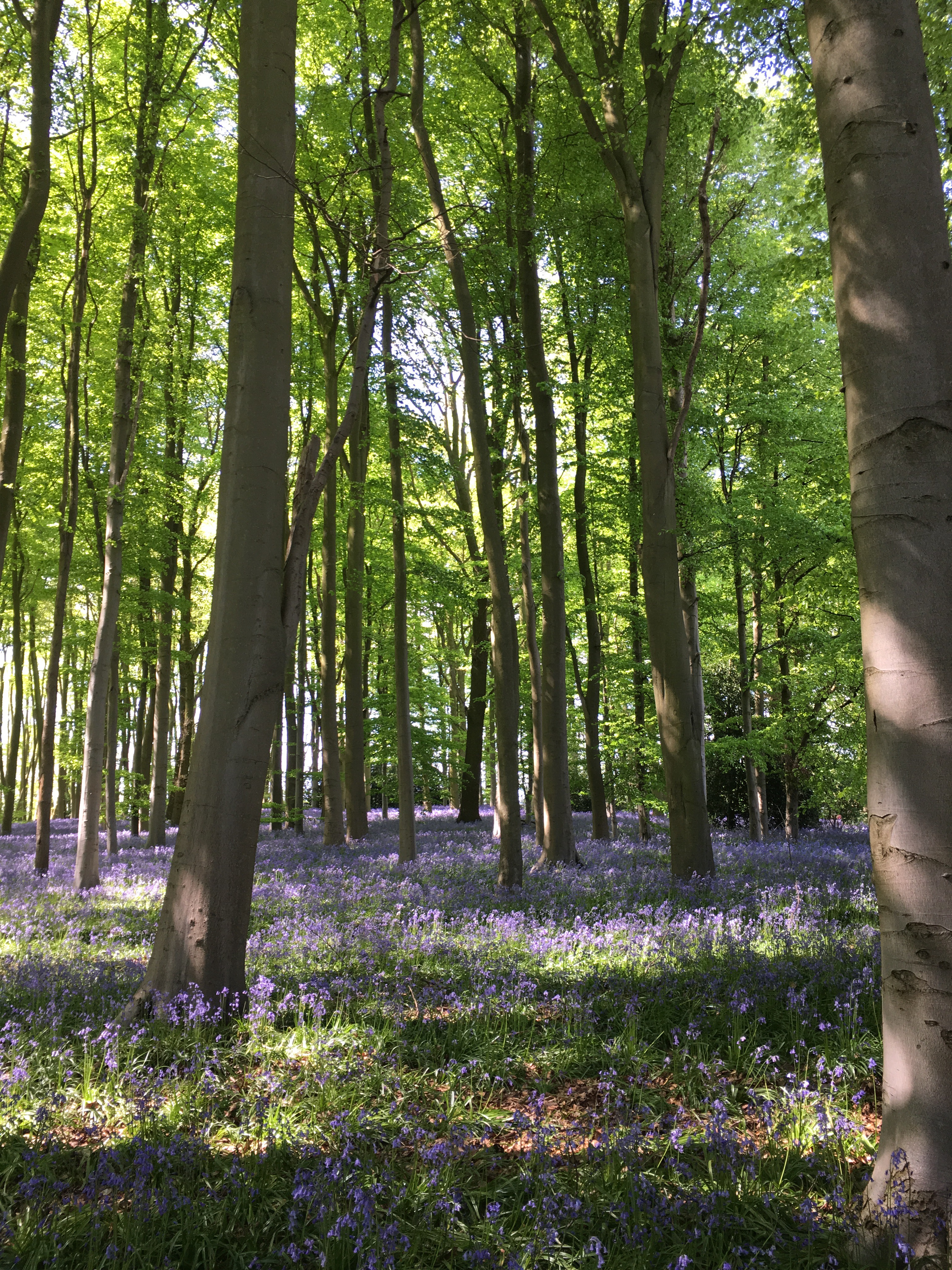
My car could probably drive itself to Coton Manor. The route is so familiar. I’ve been  visiting  the garden for about 20 years. And each time I learn something new. I  take a pen and paper to make a note of planting combinations. I always have to walk around the garden in the same direction. First, the top terrace, by the garden school, where there’s beautiful terracotta pots of seasonal plants. Tulips today, mass planted in a single colour. Then on through the rose and lavender garden. Through the arch to the top woodland walk. Down the slope, following the stream, watching the ferns unfurling, spotting a patch of erythronium dogs tooth violets and some maroon tipped trilliums. Crossing over the  rill, we walk through the wildflower meadow- full of cowslips and camassias.  Not horticultural matters, I know, but the little speckled bantams that live at the bottom of the stream garden are such a delight to see. We chuckle over their  fluffy feathered legs, and their funny little ways. Today, one spots a fly, and zigzags crazily through the orchard, neck outstretched to catch the tasty morsel. There’s flamingoes. Puzzling when first encountered.  But a treat to look forward to on every subsequent visit. They are seemingly colour-coordinated with the orange pink tulips along the stream bank. Today we walked through the bluebell woods.  We stood still and just gazed. A sea of blue, set against the smooth grey beech trees. And then, the scent. We store up such glory- to last the whole year. Until next time.  

Coton Manor’s five acre bluebell wood- open until 15th May 12 noon to 5.30

   
I am always drawn to houses built with the warm honey coloured Northamptonshire stone.  The original Manor House was destroyed during the Civil War and rebuilt in 1662, using  stone salvaged from nearby Holdenby House.  The current owner’s grandparents moved to Coton in 1926, extended the house and created the bones of the current 10 acre garden. A history of the house and gardens has been written by Ann Benson, available through the Coton manor website http://www.cotonmanor.co.uk. 


We always hope to be in time for the wisteria flowering. Such a glorious scent.


The lavender-edged terrace garden has Tulip Elegant Lady and double late peony flowered Black Hero. Soon there will be geraniums, erysimum and heucheras to cover the bulb foliage. The garden school is on the right. Courses still available (at time of publication) this summer are by Sarah Price, Tom Duncan,Johnathan and Peter Gooch, Martyn Rix, Brian Ellis, Rosy Hardy and the owner Susie Pasley-Tyler.

Tulip Black Hero- a double peony flowering form   

I always find plenty of inspiration for container planting. This is my favourite at Coton, the copper urn and Spring Green Tulips.


Tulip Yellow Spring Green. New to me and something I will try this year.   
ELegant Lady Tulip. Reliable and  lives up to its name.

  
fringed Blue Heron tulip. Such a colour!


Honesty (Lunaria annua) An unusual bi coloured form.

  
iris – possibly Plum Tart. 
Plants, seeds and bulbs can be purchased at the nursery. The garden opens Tuesday to Saturday 12 noon to 5.30  from 25th March to 1st October. Mum and I have bought season tickets, which means we can visit the garden through the changing seasons and obtain lots of planting inspiration. 

Do you have a favourite garden that you like to visit? What planting inspiration have you found?  Please leave a comment so that I know I’m not talking to myself here. 

We made a pond

We made a pond.Twice . We hired a man with a JCB. He was very enthusiastic. We marked out the site, discussed the size and shape, waved our arms around windmill fashion – and then made a big mistake – we went away for a few days. When we returned, we found a huge straight-sided hole in the ground and massive rockery.

When we recovered from that financial and confidence sapping disaster -we hired another man with a JCB. This time we stayed put. My other half literally guided the bucket into position. I watched- ready to call an ambulance.

We bought a pond liner when we should have spent the money on carpets. We lived for some time with concrete floors.

img_3723

Cardamine pratensis or Lady’s Smock grows happily in the boggy margins.

S oxslips grow along the sloping banks. such a delicate flower.

I’m  replanting the  iris and camassias around the edges and trying to control the stinging nettles and brambles. I don’t want to eradicate them completely- just keep on top of them. I garden with a light touch. I love the butterflies that hatch their eggs on the nettles. So gardening for me is a compromise.

Have you ever made a pond? What lessons did you learn along the way?  I hope you have enjoyed these photos of my garden. It’s a peaceful place where humans have to share with the wildlife.

When we came here we planted trees

Our garden was a field of wheat when we bought the house. We had to wait until the autumn harvest. Then the farmer ploughed our plot and we threw around handfuls of grass seed with wild flowers mixed in. We planted 250 sapling trees. Oak, ash, hornbeam, willow. And we waited. We planted a boundary hedge of hawthorn, crabapple and rowan for the birds.  Hazel for coppicing.

violets in a race against time to flower and set seed before cowparsley and campions tower over them

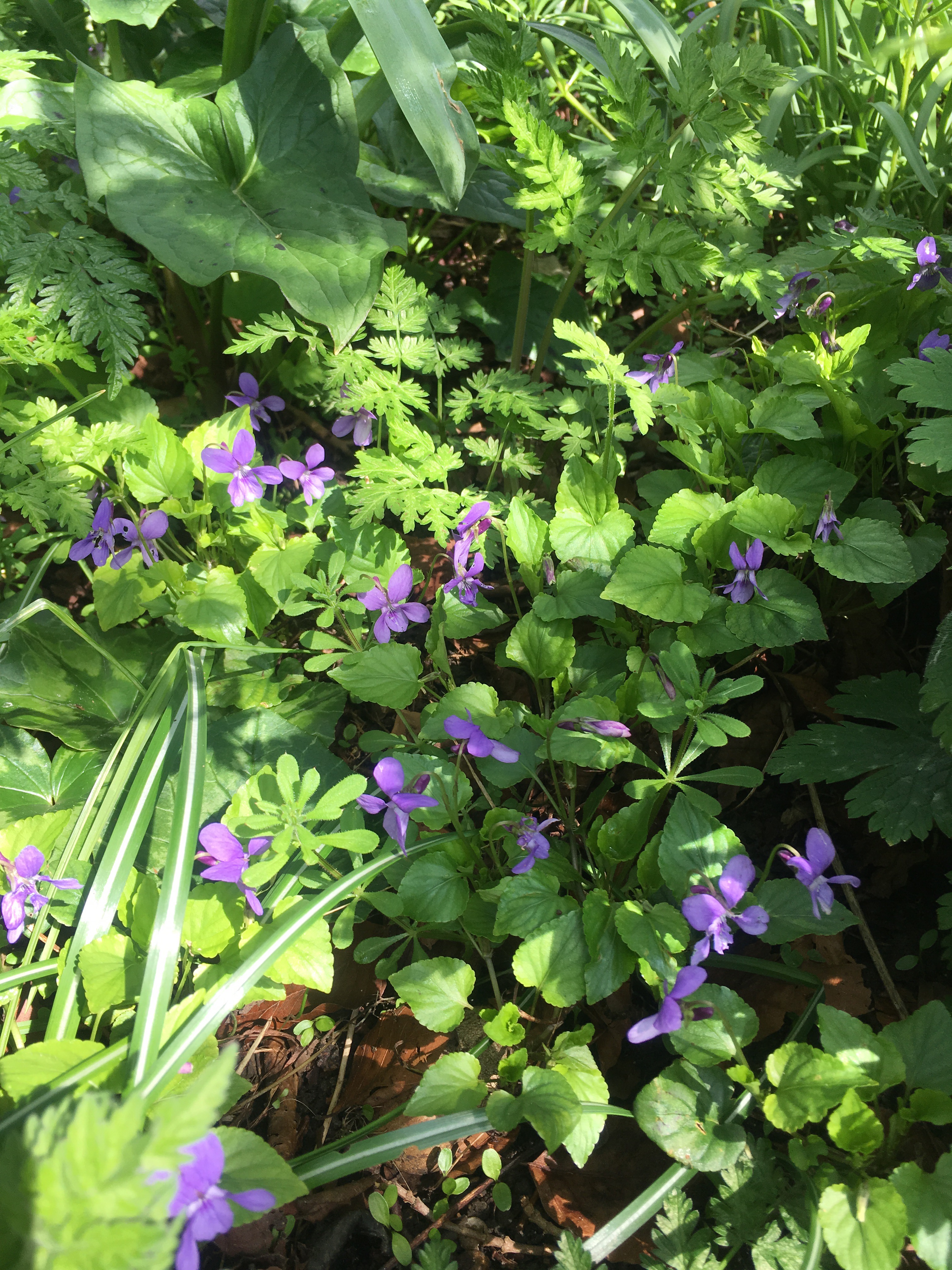
Violets in a race against time to flower and set seed before cow parsley and  campions tower over them. The violets have escaped from the woodland and are thriving in the lawn. For weeks in April and May, the lawn is studded with sweet-scented violets. We set the mower blades high, and skim over them.

We planted closely, so each tree and shrub shelters its neighbour. This is a good way to create a “woodland” feel in a short space of time. We coppice the hazel and use the twigs for growing climbing beans and sweet peas. There’s always plenty of kindling for winter fires.

Wild anemones stream out along the woodland floor, searching for sunlight. I planted a few at one end of the wild garden. The anemones moved to where they were happiest. I often find that plants pop up in unexpected places. Sometimes they move from one side of the garden to the other. Nature seems to know best.

there will be cherries for the birds

We planted a bank of cherry trees- enough for us, and to share with the birds. There’s always enough for everyone.
Thanks for reading. Please stop by again to see the garden through the seasons. It’s a peaceful haven for wildlife and humans. I don’t mind sharing.

Hello world!

Here are some photos from my garden. Please say hello, so that I know I’m not talking to myself on here. Thanks for reading.