#wordlesswednesday -bulbs and roots

Update on the Paperwhite narcissi. Planted just a fortnight ago. Being grown in a cool, bright, frost free north facing porch. Hoping it will flower by Christmas. A joy to check up on each day. I wrote about planting these bulbs here.

How are your potted bulbs coming along? I’ve got forced hyacinths in a dark cupboard in the potting shed. They need 10 weeks at 9 degrees and then I’ll bring them out into the cool porch to grow on. I’ll bring them into a warm room when they have formed good flower spikes. Cool but frost free growing conditions are the secret for success.

#WorldMentalHealthDay

For anyone out there who’s feeling blue today. Remember, the Perennial charity gives help and support. Contact them on 0800 093 8543. E mail at services@perennial.org.uk. It’s the first step- but it might make all the difference. Don’t keep problems to yourself. Someone will be able to help.

I found this iris flowering by the front doorstep today. It’s early this year. Iris Unguicularis , or Algerian iris, flowers on and off right through the winter. It grows in gravel at the base of a south facing wall. I try to plant flowers for winter cheer. We all need as much of that as we can get.

I wrote about Perennial earlier in the summer at https://bramblegarden.com/2017/07/04/rhshampton-Perennial-charity-sanctuary-garden- If you need help, contact them Here. And support their work, if you can.

Sending you all my best wishes and love today. x

Win a copy of Secret Gardens of East Anglia- and here’s an update on my fund-raising plans

I have always believed people are amazingly kind and generous. Now I have the proof.

A week ago I wrote here about combining my gardening skills to raise money for Rainbows Children’s Hospice. And the response has been overwhelming. I wrote about giving talks to garden groups- and hosting open gardens. And immediately my lovely garden design customers Pat and John Stanley agreed to help. And best-selling writer Barbara Segall offered to give a talk on her new book Secret Gardens of East Anglia.

Here’s a poster for the event.

As soon as I mentioned Rainbows, Fiona from The Printers company in Loughborough offered to do the artwork and produce the posters for me. Thank goodness she did, as my first attempts were very amateurish and you’d have laughed to see them! Here’s Fiona, left with her assistant Maggie, right.

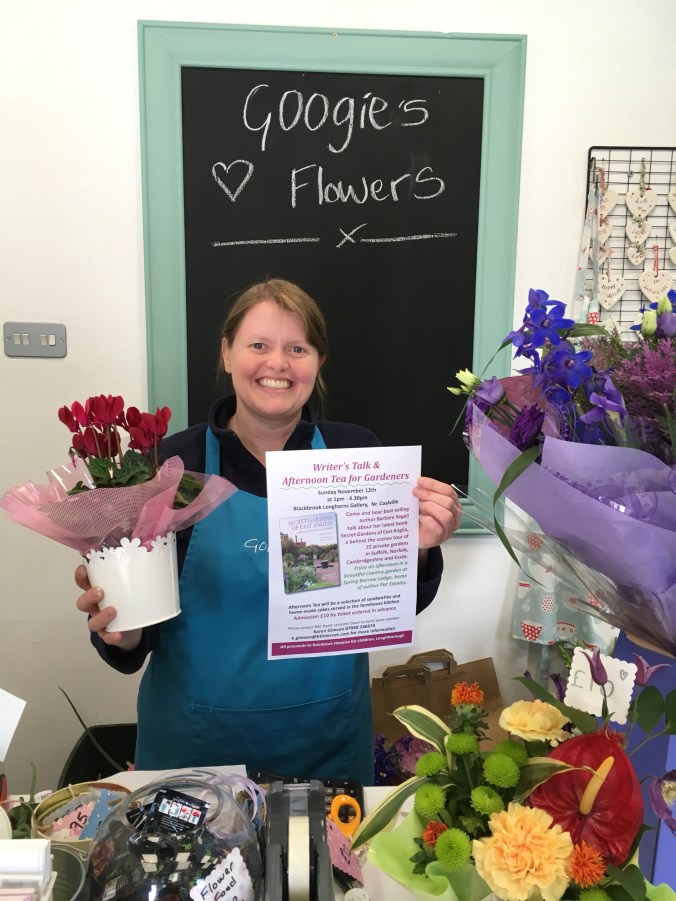
As soon as I had my posters, I whizzed around local shops and businesses asking them to put them in their front windows. Not one person turned me down. Here’s Googie in her shop – Googie’sFlowers at East Leake, near Loughborough. And as well as letting all her customs know, Googie has offered some gifts for the raffle.

The response on social media has been truly wonderful and supportive. On the day I announced my fund-raising plans, writer and gardener Gill Heavens sent the most fabulous card wishing me all the best with my projects. Such lovely, encouraging words. It actually made me cry, to be honest. I was so grateful for her generous donation as well, which I just kept looking at, as I couldn’t believe that I had set in motion a series of events that would lead to kind people sending money for Rainbows. Gill is also on twitter @GillHeavens which is where we first met.

Writer and blogger Alison Levey of blackberrygarden.co.uk @papaver on twitter very kindly offered to give Barbara accommodation for the night. I’m so grateful, as our spare room doesn’t bear inspection at the moment! It is in need of a complete renovation. I feel another blog post coming on…..

My dear friend and neighbour Charles Geary from award-winning Leicestershire company Geary’s Bakeries has promised to donate all the bread for our afternoon tea. And my amazing and ever-supportive Mum is making the cakes! Our local Co-op supermarket at East Leake is supplying the tea, sugar and milk.

I wrote a review of Barbara’s book Here . Publishers Frances Lincoln, part of the Quarto Publishing Group, have offered two copies to give away to readers of my blog. To win a copy please post a comment below and two will be picked out at random. Terms and conditions: The competition closes on 12th November. Entries after this time will not be counted.Open to readers world wide. Prize cannot be exchanged for a cash alternative. Winners chosen at random and will be contacted via the blog or on twitter. Winners to provide their postal address and books will be sent in the post via Frances Lincoln. Secret Gardens of East Anglia can also be purchased from amazon Here. Please also say in your comment if you don’t wish to be included in the give-away. Good luck everyone! And never underestimate the power of a smile 😊

<

What’s new for gardeners- what I’ve spotted at Glee

I am always on the look out for the latest gadget to make life easier in the garden. So I was really pleased to be invited to the garden industry event called Glee. Sadly there’s no singing and dancing – like the American tv show my daughters love to watch. Honestly, I didn’t think there would be….but I was hoping! Instead, there’s an array of new products you’ll get to see in garden centres, high street stores and supermarkets over the next 12 months.

Here’s what caught my eye at the sneak preview -held at the NEC in Birmingham this week.

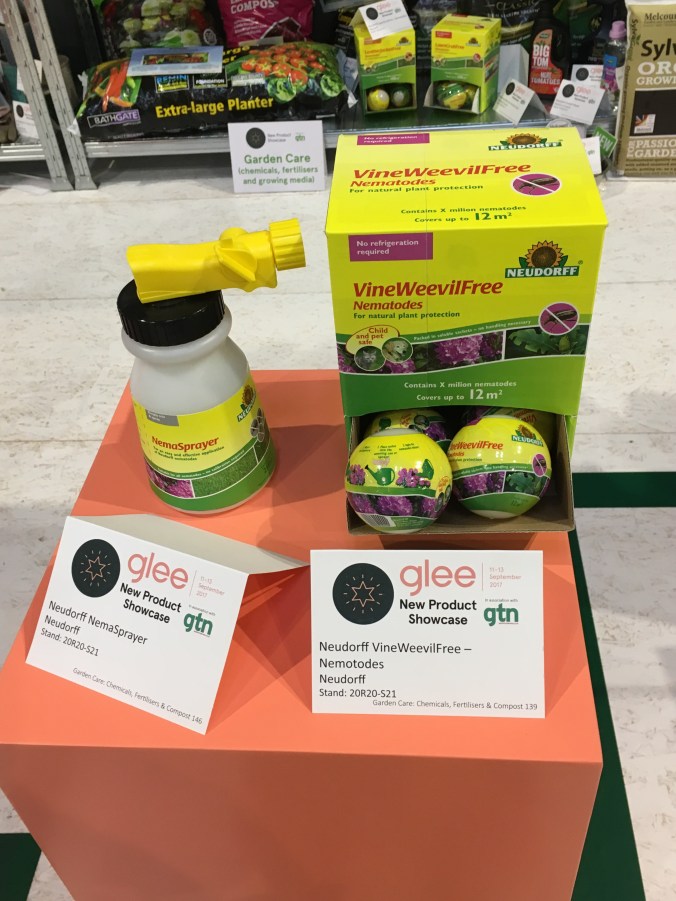
Top of my list at Number 1 is a new nematode product from Neudorff. It controls chafer grubs, leatherjackets and vine weevils- but doesn’t need to be stored in the fridge. Neudorff is the first company to develop a nematode product that has a long shelf life- up to six months. This will make life so much easier. Currently, we have to order on line, or buy a voucher in a shop or garden centre, then wait for the nematodes to arrive in the post. Nematodes normally have to be stored in the fridge and used within a few weeks. I had an expensive failure when they were delivered by mistake to a neighbour, who was on holiday. By the time they arrived home, the nematodes were dead. Nematodes are a safe, natural biological control of pests and we are all trying to use them in preference to chemicals. Neudorff won the award for the best new garden care product at Glee.

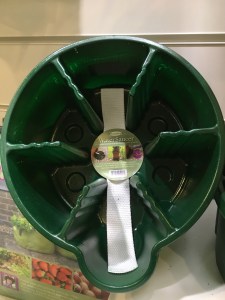
No. 2 on my top list is this self-watering fruit and vegetable tower. I’m always on the look out for space-saving ideas, and this would be great for people with small gardens or patios. I’m going to grow strawberries, herbs and salads in mine. There’s a new compact blackberry that I might grow in there, called Little Black Prince, from the Lubera breeding programme. The self-watering tower was a runner up in the growing accessories awards category.

No. 3 on my list: Also from Haxnicks is this water saucer with a wick. You stand your container on top, feed the wick through the bottom of the pot – and off you go on holiday. No coming home to dead or wilting plants. Such a simple idea – and it works.

No. 4 on my list is this cream plastic container from elho. It has a see-through lid which makes it great for starting off seedlings in the spring. But the selling point for me is the integral hooks. The container will balance on a fence, or balcony rail. I’m going to use these at a school where they will brighten up a playground fence. The Green Basics Growhouse Flowerbridge won first place in the growing accessories category at Glee.

No. 5 on my list is this new weeding tool from Burgon and Ball. I never use chemicals on my lawn, and I don’t mind the primroses and self heal that flourish there. But I need to keep an eye on dandelions and thistles. So I’ve ordered one of these to keep a balance between weeds and grass. I’m hoping it will be better for my back, as less bending will be needed. The Wonder Weed Puller won first place in the new tools and machinery category.

No. 6 is this pretty and practical pin board, also from Burgon and Ball. Regular readers will know that I have a little potting shed at home. You might also have noticed a lack of photos recently from said potting shed. It is a complete mess in there. After a very busy summer, all my tools and equipment are in a heap and I can’t find the string. I’m determined to restore order and a pin board for keys, flower snips, string and my “jobs to-do” list would be just the thing.

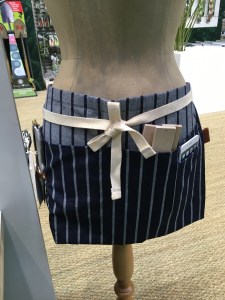
N0. 7 on my list is this snazzy apron with lots of pockets- also from, you’ve guessed it- Burgon and Ball. To be honest, I could have just brought home the whole stand from Burgon and Ball. I loved everything from their new range at the show. The apron would be useful for me because I am always losing things. Tonight I’ve got to go outdoors and upturn five green recycling bins in search of the secateurs- last seen balancing on a wheelbarrow full of weeds. Sigh.

Also on show, and winning the home, gifts and clothing section, were some super comfy new gardening gloves from a company called Gold Leaf. The RHS Collection poppy, rose and Iris decorated gloves would be perfect for Christmas or birthday presents. I’ve made strong hints to my family. Several, in fact. No photos here I’m afraid, as the stand was so busy, I couldn’t get near it. Which is a good sign indeed for the company.

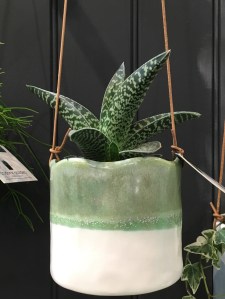
No. 8 are these new ceramic planters from……Burgon and Ball. I said I liked that company, didn’t I. I think it’s just become my new favourite. I was impressed B&B knew the plant names too. This one apparently is a rhipsalis – or mistletoe cactus. Isn’t it gorgeous. I hope they send me a cutting – and the pot! Fingers crossed.

Yes, I could really see these swinging from the potting shed roof. It would certainly draw attention away from the messy compost-strewn floor.

No. 9 Now, I can really picture this little oven outside my potting shed door. It would be great for impromptu snacks for visitors to my shack. Isn’t it adorable. It’s a fire pod- from the company with the same name called The Fire Pod. It won best new product in the outdoor entertaining category. I am not at all surprised. I love it.

Not on my list -but to give you a taste of what else is in store for autumn 2017/18 – I spotted these. Not at all sure where I would put them to be honest. I would love to know which gardens they are destined for. There seems to be a bit of a giraffe theme going on here.

However, at no. 10 on my must-buy list is this. Well, it really made me laugh. And who doesn’t need a baby dragon in their garden. It would be quite happy next to the fire pod, no doubt.

What do you think of my selection from Glee? Which are your favourites from the new product line-up. I’m just heartened to see money being invested in innovation. It’s good news for gardeners and also for the gardening industry.

#wordlesswednesday: Update on hedgehogs in the garden…..

Just a quick update on my baby hedgehogs. I wrote about them last week Here. I can report back that the Hogilo hedgehog house is a huge success. Three of the babies are in there this evening, and the roof is keeping them nice and dry.

I got in touch with the British Hedgehog Preservation Society to find out more about them. My babies need to weigh 600 grams before they can successfully hibernate. I will be weighing them tomorrow. Meanwhile I am feeding them up. Here’s a list of what we can give them.

Meat-based dog or cat food

Dried mealworms- not too many

Unsalted chopped or crushed peanuts

Sunflower hearts

Specially made hedgehog dried food- bought from pet shops and supermarkets.

Most importantly- they need a dish of fresh water. Not milk, which gives them stomach problems.

In the wild, my hedgehogs are eating the following:

Worms, beetles, earwigs, caterpillars, leatherjackets, millipedes, frogs, slugs, and fallen fruit. I know for a fact, they absolutely love windfall apples and plums.

Here are two of them with their dinner. They soon tucked in when I retreated to the house.

I was shocked to learn we have lost one third of our hedgehog population since the Millennium. The severe decline has been caused by the following:

Use of pesticides, reducing the number of invertebrates that make up the hedgehogs’ diet

Larger field sizes, making it difficult for them to move about

Mechanical hedge trimming which leaves gappy hedge bottoms and leads to poor nesting opportunities

Permanent pasture being lost to crops

Impenetrable fencing, limiting the area of connected land available for foraging

Gardens being lost to car parking, decking, etc, reducing the land available for foraging

Busy roads

Increased development

Over managed / tidied gardens reducing hibernation opportunities

Pesticide and slug pellet use, poisons invertebrates

Ponds. Hedgehogs are excellent swimmers, but they can’t get out of straight-sided ponds.

What we can do to help:

Leave untidy corners in our gardens with piles of logs and twigs.

Leave some fallen leaves, dry fern foliage, straw which can be used as nesting material.

Make or buy hedgehog shelters. Old wine crates can be converted, with the addition of a 30cm long tunnel entrance, to keep out predators, and a waterproof roof. Put the nesting material alongside as hedgehogs will carry it in themselves.

Create a safe, dry feeding area out of a clear plastic storage box with 13cm entrance hole.

Cut holes in fences so that hedgehogs can forage over a large area. The hole needs to be 13cm wide and 13cm high.

Use organic methods to protect plants. The Slug Gone wool pellets are really effective deterrents.

Make sure all ponds have a shallow beach made of stones at one end, or a plank wrapped in chicken wire, so that hedgehogs can escape.

I hope you’ve found this quick mini-guide useful. Certainly our hedgehogs need all the help they can get. It’s a sad fact that some children have never even seen a hedgehog- they were a very common sight when we were growing up.

I love this photo of a ceramic hedgehog 3,800 years old, found in an Egyptian tomb. It would be sad if they became extinct on our watch.

Photo credit : Brooklyn Museum and Big Hedgehog Map project where you can log sightings of hedgehogs in your area and find out more about them.

#mygardenrightnow: the autumn edition

If you ever visited my garden, you wouldn’t describe it as “lovely.” You’d probably shake your head and walk round muttering “what a flipping mess!” Waist-high stinging nettles and thickets of brambles are definitely an acquired taste. But despite its terrible weedy bits and uncontrollable corners- I love my garden and like nothing better than to ramble about picking a few flowers here and there and munching on blackberries (there are plenty).

So I’m joining Michelle at Veg Plotting again for #mygardenrightnow meme. Enjoy the view, but remember, I only show you the flowery bits. Behind the scenes- there is chaos!

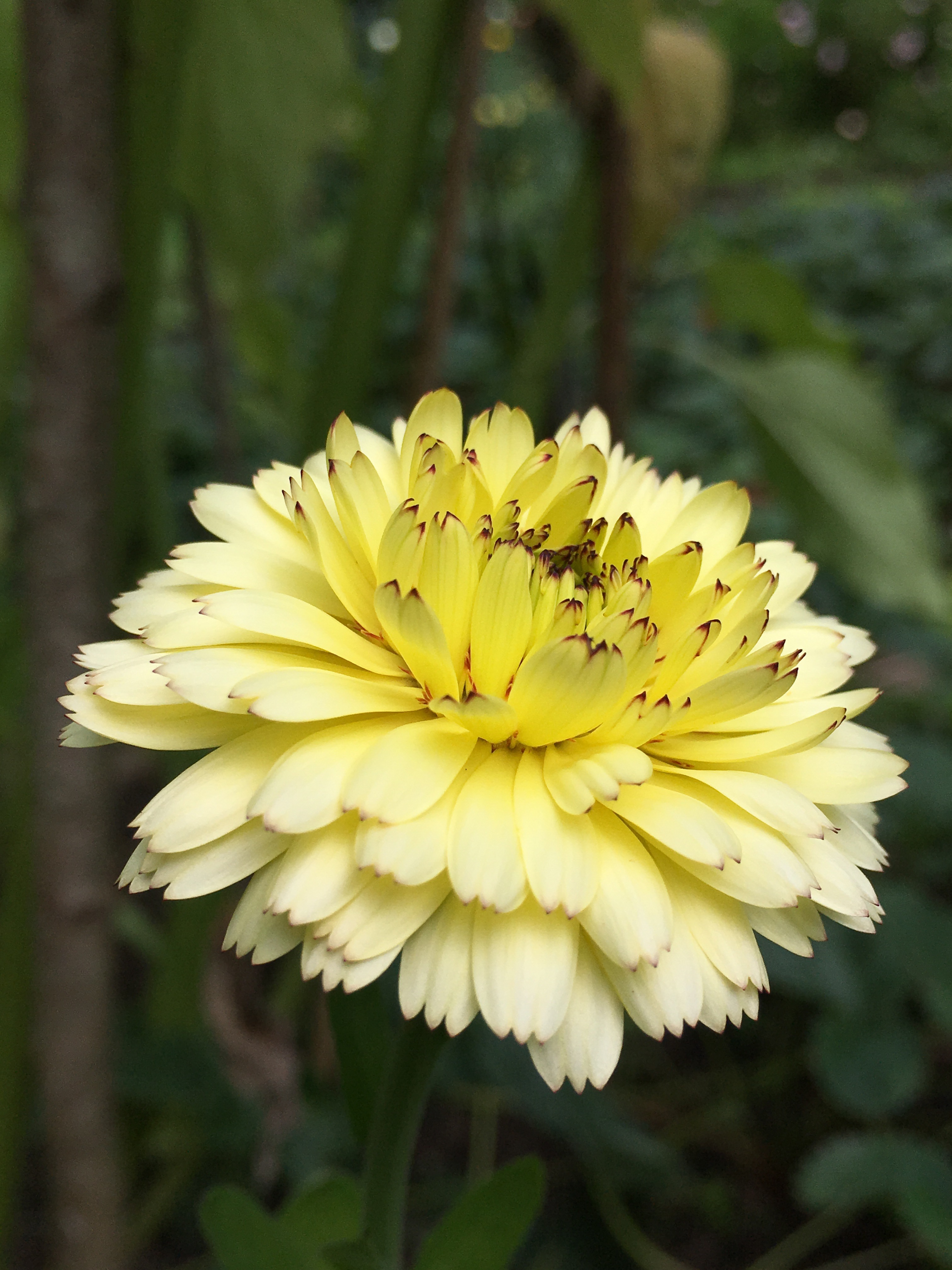
Flowers from the veg plot are still going strong. New Calendula Snow Princess is a firm favourite. So prolific and pretty.

Jam jar flowers include annual chrysanthemums, white dahlias,verbascum and grasses from the hedgerow bottom. Here’s a posy I took into BBC Radio Leicester recently. I’m sitting in the reception area- waiting to join Ben Jackson for the gardeners’ phone-in programme. You can have a listen in at http://bbc.co.uk/programmes/p05btvd7 whiz past the news to 2.08.10 on the timeline. I’ll never get used to wearing headphones. They never seem to fit me. But Ben and the production team are very kind and let me mess about with the height of the chair and plug and unplug the headphones until I’m comfortable. Then the only thing to worry about is the fact that it’s live….and we never know the questions in advance. It’s an awful long time since I attended horticultural college. I might need a refresher course to be honest!

The sweet peas have been amazing this year. I used some new Plant Grow fertiliser which seems to have kept them going for months. Plus they are still healthy. Usually by now they are getting brown and mildewy. I’ll definitely be using Plant Grow again next spring.

In between the sweet peas I’m growing some white and pale blue gladioli. To save the trouble of staking them, I just tie them up with the sweet peas and grow them down the middle of my hazel rod wigwam. It doesn’t matter what the weather throws at them, they still grow upright. Much less trouble.

I love the way the flowers open from the bottom of the stems and work their way up. They last for two weeks in a vase.

My £1 cactus dahlia Chat Noir from Wilkos has been such a bargain. It’s 6ft tall and full of glorious flowers. I do love a bargain.

Mum grew trays of pansies to pop in amongst the vegetables. They are perfect under tall brassicas such as kale and Brussels. We both love these jet black ones. They remind us of velvet.

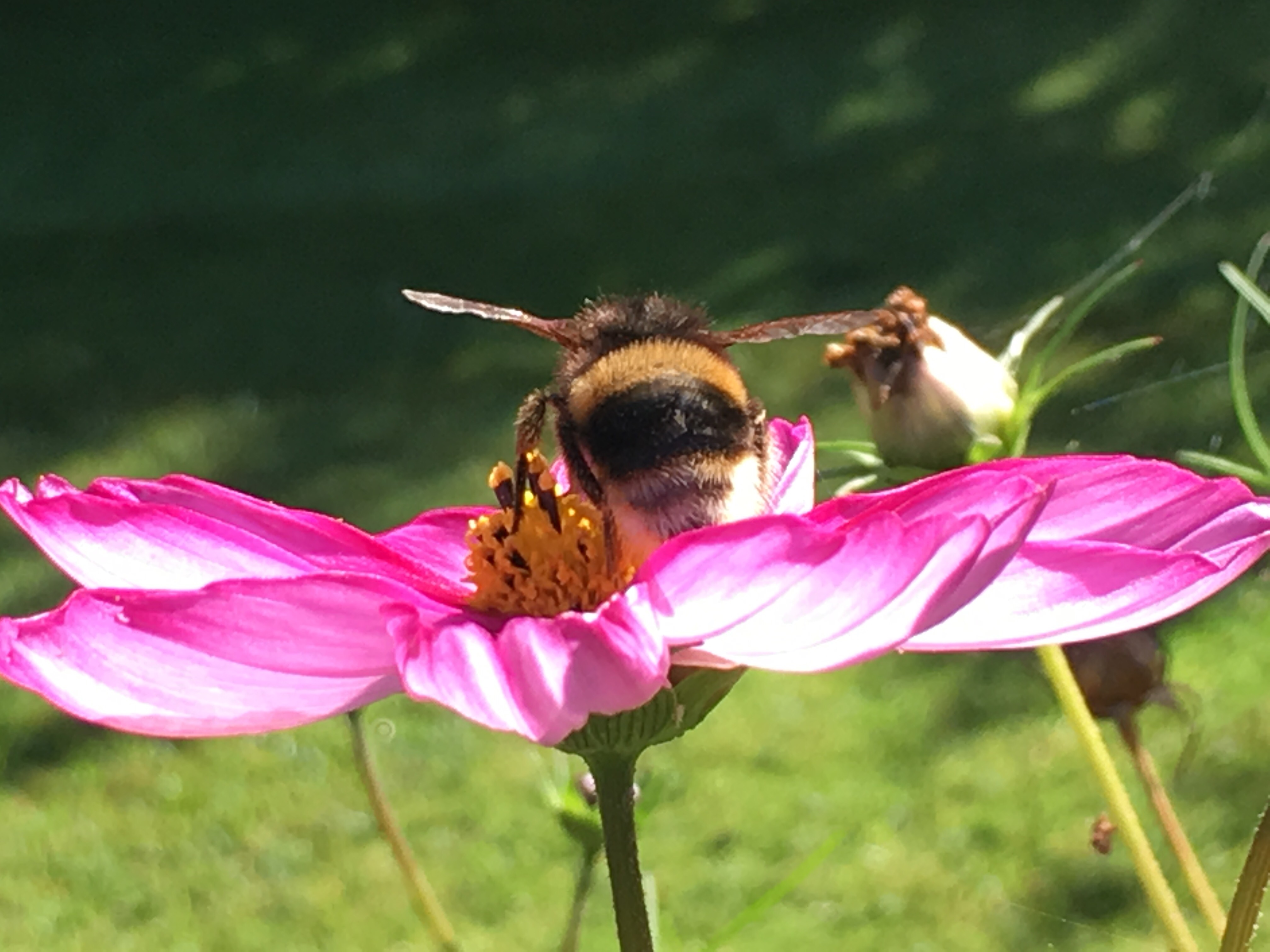
It’s not just us appreciating the cut flower patch. This has to be the fluffiest bee ever to visit the garden.

In compensation for all these overgrown weeds and brambles, we had five baby hedgehogs born in the garden this summer. They are currently living under the rose pergola by the back door, and I’m trying to feed them up in time for their winter hibernation. Of all the things I’ve ever grown in my garden, I am the most overjoyed with these beautiful hedgehogs.

The hedgehog house was half price too. I’m sure it will keep them warm and dry over the winter. Do feel free to join in with Michelle’s meme and share your news on what your garden looks like this weekend. It’s fun to see what we are all getting up to in our gardens all over the country- and also abroad!

#wordlesswednesday- Mum’s garden -grown from seed

A gallery from Mum’s garden today, to show how a plot can be filled -just by growing seeds. Most of the seed packets came free from garden magazines. Our favourites are Amateur Gardening and Garden News. All we needed was some compost and seed trays, and both our gardens are currently overflowing with colour. Everyone knows I am a thrifty gardener. Do you have any money saving tips?

Dahlias grown from seed last year have overwintered in the ground. These are supposed to be annuals, but the mild winters mean we get two years out of the plants.

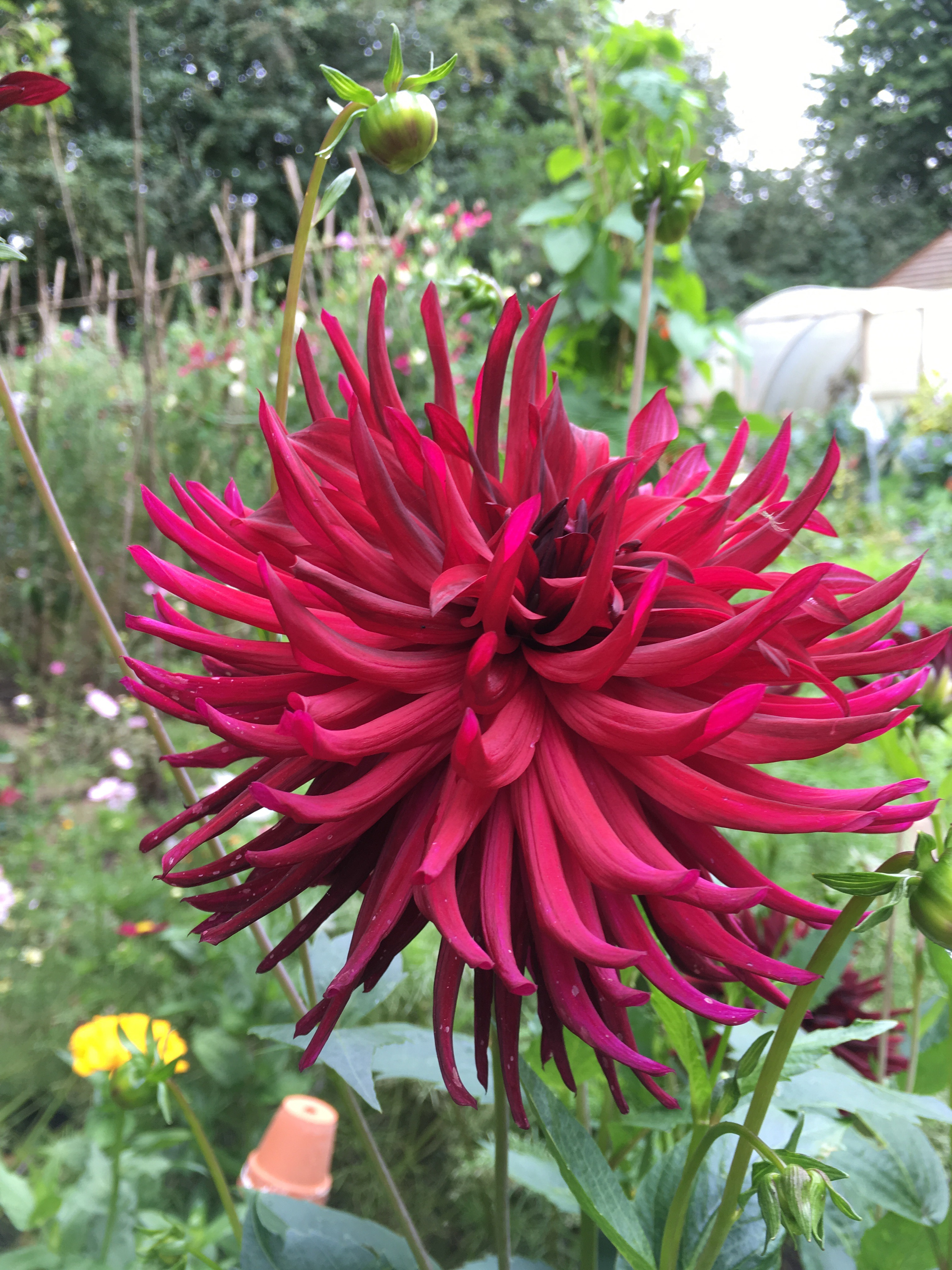
I love this deep red dahlia, part of a mixed colour packet of seed.

This double white dahlia shines out in a semi-shady spot under some trees.

Morning Glory climbs up through the standard roses and mini fruit trees in Mum’s garden. Great for attracting beneficial pollinators such as bees and butterflies.

We have pale blue and white varieties flowering this year, as well as the usual deep blue ipomoea.

Rudbeckia. We think this is Marmalade. Grown from a mixed variety pack. Bees absolutely love this plant and it flowers until first frosts.

New to us this year, this is Osteospermum Limpopo or African Daisy. This is a lovely mixed white, yellow and apricot pack from Mr Fothergill’s Seeds – free in Amateur Gardening Magazine.

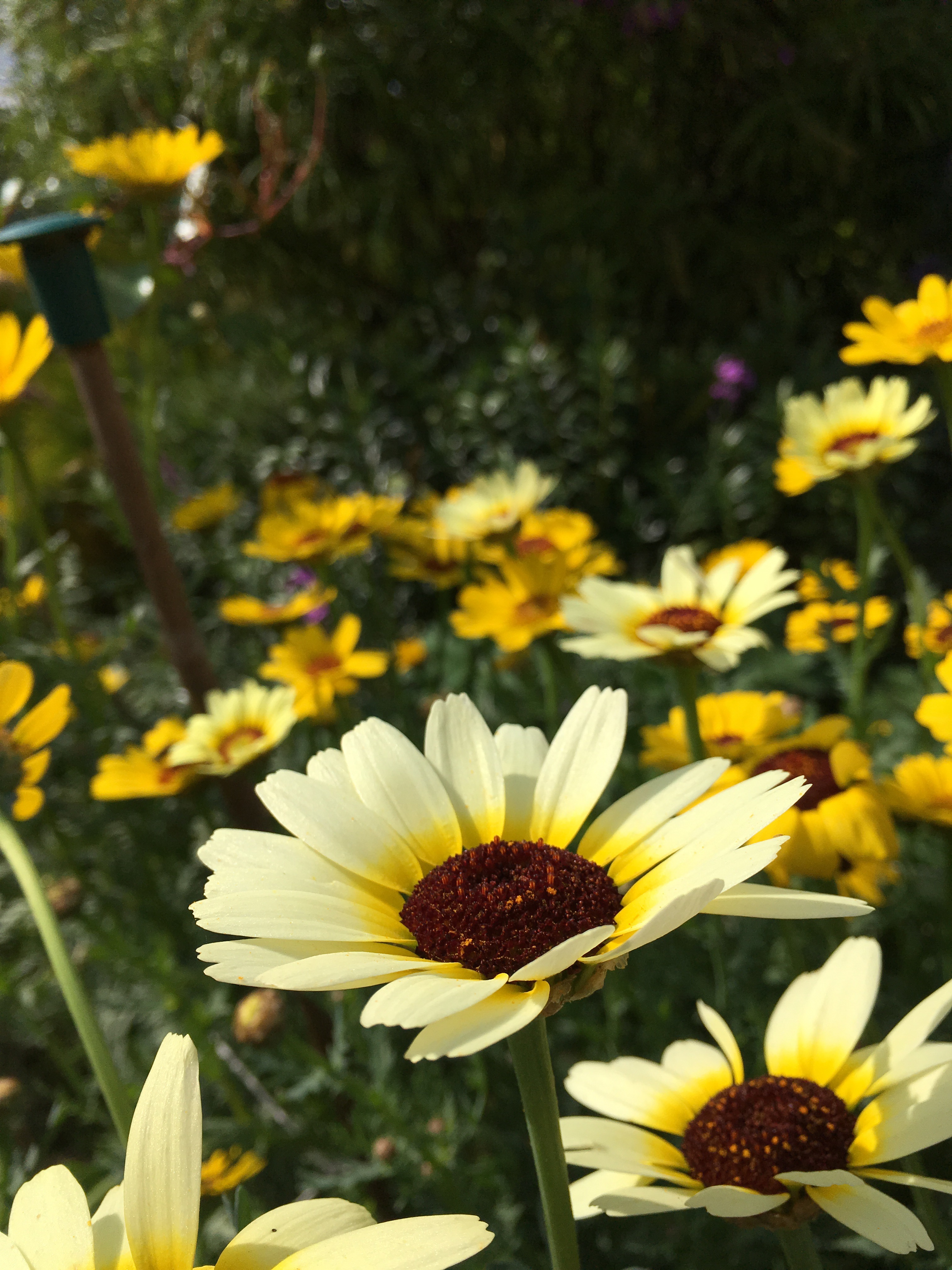
Another Mr Fothergill’s seed, Chrysanthemum Eastern Star, in a range of colours – yellow, white with a yellow centre ring, and lemon. So beautiful, and lasts two weeks in a vase. Our new favourite cut flower and one we will grow again next year.

Mum’s garden looks so sunny with these annual chrysanthemums, sown in the spring and planted out in early summer. We think they will flower until October at least.

Our Thompson and Morgan Zinnia Candy Cane Mixed have been delighting us all summer. Such a fabulous range of colours and sizes. We love the mini flowers in the centre of each bloom. Truly beautiful. This packet came free from Garden News.

Cosmos Seashells make good cutting flowers. We love the intricate petals on these flowers.

More Chrysanths. We’ve never grown such a lovely range of colours before.

Rudbeckias mixed varieties. These often over-winter if the weather is not too severe.

Love this delicate cosmos Seashells. Such a pretty petal shape.

Have you grown any flowers from seed this year? What are your favourites? I hope there’s not too many photos in my gallery. I got rather over excited because Mum has a good internet connection and photos only take seconds to load. Sadly at my house it takes about 15 minutes per photo, and even then it sometimes all disappears before I get the chance to post my news. Sigh.

#wordlesswednesday – Garden Table Flowers

I love a jam jar of flowers on the garden table- as much as indoors. I am trying to have breakfast, lunch and tea outdoors every day- while the sunshine lasts. So I set our old wooden bench with a red checked table cloth and sling cheap bed quilts over the rickety old chairs. Instant transformation! I hope you are all enjoying your summer and getting to spend time in the garden.

Have you got any favourite places you like to sit in the garden? Mine is under this stately beech tree, in the middle of our back garden lawn. It’s always a nice shady spot. A good place to sit and read. Or just survey the garden.

Words and Pictures

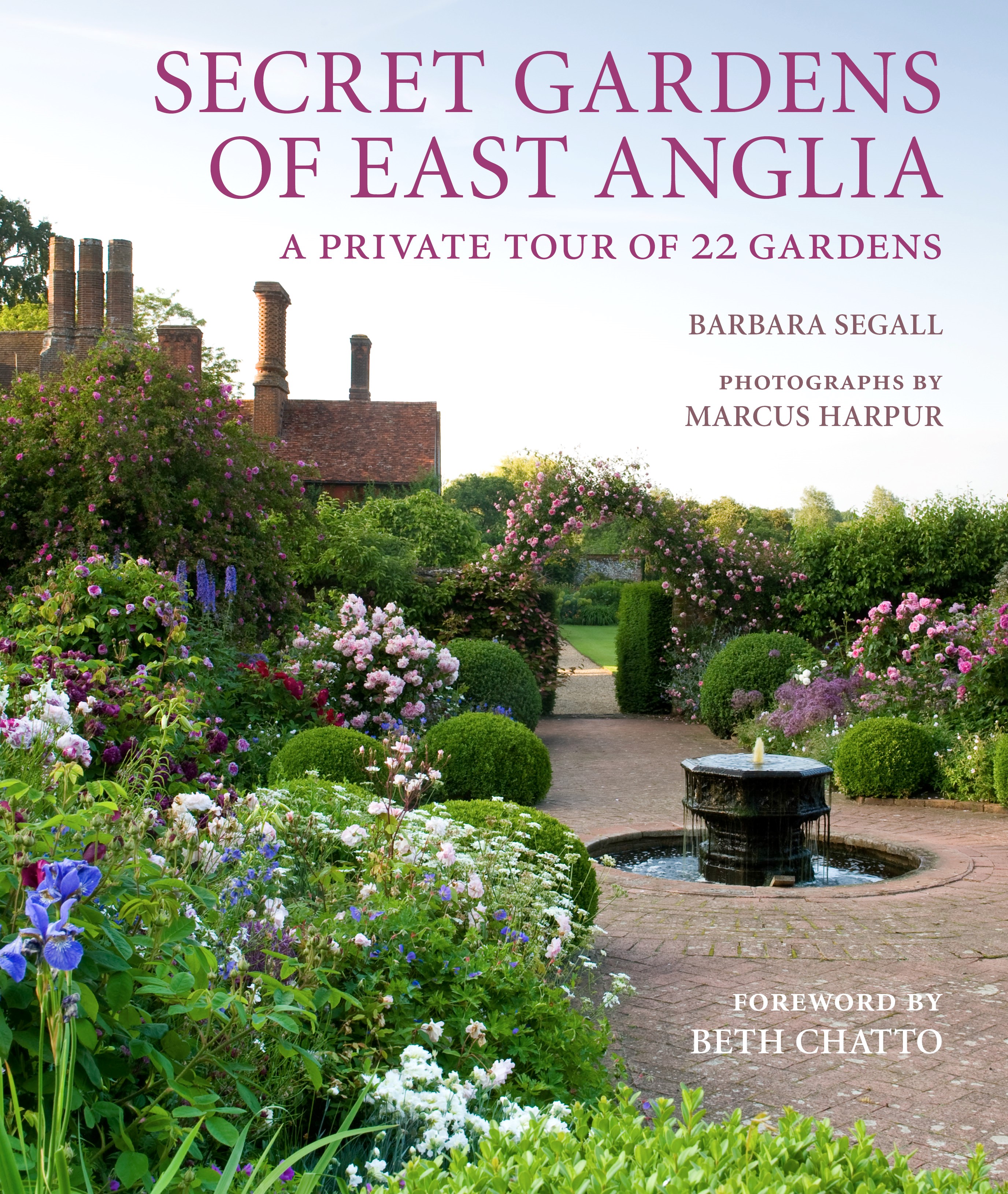
SECRET GARDENS OF EAST ANGLIA


Barbara Segall. Photography by Marcus Harpur

Frances Lincoln £20. Hardback.  Published 7th September 2017.

It’s impossible to resist dipping into the pages of any book with the words “secret” and “garden” in the title.

We all love peering over the garden gate  to get a glimpse of other people’s property.

And in Secret Gardens of East Anglia, Barbara Segall is our excellent guide, taking us straight down the drive and through the front gates of 22 privately owned gardens.

It is quite a revelation. We see sumptuous planting, grand sculpture, rose parterres, moated gardens,  and wildflower meadows galore! A real  treat – in words and pictures.

Here is just a flavour of some of the glorious gardens featured.

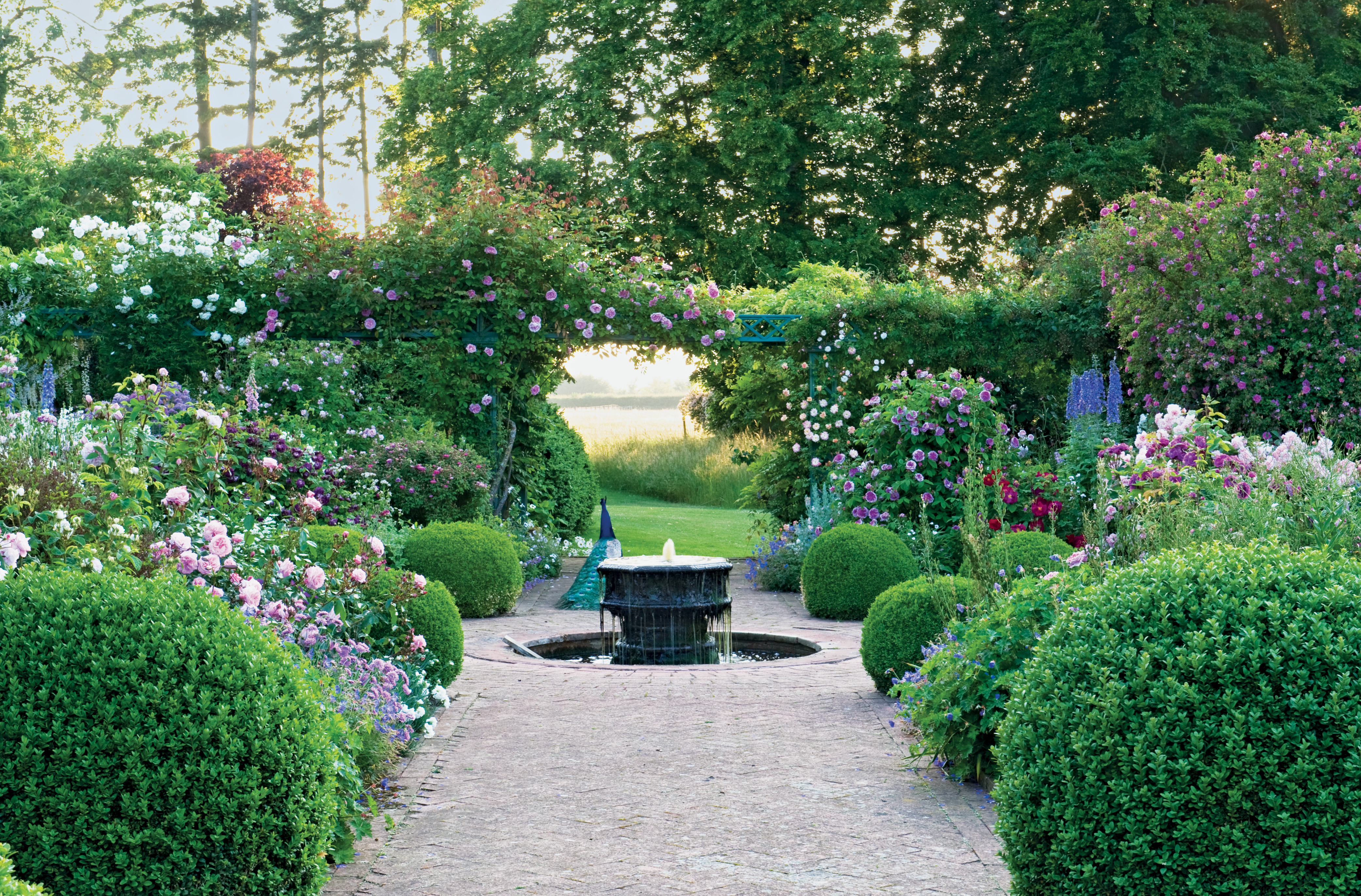
Wyken Hall, Stanton, Suffolk
Wyken Hall - Suffolk 1.jpg

Photo credit Marcus Harpur. Perfectly co-ordinated, one of Wyken Hall’s peacocks is poised beneath a blue wooden pergola covered in climbing Rosa Blairii Number Two. The pergola is reminiscent of one at Bodnant in Wales. Owners Kenneth and Carla Carlisle have created a sumptuous rose garden, favouring highly-scented old rose varieties with soft coloured perennials such as delphiniums, astrantia and artemisia. The sound of water and the scent of roses always draws  me in. I could picture myself sitting in this beautiful garden on a hot, sunny summer’s day. Yes, I would be quite happy here!

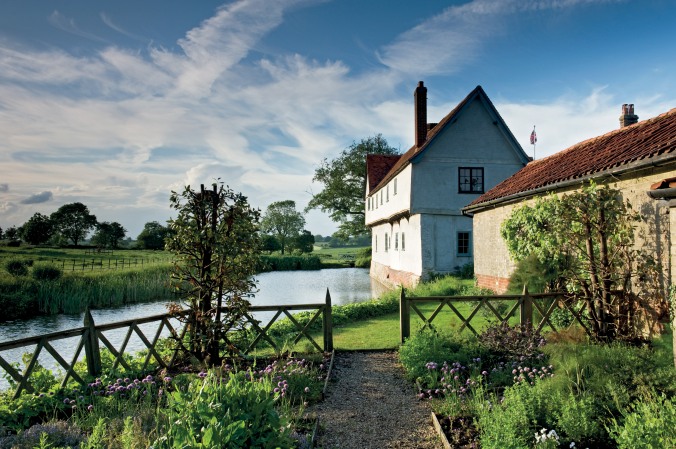
Columbine Hall, Stowupland, Suffolk
Col Hall.jpg

Photo credit Marcus Harpur. In my opinion, the most romantic of the gardens featured.  I’ve long been entranced by the walled kitchen garden which I first spotted on twitter. Head gardener and estate manager Kate Elliott ( @columbinehall) has worked here for 20 years and rightly describes the garden as her “pride and joy.”  Blue-grey paintwork used for gates, bridges and obelisks caught my eye, along with the planting scheme of silver and blue-mauve through to pink. Purple kales such as Cavolo Nero, Redbor and Rouge de Russie are set amongst  the silver leaves of globe artichokes.  I wasn’t surprised to read the owners’ comments :”We pick from the Kitchen Garden only with Kate’s permission, so as not to upset the colour co-ordinations or symmetry.”  A rare glimpse behind the scenes into the work and dedication that goes into creating a garden such as this.


Elton Hall, Elton, Cambridgeshire
Elton Hall - Cambridgeshire 1.jpg

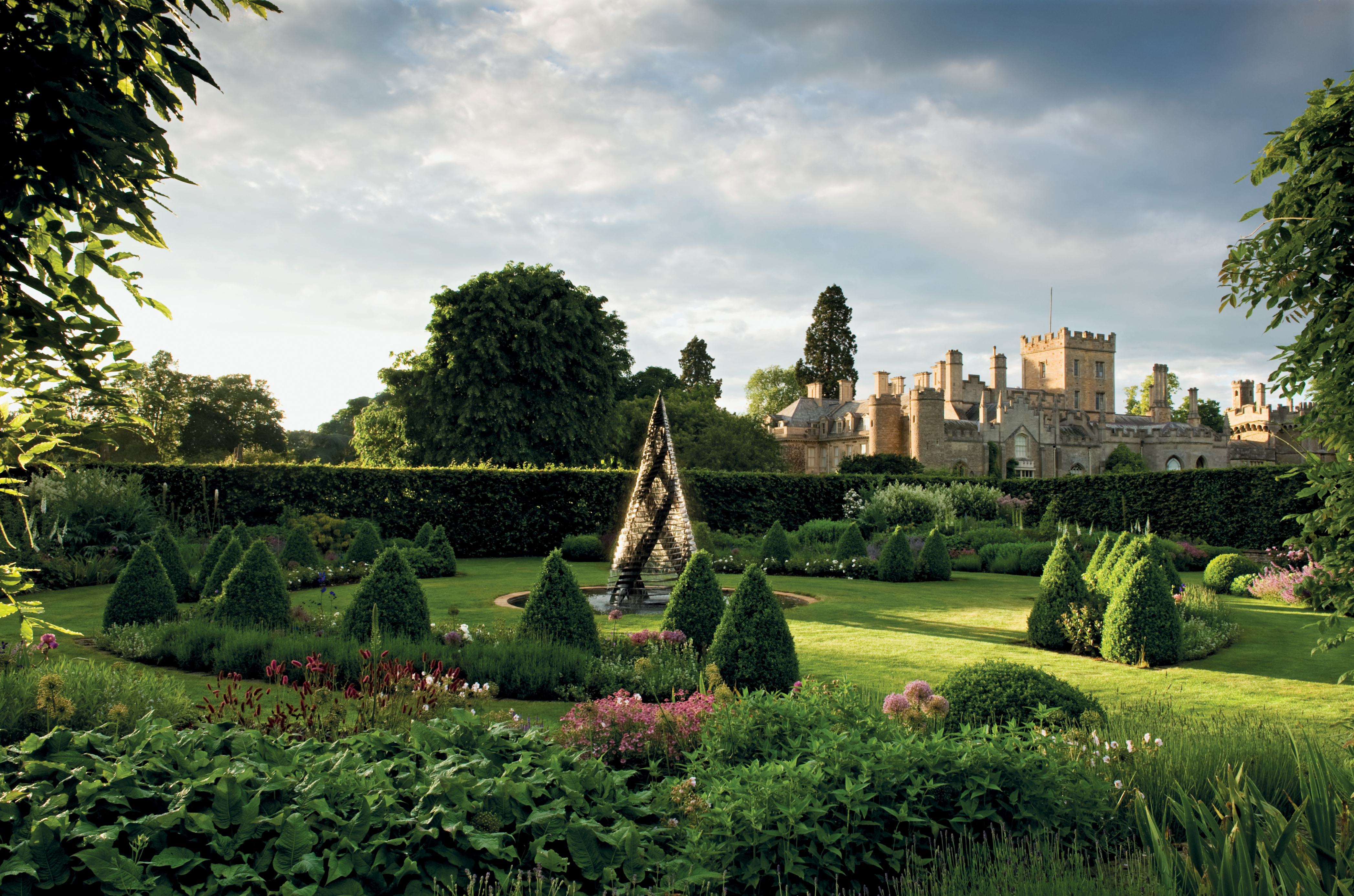
Photo credit Marcus Harpur. Home to Sir William and Lady Proby who chose to make a modern garden, rather than recreate the past.  The stately house has been in the Proby family for more than 300 years. It’s  fascinating to see how the contemporary design of the fountain and the pyramid topiary is set against a Gothic style house with turrets and castellations.  Proof that a modern style can work in a setting that’s steeped in history.

Wood Farm, Gipping, Suffolk
Wood Farm 2 b.jpg

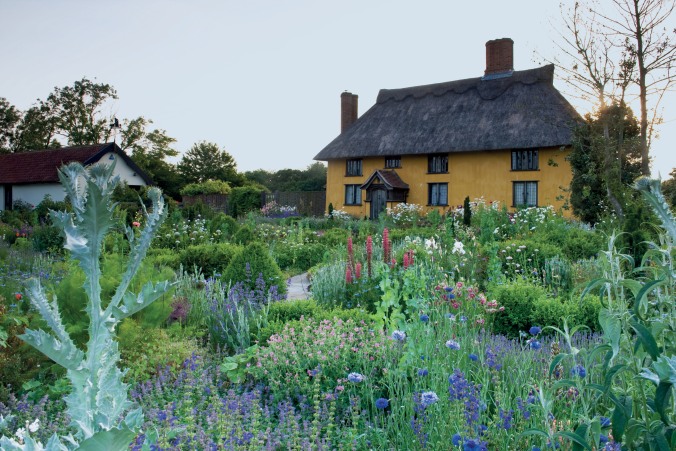
Photo credit Marcus Harpur.    The photograph shows irises, cornflowers, mounds of lavender and box. On the other side of the property, the house appears to drift on a sea of white ox-eye daisies. The golden centres of the daisies are an exact match with the colour of the 500 year old Suffolk farmhouse. A very pretty house and garden and I would love to have the chance to ramble along that  garden path.

I must mention Ulting Wick, Ulting, Essex. Long on my  special-places-to-visit list, the owners Bryan and Philippa Burrough  have planted 10,000 tulips in the Old Farmyard garden. A particular feature of the garden is the bold and jewel-like colours set against the black paintwork of three listed barns. In spring, the bulbs take centre stage, but in late summer, it is the dahlias and bronze-leaved Ensete that turn up the heat. The garden has opened to the public for the past 14 years in aid of the National Gardens Scheme. After reading Barbara’s book you will want to follow  Philippa’s garden tweets @UltingWick. The sheer amount of work that goes into creating a garden such as this is highlighted in the stunning photos in the book.
Secret Gardens of East Anglia cover.jpg

Barbara is a most entertaining “host” on what feels like the best holiday road trip /garden visit tour- ever.  Reading this beautiful book is like walking alongside Barbara. She expertly points out the secret areas and the special treasures in each garden.  The history and the background information is fascinating. And it feels such a treat to be “let in”  to these treasured, private spaces.

It’s a joy to read the stories behind the gardens and  to “meet” the people who own them.  And if the book has whetted your appetite- all but one of the 22 gardens are open to visit – on selected days of the year or by appointment only.

BARBARA SEGALL is a well-known horticulturist and garden writer. I’ve always looked out for her writing in the English Garden Magazine and also on the Richard Jackson’s Garden website. She is editor of The Horticulturist,  the journal of the Chartered Institute of Horticulture, also editor of Herbs magazine for the Herb Society. Barbara lives in Suffolk and her first book for Frances Lincoln was Gardens by the Sea with photos by Marcus Harpur’s father, Jerry.  Barbara’s blog is http://www.thegardenpost.com.

MARCUS HARPUR . I’ve know Marcus since about 1992 when he left book publishing to join his father to form the Harpur Garden Library.  Sadly , Marcus died on August 6th this year after 18 months of illness. He saw finished copies of the book, but poignantly didn’t live to see it go on sale. When I spoke to him last, he described working on the book as “A joyful and satisfying project.”  He was a much loved and well respected photographer whose  skill in capturing the light and beauty in a garden is plain for all to see in this his final book.

Pre-order on Amazon at  amzn.to/2oqHgM2

Thank you to Frances Lincoln/ Quarto Group Books for supplying this advance copy for review.


#wordlesswednesday At Pensthorpe, Norfolk

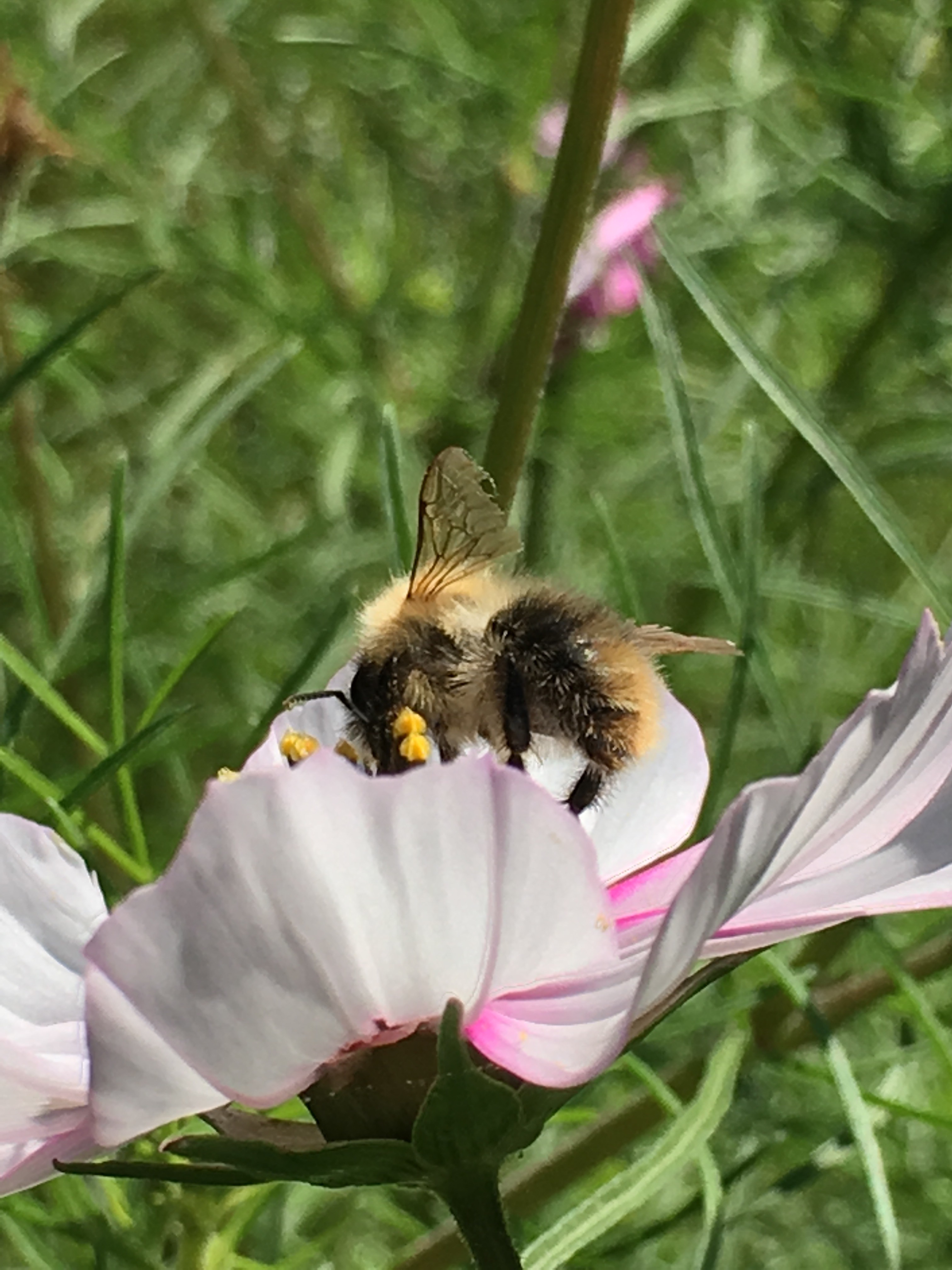
I'm still trying to identify this fluffy bee. Spotted in the glorious wildlife garden at Pensthorpe.

The plant is a purple coneflower, Echinacea purpurea. Recommended on the RHS Perfect for Pollinators list.

Echinacea fact file:

Common name: hedgehog plant, coneflower

Family: Asteraceae

Genus: Echinacea. Clump forming, rhizomatous perennials with simple, pinnately-lobed leaves. Long-stemmed daisy-like flowers with prominent conical centre.

Height: 0.5-1.5m with a spread of 0.1-0.5m There are some low-growing varieties such as Kim's Knee High (60cm). See RHS info link here.

Grows in: Full sun, tolerates some shade.

Aspect: Prefers south facing. Can cope with sheltered or exposed conditions. Any really well-drained soil.

Propagate: From seed. Available from Chiltern Seeds. Or divisions in spring.

Recommended: Elton Knight, Magnus, Ruby Giant, Pallida (drooping petals), White Swan, Green Envy and Green Jewel (lime). I haven't found the orange, yellow and apricot-coloured hybrids to be very long-lived.

Tips: Avoid damp spots for planting and don't heavily mulch over the crown in the winter. Add plenty of grit when planting to improve drainage. The cold weather doesn't seem to bother them, it's the mild, prolonged wet spells that kills them.

Anyone know the name of my bee?

A peek at my week. What I’ve seen- where I’ve been

Took Mum to Norfolk to see East Ruston Old Vicarage. A feast for the eyes. Loved this sunny wild flower meadow.


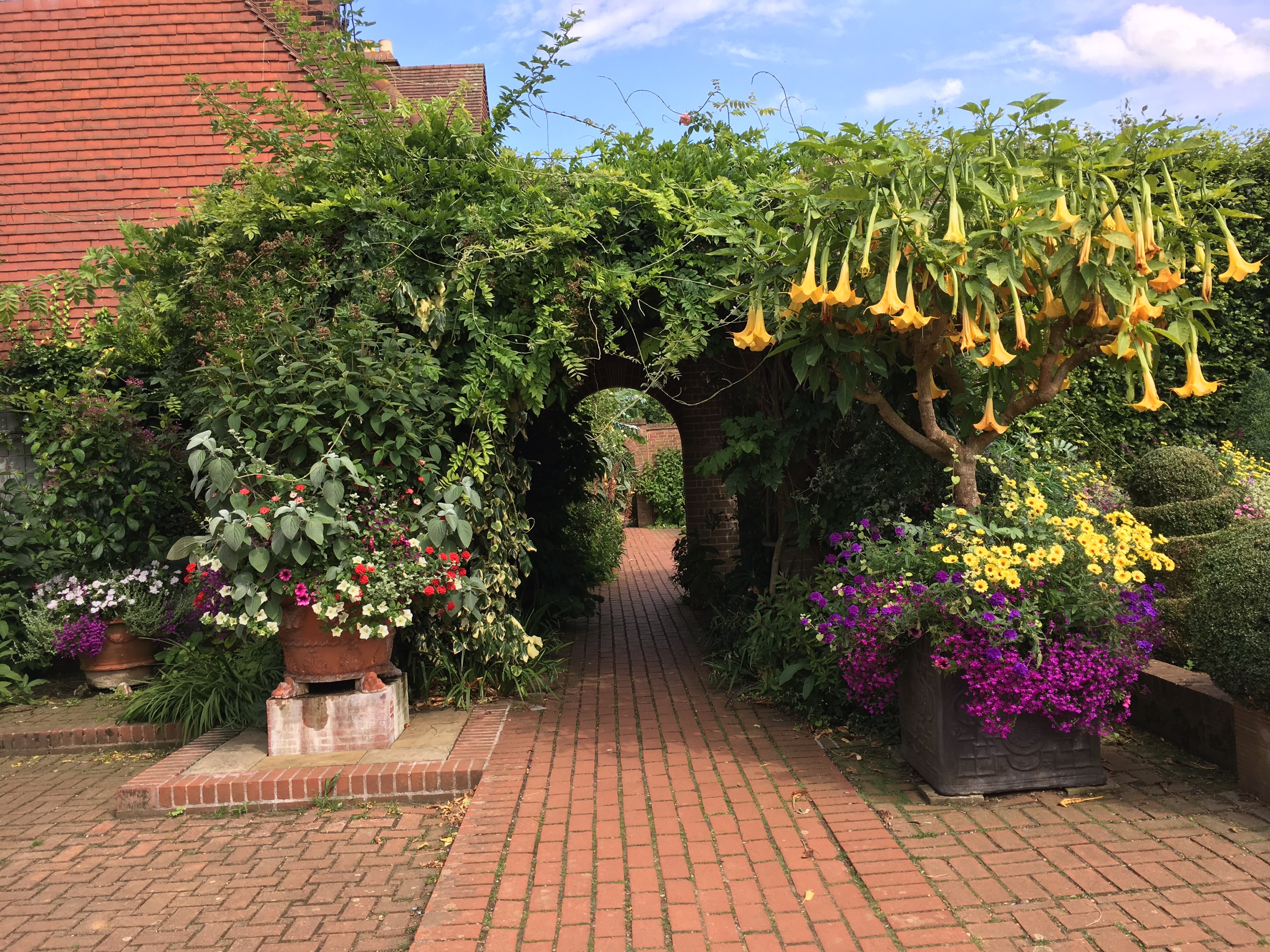
Got lots of container planting inspiration. Much scribbling down of names and taking of photos went on. Just look at the size of that brugmansia! You can see why it is called angel’s trumpets. The scent is out of this world. It’s underplanted with yellow argyranthemum, purple verbena, and lobelia. There’s even a grey-leaved melianthus squeezed in. Such an enticing entrance to an archway. 


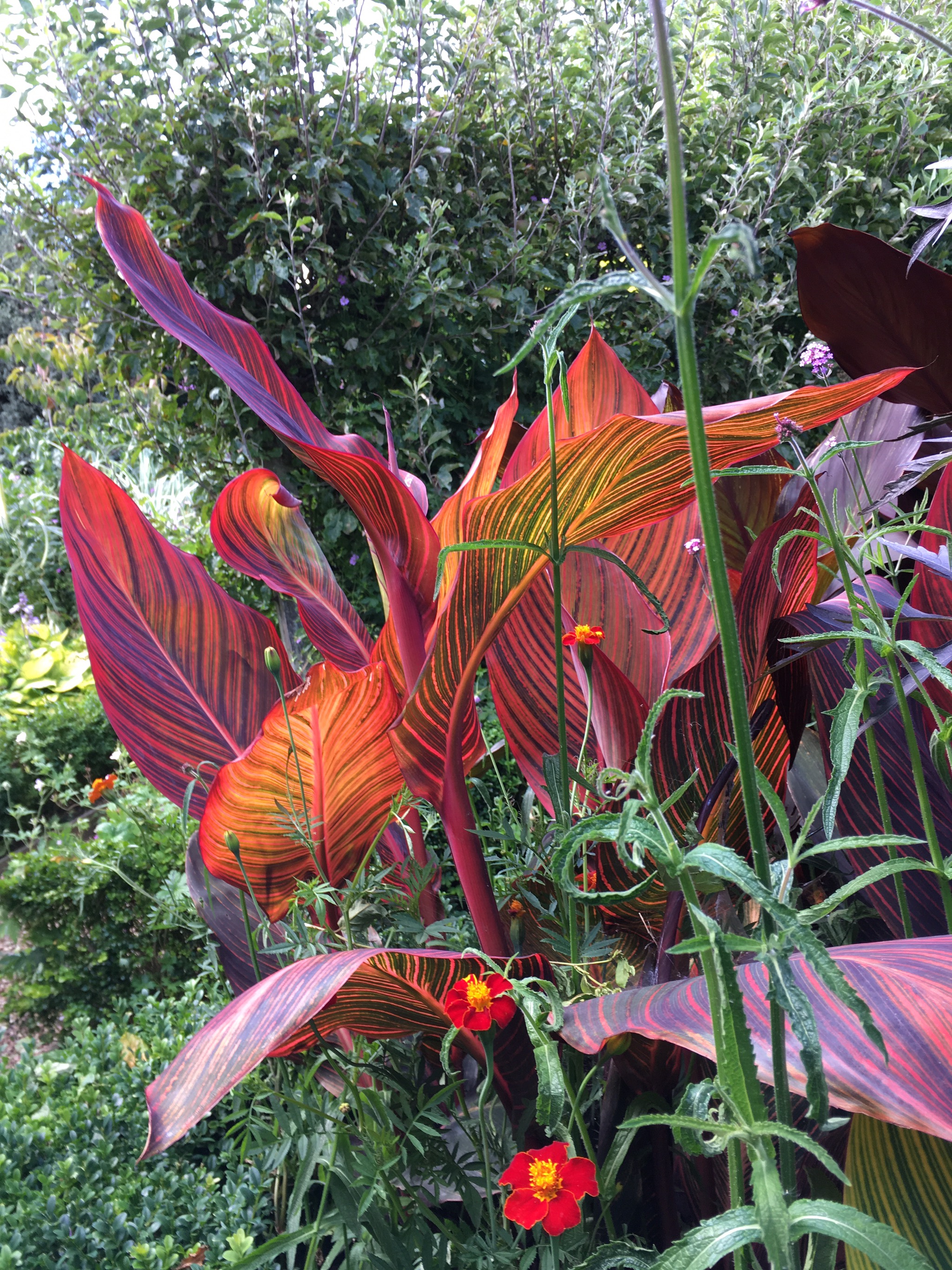
Every second word we used had “exotic” in front of it! Loved this avenue of cannas planted with blue verbena bonariensis and orange tagetes. 

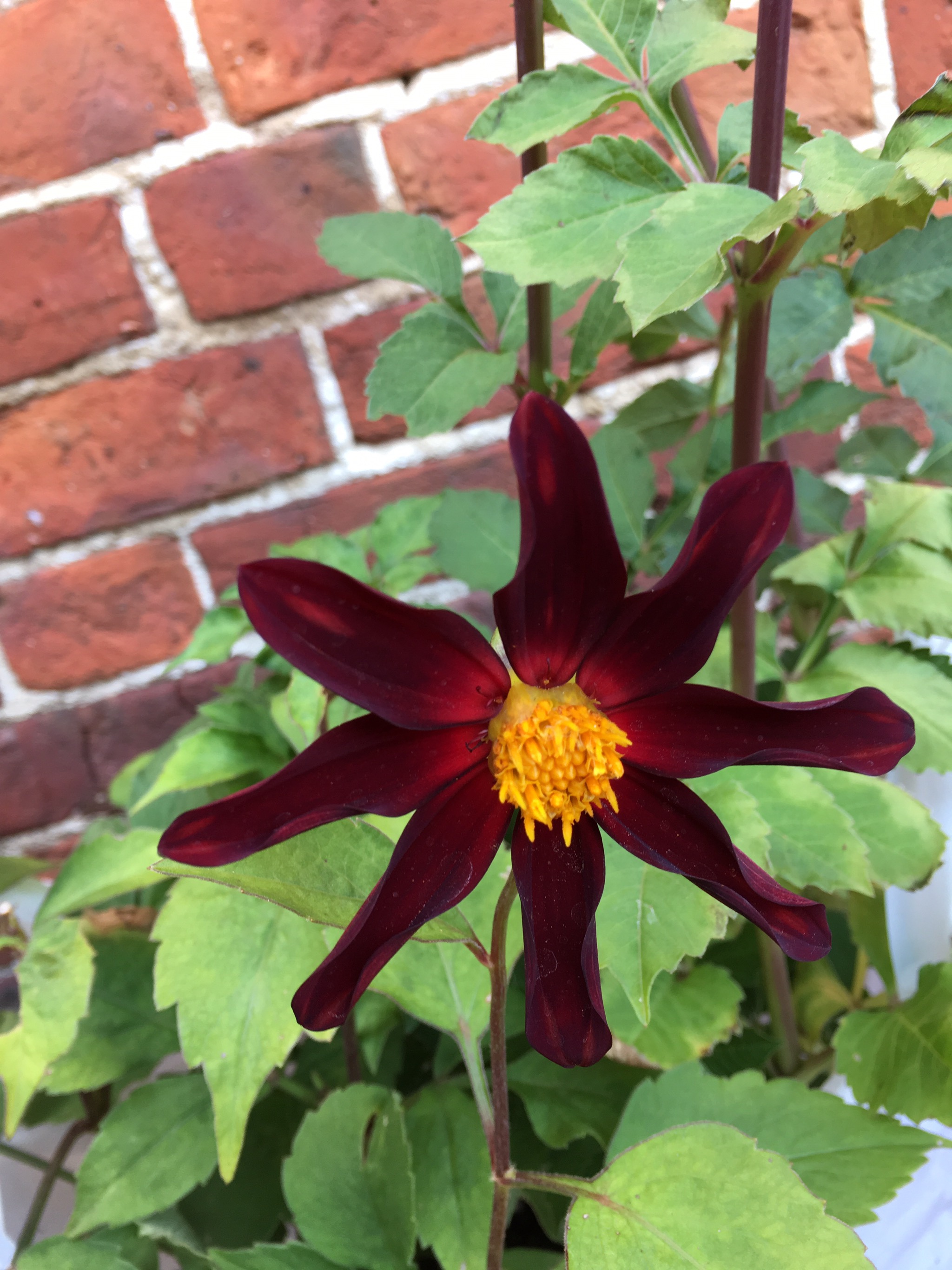
Saw two sumptuous deep red dahlias. Sadly no labels so we don’t know the names. I’m searching books though, so will post an update when I know for certain. 


I grow this tender purple-leaved Aeonium plant in the greenhouse at home. I might set it outdoors for the summer, now I’ve seen how lovely it looks. 

Also have this blue-tinged echeveria in a pot in my greenhouse. And I’ve got this Stewart Garden low planter which looks like stone, but is actually plastic. Much lighter to carry in and out of the greenhouse. 


Should NOT  have looked at the plant sales area. Fell in love with these two dahlias. Can’t wait to get home to plant them in my cut flower patch. 


Here’s a quick look at the barn we stayed in. It gets a five star rating from us. More information to follow. 


Do get in touch and let me know what you have been up to this week. It’s been sunny and hot in Norfolk and I’m expecting to arrive home to a lot of weeding and dead heading on the plot! 

A Peek at my week. What I’ve seen, where I’ve been….

What I’ve Seen:

This glorious sunset from the lane where I live. We can see these trees from our field gate. 


VISITED  some fabulous gardens at Smeeton Westerby near Market Harborough, open in aid of GEMS Charity. GEMS was founded in June 2012 by Sally and Andy Anderson after they had accompanied four close friends on weekly visits to the Osbourne Chemotherapy Suite at Leicester Royal Infirmary.
  Inspired by the hard work and dedication of the nurses, and the courage of their four friends, they set out to raise funds to make patients and supporters more comfortable during their treatment. The  funds have been used to buy specialist treatment chairs and refurbishing the waiting room. 

This is the view from one of the open gardens, Highfields. Green undulating countryside in the distance. 


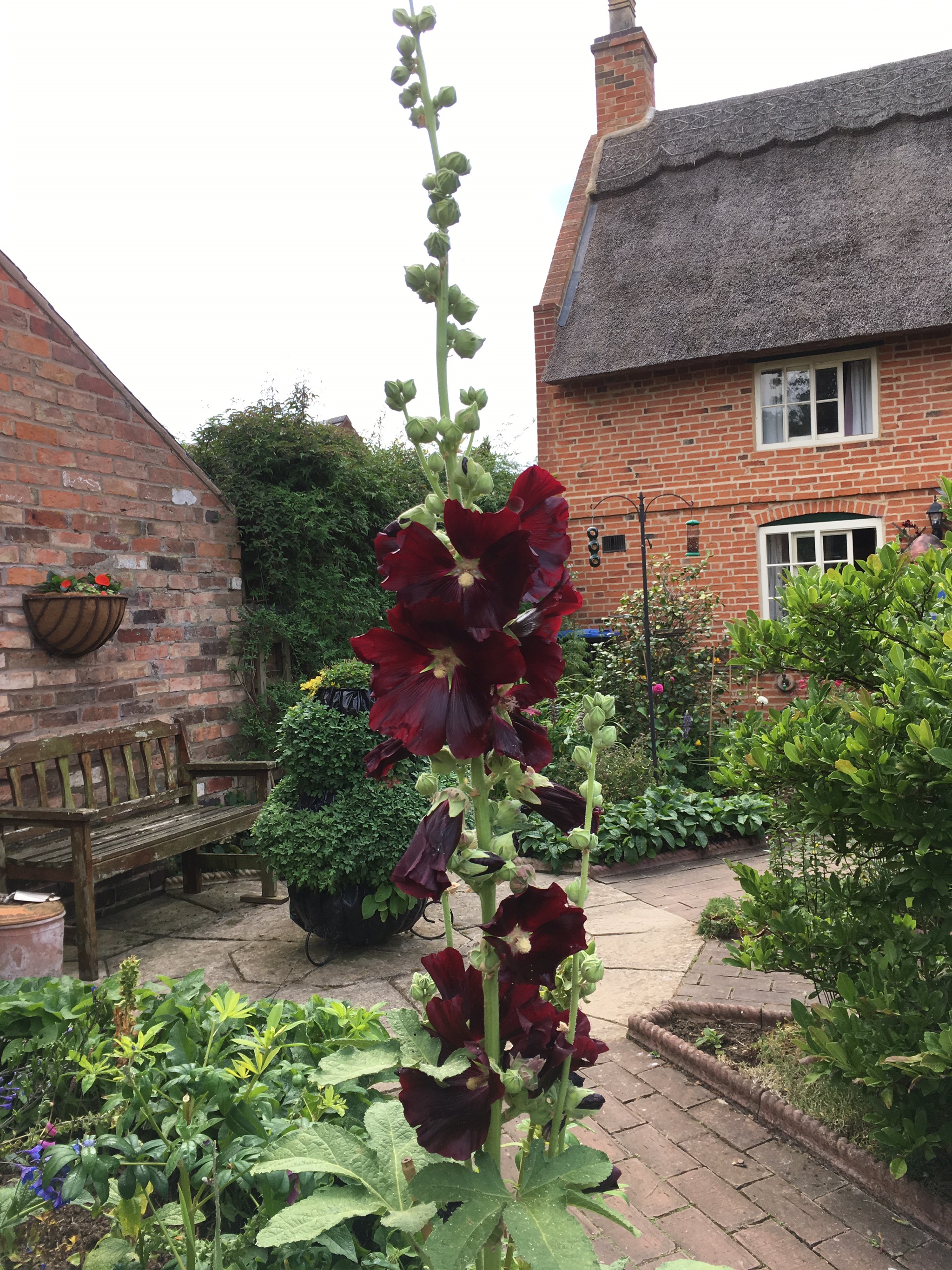
Chocolate box thatched cottage, overlooking the allotments in the village. Full of colourful plants including this wine-coloured hollyhock. 


Mooched around the allotments. Got lots of ideas for companion planting.


Mum and I sat in this pretty summerhouse, enjoying the peaceful scene.


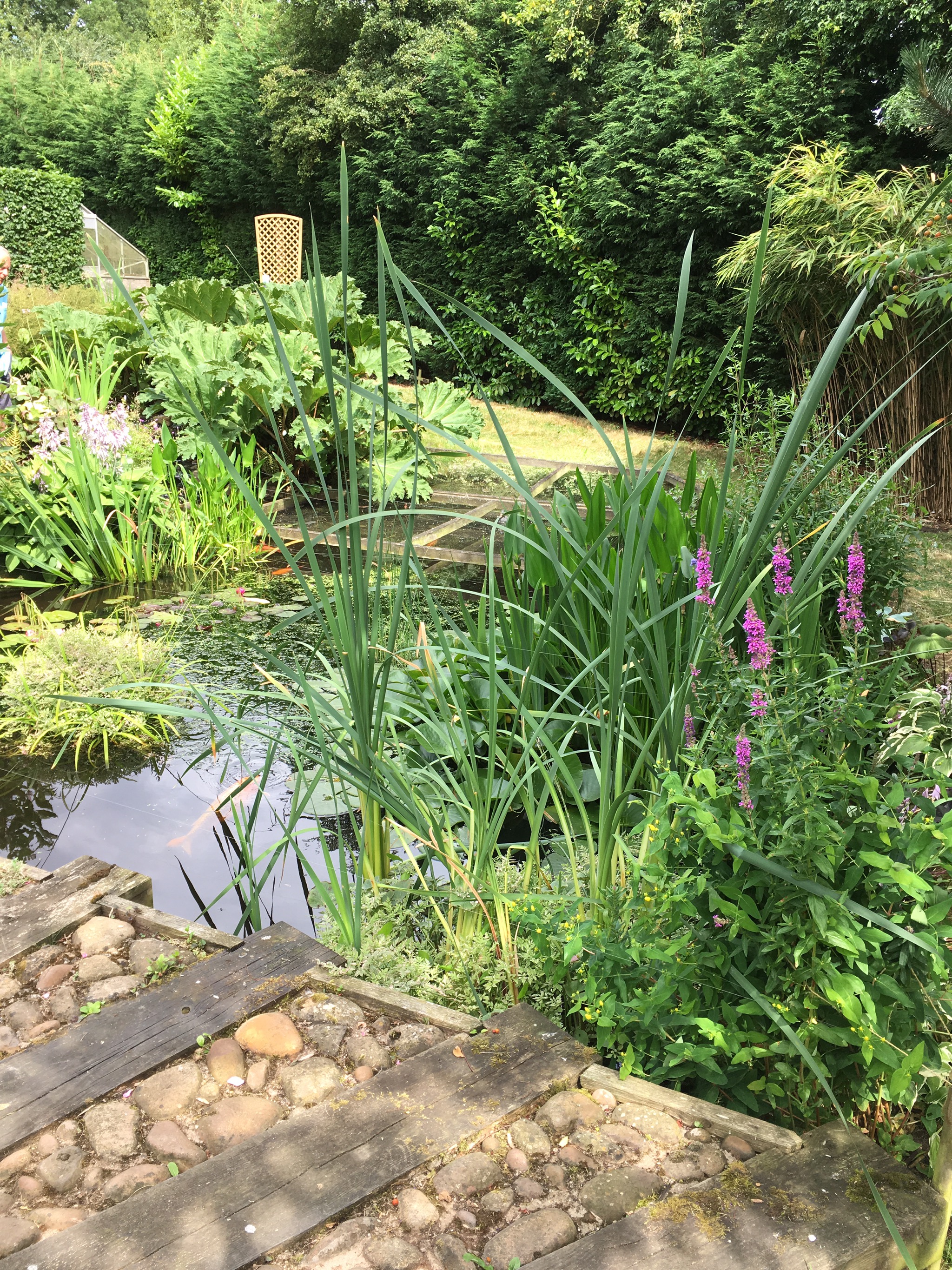
Sat on a bench encircled by water, under a shady tree. Heavenly.


Saw this beautiful late summer-flowering Clematis recta. A floppy, sprawling variety which looks good amongst perennials and wild flowers. Bees love it too.


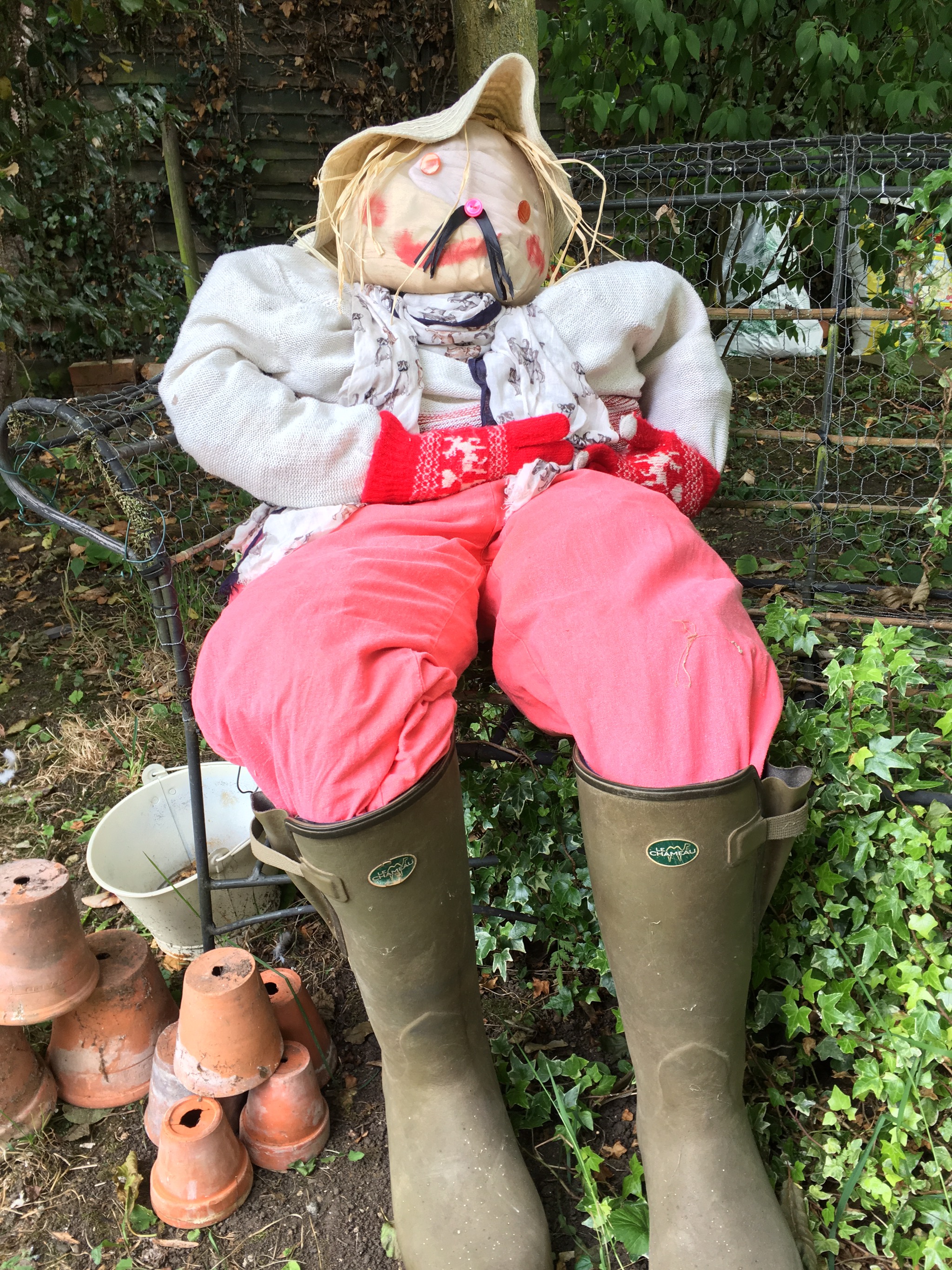
Laughed at this cheerful sight. Even the scarecrows in Smeeton Westerby are posh. This one is wearing Le Chameau welly boots!


Back home to spot two fledgling tawny owls in the wild garden. Made our day to find them in the cherry trees around the horseshoe pond. Watched them until dusk as they bumbled from one branch to another, flexing unfamiliar wings.  

More info on GEMS charity at www.gemscharity.com  

Donate online at virginmoneygiving.com

Email: gemscharity@gmail.com. 0116 279 3814 

Brownfield Metamorphosis at Hampton Court Flower Show

We are all captivated by projects such as the High Line in New York  where  former industrial spaces are transformed into havens for wildlife.
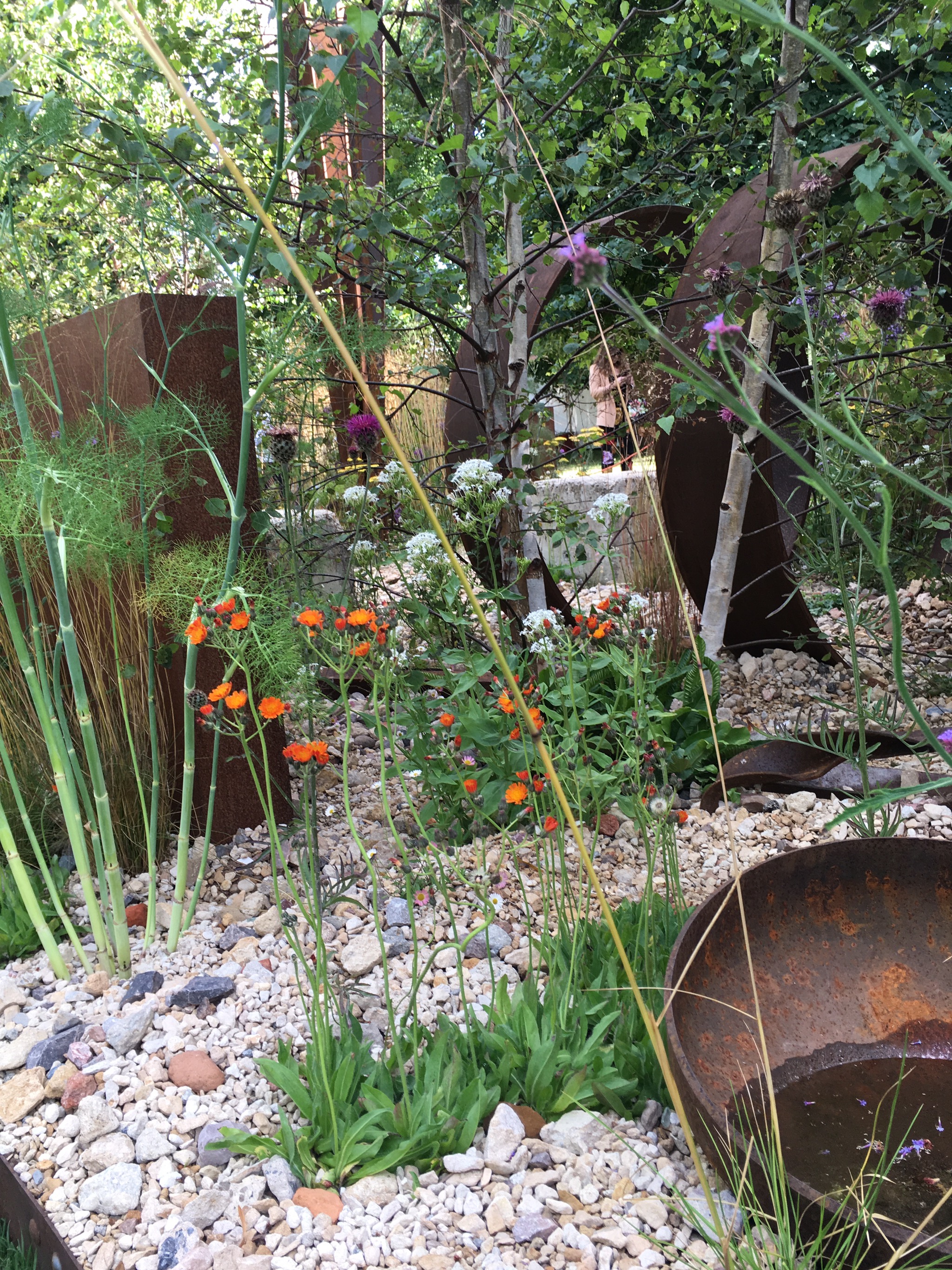
Martyn Wilson’s garden at Hampton Court this year is all about nature taking over. Rubble and decay is replaced by trees and self-seeded plants amongst the rusting monolithic steel structures. 

“Inspiration came from places such as the High Line in New York and the Landschaft Park in Druisburg, Germany, and also the regeneration of the former MG Rover site in Longbridge, Birmingham.  The High Line is an example of a successful project, turning  a derelict brownfield site into a thriving contemporary space. The  public is invited into what was a forbidden and dangerous space.  

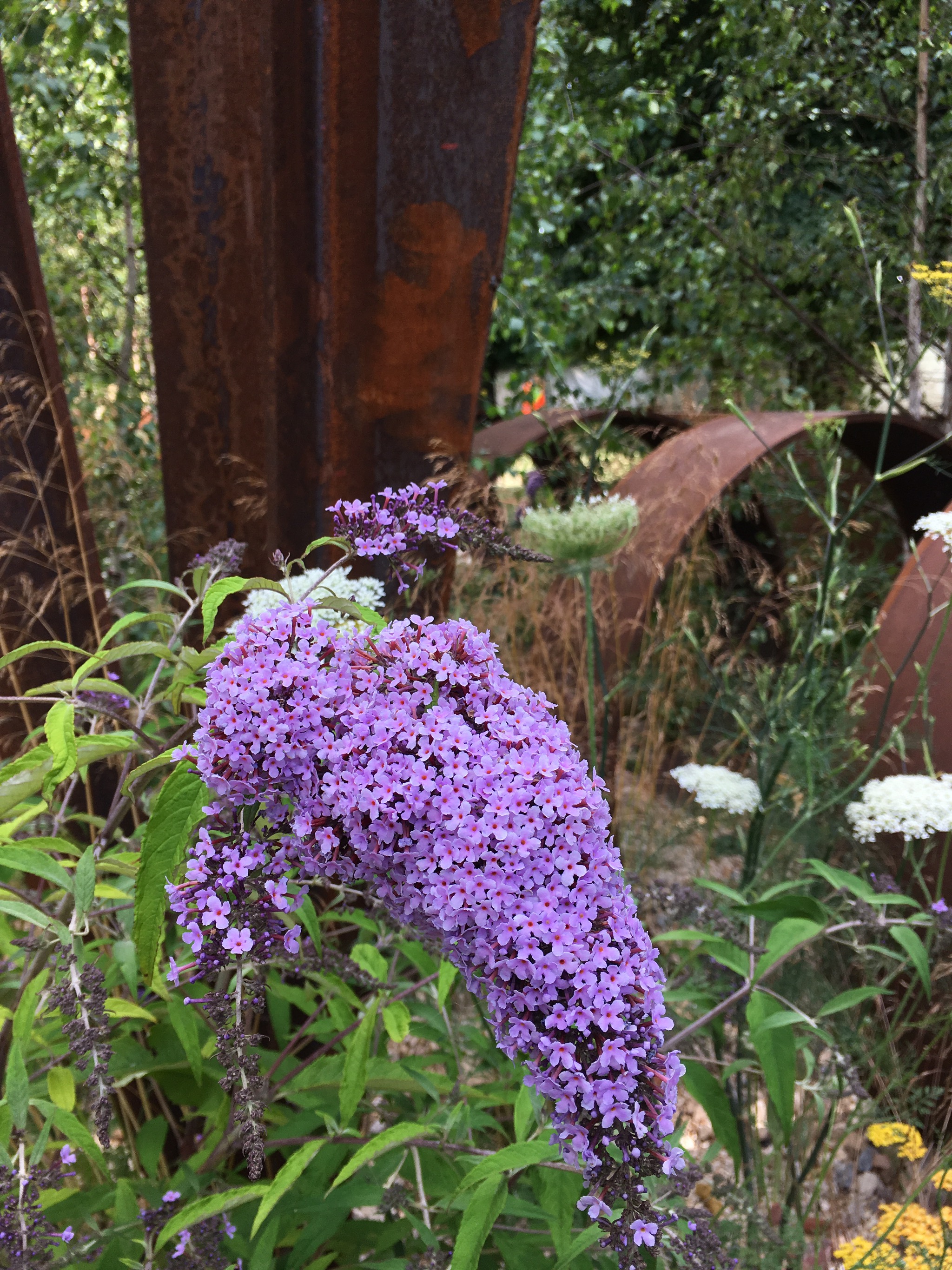
“For the Hampton Court garden, sculpted  steel and  concrete blocks form the structure. I wanted to soften the urban features by introducing grasses, ferns, perennials, self-seeded annuals and shrubs such as buddleja.” 


In amongst the silver birches – multi-stemmed Betula pendula are Buddleja davidii Wisteria Lane and white-stemmed Rubus cockburnianus. The perennial plant list features golden Achillea Walther Funcke, Terracota and softer yellow moonshine. 


Herbs thyme, fennel and origanum  mix in with verbena bonariensis, scabious, leucanthmums and umbellifers.  Grasses such as the quaking grass Briza media mingle with Deschampsia cespitosa and flexuosa and Festuca amethystina. 


Annuals featured in the garden are Dauca carota Dara, Californian poppies, eschscholzia Sun Shades and Red Chief, poppy Peshawar White and albiflora, and poppy rhoeas.


Wild flower orange Hawkweed, Pilosella aurantiaca- also known as fox and cubs- stands out against the crushed concrete scree and monolithic steel structures which were designed by Ledbury-based sculptor Simon Probyn.


Martyn Wilson’s garden shows a new approach to weaving our industrial heritage into new landscapes for the benefit of wildlife and people. He wants us to see the beauty in these spaces-  not just walk on by without a second thought. 

For me, I understood his “beauty in decay and regeneration,” theme. With some show gardens, the ideas behind them can be puzzling to say the least. But this one was obvious. A new approach which celebrates the relics of our past, to create flower-filled spaces for wildlife, insects and people. 


The garden, which was awarded a gold medal, was sponsored by St Modwen Properties PLC and raises awareness for UCARE  urology cancer charity  www.ucare-oxford.org.uk.

Simon Probyn http://www.simonprobyn.co.uk    sculptures

The Pot Company http://www.thepotcompany.com

Easymix http://www.easymixconcrete.com

Smiths of Bletchington http://www.smithsbletchington.co.uk

Louis Masai- London-based artist outdoor murals for the hoardings http://www.louismasai.com

hortus Loci plants http://www.hortusloci.co.uk

Cotswold gardening School http://www.cotswoldgardeningschool.co.uk

Keyscapes Ltd http://www.keyscapes-easigrass.co.uk

If you visited Hampton Court  this year, or watched the television coverage, which gardens caught your eye? Have any of you visited the High Line garden? It’s on my must-visit list. Thank you for reading, and for taking the time to comment. 

#wordlesswednesday- wild geraniums on the march.

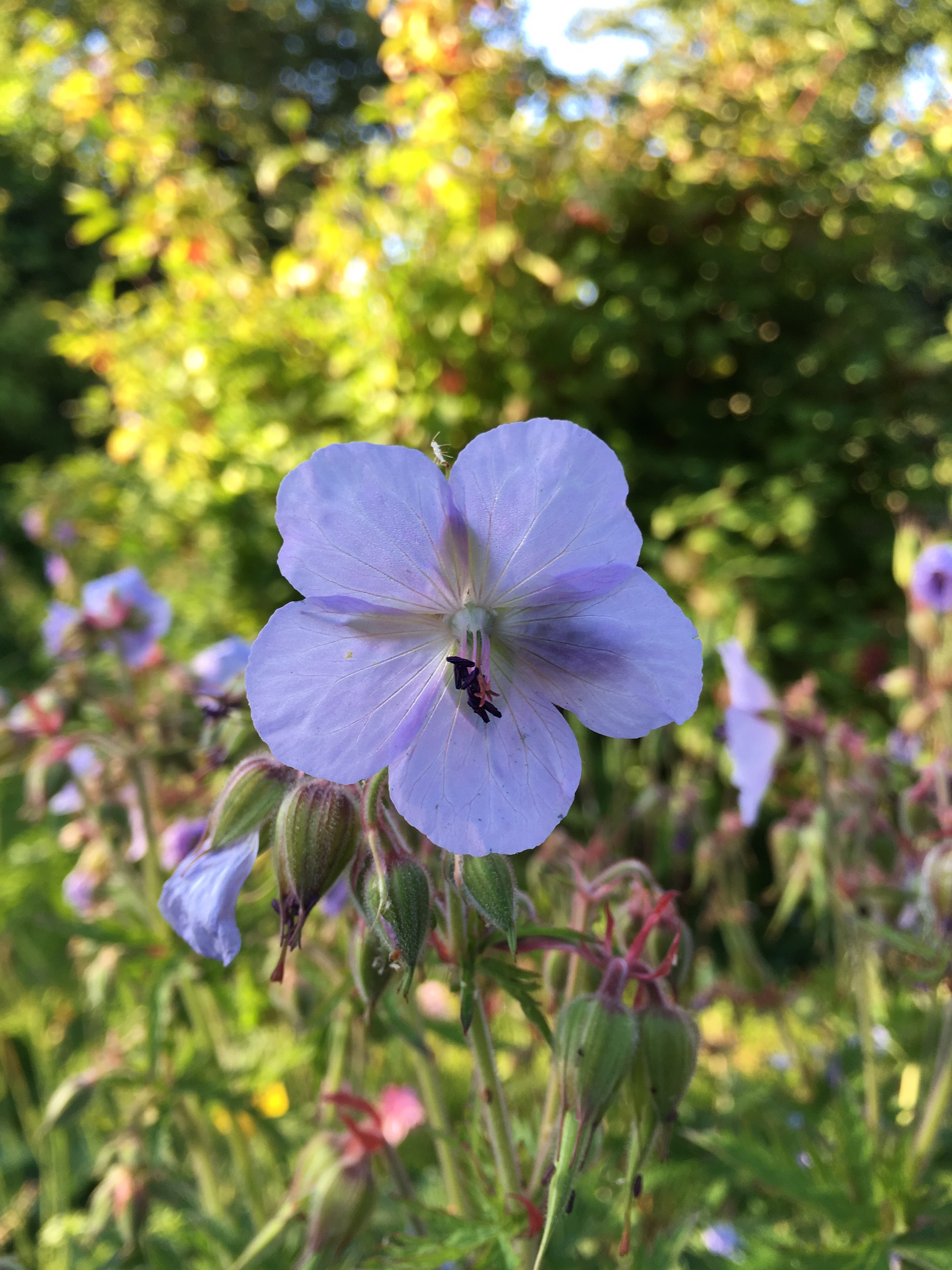
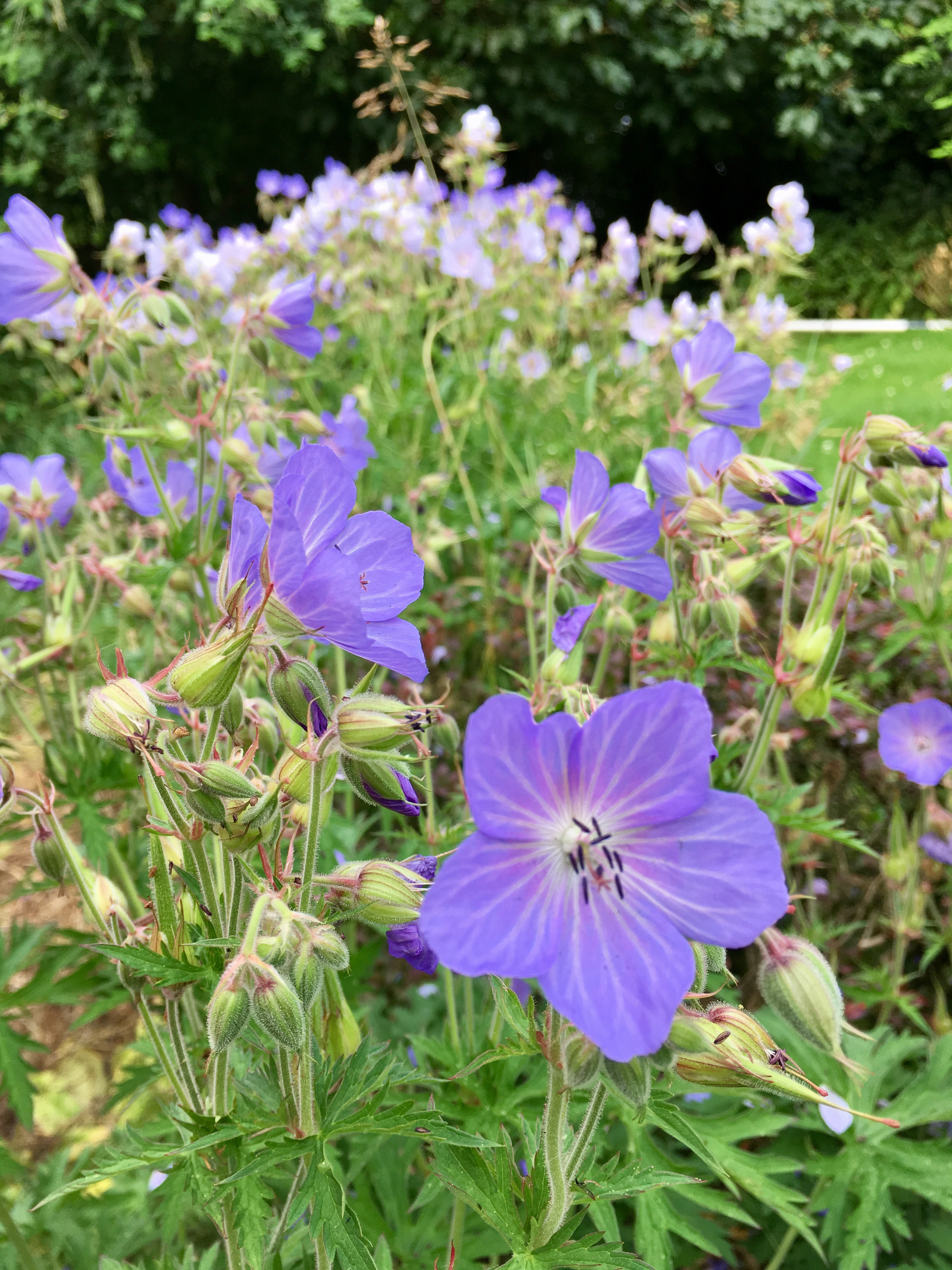
Wild geraniums billow in the long grass on the lane outside my house. Back lit, they look like mini- stained glass windows. This pretty white seedling turned up on its own- probably a hybrid with one of my garden plants. I am thanking the bees for this little beauty. 


The common name, cranesbill, comes from the shape of the seedhead which resembles the long tapering beak of a bird. Meadow cranesbill, or Geranium pratense, comes in a range of colours from white to deep blue. I love the violet-blue veins and the dark plum anthers. The flowers glisten in the sun as if they’ve been coated in sugar.


A favourite of mine is this pale violet flower with delicate silver veins. I ought to be getting on with my work, but I spend more time than I should just gazing at these beauties, comparing their hues and pondering on the wonders of nature.


And luckily for me, these gorgeous plants have drifted in through the front gate and settled in the garden- all along the path to my front door. It’s a wonderful welcome home- and I haven’t done a thing to create it. It’s happened all on its own. Isn’t nature grand. 

I’ve found a beautiful violet form called Beth Chatto  on the RHS website. Click on the highlighted word to find out more. Geraniums can be grown from seed. Flowers appear from June to September and plants grow to about 70cm in sun or slight shade. Perfect for grass meadows- or you can plant in drifts in amongst shrubs and perennials. Highlighted in the RHS Perfect for Pollinators list. Bees and butterflies will certainly thank you for planting geraniums.

In a Vase on Monday….er…Friday 

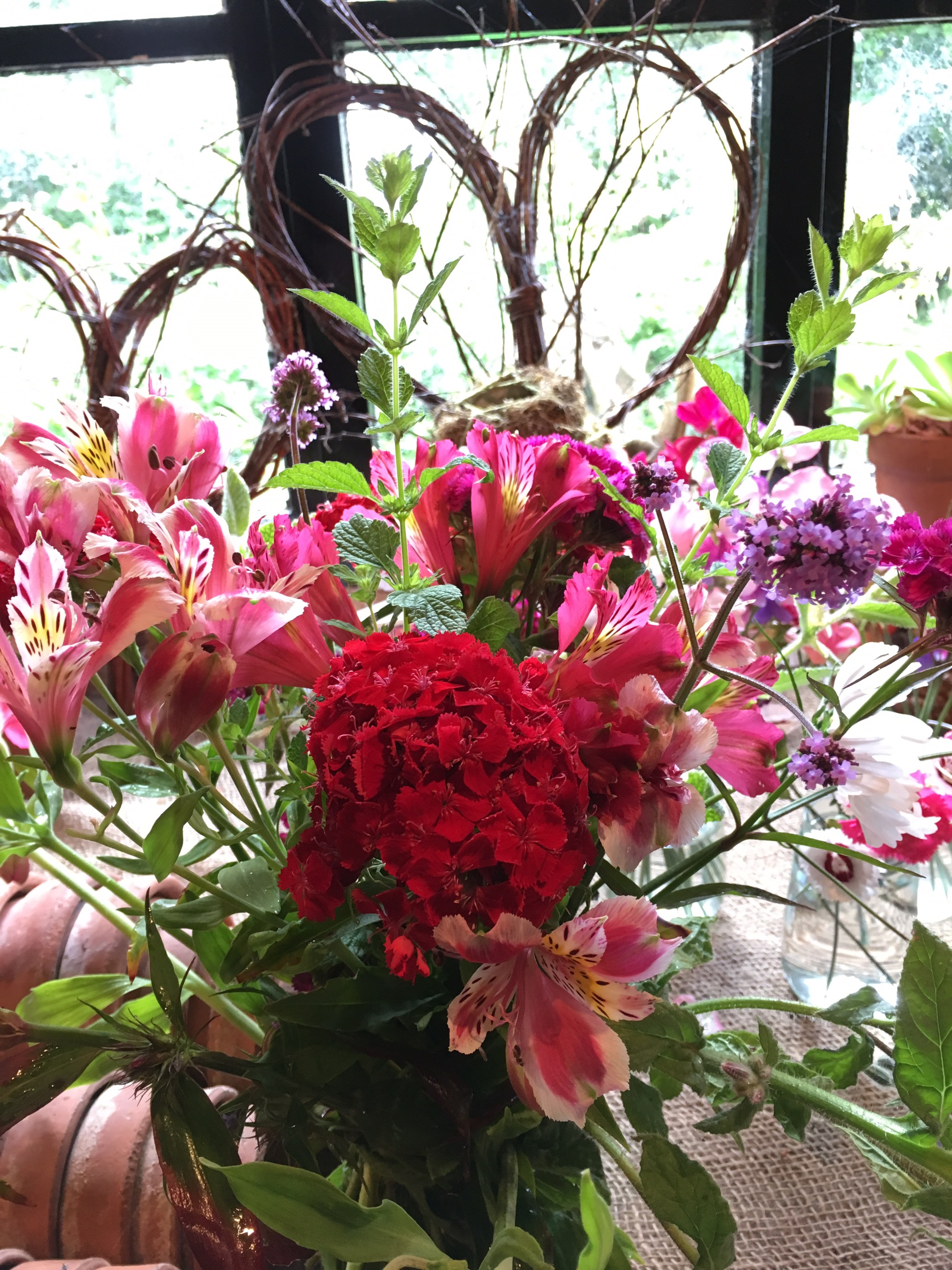
Having tried and failed to upload this from home, I’ve finally given up on our dodgy internet connection and decamped to Mum’s house. We haven’t got fibre optic cables to our village yet. And we live a mile down a single track lane. So there’s really no hope for us. The only up-side to this story is that mum made a cake. And regular readers know how much I love cake! As I’ve said before, I grow and pick flowers for my MIL Joan as a way of keeping her connected with me and my garden- showing her what’s in flower 52 weeks of the year. But this time I also picked a bouquet for a friend who is having an operation today. Hopefully the sweet williams, alstroemeria and first sweet peas of the season will brighten her day. Flowers do have the power to calm and reassure. 


Pink alstroemeria -from Viv Marsh Postal Plants, flowers virtually all year round in my unheated poly tunnel. I grow them in 60cm pots, as the roots have a reputation for spreading. Growing them under cover protects them from the weather and also from snail and slug damage. Flowers last  for about three weeks in a vase. Easy to grow, repeat flowering, and long lasting. They are no trouble at all. Please excuse the state of my poly tunnel, which needs a good clean. I’ve bought some special detergent from LBS Horticulture, which apparently just needs spraying on. Will report back when I’ve tried it. The one problem with poly tunnels is the algae. It’s not like having glass which can easily be washed down. And it builds up on the inside and outside surfaces. Still, it was cheap to put up and gives me a dry working area in the winter. 

I planted these sweet williams last summer. They arrived in a parcel as a twitter plant swop. I love free plants, and always have loads of my own to spare. I’m quite often posting margarine containers full of little seedlings all around the country. You can see my rather rickety hazel A-frame structure for sweet peas in the background. I just hope it doesn’t blow over in a storm. 

I love the jewel-like colours of these sweet williams. They last for ages in a vase and produce large quantities of flower in a small space. I’ve just sown some more to plant out in the autumn. The seeds germinated in two days in all the hot weather we’ve been having, and there are hundreds of little seedlings to prick out.

My sweet peas have just started flowering. I had a disaster with the autumn-sown seed. A mouse got in the propagator and snaffled the lot in one night. There was just a sea of snapped off stems. Not to be deterred, I planted the stems as if they were cuttings, and amazingly they carried on growing. Another tip if you are growing sweet peas is to use the pinched-out tips as cuttings. They will produce plants that will flower right up until November. I discovered this by accident when I left the pinched-out tips on a tray of moist compost and they rooted down and planted themselves.  Aren’t plants just amazing.

I’m growing High Scent, a good reliable sweet pea variety- and it really does have a wonderful old fashioned scent. It was raised by Keith Hammett and introduced in 2003. It has a creamy  ruffled flower with a delicate lilac edge. I’m also growing Albutt Blue, a very pretty pale blue flower with a deeper blue picotee rim.  It was raised by Harvey Albutt and introduced by Eagle Seeds in 1999. It’s been a favourite of mine ever since. I buy seed from Easton Walled Gardens, Roger Parsons and Eagles. If you don’t have  facilities to grow your own, you can buy mail order plants in the spring from Easton. Also, Mum and I spotted some really great sweet pea plants at Coton Manor garden nursery in Northampton in May, for just a few pounds each.  It’s good to have a back up plan. 

I always put lemon balm and mint in my cut flower bouquets. It goes so well with the sweet peas and roses. And for my friend, who’s spending the day in hospital, it will be a lovely scent to come home to. 

My potting shed, where I’m sowing seeds and making cut flower posies, overlooks a horseshoe pond and tall willows. On the other side of the trees is this view of surrounding countryside. I’ve cut holes in the hedge to make viewing points through. And all my hedgerows are woven with scented roses and honeysuckle. It’s a peaceful place….just don’t look at the weeds! 

Are you growing any cut flowers for friends and family this year? I’d love to hear  what’s  growing in your garden. And thanks, as always, to Cathy at https://ramblinginthegarden.wordpress.com  for hosting In a Vase on Monday.  You can join in even if you have jamjars like me.  And if anyone knows any miracle cures for low internet speeds in the countryside…..please, please let me know! Sigh 🙂 x 

Wordlesswednesday- will it be Britain’s hottest June day for 176 years?

 Sunset view from the garden. Phew 30 degrees here for the last few days. Predicted temperature is 31 today. Grace cat flattens herself to the cool stone path. Hedgehogs drinking from saucers of water. Bats feasting on insects over the pond. Baby frogs swarming in the long grass of the orchard. It’s too hot for me. 

Behind the scenes tour at Gardeners’ World Live Show

It’s always a treat to get a behind-the-scenes tour. This week I was lucky enough to be invited to the preview of Gardeners’ World Live. So I found myself wandering  around the show gardens, instead of pressed up against the boundary ropes and fences surrounding them.  Here’s a few highlights from my special day out. 

My favourite garden was a wildflower haven with climbing roses galore. Claudia de Yong won gold and best show garden for her Romance in the Ruins 


Castles,with their history and romance, inspired the design. I loved the ruins with trickling waterfall, wild roses, foxgloves and ferns. The pink spires at the base of the waterfall are purple loosestrife, Lythrum salicaria.


A rustic pergola was swathed in Albertine and Mortimer Sackler roses. Walking through the garden, the scent was so delicious on a hot sunny day. Salvia Love and Wishes is the focal point plant in the old stone urn in the centre. CED Stone supplied the Golden Amber pathway material- a self-compacting gravel. It makes a beautiful and affordable surface for cut flower gardens and veg plots.


One stand-out feature for me was the white Desdemona rose. Bred by David Austin, it is exquisitely beautiful with peachy pink buds opening to pure white blooms. It has a strong perfume and flowers until November. Grows to about 4ft and is disease resistant, plus  the flowers cope with rain. The designer has used it as a low hedge underplanted with Nepeta Six Hills Giant. 


I spotted vetches, yellow rattle, clover and crested dog’s tail  grass in the wild flower turf. The focal point tree is  Malus Rubra- brilliant for spring blossom, autumn crab apples, and attractive plum-coloured leaves all summer. The multi-stem tree used in the garden looks like a river birch, with peeling bark blending in with the colour of the ruins alongside. 


Winning my prize for the garden I’d most want to roll up and take home – and providing the garden bench I would most like to recline on,  a show garden with many elements worth “borrowing.” A triumph of great design and plant knowledge.


Designer: Claudia de Yong Designs,

Contractors: Twigs Landscapes Design, Big Fish Landscapes

Sponsor: Wyevale Garden Centres

Supporters: Parkers Building Supplies,CED Stone, Home and Garden Ironworks, Woody Fox Willow, Hilliers, Rolawn.

I hope you’ve enjoyed my behind-the-scenes tour. If you are going to Gardeners’ World Live, let me know which gardens you  love this year, and which is your favourite feature. There’s plenty to see…. and I haven’t even mentioned the floral marquee. That’s a wonderful place worthy of a blog post all on its own. More to follow!  

Last chance to visit bluebell woods…..

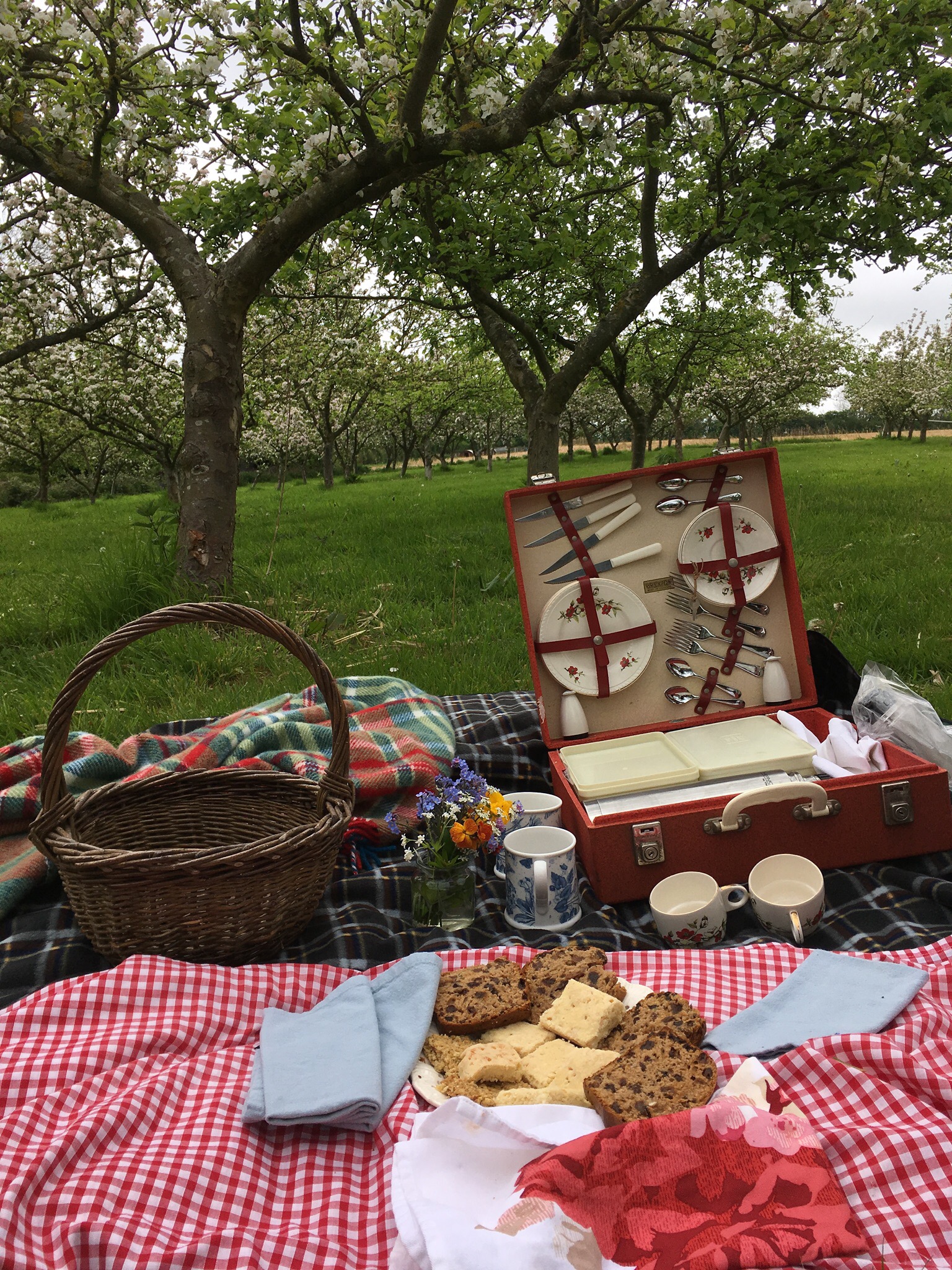
Cold weather has held back the bluebells this year. They are still looking glorious. Last chance to visit Coton Manor tomorrow.  Here’s some photos from our visit today. As usual, we started with a picnic. Spreading our rugs under the branches of some apple trees, we  tucked into home-made bread and warming soup, followed by an array of cakes and shortbread. A great start to our garden visit.


Our little haven can be found at the far end of the car park. Funnily enough, we’d never noticed the orchard before. But full of blossom today, we could hardly miss it. Next we set out to visit the bluebells.

img_3383-1
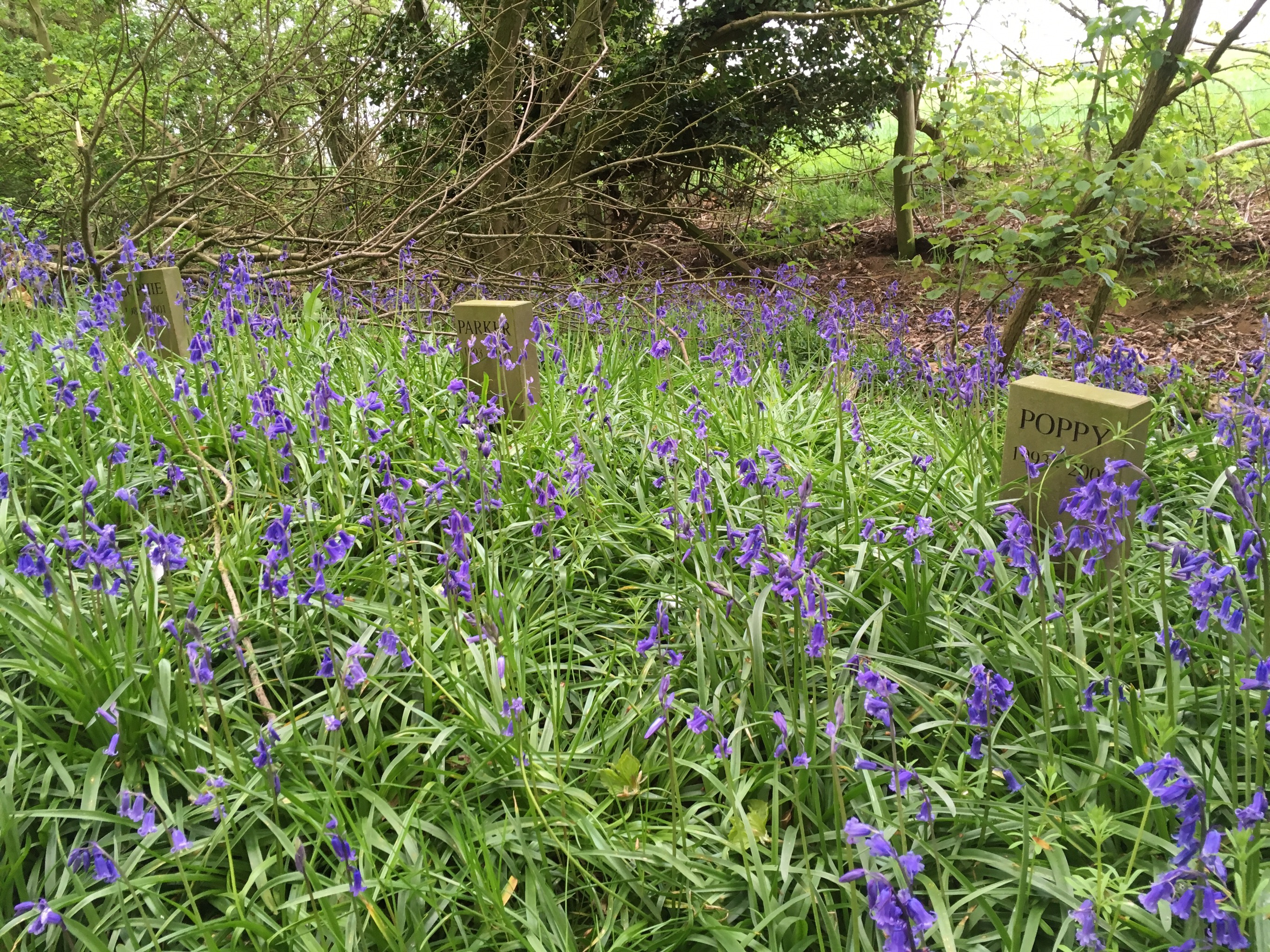
As you can see, the bluebells are at their peak of perfection. It’s a sight I’ll hold in my memory until next spring. That blue, with the unfurling lime green leaves, and the honey scent. Just glorious!

We found the dogs’ graves. What a peaceful resting place.


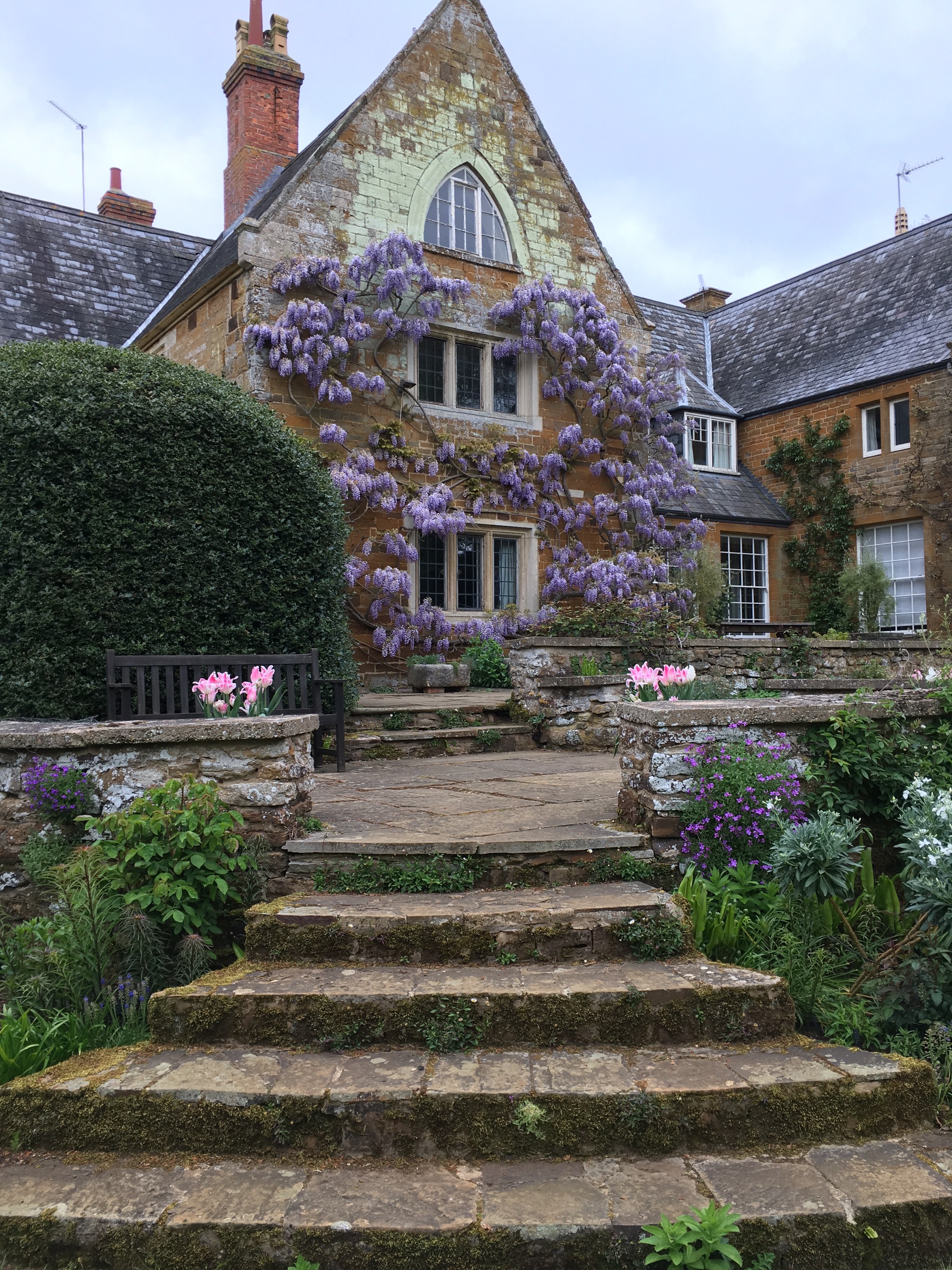
The gardens always provide breathtaking planting, deserving of a separate post. But for now, here’s a taster of what we found.  Luckily the wisteria escaped any damage from the recent hard frosts.


I love this view from the terrace steps.

img_3436
I wrote about visits to bluebell woods here mentioning Coton Manor  and Hodsock Priory .  For more information click on the highlighted words. Also look at the Woodland Trust website for bluebell woods all over the country.  Be quick to visit. They are at their best right now.

#wordlesswednesday 

First bee of the year. Glad I planted those crocus bulbs. Camera phone photo. 

Have you spotted any bees in your garden yet? I saw a beautiful healthy frog by the pond today. I was so pleased as last year a number of them were diseased. Hopefully there will be frogspawn soon. 

#wordlesswednesday 

After the storm- there’s always hope. 


From my garden gate I can see this willow. The tree had five massive branches, all toppled by high winds last year. Now there’s new shoots from the fallen branches. Willows were seen as trees of celebration in Biblical times. At church,when I was little, I remember willow branches being used instead of palms to celebrate Palm Sunday. 

Willows are often associated with sadness and mourning. As a young teenager  I read Shakespeare’s Hamlet at school and  can vividly recall the scene where  Ophelia drowns  beside a willow tree. A sad and lonely vision that stayed with me for some time. I was always too inclined to dwell on injustice and wrongs. But then, at that time, I still thought I had the power to change the world. On my bedroom wall I had a poster of  the famous 1850s Ophelia by Millais. 

Instead of sadness, I associate willows with catkins and the first signs of spring. Today is the Meteorological first day of spring. But in the Old Farmer’s Almanac spring doesn’t start until March 20th. I will be cutting back our willows today to make plant supports and arches. And the grey catkins will be a happy addition to my flower arrangements. 

#WordlessWednesday – finding seed heads in the garden. 

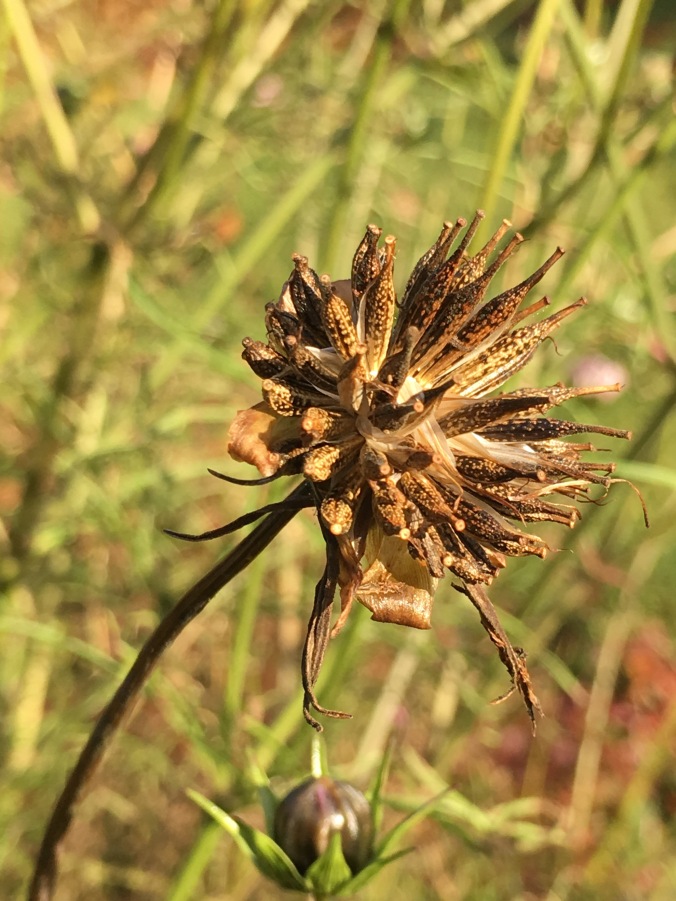
I don’t cut back plants until spring. Any creature requiring a duvet of leaves, or a seed head sojourn, is welcome in my garden.  Caught in sunlight, seed heads provide a heart-sing moment in January. Just when we all need some cheer.


Gaillardia seed heads. Sunny all summer, a joy all winter. I love the mini five “petal” flowers in the centre of the seed head. A flower within a flower.


What are your favourite seed heads at the moment?

Wordless Wednesday – 7th December 2016 -a line of oak trees.

View from my garden gate.   A flurry of  leaves fall like snow,  in golden bands across the lane. Such a picture of beauty. A temporary -catch-it-now moment in time. Before the season moves on.

Wordless Wednesday 23rd November 

Cosmos seeds. Now safely gathered in.

And after Christmas I will start sowing again, for a summer delight of bees and blooms.

My cut-flower-patch kit cost me about £20 from Ben at Higgledy Garden, mail order. Great value, to get me started. I shall re use my saved seeds, but I’m looking on the website to add new varieties for next year. What are you planning to grow in 2017? 

The Tuesday View- 25th October 

Autumn has always been my favourite season. Nature seems to gather up its glories for one last burst of beauty.  


The beech trees make a golden backdrop for the wedding cake tree – Cornus Controversa Variegata. Cotinus Grace is  starting to turn from chocolate to a glowing red.


Left to right, the wedding cake tree , prunus Kojo no Mai, and Parrotia Persica. Backbone shrubs that stand out in spring and autumn. Summer colour is woven through these plants.


Looking like it’s been varnished – Parrotia is also called the Persian ironwood tree. Its bark is a  beautiful mottled  iron grey.


Summerhouse in the mist. The field-side border contains eucalyptus, magnolia, flower carpet rose, and two matching crataegus prunifolia mop -headed trees  framing  the view. The 1920s summerhouse is on a turntable and facing the ploughed field today. Beyond the summerhouse is a small copse of trees where  a Spotted woodpecker nested this summer. 

My ancestors would have used different words for the seasons. 

Until the 1500s, autumn was called harvest. The word comes from the old Norse word for haust- which means to gather or pluck. 

The French gave us automne. And the Romans gave us the Latin name autumnus. But “autumn”didn’t come into common English usage until the 18th century.  

Cathy at Words and Herbs  Hosts the Tuesday View. Go along and see what’s happening in her garden and feel free to join in with photos of your garden too. 

Wordless Wednesday. The hedgerow 5th October. 


Clematis against an October blue sky.

Tree Following, August 2016

We live on a windswept ridge. On the plus side, there are views in all directions- rolling fields of corn, oats, and barley. On the minus side, in the winter we are battered by 70 mph winds. Every winter we lose one or two mature trees. Last winter, we lost a majestic willow with five stately branches. Now reduced to a stump.The  mature oak trees always suffer some damage. We anxiously check them after a storm. 

Step over our garden fence, and take 20 paces and you will come to my chosen tree following oak. 

It’s the tree in the centre of the picture.


The oak is about 200 years old and marks the start of a small wood where buzzards nest each summer. 

One of the branches, snapped in a storm, has been left dangling. We wonder what lives in the holes and crevices. 

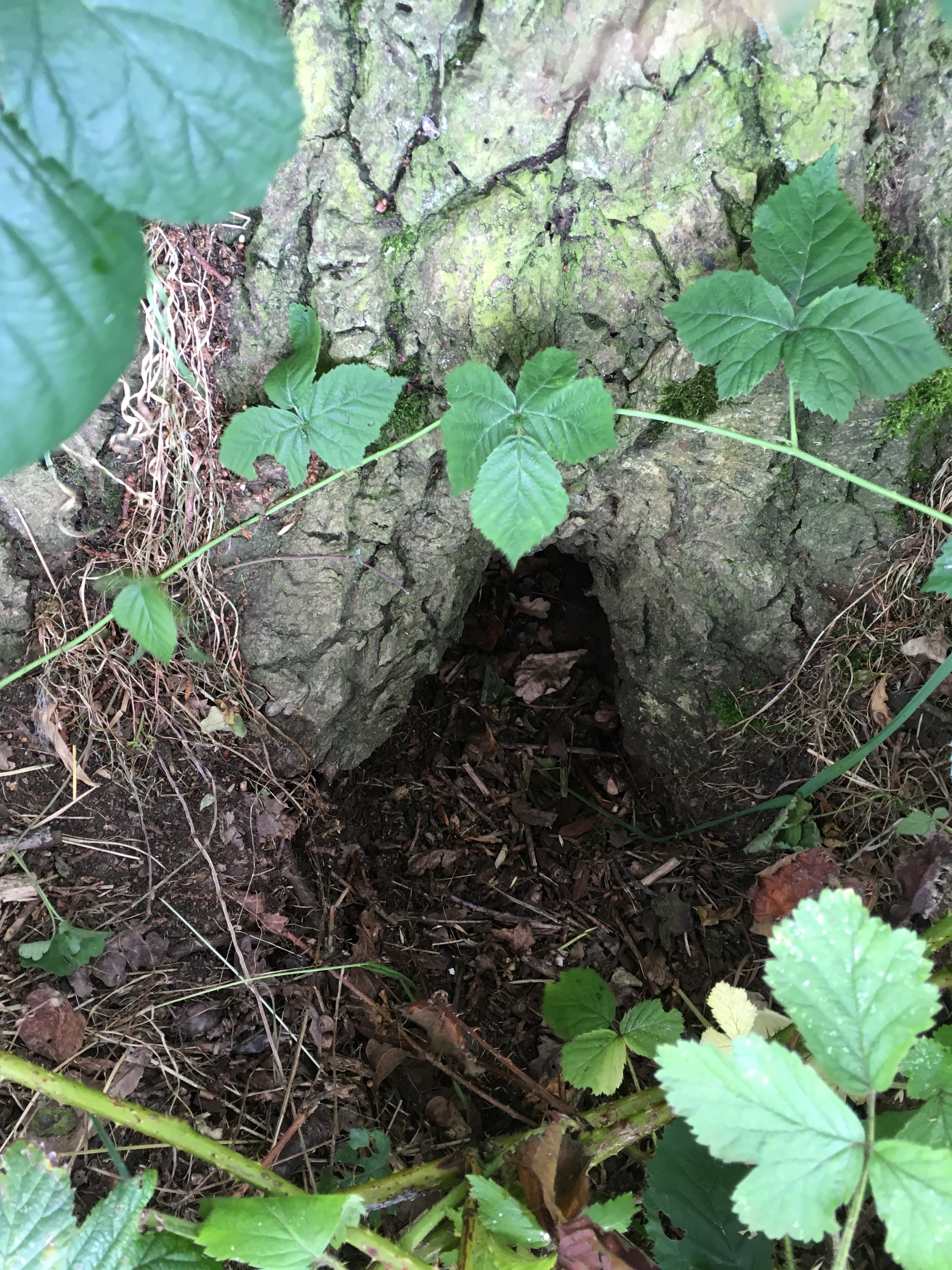
Something must live in there. We see footprints in the winter. 


It’s a favourite spot for a picnic in summer. The wide-spreading canopy gives much welcome shade. 

Here’s Arnie enjoying the cool shade during the  recent heatwave. 


And it’s not just us enjoying the shade. We watched these beauties being born and have enjoyed seeing  them grow. It’s a rare thing to see calves reared by their mothers these days. We get a lot of pleasure from seeing them caper around the fields. They seem to be as interested in us as we are in them. They line up along the hedge to watch me working on my vegetable plot.


Lammas Day is August 1st and our oak trees have put on the second flush of growth. Lammas leaves look so fresh  and green. It’s a reminder that the season is moving on.

We sometimes see a woodpecker on the trunk. The bark must contain a good supply of insects and grubs.


A beautifully scented dog rose wreaths around the sunny side of the tree. There will be plenty of rose hips this year. 


 Thank you  to https://squirrelbasket.wordpress.com/tree-following for hosting this meme. I was inspired to join in by Alison at The Blackberry Garden http://blackberrygarden.co.uk and Mike at Flighty’s Plot https:// flightplot.wordpress.com . Thanks for reading. 

Wordless Wednesday

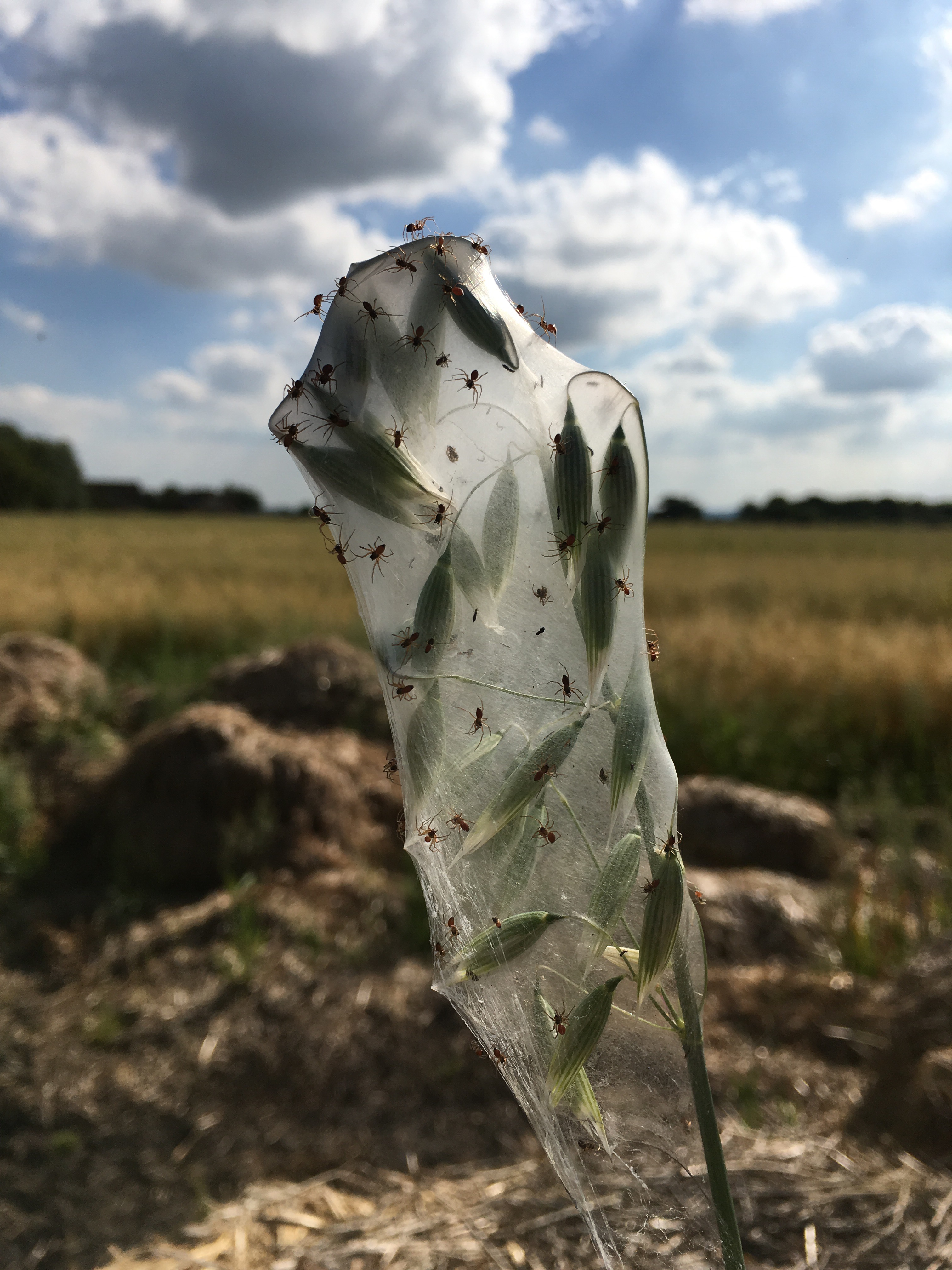
Hatchlings. 

I watched the spider weave this web. Watched the tiny dots hatch into tiny spiders. And then today, they emerged. It’s been a daily pilgrimage for me to check on the nest. I’m so pleased the web survived the farm tractors, dog walkers, stormy weather. I whispered good wishes to the babies as they drifted on the wind. And pondered on the things that make me happy. They are the simple pleasures in life. The things that money can’t buy. 

We made a pond

We made a pond.Twice . We hired a man with a JCB. He was very enthusiastic. We marked out the site, discussed the size and shape, waved our arms around windmill fashion – and then made a big mistake – we went away for a few days. When we returned, we found a huge straight-sided hole in the ground and massive rockery.

When we recovered from that financial and confidence sapping disaster -we hired another man with a JCB. This time we stayed put. My other half literally guided the bucket into position. I watched- ready to call an ambulance.

We bought a pond liner when we should have spent the money on carpets. We lived for some time with concrete floors.

img_3723

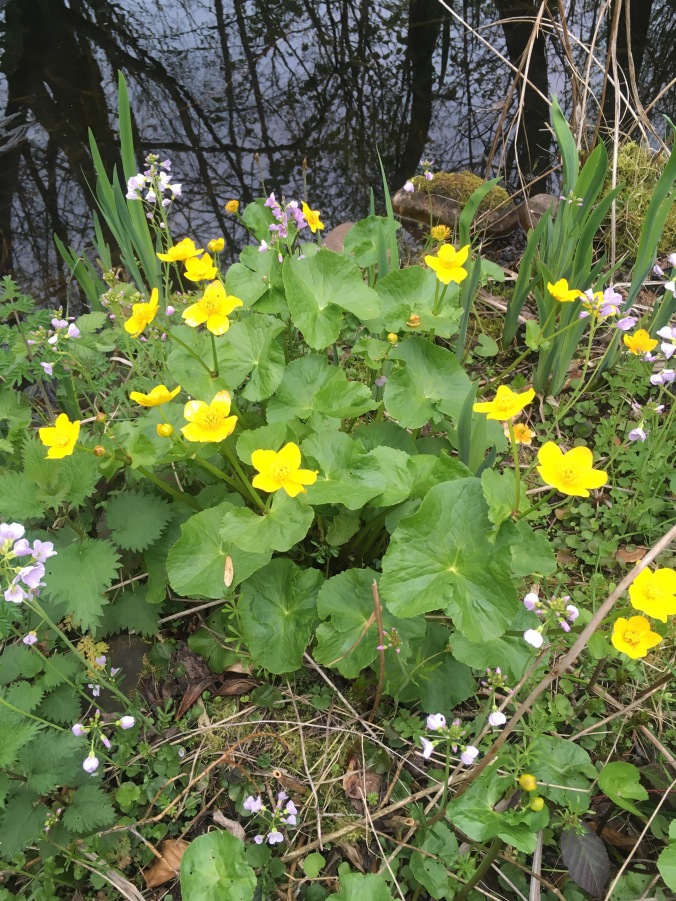
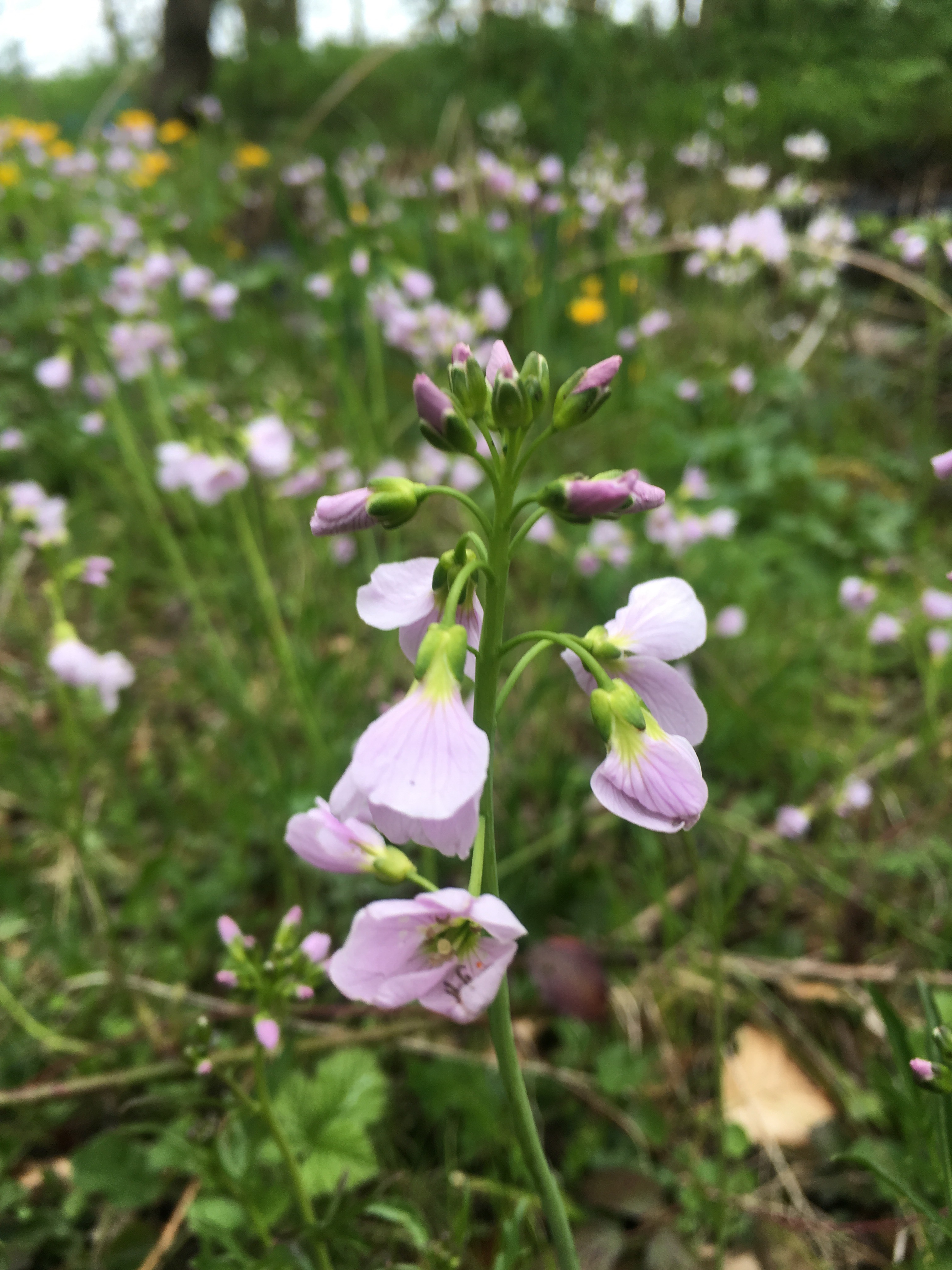
Cardamine pratensis or Lady’s Smock grows happily in the boggy margins.

S oxslips grow along the sloping banks. such a delicate flower.

I’m  replanting the  iris and camassias around the edges and trying to control the stinging nettles and brambles. I don’t want to eradicate them completely- just keep on top of them. I garden with a light touch. I love the butterflies that hatch their eggs on the nettles. So gardening for me is a compromise.

Have you ever made a pond? What lessons did you learn along the way?  I hope you have enjoyed these photos of my garden. It’s a peaceful place where humans have to share with the wildlife.