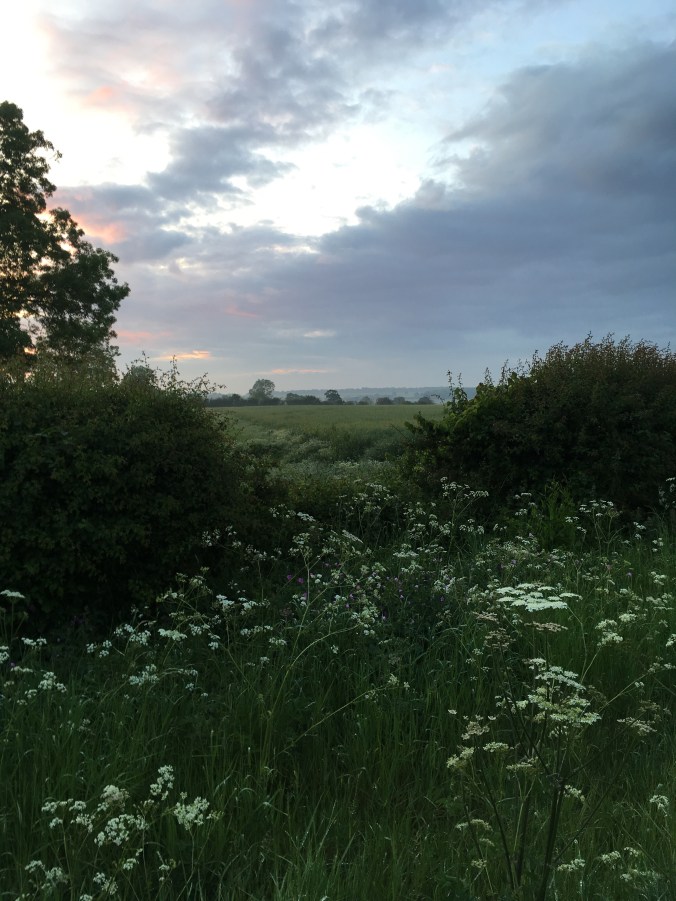
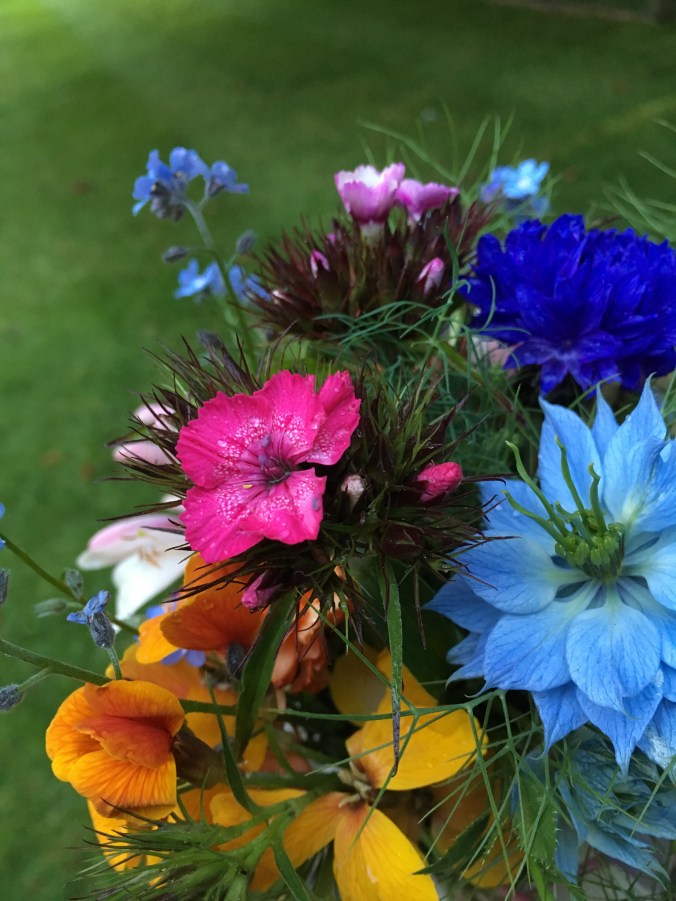
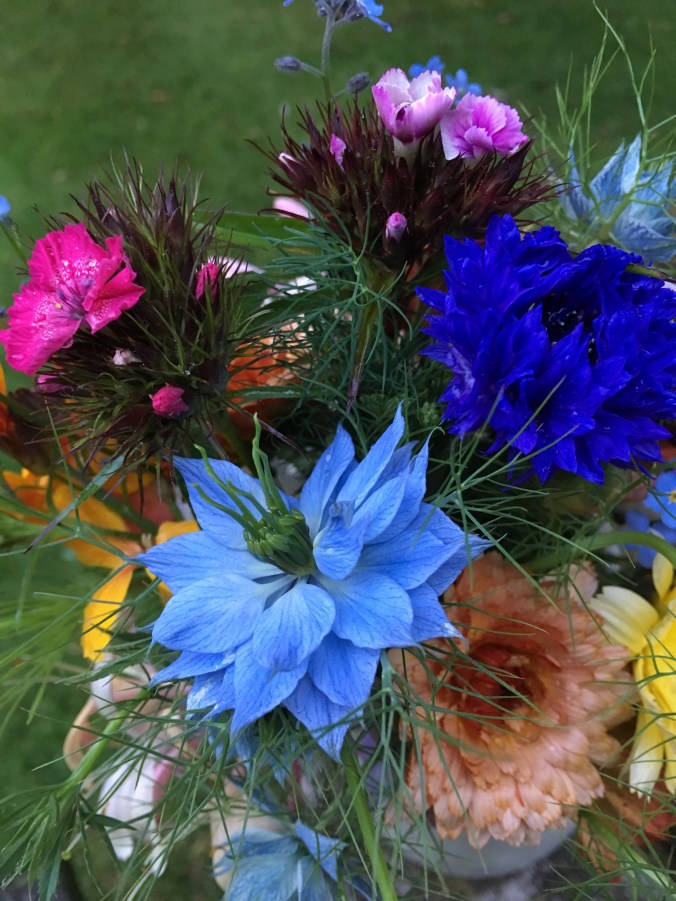
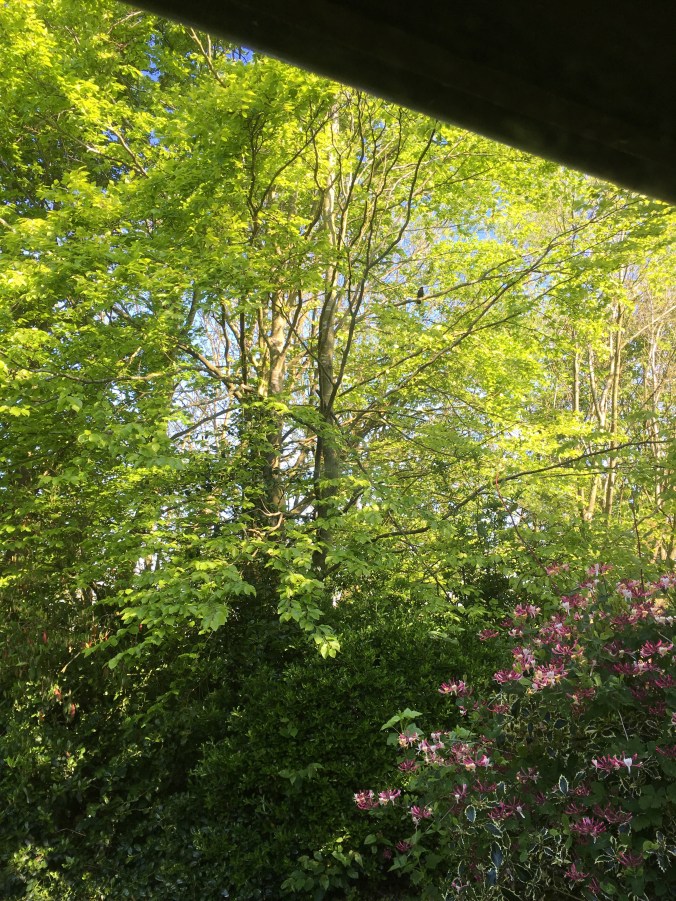
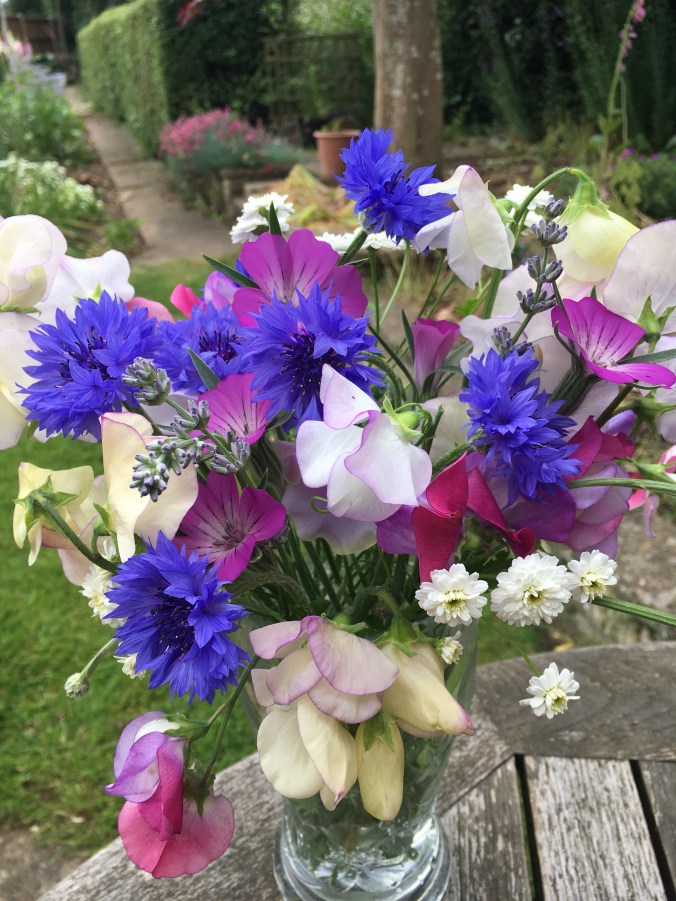
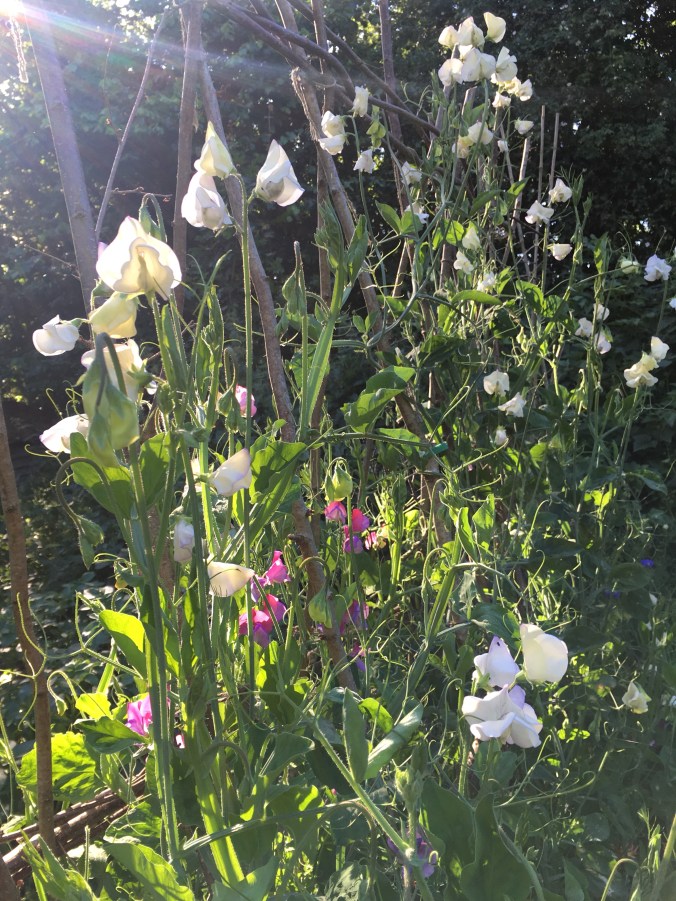
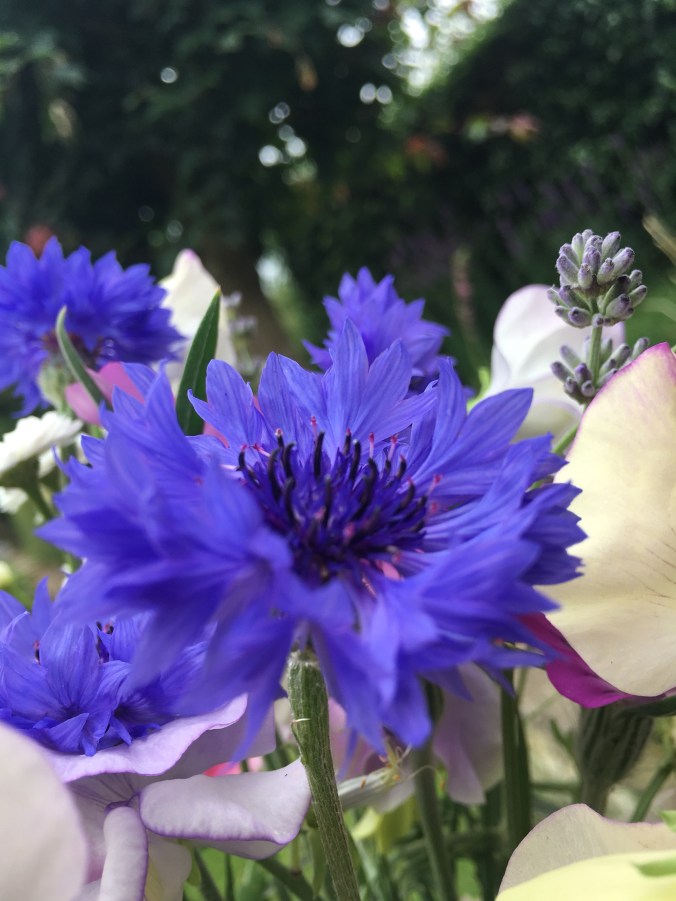
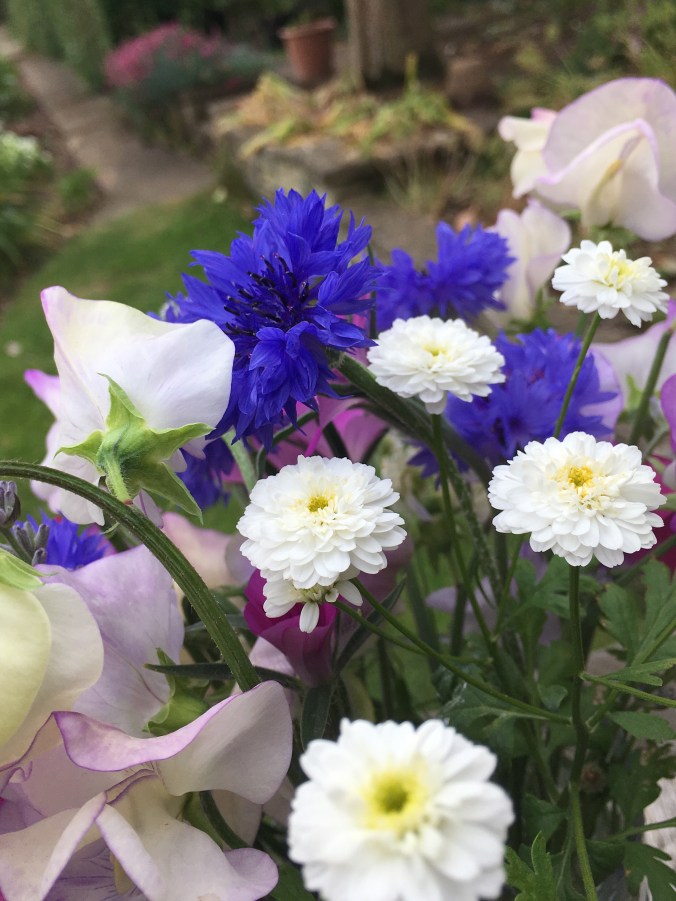
Six on Saturday – a walk around my garden 29 June 2019

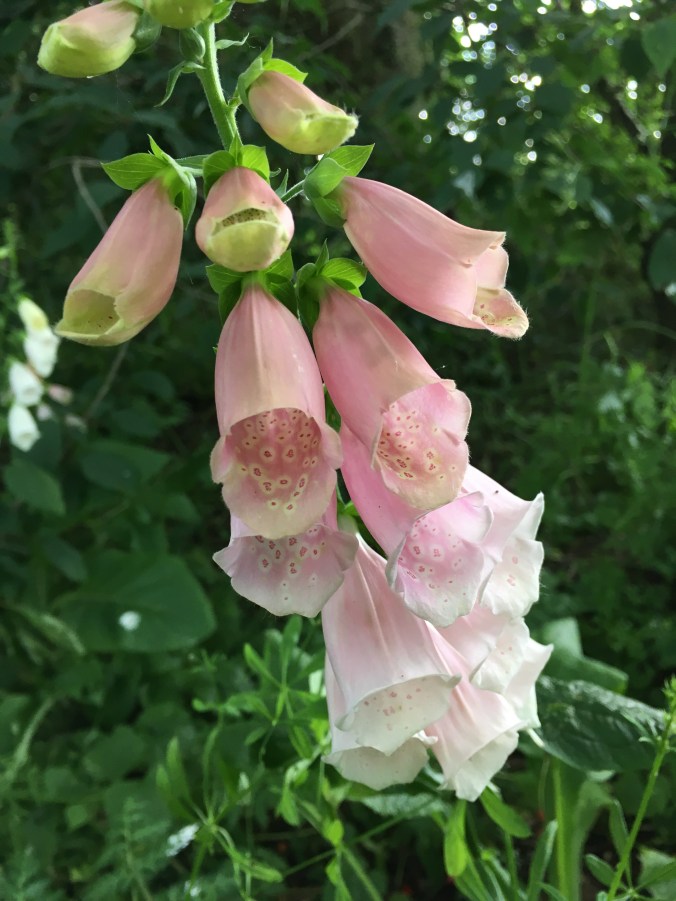
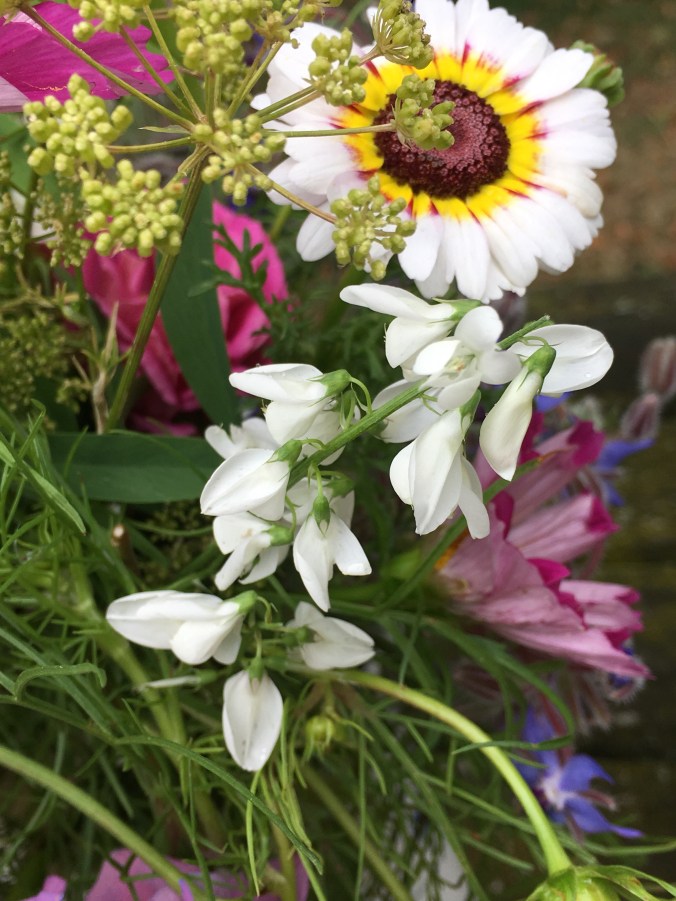
Foxglove. Sutton’s Apricot.

Ethereal. “Extremely delicate and light in a way that seems not to be of this world.”

Exquisite, dainty, graceful, lovely. Will it seed about and make a glade. I hope so. There is so much hope in gardening.

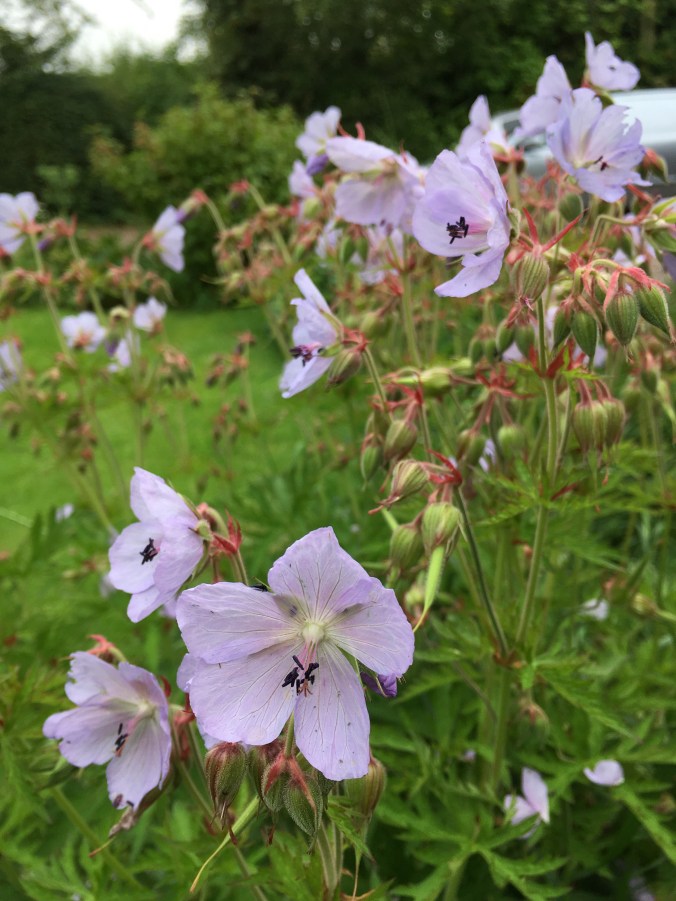
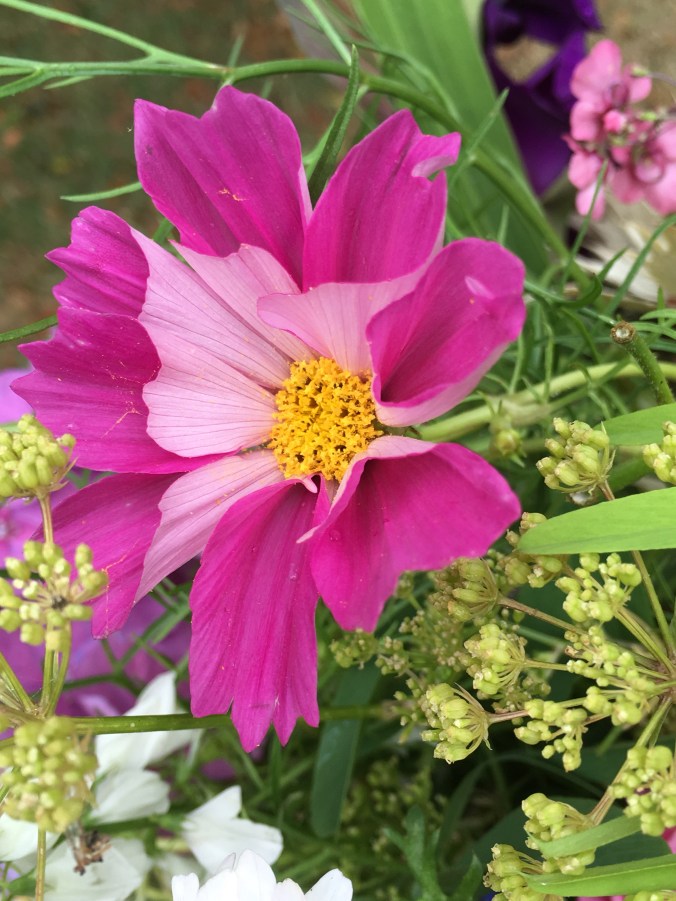
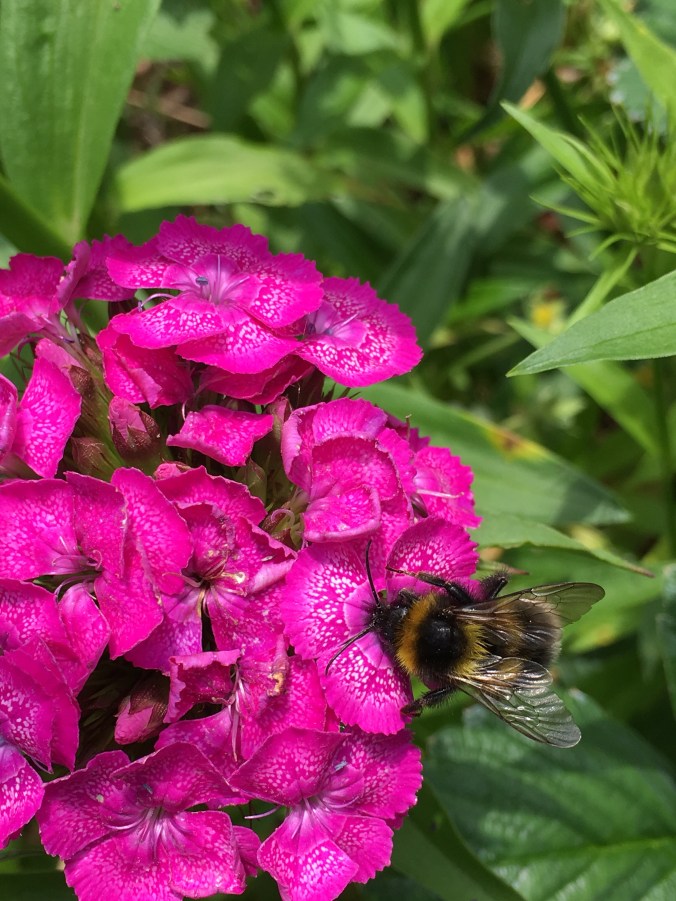
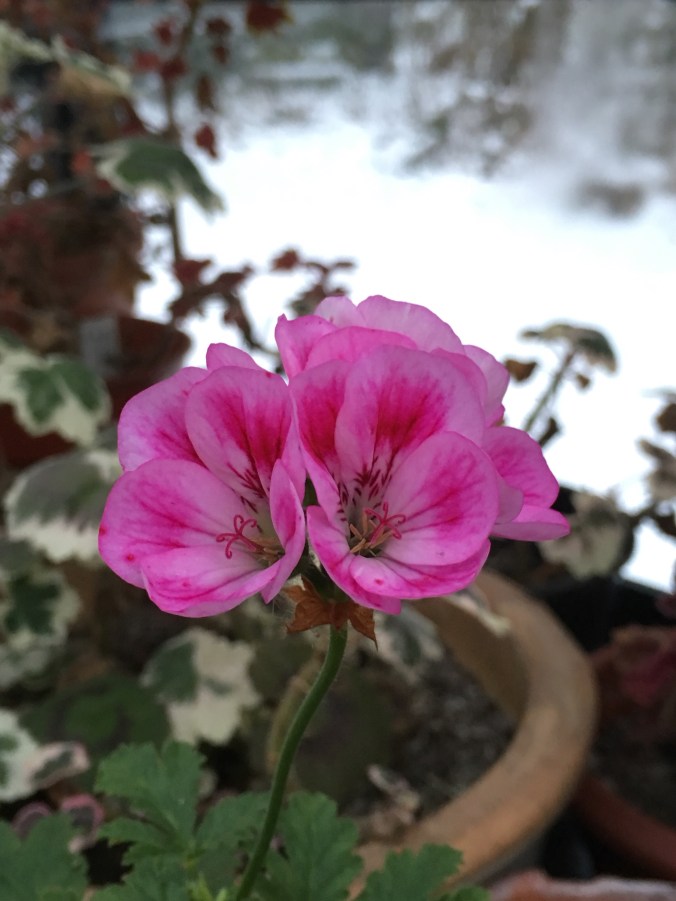
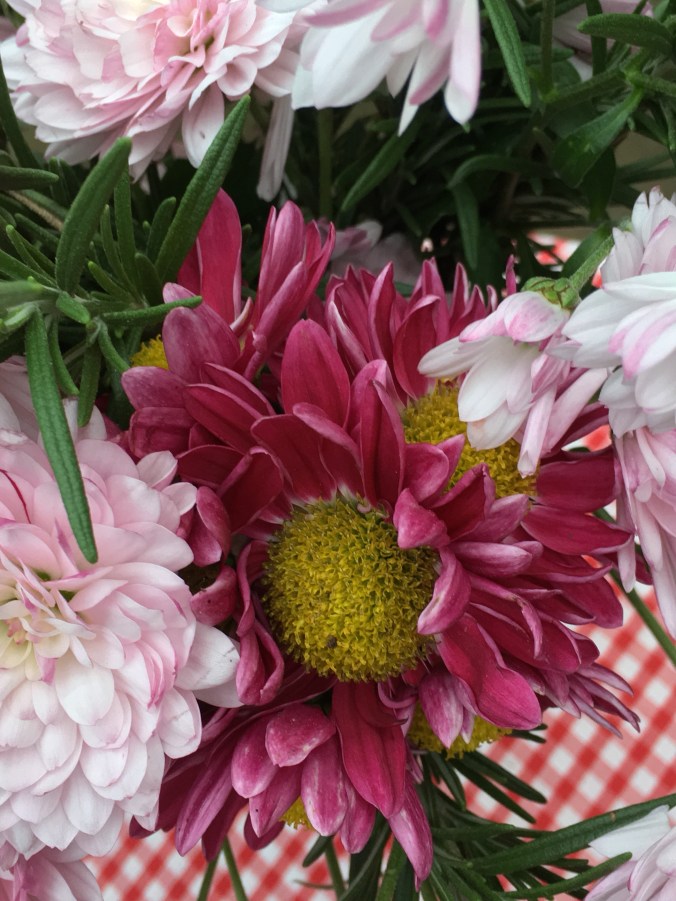
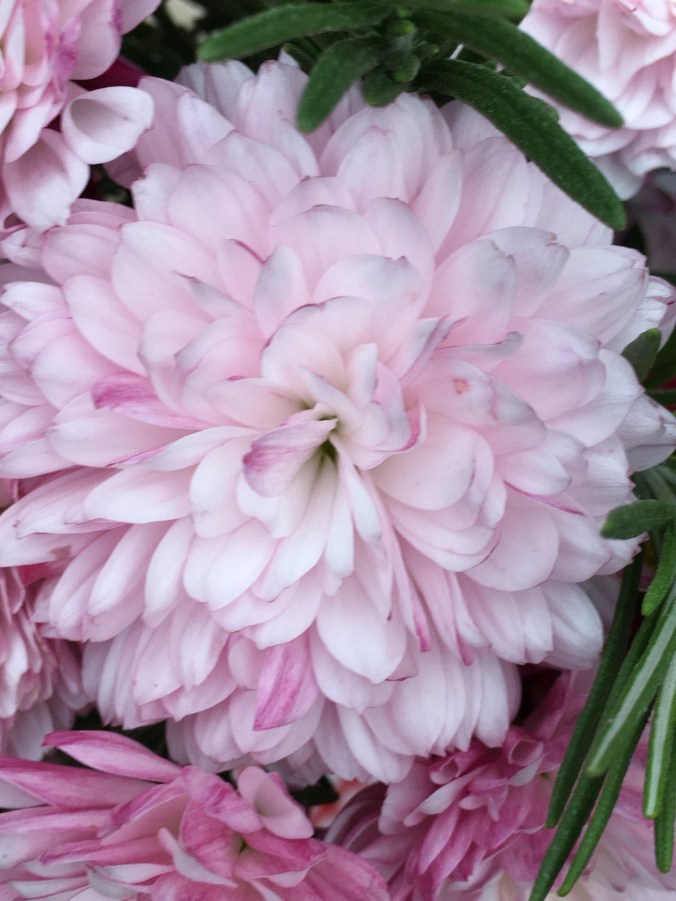
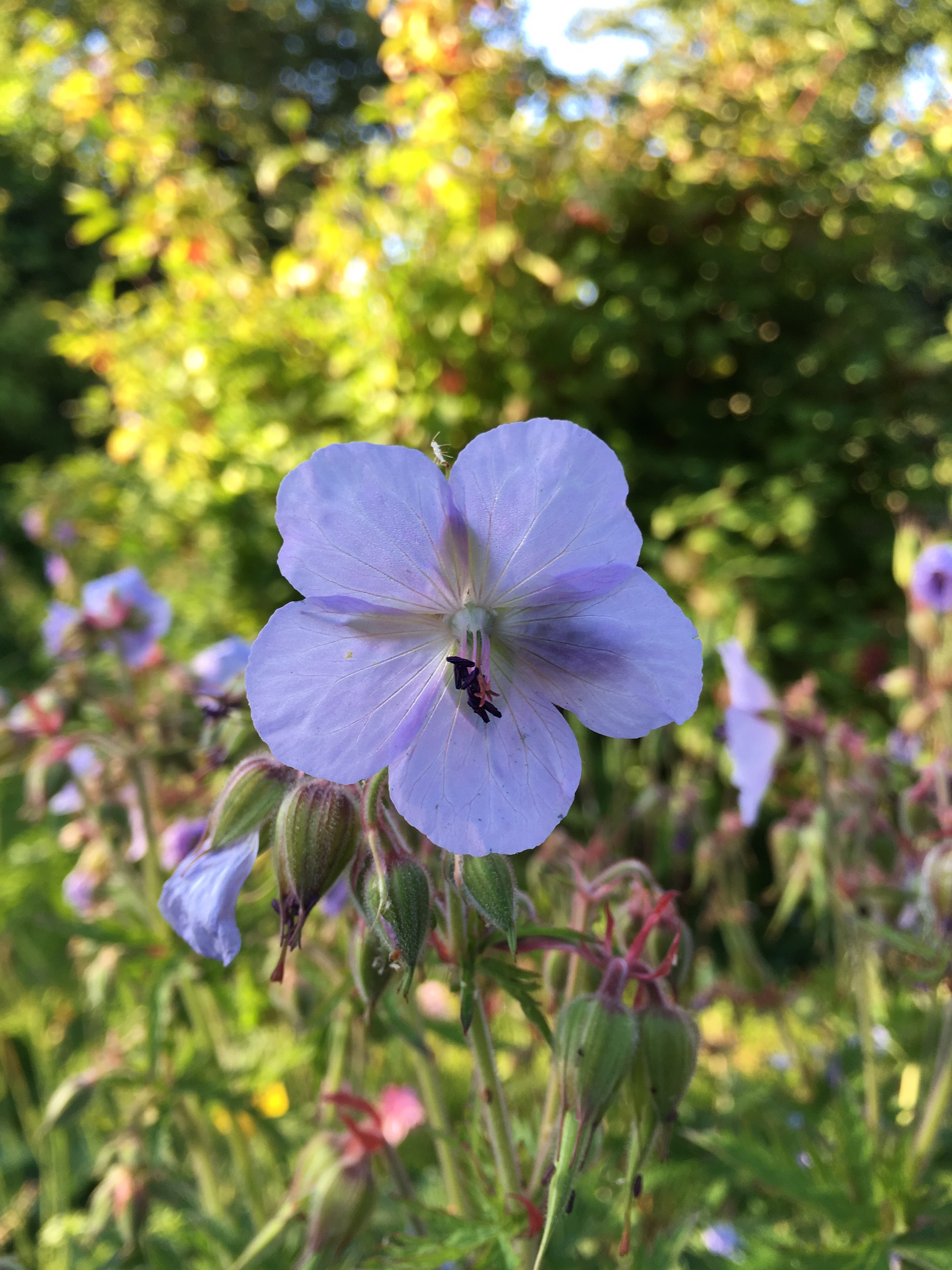
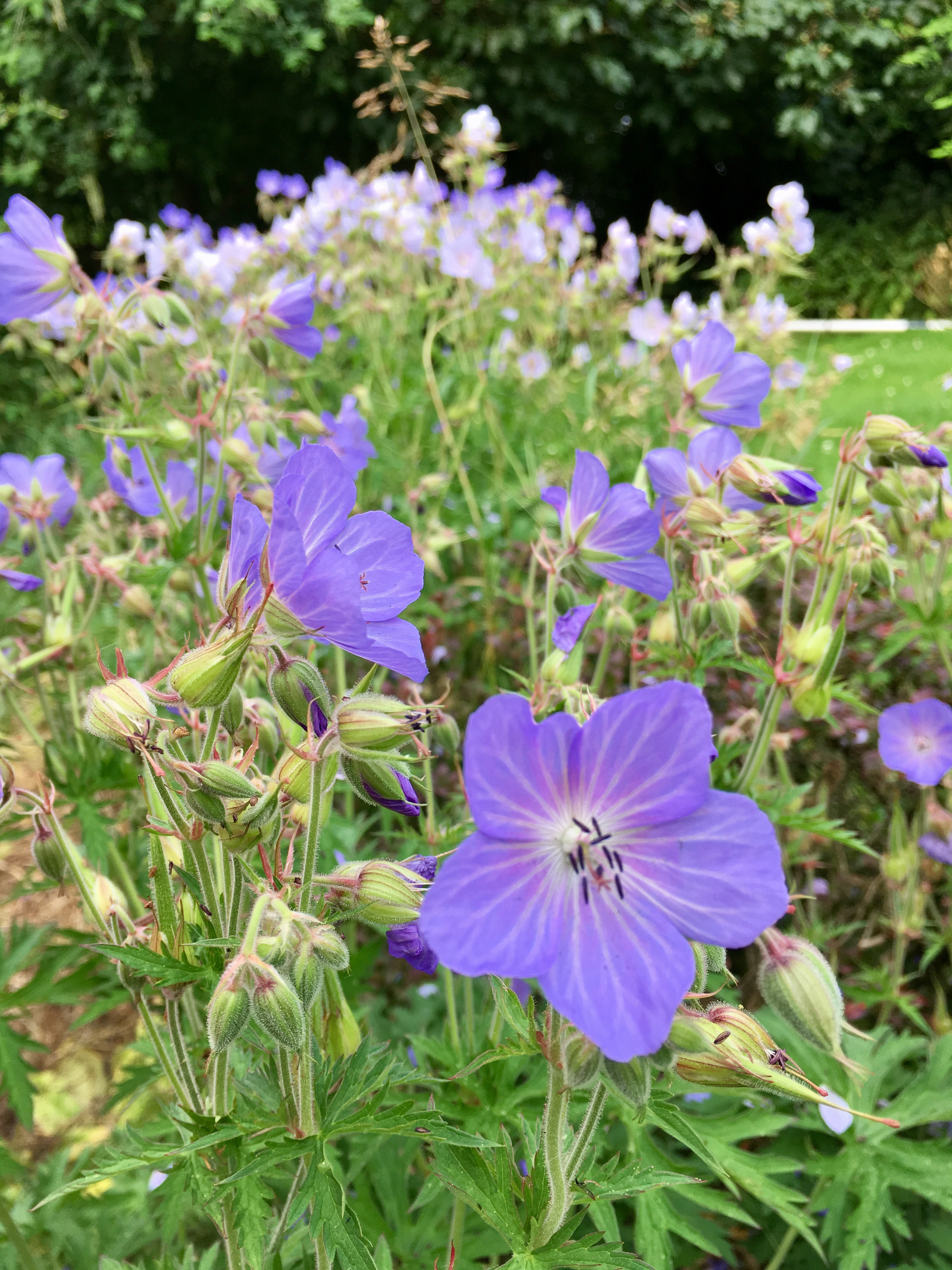
Already seeding about successfully; pale geraniums. A hybrid, crossed with the native geraniums all along the lane, and my Johnson’s Blue varieties inside the garden gate. Looks just as beautiful at dusk when moths find the flowers irresistible. Seedlings vary from white though mauve to deep violet. Always a lovely surprise to see what turns up. You can buy a similar variety called Geranium Mrs Kendall Clark, or grow your own from seed.

I wrote about geraniums in my garden here https://bramblegarden.com/tag/wild-geraniums/

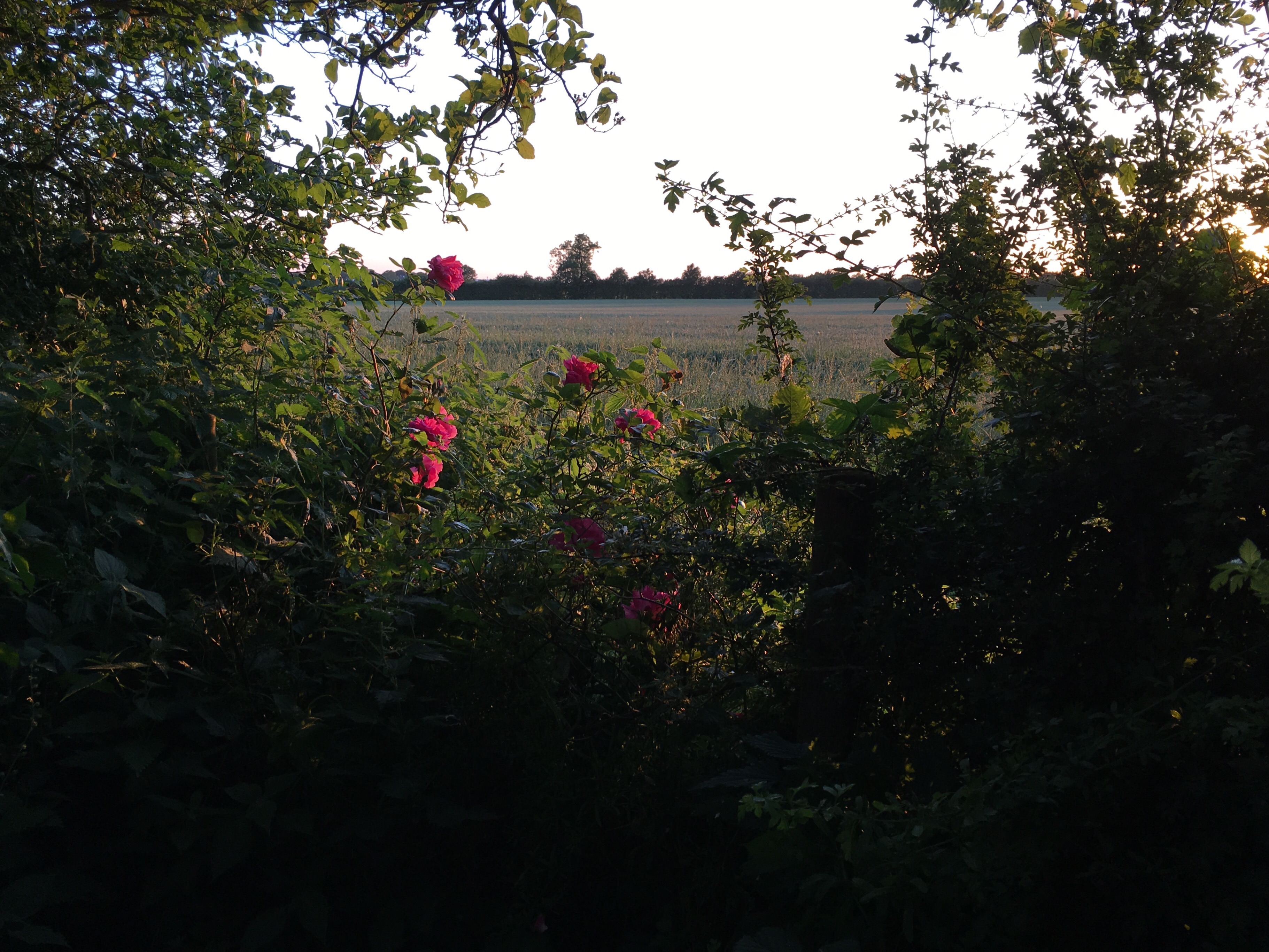
Wild dog roses – Rosa canina. The scent. The essence of a summer’s day. And beetles are welcome here too. Food for the bluetits and wrens currently feeding noisy fledglings all around the garden.

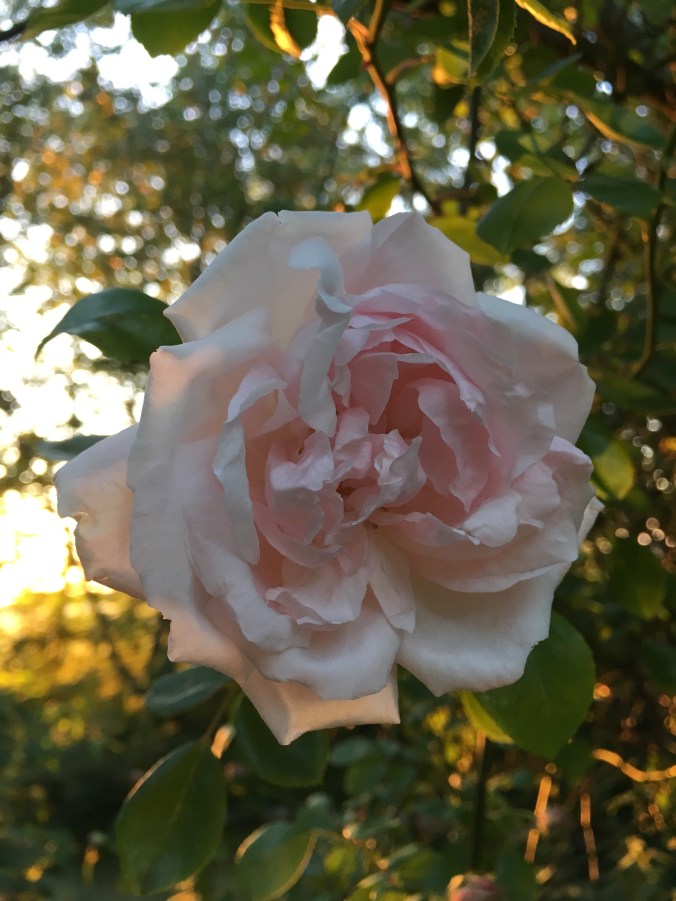
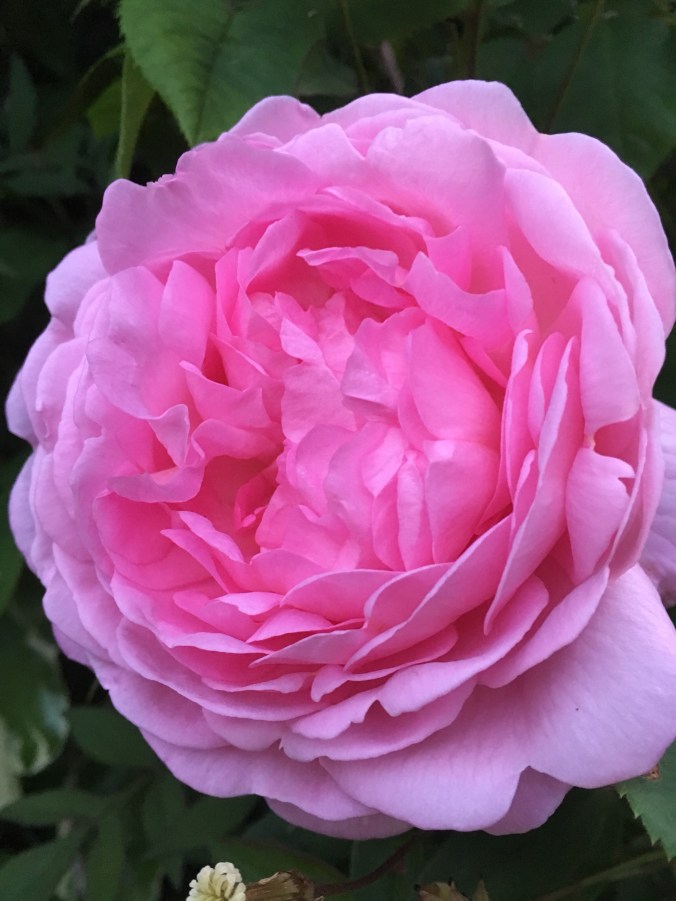
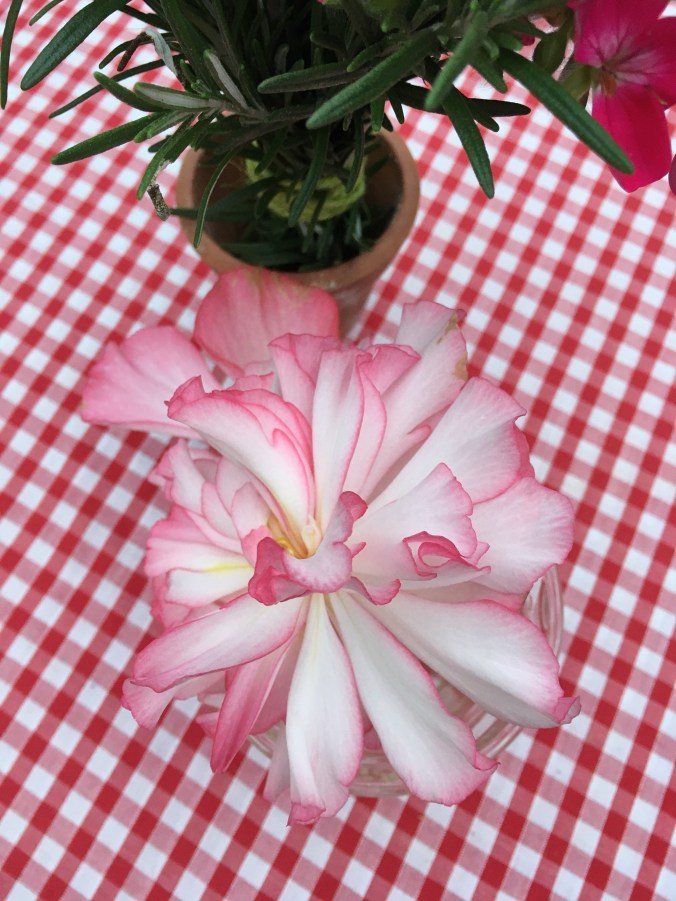
Rosa New Dawn. Another pale beauty. Easy to grow, climbs to the top of a willow tree and drips petals on to the pond. Never needs any sprays or pruning. Just looks after itself.

I hope you’ve enjoyed your walk around my garden today. After all that rain, it feels like summer is starting at last. It’s sunny and the temperature is 28C. I’ll be spending a lot of time sitting in the shade. Enjoy your weekend.

Links: SOS : https://thepropagatorblog.wordpress.com/2019/06/29/six-on-saturday-29-06-2019/

Foxglove Sutton’s apricot: https://www.mr-fothergills.co.uk/Flower-Seed/Foxglove-Seed/Foxglove-Suttons-Apricot.html#.XRdUymfTWfA

Geranium pratense: https://www.rhs.org.uk/Plants/7914/Geranium-pratense/Details

Rosa canina : Hopes Grove Nursery

Rosa New Dawn :https://www.davidaustinroses.co.uk/new-dawn

You might also like to read : https://bramblegarden.com/tag/wild-geraniums/

https://bramblegarden.com/about/

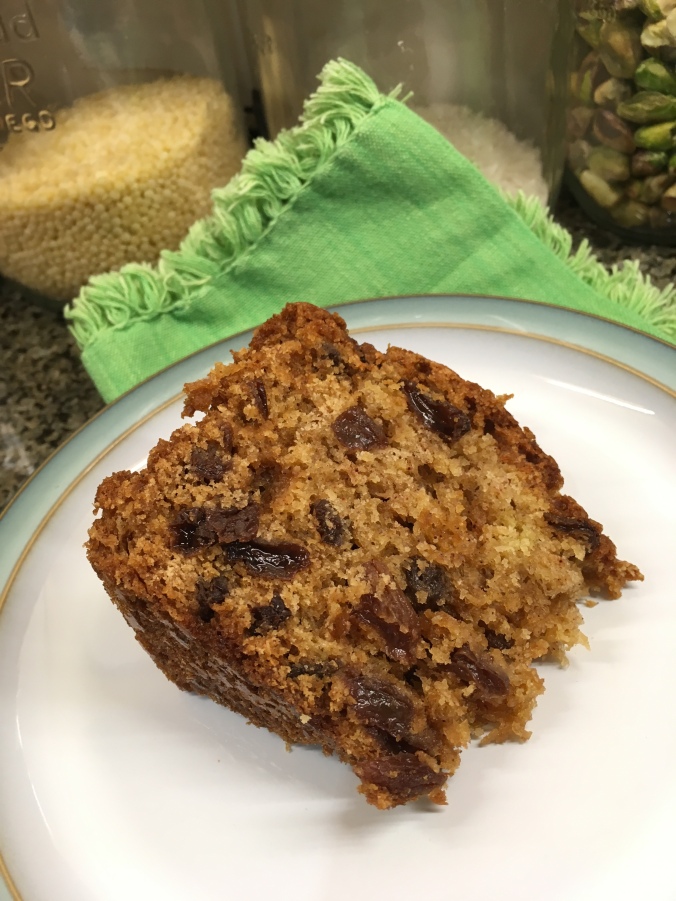
Mum’s Favourite Fruit Cake Recipe, with orange slices

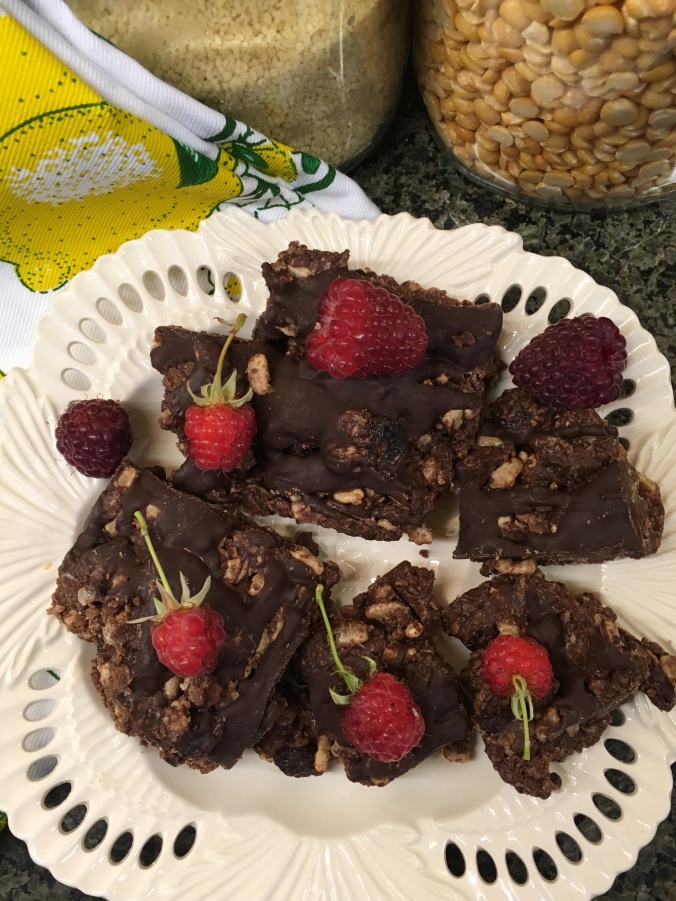
If you were listening in to Gardens Hour today, this is the fruit cake we were eating in the studio. It’s a recipe from my Mum. You can put fresh fruit on top of the cake when you serve it. I put slices of mandarin orange on mine today. I’ve served it with slices of peach and pineapple too. Very moist and tasty. Can be served with cream or custard as a pudding, it is very versatile. Perfect for picnics too.

INGREDIENTS

285g SR flour

85g butter, softened

110g golden caster sugar

180g mixed dried fruit

1 tsp. mixed spice

1/2 tsp. bicarbonate of soda

1 egg

280ml milk

7″ round cake tin

METHOD

Mix flour and butter together. Add sugar, mixed fruit, spice and bicarbonate of soda. Mix well.

Beat egg and milk together. Mix in with dry ingredients.

Turn into a well-greased cake tin.

Cook at gas mark 4, 170C oven for 1 hr 15 minutes. Check after 1 hour and put foil on cake if it is getting too brown.

Citrus Trees Update

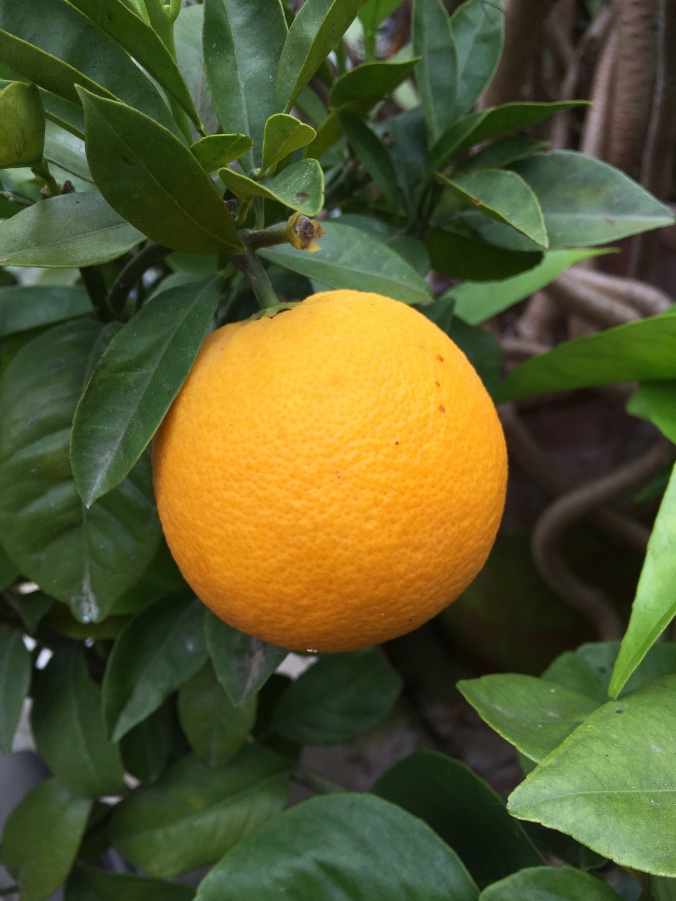
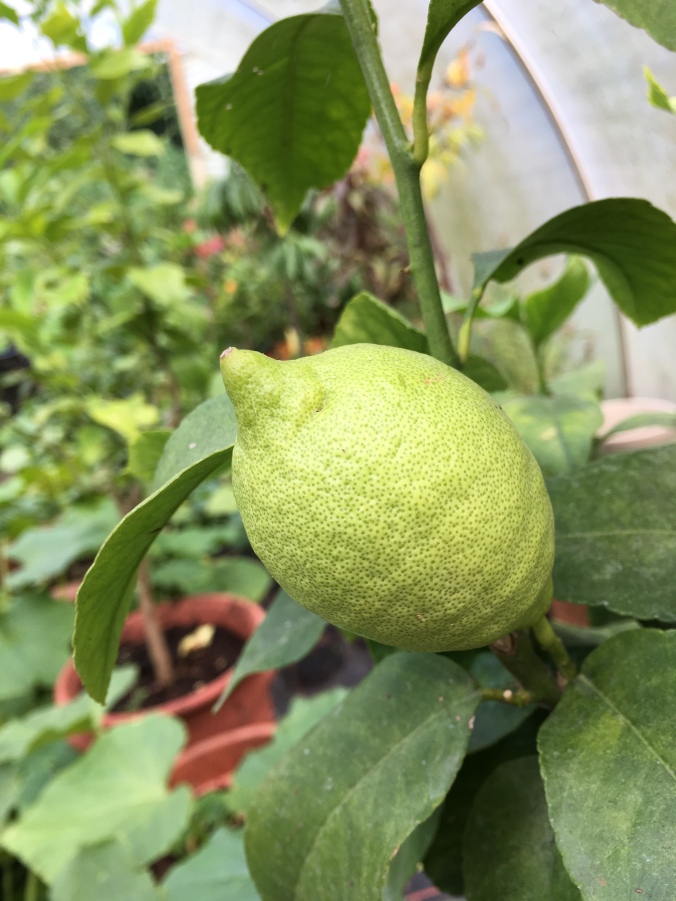
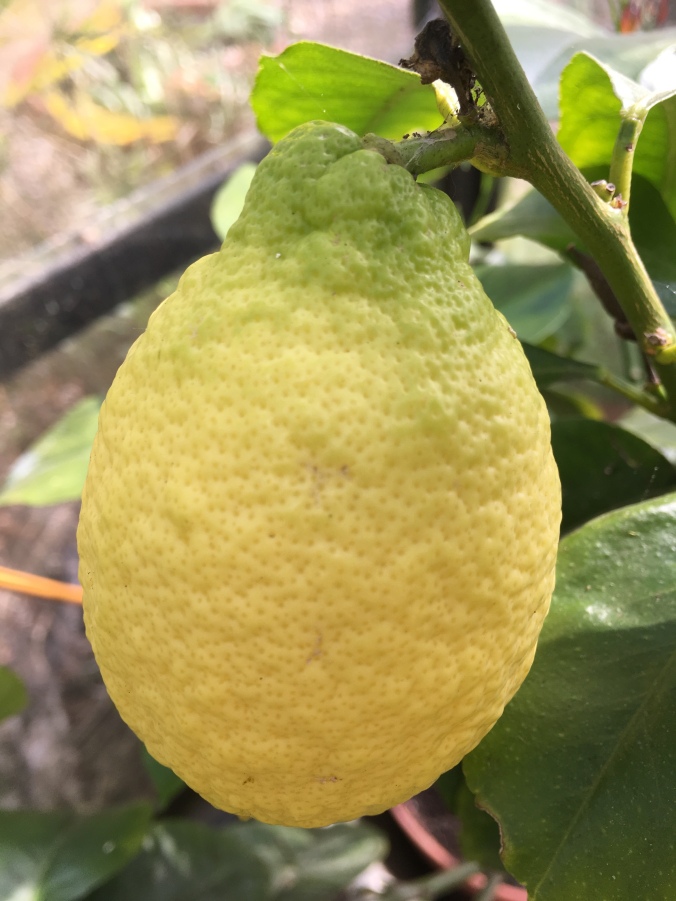
I’ve started to move my citrus fruit trees out of the greenhouse into the garden for the summer. I’ll start them off in a shady position until the plant cells have become accustomed to the outdoors. After about four days, you can gradually move them into full sun. Moving straight from greenhouse to bright sunshine can cause

leaf scorch.

In a Vase on Monday- All White

I’m practicing for wedding flowers. You never know when you might need some….

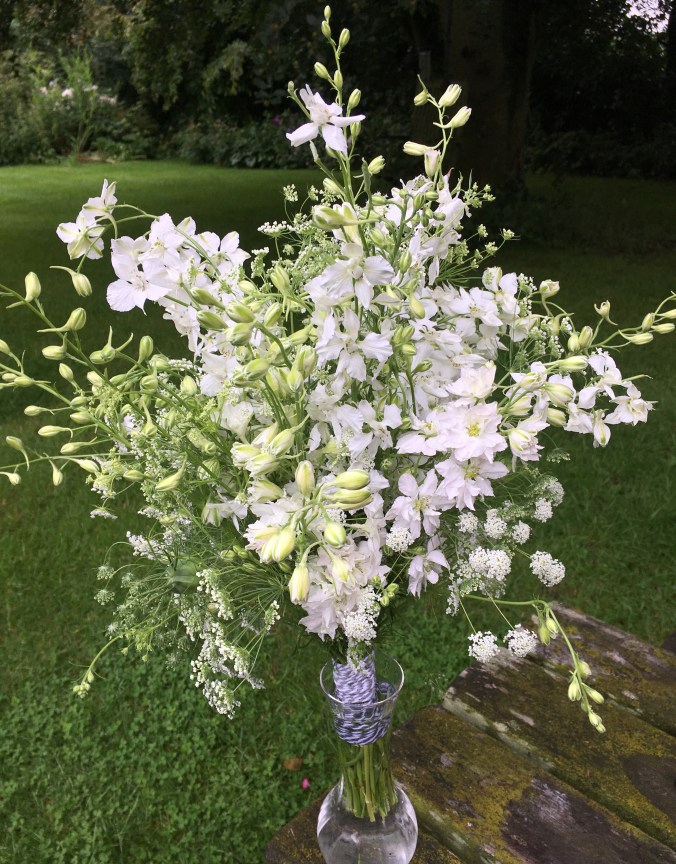
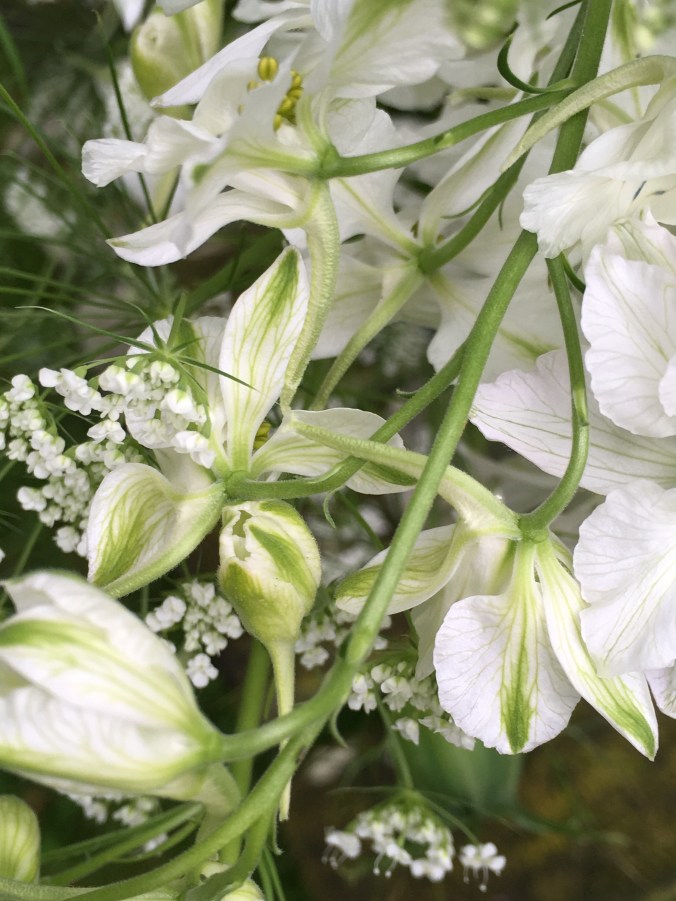
White larkspur and Ammi majus. Such a simple combination. I’d probably add white sweet peas for scent. I’ve got heritage variety Mrs Collier growing on the hazel A frame. And some white love-in-a-mist. The bouquet would be tied with white satin and pearl pins, and not grey twine. But you get the idea.

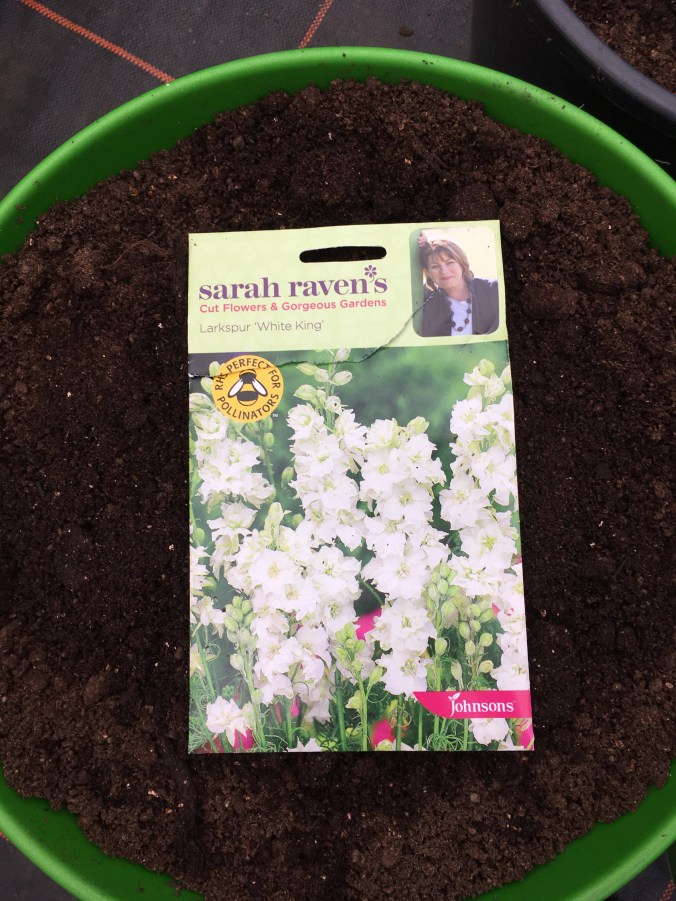
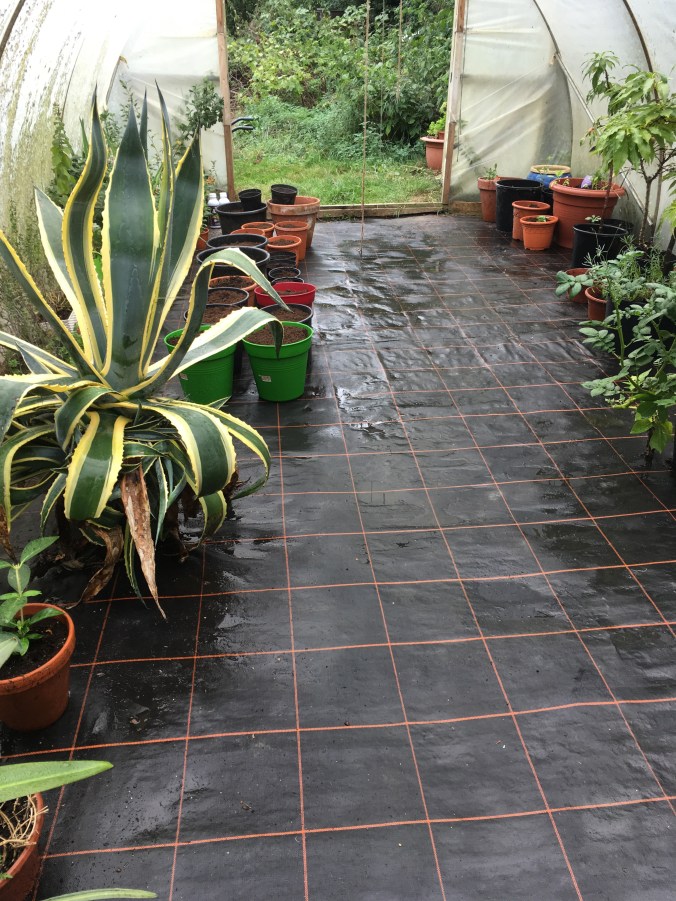
Larkspur White King was sown on 4th September in 12″ pots in the polytunnel. I used a 50 /50 mixture of peat- free multi purpose compost and John Innes no 2 compost with some added grit for drainage. I used Sarah Raven/ Johnsons Seed, sown thinly, covered with a sprinkle of compost and left to grow on without pricking them out.

I also chose seeds from Higgledy Garden. These were part of a cut flower patch kit. Very good value and nice fresh seed. Everything germinated and grew well. Highly recommended. Plus, I like to support independent companies such as Ben’s.

White “cow parsley” type flowers in my bouquet are Higgledy Garden’s Ammi majus. This lovely airy flower always does better from an autumn sowing. Once you start cutting them lots of side shoots appear and you can harvest flowers right through the summer.

Higgledy’s larkspur mix contains some beautiful ice blue flowers, shell pinks and whites. All packets of seeds cost between £1 and £2.50 each. I probably spent less than £10.

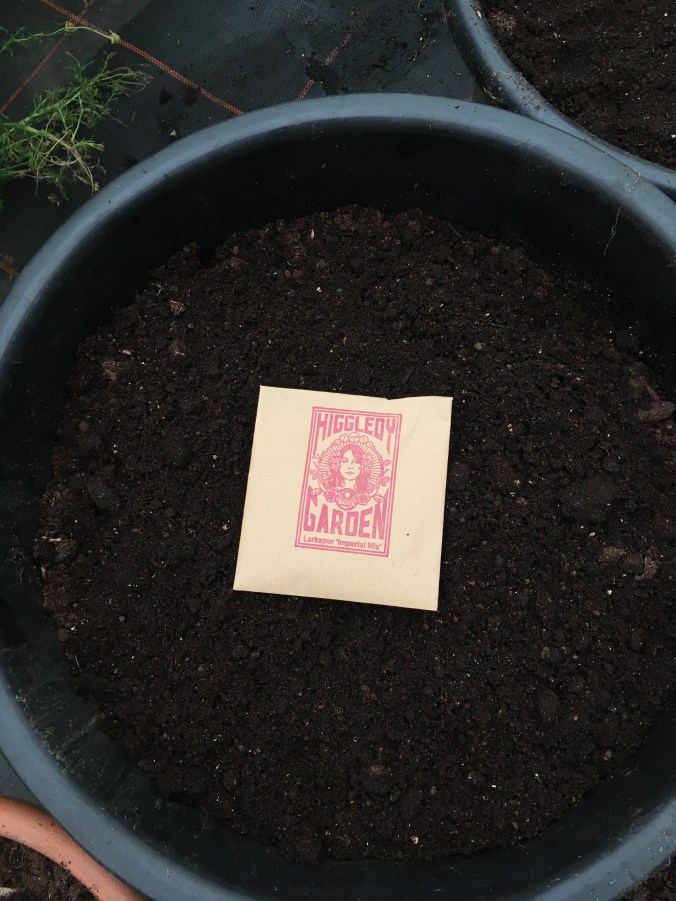
Once I’d sown the seeds, I laid the packets on the pots and took photos to remind me what I’d grown and when. Labels have a habit of moving – all by themselves- on my plot!

Seedlings germinated by 21st September.

I had a bit of a problem with mice. Luckily they just thinned the seedlings for me. I put down peanuts and bird food for them, which they preferred. Hopefully the barn owl will have helped me out over the summer. I know she is feeding fledglings as we see her most nights, and we hear them calling for food. Loudly.

Those few pots of plants have been supplying me with posies for a several weeks now. I’m not sure they produce blooms any sooner than plants grown outdoors; but they have super long stems with plenty of flowers and haven’t been damaged by rain.

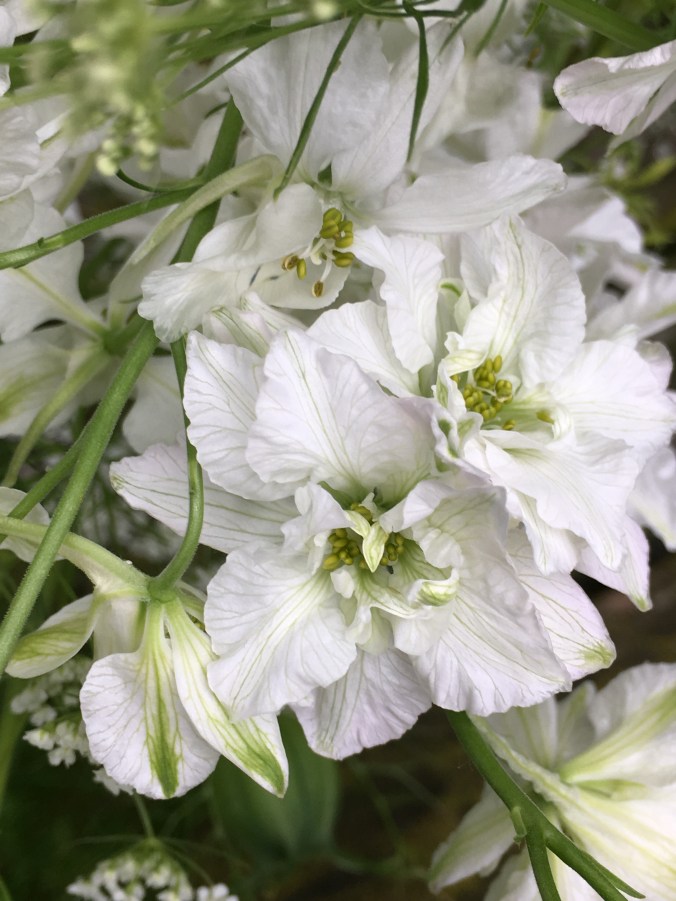
I particularly love the green markings on the back of the petals.

Green-tinged buds make a lovely contrast to the white flowers.

If anyone wants to get married next summer- I have the perfect plan for the flowers! Just saying.

links : Cathy IAVOM : https://ramblinginthegarden.wordpress.com/2019/06/24/in-a-vase-on-monday-respite/

Sarah Raven / Johnsons Seeds : https://www.johnsons-seeds.com/Flower-Seed_0/Annuals_3/Larkspur-White-King.html#.XRDKaGfTWfA

Higgledy Garden, Ben Ranyard : https://higgledygarden.com/

Cut flower growing and arrangements -courses and books: Georgie at https://www.commonfarmflowers.com/

First Polytunnels :https://www.firsttunnels.co.uk/

Dalefoot peat free composts :https://www.dalefootcomposts.co.uk/

Twine : https://nutscene.com/collections/twines/products/candytwist-twine-nutscenes-bakers-twine-large-spools

Please feel free to share this post on any social media platform.

You might also like to read :

https://bramblegarden.com/2019/06/23/prize-draw-winner-hansford-coil-spring-chair/

And

https://bramblegarden.com/2019/06/20/ngs-garden-visit-oak-tree-house/

Or

https://bramblegarden.com/2019/06/15/six-on-saturday-a-walk-around-my-garden-15-june-2019/

Thank you 😊

In a Vase on Monday – 10th June 2019

It’s the much-awaited summer. And it’s raining. It’s pouring. And it’s 9C. So only one photo today for my Vase- and it’s sweet williams and sweet peas again. They are loving the cool temperatures and moisture. I must admit, I am not.

My dark red sweet williams, Dianthus barbatus Sooty, are suddenly providing buckets of flowers. Sweet williams are such good value plants. For a couple of pounds for a packets of seed, you can have a steady supply of flowers three months or more. They are like dark velvety chocolate. Dark colours don’t show up in photos very well, so I’ve screen shot the picture and homed in on the flowers.

There’s a few forget me nots left to go with the love in a mist. And sweet peas are also flowering faster than I can pick them.

Calendulas are looking fab with peach butterfly antirrhinums, and blue chives are being thrown in every bowl of salad, as well as every vase of flowers. Such a versatile perennial herb to grow. The antirrhinums are flowering for their second year, but I’ll sow some more seed for next summer, just in case they don’t overwinter. They last for nearly a fortnight in a vase, if you change the water each day.

I do hope the weather is better where you are. Hopefully we will all get some sunshine again soon. Meanwhile, it’s dark clouds and white cow parsley -aplenty!

Links :

I’ve been to visit the Cotswold Wildlife Park. Here’s a blog I wrote about it: https://bramblegarden.com/2019/06/10/the-cotswold-wildlife-park-a-celebration-of-the-gardens/

Here’s my recent blog listing the varieties of sweet peas I’m growing: https://bramblegarden.com/2019/06/03/in-a-vase-on-monday-3-june-2019/

Don’t forget to leave a comment on my blog review of Hansford Coil spring garden chairs- there’s one chair to win in our prize draw competition. They are wonderfully comfortable and easy to carry about the garden: https://bramblegarden.com/2019/05/31/product-review-hansford-coil-spring-chair/

In a Vase on Monday : https://ramblinginthegarden.wordpress.com/2019/06/10/in-a-vase-on-monday-the-very-pink-of-perfection/

In a Vase on Monday -27th May 2019

It’s been raining on and off all day, so by 8.30pm it was now or never to pick my Monday Vase. I just caught the last of the light. But the flowers are full of raindrops.

There’s a “first and last” theme to tonight’s posy. It’s the last of the forget me nots. They have been glorious for months, providing a blue accompaniment to all the spring bulbs. And it’s the last of the wallflowers. Their wonderful scent has drifted across the veg plot for weeks. The variety is Persian Carpet, and I’m just about to sow some more seed for next year’s display.

It’s a first for the dianthus barbatus ( sweet williams). I have some self-seeded magenta flowers, and some rows of a new dark red, almost black variety, called Sooty.

There’s the first flowers from the sweet peas too. I’ve got heritage varieties, Mrs Collier (white) and Dorothy Eckford (cream) – alongside modern varieties High Scent and Wiltshire Ripple, and new this year, Capel Manor.

It’s also first for the blue love-in-a-mist and Blue Diadem cornflower. The cornflowers will flower right through to October. Seed was sown last October and plants were over-wintered in the poly tunnel. To be honest, the flowers only seem a week or two earlier than the ones grown outdoors, so I probably won’t bother trying to over-winter them again. They took up a lot of space and needed a lot of watering. Too much trouble for something that grows so readily outside.

Self-seeded pot marigolds are putting on an early show. I love these pale orange flowers, sisters of a variety called Orange Fizz. I’ll definitely grow these again. I’ve just planted some tiny plug plants to flower until the first frosts. Variety unknown, as they came from my Mum. Her labelling system is worse than mine! I’m not complaining, as she’s also brought annual pinks, stocks, cosmos and some kind of daisies. I can’t wait to see what they look like. We hoed out a trench and planted them in rows, mum passing me the plants and me setting them in the ground. We got a system going and planted them in half an hour.

The last of the winter pansies have grown long and leggy. Perfect for jam jar flowers at this time of the year. I’ve just sown some new black varieties. They look as sumptuous as velvet on the seed packets.

As soon as I’d picked my flowers, the light began to fade. How lovely to still be able to wander about in the garden in the evening though. If I’m lucky I’ll catch sight of the barn owl again.

Links : In a Vase on Monday: https://ramblinginthegarden.wordpress.com/2019/05/27/in-a-vase-on-monday-more-sweeties/

Links : Dianthus Sooty https://www.chilternseeds.co.uk/item_450K_dianthus_barbatus_sooty

Six on Saturday- a view of my garden 18th May 2019

It’s a sad farewell to the tulips today. Cold weather has given them staying power this year, but I can see they are fading fast. I love the dark purple tulips. They remind me of a bishops’ sash, an amethyst ring, a royal cloak. A stained glass window. Silk.

This is Purple Queen of the Night. I’ve noticed tulips vary in colour, depending on supplier. So this one came from Taylors Bulbs, the one below is also Queen of the Night, from Parkers wholesale.

I’ll be planting more of the the Walkers variety; these stood up to the weather well, and didn’t “melt” when it rained.

I shall miss the jewel-like colours of tulips. It’s been the best display I’ve ever had, and didn’t cost much. Most of the bulbs were bought in the sale at Christmas and planted the first week of January. Waiting to plant until it’s really cold helps prevent viruses which spoil the flowers and leaves.

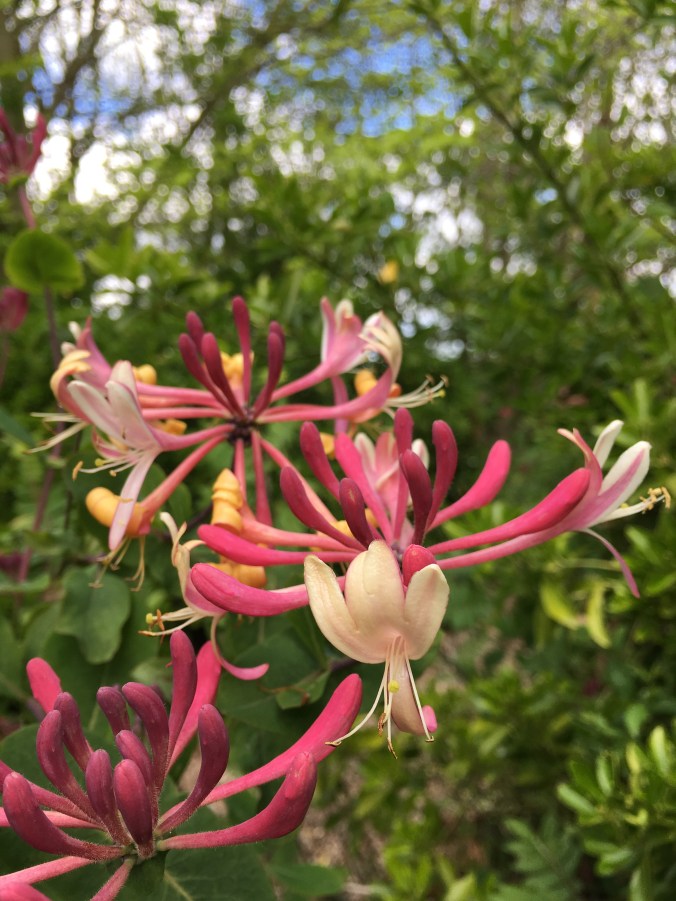
When the tulips fade, my garden turns green. This is the view from our bedroom window today. The beech trees are at their freshest now, lime green leaves highlighted by sunshine. Gradually they shade out the woodland floor and I say goodbye to the spring understory; bluebells, wild garlic and the last of the white narcissi. Wild clematis and honeysuckle provide some compensation. I didn’t plant these climbers, but they are welcome here. Honeysuckle crowns a silver holly pyramid. No harm seems to come to the holly. It’s a cheerful combination. A happy co-incidence.

The evening scent drifts around the garden and in though bedroom windows. A wonderful scent to end the day. A feast of nectar for night-flying moths. For daytime-flying insects, crab apple blossom provides a banquet. It’s usually smothered in bees. This one I think is Wedding Bouquet.

If you have a small garden, Malus Laura is the one to choose. This gorgeous small tree grows in an upright, vase- shape, doesn’t cast much shade and has wonderful dusky pink blossom, purple new leaves, and plum coloured crab apples. So much interest in just one tree.

Links: Six on Saturday : https://thepropagatorblog.wordpress.com/2019/05/18/six-on-saturday-18-05-2019/

Queen of the Night : https://taylors-bulbs.com/spring-flowering-bulbs/

Malus Laura : https://www.rhs.org.uk/Plants/124642/Malus-Laura/Details

Malus Wedding Bouquet : https://www.frankpmatthews.com/catalogue/malus/10139

In a Vase on Monday- 6th May 2019

Happy Bank Holiday Monday! I hope you are all managing to get some gardening done today. It’s still cold and windswept here. Only 11C, but feels much colder due to the biting north wind. Rain and high winds have caused some damage here. The beautiful lime green beech tree leaves have been blown into the paddock. They only opened a week ago. So soft and delicate. It looks as if someone has laid them as a fine velvet mulch everywhere. Some of the fancy double tulips look as if they’ve been cut with a scythe. They are all cleanly sheared off half way down their stems. Heads just too heavy for gale force winds. So today, I’ve made table arrangements with the casualties.

Mount Tacoma looks pretty in three glass jars in a row. The short stems don’t matter for this garden table arrangement.

This late-flowering double tulip is a favourite . I love the flash of green on the outer petals. The flowers remind me of feathers.

If I could re name it, I would call it Swan. Beautiful, simple table arrangements for a laid-back bank holiday.

I’m cutting some branches from the orchard for tonight’s dinner table. Flower arrangements don’t have to be complicated. Especially on a bank holiday.

Here’s a view of the garden today. The hawthorn hedge looks like seafoam in the wind. Looks like there will be more rain, judging by the colour of that sky.

Half an hour later, the downpour has passed. There’s some blue sky and we can see for miles from the top of the garden. Skylarks are singing overhead. Always a good sign.

Links : IAVOM In a Vase on Monday. https://ramblinginthegarden.wordpress.com/2019/05/06/ina-vase-on-monday-delicate/

Mount Tacoma tulips : https://www.gee-tee.co.uk/bulbs/tulips/double-late-tulips/tulip-mount-tacoma

Alton Cedar greenhouses : https://www.altongreenhouses.co.uk/

The view in the distance from the top of the garden is : https://www.nottinghamshirewildlife.org/nature-reserves/bunny-old-wood-west

Six on Saturday – My garden 27 April 2019

I’d forgotten how sweetly scented some tulips can be. This one has a fruit salad, pineapple scent. Reminds me of the tropical trifle my Aunty Betty used to make, liberally decorated with sugar strand sprinkles. Such happy memories of family outings, picnics and seaside trips. A kind and much-loved lady who seemed to have a never-ending supply of fairy cakes, toffee apples and other sweet treats.

Three weeks of joy with these double tulips; they take a long time to unfurl. This one is called Peaches and Cream. I’ve never grown it before and have made a note to plant a whole row for next spring.

Tulips can be grown anywhere. These are in a 2ft by 3ft portable raised bed on wheels. I’ve grown these in the unheated poly tunnel for early flowers. They will be planted out in the orchard for an informal display next year.

Tulips are also planted 2″ apart in a cut flower bed. These were bought in the half price sale at Christmas and planted in January. They were described as a “mixed cut flower patch kit.” It’s a great idea for trying out new varieties.

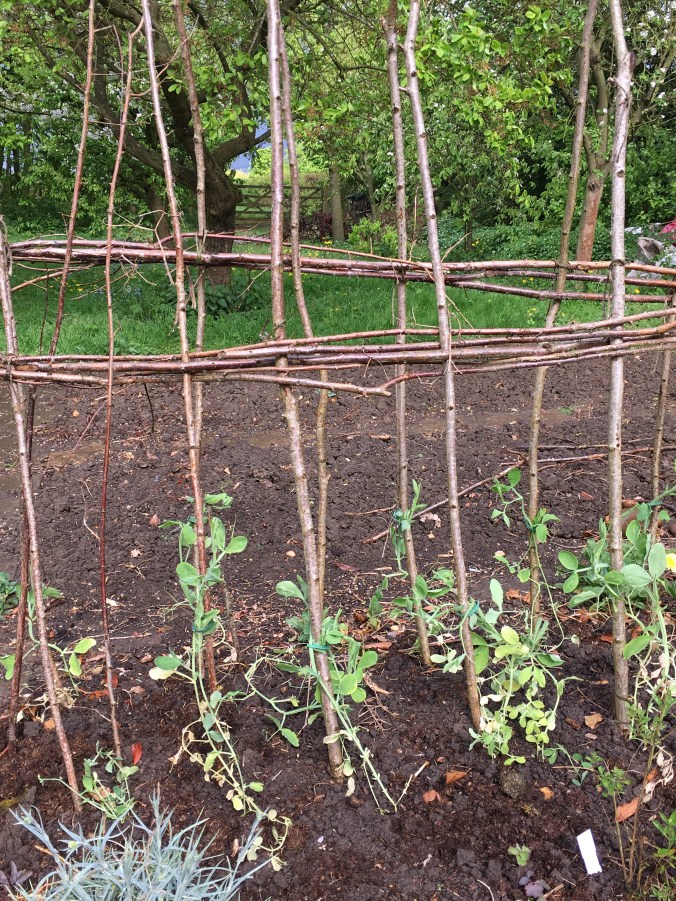
In the beds behind the tulips, there’s a rather rustic, ramshackle A -frame made from hazel rods. This week I finally planted out my sweet peas. These were sown in root trainers last October. There are heritage varieties such as creamy white Dorothy Eckford bred in 1904 at Wem in Shropshire by Henry Eckford and named after his daughter. How lovely to be immortalised as a beautiful, scented sweet pea. Also there’s new varieties such as Capel Manor which I’m trying out.

Step out of the gate at the top of the garden, and this is the view today. Yellow oil seed all across the ridgeway. You can see for miles around.

Thanks for joining me this week in my garden. What are you growing on your plot at this time of the year? Spring is my favourite season, with so much colour and frangrance all around.

Links : Six on Saturday : https://thepropagatorblog.wordpress.com/2019/04/27/six-on-saturday-27-04-2019/

Six on Saturday 20 April 2019

A quick whizz around my garden today. I’m busy watering, watering, watering. We have had no rain for weeks and the water barrels are low.

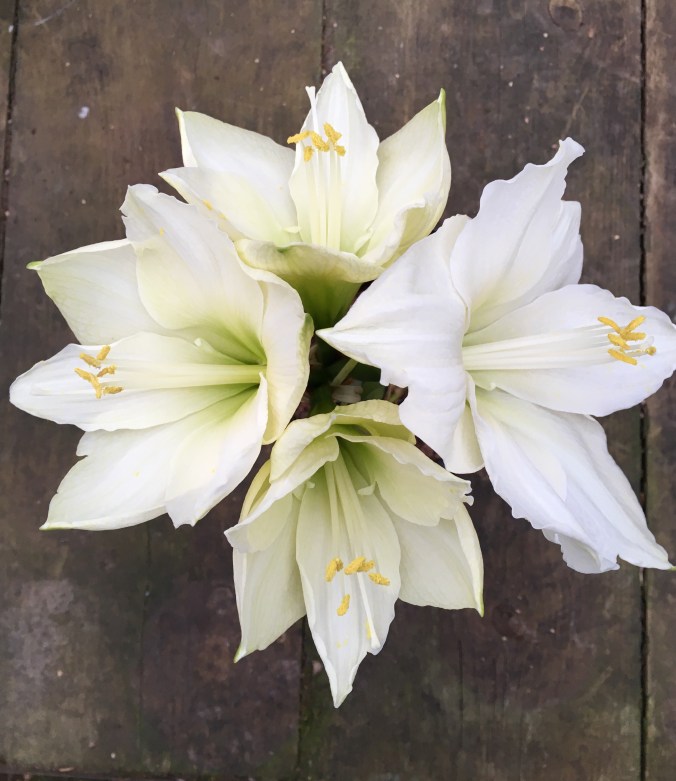
Amaryllis. Planted in October. Should have flowered at Christmas. I did all the right things, watered it, pampered it. I’m happy it is finally flowering in time for Easter. It was sold as Lemon Star. As with many spring bulbs, they sometimes turn out to be different from the name on the packet. Very pretty though. A table centre on its own, I think.

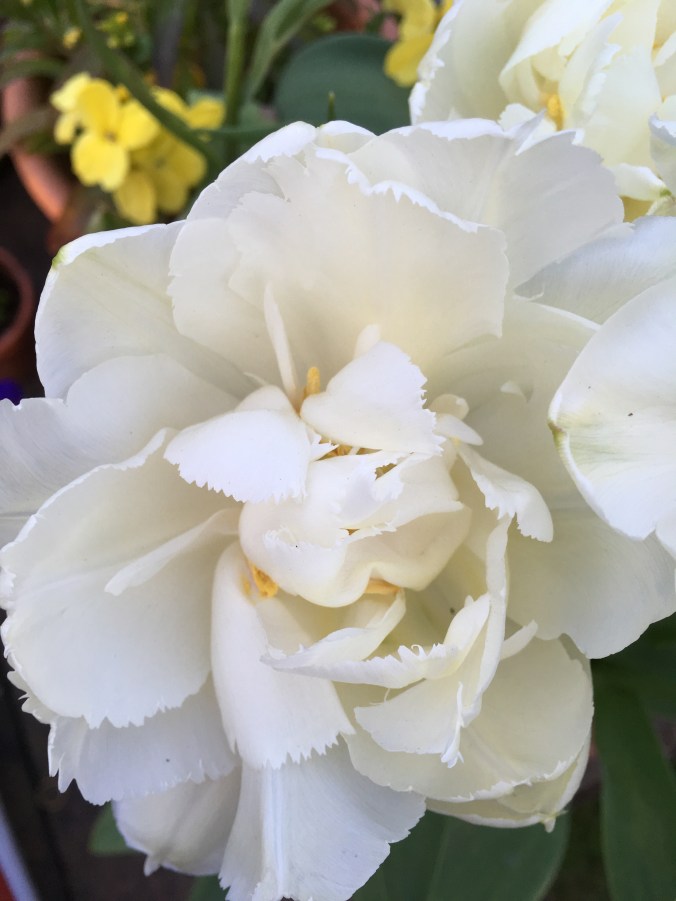
Tulip Mount Tacoma. Also just in time for Easter table arrangements. Fluffy, very double. As beautiful as a swan, wouldn’t you agree.

Forget me nots make a lovely ground cover for Mount Tacoma here.

Still on the theme of cream and white, new tulip Exotic Emperor. A delight to watch opening from a tight bud. I love the flashes of green on the edges of the petals. One I will grow again next year.

Here they are growing in a large Italian pot by my back door. A north facing position suits them well. They last longer out of the sunshine. Above them, the lime green new leaves of an Acer Palmatum Dissectum are just starting to unfurl. Perfect to complement the stripe in the tulips.

In the Exotic Daylily Border, my favourite quince is in flower. Chaenomeles speciosa Kinshiden starts off the colour of Devon clotted cream and fades to white. A lime green eye adds a simplicity to this beautiful double flower. 200 Tulip Orange Emperor form a backdrop. A recommended tulip for reliably coming back each year, and good for planting between low maintenance daylilies. I hardly ever have to work this border. It virtually looks after itself.

Wishing you all a very and happy and peaceful Easter. I hope you are getting some lovely sunny weather, as we are here. It’s 21C today- and 38C in the greenhouse! I have opened all the doors and windows! And now I must get back to that watering…. Enjoy your gardening.

Links

Dalefoot bulb composts https://www.dalefootcomposts.co.uk/products/bulb-compost.p.aspx

Six https://thepropagatorblog.wordpress.com/2019/04/20/six-on-saturday-20-04-2019/

Lemon Star : https://www.sarahraven.com/flowers/bulbs/amaryllis/amaryllis_lemon_star.htm

Mount Tacoma https://www.peternyssen.com/mount-tacoma.html

Tulip Exotic Emperor https://www.farmergracy.co.uk/products/tulip-exotic-emperor-bulbs-uk?gclid=Cj0KCQjwhuvlBRCeARIsAM720HpBjLnKuSBteZOYQAoqbVUBnXKLyKYitNQifojAteMGWV5JVRSKz2UaAt9oEALw_wcB

Quince Kinshiden https://www.shootgardening.co.uk/plant/chaenomeles-speciosa-kinshiden

karen Gimson on Twitter https://mobile.twitter.com/kgimson?ref_src=twsrc%5Egoogle%7Ctwcamp%5Eserp%7Ctwgr%5Eauthor

karen Gimson Instagram https://www.instagram.com/karengimson1/?hl=en

Facebook https://m.facebook.com/pages/category/Local-Business/bramblegarden/posts/

Six on Saturday. Surprises.

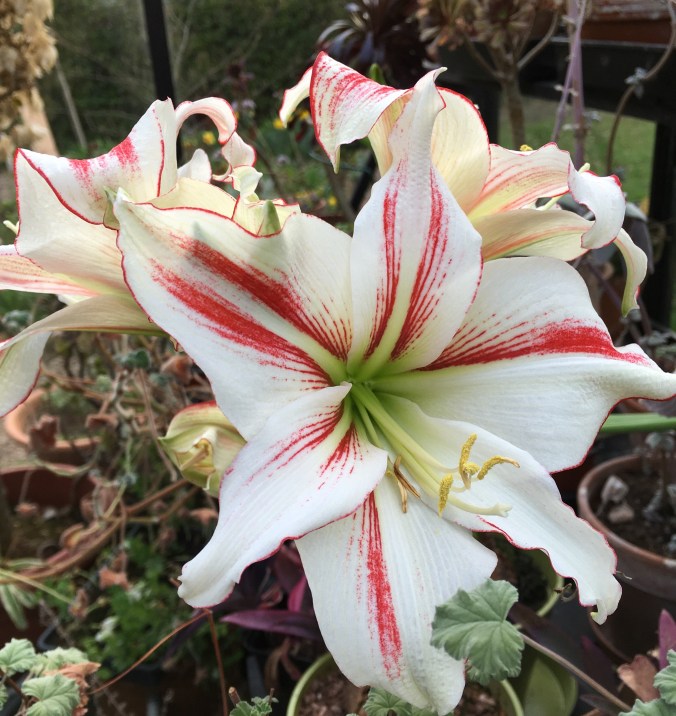
Plants often spring surprises. This is supposed to be Hippeastrum Apple blossom. It’s not. It was planted in October – to flower at Christmas. It didn’t. I’m not complaining, it’s given me a lovely surprise today.

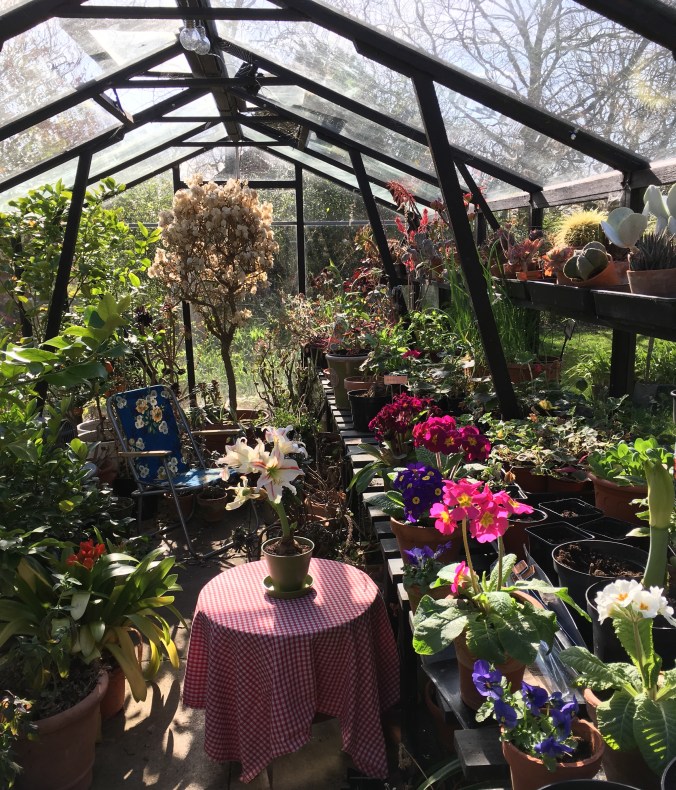
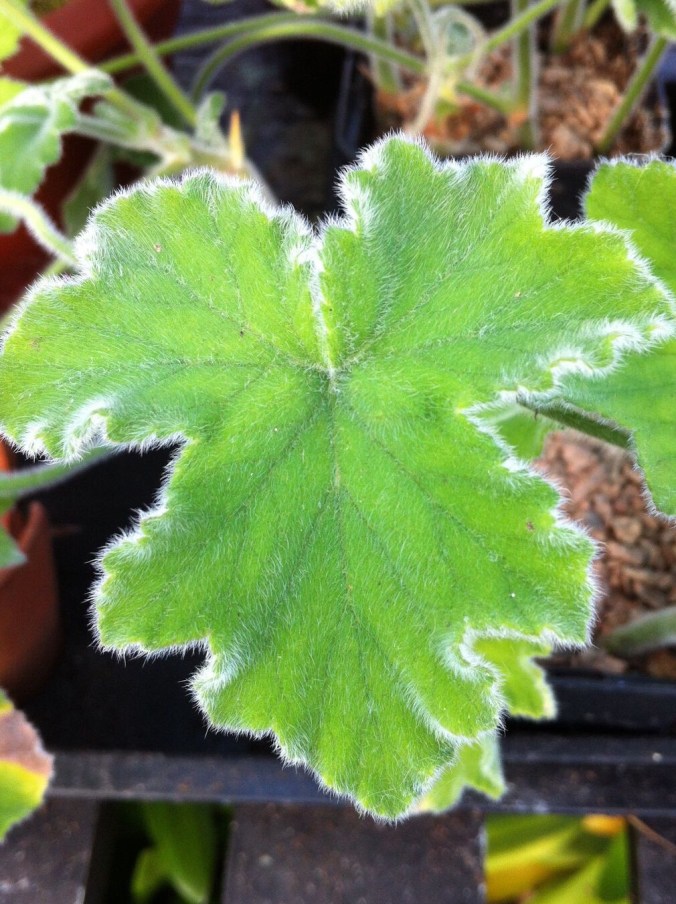
I’ve given it pride of place on the the greenhouse coffee table. As you can see, there’s lots of potting on to do in there. I’m half way through my scented pelargoniums. I’m potting them into large terracotta pots to stand out on the terrace.

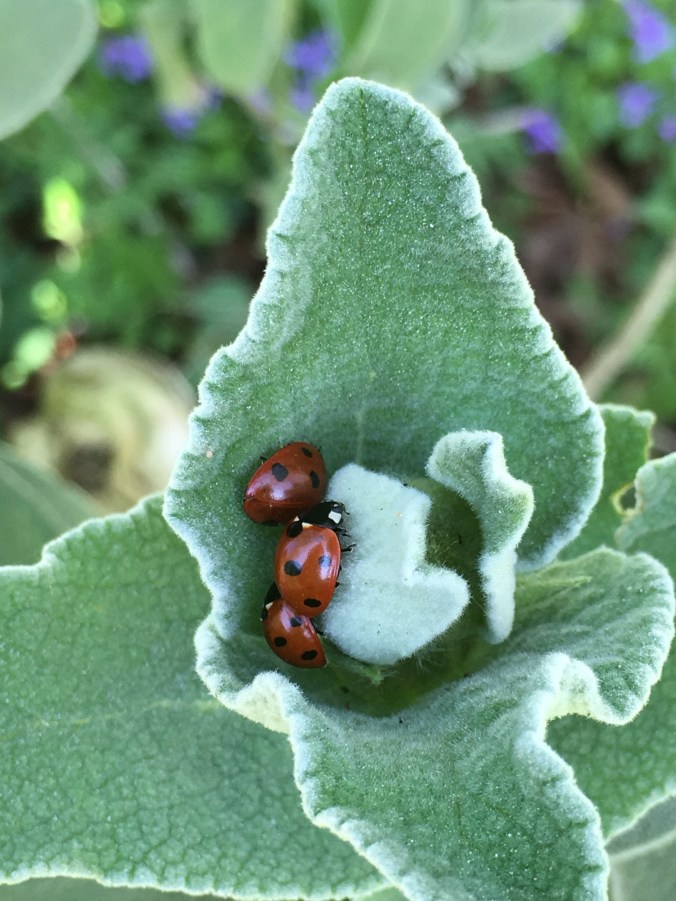
Speaking of surprises, my garden is full of ladybirds. They are everywhere. Look into the centre of any plant and you’ll find a cluster of them. Here they are nestled in the folds of a grey-leaved phlomis. Looking in my dictionary, I’ve discovered the group noun for ladybirds is a “loveliness.” What else could it be! Luckily I’ve left all my dead stems in the garden, giving ladybirds and other insects somewhere to hibernate.

And my final surprise is the pond. Not only is it holding water after springing a leak and causing us all kinds of trouble, but we now have tadpoles – week’s later than friends a few miles away. And joy! Today I spotted newts. I rather like surprises such as these!

Thank you to the Propagator for hosting Six on Saturday. https://thepropagatorblog.wordpress.com/2019/04/06/six-on-saturday-06-04-2019/#comments

Links :

Hippeastrum : https://www.rhs.org.uk/advice/profile?pid=118

Alton Cedar greenhouses. Mine was second-hand and we’ve painted it black. https://www.altongreenhouses.co.uk/

Ladybirds:

https://community.rspb.org.uk/wildlife/b/notesonnature/posts/a-loveliness-of-ladybirds

In a Vase on Monday.

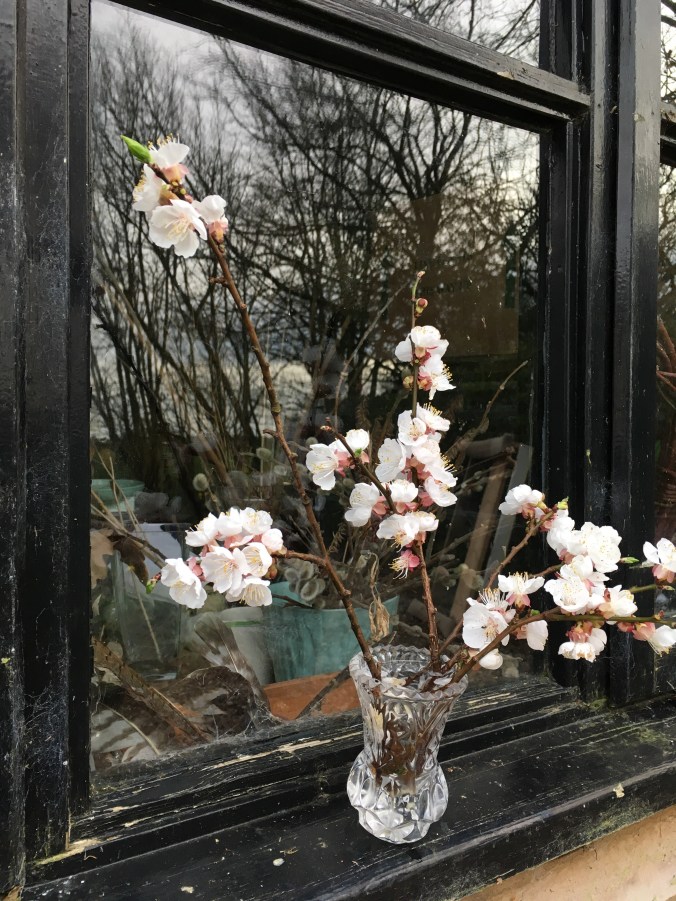
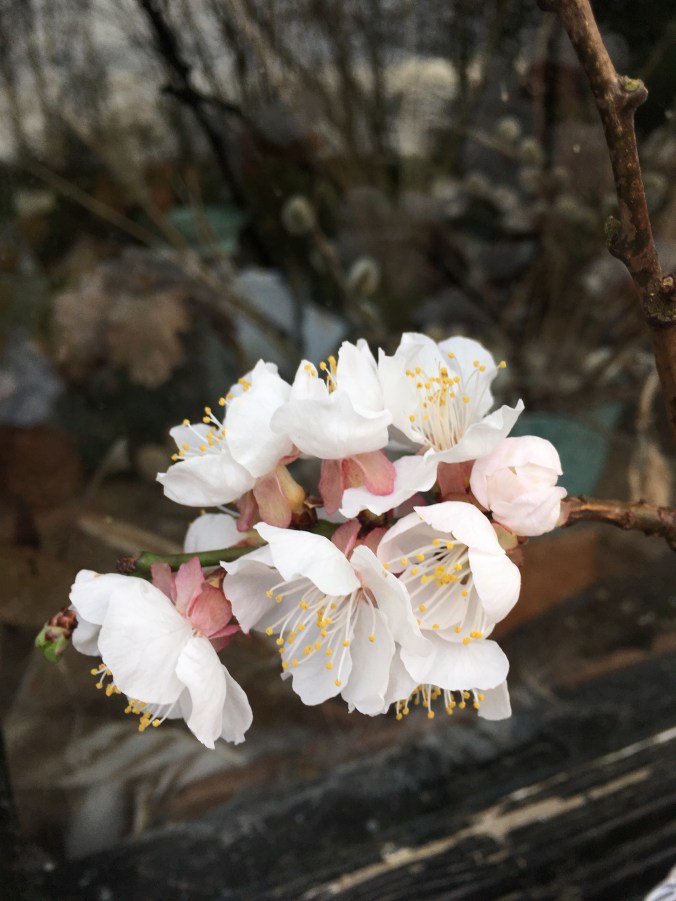
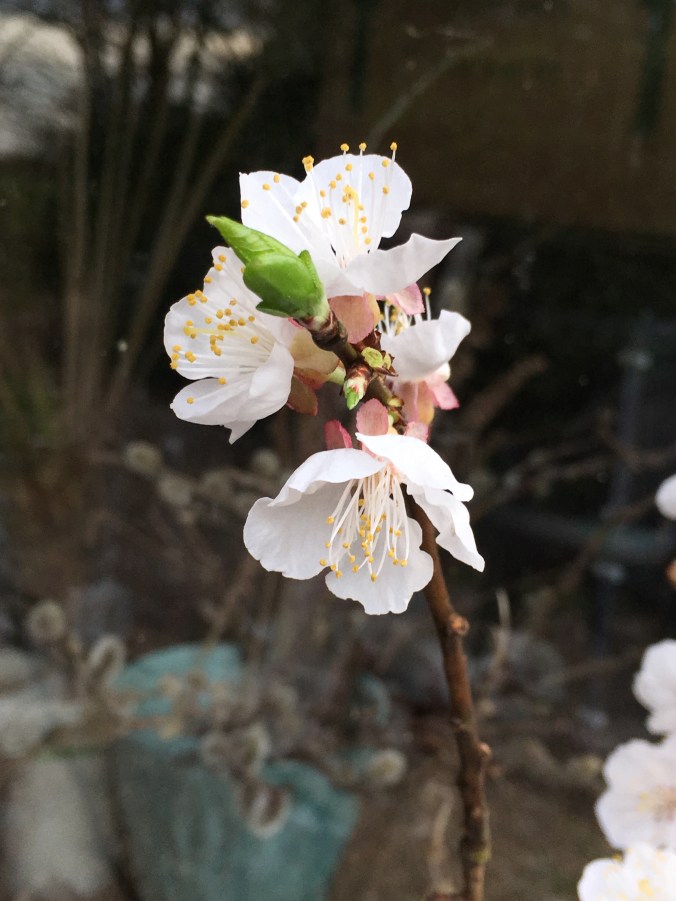
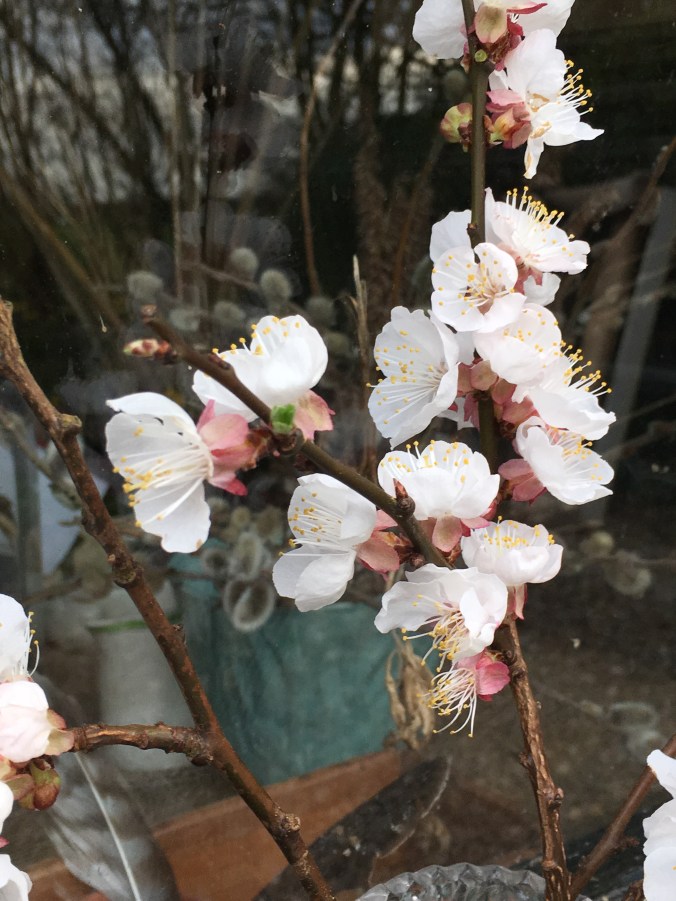
I dashed home from work – and it was still light. Hurray! These photos were taken at 5.52 pm. This week I found some delicate apricot blossom. Four stems, displayed in my mother-in-law Joan’s cut glass vase. Such beautiful flowers. They seem to need no other companions.

These flowers will be a fleeting beauty. The weather has turned cold and windy. Snow fell yesterday but didn’t settle. I expect there’s more to come. Meanwhile, I’ll bring my vase indoors. Such pretty flowers will cheer up my kitchen table- and me.

Links:

IAVOM https://ramblinginthegarden.wordpress.com/

Apricot trees https://www.chrisbowers.co.uk/category/apricots/

Six on Saturday – 9th March 2019

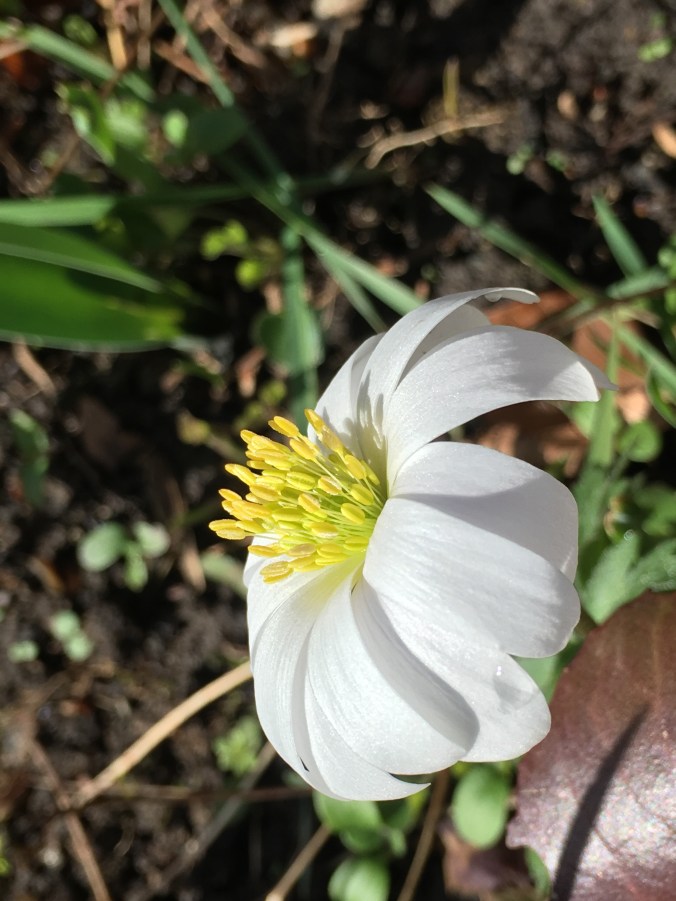
Flashes of light in the wild garden. Anemone blanda White Splendour. It’s full of bees today. White Stands out well against a leafmould carpet. I love the golden stamens.

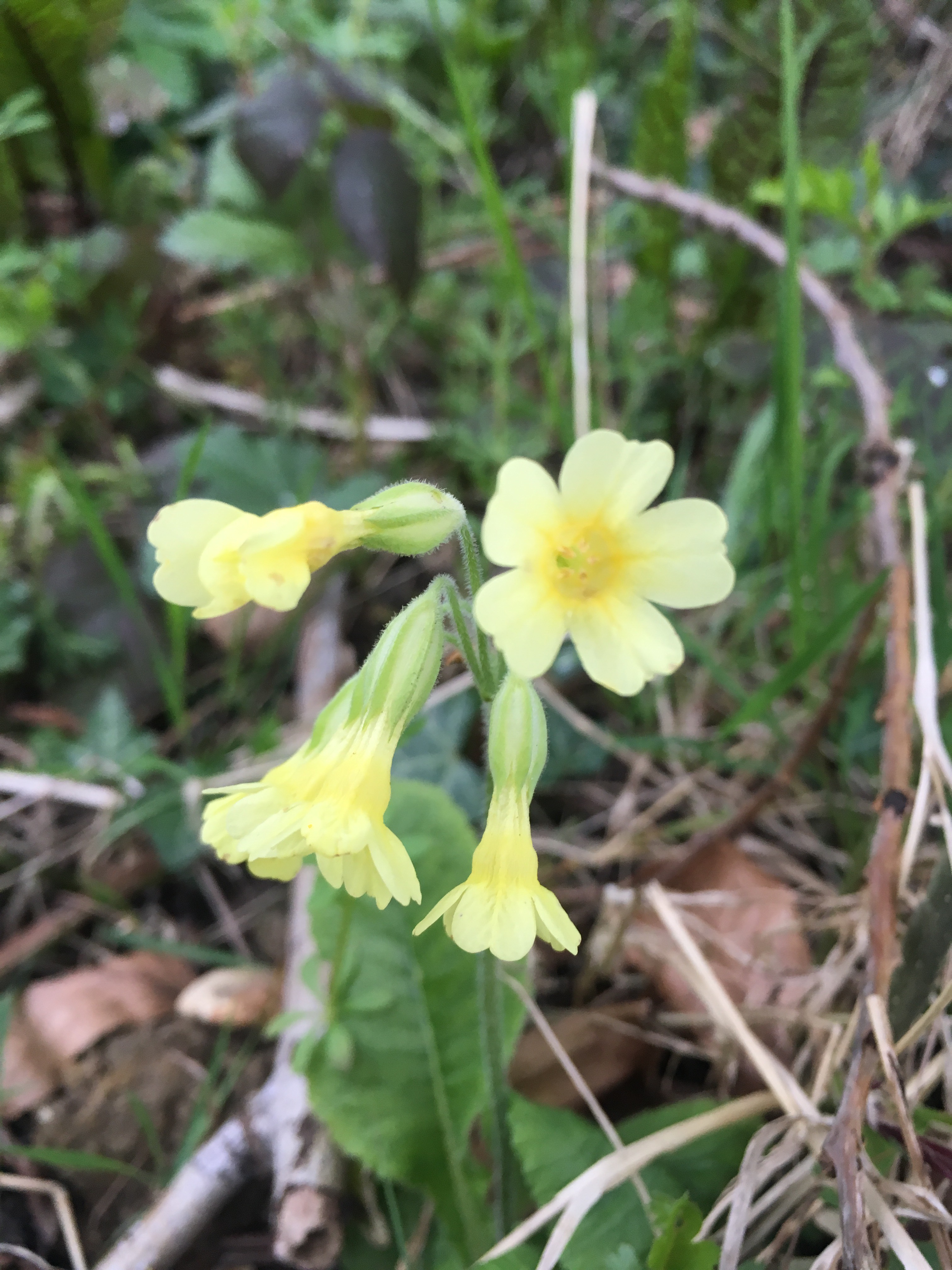
Wild primroses escape from the hedgerow and colonise the lawn. We will mow around them.

Wild violets all along the hedgerow. Fabulous scent. More bees.

Talking of scent, these hyacinths, Carnegie White and Delft Blue, are still going strong on the greenhouse trolley. I’m enjoying shuffling the plant pots around for my “potted garden” display. Must admit, I got the idea from Monty Don. His “little pots of delight” always caught my attention. Last autumn, I threw lots of bulbs unceremoniously into shallow pans and Sankey pots, and stuffed them under the greenhouse benches. Corkscrew hazel twigs are holding the hyacinths up. ( Thank you Mary for dropping two sacks of twigs on the grass verge for me. 🙂)

From little terracotta pans – to this giant Italian pot, bulbs look great in any container. This is packed full with 50 white tulips. After I’d planted them, I thought I’d layer up with other bulbs to extend the flowering season. There’s white crocus Joan of Arc, anemone blanda, blue hyacinths, and blue violas, topped off with narcissi February Gold.

It’s really worth buying top-size bulbs. These crocus have three flower stems per bulb. It prolongs the crocus season. So cheerful now the weather has turned cold and windy. We need all the cheer we can get. It’s currently sleeting here, and snow is said to be on the way. Enjoy your gardening weekend, and try to keep warm. I will be in the greenhouse- with the heating switched on!

Links:

Six on Saturday https://thepropagatorblog.wordpress.com/2019/03/09/six-on-saturday-09-03-2019/

Anemone blanda https://www.rhs.org.uk/Plants/90635/i-Anemone-blanda-i-White-Splendour/Details

Bulbs : https://www.gee-tee.co.uk/

Bulb compost : https://www.dalefootcomposts.co.uk/products/bulb-compost.p.aspx

Six on Saturday- My Garden view March 2 2019

Snowdrops are fading fast. We’ve had the warmest February on record, which means they flowered early. But late-flowering varieties came into flower and withered within days.

Warm weather means an early start for daffodils. I’ve planted wild-type varieties here. Amongst the trees. Fancy doubles would look out of place.

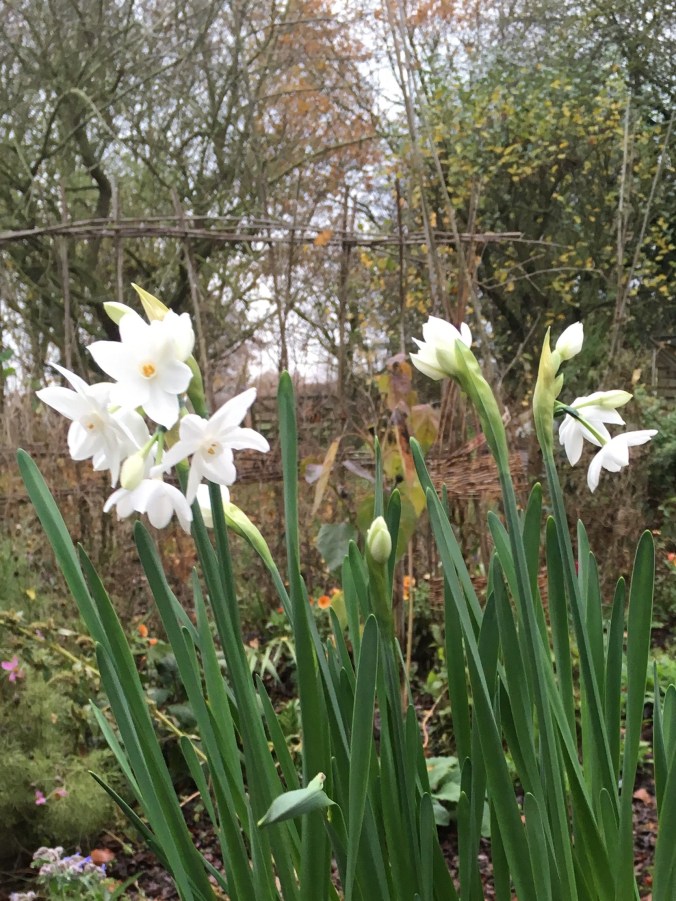
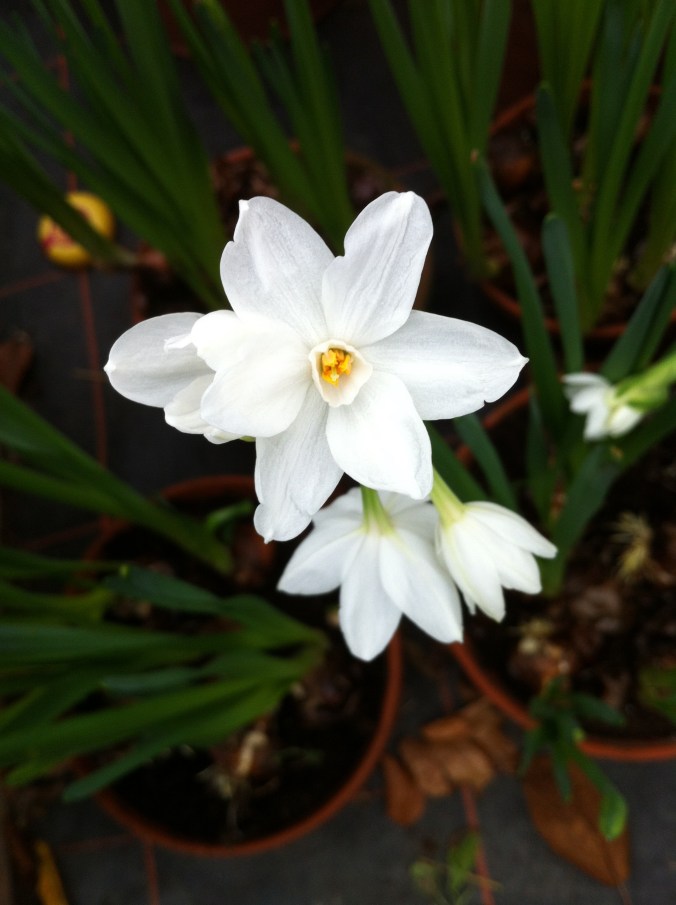
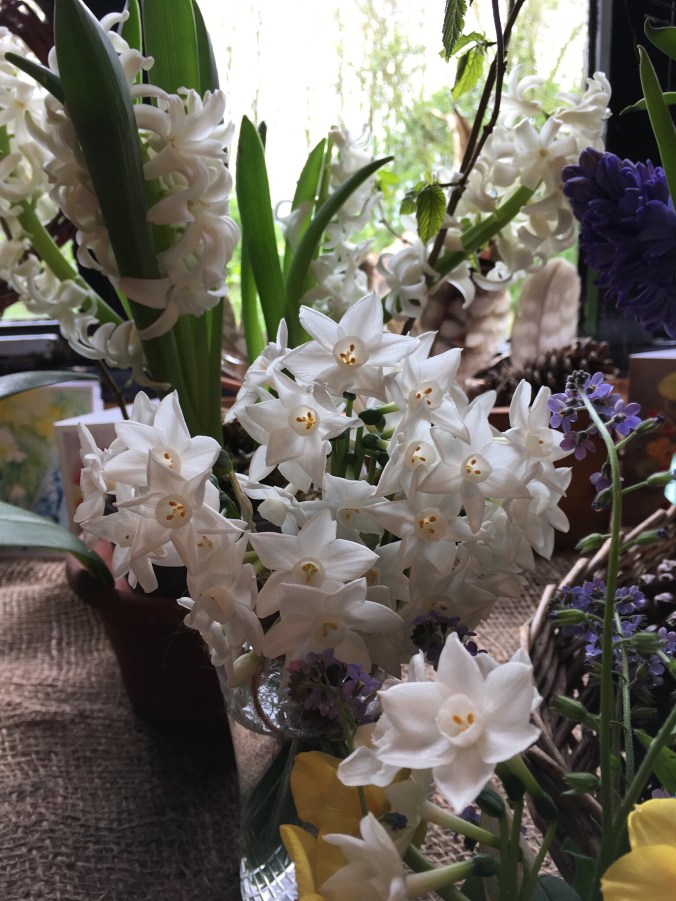
Pots of Paperwhite Narcissi have been successionally flowering since November. For very little work, staggering the planting, a steady stream of flowers are produced for container and cut flowers. The scent is so welcome when it’s cold and dark.

New variety Snow Baby was an experiment this year. They are perfect for hanging baskets, window boxes and containers. Long flowering- whatever the weather. A little beauty. It’s earned its place on my order list for next spring.

Terracotta pots of white primroses and polyanthus are all around the garden today. Such a fabulous scent – and much loved by bees.

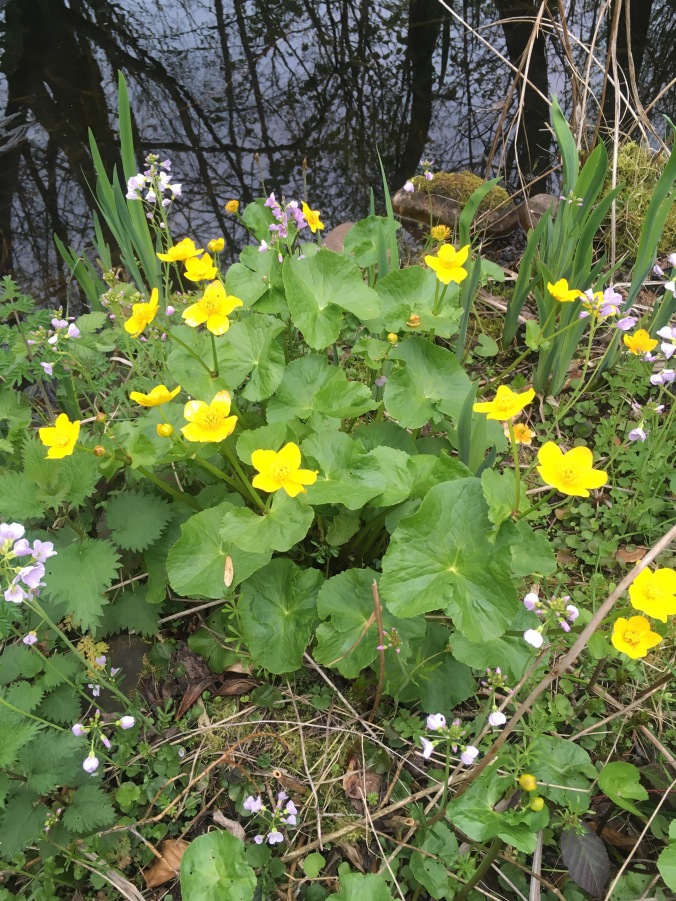
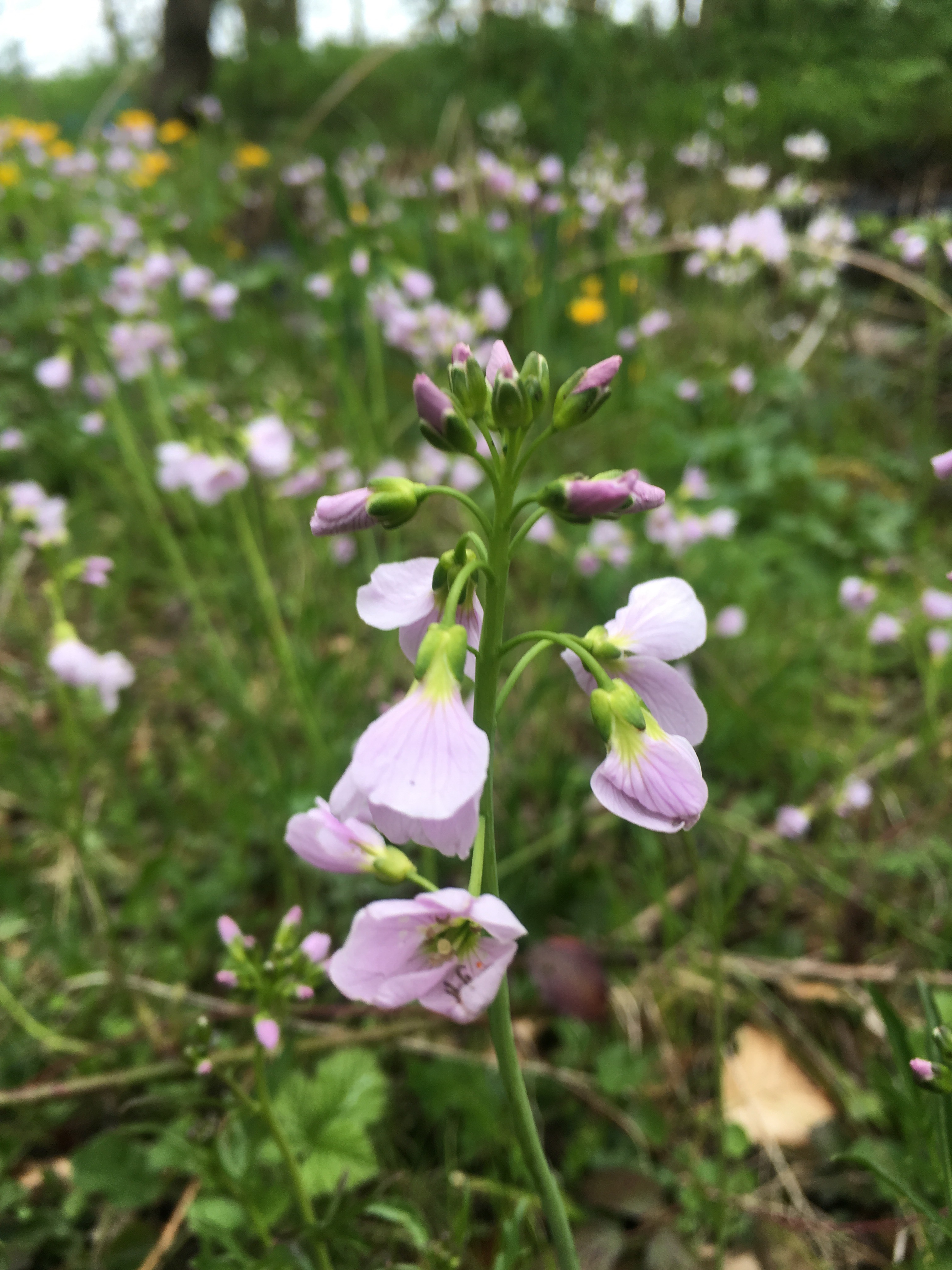
Pale yellow wild primroses are popping up all along the grass verge and our front garden. I haven’t used weed killer or feed on the lawns for years. Nature’s reward is a blanket of wild flowers starting with primroses, then wild violets, blue self heal, and in the damper areas, lady’s smock, cardamine pratensis, or cuckoo flower. I wonder if we’ll hear the cuckoo this year. We only heard it once last spring. Sad to think that in my Grandfather Ted Fould’s day, cuckoos were a common sound in the woods around his home. Now we are lucky to hear just one.

We have lost half of our cuckoo population over the past 20 years. I’m anxiously watching the BTO’s satellite tracking survey showing the position of tagged birds in the Congo rainforest. Soon they will set off for the long flight back to Britain, via the West African coast.

Climate change is causing the timings of the spring season to fluctuate. Evidence shows that migrant species are not advancing their arrival times sufficiently to keep pace with the change. One thing we can do is not spray our gardens so the cuckoo and other migrant birds find insects to eat when they get here. And I’ll leave our surrounding hedgerows tall and wild, to encourage all types of nesting birds.

You can learn more and watch the satellite tracking here https://www.bto.org/science/migration/tracking-studies/cuckoo-tracking

I’m joining the Propagator with his Six on Saturday meme. You can see more here :https://thepropagatorblog.wordpress.com/2019/03/02/six-on-saturday-02-03-2019/

In a Vase on Monday 11th February 2019

Spring flowers and a silver birch wreath. A honey -scented display for the summerhouse today.

Arriving home late from work, I’ve run round the garden and picked a few spring flowers to decorate the wreath.

This week, tete-a-tete narcissi and Iris Eye Catcher join the snowdrops in my display. I can report, the little test tubes I mentioned last week are working a treat. The double snowdrops have lasted seven days.

The test tubes arrived attached to a bouquet of orchids, a gift from a friend. As usual, I put them in the potting shed until I’ve thought of a use for them. We are all trying to manage without oasis florists foam, which is not recyclable and adds to pollution.

I twist a wire around the top of the test tube and press it into the twiggy wreath. It stays there securely, despite high winds. Storm Erik bashed the garden, but didn’t damage the display- with the summerhouse turned to face the shelter of the trees. I patch in some emerald green moss and fresh ivy to hide the workings.

Here’s where the flowers are growing, in the wild garden under beech, oak and cherry trees.

Double snowdrops came from Hodsock Priory. Singles, Galanthus nivalis, from Easton Walled Gardens.

Yellow aconites are finally starting to spread. They are slow to establish and like lots of leafmould.

I finish the day walking down the lane to pick willow stems for valentine hearts. And joy! The first lamb, born today. What a lovely surprise, and I’m glad it is a glorious sunny day. Not like last year, when they arrived in a snowstorm. Today is a good day to be born. I stand for a while watching the tiny lamb find its feet. Within minutes it’s jumping, all four feet off the ground. A sight I’ll never tire of, and another sure sign spring is not far away.

Links:

IAVOM with Cathy https://ramblinginthegarden.wordpress.com/2019/02/11/in-a-vase-on-monday-and-so-it-goes/

Easton Walled Gardens https://www.visiteaston.co.uk/

Hodsock Priory http://www.hodsockpriory.com/

Yellow aconites https://www.gee-tee.co.uk/bulbs/eranthis/eranthis-hyemalis

Floristry supplies Googies Flower Shop https://en-gb.facebook.com/googiesflowers/

Last week’s IAVOM https://bramblegarden.com/2019/02/04/in-a-vase-on-monday-february-4th-2019/

Six on Saturday- a walk round my garden, 9th February

I’ve got a pair of old nursery trolleys made out of metal with wooden plank tops. They are perfect for moving compost and plants about the garden. They hook together so in theory your could pull two. Usually we just use one at a time. They also make a good platform for a spring bulb display. It’s lovely to see my grandfather Ted Foulds’ Sankey terracotta pots out on show. He used to love to visit my garden each week and “walk the estate.” He had a good sense of humour and was a very kind man.

Iris Katherine Hodgkin is just coming into flower. So pretty, with markings that look as if they’ve been drawn in blue ink. Behind them, there’s royal blue Iris Harmony, and pale yellow Katherine’s Gold- a sport of Katherine Hodgkin, and new for me this year.

Behind the iris pots is an old zinc container full of Hyacinth Blue Jacket. It’s a beautiful deep velvety blue flower, and the scent is fabulous. I grew them from prepared bulbs, started last autumn. Some flowered for Christmas, but by leaving a few in a cold poly tunnel, I’ve spread the flowering over a longer period. It’s just now that I start to need some colour in the garden. I’ll put some hazel sticks in amongst the bulbs to support them. Those flower buds look so promising on a freezing cold day.

Still on the subject of bulbs … I never know how these posts are going to go on a Saturday, I usually just roam about the garden taking a few photos, and somehow a theme emerges. This week, it’s early bulbs. Here in the wild garden there’s cyclamen Coum and winter aconites Eranthis hyemalis. I didn’t plant them exactly in this spot. Mice or some other creature has carried them here. I actually planted them further across to the left, about 3 metres away. Still, they are thriving here, so who am I to complain. I’ll not disturb them now, or fight nature.

I’m pleased to see the snowdrop corner is finally starting to get going. I planted these yellow and white snowdrops two years ago after sharing a purchase with a friend. It’s the most I’ve ever spent on snowdrops, £12.50 for three little bulbs. And I probably won’t do it again. But they are such pretty things. I’m delighted to see they have doubled in number this year. They obviously like the leaf mould and undisturbed spot, under ash and willow trees.

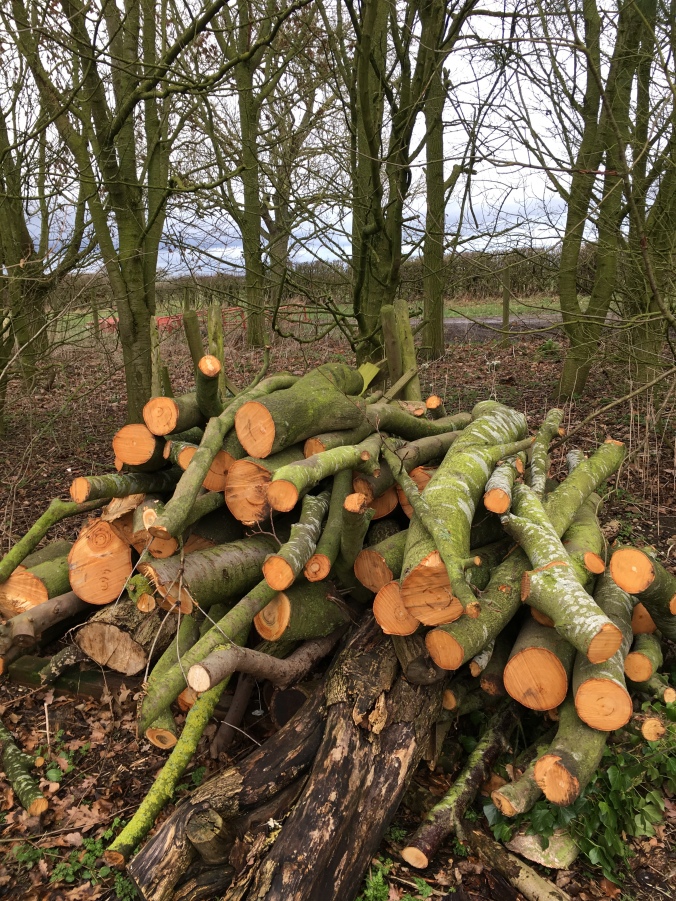
Talking of trees, one of our huge beech trees had to be felled this week. It was leaning precariously towards the house roof. I can hear the chain saw sounds right now as my husband chops it up for next year’s firewood. I always feel sad when we have to chop down a tree. But it’s opened up a patch of sunlight in the paddock. Maybe I’ll plant something lovely there in its place. Meanwhile, I can’t stop gazing at the green mossy logs. They are a thing of beauty, don’t you think.

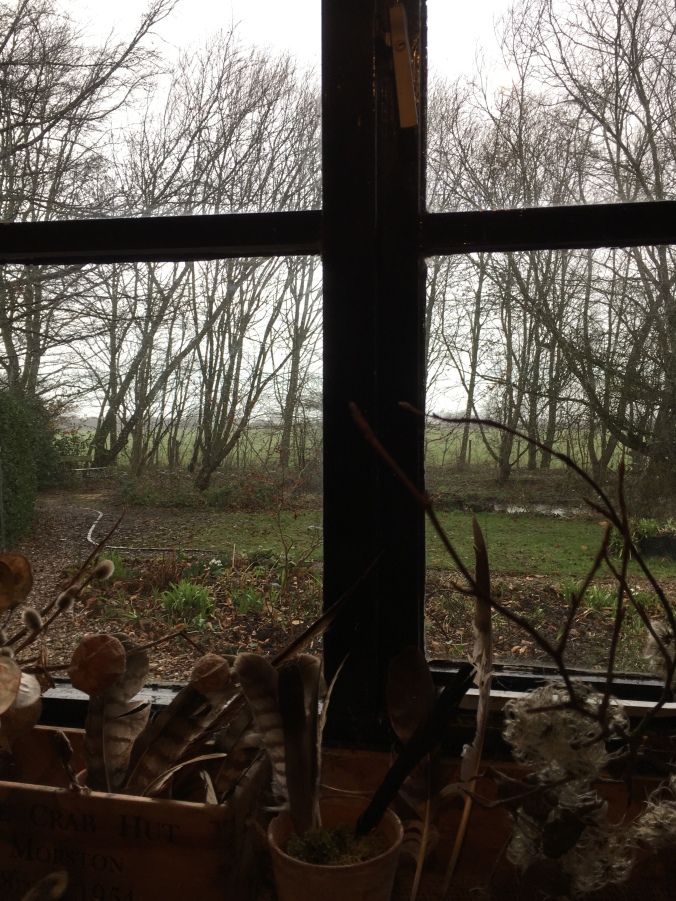
As you can see from my view from the potting shed window. There’s plenty more trees in the garden. We really ought to thin them out some more. But I can only face doing it a bit at a time. I’m very averse to change, and I’m getting worse. I would probably like time to stand still. But with gardens, as with everything in life, that’s not going to happen.

Six on Saturday https://thepropagatorblog.wordpress.com/2019/02/09/six-on-saturday-09-02-2019/

Cyclamen Coum https://www.gee-tee.co.uk/bulbs/cyclamen/cyclamen-coum

Eranthis hyemalis https://www.gee-tee.co.uk/bulbs/eranthis/eranthis-hyemalis

I wrote about Ted Foulds here https://bramblegarden.com/tag/tulips/

In a Vase on Monday-February 4th 2019

I’m starting to miss sunshine and warm weather. I’m muffled up with coat, scarves, gloves, two pairs of socks, and still the cold seeps in. There’s been such a cold wind. The ground is frozen and the pond iced over. And yet, mooching about looking for something cheerful, I find chinodoxa- untroubled by the cold, the colour of Mediterranean skies. A little bit of hope.

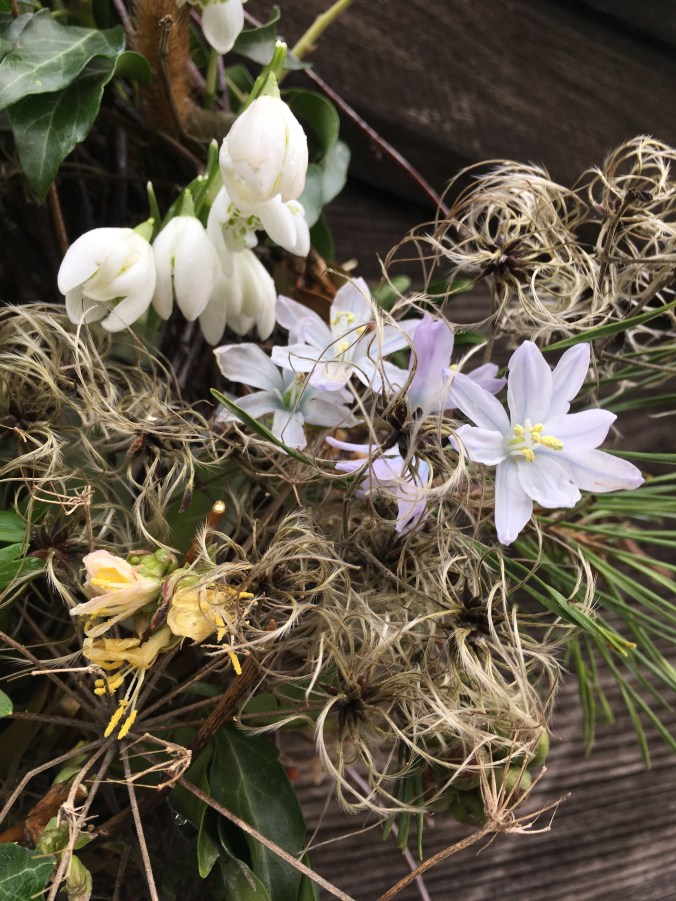
A circle of silver birch twigs makes a pretty background for spring flowers. I just twist the branches like rope and tie the ends together. I’m trying not to use florists’ foam as it’s currently not recyclable. I’ve found a solution. A friend sent me a box of orchids, each one with a 7cm test tube of water, keeping them fresh. Recycling them, I twist a piece of wire around the necks and stick them in amongst the twiggy coils. Topped with moss, and hidden with ivy, no one will know they are there. I just have to top up the water each morning, and at the same time, add fresh flowers as I please. The wreath here was made on Saturday with wild clematis -old man’s beard- ivy and winter flowering honeysuckle lonicera fragrantissima. It survived high winds, mostly. Silver honesty lasted a day, then blew into the back field hedge where it glistens like a tiny mirror. And the star-like cow-parsley seed heads have gone. It’s an arrangement that changes with the weather. I like that. It’s real life. A reflection of what’s happening in my garden today.

So this morning, I’ve picked some snowdrops and chinodoxa and added them to the arrangement. Chinodoxa known as “glory of the snow” seems untroubled by the cold north wind. Such a delicate flower, and yet so hardy.

To add my own sunshine, I’ve found some aconites, Eranthis hyemalis. We called these gold coins when we were growing up.

Snowdrops nestle amongst the foliage. I bought the single variety , galanthus nivalis, from Easton Walled Gardens. A little bit of history now growing in my wild garden. There’s been a garden at Easton for at least 400 years. A renovation project started almost 20 years ago, has rescued the garden for future generations to enjoy. The double snowdrops came from Hodsock Priory. Another favourite place to visit with my Mum.

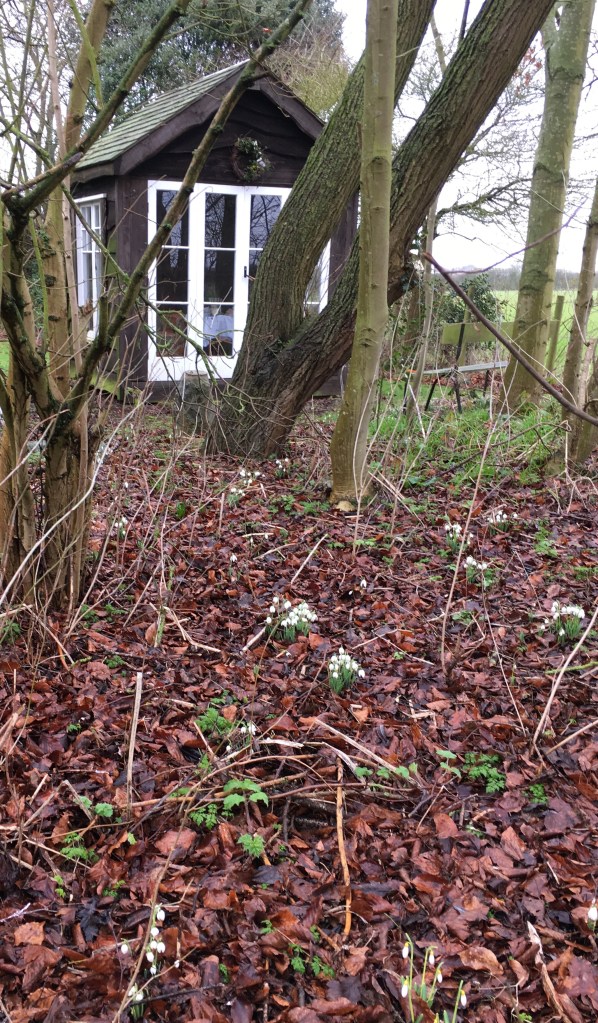
My wreath sits above the doors on our 1930s turntable summerhouse. We’ve turned our backs to the wind and swung the summerhouse around to face the wild garden. There’s wild garlic thriving on the right, under the willow. I’m really pleased to see snowdrops I planted three years ago starting to form little clumps. How long, I wonder, before the scene is a sea of white. I shall have to wait and see.

Links :

I’m joining Cathy for her IAVOM meme. https://ramblinginthegarden.wordpress.com/2019/02/04/in-a-vase-on-monday-skinny/

Chonodoxa https://www.gee-tee.co.uk/bulbs/chionodoxa/chionodoxa-violet-beauty

Eranthis https://www.gee-tee.co.uk/bulbs/bulbs-in-the-green/eranthis-hyemalis-winter-aconite

Easton Walled Gardens https://www.visiteaston.co.uk/

Hodsock Priory snowdrops http://www.hodsockpriory.com/about-us/the-gardens/snowdrops/

NGS snowdrop gardens to visit https://www.ngs.org.uk/find-a-garden/snowdrop-gardens/

Lonicera fragrantissima https://www.rhs.org.uk/Plants/68665/i-Lonicera-fragrantissima-i/Details

In a Vase on Monday

I always seem to be wandering about in the gloom. I rush home from work just in time to check over the greenhouse and poly tunnel. It’s always a delight to see what’s burst into flower while I’ve been away. So today, I’m sorry to say, my flower arrangements are a little dark- again.

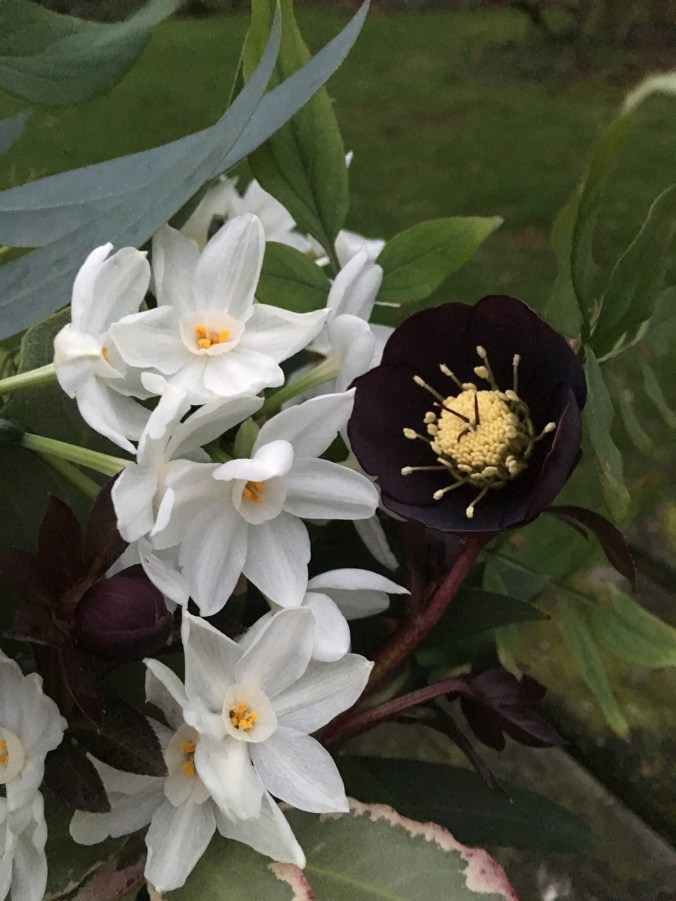
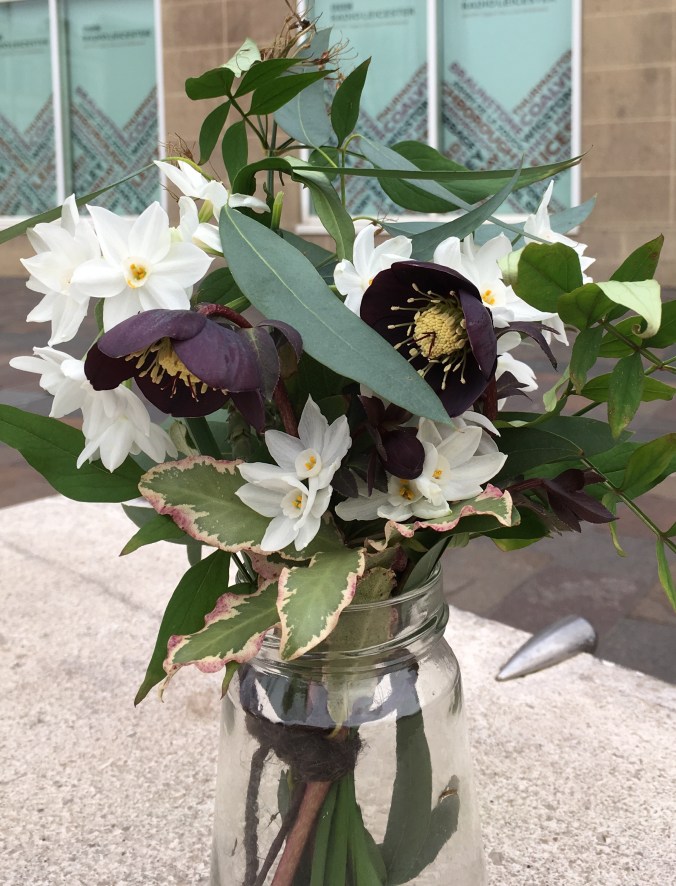
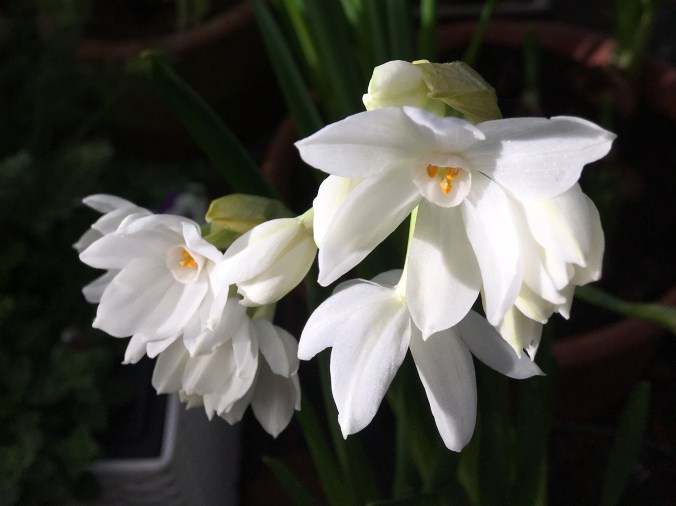
Luckily, there’s just enough light to pick a few stems of Paperwhite narcissi. The scent is such a joy in winter. It’s a little overwhelming indoors, but three stems in a posy are just right.

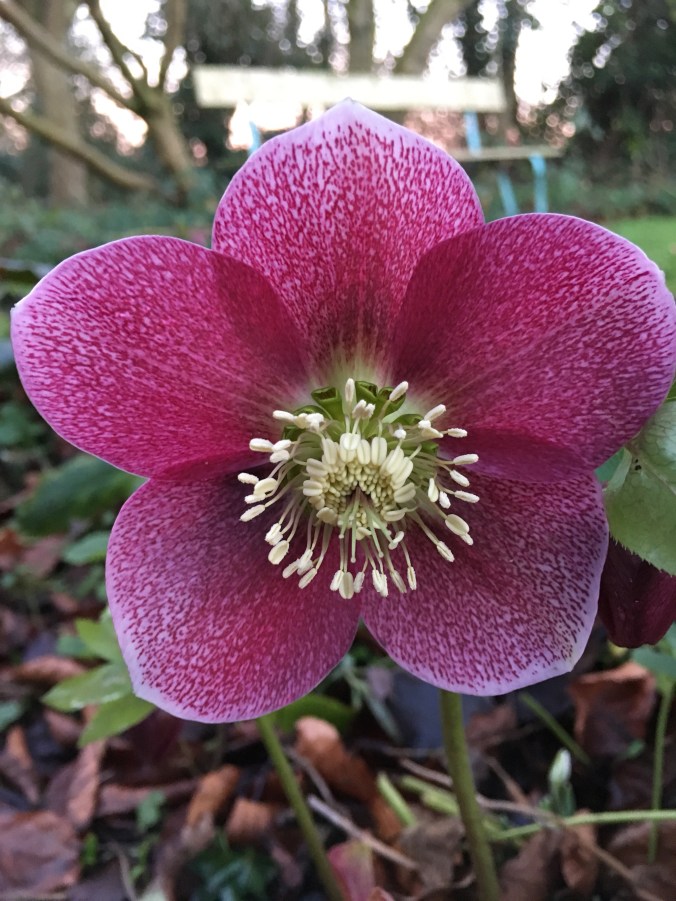
I’ve partnered the Paperwhites with a chocolate hellebore. I bought this last spring at Ashwood Nurseries where the owner John Massey very kindly gave our group a tour of his private gardens, as well as delicious lunch in his cosy kitchen. It’s a memory I will always treasure, thanks to John’s kindness and generosity.

My little posy came on an outing with me to Leicester for the gardening phone-in programme at Radio Leicester. After answering listeners’ questions on everything from sowing seed to pruning, I set off for my Mum’s house. The posy looks just perfect on her sunny kitchen window.

Pittosporum has a purple wavy picottee edge in winter. I’m cutting back my eucalyptus gunii this spring as it’s got to about 8ft. Trimmings make a lovely background for any flower. I’m also cutting back a giant white jasmine. The foliage is almost every green, and there are a few purple-tinged seed heads that look very pretty.

By the time I finish messing about with flowers and foliage, the trees in the back field are charcoal outlines. I stand and marvel. Is there anything more beautiful than a native oak. The farmer who planted this has long gone, and his son also. We live next to the farm. No doubt, this tree will outlive me. Meanwhile I’ll stand and gaze, and make a promise to protect it, should anything ever come along to threaten it.

I’m joining Cathy again this week for her IAVOM meme. Here’s the link to join in and read about what the others are growing and putting in their vases this week.

Links:

Cathy https://ramblinginthegarden.wordpress.com/2019/01/28/in-a-vase-on-monday-it-makes-scents/

Ashwood Nursery black hellebores : https://www.ashwoodnurseries.com/shop/helleborus-xhybridus-single-black-pearl.html

I wrote about my visit to Ashwood here https://bramblegarden.com/2018/02/26/in-a-vase-on-monday-ashnurs-gdnmediaguild/

I wrote about growing Paperwhites here https://bramblegarden.com/2017/12/01/fairy-lights-for-the-greenhouse-and-an-update-from-this-weeks-bbc-radio-programme-for-gardeners/

Visit Ashwood https://www.ashwoodnurseries.com/visit-us/

Last Minute Christmas Presents for Gardeners

Here’s my last minute recommendations. I would love to receive any of these. They all last longer than Christmas Day. Prices vary, depending on special offers and discounts.

1. Vouchers for a course at Common Farm Flowers.

https://www.commonfarmflowers.com/workshops.html .

I joined the Grow Your Own Cut Flower Patch course a few years ago, and I’m self-sufficient in flowers for my friends and family. There was enough information to grow plants commercially, if I had wanted to. I’m delighted to be able to wander about my garden at any time of the year and create beautiful hand tied bouquets and pretty jam jar posies. There’s something special about home-grown flowers. It’s all a matter of planning and knowing what varieties to grow. Georgie is an excellent teacher. After attending one of her courses, you feel as if you can conquer the world. It’s a rather wonderful feeling!

Courses on offer range from £15 for a garden tour to £290 for a painting course.

Courses: Flower Farming, encouraging wildlife, social media for small businesses, starting a kitchen table business, grow your own wedding flowers, hand tied bouquets.

2. RHS Membership. From £61.

Develop your gardening skills with an RHS membership package. Membership includes unlimited entry to RHS gardens, discounts for show tickets, personalised advice, and entry to 200 partner gardens. The RHS magazine,The Garden, is worth the membership price alone. It is packed full of inspiring ideas and information. Written by experts we all trust. I always look forward to my copy, and it keeps me up to date with new plants, ideas for recycling, using less plastic in the garden and information on the latest research into plant diseases. It’s great to see The Garden magazine will be delivered in recyclable paper packaging instead of single-use plastic next spring.

https://www.rhs.org.uk/shop/special-offers/active-offers/rhs-gift-membership-offer

3. Support the Woodland Trust with a membership package. £48.

Explore 1,000 Woodland Trust woods. A walk in a wood lifts your mood and re-energises you. It will do you a power of good.

https://www.woodlandtrust.org.uk/membership/

4. Membership for St Tiggywinkles wildlife hospital. £36.

We all rely on our wildlife, hedgehogs in particular, to help us combat slugs. This is a wonderful way to support wildlife and learn more about them.

https://www.sttiggywinkles.org.uk/top-navigation/help-us/membership.html

5. Join The Hardy Plant Society. £17 a year.

A great way to discover more about hardy plants, find like- minded gardeners and join in with events such as talks and slide shows, conservation and plant sales. There’s two issues of the The Hardy Plant magazine a year, free advice and a chance to take part in the free seed distribution scheme.

http://www.hardy-plant.org.uk/whyjoinus

6. Charles Dowding No-dig course. Various prices. Approx £150 a day.

Learn all about growing all kinds of vegetables and fruit, productively and with less effort. Charles has helped me to garden with a poorly back. I fractured my spine in a car crash 15 years ago. Without his advice, I would probably have had to give up my one acre garden. With his no-dig techniques, I have managed to keep on top of weeds, and grow all the fruit, veg and flowers I want to, without aggravating my spinal injuries.

I hope these last-minute suggestions have been useful. If not for Christmas, they make a lovely birthday present.

What’s the best course, or membership, you would recommend? Let me know so I can share your ideas too.

Coming up in the new year, I’ve been invited to try out some weekend holidays for gardeners. I’ll let you know how I get on. I’ll be taking my Mum with me, of course. Something to look forward to in 2019.

Six on Saturday -Making Light

Midwinter. I love saying the word. It’s like a sigh. Midwinter. Dark and gloom until 21st of December – and then the days get lighter. Hurray! Meanwhile, to bring some cheer, there’s fairy lights.

It’s mild today, 9C but windy, so I wrap up warm and head off down the lane to forage for foliage. Sound seems to carry further in winter. I can hear our neighbouring farmer calling his cows. They are as tame as pets, and well tended. The calves line up along the hedge to watch me.

I find willow stems; soft grey catkins breaking through already. There’s plenty of twigs with dried oak leaves. On one side the hedges have been trimmed. But across the lane, the hedges are high. Dog roses wind around the trees and mingle with wild clematis. I have a basket to carry the findings home. There’s fluffy seed heads from Clematis vitalba, and rosehips as red as sealing wax.

Scott’s pine and trailing ivy will be useful evergreen. Above my head, a robin sings, quite unconcerned by my intrusion. It’s good to see a young hare in the field. He crouches down in the long grass when he spots me, but I can still see his ears.

Back through the field gate. A pheasant has taken up residence in our paddock this winter. He’s a joy to see, strutting around and flying into the cherry trees to roost at night. I hope he survives the winter – and evades the hunters. We can hear the guns from our garden. Glad to provide a sanctuary to any creature needing safety.

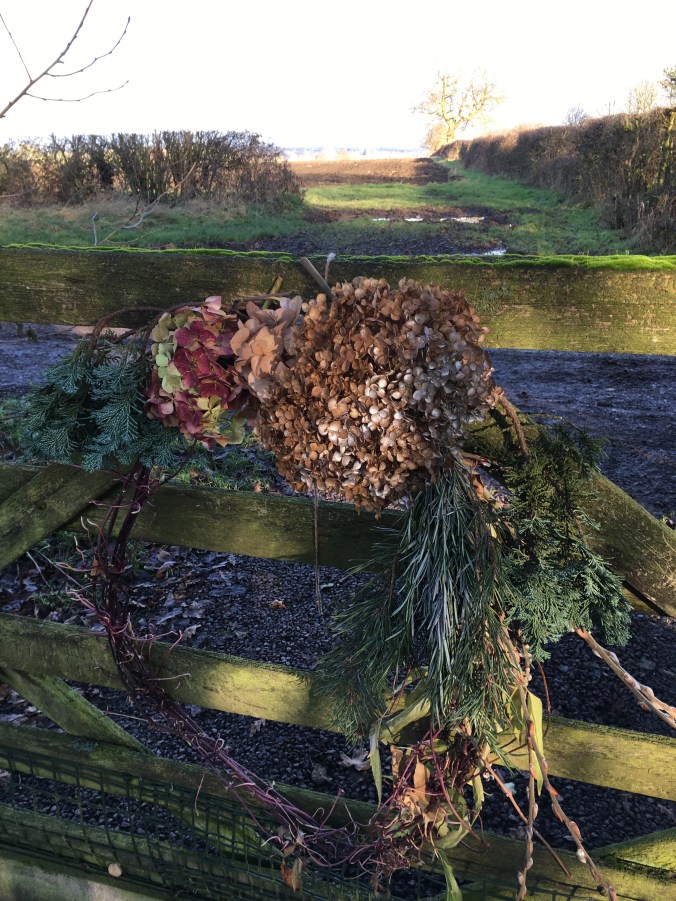
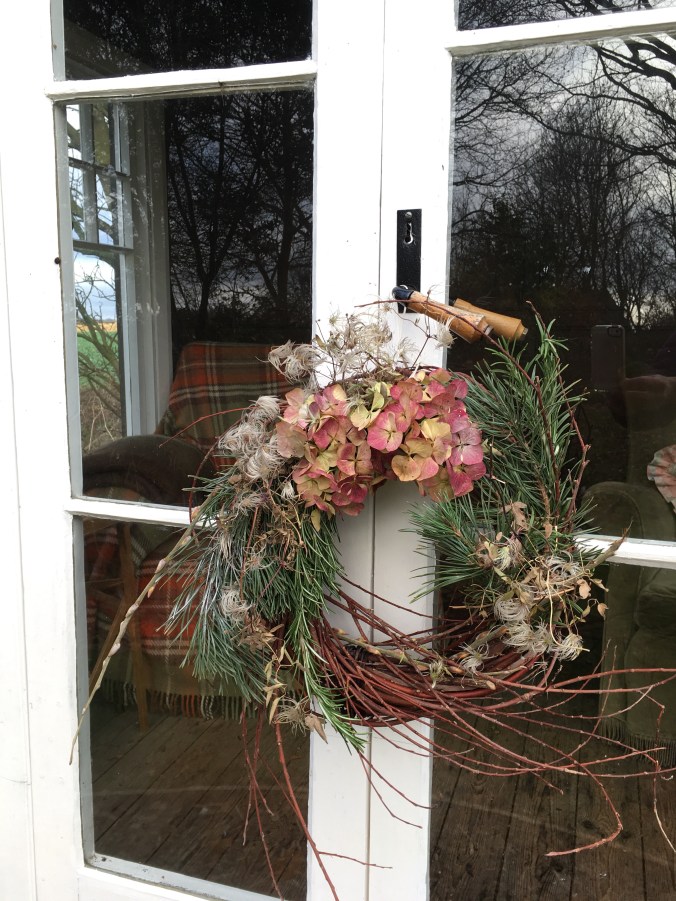
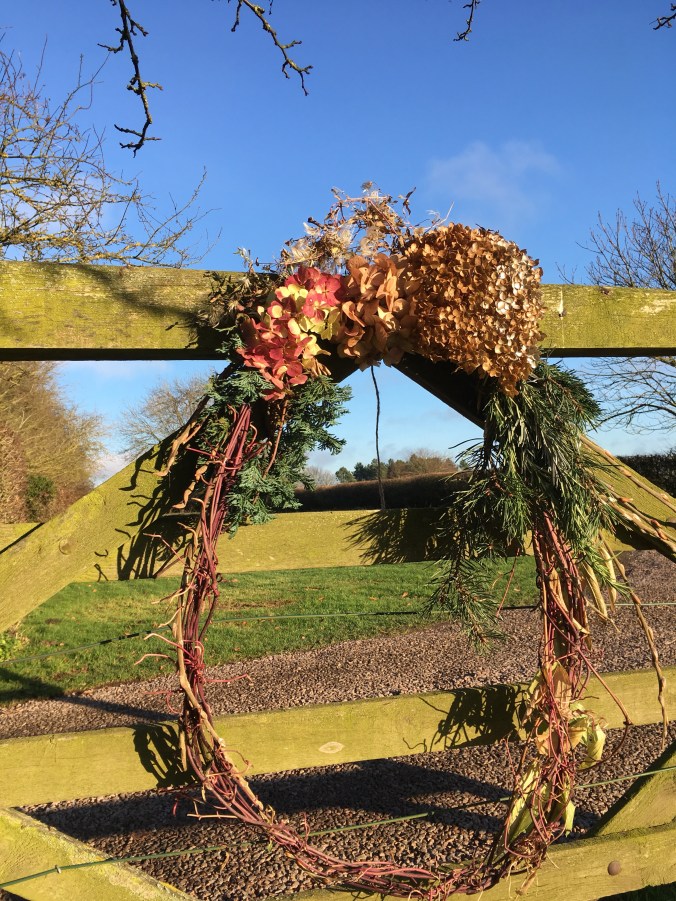
I’ve decorated the five bar gate with a circle of dried clematis stems. Not a perfect circle. Not a perfect gate. We’ve had it since we moved here. It’s covered in moss and creaking loudly, but I can’t bear to replace it. I get attached to old familiar things. Dried hydrangea heads make a focal point, and there’s always rosemary for scent.

Back to the potting shed to make my arrangements.

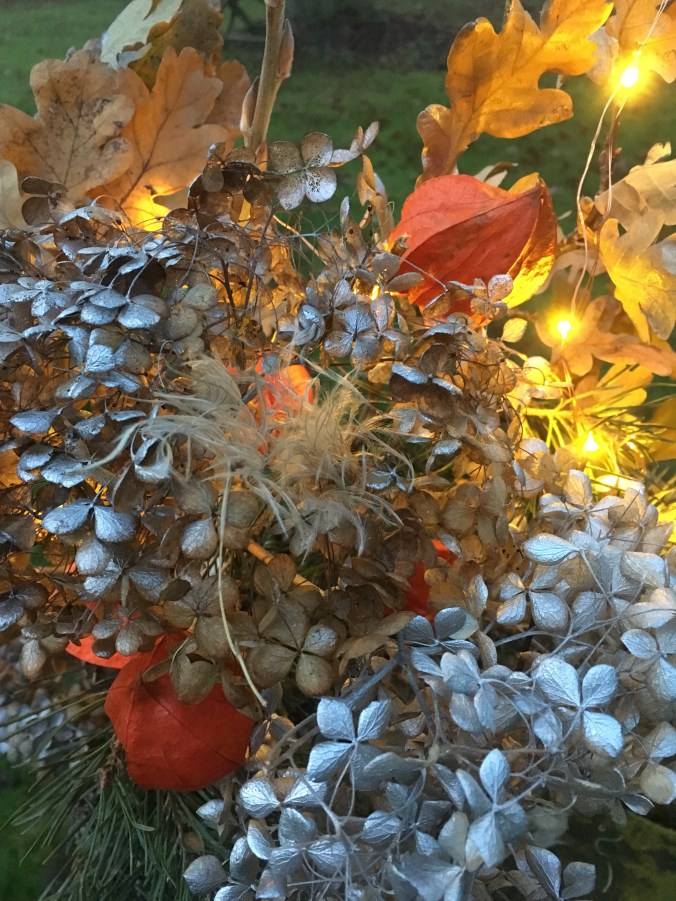
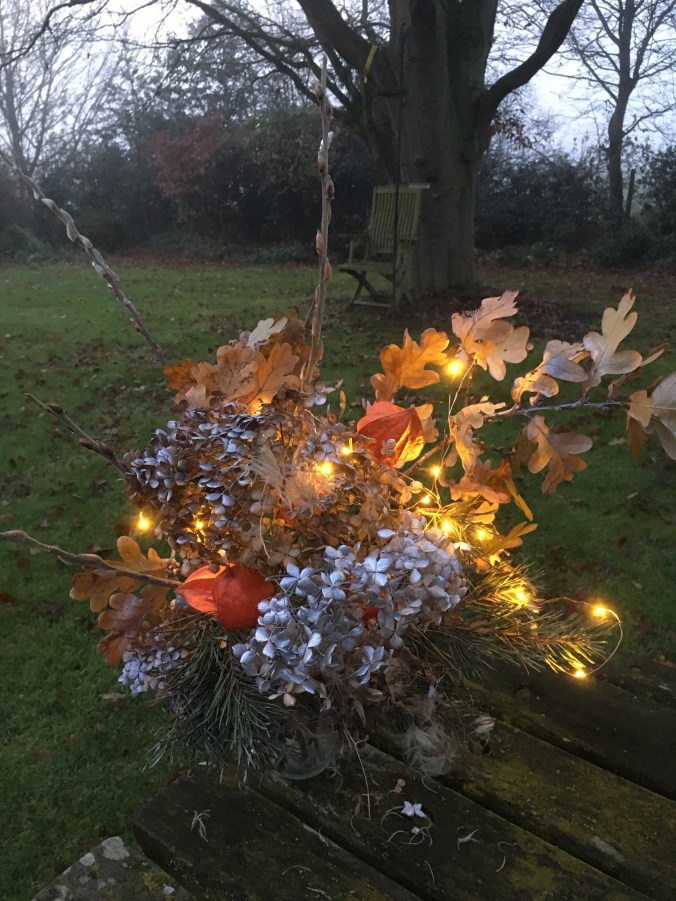
I’ve saved some Chinese’s lanterns, physalis, from the garden. It’s hanging from the rafters to dry, along with hydrangea heads. To add a bit of glitz (unusual for me, I know) I give the hydrangea heads some silver spray. It highlights the delicate flowers of hydrangea Annabel. So beautiful in summer, and winter too. It’s a favourite of mine. The fairy lights are mouldable wire florists lights from Wilkos. You can use rechargeable batteries.

I turn around and there’s a robin and two wrens in the potting shed roof. I shall have to leave the door open for them. They can stay, as long as they don’t eat all of my rosehips.

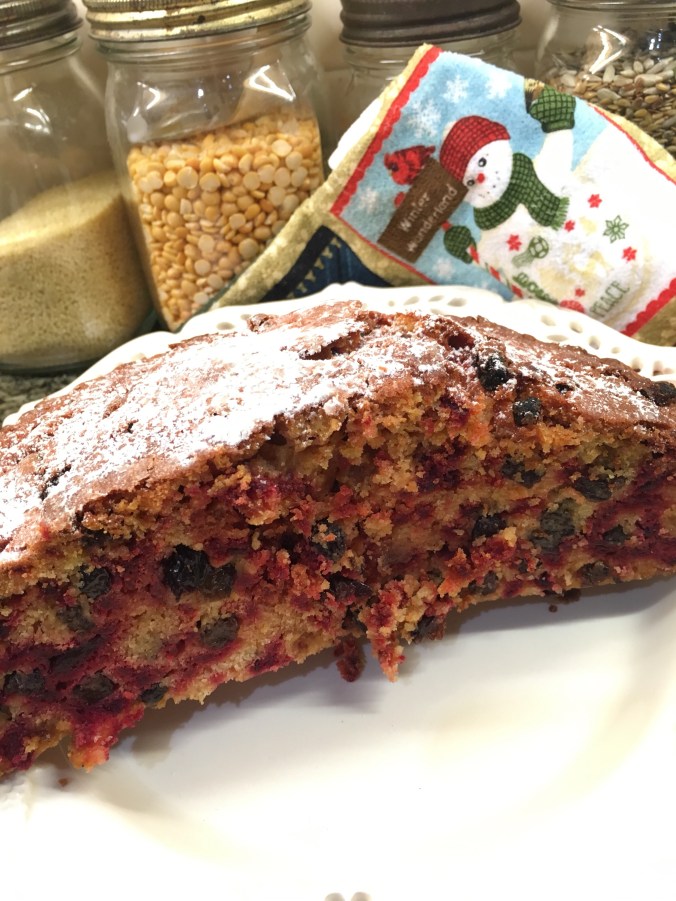
Luckily there’s a kettle in the potting shed. Time for tea, and a piece of Mum’s fruit cake. I hope you’ve enjoyed this ramble around my garden and down the lane. I’m joining with with https://thepropagatorblog.wordpress.com/2018/12/08/six-on-saturday-08-12-2018/ for his SixOnSaturday. Feel free to look around at my other posts while you are here. Catch up with you next Saturday.

In a Vase on Monday. White and Green.

A slide show of flowers from my garden. Paperwhite narcissi, Hellebore Jacob Royal, white heather, Ice Princess. Variegated pittosporum, hebe, juniper, ivy, conifers, Mossy green apple twigs, woven in.

It’s 12C today. No wonder the Paperwhites won’t wait until Christmas. I’ve planted more, a fortnight apart in 10″ pots in the poly tunnel.

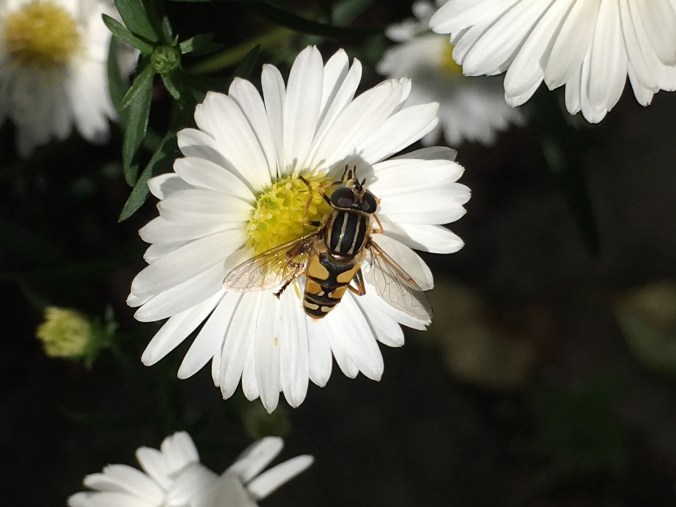
There’s still some bees and hoverflies about. But the wasps have stopped coming. They left an empty paper nest in the long grass in the wild garden. We knew they were there and kept a respectful distance. We’ve had no trouble with aphids all summer; wasps have zoomed in and feasted on them with relish.

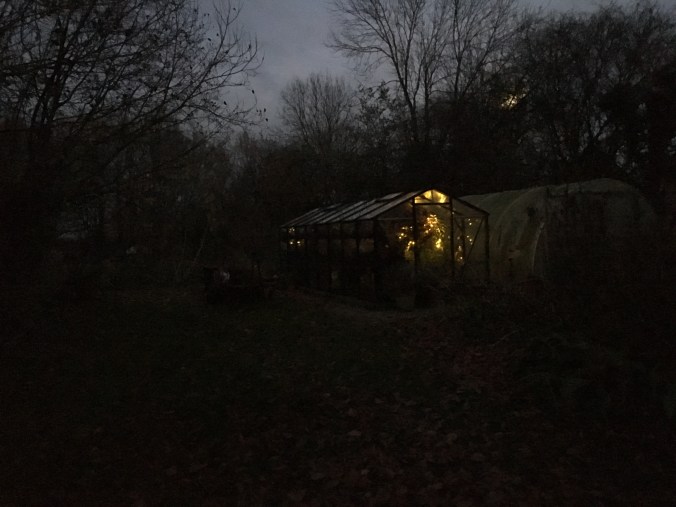
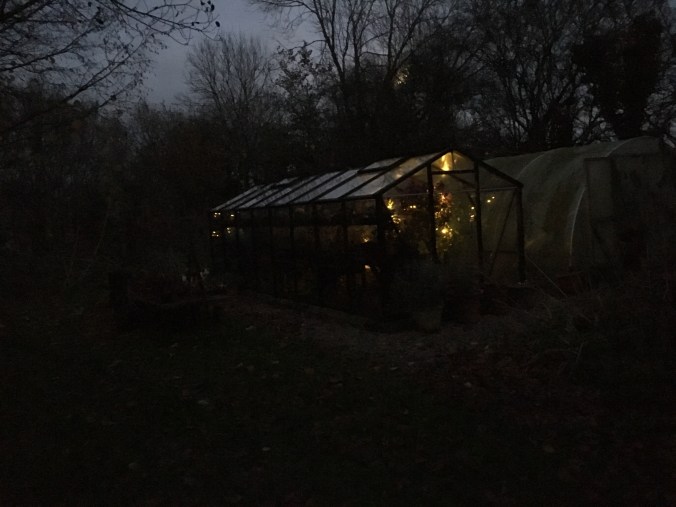
Dusk seems to descend all of a sudden. One moment I am mooching in the greenhouse, the next I’m plunged into darkness. I’ve strung some mouldable wire fairy lights through the lemon trees. They make little heat and will only be left on for an hour or so. Enough to cheer me through the gloom of December days to come.

Winter sunsets are glorious though. I stay out until the very last minute. Hopefully, I’ll spot a tawny owl before it’s time to go indoors.

Thanks to Cathy https://ramblinginthegarden.wordpress.com/ for this IAVOM meme. Why not go over and see what Cathy and all the others are growing and arranging this week. Let me know what’s looking good in your garden at the moment too.

Six on Saturday. A peek in my greenhouse

On such a horrible wet day, the only place to be is in my greenhouse.

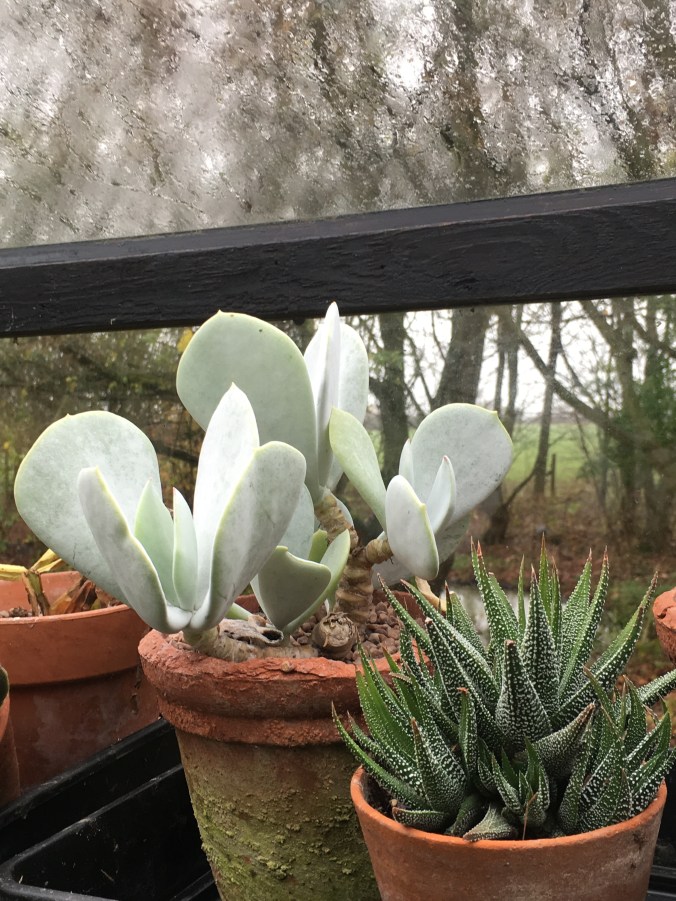
Cacti and succulents rule on the top shelf. They virtually look after themselves. I won’t water them until the end of February. Perfect for anyone with a busy life.

There’s always baby plants to pot up. I’m using these in a Christmas wreath next week. I’ll make a circle of willow, cover it in sheet moss, and wire in the succulent cuttings. They’ll soon root into the moss and grow on. I’ll post some how-to photos as I go. The wreath can hang on the front door, or become a table setting with a candle in the middle.

The temperature in here is 10C today. A Parwins electric fan heater is set to 5C. Providing I keep the plants on the dry side, they survive the winter. It’s the wet that kills more plants than the cold. This pinky orange bougainvillea remains colourful right through until spring. I’ll prune it right back next March and it will produce fresh bracts on the new season’s growth. This one is being trained into a pyramid and I’ve also got a purple one trained into a ball.

Down the left of the greenhouse is a row of potted citrus plants. These are fabulous for making cakes. I never use chemicals, so the zest is safe to use. There’s oranges, tangerines, lemons and limes. I’m searching for something called a Buddhas Hand which apparently produces large quantities of peel for jams and marmalade.

I bring pots of herbs and annuals into the greenhouse in October to overwinter. My nasturtiums are still flowering. I’ll use the flowers and leaves in salads. Anything to cheer up dark and rainy days of December.

I hope you’ve enjoyed my whistle-stop tour of my greenhouse. I love to have somewhere to mooch when it’s horrible outdoors. What’s growing in your greenhouses, coldframes or porches this winter? Get in touch and let me know what you are nurturing, indoors.

Joining in with https://thepropagatorblog.wordpress.com/2018/12/01/six-on-saturday-01-12-2018/. Why not go over and see what the the others have chosen for their Six on Saturday slideshow photos.

Six on Saturday. Joining in for the first time.

Six photos from my garden and potting shed this week.

Catching the light in my potting shed window: Old Man’s Beard, wild clematis vitalba. Commonly called traveller’s joy. I stand on tip toe, reaching into hedgerows to harvest long stems with silver seed heads. They’re a lovely addition to winter flower arrangements.

Silver coins. Honesty seeds. Hanging from the rafters to dry. They will be tucked in amongst rosehips, holly and ivy for Christmas decorations.

Chinese lanterns, harvested in October. I love the various shades of orange. They fade to a delicate papery apricot colour. And left long enough, they become transparent.

My potting shed window looks out onto the wild garden. So heartening to see hazel branches with lambs-tail catkins. A welcome reminder that spring will return. The twigs make useful supports for my paperwhite narcissi and hyacinths which are in the dark under my point shed bench at the moment.

The last few golden leaves are fluttering in the breeze. Hazel, maple, ash trees make a mini woodland. I’ve planted 200 foxgloves in the wild garden. We sowed the seed in mid summer, pricked them out in August, and planted out, they will sit making roots over winter. I’m growing Sutton’s Apricot, a glorious silky, peach- coloured foxglove, and Pam’s Choice- white with a blackcurrant thumb print in each flower.

It’s dusk before I finish planting. I stand by the pond watching blackbirds taking a last-minute bath. I wonder how they can stand the cold water. I expect it keeps their feathers in good condition. A tawny owl glides silently along the field hedge. Short-tailed voles live in the long grass here. Within minutes, it’s dark. It’s not like in summer, where there’s enough moonlight to potter around. November dark is cold, pitch black. Time to go indoors, light a fire and make hot chocolate.

I hope you’ve enjoyed a walk around my garden with me tonight. I’m joining https://thepropagatorblog.wordpress.com/ for his Six on Saturday meme. What jobs are you doing in your garden this weekend?

In a Vase on Monday – flowers for a christening.

Pink roses for a baby girl. Just the right flower. That’s what I decided when a friend asked me to make a door wreath for her granddaughter’s christening.

Setting out with a wicker basket, I spend a happy hour searching the hedgerows around the garden. I’m looking for ivy leaves, and their lime green and black flower heads and seeds. The perfect background for any circle of flowers. I find jewel-like Euonymus europaeus, or spindle tree, growing wild amongst the ivy, dogwood and hawthorn. Their bright pink fruit split apart to reveal orange seeds inside. Leaves turn a burnished bronze and then red. I add them to the basket. It’s like finding treasure.

I find some silver coins. Well, they look like coins. Honesty seed heads have turned a glorious silvery grey. Perfect for tucking in amongst the flowers. I love the way they catch the light. No need for fairy lights here.

I search around for some sprigs of a newly- planted viburnum. This winter-flowering gem is called Viburnum tinus Lisarose. Clusters of small pink and white flowers look lovely at all stages from bud to fully open. It flowers from November to April, just when we most need some cheer.

It’s my lucky day. I’ve found some late-flowering roses. My favourites, The Fairy and Pearl Anniversary. They have small clusters of pearly pink semi-double flowers. Both are compact, easy to grow varieties. Mine are thriving in containers and are moved into the greenhouse to provide flowers right up until Christmas. Pearl Anniversary is a compact, patio rose, and The Fairy is a small shrub rose. Both are repeat flowering and disease resistant.

Roses make the perfect focal point at the top of the wreath. Not many are needed to make a display.

Rosehips. So glossy they look as if they’ve been dipped in varnish. They cascade from the top of the hedgerows. The birds will have a feast. I harvest some for today, and some for Christmas, not taking them all. It’s best to share. I weave them in and out of the ivy. It’s a happy combination of hedgerow and garden. Just perfect for a baby girl’s special day.

Each week I join Cathy for her IAVOM Meme. Luckily flowers don’t have to be in a vase to be included. Why not go over and see what Cathy and all the others are growing and harvesting for their flower arrangements this week. Let me know if you have ever made flowers for a special occasion like I have. It’s lucky when the garden and hedgerow provides such bounty, even in November.

Cathy : https://ramblinginthegarden.wordpress.com/

In a Vase on Monday- Autumn Jewels

It always seems as if flowers in mid November shine brighter than at any other time of the year. They are making a last ditch attempt to attract attention.

Dahlia David Howard, a glorious marmalade orange, takes centre stage. It’s on borrowed time. All the foliage is tipped black, touched by frost. Just a few flowers have escaped. For now.

The first pair of my 3 metre long cut flower beds lie under a weeping plum tree. The branches hang down almost to the ground. The canopy of branches gives just enough protection from the frost to extend the flowering season.

Making a backdrop to the beds is a small but prolific orchard. There’s two cherry trees, three apples, two pears- and a new quince tree that’s provided it’s first proper harvest this year.

It looks like this from the far side of the orchard. There’s plenty of pruning to do this winter.

My ten flower and veg beds are 3 metres long, by about 1.3 metres wide, with narrow paths between. I now garden on a no-dig system, following the principals made famous by Somerset farmer Charles Dowding. When each crop is finished, I don’t disturb the soil. I simply add two inches of compost and plant straight through. That way, weeds aren’t brought to the surface and the worms and mini- creatures living in my soil are not chopped into pieces. It seems to be working a treat, and my back appreciates being let off all that digging!

Dotted about, in amongst the kale and the cabbages, are patches of flowers. I wrote about annual chrysanthemum rainbow mixed https://bramblegarden.com/tag/chrysanthemums/ here. Seeds from Mr Fothergills cost £1.75 and were sown in March and planted out in May. They have been providing non-stop flowers since.

I particularly love this orange chrysanthemum. It is a perfect match for the autumn hues in this little bunch of flowers.

I’m lucky enough to be given new seeds to try out. This summer, my favourite calendula was Orange Flash from Mr Fothergills. It’s been an outstanding performer. http://www.mr-fothergills.co.uk/Flower-Seed/Calendula-Seed/Calendula-Orange-Flash.html#.W-nyCyenyfA

There are a few tiny coreopsis left. And yellow, orange and burgundy nasturtium flowers. Very welcome in posies – and the salad bowl where nasturtiums add a lovely peppery tang to the winter mizuna, mustard and miners lettuce. Such a treat as the weather turns cold.

I rarely take part in prize draws, but this week, on a whim, I joined in with one from the English Garden Magazine. It must have been my lucky day as I won! Now I’ve got some new music to garden to. Just as well, as I’ve found some more tulips I’d ordered and forgotten about. That’s my job for tomorrow sorted.

David Howard dahlias came from https://www.gee-tee.co.uk/bulbs/dahlias/dark-leaved-dahlias/dahlia-david-howard.

As always, I’m linking with Cathy for this week’s IAVOM. Why not go over and see what Cathy and all the others are growing and picking for their flower vases this week. And don’t forget to let me know what plants are still in flower in your garden this autumn. https://ramblinginthegarden.wordpress.com/.

The Almanac – A Seasonal Guide to 2019

Book Review

Lia Leendertz. Illustrated by Celia Hart

Octopus Books/ Mitchell Beazley. Hardback £10. September 6 2018.

Captivated from the first page, I keep dipping into the new Almanac, published this week. I loved Lia Leendertz’ first seasonal guide created for 2018. The new version for 2019 is just as magical, if not better.

I’ve made a kind of nest in the summerhouse, heaping cushions and old quilts on a comfy armchair. It’s peaceful in here, only the sound of thrushes tap taping snail shells on the stone path. It’s just the place to settle down and delve into Lia’s book.

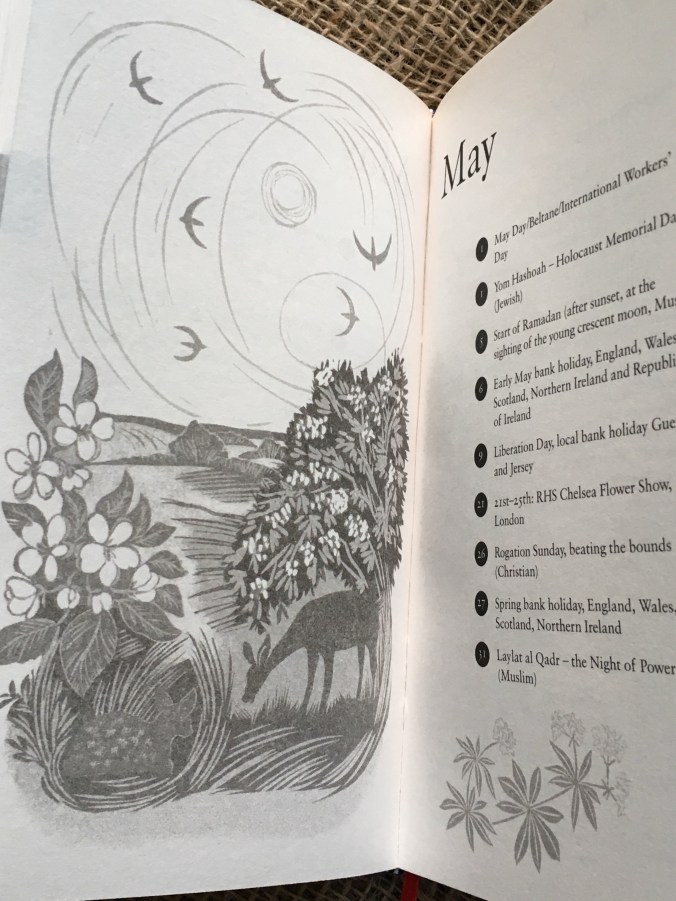
There’s something comforting about being in tune with the natural world around us. Checking the times for sunrise and sunset, sea temperatures, tides, moon phases. I haven’t tried planting by the moon, but there’s dates and times to get me started. It seems to make perfect sense. I love the little moments of joy. Reading that day length increases by 1 hour and eight minutes during the course of January. It gives hope when it’s needed most. Here’s the page for January. Plough Monday is included in the dates listed. I heard my grandfather talk of Plough Monday- traditionally the start of the agricultural year. The book is like a siren call leading me back through time to my farming family ancestors. A reminder to keep in my heart their customs and celebrations.

There’s recipes such as Epiphany tart, a kind of jam pastry, with a star made with overlapping triangles and each “well” containing a different flavour. I hadn’t heard of this; it sounds delicious. There’s a tradition dating back to the 1600s of creating tarts with intricate pastry patterns, coloured with different jams. I wonder if my great grandmother Annie Foulds – who was head cook at Bradgate House- would have made such a dish. She made the most delicious cakes at home at Carters Rough Cottage, Groby.

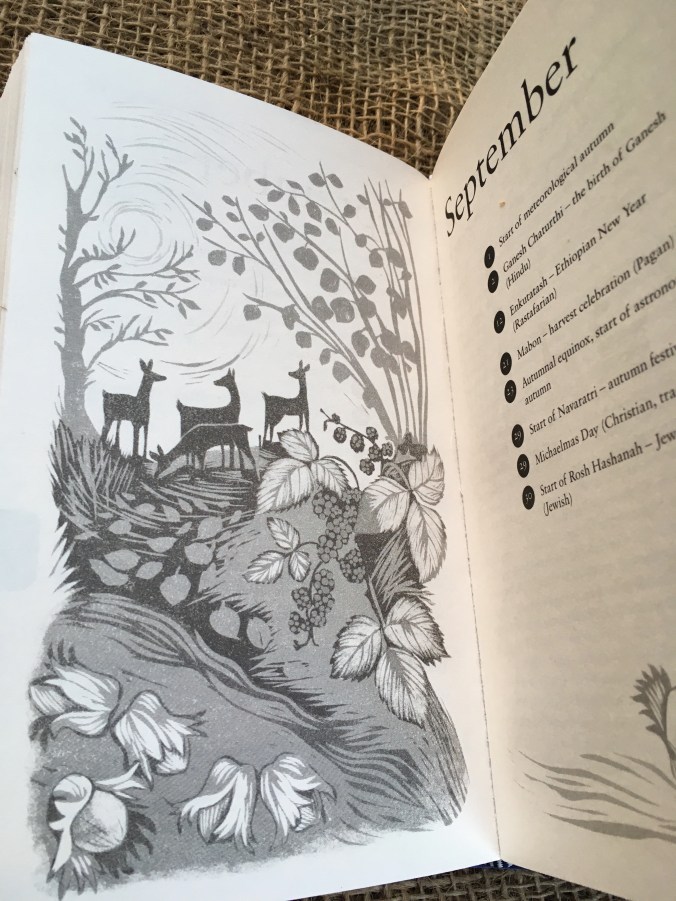
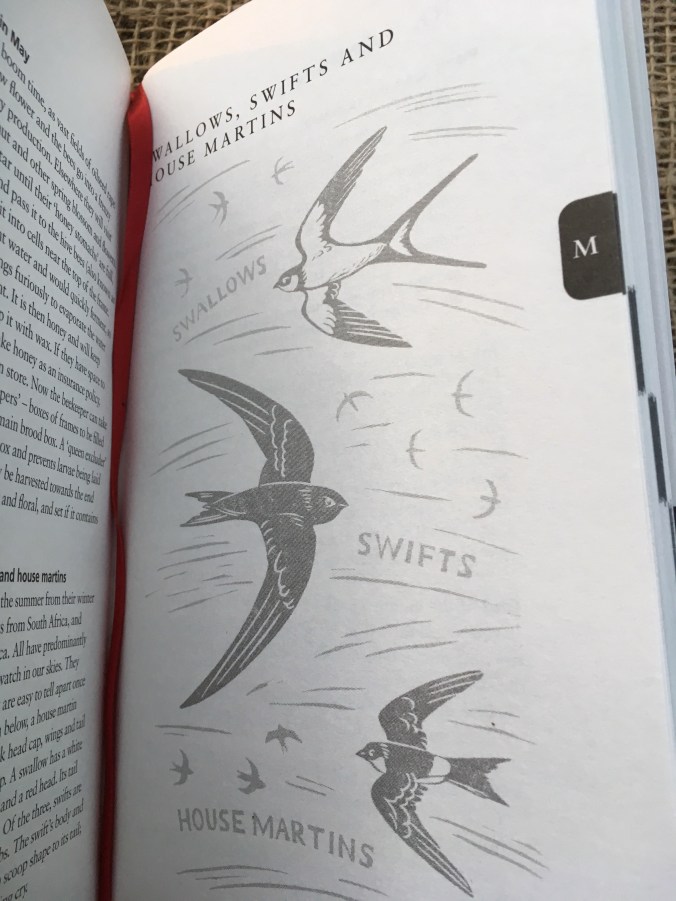
Lia’s writing is perfectly complemented by illustrations from artist Celia Hart. The prints are so beautiful they draw you in, much as a photograph of a glorious scene makes you want to step into the landscape. It’s impossible not to stare longingly at Celia’s drawings- and wish you could step into the page. I’d like to see those swifts and swallows soaring above my head and turn over the seashells she so wonderfully captures.

A mesmerising read, totally spellbinding. A beautiful month by month companion for me. For anyone, like me, who tries to weave the stories of the past into the journey to the future.

The publishers have kindly offered one copy to give away. Please leave a comment below if you’d like to be included in the prize draw. The publishers will pick a name and send out a copy. The publisher’s decision is final. Sorry UK entries only.

Please share this review on any social media platform you like. Thank you.

Here is the Amazon Link for The Almanac.

In a Vase on Monday – cut flowers from my garden

Despite the drought, my cut flower beds provide a steady flow of blooms for my MIL Joan and my Mum Marion. Here are a few of my favourites for this week’s IAVOM.

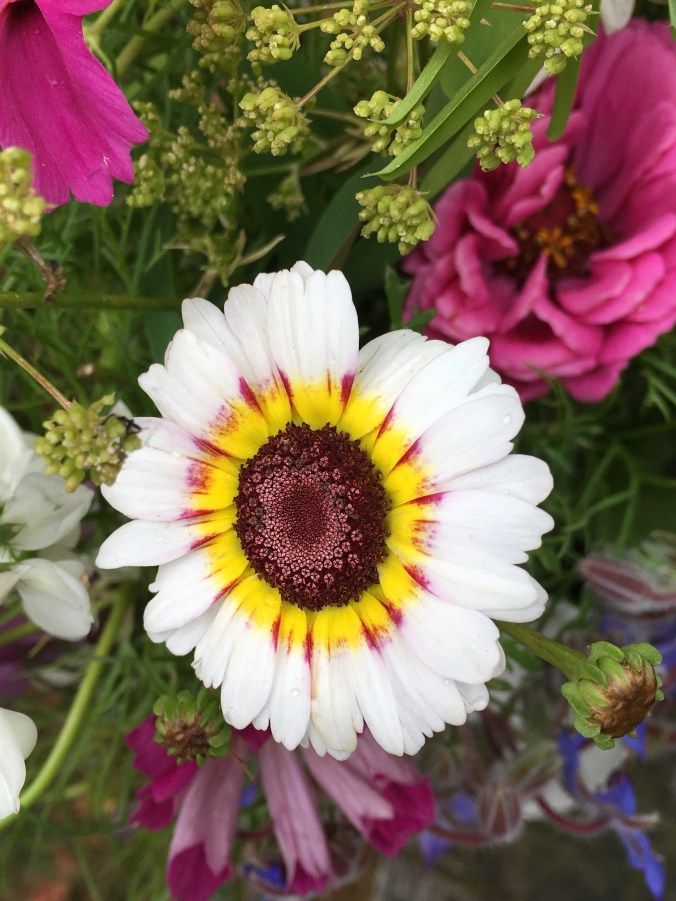
Chrysanthemum Rainbow Mixed- from Mr Fothergill’s – were sown in March, planted out at the end of May, and flower right through June to October. Seeds cost £1.75 a packet. I’m always looking for good value for money and these fit the bill.

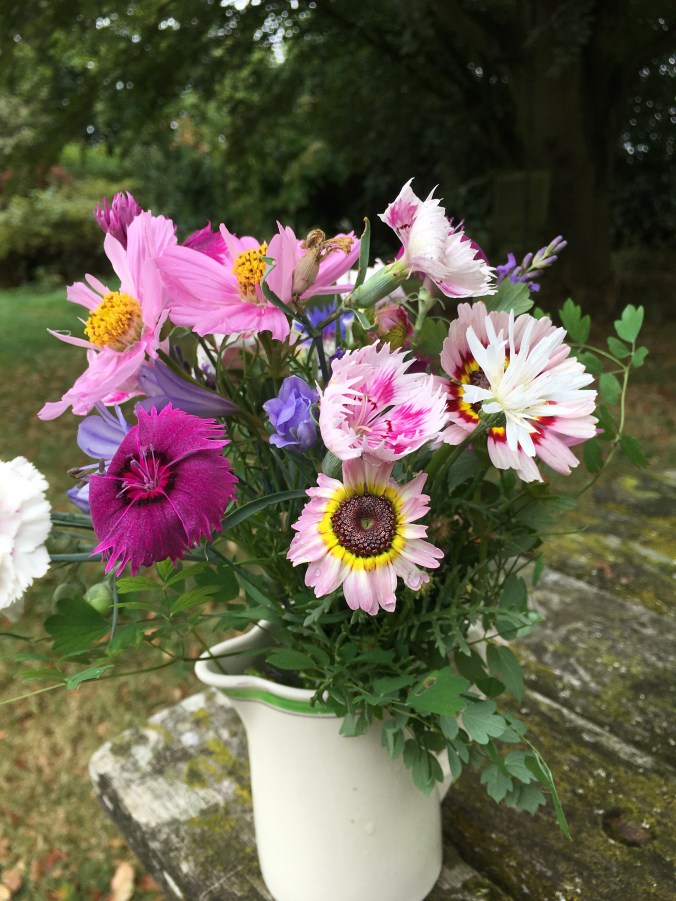
In this tiny posy, I’ve placed them with cosmos, fringed dianthus, and sprigs of blue agapanthus. They’ll last five days in a vase.

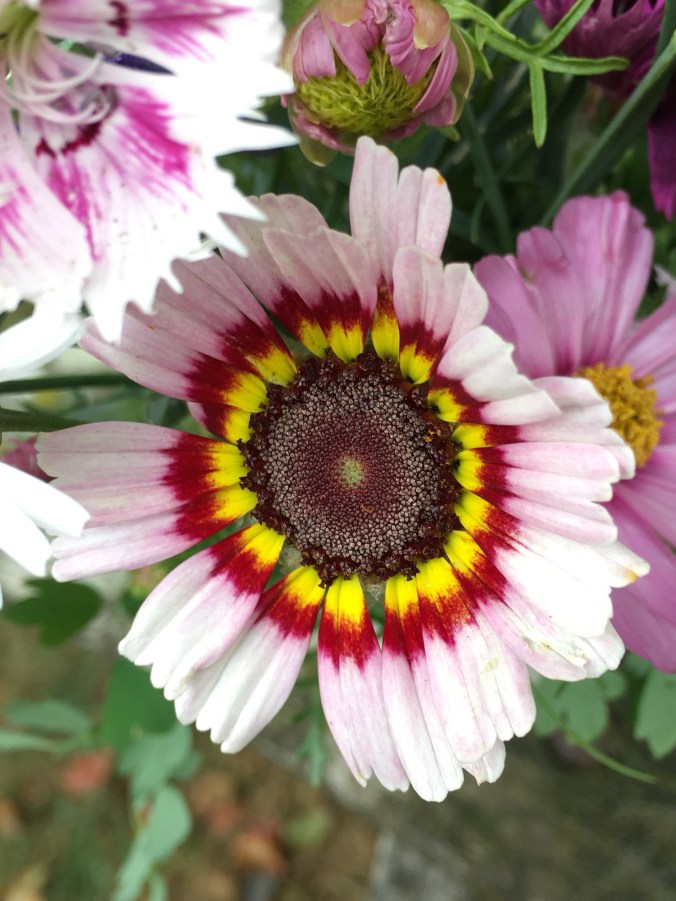
Colours range from white and pale pink to red, all with lovely chocolate coloured centres.

Looks good with white goat’s rue, Galega Alba from Chiltern Seeds. Pure white spikes of pea-like flowers from June to September.

With white Catanache alba from Mr fothergill’s seeds.

With fringed pinks, meant to be grown as annuals, but are in their second year. Chiltern Seeds have a pretty frilly variety here.

Add in some easy to grow cosmos. This one is Seashells from Thompson and Morgan. Ferny foliage is an added bonus and excellent for making button holes or filling out bouquets.

Looks fabulous with Verbena Pink Spires, a perennial plant from Miles Nurseries, Hoby, Leicestershire. Never seems to be out of flower.

I wrote about my cut flower garden – and sharing the plot with hedgehogs and other wildlife Here.

Thanks to Cathy for hosting this IAVOM meme. Why not take a look to see what Cathy and all the others are growing and displaying. It’s fascinating to see that sometimes we are growing the same varieties in different countries all around the world.

Please kindly share this via any social media you like, and don’t forget to leave a comment in the box below.

BBC Radio #SundaySupplement flowers/ hedgehogs/ my garden, 12 August programme

Some photos to accompany today’s BBC Radio Leicester gardening Sunday Supplement programme. It was my turn to sit in and answer listeners’ gardening queries on the phone-in today.

As always, I ran round the garden and picked some flowers for my mother-in-law Joan and my Mum Marion to take in to the programme. Despite the heat and drought, my cut flower patch hasn’t let me down. There’s plenty of colour just now.

In the pink and blue theme posy there’s zinnia, Mophead hydrangea, cosmos seashells and white wild goats rue. The green umbels are actually parsley that’s gone to seed, and the whole bouquet is wreathed with blue borage. The pink whirls are Diascia Hopleys. Plants have grown to 5ft and been in flower for 8 weeks. There’s just one glorious inky-blue gladioli, and one annual pink chrysanthemum (Tricolor Mixed) which are only just starting to flower.

In the orange-theme bouquet there’s calendula, rudbeckia, spikes of verbascum, and seed heads from love-in-a-mist. White jasmine provides a wonderful scent, even if there are only two sprigs included here. Any more would be overpowering.

I could talk for hours about flowers, but the conversation steered towards wildlife in my garden. So for anyone wondering how my hedgehogs are getting on, we have four precious babies this year, one less than last summer. They are a month later than last year, but very healthy and active. I am feeding them with Spike hedgehog food to try to build them up for the winter. Fresh water is also really important and in scare supply, so lots of little dishes are placed all around the garden.

So far these hoglets are just 5″ long. I’ll keep an eye on them to ensure they meet the target weight of 650g by winter hibernation time.

I wrote about last summer’s hedgehogs Here. There’s also hints and tips on helping hedgehogs on the highlighted link.

Radio Leicester Sunday Supplement is available on i-player. There’s a link Here. https://www.bbc.co.uk/programmes/p06fs2mb . Gardening starts at 1.09.31. Put your feet up and have a listen in.

Let me know what flowers are doing well in your garden right now, and do any of you have hedgehogs nesting in the garden this summer?

Please kindly share this on any social media platform, and don’t forget to say hello in the comment box below.

Summer fruit harvest and making garden jam

What a summer! My poor garden is burned to a crisp and everything’s wilting, including me. But the fruit garden is producing bumper crops. You’d think they would shrivel in 32C heat, but the black and red currants, gooseberries and blackberries are sweet and juicy.

Last night I wandered round the garden collecting a basket of fruit to make jam. I had planned to make strawberry jam from the pots of runners planted in April. But the tiny plants only yielded a handful of fruit. So delicious though. The plants only cost 60p each, mail order. I wrote about planting them Here. I’m hopeful of larger crops next summer.

The blackberries were the best I’ve ever seen though. A bumper crop and large fruit. Sometimes wild blackberries are so tiny they are hardly worth picking. But these soon filled a basket.

I threw the whole lot in a heavy based pan to make garden jam. Wow, what a scent. If it’s possible to capture sunshine and summer in a jar, this is the way to do it.

Garden Jam

To make 2 jars I used 500g fruit, 500g sugar 75ml water, juice of 1 lemon.

Method:

Place a saucer in the freezer for testing the setting point later.

Put fruit, water and lemon juice in a heavy based pan. Cook the fruit gently until soft.

Add sugar and simmer carefully until all the sugar crystals are absorbed.

Increase the heat to a rolling boil. After 10- 15 minutes, put a teaspoon of jam on the plate and gently push. If it wrinkles, it has reached setting point. If not, cook for another 5 minutes, taking care not to burn the jam.

Stand for 15 minutes

Pot into sterilised and warmed jars.

Fresh scones :

3oz butter

1lb plain flour

Pinch salt

1oz caster sugar

1.5 tsp. baking power

2 eggs and 6floz milk beaten together.

Add all the dry ingredients and rub together. Add liquids and mix carefully. Don’t over handle the mixture

Roll out thickly and cut into circles. Brush top with a little of the reserved egg/ milk mixture.

Bake for 10 mins until golden, oven temp. 230C, gas mark 8

Eat whilst still warm – or as soon as possible. Can be frozen as soon as cooled, to keep fresh.

I often ask twitter friends for recipes and gardening advice. Here’s a reply that came from Bob Flowerdew. I’m looking forward to trying his recipe.

And this came from June Girvin, which is similar to the recipe I ended up with. It’s absolutely delicious.

After all that foraging and cooking, we sat in the 1930s summerhouse, turned to face the cool woodland and pond and feasted on the jewels of the garden.

Surrounding us, there’s sounds of harvesting and baling. There’s a scent of new hay and oats on the breeze, and we watch entranced as barn owls swoop across the empty fields, like ghosts. They don’t notice us sitting quietly amongst the trees.

Here’s this week’s Garden Hour on BBC Radio Leicester where I chat away about what’s happening in my garden. Put your feet up and have a listen in sometime. The programme starts at 2.10.27 on the timeline. And the music’s not bad this week too.

http://www.bbc.co.uk/programmes/p06cd1bd

I am @kgimson on twitter and karengimson1 on instagram. Please share this on any social media platform you like, and don’t forget to leave a comment below. Thank you.

In a Vase on Monday

My cut flower patch is in full swing. Luckily, flowers sown last summer and planted out in autumn are weathering the heatwave. Here’s a selection for this week’s vase. As always, my posies are for my mother in law Joan and my Mum, Marion.

Sweet peas High Scent are top favourites this year. I love the creamy buds that open to pale lilac. There’s a pretty violet picotee edge to the flowers. And the scent really is amazing. Only a few are needed in a jam jar posy to make an impact.

Seeds were sown last October in root trainers and kept all winter in straight-sided clear plastic storage boxes to outwit mice. It worked. And in April the well-rooted plants were set out along a wonky network of hazel twigs.

I pick flowers at dawn and drop them straight into buckets of cold fresh tap water. To travel, I pop ice cubes in the buckets to keep them cool.

In amongst the sweet peas this week there’s beautiful cornflowers Blue Boy. These are really prolific. I’m picking these flowers most days and there’s lots more to come. Great value for a small area.

For a pop of pink, there’s corncockle, an easy to grow wildflower that’s growing all around my garden.

Creamy white double chamomile reliably comes back every year and seems to go with everything.

As usual, I’m joining in with Cathy at Ramblinginthegarden blog for this week’s IAVOM. Why not go over and see what Cathy and all the others are growing and displaying at the moment. It’s fascinating to see how many of us are growing the same plants in gardens all around the world.

https://ramblinginthegarden.wordpress.com/

In a Vase on Monday – My Cut Flower Patch

One of the joys of June is to walk out into the garden and pick a bunch of flowers for the house- flowers that have been nurtured all winter, and are now ready to harvest.

Sweet williams are currently my favourite. They provide masses of flowers which last at least a week in a vase. Sown in June last year, they were pricked out and grown on, and then planted out in late August. And today I’m picking basketfuls of fragrant flowers.

Regular readers will know that all my flowers are grown for my mother in law Joan and my wonderful mum, Marion. Once a week I fill every vase they own with home-grown flowers.

Here’s some photos from my cut flower patch. I have 10 3m by 1.2m beds. Half are planted with sweet peas, dahlias and sweet williams. Half are set out with potatoes, beetroot, beans, courgettes and strawberries

In the background you can see the fruit garden. It’s completely overwhelmed with brambles and stingers this year. A renovation project is planned, when I get a minute to spare.

I’m growing a range of old-fashioned Sweet williams with seed from Higgledy Garden. As you can see, bees love them too. I’m always thinking of what would be best for pollinators.

I particularly love the auricular-eyed sweet williams. Rich Venetian colours really stand out in the summer sunshine. And they go so well with summer roses. This one is called William Shakespeare. Looks like red velvet to me.

And another favoured rose for picking right now is the highly-scented Constance Spry. It only flowers once, but what a spectacular show.

I’m sowing more sweet williams right now, preparing for next summer’s bounty. I use half seed trays filled with good quality seed compost. Fill them right to the top of the trays. Press down gently to level. Sow seeds thinly to prevent moulds and damping off disease. Seeds germinate at 17 – 19C, room temperature at this time of the year. So no propagators are needed. When seedlings have two leaves, I prick them out into full size seed trays to give each plant more space to grow. I’ll place the trays in a bright place to grow on, making sure the plants don’t dry out. And I’ll plant them out into the garden in August, 25cm apart, when I’ve harvested one of the vegetable crops to make space. I water plants with seaweed extract and home-made comfrey liquid which makes them grow healthy and strong. I’m adding some almost black sweet williams Nigricans and white alba for next year.

Here’s another view of my cut flower patch with Diascia Hopleys in the foreground. Another good do-er for flower arranging.

I’m joining in with Cathy for her In a Vase on Monday meme. Why not go over and see what Cathy and the others are growing and putting in their flower arrangements this week. Let me know how your gardens are doing this summer. How are you coping with unpredictability weather, rain and high winds? I think summer storms are becoming the norm.

#wordlesswednesday- Malus Wedding Bouquet- with the Royal Wedding in mind.

Crab apple trees are among my favourites. I love the spring blossom- and then there’s the fruit in the autumn, which makes wonderful jams and jellies.

Malus Wedding Bouquet is highly recommended. It has soft pink buds which open ivory white and mature to a dazzling pure white. Finely tapering green leaves turn red in the autumn. Very disease resistant, it grows to 3.5m by 2.5m, although can be easily pruned to keep in a smaller space.

We’ve got our patriotic flags and bunting out, and my grandmother’s coronation glassware trifle bowls- all set for Saturday. Whatever you’ve got planned, enjoy your weekend celebrations.

Weeds. Geranium robertianum

I’m writing a piece about weeds at the moment. Suddenly, in the sunshine, after all that cold weather, weeds have gone whoosh!

In my woodland garden, there are thousands of wild geranium, robertianum. It has so many common names: herb Robert, stork’s bill, crane’s bill, red robin, stinking Bob, fox geranium, cuckoo flower.

“Herb Robert is very familiar. It lives with man: much as the robin flips into his garden and to his back door” – Geoffrey Grigson- The Englishman’s Flora.

I’m enjoying reading up and investigating more about this common weed we usually pass by without noticing. And meanwhile, a posy of herb Robert sits in my potting shed window today. Mixed in with some wild violets -which are so numerous they could be considered a weed. Both very pretty indeed.

What “weeds” are growing in your garden right now.

Fact sheet for growing strawberries /recipe for ten minute strawberry jam biscuits

If you listened in to the gardeners’ phone-in programme this week on BBC Radio Leicester you’ll have heard us giving hints and tips on planting and growing strawberries. Here’s a list of do’s and don’ts to get the best from home grown crops.

Buying bare-rooted runners, or root stock, is an affordable way to buy strawberries online or via seed and plant catalogues. It’s a good way to buy named varieties and virus free stock.

I’ve chosen the Plant Heritage Collection from Marshalls. 30 runners for around 66p each.

Royal Sovereign : A well-known mid season strawberry famed for flavour. Large juicy fruit. Crops in early summer- and again in autumn.

Cambridge Favourite : Reliable and popular variety. Good for jams and preserves.

Red Gauntlet: Mid season, heavy cropper. Fruit is held well above the ground. Good for damper soil, or for growing under cloches or in tunnels. Some resistance to botrytis.

1. When the plants arrive, take them straight out of the Jiffy bag and either plant into 3″ pots or straight into the garden, if soil and weather conditions are suitable.

2. Choose a sunny, well drained spot – not in a frost pocket

3. Enrich the soil with well rotted garden compost, organic Plantgrow fertiliser, or peat-free sheeps wool and bracken compost from Dalefoot Compost.

4. Planting depth is crucial to success of the runners. The crown, the thickened area where the leaves are attached to the roots, should be resting at soil level. Too high and the plants will dry out. Too deep, and they will drown.

5. Don’t plant where tomatoes, chrysanthemums or potatoes have been grown. The soil may harbour wilt disease.

6. Watering techniques are important. Do not drench the leaves and leave them wet overnight. The plants are more likely to suffer from moulds and the fruit will rot. Either use a leaky pipe, or push the watering can through the leaves to water at ground level.

7. Feed every 7-14 days with a high potash liquid fertiliser. I use seaweed extract, but you can also use tomato fertiliser. Plantgrow also has a handy liquid fertiliser in its range.

8. Protect the flowers from frost using a layer of fleece. The flowers are easily damaged and turn black. A whole crop can be lost to frost overnight.

9. Cut back all leaves and remove straw mulch after fruiting to prevent a build up of pests and diseases. We use chopped mineralised Strulch.

10. The plants will naturally produce runners. Stems will arch over and where they touch the ground, new plants will grow. Pot these up and renew your strawberry beds every 3-4 years. The old plants are best discarded after this length of time as pests and diseases start to take hold.

11. Vine weevils love strawberry plants. There’s a new organic nematode treatment that can be bought off the shelf. Previously treatments had to be posted out and used fairly quickly. The new nematodes from Neudorff are easier to buy and use.

STRAWBERRY JAM ALMOND BISCUITS

These are a family favourite and only take 10 minutes to make. Lovely with morning coffee, or for afternoon tea.

Ingredients: whizz together

200g caster sugar

115g butter

115g ground almonds

115g plain flour

1tspn baking power.

1 egg

3 drops almond essence.

Rest dough in the fridge for one hour if you want biscuits to retain their round shape. I was in too much of a hurry, so mine turned out flat.

Take teaspoons full of dough and roll in the palm of your hand. Place on a baking tray. Make a well in the centre with a spoon handle or little finger. Fill with strawberry jam. Top with slivers of almond.

Cook in oven at 200C for 10 minutes. Keep a close eye on them as they soon burn.

Will last for three days in a sealed container. If you can resist them that long.

Here’s a link to the radio programme. Have a listen in at 2.08.18 on the timeline.

bbcleicester http://www.bbc.co.uk/programmes/p063rcnf

Here’s some fruit tarts I also made with the home-made jam. Totally delicious! Wonderful after a hard day working in the garden.

Click on the highlighted links for more information. These are not affiliate links.

What new plants are you trying out this spring and summer?

In a Vase on Monday – 9th April 2018

Just dashed home from work. Wonderful to still have some light in the evening for mooching in the garden. Each week I join Cathy at ramblinginthegarden for IAVOM. Here’s a slide show of photos showing what I’m growing and putting in my flower arrangements his week.

The silver and gold-laced primulas are just at their peak. They last for a week in water and have a faint but delicate scent.

Tulips always cheer up any arrangement. These yellow and red blooms go really well with the fancy primulas.

Flower vases are still very much focusing on bulbs. I think I’ve had Carnegie white hyacinths in my flower vases every week since Christmas. These are the very last of them. I shall miss them to be honest. The scent in the potting shed is just wonderful.

Hellebores are still in flower here. This one has a pretty, frilled anemone centre and holds its head up, which is always a good trait in any hellebore. I bought this one from Hodsock Priory in February.

Hellebores have survived everything the weather has thrown at them. This one came from Ashwood Nurseries in Kingswinford when we had a a tour of owner John Massey’s private garden. Well worth a visit. Probably the best spring garden I’ve ever seen. All fees from the open days go to local charities.

Couldn’t resist these summer bulbs. Lilium Conca D’Or is a favourite for fabulous scent. And the dahlia is new to me. I’ve watched others on IAVOM growing and using this variety, so I’m looking forward to trying it out for the first time this year.

Potting shed reading this week is Secret Houses of the Cotswolds by architectural historian Jeremy Musson, published by Frances Lincoln, part of the Quarto Homes group. Photographer Hugo Rittson Thomas allows us to peek into 20 homes, varying from castles and manor houses to grand mansions. It’s like stepping into another world to be honest. And a glimpse of the gardens through open windows- so tantalising! I just wanted to jump in the car and visit them all. But of course they are not open to the public. So I shall have to be content with gazing longingly at the book.

Click on the links to find out more. These are for information only and are not affiliate links.

In a Vase on Monday -Snow, and then spring!

What a week! Temperatures over the past seven days have gone from -12c to 14c. Luckily nothing seems to have been lost. The snow creates an insulating blanket. Plants can still photosynthesize through the snow. I just gently tap some of the snow-laden branches of conifers and acers. The weight can cause splaying and damage. Here’s a slide show of photos showing my garden from last Monday to today. Flowers are in plant pots and jam jars in the greenhouse and potting shed this week.

My 20-year-old Parwins electric heater has been working full time keeping the greenhouse cosy. A second-hand Alton Cedar greenhouse copes really well with the weather. The wood seems to expand in the winter, excluding any draughts. At night, I didn’t disturb the wrens nestling in a row on the door slider. There were eight snuggled together, keeping warm.

Scented pelargoniums have never been more welcome than on a freezing cold day. I picked some to put in tiny vases for my bedside table.

Iris reticulata bulbs are still in flower. They last longer in cold weather. Such a delicate scent. Much appreciated when there’s a foot of snow outside.

As there’s so few flowers this week, I’m showing some photos of my greenhouse, Polytunnel, potting shed set up. All within a few paces of each other. The polytunnel was second hand from a nursery closing down sale. You can see my Dalefoot Compost piled up in front of the potting shed, all ready for sowing seeds and growing fruit, veg and flowers. I started off some tomato seeds mid week. It’s the first time ever I’ve had to put hot water bottles on the compost bags before sowing seeds.

I’m keen to try this sheeps wool and bracken compost. I’ve been peat free for a while now, but composts have been variable to say the least. Dalefoot promises to be water retentive and cheaper to use, as no added fertilisers are needed. Apparently the bracken is naturally high in potash- needed for fruit and flower production. And the sheeps wool continues to act as a kind of slow release fertiliser during the whole growing season. Dalefoot have given me the compost to try out. As usual, opinions are my own and I’ll give an honest appraisal of the product in due course.

A quick peek in my potting shed and there’s still some white hyacinths, yellow tete-a-tete daffodils, with green hellebores and fluffy willow catkins. This time the vases didn’t freeze solid, thankfully. The view from the potting shed is white over. As is the view from the back door, below.

I didn’t go far to be honest. The roads around here were pretty dire.

But then – thankfully, the temperatures started to rise. And today has been the warmest day of the year.

Hope it’s sunny where you are at the moment.

Thanks to Cathy for hosting this IAVOM meme. Why not go over and see what Cathy is growing and putting in her vases this week.

In a Vase on Monday

If you look carefully, you’ll see little ice cubes floating in the vases in my potting shed today. The jam jars and jugs froze solid. And I was away in London, so couldn’t rescue them. Luckily the flowers didn’t seem to mind. They perked up as soon as the temperature started to rise. These are the very last of my Paperwhite narcissi. They’ve been fantastic value, giving flowers for cutting for three months.

For my IAVOM I have recycled my spring flowers. I’ve cut off the bottom 2cm of each stem, given them all fresh water and added lots of grey willow catkins and hazel “lambs tails.” It looks like it’s a yellow and white theme this week. I haven’t planned it, but doesn’t it look cheerful. We’ve had temperatures go from -10 to 10c in just 24 hours.

Double snowdrops, Galanthus flore pleno, from my “Hodsock” corner are still flowering well. The freezing temperatures have prolonged the display. Every year Mum and I visit Hodsock Priory in Nottinghamshire. We always stay overnight so we can walk in the woodlands just before dusk and again at sunrise -before the crowds arrive. It’s a special treat to have the gardens virtually to ourselves. Each year we buy a few pots of snowdrops for a couple of pounds. And over the years they have spread to make a corner of my garden that reminds me of our special holidays together.

Noticing that I haven’t got many vases, a relative has taken pity on me and donated these little containers. The snowdrop vase has a lovely green glaze. The brown container looks like it is made of wood, but it is actually ceramic. I’ve never seen these type of vases before. I think they date back to the 1920s and were family wedding presents. So happy they have made their way to my potting shed to be treasured for years to come.

I put some moss in the container and added some hazel twigs. It is just perfect for holding a few tiny snowdrops.

The potting shed window has miniature green hellebores this week. The leaf and flower shape looks like Hellebore Corsicus, but I’ve never seen one as petite as this. I love the lime green flowers.

Here’s a quick peek at what it’s been like outdoors here. The farm pond was frozen solid for a week. We spotted a kingfisher on an overhanging branch staring intently at the water. Many of the garden birds came closer to the house during the freeze. A little gold crest has been roosting in the potted acer by the back door all week. I’ve fed it mealworms and crushed sunflower seeds saved from the veg plot.

And the gap in the hedge view. I didn’t linger long. There were hares racing across the field and pheasants in the ditch.

Today, there is no evidence of wintry weather. I feel like I’ve stepped from one country to another – a much warmer one at that. 7c feels positively balmy after what we’ve been though. And the willow catkins give us hope.

Thanks to Cathy for hosting the IAVOM meme. Why not go over and see what Cathy and all the others are growing in their gardens and cutting for their flower arrangements this week.

How has your garden fared in the bad weather? As you can see, I’ve written it on a Monday, but not managed to post it until today. Our internet is on the blink again. BT no doubt will blame the snow. Have a good week all of you.

End of the Month View – March 2nd 2018

Thank goodness there’s some colour in the greenhouse right now. I planted these Iris reticulata last October. And just when I need something cheerful to look at, they’ve sprung open like a jack-in-a-box. As soon as the sun hit the greenhouse glass, they pinged open. A lovely moment. Glad I was there to see it.

Such an inky blue. I planted Iris Pixie and Harmony, and then somehow lost the labels. A common occurrence in my garden. I must address the problem of how to keep labels this year.

I’ve no need to tell you what the temperatures are like at the moment. One look out of the window and you can see for yourself. We are white over in the UK. So today I’ve been mooching in the potting shed and greenhouse.

Planted last September, these Carnegie hyacinths are a joy for months. The buds are pretty, with just the green tips showing. I think there’s as much pleasure in anticipating what’s to come, as there is when the buds finally burst into bloom. The scent fills the whole greenhouse and makes it a pleasure to work in there on a freezing cold day. I heat the greenhouse to between 5 and 7 degrees. It is an old Alton Cedar greenhouse -second hand, renovated and painted black. Being cedar, the wood swells in the winter and cuts off any draughts – keeping it warm and cosy in there.

Prepared -or temperature treated bulbs – are planted in September in individual 3″ pots. The bulbs are given a cold period to fool them into thinking they have been through winter. We then put them in a cool, dark cupboard in the potting shed or garage for 20 weeks which finishes the treatment. Then, the bulbs are gradually brought out into a cool greenhouse and grown on. You can delay development by just keeping them cold and on the dry side, which is how I’ve managed to keep them flowering right through winter.

Choose bulbs that have flowers roughly the same size to plant into bowls and create displays for the house.

Today, I’m looking out at a snow, right across the back fields, and there’s icicles dangling from the greenhouse roof.

All along the top shelves are succulents and cacti- which need virtually no water between November and mid-March. These Echeverias have grey -blue leaves and striking orange flowers in summer.

The potatoes are starting to chit. Hard to believe, I will be planting them in a few weeks. I’m growing Charlotte and Lady Christl- both delicious. These varieties are on the RHS recommended list for growing in containers. If you are thinking of growing in containers, you need 8 litres of compost per potato. So put five in a 40 litre bag or 16″ -18″pot. Start off filling the bags with 20 litres of compost and 125g organic potato fertiliser. Sink the potatoes into the compost, and water. As the haulms or stems grow, add more compost to cover them and gradually fill up the pots. The secret to success is not to overwater. Soggy compost deprives the plants of oxygen and leads to stunted growth. Start feeding with potash when the leaves are out of the top of the pots. Other varieties I’ve tried and are RHS recommended include Casablanca, Golden Nugget, Sharpes Express, Maris Bard, Jazzy and Vales Emerald. I don’t grow Sharpes Express as much though, as it tends to disintegrate when it’s cooked and you end up with a pan full of soupy water.

Just behind the potatoes and bedding plant cuttings is a pot of wild rocket. I sowed the seed in autumn and now have lots of little pots like these from which I can pick a few leaves each day. Pick from the outer leaves, leaving the centre of the plants to keep growing.

Here’s a quick peek in the potting shed at dusk. The last of the Paper White narcissi are cheering up the potting bench. Another fabulous scented flower.

And in the potting shed window there’s snowdrops. This one is a very pretty Galanthus Viridapiece which has delicate green-tipped flowers. A favourite of mine.

Thank you to Helen at Patient Gardener for hosting this EOMV meme.

How are you coping with the weather? Get in touch and let me know how your garden is faring in the snow. Keep warm everyone.

Wordless Wednesday

@kgimson on twitter, karengimson1 on instagram, bramblegarden.com

End of Month View – January 2018

Reasons to be cheerful. The first spring lamb has been born in crossroads field at the bottom of our lane. It’s been a daily ritual, walking downhill to check on the flock. Each time, we are hopeful. And then today, we stand at the gate and scan the field. And there, by the hedge, one tiny white lamb. Newborn and softly steaming in early morning sunshine. A joy. A reassurance. After all the family illness of the past few months, worry and fretting, one tiny lamb sends a subliminal message- all will be well. The season moves on and the familiar sights and sounds of our daily life returns to normal. We have weathered the storm and spring is coming.

There’s been some catching up to do in the potting shed. Seed packets are inspected, catalogues perused, and a list produced. It’s a start. Little pots of snowdrops are dotted along the windowsill. I marvel at the variety of markings. Those little green hearts. I could quite easily become a galanthophile.

Hyacinths, set in a dark cupboard in September and brought out in December, are in full flower now. And what a scent! Carnegie, my favourite white variety, brightens the gloom.

On one glorious sunny day, with temperatures reaching 12 degrees, a red-tailed bumblebee sleepily blunders in through the shed door and buries itself in a potted hellebore. I gently shoo her out for fear she’ll be caught in a spiders web indoors. And at any rate, there’s plenty of pollen outside with sarcococca, viburnum and winter flowering honeysuckle in full flower.

Sarcococca humilis attracts bees – and hoverflies. These, I’m told are Eristalis hoverflies, mimicking a bee. They had me fooled.

On sunny days, the snowdrops have a wonderful honey scent. I must admit, I didn’t know this fact until a few years ago when I visited Easton Walled Gardens. We stood at the top of a sunny bank, and the fragrance drifted up. It was breathtakingly beautiful. Sadly, a dull wet day doesn’t produce the same scent. And many snowdrop garden visits since have been on cloudy days. So I’ll just have to hold on to that memory.

This is my “Hodsock” corner at home. Each year we visit Hodsock Priory and buy one little pot of snowdrops for a couple of pounds. It’s amazing how quickly they bulk up. It’s a nice reminder of a lovely day out.

The potting shed makes an ideal reading retreat. It’s so peaceful in there. High in the tops of the overhanging beech trees, songbirds are singing, staking their claim to spring territories. A cheeky robin is taking an interest in the shelving at the back of the shed. There will probably be a nest.

Thanks to Steve at Glebe House blog for hosting this meme and for encouraging me to write. Go over and have a look what his garden looks like at the end of the month and visit some of the others joining in, from all around the world. What signs of spring are you seeing in your gardens at the moment?

In a Vase on Monday- Sweet scented flowers and shrubs.

For the past few weeks my bedside table has contained little jam jars of water, into which small posies of “twigs” have been placed. Never have I been so grateful for a garden full of winter-flowering shrubs. For the twigs are smothered with tiny flowers- bursting with scent. Top of my list of favourites is Sarcococca Purple Stem, also known as sweet box. This one, in a pot by my front door, has shiny evergreen leaves and pink and white spidery flowers. A joy at any time between December and March, but particularly welcome when you are stuck in bed with the flu.

Here’s a quick peek in my potting shed. I’m sad to report that I’ve only managed to visit the potting shed twice since Christmas. Something I intend to remedy now that I’m up and about and almost, but not quite, back to normal.

The sugar pink flowers are Viburnum Dawn. In the centre there’s Hamamelis Jelena, and on the right, winter flowering honeysuckle, Lonicera purpusii. There’s also some daphne and to add more cheer, pussy willow catkins and hazel or corylus “lambs tails.” The Hamamelis was a bargain basement purchase for just a few pounds, but didn’t have any labels. Cathy – who hosts the IAVOM meme – writes about Hamamelis this week and I learned that Jelena is named after Mrs Jelena De Belder, and Diane is named after her daughter. You can read all about Cathy’s Hamamelis collection Here .

Covered with snow, it looks spectacular. The delicate scent is noticeable on a sunny day, or when twigs are brought into a warm room. I think the yellow- flowering Hamamelis have perhaps a stronger scent though.

Just getting into its stride is Daphne odora Aureomarginata. When fully open this will scent the whole garden and perfume will drift through open windows and in through the front door.

In my vase this week I’ve added some hellebore Jacob which has been in flower since mid- December. And also some hyacinths. These were prepared bulbs planted and put in a cold, dark cupboard in the potting shed for 10 weeks and then grown on in a polytunnel for another 22 days. Gradually I brought them into a warmer room as they came into flower. Slow, cool growing conditions ensures the flower bud forms properly, and prolongs the display.

I love the velvet blue colour and white edge. I’ll plant the bulbs out in the garden when I’ve harvested the flowers.

Here’s a pot I forgot about. I’ve only just taken it out of the dark cupboard and you can see the bulbs are really well rooted. The roots are climbing out of the sides. And the flower spikes are well formed. These are going to be pure white. Something to look forward to over the coming weeks, a good two or three months before the ones in the garden start to flower.

Hiding amongst the flowers are some stems of Pelargonium Tomentosum from the heated greenhouse. The hairy leaves have a lovely fresh minty scent when they are crushed.

On my potting shed window are little terracotta pots of honey-scented snowdrops, flowering a few weeks earlier than the ones in the ground. The Sankey pots came from my Grandad Ted Foulds. I love to use them and think that he held them in his hands. It’s a reminder of happy times. He loved visiting my garden each week and giving me hints and tips on what to grow and how. I still miss him. But I have his garden tools and his plant pots. And my whole garden is planted with little seedlings and divisions from his garden. So I feel as if he is still here with me really, keeping an eye on me and my family. I like to think so anyway.

Thank you to Cathy for hosting IAVOM meme. Go over and have a look at what Cathy is putting in her vase this week, and then have a look what others are growing and cutting from their gardens – all around the world. It’s a fascinating story and one I love being a part of.

Wordless Wednesday

Hellebores – to bring joy to anyone who needs some today.

End of Month View December 2017

Tucked up in bed with the flu, I have my i-pad balanced on a heap of rugs. I am shivering like a new born lamb. My garden in December isn’t making me feel any warmer. Snow features in most of the photos. I won’t attempt to add too many words. I doubt they would make much sense at the moment. I just want to send a cheery wave to you and wish you a wonderful, Happy New Year. Wishing all your dreams for a peaceful, happy and prosperous new year come true. Much love- karen xx

Luckily, just when I need some cheer, there’s viola odorata flowering at the garden gate. A much loved cutting from my Grandfather Ted Foulds. They are all over my garden now. A happy reminder of such a lovely man.

By the front door there’s more flowers. Iris unguicularis. A reliable winter-flowering joy.

There’s plenty of Paperwhite Narcissi. I planted them in tall glass vases for Christmas. I wrote about them Here .

And then there was snow. And -7C temperatures. Our windswept top of the hill garden took a battering. Here’s the frozen pond.

View through the pergola to the shady shelter.

And the view from the end of the garden.

Looking towards the village

Trees on the ridge. A favourite view.

And after all that snow, here’s what I’m hoping for in 2018- lots of colour; roses and peonies, tulips and daffodils and cut flowers galore!

The scent! Roses from my plot and a wreath for the summerhouse.

Thanks to Steve at glebehouse garden for hosting this meme. Go over and see what others are posting for their end of month view.

Enjoy your New Year’s celebrations! Much love- karen xx

In a Vase on Monday – Happy Christmas everyone!

Wishing you all a wonderfully happy Christmas and a peaceful and prosperous New Year.

Anyone visiting Bramble Garden this week would have found me covered in flour. Mince pies emerged from the oven at regular intervals. Hot pies disappeared before they had time to cool. In between all that cooking, I dashed around the garden gathering armfuls of foliage; sprigs of rosemary, Scott’s pine, some wild Clematis and willow; and wove them into wreaths.

I added some dried hydrangea flowers. I love the faded antique pink and cream hues. And some willow stems with the grey catkins just starting to emerge. A welcome sign that spring is just around the corner.

I twisted some Clematis Montana stems into a circle and decorated our five bar gate. Some festive cheer for anyone walking along our country lane on Christmas and Boxing Day. I hope you all have a wonderful Christmas holiday. Thank you as always to Cathy at Ramblinginthegarden for the IAVOM meme. I always love to see what you are all growing and using for flower arrangements, all around the world. So many inspiring ideas. Meanwhile, I’m off to make some more mince pies. It is Christmas, after all!

Fact Sheet- BBC Down to Earth gardening programme -recipes and home-made presents

From the latest BBC Radio Leicester Christmas Party programme. Each week I take in something I’ve made, using produce from my garden. It’s usually cake, or a vegetable pie, jam or preserves. This week it is festive Beetroot and Spice Cake. I sowed a 1.3m by 3m plot with mixed beetroot seeds in August and September. The mild autumn means I’ve now got a bumper crop, and I’m trying all different kinds of recipes to use them.

Here’s a link to the programme. You can listen again on your computer or i-pad, or live each Sunday 12-1pm on Freeview 721. http://bbc.co.uk/programmes/p05nbmln The programme starts at 06.06 on the timeline,

This is a lovely moist cake with a spicy lemon tang. The recipe came via a shout out on twitter where I am known as @kgimson. I must credit The Propagator @cavershamjj for this wonderful recipe.

Beetroot cake

3 small beetroot 250g

250g Butter

1 lemon -grated rind and juice

1 cup caster sugar -220g

4 free range eggs

1 cup – 150g dried currants or mixed dried fruit

1 cup- 150g plain flour

1 cup- 150g SR. Flour

Pinch mixed spice

Caster sugar for dusting

20cm deep cake tin, lined with greaseproof paper

Method :

Peel and coarsely grate the beetroot.

Use a hand whisk or food processor to mix sugar, butter and lemon rind.

Add the eggs a little at a time. Mixture might curdle, but it will come back again.

Fold in flour, mixed spice and currants.

Add the beetroot and lemon juice.

Cook for one and half hours in a moderate oven, 160 to 180 degrees. Cover with baking parchment after 15 minutes, to prevent burning.

When cooked and cool, sprinkle with icing sugar. Can be frozen for 3 months. Lasts one week in a sealed container.

Cherry marzipan chocolates

As it’s Christmas, I took in these home-made chocolates. So easy to make. I preserved my home-grown cherries in alcohol in the summer. Here’s the recipe

Cherries preserved in alcohol and drained- or glacé cherries soaked overnight in cherry brandy.

Block of marzipan

Bar of Bourneville dark chocolate or similar 70 percent cocoa butter chocolate.

Method:

Slightly warm the marzipan in the microwave so that it is mouldable. Drain the cherries and dry on paper towel. Make a small circle of marzipan in your hand and enclose the cherry. Roll the marzipan cherries in melted chocolate and place in the fridge to cool. These make delicious home-made presents.

Family favourite – Aunty Doris – Crispy Cakes

Something we make every Christmas. Much loved by all the family- as was our Aunty Doris. Hopefully, writing this here preserves this recipe for my children, should they ever come looking in the future. It’s good to have traditions that pass from one generation to another.

The recipe is very simple. It is equal amounts of butter, marshmallows and dairy toffee, all melted together in a heavy-based jam pan. When melted, add Kellogg’s Rice Crispies until all the melted mixture is coated. Pour out into a shallow metal tray and leave to cool slightly. Cut into squares before it cools completely.

I also like to use materials from my garden for home-made presents. The team got some of these fir cone bird feeders.

Simply melt a block of lard in a heavy based jam pan. Add bird seed, grated cheese, breadcrumbs, apple peelings, dried fruit and crushed peanuts. You can spoon the mixture onto the fir cones. It makes a marvellously messy project for young children. If time is short, you can simply add the fir cones to the pan and stir around. The mixture gets caught up in the open fir cone scales. Tie with a piece of festive ribbon, or some string and wrap in foil to dry. I’ve hung mine on the tips of my beech tree. Squirrels so far can’t get to them because the tips of the branches are too springy for them. I’ve also dangled them along my office window where a little robin comes each day for treats.

Each week I take in flowers I’ve grown in my garden. For Christmas I’ve harvested some Annabelle hydrangea seed heads and sprayed them silver. I wrote about these arrangements Here.

It certainly brightened up the radio station for the afternoon. And costs nothing, apart from a quick blast of florists spray.

Wishing you all a wonderful, happy Christmas. Down to Earth will be back on air in the New Year with lots of exciting ideas for what to grow in your garden, and the whole team giving help and advice to get the most from your plot. Thanks for listening in during 2017. I’ve enjoyed being the new girl on the team.

(I am not representing the BBC. Views are my own, and not necessarily those of the BBC.)

In A Vase On Monday -Christmas flowers and foliage from the garden

One of the joys of winter is mooching around the garden and still finding flowers and foliage to bring indoors. This week’s mooching produced hydrangea Annabelle flower heads. They have dried to a beautiful pale parchment colour.

In late summer, Hydrangea Annabelle has creamy white flower heads, often the size of footballs. I leave them to create architectural shapes in winter. They look fabulous with a topping of frost or snow. At Christmas I cut a few for the house. A quick spray of silver gives them a festive flourish. I use Oasis floral spray for my arrangements. It dries in seconds and gives a good finish. You don’t need to use very much to give foliage and flowers a silver sheen. I love the way it highlights the veins on the back of the petals.

In keeping with the silver theme, I’ve added some willow twigs. They are just starting to produce soft, furry grey catkins. A welcome sight and a reminder that spring won’t be far away. Some fluffy seed heads add texture. These are Clematis tangutica orientalis Engelina, also know as My Angel. It scrambles up through the hawthorn hedge and produces the most beautiful, delicate flowers in autumn. I wrote about it Here.

Adding a touch of colour is my Mum’s Chinese lanterns, Physalis alkegengi. This grows by Mum’s front door and is always such a cheerful welcome to any visitors. It’s rather a rampant plant and to be honest it looks like it’s trying to get in through the front door. Every autumn we pick a few of the seed heads to dry, leaving most of them to provide a glowing approach all along the front drive.

I’ve added some Scott’s pine, Pinus sylvestris, complete with beautiful resin-scented cones. A little pile of cones stands beside our fireplace ready to be thrown into the fire. Along with some precious apple tree logs, saved for Christmas. The scent drifts through the house to the kitchen where I’m making spiced ginger biscuits.

Thank you to Cathy at ramblinginthegarden for hosting this, my favourite meme. Go over and have a look what Cathy and all the other gardeners are doing for their IAVOM this week. You can also follow me on twitter @kgimson and Instagram karengimson1 and on iPlayer at BBC radio Down to Earth.

Have a wonderful Christmas. Thank you all of you for reading and sending such lovely, encouraging comments each week. It is always appreciated. Love from Karen x

Last minute Christmas Present Ideas for Gardeners

I am always so pleased to be asked for my opinions on anything garden-related. After working in horticulture for 25 years, it is very nice to be asked by magazines, newspapers and the BBC. This week I was on the radio again, giving recommendations for Christmas present ideas. Have a listen in to BBC Radio Down to Earth programme to hear my suggestions. Here’s a link http://www.bbc.co.uk/programmes/p05n7fh1 The programme starts at 9 minutes 10 on the timeline.

I’m practically living in these RHS Gold Leaf Gloves. They are so comfortable to use, and beautiful too. Here’s the link for more information at RHS shops. I absolutely love them. They are so practical – and pretty. British made, quality material, they have a padded palm, and little tabs to get them on and off easily. Well designed and well priced.

There are three designs, iris, rose and poppy, based on artwork from the RHS Lindley Library.

Mike Salotti – Brooksby College lecturer and DTE team member recommends Adopt a Vine Scheme as a great present idea for wine lovers. Here’s the details for the Hanwell Scheme. Hanwell Estate

My second suggestion is handmade soap from Cooks Lane Herbs, a Leicestershire company run by Sian and Richard. All natural ingredients, not tested on animals, and the packaging is recyclable. The scent is fabulous. They can be purchased mail order, or locally from farmers markets. Here’s the website link for Cooks Lane Herbs .

My third suggestion is an Urbalive worm composter from Wiggly wigglers .

Can be used in the greenhouse, garden shed, potting shed or kitchen even. The resulting liquid feed will be diluted down and used all around the garden next spring and summer. A great way to compost kitchen waste, and make free compost.

I wrote about my trial composter Here.

My fourth suggestion is Making Winter by Emma Mitchell, a creative guide for surviving the winter months, published by Michael O’Mara books. A delight from cover to cover. The photography is a mood-lifter to start with. I could just sit looking at the beautiful pictures to be honest. There’s crafts, cooking and activities to while away the winter months and survive cold, grey rainy days.

Recipes include Plum, Orange and Ginger Blondies. Delicious!

There’s knitting and crochet scarves to create.

A feast for the senses. Click on the Link to read read more about the book.

There are more great ideas on the rest of the hour-long programme. There’s suggestions for garden lighting, seeds, weather stations and bird feeders. Have a listen and let me know what you think of our ideas.

Wordless Wednesday- December Roses

Peach beauty- captured in ice. My garden is gently thawing today. #wordlesswednesday #uksnow #snow

What has survived the freeze in your garden?

What’s New in My Greenhouse- A Review of Urbalive Worm Farm

I have a natural inclination to feed people. Visitors to Bramble Garden will more than likely find me in the kitchen cooking something -usually with produce just harvested from the plot. There will be cake and home made biscuits aplenty- accompanied by steaming pots of tea. My urge to feed everyone in sight extends to pets- my own – and any waifs and strays I encounter. Wild and tame are all nurtured here. For the past month I have also been feeding my own little “farm.” The creatures contained in the farm are worms.

It has become a strangely compelling task. I’m chopping apple cores and peelings at the moment for them. I’m making fruit pies for the freezer using our glut of Bramley apples. And while the pies are cooking, I’ll run up the garden path to feed the peelings to the worms. They are a thriving little colony of creatures turning all my kitchen waste into free compost for the garden. And it’s a project I’m really enjoying.

The Urbalive worm farm comes in kit form. It’s very simple to put together. The wooden legs are first screwed into the base, and there’s a tap to attach as well. The composter will provide valuable liquid plant food when it’s established. I’ll dilute it down 1:10 with water to feed house plants and for growing on seedlings and plants I’ve propagated.

The worm composter comes with everything needed, an easy to read set-up guide and starter worm food.

There’s even a bag of Worm Treat, a special mix of all the things that worms love to eat, in pellet form.

To get things going, soak the coir block in a bowl of warm water for a couple of hours.

The coir expands to form a starter home for the worms. This bedding goes into the first of two stacking trays.

Then you can add the pack of live worms which comes with the kit.

Add your kitchen scraps, peelings, left over food. Teabags are brilliant, as apparently the worms lay their eggs in them. Crushed egg shells help with digestion. A little bit of cardboard is a special treat. After a week, I’m virtually writing menus for the worms. I care about them. Are they getting a balanced diet? Are they warm enough? Do they have enough moisture? They have virtually become pets! When I lift the lid one morning and find baby worms, well, I can’t stop smiling, to be honest. Such a little thing makes me happy.

For winter, the wormery will be quite happy in the greenhouse. But I’m going to move it to the potting shed in the summer when things warm up. It’s such a pretty design, I could probably put it in the kitchen to be honest.

My Urbalive worm farm composter came from Wiggly Wigglers and was supplied as a free trial, in return for an honest review. The composters come in lime green or stone grey colours. There wasn’t anything I didn’t like about the kit. It was easy to put together and works well. It does what it says on the box- turning kitchen waste into free compost for the garden. The mail order process was quick. My farm arrived within two days of ordering.

There is only one word of warning. It becomes a totally engaging occupation. But on the plus side- it will definitely make you smile.

My Garden Right Now and End of the Month View – Dec 3rd 2017

I’m joining in with Michelle with #my-garden-right-now and Steve Glebe House #End-of-month-view. Enjoy a slideshow of photos from my garden today. There’s still plenty of colour thanks to the alstroemerias and chrysanthemums in the open-ended ploy tunnel. Keeping the rain off the flowers helps to make them last until Christmas.

I talked about mouldable fairy lights Here. You can listen in to BBC Radio Leicester Down to Earth programme here http://www.bbc.co.uk/programmes/p05mf51m where we talk about my cut flowers, grown all the year round for friends and family.

The alstroemerias from Viv Marsh postal Plants grow in 40cm pots and flower nearly 12 months of the year. Choose the long stem varieties if you are growing for cut flowers.

White Stallion chrysanthemums came from Chrysanthemums Direct Nursery as cuttings at the RHS Malvern show last autumn. The yellow chrysanthemums are cuttings from my father in law and have been grown in the family since the 1950s. Originally they came from an Aunty Doris. It’s lovely to keep up the tradition of growing these cheerful plants.

The mouldable lights came from Wilco Christmas range and cost £3.50 including the batteries. I’ve wound them around the lemon trees And plant pots to give a cheerful glow.

Just two weeks ago, the view from the greenhouse and potting shed was this :

Now the golden beech trees are bare and the view from the potting bench -where I’m planting up hyacinth bowls for Christmas and putting amaryllis bulbs in terracotta pots -looks like this:

Luckily there’s some early hellebores in flower to brighten things up. This one is called Jacob.

And still on the white theme, this beautiful rose Pearl Drift is in flower today. What a star. It blooms all summer and is free of black spot. I can highly recommend this easy modern shrub rose. It is delicately scented too.

I’m keeping an eye on these huge red rose hips for my Christmas decorations. Rosa Scarlet Fire is another disease resistant variety with large open single red roses and hips the size of marbles. Birds don’t seem to bother with them, probably due to their enormous size.

Something that is also in flower now- and not waiting until Christmas- are these Paperwhite narcissi. I wrote about planting them in jam jars and tall glass vases a few weeks back. Well, November has been so mild with above average temperatures that forced bulbs like these are weeks ahead of schedule. The scent is truly glorious.

This week I also appeared on the Ben Jackson radio show talking about making Christmas presents from items collected from the garden. Here’s my succulent /cacti in a jam jar idea. I used pea gravel, a recycled jam jar and an offset from one of my plants to make this simple display.

Pimpernel Press sent me this award-winning book to review. Head Gardeners by Ambra Edwards would make an ideal Christmas present. It’s full of behind-the-scenes tips and glorious photos. An inspiring insight into what motivates head gardeners at some of the country’s most beautiful gardens. Photos are by Charlie Hopkinson and the book won Inspirational Book of the Year at the recent Garden Media Guild Awards. I rarely sit down and read a book cover to cover- but I just couldn’t put this one down. It is fascinating to hear the voices of the head gardeners. I kept nodding agreement, and scribbling down notes. It’s one of my favourites this year. Easy to see why it is a winner.

To be honest, it was dark by the time I stepped out of the potting shed.

Just in time to see the tawny owls that hatched in our garden this summer. What a wonderful end to a beautiful winter’s day.

I hope you’ve enjoyed this tour of my garden in December. Go over to Michelle at Vegplotting to see what others are posting for #my-garden-right-now. And also Steve at glebehouse for the #end-of-month-view. It would be great to see what you are getting up to on your plot just now.

How to Plant Prepared Hyacinths. Fairy Lights for the Greenhouse- and an update from this week’s BBC radio programme for gardeners

It’s amazing how a few little touches can make all the difference. In defiance of the cold, dark days, I’ve brightened up the greenhouse with mouldable lights. These are tiny fairy lights on a copper wire. They can be twisted around floral arrangements and basically they hold their shape without damaging the flowers. I’ve used chrysanthemums from the poly tunnel for this display. It makes a lovely warm glow at a time when we all need some winter cheer.

I’ve chosen indoor battery-powered lights from the Christmas range at Wilco . The 2.2m cable contains 20 warm white lights for £3.50 and includes the battery. I’m going to wrap them around plant pots in the greenhouse next.

We talked about mouldable lights on this week’s BBC radio gardener’s phone-in programme. You can listen in on your phone or computer on the i-player. I wrote about how to tune in Here. https://bramblegarden.com/tag/radiogardening-howto-i-player-bbc/.

You can listen to any radio programme for 28 days after the broadcast. And there are special programme clips and podcasts too. The gardeners’ phone-in is on BBC Radio Leicester every Wednesday between 11am and 12 noon on 104.9 FM and digital. And on Sunday there’s local radio’s longest-running gardening programme, Down to Earth hosted by Dave Andrews, between 12 and 1pm. We will be taking phone calls live in the studio this coming Sunday, December 3rd.

Here’s a link to this week’s Wednesday programme hosted by Ben Jackson. http://www.bbc.co.uk/programmes/p05m8p6x. Move the timeline round to 2.07.57 where the programme starts. We talk about making Christmas presents from materials found in the garden- including jam jar succulents and cacti, and making bird feeders with fir cones. And our mid-morning studio treat, for all the staff, was Chocolate Tiffin made with fresh autumn raspberries from the plot.

Here’s some details on the prepared hyacinths we mentioned. These are some I grew to flower for Christmas 2016.

You will need to buy “prepared” hyacinths which means they have been put into cold storage to fool the bulbs into thinking they have had winter already. To complete the treatment at home, place the bulbs in John Innes No2 compost in 3″ pots. Put the pots in a cold dark cupboard in the potting shed, garage or basement. Or put them into a black plastic bag. Store them for 9 to 10 weeks at 9C. Water just once. At the end of 10 weeks, check over the pots and those with about an inch of leaves and a flower tip showing can be brought out into a cool bright place to grow on. You can make up displays for Christmas by selecting bulbs that look about the same height and putting them into larger plant pots together. Don’t bring them straight into a centrally heated house or the flowers won’t develop properly. The bulbs need to be grown on in cool conditions for another 22 days.

Here’s some hyacinths and forced narcissi I used to create an early spring display this year. You can also bring twigs of cherry blossom into the house and they will give an earlier flowering too. I wrote about forcing Paperwhites Here.

The scent is quite glorious. Interestingly, different varieties of hyacinths need varying periods of cold/dark treatment. The variety Pink Pearl needs 10 weeks, but Anna Marie needs just 8. So experimentation is needed if you wish to mix the varieties in a display. I would set the 3″ pots at weekly intervals and grow more than I needed so that I could select the right number of plants for my display. Just a reminder- always wear gloves when handling bulbs as they can cause skin irritation.

A very quick and cheap Christmas present idea we mentioned was jam jar succulents. Here’s the materials I took into the studio. You will need a small recycled jam jar, handful of ornamental washed shingle, small amount of moss from the garden, and a succulent or cacti from the garden centre. Mine is an offset from one of my own plants. You half fill the jar with shingle, wrap the succulent stem with moss and plant. Finish the present with a ribbon. Plants need virtually no water over the winter. In summer, water once a week with a tablespoon of water. Tip the jar up to allow any excess water to drain out. Do not allow the succulent to become waterlogged.

This one has been in the jam jar for two years.

Talking of Christmas presents ideas I love these RHS Gold Leaf Gloves. I’m practically living in them, they are so comfortable. I may be a fairly scruffy gardener, with old trousers and holes in my jumpers, but my hands are glamorous.

Here’s a quick peek of Ben’s garden, which we talk about on the show. It’s a 2.5 by 2m raised bed, a bit overshadowed and plagued by slugs. But we’ve planted winter veg, salads and flowers – to see how much we can grow in a small, less than perfect plot. The kale and chard keeps growing through the cold weather. You just harvest the outer leaves, leaving the growing tips to keep going. I’ll keep popping by now and again to see how Ben’s getting on with the project. I’ve got a matching plot at home so we can compare progress. I have to say, Ben’s is looking better than mine at the moment. My plot is on a windswept ridge, and his is in a pretty, walled garden.

And after all that talking- we tucked into my Chocolate and Raspberry Tiffin. I wrote the recipe the recipe Here. Click on the link to see the recipe.

Do you have any recipes to share – or ideas for Christmas presents using materials from your garden? I’d love to hear your views.

In A Vase on Monday- a view from the potting shed

Sorry isn’t a very good word to start a blog with. But yet again, I’m a day late. We simply do not have any broadband signal at home. So, having given up yesterday, I’m posting this from the Waitrose cafe! At least there’s tea and cake here. Anyway, please forgive me for always being late. Here’s some photos from my potting shed -taken on Monday.

In my vase this week there’s my yellow Aunty Doris chrysanthemums -still going strong, and a beautiful white variety called Swan. This one starts with a green centre which gradually over several days fades to pure white to match the outer petals. It is a thing of beauty, just like its namesake.

Here’s where I’m growing my chrysanthemums- in a 20 foot second-hand poly tunnel. It’s suddenly turned really cold -going down to freezing- so I’ve covered the flowers with fleece. The doors at both ends stay open to reduce condensation which damages the flowers. They can cope with the cold, but not the rain. Having said that, I’ve experimented this year and grown some outdoors. They were fine for early cropping and even coped with a couple of nights of frost. So I’ll do that again next year. The ones in the poly tunnel last until Christmas. Grace cat is on mouse duty! My seedling sweetpeas are in the Vitopod propagator.

Just as I’m starting to despair at the dark nights, these hazel trees burst into life. A million catkins to bring cheer. We called them lambs tails when we were little. They are a sign that spring is not far off really.

And so I’ve cut a few twigs to incorporate into this week’s Vase on Monday. And I’ve brought the vase into the greenhouse, as it’s getting quite gloomy in the potting shed. I’m putting up fairy lights in there next week!

Back in the potting shed, I’ve got a lot of rosemary clippings to use. The shed smells wonderful. And they a perfect partner to pink geraniums and cosmos.

Even a tiny posy for the kitchen window is welcome at this time of year.

And the rosemary helps support the very lax stems of chrysanthemum Lolypop. Mild autumn temperatures have made the stems grow long, so I’ve propped them up with greenery.

There’s a few chrysanthemum Sound nestling in the middle.

Such a pretty double chrysanthemum, Lolypop lasts for about a fortnight in a vase. The flowers just keep getting fluffier by the day. I love the slightly picotee edge to the petals.

And finally, there are a few begonia Pink Petticoat flowers left. Just one in a glass dish is enough to cheer up the kitchen breakfast table. I can’t stop gazing at the ruffled loveliness. How can anything be so pretty and delicate. Aren’t flowers cheerful- especially in late November.

Thanks to Cathy at Ramblinginthegarden for hosting this meme. Go over and see what everyone else is growing and cutting to create their vases on a Monday. It’s fascinating to see what everyone is growing- all over the world.

And if anyone knows the solution to broadband problems out in the sticks, please let me know. I’m thinking of ditching BT and going over to an EE mobile version called hawk or owl, or some-such other bird. If anyone has any experience of these please let me know. Meanwhile, you can find me at… Waitrose!

Chocolate Fridge Tiffin- with Autumn Raspberries

On the first day we’ve had snow, I’m sharing my favourite chocolate recipe. Guaranteed to bring cheer, for anyone struggling with the onset of cold weather. Like all my recipes, it’s quick to make and uses produce from the garden. Autumn Bliss raspberries are still producing fruit. An unbelievably long cropping season this year. I’m still picking a few for my breakfast porridge each day. And think of all that vitamin C. Makes this recipe seem almost healthy! Go on, treat yourself.

Chocolate Tiffin

100g Butter

2 mars bars- chopped

2 tbsp golden syrup

240g milk or dark chocolate

5 digestive biscuits

9 rich tea biscuits

One and a half teacups rice crispies

15g glacé cherries

Three quarters of a cup of sultanas

120g chocolate for the top. I used Cadbury’s Bournville.

Melt the chocolate, mars bars, syrup and butter together in the microwave.

Mix with the crushed biscuits, crispies and dried fruit. Cool slightly and add a handful of fresh raspberries.

Spread in a 9″x9″ foil or paper-lined tray.

Cover top with melted chocolate

Place in the fridge.

Cut into slices and serve with fresh raspberries.

Will last three days in a cool place. If you can resist them that long.

Wrapped in cellophane and ribbon, they make a lovely home-made present.

Have a listen in to the BBC Down to Earth radio programme where we answer gardeners’ questions on the live phone-in. We are all sitting in the studio – munching my chocolate tiffin- this week. Here’s the link for the radio i-player http://www.bbc.co.uk/programmes/p05l50wv

I wrote about how to listen to radio programmes on the I-player at https://bramblegarden.com/2017/11/08/how-to-listen-to-gardening-programmes-on-the-bbc-i-player/

Do you have any favourite recipes for cold weather?

For more inspiration – read Making Winter- a creative guide for surviving the winter months, by Emma Mitchell. Published by LOM Art, an imprint of Michael O’Mara Books. Emma’s mouthwatering recipes and pretty craft ideas turn even the bleakest wintery day into a warm and cheerful celebration. The book is like a warm hug on a frosty day.

I can highly recommend it. There’s a link Here .

There’s recipes for chocolate fondant, lemon and ginger bars and even hawthorn gin. Ideas for things to make include a crochet shawl and matching scarf, and knitted wrist warmers. Perfect for coping with the winter chill ahead.

Baking a cake always makes me feel better when it’s freezing outdoors. Emma’s guide entices you to embrace the drab days and fill them with “baked goodness.” I wholeheartedly agree with her there.

In a Vase on Monday- in the Pink

We’ve had a few overnight frosts, so these are the very last of my deep red cactus dahlias, Nuit de Ete. Cascading branches of a small plum tree protected flowers from the worst of the weather. But today, the remaining buds are mush. They have served me well over the summer, providing a few flowers every time I’ve run up the plot. The posy this time is for my Mum.

There are a few cosmos left. These are ones that survived my late-summer cull. Plants that got to 6ft with very healthy fern-like foliage – but no sign of flower buds-were chopped down. I wish I had not been so impatient! Friends who kept their monster plants say they are smothered in flowers. A lesson learned for next summer.

From now until Christmas I shall be picking chrysanthemums grown in the poly tunnel, plus alstroemerias in huge pots. Just behind the cosmos you can see one of my favourite chrysanthemums, Lollypop.

These chrysanthemums, pictured below, are called Sound. I love the bright cheery pink flowers, and prominent button-yellow centres.

A favourite white chrysanthemum is called Swan. Such a pretty double flower with a green-white centre. It is well named, I think.

Both chrysanthemums and alstroemerias last a long time in a vase. Such good value plants. The alstroemerias throw up a few flower stems all year round.

Sticking with the pink theme, I’ve added these cerise bedding geraniums. I’ve cut the flower heads back ready to put the plants in a frost free greenhouse for the winter.

At this time of the year, pink nerines look so lovely growing in free draining soil alongside the drive. They are a pretty addition to my November bouquet.

I shall miss the dahlias over the winter. This one came from Wilkinson’s in the spring and cost £1. Great value, in my opinion. I shall wait until the foliage is blackened, and then dig them up and turn them upside down to drain. I plan to store them in the frost- free potting shed in boxes of sand or vermiculite. I’ll keep a check over winter to remove any that have perished, and also to ensure the tubers are dry- but not too desiccated. It’s a delicate balance. They will be started off again in February in the heated greenhouse, and I shall take cuttings to increase my stock.

Looking around – here’s the view from the top paddock gate. Muted autumn tones in surrounding trees and hedges. Today the oak leaves fluttered down in a steady stream, and lay in ribbon stripes across the lane. A beautiful, if transient, scene.

As always, thank you to Cathy at Rambling in the Garden blog for hosting the IAVOM meme. I love seeing what everyone is growing and picking from their plots each week in gardens all over the world. Go over and have a look and join in. It’s a very friendly community of gardeners. I always enjoy taking part.

End of Month View – as October closes.

Determined to spend every last minute of good weather outdoors, I piled blankets and cushions on our old garden chairs. It makes a cosy place to read and survey the autumn colours. A place to rest and have a cup of tea after all that apple picking!

Here’s a kind of ‘slide show’ of photos from my garden, taken over the past couple of weeks. I take photos as a record of what’s in flower and looking good at different times of the year. At the end of each month I sit down and make notes of what needs moving, pruning, changing around.

Alongside the drive, in a rubble-filled spot I planted one eucomis bulb a few years ago. These love the well-drained, sunny conditions. This year the bulbs have increased and we have eight flower stems, making a lovely colourful display. The photo shows the top of the plant, which is as beautiful as the flower spike. It’s nice to have something as exotic as this at the tail-end of the growing season.

Next to the drive we have a dogwood called Midwinter Flame, sometimes sold as Midwinter Fire. Just now it is taking centre stage as the leaves turn a beautiful bright yellow and the shrub is smothered in delicate white flowers. Late foraging solitary bees and Red Admiral butterflies are enjoying the plentiful supply of pollen today. The dogwood has bright orange stems all winter. A stunning sight covered in frost and snow. I find this dogwood doesn’t need such a drastic cut-to-the-ground approach that I use for Cornus Westonbirt planted nearby. In fact, I just take out a few stems every year to encourage new growth, and I tip back the ends to stop it encroaching on the driveway.

In the hedgerows surrounding the garden, common wild dogwood, Cornus sanguinea, is literally glowing with deep purple leaves and black berries. In full sun, the stems turn an electric red for winter. But in shade the stems remain a mossy green. Berries provide valuable food for small mammals and birds, as well as floristry material for my cut flower posies and door wreaths.

This door wreath made from my hedgerow foraging has ivy, dogwood, sloe berries, rosehips and crab apples. It cheered up the potting shed door for a week and cost £0 to make. A lovely sight to come home to.

I thought I would share the view from the back fields behind my garden. I took this photo whilst I was collecting materials for the door wreath. The gap is where an elm tree stood, before it succumbed to the dreaded Dutch elm disease. The elm managed to get to about 10 feet tall, and we always hope they will somehow develop a resistance to the disease. But every year another one dies. It’s a favourite gap-in-the-hedge view which changes so much with the seasons.

I garden on a windswept ridgeway. It’s cold and unprotected. But the views are glorious. I particularly love this viewing point, 20 paces from my paddock gate. There’s a woodpecker in that tree, taking no notice of me while I’m taking this photo. And high above us, a family of buzzards are circling and calling to each other with their curious mewing cry. When we first moved here, I spent hours searching for a cat I was sure had been abandoned in the hedgerow. Eventually realising it was a buzzard we could hear. Mind you, over the years, because of where we live in an isolated spot along a country lane, we have had to rescue quite a few sadly abandoned pets. All have found safe refuge here.

This is turning into a bit of a country walk. But I thought you’d like to see what I look at – just across the lane from where I live. We make daily trips to look at these cows. They are so tame and very well cared for. It’s rare to see calves allowed to stay with their mothers nowadays. Further along the lane, the cows can look thorough the fence to see me working in my orchard. They seem as curious about me as I am about them. Good company for me, indeed.

The grass verges here are full of wild flowers and what would be weeds in a garden setting. These rosebay willow herb plants grow in drifts and their colourful pink spikes provide nectar in summer for bees and butterflies. I watched some goldfinches enjoying the seed heads. A thing of beauty, caught in the sunlight.

Back in the garden, these seed heads are looking glorious at the moment. I’ve forgotten the name of them. If anyone knows, please remind me. The leaves look like burnt toffee at the moment. I’ve got a feeling sky rocket is in the name somewhere?

The hamamelis leaves are also turning colour now, and I’m excited to see the tiny flower buds just starting to form. I’m hoping for a colourful display right in the middle of winter when we all need cheering up.

I’m still looking for the name for this fungi. Autumn wouldn’t be the same without this beauty in the mini woodland part of the wild garden. I went back the next day to take some more photos and it had been eaten. We have a thriving colony of short-tailed voles living in the long grass there. Just wondering if they eat mushrooms. There’s so much to learn, isn’t there.

As we started with reading, I’ll leave you with this view of the potting shed. I’m tidying it up to give me somewhere to mooch to over the winter. Much perusing of seed catalogues and plotting and planning will go on in there on cold, wet days. I try to make it as cosy as I can with a kettle and toaster. Anyway, thank you for joining me on a walk around bramble garden.

Thank you to Steve at Glebe House who has taken up the mantle of EOMV from Helen at Patient Gardener who launched the meme eight years ago. Go over and have a look what other gardeners are doing at this time of the year. It’s fascinating to see what everyone is growing around the world.

Leave a comment and let me know what is looking good in your garden right now. I haven’t shown you all the weeds or brambles. There are many, I can promise you.

#wordlesswednesday -bulbs and roots

Update on the Paperwhite narcissi. Planted just a fortnight ago. Being grown in a cool, bright, frost free north facing porch. Hoping it will flower by Christmas. A joy to check up on each day. I wrote about planting these bulbs here.

How are your potted bulbs coming along? I’ve got forced hyacinths in a dark cupboard in the potting shed. They need 10 weeks at 9 degrees and then I’ll bring them out into the cool porch to grow on. I’ll bring them into a warm room when they have formed good flower spikes. Cool but frost free growing conditions are the secret for success.

#wordlesswednesday: Update on hedgehogs in the garden…..

Just a quick update on my baby hedgehogs. I wrote about them last week Here. I can report back that the Hogilo hedgehog house is a huge success. Three of the babies are in there this evening, and the roof is keeping them nice and dry.

I got in touch with the British Hedgehog Preservation Society to find out more about them. My babies need to weigh 600 grams before they can successfully hibernate. I will be weighing them tomorrow. Meanwhile I am feeding them up. Here’s a list of what we can give them.

Meat-based dog or cat food

Dried mealworms- not too many

Unsalted chopped or crushed peanuts

Sunflower hearts

Specially made hedgehog dried food- bought from pet shops and supermarkets.

Most importantly- they need a dish of fresh water. Not milk, which gives them stomach problems.

In the wild, my hedgehogs are eating the following:

Worms, beetles, earwigs, caterpillars, leatherjackets, millipedes, frogs, slugs, and fallen fruit. I know for a fact, they absolutely love windfall apples and plums.

Here are two of them with their dinner. They soon tucked in when I retreated to the house.

I was shocked to learn we have lost one third of our hedgehog population since the Millennium. The severe decline has been caused by the following:

Use of pesticides, reducing the number of invertebrates that make up the hedgehogs’ diet

Larger field sizes, making it difficult for them to move about

Mechanical hedge trimming which leaves gappy hedge bottoms and leads to poor nesting opportunities

Permanent pasture being lost to crops

Impenetrable fencing, limiting the area of connected land available for foraging

Gardens being lost to car parking, decking, etc, reducing the land available for foraging

Busy roads

Increased development

Over managed / tidied gardens reducing hibernation opportunities

Pesticide and slug pellet use, poisons invertebrates

Ponds. Hedgehogs are excellent swimmers, but they can’t get out of straight-sided ponds.

What we can do to help:

Leave untidy corners in our gardens with piles of logs and twigs.

Leave some fallen leaves, dry fern foliage, straw which can be used as nesting material.

Make or buy hedgehog shelters. Old wine crates can be converted, with the addition of a 30cm long tunnel entrance, to keep out predators, and a waterproof roof. Put the nesting material alongside as hedgehogs will carry it in themselves.

Create a safe, dry feeding area out of a clear plastic storage box with 13cm entrance hole.

Cut holes in fences so that hedgehogs can forage over a large area. The hole needs to be 13cm wide and 13cm high.

Use organic methods to protect plants. The Slug Gone wool pellets are really effective deterrents.

Make sure all ponds have a shallow beach made of stones at one end, or a plank wrapped in chicken wire, so that hedgehogs can escape.

I hope you’ve found this quick mini-guide useful. Certainly our hedgehogs need all the help they can get. It’s a sad fact that some children have never even seen a hedgehog- they were a very common sight when we were growing up.

I love this photo of a ceramic hedgehog 3,800 years old, found in an Egyptian tomb. It would be sad if they became extinct on our watch.

Photo credit : Brooklyn Museum and Big Hedgehog Map project where you can log sightings of hedgehogs in your area and find out more about them.

#mygardenrightnow: the autumn edition

If you ever visited my garden, you wouldn’t describe it as “lovely.” You’d probably shake your head and walk round muttering “what a flipping mess!” Waist-high stinging nettles and thickets of brambles are definitely an acquired taste. But despite its terrible weedy bits and uncontrollable corners- I love my garden and like nothing better than to ramble about picking a few flowers here and there and munching on blackberries (there are plenty).

So I’m joining Michelle at Veg Plotting again for #mygardenrightnow meme. Enjoy the view, but remember, I only show you the flowery bits. Behind the scenes- there is chaos!

Flowers from the veg plot are still going strong. New Calendula Snow Princess is a firm favourite. So prolific and pretty.

Jam jar flowers include annual chrysanthemums, white dahlias,verbascum and grasses from the hedgerow bottom. Here’s a posy I took into BBC Radio Leicester recently. I’m sitting in the reception area- waiting to join Ben Jackson for the gardeners’ phone-in programme. You can have a listen in at http://bbc.co.uk/programmes/p05btvd7 whiz past the news to 2.08.10 on the timeline. I’ll never get used to wearing headphones. They never seem to fit me. But Ben and the production team are very kind and let me mess about with the height of the chair and plug and unplug the headphones until I’m comfortable. Then the only thing to worry about is the fact that it’s live….and we never know the questions in advance. It’s an awful long time since I attended horticultural college. I might need a refresher course to be honest!

The sweet peas have been amazing this year. I used some new Plant Grow fertiliser which seems to have kept them going for months. Plus they are still healthy. Usually by now they are getting brown and mildewy. I’ll definitely be using Plant Grow again next spring.

In between the sweet peas I’m growing some white and pale blue gladioli. To save the trouble of staking them, I just tie them up with the sweet peas and grow them down the middle of my hazel rod wigwam. It doesn’t matter what the weather throws at them, they still grow upright. Much less trouble.

I love the way the flowers open from the bottom of the stems and work their way up. They last for two weeks in a vase.

My £1 cactus dahlia Chat Noir from Wilkos has been such a bargain. It’s 6ft tall and full of glorious flowers. I do love a bargain.

Mum grew trays of pansies to pop in amongst the vegetables. They are perfect under tall brassicas such as kale and Brussels. We both love these jet black ones. They remind us of velvet.

It’s not just us appreciating the cut flower patch. This has to be the fluffiest bee ever to visit the garden.

In compensation for all these overgrown weeds and brambles, we had five baby hedgehogs born in the garden this summer. They are currently living under the rose pergola by the back door, and I’m trying to feed them up in time for their winter hibernation. Of all the things I’ve ever grown in my garden, I am the most overjoyed with these beautiful hedgehogs.

The hedgehog house was half price too. I’m sure it will keep them warm and dry over the winter. Do feel free to join in with Michelle’s meme and share your news on what your garden looks like this weekend. It’s fun to see what we are all getting up to in our gardens all over the country- and also abroad!

#wordlesswednesday- Mum’s garden -grown from seed

A gallery from Mum’s garden today, to show how a plot can be filled -just by growing seeds. Most of the seed packets came free from garden magazines. Our favourites are Amateur Gardening and Garden News. All we needed was some compost and seed trays, and both our gardens are currently overflowing with colour. Everyone knows I am a thrifty gardener. Do you have any money saving tips?

Dahlias grown from seed last year have overwintered in the ground. These are supposed to be annuals, but the mild winters mean we get two years out of the plants.

I love this deep red dahlia, part of a mixed colour packet of seed.

This double white dahlia shines out in a semi-shady spot under some trees.

Morning Glory climbs up through the standard roses and mini fruit trees in Mum’s garden. Great for attracting beneficial pollinators such as bees and butterflies.

We have pale blue and white varieties flowering this year, as well as the usual deep blue ipomoea.

Rudbeckia. We think this is Marmalade. Grown from a mixed variety pack. Bees absolutely love this plant and it flowers until first frosts.

New to us this year, this is Osteospermum Limpopo or African Daisy. This is a lovely mixed white, yellow and apricot pack from Mr Fothergill’s Seeds – free in Amateur Gardening Magazine.

Another Mr Fothergill’s seed, Chrysanthemum Eastern Star, in a range of colours – yellow, white with a yellow centre ring, and lemon. So beautiful, and lasts two weeks in a vase. Our new favourite cut flower and one we will grow again next year.

Mum’s garden looks so sunny with these annual chrysanthemums, sown in the spring and planted out in early summer. We think they will flower until October at least.

Our Thompson and Morgan Zinnia Candy Cane Mixed have been delighting us all summer. Such a fabulous range of colours and sizes. We love the mini flowers in the centre of each bloom. Truly beautiful. This packet came free from Garden News.

Cosmos Seashells make good cutting flowers. We love the intricate petals on these flowers.

More Chrysanths. We’ve never grown such a lovely range of colours before.

Rudbeckias mixed varieties. These often over-winter if the weather is not too severe.

Love this delicate cosmos Seashells. Such a pretty petal shape.

Have you grown any flowers from seed this year? What are your favourites? I hope there’s not too many photos in my gallery. I got rather over excited because Mum has a good internet connection and photos only take seconds to load. Sadly at my house it takes about 15 minutes per photo, and even then it sometimes all disappears before I get the chance to post my news. Sigh.

#wordlesswednesday – Garden Table Flowers

I love a jam jar of flowers on the garden table- as much as indoors. I am trying to have breakfast, lunch and tea outdoors every day- while the sunshine lasts. So I set our old wooden bench with a red checked table cloth and sling cheap bed quilts over the rickety old chairs. Instant transformation! I hope you are all enjoying your summer and getting to spend time in the garden.

Have you got any favourite places you like to sit in the garden? Mine is under this stately beech tree, in the middle of our back garden lawn. It’s always a nice shady spot. A good place to sit and read. Or just survey the garden.

Words and Pictures

SECRET GARDENS OF EAST ANGLIA


Barbara Segall. Photography by Marcus Harpur

Frances Lincoln £20. Hardback.  Published 7th September 2017.

It’s impossible to resist dipping into the pages of any book with the words “secret” and “garden” in the title.

We all love peering over the garden gate  to get a glimpse of other people’s property.

And in Secret Gardens of East Anglia, Barbara Segall is our excellent guide, taking us straight down the drive and through the front gates of 22 privately owned gardens.

It is quite a revelation. We see sumptuous planting, grand sculpture, rose parterres, moated gardens,  and wildflower meadows galore! A real  treat – in words and pictures.

Here is just a flavour of some of the glorious gardens featured.

Wyken Hall, Stanton, Suffolk
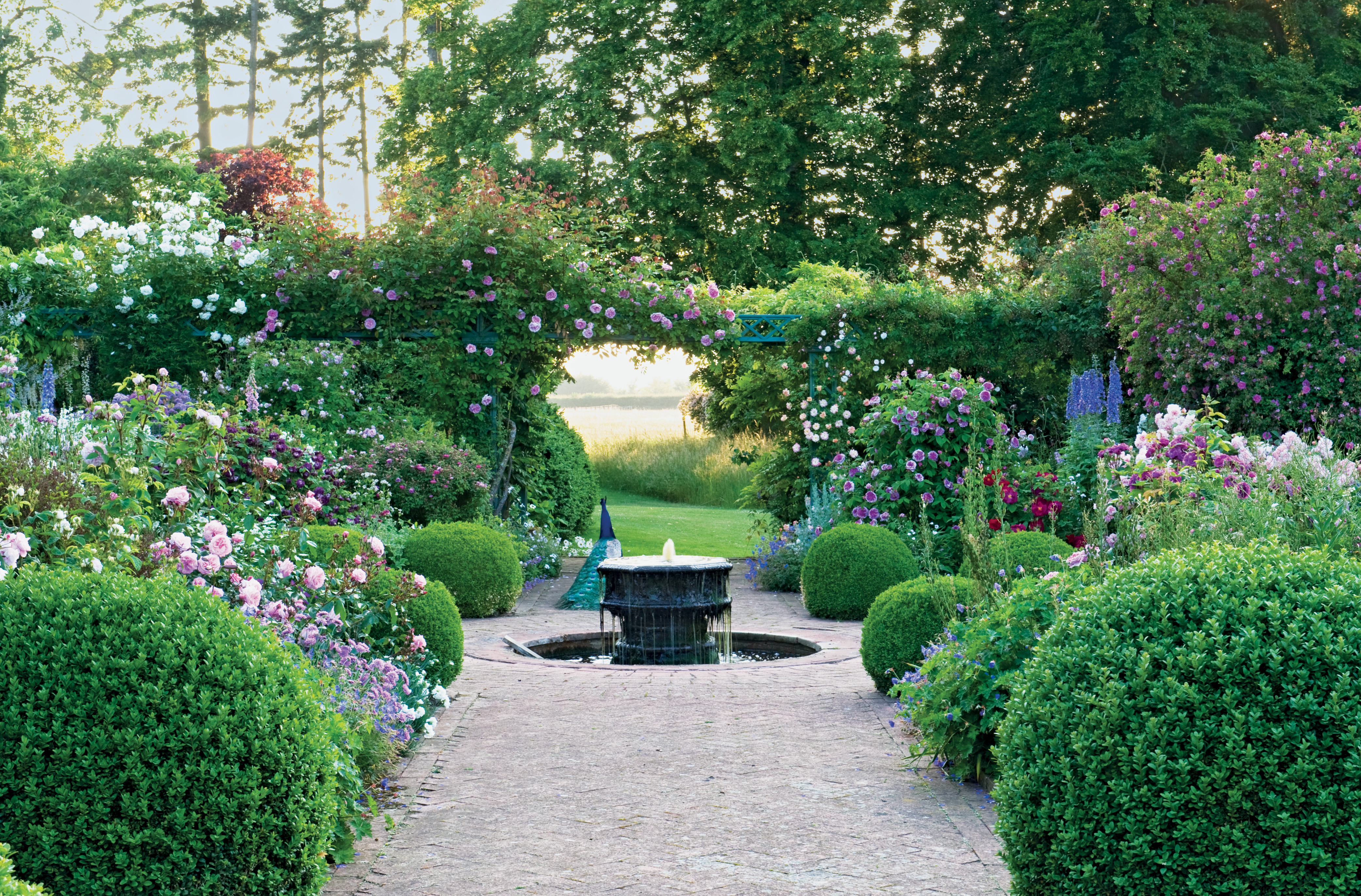
Wyken Hall - Suffolk 1.jpg

Photo credit Marcus Harpur. Perfectly co-ordinated, one of Wyken Hall’s peacocks is poised beneath a blue wooden pergola covered in climbing Rosa Blairii Number Two. The pergola is reminiscent of one at Bodnant in Wales. Owners Kenneth and Carla Carlisle have created a sumptuous rose garden, favouring highly-scented old rose varieties with soft coloured perennials such as delphiniums, astrantia and artemisia. The sound of water and the scent of roses always draws  me in. I could picture myself sitting in this beautiful garden on a hot, sunny summer’s day. Yes, I would be quite happy here!

Columbine Hall, Stowupland, Suffolk
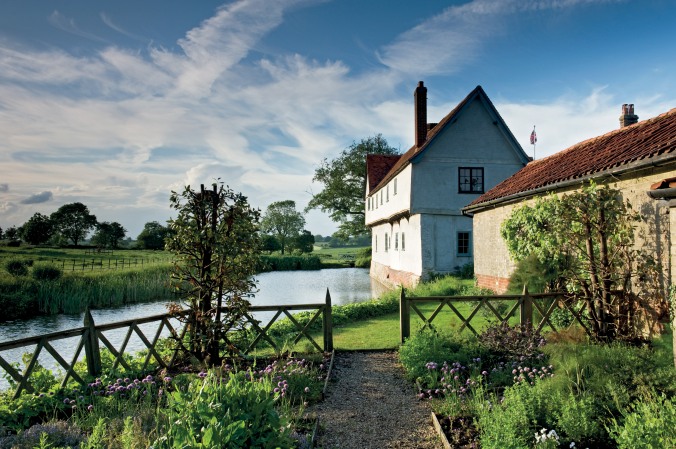
Col Hall.jpg

Photo credit Marcus Harpur. In my opinion, the most romantic of the gardens featured.  I’ve long been entranced by the walled kitchen garden which I first spotted on twitter. Head gardener and estate manager Kate Elliott ( @columbinehall) has worked here for 20 years and rightly describes the garden as her “pride and joy.”  Blue-grey paintwork used for gates, bridges and obelisks caught my eye, along with the planting scheme of silver and blue-mauve through to pink. Purple kales such as Cavolo Nero, Redbor and Rouge de Russie are set amongst  the silver leaves of globe artichokes.  I wasn’t surprised to read the owners’ comments :”We pick from the Kitchen Garden only with Kate’s permission, so as not to upset the colour co-ordinations or symmetry.”  A rare glimpse behind the scenes into the work and dedication that goes into creating a garden such as this.


Elton Hall, Elton, Cambridgeshire

Elton Hall - Cambridgeshire 1.jpg

Photo credit Marcus Harpur. Home to Sir William and Lady Proby who chose to make a modern garden, rather than recreate the past.  The stately house has been in the Proby family for more than 300 years. It’s  fascinating to see how the contemporary design of the fountain and the pyramid topiary is set against a Gothic style house with turrets and castellations.  Proof that a modern style can work in a setting that’s steeped in history.

Wood Farm, Gipping, Suffolk
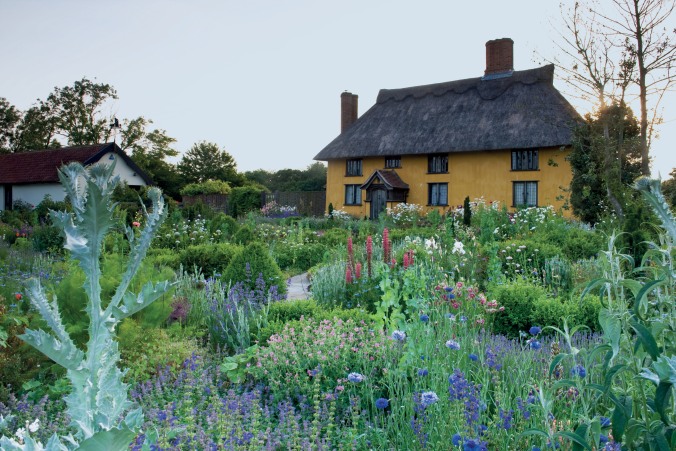
Wood Farm 2 b.jpg

Photo credit Marcus Harpur.    The photograph shows irises, cornflowers, mounds of lavender and box. On the other side of the property, the house appears to drift on a sea of white ox-eye daisies. The golden centres of the daisies are an exact match with the colour of the 500 year old Suffolk farmhouse. A very pretty house and garden and I would love to have the chance to ramble along that  garden path.

I must mention Ulting Wick, Ulting, Essex. Long on my  special-places-to-visit list, the owners Bryan and Philippa Burrough  have planted 10,000 tulips in the Old Farmyard garden. A particular feature of the garden is the bold and jewel-like colours set against the black paintwork of three listed barns. In spring, the bulbs take centre stage, but in late summer, it is the dahlias and bronze-leaved Ensete that turn up the heat. The garden has opened to the public for the past 14 years in aid of the National Gardens Scheme. After reading Barbara’s book you will want to follow  Philippa’s garden tweets @UltingWick. The sheer amount of work that goes into creating a garden such as this is highlighted in the stunning photos in the book.
Secret Gardens of East Anglia cover.jpg

Barbara is a most entertaining “host” on what feels like the best holiday road trip /garden visit tour- ever.  Reading this beautiful book is like walking alongside Barbara. She expertly points out the secret areas and the special treasures in each garden.  The history and the background information is fascinating. And it feels such a treat to be “let in”  to these treasured, private spaces.

It’s a joy to read the stories behind the gardens and  to “meet” the people who own them.  And if the book has whetted your appetite- all but one of the 22 gardens are open to visit – on selected days of the year or by appointment only.

BARBARA SEGALL is a well-known horticulturist and garden writer. I’ve always looked out for her writing in the English Garden Magazine and also on the Richard Jackson’s Garden website. She is editor of The Horticulturist,  the journal of the Chartered Institute of Horticulture, also editor of Herbs magazine for the Herb Society. Barbara lives in Suffolk and her first book for Frances Lincoln was Gardens by the Sea with photos by Marcus Harpur’s father, Jerry.  Barbara’s blog is http://www.thegardenpost.com.

MARCUS HARPUR . I’ve know Marcus since about 1992 when he left book publishing to join his father to form the Harpur Garden Library.  Sadly , Marcus died on August 6th this year after 18 months of illness. He saw finished copies of the book, but poignantly didn’t live to see it go on sale. When I spoke to him last, he described working on the book as “A joyful and satisfying project.”  He was a much loved and well respected photographer whose  skill in capturing the light and beauty in a garden is plain for all to see in this his final book.

Pre-order on Amazon at  amzn.to/2oqHgM2

Thank you to Frances Lincoln/ Quarto Group Books for supplying this advance copy for review.


A peek at my week. What I’ve seen- where I’ve been

Took Mum to Norfolk to see East Ruston Old Vicarage. A feast for the eyes. Loved this sunny wild flower meadow.


Got lots of container planting inspiration. Much scribbling down of names and taking of photos went on. Just look at the size of that brugmansia! You can see why it is called angel’s trumpets. The scent is out of this world. It’s underplanted with yellow argyranthemum, purple verbena, and lobelia. There’s even a grey-leaved melianthus squeezed in. Such an enticing entrance to an archway. 


Every second word we used had “exotic” in front of it! Loved this avenue of cannas planted with blue verbena bonariensis and orange tagetes. 

Saw two sumptuous deep red dahlias. Sadly no labels so we don’t know the names. I’m searching books though, so will post an update when I know for certain. 


I grow this tender purple-leaved Aeonium plant in the greenhouse at home. I might set it outdoors for the summer, now I’ve seen how lovely it looks. 

Also have this blue-tinged echeveria in a pot in my greenhouse. And I’ve got this Stewart Garden low planter which looks like stone, but is actually plastic. Much lighter to carry in and out of the greenhouse. 


Should NOT  have looked at the plant sales area. Fell in love with these two dahlias. Can’t wait to get home to plant them in my cut flower patch. 


Here’s a quick look at the barn we stayed in. It gets a five star rating from us. More information to follow. 


Do get in touch and let me know what you have been up to this week. It’s been sunny and hot in Norfolk and I’m expecting to arrive home to a lot of weeding and dead heading on the plot! 

A Peek at my week. What I’ve seen, where I’ve been….

What I’ve Seen:

This glorious sunset from the lane where I live. We can see these trees from our field gate. 


VISITED  some fabulous gardens at Smeeton Westerby near Market Harborough, open in aid of GEMS Charity. GEMS was founded in June 2012 by Sally and Andy Anderson after they had accompanied four close friends on weekly visits to the Osbourne Chemotherapy Suite at Leicester Royal Infirmary.
  Inspired by the hard work and dedication of the nurses, and the courage of their four friends, they set out to raise funds to make patients and supporters more comfortable during their treatment. The  funds have been used to buy specialist treatment chairs and refurbishing the waiting room. 

This is the view from one of the open gardens, Highfields. Green undulating countryside in the distance. 


Chocolate box thatched cottage, overlooking the allotments in the village. Full of colourful plants including this wine-coloured hollyhock. 


Mooched around the allotments. Got lots of ideas for companion planting.


Mum and I sat in this pretty summerhouse, enjoying the peaceful scene.


Sat on a bench encircled by water, under a shady tree. Heavenly.


Saw this beautiful late summer-flowering Clematis recta. A floppy, sprawling variety which looks good amongst perennials and wild flowers. Bees love it too.


Laughed at this cheerful sight. Even the scarecrows in Smeeton Westerby are posh. This one is wearing Le Chameau welly boots!


Back home to spot two fledgling tawny owls in the wild garden. Made our day to find them in the cherry trees around the horseshoe pond. Watched them until dusk as they bumbled from one branch to another, flexing unfamiliar wings.  

More info on GEMS charity at www.gemscharity.com  

Donate online at virginmoneygiving.com

Email: gemscharity@gmail.com. 0116 279 3814 

#wordlesswednesday- wild geraniums on the march.

Wild geraniums billow in the long grass on the lane outside my house. Back lit, they look like mini- stained glass windows. This pretty white seedling turned up on its own- probably a hybrid with one of my garden plants. I am thanking the bees for this little beauty. 


The common name, cranesbill, comes from the shape of the seedhead which resembles the long tapering beak of a bird. Meadow cranesbill, or Geranium pratense, comes in a range of colours from white to deep blue. I love the violet-blue veins and the dark plum anthers. The flowers glisten in the sun as if they’ve been coated in sugar.


A favourite of mine is this pale violet flower with delicate silver veins. I ought to be getting on with my work, but I spend more time than I should just gazing at these beauties, comparing their hues and pondering on the wonders of nature.


And luckily for me, these gorgeous plants have drifted in through the front gate and settled in the garden- all along the path to my front door. It’s a wonderful welcome home- and I haven’t done a thing to create it. It’s happened all on its own. Isn’t nature grand. 

I’ve found a beautiful violet form called Beth Chatto  on the RHS website. Click on the highlighted word to find out more. Geraniums can be grown from seed. Flowers appear from June to September and plants grow to about 70cm in sun or slight shade. Perfect for grass meadows- or you can plant in drifts in amongst shrubs and perennials. Highlighted in the RHS Perfect for Pollinators list. Bees and butterflies will certainly thank you for planting geraniums.

In a Vase on Monday….er…Friday 

Having tried and failed to upload this from home, I’ve finally given up on our dodgy internet connection and decamped to Mum’s house. We haven’t got fibre optic cables to our village yet. And we live a mile down a single track lane. So there’s really no hope for us. The only up-side to this story is that mum made a cake. And regular readers know how much I love cake! As I’ve said before, I grow and pick flowers for my MIL Joan as a way of keeping her connected with me and my garden- showing her what’s in flower 52 weeks of the year. But this time I also picked a bouquet for a friend who is having an operation today. Hopefully the sweet williams, alstroemeria and first sweet peas of the season will brighten her day. Flowers do have the power to calm and reassure. 


Pink alstroemeria -from Viv Marsh Postal Plants, flowers virtually all year round in my unheated poly tunnel. I grow them in 60cm pots, as the roots have a reputation for spreading. Growing them under cover protects them from the weather and also from snail and slug damage. Flowers last  for about three weeks in a vase. Easy to grow, repeat flowering, and long lasting. They are no trouble at all. Please excuse the state of my poly tunnel, which needs a good clean. I’ve bought some special detergent from LBS Horticulture, which apparently just needs spraying on. Will report back when I’ve tried it. The one problem with poly tunnels is the algae. It’s not like having glass which can easily be washed down. And it builds up on the inside and outside surfaces. Still, it was cheap to put up and gives me a dry working area in the winter. 

I planted these sweet williams last summer. They arrived in a parcel as a twitter plant swop. I love free plants, and always have loads of my own to spare. I’m quite often posting margarine containers full of little seedlings all around the country. You can see my rather rickety hazel A-frame structure for sweet peas in the background. I just hope it doesn’t blow over in a storm. 

I love the jewel-like colours of these sweet williams. They last for ages in a vase and produce large quantities of flower in a small space. I’ve just sown some more to plant out in the autumn. The seeds germinated in two days in all the hot weather we’ve been having, and there are hundreds of little seedlings to prick out.

My sweet peas have just started flowering. I had a disaster with the autumn-sown seed. A mouse got in the propagator and snaffled the lot in one night. There was just a sea of snapped off stems. Not to be deterred, I planted the stems as if they were cuttings, and amazingly they carried on growing. Another tip if you are growing sweet peas is to use the pinched-out tips as cuttings. They will produce plants that will flower right up until November. I discovered this by accident when I left the pinched-out tips on a tray of moist compost and they rooted down and planted themselves.  Aren’t plants just amazing.

I’m growing High Scent, a good reliable sweet pea variety- and it really does have a wonderful old fashioned scent. It was raised by Keith Hammett and introduced in 2003. It has a creamy  ruffled flower with a delicate lilac edge. I’m also growing Albutt Blue, a very pretty pale blue flower with a deeper blue picotee rim.  It was raised by Harvey Albutt and introduced by Eagle Seeds in 1999. It’s been a favourite of mine ever since. I buy seed from Easton Walled Gardens, Roger Parsons and Eagles. If you don’t have  facilities to grow your own, you can buy mail order plants in the spring from Easton. Also, Mum and I spotted some really great sweet pea plants at Coton Manor garden nursery in Northampton in May, for just a few pounds each.  It’s good to have a back up plan. 

I always put lemon balm and mint in my cut flower bouquets. It goes so well with the sweet peas and roses. And for my friend, who’s spending the day in hospital, it will be a lovely scent to come home to. 

My potting shed, where I’m sowing seeds and making cut flower posies, overlooks a horseshoe pond and tall willows. On the other side of the trees is this view of surrounding countryside. I’ve cut holes in the hedge to make viewing points through. And all my hedgerows are woven with scented roses and honeysuckle. It’s a peaceful place….just don’t look at the weeds! 

Are you growing any cut flowers for friends and family this year? I’d love to hear  what’s  growing in your garden. And thanks, as always, to Cathy at https://ramblinginthegarden.wordpress.com  for hosting In a Vase on Monday.  You can join in even if you have jamjars like me.  And if anyone knows any miracle cures for low internet speeds in the countryside…..please, please let me know! Sigh 🙂 x 

Wordlesswednesday- will it be Britain’s hottest June day for 176 years?

 Sunset view from the garden. Phew 30 degrees here for the last few days. Predicted temperature is 31 today. Grace cat flattens herself to the cool stone path. Hedgehogs drinking from saucers of water. Bats feasting on insects over the pond. Baby frogs swarming in the long grass of the orchard. It’s too hot for me. 

Last chance to visit bluebell woods…..

Cold weather has held back the bluebells this year. They are still looking glorious. Last chance to visit Coton Manor tomorrow.  Here’s some photos from our visit today. As usual, we started with a picnic. Spreading our rugs under the branches of some apple trees, we  tucked into home-made bread and warming soup, followed by an array of cakes and shortbread. A great start to our garden visit.


Our little haven can be found at the far end of the car park. Funnily enough, we’d never noticed the orchard before. But full of blossom today, we could hardly miss it. Next we set out to visit the bluebells.

img_3383-1
As you can see, the bluebells are at their peak of perfection. It’s a sight I’ll hold in my memory until next spring. That blue, with the unfurling lime green leaves, and the honey scent. Just glorious!

We found the dogs’ graves. What a peaceful resting place.


The gardens always provide breathtaking planting, deserving of a separate post. But for now, here’s a taster of what we found.  Luckily the wisteria escaped any damage from the recent hard frosts.


I love this view from the terrace steps.

img_3436
I wrote about visits to bluebell woods here mentioning Coton Manor  and Hodsock Priory .  For more information click on the highlighted words. Also look at the Woodland Trust website for bluebell woods all over the country.  Be quick to visit. They are at their best right now.

Wordless Wednesday – 7th December 2016 -a line of oak trees.

View from my garden gate.   A flurry of  leaves fall like snow,  in golden bands across the lane. Such a picture of beauty. A temporary -catch-it-now moment in time. Before the season moves on.

Wordless Wednesday 23rd November 

Cosmos seeds. Now safely gathered in.

And after Christmas I will start sowing again, for a summer delight of bees and blooms.

My cut-flower-patch kit cost me about £20 from Ben at Higgledy Garden, mail order. Great value, to get me started. I shall re use my saved seeds, but I’m looking on the website to add new varieties for next year. What are you planning to grow in 2017? 

The Tuesday View- 25th October 

Autumn has always been my favourite season. Nature seems to gather up its glories for one last burst of beauty.  


The beech trees make a golden backdrop for the wedding cake tree – Cornus Controversa Variegata. Cotinus Grace is  starting to turn from chocolate to a glowing red.


Left to right, the wedding cake tree , prunus Kojo no Mai, and Parrotia Persica. Backbone shrubs that stand out in spring and autumn. Summer colour is woven through these plants.


Looking like it’s been varnished – Parrotia is also called the Persian ironwood tree. Its bark is a  beautiful mottled  iron grey.


Summerhouse in the mist. The field-side border contains eucalyptus, magnolia, flower carpet rose, and two matching crataegus prunifolia mop -headed trees  framing  the view. The 1920s summerhouse is on a turntable and facing the ploughed field today. Beyond the summerhouse is a small copse of trees where  a Spotted woodpecker nested this summer. 
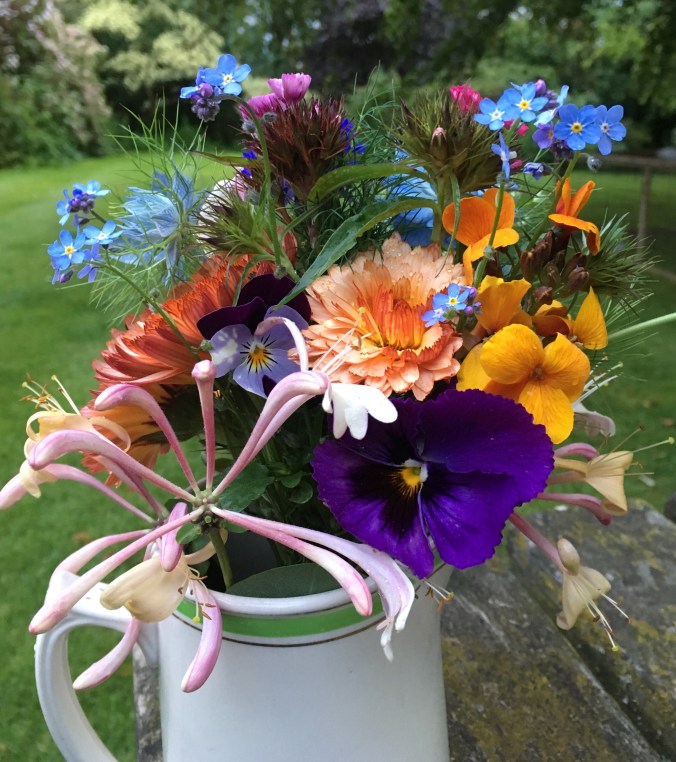
My ancestors would have used different words for the seasons. 

Until the 1500s, autumn was called harvest. The word comes from the old Norse word for haust- which means to gather or pluck. 

The French gave us automne. And the Romans gave us the Latin name autumnus. But “autumn”didn’t come into common English usage until the 18th century.  

Cathy at Words and Herbs  Hosts the Tuesday View. Go along and see what’s happening in her garden and feel free to join in with photos of your garden too. 

Wordless Wednesday. The hedgerow 5th October. 


Clematis against an October blue sky.
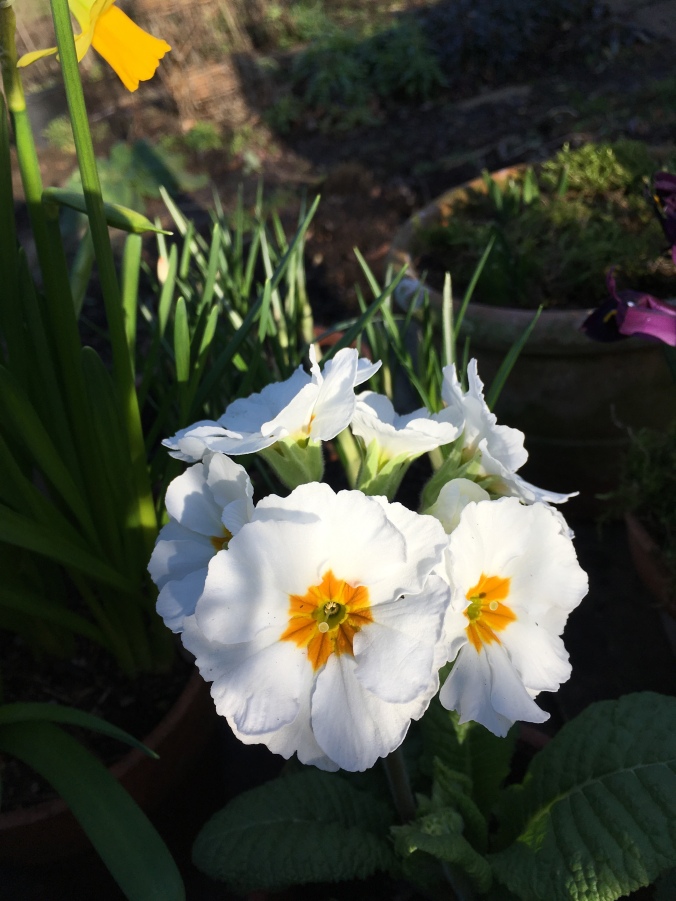
We made a pond

We made a pond.Twice . We hired a man with a JCB. He was very enthusiastic. We marked out the site, discussed the size and shape, waved our arms around windmill fashion – and then made a big mistake – we went away for a few days. When we returned, we found a huge straight-sided hole in the ground and massive rockery.

When we recovered from that financial and confidence sapping disaster -we hired another man with a JCB. This time we stayed put. My other half literally guided the bucket into position. I watched- ready to call an ambulance.
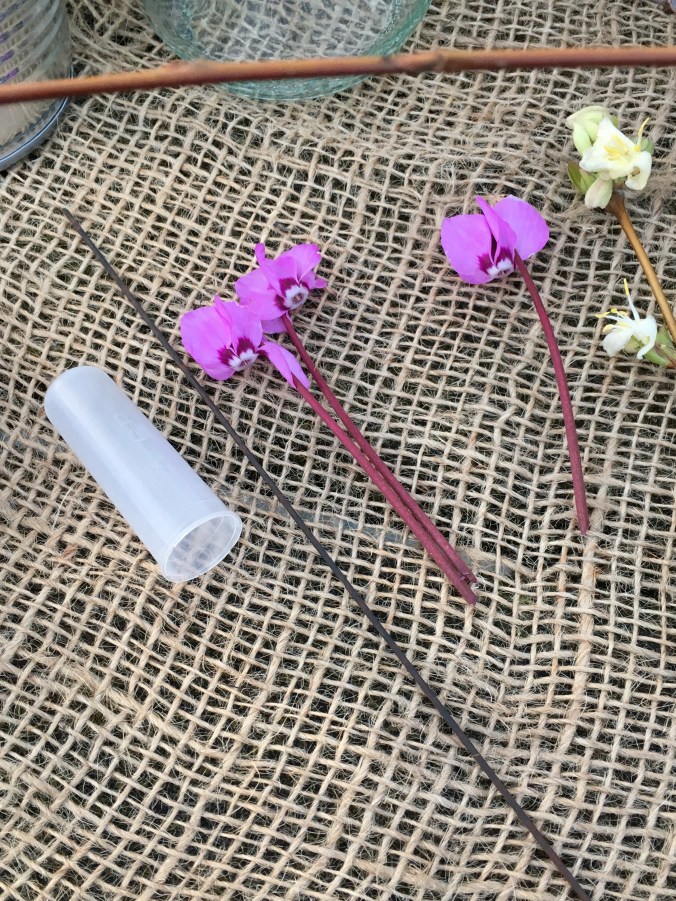
We bought a pond liner when we should have spent the money on carpets. We lived for some time with concrete floors.

img_3723

Cardamine pratensis or Lady’s Smock grows happily in the boggy margins.

S oxslips grow along the sloping banks. such a delicate flower.

I’m  replanting the  iris and camassias around the edges and trying to control the stinging nettles and brambles. I don’t want to eradicate them completely- just keep on top of them. I garden with a light touch. I love the butterflies that hatch their eggs on the nettles. So gardening for me is a compromise.

Have you ever made a pond? What lessons did you learn along the way?  I hope you have enjoyed these photos of my garden. It’s a peaceful place where humans have to share with the wildlife.