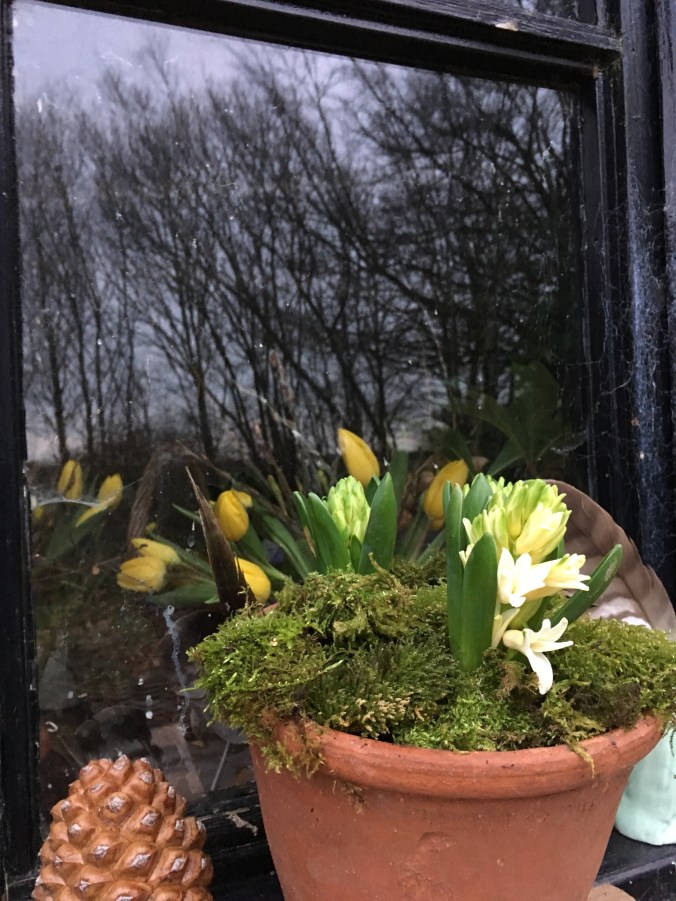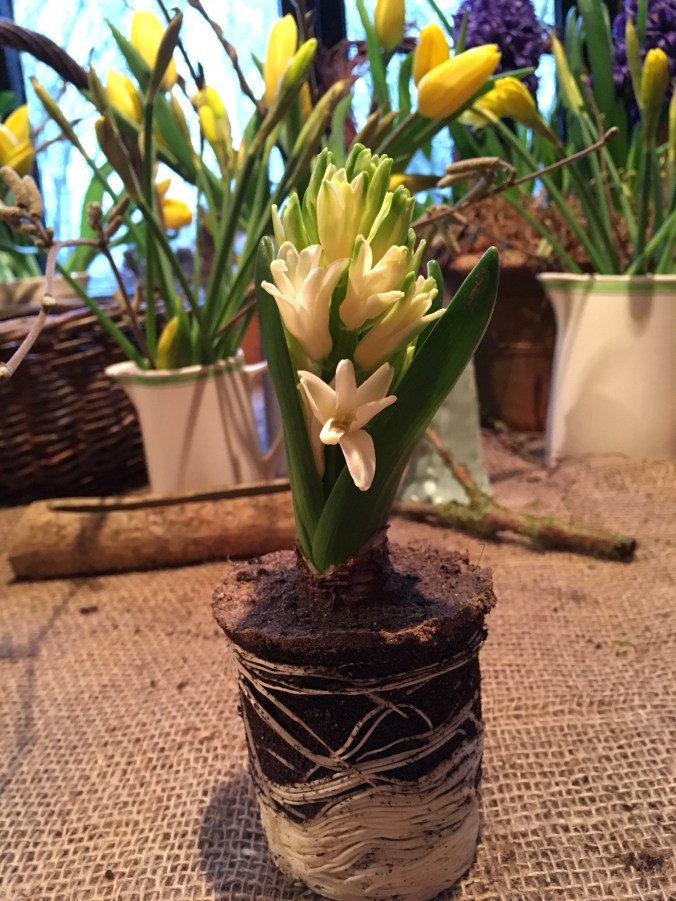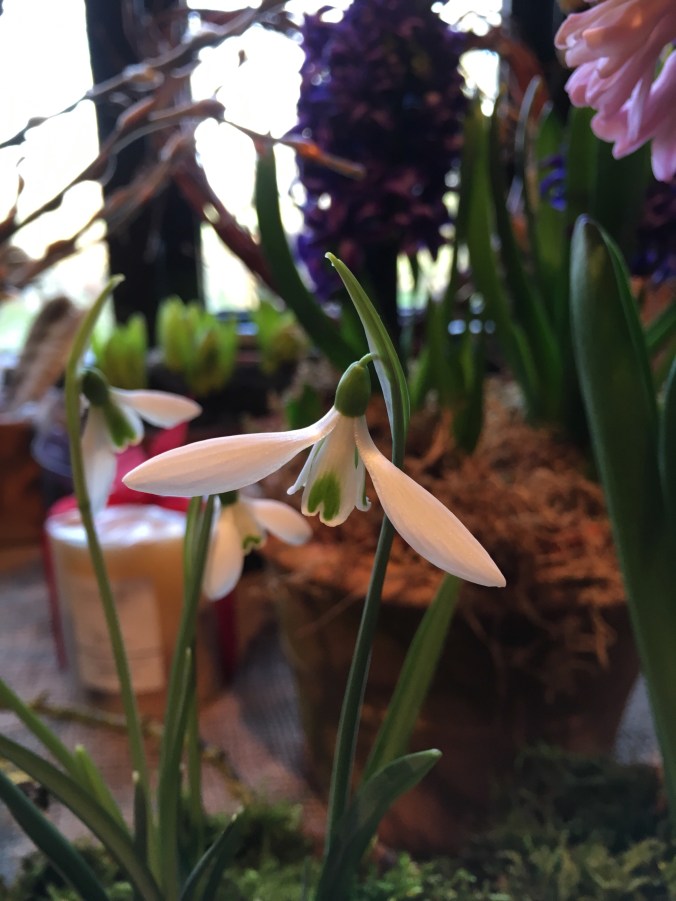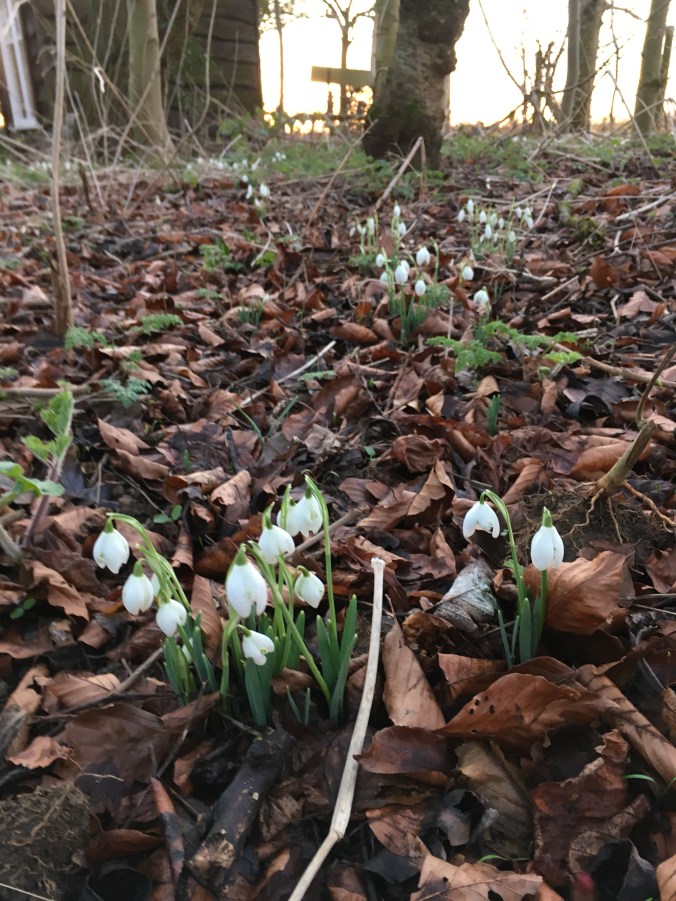
In a Vase on Monday

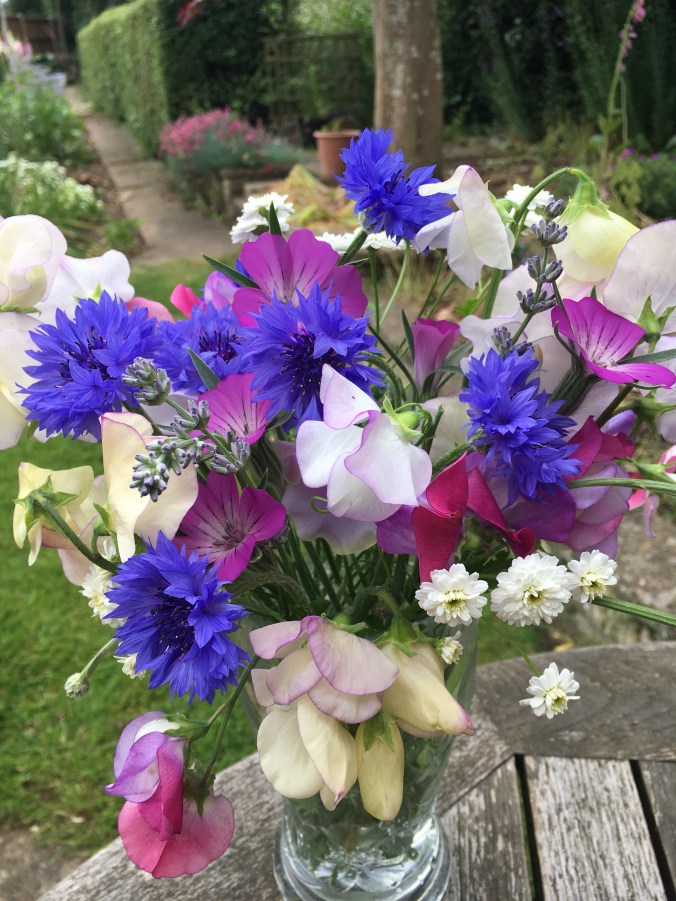
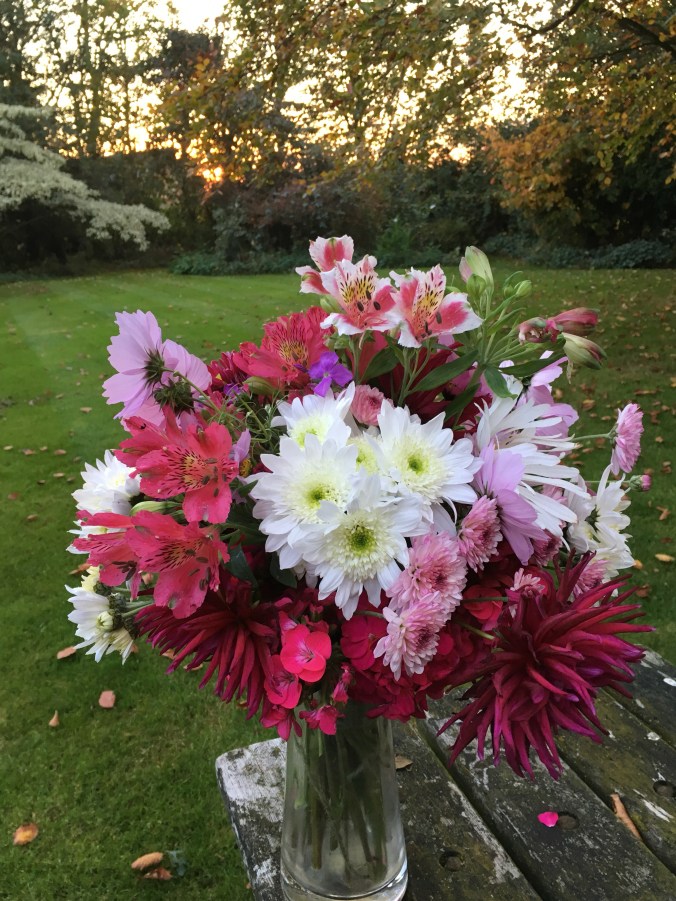
My cut flower patch is in full swing. Luckily, flowers sown last summer and planted out in autumn are weathering the heatwave. Here’s a selection for this week’s vase. As always, my posies are for my mother in law Joan and my Mum, Marion.

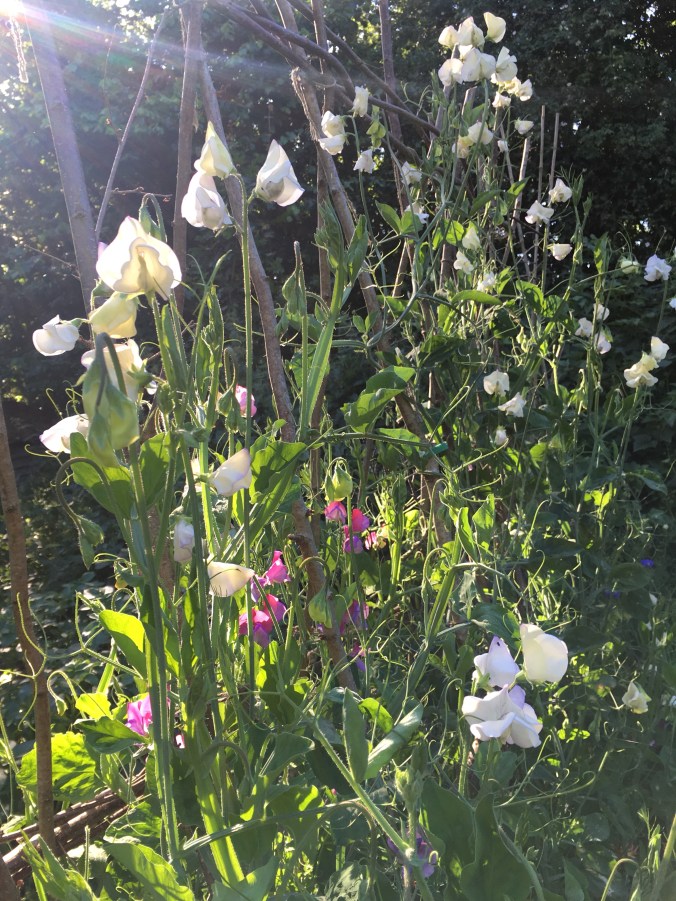
Sweet peas High Scent are top favourites this year. I love the creamy buds that open to pale lilac. There’s a pretty violet picotee edge to the flowers. And the scent really is amazing. Only a few are needed in a jam jar posy to make an impact.

Seeds were sown last October in root trainers and kept all winter in straight-sided clear plastic storage boxes to outwit mice. It worked. And in April the well-rooted plants were set out along a wonky network of hazel twigs.

I pick flowers at dawn and drop them straight into buckets of cold fresh tap water. To travel, I pop ice cubes in the buckets to keep them cool.

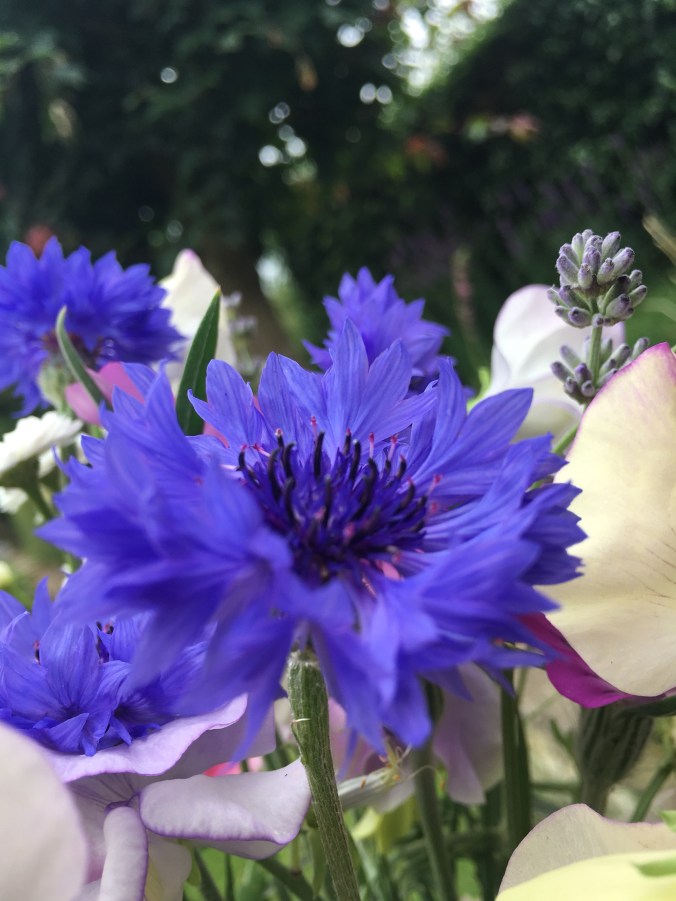
In amongst the sweet peas this week there’s beautiful cornflowers Blue Boy. These are really prolific. I’m picking these flowers most days and there’s lots more to come. Great value for a small area.

For a pop of pink, there’s corncockle, an easy to grow wildflower that’s growing all around my garden.

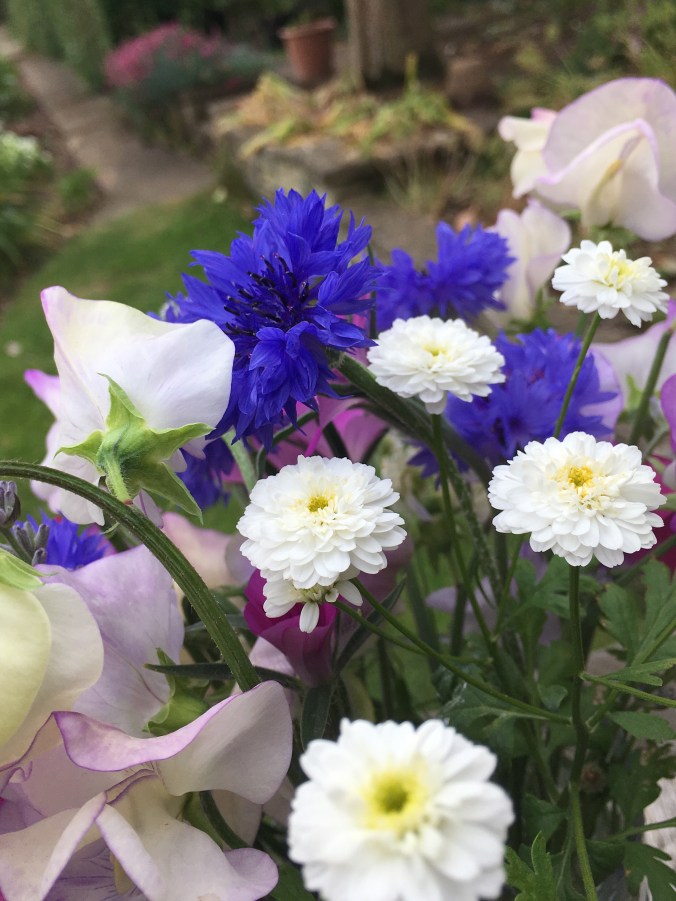
Creamy white double chamomile reliably comes back every year and seems to go with everything.

As usual, I’m joining in with Cathy at Ramblinginthegarden blog for this week’s IAVOM. Why not go over and see what Cathy and all the others are growing and displaying at the moment. It’s fascinating to see how many of us are growing the same plants in gardens all around the world.

https://ramblinginthegarden.wordpress.com/

Dahlias- beautiful varieties for home and garden

Book Review

Naomi Slade. Photography by Georgianna Lane

http://www.pavilionbooks.com. £25. August 2018.

Leave a comment below if you’d like your name to be put in the hat for a chance to win one free copy of the book. The publishers will draw out a name. Their decision is final. Sorry, it’s open to UK entries only.

Photo : My favourite dahlia Nuit d’Ete in my own cut flower plot in Leicestershire.

I’m away from home for a few days, staying with my mother-in-law Joan. Everything here is at a slower pace. Breakfast takes an hour, and over tea and toast she tells me how her husband Keith once won awards at the local flower show with his dahlias and chrysanthemums. The whole garden from the back lawn, to the greenhouse was set in regimented rows of flowers. I can picture the scene. This garden has been lovingly tended by my in laws for more than 60 years. And now everyone in the family is stepping in to keep it looking perfect. It’s quite a challenge, but one we all enjoy.

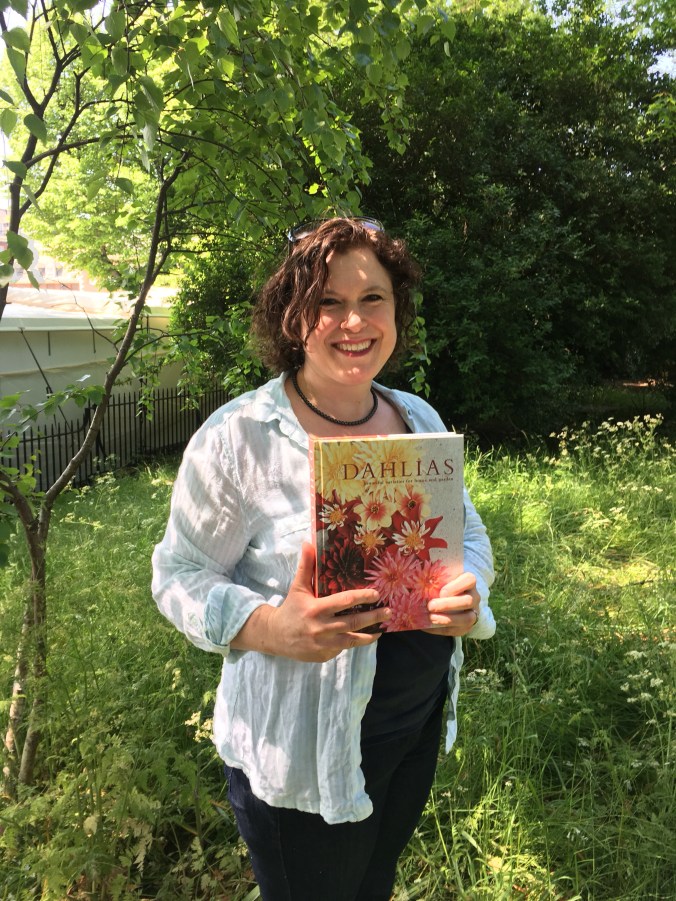
Today, between hoeing and weeding and keeping them company, I’ve got time to sit down and catch up with some reading. And top of the pile of new books is Dahlias by Naomi Slade.

photo: Naomi Slade with her latest book. My photo, taken at Chelsea Flower Show.

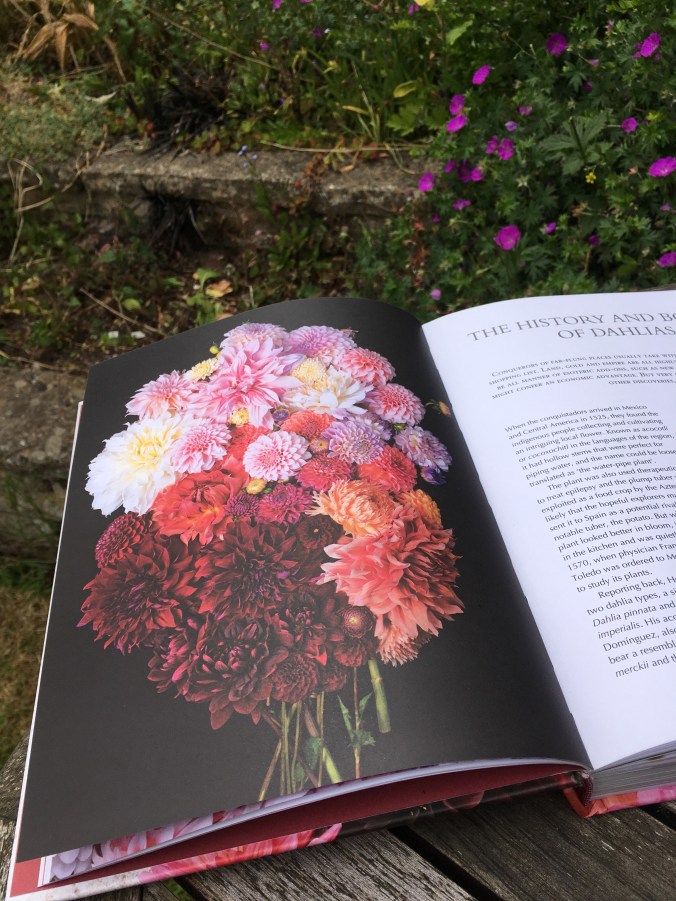
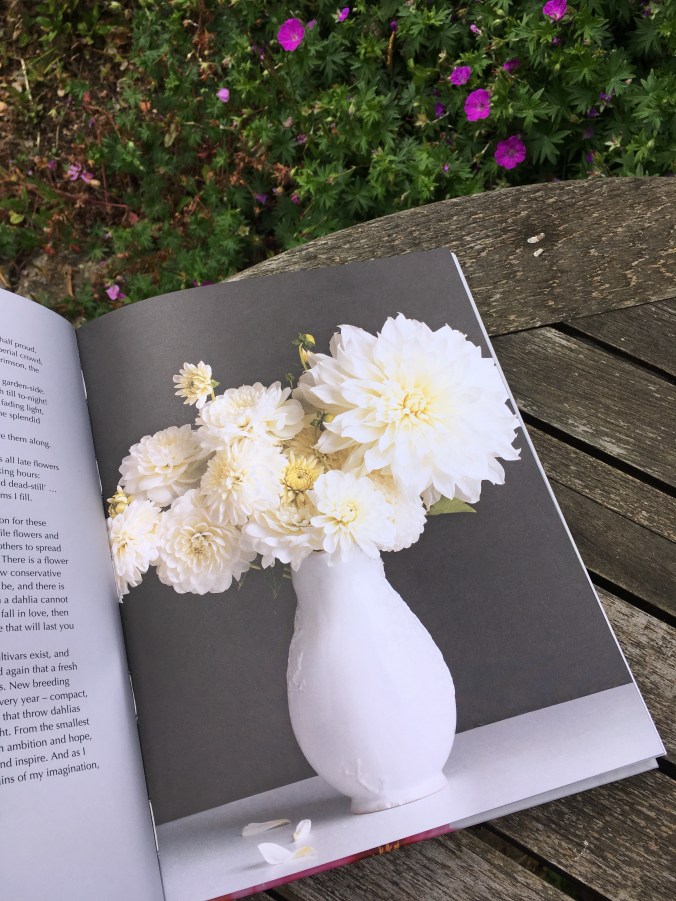
Over 65 types of dahlias are profiled in the book. There’s 240 pages of mouthwatering photographs and inspiring, easy to read descriptions. There’s an introduction followed by sections on history and botany; and the dahlias are split into themes such as “romantic,” “dramatic and daring,” “fabulous and funky,” “classic and elegant.” A growing and care guide gives cultivation techniques, information on selecting varieties, choosing a suitable site and soil and planting tips.

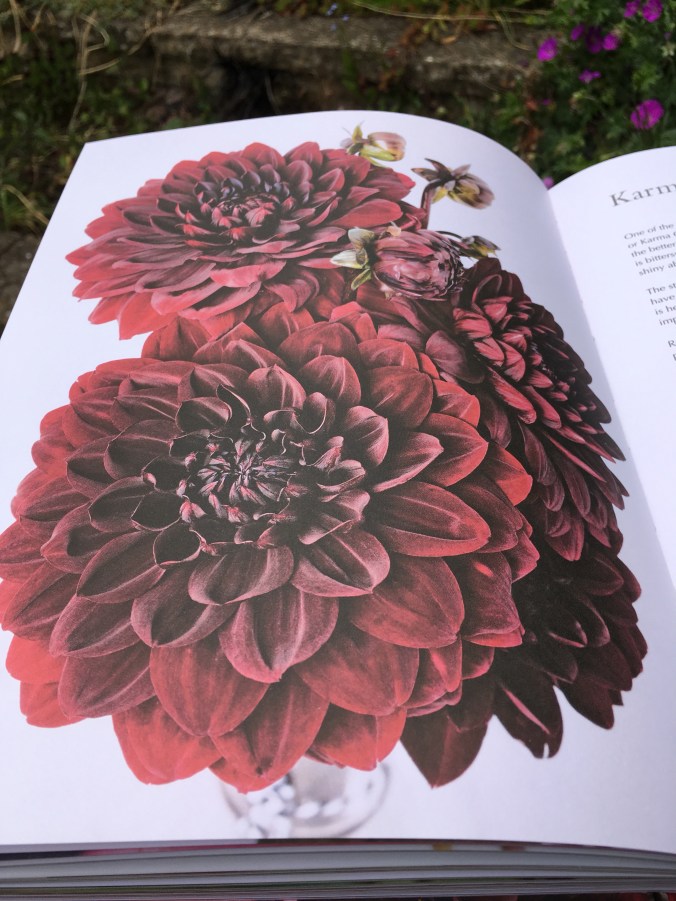
Photos are sumptuous. I’m particularly drawn to the darker shades; deep red and almost black. Rip City is one I’d love to try.

Karma Choc is another on my wish list. This small waterlily flower is excellent as a cut flower and lasts at least a week in a vase.

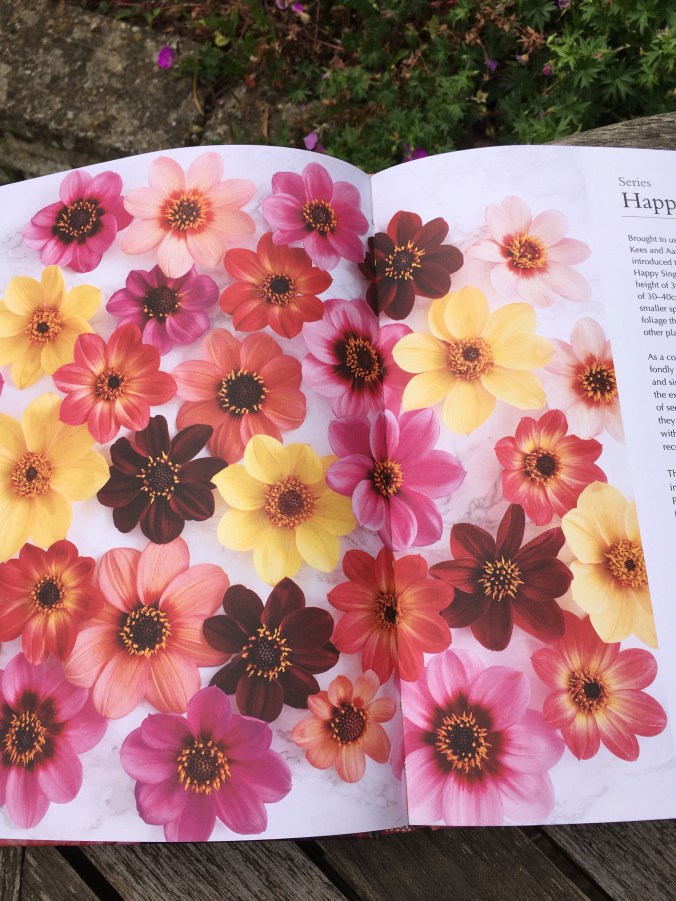
I’d never heard of the Happy Single range of dahlias. These are perfect for small spaces and containers, growing to 30-60cm high by 30-40cm wide. Such a wide range of cheerful, rich colours. You couldn’t fail to be happy with them! Varieties include Happy Single Flame, Happy Single Party, Princess and First love. Even the names made me smile.

To calm things down after all that colour, there’s some dazzling and very beautiful white dahlias. I enjoyed learning about all the different kinds of dahlias. I knew about cactus and water lily types, but didn’t know much about collarettes, and anemone- flowered forms. And ones called star, or orchid-flowering sound particularly appealing.

Here’s some photos of dahlias from my own garden. I’ve taken cuttings from mine to grow in my in laws garden. Having read Naomi’s inspiring book, I’ve made a list of new varieties to share between our two plots. And I’m hoping to learn some prize winning tips from my father in law. You never know, I might even enter the local flower show.

Naomi Slade is a writer, broadcaster, consultant, speaker and photographer. A biologist by training, a naturalist by inclination, and with a lifelong love of plants. She writes regularly for national newspapers and magazines. Her books include The Plant Lover’s Guide to Snowdrops and An Orchard Odyssey.

I really enjoyed reading her latest book. It’s brought back some lovely memories for my mother in law and sparked off a new plan in my head to grow more dahlias in their garden.

Right then…. back to the weeding. Must not let my in laws down! 🙂

In a Vase on Monday – My Cut Flower Patch

One of the joys of June is to walk out into the garden and pick a bunch of flowers for the house- flowers that have been nurtured all winter, and are now ready to harvest.

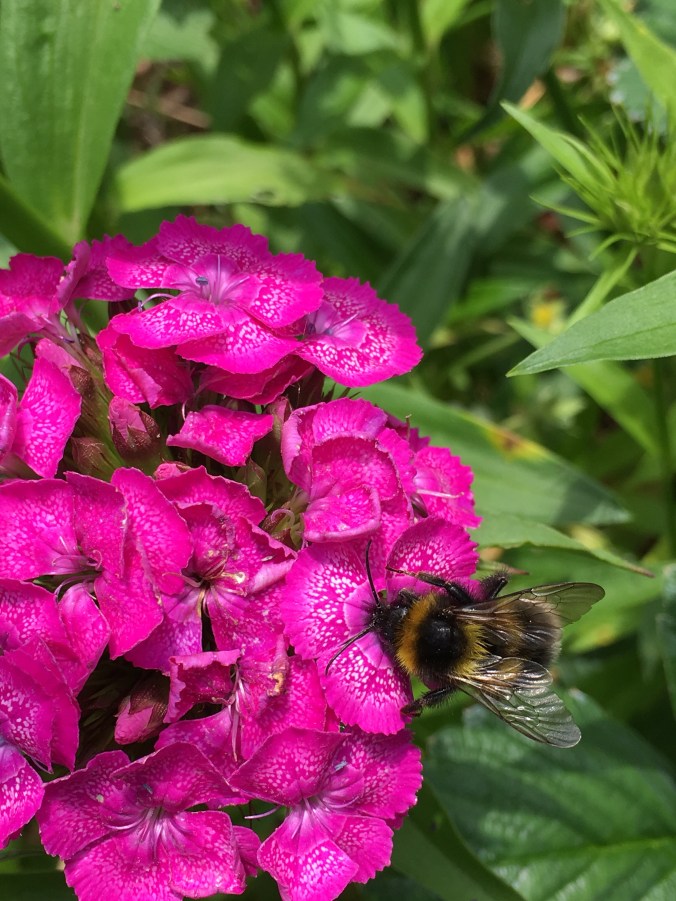
Sweet williams are currently my favourite. They provide masses of flowers which last at least a week in a vase. Sown in June last year, they were pricked out and grown on, and then planted out in late August. And today I’m picking basketfuls of fragrant flowers.

Regular readers will know that all my flowers are grown for my mother in law Joan and my wonderful mum, Marion. Once a week I fill every vase they own with home-grown flowers.

Here’s some photos from my cut flower patch. I have 10 3m by 1.2m beds. Half are planted with sweet peas, dahlias and sweet williams. Half are set out with potatoes, beetroot, beans, courgettes and strawberries

In the background you can see the fruit garden. It’s completely overwhelmed with brambles and stingers this year. A renovation project is planned, when I get a minute to spare.

I’m growing a range of old-fashioned Sweet williams with seed from Higgledy Garden. As you can see, bees love them too. I’m always thinking of what would be best for pollinators.

I particularly love the auricular-eyed sweet williams. Rich Venetian colours really stand out in the summer sunshine. And they go so well with summer roses. This one is called William Shakespeare. Looks like red velvet to me.

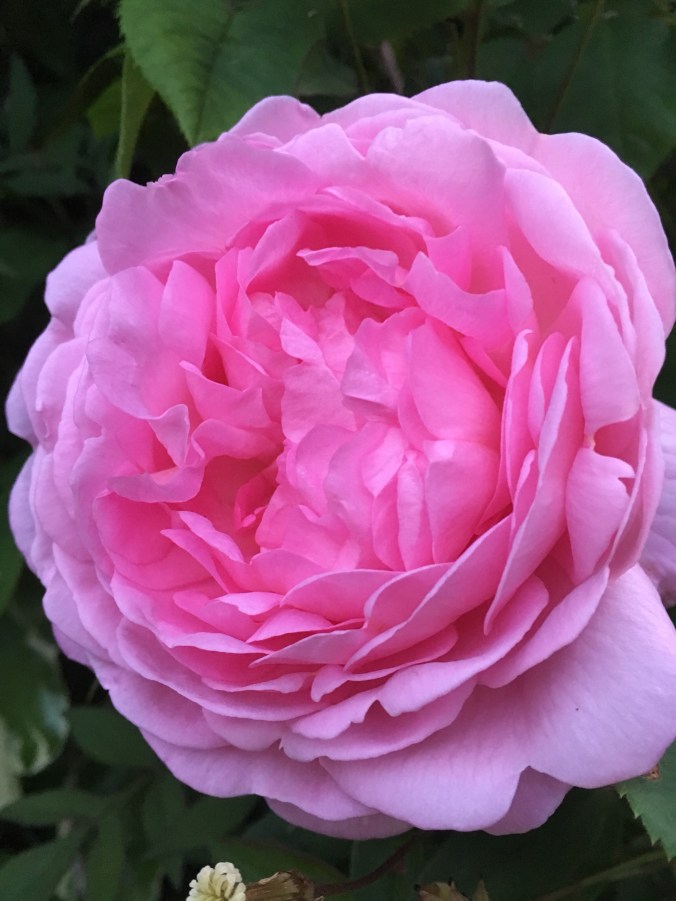
And another favoured rose for picking right now is the highly-scented Constance Spry. It only flowers once, but what a spectacular show.

I’m sowing more sweet williams right now, preparing for next summer’s bounty. I use half seed trays filled with good quality seed compost. Fill them right to the top of the trays. Press down gently to level. Sow seeds thinly to prevent moulds and damping off disease. Seeds germinate at 17 – 19C, room temperature at this time of the year. So no propagators are needed. When seedlings have two leaves, I prick them out into full size seed trays to give each plant more space to grow. I’ll place the trays in a bright place to grow on, making sure the plants don’t dry out. And I’ll plant them out into the garden in August, 25cm apart, when I’ve harvested one of the vegetable crops to make space. I water plants with seaweed extract and home-made comfrey liquid which makes them grow healthy and strong. I’m adding some almost black sweet williams Nigricans and white alba for next year.

Here’s another view of my cut flower patch with Diascia Hopleys in the foreground. Another good do-er for flower arranging.

I’m joining in with Cathy for her In a Vase on Monday meme. Why not go over and see what Cathy and the others are growing and putting in their flower arrangements this week. Let me know how your gardens are doing this summer. How are you coping with unpredictability weather, rain and high winds? I think summer storms are becoming the norm.

#wordlesswednesday- Malus Wedding Bouquet- with the Royal Wedding in mind.

Crab apple trees are among my favourites. I love the spring blossom- and then there’s the fruit in the autumn, which makes wonderful jams and jellies.

Malus Wedding Bouquet is highly recommended. It has soft pink buds which open ivory white and mature to a dazzling pure white. Finely tapering green leaves turn red in the autumn. Very disease resistant, it grows to 3.5m by 2.5m, although can be easily pruned to keep in a smaller space.

We’ve got our patriotic flags and bunting out, and my grandmother’s coronation glassware trifle bowls- all set for Saturday. Whatever you’ve got planned, enjoy your weekend celebrations.

Weeds. Geranium robertianum

I’m writing a piece about weeds at the moment. Suddenly, in the sunshine, after all that cold weather, weeds have gone whoosh!

In my woodland garden, there are thousands of wild geranium, robertianum. It has so many common names: herb Robert, stork’s bill, crane’s bill, red robin, stinking Bob, fox geranium, cuckoo flower.

“Herb Robert is very familiar. It lives with man: much as the robin flips into his garden and to his back door” – Geoffrey Grigson- The Englishman’s Flora.

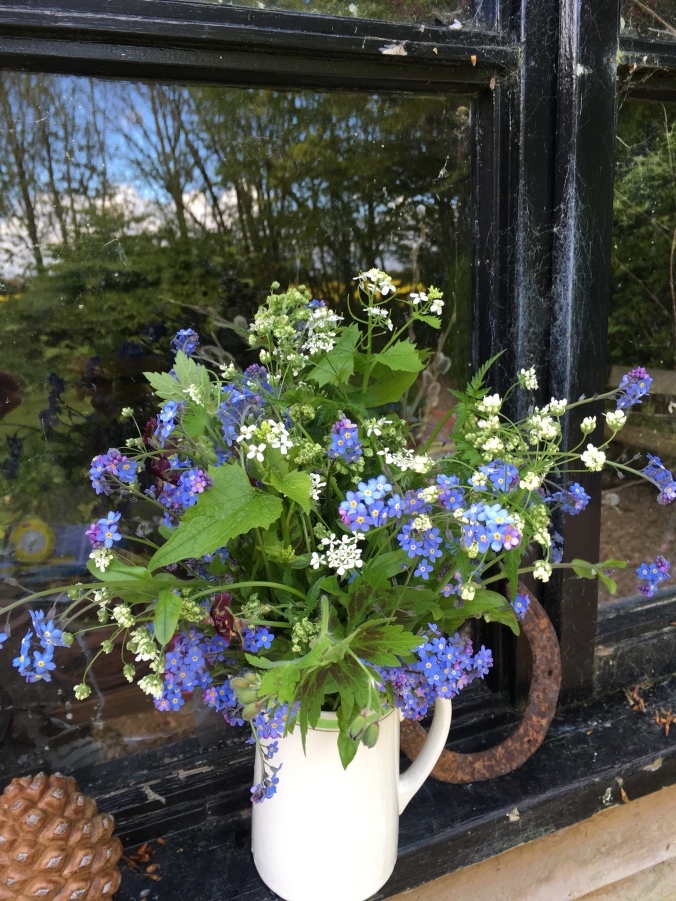
I’m enjoying reading up and investigating more about this common weed we usually pass by without noticing. And meanwhile, a posy of herb Robert sits in my potting shed window today. Mixed in with some wild violets -which are so numerous they could be considered a weed. Both very pretty indeed.

What “weeds” are growing in your garden right now.

End of the Month View -April 2018

We leave cold, wet April behind, and May finally brings some warm, settled weather.

The potting shed window ledge soon has a jug of cow parsley and forget-me-nots from the wild garden.

We’ve waited for this display all winter. Wild cherry trees in the paddock. Alive with bees. An avalanche of white blossom.

Scented narcissi Geranium pop up in the long grass around the pond. I love the egg yolk centres.

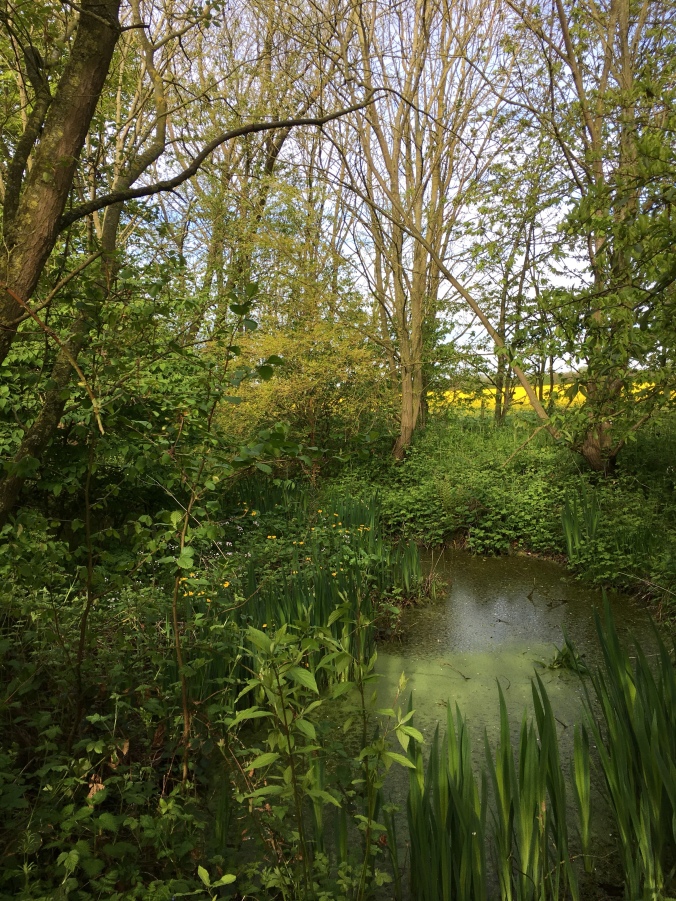
Needing some work this summer, the pond is ringed with marsh marigolds and lady’s smock wild flowers- and brambles and stinging nettles! A bit of cutting back and control is planned.

Our front lawn is a blue haze. My Grandfather Ted Foulds brought the first wild violets here, seedlings from his garden. They spread over the whole plot, and I love them.

I’ve planted my sweet peas. The hazel rods are a bit ramshackle, but they’ll soon be covered with flowers. I planted seed in October. I’m growing old favourites: High Scent, Wiltshire Ripple and creamy white Mrs Collier, plus heritage varieties from Easton Walled Gardens .

Suddenly, these dog’s tooth violets pop up through cow parsley in the woodland. I forget I’ve planted them – and then they emerge. Sunshine on a cold, cloudy day. Erythronium Pagoda is the variety growing here.

Shining out from the shade, Tulip Purissima. Reliably comes back every year. Copes with everything the weather throws at it.

I grow Orange Emperor tulips in the daylily bed in front of the greenhouse. Another good do-er. Always comes up every year if planted deeply on a bed of grit for drainage.

Favourite shrubs in flower at the moment are daphne and quince. This one is Japanese quince, Chaenomeles Kinshiden. Double flowers open pale lime green and change to clotted cream as they age.

Pleased to see my plectranthus has survived the winter, tucked up in the greenhouse. A striking plant for summer containers. Easy to grow from cuttings.

There will be plenty of citrus fruit for summer preserves. This plant flowered all winter, filling the greenhouse with such a wonderful scent.

We do quite a bit of owl watching from the top of the garden. Delighted to report the barn owls and tawny owls have survived the freezing winter. We’re hoping they bring their fledglings into our garden again this summer.

Another cause for celebration. The hedgehogs- we think they are last year’s babies- also survived the cold, and have come out of hibernation, ravenous. They are doing a great job of clearing pests in the garden.

I hope you’ve enjoyed this slide show of my garden at the end of April and into the first week of May. Enjoy your Bank Holiday weekend. I’m hoping to spend some time just sitting in my favourite garden chair. If I can possibly ignore all the weeds growing rampant in the background!

Thanks to Helen Patient Gardener for hosting the EOMV. Why not go over and see how Helen’s garden looks at the end of April.

What are your plans for the garden over the coming weeks? Get in touch and let me know.

Fact sheet for growing strawberries /recipe for ten minute strawberry jam biscuits

If you listened in to the gardeners’ phone-in programme this week on BBC Radio Leicester you’ll have heard us giving hints and tips on planting and growing strawberries. Here’s a list of do’s and don’ts to get the best from home grown crops.

Buying bare-rooted runners, or root stock, is an affordable way to buy strawberries online or via seed and plant catalogues. It’s a good way to buy named varieties and virus free stock.

I’ve chosen the Plant Heritage Collection from Marshalls. 30 runners for around 66p each.

Royal Sovereign : A well-known mid season strawberry famed for flavour. Large juicy fruit. Crops in early summer- and again in autumn.

Cambridge Favourite : Reliable and popular variety. Good for jams and preserves.

Red Gauntlet: Mid season, heavy cropper. Fruit is held well above the ground. Good for damper soil, or for growing under cloches or in tunnels. Some resistance to botrytis.

1. When the plants arrive, take them straight out of the Jiffy bag and either plant into 3″ pots or straight into the garden, if soil and weather conditions are suitable.

2. Choose a sunny, well drained spot – not in a frost pocket

3. Enrich the soil with well rotted garden compost, organic Plantgrow fertiliser, or peat-free sheeps wool and bracken compost from Dalefoot Compost.

4. Planting depth is crucial to success of the runners. The crown, the thickened area where the leaves are attached to the roots, should be resting at soil level. Too high and the plants will dry out. Too deep, and they will drown.

5. Don’t plant where tomatoes, chrysanthemums or potatoes have been grown. The soil may harbour wilt disease.

6. Watering techniques are important. Do not drench the leaves and leave them wet overnight. The plants are more likely to suffer from moulds and the fruit will rot. Either use a leaky pipe, or push the watering can through the leaves to water at ground level.

7. Feed every 7-14 days with a high potash liquid fertiliser. I use seaweed extract, but you can also use tomato fertiliser. Plantgrow also has a handy liquid fertiliser in its range.

8. Protect the flowers from frost using a layer of fleece. The flowers are easily damaged and turn black. A whole crop can be lost to frost overnight.

9. Cut back all leaves and remove straw mulch after fruiting to prevent a build up of pests and diseases. We use chopped mineralised Strulch.

10. The plants will naturally produce runners. Stems will arch over and where they touch the ground, new plants will grow. Pot these up and renew your strawberry beds every 3-4 years. The old plants are best discarded after this length of time as pests and diseases start to take hold.

11. Vine weevils love strawberry plants. There’s a new organic nematode treatment that can be bought off the shelf. Previously treatments had to be posted out and used fairly quickly. The new nematodes from Neudorff are easier to buy and use.

STRAWBERRY JAM ALMOND BISCUITS

These are a family favourite and only take 10 minutes to make. Lovely with morning coffee, or for afternoon tea.

Ingredients: whizz together

200g caster sugar

115g butter

115g ground almonds

115g plain flour

1tspn baking power.

1 egg

3 drops almond essence.

Rest dough in the fridge for one hour if you want biscuits to retain their round shape. I was in too much of a hurry, so mine turned out flat.

Take teaspoons full of dough and roll in the palm of your hand. Place on a baking tray. Make a well in the centre with a spoon handle or little finger. Fill with strawberry jam. Top with slivers of almond.

Cook in oven at 200C for 10 minutes. Keep a close eye on them as they soon burn.

Will last for three days in a sealed container. If you can resist them that long.

Here’s a link to the radio programme. Have a listen in at 2.08.18 on the timeline.

bbcleicester http://www.bbc.co.uk/programmes/p063rcnf

Here’s some fruit tarts I also made with the home-made jam. Totally delicious! Wonderful after a hard day working in the garden.

Click on the highlighted links for more information. These are not affiliate links.

What new plants are you trying out this spring and summer?

#wordlesswednesday

Sunshine through the potting shed window- at last!

Glorious! #spring

In a Vase on Monday – 9th April 2018

Just dashed home from work. Wonderful to still have some light in the evening for mooching in the garden. Each week I join Cathy at ramblinginthegarden for IAVOM. Here’s a slide show of photos showing what I’m growing and putting in my flower arrangements his week.

The silver and gold-laced primulas are just at their peak. They last for a week in water and have a faint but delicate scent.

Tulips always cheer up any arrangement. These yellow and red blooms go really well with the fancy primulas.

Flower vases are still very much focusing on bulbs. I think I’ve had Carnegie white hyacinths in my flower vases every week since Christmas. These are the very last of them. I shall miss them to be honest. The scent in the potting shed is just wonderful.

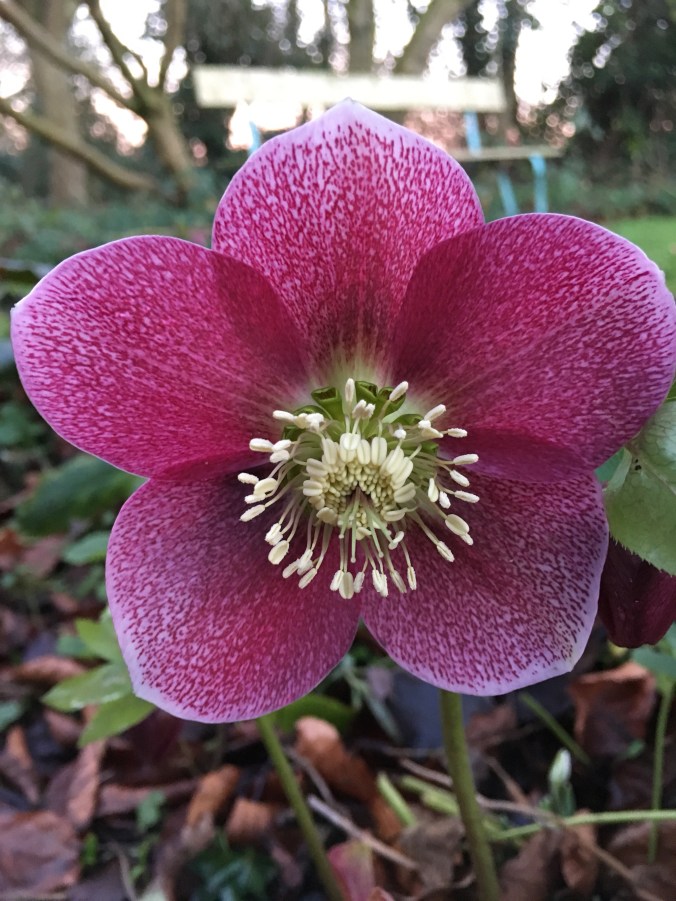
Hellebores are still in flower here. This one has a pretty, frilled anemone centre and holds its head up, which is always a good trait in any hellebore. I bought this one from Hodsock Priory in February.

Hellebores have survived everything the weather has thrown at them. This one came from Ashwood Nurseries in Kingswinford when we had a a tour of owner John Massey’s private garden. Well worth a visit. Probably the best spring garden I’ve ever seen. All fees from the open days go to local charities.

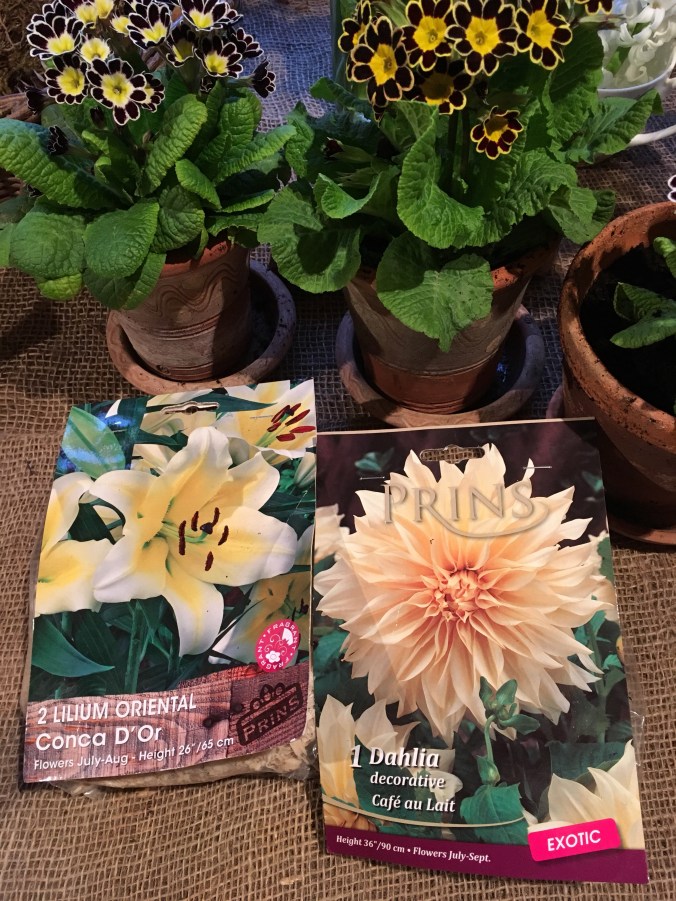
Couldn’t resist these summer bulbs. Lilium Conca D’Or is a favourite for fabulous scent. And the dahlia is new to me. I’ve watched others on IAVOM growing and using this variety, so I’m looking forward to trying it out for the first time this year.

Potting shed reading this week is Secret Houses of the Cotswolds by architectural historian Jeremy Musson, published by Frances Lincoln, part of the Quarto Homes group. Photographer Hugo Rittson Thomas allows us to peek into 20 homes, varying from castles and manor houses to grand mansions. It’s like stepping into another world to be honest. And a glimpse of the gardens through open windows- so tantalising! I just wanted to jump in the car and visit them all. But of course they are not open to the public. So I shall have to be content with gazing longingly at the book.

Click on the links to find out more. These are for information only and are not affiliate links.

In a Vase on Monday -Snow, and then spring!

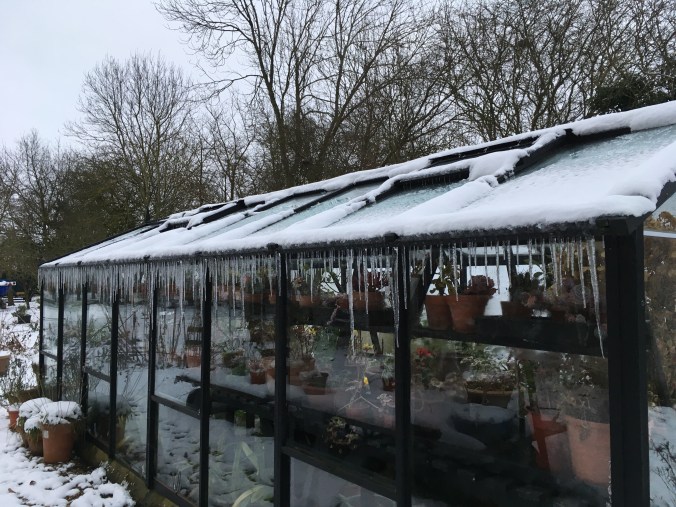
What a week! Temperatures over the past seven days have gone from -12c to 14c. Luckily nothing seems to have been lost. The snow creates an insulating blanket. Plants can still photosynthesize through the snow. I just gently tap some of the snow-laden branches of conifers and acers. The weight can cause splaying and damage. Here’s a slide show of photos showing my garden from last Monday to today. Flowers are in plant pots and jam jars in the greenhouse and potting shed this week.

My 20-year-old Parwins electric heater has been working full time keeping the greenhouse cosy. A second-hand Alton Cedar greenhouse copes really well with the weather. The wood seems to expand in the winter, excluding any draughts. At night, I didn’t disturb the wrens nestling in a row on the door slider. There were eight snuggled together, keeping warm.

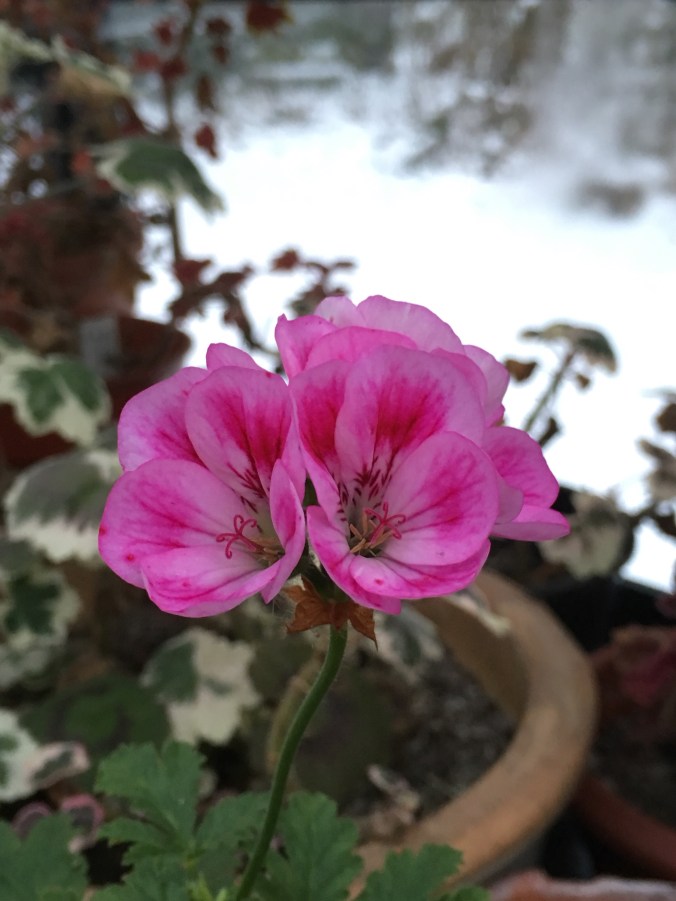
Scented pelargoniums have never been more welcome than on a freezing cold day. I picked some to put in tiny vases for my bedside table.

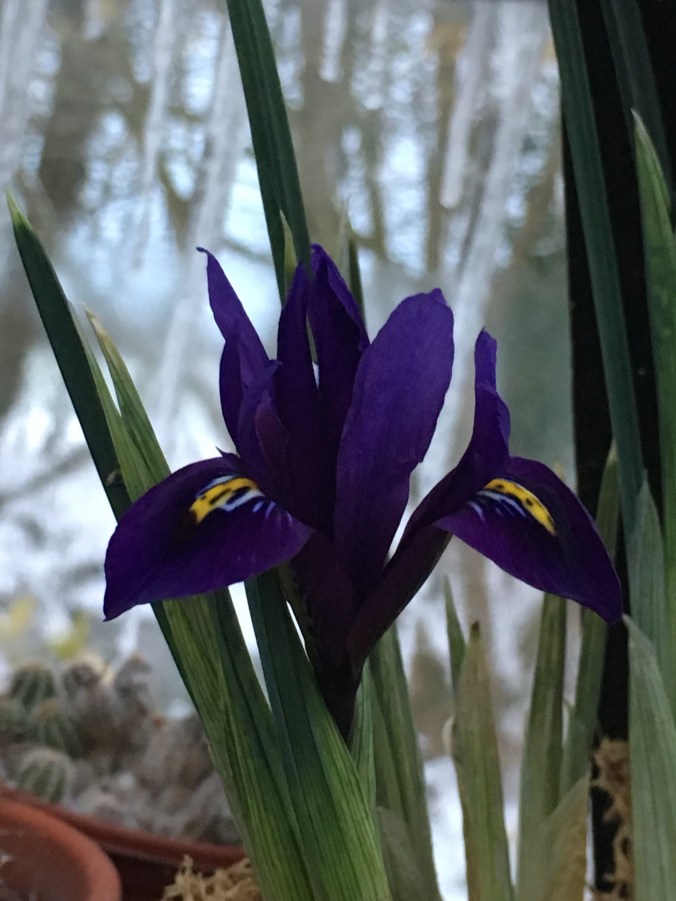
Iris reticulata bulbs are still in flower. They last longer in cold weather. Such a delicate scent. Much appreciated when there’s a foot of snow outside.

As there’s so few flowers this week, I’m showing some photos of my greenhouse, Polytunnel, potting shed set up. All within a few paces of each other. The polytunnel was second hand from a nursery closing down sale. You can see my Dalefoot Compost piled up in front of the potting shed, all ready for sowing seeds and growing fruit, veg and flowers. I started off some tomato seeds mid week. It’s the first time ever I’ve had to put hot water bottles on the compost bags before sowing seeds.

I’m keen to try this sheeps wool and bracken compost. I’ve been peat free for a while now, but composts have been variable to say the least. Dalefoot promises to be water retentive and cheaper to use, as no added fertilisers are needed. Apparently the bracken is naturally high in potash- needed for fruit and flower production. And the sheeps wool continues to act as a kind of slow release fertiliser during the whole growing season. Dalefoot have given me the compost to try out. As usual, opinions are my own and I’ll give an honest appraisal of the product in due course.

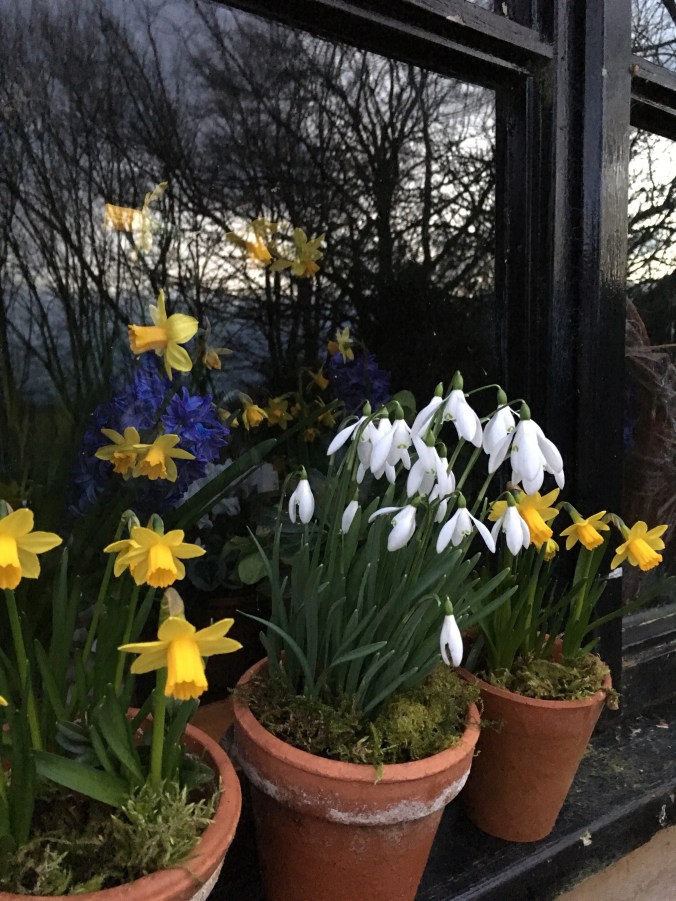
A quick peek in my potting shed and there’s still some white hyacinths, yellow tete-a-tete daffodils, with green hellebores and fluffy willow catkins. This time the vases didn’t freeze solid, thankfully. The view from the potting shed is white over. As is the view from the back door, below.

I didn’t go far to be honest. The roads around here were pretty dire.

But then – thankfully, the temperatures started to rise. And today has been the warmest day of the year.

Hope it’s sunny where you are at the moment.

Thanks to Cathy for hosting this IAVOM meme. Why not go over and see what Cathy is growing and putting in her vases this week.

In a Vase on Monday ….. er Wednesday.

Defeated by torrential rain, I’d given up on gardening until today. Here’s a brief glimpse into my day.

A quick peek in the greenhouse before I go off to work. And it’s sunny in here. At last. Yippee!!! Windows opened. Wonderful scent. Just love primulas. So cheerful.

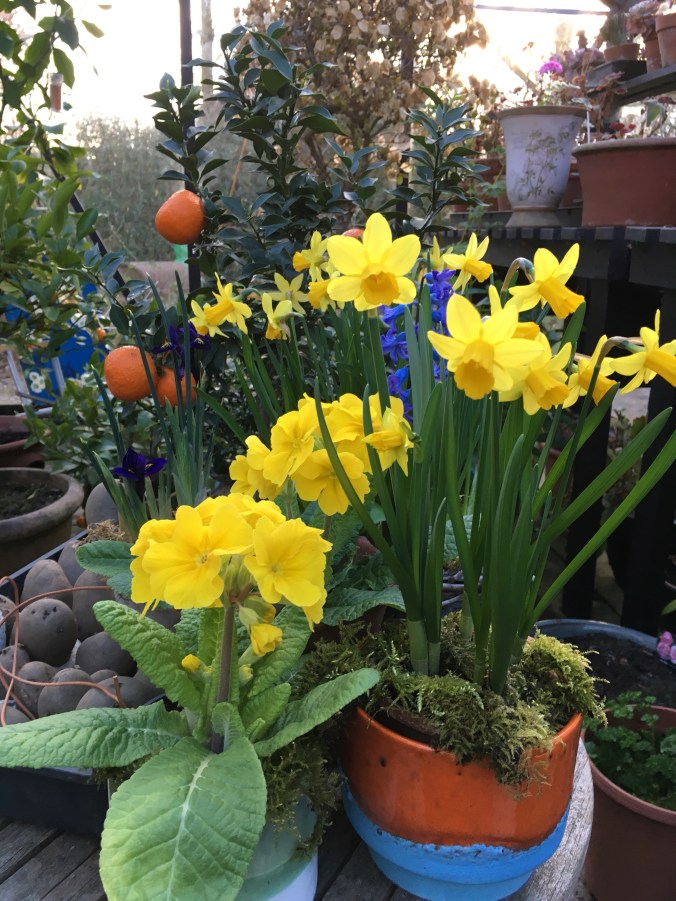
Second year hyacinths are never as good. But they still have a value. I love the intense blue of this one, set against the yellow of the dwarf daffodils. I’m growing Tete-a-tete in pots for picking. And in honour of my wonderful Welsh grandmother, Tenby daffodils, which grow wild in Wales.

Love my newly acquired plant pots. The green one on the left is from Burgon and Ball , and the one on the right is from new company Plant Furniture.

After a quick snip of flowers for the show, I’m off to Radio Leicester for the Gardeners’ phone-in, 11-12 on a Wednesday. A fun place to work. Sophie and Jack the producers look after me. I’m always so grateful for all the encouragement and support they give. I probably couldn’t do it without their kindness to be honest.

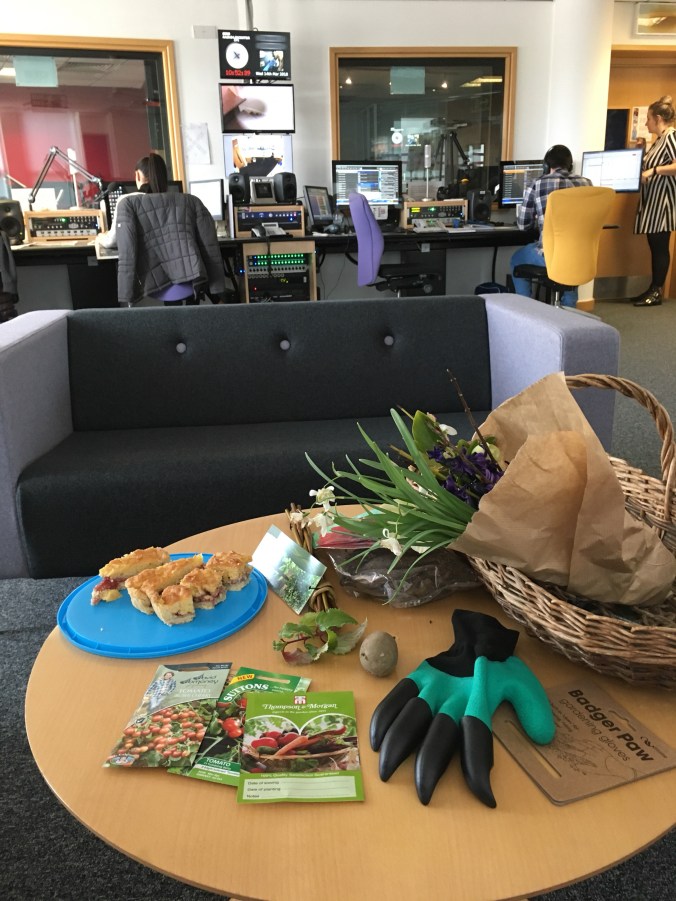
We chatted about growing tomatoes. I’m growing bush tomatoes in containers and hanging baskets alongside programme host Ben Jackson. We’ve got cherry tomatoes from Mr Fothergill’s, Suttons and Thompson and Morgan to try out. And we’ll be growing them in Dalefoot sheep wool and bracken compost as an alternative to peat. It’s always more fun growing something with another person. I haven’t got an allotment, for example, where you would have neighbours to chat with and share hints and tips. so I’m going to grow along with Ben, and we’ll share seeds and compost and compare results. It will be a fun project to do over the summer.

We always have a laugh on the gardeners’ programme. If I see something a bit unusual, I’ll take it in to show the team. Today I took in these Badger Paw gloves. I spotted them at the Garden Press Event a few weeks ago and thought they looked interesting. The event showcases new ideas, new seeds, tools and machinery, containers and plant pots- all heading for supermarkets, garden centres and nurseries this summer. The Badger Paw is said to be perfect for preparing soil, planting, weeding and clearing roots. It’s made by Creative Products and has breathable stretchy fabric. What we couldn’t work out though was why the claw is only on one hand. It’s an interesting concept and I’ll let you know how I get on with it.

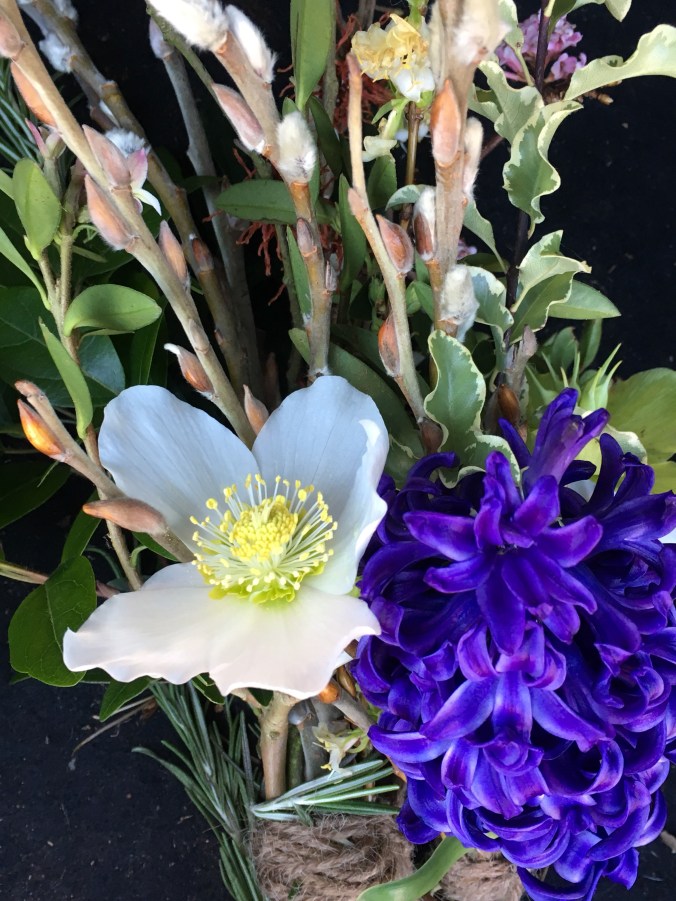
My posy of flowers this week also contains hyacinths – which just seem to keep on flowering. They love the cold weather. Tucked inside my paper wrapping are iris reticulata, hellebores, snowdrops, and dogwood twigs from my new florists’ “Hedge-in-a-Box” kit from Hopes Grove Nursery. I spotted their ingenuous hedge kit for gin makers at the GPE. On the stand there was a sign saying make any suggestions for new hedge kits. So I asked if they could design a hedge for florists with coloured stems and flowers for all year round picking. And my wonderful “hedge-in-a-box”arrived on Monday! I’m really thrilled with it.

Thanks for joining me today. Thanks also to Cathy for hosting this meme and kindly allowing me to join in later in the week when either the internet – or the weather – has let me down.

Click on the highlighted words for more information. They are not affiliate links.

In a Vase on Monday

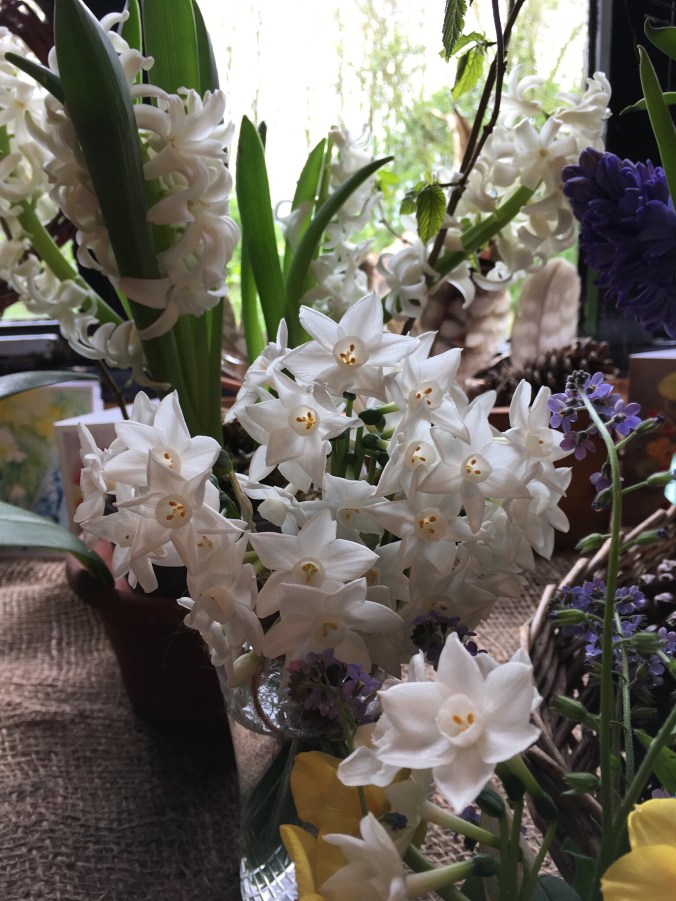
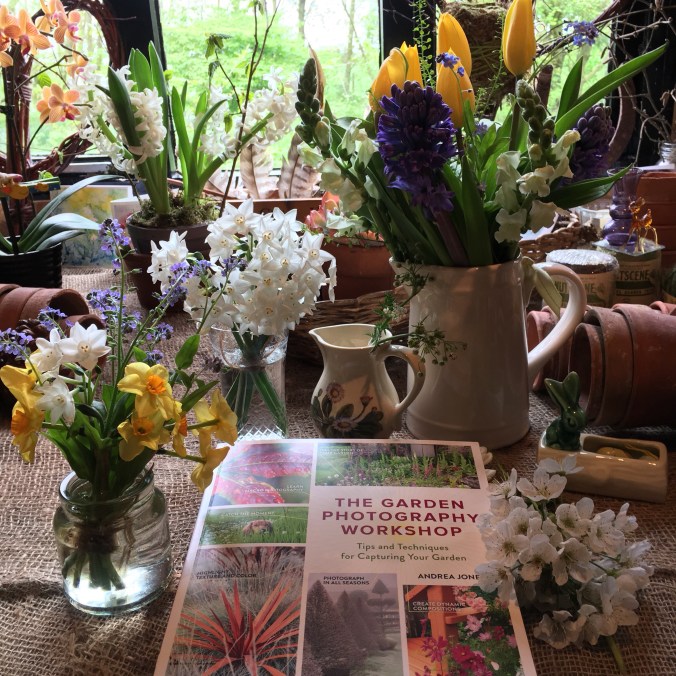
If you look carefully, you’ll see little ice cubes floating in the vases in my potting shed today. The jam jars and jugs froze solid. And I was away in London, so couldn’t rescue them. Luckily the flowers didn’t seem to mind. They perked up as soon as the temperature started to rise. These are the very last of my Paperwhite narcissi. They’ve been fantastic value, giving flowers for cutting for three months.

For my IAVOM I have recycled my spring flowers. I’ve cut off the bottom 2cm of each stem, given them all fresh water and added lots of grey willow catkins and hazel “lambs tails.” It looks like it’s a yellow and white theme this week. I haven’t planned it, but doesn’t it look cheerful. We’ve had temperatures go from -10 to 10c in just 24 hours.

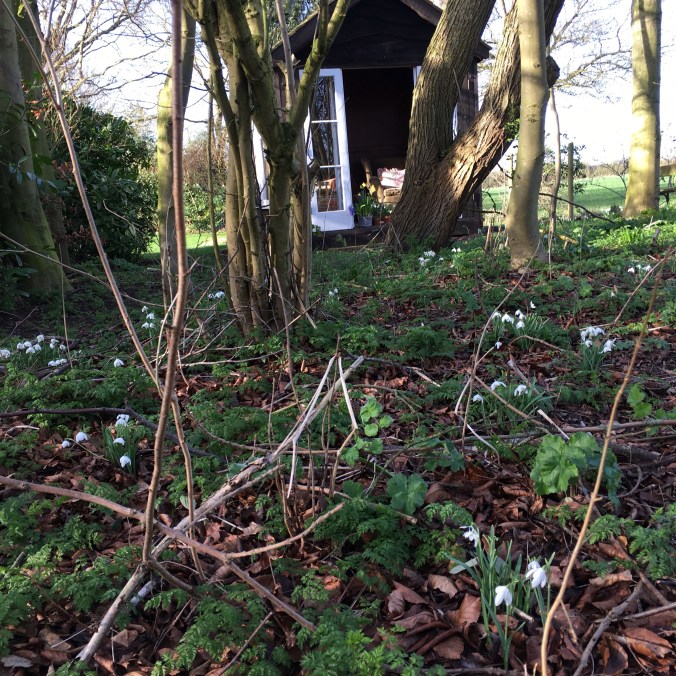
Double snowdrops, Galanthus flore pleno, from my “Hodsock” corner are still flowering well. The freezing temperatures have prolonged the display. Every year Mum and I visit Hodsock Priory in Nottinghamshire. We always stay overnight so we can walk in the woodlands just before dusk and again at sunrise -before the crowds arrive. It’s a special treat to have the gardens virtually to ourselves. Each year we buy a few pots of snowdrops for a couple of pounds. And over the years they have spread to make a corner of my garden that reminds me of our special holidays together.

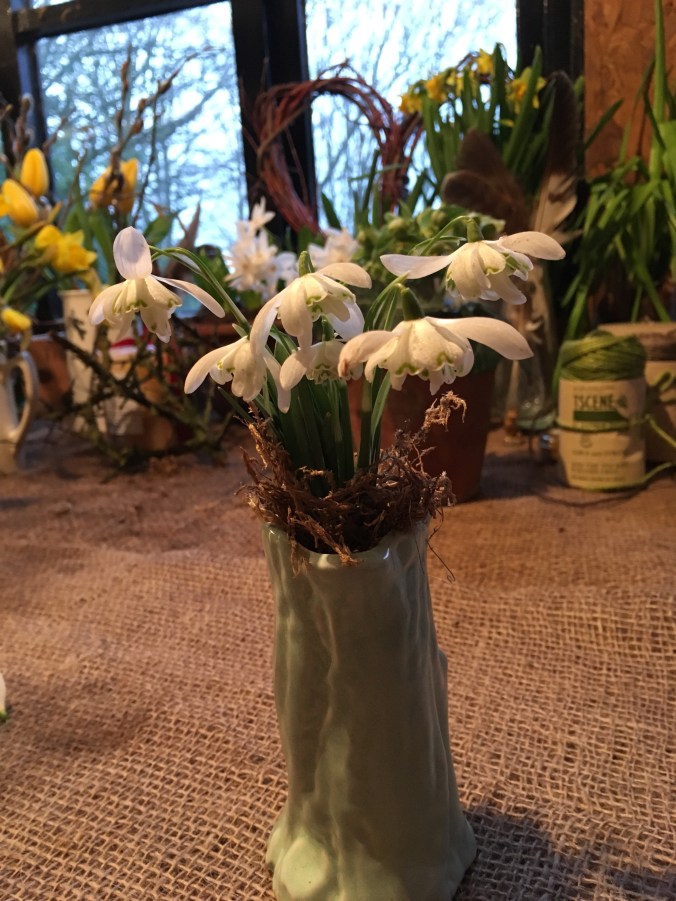
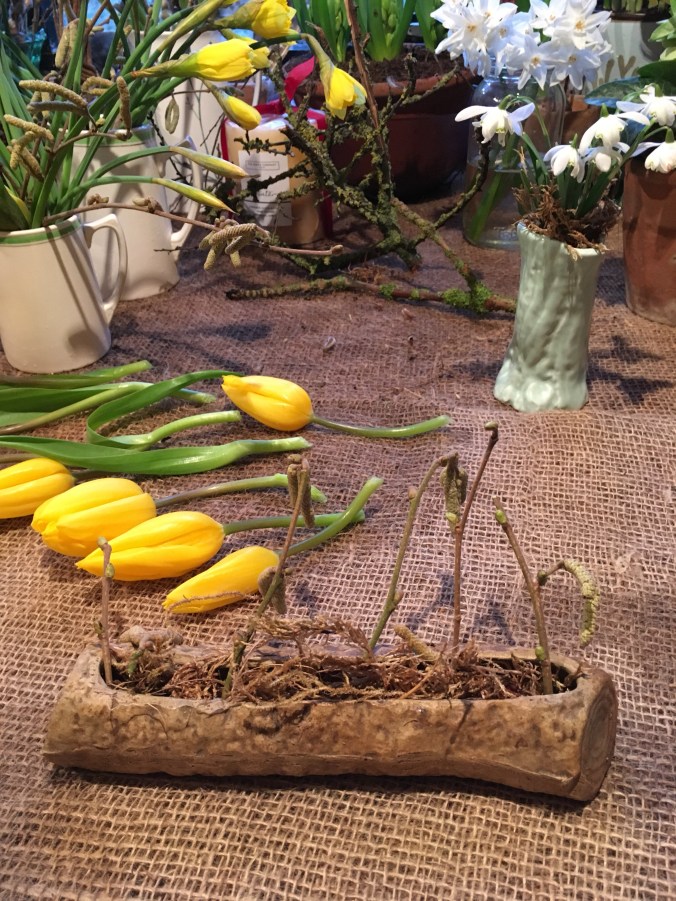
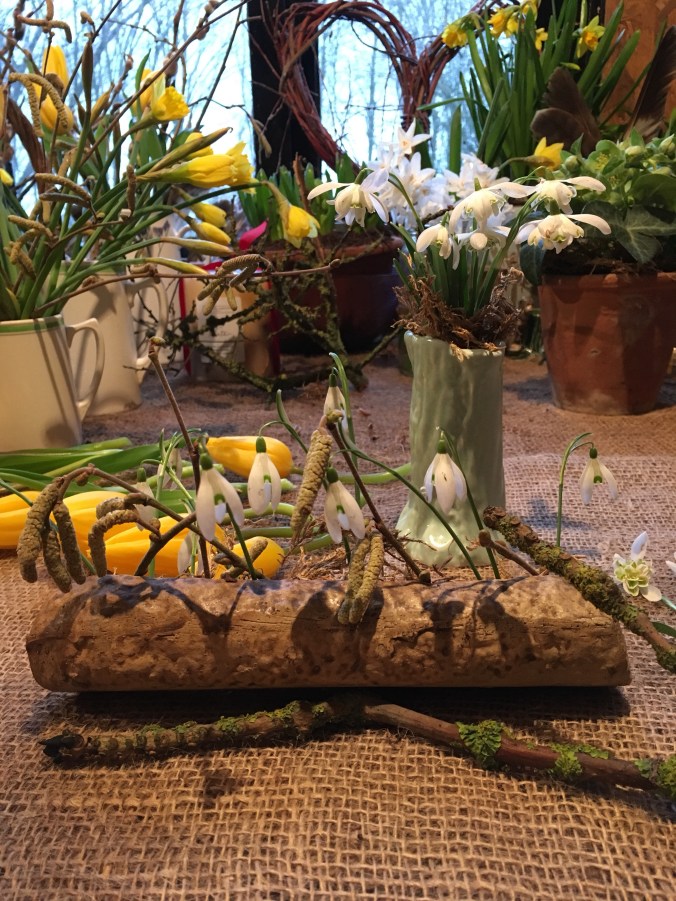
Noticing that I haven’t got many vases, a relative has taken pity on me and donated these little containers. The snowdrop vase has a lovely green glaze. The brown container looks like it is made of wood, but it is actually ceramic. I’ve never seen these type of vases before. I think they date back to the 1920s and were family wedding presents. So happy they have made their way to my potting shed to be treasured for years to come.

I put some moss in the container and added some hazel twigs. It is just perfect for holding a few tiny snowdrops.

The potting shed window has miniature green hellebores this week. The leaf and flower shape looks like Hellebore Corsicus, but I’ve never seen one as petite as this. I love the lime green flowers.

Here’s a quick peek at what it’s been like outdoors here. The farm pond was frozen solid for a week. We spotted a kingfisher on an overhanging branch staring intently at the water. Many of the garden birds came closer to the house during the freeze. A little gold crest has been roosting in the potted acer by the back door all week. I’ve fed it mealworms and crushed sunflower seeds saved from the veg plot.

And the gap in the hedge view. I didn’t linger long. There were hares racing across the field and pheasants in the ditch.

Today, there is no evidence of wintry weather. I feel like I’ve stepped from one country to another – a much warmer one at that. 7c feels positively balmy after what we’ve been though. And the willow catkins give us hope.

Thanks to Cathy for hosting the IAVOM meme. Why not go over and see what Cathy and all the others are growing in their gardens and cutting for their flower arrangements this week.

How has your garden fared in the bad weather? As you can see, I’ve written it on a Monday, but not managed to post it until today. Our internet is on the blink again. BT no doubt will blame the snow. Have a good week all of you.

#WordlessWednesday #GardenPressEvent

Sending you these photos today from the London Garden Press Event. I reckon we all need some colour and cheer right now . It’s -4 here in the city, and -6 at home. So here’s a gallery of David Austin Roses for you to enjoy.

These are from the cut flower range.

All the latest flowers, seeds, machinery, products- you name it – are showcased at the Garden Press Event . It’s a whirlwind of a day. I’m sitting here surrounded by a huge pile of brochures, catalogues, samples. It will take me a week to work though them, so this is just a little taster for now. Keep warm and safe all of you. Hope we get better weather soon.

Wordless Wednesday

@kgimson on twitter, karengimson1 on instagram, bramblegarden.com

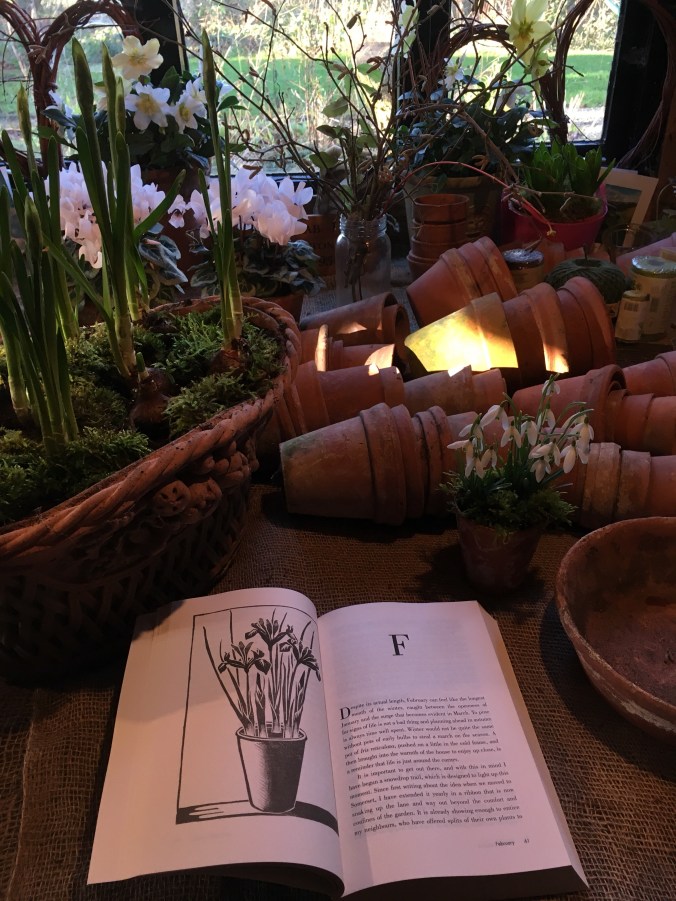
In a Vase on Monday- a peek inside my potting shed

This week I’ve potted up some prepared hyacinths. I started them off in a cold, dark potting shed in September. The bulbs were put through a cold treatment before I bought them – to trick them into thinking they had gone through winter. Putting them in a dark cupboard for 10 weeks completes the treatment. They grow fabulous roots in the dark and form a strong flower shoot. Some hyacinths were brought on in warmer conditions to flower for Christmas. But spare bulbs have been kept cold and dry to stagger the flowering display.

I grow them individually in 3″ pots. To create a display, I simply choose bulbs that have flower spikes about the same size.

I love the green edge on these Carnegie white hyacinths and the scent cheers up the potting shed. It’s a joy to work in there at the moment.

My grandfather Ted Foulds gave me these terracotta Sankey plant pots. I love using them and always think of him. Happy memories – I had a carefree childhood. For which I’m very grateful. They were simpler times then, when we made our own entertainment. Mud pie gardens, surrounded with stones and topped with flower heads. Making gardens in a biscuit tin lid, with tin foil ponds and tiny twig “trees.” Keeping snails as pets and feeding them lettuce; and great delight when the snails produced eggs, hatching into a family of miniature baby snails with translucent shells.

Here’s some hyacinths that have been flowering in the greenhouse for several weeks. They are such great value. Below, I’ve used foliage from the garden, dogwood stems, salix catkins and hazel lambs tails, with a single pink hyacinth flower and some double snowdrops.

And finally, in my mother-in-law Joan’s posy, there’s white hellebores, and the first daffodils, surrounded with ivy, and twigs and some green foliage which is actually a weed. It’s known as shepherd’s purse, and has tiny hearts all along the stem.

Thank you to Cathy at Ramblinginthegarden for hosting this meme. Why not go over and see what Cathy and all the others are growing and using for their flower arrangements this week. As you can see, you don’t have to use a vase. Any container will do.

I hope you enjoyed a peek inside my potting shed. Get in touch and let me know what you are growing.

#wordlesswednesday – potting shed table

While I’m working, little pots of snowdrops to enjoy- close up. When fully open there’s a hint of honey scent. A joy, whilst I’m sowing seeds and pottering about getting ready for spring.

End of Month View – January 2018

Reasons to be cheerful. The first spring lamb has been born in crossroads field at the bottom of our lane. It’s been a daily ritual, walking downhill to check on the flock. Each time, we are hopeful. And then today, we stand at the gate and scan the field. And there, by the hedge, one tiny white lamb. Newborn and softly steaming in early morning sunshine. A joy. A reassurance. After all the family illness of the past few months, worry and fretting, one tiny lamb sends a subliminal message- all will be well. The season moves on and the familiar sights and sounds of our daily life returns to normal. We have weathered the storm and spring is coming.

There’s been some catching up to do in the potting shed. Seed packets are inspected, catalogues perused, and a list produced. It’s a start. Little pots of snowdrops are dotted along the windowsill. I marvel at the variety of markings. Those little green hearts. I could quite easily become a galanthophile.

Hyacinths, set in a dark cupboard in September and brought out in December, are in full flower now. And what a scent! Carnegie, my favourite white variety, brightens the gloom.

On one glorious sunny day, with temperatures reaching 12 degrees, a red-tailed bumblebee sleepily blunders in through the shed door and buries itself in a potted hellebore. I gently shoo her out for fear she’ll be caught in a spiders web indoors. And at any rate, there’s plenty of pollen outside with sarcococca, viburnum and winter flowering honeysuckle in full flower.

Sarcococca humilis attracts bees – and hoverflies. These, I’m told are Eristalis hoverflies, mimicking a bee. They had me fooled.

On sunny days, the snowdrops have a wonderful honey scent. I must admit, I didn’t know this fact until a few years ago when I visited Easton Walled Gardens. We stood at the top of a sunny bank, and the fragrance drifted up. It was breathtakingly beautiful. Sadly, a dull wet day doesn’t produce the same scent. And many snowdrop garden visits since have been on cloudy days. So I’ll just have to hold on to that memory.

This is my “Hodsock” corner at home. Each year we visit Hodsock Priory and buy one little pot of snowdrops for a couple of pounds. It’s amazing how quickly they bulk up. It’s a nice reminder of a lovely day out.

The potting shed makes an ideal reading retreat. It’s so peaceful in there. High in the tops of the overhanging beech trees, songbirds are singing, staking their claim to spring territories. A cheeky robin is taking an interest in the shelving at the back of the shed. There will probably be a nest.

Thanks to Steve at Glebe House blog for hosting this meme and for encouraging me to write. Go over and have a look what his garden looks like at the end of the month and visit some of the others joining in, from all around the world. What signs of spring are you seeing in your gardens at the moment?

In a Vase on Monday- Sweet scented flowers and shrubs.

For the past few weeks my bedside table has contained little jam jars of water, into which small posies of “twigs” have been placed. Never have I been so grateful for a garden full of winter-flowering shrubs. For the twigs are smothered with tiny flowers- bursting with scent. Top of my list of favourites is Sarcococca Purple Stem, also known as sweet box. This one, in a pot by my front door, has shiny evergreen leaves and pink and white spidery flowers. A joy at any time between December and March, but particularly welcome when you are stuck in bed with the flu.

Here’s a quick peek in my potting shed. I’m sad to report that I’ve only managed to visit the potting shed twice since Christmas. Something I intend to remedy now that I’m up and about and almost, but not quite, back to normal.

The sugar pink flowers are Viburnum Dawn. In the centre there’s Hamamelis Jelena, and on the right, winter flowering honeysuckle, Lonicera purpusii. There’s also some daphne and to add more cheer, pussy willow catkins and hazel or corylus “lambs tails.” The Hamamelis was a bargain basement purchase for just a few pounds, but didn’t have any labels. Cathy – who hosts the IAVOM meme – writes about Hamamelis this week and I learned that Jelena is named after Mrs Jelena De Belder, and Diane is named after her daughter. You can read all about Cathy’s Hamamelis collection Here .

Covered with snow, it looks spectacular. The delicate scent is noticeable on a sunny day, or when twigs are brought into a warm room. I think the yellow- flowering Hamamelis have perhaps a stronger scent though.

Just getting into its stride is Daphne odora Aureomarginata. When fully open this will scent the whole garden and perfume will drift through open windows and in through the front door.

In my vase this week I’ve added some hellebore Jacob which has been in flower since mid- December. And also some hyacinths. These were prepared bulbs planted and put in a cold, dark cupboard in the potting shed for 10 weeks and then grown on in a polytunnel for another 22 days. Gradually I brought them into a warmer room as they came into flower. Slow, cool growing conditions ensures the flower bud forms properly, and prolongs the display.

I love the velvet blue colour and white edge. I’ll plant the bulbs out in the garden when I’ve harvested the flowers.

Here’s a pot I forgot about. I’ve only just taken it out of the dark cupboard and you can see the bulbs are really well rooted. The roots are climbing out of the sides. And the flower spikes are well formed. These are going to be pure white. Something to look forward to over the coming weeks, a good two or three months before the ones in the garden start to flower.

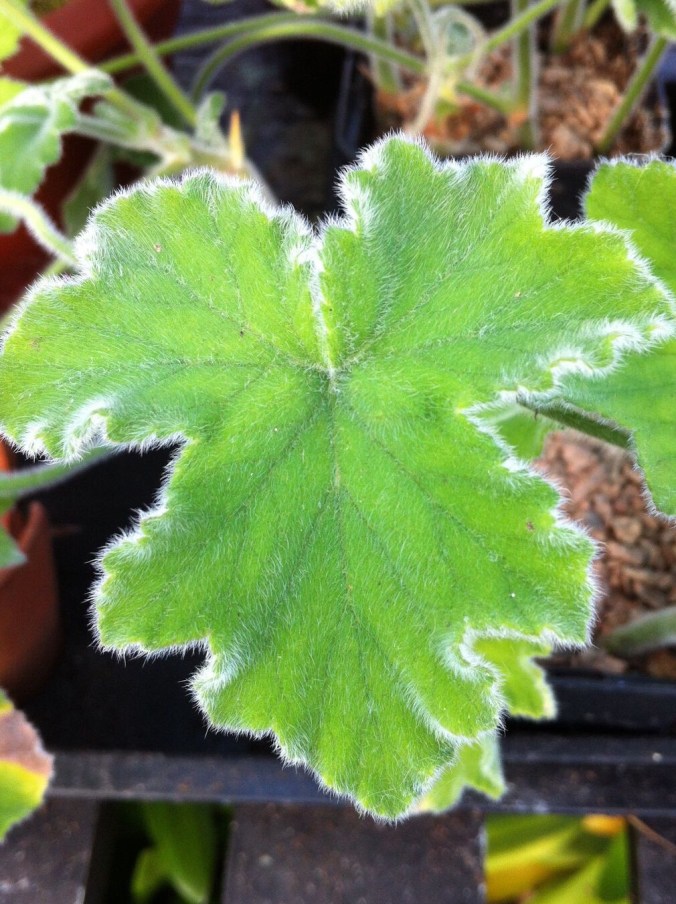
Hiding amongst the flowers are some stems of Pelargonium Tomentosum from the heated greenhouse. The hairy leaves have a lovely fresh minty scent when they are crushed.

On my potting shed window are little terracotta pots of honey-scented snowdrops, flowering a few weeks earlier than the ones in the ground. The Sankey pots came from my Grandad Ted Foulds. I love to use them and think that he held them in his hands. It’s a reminder of happy times. He loved visiting my garden each week and giving me hints and tips on what to grow and how. I still miss him. But I have his garden tools and his plant pots. And my whole garden is planted with little seedlings and divisions from his garden. So I feel as if he is still here with me really, keeping an eye on me and my family. I like to think so anyway.

Thank you to Cathy for hosting IAVOM meme. Go over and have a look at what Cathy is putting in her vase this week, and then have a look what others are growing and cutting from their gardens – all around the world. It’s a fascinating story and one I love being a part of.

Wordless Wednesday

Hellebores – to bring joy to anyone who needs some today.

Fact Sheet- BBC Down to Earth gardening programme -recipes and home-made presents

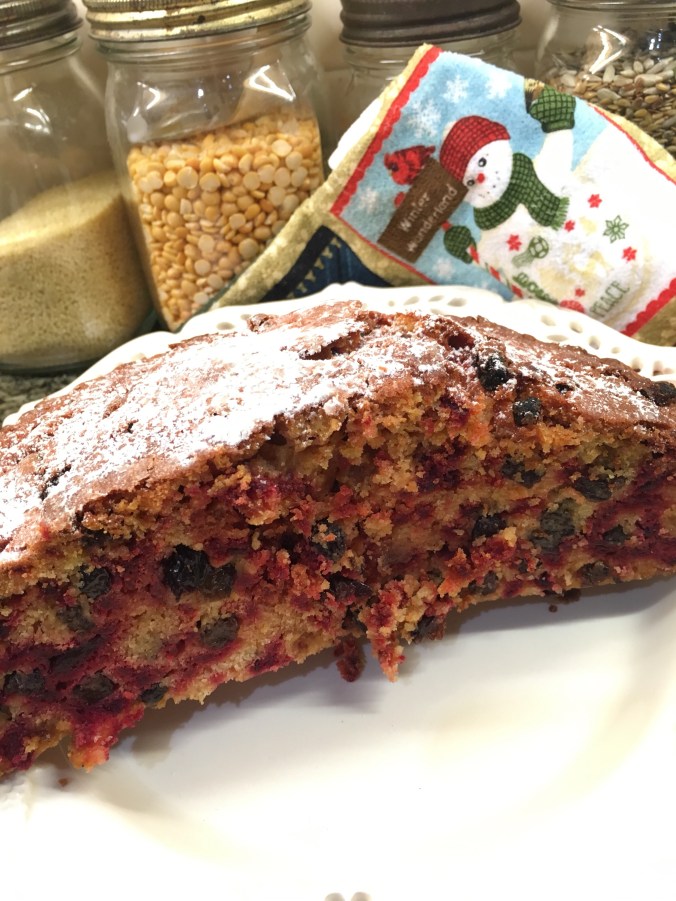
From the latest BBC Radio Leicester Christmas Party programme. Each week I take in something I’ve made, using produce from my garden. It’s usually cake, or a vegetable pie, jam or preserves. This week it is festive Beetroot and Spice Cake. I sowed a 1.3m by 3m plot with mixed beetroot seeds in August and September. The mild autumn means I’ve now got a bumper crop, and I’m trying all different kinds of recipes to use them.

Here’s a link to the programme. You can listen again on your computer or i-pad, or live each Sunday 12-1pm on Freeview 721. http://bbc.co.uk/programmes/p05nbmln The programme starts at 06.06 on the timeline,

This is a lovely moist cake with a spicy lemon tang. The recipe came via a shout out on twitter where I am known as @kgimson. I must credit The Propagator @cavershamjj for this wonderful recipe.

Beetroot cake

3 small beetroot 250g

250g Butter

1 lemon -grated rind and juice

1 cup caster sugar -220g

4 free range eggs

1 cup – 150g dried currants or mixed dried fruit

1 cup- 150g plain flour

1 cup- 150g SR. Flour

Pinch mixed spice

Caster sugar for dusting

20cm deep cake tin, lined with greaseproof paper

Method :

Peel and coarsely grate the beetroot.

Use a hand whisk or food processor to mix sugar, butter and lemon rind.

Add the eggs a little at a time. Mixture might curdle, but it will come back again.

Fold in flour, mixed spice and currants.

Add the beetroot and lemon juice.

Cook for one and half hours in a moderate oven, 160 to 180 degrees. Cover with baking parchment after 15 minutes, to prevent burning.

When cooked and cool, sprinkle with icing sugar. Can be frozen for 3 months. Lasts one week in a sealed container.

Cherry marzipan chocolates

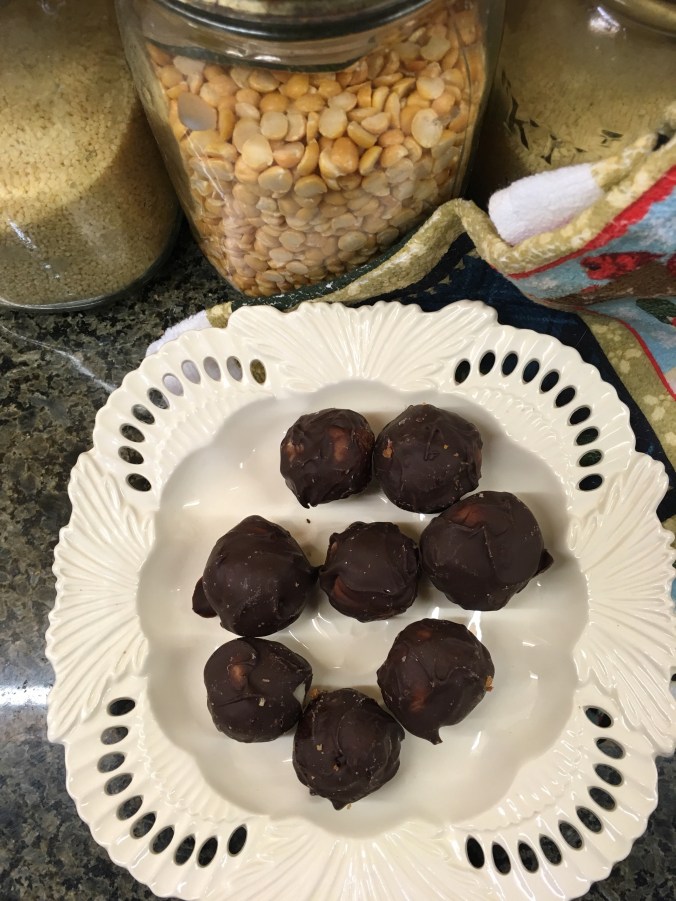
As it’s Christmas, I took in these home-made chocolates. So easy to make. I preserved my home-grown cherries in alcohol in the summer. Here’s the recipe

Cherries preserved in alcohol and drained- or glacé cherries soaked overnight in cherry brandy.

Block of marzipan

Bar of Bourneville dark chocolate or similar 70 percent cocoa butter chocolate.

Method:

Slightly warm the marzipan in the microwave so that it is mouldable. Drain the cherries and dry on paper towel. Make a small circle of marzipan in your hand and enclose the cherry. Roll the marzipan cherries in melted chocolate and place in the fridge to cool. These make delicious home-made presents.

Family favourite – Aunty Doris – Crispy Cakes

Something we make every Christmas. Much loved by all the family- as was our Aunty Doris. Hopefully, writing this here preserves this recipe for my children, should they ever come looking in the future. It’s good to have traditions that pass from one generation to another.

The recipe is very simple. It is equal amounts of butter, marshmallows and dairy toffee, all melted together in a heavy-based jam pan. When melted, add Kellogg’s Rice Crispies until all the melted mixture is coated. Pour out into a shallow metal tray and leave to cool slightly. Cut into squares before it cools completely.

I also like to use materials from my garden for home-made presents. The team got some of these fir cone bird feeders.

Simply melt a block of lard in a heavy based jam pan. Add bird seed, grated cheese, breadcrumbs, apple peelings, dried fruit and crushed peanuts. You can spoon the mixture onto the fir cones. It makes a marvellously messy project for young children. If time is short, you can simply add the fir cones to the pan and stir around. The mixture gets caught up in the open fir cone scales. Tie with a piece of festive ribbon, or some string and wrap in foil to dry. I’ve hung mine on the tips of my beech tree. Squirrels so far can’t get to them because the tips of the branches are too springy for them. I’ve also dangled them along my office window where a little robin comes each day for treats.

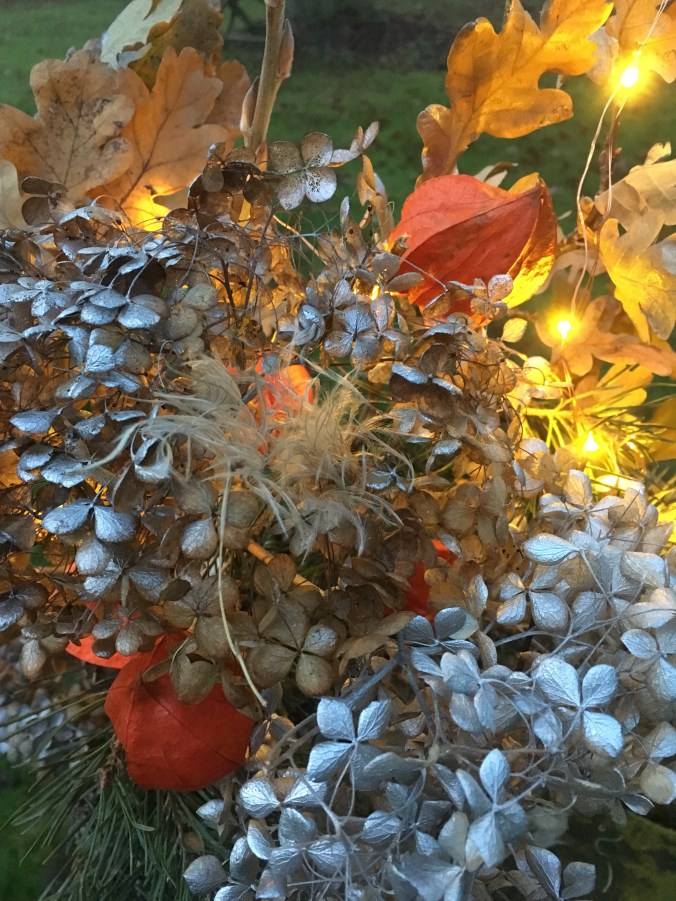
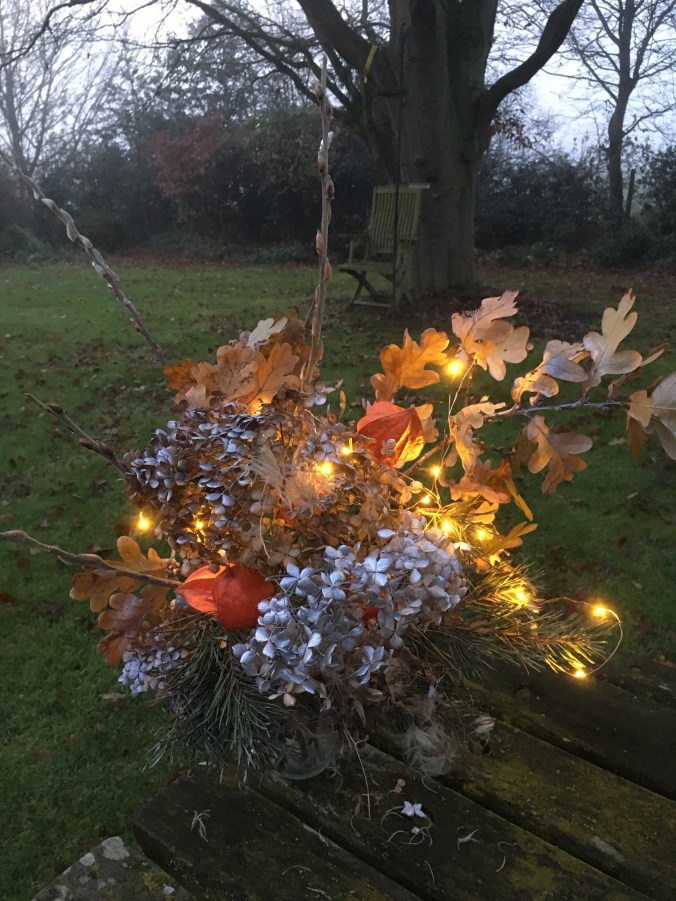
Each week I take in flowers I’ve grown in my garden. For Christmas I’ve harvested some Annabelle hydrangea seed heads and sprayed them silver. I wrote about these arrangements Here.

It certainly brightened up the radio station for the afternoon. And costs nothing, apart from a quick blast of florists spray.

Wishing you all a wonderful, happy Christmas. Down to Earth will be back on air in the New Year with lots of exciting ideas for what to grow in your garden, and the whole team giving help and advice to get the most from your plot. Thanks for listening in during 2017. I’ve enjoyed being the new girl on the team.

(I am not representing the BBC. Views are my own, and not necessarily those of the BBC.)

#wordlesswednesday – memories

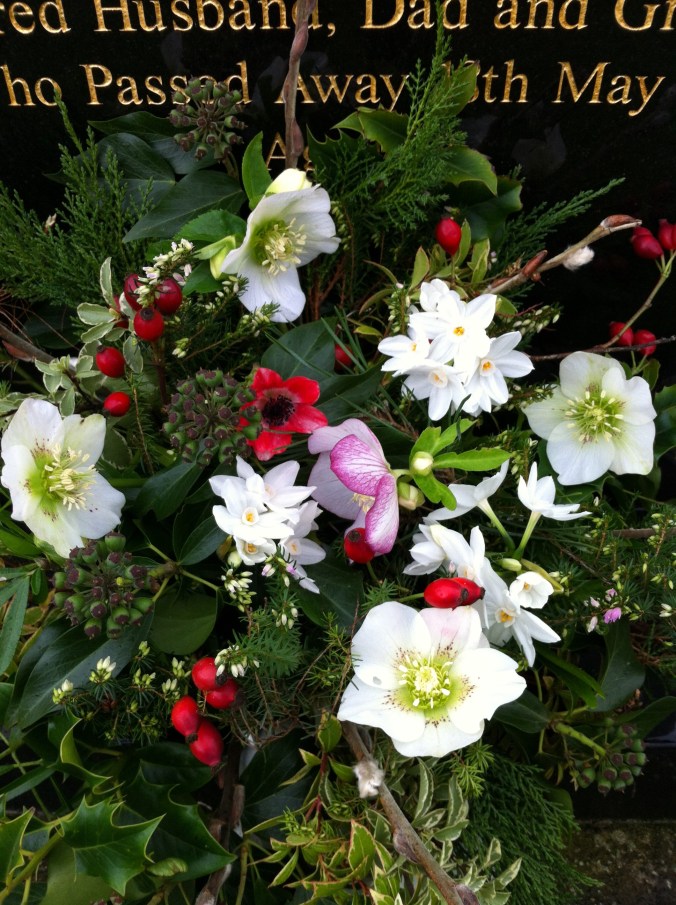
Flowers and foliage from the garden- a tribute to my dad William Spibey, and my dear grandad Ted Foulds. I was always in my grandad’s shadow as he gardened. He grew all the vegetables for the family, and I watched and learned. Precious, happy memories. They are never far from my thoughts.

In A Vase On Monday -Christmas flowers and foliage from the garden

One of the joys of winter is mooching around the garden and still finding flowers and foliage to bring indoors. This week’s mooching produced hydrangea Annabelle flower heads. They have dried to a beautiful pale parchment colour.

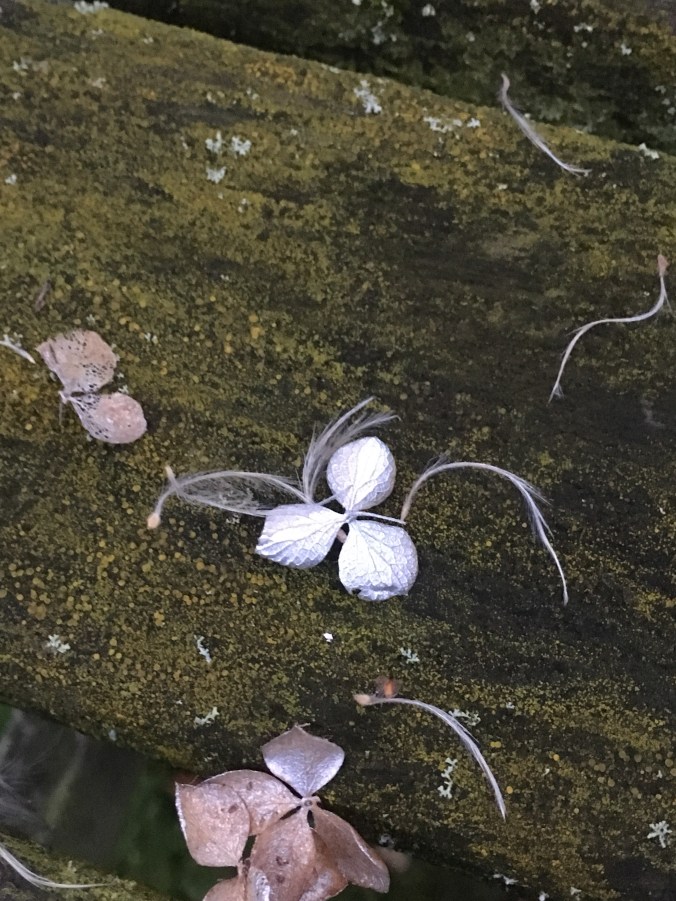
In late summer, Hydrangea Annabelle has creamy white flower heads, often the size of footballs. I leave them to create architectural shapes in winter. They look fabulous with a topping of frost or snow. At Christmas I cut a few for the house. A quick spray of silver gives them a festive flourish. I use Oasis floral spray for my arrangements. It dries in seconds and gives a good finish. You don’t need to use very much to give foliage and flowers a silver sheen. I love the way it highlights the veins on the back of the petals.

In keeping with the silver theme, I’ve added some willow twigs. They are just starting to produce soft, furry grey catkins. A welcome sight and a reminder that spring won’t be far away. Some fluffy seed heads add texture. These are Clematis tangutica orientalis Engelina, also know as My Angel. It scrambles up through the hawthorn hedge and produces the most beautiful, delicate flowers in autumn. I wrote about it Here.

Adding a touch of colour is my Mum’s Chinese lanterns, Physalis alkegengi. This grows by Mum’s front door and is always such a cheerful welcome to any visitors. It’s rather a rampant plant and to be honest it looks like it’s trying to get in through the front door. Every autumn we pick a few of the seed heads to dry, leaving most of them to provide a glowing approach all along the front drive.

I’ve added some Scott’s pine, Pinus sylvestris, complete with beautiful resin-scented cones. A little pile of cones stands beside our fireplace ready to be thrown into the fire. Along with some precious apple tree logs, saved for Christmas. The scent drifts through the house to the kitchen where I’m making spiced ginger biscuits.

Thank you to Cathy at ramblinginthegarden for hosting this, my favourite meme. Go over and have a look what Cathy and all the other gardeners are doing for their IAVOM this week. You can also follow me on twitter @kgimson and Instagram karengimson1 and on iPlayer at BBC radio Down to Earth.

Have a wonderful Christmas. Thank you all of you for reading and sending such lovely, encouraging comments each week. It is always appreciated. Love from Karen x

Last minute Christmas Present Ideas for Gardeners

I am always so pleased to be asked for my opinions on anything garden-related. After working in horticulture for 25 years, it is very nice to be asked by magazines, newspapers and the BBC. This week I was on the radio again, giving recommendations for Christmas present ideas. Have a listen in to BBC Radio Down to Earth programme to hear my suggestions. Here’s a link http://www.bbc.co.uk/programmes/p05n7fh1 The programme starts at 9 minutes 10 on the timeline.

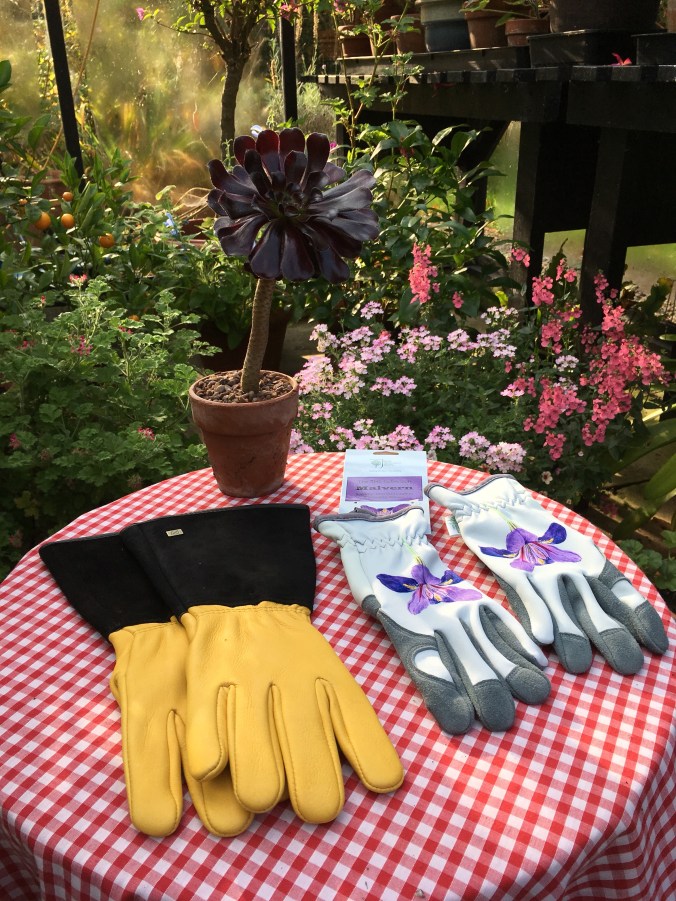
I’m practically living in these RHS Gold Leaf Gloves. They are so comfortable to use, and beautiful too. Here’s the link for more information at RHS shops. I absolutely love them. They are so practical – and pretty. British made, quality material, they have a padded palm, and little tabs to get them on and off easily. Well designed and well priced.

There are three designs, iris, rose and poppy, based on artwork from the RHS Lindley Library.

Mike Salotti – Brooksby College lecturer and DTE team member recommends Adopt a Vine Scheme as a great present idea for wine lovers. Here’s the details for the Hanwell Scheme. Hanwell Estate

My second suggestion is handmade soap from Cooks Lane Herbs, a Leicestershire company run by Sian and Richard. All natural ingredients, not tested on animals, and the packaging is recyclable. The scent is fabulous. They can be purchased mail order, or locally from farmers markets. Here’s the website link for Cooks Lane Herbs .

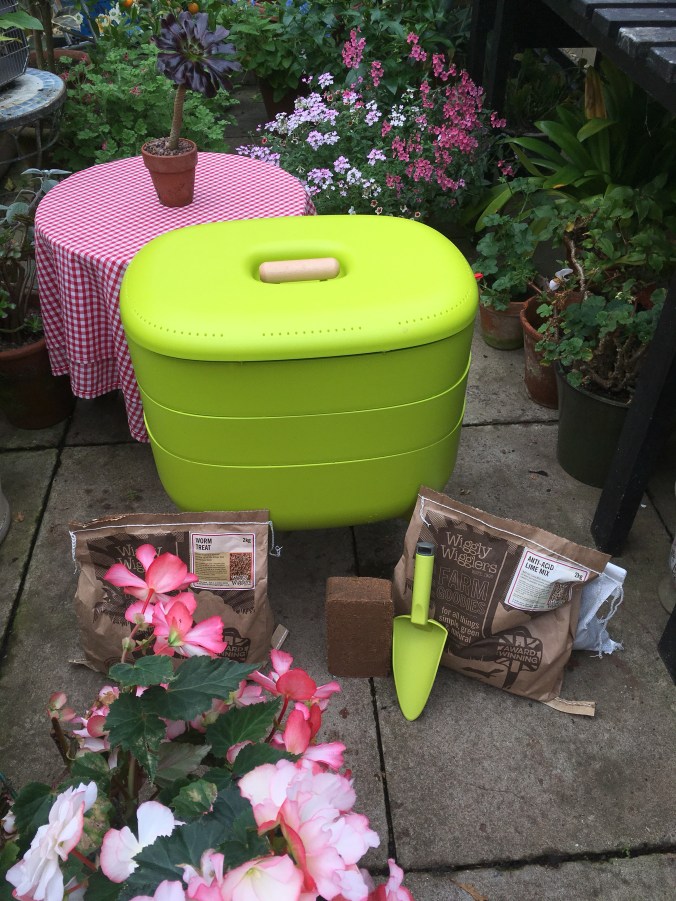
My third suggestion is an Urbalive worm composter from Wiggly wigglers .

Can be used in the greenhouse, garden shed, potting shed or kitchen even. The resulting liquid feed will be diluted down and used all around the garden next spring and summer. A great way to compost kitchen waste, and make free compost.

I wrote about my trial composter Here.

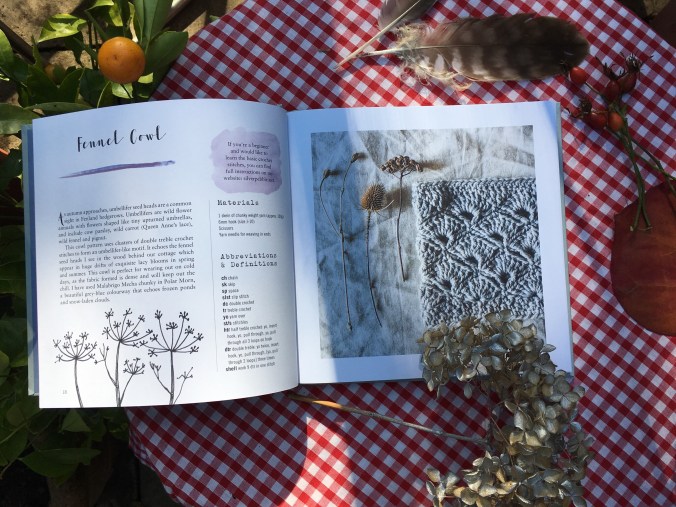
My fourth suggestion is Making Winter by Emma Mitchell, a creative guide for surviving the winter months, published by Michael O’Mara books. A delight from cover to cover. The photography is a mood-lifter to start with. I could just sit looking at the beautiful pictures to be honest. There’s crafts, cooking and activities to while away the winter months and survive cold, grey rainy days.

Recipes include Plum, Orange and Ginger Blondies. Delicious!

There’s knitting and crochet scarves to create.

A feast for the senses. Click on the Link to read read more about the book.

There are more great ideas on the rest of the hour-long programme. There’s suggestions for garden lighting, seeds, weather stations and bird feeders. Have a listen and let me know what you think of our ideas.

Wordless Wednesday- December Roses

Peach beauty- captured in ice. My garden is gently thawing today. #wordlesswednesday #uksnow #snow

What has survived the freeze in your garden?

What’s New in My Greenhouse- A Review of Urbalive Worm Farm

I have a natural inclination to feed people. Visitors to Bramble Garden will more than likely find me in the kitchen cooking something -usually with produce just harvested from the plot. There will be cake and home made biscuits aplenty- accompanied by steaming pots of tea. My urge to feed everyone in sight extends to pets- my own – and any waifs and strays I encounter. Wild and tame are all nurtured here. For the past month I have also been feeding my own little “farm.” The creatures contained in the farm are worms.

It has become a strangely compelling task. I’m chopping apple cores and peelings at the moment for them. I’m making fruit pies for the freezer using our glut of Bramley apples. And while the pies are cooking, I’ll run up the garden path to feed the peelings to the worms. They are a thriving little colony of creatures turning all my kitchen waste into free compost for the garden. And it’s a project I’m really enjoying.

The Urbalive worm farm comes in kit form. It’s very simple to put together. The wooden legs are first screwed into the base, and there’s a tap to attach as well. The composter will provide valuable liquid plant food when it’s established. I’ll dilute it down 1:10 with water to feed house plants and for growing on seedlings and plants I’ve propagated.

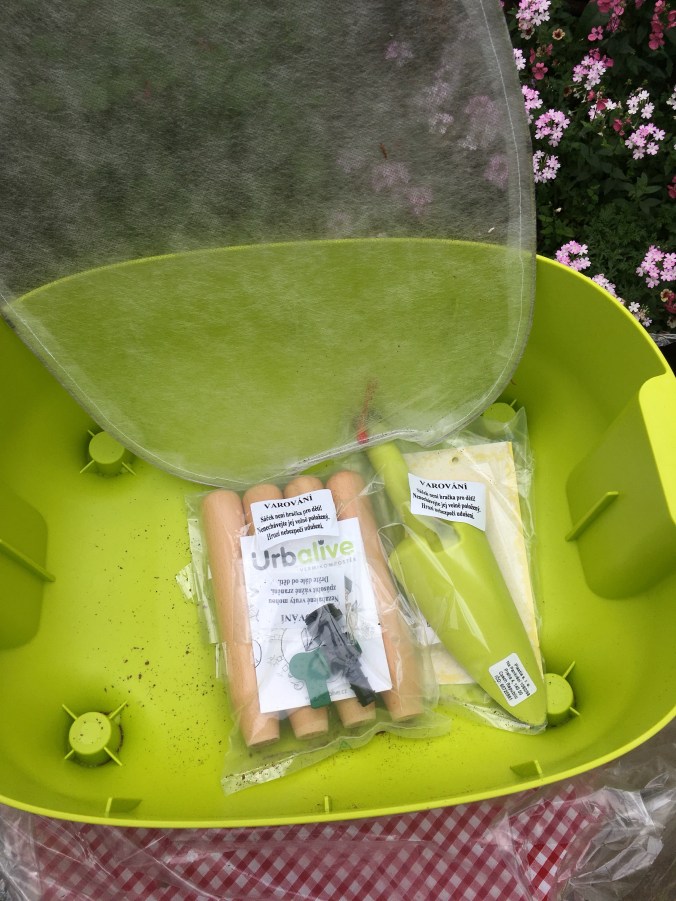
The worm composter comes with everything needed, an easy to read set-up guide and starter worm food.

There’s even a bag of Worm Treat, a special mix of all the things that worms love to eat, in pellet form.

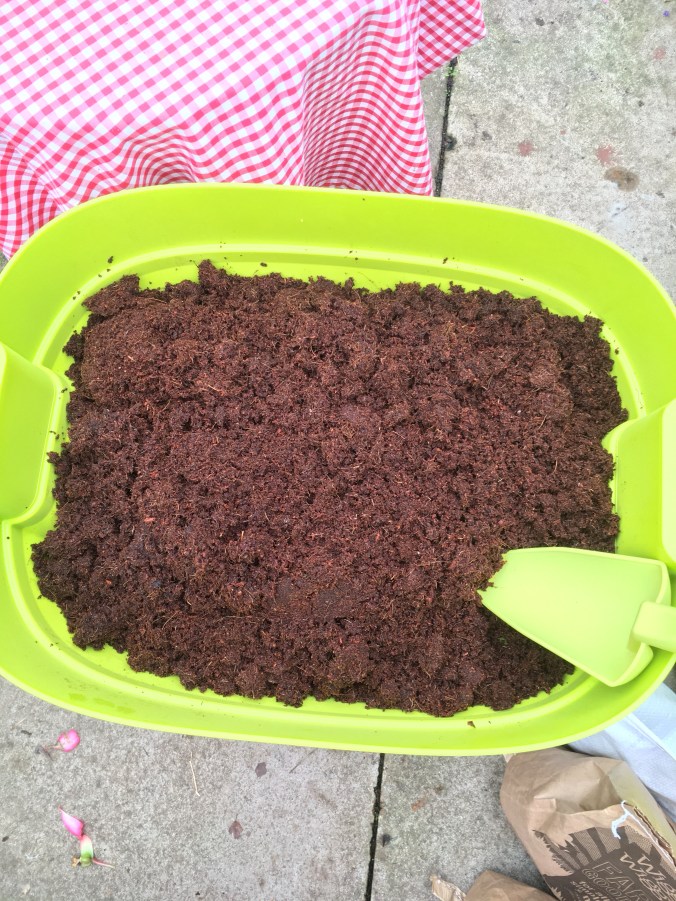
To get things going, soak the coir block in a bowl of warm water for a couple of hours.

The coir expands to form a starter home for the worms. This bedding goes into the first of two stacking trays.

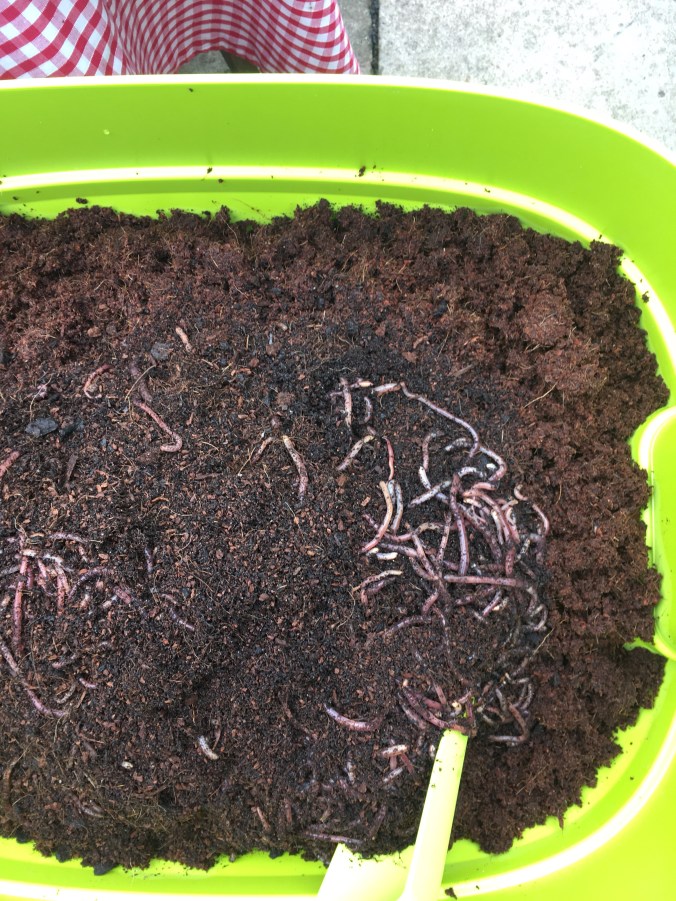
Then you can add the pack of live worms which comes with the kit.

Add your kitchen scraps, peelings, left over food. Teabags are brilliant, as apparently the worms lay their eggs in them. Crushed egg shells help with digestion. A little bit of cardboard is a special treat. After a week, I’m virtually writing menus for the worms. I care about them. Are they getting a balanced diet? Are they warm enough? Do they have enough moisture? They have virtually become pets! When I lift the lid one morning and find baby worms, well, I can’t stop smiling, to be honest. Such a little thing makes me happy.

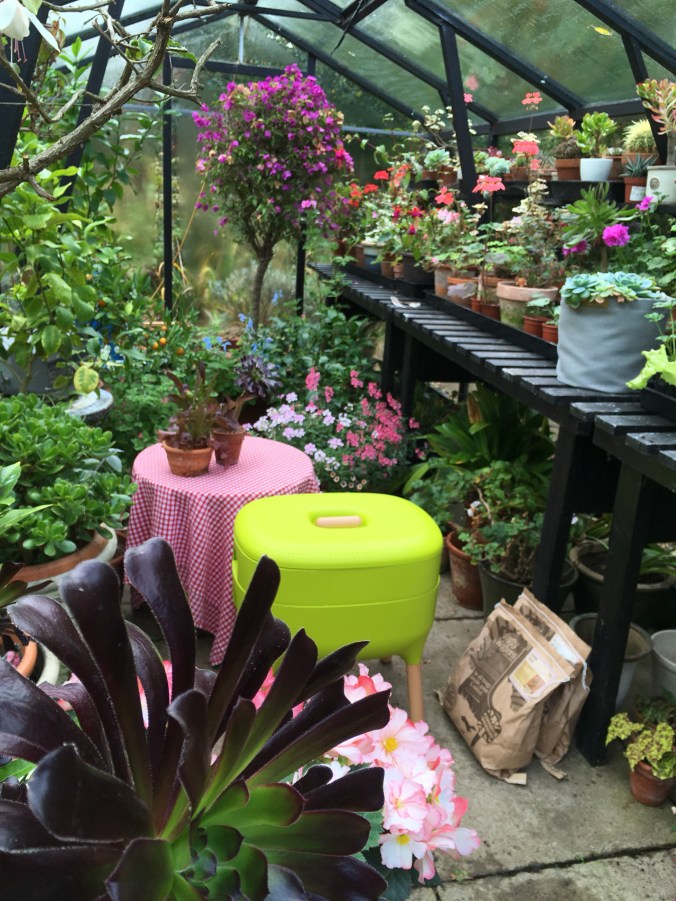
For winter, the wormery will be quite happy in the greenhouse. But I’m going to move it to the potting shed in the summer when things warm up. It’s such a pretty design, I could probably put it in the kitchen to be honest.

My Urbalive worm farm composter came from Wiggly Wigglers and was supplied as a free trial, in return for an honest review. The composters come in lime green or stone grey colours. There wasn’t anything I didn’t like about the kit. It was easy to put together and works well. It does what it says on the box- turning kitchen waste into free compost for the garden. The mail order process was quick. My farm arrived within two days of ordering.

There is only one word of warning. It becomes a totally engaging occupation. But on the plus side- it will definitely make you smile.

Wordless Wednesday – flowers from the plot.

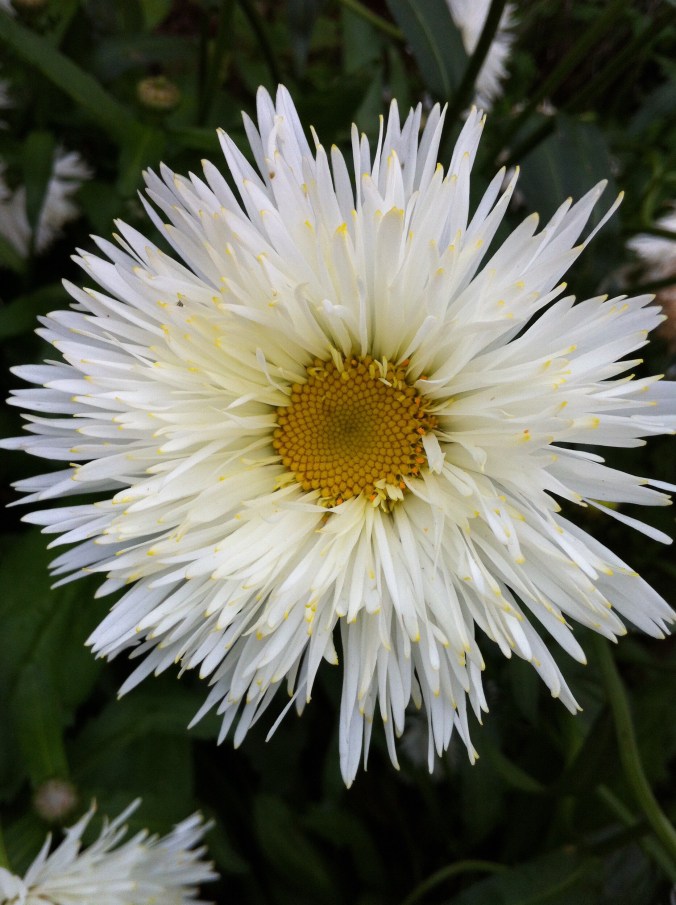
Shasta daisy from the cut flower plot. As pretty as any Christmas decoration.

My Garden Right Now and End of the Month View – Dec 3rd 2017

I’m joining in with Michelle with #my-garden-right-now and Steve Glebe House #End-of-month-view. Enjoy a slideshow of photos from my garden today. There’s still plenty of colour thanks to the alstroemerias and chrysanthemums in the open-ended ploy tunnel. Keeping the rain off the flowers helps to make them last until Christmas.

I talked about mouldable fairy lights Here. You can listen in to BBC Radio Leicester Down to Earth programme here http://www.bbc.co.uk/programmes/p05mf51m where we talk about my cut flowers, grown all the year round for friends and family.

The alstroemerias from Viv Marsh postal Plants grow in 40cm pots and flower nearly 12 months of the year. Choose the long stem varieties if you are growing for cut flowers.

White Stallion chrysanthemums came from Chrysanthemums Direct Nursery as cuttings at the RHS Malvern show last autumn. The yellow chrysanthemums are cuttings from my father in law and have been grown in the family since the 1950s. Originally they came from an Aunty Doris. It’s lovely to keep up the tradition of growing these cheerful plants.

The mouldable lights came from Wilco Christmas range and cost £3.50 including the batteries. I’ve wound them around the lemon trees And plant pots to give a cheerful glow.

Just two weeks ago, the view from the greenhouse and potting shed was this :

Now the golden beech trees are bare and the view from the potting bench -where I’m planting up hyacinth bowls for Christmas and putting amaryllis bulbs in terracotta pots -looks like this:

Luckily there’s some early hellebores in flower to brighten things up. This one is called Jacob.

And still on the white theme, this beautiful rose Pearl Drift is in flower today. What a star. It blooms all summer and is free of black spot. I can highly recommend this easy modern shrub rose. It is delicately scented too.

I’m keeping an eye on these huge red rose hips for my Christmas decorations. Rosa Scarlet Fire is another disease resistant variety with large open single red roses and hips the size of marbles. Birds don’t seem to bother with them, probably due to their enormous size.

Something that is also in flower now- and not waiting until Christmas- are these Paperwhite narcissi. I wrote about planting them in jam jars and tall glass vases a few weeks back. Well, November has been so mild with above average temperatures that forced bulbs like these are weeks ahead of schedule. The scent is truly glorious.

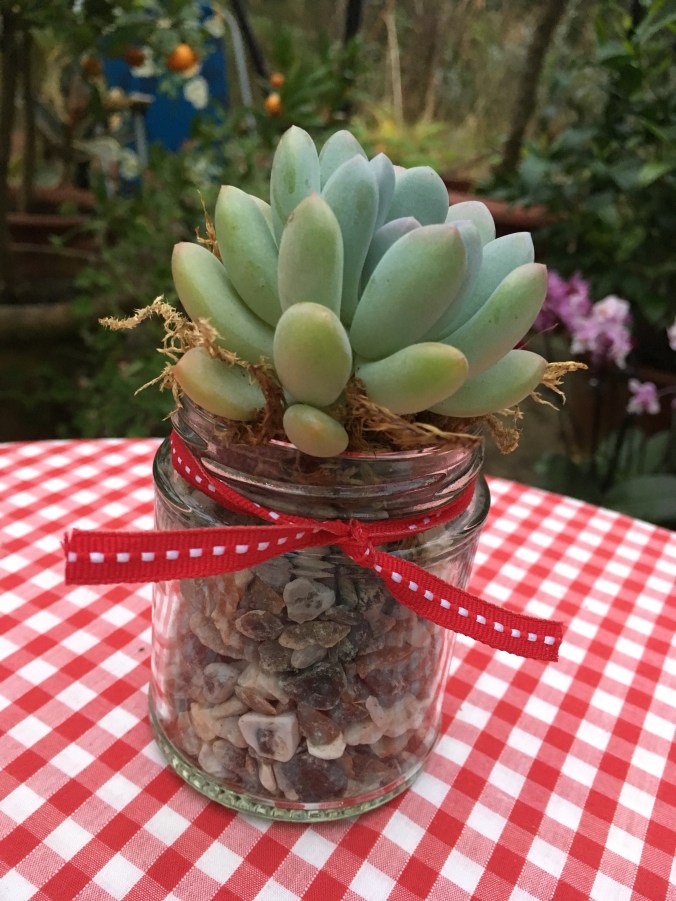
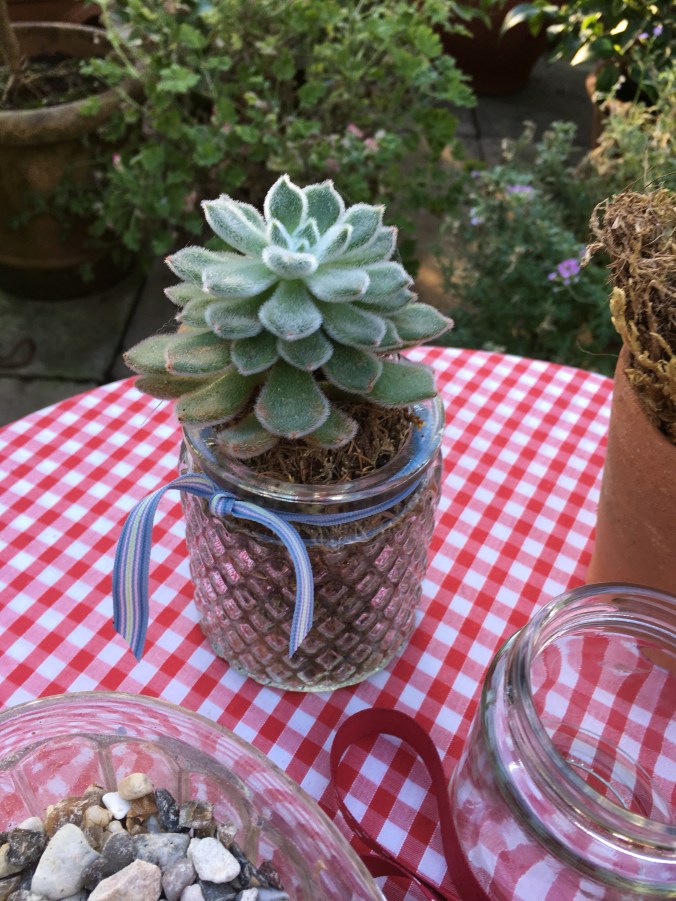
This week I also appeared on the Ben Jackson radio show talking about making Christmas presents from items collected from the garden. Here’s my succulent /cacti in a jam jar idea. I used pea gravel, a recycled jam jar and an offset from one of my plants to make this simple display.

Pimpernel Press sent me this award-winning book to review. Head Gardeners by Ambra Edwards would make an ideal Christmas present. It’s full of behind-the-scenes tips and glorious photos. An inspiring insight into what motivates head gardeners at some of the country’s most beautiful gardens. Photos are by Charlie Hopkinson and the book won Inspirational Book of the Year at the recent Garden Media Guild Awards. I rarely sit down and read a book cover to cover- but I just couldn’t put this one down. It is fascinating to hear the voices of the head gardeners. I kept nodding agreement, and scribbling down notes. It’s one of my favourites this year. Easy to see why it is a winner.

To be honest, it was dark by the time I stepped out of the potting shed.

Just in time to see the tawny owls that hatched in our garden this summer. What a wonderful end to a beautiful winter’s day.

I hope you’ve enjoyed this tour of my garden in December. Go over to Michelle at Vegplotting to see what others are posting for #my-garden-right-now. And also Steve at glebehouse for the #end-of-month-view. It would be great to see what you are getting up to on your plot just now.
How to Plant Prepared Hyacinths. Fairy Lights for the Greenhouse- and an update from this week’s BBC radio programme for gardeners

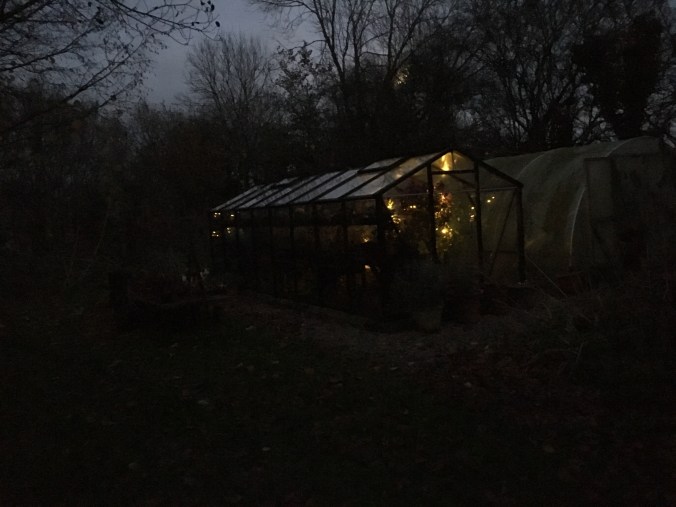
It’s amazing how a few little touches can make all the difference. In defiance of the cold, dark days, I’ve brightened up the greenhouse with mouldable lights. These are tiny fairy lights on a copper wire. They can be twisted around floral arrangements and basically they hold their shape without damaging the flowers. I’ve used chrysanthemums from the poly tunnel for this display. It makes a lovely warm glow at a time when we all need some winter cheer.

I’ve chosen indoor battery-powered lights from the Christmas range at Wilco . The 2.2m cable contains 20 warm white lights for £3.50 and includes the battery. I’m going to wrap them around plant pots in the greenhouse next.

We talked about mouldable lights on this week’s BBC radio gardener’s phone-in programme. You can listen in on your phone or computer on the i-player. I wrote about how to tune in Here. https://bramblegarden.com/tag/radiogardening-howto-i-player-bbc/.

You can listen to any radio programme for 28 days after the broadcast. And there are special programme clips and podcasts too. The gardeners’ phone-in is on BBC Radio Leicester every Wednesday between 11am and 12 noon on 104.9 FM and digital. And on Sunday there’s local radio’s longest-running gardening programme, Down to Earth hosted by Dave Andrews, between 12 and 1pm. We will be taking phone calls live in the studio this coming Sunday, December 3rd.

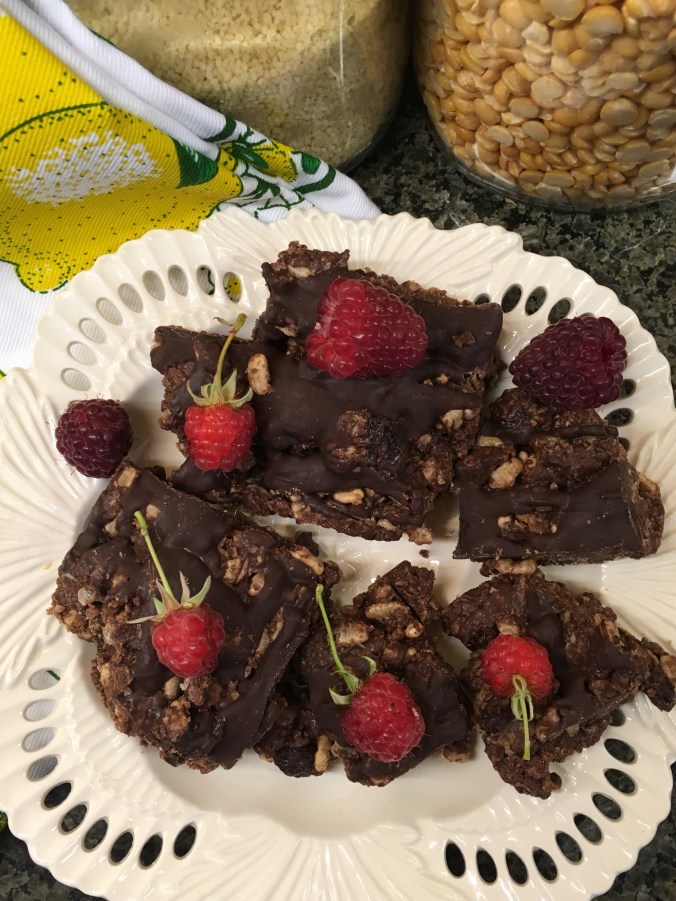
Here’s a link to this week’s Wednesday programme hosted by Ben Jackson. http://www.bbc.co.uk/programmes/p05m8p6x. Move the timeline round to 2.07.57 where the programme starts. We talk about making Christmas presents from materials found in the garden- including jam jar succulents and cacti, and making bird feeders with fir cones. And our mid-morning studio treat, for all the staff, was Chocolate Tiffin made with fresh autumn raspberries from the plot.

Here’s some details on the prepared hyacinths we mentioned. These are some I grew to flower for Christmas 2016.

You will need to buy “prepared” hyacinths which means they have been put into cold storage to fool the bulbs into thinking they have had winter already. To complete the treatment at home, place the bulbs in John Innes No2 compost in 3″ pots. Put the pots in a cold dark cupboard in the potting shed, garage or basement. Or put them into a black plastic bag. Store them for 9 to 10 weeks at 9C. Water just once. At the end of 10 weeks, check over the pots and those with about an inch of leaves and a flower tip showing can be brought out into a cool bright place to grow on. You can make up displays for Christmas by selecting bulbs that look about the same height and putting them into larger plant pots together. Don’t bring them straight into a centrally heated house or the flowers won’t develop properly. The bulbs need to be grown on in cool conditions for another 22 days.

Here’s some hyacinths and forced narcissi I used to create an early spring display this year. You can also bring twigs of cherry blossom into the house and they will give an earlier flowering too. I wrote about forcing Paperwhites Here.

The scent is quite glorious. Interestingly, different varieties of hyacinths need varying periods of cold/dark treatment. The variety Pink Pearl needs 10 weeks, but Anna Marie needs just 8. So experimentation is needed if you wish to mix the varieties in a display. I would set the 3″ pots at weekly intervals and grow more than I needed so that I could select the right number of plants for my display. Just a reminder- always wear gloves when handling bulbs as they can cause skin irritation.

A very quick and cheap Christmas present idea we mentioned was jam jar succulents. Here’s the materials I took into the studio. You will need a small recycled jam jar, handful of ornamental washed shingle, small amount of moss from the garden, and a succulent or cacti from the garden centre. Mine is an offset from one of my own plants. You half fill the jar with shingle, wrap the succulent stem with moss and plant. Finish the present with a ribbon. Plants need virtually no water over the winter. In summer, water once a week with a tablespoon of water. Tip the jar up to allow any excess water to drain out. Do not allow the succulent to become waterlogged.

This one has been in the jam jar for two years.

Talking of Christmas presents ideas I love these RHS Gold Leaf Gloves. I’m practically living in them, they are so comfortable. I may be a fairly scruffy gardener, with old trousers and holes in my jumpers, but my hands are glamorous.

Here’s a quick peek of Ben’s garden, which we talk about on the show. It’s a 2.5 by 2m raised bed, a bit overshadowed and plagued by slugs. But we’ve planted winter veg, salads and flowers – to see how much we can grow in a small, less than perfect plot. The kale and chard keeps growing through the cold weather. You just harvest the outer leaves, leaving the growing tips to keep going. I’ll keep popping by now and again to see how Ben’s getting on with the project. I’ve got a matching plot at home so we can compare progress. I have to say, Ben’s is looking better than mine at the moment. My plot is on a windswept ridge, and his is in a pretty, walled garden.

And after all that talking- we tucked into my Chocolate and Raspberry Tiffin. I wrote the recipe the recipe Here. Click on the link to see the recipe.

Do you have any recipes to share – or ideas for Christmas presents using materials from your garden? I’d love to hear your views.

#wordlesswednesday – Smoke

Gardener’s Cottage at dusk at Easton Walled Gardens in Lincolnshire.

Visiting the Food Fair in the courtyard. Famous for its jam and chutney, fudge and cake. The gardens look fabulous. Wonderful to see the topiary pruned and the beds prepared – all ready for Snowdrops 17-25 February. A highlight of our winter calendar. The photo below was taken this February.

Meanwhile. Some more autumn photos to brighten your day:

I worked here, the winter before last. Such a beautiful place. Historic gardens dating back 400 years. Visit the website to see more photos. Sadly the house was demolished after the war.

The terraces and walled gardens have been lovingly restored.

A special place to visit at any time of the year. Do you have a favourite garden you like to visit to see the changing seasons?

In a Vase on Monday- in the Pink

We’ve had a few overnight frosts, so these are the very last of my deep red cactus dahlias, Nuit de Ete. Cascading branches of a small plum tree protected flowers from the worst of the weather. But today, the remaining buds are mush. They have served me well over the summer, providing a few flowers every time I’ve run up the plot. The posy this time is for my Mum.

There are a few cosmos left. These are ones that survived my late-summer cull. Plants that got to 6ft with very healthy fern-like foliage – but no sign of flower buds-were chopped down. I wish I had not been so impatient! Friends who kept their monster plants say they are smothered in flowers. A lesson learned for next summer.

From now until Christmas I shall be picking chrysanthemums grown in the poly tunnel, plus alstroemerias in huge pots. Just behind the cosmos you can see one of my favourite chrysanthemums, Lollypop.

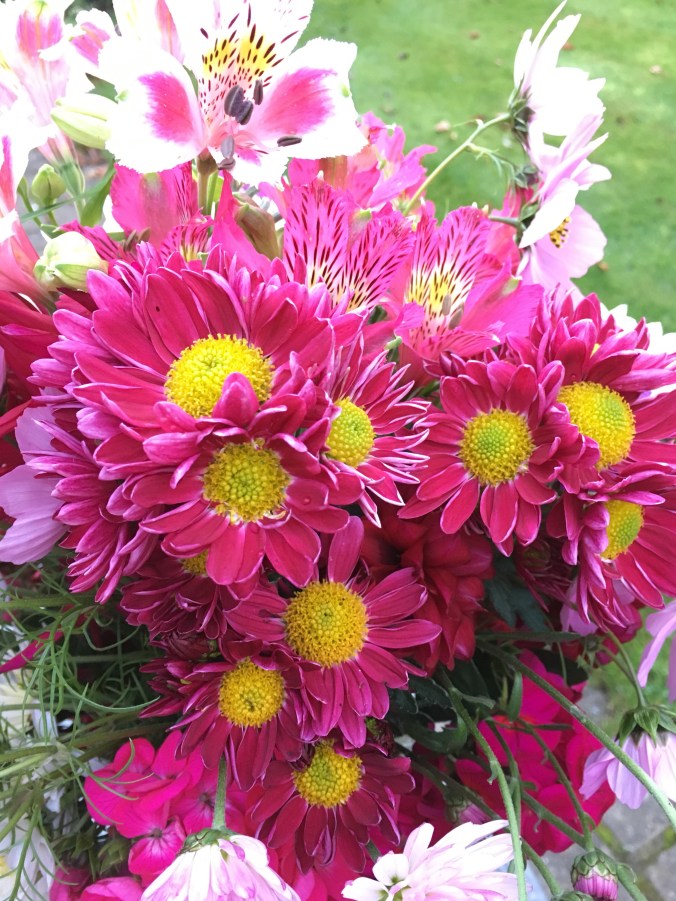
These chrysanthemums, pictured below, are called Sound. I love the bright cheery pink flowers, and prominent button-yellow centres.

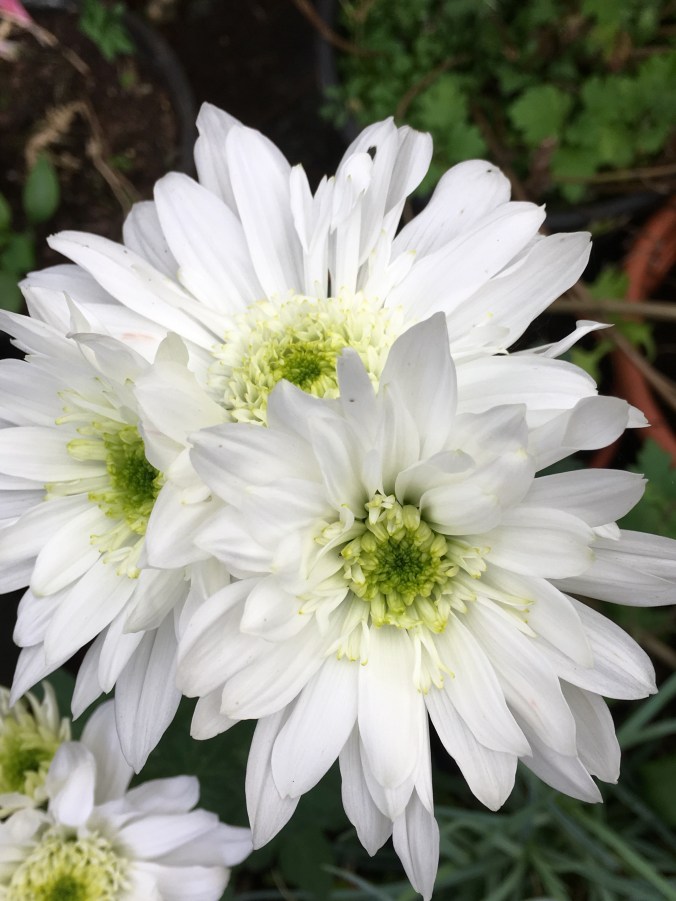
A favourite white chrysanthemum is called Swan. Such a pretty double flower with a green-white centre. It is well named, I think.

Both chrysanthemums and alstroemerias last a long time in a vase. Such good value plants. The alstroemerias throw up a few flower stems all year round.

Sticking with the pink theme, I’ve added these cerise bedding geraniums. I’ve cut the flower heads back ready to put the plants in a frost free greenhouse for the winter.

At this time of the year, pink nerines look so lovely growing in free draining soil alongside the drive. They are a pretty addition to my November bouquet.

I shall miss the dahlias over the winter. This one came from Wilkinson’s in the spring and cost £1. Great value, in my opinion. I shall wait until the foliage is blackened, and then dig them up and turn them upside down to drain. I plan to store them in the frost- free potting shed in boxes of sand or vermiculite. I’ll keep a check over winter to remove any that have perished, and also to ensure the tubers are dry- but not too desiccated. It’s a delicate balance. They will be started off again in February in the heated greenhouse, and I shall take cuttings to increase my stock.

Looking around – here’s the view from the top paddock gate. Muted autumn tones in surrounding trees and hedges. Today the oak leaves fluttered down in a steady stream, and lay in ribbon stripes across the lane. A beautiful, if transient, scene.

As always, thank you to Cathy at Rambling in the Garden blog for hosting the IAVOM meme. I love seeing what everyone is growing and picking from their plots each week in gardens all over the world. Go over and have a look and join in. It’s a very friendly community of gardeners. I always enjoy taking part.

In a Vase on Monday – my fund-raiser flowers.

Table flowers are a joy. They set the scene for leisurely lunches, or cosy friends-and-family dinners. Even a picnic has to have flowers. Usually I linger over the selection and mooch around the garden searching for material. This weekend, I ran round the plot at a gallop. The flowers thrown into jam jars in haste. I was planning an afternoon tea for 45 people! I just had time to gather these gloriously sunny chrysanthemums. I picked variegated ivy flowers and some beech and oak leaves. Here are the chrysanthemums, not looking very glamorous, in the corner of my poly tunnel.

Variegated ivy Glorie de Marengo covers one end of my 40 foot pergola. It provides cutting material all year round. I particularly love the starry flowers at this time of the year. The huge beech tree in the middle of the lawn casts a golden glow and its autumn leaves look so cheerful in amongst my Aunty Doris chrysanthemums.

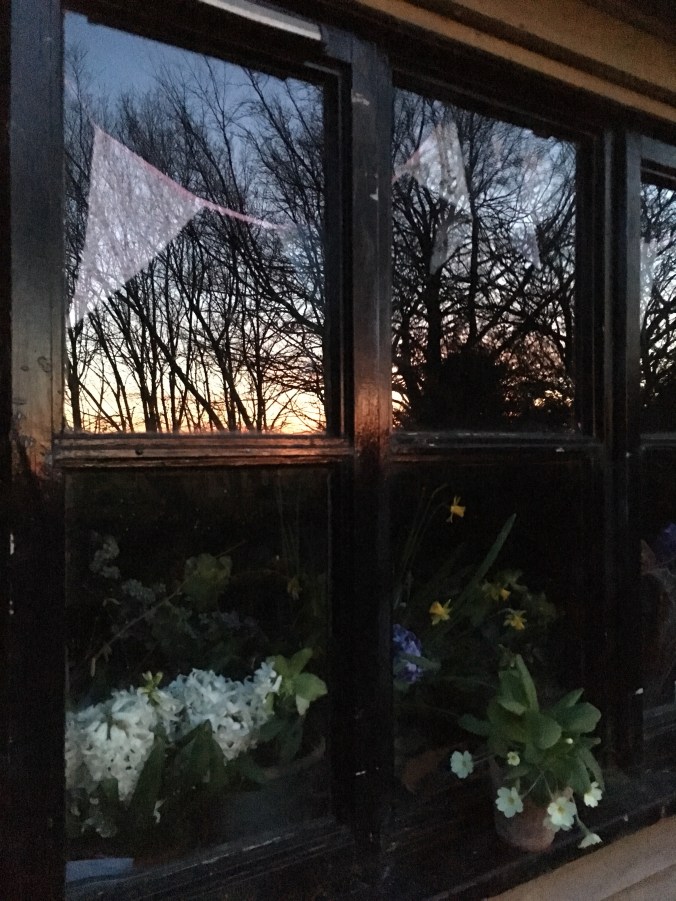
I threw the lot into a wicker basket on the potting shed window while I searched for suitable jam jars. You can see my garden, the beech, cherry and maple trees around the pond, reflected in the potting shed windows.

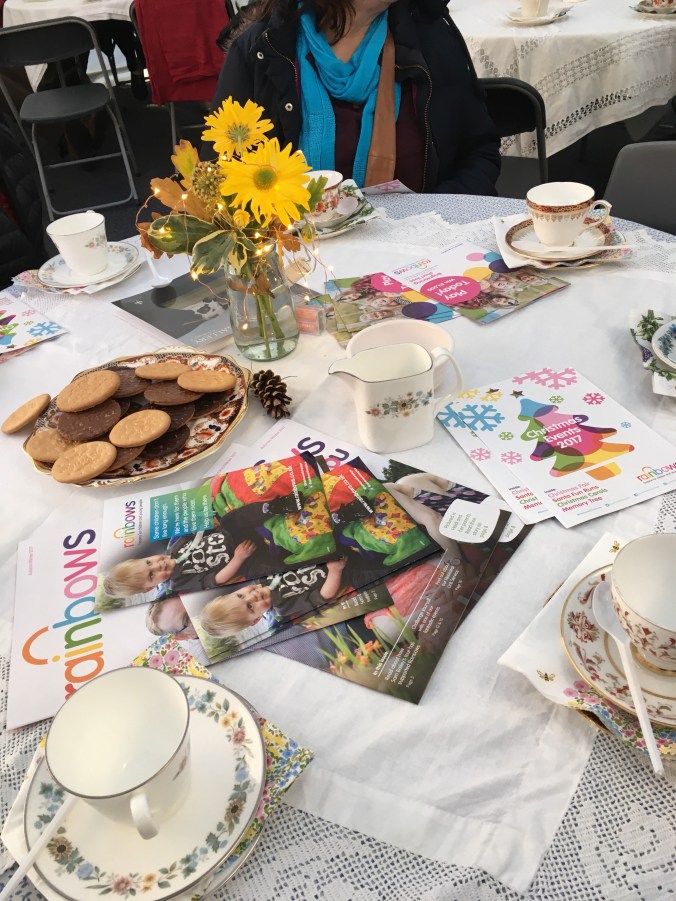
Then I left the peace and quiet of the potting shed to head over to Spring Barrow Lodge near Coalville. It’s the home of my garden design clients Pat and John Stanley, where we were hosting my afternoon tea and gardeners’ talk for Rainbows Hospice. Author Barbara Segall kindly agreed to come and present a talk and slide show on her newly-launched book Secret Gardens of East Anglia.

And I thought you’d like see the flowers on the tables- arranged so hurriedly. They contain the Aunty Doris chrysanthemums I wrote about last year Here

Barbara’s talk transported us all to the fabulous gardens contained in her wonderful book. I wrote a review here. I am so grateful to Barbara for her kindness in agreeing to come and help me stage this event- my first ever fund-raiser for charity. I am still counting the proceeds. But I think the admission tickets, book sales, raffle tickets and generous donations from people who could not attend but wanted to support us, amounts to just short of £1,000. To say I’m over the moon, is an under statement! I’ll write more tomorrow when I have gathered my thoughts. At the moment, I am still on cloud nine to be honest. There’s so many people to thank……

But I wanted to join in and congratulate Cathy at rambling in the garden for her 4th anniversary of In a Vase on Monday. Every week, I look in to see what everyone is growing, picking and arranging in their gardens- all around the world. It’s a fascinating blog, and I love joining in when I can. Go over and have a look. For the anniversary celebration the theme was any container- but a vase. So I was delighted to be able to join in with my great Aunty Betty’s Kilner jars, wicker baskets and simple glass jam jars. Thank you Cathy for hosting such a lovely meme, and for the friendship the blog has created amongst our growing and gardening community. I certainly appreciate all you do.

For more on Rainbows Hospice, click on the link here. All other highlighted words contain further information and are not affiliate links.

#wordlesswednesday -view from the potting shed

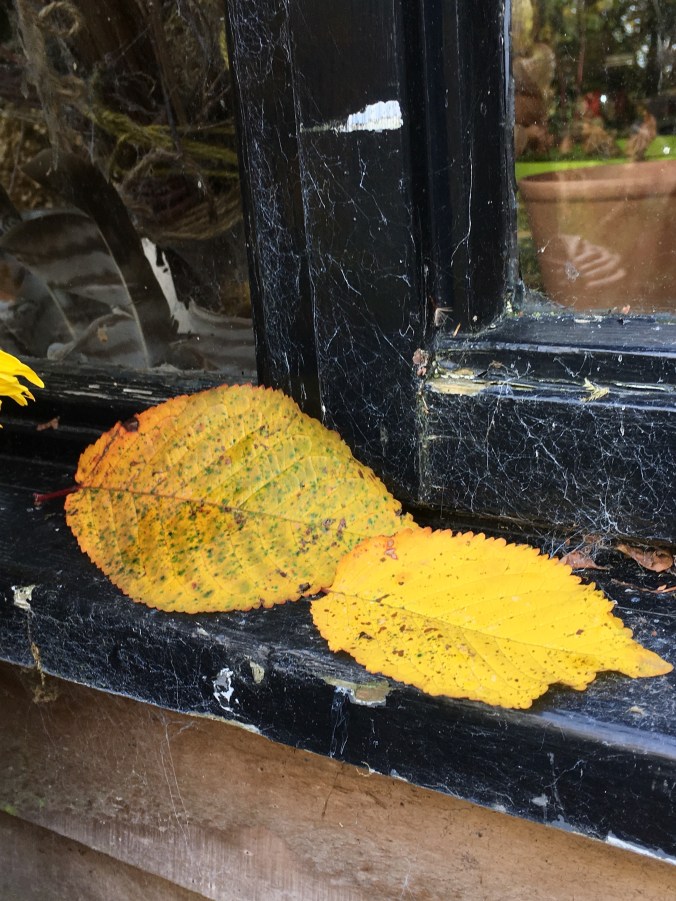
Beech trees. I love them. For about a week, the potting shed windows are illuminated by a golden glow. It looks like all the walls inside are painted ochre yellow. Such a cheerful sight and a treat before we are plunged into the darkness of winter.

End of Month View – as October closes.

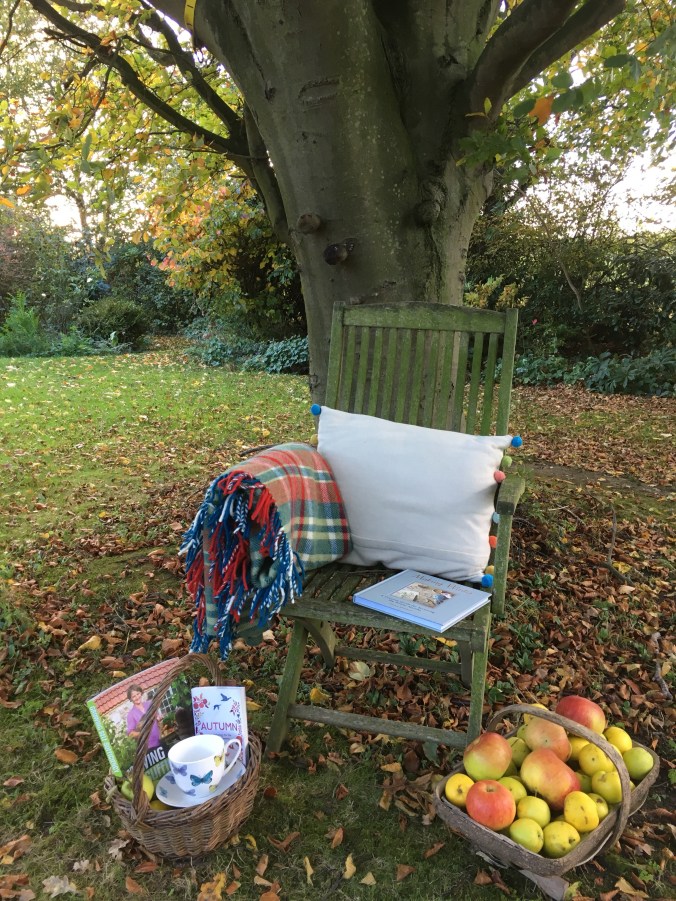
Determined to spend every last minute of good weather outdoors, I piled blankets and cushions on our old garden chairs. It makes a cosy place to read and survey the autumn colours. A place to rest and have a cup of tea after all that apple picking!

Here’s a kind of ‘slide show’ of photos from my garden, taken over the past couple of weeks. I take photos as a record of what’s in flower and looking good at different times of the year. At the end of each month I sit down and make notes of what needs moving, pruning, changing around.

Alongside the drive, in a rubble-filled spot I planted one eucomis bulb a few years ago. These love the well-drained, sunny conditions. This year the bulbs have increased and we have eight flower stems, making a lovely colourful display. The photo shows the top of the plant, which is as beautiful as the flower spike. It’s nice to have something as exotic as this at the tail-end of the growing season.

Next to the drive we have a dogwood called Midwinter Flame, sometimes sold as Midwinter Fire. Just now it is taking centre stage as the leaves turn a beautiful bright yellow and the shrub is smothered in delicate white flowers. Late foraging solitary bees and Red Admiral butterflies are enjoying the plentiful supply of pollen today. The dogwood has bright orange stems all winter. A stunning sight covered in frost and snow. I find this dogwood doesn’t need such a drastic cut-to-the-ground approach that I use for Cornus Westonbirt planted nearby. In fact, I just take out a few stems every year to encourage new growth, and I tip back the ends to stop it encroaching on the driveway.
In the hedgerows surrounding the garden, common wild dogwood, Cornus sanguinea, is literally glowing with deep purple leaves and black berries. In full sun, the stems turn an electric red for winter. But in shade the stems remain a mossy green. Berries provide valuable food for small mammals and birds, as well as floristry material for my cut flower posies and door wreaths.

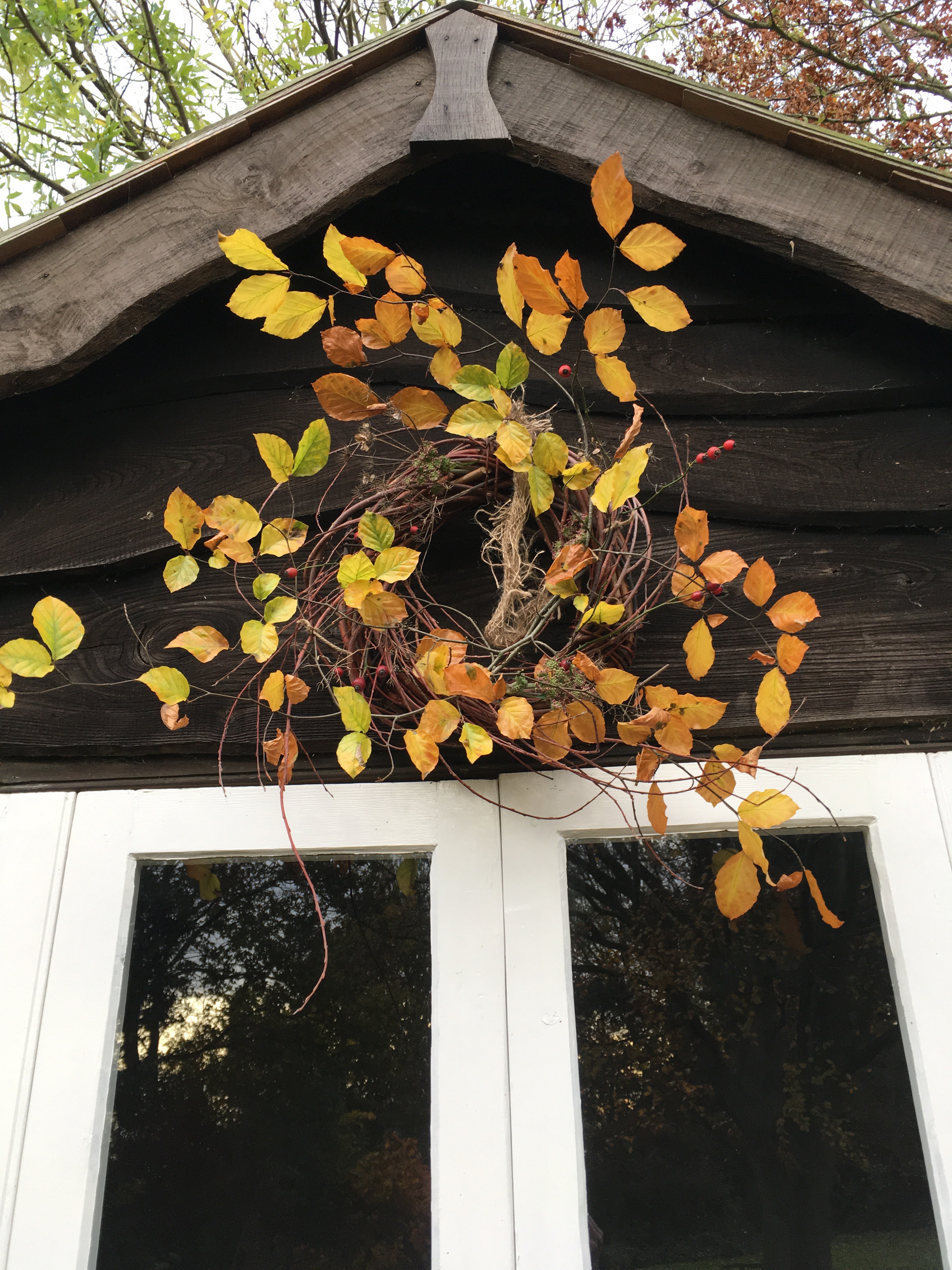
This door wreath made from my hedgerow foraging has ivy, dogwood, sloe berries, rosehips and crab apples. It cheered up the potting shed door for a week and cost £0 to make. A lovely sight to come home to.

I thought I would share the view from the back fields behind my garden. I took this photo whilst I was collecting materials for the door wreath. The gap is where an elm tree stood, before it succumbed to the dreaded Dutch elm disease. The elm managed to get to about 10 feet tall, and we always hope they will somehow develop a resistance to the disease. But every year another one dies. It’s a favourite gap-in-the-hedge view which changes so much with the seasons.

I garden on a windswept ridgeway. It’s cold and unprotected. But the views are glorious. I particularly love this viewing point, 20 paces from my paddock gate. There’s a woodpecker in that tree, taking no notice of me while I’m taking this photo. And high above us, a family of buzzards are circling and calling to each other with their curious mewing cry. When we first moved here, I spent hours searching for a cat I was sure had been abandoned in the hedgerow. Eventually realising it was a buzzard we could hear. Mind you, over the years, because of where we live in an isolated spot along a country lane, we have had to rescue quite a few sadly abandoned pets. All have found safe refuge here.

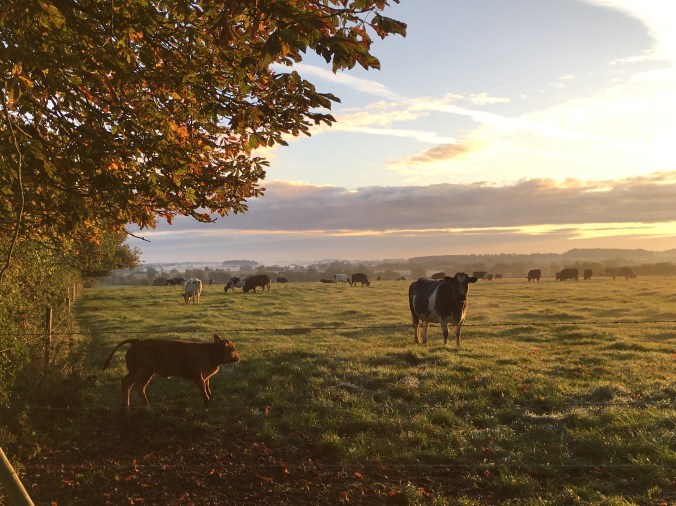
This is turning into a bit of a country walk. But I thought you’d like to see what I look at – just across the lane from where I live. We make daily trips to look at these cows. They are so tame and very well cared for. It’s rare to see calves allowed to stay with their mothers nowadays. Further along the lane, the cows can look thorough the fence to see me working in my orchard. They seem as curious about me as I am about them. Good company for me, indeed.

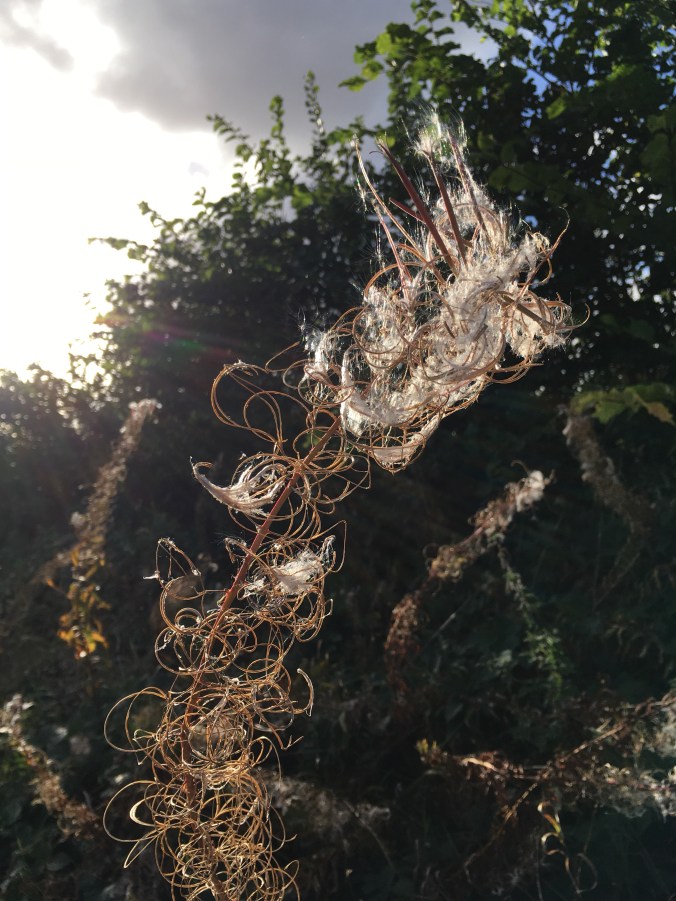
The grass verges here are full of wild flowers and what would be weeds in a garden setting. These rosebay willow herb plants grow in drifts and their colourful pink spikes provide nectar in summer for bees and butterflies. I watched some goldfinches enjoying the seed heads. A thing of beauty, caught in the sunlight.

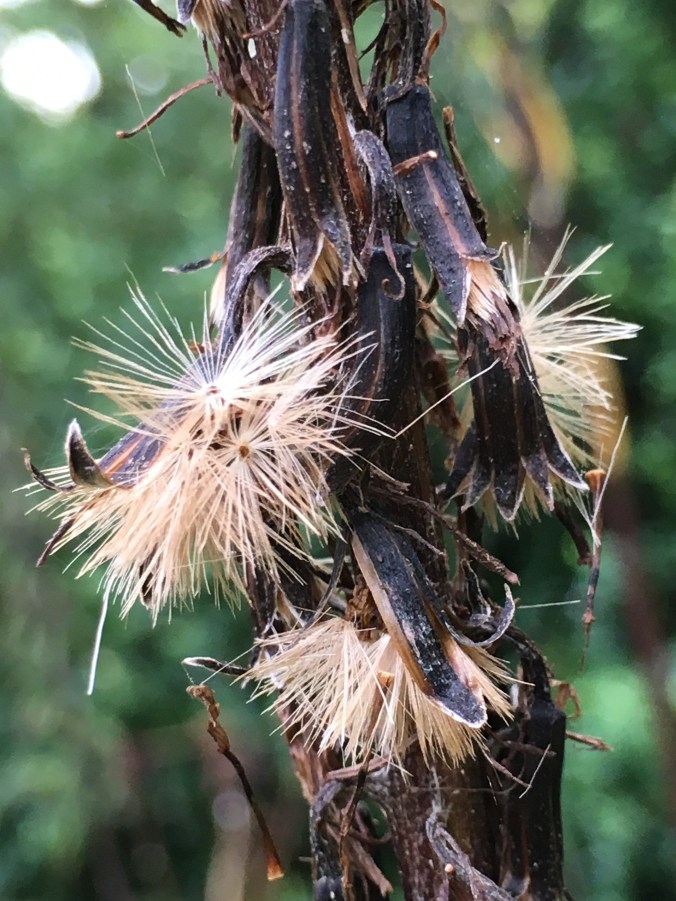
Back in the garden, these seed heads are looking glorious at the moment. I’ve forgotten the name of them. If anyone knows, please remind me. The leaves look like burnt toffee at the moment. I’ve got a feeling sky rocket is in the name somewhere?

The hamamelis leaves are also turning colour now, and I’m excited to see the tiny flower buds just starting to form. I’m hoping for a colourful display right in the middle of winter when we all need cheering up.

I’m still looking for the name for this fungi. Autumn wouldn’t be the same without this beauty in the mini woodland part of the wild garden. I went back the next day to take some more photos and it had been eaten. We have a thriving colony of short-tailed voles living in the long grass there. Just wondering if they eat mushrooms. There’s so much to learn, isn’t there.

As we started with reading, I’ll leave you with this view of the potting shed. I’m tidying it up to give me somewhere to mooch to over the winter. Much perusing of seed catalogues and plotting and planning will go on in there on cold, wet days. I try to make it as cosy as I can with a kettle and toaster. Anyway, thank you for joining me on a walk around bramble garden.

Thank you to Steve at Glebe House who has taken up the mantle of EOMV from Helen at Patient Gardener who launched the meme eight years ago. Go over and have a look what other gardeners are doing at this time of the year. It’s fascinating to see what everyone is growing around the world.

Leave a comment and let me know what is looking good in your garden right now. I haven’t shown you all the weeds or brambles. There are many, I can promise you.

#wordlesswednesday -bulbs and roots

Update on the Paperwhite narcissi. Planted just a fortnight ago. Being grown in a cool, bright, frost free north facing porch. Hoping it will flower by Christmas. A joy to check up on each day. I wrote about planting these bulbs here.

How are your potted bulbs coming along? I’ve got forced hyacinths in a dark cupboard in the potting shed. They need 10 weeks at 9 degrees and then I’ll bring them out into the cool porch to grow on. I’ll bring them into a warm room when they have formed good flower spikes. Cool but frost free growing conditions are the secret for success.

Flowers in a Vase

We all need more sunshine and smiles. And these multi-headed sunflowers have provided both this summer. Regular readers will know that I grow flowers for my mother in law Joan as a way of keeping her connected with me and my garden. Joan, who is 88, can’t come to visit as often as she would like, and so each week I run round the garden and gather a sample of everything in flower. Joan enjoys flower arranging. She did the chapel flowers for 65 years. She loves arranging my bundles of flowers and filling every window ledge and hall cupboard with colour.

I’ve had the best year yet with these sunflowers from Mr Fothergills seeds. Some of the multi-headed varieties provided 9 flowers per stem. Almost a bouquet in themselves. I will be growing varieties Halo, Buttercream, and Solar Flash again next year. I’ll start them off in the spring and plant out in May, using Slug Gone wool pellets to protect them from being nibbled. This year I grew morning glory up the stems, and under-planted them with calendulas.

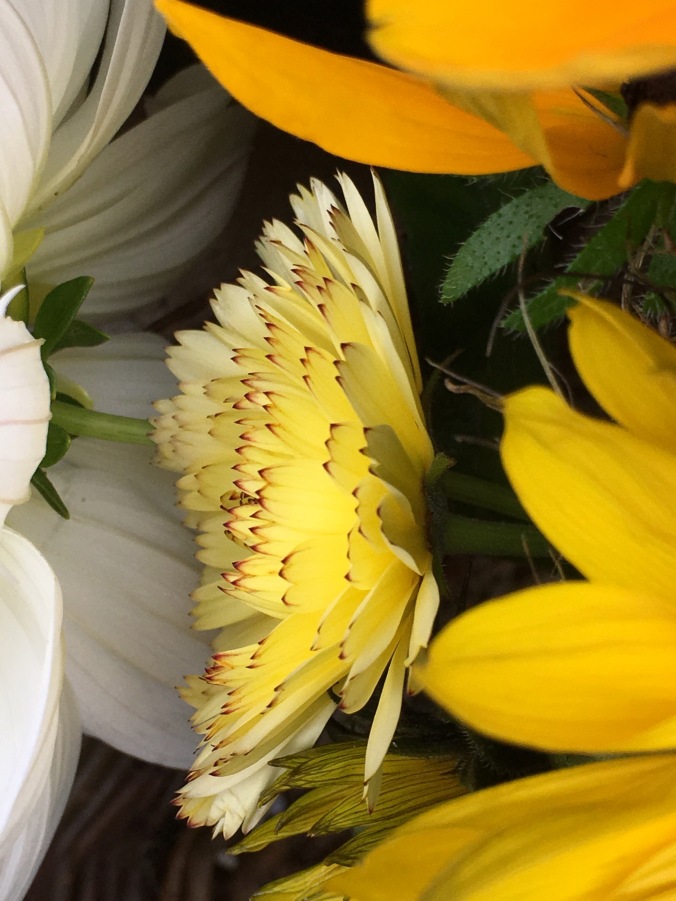
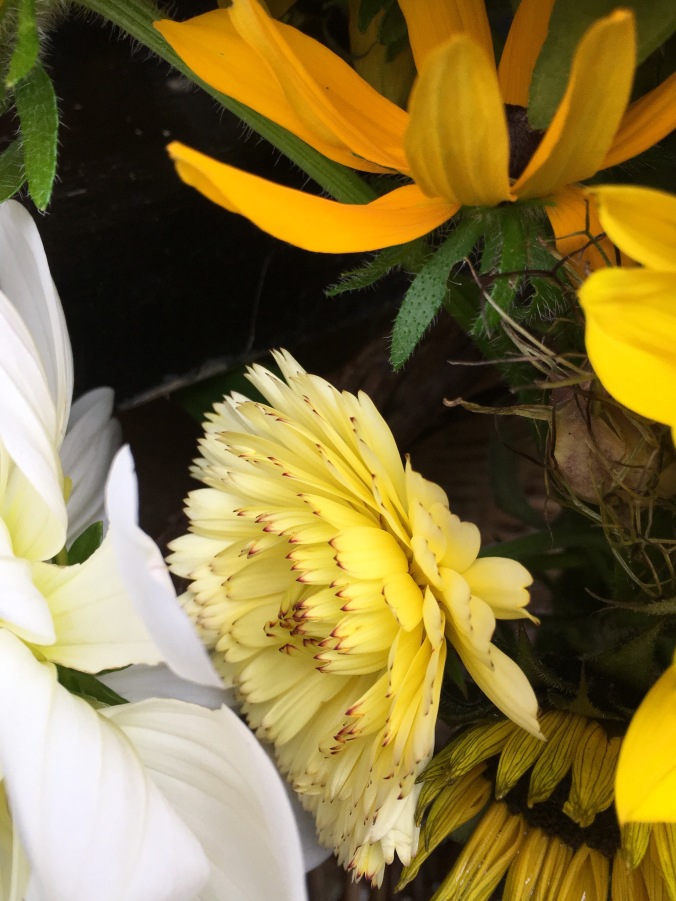
I have been in love all summer with new Calendula Snow Princess. In truth, it’s a very pale cream, not white. But so frilly. It reminds me of a tutu. And so prolific. Every time I’ve walked up the plot there’s been a handful of stems to pick. Such a pretty flower, and accommodating as it didn’t mind being planted under sunflowers.
No two plants are alike, but I particularly love this one with the delicate caramel picotee edging. Lasts for 7 days in a vase. I’ve just planted out some for next year. If you have a spare bit of ground or a few large pots, there’s still time to sow some from seed. There’s also time to sow other hardy annuals- cornflowers, nigella, larkspur, poppies. They will grow slowly over winter and provide early flowers next spring.

in just about every bouquet of flowers this summer I managed to include one of these white water lily dahlias. This tuber cost £1 from Wilkinson’s in the spring. I started it off in a pot in the greenhouse and planted it out end of May. It grew to nearly 5 feet and has been smothered in flowers. I will pay better attention to earwigs next year, putting plant pots of straw or corrugated cardboard on canes amongst the plants. As I don’t like to kill anything, the straw etc will be shaken out in a wild part of the garden every morning. Interestingly, the earwigs didn’t attack a deep red cactus-flowering dahlia growing right along side.

Another stalwart of my summer cut flower garden is rudbeckia. These were gown from a packet of seeds called All Sorts Mixed from Thompson and Morgan. I love the twisty edges of this one, and the lime green stripe on the back of the petals. Truly scrumptious.

Rudbeckia Marmalade from Mr Fothergills seed has beautiful shiny, chocolate-coloured centres.

Rudbeckias last for at least 7 days in a vase and brighten any posy of flowers. I grow mine in semi-shade under a plum tree, as that’s the only space I have. Seed packets cost just a couple of pounds each, and Mum and I share a packet between us as there are too many seeds for one garden.

Fitting in with the daisy theme are these Snow White asters which flower reliably every October under my old plum tree.

I hope you’ve enjoyed this gallery of photos of my MIL’s flowers this week. I love to join in with Cathy and her meme In a Vase on Monday. But my flowers are always picked on Saturdays and Sundays when we go over to the in laws to do their gardening, shopping and look after them. However, I always read what the others are growing and picking in their gardens- all over the world. Go over and have a look. It’s fascinating to see how many are growing the same plants in different climates.

Do you grow cut flowers for your home or friends and family? I have 10 1.2m by 3m beds with little paths between. Four of them are filled with flowers, and the others are packed with kale, beetroot, chard, onions and strawberries. There’s quite a few weeds too! Leave a comment and let me know what you are growing right now, or what plans you have for next spring. Flowers have certainly kept everyone cheerful here this summer. And you can never have too many smiles, can you.

Raising funds for Rainbows Children’s Hospice and Garden

Photo:A young supporter runs a fund-raising sponsored “hand print” wall at Rainbows open day.

Regular readers will know I’ve been mulling over ways to use my gardening skills to raise money for Rainbows, our local children’s hospice. And I’ve come up with a plan. I’m giving slide shows and talks to local garden groups. And I’ve asked some of my garden design customers to open their gardens for afternoon teas and guided tours – with all proceeds going to the hospice. Within a week of announcing my plans, I’ve got two talks booked, and one open garden. Times, dates and further details to follow! It’s a start!

Rainbows recently held their annual open day. Hundreds of people turned up to support the charity, and I joined them on a tour of the facilities. With Rainbows’ permission, I’m sharing photos here, to show you why I’ve decided to raise money for this amazing charity. The hydrotherapy pool, above, is used by children, their siblings and families. The key message I learned on my first visit is that Rainbows is a place to have fun. All members of the family are welcome. Aunts, uncles, grandparents, brothers and sisters come to the centre to spend time with poorly children. They all benefit from specialist care and support so they can spend precious time together- and make memories.

A key part of Rainbows’ work is symptom control and pain relief. This helps children enjoy and make the most of the time they have left. Rainbows provides a wide range of therapies and there are a number of dedicated rooms to help relieve pain and improve comfort. The multi-sensory room, has interactive light tubes, floor pads, and fibre optic features.

For children in wheelchairs, there’s a chance to take part in a cycle ride with this specially adapted bike.

Young people have their own rooms where they can chill out, use computers, watch tv, do some cooking or use a sewing machine with specially adapted equipment and aids.

No matter how small a movement a child is able to make, there’s a special piece of equipment or an instrument which will allow them to make music. Music therapy is accessible to all. Again the emphasis is on having fun, building memories for families, and enabling children to express themselves and relieve frustration.

The rainbows garden is a place for fun and games for children- and for peace and quiet and contemplation for parents, relatives and staff. I would be really pleased if some of the money I raise goes towards maintaining and developing the garden.

Rainbows provides respite, palliative and end of life care for babies, children, teenagers and young people who have life-shortening conditions. It’s every parent’s worst nightmare to be told their child will die before them. But for the families who come to rainbows, and an estimated 20,000 families across the uk each year, this is a reality.

I have pledged to do all I can to support the work of this amazing hospice.

Wherever I went within the hospice and surrounding gardens, I found a positive attitude -and plenty of smiles. The staff are fabulous and deserve all the help we can give them. Overwhelmingly there’s a message of love and hope.

I found this sunflower in the Hospice garden. I think it sums up the sunshine spread though their fantastic work.

I’ve never launched a fund-raising campaign before- and I’m not sure how good I will be at it. But I believe every little helps. Just by reading this blog you have helped. You can spread the message about Rainbows and help to raise their profile even further.

I still panic at the sight of an audience. I am terribly shy at heart, and quietly spoken. I shall need a loud microphone and plenty of Bach Flower remedies to calm my nerves. Wish me luck!

Read more about the hospice at www.rainbows.co.uk

rainbows.co.uk/giftsthatgive

@rainbowshospice on twitter and instagram

@rainbowsfanpage on Facebook

Chocolate and raspberry pots -Family Favourite Recipes- and how to plant autumn raspberries

Autumn raspberries are easy to grow and so prolific. I’m growing a variety called Polka – much earlier, and larger fruiting, than Autumn Bliss. Now is the perfect time to plant raspberries. They are sold bare-rooted, mail order, or from nurseries and garden centres. They are grown in nursery fields and lifted for sale at this time of the year. In garden centres, you’ll find them bundled together and plunged into 10″ pots with some compost to keep the roots moist. Tip up the plants and separate them out. Roots are fibrous and need to be planted shallowly in well-drained soil. I plant mine no deeper than 2″ and incorporate lots of well rotted home-made compost to improve drainage. It’s possible to buy soil improvers in bags from garden centres. There’s also composted maize fertilisers which I recommend as they are easy to use and weed free. Plant Grow is the one I use most often at Bramble Garden. Choose a sunny, or semi-shaded site and plant the canes 2ft apart, with rows 6ft apart. If space is limited, it’s no problem to grow them in pots on the patio. There’s dwarf varieties bred specially for containers and small raised beds. New variety Yummy grows to 45cm and fruits on the first year’s wood. There’s also a new variety called Ruby Falls which is very compact and prolific.

Here’s a favourite recipe, quick to make and cooks in just a few minutes in the microwave. It’s great not to have to turn on the oven, saving electricity or gas. It’s ready in a flash.

INGREDIENTS

3oz SR flour

3oz caster sugar

3oz butter (or vegetable margarine for a vegan recipe)

1 egg (or 2 tbsp oat milk for vegans)

1 tsp baking powder

1 tsp vanilla extract

1 tbsp milk (or milk substitute)

1 tbsp cocoa powder

Handful of fresh or frozen raspberries

You can use small mugs, cups – or a deep glass Pyrex soufflé dish as long as they are microwaveable.

METHOD

Throw all ingredients apart from raspberries in a food processor and whizz, or use a hand whisk to incorporate.

Place some raspberries in the base of the containers and top with the sponge mixture. Reserve some raspberries for the top.

Cook for 3 minutes. Open the door promptly and let steam escape. The sponge carries on cooking for another 2 minutes. They will be cooked when the sponge shrinks slightly from the sides of the dish. Use a skewer to check the mixture has cooked. If the skewer is clean, they are ready. If the skewer comes out with some liquid mixture, pop the dishes back in the microwave for another minute.

Serve hot with custard or double cream. Or allow to cool, sprinkle with reserved raspberries and icing sugar.

Makes a wonderful recipe for picnics and parties. Easily transported. Can be dressed up for a party with chocolate leaves.

This recipe can be used for any fruit. I use blueberries, pear, apple, blackberries, mandarins, whatever you can get your hands on. If you have no fruit, the sponge on its own is wonderful, or you can add a spoon of berry jam at the base instead as a change. To change it again slightly, omit the cocoa powder and you have a plain vanilla sponge. Add golden syrup to the base, if you like. Quick, easy and affordable. Just what’s needed to get us through this difficult time and with winter on the horizon.

Thanks for reading, and let me know if you make the recipe and how it turns out.

I’m talking on BBC Radio Leicester every other Wednesday at 1.10 am just after the news. Have a listen in on BBC Sounds, or DAB.

I’m also on twitter @kgimson and karengimson1 on instagram

More reading! I also write for Garden News Magazine. Here’s my most recent column.

Some listening as well….. Garden Chat At 13.12 on the timeline on BBC radio Leicester with Rupal Rajani. https://www.bbc.co.uk/sounds/play/p08v54lm

Links:

Raspberry canes Six Acre Nurseries : https://www.sixacrenurseries.co.uk/

Plant Grow fertiliser: https://www.plantgrow.co.uk/shop

Greenfingers charity : https://www.greenfingerscharity.org.uk/

Rainbows hospice for children: https://www.rainbows.co.uk/

Open gardens NGS: https://ngs.org.uk/

Garden News magazine: https://www.greatmagazines.co.uk/garden-news-magazine?gclid=Cj0KCQjwreT8BRDTARIsAJLI0KI75BpU1bb-p70Y54fdPoRq0TWoQw5dLmfJxEBPn2reluyg7pQCC70aAuWtEALw_wcB

#wordlesswednesday: Update on hedgehogs in the garden…..

Just a quick update on my baby hedgehogs. I wrote about them last week Here. I can report back that the Hogilo hedgehog house is a huge success. Three of the babies are in there this evening, and the roof is keeping them nice and dry.

I got in touch with the British Hedgehog Preservation Society to find out more about them. My babies need to weigh 600 grams before they can successfully hibernate. I will be weighing them tomorrow. Meanwhile I am feeding them up. Here’s a list of what we can give them.

Meat-based dog or cat food

Dried mealworms- not too many

Unsalted chopped or crushed peanuts

Sunflower hearts

Specially made hedgehog dried food- bought from pet shops and supermarkets.

Most importantly- they need a dish of fresh water. Not milk, which gives them stomach problems.

In the wild, my hedgehogs are eating the following:

Worms, beetles, earwigs, caterpillars, leatherjackets, millipedes, frogs, slugs, and fallen fruit. I know for a fact, they absolutely love windfall apples and plums.

Here are two of them with their dinner. They soon tucked in when I retreated to the house.

I was shocked to learn we have lost one third of our hedgehog population since the Millennium. The severe decline has been caused by the following:

Use of pesticides, reducing the number of invertebrates that make up the hedgehogs’ diet

Larger field sizes, making it difficult for them to move about

Mechanical hedge trimming which leaves gappy hedge bottoms and leads to poor nesting opportunities

Permanent pasture being lost to crops

Impenetrable fencing, limiting the area of connected land available for foraging

Gardens being lost to car parking, decking, etc, reducing the land available for foraging

Busy roads

Increased development

Over managed / tidied gardens reducing hibernation opportunities

Pesticide and slug pellet use, poisons invertebrates

Ponds. Hedgehogs are excellent swimmers, but they can’t get out of straight-sided ponds.

What we can do to help:

Leave untidy corners in our gardens with piles of logs and twigs.

Leave some fallen leaves, dry fern foliage, straw which can be used as nesting material.

Make or buy hedgehog shelters. Old wine crates can be converted, with the addition of a 30cm long tunnel entrance, to keep out predators, and a waterproof roof. Put the nesting material alongside as hedgehogs will carry it in themselves.

Create a safe, dry feeding area out of a clear plastic storage box with 13cm entrance hole.

Cut holes in fences so that hedgehogs can forage over a large area. The hole needs to be 13cm wide and 13cm high.

Use organic methods to protect plants. The Slug Gone wool pellets are really effective deterrents.

Make sure all ponds have a shallow beach made of stones at one end, or a plank wrapped in chicken wire, so that hedgehogs can escape.

I hope you’ve found this quick mini-guide useful. Certainly our hedgehogs need all the help they can get. It’s a sad fact that some children have never even seen a hedgehog- they were a very common sight when we were growing up.

I love this photo of a ceramic hedgehog 3,800 years old, found in an Egyptian tomb. It would be sad if they became extinct on our watch.

Photo credit : Brooklyn Museum and Big Hedgehog Map project where you can log sightings of hedgehogs in your area and find out more about them.

#wordlesswednesday  Frilled. 


Cut flowers from my garden today. Carnations, sweet peas, dahlias and alstroemerias. Have a listen at 2.08.20 on the timeline for the gardeners’ phone in programme. http://www.bbc.co.uk/programmes/p056qg0d. Regular readers will know that I joined the BBC’s Down to Earth programme about a year ago. The programme has been running for 50 years. I’m not a natural speaker. Much happier listening to be honest. But I’ve been given this opportunity to encourage others to grow flowers, food, fruit. So I push myself out of my comfort zone. Today I did my second weekday gardeners’ phonin programme. Sadly there was only one caller – right at the end. So if I sound a bit nervous, that is the reason why. A whole hour to fill is rather a daunting  prospect! Somehow, I survived. But I feel as if I’ve lost a stone in weight! 


Wordless Wednesday 

Still mild enough to sit in the summerhouse. Heaps of cosy woollen blankets to hide under. So I made an autumn wreath out of beech leaves, rosehips and cowparsley seed heads.


My wreath is made from a woven willow base. I learned how to make them from  Georgie Newbery at Common Farm Flowers. I can highly recommend the courses. I attended one for creating a cut flower patch and posy tying. I’ve never had to buy any flowers for my house and family since. I’m planning to attend one next year on growing flowers for weddings and special occasions. I’ve already bought my voucher for the course. It’s great to have something to look forward to as winter starts to bite.
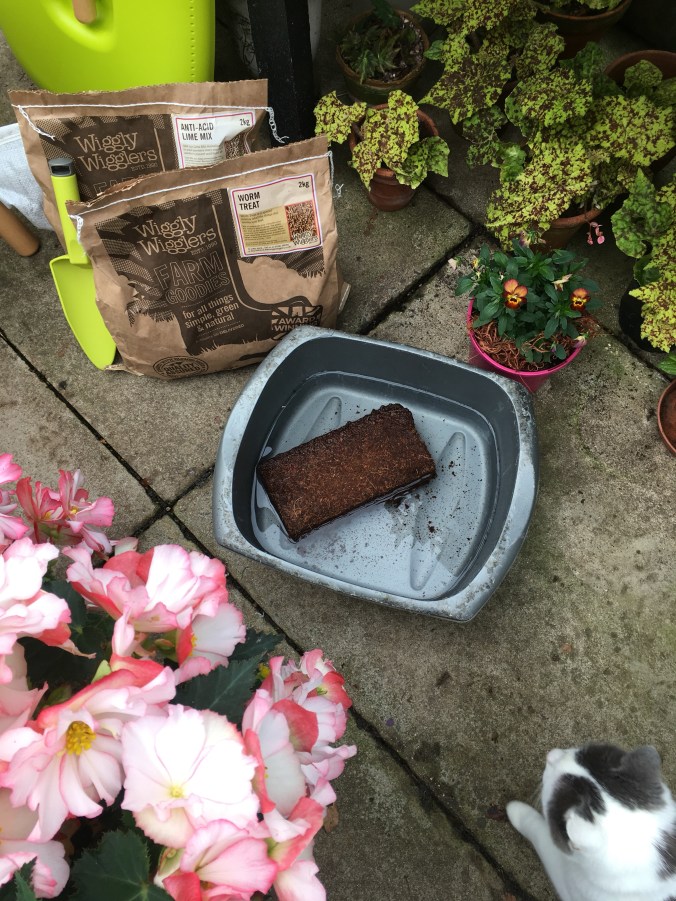
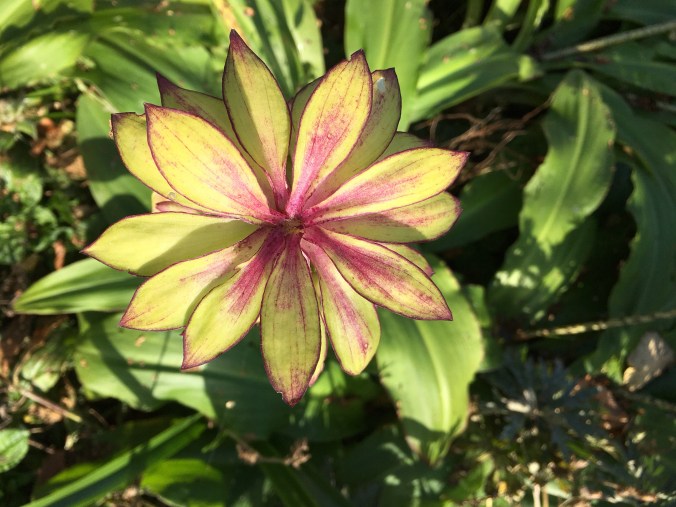


The Persian ironwood shrub, Parrotia Persica still looks like a bonfire of colour.


Orange tulips, a present from a friend- the view inside the summerhouse today.

Have you got a favourite place you like to sit in the garden?