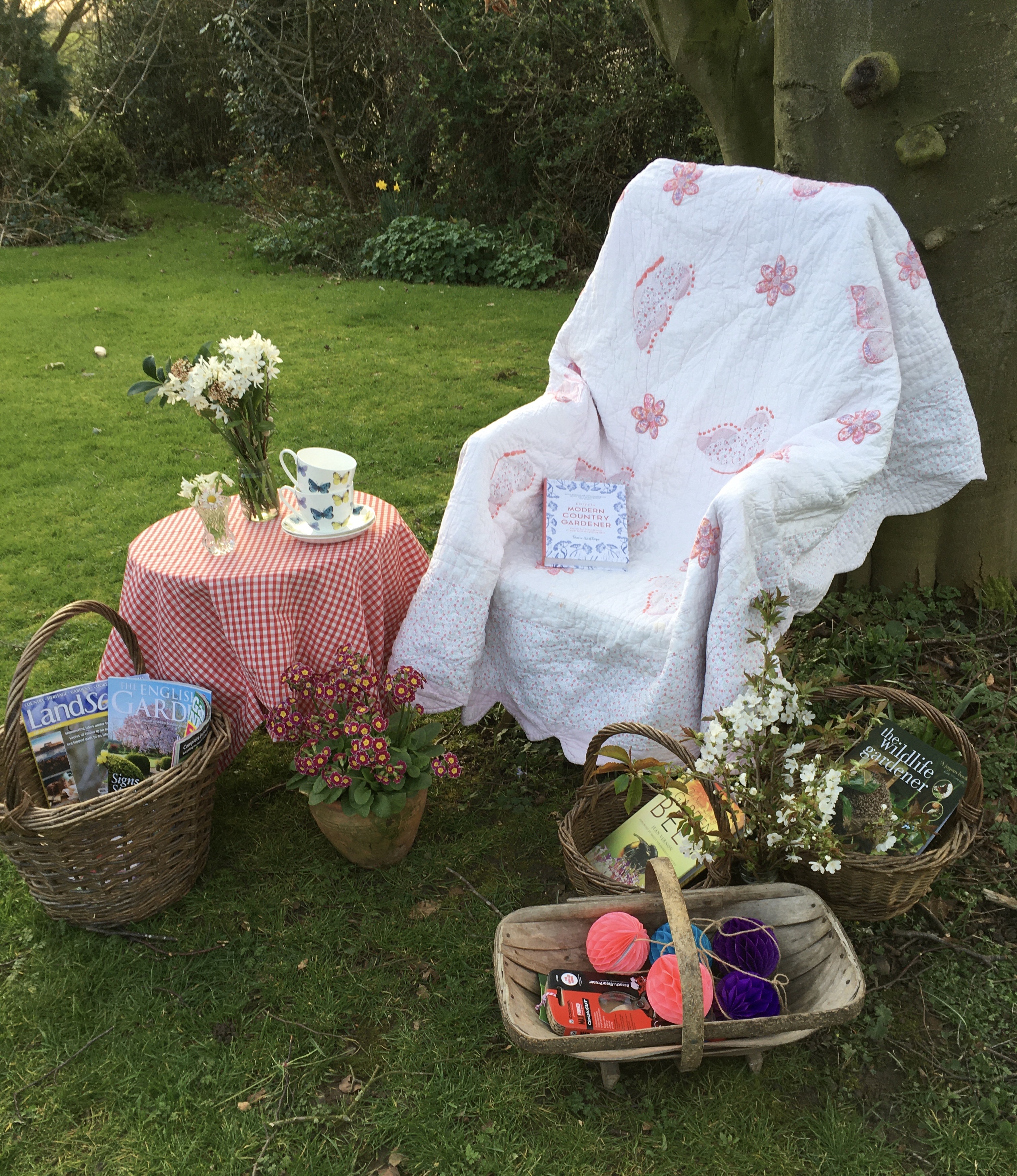
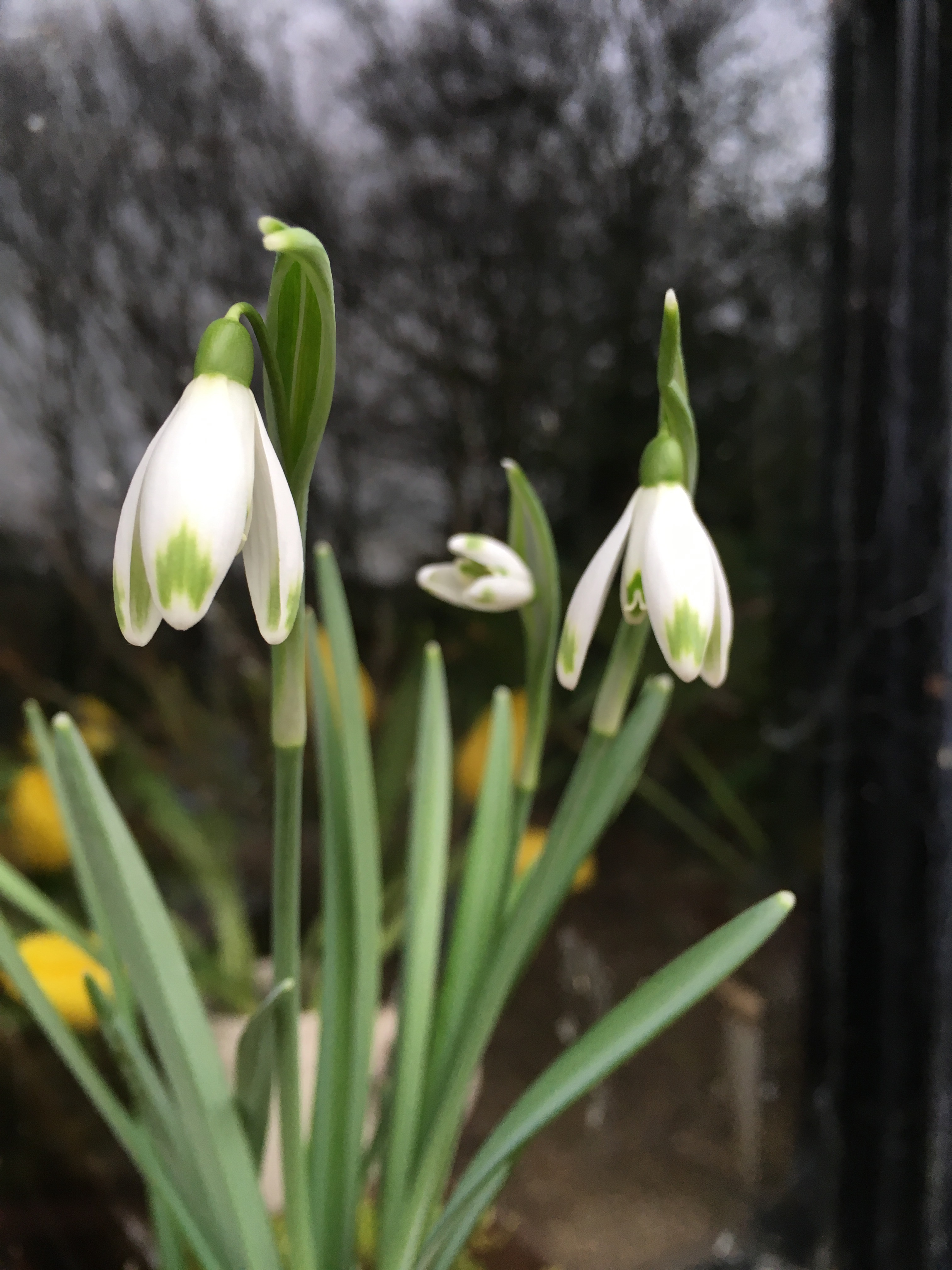
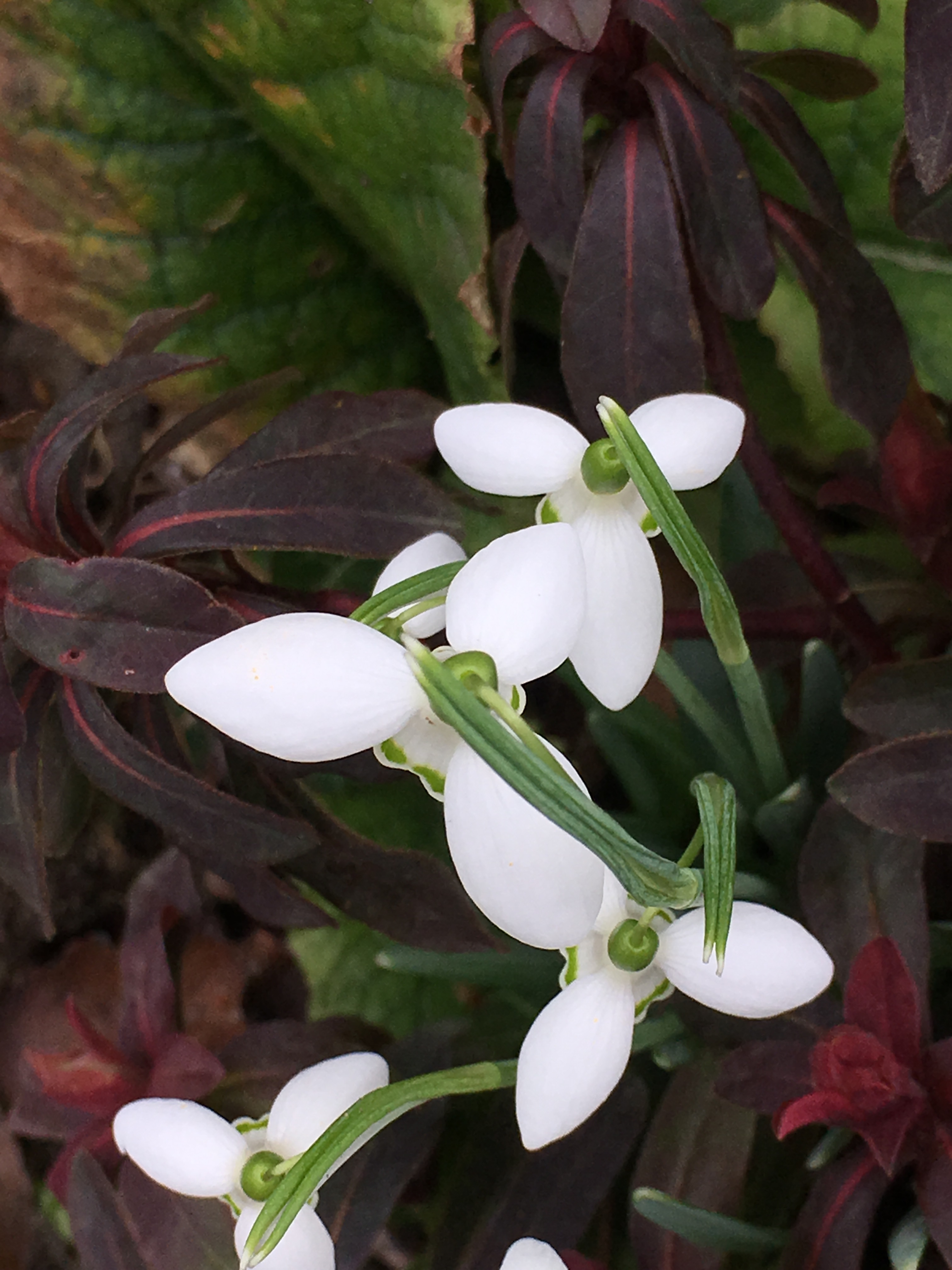
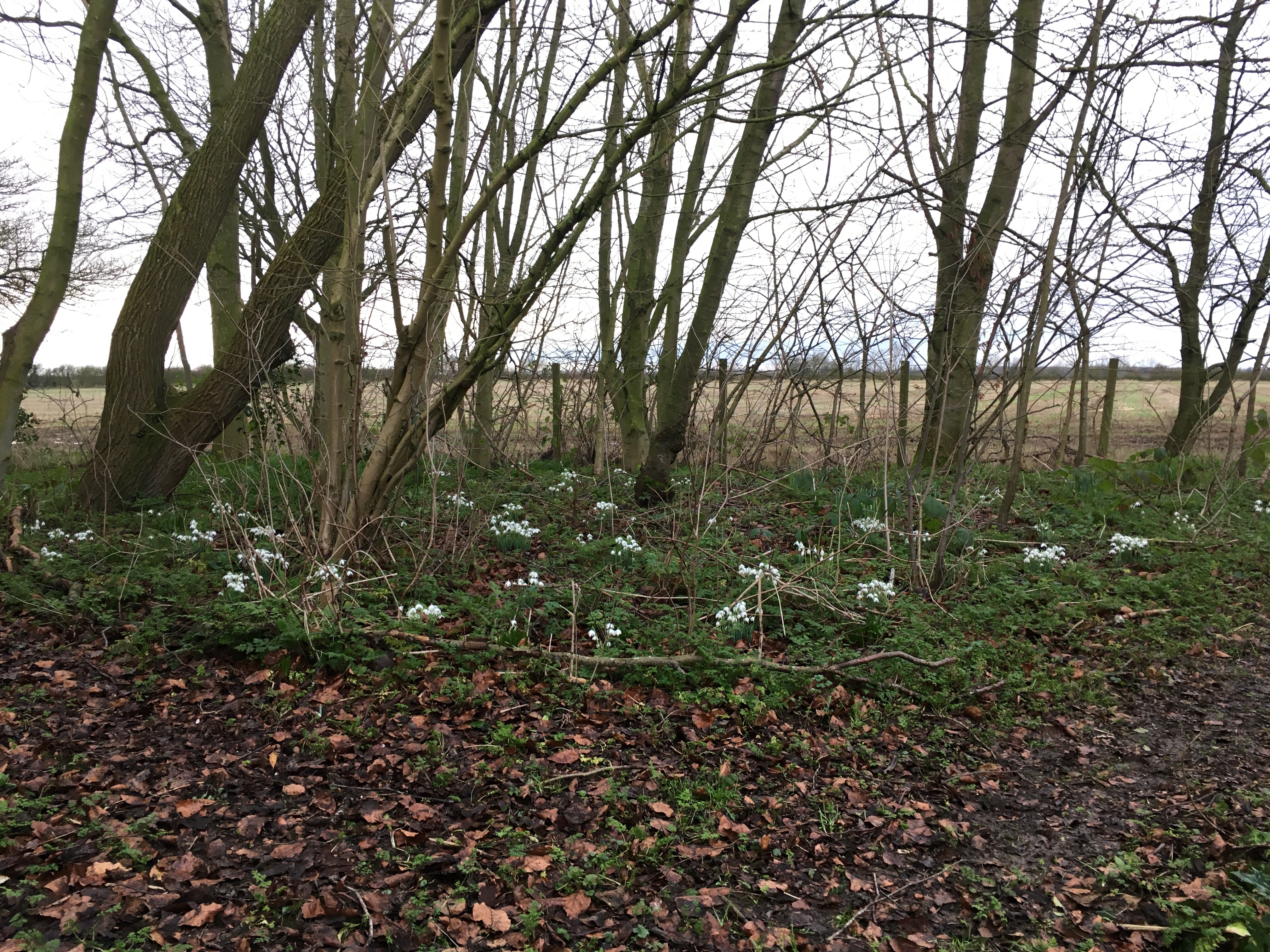
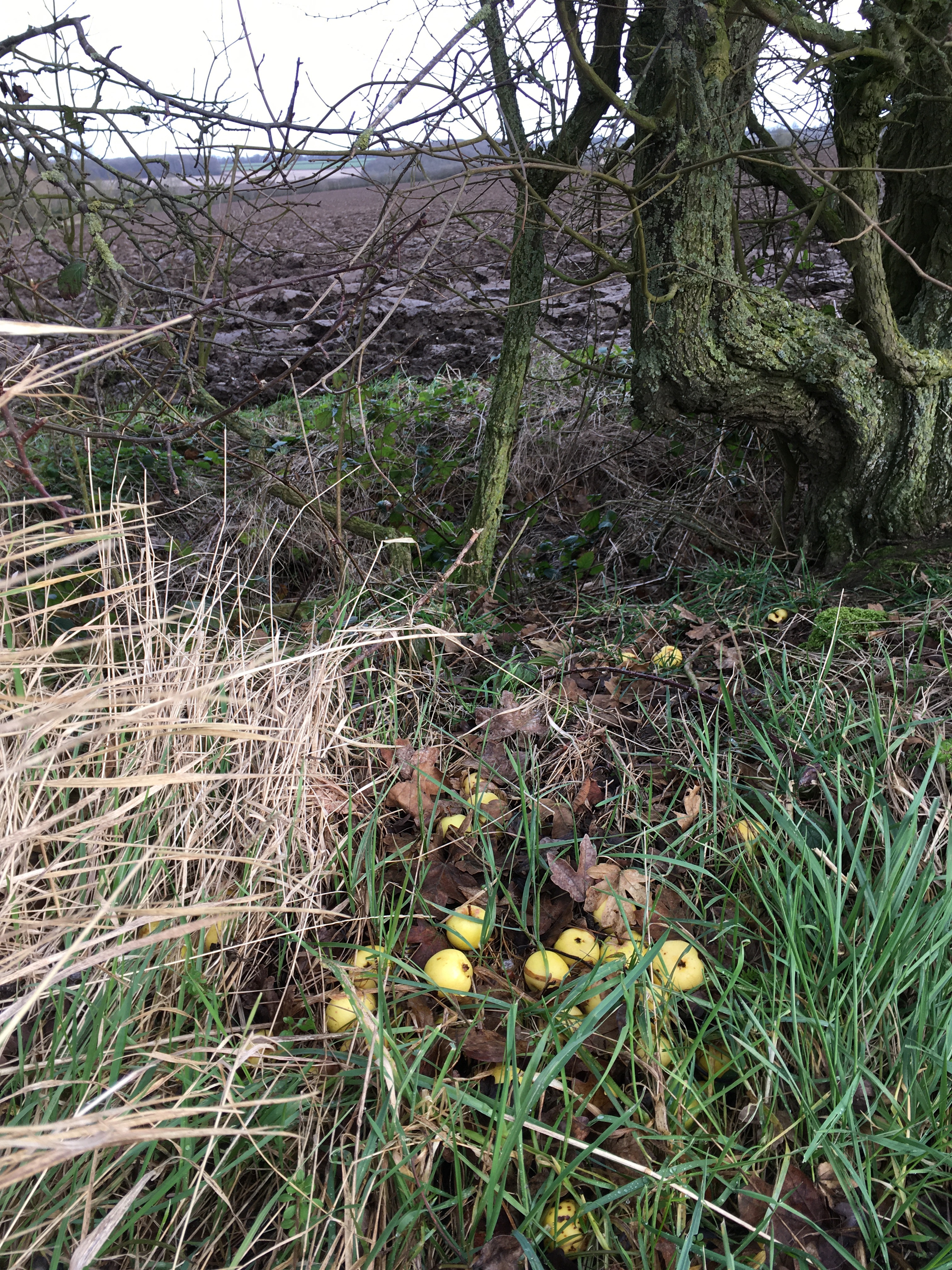
Winner: Second Nature book give-away

Update: I’ve re – run the prize draw as Fiona hasn’t got back to me at all. The new winner is Natalia Clarke at Luckybees. enjoy the book Natalia!

The winner of the prize draw for Susie White’s gorgeous new book, Second Nature is Fiona Pryor. Please e mail me for details, Fiona. My e mail is k.gimson@btinternet.com.

Thank you to everyone who read the review and left a comment. You can read the review here:

https://bramblegarden.com/2024/04/10/second-nature-book-review/

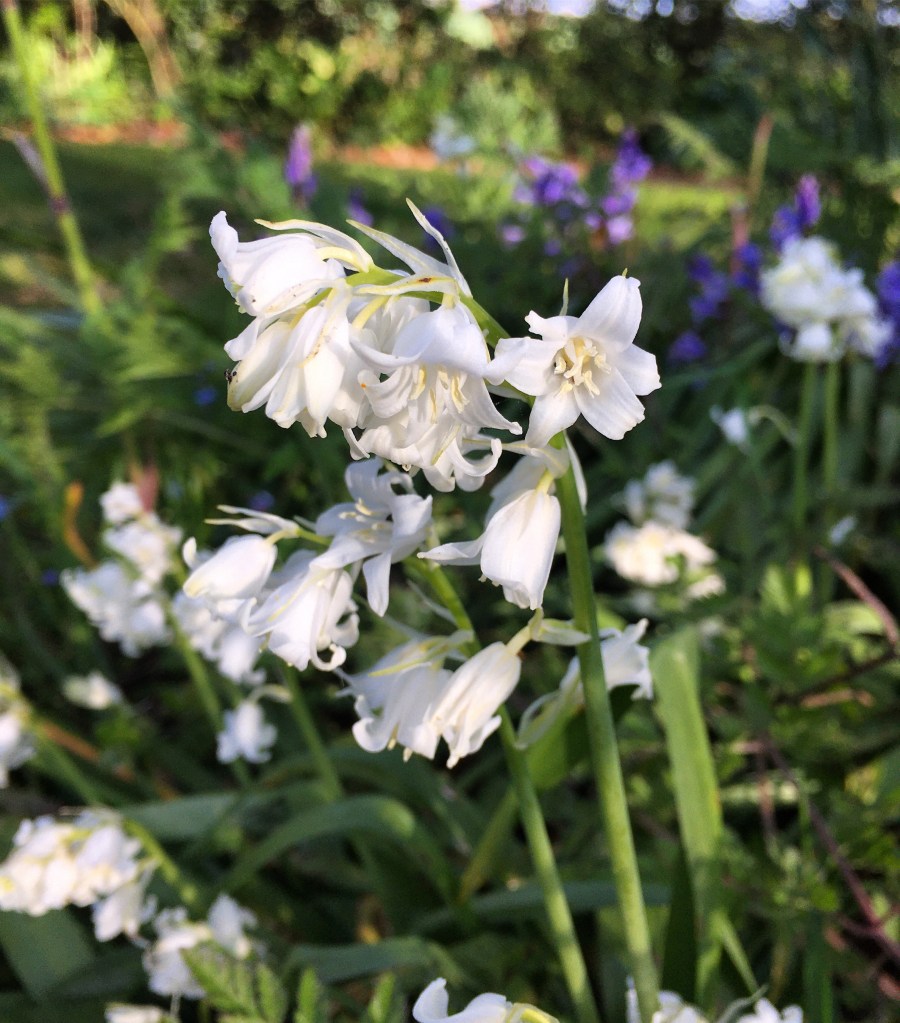
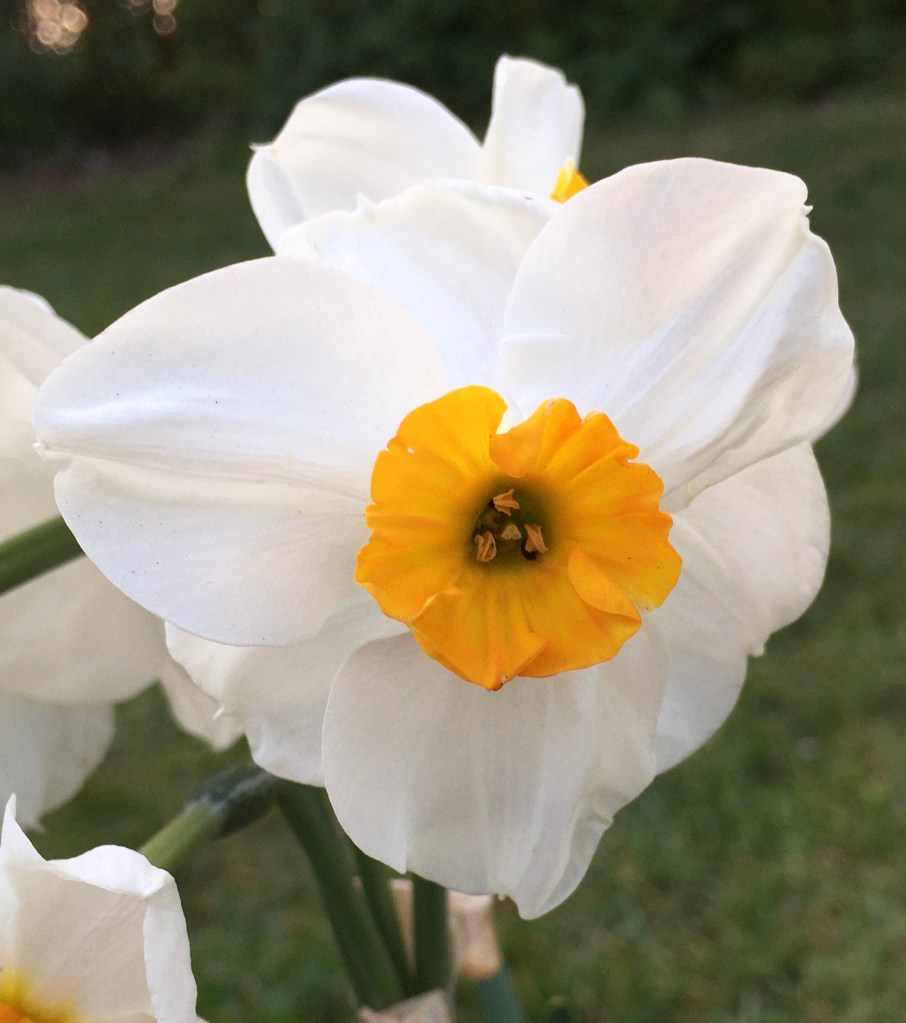
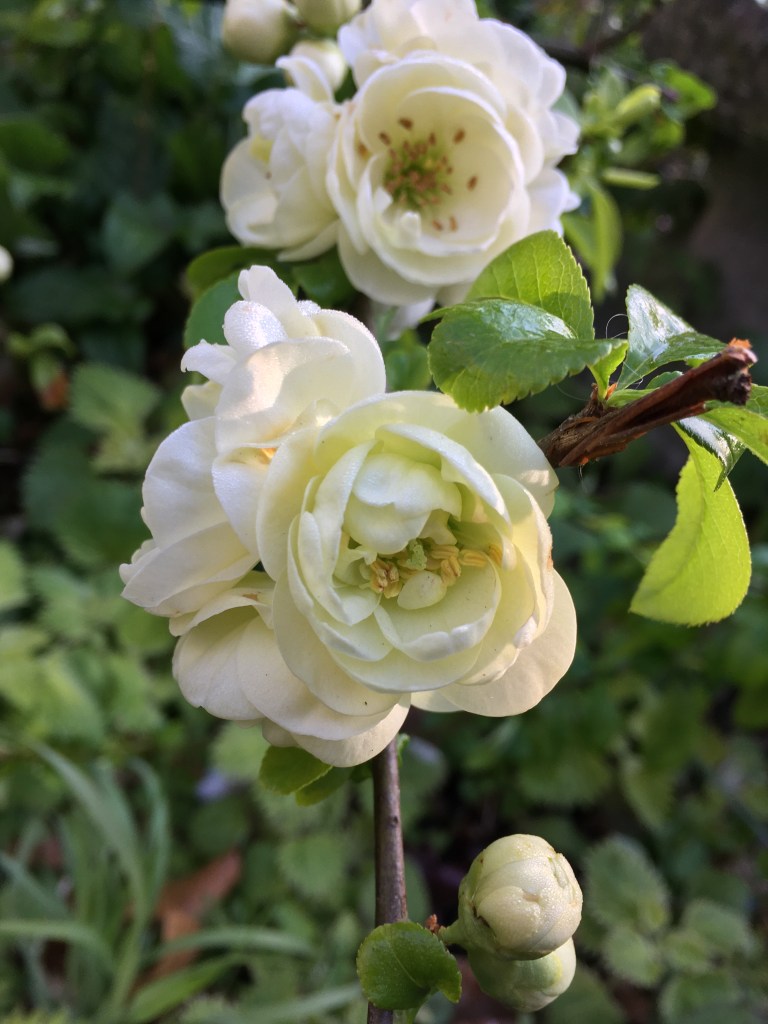
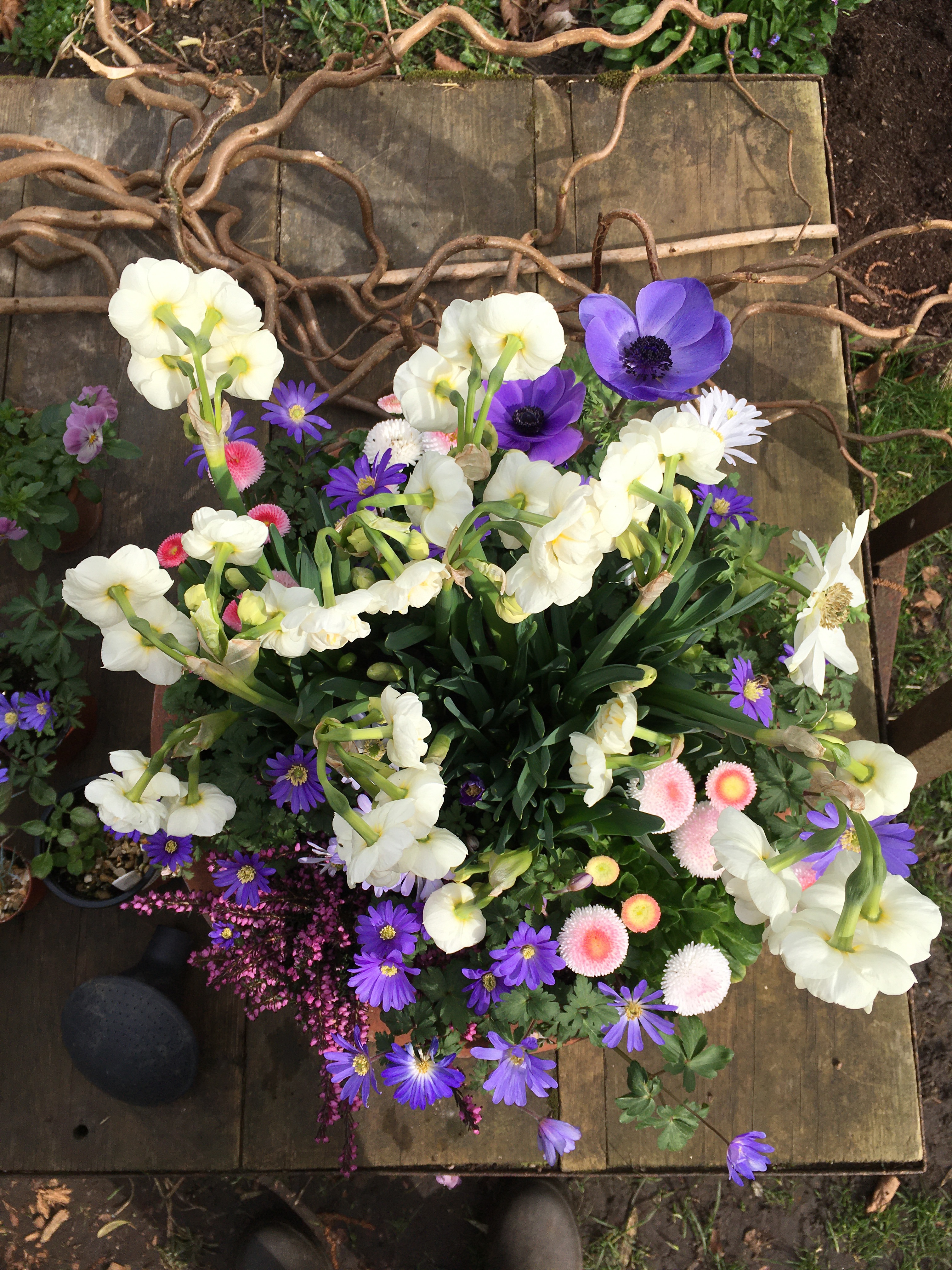
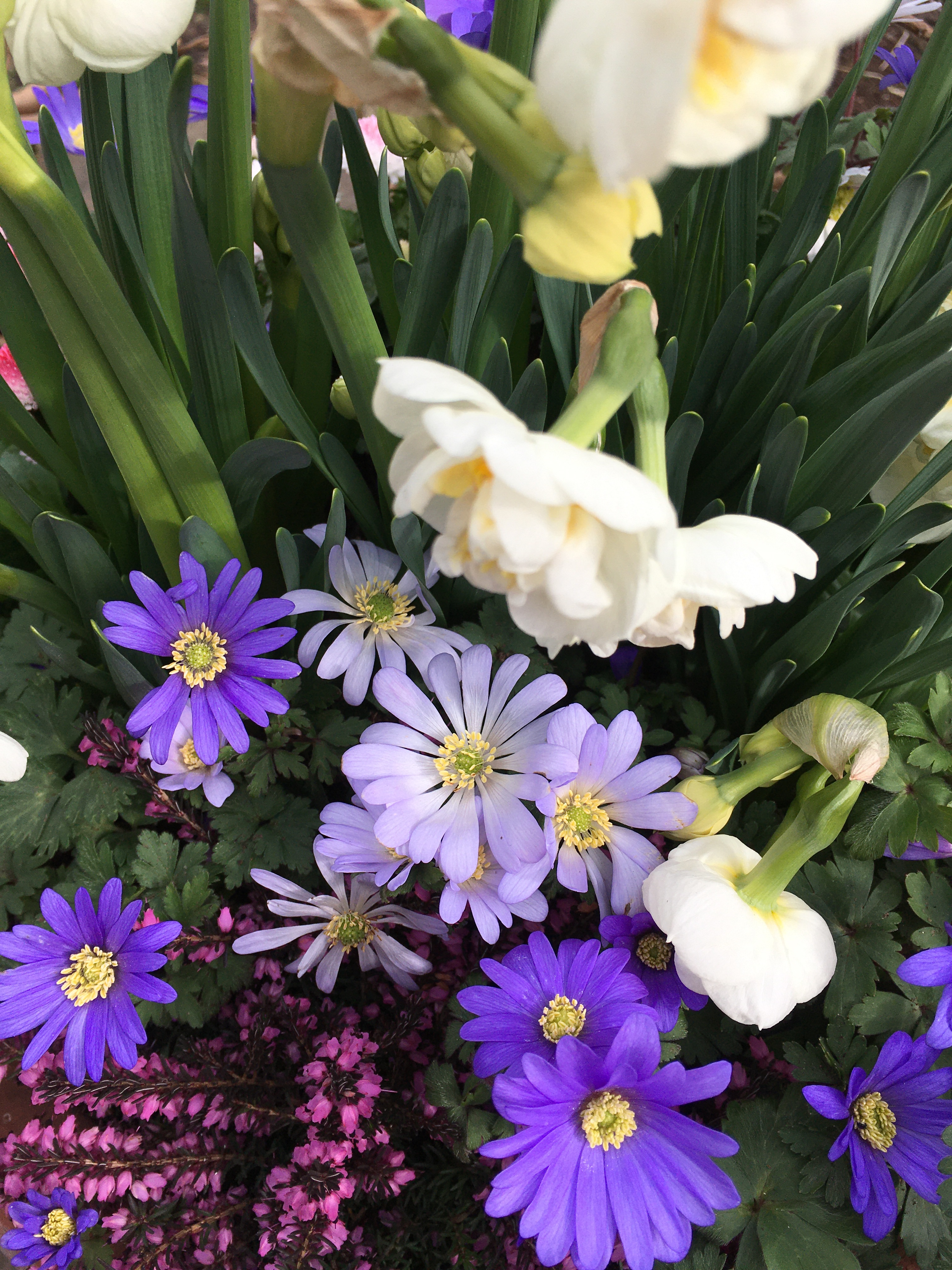
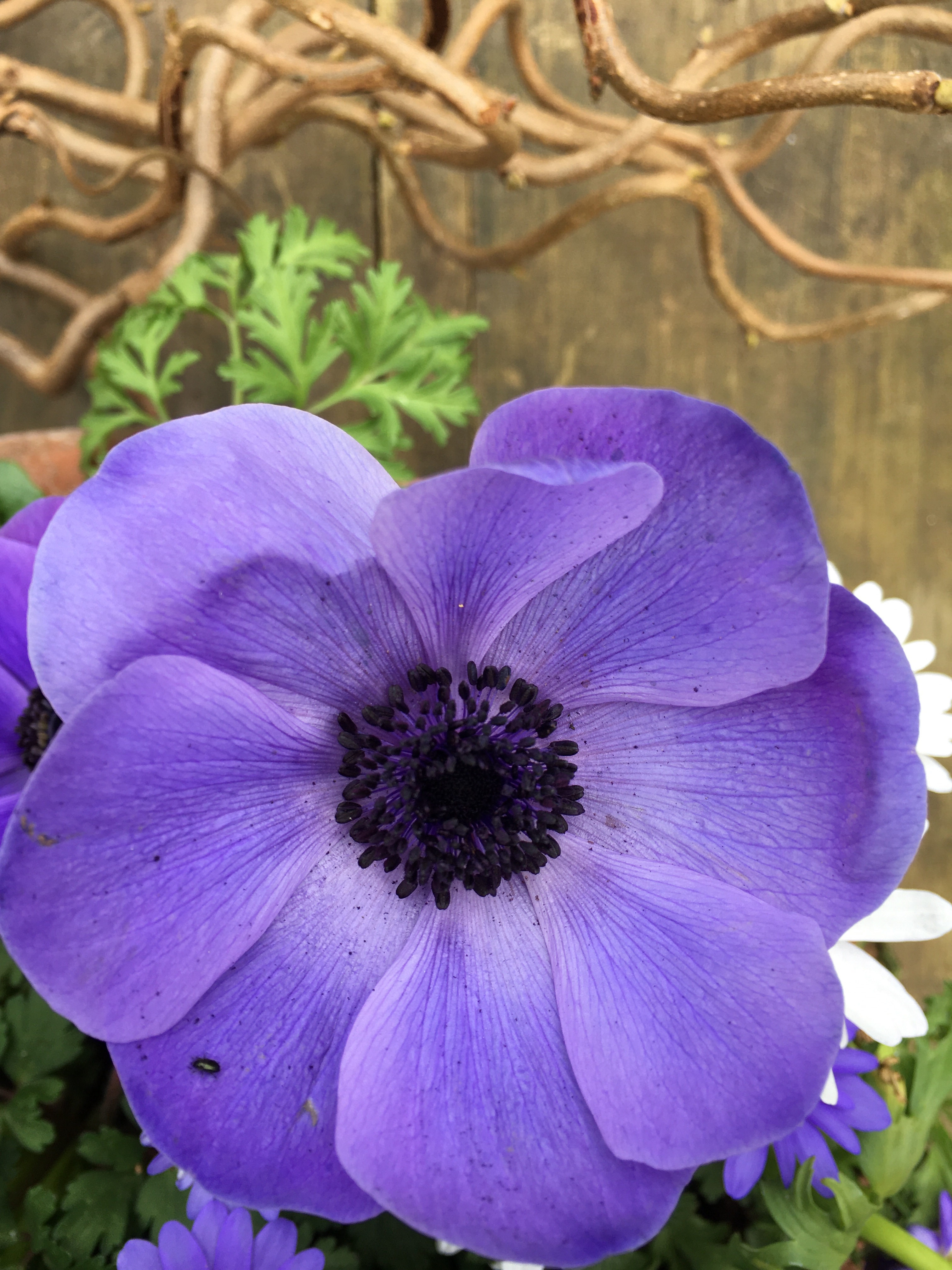
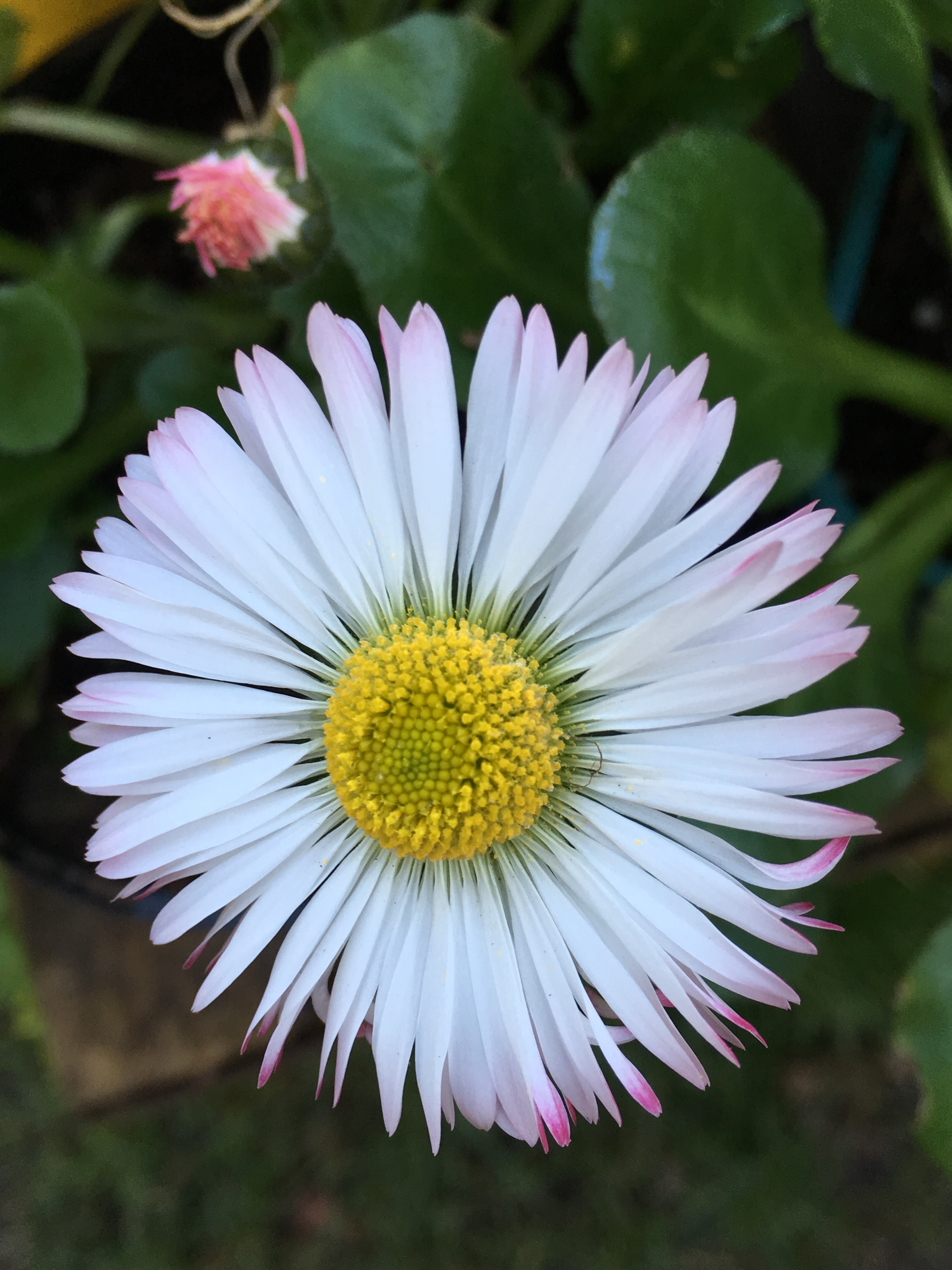
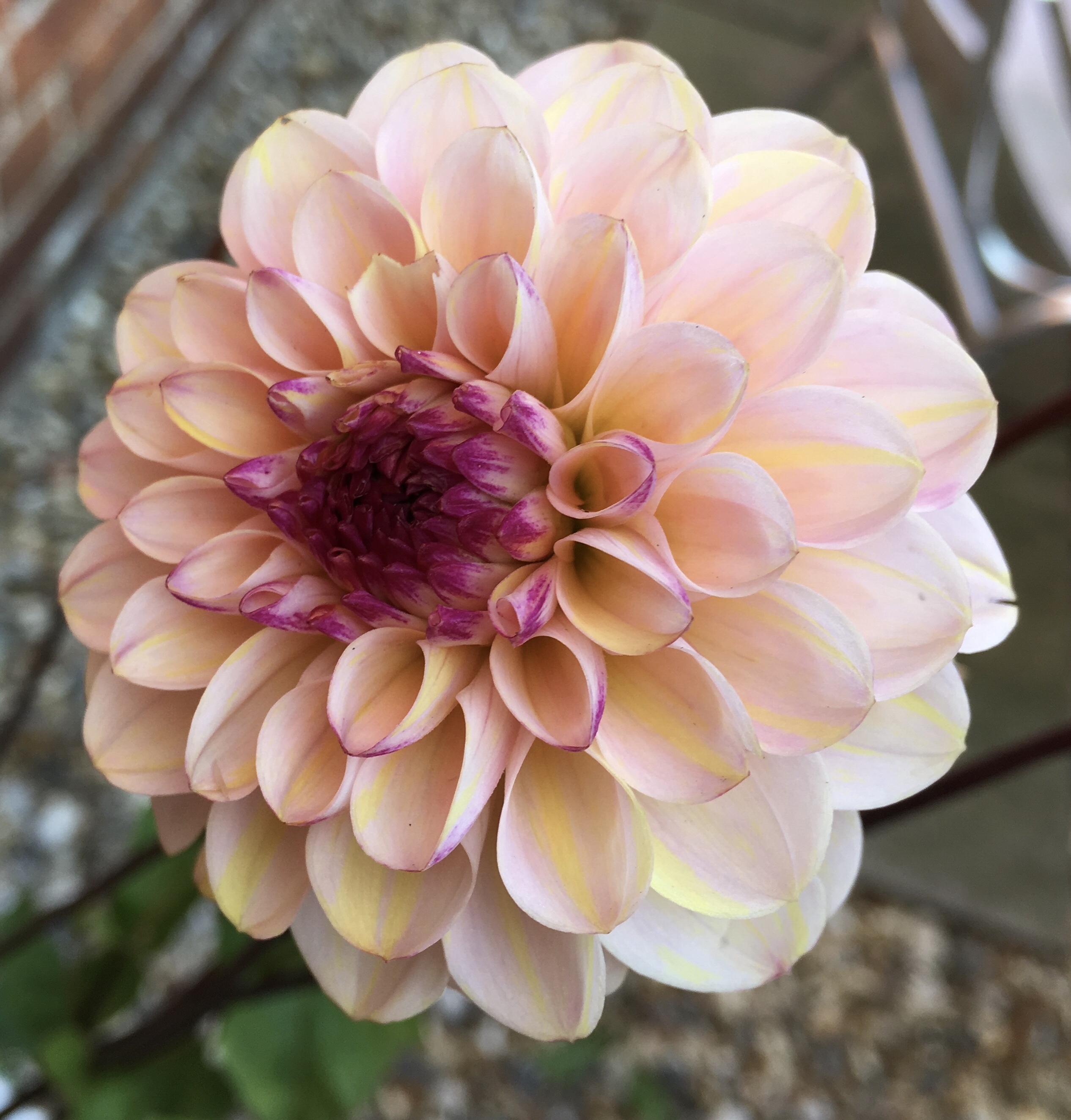
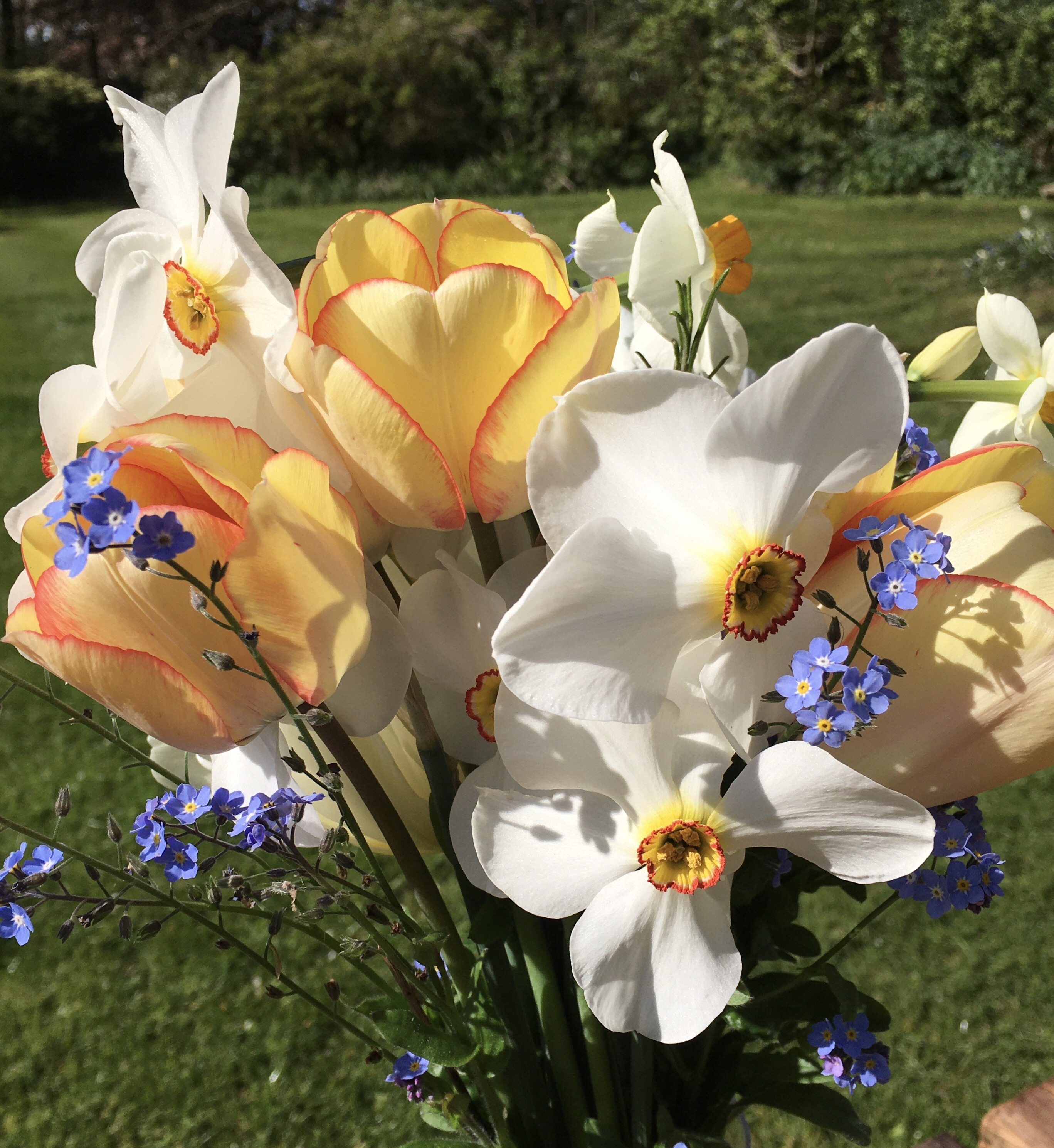
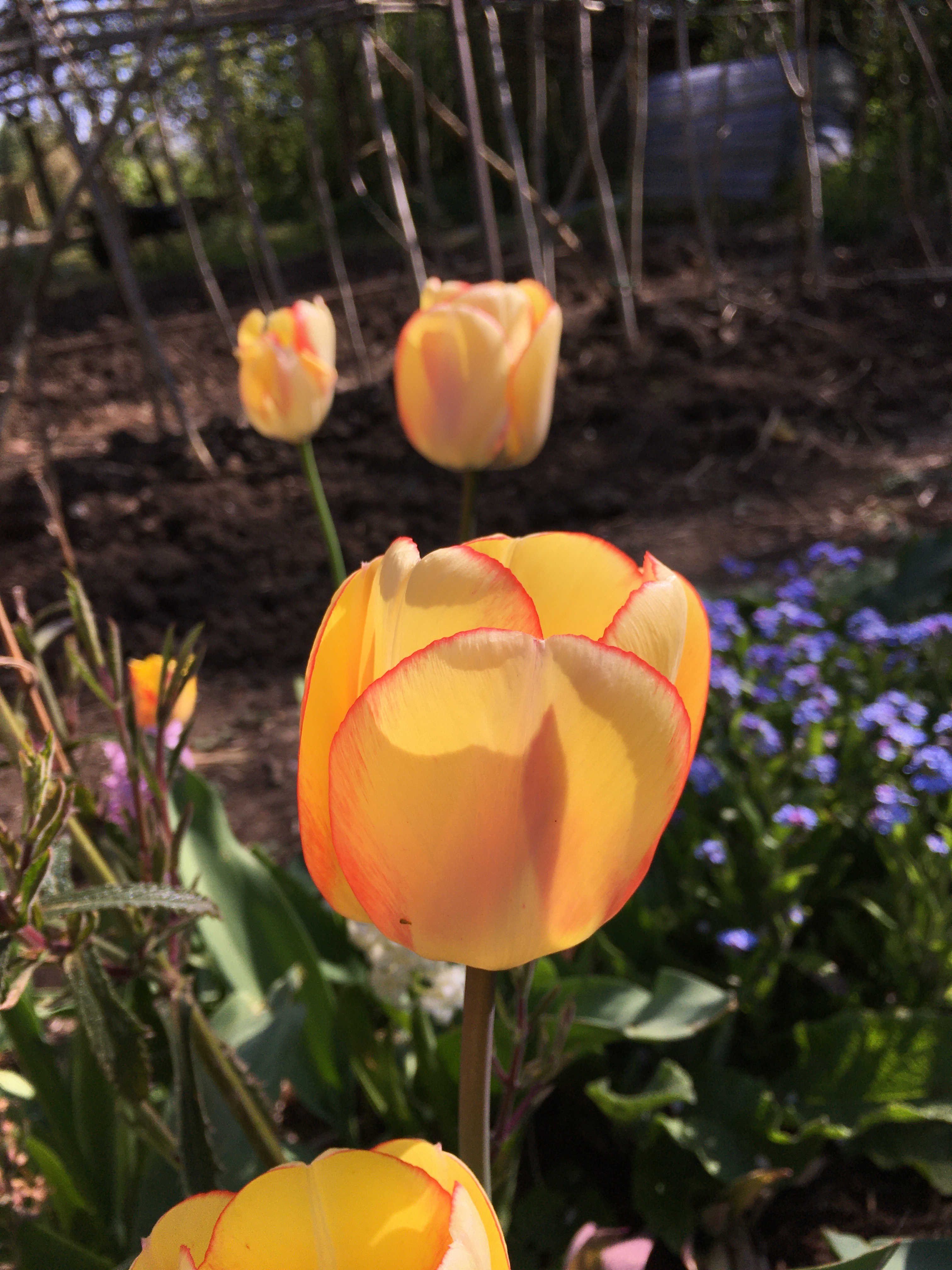
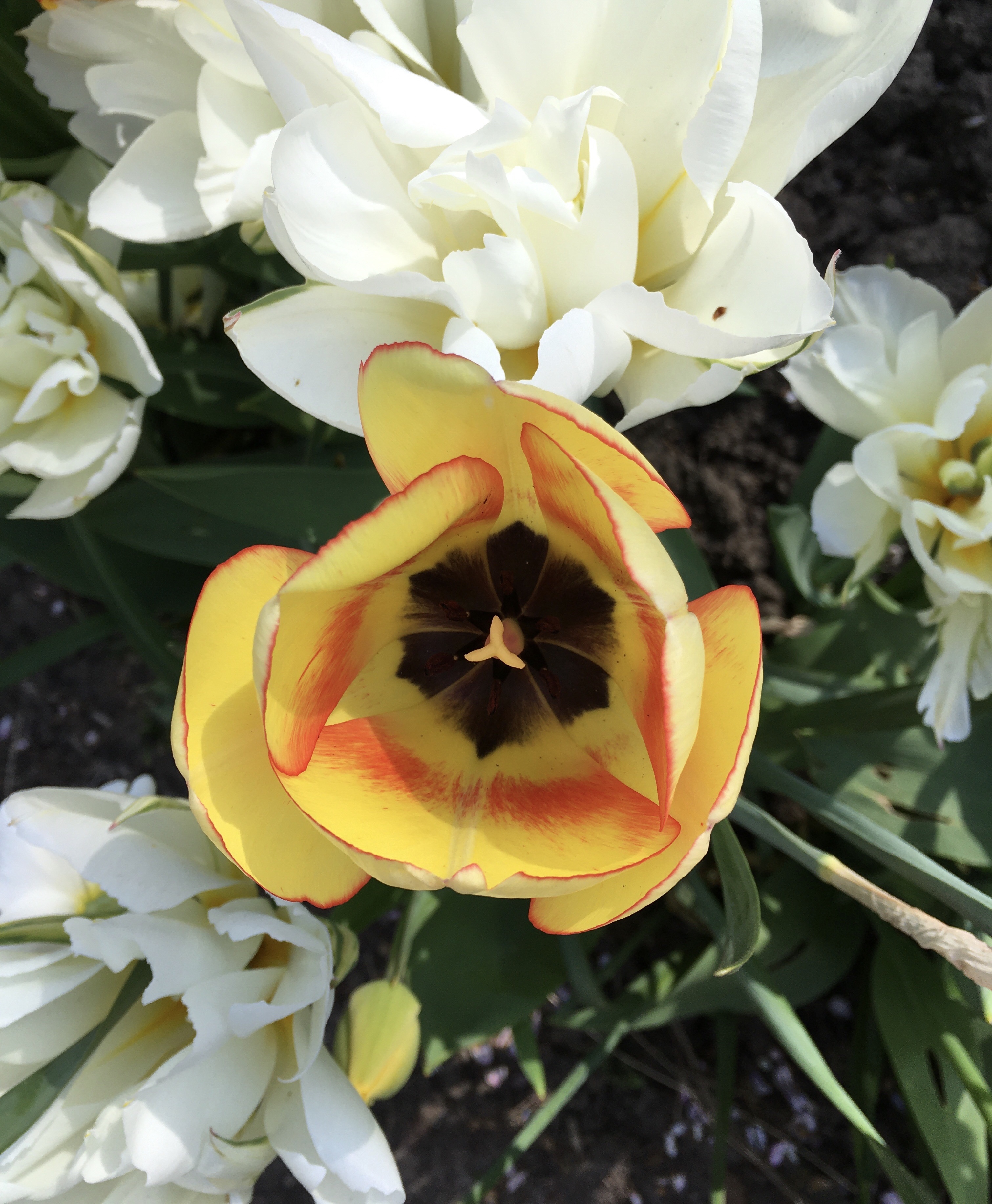
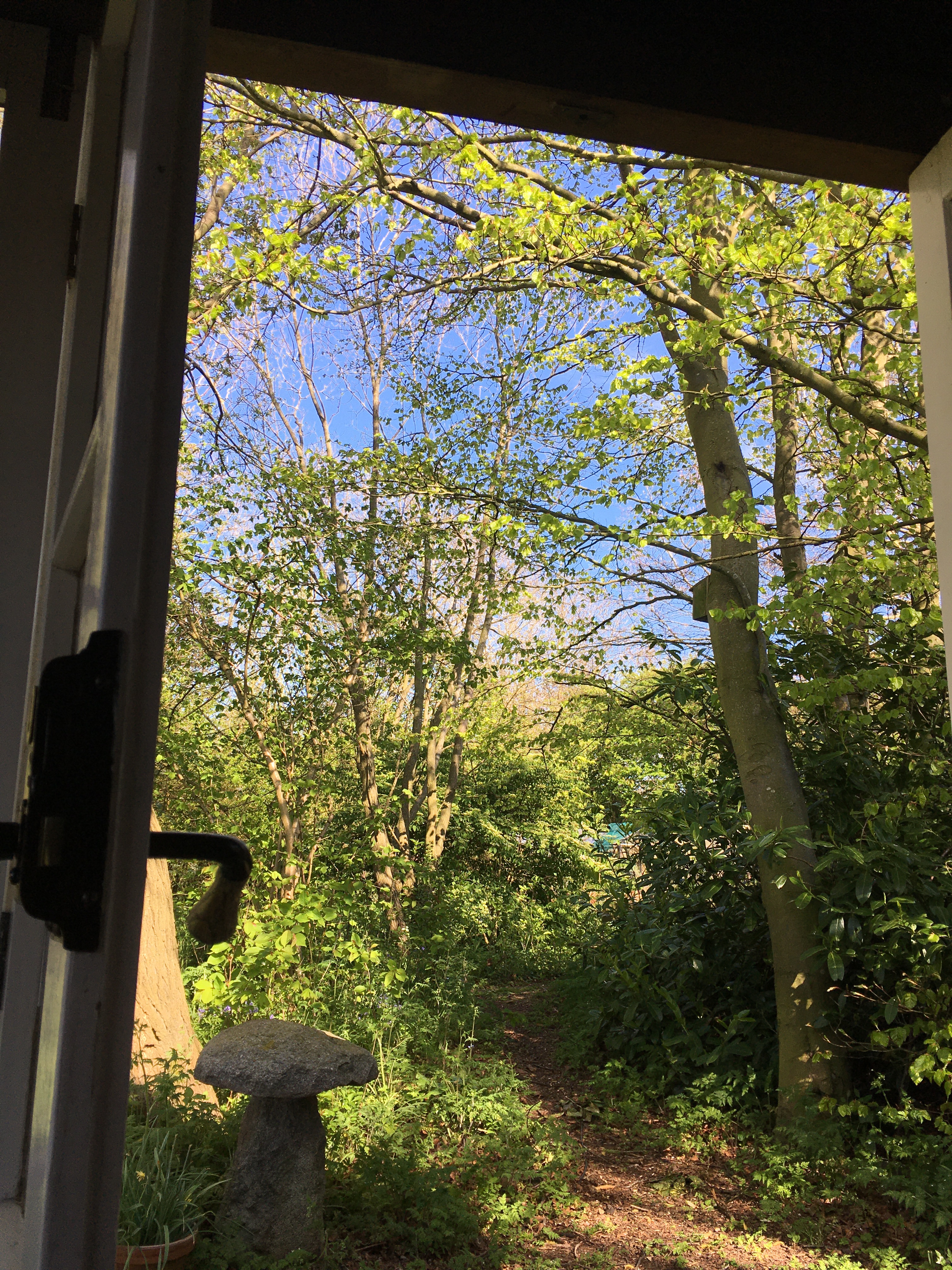
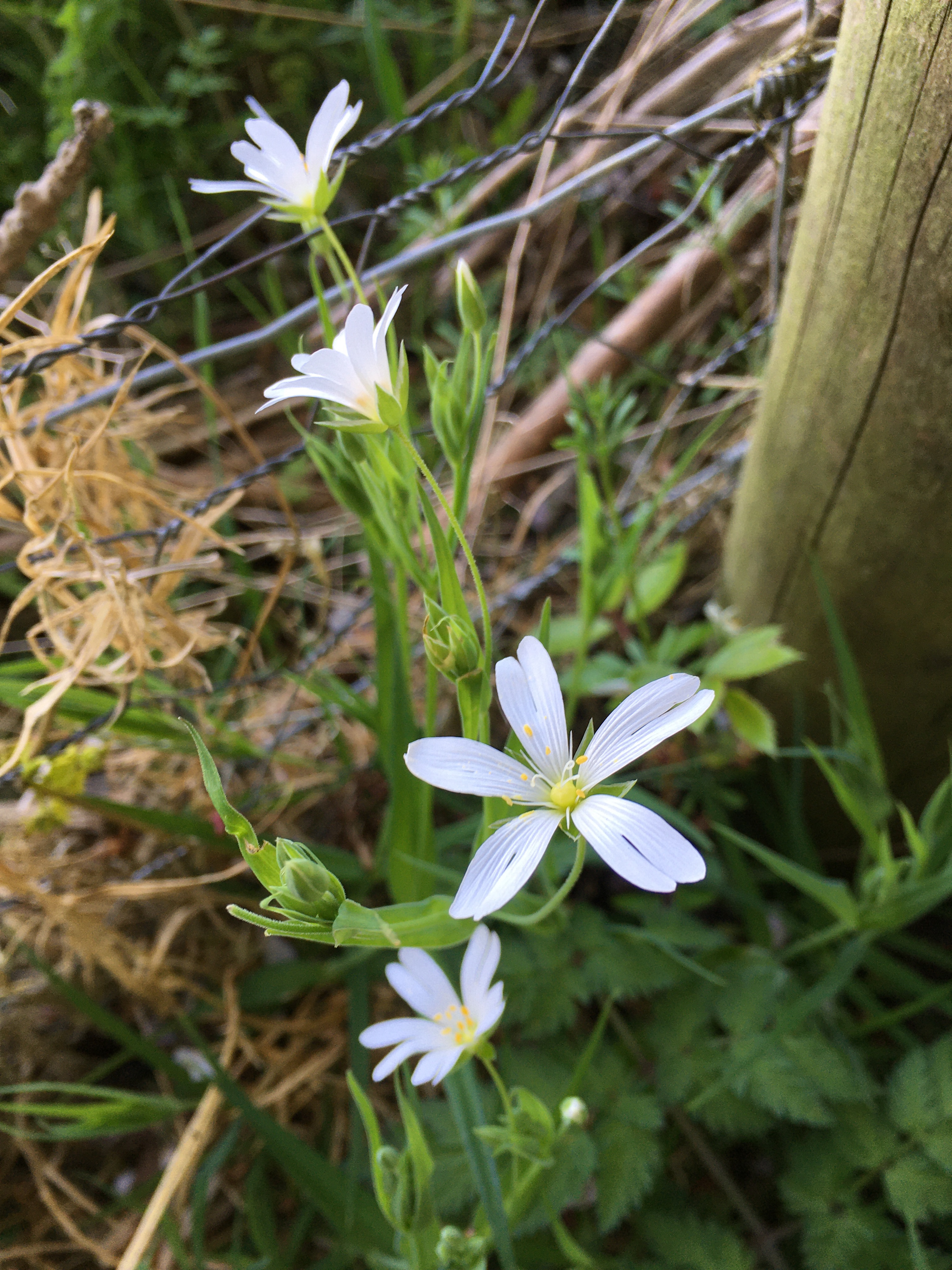
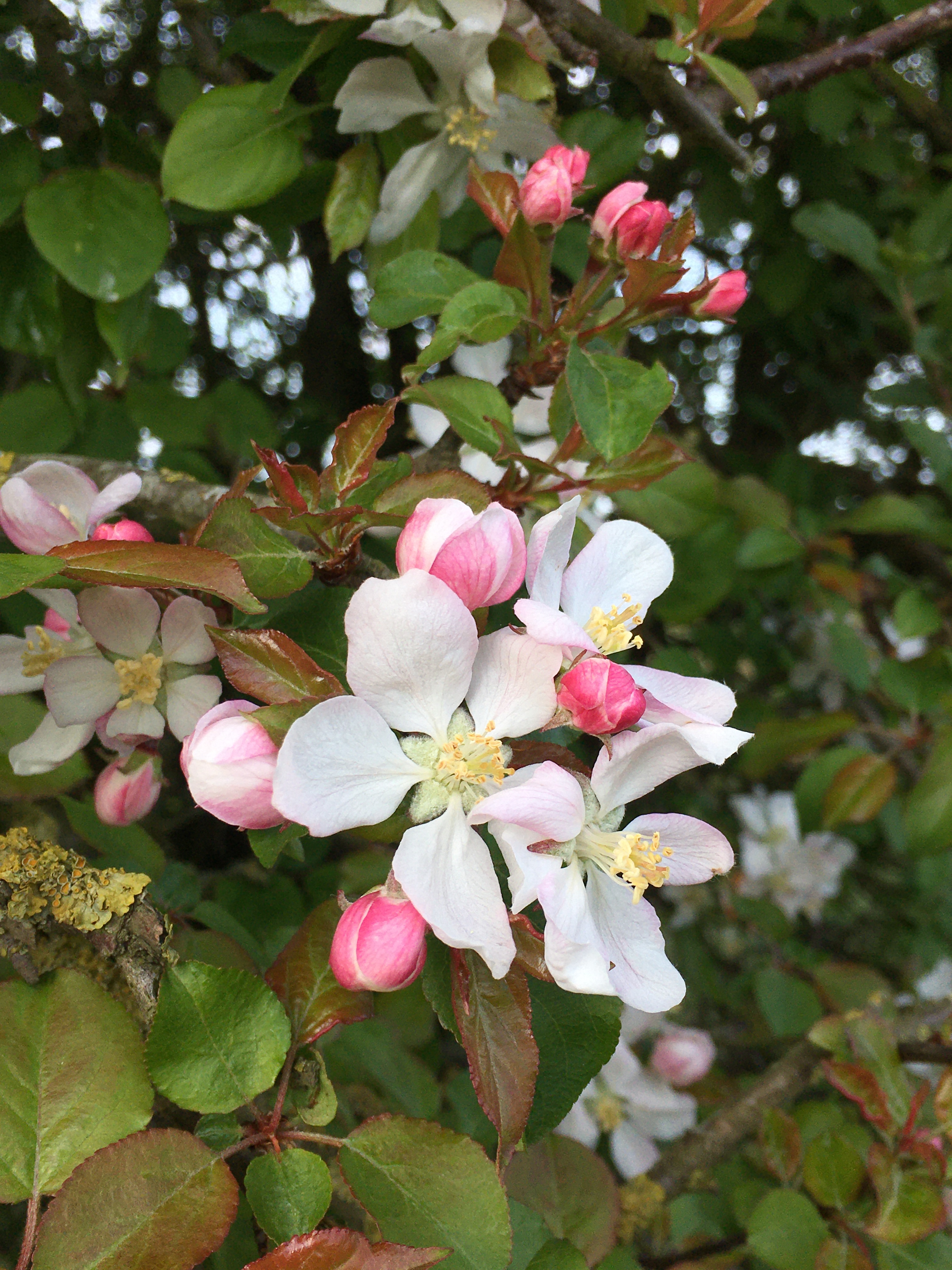
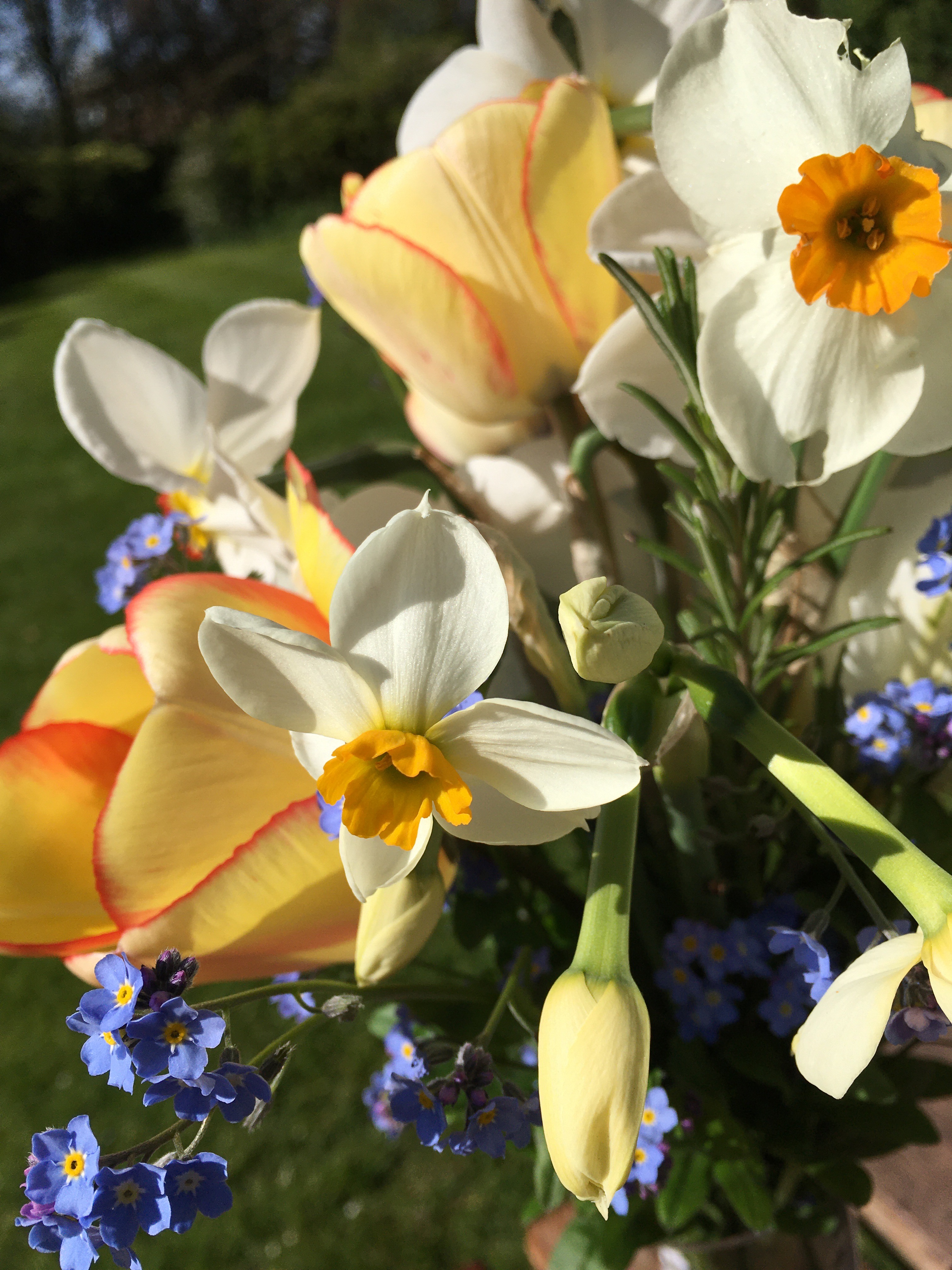
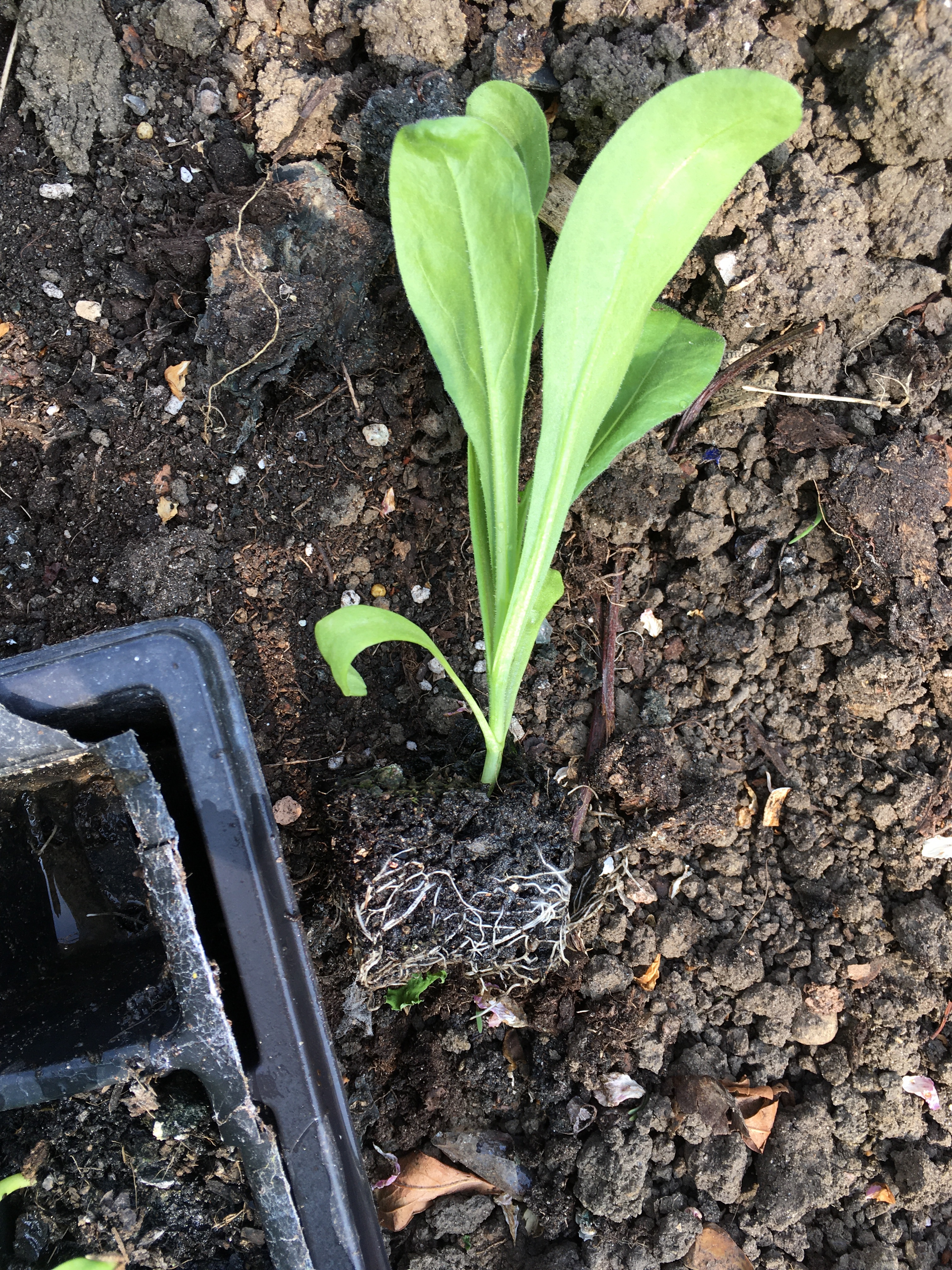
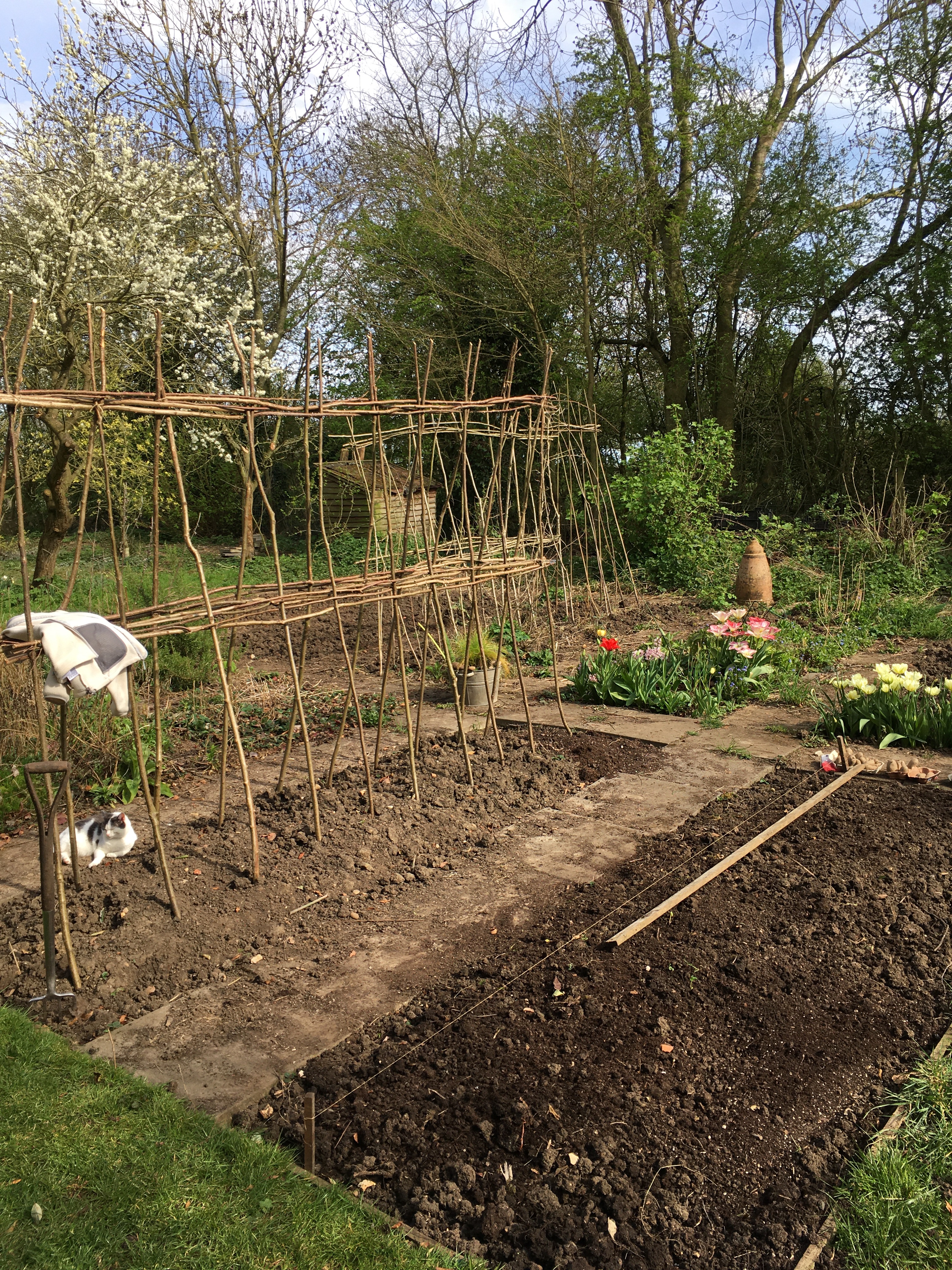
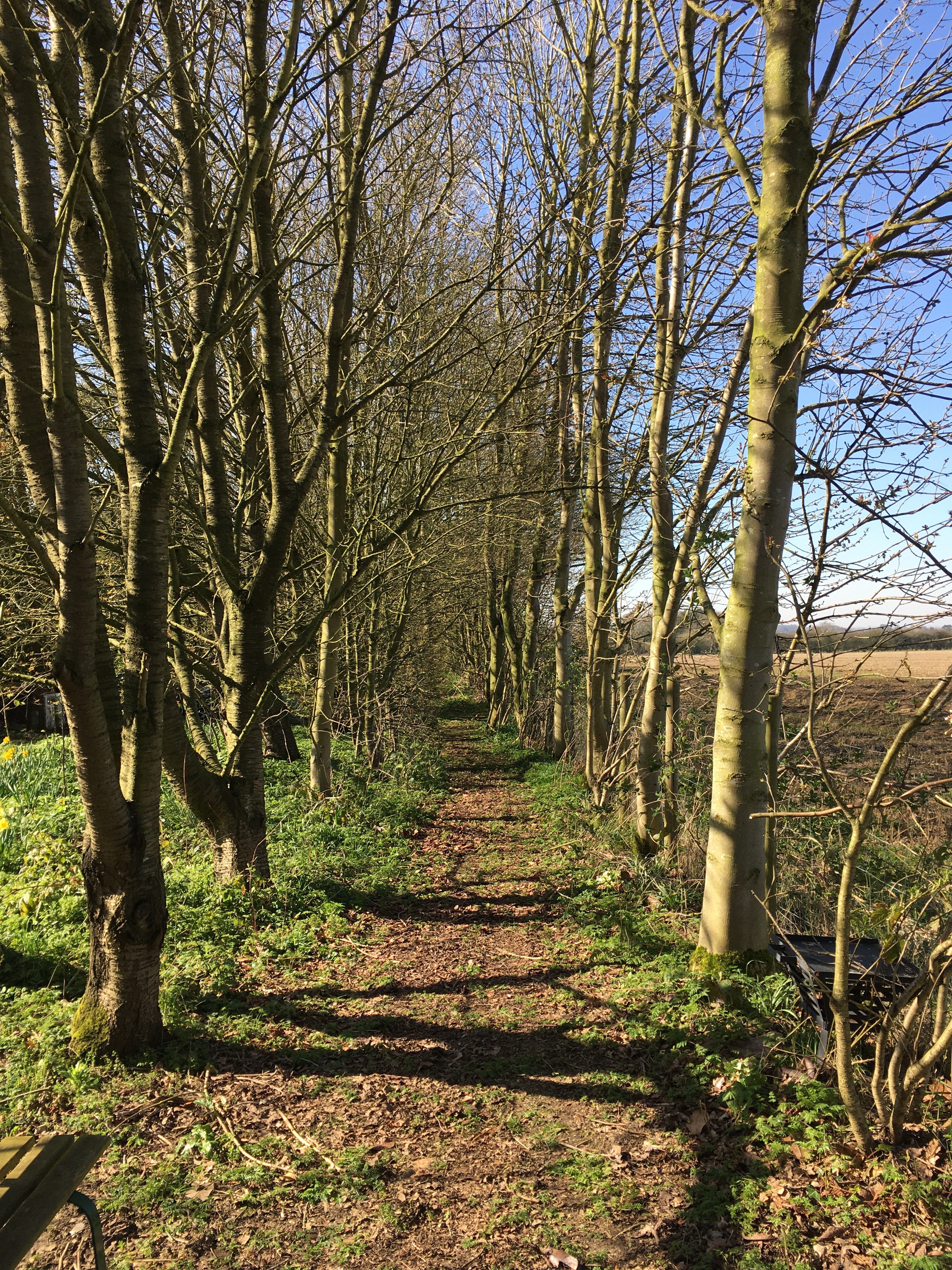
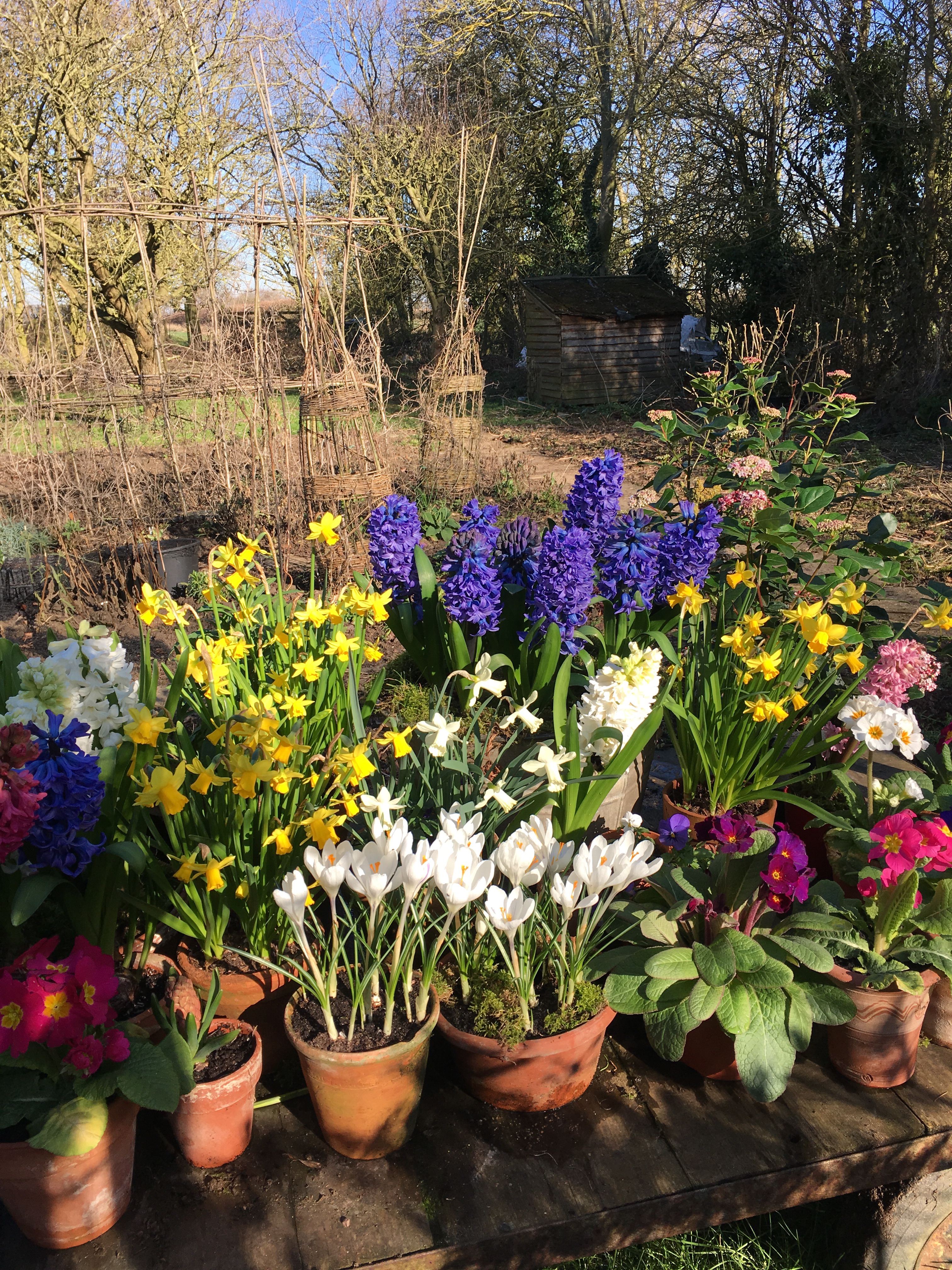
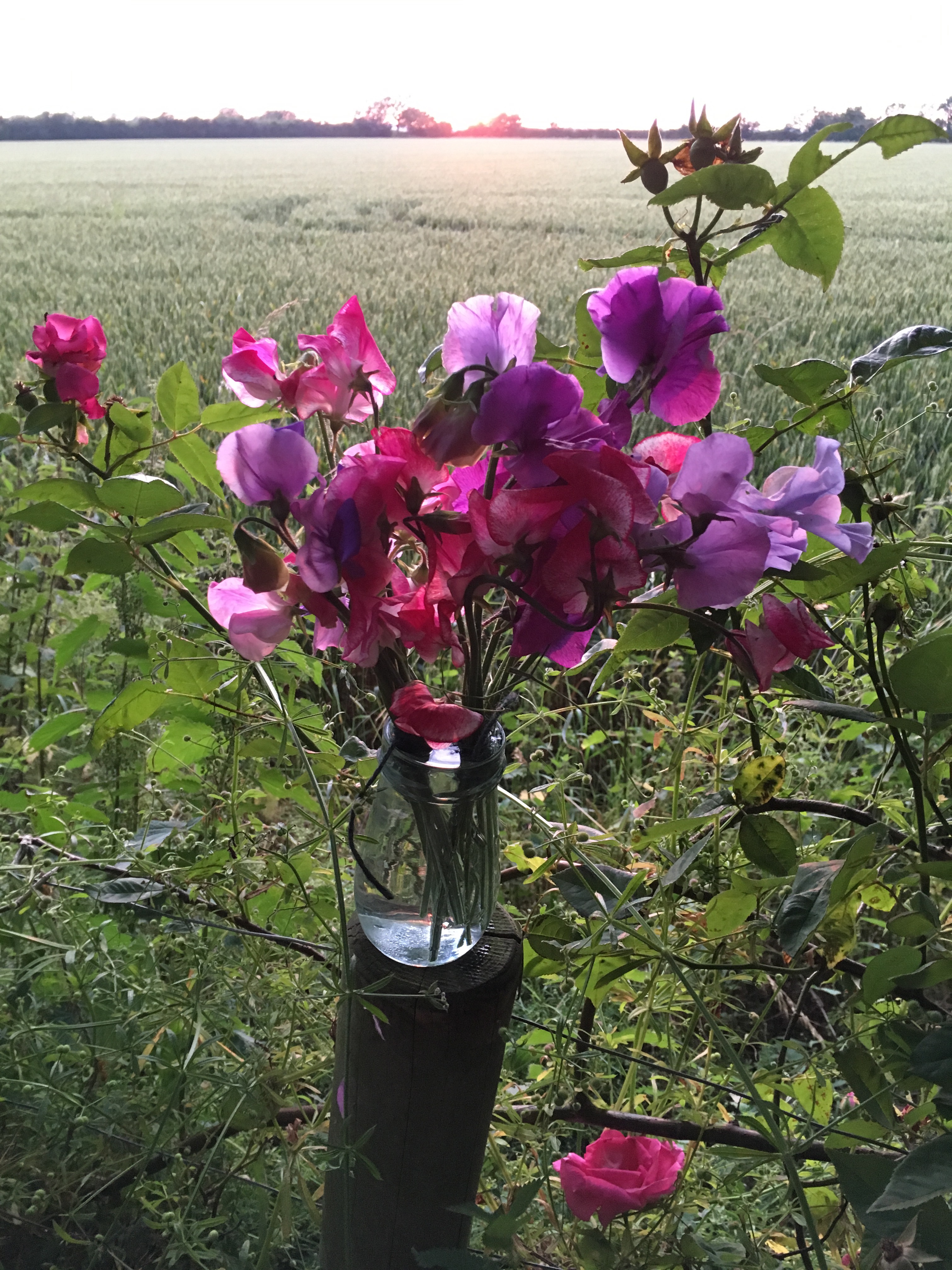
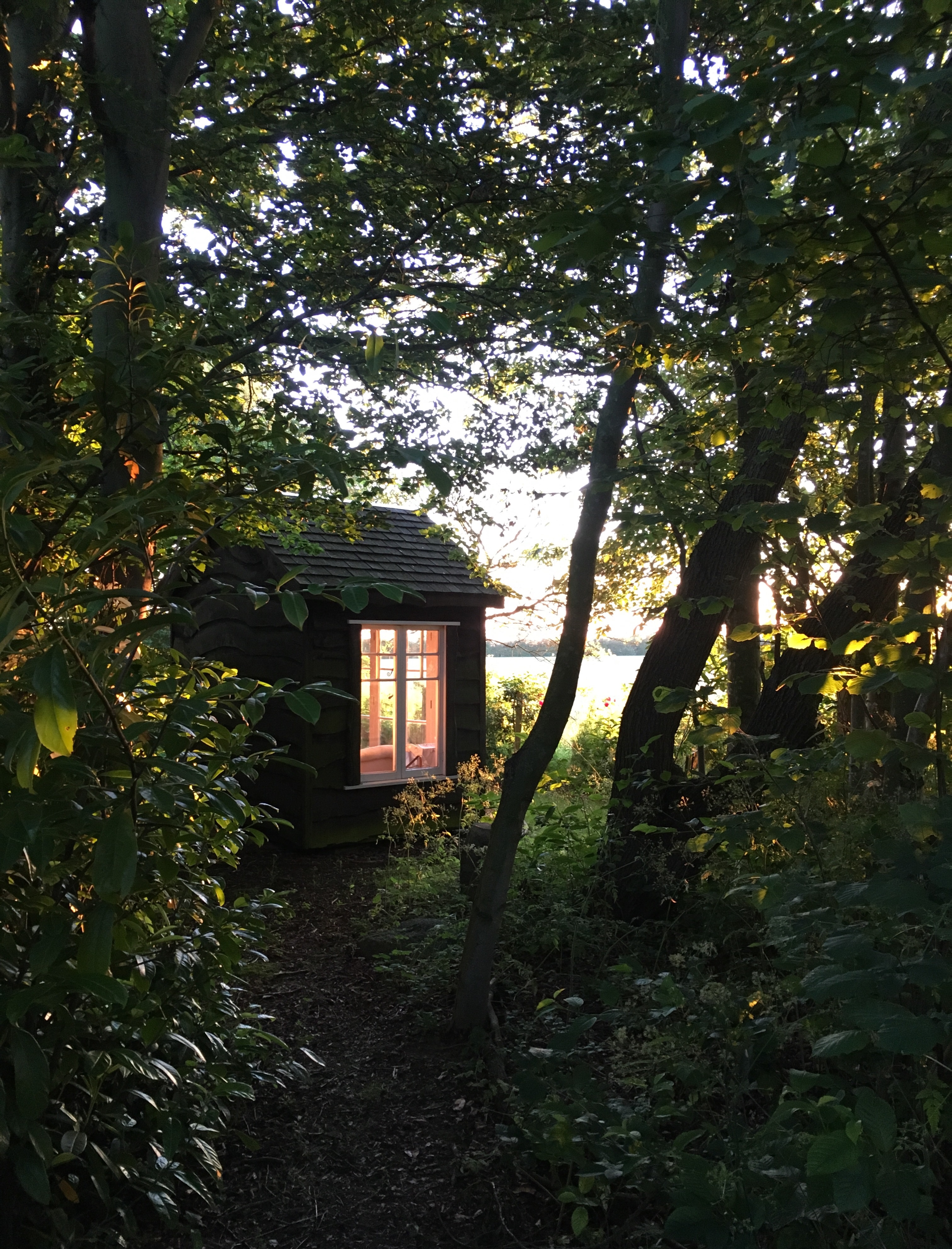
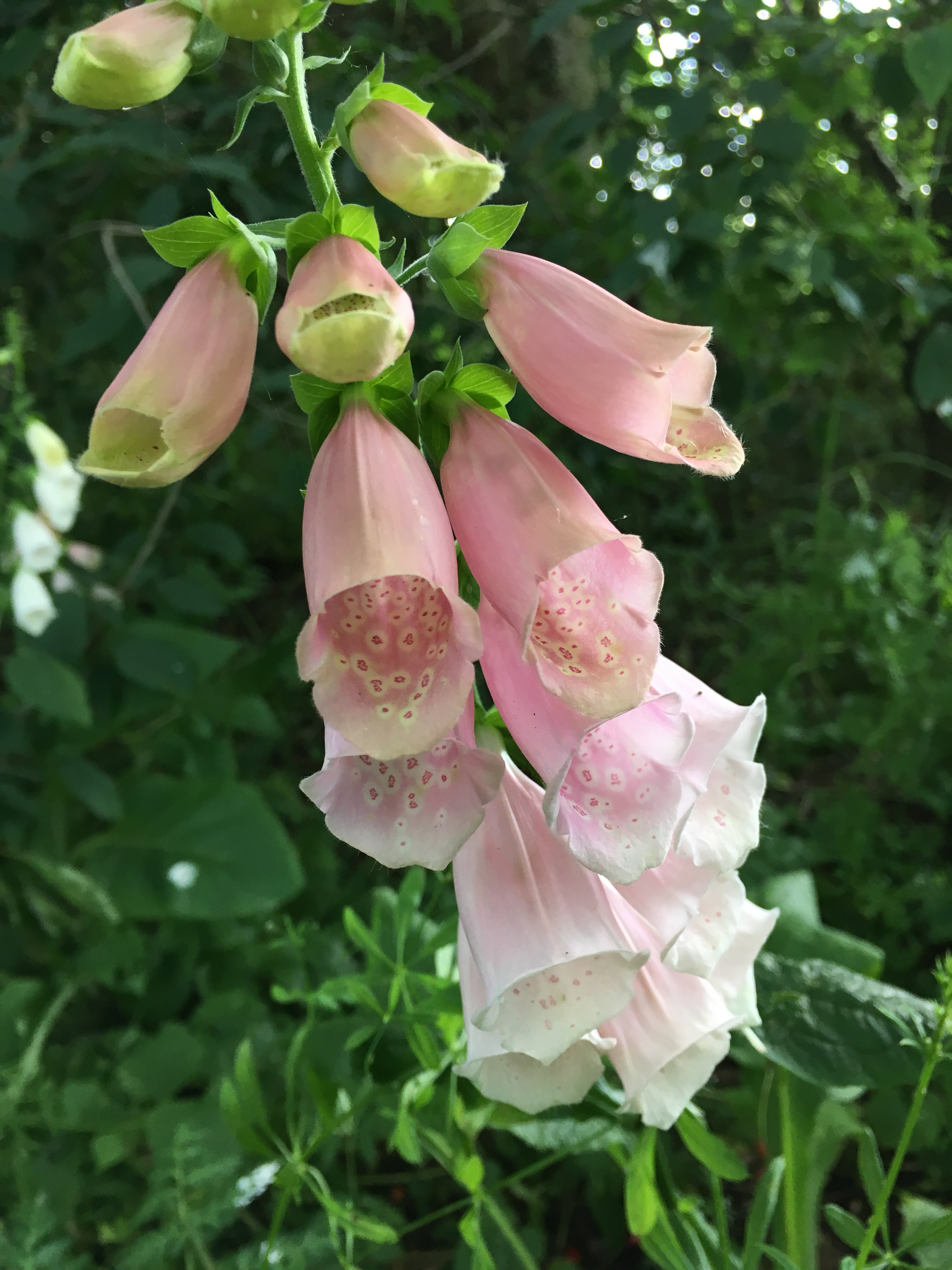
Meanwhile, some photos from my garden this weekend. Spring has been a long time coming, and now I can’t bear to be indoors. Every minute is spent in the garden!

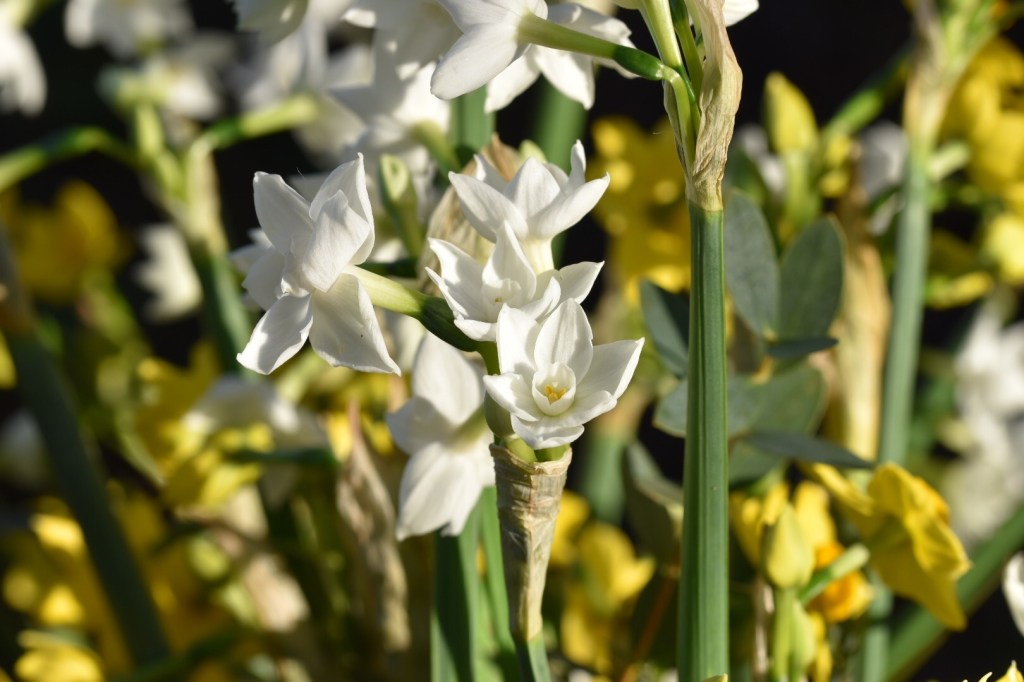
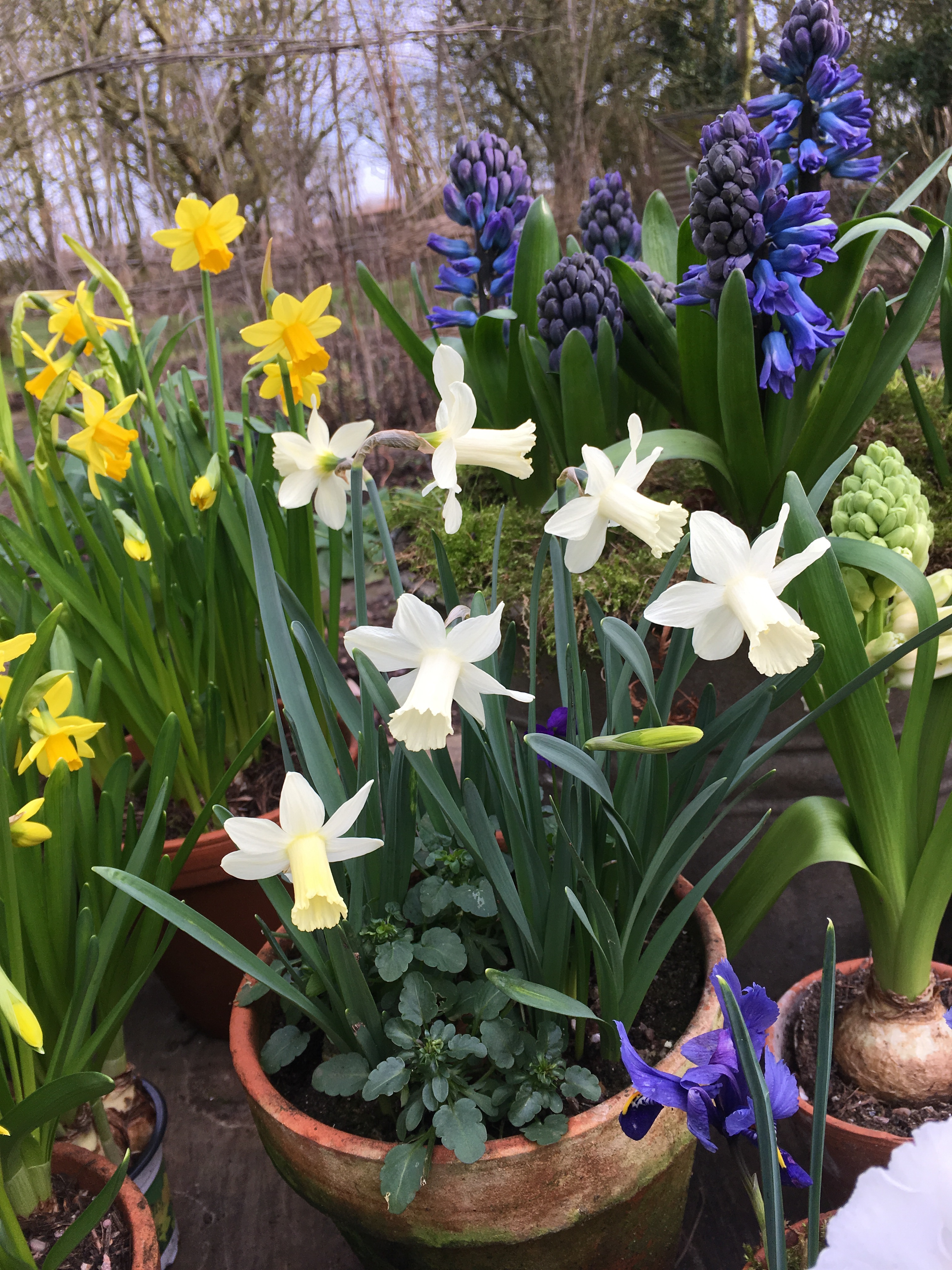
Potting shed window. Scented jonquils and forget me nots.
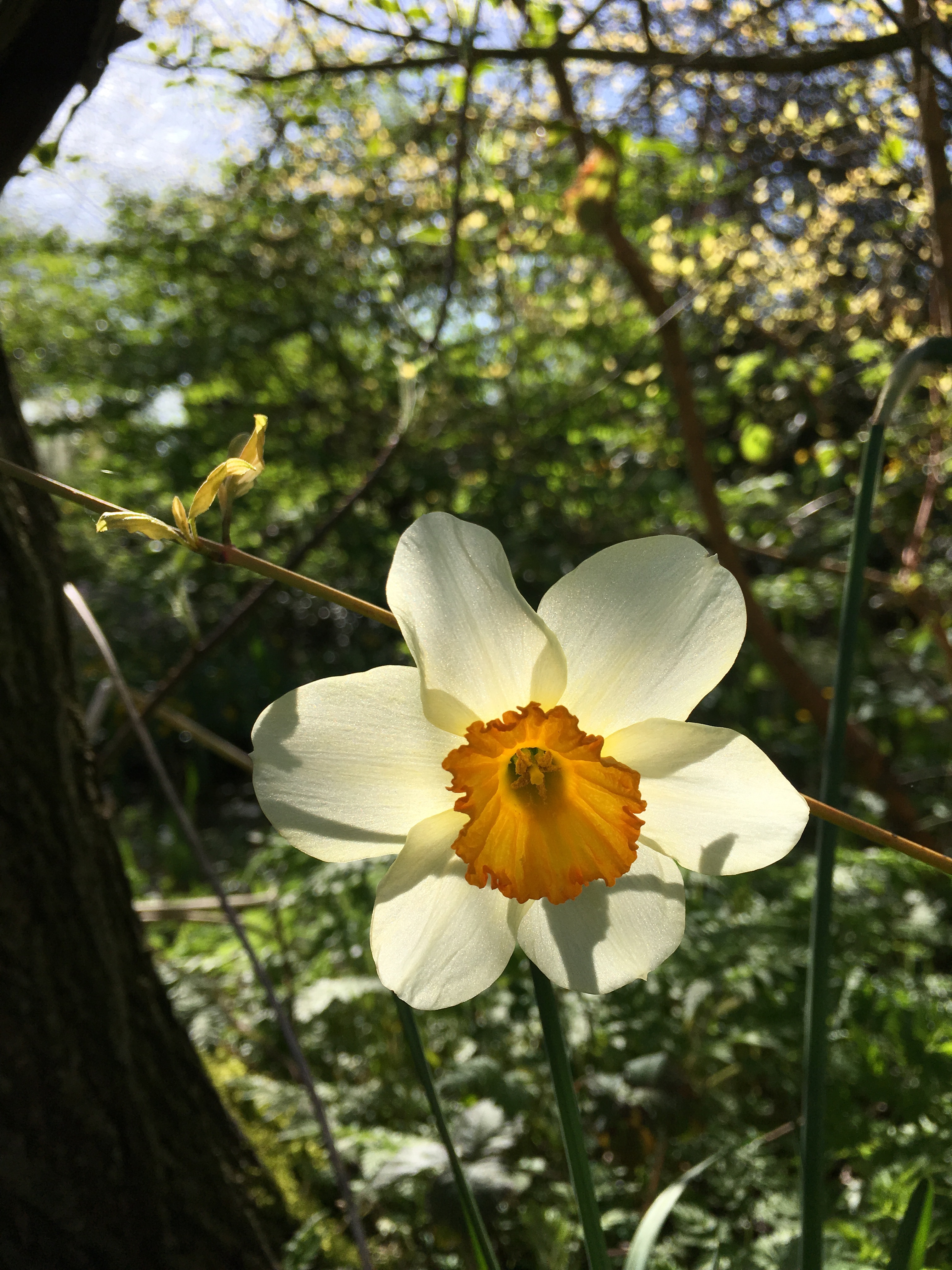
Pheasant’s Eye narcissi.
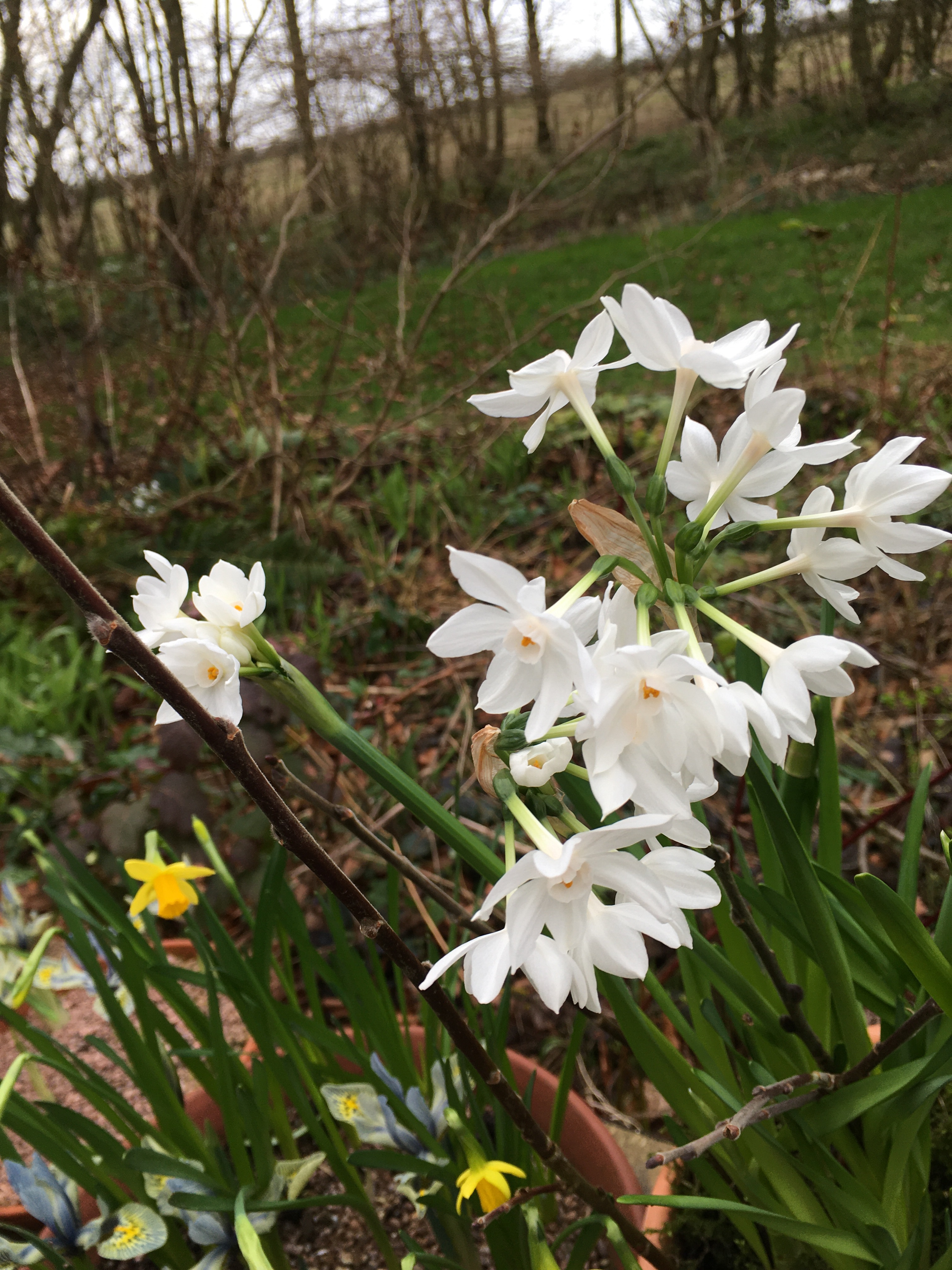
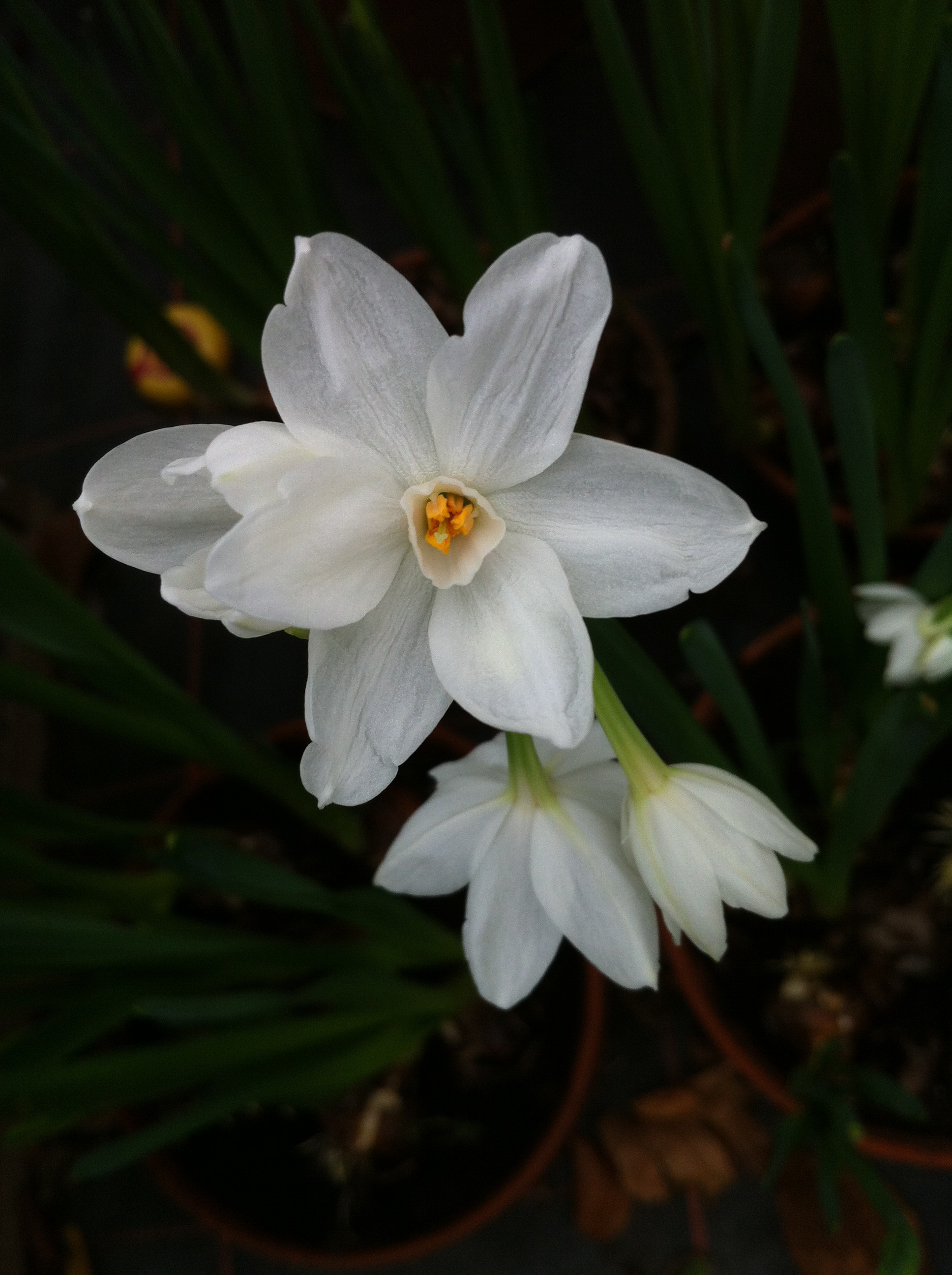
Possibly Narcissi Geranium. Wonderful scent. Reliable grower. Always comes back every year and naturalises in long grass.

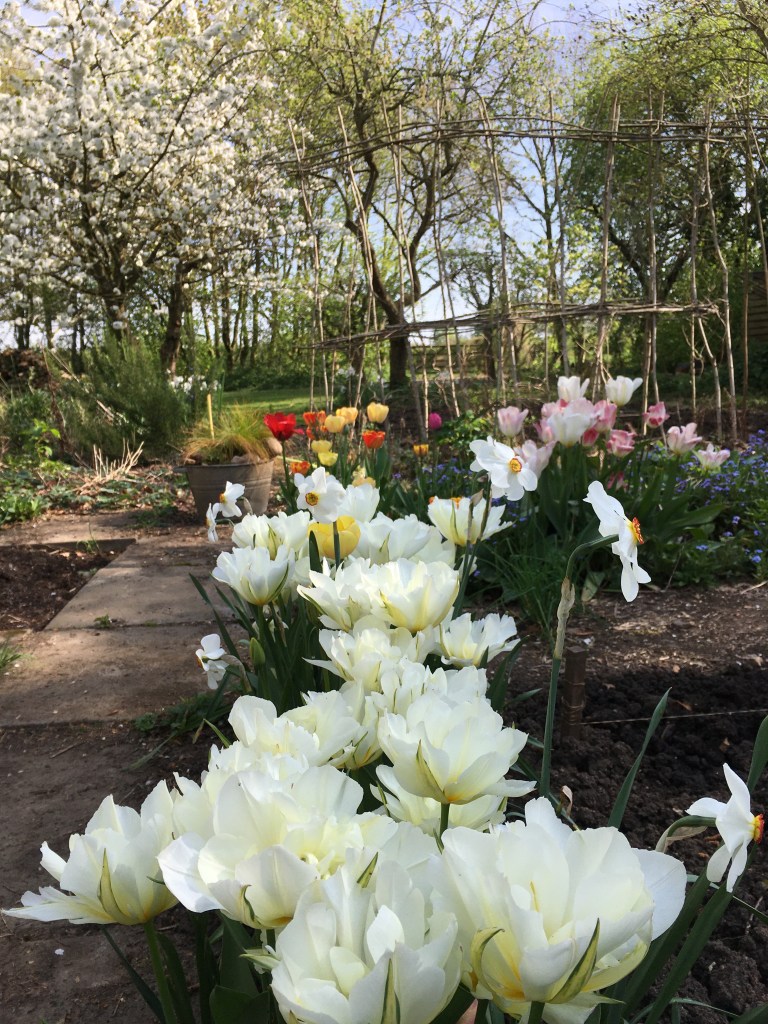
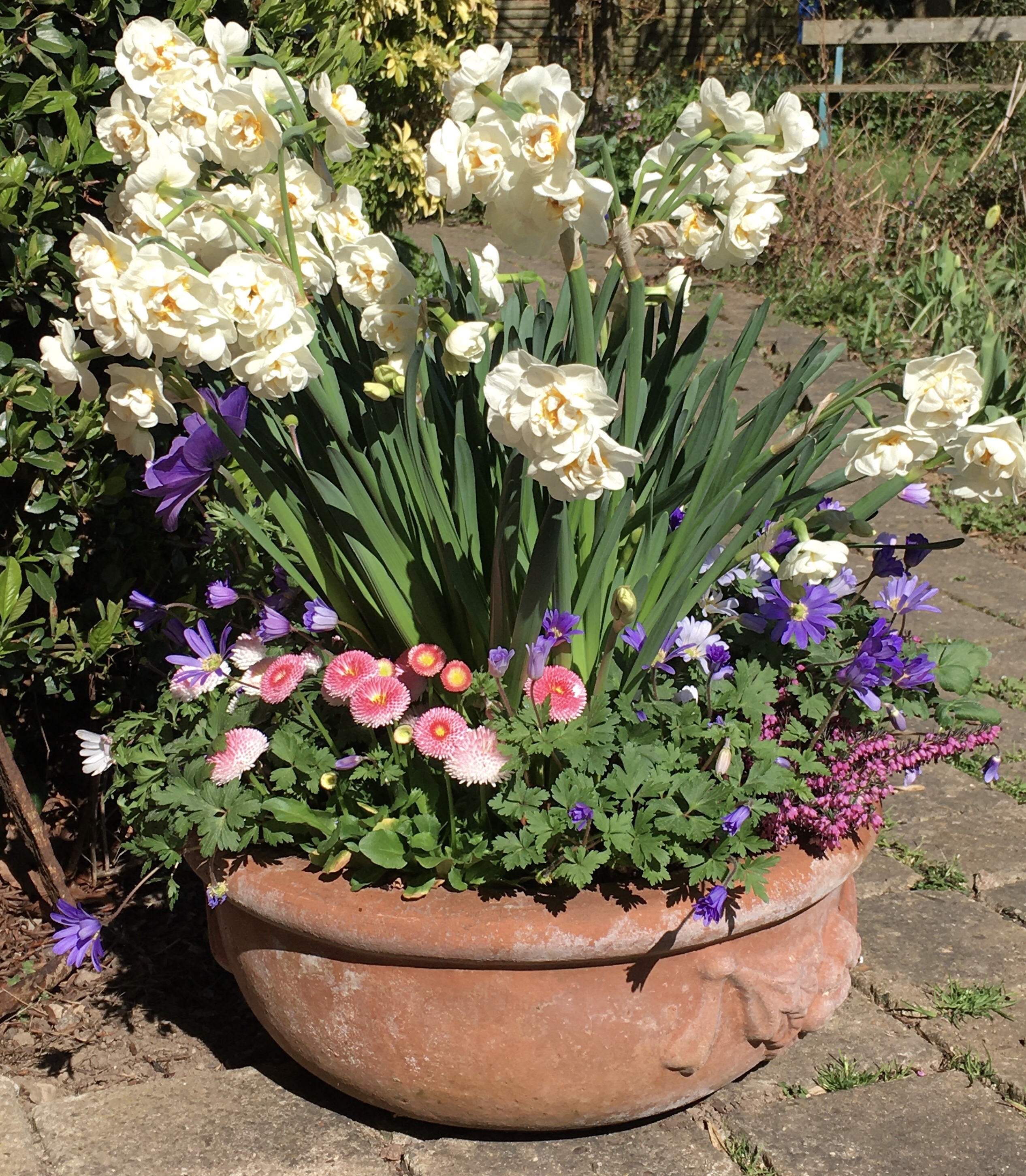
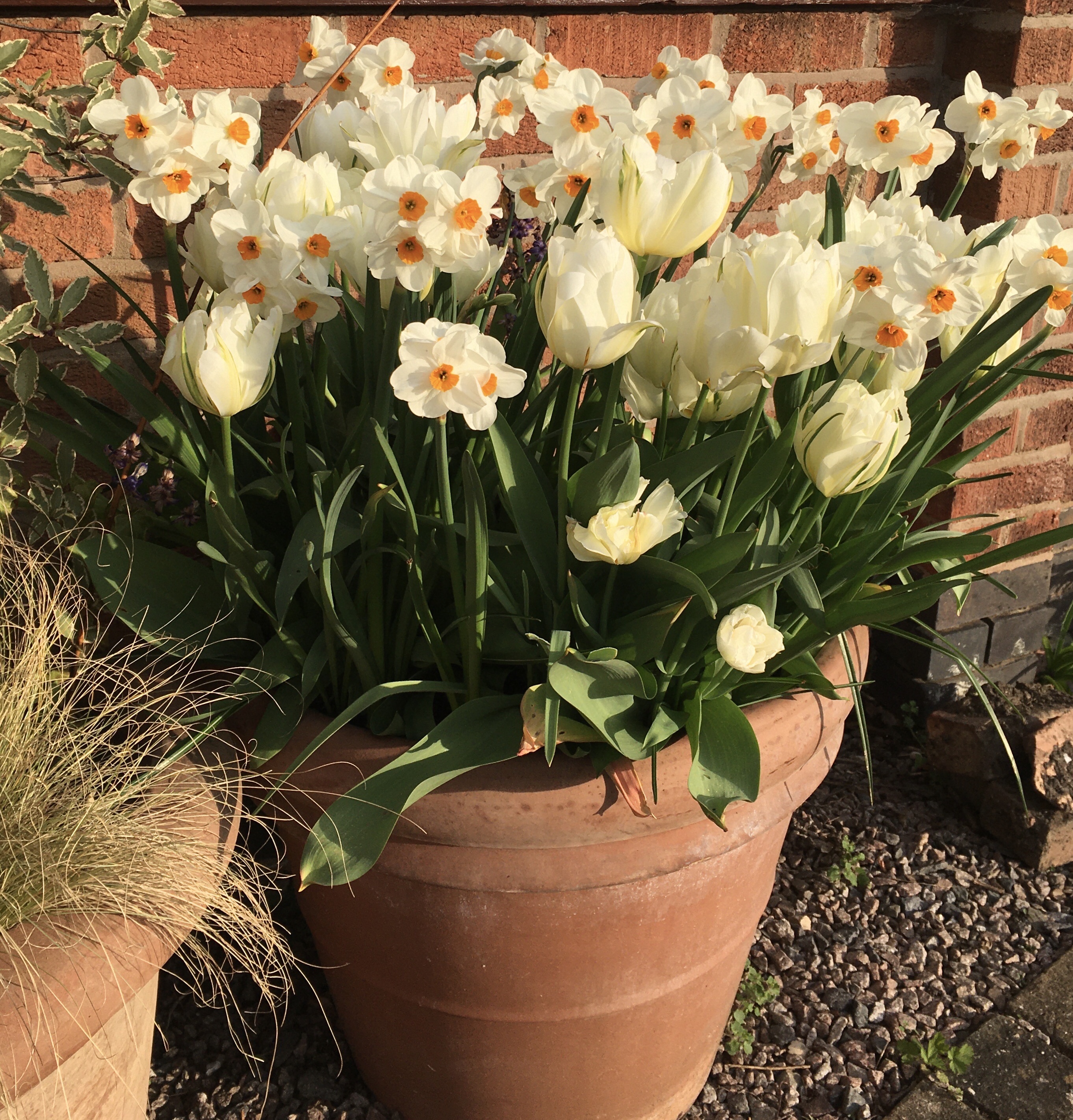
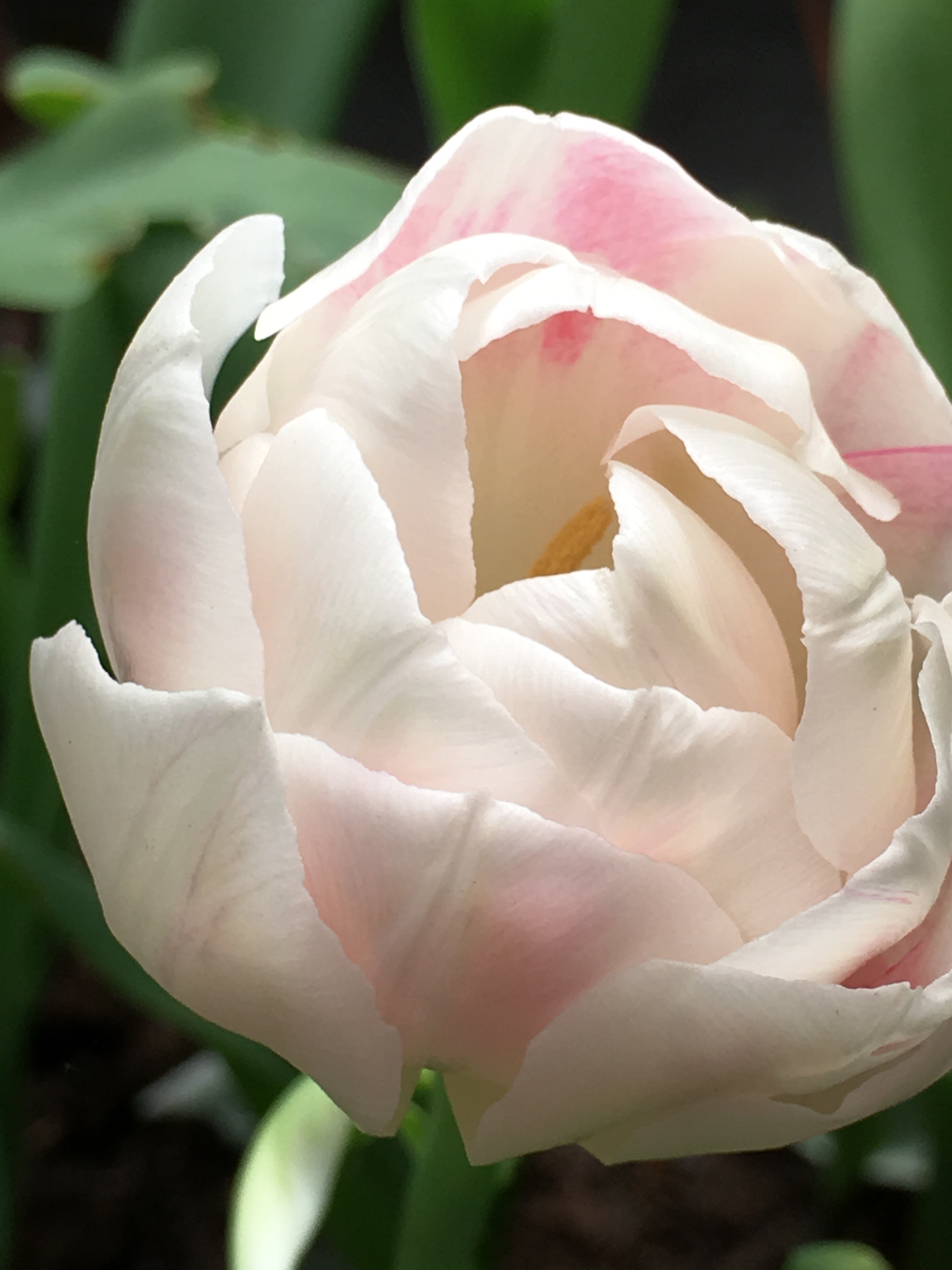
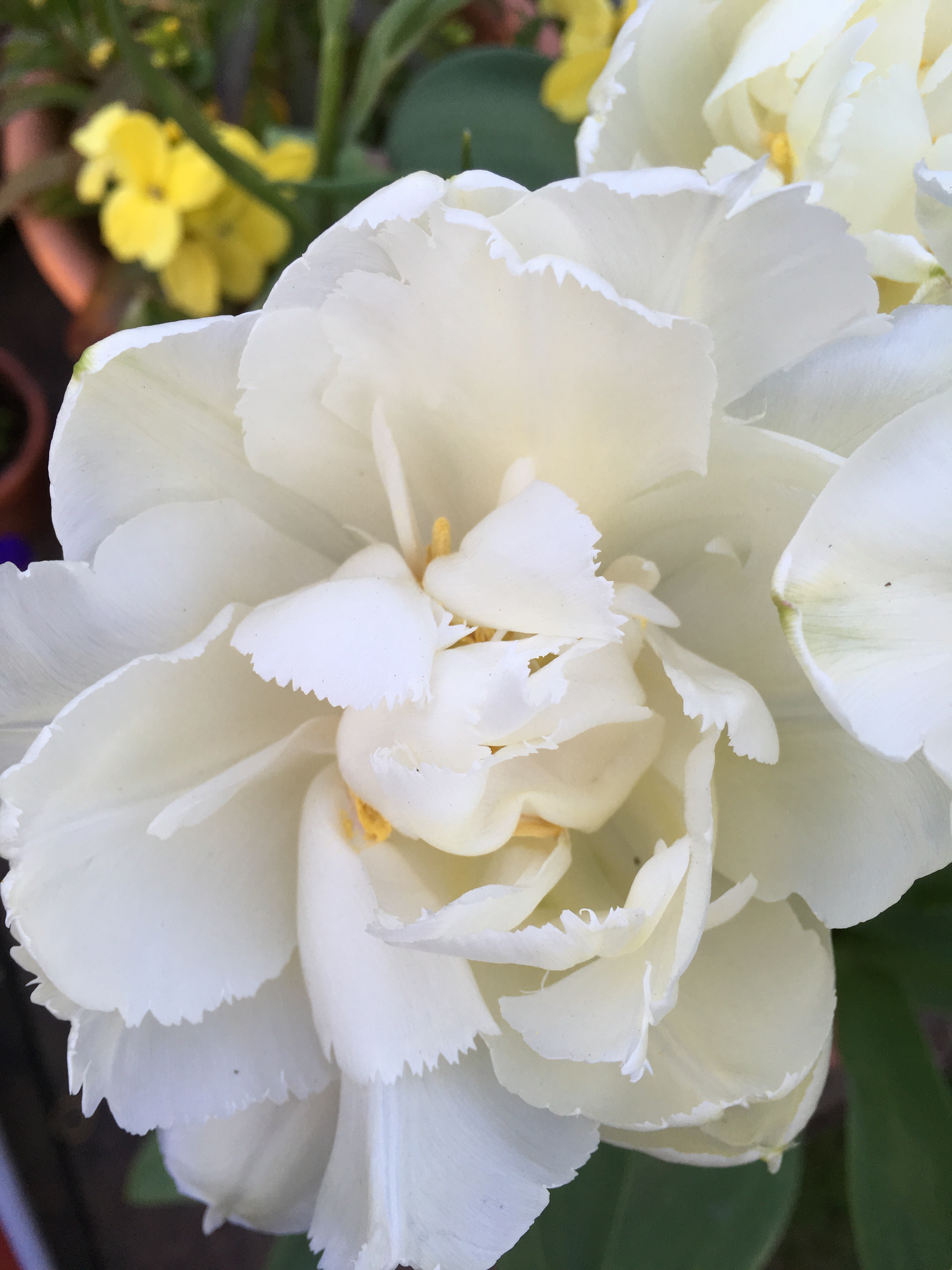
Tulip Mondial. A lovely double white with green markings. Long lasting flower. Stands up to the weather. Copes with the rain.

Some tiny species tulips growing in an Italian pot. Part of a mixed cut flower collection from Gee Tee Bulbs. Species bulbs will always come back the following year. Bulbs do not have to grow to such a huge size as the Dutch bulbs to re-flower the next year.

A hybrid ‘cowslip.’ A bee has passed pollen from my red primroses to a yellow wild cowslip- and the resulting seedling is this little beauty. Isn’t nature wonderful!

Thank you for reading my blog. Look back for more book reviews and giveaways next week. Have a great Sunday!

Winter cuttings on BBC Radio Leicester

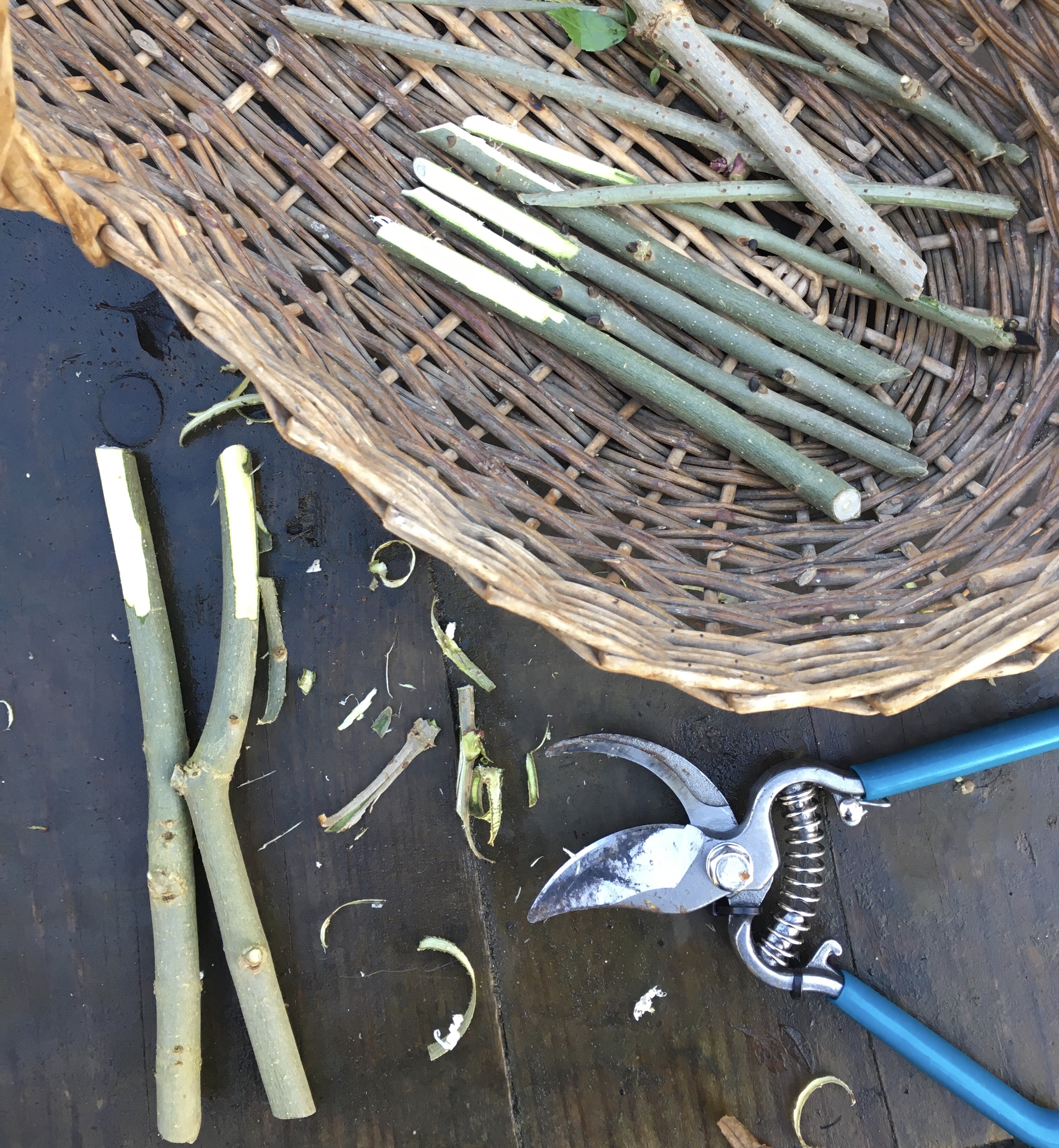
If you were listening in to BBC Radio Leicester on Tuesday, you’ll have heard me talking about taking winter, or hardwood cuttings. We were taking dogwood cuttings this time.

Here’s the link at 1.26 on the i player timeline.

https://www.bbc.co.uk/sounds/play/p0gv6761?partner=uk.co.bbc&origin=share-mobile

I use dogwood in almost all of my jam jar posies for my mum. It makes a lovely vertical accent, and helps to support the weaker flower stems. Here stems are supporting paperwhite narcissi and daffodils and tulips from the cut flower patch. These are Dutch Grown bulbs.

My favourite dogwood is the bright red Westonbirt which really glows all winter with sunlight behind it.

Here it is with Dahlia David Howard, persicaria, sedum and grasses. I love the red stems shining out and glowing in the jam jar water.

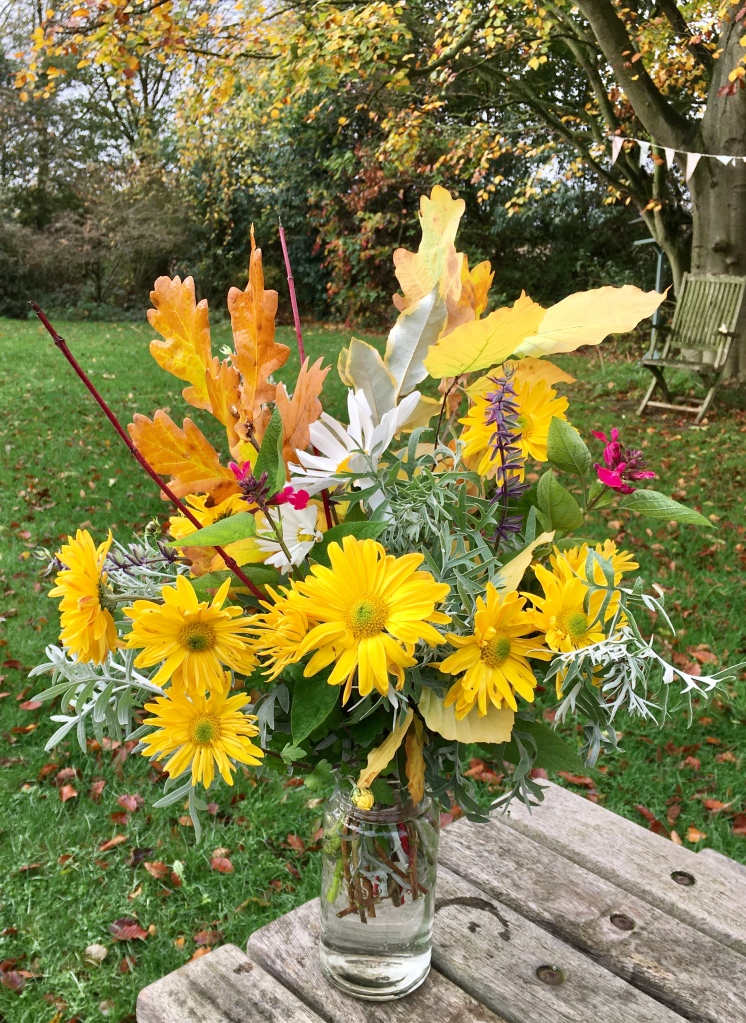
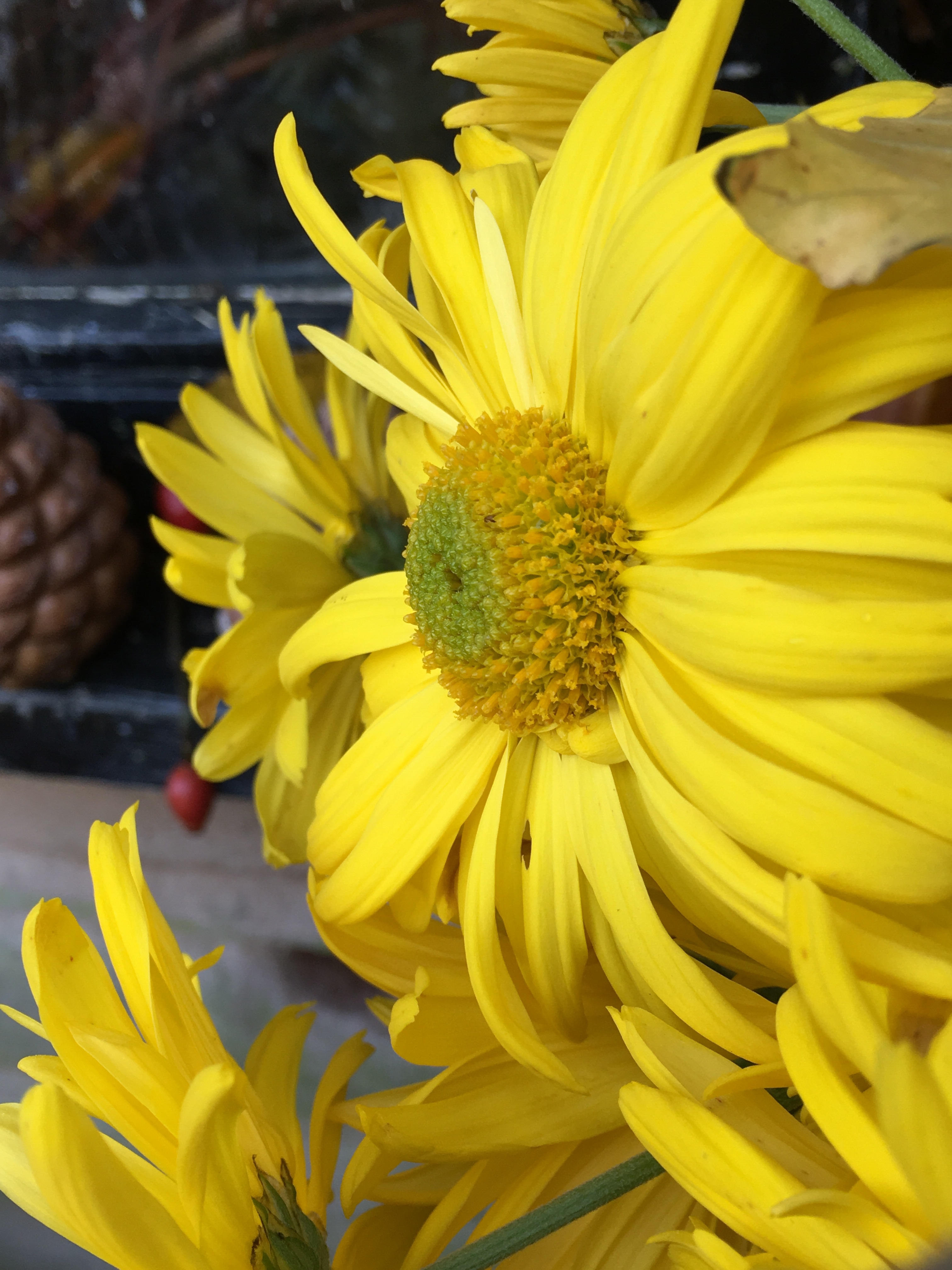
This time, the jam jar flowers are chrysanthemums and salvias set off with grey-leaved senecio viravira and golden oak leaves which dry and can be used all winter.

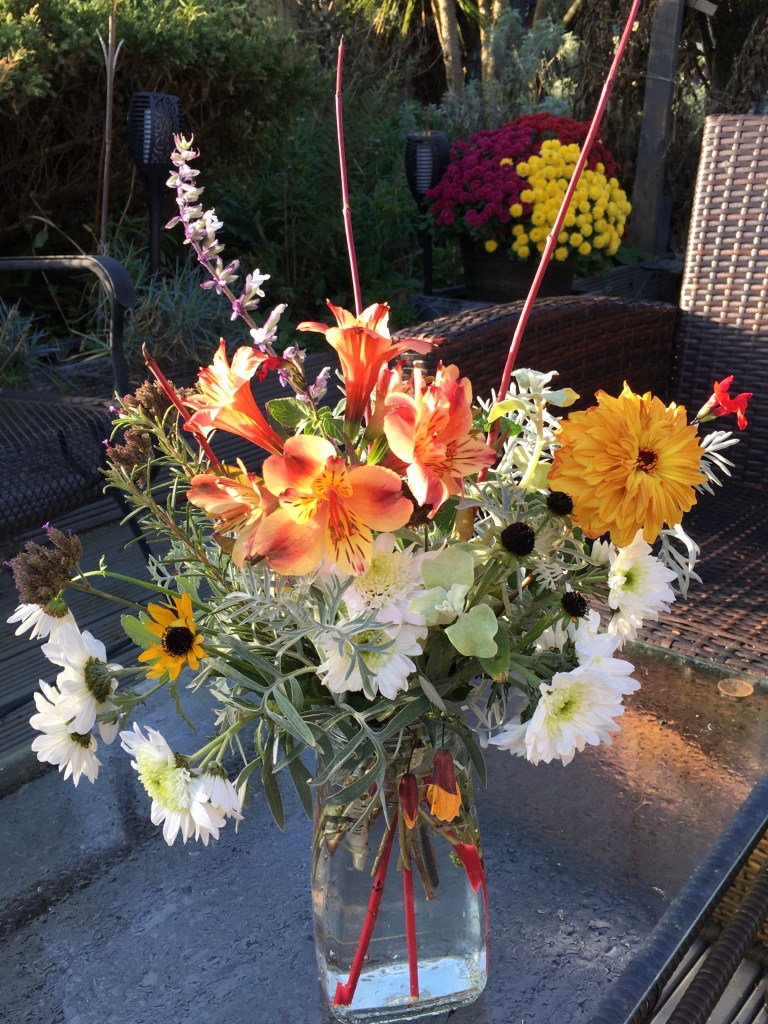
More dahlias including a red unnamed seedling, Alstromeria Indian Summer and cosmos Psyche White grown from Mr Fothergill’s seeds.

Salvia Phyllis’s Fancy, chrysanthemum Swan and the last of the dahlias and rudbeckia. And a tiny sprig of orange abutilon at the front.

Dogwoods have fabulous berries which look like pearls.

Continue reading

Views From the Garden

Capturing the very last flowers at the start of November. I can’t remember a time when there were so many plants still in flower. The Indian summer high temperatures and sunshine in October prolonged the flowering season. But alas, Storm Babet, and now Storm Ciaran have brought wind and rain. I ran out into the garden during a brief spell of calm and sunshine to capture the garden, and give me something cheerful to reflect on over the coming cold, dark months.

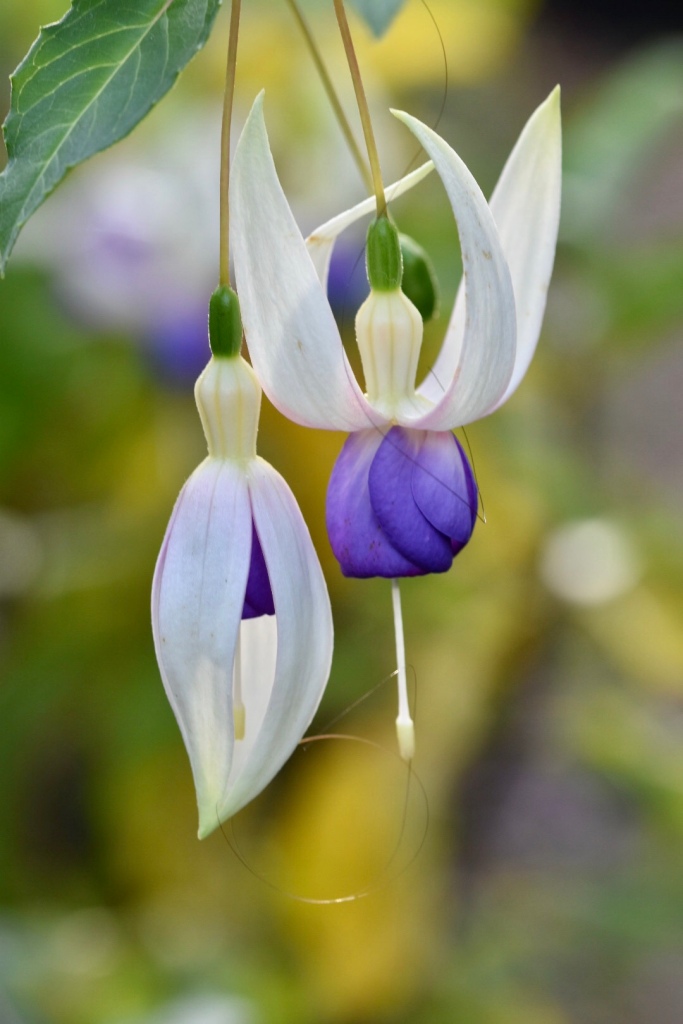
Fuchsia Deltas Sarah. A hardy variety purchased from Coton Manor in Northamptonshire. And can you spot the tiny spiders web which loops around the flower? This reliable fuchsia grows in a large blue glazed pot alongside a clematis sent to me from Raymond Evison’s Guernsey nursery. A very kind man, he sent me the gift to celebrate his 60 years breeding and developing gold-medal winning clematis plants. One day I’ll get to visit the nursery. Meanwhile, I’m watching the news and feeling very anxious about the impact of the latest storm on Jersey and Guernsey. The damage is heartbreaking.

Alongside the fuschia there’s a pot of salvias. This one is Phyllis’s Fancy, a favourite very late-flowering variety. It’s not hardy and will be whisked inside the greenhouse later this week. Meanwhile, it’s the perfect blue to match Deltas Sarah.

Growing in pots and in the ground, this lovely pink chrysanthemum puts on a reliable autumn display every year. It’s called Clara Curtis and came from my father-in-law Keith Gimson’s garden.

I like the small, button-flowered chrysanthemums. This one is Picasso, a rare and endangered variety. I bought it from the Hardy Plant Society where there’s a propagating programme to save it for the future. I have to take cuttings and return spare plants to other society members. Cuttings are very easy to take. I put the pots into a cold greenhouse or poly tunnel and shoots start to grow in January. Early cuttings are grown on in a propagator and potted up before being planted out in May.

Salvias really do join the party late! This one is Royal Bumble, purchased from Mary Thomas and Piecemeal Plants. Plant pots will be thrown in a hurry into the potting shed at the weekend. Plants are cut back and kept relatively dry and dormant all winter, being brought back out next spring.

This lovely blue salvia came from a collection sent mail order from Middleton’s specialist nursery. I wrote about Middletons here:

https://bramblegarden.com/2021/06/18/new-plants-on-trial-salvias-from-middleton-nurseries/

Salvia Hotlips often flowers until Christmas in a sheltered spot.

Dahlias are producing their very last flowers. I wrote about these yesterday in my ‘flowers for my mum’ post.

Petra’s Wedding made my top five list! I wouldn’t be without it!

Also in my top five is Dahlia Eveline.

A lovely surprise! The very last rose! Ghislaine de Feligonde is a rambling rose and grows on a shady pergola. It is totally disease and trouble free. I bought it as a cutting from a plant sale at Little Ponton Hall. A lovely reminder of happy day out with gardening friends. Highly recommended.

The last ornamental thistle. Echinops ritro Veitch’s Blue. Mr Fothergill’s sell 9cm potted plants. Birds, especially long-tail tits, love the seed heads.

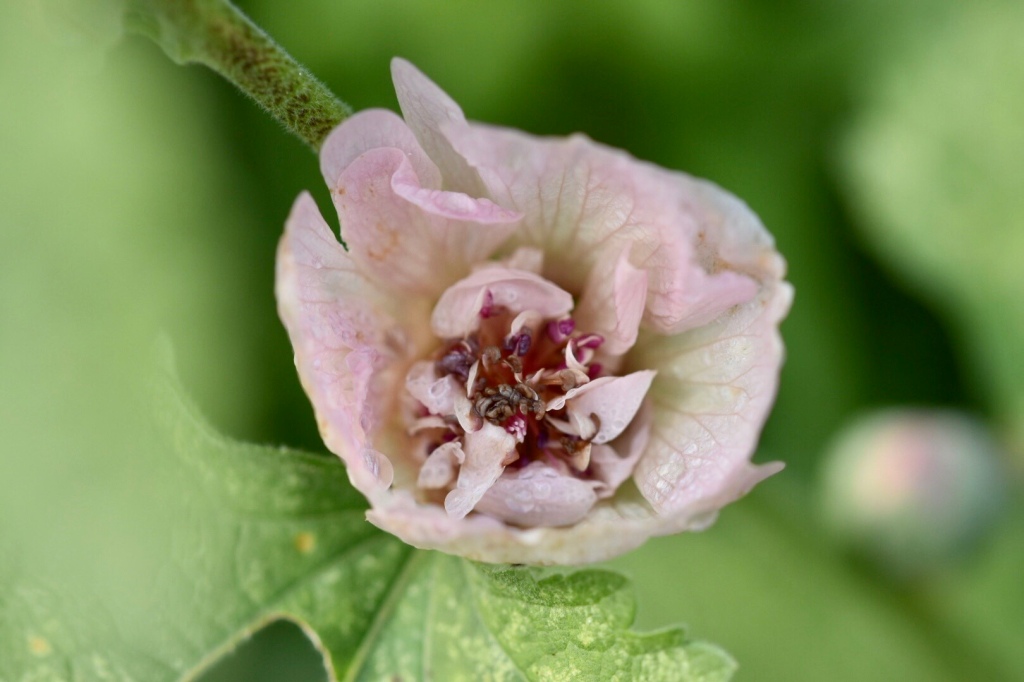
I’ve forgotten the name of this beautiful small-flowering hollyhock. It came from Mary Thomas. Hopefully Mary will read this blog and help me out with the identification!

A bedding fuchsia, unknown variety, growing in a pot under the office window. I’ll look in the morning to see if this flower has managed to open out, or if it’s been blow away down the lane!

I’ll also look tomorrow to see if the old oak tree still has any leaves! This was the view from the top gate at the orchard end of the garden- before the latest storm. The branches were thrashing about in the rain. It must be 150 years old. I very much hope it will survive another 150 years for other people to stand at our garden gate and gaze on its majesty. Thanks for reading my blog. Please leave a comment in the box below and sign up for updates via e mail. How has your garden fared during the storms? Do get in touch and let me know.

Sticky Pear and Date Pudding

This week’s recipe from Garden News Magazine. Each week I have a look around to see what I’ve grown in the garden, and I make something for the family. It’s not fancy food, just good old-fashioned, easy-to-make family favourites. I try not to use too many ingredients, and include common items anyone would often have in their kitchen cupboards. there’s nothing worse than buying an unusual ingredient for a recipe, and never using it again! If you have a go at making this, please let me know how you’ve got on and send a photo too. Happy cooking!

The printing never really does the food justice. It’s always prettier in real life.

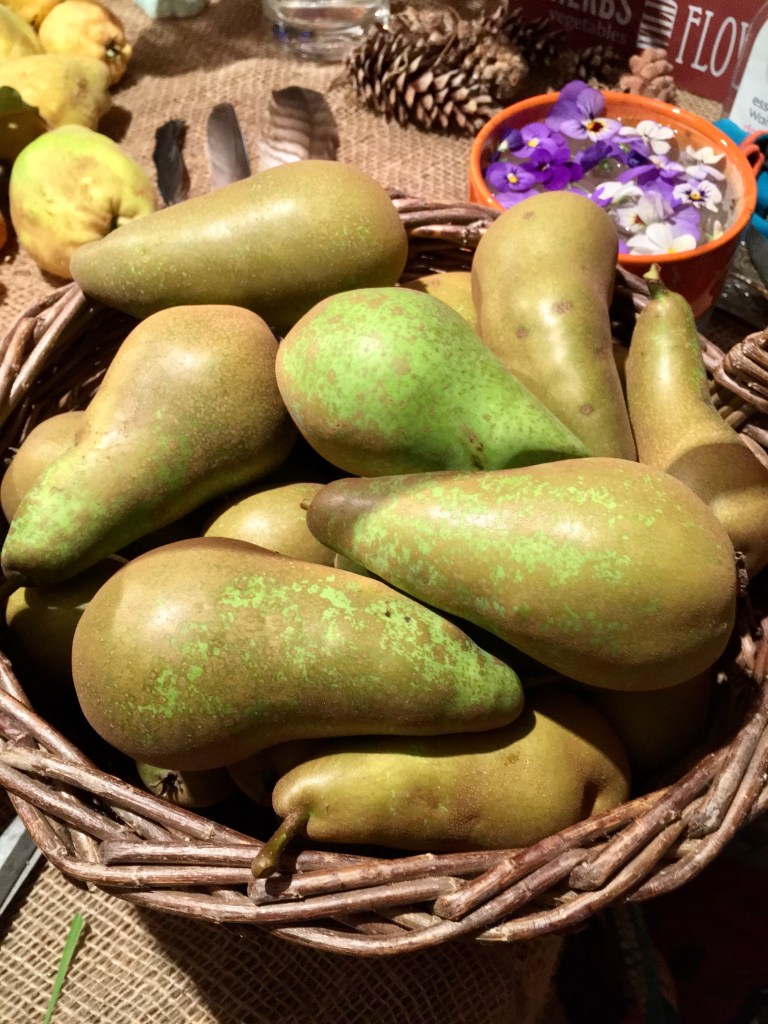
Potting shed pears

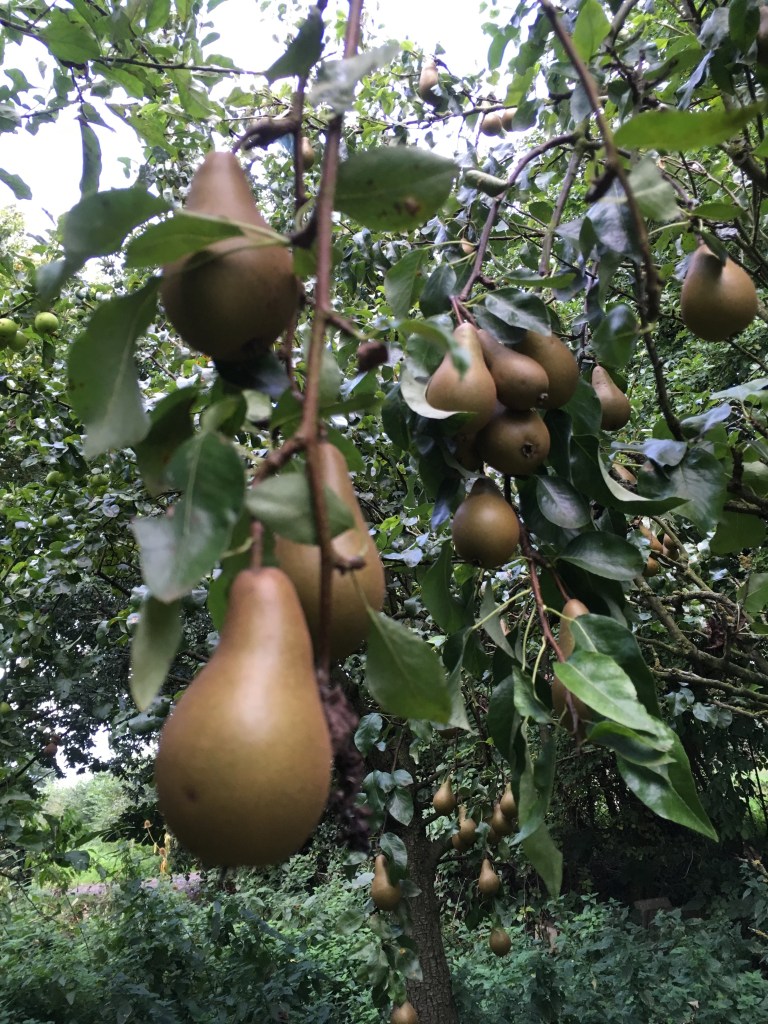
Conference pears growing in the orchard at home.

Fruit from the poly tunnel and garden.

Daphne and Daisy enjoying the windfall apples between storms and rain showers. They are safely tucked up in their house and covered run this afternoon. Torrential rain and high winds are shaking down the last of the apples.

Thank you for reading my blog. Please leave a comment in the box below (comment link is alongside the title, if you are reading on a phone). Please also sign up for updates and e mail alerts for new blogs.

Photos From My Garden- Remembering Summer….

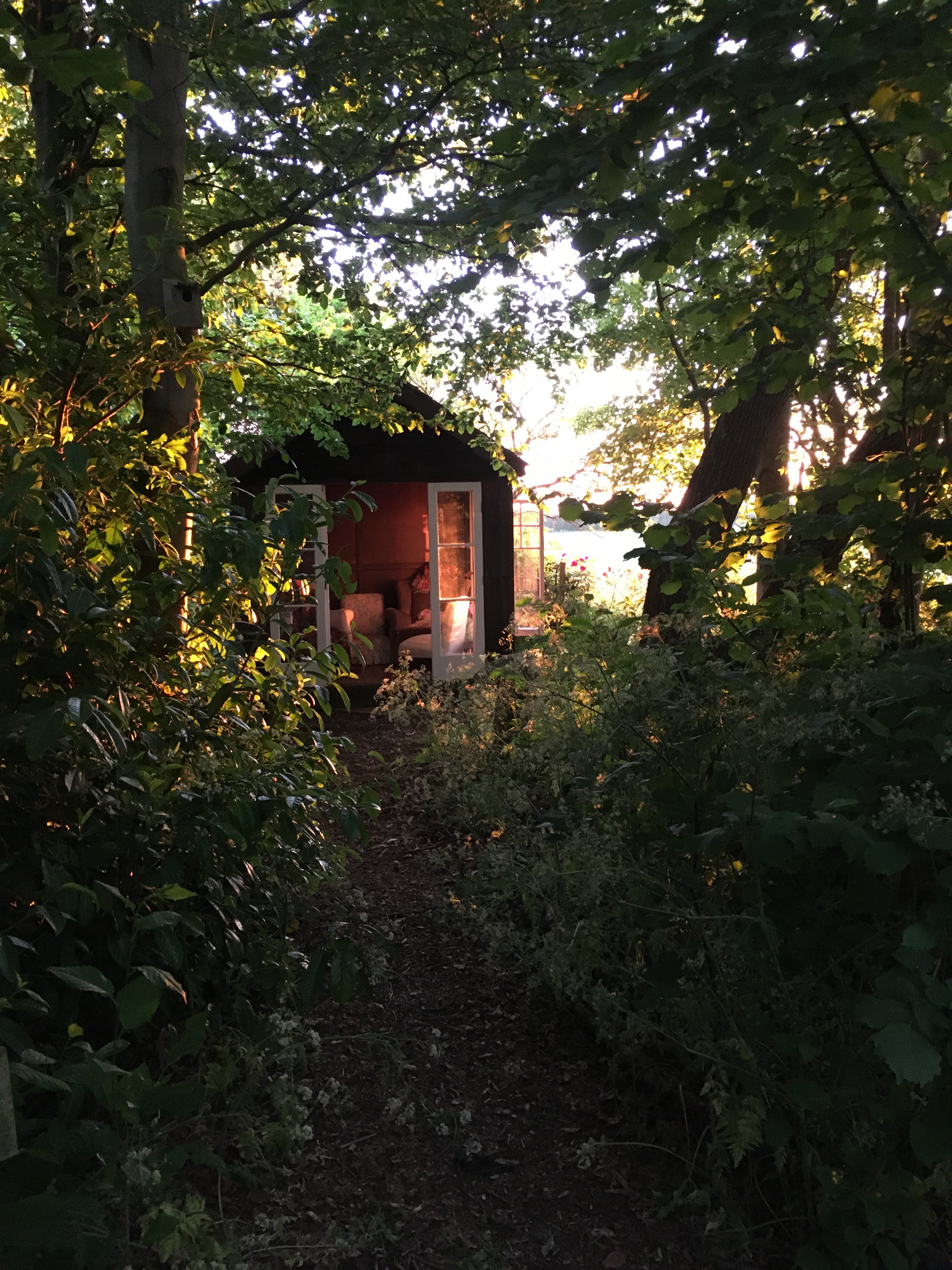
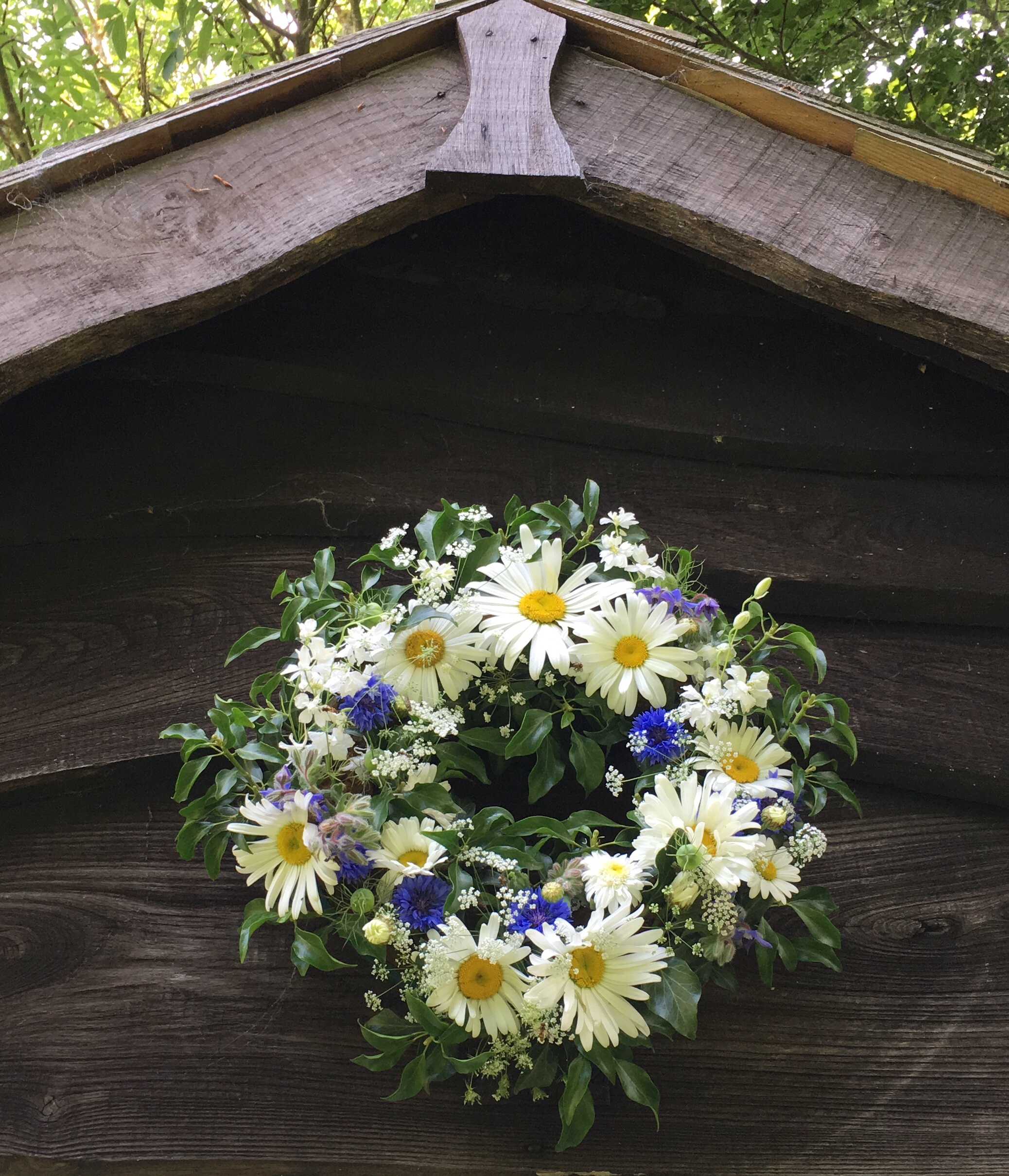
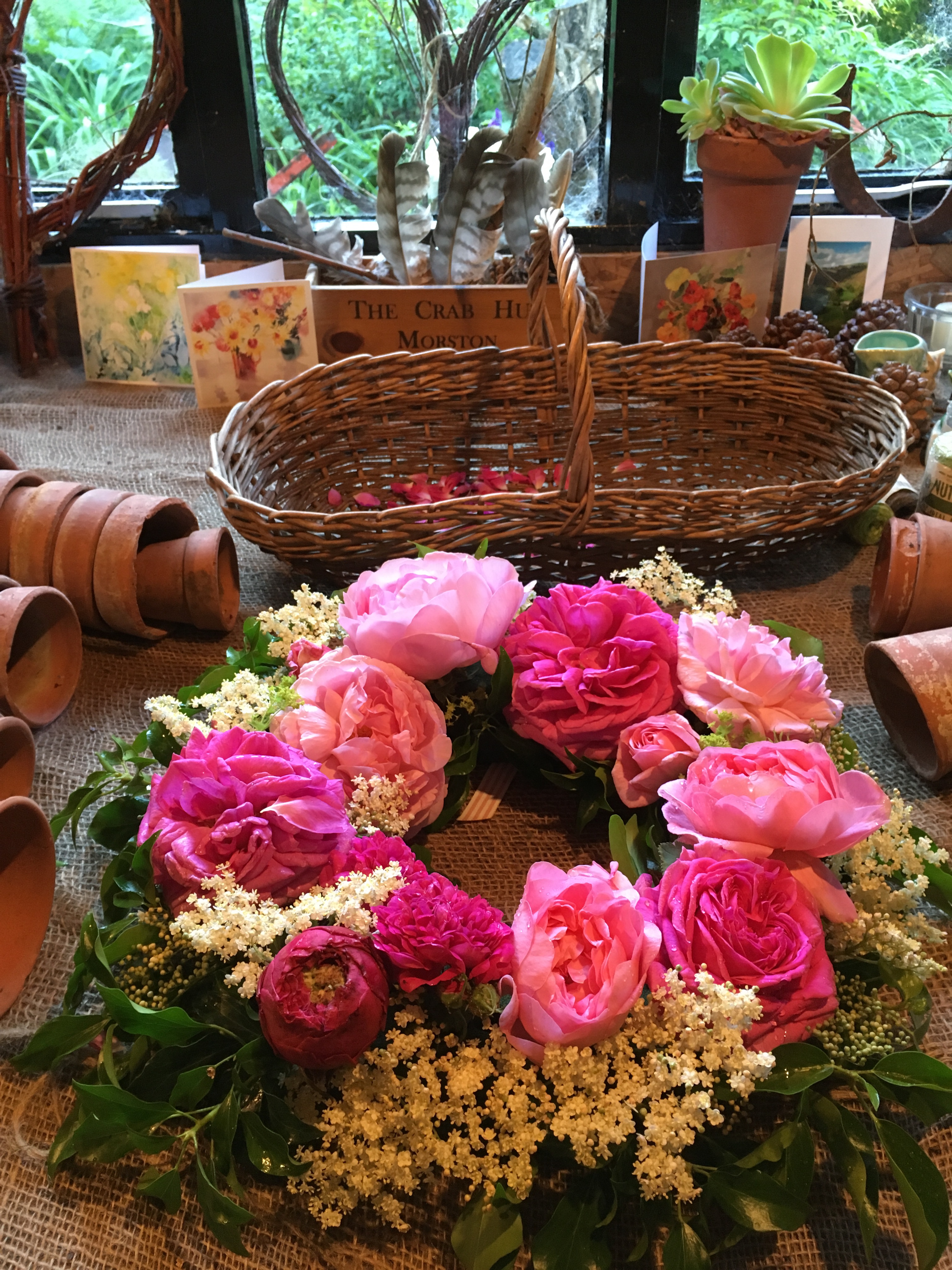
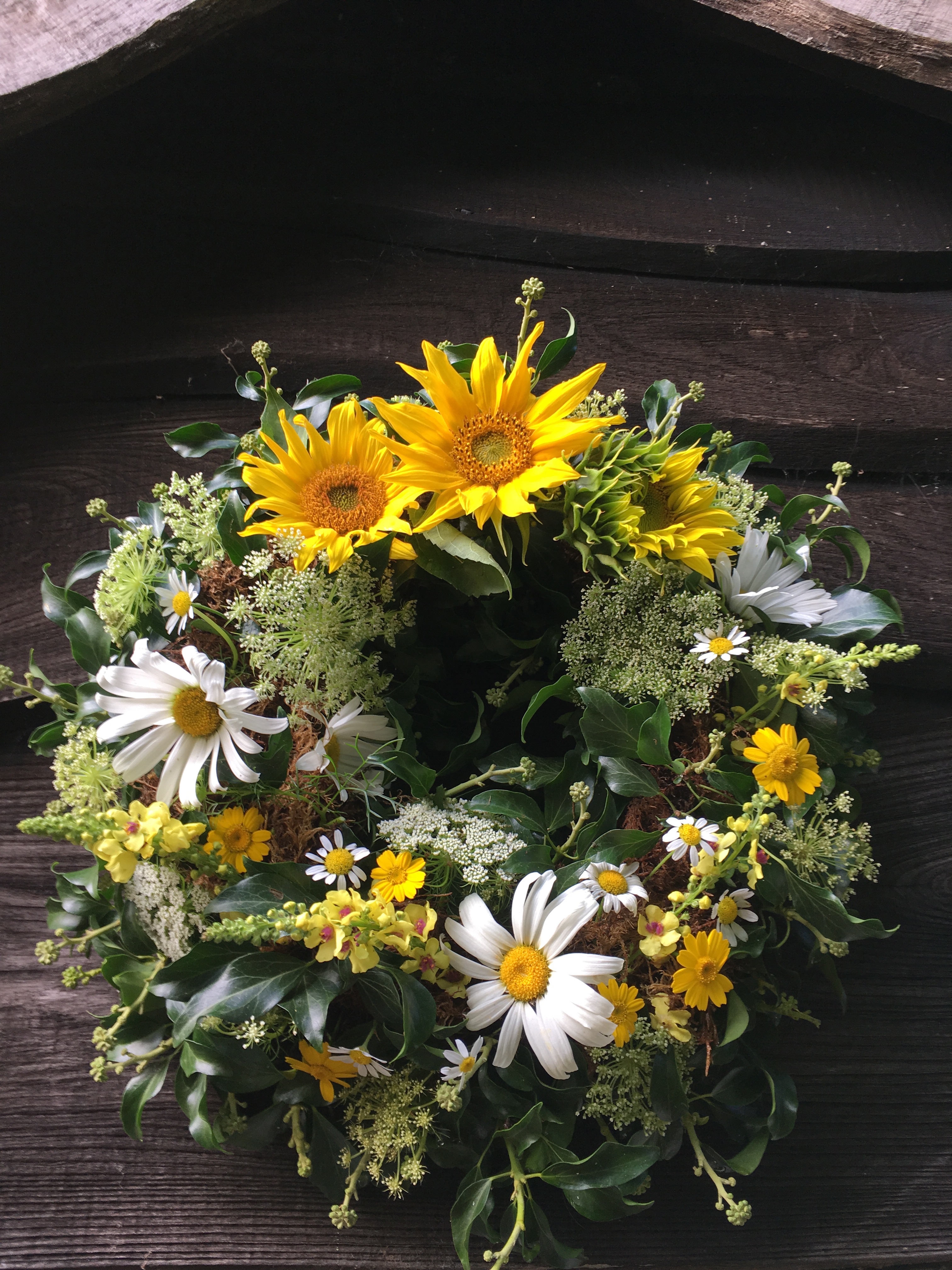
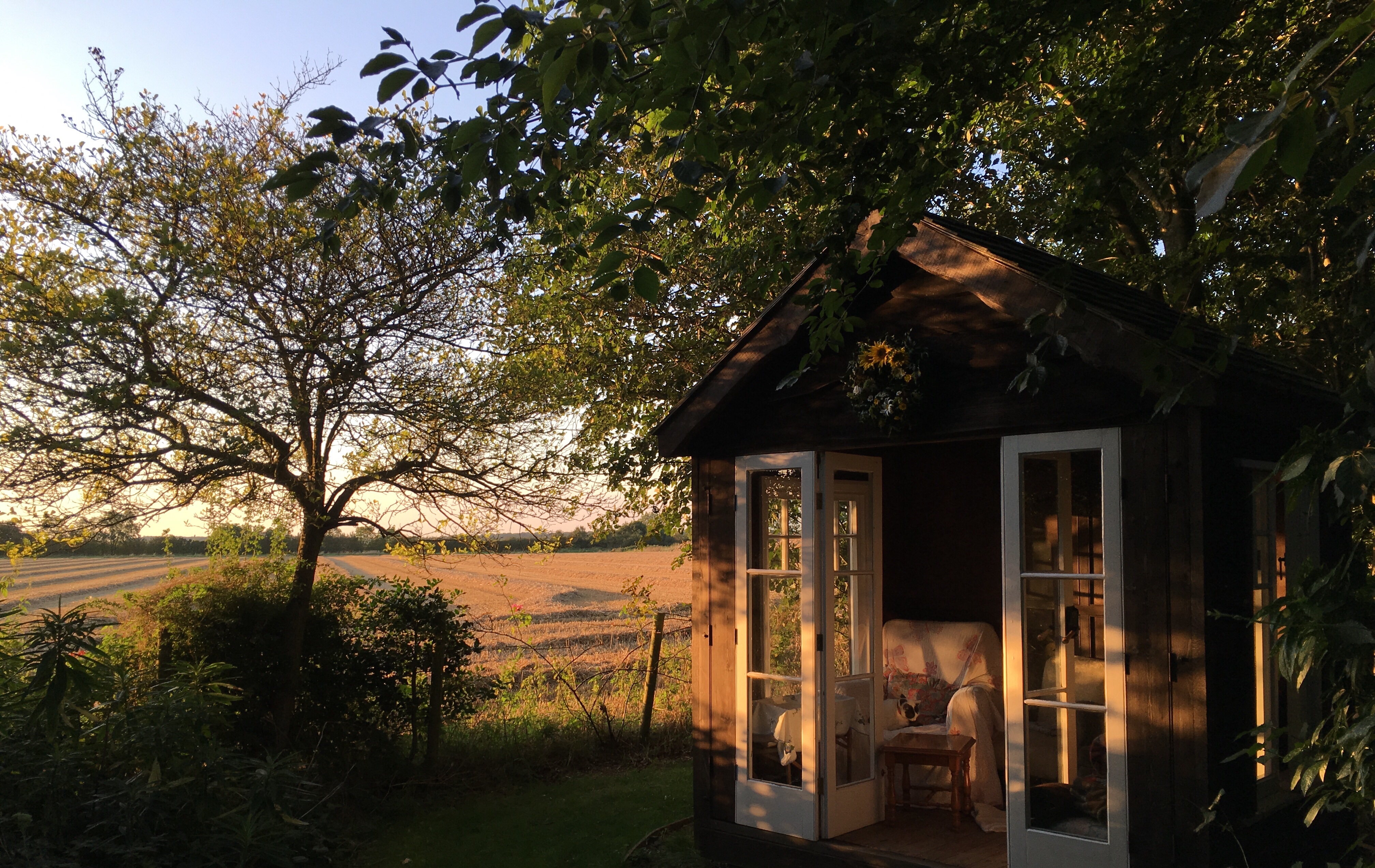
Sending out a warm welcome to old and new readers. Hello to new readers from the garden clubs where I’ve given talks recently. At both Nether Heyford and Spratton this week there were questions on what to grow for colour in the garden in June. When I got home I had a quick look through my photo album and found some of my favourite summer flowers. Above is my 1930s summerhouse which stands on a circular turntable and can be swung round to face the sun all day long. In the folding glass doors you can see a reflection of the trees, hedgerows and fields behind our garden. Above the doors, I often place a wreath of fresh flowers and in this photo it’s a selection of roses from the garden.

Constance Spry grows over the entrance to a 60ft pergola. It was one of the first David Austin roses, introduced in 1961. It only flowers once, but the display is so stunning it is worth growing. The myrrh-like scent is fabulous, and reminiscent of fruit salad, ripe melons and pears. It grows to 6m so needs a strong archway or trellis support.

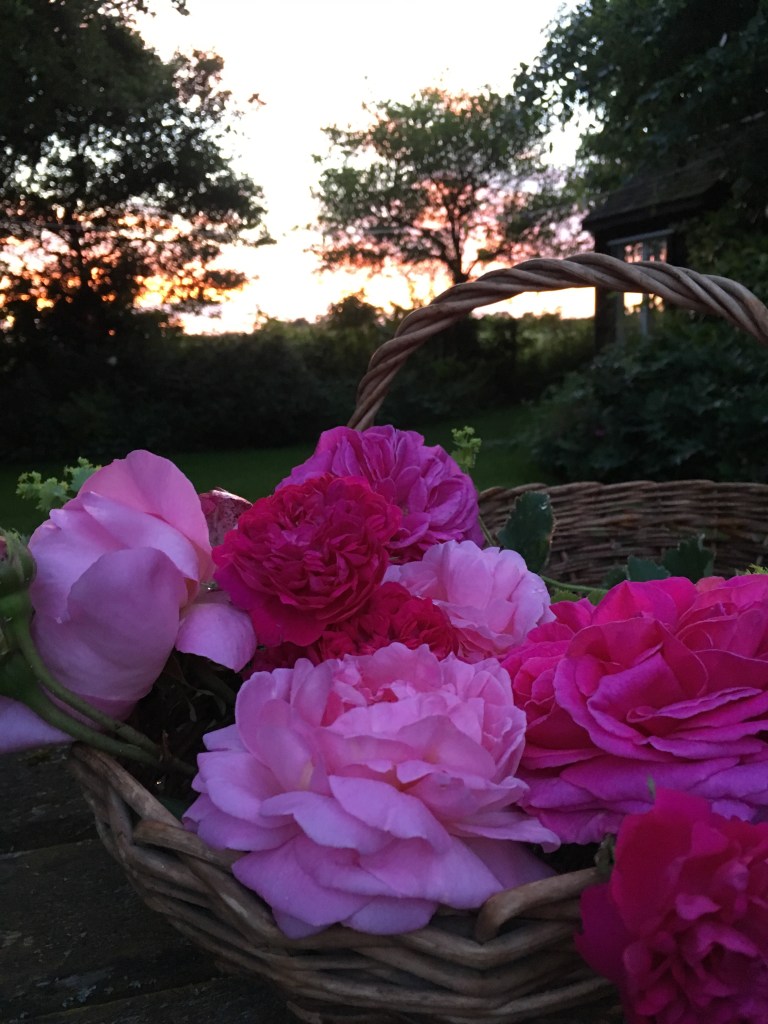
I picked the flowers at dusk when the scent was particularly strong. In the basket there’s also Mme Isaac Pereire (1841) a fuchsia pink climber which grows alongside Constance Spry. And Rose de Rescht (1840) a compact floribunda shrub rose. Both repeat flower all summer.

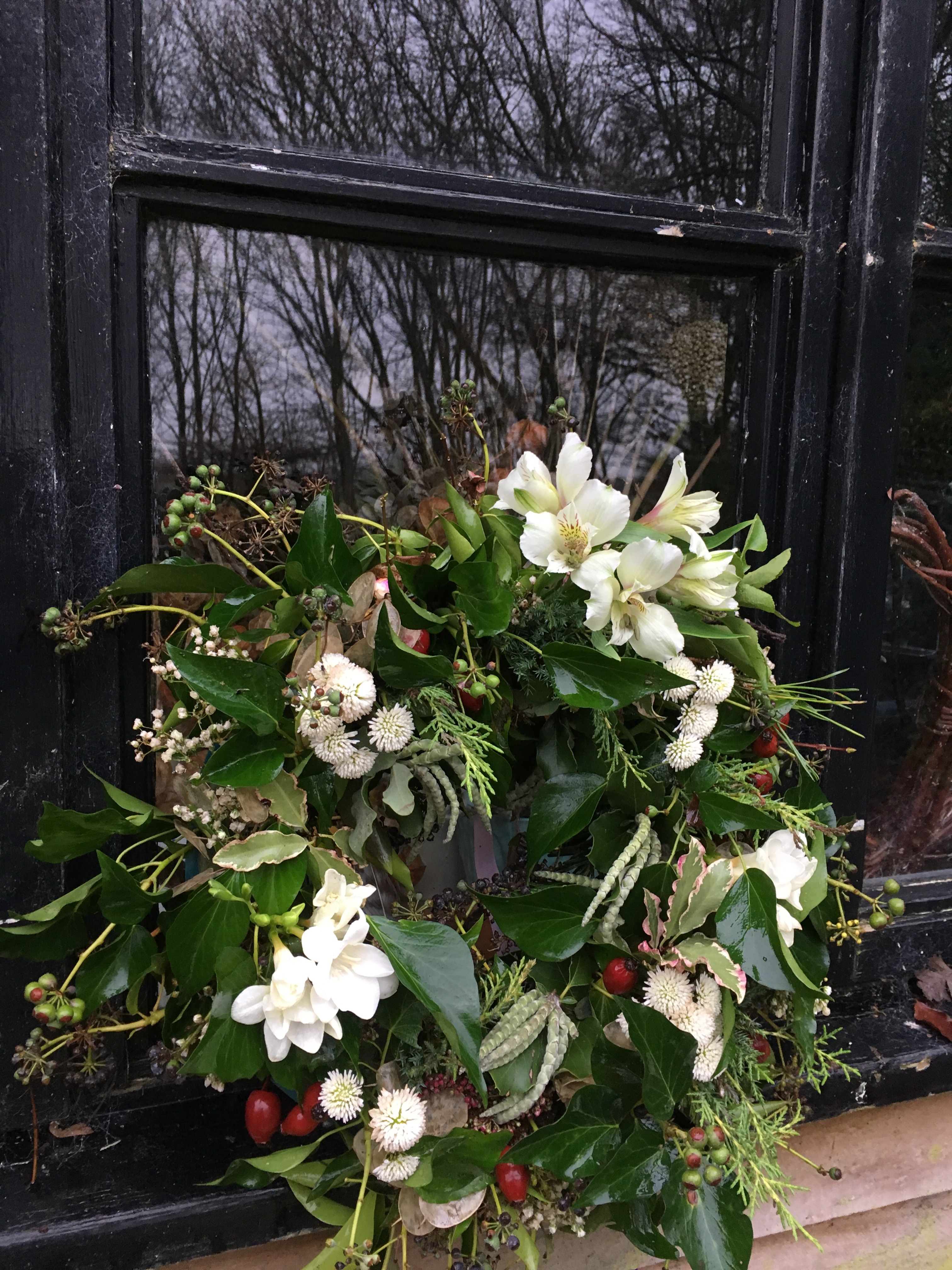
The wreath is made from 4” lengths of ivy from the hedgerow and white elderflower heads. With the doors open, the breeze wafts the scent of roses and elderflower inside. A rather lovely place to sit and make plans for the garden. The black and white cat is called Grace who came to us from the RSPCA. She was handed in with a box full of kittens. The only kind thing the person did was take her somewhere where she would be cared for, and for the rest of her life she snoozed peacefully here. The summerhouse was a favourite place. Sadly she has now passed away and is still sleeping in the woodland behind the little house.

Growing into a mature beech tree is rampant rambling rose Cerise Bouquet. I never tied the plant in, it simply hooked itself up through the branches and produced huge sprays of cascading stems. Even the most severe storms can’t dislodge it. Sadly it has no scent, but it is a wonderful sight in June and then repeat flowers on a more modest level right through to November. Being a rambler, it is disease free and no trouble. I never prune it, or feed it. It just grows! The Cornus Controversa ‘wedding cake’ tree in front was very badly affected by the 30C temperatures last summer and has lost some of its tiers. I think this winter we will bite the bullet and cut it down by half to see if it regenerates from lower down. It was planted 25 years ago, and is quite slow growing. I was quite upset by the number of plants that succumbed to the heat, but now I’ve come to terms with it. Gardens aren’t static, they change and we have to sometimes let go of much-loved plants. It’s never easy, is it.

One rose that seems to shrug off everything the weather throws at it is this lovely white variety, Pearl Drift. I grew this from a cutting I took on holiday one year. I nearly always come back from holiday with a memento of where we’ve been -always asking permission before taking my cutting, of course! I have a lovely pink flowering American Pillar taken from a rose which grows along a fence in front of a pretty cottage in Sandsend near Whitby.

Growing under the roses are many different geraniums. This one is the wild cranesbill, Geranium pratense. It seeds about the garden, originally blowing in from the country lane outside our garden gate.

As you can see, there’s plenty of cow parsley on the lane too. And I must admit that 50 percent of the garden is covered in cow parsley in spring. I’m not complaining. It’s rather lovely to have the garden echoing what’s going on outside the garden gate.

There’s plenty of room for ornamentals too. In the front garden, lining the path to the front door, there’s gorgeously-scented Mrs Sinkins pinks.

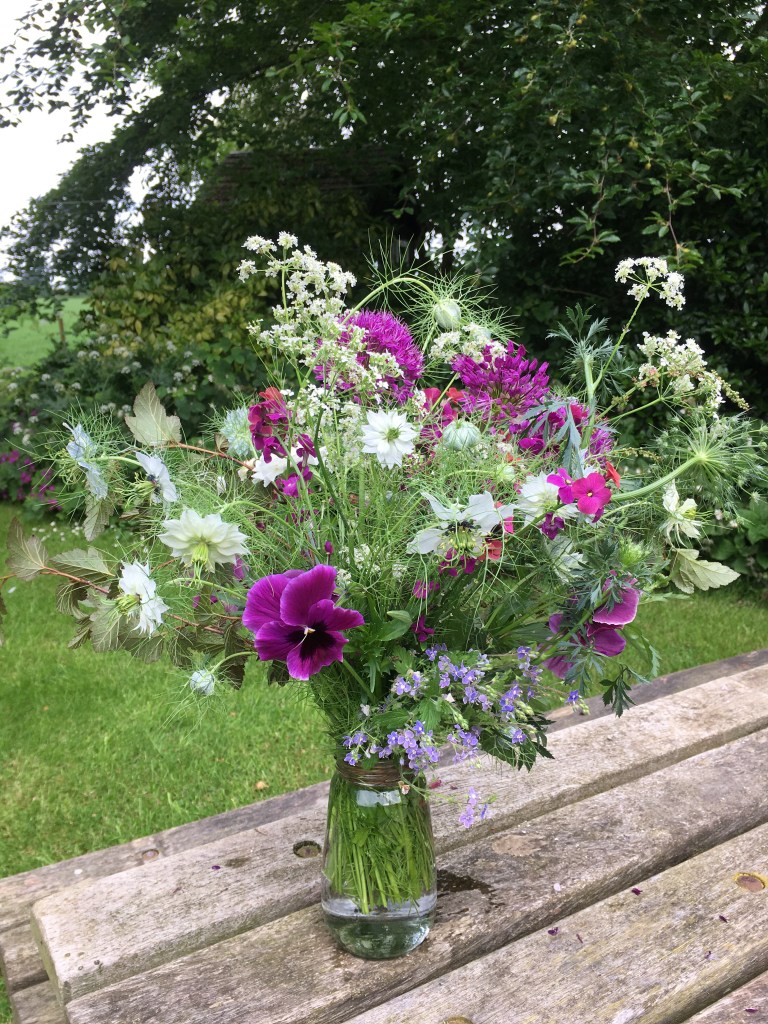
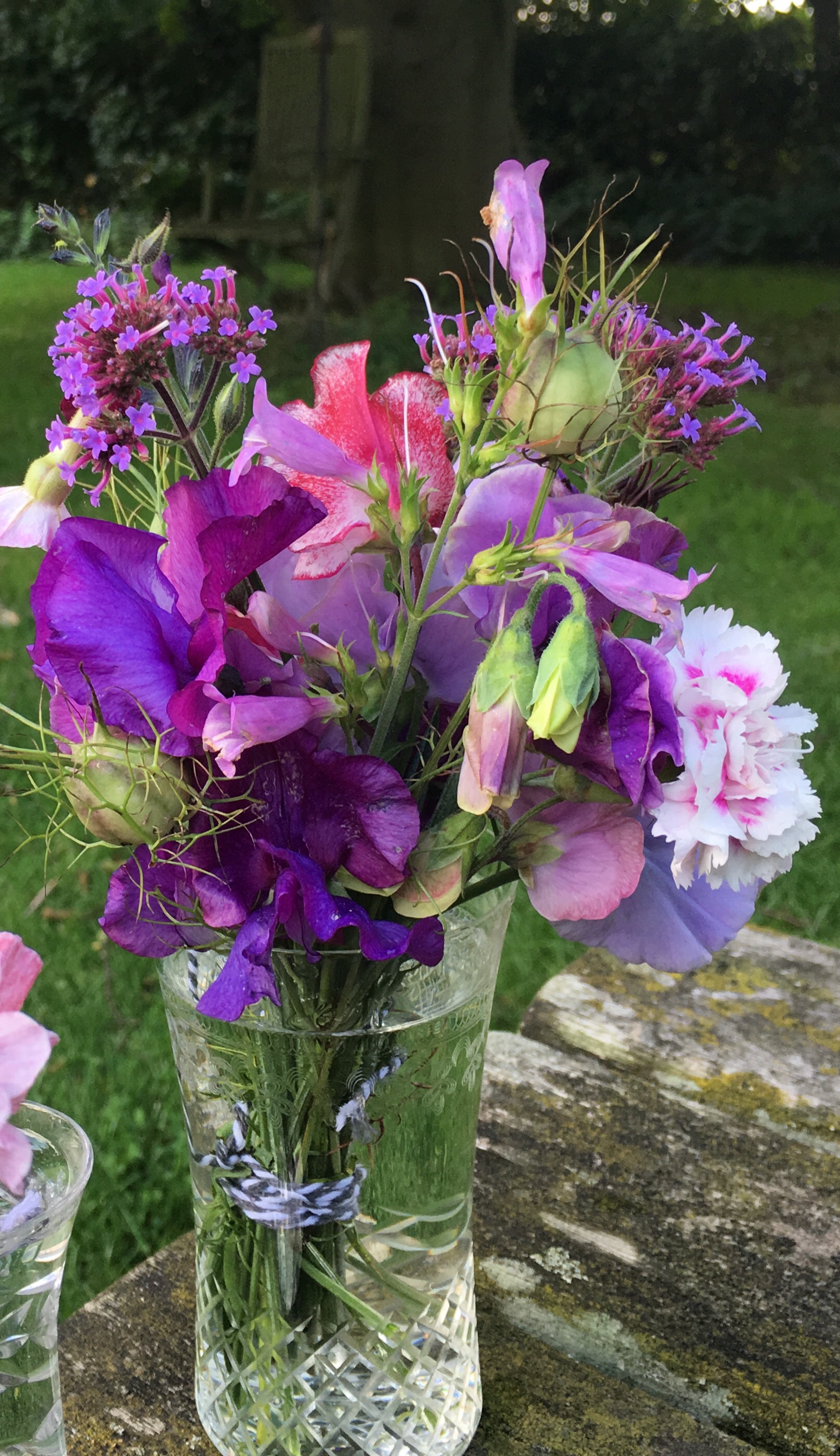
I always pop a few stems in amongst my jam jar flower posies for my mum. As you can see, cow parsley gets picked too, with white love-in-a-mist, wallflowers and alliums.

Thank you for joining me for my reminisces of June flowers. And for a wander down our country lane. I hope the photos have given you some ideas what to grow for summer colour. Do please sign up for e mail updates and follow the blog. It’s been rather lovely looking through my photo album as the temperature suddenly dips to zero here! We’ve had three nights of frost now, and it’s all change in the garden as trees turn golden and tender plants are tucked up in the greenhouse. Are you all ready for the cold? Do please leave a comment in the box below. Let me know what your highlights were this summer and how your garden is looking right now on the cusp of winter weather.

Views from the garden September 2023

I’ve spent the day clearing out my 20ft second-hand Alton Cedar greenhouse. This was purchased for £260, the best £260 I’ve ever spent. Admittedly, it was 32 years ago- but the greenhouse is still almost as good as new. I’ve painted it black, although it was a harsh bright red when it arrived. The staging is also painted black which really sets off the pelargoniums housed there. Plants live in pots along the front path in front of the greenhouse during the summer. It just gets too hot indoors, and they appreciate some fresh air and rainwater. But at this time of the year, I sweep it out, wash down the windows and give it all a quick re-paint. Everything must be back inside before the first frosts.

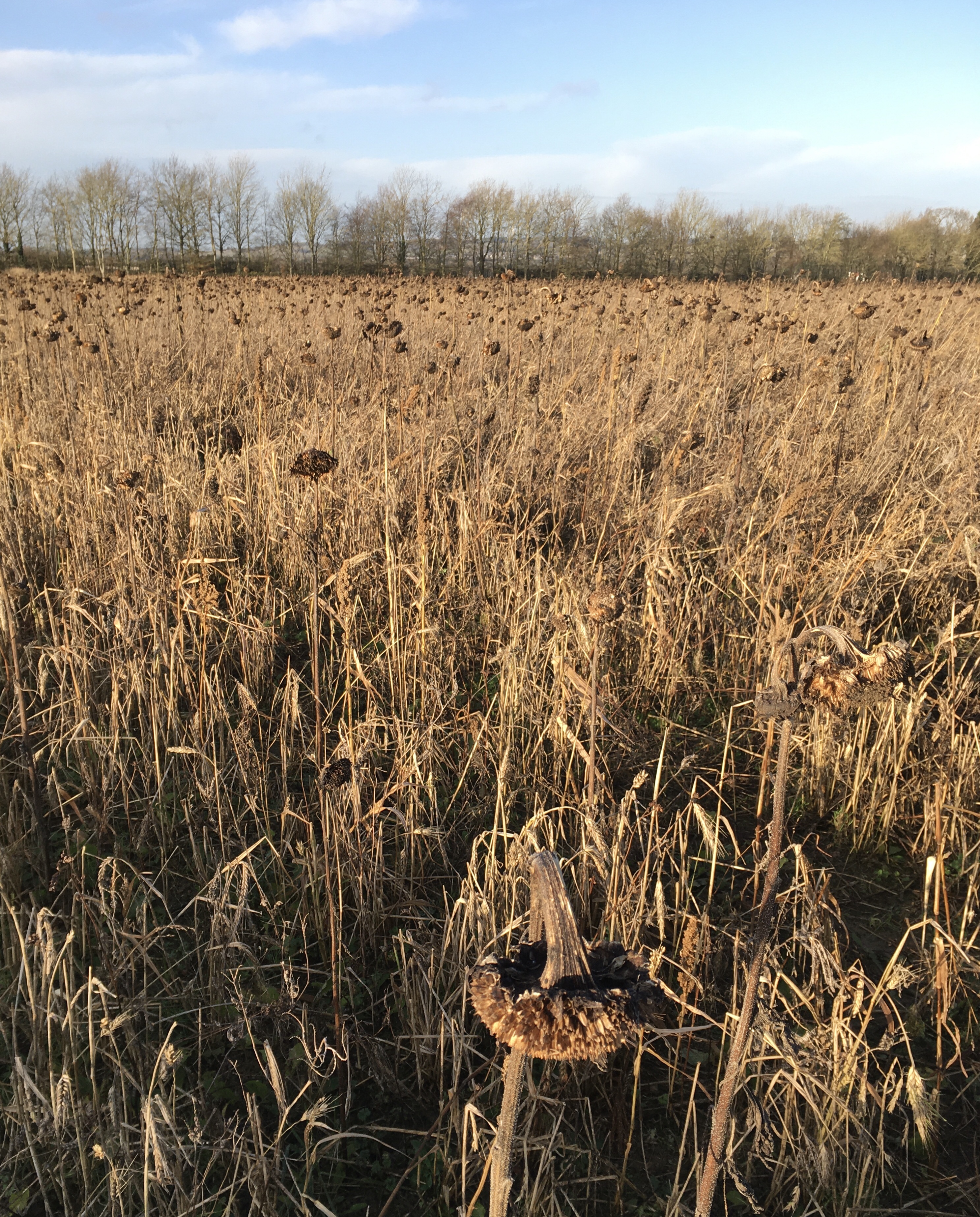
In the background you can see my 10ft sunflowers that I thought were small multi-headed types for cutting. I’d need a ladder to harvest those! Instead I’m leaving most of them to dry out for bird seed. A few blew down in the recent storms, so I’ve put them in jam jars on the kitchen table. I’ve made a note to carefully check the seed packets next summer so I don’t make the same mistake twice! They are beautiful though, and the bees and butterflies enjoying the pollen are currently a wonderful sight.

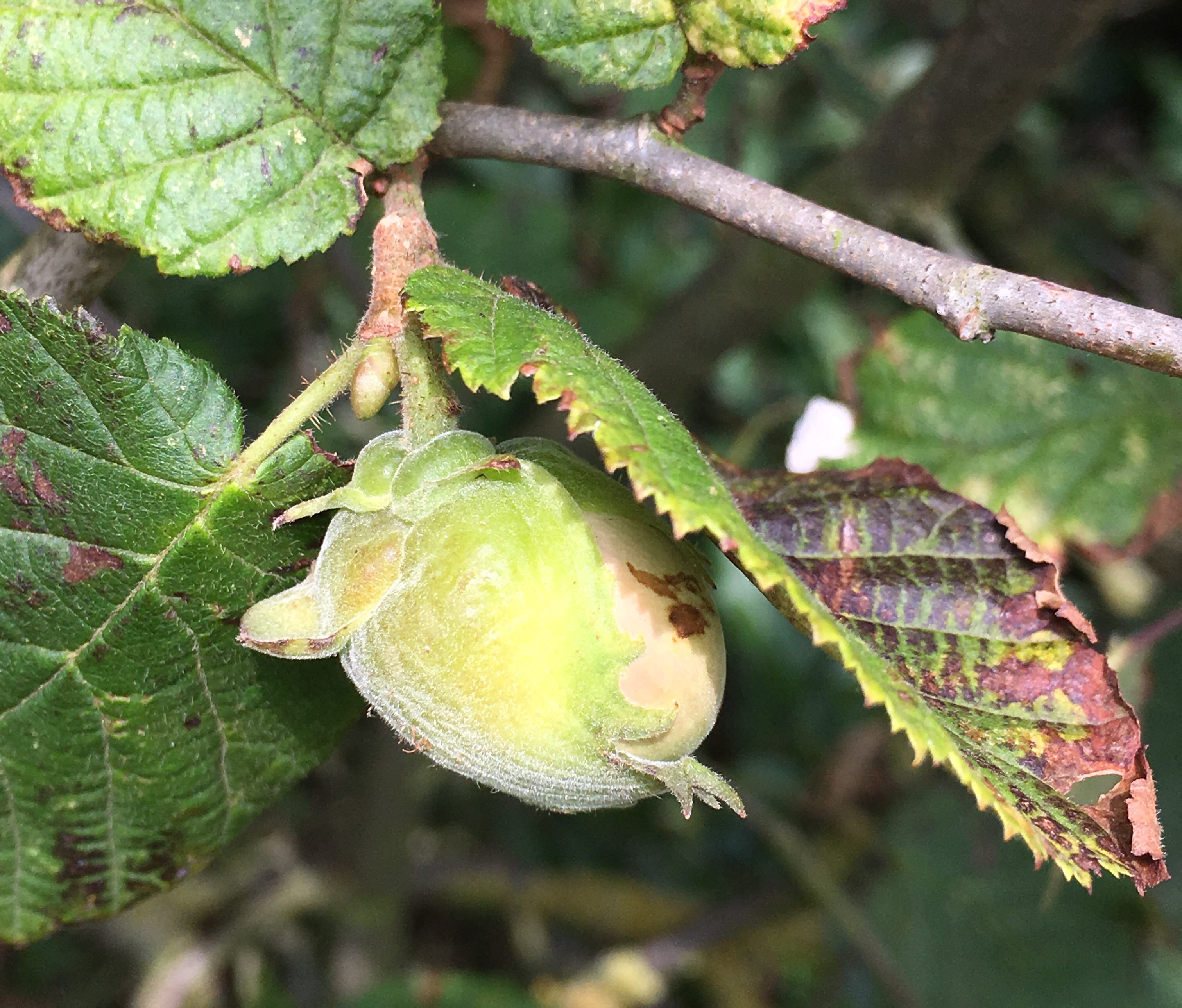
Next to the greenhouse there’s a matching 20ft polytunnel where I grow fruit, vegetables and flowers. Tomatoes and peaches have done really well this summer. You’ll also see a little pile of cobnuts in the basket. Alongside the greenhouse there’s a huge hazel tree which squirrels usually strip overnight. This year there were more nuts than they could manage, so I’ve harvested some to make into cakes and biscuits.

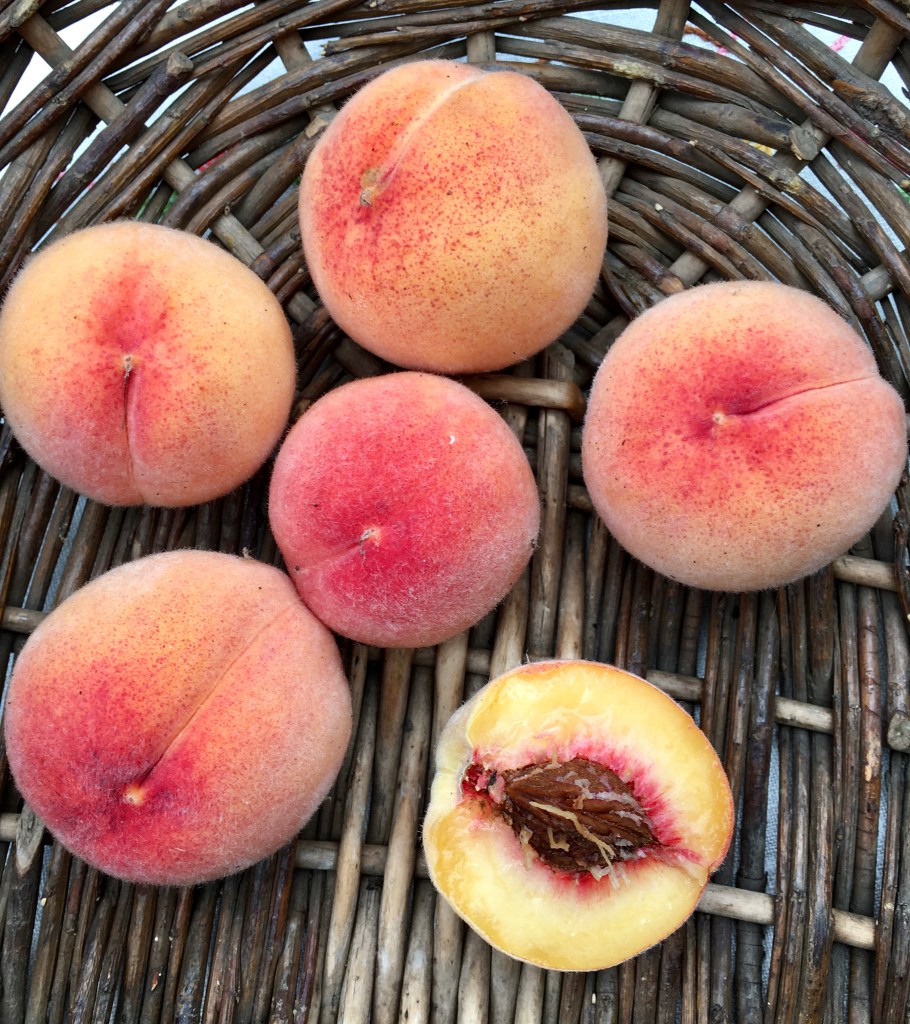
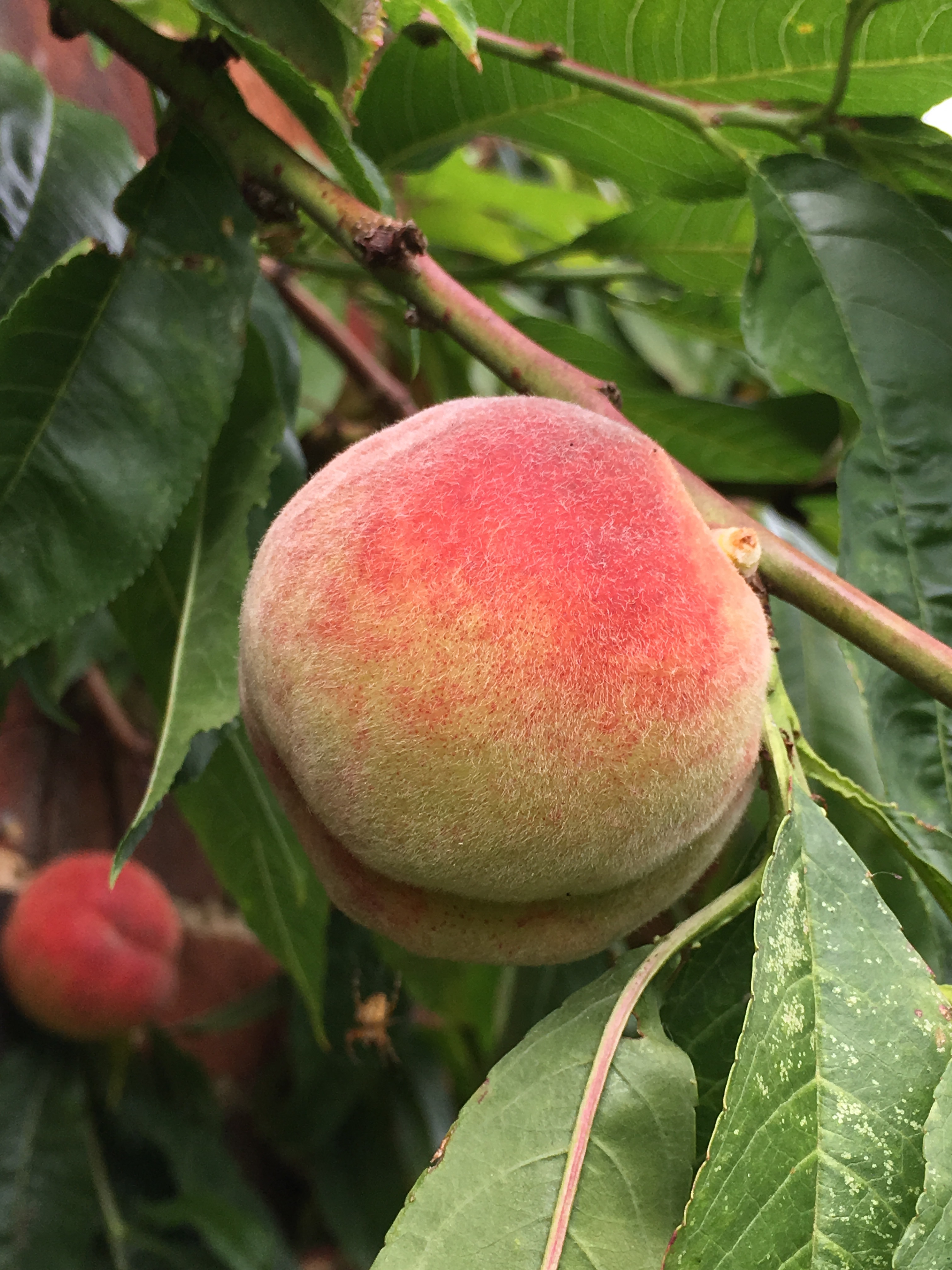
Peaches have been a great success this summer. My trees are grown in large 15” containers in the poly tunnel. This protects them from peach leaf curl which thrives in wet conditions. Keeping leaves dry is the best way to combat the disease.

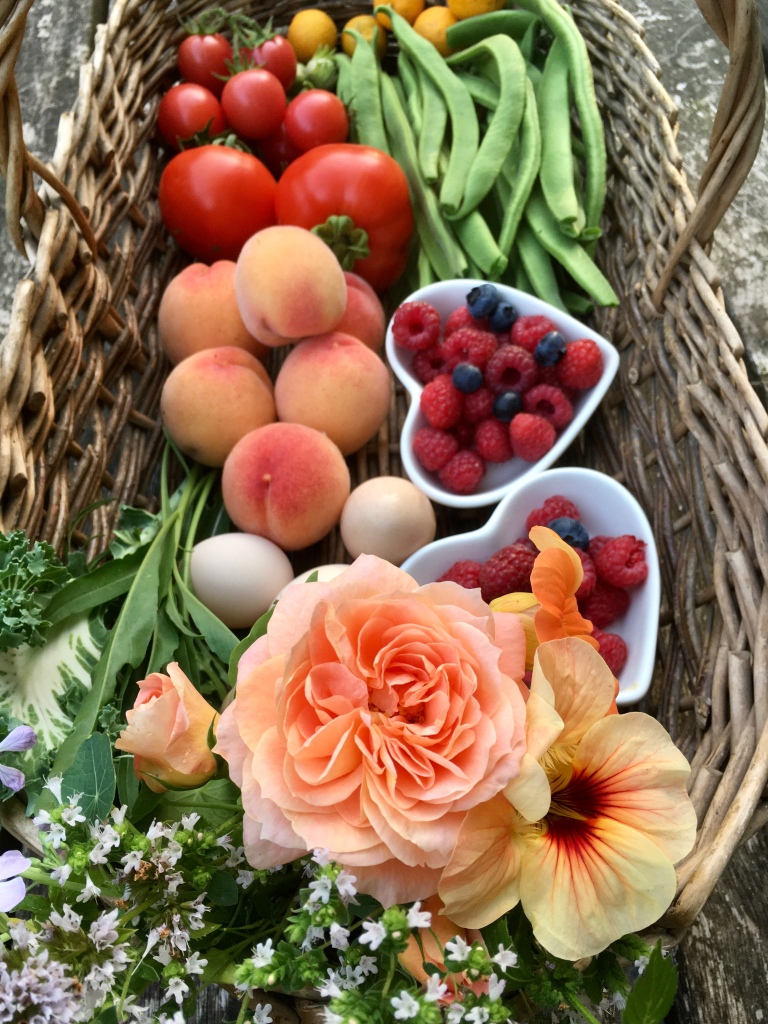
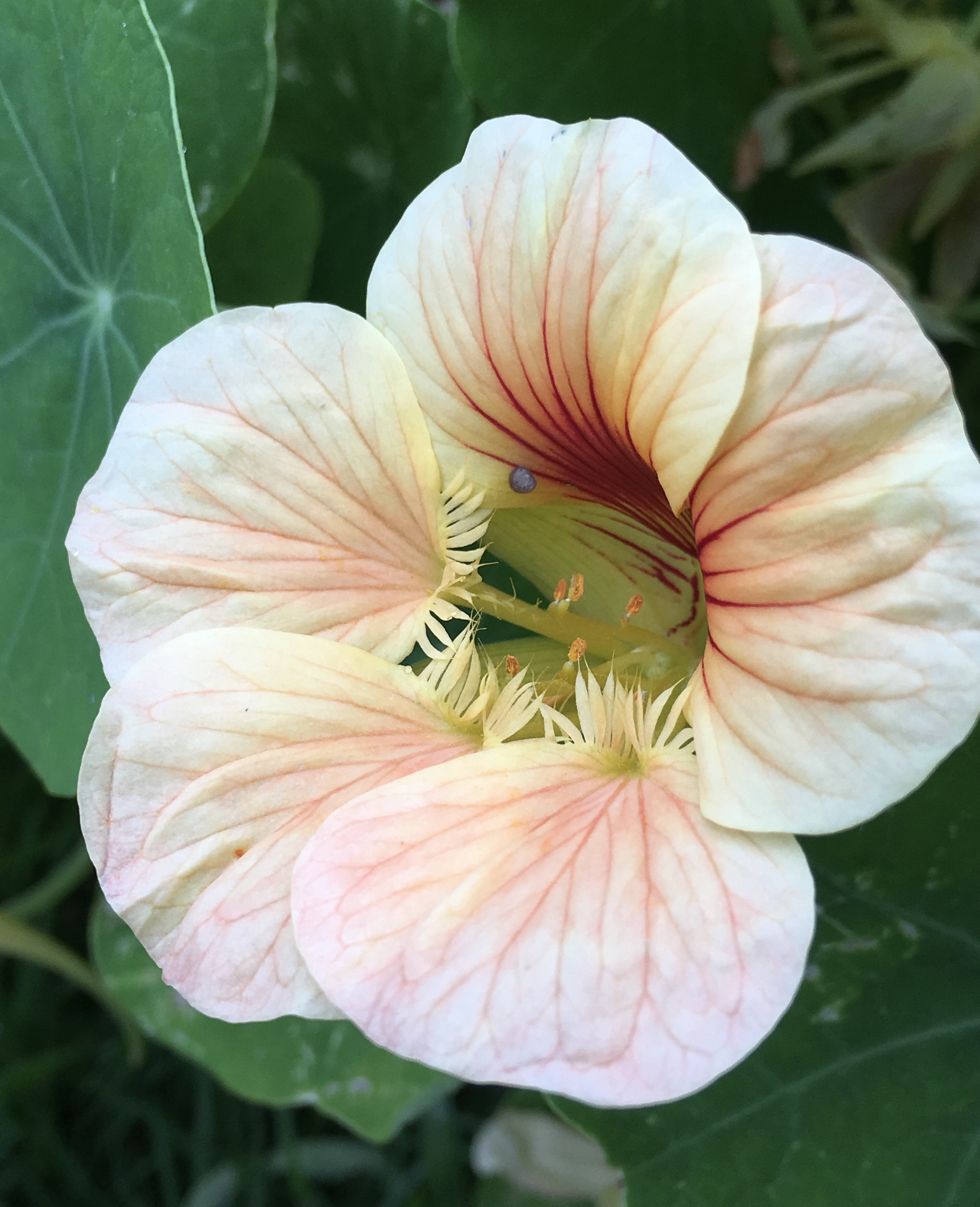
Baskets nearly always contain flowers as well as fruit and veg. This is Rose of the Year 2022, ‘It’s a Wonderful Life.’ Highly recommended for fabulous scent, repeat flowering and disease resistance. I’ve also picked some seedling nasturtiums. I’m particularly fond of this peachy-coloured one and keep it going by taking cuttings which root in water. I collect seeds too, but it might not come back exactly the same colour as nasturtiums readily hybridise. There’s also a few herbs, mint, marjoram and rosemary which add a lovely scent to any jam jar flower arrangement. The climbing beans are pink-flowered Celebration which don’t go stringy and crop late into the season.

Still on the theme of peaches, these are the little pastry custard tarts I made with slices of fresh peach, autumn raspberries and home-grown blueberries. The recipe is for my column in Garden News Magazine which I’ll share next week. They are very quick and easy to make.

I’ve had this potted purple bougainvillea for about 30 years. I’ve trained it into a round-headed shape so that it doesn’t take up too much room. It will be the first plant to go back in the greenhouse as it’s not at all hardy. Bracts stay colourful until December and I often use it in my Christmas table arrangements.

In pots alongside the bougainvillea are these beautiful grey-leaved tender perennial plants. They have long sprays of pale blue flowers. I’ve temporarily forgotten the name! Each winter I take insurance policy cuttings just incase I lose the parent plants.

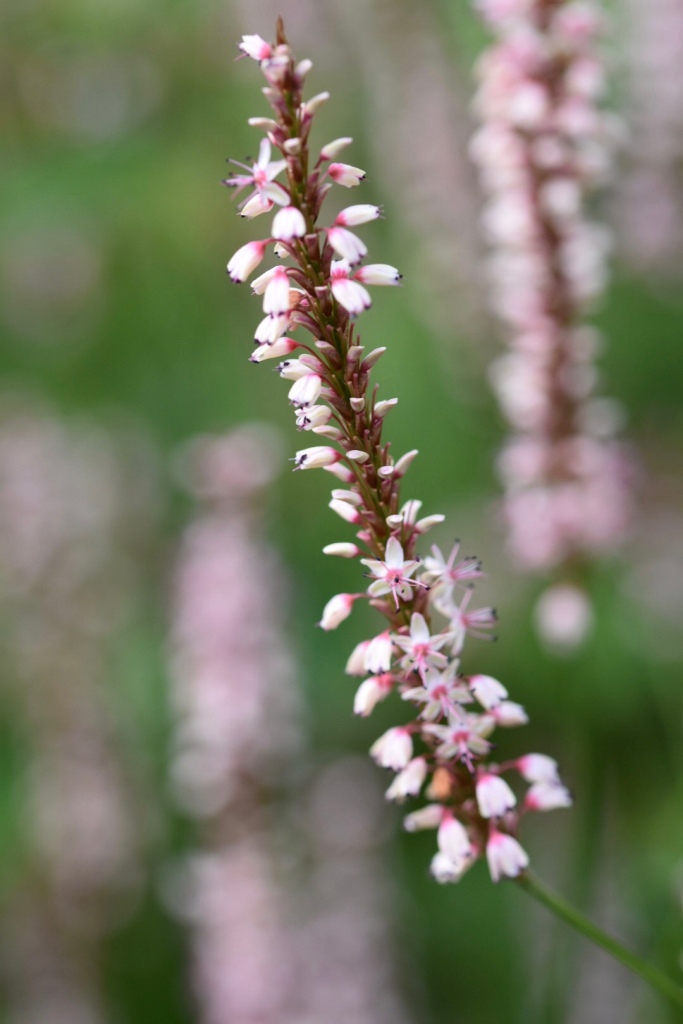
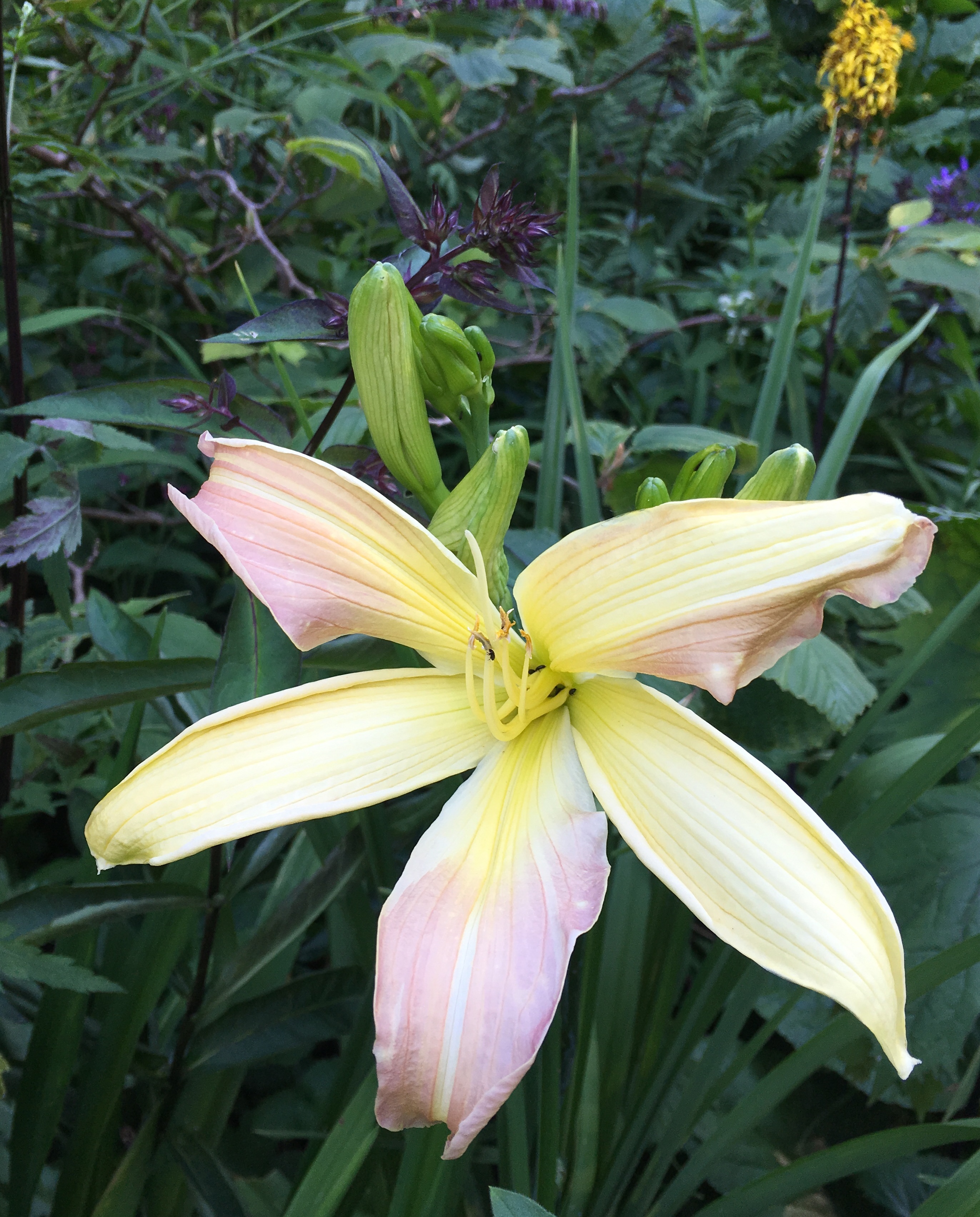
There’s a border full of low-maintenance day lilies in front of the greenhouse. In autumn when the day lilies are starting to die back, these beautiful spires of persicaria appear. This one is Persicaria Rosea.

The flowers deserve a close inspection, they are so dainty.

There’s also a white persicaria. Sadly, the label has been lost so I’m not sure of the variety. It thrives in dappled shade and flowers from August to November. The photo is out of focus as it was such a windy day, but it’s a very pretty flower nonetheless.

And finally, this one is also growing in with the daylilies. This persicaria is either Firetail or Firedance. They are good for cut flowers, lasting at least a week to 10 days in a vase if you change the water each day. The spire shape gives a nice contrast to round, daisy flowers.

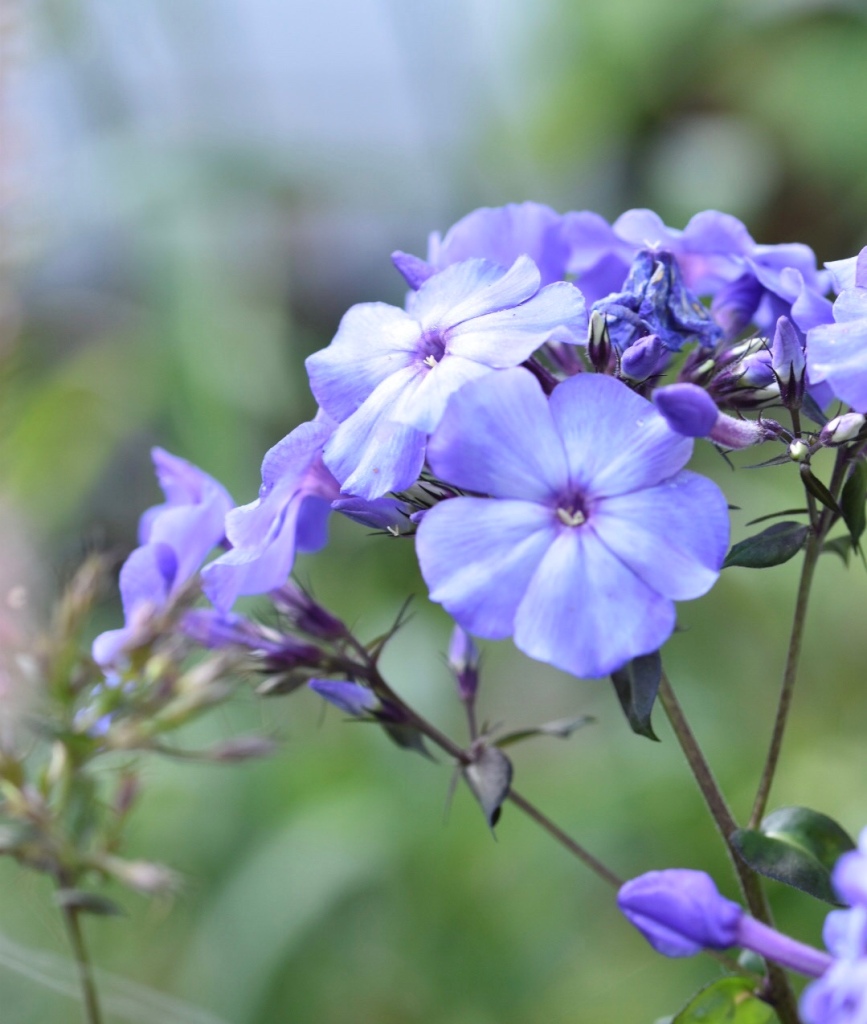
In amongst them are several types of phlox. This one is Blue Paradise- very highly scented and long-flowering in late summer.

The back field behind the summerhouse had oats growing there this summer. It’s been wonderful to sit in the shade and watch the field slowly turning to a shimmering gold. On a windy day, the crop ripples like waves and before it ripens the green-grey colour reminds me of the ocean. Instead of seagulls we have barn owls silently gliding by at dusk. There’s no sound at all from the beating wings and they quarter the field without knowing we are watching from the little wooden house.

We are always pleased and much relieved when the farmer manages to get the crop in before bad weather arrives. They work through sunset and into the night if rain is threatened. We lie in bed and listen to the tractors going up and down the fields and along the lane. At 2am there’s suddenly silence again and we know they have successfully got in the crops. Rain falls the next day and it’s wet for a week.

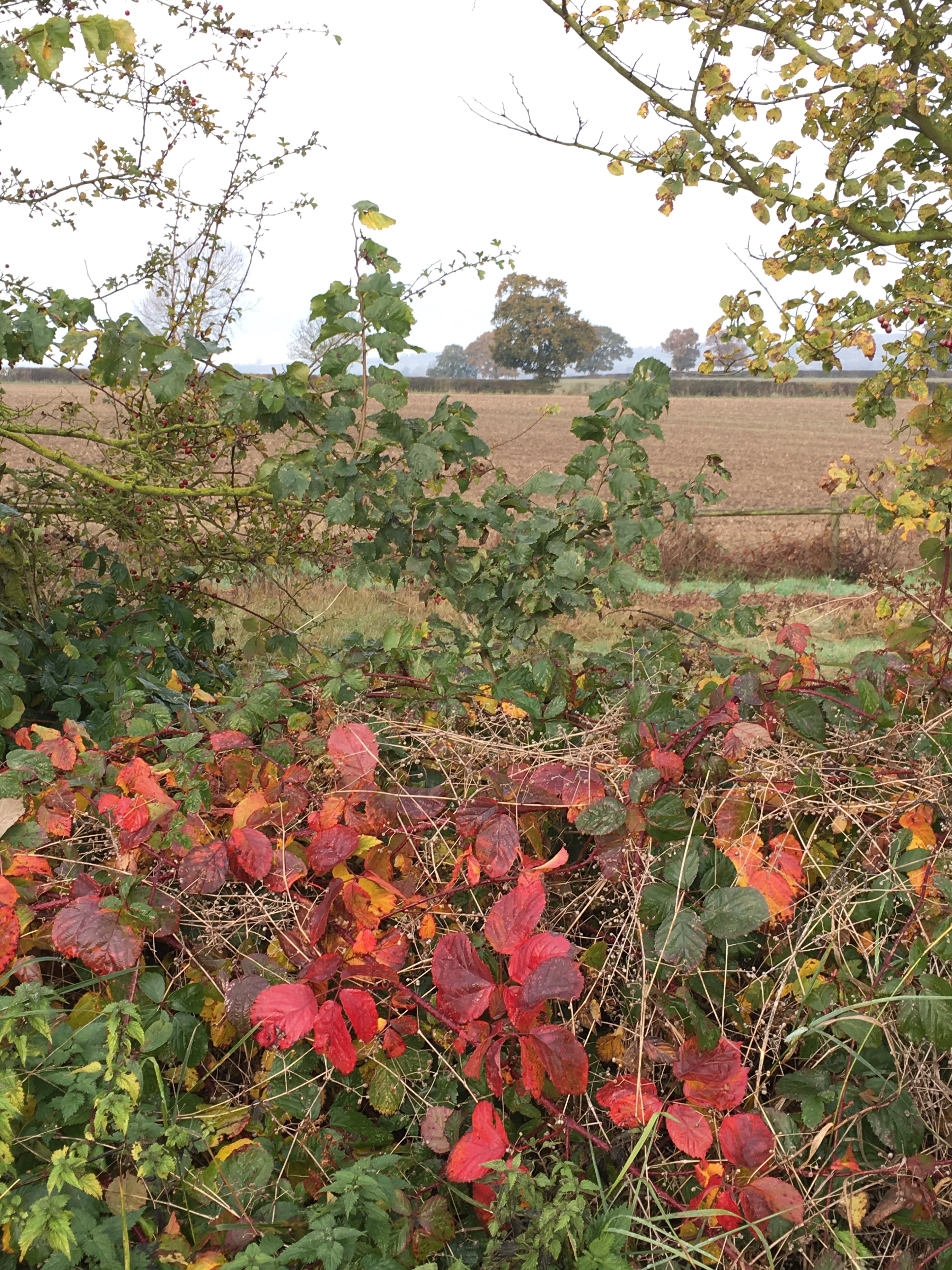
This is the view from our five bar gate at the top of the paddock. For a few weeks after the harvest, the fields retain their golden glow, and I drink in the scene and hold on to the memory as autumn and then winter darkness descends.

When we moved here, it was just a decrepit house and no garden. The farmer who built the house sold us an acre of land alongside it, and we planted 250 sapling trees given to us by the woodland trust and local council. At the time, there was a scheme giving free trees to anyone returning farm land to nature and we planted a small woodland area. All along the boundary, we left viewing points through to the fields beyond. The ever-changing seasons are a delight to spy through these holes in the treescape.

Thank you for reading my blog. Please sign up for e mail updates and I would love you to press ‘follow’. I often join in with Cathy for her ‘In a Vase on Monday’ meme. Mostly I write about what flowers I’m growing to give to my friends and family, and what produce I’m growing for family meals. I don’t grow in traditional rows, everything is mingled together and much is grown in window boxes and containers, with many different varieties ripening early, mid-season and late. There’s nearly always something to ‘forage’ from the plot.

Plum and almond clafoutis

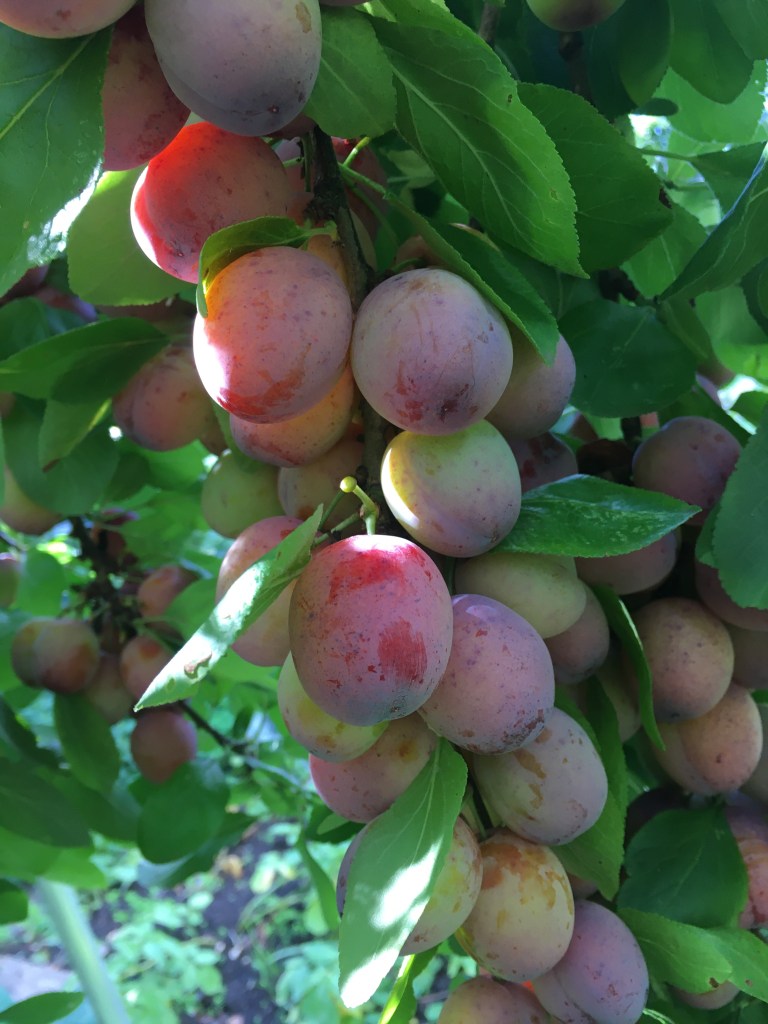
Plums have been prolific again this year. I’ve filled four draws of the freezer so far!

If you’re looking for a recipe to use up your plums I can highly recommend this one! It’s so quick and easy to rustle up. No pastry to roll out, you just whip up the milk and creme fraiche mixture, pour it into a large dish, and pop the halved plums on top! Such a simple recipe to follow and the taste is quite amazing.

This makes about 6-8 portions, but it can be cut up and frozen as individual slices. One minute in the microwave, and the slices are ready to eat!

My tree is a Victoria Plum. Jubilee is thought to be an improvement, and there’s also Marjorie Seedling which crops later in the season.

After I’ve harvested the plums, I do some tidying up and pruning. If you’ve never done any pruning this can seem like a daunting task. However I simplify it by starting off cutting out any broken twigs and branches. Plum trees bear a heavy crop and the wood is brittle, so there are often a lot of damaged stems.

Next I cut back anything that’s rubbing or crossing as these stems will rub together in the winter and cause wounds where infection will get in.

After that, I cut out any stems that are heading towards the centre of the tree, as a good air flow helps to prevent mouldy fruit and fungal diseases.

Finally, I shorten any really long stems, as I want to keep the tree compact – I’ve got to the age where I’m not keen on going up ladders! So I keep the tree at a manageable size.

Hope these tips have been helpful. Do think about planting a plum tree over the winter. Bare root trees are cheap and easy to plant. And after planting you’ll have years of produce to make jam, crumble, plum cakes and clafoutis!

Photos of my orchard in spring. Tulip Exotic Emperor in the cut flower bed in front.

If you are listening in to Ben Jackson on BBC Radio Leicester on Wednesdays at 3.10pm, you’ll hear us pruning Ben’s apple trees. I often go over and do some gardening with him and we record a ten minute tip for the radio. Just simple ideas to help and encourage new gardeners and give some fresh ideas to experienced gardeners too.

Thanks for reading my blogs and leaving a comment in the box below. You are among 400 people who read bramblegarden every day! I’m so pleased to see you all here!

Here’s a link to a list I wrote on Plum Jam and also Plum crumble cakes.

https://bramblegarden.com/2017/08/22/peaches-and-plums-crumble-and-jam/

Planting Bulbs, Corms and Tubers

A warm welcome to members of Heath Garden Society! Thank you for inviting me to talk last night. Here are a few photos to inspire you with your bulb planting this autumn!

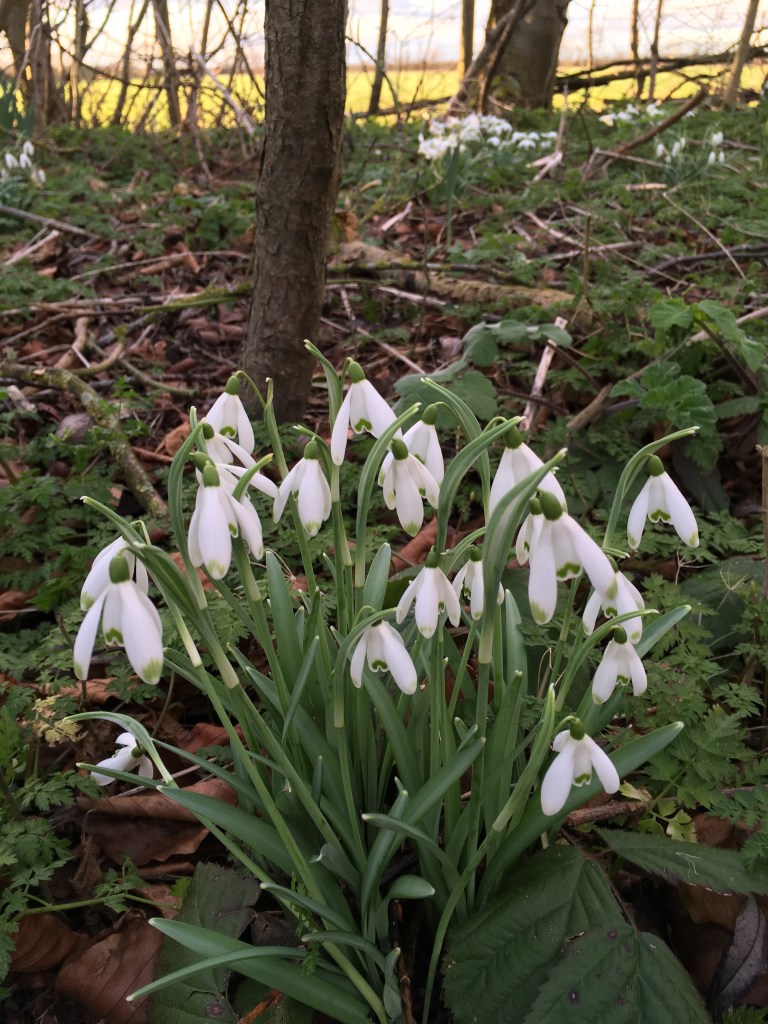
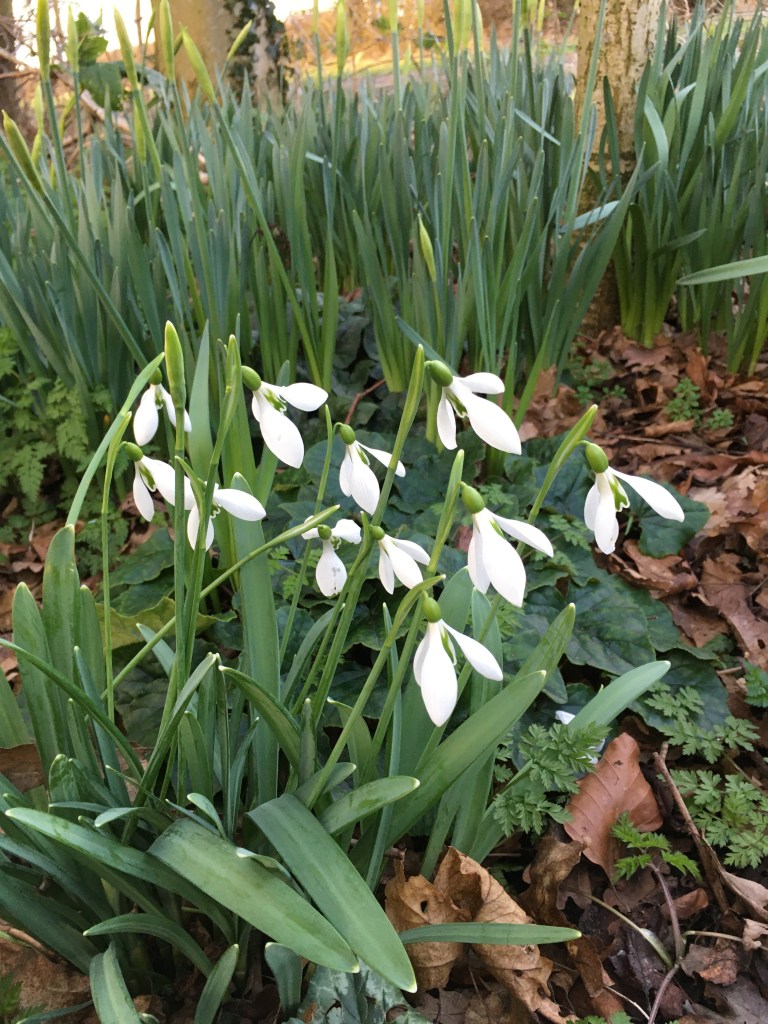
Snowdrops. Galanthus Nivalis is the common single snowdrop. I wait until they are coming into bud and then dig up a clump and pop them into my Sankey terracotta pots. These pots are special to me as my grandfather used them and gave them to me before he died. I love to use them and think of him gardening with them too. He enjoyed planting primroses, auriculas and miniature daffodils in them. I’ve planted Tete-tete in these and placed them on the potting shed window where I can look at them while I’m working.

I highly recommended Galanthus Madeline if you like a snowdrop with yellow markings. These were the three I bought from Thenford. A friend suggested we buy a pot and split it between us. This is a great idea if snowdrops are expensive. I think we paid £6 or £7 each, which turned out to be a bargain. The snowdrops bulk up quickly and are strong and reliable.

Within just a few years, my little clump has grown! I love something that thrives and shines out in the winter garden. These are planted under deciduous trees. They’ll flower before the trees come into leaf and then be protected from strong sunlight and heat by the tree canopy. We leave the tree leaves where they drop in autumn and snowdrops particularly love leaf mould.

I can also recommend new variety Polar Bear. These are huge flowers with unusual swept back petals and distinctive green markings. These flower later than the others in my garden and it’s lovely to extend the snowdrop season with something special like this. Luckily, these are usually on sale at Dobbies garden centre and are a fairly reasonable price, about £4-£6 a pot. Look out for them next February.

I wrote about Polar Bear here :

https://bramblegarden.com/2020/03/10/last-of-the-late-snowdrops-and-snowy-pictures-of-my-garden/

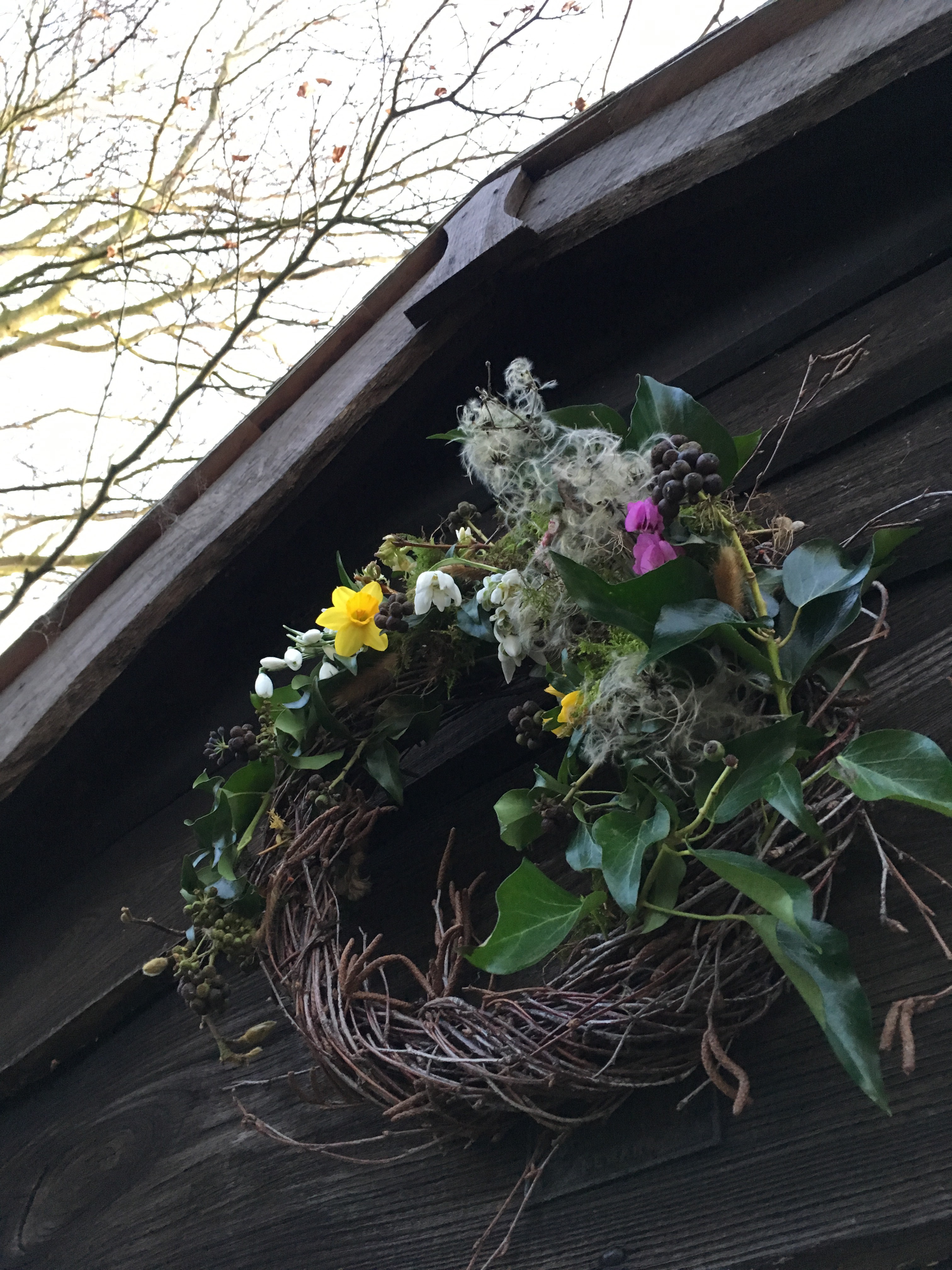
Snowdrops and miniature daffodils make a lovely button hole posy. These ones were put onto a willow wreath for my summerhouse.

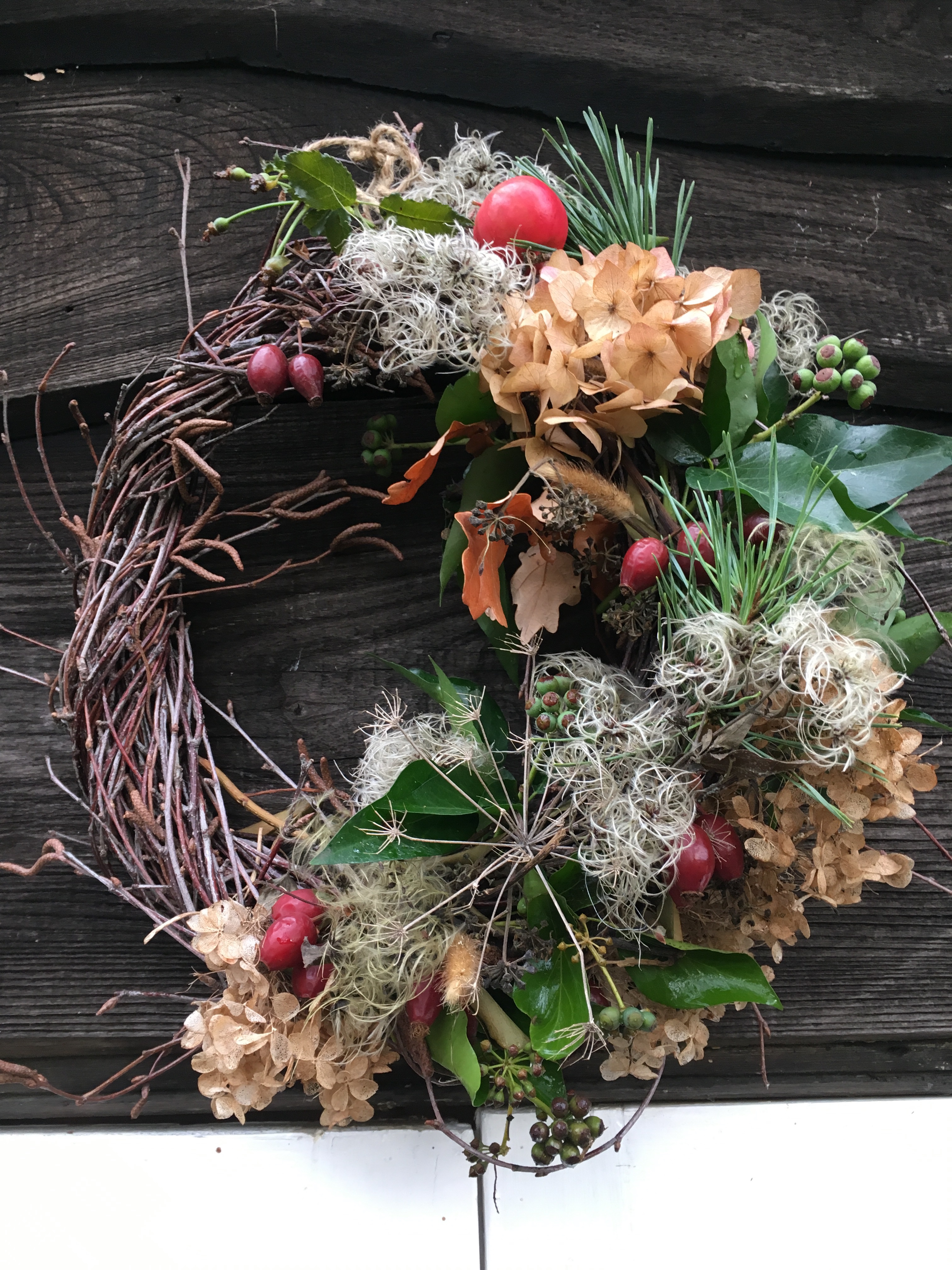
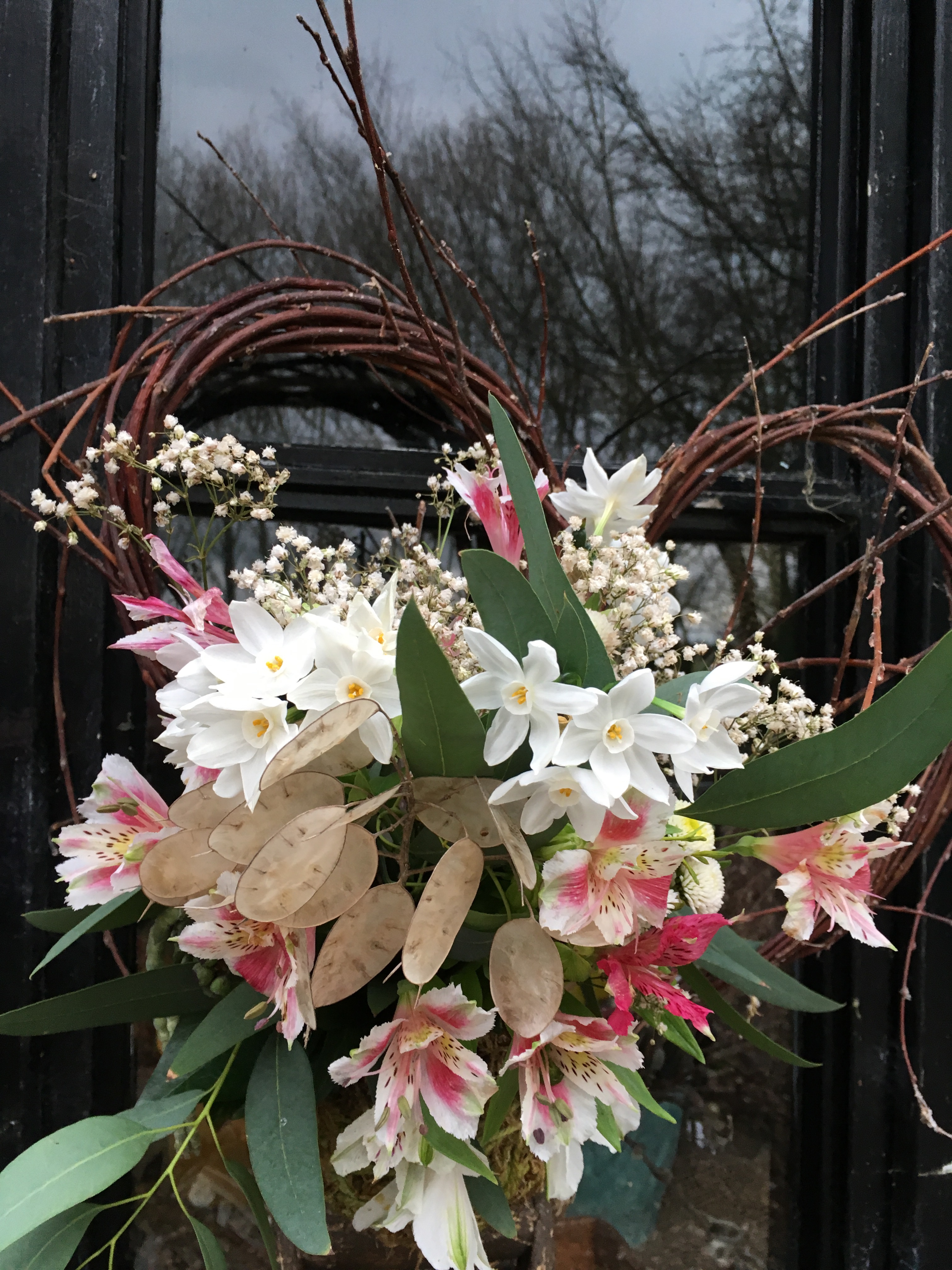
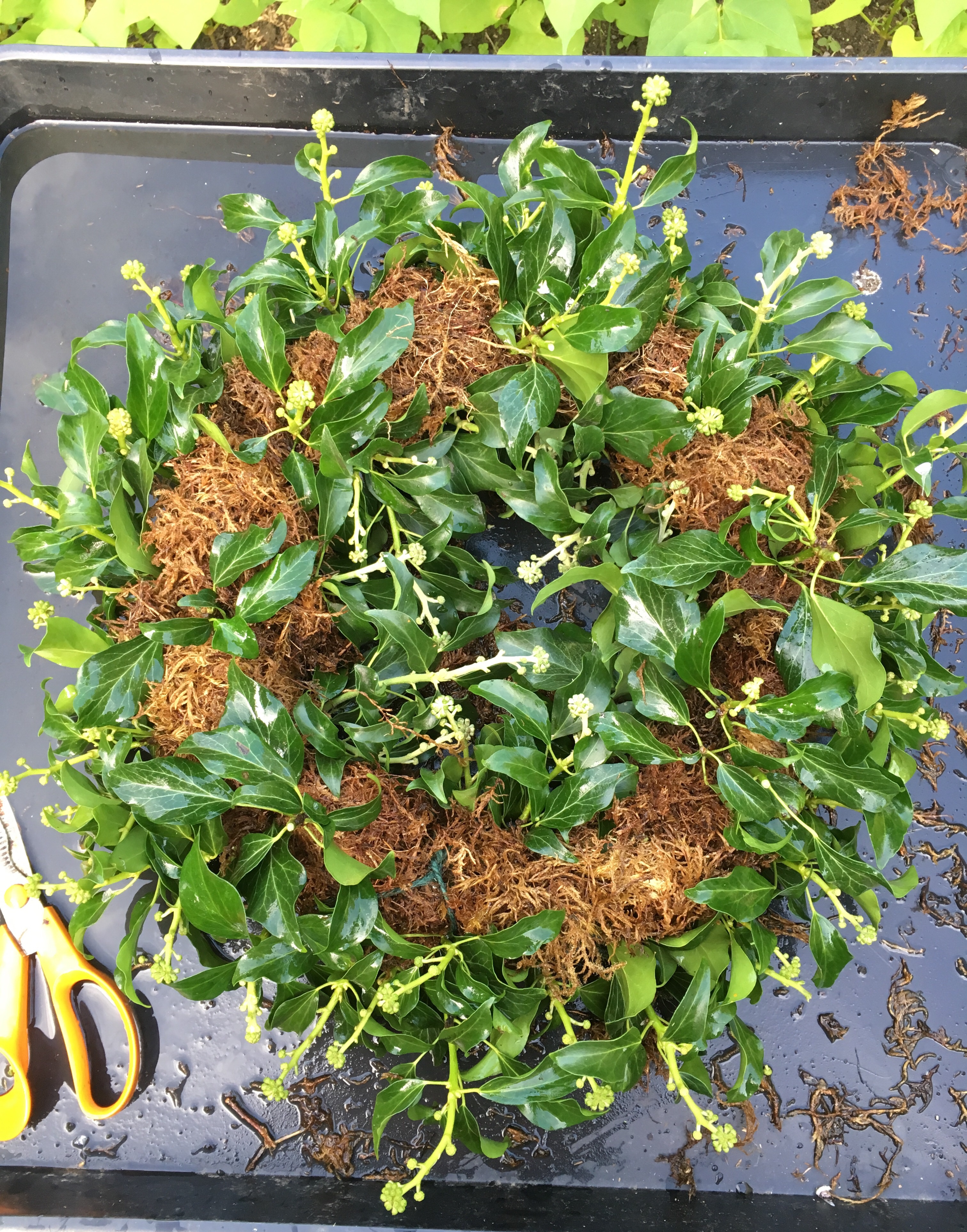
These little posies are placed into tiny glass or plastic test tubes and wired into the silver birch wreath. It’s easy to make the wreath. Just cut a length of weeping silver birch stems and twist and wind them around, tying at the top. Wire in some 4” lengths of ivy, moss and wild clematis or ‘old man’s beard’ as we call it. Daffodils, iris, cyclamen and crocus will last a week in the test tubes if kept topped up and it’s simple to just add fresh flowers when needed.

Here’s another tiny posy with snowdrops, crocus, cyclamen and a blue flower I think is called squill. Perhaps you know it? There’s an amazing strong scent for such a small arrangement in a tiny glass vase. Winter flowers are often beautifully-scented as they have to work hard to attract the few pollinators that are about.

Talking of scent, I don’t think you’ll get anything with a stronger scent in winter than Paper White narcissi. We start ours off in plant pots at the end of September. Six bulbs to a 7” pot. They’ll take about nine weeks to flower, depending on temperatures. You can bring them on for Christmas by bringing them in from a cold greenhouse. Always start them off in a cool place, or they will grow tall and leggy and won’t root as well. You can extend the flowering season by bringing pots indoors in sequence right through to March. Paper Whites are not hardy so they won’t grow outdoors, but I start mine off in an unheated poly tunnel which gives them just the right amount of protection to grow well. If I want to make a big indoor display, I select pots with flowers all at the same stage and just place them in a large cache pot, topping them off with moss to hide the pots. No one would know that I’ve cheated! We use Dalefoot sheep wool and bracken compost specially created for bulbs. This compost is a favourite of mine as it gives Lake District farmers an income for their wool- which would otherwise go into landfill. Also the compost doesn’t break down and disintegrate like some other peat-free types. The other compost we use is Melcourt multi-purpose with added John Innes. We add grit and vermiculite to these, depending on what we want to grow.

Here’s some Paper White and Soleil d’Or brightening up January!

Such a lot of scent from such small flowers.

Planting a selection of varieties mean you’ll have daffodils from January through until May. Cedric Morris is first to flower outdoors. February Gold (above) usually flowers at the end of February. Tete a tete in March. The last daffodil to flower is Hawera in May.

Another new variety which has become a firm favourite is Snow Baby (above). This flowers for a long time, coping with strong winds, hail, snow. It starts out pale lemon and fades to white. Such a beauty on short, strong stems.

I like to have heritage types in the garden, along with the latest varieties on trial. Historically, fruit growers used to have daffodils amongst their apple and pear trees to give them a spring income, and fruit bushes such as redcurrants and blackcurrants for a summer income. I like to keep up traditions like this, so I’ve planted heritage narcissi Geranium under my trees. These make a lovely scented bouquet in spring.

Here I’ve combined the old with the new. Narcissi Geranium with a new tulip called Exotic Emperor. These are ‘lasagne’ planted. Four inches of compost is placed in the bottom of a large Italian pot, and 25 tulip bulbs set on top. Another 4” of compost is set with another 25 tulips. More compost and 25 daffodil bulbs. Another 4” and 25 more daffodils. Then top up with white Carnegie hyacinths, white Joan of Arc crocus and snowdrops. I’ll have flowers from February through to May. I only have one expensive Italian pot so I want it to work really hard for me. It’s placed under my office window so I can look out at it while I’m working.

If I could only grow one tulip it would be Exotic Emperor. It reminds me of swan feathers. I love the green flash too. Double tulips last much longer than single tulips. There are more petals to open, which makes them good value.

Queen of Night is another tulip I use a lot in my garden design work. It’s long lasting and stands up to the weather.

Here it’s growing with Allium Purple Rain, a hybrid between Purple Sensation and Christophii. Highly recommended. Also look out for new summer-flowering allium Millennium. Hardy’s plant nursery sells this variety at flower shows and mail order.

For a pretty, fringed tulip, try Curly Sue. And my favourite pink tulip is Violet Beauty. We buy from Gee Tee Bulbs. Links to the nurseries are at the end of this blog post.

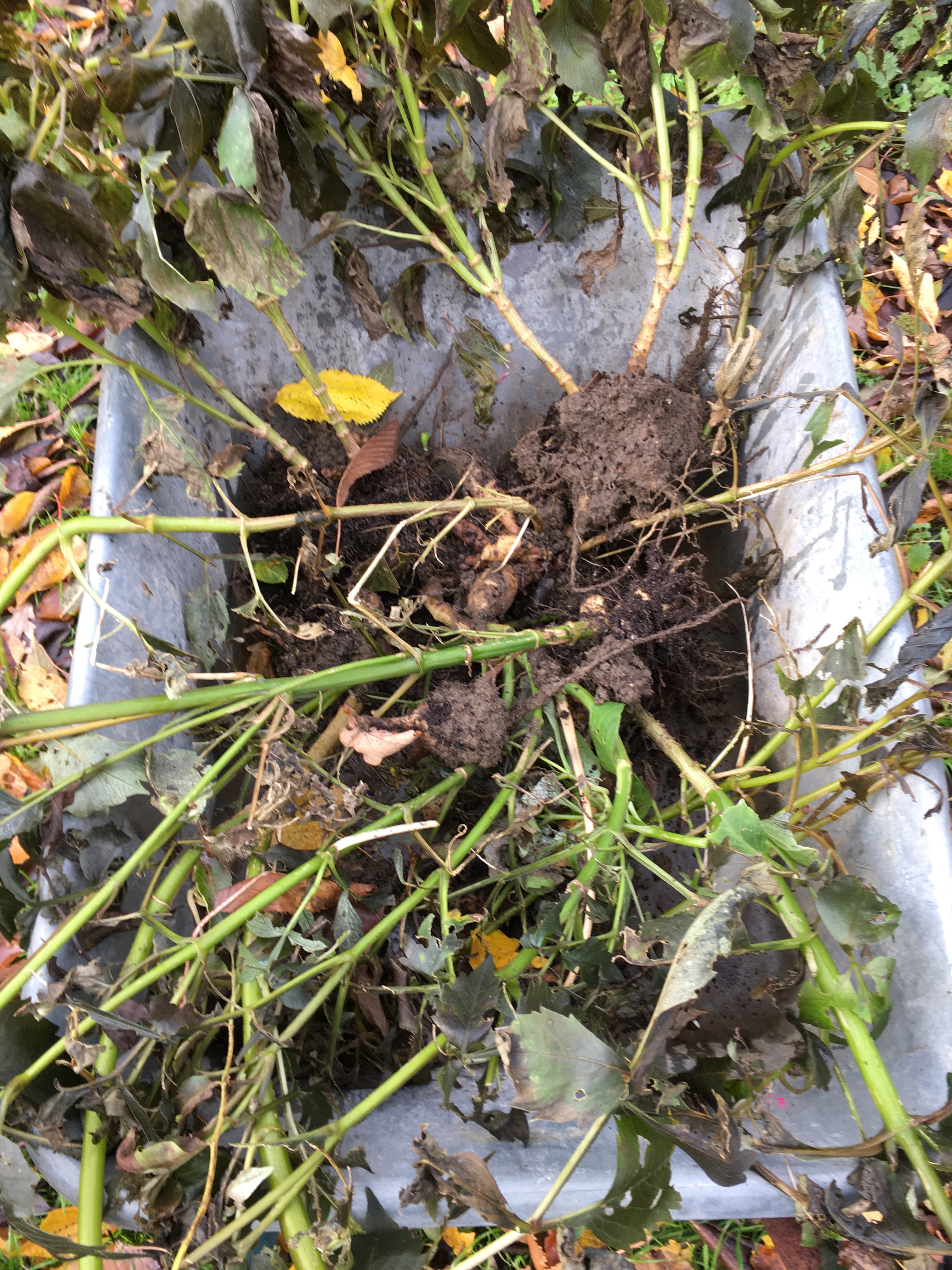
Rapidly moving on to autumn – as your talk was all about bulbs, corms and tubers- here’s Dahlia David Howard partnered with Alstroemeria Indian Summer. I leave my dahlias in the ground over winter, covered with a foot of dry leaves, some compost bags and finally, cloches. As long as they don’t get soaking wet and frozen, they will be fine.

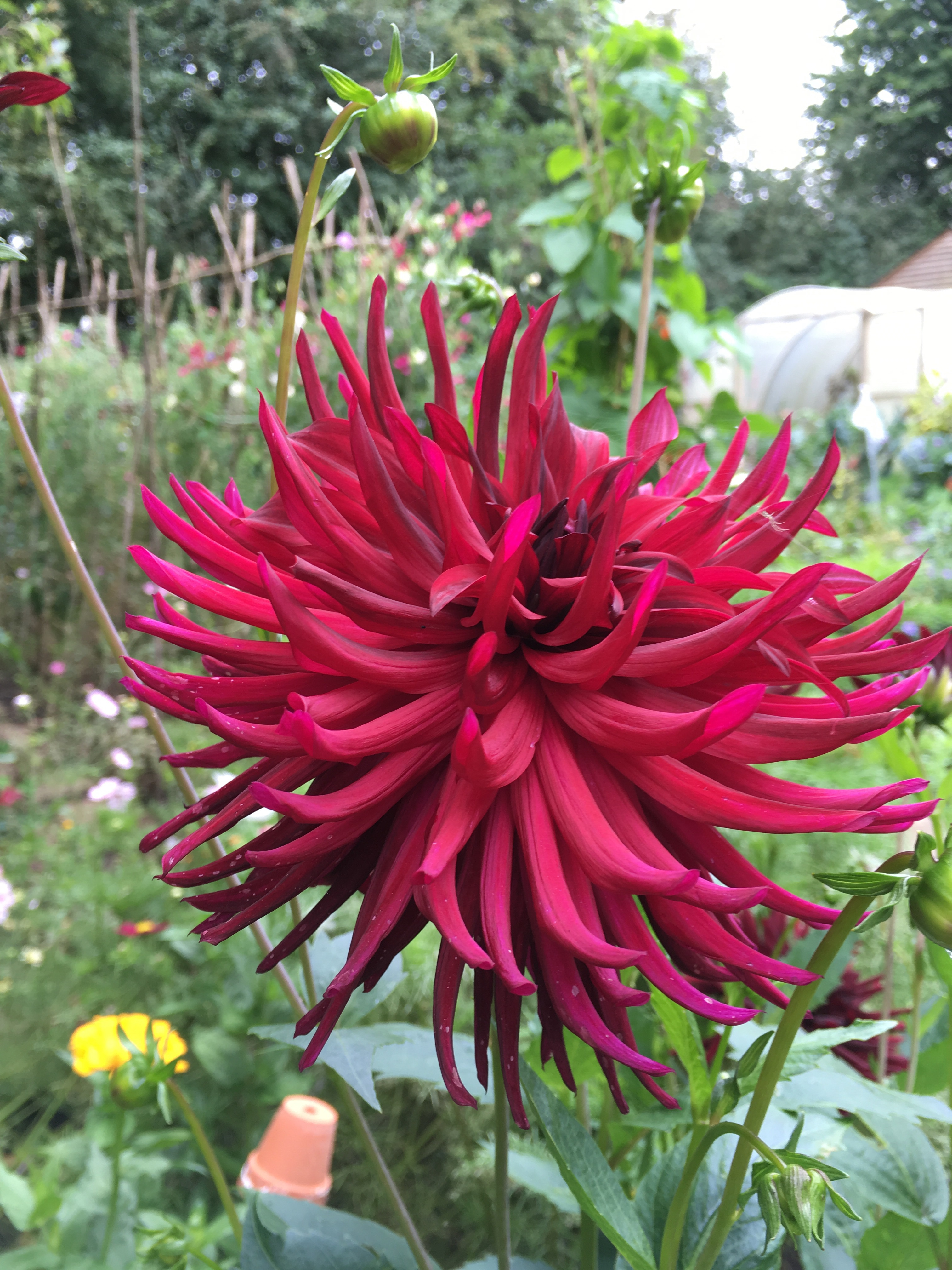
Nuit D’Ete is another top favourite. I love the cactus flowering dahlias for their striking petals. This one also has tinges of deep plum red and black in the centre. A really striking and beautiful flower.

I’ll leave you with a picture of my 1920s summerhouse which is on a turntable. It originally lived in Derbyshire at Flower Lilies Hall. We spent a year renovating it and now love sitting inside looking out at the different views of the garden. Thank you for visiting my blog and reading about my garden. Please leave a message in the box below, and sign up for e mail notifications for further blog posts. I concentrate on growing food and flowers at home- I never have to buy any cut flowers for friends and relatives. It’s all about choosing the right varieties and getting a succession of produce all through the year. It’s a fun challenge and one I love to share with you all.

Links:

https://www.gee-tee.co.uk/

Hardy’s cottage plants:

https://www.hardysplants.co.uk/

Also look at In a vase on Monday meme:

https://ramblinginthegarden.wordpress.com/2023/08/28/in-a-vase-on-monday-bluesy-floozy/

Flowers from my garden for my Mum

Sweet peas and roses are plentiful on 28th June. Rosa It’s a Wonderful Life is the favourite this week with five or six rose heads on each spray. It’s almost a bouquet on its own!

Flowers are fully double with a delicious fruit salad scent. Leaves are very healthy with no sign of disease.

Perfect in bud. Flowers start a deep apricot colour and fade to pale pink.

It makes a striking feature in the garden, with all shades of peach and apricot at a time on one rose bush.

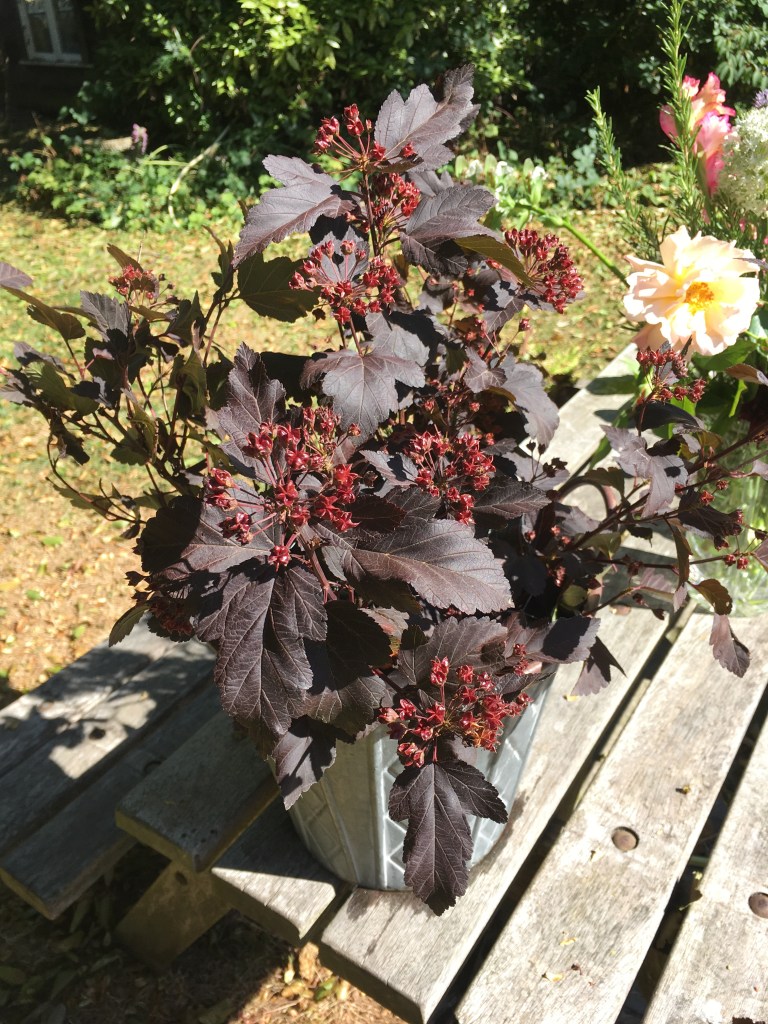
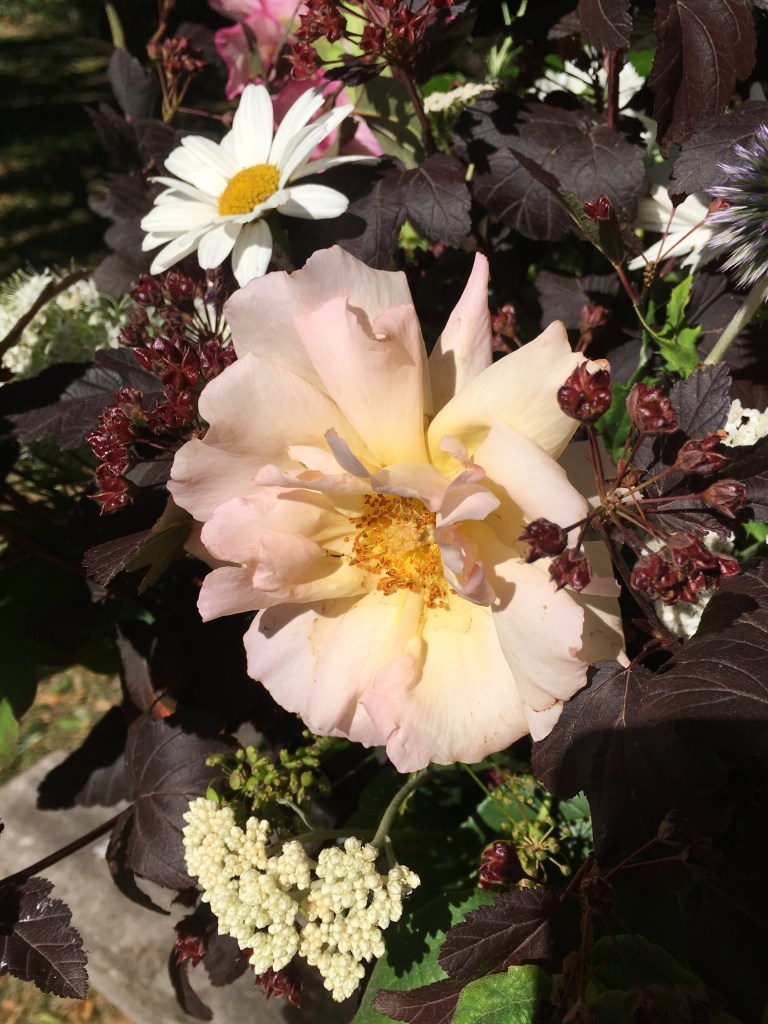
For background colour, I’ve chosen dark purple-leaved physocarpus Diabolo which in summer has clusters of pale pink flowers. These turn into deep purple seed heads.

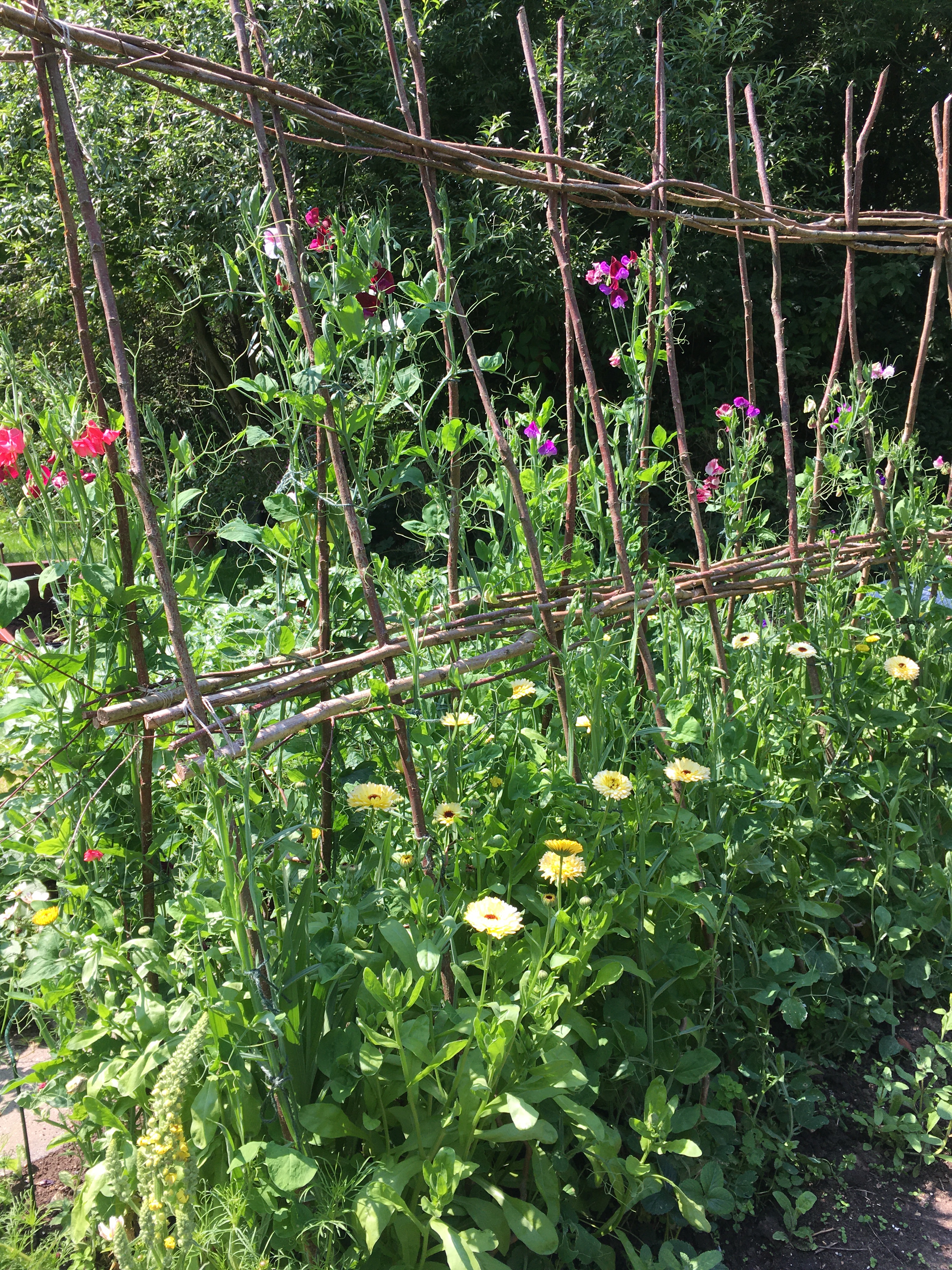
Sweet peas are growing along a hazel A-frame in the veg plot. This year I’m growing a selection of white sweet peas alongside old favourite High Scent.

Mum sowed these oxeye daisies from a packet of wild flower seeds six years ago. We planted them together in one of the 1.3m by 3m divided veg beds in front of the greenhouse. They are the perfect partner for roses.

When they have finished flowering, I’m planning to move them to the new wildflower area surrounding the pond. They are taking over the veg patch , which I’m not complaining about. I love their joyful exuberance. Daisies are probably my top favourite flowers.

Also looking good at the moment are the home florists’ range of roses. This one is Timeless Cream. I’ve also got Timeless Purple. Highly recommended. Very few thorns and long lasting in a vase.

Timeless Cream in bud. Would make a perfect buttonhole rose.

And Rosa Mutabilis also blends in. This is the longest flowering rose in my garden, starting in April and still in flower in December.

Have a great gardening week everyone. I hope this has given you some inspiration on what to grow at home to create bouquets for friends and family all year round.

Also catch up with Cathy over on her #InAVaseOnMonday meme. It’s fascinating what everyone’s growing in gardens, all around the world.

https://ramblinginthegarden.wordpress.com/2023/06/26/in-a-vase-on-monday-three-little-maids/

Flowers for my Mum. Home-grown from the plot

Summer annuals, such as cosmos, haven’t started flowering yet. We are about two weeks behind, due to a very cold spring. So for this week’s flowers from the plot I’ve had to rely on biennials, perennials, climbers and shrubs. Each week, I pick a selection of flowers to take to my Mum as a ‘snap-shot’ of what the garden looks like. It’s a way of sharing our love of flowers and keeping her connected with what’s happening here.

Love-in-a-mist was sown last autumn and over-wintered in an unheated poly tunnel. I was testing out a theory to see if I could get early flowers by the last week of May. There are masses of flowers, but these are only a few weeks earlier than the ones growing in a sunny south-facing border outdoors, so I probably won’t repeat this exercise. The cost of compost and use of space doesn’t warrant the slightly earlier flowers.

The tiny deep purple flowers are Geranium Phaeum which pops up all over the plot in places I never planted it. It’s a long-flowering perennial and doesn’t take up much space, just meandering about through established shrubs and in a dry, shady woodland border.

The other jewel-like purple flowers are perennial wallflowers from Coton Manor plant nursery. These are highly recommended as they flower for a very long period and are low maintenance and easy-going. I bought just one plant and took cuttings immediately. I soon had 20 plants to cover a quarter of one of my vegetable and flower beds sited next to the greenhouse. I have 10 beds which are 1.5m wide by 3m long with small slab paths running between.

The last of the orange biennial wallflowers are being picked now. I’ll sow some more seed for next year. Sooty is a favourite deep purple/ black variety. The one above was part of a mixed packet of seed named Orange Bedder. It’s been flowering for several months. Deep red buds open to a lovely marmalade orange and the markings on the petals remind me of a dragonfly’s wings. The scent is wonderful, especially in the evening, and attracts clouds of moths. And circling above the plot, eating the moths, we have pipistrelle bats. We have seen them here since we moved in and created a garden 30 years ago. We thought they roosted over winter in the farmhouse next door, but they must have found other accommodation as the farmhouse has been completely renovated and there are now no gaps in the slate roof.

Forget me nots fill another whole bed, providing ground cover for the soil until the bed is required for summer crops. Forget me nots pull up very easily and suppress any weeds, so you are left with a nice clean bed to start planting out crops such as sweetcorn, onions, French beans, and courgettes. This year I have planted a dozen sunflowers in amongst the sweetcorn, an idea I spotted at Easton Walled Gardens last summer. Nasturtiums will clamber up the sweetcorn as it makes a sturdy support for annual climbers and scramblers.

Welsh poppies pop up in every crevice all over the garden. I did previously try to eradicate them, but they persisted and I’m quite pleased they did now. Such a cheerful plant with flowers that look as if they are made of silk. I have the yellow and the orange types here. Background foliage comes from the Physocarpus Diabolo which grows in a north facing border and provides material for flower arrangements all summer long.

Dead nettles and cow parsley add a touch of white to the posy. Dead nettles continue to grow out of the bouquet and flowers last a long time. I was intrigued to see four out of the 12 gardens at Chelsea Flower Show contained so called weeds. I laughed out loud when I heard pots of dandelions were selling for £30. I’m actually a millionaire if dandelions, nettles and buttercups are taken into consideration. My whole plot is full of them!

I have a new little helper in the garden! My grandson, Finn. He loves running between the cow parsley along the woodland paths and picking flowers for his great grandmother. I’m hoping he will have a life-long love of nature and flowers, just as we did, growing up running free in our grandparent’s gardens. Have a happy gardening week everyone.

Do join Cathy for her ‘In a Vase on Monday’ meme. If you are busy, like me, it doesn’t matter what day of the week you post your posy of flowers from the garden. It’s a good community to be a part of, sharing what we are growing in gardens all around the world.

https://ramblinginthegarden.wordpress.com/2023/05/29/in-a-vase-on-monday-self-care/

Flowers from my garden- a week later….

Last week I posted an ‘all of the garden’ bouquet with everything in flower. I thought you might like to see how the flowers look seven days later. I visited my Mum today and took all the flowers out of the vase and cut four inches off the bottom of the stems. I cleaned the jam jar and added fresh water.

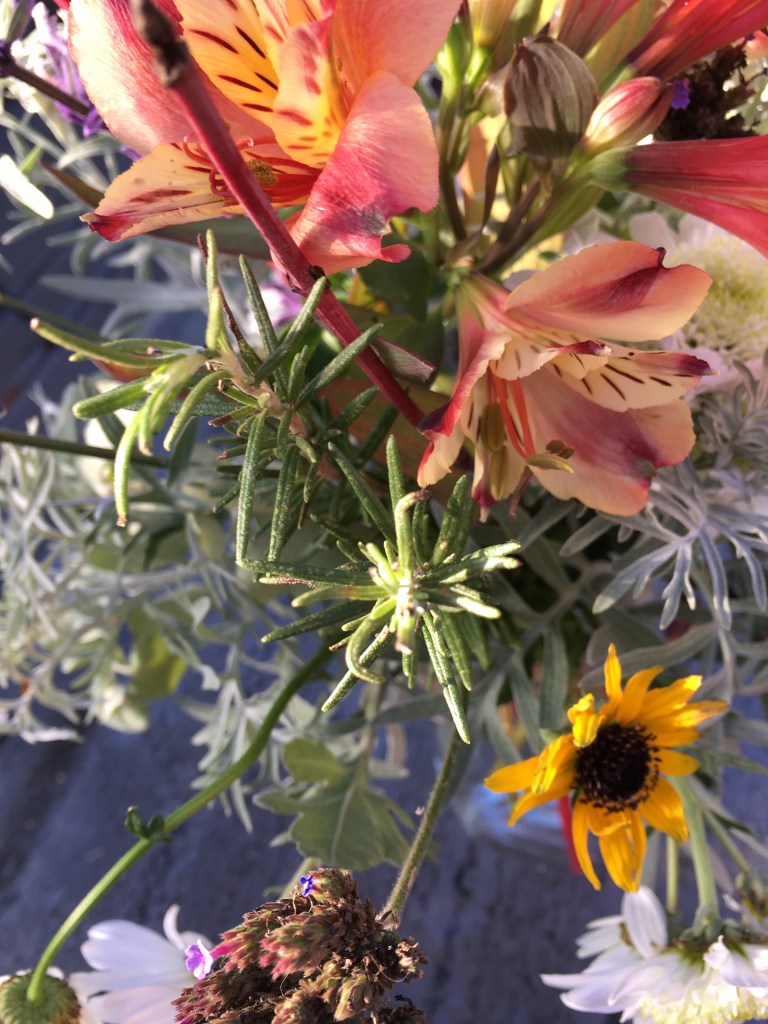
What a joy to see Alstroemeria Indian Summer still looking fresh and colourful. As I said last week, I bought this new plant from Mary Thomas who has a nursery in my area. Mary lives in Sutton Bonington and opens her garden for the NGS. She also has a plant nursery, Piecemeal Plants and has a stall at the Belvoir Castle Flower Show where I treated myself to one or two special plants. To have them still in flower in mid-November is making me very happy indeed!

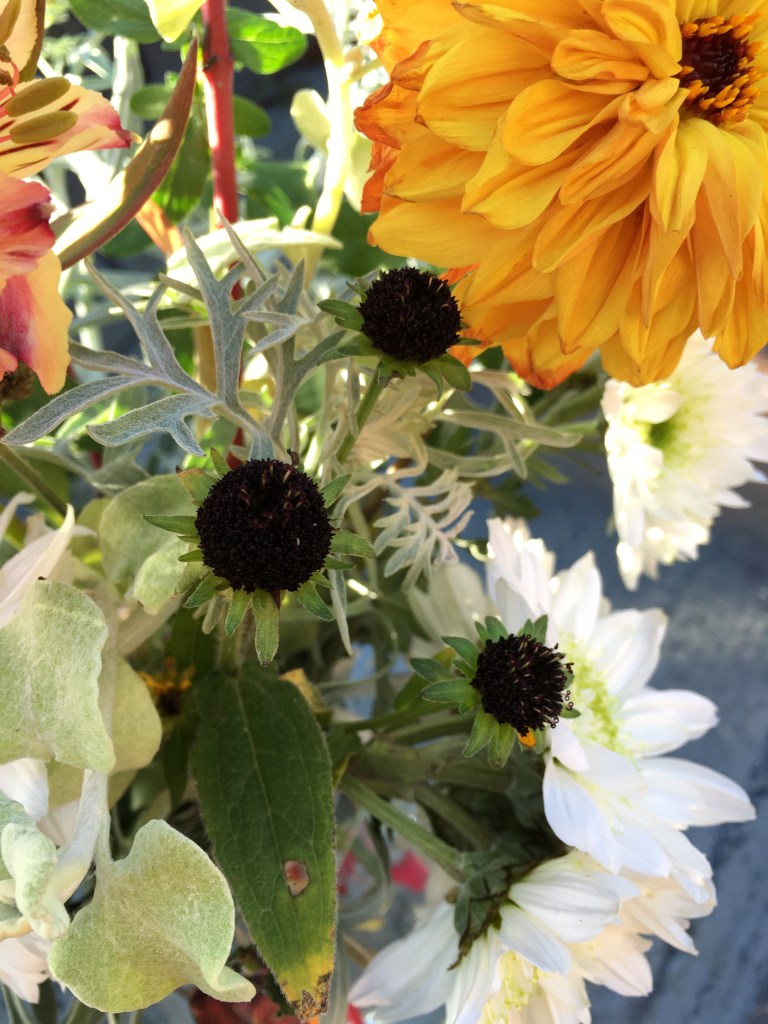
Chrysanthemums give good value in a cut flower garden and will last three weeks in a vase, if looked after by refreshing the water and just trimming the base of the stems slightly every few days. Mum hadn’t touched her flowers for the week, but they still looked as fresh as newly picked. This variety is Swan. The pure white petals surround a green centre which eventually fades to white to match the outer petals. A good value plant. We bought cuttings from the RHS Malvern Show a few years ago. I think I shared a batch of cuttings with a friend. There was a special offer of 12 cuttings of different types. The price for the offer worked out at about 80p per cutting. Plants are grown in 10”pots stood outdoors all summer. Usually I take them in the poly tunnel or greenhouse in November as frost and rain might spoil the petals, but this year we have had such mild conditions, the plants are still outdoors.

This is the very last David Howard dahlia of the year. It’s my favourite dahlia and goes really well with the alstroemeria, as if they were meant to be together as a pair.

The petals of the rudbeckias have dropped off, but I decided to keep the stems as the dark brown stamens made interesting ‘buttons’ of colour and shape. A contrast to the flowers.

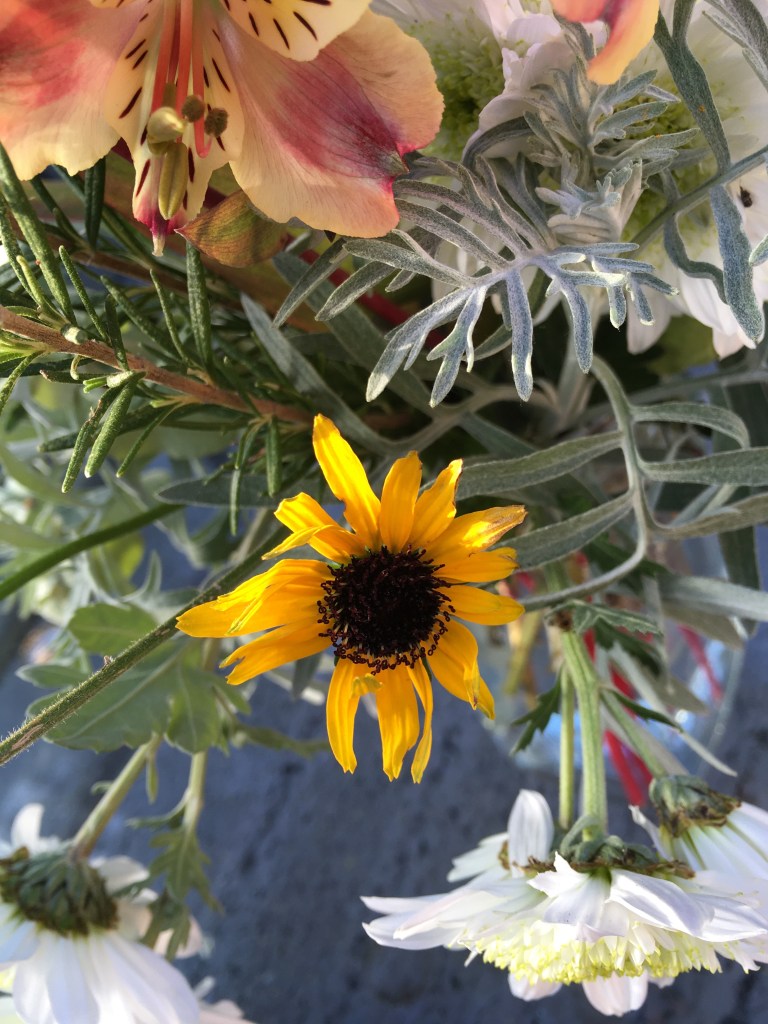
This little rudbeckia is hanging on, grown from a mixed packet of seed from Mr Fothergills. I just couldn’t throw it out. It might not last another week, but we shall see.

I was surprised and delighted to see the little wild flower Oxeye daisy still hanging on. Such a lovely reminder of the banks of white flowers which flower all summer here. It’s so strange to see them blooming in November as the days grow dark. But welcome even so.

As usual, foliage is important in my jam jar flowers. This is a lime green bedding plant I keep going from one year to the next by taking lots of cuttings and keeping them in 3” pots over the winter. They are popular for hanging baskets and containers, but also make very good foliage for cut flowers. And I’ve temporarily forgotten the name. Perhaps you know it? There’s also a grey version, but I prefer the lime green.

There’s also rosemary which goes into every posy I create. Everything I do has a meaning and rosemary is for remembrance, as you probably know. I’m surprised to see the huge 4ft high plant I have in the veg plot in full flower today. Such beautiful Mediterranean blue flowers and gorgeously -scented leaves. I couldn’t be without it.

I couldn’t be without my senecio viravira which also goes into every single posy I create. It’s such a pretty leaf and sets off all the other colours. Plants are not always hardy so again I’ve taken cuttings in 3” pots, just in case.

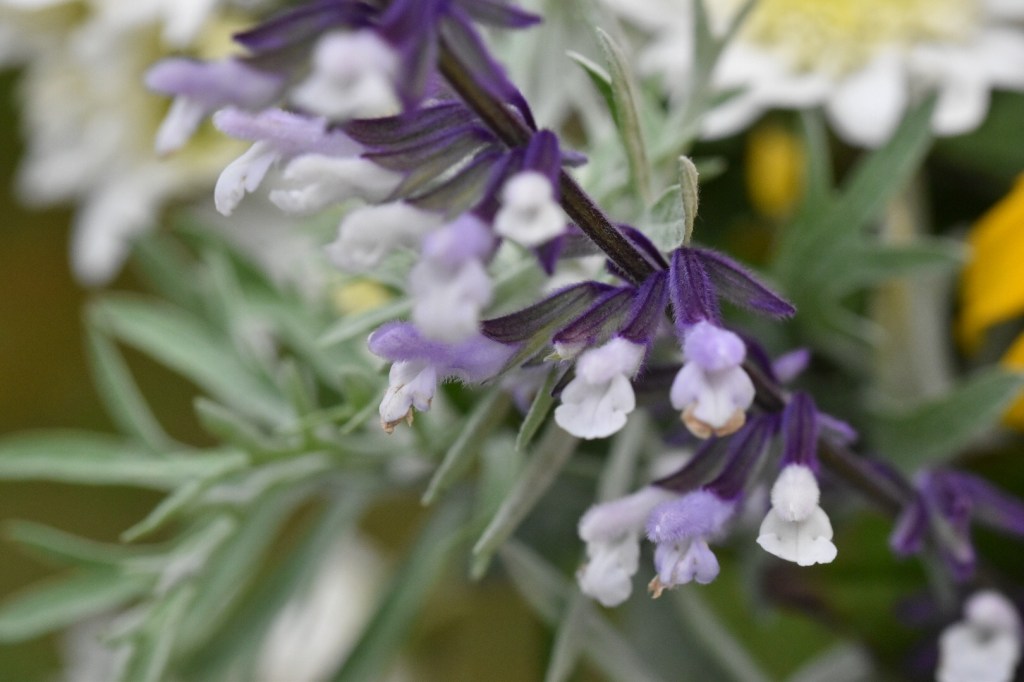
Also, not easy to photograph, but Salvia Phyllis’s Fancy is as fresh as the day I picked it.

A slightly better photo. You can also see the red stems of dogwood which give colour to autumn arrangements.

I hope you’ve enjoyed this weekend’s updated photos. It only took me ten minutes to rearrange the flowers and refresh them. It’s so rewarding to see how long home-grown flowers can last. And my mum’s kitchen window is full of autumn colour and scent for another week. A worthwhile project and it makes me – and my lovely Mum very happy.

Have a lovely gardening week. And thanks for reading the blog and leaving a comment below. Follow Cathy for the ‘In a Vase on Monday’ meme. She has a very special anniversary tomorrow, so many congratulations Cathy! And thanks for hosting such a lovely, friendly meme with members growing and arranging flowers all around the world for the past nine years.

https://ramblinginthegarden.wordpress.com/2022/11/07/in-a-vase-on-monday-life-more-sweet/

November flowers for my Mum

Monday 7th November 2022

Surely, these must be the last flowers for cutting this year…. I keep going out expecting to see foliage blackened by frost and buds turned to mush. But no, the garden is still blooming!

Star of the show must be these marmalade orange flowers, Dahlia David Howard. Plants have done nothing all summer, but suddenly a month ago, after some rain, new leaves appeared and flower buds. I didn’t think they would come to anything as it’s so late in the season.

Coming into flower again is my new alstroemeria Indian Summer which I brought in July from my friend nursery owner Mary Thomas. It was in flower when I bought it, and it’s decided to get going again now. Doesn’t it look wonderful alongside the David Howard dahlias.

They look as if they are meant to be together in a bouquet. Such a pretty combination, don’t you think?

Another surprise is this red and white dahlia. It arrived all by itself. I bought a white one and a red one several years ago, and together they have produced a seedling baby combining the two colours. It’s rather pretty and flamboyant. I love the open centre as it has plenty of pollen for bees. I probably enjoy bees and butterflies as much as the flowers in my garden to be honest.

I sowed the seed for these sunflowers speculatively in August. I sowed them direct, in amongst the cosmos and calendula. Temperatures were so hot in the 30s for days on end that seeds germinated almost overnight. The result is a bed full of miniature sunflowers only 4” across. I don’t suppose this will ever happen again as we are unlikely to have another summer like this one.

Another mixed up sunflower, or it could actually be a rudbeckia. It has a very pretty chocolate coloured centre. I love any daisy-type flower.

Not a perfect flower, it’s slightly nibbled around the edges, but this is an ox-eye daisy which usually flowers in mid-summer. We have these wild flowers dotted about the whole garden, especially along gravel paths where seedlings flourish. I’m digging some up this week and moving them to a new patch of bare ground around the pond.

More white flowers just starting to bloom now are the chrysanthemums. This one is called Swan. It opens with a green and cream centre and fades to pure white. Very long-lasting in a vase, it will keep for nearly three weeks if you change the water daily. Highly recommended. I grow it in 10” pots stood outdoors for the summer and brought under cover in winter.

Verbena Bonariensis is a pretty filler for these bouquets. We often have flowers right through until Christmas, although they are starting to diminish. They are still worthy of close inspection even when there are more seeds than tiny flowers.

Also joining the last-minute party is salvia Phyllis’s Fancy. I bought this for the name as much as the flower. I’d love to know who Phyllis is. It certainly is fancy. Salvias are quite hard to photograph. I have a new camera which doesn’t seem to understand exactly what I want to focus on, but the photo is striking even with most of the flowers blurred. It’s the most wonderful purple and lavender flower.

I hope you’ve enjoyed my last-minute flowers. Can you spot the abutilon poking out of the bottom on the right. I think this is Kent Belle. Three stems of red dogwood (Westonbirt) add structure to the arrangement.

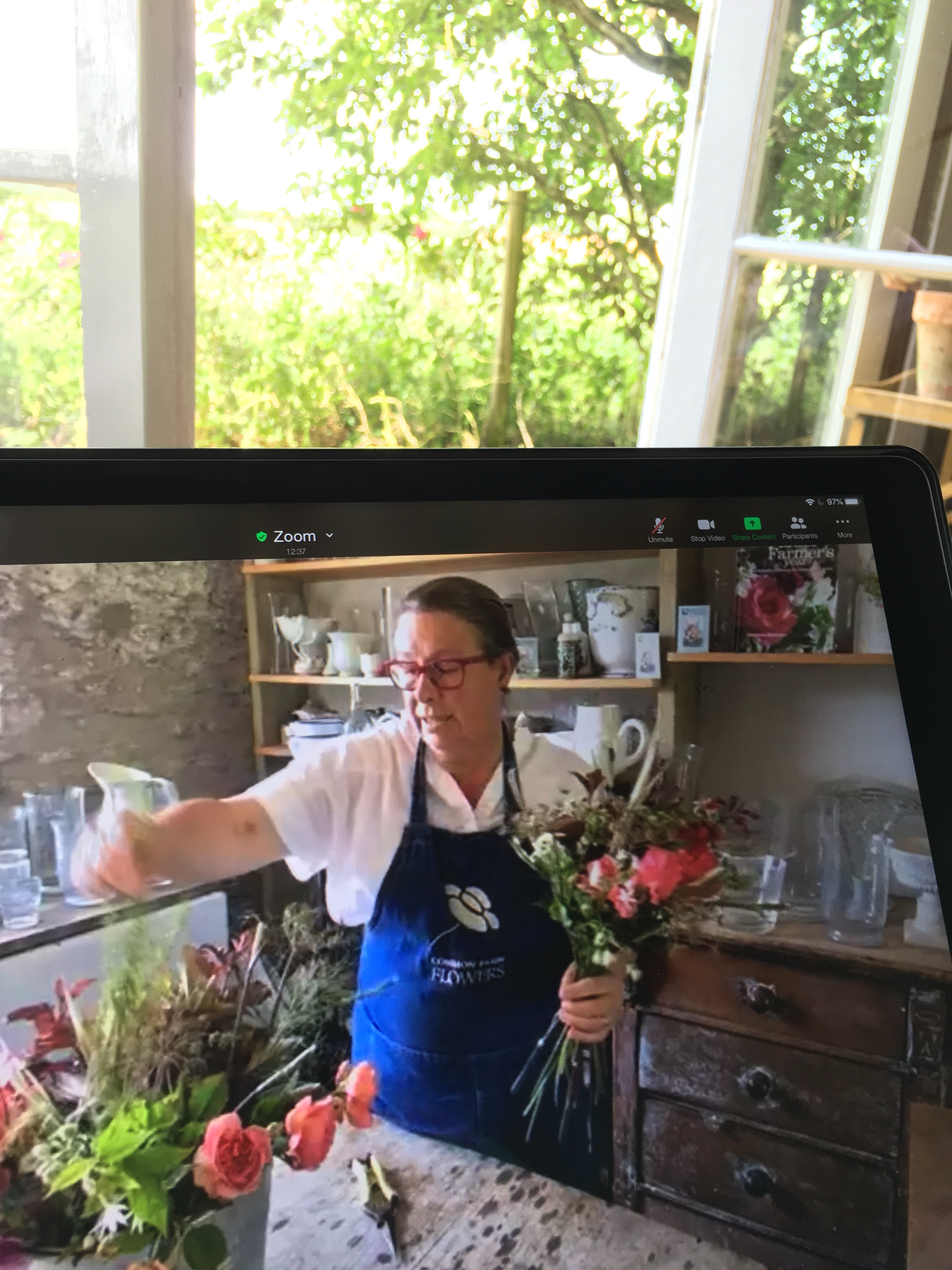
I learned from Georgie Newbery of Common Farm Flowers to add stems in a spiral by holding the bouquet in one hand and giving it a quarter turn before adding another stem. This way the arrangement looks good on both sides, and will actually stand up on its own. It’s a satisfying moment when it does!

Thanks for reading my blog. Flowers are for my lovely Mum this week. After a six week absence due to illness, I’m owing her quite a few bouquets! Join Cathy over on ‘In a Vase on Monday’ to see what others are cutting and arranging for their vases this week. It’s interesting to see the variety of flowers from all around the world. https://ramblinginthegarden.wordpress.com/2022/10/31/in-a-vase-on-monday-spooky/

Flowers from the garden 31st October 2022

Who would think it was the last day of October? My dahlias didn’t have any flowers during August, September and the first half of October. But they have suddenly decided to put on a display. And what a display. They are all producing glorious stained-glass hues. The colours seem brighter and more glowing than previous years. They are so welcome after such a disappointing summer.

Labels have been scratched up by the hens and misplaced, but I think this is Dahlia Karma Choc, a decorative type with velvety dark red flowers. It got left behind in the garden last autumn, while most of the dahlias were dug up and stored in the potting shed. To be honest, it has done just as well as the others, so I’m going to risk it this winter, and leave them all out. I’ll cover them with a foot of dried beech leaves, a plastic cloche and recycled compost bags. They should stay fairly dry and be protected from frost. And if they don’t survive, I’ll have a rethink in the cut flower garden next summer. I might try something less trouble that doesn’t get nibbled by slugs, need staking and then can’t cope with a drought.

Karma Choc with grey foliage of Senecio viravira, known as Dusty Miller. I’ve taken lots of cuttings of the senecio as it’s not totally hardy. I’d be lost without it as it provides foliage for my jam jar arrangements all year round.

Dahlia David Howard has also decided to flower. These apricot orange blooms are much smaller than usual. Foliage is dark, bronze almost black. Plants were originally bred by nurseryman David Howard who spotted a promising seedling in 1960. It went on to win an RHS AGM, Award of Garden Merit. David founded Howard Nurseries in Wortham, near Diss and had a passion for dahlias and chrysanthemums. By the age of 16, he was supplying plants to Covent Garden while selecting and breeding his own varieties. The nursery thrived with David and a business partner buying first four, then 12 then 24 acres to expand. They gained such a renowned reputation that they supplied plants to the Chelsea Flower Show, and also to the Queen Mother and Prince Charles. David died aged 81 in 2019, and his daughter Christine now runs the nurseries.

This beautiful white dahlia flower reminds me of swan feathers. Sadly, I don’t know the name as this was given to me by a friend, but I’ll take cuttings next spring and increase my numbers because it’s such a lovely cut flower. The heads usually get quite heavy and dangle down, but Georgie Newbery of Common Farm Flowers showed me how to twist the stem around and turn the dahlia flowers into the centre of the bouquet which seems to work. The red stems you can see in the first photo are dogwood, Cornus Westonbirt, which also help support heavy flower heads.

Tucked in amongst the dahlias are a few teeny sunflowers. They never grew more than a few inches across! However, their bright yellow flowers are very welcome now, even in miniature.

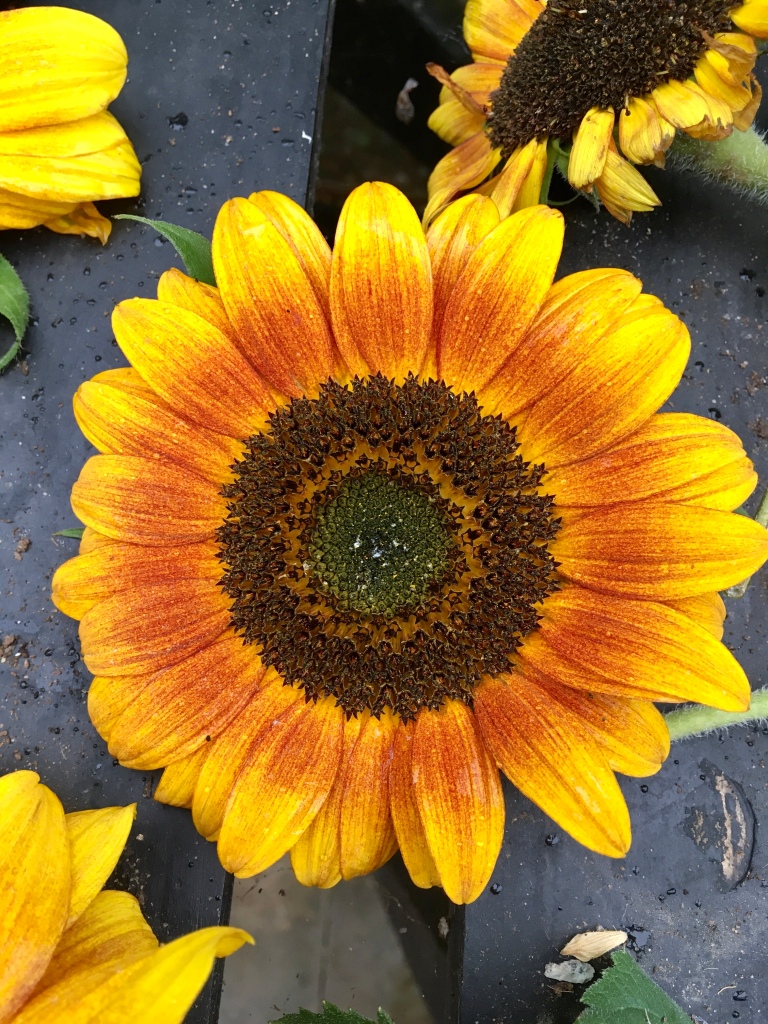
This sunflower grown from a mixed packet of seed from Mr Fothergill’s has burnt orange flowers and a chocolate centre. Bees love them, and the seed heads are good for birds.

A beautiful double yellow sunflower with my favourite dark brown centre.

Cosmos also eventually decided to flower. I think this is Candy Stripe from Mr Fothergill’s. Another good flower for bees. And with daytime temperatures still at 18C we still have bumblebees and solitary bees out and about.

Argyranthemums braved the heatwave in summer and produced a few blooms, but now the plants have decided to go for it and plants are smothered in large white daisies. These last for two weeks in a vase, so I’m very grateful to see them in flower.

Cerise red dahlias, possibly Arabian Night, with red salvias which are also having their moment now.

And tucked in the middle is this fimbriated cactus dahlia, possibly Apache, which came from Gee-Tee Bulbs. Foliage is always important to me and in my bouquet today I have one stem each of mint, rosemary and lemon-scented santolina.

I hope you’ve enjoyed these bright jewel-like colours. I must admit, I usually prefer pastel shades. But after the summer we’ve had, any colour is certainly welcome. These flowers are for my Mum, who I haven’t seen for six weeks due to illness, so a joyful reunion, and I am pleased to have something lovely and cheerful to take from my garden.

Is your garden behaving strangely like mine, and deciding it’s summer all over again? Let me know if it’s just me, or if your flowers are blooming again. Have a great gardening week. Karen

Links: Join Cathy In a Vase on Monday: https://ramblinginthegarden.wordpress.com/category/gardens/in-a-vase-on-monday/

Flowers in memory of Joan

Rosa Compassion

This blog records my gardening life, growing fruit and vegetables for the family, and flowers for friends and relatives. Over the past five years, I’ve written about growing flowers for my mother-in-law Joan as a way of keeping a connection when she started to suffer from dementia. Joan and I shared a love of flowers and flower arranging. When she no longer knew my name, she still enjoyed my flowers and knew I was someone close to her. Sadly, Joan died earlier this year. All bereavements are difficult to recover from, but I’ve been surprised just how much I’ve been affected by Joan’s death. I didn’t feel like talking, didn’t feel like writing, didn’t feel like gardening. All the activities I usually enjoy didn’t seem to make any difference. I suppose, all these years I’ve been able to ‘do something.’ There’s been a purpose to all the work of growing sweet peas, dahlias and roses for cut flowers. Just to see Joan smile and feel as if I was keeping a connection with her, made it all worthwhile. It felt like an impossible challenge sometimes when she got so muddled she couldn’t remember her children or grandchildren. But challenges drive you on and force you to try harder. I was absolutely determined that dementia wouldn’t get the better of us and destroy the special friendship we had. But in the end it did. I feel as if it stole the last few years of her life and any comfort she could enjoy from knowing she had a large and loving family. Dementia took her into a parallel universe where we just didn’t exist. And Joan’s death has left such a hole in our lives, it will take time to readjust and refocus. As a start, I’ve decided to post some flowers in Joan’s memory. Thank you to all the readers who have sent supportive messages over the past five years and have been with me on this journey. I’m a ‘glass-half-full’ kind of person, so I’m thinking what good can come out of this experience and what I can do next to help families with relatives suffering from dementia. I’ll keep you updated on my plans. Meanwhile enjoy these flowers. I hope they bring you joy, as they did for Joan for many years.

I started with the galvanised bucket which came from Jonathan Moseley and contained sunflowers last week. I wrote about them here: https://bramblegarden.com/2022/07/25/sunflowers-for-my-mum-in-a-vase-on-monday/

Jonathan put crumpled chicken wire in the bucket to help support the stems. We are trying to use water and containers instead of florists’ foam containing plastic which contaminates the environment. https://www.jonathan-moseley.com/

Jonathan used lemon-scented conifer as the foliage element for the flower arrangement. I’m using purple-leaved Physocarpus Diabolo which is one of the few plants looking good in the heat at the moment. I used seven stems.

Physocarpus is worth growing for its white flower heads which are followed by these glossy maroon-red seed heads.
I thought these Persian ironwood, or Parrotia leaves would add texture. They are turning pink already. Usually they turn red and then orange in the autumn.

I only had about ten flower stems to put in the arrangement. The whole garden has suffered in the heat. Sweet peas have gone over, the earliest I can ever remember. Anything in flower when the temperature hit 40C was bleached out and dried. However, the roses have been the first plants to throw out new flower buds. This one is Compassion, a gorgeous climbing rose with a fruit-salad scent.

This is a new shrub rose called ‘It’s a Wonderful Life’ – Rose of the Year 2021. I wrote about it here : https://bramblegarden.com/2021/08/23/this-months-diary-for-garden-news-magazine/

These roses are perfect for floristry as they are long-lasting and disease resistant. Stems are virtually thorn free, and the scent is a cross between melon and pineapple, fresh and summery.

I found two stems of this gorgeous gladioli growing down the middle of the sweet pea A-frame. The willow frame means I don’t have to stake the gladioli and it makes good use of the bare space in the centre. These are butterfly gladioli which are smaller in stature than the usual cottage varieties. They are also called nanus, or small-flowered gladioli. These are more reliable in difficult conditions because you need much smaller corms to obtain flowers. The large-flowering gladioli have to have good, fertile soil which is also well-drained and you must start with top-size corms. I recommend Pheasant Acre nursery for supplies. https://www.pheasantacreplants.co.uk/

Gladioli flower for a good two weeks and are the right scale to go with cosmos and argyranthemums. I recommend Atom, Carine, Alba, Charming Beauty and Nathalie. Pheasants Acre Nursery sells collections at summer shows and are worth seeking out as there are often special offers.

I added a few stems of an argyranthemum my mum grew from seed. These grow to about 1.5 metres here and are good, reliable plants for summer floristry. Bees and butterflies love them too.

There is just one stem of dahlia Nuit D’Ete. Dahlias hated the heat and are now struggling in the drought. I haven’t watered them. It would be impossible to keep watering them as temperatures are still heading for 30C. I’m hoping they are just sitting there semi-dormant, waiting for the temperatures to dip and rain to come.

My plan of action for next year is to increase the mulching with home-made compost and sheep wool and bracken clay-breaker compost. I will also buy more builders’ bags of maize-based Plant Grow fertiliser. Plant Grow is helping plants cope with the extreme heat. But where I ran out of money and didn’t mulch, the beds are suffering. It just goes to show the power of mulch to hold moisture in during the summer and combat flooding in the winter. I recently visited Chatsworth for a head gardener tour to see the new Arcadia garden planted last year. Interestingly, all the new perennials, and the new rose garden, were planted into 6” of soil improver from Veolia. A no-dig project on a massive scale. I’ll be going back soon to see how the plants have coped with the heat. I’m also liaising with the gardeners as one of many people sharing experiences of working with different types of peat-free compost. All of us are mixing our own additives to try to find something that works well for us. I’ll share our findings when I know more.

I’ve added just two stems of highly-scented Bridal Star carnation. These are recommended for home-grown cut flowers. Plants repeat flower all summer. I’m growing mine in 10” containers in the doorway of the polytunnel. Flowers get some protection from the rain, tucked just inside the door.

This flower was a surprise. It’s a spring onion, gone to seed! I might grow some on purpose, as they make large 4” diameter flowers, later in the season than most ornamental alliums.

My wild flower patch produced these flat-headed creamy white achillea. Another plant which doesn’t mind the heat. These started out as a packet of mixed wild flower seeds from Mr Fothergill’s.

These lime green flower heads are from parsnips allowed to go to seed. Jonathan Moseley allows some of his herbs and vegetables to run to seed and they make striking and unusual additions to his flower arrangements. The white flower in the photo is Cosmos Psyche White. A tall-growing, reliable cosmos. I grew the new cosmos Lemonade last summer, but it didn’t do well for me and was a bit of a disappointment. This year I’ve gone back to tried and tested white cosmos.

There are a couple of stems of blue drumstick echinops. These perennials are probably Taplow Blue, and originally came as divisions from Joan’s garden.

How is your garden faring in the heat. Have you had any rain, or are you parched like we are?

Thanks to Cathy for hosting the In a Vase on Monday meme. https://ramblinginthegarden.wordpress.com/2022/08/01/ina-vase-on-monday-glad-all-over/

End of the month review. Some photos from my garden and thoughts for Ukraine

Early Crocus Tommasinianus and Galanthus nivalis in the front woodland garden

Ukraine is constantly in my thoughts. I will not say much, as I’m sure you have arrived here for gardens, flowers, peace and tranquility – much needed in current times. But rest assured, although I am small and insignificant I am doing all I can in the background to support the people of Ukraine in any way I can. It’s easy to think that we are powerless, but often if many people come together then their efforts can be great. Think of one small thing you could do today to make a difference. We are not helpless- and we are not without hope.

Meanwhile, here’s some photos of my garden today for anyone who needs the restorative power of plants. Here’s Galanthus Madeline at the foot of the willow and hazel trees.

Wild primroses poking through the leafmould path. The scent is honey-like and delicate. The very essence of spring.

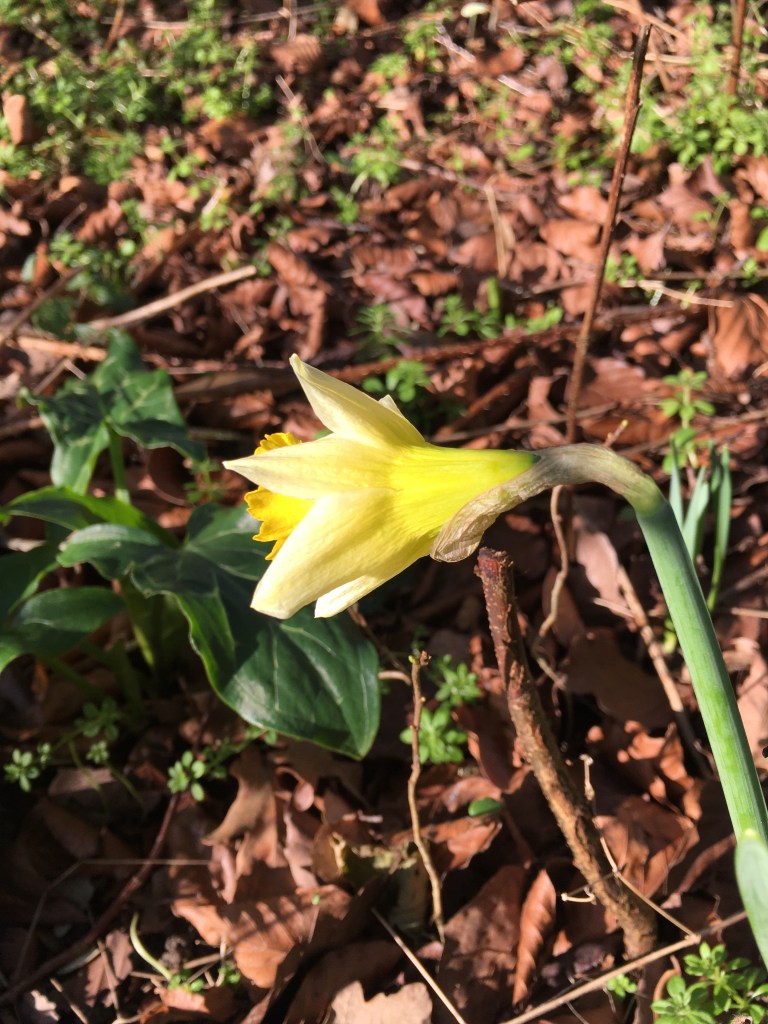
Wild daffodils are just emerging too. This one is Narcissus pseudonarcissus. There are drifts of the Welsh wild flower, the Tenby daffodil, in honour of my Welsh grandmother. But the little lobularis daffodil is the first to open.

The winter aconites are just going over now. The are making a nice swathe of colour in the woodland corner at the end of the pergola.

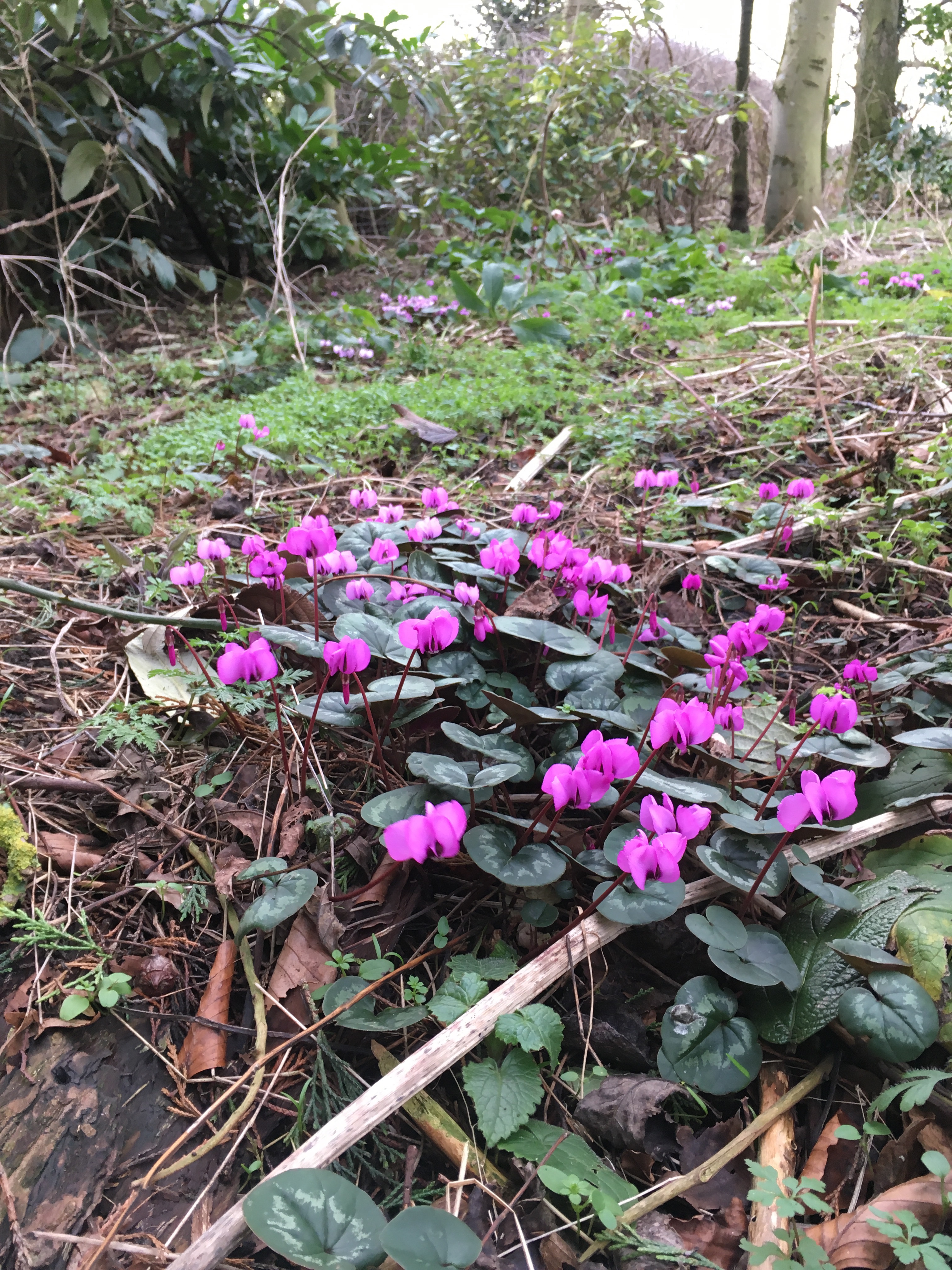
Cyclamen Coum flowers are popping up all over the garden- not necessarily where I planted them. Apparently the seeds have a sticky substance much-loved by ants which then carry the seed far and wide. They must have carried them off into the back fields as there’s a thriving collection of plants on the other side of the fence.

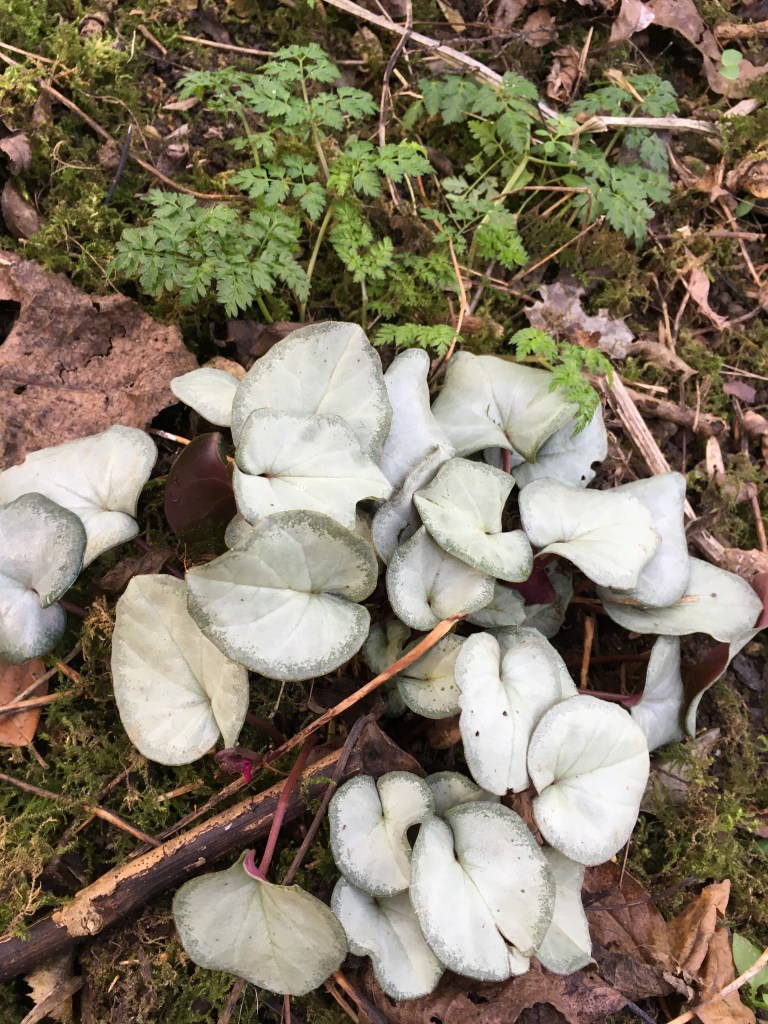
Some of the cyclamen have come up with these bright silvery-leaves. These are worth growing for the foliage alone. Both white and purple flowers are emerging from the leaves.

There’s also Cyclamen persicum flowering in the greenhouse. These have been making a display since last October; really good value long-lasting plants. They are not hardy in my garden, coming from the Eastern Mediterranean region. But they thrive in a greenhouse or cool room, just watering them when they droop – and not before.

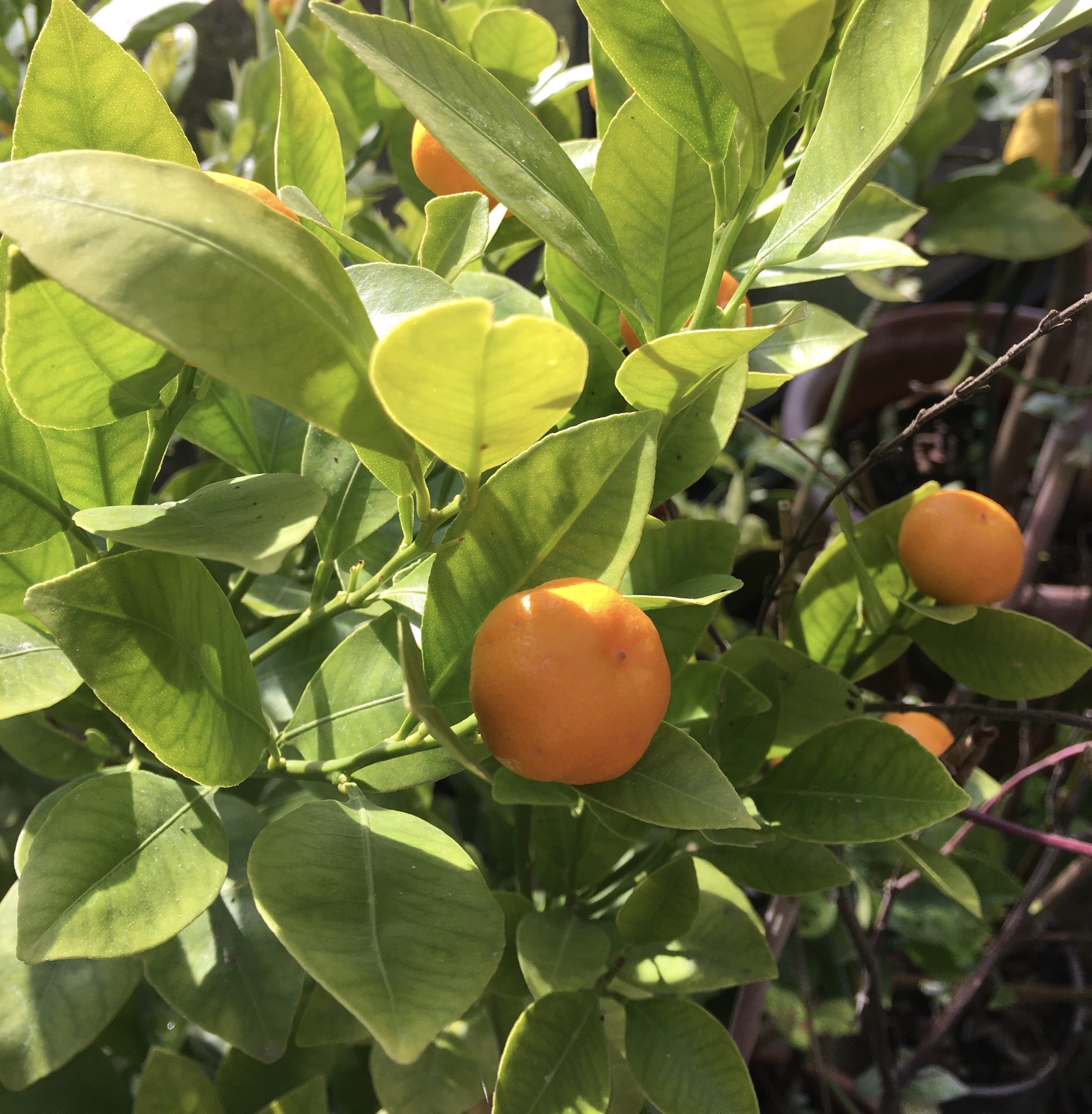
While we are in the greenhouse, I’ll show you the citrus trees which have produced the best ever crop of lemons and oranges here. We have had a relatively mild winter and the plants have been kept at 4C in the heated greenhouse. To be honest, the heater has hardly been on. A well insulated cedar-wood greenhouse keeps plants cosy. I’m just starting to water them again and top dressing with fresh compost. They are too big now to be repotted, but topdressing with new compost and adding liquid fertiliser in the watering can will perk them up and bring them into flower again.

And this is what I made with the orange zest; citrus shortbread. The recipe will be in Garden News Magazine next week, and I’ll copy and paste the article here for anyone who would like it. It’s part of my new ‘family favourites’ column for the magazine. Quick recipes anyone can make. There won’t be long lists of ingredients and fancy products you have to search high and low for. It’s mostly about simple ingredients and home grown produce, and all the recipes that have been passed down to me from my mother and my grandparents and friends.

Strawberry scones will feature in the coming weeks too, as I’m talking about bringing my strawberry plants, growing in containers, into the greenhouse to get an early crop. I grow my strawberries in 10” pots and windows boxes. They are easy to pick up and move under cover. Also easy to protect the fruit from birds and slugs as well.

Daphne and the other hens have just started laying again, so there will be plenty of eggs for cooking. The bantams are undercover in a new run, specially made to protect them from the bird flu epidemic. Usually they would be out foraging in the orchard by now, but until we have the all-clear they have to be kept in.

Walking from the hen run, out past the fruit trees and along the perimeter fence, there are more snowdrops. These are double and single types.

The doubles flower just a few weeks before the singles.

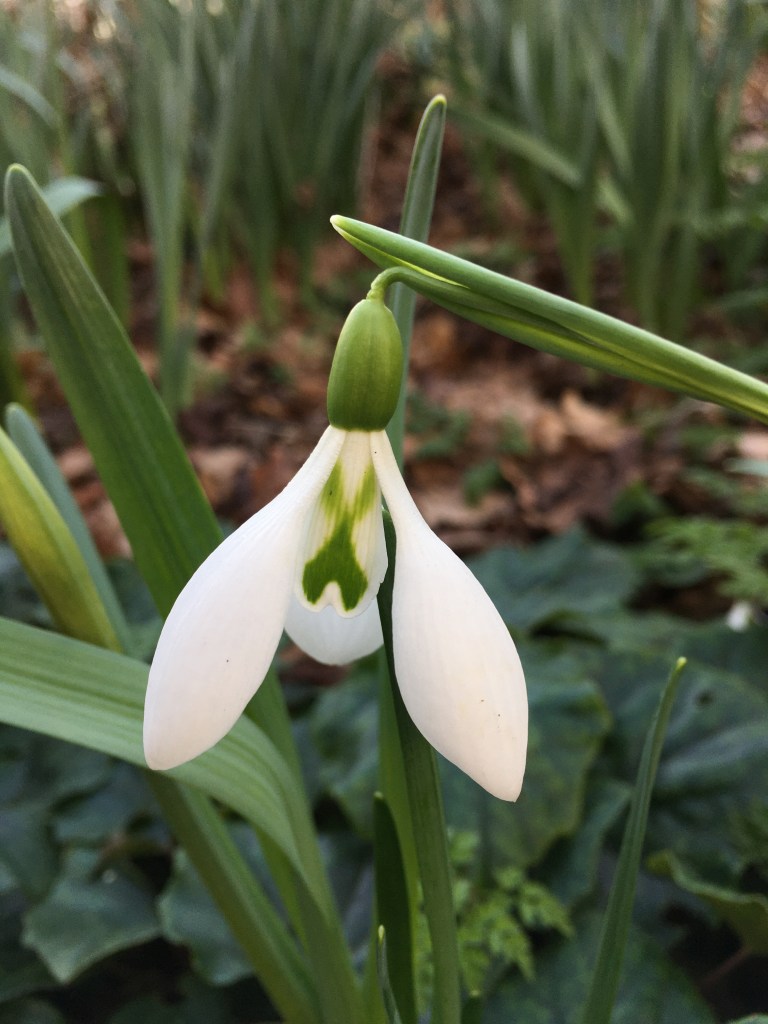
These have green tips. I believe they are a variety called Viridapice.

This one is called Walrus. It has elongated, green-marked outer petals.

A small patch of Galanthus Robin Hood.

It’s called Robin Hood because of the crossbow markings on the inner petals.

A small patch of Galanthus Jessica. I bought these because I have a niece called Jessica.

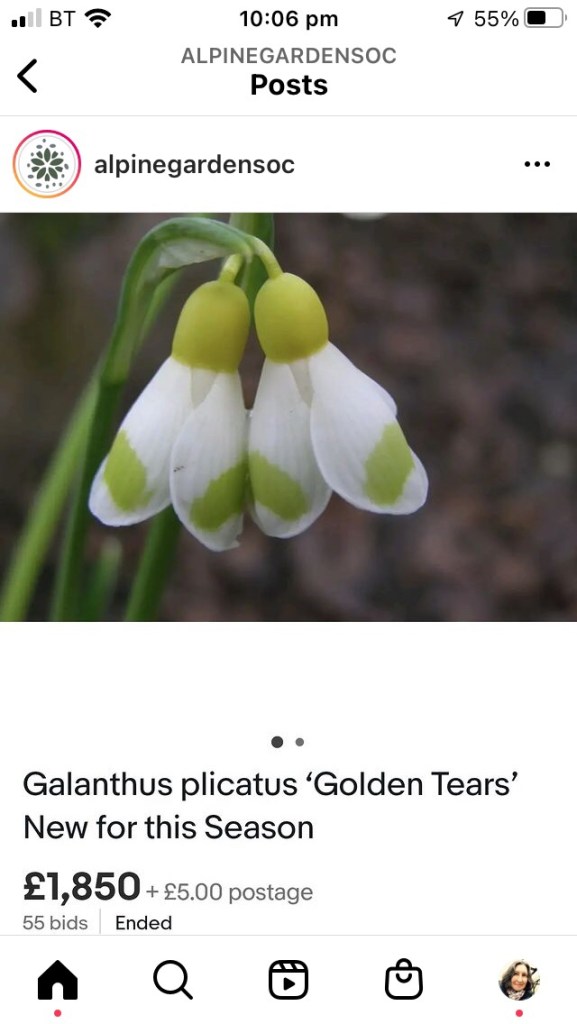
Have you all seen the news about the most expensive snowdrop ever? I think I would have been crying if I’d paid £1,850 for a single bulb of Golden Tears. Pretty as it is, it’s a staggering amount to pay. I saw the above photo on the Alpine Garden Society social media pages.

Here’s the view through the gap in the hedge. The field has been sown with winter wheat. I think the variety is Skyfall which is hardy and disease resistant and therefore requires less spraying.

And finally, just a few steps from my garden gate, here’s the view on the lane, looking across the back fields to ancient Bunny Woods on the horizon. Sometimes we walk across the footpaths to the woods. Today, I’m taking this photo in a welcome gap in the rain, but the clouds still look ominous, so I hurry home for a warming cup of tea. I hope you’ve enjoyed this tour of my garden and surrounding fields. Take care everyone and keep safe and well. And let me know what spring flowers are emerging in your gardens today.

Diary for Garden News Magazine

Latest news from the plot. Click on the photo to enlarge the print. There’s never enough room for all the photos I take. So here’s a selection of pictures to go with the diary recently published in Garden News Magazine.

I’m looking forward to growing this Limonium Pink Pokers next spring. The photo above was taken at Mr Fothergill’s seed trial grounds in August. I love the two-tone flowers and their delightful habit of twisting and turning as they grow towards the sun. They remind me of fireworks. I’ll start seed sowing indoors in February at 20C in a propagator and plant them out in June. They will be perfect for my jam jar posies. In addition, flowers can be hung up to dry. It will be useful to have flowers for winter decorations. Limonium, a half hardy annual, grows to 80cm and flowers from June to October. Available from Johnson’s seed, the premium range from Mr Fothergill’s.

In the article above, I mention growing dahlias from seed. I’ve been so delighted with the success of my seed-sown dahlias this year. I’ve had outstanding flowers, large single blooms with bright, jewel-like colours. It’s a money-saving option too. My Mum manages to fill her back garden with dahlias grown from a packet of seed. Started early in February, seedlings make small tubers and grow to full-size plants by mid-summer. There’s a non-stop supply of flowers for our vases. Plus bees love them too, so it’s an wildlife-friendly option. Pollinators have easy access to the flat, open centres of these flowers. You can sometimes see the ‘bee lines’ showing pollinators the way to the centre. If you don’t have any storage space for dahlia tubers over winter, don’t worry. You can get excellent results by starting from seed in spring.

Another beauty- grown from a mixed packed of seed. I also grew some ‘Bishop’s Children’ types
this year with very good results. Each plant had dark leaves which set off the bright flowers a treat.

I mention the new Home Florists’ range of roses specially bred for cut flower gardens. I’ve been amazed by the sheer number of flowers these provided. Such good quality flowers which last a week in a vase, if water is refreshed each day. The scent is reminiscent of old roses, particularly old-fashioned bourbon roses. The roses, by Wharton’s Nursery, can be found in most good garden centres, or on line. Look out for Timeless Purple and Timeless Cream. Both recommended.

In amongst my cut flowers, I grow vegetables such as peas, climbing beans, courgettes, sweet corn and beetroot. I’m growing Valido peas, a new maincrop variety which is disease resistant. Luckily it is resistant to mildew which means the plants keep cropping right through to the autumn. Often pea plants turn brown as leaves and stems die back. Valido copes with anything the summer weather can throw at it, and produces a heavy crop of delicious peas. I’ve saved some of my seed for growing in seed trays over the winter. Pea shoots will be harvested just a few weeks from sowing – and won’t have cost me a penny. Lovely nutritious shoots to add to my salads and stir fries.

Monty Kitten is more like a dog than a cat. He follows me around the garden and likes to get involved in everything I’m doing. He followed me out onto the grass verge when I put my jam jar flowers out for sale.

Finding newts in the garden is always a cause for celebration. It’s reassuring to find them under stones by my mini-pond, and in the greenhouse and polytunnel. They must be attracted by the moisture. I only use natural seaweed-type feeds, diluted in a watering can, to feed my fruit, vegetables and cut flowers on the patch.

Fruit and vegetables have grown well this year. In my basket there’s white-stem chard, perpetual spinach, herbs, white-flowered runner bean variety ‘Moonlight’ onions, tomatoes Blaby, Marmande and cherry types. There’s been a steady flow of blueberries from the plot. Ivanhoe is growing in a large 40cm diameter pot.

Here’s the link for the blueberry French toast recipe I mention: https://www.martinfish.com/in-the-kitchen/super-blueberries-in-julys-kitchen/

This is made by Martin and Jill Fish who provide cookery talks and demonstrations and have written a favourite book ‘Gardening on the Menu’ with advice on growing fruit and veg, and how to cook and preserve them.

Thank you for reading my blog, and my diary in Garden News Magazine. If you also listen to BBC Radio Leicester, the gardening show has moved from Wednesdays to Saturdays, 11am to 11.35. If you get in touch with the producers, I’ll answer any questions live on the show.

Have a great gardening week!

Rosa Timeless Cream (Home Florists’ Range)

Flowers for the care home, at last….

Cosmos and dahlias from my plot

It’s almost two years since we’ve been allowed to take flowers into care homes. Any flowers, shop-bought or home-grown, were deemed a covid risk and banned. But this weekend the rules changed, and suddenly flowers are allowed again. I am beyond excited and relieved as flowers from my garden have a special meaning for my mother-in-law Joan.

Dahlia Nuit d’Ete grows to 1.2m with deep red semi-cactus flowers.

I don’t think I’ve ever been so happy as I was this weekend wandering around my plot choosing flowers for Joan. It’s been such a sad time not being able to visit, or send flowers. I started growing cut flowers when Joan began showing signs of vascular dementia. Flowers have always been our special connection. We loved arranging them together. I realised she would one day forget who I was, but hoped the flowers would always remind her of me. And for many years it worked. Even when she forgot my name I was ‘someone who brought flowers.’ While she was still in her own home, I took armfuls of flowers- one of everything in flower- and foliage as well, to give a flavour of what was growing in my garden. I didn’t make them into arrangements, they were just loosely tied with string. Then Joan would spend the day creating her own posies, selecting vases and deciding where to place them- one in the front window to cheer up passers-by, one on the hall table to welcome carers who came twice a day, a few vases for the fireplace. We sat and surveyed her work, ate home-made cake, sipped tea and marvelled at the beauty of flowers, noting all the different colours and shapes. I included lavender, mint and rosemary for scent and the memories they evoked. Joan remembered a lavender bed at her childhood home and the Sunday meals with mint sauce and rosemary. It’s strange how childhood memories are the last to fade. We talked for hours about the flowers, fruit and vegetables her father grew. They had bee hives at the bottom of the garden, and the taste of honey took her right back to those happy times. There have been many heartbreaking moments, but one I particularly remember is Joan thinking her father was just upstairs. I had the choice of going along with it, or telling Joan her father had died many years ago. Neither was an easy choice, and whatever I said, five minutes later, we’d have to go through the same conversation. Flowers were a welcome distraction and something we could both agree on. Eventually, Joan lost the ability to arrange her own flowers. I did them for her and raged at the disease for stealing something that Joan so much enjoyed. Dementia, bit by bit, destroys all happiness as the processes for even the smallest task are completely forgotten. And people too, are forgotten, even those who’ve been very close and much loved. It’s so sad to watch someone desperately fighting to hold on to names and relationships. Joan would say, “I know you are someone dear to me, but tell me who you are and who am I to you.” When Joan moved to the care home, I continued the tradition with the flowers. But the pandemic meant the home was locked down for almost all of last year. Leicester remained in lockdown when other cities were released from restrictions. There were 16 deaths at Joan’s care home. Just a few weeks ago we were all set to visit when the home was locked down again due to another covid outbreak. This weekend the all clear was given and we were allowed in, and here’s some of the flowers I took with me.

Cosmos Psyche White. Ruffled, semi-double flowers. Grows to 1.2m and flowers from June to October.

I’m so pleased to be able to join in with Cathy and ‘In a Vase on Monday’ meme again as you’ve all followed my journey from the beginning. It’s been a comfort to write about my ups and downs here on the blog. There’s been laughter at times- there have been quite a few predicaments as you can imagine- and many challenges. I can’t pretend there haven’t been many tears too, and rage and sadness. But now there’s a kind of acceptance and peace. Joan doesn’t have the faintest idea who I am, but she does think I’m a ‘very nice lady’ come to visit her, and I can live with that. And the flowers still give us something cheerful to talk about.

A scented-leaf pelargonium I’ve kept going from a cutting my father-in-law gave me.

Thank you for reading my blog. I hope my story helps if you are going through a similar situation. At any rate, keep trying, because any small kindness will always be appreciated. Even if it’s just a few flowers.

I chose bright red dahlias as Joan’s husband used to grow these for flower shows and at one time almost all the back garden was given over to straight rows of dahlias and chrysanthemums.

I took jam jars filled with sweet peas. Joan recognised these immediately as they had once been grown by her father, and she remembers picking them and arranging them in vases for chapel. It’s so sad that dementia is almost like a time travelling disease. It transports Joan back to when she was a young girl, but completely erases the past 80 years and with it her husband, three children, grandchildren and two new great grandchildren. She’s left walking amongst the ghosts of long dead relatives- her mother and father, cousins and school friends. It’s a tragedy for her, and all of us trying, and loosing a battle to keep her in the present.

Rudbeckias, calendula and green seed heads from Ammi majus

Joan loves sunflowers, but they aren’t quite ready in my garden yet. These rudbeckias grown from a mixed packet of seed look just as bright and cheerful.

These calendulas are seedlings of C. Snow Princess, a lovely pale butter -yellow flower. They bloom from May to October if deadheaded regularly. Very good for attracting bees and butterflies.

Flowering marjoram, rosemary and mint add a lovely fragrance. As soon as you lightly touch the posies, the herbs release their scent, and unlock all the memories associated with them.

White snapdragon, Antirrhinum Royal Bride. Joan knew to press the sides of the flowers together. A favourite childhood game was to make the flowers open like a mouth. We used to call them bunny flowers, she said.

A photo of Joan on her wedding day carrying a bouquet of carnations and asparagus fern. The photo is in a metal Players cigarette box frame my father-in-law made to protect the picture while he carried it around during National Service in Korea in the 1950s. He didn’t smoke, I hasten to add, but he was good at recycling and ‘making-do’ all through his life.

There’s nothing nicer than being able to give someone a gift of flowers you’ve grown yourself. Are any of you growing flowers for cutting this year? I feel as if I haven’t any other weapons in my battle to defeat dementia. Flowers are holding us together, that little bit longer. Let’s hope they continue to work a kind of magic. I’m hopeful they will. I’ll keep you updated.

Notes and links:

For more information and help with dementia: https://www.dementiauk.org/

Calendula: Mr Fothergill’s https://www.mr-fothergills.co.uk/Flower-Seed/Calendula-Seed/Calendula-Snow-Princess-Seeds.html#.YUMiaxB4WfA

Cosmos: https://www.mr-fothergills.co.uk/Flower-Seed/Cosmos-Seed/Cosmos-Psyche-White-Seeds.html#.YUMi9hB4WfA

Rudbeckias: https://www.mr-fothergills.co.uk/Flower-Seed/Rudbeckia-Seed/Rudbeckia-Rustic-Dwarfs-Mixed.html#.YUMlPhB4WfA

Rudbeckias: https://www.mr-fothergills.co.uk/Flower-Seed/Rudbeckia-Seed/Rudbeckia-Gloriosa-Daisies.html#.YUMlmRB4WfA

Sweet peas: https://www.mr-fothergills.co.uk/Flower-Seed/Tall_3/Sweet-Pea-Horizon-Mixed-Seeds.html#.YUMmLRB4WfA

Heritage sweet peas: https://www.visiteaston.co.uk/shop/easton-walled-gardens-sweet-pea-mix/

Ammi: https://www.mr-fothergills.co.uk/Flower-Seed/A-Z-Flower-Seeds/Ammi-majus_2.html#.YUMmeRB4WfA

Herbs from https://www.pepperpotherbplants.co.uk/

Dahlias from https://www.gee-tee.co.uk/product-category/summer-bulbs/dahlias

Peat free compost I use is from https://www.dalefootcomposts.co.uk/

Plant mulch and feed I use from https://www.plantgrow.co.uk/

You can also find me @kgimson on twitter and karengimson1 on instagram.

This Week’s Garden News Magazine Column -July 10 2021

This week’s ramblings from the plot. If you click on the photo you should be able to zoom in to read the column. I’ve been writing about my garden for a year and a half. I love sharing the ups and downs of growing fruit, veg and cut flowers. Not everything goes according to plan. But it’s good to share the disasters as well as successes, so everyone can learn from it.

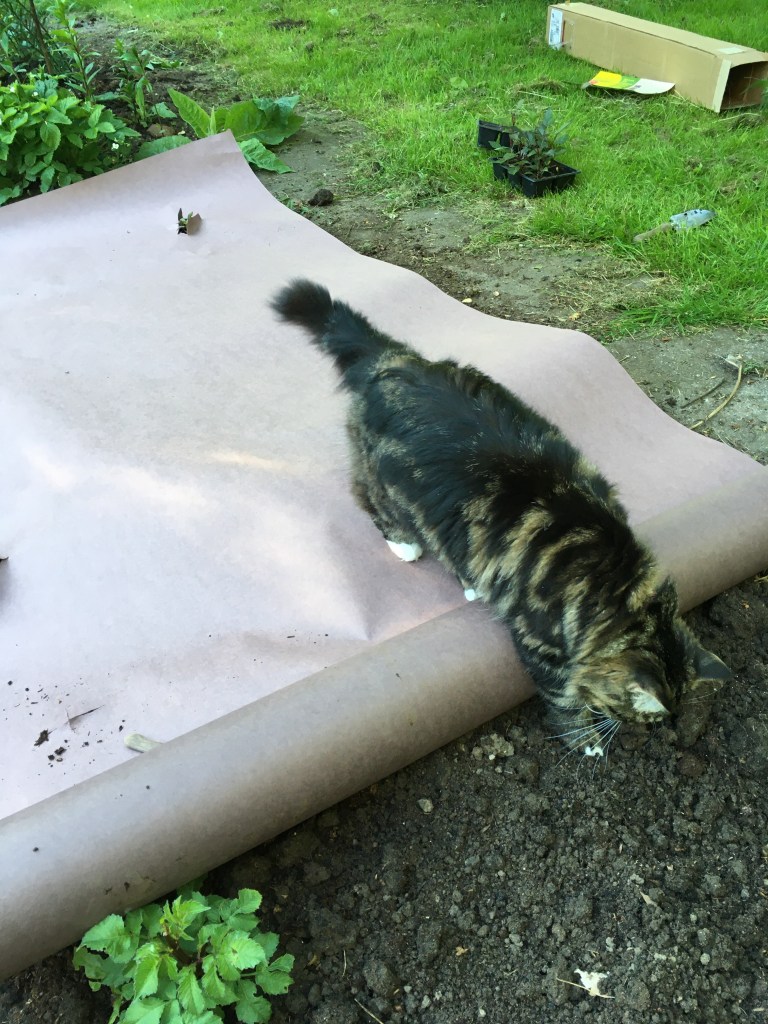
So pleased to see Monty kitten gets a mention. We always send eight photos each time and never know which ones will be used. It depends on the layout. As you can see, Monty is turning into the best ever gardening cat. He is always by my side, whatever job I’m doing in the garden. He takes an interest in everything and likes to get involved. To be honest, I’m sure he thinks he’s a dog and not a cat, as he’s so loyal and often likes to come for a walk with us along the back field footpaths. If we get too far from home, I pick him up and carry him back, as I’d hate him to suddenly dart into a hedge and be lost. All our previous cats have been rather aloof and independent. Monty is one of a kind.

I’m getting on well with the paper mulch. It’s saving so much time. I can’t understand how I never heard of this product before, but now I know, I’ll be using it every summer under my dahlias, courgettes, cosmos and pumpkins. It saves so much hoeing and back-breaking hands and knees weeding.

I wrote about the mulch here: https://bramblegarden.com/2021/06/10/products-on-trial-weed-control-paper-mulch/

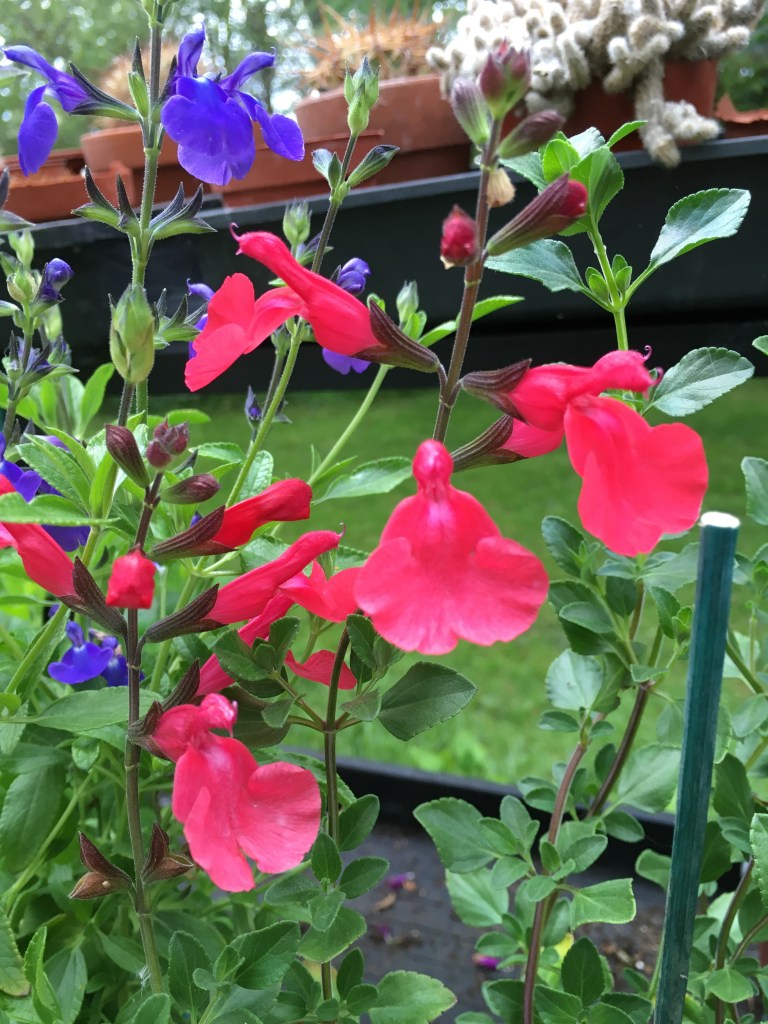
I’ve taken lots of cuttings of my new salvia collection. They seem to flower virtually non-stop from june to first frosts. Such beautiful colours and so easy to grow. The cuttings will ensure they survive over the winter, as they are not always hardy in my cold wet clay. I wrote about new salvia varieties here: https://bramblegarden.com/2021/06/18/new-plants-on-trial-salvias-from-middleton-nurseries/

And finally, I loved taking part in the social media event, GardenDayUK where we all made a flower crown, and spent some time reading, resting, having a tea party, enjoying being in our gardens, and sharing our gardens with the hashtag #GardenDayUK. This was the first time I’d joined in, and I enjoyed being a part of the celebrations.

Next time, I’m writing about butterflies, the new Rose of the Year ‘It’s a Wonderful Life,’ a visit to Stockton Bury Gardens in Herefordshire, and my success with my sweet pea pavement flower sales for charity. I hope you are having a great gardening week. Thank you, as ever, for taking the time to read my blog. It’s much appreciated.

My Garden Diary -June 2021

Life seems to have been incredibly busy these past few months. Two family members have been desperately ill. I’ve sat by their beds and held their hands. Willed them to stay with us. One emerged from a deep deep coma, and returned to us. The other one passed away, peacefully in his sleep. And so, I sit in the garden now and think of them. Hoping the one returned to us as fragile as a butterfly, will spread his wings and fly, and mourning for the one who did not, although it was his time to go and we must celebrate a life well lived, well loved, happy and fruitful. The garden, as ever, becomes a place of solace. I’ve ground to a halt after months of literally running from one place to the next, almost in a permanent panic. Back here, in the shade of the trees, there’s peace and calm. Whilst I’ve been busy, the nesting birds have raised their young, and many have fledged. A highlight of a particularly difficult and stormy day was suddenly finding six long-tailed tits, newly emerged from the nest- all gathered along a hazel branch, at eye level, fluffing up feathers, preening, eager darting eyes. Almost like pom poms on a string. What a day to fledge! We had 40 mile per hour winds and torrential rain. With the storm coming from the south east, the westerly edge of our wood was weirdly still and silent, and this is where our little flock gathered. The parents desperately calling to them, ‘tsuk, tsuk, tsuk’ but the chicks totally unafraid, studied me as much as I studied them. In all the excitement of leaving the nest, I was just one of the new wonders for them to discover. I’ve stored up this moment as a happy memory during a difficult time. It’s amazing the little things that give you hope in times of need. You never know when or where these moments will come from, do you. And often it’s the simplest things that provide a balm.

Enjoy this week’s views of the garden and ramble along the back field footpath where there’s masses of white cow parsley and the last of the hawthorn blossom now festooned with ribbons of fragrant dog roses. Thank you for reading my blog.

Cow parsley and wild three cornered leek, where snowdrops bloomed in winter.

Viburnum plicatum at the edge of the horseshoe pond. Layers of flat white flowers, covered in bees.

White Roses. Pearl Drift requires minimal pruning and no chemicals. It is resistant to blackspot due to it’s LeGrice breeding. Grows to 4ft and is reliably repeat-flowering. Highly recommended.

Semi-double flowers allow bees to access the pollen. Sweetly scented.

Dianthus Mrs Sinkins. Another highly-scented flower in the June garden. Repeat flowers if cut back and dead-headed. Grows in the overspill gravel alongside the drive.

White campion – Silene latifolia alba- arrived by itself and grows amongst the cow parsley. Much less rampant than the pink variety.

Wild dog roses, great big swathes, overhang from the top of the high hawthorn hedges. There will be plenty of bright red rosehips.

Along the holloway walk. The pathway is edged with snowdrops in winter, and white starry stitchwort in summer. I’m adding white foxgloves for next year.

I’ve left gaps in the trees to look out from the pathway, towards the back fields, this year planted with spring wheat. I’m looking forward to having a golden backdrop for the garden. Wheat and barley are my favourites.

Step out of the top five bar gate, and on to the lane. The cow parsley has never looked as lovely. Or maybe, I just haven’t had time to stand and survey the scene before.

Looking across the fields towards Bunny Wood. There’s an ancient footpath to the woods.

A well-trodden path, very popular with hikers and dog walkers. We sometimes see deer. Usually there’s hares – more this year than usual. At dusk we watch the barn owls quarter the fields. At the moment they are out in the day as well as at night, which means they are probably feeding young. Tawny owls also call out across the fields at night.

A hawthorn ‘archway.’ A favourite viewing point.

Plenty of cow parsley. As pretty as any florists’ flower.

Thank you for reading my blog. Let me know what gardening jobs you are doing at the moment. I’m catching up on planting and weeding. Everything is very late this year, but I expect things will catch up in time. Have a peaceful happy week.

New Plants on Trial – Salvias from Middleton Nurseries

UPDATE: NOV 12 2023. There’s a prize draw for a £50 voucher on instagram. Take a look @middleton_nurseries. The prize draw closes on Sunday 19th November. Terms and conditions, see Middleton’s instagram post.

Salvia microphylla Delice Fiona

Salvias provide such a welcome zing of colour from mid summer to first frosts. In my garden, pale blue and white ‘Phyllis’ Fancy’ was still in full flower on Christmas Day. Specialist growers, Middleton Nurseries, have sent me a collection of new varieties to try out. I haven’t paid for these, but in common with other bloggers, I’m happy to trial plants and products in return for giving my honest opinion. Here’s some of the plants they sent.

Plants arrive via mail order and were carefully handled by the delivery company. I always think it’s worth giving a good report when plants and products are delivered in a good condition and the drivers have taken the trouble to ensure the contents are undamaged. The box was also placed on the doorstep the right way up! These things always help somewhat. It’s exasperating when ‘this way up’ arrow stickers are not heeded.

Plants are snugly nestled inside a sturdy cardboard box and as you can see arrived in good condition even though temperatures were very high.

The cardboard container is easily folded open so plants are not pulled about when extricating them from the packaging. You wouldn’t believe how many times I’ve nearly decapitated a plant trying to get it out of the box. Some thought and care has gone into the design of this one, and it’s appreciated.

Plants are carefully tied to supporting canes and plastic bags are wound around the plant pots to stop compost drying out. My only criticism would be that the plastic bags could be biodegradable instead of single use. However, I’ve reused these on top of pots of cuttings to maintain humidity. So mine won’t be thrown away, and will be kept in the potting shed and reused time and time again.

There’s a very useful plant care leaflet included in the box, and a discount code for further purchases. I’ve signed up for more discounts, special offers and gardening club newsletters.

Each plant has a label which is packed full with information. It’s great to see the Union Jack flag on the label, indicating the plants are grown in Britain. I like to support British nurseries as much as I can.

I love this pretty, pale variety Salvia microphylla Delice Fiona. It has rich green leaves, pale pink flowers with a deeper pink centre. Instructions say it can be grown in part shade to full sun, requires moderate to occasional watering and grows 60-90cm high. Can be grown in containers.

Another pink variety is Salvia greggii Shell dancer with large pink flowers with the basal tubes and base of the lower lip coloured deep rose. The outer portions of the lower lip start with ‘hot salmon’ shading then lighten to nearly cream as it ages. The label says the plant is ‘seldom completely out of flower.’ That’s my experience of salvias, they do have a long-flowering period, which makes them such good value.

If you like the paler salvias, this one’s stunning. It’s from a new ‘So Cool’ range. This one is Salvia So Cool Pale Cream. Utterly captivating. New for 2021. Compact-growing, 30-40cm tall.

The first salvias I grew were blue. I love this variety, microphylla Delice Feline. The plant label says the flowers are deep violet with a white centre, flowers profusely until autumn and grows 60 -90cm tall. A new hybrid for 2020.

Another 2020 hybrid is Salvia microphylla Suzanne which has bright red upright flowers with white markings. 60-90cm tall.

And finally, Salvia microphylla Carolus has pretty mauve flowers which look striking set against the darker almost black stems and dark coloured basal tubes. Has a smaller-spreading habit than most microphylla varieties.

I can wholeheartedly recommend Middleton Nurseries for mail-order plants. I’m delighted with my parcel of new and very pretty hybrids. High quality plants, well-grown and expertly packaged. I’ll be posting photos throughout the summer to let you know how they develop.

Here’s some more information about the nursery:

Middleton Nurseries are located in the village of Middleton in Staffordshire and have been growing plants since 1975. The nursery is dedicated to growing a wide range of new and unusual herbaceous, perennials and rare breeds of salvias. Middleton Nurseries was started in 1975 by Stephan Zako and at first grew ‘pick-your-own’ strawberries. John Zako went into the family business after leaving Pershore College with a National Diploma in Horticulture. Using his expertise he slowly transformed the business into ‘one of the leading plant specialist nurseries’ with an extensive block of greenhouses.

In April 2012, the family sold the retail/ garden centre portion of the business and kept the nursery which enabled John to focus on his true passion of growing and breeding plants. The nursery specialises in salvias which they sell up and down the country at RHS gardening shows each year. Since 2021, Middleton Nurseries has become a third-generation family business after John’s son, James, joined the business.

Here’s a link for the nursery website: https://middletonnurseries.co.uk/

Are you growing any salvias this year? Are you as passionate about them as I’ve become? Get in touch and let me know how you are getting on with your gardening and growing this summer. Thank you, as ever, for reading my blog.

Products On Trial – Weed Control Paper Mulch

I’m trying out a sample roll of paper mulch in an attempt to cut down on weeding in the flower and vegetable garden. I haven’t paid for this product, but in common with other bloggers, the agreement is to unconditionally try it out and give an honest opinion.

Monty kitten was keen to help. To be honest, he gave more help than was strictly necessary, getting in and under the paper roll. He’s such good company in the garden, always by my side, climbing in and out of my wheelbarrow and tool bag. But paper’s a new attraction for him!

Instructions say place a heavy stone on each corner as you start to unroll the paper, and toss soil along both edges to prevent wind from blowing it away. Monty jumped all over it, which kept it in place nicely until I’d sorted out stones and compost.

I used a Hori-Hori to cut the paper to length, then set out the plants. I’m trying the mulch for dahlias and cosmos in the cut flower beds , and for courgettes, squash, sweetcorn, and strawberries in the veg beds. It would be good for garlic and chard too.

These are the cuttings I’ve been taking since February from dahlias overwintered in the potting shed. They are exact clones of the parent plants, so I now have about 100 new plants for free. All my favourite varieties.

I used my Hori-Hori knife to cut a cross in the paper and then dug out planting holes for the dahlias. A new sharp-pointed trowel made the task quick and easy.

The paper is thick enough to block out light, and therefore suppress weeds, but there are microscopic holes to let air and water permeate. Plants are so far growing well. I’m having to do much less watering than usual.

This product is supplied by Mulch Organic, a family business which offers environmentally-friendly alternatives to black plastic for mulching. They say the products are natural, made from renewable sources and eliminate the need for chemical herbicides. The paper mulch is 100 percent organic and biodegradable. It should last a whole growing season, and at the end of the year, can simply be tilled into the soil to decompose naturally.

There’s also a crepe version, with expansion ribs to allow for stretch for use over mounded beds. These also work well with drip irrigation systems, and can be used in poly tunnels.

As well as the paper rolls, there’s a mulch film made from cornstarch.

Here’s one last photo of Monty. We were out in the garden until 10pm as the temperatures were too hot in the day. I’m hoping the mulch will save time – giving me more time to spend sitting in the garden reading, with Monty on my knee. That’s the plan anyway. I’ll let you know if it works out!

Here’s some of the dahlias I’m growing again this year. This one is Nuit d’Ete.

Dahlia David Howard. A lovely deep orange flower. Cut flowers last 10 days in a vase.

Eveline is a lovely white decorative dahlia with a delicate blush pink centre and tips to the petals.

Thank you for reading the blog. Have you tried any products to combat weeds? Let me know how you are getting on with your gardening projects.

Here’s the links for more information: https://mulchorganic.co.uk/

I wrote about the Hori-Hori here https://bramblegarden.com/2020/07/10/niwaki-tools-review-and-some-garden-snips-to-give-away-gardening/

The trowel I’m using is this one: https://marshallsgarden.com/products/kent-and-stowe-capability-trowel-10907234?variant=32599100424243&currency=GBP&ds_rl=1278790&ds_rl=1284267&ds_rl=1278790&ds_rl=1284267&gclid=Cj0KCQjw8IaGBhCHARIsAGIRRYoqnS-u91aeS1AJK273Nb2YXeLUfNBNiKVEBso0HNaTi-PeyK5Fiq4aAp6zEALw_wcB&gclsrc=aw.ds

Views from my garden 29 May 2021

It’s a while since I’ve joined in with the Six on Saturday meme. Caring for family members has had to come first. However, here’s a few photos from my garden diary today. Have a great bank holiday weekend. The sun has decided to shine at last, and there’s no rain, so we can all start to get on in the garden.

The last of the tulips. My favourite white tulip, Mount Tacoma.

Double tulips seem to last longer than singles. Petals keep opening out until the flowers are almost flat. Some tulips are better at coming back into flower each year and this one is reliable here, planted in a sunny border, baked dry in the summer. This is the secret of keeping tulip bulbs going. Plant them in maximum sun where the soil will dry out to give them a dormant period. You can also plant them at the base of deciduous trees, which will also give them a dry period, as trees take all the moisture in summer. Tulips will flower the following year before the trees come into leaf. Tulips planted in rich soil are pulled up, stored dry over summer, and replanted in November. I’ve also tried planting them in plastic pond containers, which are simply lifted out of the ground and stored at the back of the shed for the summer. The holes left in the ground are then filled with tender salvias which have been stored in the poly tunnel over winter.

Double – late flowering tulip Carnival de Nice is sometimes mistaken for a peony. Red and white striped petals slowly unfold until the flowers are flat. Lasts 10 days in a vase as a cut flower.

Here’s some more tulips still in flower today. Cold temperatures and rain virtually every day in May has suited tulips. They have provided a much-needed cheerful display all through spring.

We think this is Pink Diamond. It came in a cut flower collection from Gee Tee Bulbs. Extremely long-lasting flowers. Strong and resilient.
Flamboyant Parrot tulip, Texas Flame. Looks lovely amongst the blue love-in-a-mist flower buds just opening. These are enormous flowers when fully open, almost the size of my hand.
There are still some parrot tulips in bud.
The darkest plum coloured tulip is Queen of the Night. Some varieties offered under this name can be almost black. But they have a habit of ‘melting’ in wet conditions. And they don’t always come back the next year. I like this velvety deep red strain from Taylors Bulbs. Flowers are long lasting and cope with the rain. They have reliably returned for four years now, and seem to be increasing in number too.

The last tulip to flower here is Bleu Aimable. This single late tulip has lavender, mauve and blue shades. Flower colour improves with age. A great way to end the tulip season with a flourish.

Thank you for reading my blog. Are you heading out into the garden this weekend to catch up on jobs? The weeds have got away from me here, as it’s been so wet. But with lots of tea and cake and a determined list of tasks, I’m hoping to get on top of them. Have a great weekend!

Garden Day UK 2021

My flower crown for Garden Day UK, made by Bloom.co.uk

It’s time to celebrate Garden Day UK again. Garden Day, on May 9th, is a chance to down tools and just enjoy what you’ve achieved on your plot. It’s one day when you don’t have to do anything really. Just sit in the garden, allow yourself a moment to pause and reflect.

One of the lovely features of Garden Day is the wearing of a flower crown. Take photos of your crown, and upload them to social media. Tag @GardenDayUK to share photos of your creation.

I’ve been sent this beautiful crown to wear tomorrow. It’s made from miniature cream roses and pink and blue statice. There’s some gorgeously-scented herbs, rosemary and thyme, and some grey foliage as a background foil for all the flowers.

Flower crowns are really easy to make. Take a length of florists’ wire, wrap it around your head to check the length. Add about 8” so you’ll be able to twist the ends together. Add a circle of olive foliage, or lengths of rosemary as a background. Make little bunches of flowers, any you fancy, from your own garden or from the florists. Lay each bunch along the wire and bind in with thin florists’ wire, paper-covered wire, or string. When you have covered the circle, check the crown fits, and twist the bare lengths of wire together to form the crown.

I’m looking forward to sharing my day with my Mum. Whatever the weather, we will be either sitting in the orchard, or if it’s raining, in the greenhouse.

How will you be spending Garden Day tomorrow? Do share photos of your garden on social media. It’s a good way to connect with other keen gardeners and to share ideas and gain inspiration on growing plants.

Here’s some photos of my garden today:

There’s still some Pheasant’s Eye narcissus under the cherry trees.
There’s white bluebells under the beech trees. These are albino flowers, lacking the pigment that makes the traditional flowers a rich purple/blue. They have creamy-coloured pollen and a delicious scent.
Narcissus Geranium in the cut flower patch. Lovely white flowers with a deep yellow centre. The scent is glorious. Something to look forward to each spring. Reliably comes back each year. Lasts at least a week in a vase.
Creamy white quince flowers. Chaenomeles Yukigoten. A sprawling shrub which is best trained along a sheltered wall. Flowers are sadly not frost-hardy and have to be protected with sheets of fleece. Good for pollinators. Worth the effort of protecting the blooms.
Lady’s smock, or Cardamine pratensis. In flower in the boggy area around the horseshoe pond. This year we have seen more orange tip butterflies than ever before. Lady’s smock is a food plant for the caterpillars. Also known as milk maids, moon flower and cuckoo flower. Sadly, there are no cuckoos again this year. The last time we heard them was five years ago.
Cowslips have taken over from daffodils, flowering in the leafmould under the field maple trees in the wild garden.
For a few glorious days, emerging field maple leaves glow a bright emerald green. It’s a sight to gladden the heart.

Finally, we will be accompanied by Daphne ( speckled hen) Daisy and Dot, and Merlin the cockerel, as they search for slugs in the cut flower patch. If we are very lucky, there will be eggs for tea!

Happy Garden Day everybody!

Thanks, as ever, for reading my blog. Please leave comments in the box below the hashtags, right at the bottom of this post. Or click on ‘comments’ under the headline and the box will drop down.

Quick link for Garden News Magazine Readers – Peach Crumble Cake- and spring flowers 10 April 2021

Here’s a quick link to the recipe mentioned in this week’s Garden News Magazine. Let me know if you make my peach crumble cake. The recipe is great with tinned or fresh peaches, apples, plums, cherries, rhubarb and blueberries- anything you have to hand. Thanks for reading my garden diary column and for all your lovely kind comments and encouragement. It’s always appreciated.

Peaches and Plums – Crumble and Plum Jam

Some more photos from my April garden diary. Enjoy the spring flowers- and new additions to the garden, Merlin the cockerel, and Daphne, Daisy and Dot bantam hens.

Here they are, enjoying a dust bath. They soon found a cosy corner in the garden where I’d piled some old compost. Perfect for their favourite daily activity. I love the contented little sounds they make as they swoosh compost into the air in all directions. Hens are certainly messy creatures.

Here’s Merlin, searching for slugs, snails and grubs in the veg plot. I’m hoping they will help me with my organic gardening, no chemicals- approach.

I’m not forgetting Monty kitten, looking quite windswept as he sits on his favourite look-out post on top of the boat cover.

The greenhouse – with barely and inch to spare. I can just about still get in there.

The poly tunnel swathed in fleece as we hit -3.5C two nights in a row. It’s currently 7C at lunchtime with a freezing icy wind and sleet. The old peach trees are flowering despite the cold. I’ll have to pollinate them with a paintbrush. There’s no bees about in these cold temperatures.

Despite the cold, daffodils are looking lovely. So cheerful.

My favourite narcissus Snow Baby looking lovely in spring pots planted three years ago and still going strong.

My new spring pot with ‘instant’ plants from the garden centre. Cheering up the front doorstep.

Wild anemones flowering in the mini woodland garden. Bluebells are just starting to raise their heads above big strappy leaves and potted Lily of the Valley is scenting the potting shed.

A few flowers fresh picked from the veg plot.

My wild Tenby daffodils, flowering around the pond, still look good at dusk. These are planted in memory of my Welsh grandmother, HM Foulds. A very reliable and hardy daffodil, highly recommend.

You might like to read my last post here: https://bramblegarden.com/2021/04/08/garden-news-column-spring-flowers-and-peach-crumble-cake-april-8-2021/

Thanks for reading. Enjoy your weekend, and hopefully the weather will improve where you are soon.

I’m @kgimson on twitter and karengimson1 on instagram live.

Garden News Column, Spring Flowers and Peach Crumble Cake. April 8 2021.

Bulbs and spring bedding plants are making me smile, after such a long, cold winter. I couldn’t get out last autumn to buy any plants, so I’ve reached spring with nothing to put into containers. But restrictions have lifted- and I’ve had my jab (hurray!) and I’m able to get out there! I can’t adequately describe the shear delight of actually being able to visit a plant nursery and buy a few flowers. Never in my life did I think such a simple thing as going out and buying plants would be so joyful- and appreciated. I’ll never take it forgranted again. Never.

I bought some potted anemone blanda, Bridal Crown narcissus and bellis daisies. I didn’t go mad with my first trip out. Every plant was savoured, the scent enjoyed, the colours marvelled at. I set the Bridal Crown in the centre of a favourite terracotta pot, and nestled the anemones and bellis daisies around the edge. Bridal Crown is perfect for a centrepiece as it’s multi -headed, which means it flowers for a long time. The stems twist and turn in different directions, giving a fountain-like centre to any pot. Anemones have a charming habit of scrambling between the narcissus stems and filling the gaps. Bellis daisies are just so cheerful. I particularly love the double pomponette types. All in all, my plants have provided a much-needed breath of spring, and the containers are cheering up my front doorstep and all the garden table tops, just in case we have visitors, which is now allowed. It will feel strange to have friends and family walking around my plot, after a whole 12 months without anyone visiting.

Here’s this week’s Garden News article, mentioning my treasured plant pots.

Peach Crumble Cake Recipe can be found here:

https://bramblegarden.com/2017/08/22/peaches-and-plums-crumble-and-jam/

And more photos of the containers, which have survived two windswept nights of -3.5C temperatures.

The scent is wonderful.

Just planted. Instant plants can be put together to make a colourful display. No one would know the containers hadn’t been planted last autumn.

Anemone blanda, mixed blues and whites.

I popped in two large anemone coronaria. I would usually grow all these bulbs myself, starting them off in September and October. But there’s so much choice at the garden centres, you can easily catch up now, and they don’t cost a fortune.

Bulbs and corms usually from https://taylors-bulbs.com/

Blue anemone coronaria. I love the inky black centres. Bees love them too.

Bellis Daisy. I usually grow these from seed. Mr Fothergills have this variety: https://www.mr-fothergills.co.uk/Flower-Seed/Bellis-Goliath-Mixed.html?ccode=F21PGP&gclid=CjwKCAjw07qDBhBxEiwA6pPbHkNeoDM1SLR8gcldYQP_rNdLZWfQ9HtAJHyWNs49sqz6to8sDiHbthoCV0oQAvD_BwE

Here’s the Superseed Trays I mention in the article. I’m trying to reduce my use of flimsy plastic trays which are not recyclable. The plastic breaks down to smaller and smaller pieces and gets into rivers and streams and out to the ocean.

https://superseedtrays.co.uk/

Behind them there’s a Bustaseed tray, made from recyclable plastic. Again, with divided module cells which can be lifted out without disturbing plant roots. These will be useful for taking cuttings.

https://www.bustaseed.com/

More details of Whinnypoo manure Tea. Very easy to use and it’s making my lemon trees green up beautifully after a long cold winter.

https://www.whinnypoo.com/

I love trying new products and I’m always amazed by the ingenuity of new business enterprises.

I’ve adopted a rescue cockerel. His days were numbered as there were too many cockerels where he came from. Sadly, if you hatch out chicks, some of them with obviously be cockerels and then they become unwanted. I’ve named him Merlin because he has the most gorgeous petrol -coloured feathers. And he has magiced his way into my life, just when I needed something to make me smile again. He’s now been joined by three beautiful bantam hens, so he’s in heaven here.

And finally, the latest photo of my lockdown kitten Monty. He’s been a constant source of joy since arriving here last summer. Hasn’t he grown into a beautiful boy. He’s enormous and very fluffy, but he has such a kind and gentle temperament. And he’s always by my side, keeping me company in the garden.

How are you all doing? Are any of you managing to get out and about and see friends and family again? It’s a while since I last wrote on here. We had several very sad deaths amongst friends and family. The latest being a dear friend, Jo, who died just six weeks after a diagnosis of cancer. We will be attending her virtual funeral on Friday, and I’ll be planting a tree in her memory.

Take care everyone, and thank you for reading and for your friendship and kind comments. This has not been an easy time for any of us, but there’s always hope for the future.

I’m @kgimson on twitter

Karengimson1 on instagram.

February Recipes : Pear and Almond Pastries

I’m making these again today. I opened the kitchen cupboards and there was literally nothing cheerful in there! No biscuits, chocolate, cake. We’ve run out of everything. I wonder if we will look back on these times and ponder how we lived through this pandemic and learned to appreciate the simple things in life. I shall certainly never take for granted being able to just pop to the shops. Everything has to be so well organised. Lists on top of lists. All food is being delivered, for which I’m extremely grateful. But, oh, the dismay at discovering that I’ve forgotten something- just as I’ve pressed the button to order supplies. It’ll be a week before I can get another delivery. We do see an end in sight with vaccines on the way, so keep going everyone. Keep smiling. And make pastries, as there’s nothing nicer to cheer you up than the sight of these lovely tasty treats. Any fruit can be used, they are just as lovely with apples, frozen plums, raspberries, tinned peaches – any combination you like. Let me know what recipes are keeping you cheered up, and report back if you make any of these delicious pastries too.

Here’s the link for the recipe: https://bramblegarden.com/2020/11/02/pear-and-almond-pastries-family-favourite-recipes/

And a photo of spring flowers to bring some joy as well:

White primulas. My favourites. Though I have seen some deep red double varieties mixed in with burnt orange which might look lovely in a blue China casserole dish…. if only I could get out to buy some.

Narcissi Geranium and cut flower collection tulips from last spring. All my tulips are poking through the ground now, and daffodils are in bud and flowering early. The veg patch is covered in forgetmenots. I use them as a green mulch to protect the soil and keep down weeds. Some are potted up to stand on the summerhouse steps. They are very easy to dig up as they have a shallow, fibrous root system. They do well when lifted and grown on in containers.

Daffodils make a very welcome return. I’ve watered them with potash or tomato fertiliser, having taken advice from a medal-winning grower. The liquid feed helps to strengthen the stems and enhances the colour, making them stronger and brighter. A good tip as we regularly seem to be getting stormy spring weather. It’s so sad to see daffodils flattened by the wind.

Eranthis hyemalis – winter aconite in the woodland garden. They won’t last long as temperatures are currently 13C.

Green-tipped Galanthus Viridapice looking pretty on the potting shed window. Snowdrops too have been a very welcome and joyous sight. But in the mild weather, they have opened right out and will be going over sooner than usual. I shall water these too with weak tomato fertiliser in the hope of boosting the size of the bulbs and increase the number of flowers for next year.

Have a lovely weekend everyone.

*I’m trying something new- doing Instagram live sessions from the greenhouse every day, essentially to keep in touch with my Mum and MIL Joan, and also to show my daughters how to grow plants from seed. Under normal circumstances I would be by their side helping them with their new houses and first gardens. But I can’t while we are in lockdown, so I’m doing what I can from home. I’m karengimson1 on instagram.

Apple and Berry Crumble Cakes – Recipe

If you are reading this week’s Garden New Magazine (February 6 edition) here is the recipe I mention for apple crumble cakes. Our stored apples usually last until the end of February, but the autumn, and winter up until Christmas, was so mild the fruit started to go soft. I sliced and froze some of the apples, and turned the rest into delicious little cakes. These too can be frozen and will thaw within a few minutes, or defrost in a microwave. Let me know if any of you try the recipe, and how you get on with it. I’ve added frozen blackberries and raspberries to my cakes. Or you can just make them with apples on their own. All equally tasty. It’s lovely to have something reminding us of summer – right in the middle of winter.

You’ll need three or four apples, and a handful of berries, if using them. Use what you have. Equally good using tinned or fresh peaches, plums, blueberries, apricots, pears. It’s a very versatile recipe, using up store cupboard and frozen fruit.

I’ve made mine in silicone muffin trays, but you could just make one large cake and slice it. Use oat milk and egg substitute for vegans.

Muffins cook in 25 to 30 minutes. But check they are cooked through.

We store the apples wrapped in newspaper in the unheated glass porch and potting shed.

There was a good harvest from the orchard last autumn. Plenty of apples and pears.

I’ve been making apple crumbles all winter. Such a simple dish, so lovely and warming on a cold day.

Thanks for reading and getting in touch. I’ve started doing live videos from the greenhouse over on instagram as a way of keeping in touch with family and friends.

I’m karengimson1 on instagram

And @kgimson on twitter

Update: Sue Appleton on twitter used blackberry jam instead of berries and sent this message:

A walk around my garden 26 Jan 2021

I thought you’d like a calming walk around the garden today. We’ve had snow for two days now, but it is starting to melt. It’s currently 3C and rain is forecast. Snow covers a multitude of sins. You can’t see the brambles or stinging nettles. I’ve made a start on tackling the thickets- they have grown up in only three years of neglect. It’s interesting to see how nature is always trying to reclaim the garden. Always trying to take back what we’ve borrowed. We only carve out this place for a short while.

Bellis daisies. In flower despite the cold. We planted some in pots years ago and they’ve seeded about the plot. They pop up in borders, the gravel paths, and in small colonies in the lawn. I rather like them for their tenacity. Stamp on them (accidentally) and they do not flinch.

By the front door there’s a patch of Algerian iris (Iris unguicularis). It grows in the gravel spilling over from the path. There is no soil here. And yet, with minimum fuss and no maintenance, it flowers its heart out from October to March. Friends say it can be difficult to grow, so I’m grateful for my little patch of thriving iris. Last year it produced this pretty lilac sport. The mother plant is deep purple. I love it when plants suddenly do the unexpected. Don’t you?

The bank of wild cherry trees look like charcoal drawings in the snow. They are full of buds. I’ll cut a few twiggy branches and bring them into the house. They’ll flower readily in the heat of the kitchen. One way to bring spring forwards a little. It’s cheating, I know, but I can’t resist.

More trees surround the wildlife pond. It’s wonderful to think we are only four weeks to seeing frogspawn in the pond. Spring always starts for me when we see frogs again. You can learn more about frogs by following Froglife, a wildife charity dedicated to the conservation of frogs, toads, newts, snakes and lizards.

Here’s the link https://www.froglife.org/

We are seeing a lot more deer in our area. We think they might be Sitka deer. Sometimes I just catch sight of them out of the corner of my eye. They are almost like ghosts, drifting silently along the dark hedgerows. They seem to blend into the shadows and become part of the landscape. Sometimes, in spring, if we are really lucky, we’ll come across a fawn in the long grass. The mother is never far away, and we tiptoe quietly away, so as not to startle her.

We’ve turned the summerhouse towards the sun. Amazingly, it’s quite warm in there. Such a well-made building, insulated with thick, wavy-edge oak. They knew how to build in the 1930s. We are grateful for our sturdy and peaceful sanctuary. It’s the perfect place to sit for a while and read, or watch the birds. Sometimes we see a fox. At dusk, a barn owl quarters the back field. They hunt methodically, searching for prey by flying back and forth. We worry when the weather is stormy and wet, as it increasingly is nowadays. Barn owls have no waterproofing. Their soft feathers help them to fly almost silently, but it’s at the expense of being weatherproof. They struggle to hunt and find food in the rain. One heartbreaking evening last summer, we saw the female out in heavy rain. She looked off balance, her flight hampered by the wind. We watched as she wobbled and barely made it over the top of the hedge. Desperation must have driven her out in poor weather. She had two chicks to feed. Later, the farmer who checks the nests, found only one chick had survived.

I’ll leave you with two happy photos. Snowdrops always make me feel hopeful. They return every year, whatever is happening in the world around them.

And this beautiful glass ‘vase’ of flowers- a present from a kind friend. Certainly. We are all looking for anything that brings joy at the moment. Thank goodness for kindness, friends and family. And for flowers which always make us smile.

Let me know how you are all getting on. Are you managing to sow any seeds or do any gardening yet. Take care everyone. And thank you for reading.

I’m on instagram at karengimson1 and twitter @kgimson. Come over and say hello!

January in the Garden

Here I am, pottering about in my garden again. I must say, the weeks fly by and it’s soon time to write another column for Garden News Magazine.

I hope you enjoy today’s article. I’ve had some lovely letters of support from readers saying my ‘potterings’ have kept them upbeat and busy during the pandemic. I’m pleased to see many readers have been inspired to have a go at different gardening techniques, or decided to grow something new. And many say the recipes are tasty, and always turn out well. What a relief!

Here’s some additional photos the editor didn’t use for the column. It’s fascinating to see which ones they choose. I submit about 10 for them to select from. It takes about a day to decide what to write about, take the photos and then actually sit down and compose the piece. It’s 350 words – which is actually quite a challenge. I try to say a lot in not many words. I edit it three times before I send it, taking out any spare words each time. What a luxury it is to write the blog. No one is checking the word count on here.

My hazel plant supports in the snow. New rods have replaced any that snapped, and have been woven along the centre to add strength. We seem to be getting stormier summers, so plant supports have to be extra sturdy.

Some sweet peas I grew last summer. I’ve sown some in autumn, but the second sowing now will provide plants that flower right through to November. Successional sowing extends the season.

Seeds come from https://www.mr-fothergills.co.uk/Flower-Seed/Sweet-Pea-Seed/#.X_dxARDfWfA.

And https://www.visiteaston.co.uk/shop/gardening/seeds/easton-walled-gardens-mix.

Here’s a photo of ‘Sunshine’ climbing French beans. Highly recommended, easy to grow and prolific. We have a freezer full, and they only take a few minutes to cook from frozen. All the flavour and goodness is captured for tasty winter meals. I’ll be starting my bean seed in May. Don’t start them off too early as they cannot be planted out until the first week of June. If sown too early, they become leggy and weak. They are very fast growing.

Bean seeds come from https://www.mr-fothergills.co.uk/Pea-and-Bean-Seeds/Climbing-Bean-Seeds/Climbing-French-Bean-Sunshine.html#.X_dw0hDfWfA

Here’s a larger photo of the willow heart flower arrangement in the potting shed window. It’s made from Paperwhite narcissi, alstroemeria from the poly tunnel and dried gypsophila and honesty seeds from summer. The foliage is eucalyptus saved from Christmas floral arrangements. Flowers are held in a jam jar covered in moss which has garden string twined around it, kokadama -style. We are all trying to do without florists’ foam, and using jam jars, and tiny glass test tubes works really well.

See more ideas, join zoom -and in person lessons- with Georgie Newbery at Common Farm Flowers : https://www.commonfarmflowers.com/collections/workshops

Paperwhites came from Gee-Tee Bulbs https://www.gee-tee.co.uk/

Gypsophila and honesty seeds from https://higgledygarden.com/

I mention new birds boxes. I wrote about CJ Wildlife supplies here: https://bramblegarden.com/2019/01/30/nest-boxes-and-bird-feeders-for-the-garden/

The RSPB nesting material is from: https://shopping.rspb.org.uk/nest-box-accessories/nesting-wool-refill.html

And finally, the rhubarb upside down cake recipe can be found here: https://bramblegarden.com/2020/04/18/rhubarb-cakes-family-favourite-recipes/

Thank you for reading and getting in touch. It’s much appreciated. And a very Happy New Year to you all.

I’m @kgimson on twitter

Karengimson1 on instagram

Do say hello on social media.

In a Vase on Monday- virtual flowers for Joan

Chrysanthemums are in full flower in the poly tunnel. They’ll provide cut flowers from now until January. I grow hardy varieties in 10″ pots. They stand out on the gravel paths, next to the greenhouse all summer. Chrysanths can cope with the cold, but wet weather spoils the flowers, so I lift the pots into the unheated poly tunnel the first week of November.

I don’t know the name of this bright yellow chrysanthemum. It came from my father-in-law Keith. He had been growing it since the 1950s, having been given a cutting from Aunty Dorris. When Keith was no longer able to garden, I took over the tradition on growing the yellow flowers for his wife, Joan. Until this year, I’ve managed to supply Joan with a bunch each week through November and December. They are her favourites. This year, covid has interrupted our plans – and I’ve had to e mail photos of the flowers instead.

I’m growing these pretty little white chrysanthemums too. These are called Stallion. They are multi -headed and last at least a fortnight, sometimes three weeks, in a vase. Flowers have a bright yellow button centre, and take on pink tinges as they age. Very useful as a filler in a bouquet.

We’ve had a message from the care home saying one family member can visit before Christmas. They will have to take a rapid covid test, sit in their car for half an hour to wait for the results, and then spend 30 minutes visiting our relatives in their own rooms. We can’t visit any communal spaces. And we still can’t take flowers, for some reason. But we can take tins of biscuits and jars of jam- anything that can be disinfected before being giving to the residents. I’m writing about it here because the blog has become a record of our times, living through this covid pandemic, and the effect it’s had on people living in care homes.

Hopefully, soon we will be able to have the vaccine and this nightmare will come to an end. I’m hopeful it won’t be long now.

Thank you for reading. I’m celebrating reaching the milestone 100,000 readers on the blog. When I started writing, I had no idea so many would read my potting shed musings. Thanks for being one of them. Have a calm and happy week.

In a Vase on Monday : Cathy https://ramblinginthegarden.wordpress.com/category/gardens/in-a-vase-on-monday/

Turning Garden Twigs into Christmas Decorations

As a few of you know, I talk on the radio once a fortnight, chatting about what I’m doing in my vegetable and cut flower plot. This week, I tried valiantly to make a few twigs from my garden sound exciting. It really tested my powers of description! Anyway, if you were listening in, here are the photos to go with my interview with Ben Jackson. I was waving my arms around, explaining how you can gather foliage and off-cuts from the garden, make them into a twiggy bouquets, add lights, and plunge them in a pot. I do hope it enthused a few people to have a go and make their own Christmas decorations.

Willow stems, dried oak twigs, pine foliage and Hydrangea Annabelle flower heads with orange lanterns, Physalis alkekengi.

I decorated the hydrangea heads with some florists’ silver spray from Oasis. You only need a tiny amount.

Some old man’s beard, wild clematis vitalba adds a fluffy texture and movement to the arrangement.

Mouldable copper wire fairy lights from supermarkets only costs a few pounds. Mine came from Wilkos and use rechargeable batteries.

Tiny flowers from the hydrangea heads flutter down around me. I scoop them up and use them as table decorations. They are like nature’s confetti.

Wire lights can be threaded through dogwood stems and any greenery from the garden. This ‘bouquet’ of twigs is pushed into a plant pot of garden soil and stood by the front door. It looks like a container full of expensive plants, but in truth, it has cost me nothing. Stems will stay fresh until after Christmas due to cold and wet weather. They can be composted in the new year. So there’s no waste to go into bins.

I’ve used pine, spare Christmas tree stems (the tree was too tall), ivy, dogwood and willow to give height, and skimmia at the front. You could pop some hellebores and white heather either side to cover the base of the pot. If you have plastic pots, why not cover them with hessian to give them a natural look.

Here’s some more ideas using willow. Wind the willow or dogwood into a rough circle and keep adding more stems. Eventually you can pull it into shape and secure it with thin lengths of willow. Kept dry in the shed, wreaths will last for years. Each Christmas, I add new foliage, pine and rosemary for scent, rosy-hued hydrangea heads and clematis seeds. These are simply fed in amongst the willow stems and secured with string or florists’ reel wire.

You can add rosehips and crab apples to the willow frame. Birds tend to enjoy them, so I have to replenish the decorations every day. We were very excited to see some very small birds, possibly long-tailed tits enjoying the clematis seeds. It becomes almost a cross between a Christmas decoration and a bird feeder.

Add whatever you can find in the garden and hedgerow. In this silver birch wreath, I’ve added ivy, with green and black ivy berries, and dried cow parsley seed heads. The wind sometimes blows the clematis across the back fields, but there’s plenty more in the potting shed, ready for the festive season.

These willow stems have been folded over to form a heart. Hold ten stems in one hand. Bend half of them over and tie in the middle. Bend the other half over to form the other side of the heart, and tie in. Tie further up the stems to keep the heart shape secure. Disguise the ties -or the mechanics, as we call them- with a mini bouquet of foliage. Here I’ve used Holly, ivy, Garrya elliptica, hydrangea flowers and a few crab apples.

Willow wreaths don’t always need any decorations at all. A pretty ribbon is all that’s used on this wreath for a simple shepherd’s hut.

I decorate five bar gates around the plot. A single heart is often all that’s needed. It will cheer any Christmas Day revellers, walking along the lane. From this gate we can hear the church bells ringing. The sound carries far across the fields. It’s a wonderful spot to stand and listen for a few moments, mug of tea in hand.

Let me know what decorations you are putting up in your house and garden this year. Will it be old favourites, like mine, or something new? Get in touch and let me know, and thanks, as ever, for reading. Today, I’m celebrating my milestone 100,000 blog visitors. When I started writing, I thought just a handful of people might see my posts. I’m absolutely thrilled to see 100,000 have read about my little plot. Have a great weekend everyone.

Links:

Listen to Radio Leicester, Christmas decorations, at 3.16.57 on the timeline on BBC Sounds https://www.bbc.co.uk/sounds/play/p08ymt0t

I learned how to make my wreaths at Common Farm Flowers with Georgie Newbery. Georgie is running online courses and sells wreath -making kits.

https://www.commonfarmflowers.com/collections/workshops

I wrote about Georgie’s courses here: https://bramblegarden.com/2020/07/01/online-hand-tie-posy-course-with-georgie-newbery/

There’s also lots of Christmas recipes on the blog. Just scroll down to view them.

In a Vase on Monday- flowers for my Mum

I’m catching up here. This is in fact last week’s IAVOM. Internet and computer problems defeated me. We are on the old copper wire telephone line, and not the new super duper cable -type. It’s too expensive for BT to extend the cable down our lane, so we are stuck with speeds that are too slow to upload photos or do internet banking. Anyway, the internet may have set me back, but I wasn’t to be defeated by the imminent national lockdown, I just managed to get this posy of flowers to my mum in time. Dahlias have been the stars of the cut flower garden this year. They have flowered non-stop since June. Pictured above is Dahlia Nuit d’Ete. It’s a semi-cactus type with long twisting, curling petals. Such a rich deep red. Flowers last ten days in a vase. The centre keeps opening out and the flowers curve back until they look a little like sea urchins.

Here are the dahlias tucked in amongst the last of the cosmos, salvia, scented white carnations, with grey senecio foliage and plum coloured Physocarpus Diabolo.

The carnation is Dianthus Bridal Star. Highly scented, but requires staking as it has a floppy- growing habit. I grow it in the greenhouse as rain spoils the flowers. Worth growing though for constant flowers from June to November.

Salvia viridis blue, (centre of photo) an annual, sown in March and planted out end of May. I grow these at the base of the sweet pea A-frame which makes good ground cover.

There are also pink and white varieties of this annual salvia. Masses of flowers from a £2 packet of seed. Well worth growing.

A surprise discovery this summer was eucomis flower spikes. These got knocked over by the cat and puppy playing football….. I’m sure the cat thinks it’s a dog, as it joins in with all the ball games, and tries to come for a walk down the lane with us. We usually end up carrying him home. Anyway, Eucomis Sparkling Burgundy, known as the pineapple lily, lasts 4 weeks in a vase. They make wonderful centre pieces. I shall grow some specially for flower arranging next year.

Another surprise came from a row of sweet williams, planted out last month. They have decided to flower in November. I’ve cut the flowers for the house, and I’m hoping they will flower again next spring. They look good, strong plants, grown from seed in June. Perhaps the unusually mild autumn has confused them.

I found one last white dahlia flower, Eveline. This decorative dahlia has beautiful pink-tipped edges to the petals.

As with everything I do now, Monty likes to join in. He’s recovering from a small operation. As you can see, he’s doing really well and gaining weight nicely, after a troublesome start in life. Just look at those whiskers. And those chubby paws. You can tell he’s much loved. Adored in fact. He’s made such a difference and is helping to keep our spirits up during the pandemic.

I hope you’ve enjoyed this whistle-stop tour of my cut flower bouquet-making, even if it is a week late!

How are you all coping with the lockdown? I’m getting the veg plot ready for next year. It will be the first time I’ve managed to get all the jobs done by Christmas. Really, I’m not going anywhere at the moment.

Thanks for reading. Keep in touch.

Links : In A Vase on Monday with Cathy and everyone all around the world. See what everyone is growing and putting into their vases this week: https://ramblinginthegarden.wordpress.com/2020/11/09/in-a-vase-on-monday-7th-anniversary-still-life-with-pine-cone-rosehip-and-moss/

Dahlias: https://www.gee-tee.co.uk/bulbs/allium?ppc_keyword=%2B%20allium%20%2B%20bulbs&matchtype=b&device=t&gclid=Cj0KCQiA7qP9BRCLARIsABDaZzjX1CDLqCmHVfZXKQlhD0CgIxy3R5bxaKm3UIyfWzGuTFZJ5Is0LLoaAqNFEALw_wcB

Salvias, sweet william and cosmos: Mr Fothergills https://www.mr-fothergills.co.uk/Flower-Plants/Cut-Flowers/Salvia-Viridis.html#.X6lKQRDfWfA

https://www.mr-fothergills.co.uk/Flower-Seed/Cosmos-Seed/Cosmos-Sensation-Mixed-Seeds.html#.X6lKiRDfWfA

Eucomis: https://www.sarahraven.com/flowers/bulbs/lilies/eucomis-sparkling-burgundy.htm?productid=689&gclid=Cj0KCQiA7qP9BRCLARIsABDaZzgFVGUJMTSL17KryADlTz-BWn7zWK6g3JRwHxL2vD2xbEcARt05zcYaAgr-EALw_wcB

Physocarpus Diabolo: https://www.thompson-morgan.com/p/physocarpus-opulifolius-diabolo/T66380TM?of_opi=MFRWG5B5GM2DEJTGMVSWISLEHUYSM4DSN5SESZB5GE2DMNJX&source=FreeClick&gclid=Cj0KCQiA7qP9BRCLARIsABDaZzhpPm3ixsjzH8Lwf5pyOaN1DVftZ3xzb0-1ygsnWCs-irSEzWd8CcMaAnyaEALw_wcB

Carnation: Six Acre Nursery https://www.sixacrenurseries.co.uk/

Six on Saturday – 10th October 2020 -photos from my garden

Sunflowers have been the stars of the autumn garden. This one is multi-headed Helianthus Black Magic. I sowed seeds in March in 3″ pots and planted them out the first week of June. They survived high winds and torrential rain, even hailstones mid-summer. Summer now seems to see a pattern of stormy weather with winds gusting up to 40 miles per hour. Plants have to be sturdy to survive- and well supported, with a scaffolding of 6ft hazel poles. Many times I’ve feared for my sunflowers and tall-growing cosmos and salvias. They were bowed down, but never beaten. Much like us, really. With all our covid worries.

White dahlia My Love, with a mixed selection of sunflowers, rudbeckias and calendula, grown from seed from Mr Fothergills and Burpees Europe. This summer I took part in a social media campaign with the hashtag #GrowSomeSunshine. We grew sunflowers and made a donation to the NHS, posting photos of our flowers on twitter and instagram. The campaign, run by gardening journalist, David Hurrion, raised £3,175. I’m hoping David will repeat the campaign next summer. It’s been a cheerful way to support our wonderful nurses, doctors and NHS volunteers. I’ve had sunflowers right across the front garden, lining the path to the front door. People passing by the garden gate lean in and smile. Garden gate conversations have become a ‘thing,’ with friends from surrounding villages walking along footpaths to visit us and chat. Only two people have actually been in the garden. On sunny days, I set out chairs 2 metres apart and served biscuits in individual little wrappings. They brought their own flasks of tea. Small dispensers of hand gel sat neatly amongst the potted plants on the garden coffee tables. Things like this are starting to feel more normal now. I’m writing this here as a reminder in the future, when I want to look back and see how we lived in the summer of 2020.

I love the range of colours in modern sunflowers. This one grew from a packet of seed called All Sorts Mixed. Well-named as there were eight different sunflowers in the mix.

This one is almost pink. A lovely range from a packet of Helianthus Evening Sun. plenty of pollen. A magnet for bees. As pretty as a stained glass window.

And another photo of Black Magic, which starts off a deep, dark chocolate colour, and fades to beautiful bronze.

Scrumptious. Almost good enough to eat. Which is what will happen to them over the winter. I’ve saved seed heads and dried them on the greenhouse staging. A few will be brought out each day over winter. A feast for the birds. Sunflower stems are hollow, and make homes for ladybirds and lacewings. I’ll bundle stems together and stuff them in my ‘twiggery’ which is just a pile of twigs and stems, left in a quiet corner for insects to hibernate.

What’s looking good in your garden right now? Join in with the #SixOnSaturday hashtag on twitter and instagram and look to see what other gardeners are growing in the UK and around the world. I use it to plot and plan what to grow next year. There’s plenty of good ideas from keen gardeners. A cheerful way to spend an hour or two on a rainy autumn Saturday.

Thank you for reading.

Links for more info :

Six on Saturday :https://thepropagatorblog.wordpress.com/2020/10/10/six-on-saturday-10-10-2020/

Black Magic https://www.mr-fothergills.co.uk/Flower-Seed/Sunflower-Black-Magic-F1-Seeds.html#.X4G00xB4WfA

Evening Sun: https://www.mr-fothergills.co.uk/Flower-Seed/Sunflower-Evening-Sun-Seeds.html#.X4G08xB4WfA

GrowSomeSunshine https://www.crowdfunder.co.uk/grow-some-sunshine

Burpee Europe seeds https://www.burpeeeurope.com/sunflower-pikes-peak/

Allsorts Mixed https://www.mr-fothergills.co.uk/Flower-Seed/Sunflower-Allsorts-Seeds.html#.X4G1dhB4WfA

Rudbeckia mixed https://www.mr-fothergills.co.uk/Flower-Seed/Rudbeckia-Seed/Rudbeckia-Rustic-Dwarfs-Mixed.html#.X4G1nRB4WfA

My Love Dahlia https://www.peternyssen.com/my-love.html

A Walk Around My Garden, Sunday 23 August 2020

It’s been a challenging few weeks. We wanted rain. And we got it. A month’s worth in four days. Followed by Storm Ellen and 40 mile per hour winds. Anything not firmly staked, flopped over. Sunflowers and cosmos took a bashing. It’s taken a couple of days to prop up plants, tie them in, and sweep up twigs and leaf litter. I sometimes wish I was passionate about interior design instead of gardening. Wouldn’t it be lovely to create a scene, and have nothing smash it to pieces. But, sadly, I’m not remotely interested in being indoors. I’m only really happy when I’m outside, in the fresh air. Anyway, to cheer us all up, here’s some photos of what’s in flower in my garden today.

My new rose, Belle de Jour. Rose of the Year for 2021. Flowers open clear, bright yellow and fade to sunset shades of peaches and cream. There’s a delicate fruity scent and plenty of pollen for bees. Nice healthy green leaves, which is good for an organic garden like mine.

I think we can definitely say these flowers stand up to the weather. Some roses ‘ball’ in the rain. They fail to open and turn to mush. Luckily, Belle de Jour copes with a deluge; there’s not a mark on the petals. My rose came, by post, from Roses UK which promotes the British rose trade. I’m sure the new rose will be a huge success. It’s looking lovely in my garden already. And I’m always pleased to support British nurseries.

I’m growing a new variety of courgette, ‘Summer Holiday.’ Isn’t it pretty. I don’t know why, but this photo makes me so happy. It looks such a gorgeous little thing, bright yellow, with a twisty green stem. It’s a joy. And so easy to grow. I’m in favour of anything easy, this summer. Everything seems to have been hard work, so a highly productive trouble-free plant is very welcome. There’s a recipe for courgette and cream cheese soup to follow. It only takes ten minutes to cook.

Courgette flowers look beautiful too. They only last a day, but are a sunny, joyful sight. I’ve planted courgette and squash all along the base of my climbing bean frame. They make good ground cover and smother weeds.

Here’s the beans I’m growing this year. Don’t they look colourful.

Yellow: Climbing French bean ‘Sunshine’. A new variety.

Green: Climbing French bean ‘Limka’.

Purple: Dwarf French bean ‘Red Swan’.

All growing together along the hazel A-frame support, with blue morning glory intertwined. The dwarf French beans grow to around 122cm (4ft). Climbing beans are around 2.5m (8ft). Every day, I’m gleefully throwing handfuls of beans into the freezer. They will be such a treat mid-winter when fresh greens are in short supply.

I have a newly-planted border all along the path to the front door. It was infested with couch grass. Over the winter I dug out all the plants and turned over the soil, searching for every scrap of tiny white couch grass roots. I had to do this four times before getting on top of the problem. In May, I planted the border with annuals; sunflowers, nicotiana, cosmos, and underplanted them with salvias, which I treat as bedding plants as they are not very hardy here.

I favour dark dusky-coloured sunflowers. This one pictured above is ‘Black Magic.’ It’s a multi-headed sunflower the colour of dark chocolate. Bees love it, and the seed will feed birds in winter. I won’t bother growing ‘Italian White’ again. The first sign of a gale and the petals curled up and dropped off. Not hardy enough for my windswept plot.

If you like yellow sunflowers you would love these, growing in the back fields behind my garden. We cheered when we saw the farmer sowing the seeds in spring. It’s a wildlife -friendly mix to attract pollinators, and the seedheads feed birds and mammals over winter.

The ridgeway footpath goes all along the side of the sunflower field. We walk along it twice a day, as we are still in the habit of our lockdown exercise regime. And some of us are still not venturing far, as we can’t take any risks. I’m still getting over a serious illness from three years ago, and although surgeons gave me a second chance, I’m not strong enough to fight off infection. Doctors nowadays are forthright. And mine, straight to the point, said a ventilator wouldn’t be an option. So there we are. I have to be careful. I’m not dwelling on it. I’m just grateful for small mercies, sunflowers included, as I can gaze at them and feel happy. I don’t know how, but I can.

We still have swallows flying here. They must be finding plenty of insects. I’ll miss them when they go. I think of the journey they have to make, such tiny birds. Such a long way. It’s always an anxious time waiting for them to return in spring. Maybe, I’m going to have to get my courage up, and be like the swallows. Set off into the unknown. I can’t stay here forever, as lovely as it is, and as tempting as it’s become to say how well I’m coping. Someday soon, I have to set forth. Wish me luck!

On the footpath, going home, I pass by this old crab apple tree. It must be 100 years old, the size of its trunk. It makes a natural arch over the pathway. I like to gaze into the distance and wonder how the view might have changed over the past century. Probably not a lot as it’s still all farmland round here. But the people who’ve passed by this tree, their lives would have been very different 100 years ago. We have so much to be grateful for.

Nearing home, by our field gate, you can see the row of trees we planted 30 years ago when we were in our 20s. We never thought those little saplings would grow into a wood. And we didn’t know how much joy they would give us, watching the leaves change through the seasons, and giving a home to birds and wildlife. This summer, these daisies suddenly appeared. On sunny days, they have a strong chamomile scent. They may only be weeds, but they are a lovely sight, even so. Don’t you agree.

How has your garden fared this summer with the heatwave, drought and storms? It feels like we have faced many challenges, all round. Let me know what’s looking good in your garden right now, and whether you are managing to get out and about yet, or like me, waiting for your moment.

Links:

Karengimson1 on instagram and @kgimson on twitter

Roses UK: https://www.rosesuk.com/

Rosa Belle De Jour: https://www.apuldramroses.co.uk/

Summer Holiday courgette: https://www.mr-fothergills.co.uk/Vegetable-Seeds/Courgette-Seed/Courgette-Summer-Holiday_2.html#.X0GQChB4WfA

Beans: https://www.mr-fothergills.co.uk/Pea-and-Bean-Seeds/Climbing-Bean-Seeds/#.X0GQPhB4WfA

Sunflowers : https://www.mr-fothergills.co.uk/Flower-Seed/Sunflower-Black-Magic-F1-Seeds.html#.X0GQbRB4WfA

Six on Saturday meme : https://thepropagatorblog.wordpress.com/2020/08/22/six-on-saturday-22-08-2020/

Gooseberry Crumble- family favourite recipes

When I was a teenager, I was taken on as a trainee reporter at the Melton Times weekly newspaper. One of our jobs was to go out into the town and obtain comments from residents. These were called ‘doing a vox pop.’ We would ask for views on local planning applications, council proposals, and any controversial subjects the editor could think of. There were no mobile phones in those days, so with no-one keeping track of us, we would be out about about for hours. Vox pops were one of my favourite jobs because I loved chatting to people. We just knocked on doors, said who we were, where we were from, and people let us in! Two hours later, we would leave, with our one paragraph comments, nicely replenished with home-made cake and numerous cups of tea. One elderly gentleman that stays in my memory was called Albert. I can’t remember what the vox pop was about, but when I knocked on the door, he took me straight through to the garden where he showed me his fruit and vegetables. He had rows and rows of gooseberries- green ones, yellow, and red, glistening in the sunshine as if they had been polished. The pruning demonstration and growing advice took an hour, and at the end we sat down and had the most delicious crumble I’ve ever eaten, gooseberries flavoured with elderflower syrup and crunchy almonds on top. At that moment, I was happy. I think we store up such moments in our memories, and come back to them from time to time. I have a picture in my head of me, sitting on a dining room chair brought out into the garden, enjoying the sunshine, eating delicious food. Albert, a widower in his 90s, lived alone. For one afternoon, he had someone’s rapt attention while he talked about his passion for growing fruit. I was very glad that I’d knocked on his door. In those few short hours, I learned about the generosity of gardeners, how a love of growing things, and sharing with others, drives some people. And kindness. I learned a lot about kindness. Looking back, I’m grateful and relieved to say most people I’ve chanced to meet have been kind. I’ve tried to honour their memory in this blog.

Here’s my Gooseberry Crumble Recipe – with grateful thanks to Albert, and his two ginger cats, who made me equally welcome in their garden.

RECIPE – CRUMBLE TOPPING

8oz (225g) plain flour

5oz (150g) soft light brown sugar

3oz (75g) butter or dairy alternative

2 tbsp flaked almonds (optional)

1 level tsp. baking powder

METHOD

Place the flour and baking powder in a large bowl and add the butter. Using your fingertips, rub in the butter until it has all been dispersed fairly evenly and the mixture looks crumbly. Add the sugar and almonds and stir well to combine.

GOOSEBERRY CRUMBLE

Use 2lb (900g) gooseberries

2 tbsp elderflower syrup or cordial

Top and tail the fruit and place in a large pie dish. Sprinkle over the elderflower syrup and cover with the crumble mixture.

Bake in the centre shelf of an oven at 350F/ 180C/ gas mark 4 for 30- 40 minutes. Check to see if the topping is getting too brown after 30 minutes and cover with foil to finish cooking.

Keeps three days in a fridge, or can be portioned up and frozen for three months. Thaw before reheating.

Serve with custard, or thick double cream.

Enjoy!

My crumble mixture. Without almonds as a guest had an allergy to nuts.

All that was left of our family gooseberry crumble. I was lucky to have this piece left for the photo!

Gooseberries from my garden.

I recommend Hinnomaki Red, green Invicta, and yellow Early Sulphur. These can be grown in a shaded position. Like many fruit that is ‘tart,’ sunshine isn’t needed to make high sugar levels. So you can grow gooseberries, blackcurrants, redcurrants, raspberries and sour cherries such as Morello in shade.

Gooseberries will grow in full sun, but they are tolerant of shade, so it’s much better to save your sunny beds and borders for peaches, sweet cherry (Celeste is a good variety) gages and plums.

Thank you for reading this blog. I hope you enjoy the recipes. Have a great gardening week. Karen ❤️

Links: You might like to read https://bramblegarden.com/2018/07/26/summer-fruit-harvest-and-making-garden-jam/

Also: https://bramblegarden.com/2019/08/20/plum-crumble-family-favourite-recipes/

Gooseberries: https://www.chrisbowers.co.uk/category/gooseberries/

Garden Diary for ‘Six on Saturday’ – 8th August 2020

Peach and blue tones feature in my garden diary this week. Dahlia David Howard is usually a much brighter colour than the flower pictured above. But we’ve had sweltering temperatures the past few days and heat has faded some of the blooms. I rather like this delicate hue. I’ve waited until dusk to take my photos. The dahlia bed is next to the orchard, and I can hear hedgehogs shuffling through the dry twigs and grass in the undergrowth. If I wait quietly, they will come out and feast on fallen plums. I never knew how much they loved plums until a few years back when we had a massive harvest and, each night, five baby hedgehogs turned up. It was magical to watch them enjoying the ripe and juicy fruit. In the day, there are butterflies sipping the juice, meadow browns and peacocks in abundance this year. Not so many painted lady butterflies as last year though.

Here’s my second ‘peach’ photo. Rosa Phyllis Bide. It’s a medium-size rambler with large sprays of semi-double flowers 6cm wide. I grow it because it is disease resistant and doesn’t need spraying with chemicals. All my roses have to be tough. If you choose carefully, there are many varieties less likely to suffer from the fungal disease black spot. Phyllis Bide is easy and trouble-free, and repeat flowers from June to November. There are sometimes a few blooms in December, eagerly snapped up for Christmas table decorations. Flowers are gorgeous set amongst creamy white beeswax candles. Bees also love the pollen, and catering for wildlife and pollinators is often at the heart of everything I do. In my garden, Phyllis Bide grows up a wooden post and into a lilac tree, adding interest when the lilac is out of flower. It’s about 2.5m tall with a 1.5m spread.

This is a late-flowering Phyllis Bide rose, covered in snow on 11th December. Sunshine soon melted the ice, and the flower was still perfect. Isn’t it beautiful. A heart-sing moment, captured with an old i-phone camera.

My third photo is from the polytunnel. I’m growing pots of dwarf peach and nectarines. This one is Prunus Nectarella. It grows to about 1.5m by 1m in a 60cm container. I’m also growing Garden Lady and Bonanza. Planted in pots, they can be carried into the greenhouse or poly tunnel over winter, which helps protect early flowers from frost. They flower in February when there’s few pollinators about, so blossom has to be pollinated with a soft paintbrush. It’s a lovely calming occupation on a cold winter’s day, and gives hope spring is not far away.

Peaches and nectarines suffer from a disease called peach leaf curl. It’s a fungus which infects leaves causing them to distort and blister. It results in early leaf fall, reducing vigour. Wet conditions are needed for the disease to thrive, so keeping them indoors over winter helps to protect them. All the effort of growing them is worth it. Eating a peach or nectarine that’s been allowed to ripen naturally on the tree is a delight. Shop-bought fruit just can’t compare.

I wrote about my peach crumble cake recipe here. Do try it – with any fruit you have, apples, pears, plums- or peaches, and let me know what you think. It’s become a family favourite here.

https://bramblegarden.com/2017/08/22/peaches-and-plums-crumble-and-jam/.

Now for the ‘blue’ photos this week. I’ve chosen morning glory, Ipomoea purpurea. This is a seedling from a selection I’ve grown for years. Morning glory is an annual climber reaching 4-5m given a warm sunny fence or wall. Mine grow up through my climbing French beans. I’m hoping the flowers will attract pollinators which will benefit my vegetables. You can see the nectar guides in this photo. Flowers have visible and UV guides or lines directing bees to the nectary. Sunshine has highlighted the lines. It’s almost mesmerising. I save my seed each summer and store it in a cool, dark place over winter. I’ll start them off again in 3″ pots on the kitchen windowsill in February. Recommended varieties include Star of Yelta, Grandpa Ott and Heavenly Blue. All easy to grow, and once you’ve bought a packet of seed, you’ll have morning glory for ever more. Such a lovely thought!

My second ‘blue’ photo is gladioli. Another summer treat. This one came in a blue-mix assortment from Gee-Tee Bulbs. I plant them down the centre of my hazel rod sweet pea A-frame, where they grow quite happily without needing stakes. As soon as the heads pop out of the side of the frame, I harvest them for my cut flower posies. Gladioli can grow tall and floppy, and in the high winds we seem to be getting more and more, they often end up crashing to the ground. Grown with sweet peas, or though a climbing bean frame, they’ll get plenty of support. Corms are lifted in autumn when I pull up sweet peas. I let the leaves die back naturally and then I take off the little offset corms which grow beneath the ‘mother’ corm. I’ll keep them dry and frost free over winter and replant them next spring. If you have lovely, free draining soil you could leave the gladioli in over winter. But I have cold, heavy clay which seems to be flooded every winter now. Corms would rot in the wet. Links for bulb suppliers are at the end of this piece.

And finally, my sixth photo is meadow cranesbill or Geranium pratense. Again, you can see the violet and silver bee guides. So delicate, it reminds me of a butterfly wing.

I wrote about my wild geraniums here. https://bramblegarden.com/2017/06/28/wordlesswednesday-wild-geraniums-on-the-march/

I hope you’ve enjoyed this week’s voyage around my garden. My plot has kept me up-beat during the covid pandemic, giving me something cheerful to focus on. Thank you for all your kind messages. It’s lovely to hear so many of you feel you’ve have had a brief respite from worry, just for a few minutes, reading my blog and virtually ‘walking’ around the plot with me. Keep in touch, and let me know what has helped you through this difficult time. Have you grown anything new, or found comfort in familiar things. Thanks for reading. It’s much appreciated.

Links:

Dahlia David Howard. https://www.gee-tee.co.uk/bulbs/dahlias

Rose Phyllis Bide: https://www.davidaustinroses.co.uk/products/phyllis-bide

Peaches, apricots and nectarines: https://www.chrisbowers.co.uk/dwarf.php

Morning glory: https://www.mr-fothergills.co.uk/Flower-Seed/Morning-Glory-Seed/#.Xy_rxhB4WfA

Gladioli: https://taylors-bulbs.com/summer-flowering-bulbs-advice/

Geranium pratense: https://www.naturescape.co.uk/product/meadow-cranesbill-plugs/

I am @kgimson on Twitter, karengimson1 on instagram.

Six on Saturday is a meme where gardeners from all around the world post six or more photos of what’s growing on their plots each week. It’s fascinating to see what’s looking good. Sometimes it’s the same plant as I’m growing, but in another country millions of miles away. https://thepropagatorblog.wordpress.com/2017/09/18/six-on-saturday-a-participant-guide/

Talking on the radio – notes and photos for wednesday 22 July, BBC Radio Leicester Gardens Hour

I’m still talking on the radio once a fortnight – from the peace and quiet of my potting shed. It’s lovely to be at home rather than having to drive into Leicester. And when the music is playing between chats, I get on with a bit of watering or prick out a few seedlings, and nobody knows.

This week we talk about sweet peas. I’m growing new variety, Ripple Mixed, pictured above. It has mauve, pink, and purple markings on a pale pink background. The scent is strong, and stems are nice and long, making them ideal for cut flower posies. One to keep on my list for autumn sowing. I’m ordering seeds now to ensure I get the varieties I want. This year’s experience of buying plants and seeds – and the long delays receiving them- has taught me to plan ahead and order early.

Here’s a selection of sweet peas I’m putting in jam jars on the village green to raise money for Rainbows Hospice for children and young people. Rainbows cares for children with life-limiting illnesses and nearly all its funding comes from donations. The hospice has lost almost £1 million in fund raising this year, due to events being cancelled because of covid. I put leaflets alongside the flowers, hoping it might encourage someone to learn more about the hospice and make a regular donation. Every little helps.
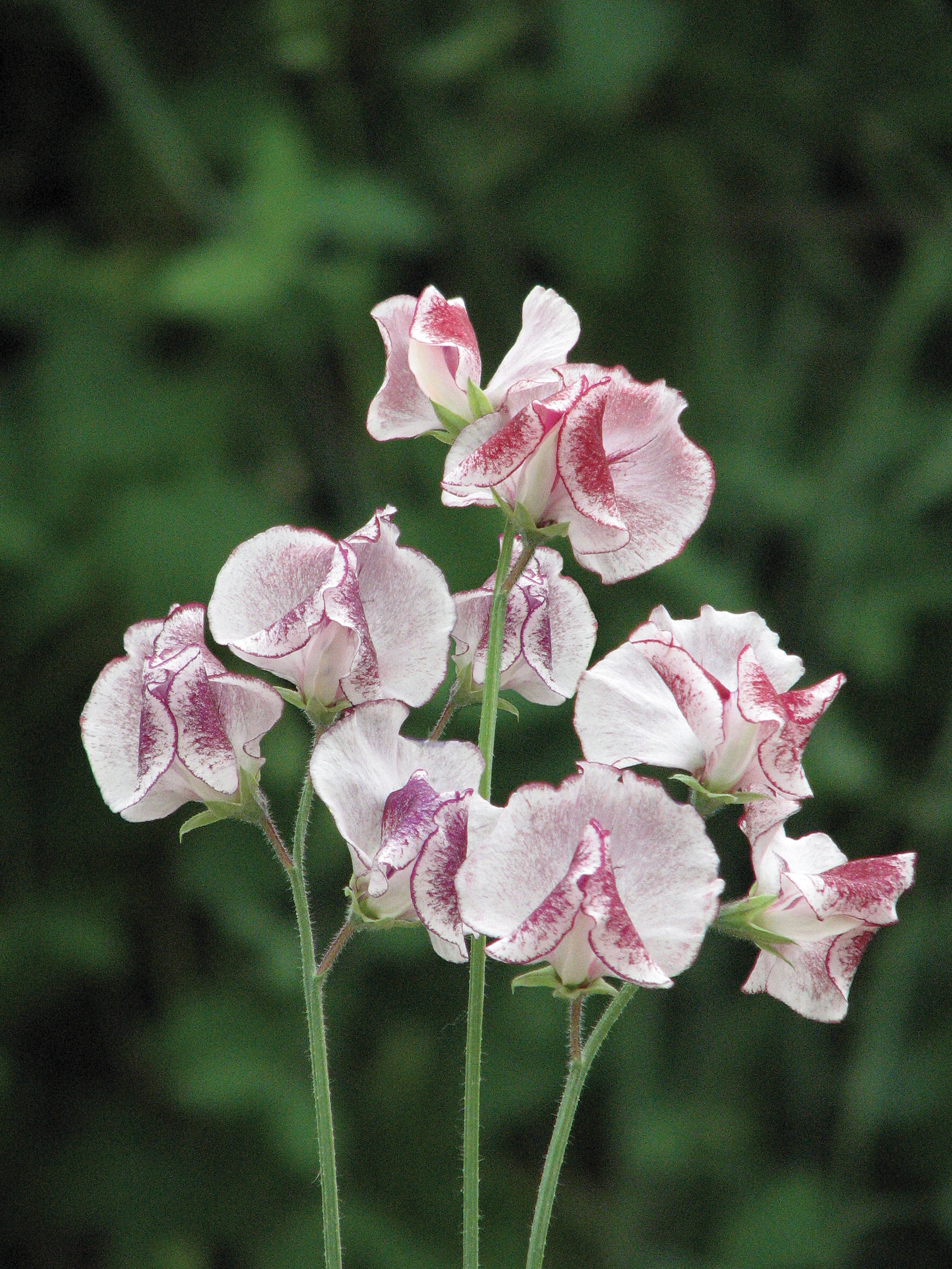
Here’s the Wiltshire Ripple variety I mention, with its delicate picotee edge. I wouldn’t be without this one. Always a good strong performer.

This is Mayflower 400, another new variety, celebrating the 400th anniversary of the Pilgrim Fathers sailing to the New World. It’s highly-scented and a good strong grower. Long stems, and flowers last a week in a vase.

After talking about flowers, we move on to what I’m growing and harvesting from the plot. Plums are prolific again this year. This is Victoria, delicious and reliable. I’m making jam. It’s such a treat in winter to have a taste of summer. I stand the jars along the kitchen window and admire them. It’s like looking through pink stained glass. Very cheerful on a cold, dark day.

The recipe for plum crumble cakes and plum jam is here : https://bramblegarden.com/2017/08/22/peaches-and-plums-crumble-and-jam/
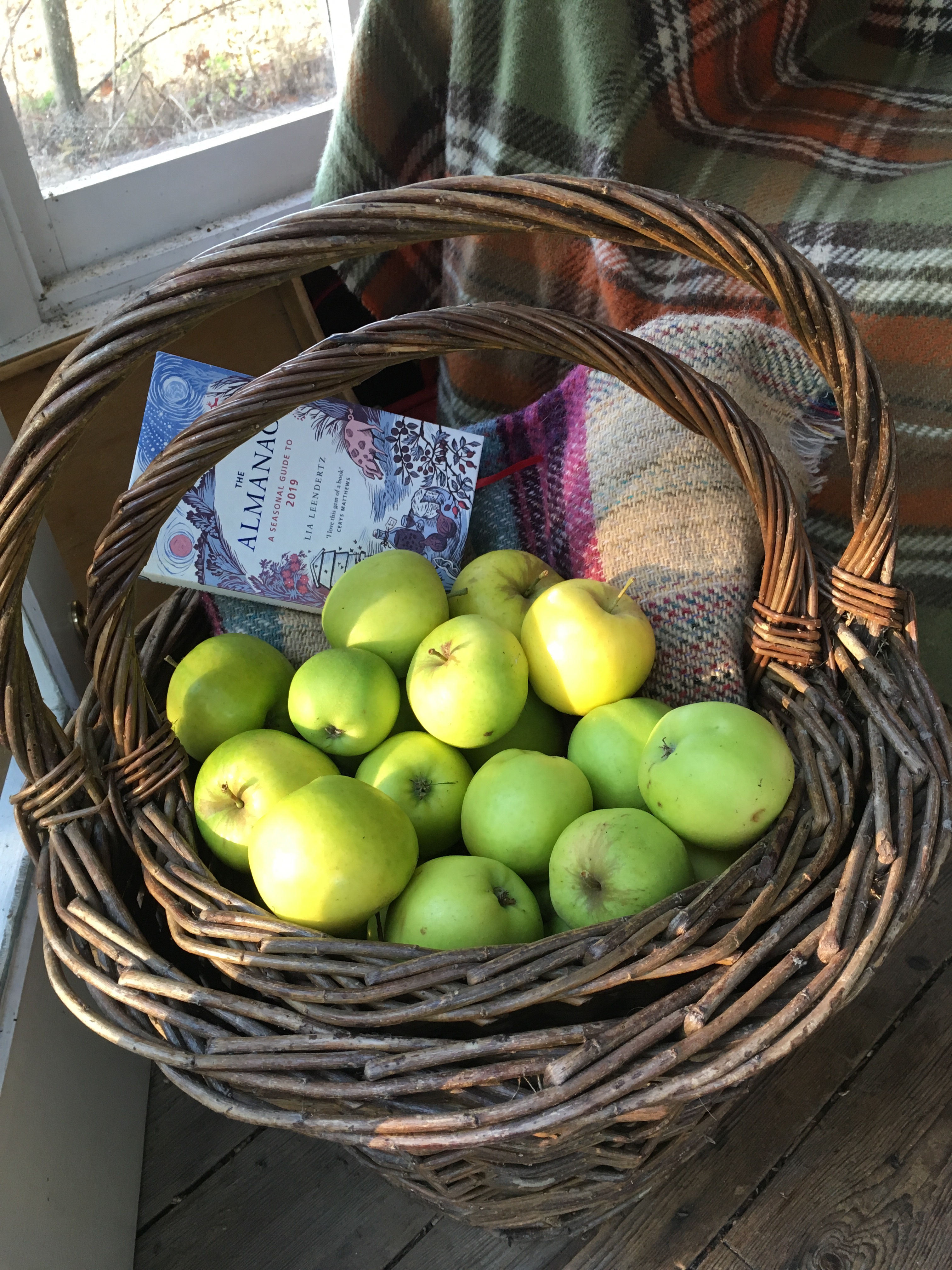
When my children were little, we fed them apple purée as their first solid food. BBC Radio Leicester programme host Naomi Kent is having a baby in two months, so we talk about the varieties of apple trees she might plant in her new garden.

I’m growing Spartan, a gorgeous deep red apple with a sweet honey taste. Apples are small and numerous, the perfect size for children’s lunch boxes. Lovely for juicing which is a somewhat messy process, but worth the effort.

I also grow Greensleeves (above) for cooking and eating. It’s sweet enough on its own, so you won’t need to add sugar for cakes, purée and puddings. Kept somewhere cool, apples will store until February.

Supermarkets often only sell a few apple varieties, typically Cox, Golden Delicious and Braeburn. Often they’ve been grown abroad and flown in. Sometimes they are coated with chemicals to improve their keeping qualities. And yet, in the UK, we have perfect conditions to grow your own apples. Traditionally, apple trees would have been 6m tall, but plant breeders have produced some compact varieties for small gardens and containers. Lubera have a range of ‘column’ fruit trees which have short side shoots and a narrow, vertical growing habit. I’m growing Malini Top Model which looks as if it will be about 50cm wide and eventually 3m tall. I’m growing it in a large plant pot and it has a good crop of apples in its third year. Lubera also have column types of pear, cherry and plum varieties on their website.

We had record amounts of cherries this year. I’ve been freezing them and preserving them in alcohol for winter treats. There’s a cherry marzipan chocolate recipe mentioned in the links at the end.

My cherry tree is Stella, a self fertile variety bred in Canada and introduced to Britain in the 1960s.

If you’ve got a small garden, opt for a cherry tree on dwarfing Gisela rootstock, which makes a compact tree. It’s much easier to protect trees from frost, if they are small enough to cover with fleece or an old bed sheet.

Good varieties to try include self-fertile Sunburst, Summer Sun and Celeste.

I’m fond of pears too. I have a Conference pear which provides plenty of fruit. If you are short of space, pears are easily trained along a fence or wall, in an espalier shape. Pears need more sunshine and warmth than apples, so it is a good idea to give them the protection of a warm wall. I’m going to plant a Concorde pear on the south wall of the house. Concorde is possibly a more reliable cropper than Conference.

If you have a more shadier garden, and you want to grow fruit, I’ve found success with Morello cherries, damson and quince, and crab apples for making jelly.

As well as apples, pears, plums and cherries, I wouldn’t be without my mini peach trees. I’m growing dwarfing variety Garden Lady and Bonanza in 45cm pots. We don’t get very many peaches yet, but the taste is so delicious and sweet. It’s a special treat to have home- grown ripe and tasty peaches.

I’d love to grow my own apricots. I’ve seen compact varieties Aprigold and Isabelle at nurseries. Our neighbour, Arthur, at our first house, had a fan-trained Moorpark apricot. He never did any other gardening, leaving it all to his wife Dorothy, but every day he fussed over his apricot tree, watered it and covered it up on cold nights. When it produced a magnificent crop each summer, he gave bags of fruit to his neighbours all along the little row of terraced houses. Happy memories of wonderful, kind neighbours. We have been so lucky to always have lovely people living next door.

So, to sum up, you don’t need a huge garden to grow fruit. It is possible to have a whole orchard- in pots on your patio. No need for rolling acres. Dwarfing varieties designed for growing in containers, some large pots, 45cm diameter, and John Innes no3 compost is all you’ll need. Set up an automatic drip watering system, or water the pots every day in summer. I add potash-rich seaweed feed every fortnight, and I refresh the top of the pots, taking out a small amount of compost and adding in some new compost, every year.

What fruit trees are you growing at home. Have you any recommendations for small gardens. Get in touch and let me know how you are getting on with your growing this summer.

Links:

Sweet pea seeds: https://www.mr-fothergills.co.uk/Flower-Seed/Tall_3/Sweet-Pea-Ripple-Mixed-Seeds.html#.XxrSvBB4WfA

Mayflower 400 : https://www.mr-fothergills.co.uk/Flower-Seed/Sweet-Pea-Seed/Sweet-Pea-Mayflower-400.html#.XxrS4hB4WfA

My plum jam recipe : https://bramblegarden.com/2017/08/22/peaches-and-plums-crumble-and-jam/

Apple and Almond Slice Recipe: https://bramblegarden.com/2019/11/07/apple-and-almond-slice-family-favourite-recipes/

Cherry marzipan chocolates: https://bramblegarden.com/2018/12/04/family-favourite-recipes-chocolate-marzipan-cherries/

BOOKS TO READ:

An Orchard Odyssey by Naomi Slade

https://bramblegarden.com/2019/09/27/an-orchard-odyssey-book-review-and-prize-draw/

The Creative Kitchen by Stephanie Hafferty

https://bramblegarden.com/2018/11/18/the-creative-kitchen-book-review/

BBC Radio Leicester : https://www.bbc.co.uk/sounds/play/p08jzr94. Gardening starts at 3.11.48 on the timeline.
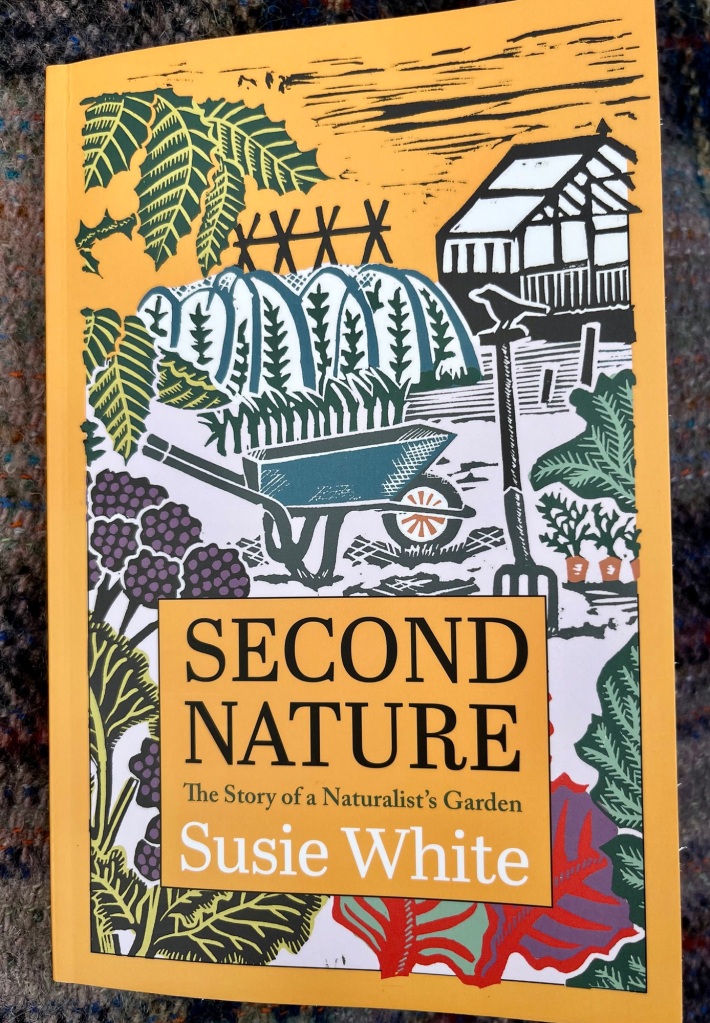
Six on Saturday – my garden 18 July 2020

Calendula Snow Princess. Starts off butter yellow and fades to cream. Edges look as if they have been dipped in chocolate. Each flower is different. Such a pretty thing.

I talk about my calendulas in this week’s Garden News magazine. It’s quite a challenge to say a lot in just 350 words. But luckily I like a challenge. And I’m getting some lovely feedback from readers who say they enjoy hearing what I’m getting up to on my plot.

I have to weave in and out of the calendulas along the path. Verbascum provides a lot of flowers for minimum space. If cut back repeatedly, it flowers until first frosts, and certainly brings in plenty of pollinators.

Sweet peas are in full production. There’s Wiltshire Ripple in the foreground, and Mayflower 400 behind.

We’ve had four hoglets born in the garden this summer, one less than last year. They are all thriving and putting on weight. I’m remembering to put water out for them every night. They drink from the tiny bucket pond on the veg plot and the horseshoe wildlife pond. Early- ripening plums are falling to the ground in the orchard, providing a feast for the hedgehogs. Luckily there’s enough for all of us to share.

And my sixth picture this week, isn’t strictly speaking from the garden, but this little kitten has come to live here and is currently keeping me company in the potting shed. He’s slept all day in a fruit crate, having kept us awake half the night with fun and games. We haven’t decided on a name yet. Suggestions welcome. He’s very bossy. Brave and intrepid. We’ve never had a kitten before. All our cats have been adults or seniors from the RSPCA. But this little fellow is here because of covid. Vets cancelled all neutering operations, and the inevitable happened when the mother cat managed to get out. I like to think that he is something positive to have come out of this challenging time. Certainly we will never forget the year he was born. And he’s making us all smile -when we haven’t really had much to smile about recently. Honestly, who could resist!

Let me know what’s making you happy this weekend. How’s your garden looking at the moment? Have you managed to meet up with family and friends? Get in touch and let me know.

Six on Saturday. A walk around my garden 11 July 20209

Phacelia is a bee magnet. I’m growing it around the edges of the vegetable plot. It’s an annual, but self-seeds readily. It can also be grown as a green manure crop, but for this use, it has to be turned into the soil before it flowers. I’ve been re-reading Jean Vernon’s Secret Lives of Garden Bees. Writing about Phacelia, she says: ” Look closely at foraging bees and you’ll notice the blue pollen balls that they collect from these flowers. ”

Geranium pratense. Meadow cranesbill. A native wild flower found along the grass verges here. Seed has blown into the garden and it grows along the hedgerows and amongst ornamentals. It’s very welcome.

Occasionally it throws up a white variant, and also flowers in delicate shades of lilac. I love the green ‘veins’ on the flowers. It reminds me of the markings on a butterfly wing.

Over on the veg plot, I found these flowers this week. They are potato flowers from the Shetland Black tubers growing in compost sacks. Aren’t they beautiful. You can tell the potatoes are part of the deadly nightshade family. I’ve never grown black potatoes before, so I’m eagerly awaiting the harvest.

Dianthus cathusianorum. In the gravel edges on the front drive, these bright pink flowers wave about on 50cm stems. They must love the free-draining conditions. We have to remember to drive around them. The scent is wonderful. Spicy. Heady. Memorable.

And finally, sweet peas. These are from a range called ‘Ripple Mixed.’ I’ve grown Wiltshire Ripple for many years, but the mixed pink and purple- striped flowers are fast becoming new favourites. Highly scented. Nice long stems. Long lasting in a vase. Recommended.

That’s my six for today. What’s looking good in your garden this weekend?

Why not go over to the propagator’s blog and see what everyone is selecting for their six today. It’s fascinating to see what everyone is growing, all around the world.

Links: https://thepropagatorblog.wordpress.com/category/six-on-saturday/

Phacelia :https://www.chilternseeds.co.uk/item_977A_phacelia_tanacetifolia

Geranium: https://www.naturescape.co.uk/product/meadow-cranesbill-plugs/

Shetland Black potatoes :https://marshallsgarden.com/products/shetland-black-seed-potatoes-10506756

Dianthus: https://www.claireaustin-hardyplants.co.uk/products/dianthus-carthusianorum-ruperts-pink

Sweet peas: https://www.mr-fothergills.co.uk/Flower-Seed/Tall_3/Sweet-Pea-Ripple-Mixed-Seeds.html#.XwowbBB4WfA

https://bramblegarden.com/2020/04/02/the-secret-lives-of-garden-bees-book-review/http://addictedtobees.com/. Jean Vernon

Don’t forget to read the next blog down, all about Niwaki garden tools. There’s some Niwaki garden snips to win.

Niwaki tools review – and some garden snips to give away

I don’t use chemicals in my garden. Some weeds are allowed to thrive, if they are useful to insects and pollinators. Dandelions are particularly good for bees, especially in early spring when pollen is scarce. There are some types of solitary bee that only feed on dandelions. I wouldn’t want to deprive them of their vital sustenance. But, I don’t want a lawn predominantly covered in dandelions. It’s all about striking a balance, so I start to thin them out in mid-summer. Niwaki sent a Hori Hori knife for a trial and It’s perfect for deep-rooted weeds such as dandelions. I was using a trowel before, which often didn’t get to the bottom of the tap root, and was hard work over a large area. The Hori Hori is sharp enough to easily slice through grass, and strong enough to gently lever weeds out of the soft wet ground. I notice, on the website, it says the knife is: “Mighty, but not invincible. It’s best not to stick it in heavy clay and yank back hard.”

When I’ve removed the dandelions, plantains and thistles, I pop a Seedball into the hole that’s left. Seedballs are wildflower seeds encased in clay. They can simply be scattered around the garden. They come in selections named bee, butterfly, poppy, urban, bat, bird and beetle. Hopefully, in time, I’ll end up with a flowering lawn, full of cowslips, self heal, wild marjoram and primroses. I’m aiming for a tapestry carpet effect.

The Hori Hori has a strong canvas holster which I think could be attached to a belt. The hand-forged carbon steel blade runs right through the handle, for strength. Tough and strong, it seems built to last. The handle is FSC beech wood and the blade is 7″ 17cm long.

As well as digging up weeds in the lawn, my knife is great for removing weeds from between paving slabs. I also spent a happy hour digging up ‘free’ plants which had self-seeded in the gravel. I found bellis daisies, perennial geraniums, sedums, erigeron daisies and several seedling trees- silver birch, maple and mountain ash. Much easier to lever them out with a sharp blade than using a trowel.

Bellis daisies seed readily around and make lovely bedding plants for borders and plant pots. Free plants are always welcome here.

Here’s a seedling mountain ash rescued from the gravel path. Beautiful spring flowers for bees, and autumn berries for birds. Great for any wildlife garden.

Erigeron karvinskianus also seeds readily between paving and in gravel. Another ‘free plant,’ dug up and transplanted into a 9cm pot.

My Hori Hori has quickly become a tool I reach for whatever task I’m doing, planting, weeding, slashing bramble roots. It’s comfortable to use and makes life much easier. And that’s what gardening is all about for me, managing the weeds, not totally obliterating them, just tipping the balance, and keeping me in charge, rather than always rushing around desperately trying to keep up.

I’ve asked the team at Niwaki to offer a reader prize. They have currently sold out of Hori Hori knives, probably due to the upsurge of interest in gardening over the covid period. So they are offering some forged garden snips instead. Keep an eye on the blog, and when they send me another item to try, the Hori Hori will probably be back in stock for a prize at a later date.

Meanwhile, to enter for the garden snips, just leave a comment in the box below and Niwaki will randomly select a name. Usual rules apply. Niwaki’s decision is final and there’s no cash alternative.

A winner will be announced on Monday. Please check back. Thank you.

Do you have any favourite garden tools. Nearly all of mine belonged to my grandfather Ted Foulds. And some belonged to his father, so they date back to the 1930s. They have certainly stood the test of time, and I wouldn’t be without them.

Links : Niwaki https://www.niwaki.com/store/hori-hori/

Seedball : https://seedball.co.uk/product/bee-matchbox/

I write for Garden News Magazine: https://www.gardennewsmagazine.co.uk/minimag

Six on Saturday- Peachy Shades- July 4th 2020.

We are not going to the Caribbean this year. Or any year, I should imagine. I’m frankly not planning to go further than the the next village. However, I can bring a bit of sunshine into the garden with my planting. This nasturtium is a seedling from a range called Caribbean Crush. It has predominately pink, apricot and peachy shades. A lovely change from the usual bright orange and yellows. This plant is an overwintered seedling, so it flowered early. It hid away in a raised bed of brassicas in the unheated poly tunnel. It’s been wonderful to have one or two flowers all winter. Leaves and flowers are edible and add a peppery taste to salads. And a few stems in a jam jar make a pretty posy for the kitchen table. If I save seeds from this plant, the offspring will be variable. But, I want to keep this particular unusual pale peach colour. So I’ll take shoot cuttings and put them into jars of water to root. Shot glasses are the ideal size. I take cuttings about 9cm (3.5″) long from the tips of healthy plants. I’ll carefully cut off all but four small leaves so the cutting doesn’t lose too much moisture. The glasses are placed under the staging in the greenhouse, out of direct sun, but in a warm and sheltered place. A north-facing window indoors would also be fine. Cuttings will root within two to three weeks and then I’ll put each cutting in a 9cm pot in gritty compost. I use peat-free compost with a handful of grit to improve drainage. When roots emerge from the bottom of the pot, I’ll plant them outdoors – and some will be put into a large terracotta pot to be kept frost- free over the winter. This ‘rooting in water’ technique can also be used for salvias, mint, and all types of impatiens. A good way to preserve special varieties and an insurance policy against winter losses.

Here’s a link for Tropaeolum majus Caribbean Crush : https://www.plantsofdistinction.co.uk/edible-flowers/edible-flowers/nasturtium-caribbean-crush-1947a

Looking around, here’s some more plants in lovely shades of peach and apricot. Enjoy this week’s tour of the garden.

Pot marigold, Calendula Sunset Buff. Petals look like they have been cut with pinking shears. There are pretty striped markings on the back of the petals too.

https://www.mr-fothergills.co.uk/Flower-Seed/Calendula-Seed/CALENDULA-Sunset-Buff.html#.XwDgKBB4WfA

Unknown dahlia – purchased from East Ruston Old Vicarage. A lovely memory of a Norfolk holiday. Maybe someone reading this will know what it is called.

Update: Chloris from The Blooming Garden (see comments) confirms the dahlia is Wine Eyed Jill. I shall duly label it, and take cuttings next spring to increase my stock. It is such a gorgeous colour. Thank you Chloris.

https://www.peternyssen.com/dahlia-wine-eyed-jill.html

http://www.e-ruston-oldvicaragegardens.co.uk/pages/view/564/home.htm

Seedlings from Pollie’s Daylillies. Pollie Maasz has been growing daylilies at her nursery in the New Forest, Hampshire, for almost 20 years. She has 1500 cultivars and breeds new hybrids, specialising in unusual and spider forms.

The spider daylilies have a more open flower than the usual trumpet-types, and petals twist and turn. Very eye-catching. They seem to dance about in the breeze. They are my favourites.

You can buy new un-named seedlings which produce some exciting and unusual flowers. It’s like a lucky dip! And as a bonus, you can name them yourselves.

https://www.polliesdaylilies.co.uk/

I’ve forgotten the name of this rose. My new year’s resolution is to improve the labelling system in the garden. I’m terrible for planting something and forgetting to label it properly. Very frustrating when friends come to visit and want to know what something is called. Perhaps someone reading this will know the name.

It’s either from David Austin or Peter Beales Roses.

Update: Peter Beales have helped me out and found the name. It’s the beautifully-scented climbing rose, Gloire de Dijon. Very free flowering in June and repeat flowers in late summer. Grows 12′ x 8′ ( 3.6m x 2.4m) has large, tea-scented flowers, and by the time I’d written this, I’d also found the label in the potting shed. I really must get some nice labels to hang on the shrubs. White plastic ones never look good. Maybe you could recommend something? I’d welcome any suggestions.

https://www.classicroses.co.uk/gloire-de-dijon-climbing-rose.html

But I do know this rose. It’s new. For Your Eyes Only. Repeat flowers all summer. Disease resistant and good for pollinators. Lovely in a bouquet. Lasts well as a cut flower.

https://www.classicroses.co.uk/for-your-eyes-only-bush-rose.html

Well, I hope you’ve enjoyed my peach selection this week. What’s looking colourful in your garden at the moment? Have you got a favourite plant or favourite colour right now. Leave a comment at the bottom of the page and let me know.

Six (or more) on Saturday: https://thepropagatorblog.wordpress.com/2020/07/04/six-on-saturday-04-07-2020/

I am @kgimson on twitter and karengimson1 on instagram, should you feel like reading more. Thank you for reading this blog and getting in touch. Karen

Online Hand Tie Posy Course with Georgie Newbery

Flowers for my Mum.

Finally, after four months, I can take flowers to my Mum. It’s been the hardest part of Covid, being separated from our families. It’s the first time in my life, I haven’t had her by my side. She’s usually there in everything I do, supporting me, encouraging me, passing on her knowledge. My setbacks and sorrows are hers. My successes and triumphs are hers. We are linked by invisible ties. If I stumble she is there to catch me. We are a team.

And we share a love of flowers. Mum has always helped me in the garden, bringing seedlings, divisions and cuttings from her plot. I grow them on, and take them back to her in simple bunches of flowers each week. It’s something I have really missed these past few months.

Luckily restrictions are easing and we can meet up again in the garden. And my little bunches of flowers are going with me.

And to add to my joy, I was invited to take part in a zoom lesson by flower farmer Georgie Newbery -just in time to make my first flower posy for mum.

I sat in my summerhouse with my i-pad on my knee- and just for an hour, forgot all about the desperate worries of the last few months. I’m sure I’m not alone in having fears for frail elderly relatives – and for youngsters. My youngest daughter is a newly qualified nurse, and my eldest works at a children’s hospice. No one is safe. The danger has been on my mind day and night. It’s been unrelenting worry. And yet, I’ve got through, concentrating on all the good people are doing- the inventiveness, finding ways to cope, the kindness.

Georgie is one such kind soul. I’m grateful for the invitation to join her first zoom session. She is launching online courses this summer, and asked me to be on a trial panel for the first lesson. I can’t tell you how excited I was to have something to put on my calendar, something to look forward to. It meant a lot.

Georgie, who runs Common Farm in Somerset, started the course by talking about the flowers chosen for the day’s arrangement. There’s the most sumptuous coral – pink Boscobel rose partnered with pink penstemon and a pretty mixed ‘ripple’ sweet pea. Purple fennel was added for scent. I could almost smell them from here! A dark chocolate-coloured Physocarpus Diabolo provided complementary foliage.

Georgie gave tips on harvesting flowers. They are cut early in the morning and plunged straight into cold fresh water while still out in the field. Leaves are stripped as flowers are picked. That’s a tip I’ll use to save time in future. And there’s a bucket of fresh water alongside which Georgie uses to plunge her hands and arms into. Sap from plants such as Alchemilla mollis and Ammi majus can cause an allergic reaction. Washing them straight away helps prevent painful sores.

There’s a special way to hold the flowers between thumb and finger, and something called a ‘florists twist’ which essentially means adding stems at 45 degrees and making a quarter turn with each additional new stem. The result is a posy that has flowers all the way round. And with a bit of practice your creation will stand up on its own, with all the flowers spiralling out like a beautiful layered ball gown. Georgie describes it as being a bit like “Painting with flowers.”

And here’s what I made with my own cut flowers after one session with Georgie on zoom:

The posy was swiftly popped into a glass vase of water. But I was so pleased to see my creation passed the ‘stand-up-alone’ test. The first time I’ve managed to do this.

In my posy, I have Cosmos Apricot Lemonade, a new variety I’m trying this year. The colour is a delicate pale lemon, with purple shades on the back of the petals. A perfect partner to Verbena Bonariensis.

I’m using pot marigold Calendula Snow Princess, a new variety launched three years ago. It has delicate pale overlapping petals that look as if they have been cut with pinking shears. I love the tiny stars in the centre of the flower. Beautiful in bud and at all stages of flowering.

I’m growing calendula down the centre of my sweet pea ‘A-frame.’ This creates weed-suppressing ground cover, and encourages the flower stems to grow tall, making them more suitable for floristry. I’m also growing butterfly gladioli down the middle. I tried this last year and it worked well. It saves time as there’s no need to mess about with canes and bits of string. The frame keeps them upright. They all seem to work well with sweet peas. Cosmos grows at the front of the border, tied in to the hazel frame to stop them flopping over the path.

It’s a jumble of flowers and vegetables. Not posh, or tidy, but I love meandering around the little paths, weaving in and out of the herbs, flowers billowing out of the borders.

One bed is full of wild flowers. You don’t have to have a meadow to enjoy them. My bed is 3.5m long by 1.3m wide. There’s pink campion, oxeye daisies and quaking grass.

Oxeye daisies make a lovely addition to any flower arrangements. They are good for bees and butterflies too. I like to attract pollinators to the plot.

There’s blue Campanula poscharskyana, Phlox Blue Paradise, Nigella love-in-a-mist, and yellow Verbascum in my posy.

Tomorrow, I’m attempting a much larger posy with 30 stems. Georgie advises to take flowers straight from the bucket, and not set them out on a table in a row -which is how I’ve been doing it until now. I’ve always wondered why my flowers look flat on one side. It takes some practice, but the results are amazing.

My hour or so was packed with information on growing the best cut flower varieties, how to condition stems, what materials to use, how to create everything from kitchen table flowers, to ‘all of the garden’ huge bouquets. There’s a chance to ask questions, and Georgie provides a fact sheet to accompany courses.

Georgie has new online courses on 10th and 17th July. Here’s the link to the website for more information: https://www.commonfarmflowers.com/workshops.html.

David Austin Boscobel Rose: https://www.davidaustinroses.co.uk/boscobel

Calendula Snow Princess : https://www.mr-fothergills.co.uk/Flower-Seed/Calendula-Seed/Calendula-Snow-Princess-Seeds.html#.Xvz8kxB4WfA

Phlox Blue Paradise: https://www.claireaustin-hardyplants.co.uk/products/phlox-paniculata-blue-paradise

How are you finding ways to cope with Covid and social distancing? I’d love to know if gardening has been a saving for you, as it has for me. I don’t know what I would have done without my garden to keep me busy. Thanks for reading my blog.

Six on Saturday – my garden in June 2020

Peace and calm.

The scent! Roses from the garden, and elderflower. I’ve been making elderflower cordial. A taste of summer, for when days get shorter.

Constance Spry. Planted when our youngest daughter Rachel was born. It weathers any storm. Reliable and hardy.

Rosa Claire, planted when our eldest daughter – also called Clare, without the i though- was born. Just beautiful. So many twists and turns and folds in the petals. Just like the patterns of life. Nothing in nature is ever a straight line. And there’s no direct journey to where you are heading.

Rosa Many Happy Returns. A lovely, long- lasting memory of happy events.

New rose. Kew Gardens. Sent to us by the team at David Austin to celebrate our wedding anniversary. A kind gesture after I posted this photo on twitter. I was amazed to see it viewed 74,000 times. We had so many lovely comments.

On our wedding day, I distinctly remember saying life might not always be a bed of roses. But we’d be ok if we worked together and helped each other.

Thank you for all your wonderful messages on here and on twitter. It literally made my day.

Links: SOS: https://thepropagatorblog.wordpress.com/category/six-on-saturday/

Kew Gardens rose : https://www.davidaustinroses.co.uk/kew-gardens

Rosa Claire https://www.rosesuk.com/roses/claire-rose

A Walk Around My Garden- Sunday 14 June 2020

Sweet peas, sweet williams and roses are in full flight. I’m amazed anything survived the recent torrential hail and high winds. Some of the tree leaves have holes where the hail went straight through them. But flowers were unperturbed.

Rose Cerise Bouquet climbs to the top of a mature beech tree. It thrashed about in the storm, sending a cascade of red petal confetti across the lawn. It’s such a floriferous rose, there’s hundreds more flowers ready and waiting to open. It will bloom, on and off, until November.

I also feared for the climbing New Dawn rose. The willow tree supporting it was almost stripped of its leaves. Most ended up in the pond. There was no water to be seen. Just rose petals and shredded leaves. However, remaining rose buds opened, and the tree has put out tiny new baby leaves to replace those whisked away in the storm. I’m sure nature is sending us a message. Through troubled times, there’s always destruction, fear and grief followed by renewal. We have struggled through Corona virus times. But we will recover.

Pinks and carnations are in full flower now. I’ve planted old-fashioned types, Mrs Sinkins white and Doris Pink. I’ve also invested in some modern ‘Devon’ hybrids, Devon Cream, Devon Wizard. Cranmere Pool, Letitia Wyatt. The names sound as delicious as the wonderful scent. A good one to look out for is ‘Memories,’ an improvement on the heritage variety Mrs Sinkins with good weather tolerance and it is also repeat flowering.

I wouldn’t be without sweet williams. I’m sowing next year’s flowers now. A pinch of seed in a 3″ pot, or a sprinkle in a half seed tray. Leave at the base of a sheltered house wall and they’ll germinate in a few weeks. I’ll prick them out into a full seed tray and then plant them into their final positions for them to settle and produce roots and leaves this year. Being biennials, they will grow now, and flower next year. A whole bed of flowers for just a few pounds. I’ll grow the highly scented auricular-eye type, and one called Sooty, which is almost black.

I’m just planting the last of the sweet pea seedlings. The October-sown plants are in full production. But I’ll want a supply right through until first frosts. This is the secret of growing. Always keep sowing a few more and a few more. Make sure you have a back-up supply incase anything goes wrong. I’ve just had a neighbour at the front gate. Do I have any climbing beans, by any chance, he asks? Luckily, there’s some in the propagator – a back-up in case mine get nibbled. He can have these to replace the ones taken by rabbits. We chat about the weather, slugs, snails and mice. And covid. What are we to do, he asks? I shrug my shoulders. Keep going, is the only answer I have. Don’t give up. Celebrate the successes and don’t be beaten by the failures. Help one another where we can, and try to enjoy the simple things. Look closely at all the beauty in the world. That’s all I can say.

I usually take part in the Six on Saturday meme…but this week I’m a day late. https://thepropagatorblog.wordpress.com/2020/06/13/six-on-saturday-13-06-2020/

Whitman Pinks:https://www.whetmanpinks.com/garden-pinks-en/page-3/

Peter Beale Roses https://www.classicroses.co.uk/

Mr Fothergills sweet Williams https://www.mr-fothergills.co.uk/Flower-Seed/Sweet-William-Seeds/

What’s looking good in your garden this weekend? Thanks, as ever, for reading. Your comments are always welcome.

Walk Around My Garden – Saturday 6 June 2020 #SixOnSaturday

This week, it’s mostly all about roses. As you would expect, wild roses have my heart. The garden is surrounded on two sides by tall hedges. We’ve never pruned them in 30 years. It’s one of those jobs we’ve always put off as being too big to tackle. Secretly, I love the wildness. Who says hedges have to be manicured. Who cares what people think. I love the tangle of honeysuckle and wild dog roses cascading from the top of 30 foot hawthorn. It’s a sight that gladdens my heart. I don’t mind if people assume we are too lazy to keep the hedgerow trimmed. I’ll hold my head up high. I’ve always been rather stubborn, you see. It can be a good thing when life gets tough. I’m quietly determined. I don’t make a big noise, but it’s amazing what can be achieved with calm tenacity.

Just pause for a moment and gaze at this pink hawthorn. This opens white, and fades to a beautiful shell pink. The hedgerows around here are mostly snowy-white Crataegus monogyna. Every now and again, there’s a pretty pink variant. It stops you in your tracks. You can’t fail to just stand and stare, it’s so breathtakingly lovely.

Rosa Canina takes full advantage and climbs high into the branches of trees and along the hedgerow. It’s a good year for flowers. Plenty of pollen for bees, and there will be masses of bright red hips providing winter food for birds.

Climbing through a mature willow next to the pond, there’s pale pink New Dawn. Again, I never prune this rose, or spray it. It just rambles where it likes. I expect the wind blowing through the tree keeps the rose disease-free. Blackspot tends to thrive in gardens where roses are surrounded by still air. In this windswept garden, luckily we have no trouble from either pests or diseases. It’s even too windy for aphids to get too plentiful. Those that survive, get eaten by birds.

We have a very overgrown pergola. The phrase ‘overgrown’ seems rather prevalent this week, I’ve noticed. The pergola goes from the back of the house, right round to the front drive. For half of it’s length, there’s this glorious rose Constance Spry. For about three weeks it has enormous highly-scented flowers. It only flowers once, but what a display! I’ve planted clematis, jasmine and ivy to extend the season. It’s a Rose I would never be without.

Constance Spry makes a lovely cut flower. Here’s it’s partnered with Sweet William which is just starting to bloom. It’s time to sow some more Sweet William for next year. I’ll use a half seed tray, good seed compost, and I’ll sprinkle the seeds sparingly. The tray will go at the base of the house wall on the north side, and seeds will germinate in about two to three weeks. I’ll then prick the seed out and put them in their own 3″ pots to grow on, or I’ll plant some in a holding bed on the veg plot. In August, they can be dug up and put in their flowering positions or planted out from the 3″ pots.

Here’s Constance Spry in a cutting basket with highly-scented Mme. Isaac Pereire, a heritage bourbon rose which dates back to 1841. This repeat-flowers all summer and mingles beautifully with Clematis Purpurea Plena Elegans. Plena means double, and these flowers are like purple pom-poms from August/ September onwards.

Finally, here’s the old china silk rose, Mutabilis. Much loved by bees. And, as you can guess, also grows quite happily without much attention, if any, from me.

As usual, after we’ve looked in the garden, there’s always a walk along the ridgeway path at the back of the garden. Today, there’s a video of skylarks. Turn the sound up loud. The farmer has planted wide bands of wild flowers around all the field margins. There’s a whole field of sunflowers and millet for wildlife. This year we have many skylarks. A few years ago we had a very poor summer with only one skylark. There is nothing sadder than the sound of a lonely skylark.

We’ve had some spectacular sunsets this week. I hope you’ve enjoyed this Saturday’s walk around the garden. Are you growing any roses in your garden? What’s looking good where you are this week. Thanks again for joining me in my garden. All welcome, for virtual visits!

LINKS:

I like to follow the Six on Saturday meme and see what everyone is growing. #SOS

https://thepropagatorblog.wordpress.com/2020/06/06/six-on-saturday-06-06-2020/

Dog rose: https://www.woodlandtrust.org.uk/trees-woods-and-wildlife/plants/wild-flowers/dog-rose/

Common hawthorn: https://www.woodlandtrust.org.uk/trees-woods-and-wildlife/british-trees/a-z-of-british-trees/hawthorn/

Rosa New Dawn https://www.classicroses.co.uk/new-dawn-climbing-rose.html

Rose Constance Spry https://www.davidaustinroses.co.uk/constance-spry-climbing-rose

Rose Mme. Isaac Pereire. https://www.davidaustinroses.co.uk/mme-isaac-pereire

Sweet Williams. https://www.mr-fothergills.co.uk/Flower-Seed/Sweet-William-Seeds/

Rose Mutabilis https://www.trevorwhiteroses.co.uk/shop/china-roses/mutabilis/

Skylarks: https://www.rspb.org.uk/birds-and-wildlife/wildlife-guides/bird-a-z/skylark/

Clematis : https://www.rhs.org.uk/Plants/210954/Clematis-Purpurea-Plena-Elegans-(Vt-d)/Details

In a Vase on Monday #IAVOM #MondayMotivation

Finding comfort in familiar things, I’m joining in with the weekly In a Vase meme. And this week it’s the first bunch of sweet peas – for my daughter Rachel, for her kitchen window at her first home. We still can’t believe she’s managed to complete the purchase, in the middle of a pandemic. Well done to her and her partner Sam for determination, riding the wave of crisis and uncertainly, and keeping strong along the way. It’s not been easy. But we will look back and laugh at all the ups and downs, I’m sure.

Photo: Albutt Blue.

I sowed my sweet peas in October in root trainers. I used Melcourt multi -purpose peat-free compost and added 25 percent grit for drainage. Sweet peas hate soggy feet. I started them off in the greenhouse to defeat the mice. Mice give up when the shoots are about 5″ tall as all the energy from seeds has gone into roots and shoots.

I’m growing heritage types varieties and a new sweet pea called Pilgrim 400 to celebrate the 400th anniversary since the Pilgrim Fathers sailed for the New World. The heritage types include lovely creamy white Mrs Collier. Seed came from Easton Walled Gardens near Grantham.

I made my sweet pea supports in February using hazel rods. These are usually used in hedge laying and are the binders that go along the middle of the hedge. Farm suppliers sell them for not much money.

I wrote about creating the rustic supports for my regular column in weekly Garden News magazine on 25th February. I must say, having the writing to concentrate on has helped me cope with the lockdown. It’s given me something cheerful to focus on. It’s lovely to be part of such a supportive team and I’ve appreciated the editor’s letters each week summing up our thoughts on the covid crisis and ‘steadying the ship’ with calm and sensible advice. It’s made a difference.

A week after I’d made the sweet pea supports we had high winds and snow. Luckily my frame stayed solid. A testing time for the garden- and us.

I planted out my seedlings on April 12th. The root trainers open out like a book, so there’s little damage to roots when you transplant them. Admittedly, these are made from plastic, but I’ve had mine for 6 or 7 years so far, and treated carefully, they will last a long time.

And here they are this week. The first bed has Charlotte potatoes. We’ll be eating those soon. The second bed has two rows of sweet peas. In between the A-frame there’s a row of gladioli, and calendula Snow Princess is grown as ground cover. There’s no room for weeds. Last year’s frame has been propped up, repaired and has climbing beans and squash planted this time.

I’m growing Wiltshire Ripple which has speckled flowers with a picotee edge.

This is High Scent. Another lovely picotee edge and wonderful scent.

Mayflower 400.

Old fashioned, highly scented mix.

I’ve planted new cosmos Apricot Lemonade in front of the frames. I’ll tie them in as they grow. There’s not an inch of space to spare, which is the secret of reducing watering, by covering the ground.

And here’s the first pickings. Such a joy. This scent is worth waiting for all winter and just speaks of glorious long, sunny, summer days.

With a little bit of Sweet William at the base, just coming into flower on the veg patch now.

And here’s a photo of Rachel when she was little, with her guinea pig Rosie. Thank you for all your lovely comments last week. And for your good wishes for Rachel and Sam. I was very touched by all your kind words. Thank you 😊 x

Links : Thanks to Cathy for hosting the IAVOM meme. Why not go over and see what everyone is growing and putting in their vases this week. It’s a world -wide community of gardeners. https://ramblinginthegarden.wordpress.com/category/gardens/in-a-vase-on-monday/

Albutt Blue https://www.visiteaston.co.uk/shop/gardening/seeds/albutt-blue

Pilgrim 400 :https://www.mr-fothergills.co.uk/Flower-Seed/Sweet-Pea-Seed/Sweet-Pea-Mayflower-400.html#.XtTdGBB4WfA

Cosmos Apricot Lemonade: https://www.thompson-morgan.com/p/cosmos-bipinnatus-apricot-lemonade/ka9983TM

Haxnicks root trainers :https://www.haxnicks.co.uk/garden-products/rootrainers

Walk Around My Garden Saturday 30 May 2020 #SixOnSaturday

Rose Constance Spry. Planted when my youngest daughter was born. Roses speak of celebration, and this one really shouts a welcome -to-the-world for Rachel. It flowers for three weeks in early June and fills the garden with a glorious fruit-salad perfume.

Where I am today. Up a ladder. Trying to control the tangle of clematis, jasmine and ivy. This has been allowed to run wild for four years. Little and often might be my approach to tackling the problem. Otherwise, it seems an impossible task. The pergola runs from the back garden to the front drive. A shady walkway in the heat. I’m not going to rush the task. Luckily I’ve got a new Henchman ladder to help with the task. No more wobbling on unstable step ladders.

Alongside the pergola there’s a wedding cake tree, Cornus controversa variegata. Some of the layers have deteriorated. I need to take advice on pruning to try to get it back in shape. Pruning the pergola will give it more light. Behind, climbing to the top of a mature ash tree is Rosa Cerise Bouquet which flowers on and off right through the summer into October.

Another rose looking lovely at the moment is Rhapsody in Blue which has been moved three times. Just goes to show, you can move roses, despite what it says in the books. Highly recommended. Disease resistant and free flowering. Lovely scent and unusual colour.

My grandfather’s rose, Zephirine Drouhin. He gave me this before he died. It’s wonderful to have something from his garden to remember him by. I know it was a favourite of his. I’m sure he knew it would give years of joy. And especially at the moment when everything seems uncertain and Covid has caused so much stress. It is as if he is still helping me, through all the plants coming into flower now. A reminder that life goes on, the seasons keep going. So must we.

My grandfather grew all his fruit and vegetables. People did in those days. Luckily, I watched, followed like a shadow and learned. And he gave me some of his garden tools, so when I’m hoeing the garden, I think of him, working his veg plot and feeding his family. I wonder what he was thinking while he was hoeing his garden. Did he find the peace that I’m finding right now. Was it a comfort to him, as it is to me, through all the trials and tribulations life throws at you.

Foxgloves have seeded in one of the veg plot beds. I’m digging these up and putting them in the wild garden, to make room for winter greens, Brussels sprouts and kale. Flowers will be picked for jam jar posies. I’m putting flowers on the village green again this summer to raise money for Rainbows Hospice for children. There will be an honesty box for donations.

The first sweet peas. Always popular in my jam jar posies. These were sown in root trainers in October. I’ve just sown some more for late flowering through to November. This one is from a packet of seed called Wiltshire Ripple Mixed. All have speckled flowers and a picotee edge. The scent is just wonderful.

As usual, when we’ve walked around the garden, there’s a short ramble along the ridgeway path to my ‘hole in the hedge’ porthole. It’s a viewing point I discovered a few years back. I didn’t make it, nature did, and I watch deer, rabbits, foxes, birds, owls, and hares, quietly and unnoticed.

Today, the May blossom has gone over, but there’s beautiful dogwood flowers framing the view. In an ancient hedge, there’s always something of interest. A tapestry of flowers, rosehips, crab apples, and seeds.

It’s just a humble wild dogwood. But it is as beautiful to me as any ornamental and expensive cornus tree.

And finally, after all that walking, sit a while in my 1930s summerhouse -on-a turntable. In the heat, it’s turned to the shade, facing the wood and pond. A perfect place to contemplate life and all the reasons to be grateful. All the things I value are not the things that can be bought. Hopefully my grandfather would be proud of the person I have become. I’d love to tell him how things have turned out. And that I’ve been happy, thanks to his good advice.

Links : I like to read and join in with the hashtag Six on Saturday why not go over and see what other gardens look like today, all over the world. https://thepropagatorblog.wordpress.com/category/six-on-saturday/

Henchman ladders like mine: https://www.henchman.co.uk/?gclid=CjwKCAjwiMj2BRBFEiwAYfTbCgG1JcfaQwtYjZ_lj7F3XBMAvXjIpri5d5vqMGjRlDY0i6E414m6RBoCRQMQAvD_BwE

Roses : https://www.davidaustinroses.co.uk/?gclid=CjwKCAjwiMj2BRBFEiwAYfTbCtnJOqLRzmev76pY_7u5maadGtrLFXf09qHEGmx4mHw71JE0ccaxkxoClDQQAvD_BwE

Sweet peas :https://www.mr-fothergills.co.uk/Flower-Seed/Sweet-Pea-Seed/#.XtIkQBB4WfA

In a Vase on Monday – revisiting RHS Chelsea Flower Show.

Well, we should all be at the Chelsea Flower Show today. But it’s been cancelled, like most spring and summer events. So instead I’m sharing photos from last year. Plants and flower arrangements I made a note of, for my own garden. Enjoy this dip into my photo album.

Kelways Peonies. I love Lemon Chiffon, (cream) Seashell, (pink) Avalanche, (white) Nymph, (pink).

They don’t last long, but such a glorious sight in mid May. I wouldn’t be without peonies.

Lupins from West Country Lupins. Just perfection. I bought this one

And this one. Lupin Masterpiece. Such a glorious plum colour.

David Austin Roses. This one is new variety, Tranquility. Very calming colour.

And new rose Desdemona. Beautiful at all stages from tight bud to wide open. Gorgeous scent. Stands up to the weather really well. Flowers shrug off rain and don’t ‘ball.’ Recommended.

Pinks. This is the new Tequila Sunrise. Lovely changes of colour as the flower ages. Amazing scent.

It’s wonderful to have the pinks side by side so you can compare them. The scent is just amazing in the heat, and contained by the roof of the marquee. A lingering memory of Chelsea.

Some of the amazing flower arrangements at the show. It really is a florists’ paradise.

These were still being created on press day. I stood for a long time watching the process.

This tower of flowers was spectacular.

Close -up detail of the flower-filled tower.

This explosion of foxgloves and cow parsley is my favourite.

Details for this lovely arrangement.

I also studied this arrangement created using test tubes. Really simple and lovely. Simple is what I always go for. As you know.

So I came home and made this from flowers in my garden. Inspired by all the lovely blooms I’d seen at Chelsea. There’s wild daisies, blue corn flowers and cow parsley as a background with green ivy covering the mossy wreath.

I hope you’ve enjoyed this re-visit of last year’s Chelsea Flower Show. I’m going to be watching all the on-line and televised content. This year, it is all about finding ways around problems and learning how to enjoy the things we love. Gardening – growing food and flowers- has been a saving for me. It’s kept me occupied and stopped my thoughts running away. It’s kept be grounded and focussed on keeping calm and helping others. Gardening is also a shared joy. Although we can’t see our friends and family, we can still talk about our gardens and share photos. It keeps us connected, and reminds us we are not alone.

If you listen in to BBC Radio Leicester, send your photos to mid-morning host Ben Jackson. Sharing our gardens is a lovely thing to do. And I’ll be talking about what I’m growing on Wednesdays and Thursdays, alternating with my gardening team member Josie Hutchinson. And also now and again on BBC Radio London.

Links: RHS Virtual Chelsea Show https://www.rhs.org.uk/shows-events/rhs-chelsea-flower-show

Kelways Nursery : https://www.kelways.co.uk/category/peonies/1/

West Country lupins : https://www.westcountrylupins.co.uk/index.html

David Austin Roses :https://www.davidaustinroses.co.uk/delivery

Join in with the In a Vase on Monday meme and see what eveyone is growing and putting into vases this week, all over the world. : https://ramblinginthegarden.wordpress.com/2020/05/18/in-a-vase-on-monday-the-jewels-and-the-crown/

Six on Saturday – A walk around my garden 16 May 2020

A seedling sorbus mountain ash. Sometimes nature delivers such beautiful surprises. We didn’t plant this tree, it arrived all by itself. We allow plants to grow and any that fit in with our wildlife-centred scheme of things are allowed to stay. This seedling produces beautiful creamy white flowers. Much loved by bees. Then in the autumn, rich orange berries. Much loved by blackbirds. My youngest daughter Rachel has just bought her first house. What a time to be negotiating a house purchase, in the middle of a pandemic. It’s been extremely stressful. But holding on to our hats and keeping calm, between us we have steered our daughter through choppy waters. And she and her boyfriend Sam have a (rather scruffy) old house with a very large garden. So today I’m digging up a few sorbus seedlings and potting them up for her new plot. I’ll also search out for some wild cherry, maple and oak saplings. The same size as those we planted when we moved here 30 years ago, our heads full of dreams to create a lovely home and have children. Now we are watching the youngsters cross the threshold of their first home, and it brings back all our memories. History repeating itself. We get to re-live our joy, as we watch them start their lives together.

As you can see, our little saplings have grow tall. The mini-wood is carpeted in bluebells and patches of wild garlic and three cornered leak.

Here’s the view from the pond. The turntable summerhouse is turned to the garden today to catch the morning sun.

The leaf-mould paths are lined with white lacy cow parsley. A favourite time of the year.

Wild flowers sweep along the edges of the paths. These are starry stitchwort, or stellaria.

Our little plot provides all the firewood we need for our log burner. A habitat for hedgehogs and beetles, insects and grass snakes too.

By the pond there’s a huge mature viburnum. I believe it is Viburnum plicatum Mariesii. It looks beautiful all year round. In May, it’s covered in flat creamy white flowers, and in winter the snow and ice settles in layers on the branches.

I hope you’ve enjoyed this week’s walk around my garden. I’ve made a sunny place to sit and read in the front garden. Just right for mulling over the past, and looking forward to the future. I’m sure you’ll all raise a glass and join us in wishing Rachel and Sam many congratulations. Good luck with everything, and always be happy. Life’s not always a bed of roses, but if you stick together, help one another and always be kind, you’ll have a wonderful life together.

Karen xx

Links SOS : A favourite blog. Why not go over and see what photos other gardeners are sharing from their plots today, all over the world. https://thepropagatorblog.wordpress.com/2020/05/16/six-on-saturday-16-05-2020/

Please leave a comment at the end of the blog, and feel free to share this blog on any social media platform . Thanks for reading.


Blagdon Pond-In-A-Box. Review and prize draw

The sight of goldfish takes me back to my early 20s when I travelled several times to China. I was lucky to get the chance to visit many gardens, while working for a newspaper. The Leicester Mercury was invited to send a representative to the army base of the Leicestershire Regiment, stationed at Stanley Fort in Hong Kong. Luckily, the editor chose me. And while there, I flew back and forth all over China, including to Shanghai and Guilin to view the gardens. It was the experience of a lifetime, something I’ll never forget. Some of the gardens had huge ceramic bowls of water, filled with goldfish. I’ve always wanted a goldfish pool, to remind me of those fabulous care-free days of travel. Here at bramble garden, we have a large horseshoe pond with a stone and gravel beach. But it is mainly for wildlife and it’s away from the main house, in the paddock. I thought it would be lovely to have a pond right by the back door, under the kitchen window.

I’d heard of the pond-in-a-box concept, and recently, Blagdon asked if I would like to try one of their ‘Affinity’ ponds. This has been a wonderful project to work on during the covid lockdown. It’s given us something lovely to work on together. And the calming sound of water is very welcome. We haven’t finished our project. There’s no fish or pond plants available at the moment. But I thought I would share this with you now, especially as Blagdon have offered a smaller ‘ Affinity corner pond’ as a prize.

So here’s what arrives in the post:

It’s hard to believe that everything for the pond arrives in one box! The word ‘Tardis’ springs to mind.

There does seem to be an overwhelming number of parts to start with. But if you can put together a piece of furniture from IKEA, you can manage to make a pond. The instructions are clear, and after the initial panic, sorting all the parts into little piles and working methodically through the assembly leaflet, it’s possible to make the pond in just a few hours. We didn’t have any difficulty once we settled down to follow the step-by-step guide.

We first created a framework. We did this in the lounge in front of the fire. It might be much easier to work out on the patio. And a lot less overheated! Luckily we were able to turn it sideways and get it out of the doorway, which we hadn’t thought about when we started!

The side panels slide into the frame. I’d say this is easier with two pairs of hands. But you would manage, if you were on your own. A feature of the pond is the ‘porthole’ insets. Children will love being able to view the fish through the sides.

Here it is taking shape.

When it is all put together, there’s a liner that fits inside. Then it is just a case of carefully dropping in the pond pump. There’s lots of fountain and /or waterfall options. We started off with a sort of mushroom and played around with it until I found the gentle burble effect I was after.

There’s an LED spotlight that comes on automatically at dusk. And the Blagdon Inpond filters the water and keeps it clean. You can find out more about it on the website.

Here’s what it looks like at night. I must admit, sitting next to it at dusk, watching the fountain and hearing the splash of water is very soothing, especially in these troubled, stressful times.

Like any new feature, it can stand out and look quite stark at first. But I ‘dressed’ the sides of the pond with acers, ferns, hostas, grasses and rosemary plants. It blended in with the patio furniture then, and didn’t look so harsh. This is no criticism of the product, except to say that it is very new and fresh, and therefore stands out against ‘old’ paving and walls. Foliage definitely softens the hard edges. Pond plants would also help. There are planting pockets included in the package.

Luckily, I’ve got a few large potted grasses, which match the woven panels perfectly. I must admit, we forgot to remove the protective film from the portholes. The view is much clearer now!

I’m delighted with my pond-in-a-box. It’s been a fun project to focus on during a difficult time, and I’ve got all the pleasure of choosing fish and new pond plants to come. And finally I’ll have something that reminds me of those interesting times trekking all around China!

For the chance to win an ‘Affinity View’ corner pond, similar to mine, but with three woven front panels with viewing port holes, please leave a comment in the box below, right at the bottom of the page. A winner will be randomly selected by Blagdon. No purchase is necessary, and the usual rules apply. There’s no cash alternative and Blagdon’s decision is final.

Disclosure: I have not paid for my pond, or been paid to write about it. Views are my own and I’m free to comment as I wish.

Update: Two pond skaters, a water beetle and a water boatman have moved in! Within one day of setting it up. And a blackbird has decided it is a perfect place for a dip, balanced in the planting baskets at the side.

Links. Read all about Blagdon here: https://www.blagdonwatergardening.co.uk/Products/Ponds/Affinity-Pools-Complete-Kits

Available from all good aquatic retailers and also online.

In a Vase On Monday – 27 April 2020

I’m sure spring flowers are more beautiful than they’ve ever been. We’ve had no rain for six weeks. It’s a problem in the veg garden where I’m trying to get broad beans and potatoes to grow. But for spring flowers, tulips and daffodils, it means they are looking pristine. And blossom has lasted longer than usual. Here’s a selection of flowers for my vase this week. Get in touch and let me know what’s looking cheerful in your garden just now.

Sometimes luck has a lot to do with gardening. I spend time trying to work out clever combinations of colours. Then nature goes and does it better. Here is tulip Blushing Apeldoorn with the softest primrose yellow flowers. Overlapping petals are edged with a picotee orange. It’s a perfect match for narcissi Pheasant’s Eye. The tiny cup in the centre of the flower is rimmed with the exact same bright orange. It’s a picture, don’t you agree? And it has happened just by chance. I’ve taken note, and next year there will be several rows of these beauties lining my cut flower beds.

I love the way the light shines through the petals. It reminds me of a stained glass window in a church.

I’m also using an old favourite, Narcissi Geranium. The tangerine orange centre remind me of egg yolk, enhanced by pure white petals. The scent is a dream. Utterly gorgeous. I’d never be without this pretty, old- fashioned daffodil.

Forget-me-nots are such a good filler for any posy. The bright blue flowers seem to match the intensity of the sky this spring. And the yellow button ‘eye’ matches the daffodils.

Have you noticed how blue the sky is this spring? Climate scientists at Reading University say the reduction in traffic on roads has led to a fall in pollution, which is affecting the appearance of the sky. There’s fewer planes too. Skies look a richer brighter blue, much like you’d see over a tropical island. I’m enjoying the combination of blossom, spring bulbs and azure sky.

Thank you for reading. Get in touch by leaving a comment at the bottom of the page. And feel free to share these photos on any social media platform, kindly linking back to bramblegarden.com at the same time. You might ask, what’s the point of flowers at the moment with a covid pandemic going on. I’m just trying to focus on something positive and remind myself that nature often shows us the way to cope with all kinds of crisis in our lives. And cope we must, for some time to come, until the risks deminish enough for us to safely emerge and socialise again. When that will be, none of us can predict. Until then, I shall garden, plant my veg, pick my flowers and try to keep as upbeat as I can. You are very welcome to join me, virtually at least, at anytime you like.

Links : In A Vase on Monday. Cathy, thanks for hosting my favourite meme.

https://ramblinginthegarden.wordpress.com/category/gardens/in-a-vase-on-monday/.

Six on Saturday- A walk around my garden 25 April 2020

Bluebells. These came from my grandfather Ted Foulds’ garden originally. A lovely reminder of him. There was only a small patch to start with. Now they run from the front to the back garden. It’s surprising how fast they spread, without any help from me. There’s some wild garlic in amongst them too, which I’m trying to control a little this year.

Trees are leafing up so quickly in the sunshine and heat this year. The bluebells will have to be quick to flower and set seed before they are shaded out. This is the path past the summerhouse to the pond.

The view from the summerhouse. It looks like a jungle already. There’s oak, beech, hornbeams, cherry, willow and ash in the mini-wood. All the trees came as saplings from the borough council when we moved here 30 years ago. There was a scheme to plant trees on farmland. I think it was linked to the woodland trust. We applied, and they delivered 260 saplings for us to plant. The whole family set to and helped us plant them in a day or so.

All along the woodland paths there’s a lovely white starry flower, I think it’s called stitchwort. I didn’t plant it, but it’s very welcome here.

It seems to be all green and white shades today. May blossom or hawthorn is suddenly in flower.

Such a beautiful sight at dawn. These flowers were just in bud yesterday. The hedgerow is so beautiful just now with sections of crab apple, maple, hazel and viburnum all in a hurry to wake from their winter sleep. The scent from the crab apple blossom is something I’ve never noticed before. I think the heat is enhancing the scent.

Oops, that eight photos. I’m sure no one’s counting…..

Enjoy your weekend. Here’s a view through my ‘gap in the hedge.’ I didn’t make this portal, nature did. I love to peer through and watch the wildlife. There’s always something happening in the back fields. Lovely to see some green shoots in the fields too. Fields have been bleak and bare all winter, after the flooding.

Links: Six on Saturday : https://thepropagatorblog.wordpress.com/category/six-on-saturday/

Please leave a comment at the bottom of the page. The comments box is below all the hashtags and social media sharing buttons. Please feel free to share too. Thank you.

BBC Radio Leicester Gardens Hour 22 April 2020

If you were listening in to BBC Radio Leicester for Gardens Hour today, I’ve written some notes to accompany the programme.

I’m working from home at the moment. The oak tree above has just burst into leaf. I can see the tree from the top of the paddock. The swallows returned here last Wednesday, and we’ve seen pipistrelle bats over the garden.

Blossom has been fabulous this year, with no rain to spoil the flowers. I’m sitting under this Prunus Kanzan cherry tree today to answer questions and talk about my gardening tasks.

We had a question about an apple tree failing to establish.

If your tree is failing to thrive, it usually indicates a problem with the growing conditions. Poor growing conditions will stunt any tree or shrub.

Water any newly -planted trees well. Soil may be dry around the roots even when the surface appears moist. Check with a trowel to see how far the water is penetrating the ground.

Weeds and grass compete with trees for moisture. Keep a weed and lawn -free zone at least 1m in diameter around the plant.

Mulch locks in the moisture and helps feed the tree. Apply a mulch a good couple of inches deep around the tree, avoiding the trunk. (mulch piled up against the trunk can cause ‘drowning,’ so take care it doesn’t get pushed up against the tree).

You can use your own home-made compost or composted bark for the mulch. Do not apply to dry ground, as it can also lock -in drought.

You can place a drainage pipe in the ground alongside the tree at planting time, which helps water reach the roots. However, take care, as too much water can cause water logging, which is also detrimental.

Feed with a potash fertiliser, which promotes fruit and flowers.

Salix Flamingo – wiki commons photo.

We had a question about a Salix Flamingo willow tree failing to thrive. The tree has come into leaf and the leaves have shrivelled.

I’ve found this tree difficult to grow. It’s grown for its new, shrimp pink leaves which emerge in April. These leaves are delicate and easily damaged by cold winds and frost. Too much direct sunshine on emerging leaves can also cause them to shrivel. We have had a combination of high daytime temperatures, cold east winds, and plummeting night time temperatures. In a sheltered garden you would have no problems, but in a slightly more exposed spot, the tree struggles. Also, being from the willow family it requires plenty of moisture. We haven’t had any rain for several weeks and the ground is parched- despite all the record-breaking amounts of rain we’ve had over autumn and winter.

Usually, the tree recovers and produces a new set of leaves to replace the ones that have shrivelled. Watering and throwing some fleece over at night usually nurses it along until we get more even growing conditions in early summer. I’ve known them to suffer from a type of rust, and also canker. But apart from that, they are very pretty trees. They either like you, or they don’t though!

We had a question about a montana clematis failing to flower. This is my clematis Montana Wilsonii. The one the caller had was a pink variety, planted last year and growing in a pot next to an archway. The clematis on the other side of the arch was doing well.

Clematis montana flowers on the previous season’s wood. The caller hadn’t pruned it, but sometimes a montana clematis will take 2-3 years to settle into flowering as its first thought is to grow to the top of the archway.

Clematis don’t do as well in pots, unless they are a really good size and you can keep up with the watering requirements. So it would be best to plant the clematis in the ground and keep it well fed and watered. Potash feed, again, for flowers. And prune immediately after flowering, although I hardly prune my montana clematis to be honest. It’s pretty low maintenance, once established.

And finally, we had a caller wanting to buy a Venus fly trap. They are usually sold at local garden centres, which of course, are not open at the moment. However several are making deliveries, so it’s worth ringing round to source supplies of plants. I’ve found this one on line from QVC. I’ve bought various plug plants, bedding and bird food from QVC and found the service to be quick and reliable. However, I’ve never bought any fly trap plants from them, so can’t say more than I have managed to find a supplier.

I hope you’ve found these notes useful. Please listen in on Wednesdays at 12.30 with Ben Jackson and on Sundays (usually) with Dave Andrews at 1pm on your smart speaker, DAB 104.9FM or on BBC Sounds.

It’s great to be involved with local radio gardening and we try to offer something for experienced gardeners wanting to try new varieties and grow for shows, and also for those who have never grown anything before. All questions welcome. We will try our best to help. I am part of an experienced team.

Comments box is right at the bottom of the page, below hashtags, social media sharing and links.

BBC Sounds to listen back: https://www.bbc.co.uk/sounds/play/p088w205. At 2.37.30 on the timeline.

Links : https://www.qvcuk.com/Thompson%26-Morgan-Dionaea-Muscipula-%28Venus-Fly-Trap%29-9cm-Pot-x3.product.518780.html?sc=Froogle&ref=fgl&source=froogle&utm_source=google&utm_medium=base&utm_campaign=base&cm_mmc=PPCSHOPPING-_-Google_Shopping-_-SmartShopping-_-Garden&Leisure&gclid=CjwKCAjw1v_0BRAkEiwALFkj5nSbQtMrf4di1C69MLikRT3XMgWNUhDGsymlRFAS-4yMUnqRnj5vxRoCm6AQAvD_BwE&

BBC Radio Leicester Gardens Hour 19 April 2020

Notes for anyone listening to BBC Radio Leicester today. You can send e mails, texts and messages for free gardening advice. I’ve been a travelling head gardener and a garden designer for 25 years. I write for weekly Garden News Magazine. I grow my own fruit, veg and flowers at home on a one acre plot created from a ploughed field. Currently, I’m speaking each week from the potting shed during the corona virus epidemic. Here’s the view from the potting shed, for anyone who likes blossom. Turn up the sound to hear the birdsong.

We cater for everyone. So if you’ve never gardened before and want some essential tips to get started, get in touch. We can help experienced gardeners wanting to grow the latest varieties or try something new. Maybe you want to grow more salads and veg for the family. Or you might fancy the challenge of growing for a “virtual” flower show. We can help.

This week we talk about growing tomatoes. I’m growing classic beefsteak variety Marmande for cooking, and tasty cherry tomato, Tumbling Tom for salads. My plants are 12cm (5″) tall and the roots are coming out of the bottom of the pots, so I’m potting them on. They’ve been growing in 7.5cm (3″) pots and I’m moving them up to 12.5cm (5″) pots. They will eventually go into 25cm (10″) pots and window boxes, but they have to be moved up in stages as tomatoes don’t like lots of cold wet compost around their roots.

Tomatoes like plenty of warmth, so I’ll keep mine indoors until the end of May. Tomato leaves turning yellow could be an indication the plants are getting too cold overnight, especially if they are right next to the greenhouse glass. Move them to the middle of the greenhouse and create a fleece tent to keep temperatures more stable between night and day. Remove fleece promptly in the morning. Alternatively, yellow leaves could mean the plants are running out of feed. Composts usually contain feed for about six weeks. But yellow leaves indicate a lack of nitrogen, so feed with a very dilute tomato fertiliser. Move plants on promptly when the roots have filled the pots. Don’t over water as plants also hate cold wet feet. Use tepid water. Bring the watering can in to the greenhouse to warm up. Cold water causes shock. Tomatoes need warm steady growing conditions and don’t like swings in temperature. Try to water them in the morning so they are not left cold and wet at night. Aim the watering can at the roots and keep the foliage dry.

While I’m stuck at home, I’m looking about to see what I can do to keep connected with the outside world. One thing I’m doing is joining in with the Rainbows 5K challenge.

Rainbows is a hospice in Loughborough, supporting children and young people with life-limiting conditions. They receive only 15 percent of their funding from the government and everything else has to come from donations. The corona virus lockdown means they can’t run all the usual fund-raising events. But the 5K challenge is one way everyone can help out.

You can take part anytime between now and May 31st. I’ll be logging my walking while I’m mowing the grass, weeding, raking, hoeing and plodding about the plot between the greenhouse and potting shed. I am sure digging also counts!

You can also help by tagging rainbows on social media to keep them in the public’s eye by posting photos on Facebook @rainbowsfanpage and on twitter and Instagram @rainbowshospice.

Children and all ages can take part. You can walk, run, hop, skip, cycle. Think of me weeding and cutting the grass for hours on end. At least the garden will look lovely, and it’s all in a good cause!

The National Gardens Scheme is also a charity close to my heart. Mum and I usually spend every Sunday visiting an NGS garden, having a cup of tea and piece of cake and buying a few plants. The lockdown means no gardens are open this summer. But the charity has launched a ‘Support Our Nurses’ campaign with virtual tours and JustGiving pages.

There are three gardens so far featured in leicestershire: Brook End in Wymeswold, with spring blossom, tulips and daffodils and ponds. There’s also Donna’s Garden at Snowdrop Ridge in Market Harborough, which should have opened for the first time this summer. There’s a wonderfully calming goldfish pond video.

Also a ‘walk through’ at Oak House, South Kilworth.

Donations support nurses working for MacMillan and Marie Curie, Hospice UK, Carers Trust, The Queens Nursing Institute. The NGS also helps Parkinson’s UK, Perennial and Horatio’s Garden for spinal injuries.

During the programme I mention our concerns for growers, garden centres and nurseries which are not allowed to open during the lockdown. There are fears many might go out of business with plants having to be skipped. Livelihoods are on the line.

I mention the Garden Centre Association #SupportYourLocalGardencentre campaign at gca.org. There’s a list of garden centres providing local deliveries.

Val and Steve Bradley from BBC Radio Kent, the Sun newspaper, have created a list of growers and nurseries offering mail order and/ or deliveries.

I’ve provided a limited and ever-changing list for Leicestershire here: https://bramblegarden.com/2020/04/05/contacts-and-information-to-help-you-through-corona-virus-lockdown/ If you want to be added, please get in touch.

Thank you for joining us at BBC Radio Leicester. These are strange and difficult times for all of us, but we can keep connected through social media and listening to the radio. It’s amazing how we can all help by taking little steps at a time. They all join up to a giant leap forward, don’t you agree. Get in touch and let me know what’s looking good in your garden and how you are getting on during this lockdown time. Are you managing to get on with your gardening? Is your garden providing a calm sanctuary. I know mine is right now.

Links:

Rainbows 5K Challenge : https://www.rainbows.co.uk/events/rainbows-virtual-5k-2020

National Gardens Scheme https://ngs.org.uk/virtual-garden-visits/

Garden Centre Association lists : https://gca.org.uk/

Val and Steve Bradley nurseries/growers list: https://47flt.r.ag.d.sendibm3.com/mk/cl/f/nsnLPDyBJajPGKKpPRt5x9TOx4tu9x1Dz-v5FiKvBC10LYC0JB45oC3rcwqKse2n5D7aQhdwFnOZEulP7NPET4tRxtfv-n5eUr7mNx6H7gjRIWSVXN-QVsXdmRICgr44KOhL_NeHecmmxD8URqGk4-jf5QBzcACiRe7I8jdByhWKnFH9LN4d2C-sA4qsiNVzl4nQDttx7wgdEKWIS89NuNt-XaZCrrIiTT3B

You can follow me on twitter @kgimson

On instagram @karengimson1

And Pinterest @karengimson

Some photos from my garden:

Seedlings in the greenhouse, tomatoes, cosmos, onions, cucumbers, aubergines, peppers.

Planting out calendula Snow Princess grown in plug trays.

We had some winter storms and dead elms in the hedgerow.

The whole garden is scented by this viburnum. Planted in front of white cherry tree, prunus avium, and pink cherry Prunus Kanzan.

Pheasants Eye narcissi, still looking good in the cut flower beds.

Not all things go according to plan.

Cherry blossom. Stella. Lots of fruit, hopefully. Have never seen blossom like it. A good year for fruit trees.

Pear blossom. I’m keeping an eye on the weather. Fleece will be thrown over at night if there’s a frost.

Thank you for reading!

Six on Saturday – views from my garden April 11 2020

Tulip Mount Tacoma and forget-me-nots.

My favourite Italian terracotta pot near my front door. So sad there are no visitors to enjoy this lovely sight. I’m including it here, so you can all share in the magic of spring flowers. Fairly new introduction Exotic Emperor, a double form of the classic and popular Purissima. Has peony-like petals that curve and twist as they open, revealing a flash of green. Very lovely and my favourite. This is a fosteriana tulip, and here in the Midlands, it always flowers through April. Planted with Narcissus Geranium an heirloom bulb dating back to pre 1930. Beautiful, delicate fragrance. Perfect for cut flowers. I have a row in the veg garden for cutting. Multi-headed – some of the bulbs have four flowers to a stem. I love mixing the old with the new. I’m fond of traditional plants, but I love trying something new.

I’ve always grown the white Purissima tulip, so I thought I would try the new sport, Flaming Purissima, another fosteriana tulip. It is such a joy, with all shades of pink and red ‘flames’ over an ivory white background. Beautiful under a white cherry blossom tree. I’ve planted these in a trench on the veg plot for cut flowers. They last a week in a vase, and watching them turn from tight buds to open, flat, almost water lily-like flowers is a joy. These were introduced in 1999, and they reliably come through the winter and flower each spring for me.

So comforting to know we will have masses of cherries this summer. We leave the trees unpruned. Blackbirds enjoy the crop at the top of the tree, and there’s more than we can use around the downward – arching lower branches. I’ve planted narcissus Pheasants Eye under the trees as an experiment. They flower at the same time. They look so glorious, I’ll fill the orchard with them next spring. They cost very little and are a joy to behold. I’ve taken photos of the garden and made notes to remind myself to order bulbs in July and plant in September. If I don’t make a note, I seem to forget!

In the wild garden around the pond we have this un-named beauty. We planted these 30 years ago. I wish I’d recorded the name as I’d love to plant more as pretty and reliable as these. They have a wonderful scent too. Petals glisten and remind me of sugar coated violets. I wonder if you know what I mean.

And finally, a humble bellis daisy, growing in the cracks between the paving by the back door. I’ve been imploring (nagging) the family not to step on them all winter. I have a little patch 60cm square of delightful little daisies. There’s absolutely no soil there. I feel they deserve to live, having made such an effort to survive.

Enjoy your weekend everyone. This is not to say that we are not all desperately worried by what’s going on in the world, and in our own country. But I’m thinking this sharing of garden photos may help someone keep calm and carry on. There is really nothing else we can do at the moment. Stay at home, help the NHS, stay safe. And look around you and enjoy the beauty of nature. When this is all over, our gardens will still be there waiting for us.

Links: all bulbs were bought from https://www.gee-tee.co.uk/

The bellis daisies came originally from my Mum in a little pot stood on the patio all summer. Seeds can be bought from https://www.mr-fothergills.co.uk/Flower-Seed/Bellis-Goliath-Mixed.html

Please leave comments below and let me know what’s flowering in your garden this Easter time.

What’s flowering in the garden 7th April 2020 -BBC Radio #SowAlong #BBCRadioSowAlong

If you have been listening in to Gardens Hour on Wednesdays on BBC Radio Leicester, you’ll have heard our ‘ten minute tips’ recorded in Ben Jackson’s garden. I always come home and plant the same varieties in my windswept country garden. Ben’s plot is in a lovely sheltered walled garden in a village. His soil is beautifully free-draining, in a garden which must have been worked for 100 years. Mine is cold wet clay, created from farm land over the past 30 years. It’s an interesting contrast and I love to see how plants perform in both our gardens.

Here’s an update on plants, showing what they are looking like today.

We planted tulips for cut flowers on 29th October. These are Exotic Emperor, a new early-flowering tulip, a double form of the popular White Emperor. It has a long flowering period with delicately green flamed cream petals. Looks good for nearly six weeks.

We planted a ‘cut flower mix’ and mine included this lovely Tulip Flaming Purissima. This comes in a range of creams and pinks. Very pretty and reminiscent of the old fashioned flame tulips made famous in the Tulip-Fever era. Very long lasting, and weather resistant.

We planted bulbs ‘lasagna’ style in layers. Here’s my big Italian pot by my front door. This had snowdrops and dwarf iris in January, dwarf tete a tete daffodils in February, and now today has Hyacinth Blue Jacket, Exotic Emperor tulips and scented Geranium narcissi. When these are over, I’ll replant the pot with scented -leaved geraniums for summer.

In both our gardens we planted a range of daffodils to flower from February right through till the end of April. Here’s my pheasants eye narcissi planted under the cherry trees in the orchard. I’m so pleased with these, I’ll mass plant them in September for an even better display this time next year. I’ve gone round the garden making notes and taking photos to remind me where there are gaps and what changes I want to make. If I didn’t make notes, I’d forget by the time September arrives.

Talking about daffodils, we planted these Paperwhite narcissi on December 2nd. Some flowered at Christmas, but I held some pots back in the cold potting shed and brought them out a week apart so that I could have flowers for vases right through to the end of a March. Flowering times are dictated by amounts of daylight and heat. So plants can be manipulated to flower over a period of time.

We planted up our dahlias on 31st January. These were overwintered in a frost-free shed. I took 2″ cuttings in February and these have rooted in the propagator in 3″ pots at 18C. Above are the dahlias making really good growth in their seed trays, half filled with compost to start them off. They will stay in the greenhouse until the end of May.

We sowed our tomatoes on 28 February, and I pricked them out mid March. They are growing nicely just out of the propagator and on the greenhouse benches. I keep the greenhouse heated at 6C.

On 9th March we planted our tiny plug plants which cost about 60p each. We planted them individually in 3″ pots and put them on a sunny windowsill.

They have grown really well, and I’ve managed to take three lots of cuttings from the mother plants, which means lots of bedding plants for free. Taking cuttings makes them grow strong and bushy too, instead of tall and spindly.

We also planted up some impatiens plugs into 3″ pots. These are now in flower and I’m putting them into their summer containers to grow on. I didn’t pay for these plants. They were free samples from the grower, Ball Colgrave.

If you are listening in today, Wednesday 8th April, this is where I’m talking from because I’m isolating due to covid. I’ve got 100 cosmos seedlings in 3″ pots including a new variety Apricot Lemonade. I’m also growing calendula pot marigolds which are great for bees and butterflies. I’m growing the very pale lemon Snow Princess, and pretty calendula Orange Flash.

I’ve just planted my new potatoes, Charlotte and Lady Christl in two of the divided beds. They are planted 12″ (30cm) apart, 4″ (9cm) deep.

I’ve also planted my broad beans, De Monica which is a new variety specially bred for spring sowing. I’ve sown double rows, with plants and seeds 9″ (23cm) apart. Seeds were planted 2″ (5cm) deep.

And this is the view from the greenhouse and potting shed. Turn up the sound to hear the birdsong. There’s a bank of wild cherry trees on two sides of the garden.

I hope you’ve enjoyed this tour of my greenhouse and garden. Hopefully the photos have jogged your memory about what we’ve been growing for our ‘ten minute tips.’ I’ll keep you posted on the progress of all these plants. I’m hoping the garden is going to be quite productive and very colourful this summer. That’s three uses of the word ‘hope,’ but under the circumstances, I think we all need some hope, don’t we.

Links : BBC radio Leicester Gardening – Sundays 1-2pm and Wednesdays 12.30 -1pm at the moment, subject to change due to covid. https://www.bbc.co.uk/sounds/play/live:bbc_radio_leicester

DAB 104.9FM and at BBCSounds. Ask your smart speaker to tune in to BBC Radio Leicester.

Update: today’s programme starts at 2.36.23 on the timeline. https://www.bbc.co.uk/sounds/play/p087sjhn.

A Walk Around My Country Garden -27 Mar 2020

When I planted this walkway of trees, I never knew how essential they were going to be. I must meander along these paths at least 20 times a day, lost in thought.

I’m sharing as many cheerful photos as I can find today. The covid crisis initially knocked me for six. I am desperately worried about all our elderly relatives. For all those expecting babies in the summer. For my young daughters, one a newly qualified nurse, working with desperately ill patients right now. If I could solve everything with walking, I would have worn out my shoes. It’s the first time in my life I have no answers. I can’t do anything to make it ‘right.’ Normally I can think of something. In every other crisis, I have found a solution. Something to make things better.

So I am turning to what I know. Gardening. Giving out advice to anyone who needs it. Families have struggled to buy fresh salads and veg these past few weeks. I certainly haven’t managed to obtain what I’ve needed. I couldn’t find bread, flour or milk. It’s made me feel vulnerable and determined to be more self reliant when it comes to fruit and veg at least. So anyone who needs grow-your-own advice can contact me and I will help. For specific individual garden design advice, how to start a cut flower garden, grow a meadow, deal with a shady border, I am asking for a donation to Rainbows Hospice direct, any amount and I don’t need to know how much. All my garden club talks have been cancelled, and as you know, all my fees go to Rainbows. The clubs have all rebooked for next year, but I wanted to do something for this year to help. So anyone interested, please e mail me at k.gimson@btinternet.com for more information. I am learning to Skype and FaceTime live, and also using the phone and computer. Where there’s a will, there’s a way, as my grandparents used to say. Funny how their little sayings come back to you in times of trouble. It’s as if they are trying to help you, even though they are no longer here.

Enjoy the slide show of photos. I hope it lifts your spirits and makes a difference. From now on, I am solely focusing on people who are doing good, sharing information about what they are doing, supporting them in any way I can. That really is the only way forward for me.

I took this video from the garden gate last night. It’s so heartening to see farmers out and about working their fields after such a dire autumn and winter. If they are out there preparing seed beds, then we can too in our own gardens. I shall be glad to see the green shoots of seedlings after a winter of brown, barren fields.

Hedgerow blossom. This looks like a shooting star to me. Such a beautiful sight. A heart-sing moment. The hawthorn too is coming into leaf. Soon there will be clouds of May blossom to cheer us along.

Lots of daffodils at the top of the paddock. These were a sack I bought from Dobbies at Christmas, reduced from £24 to £3. I couldn’t resist the bargain price, and took a risk. They’d been stored cool and dry so were in good condition. I didn’t expect flowers this year, but they are looking stunning. Every bulb has come up. I’ll water with a potash liquid to feed the bulbs for next year. And if I see another £3 sack, I’ll certainly buy it!

Yellow flowers symbolise friendship, and that is certainly what we all need right now to get us through this crisis. I’m relying on phone calls and my twitter friends to keep upbeat. I’ve just added my name to a list of local volunteers to ring round anyone who lives alone and needs someone to chat to once a day.

Today, the wild cherry trees (prunus avium) started to flower. What a wonderful sight. These trees only flower for a week or two, but we will sit under them with our cups of tea, have picnics outdoors and revel in every single moment they are in bloom.

My cut flower tulips are in bud. Tulips in the sunny front garden are already flowering early. I’ll cut a huge bunch of daffodils and tulips for the front windows. Vases of flowers will cheer up anyone passing by, even though they can’t call in to visit.

These double creamy tulips, Mount Tacoma, are favourites. They remind me of swan feathers. So graceful.

Scented narcissi, Geranium and Pheasants Eye, are starting to flower. Fabulous with yellow hyacinths and the first wallflowers.

In the greenhouse, the succulents are starting to glow. I’ve started to water everything, and I’m pleased this aeonium has come through the winter.

There’s plenty of citrus fruit coming along. I’ll be able to make orange cakes and lemon meringues soon.

Would you believe it, my new Polar Bear snowdrop is still in flower – at the end of March. It’s a new elwesii type of snowdrop with huge rounded petals and short pedicels which make the flowers look up and out rather than hang down. It looks rather surprised to be out in the spring sunshine amongst daffodils. I wonder if next year it will flower much earlier.

There’s life in the pond. The tadpoles are forming. Lots of pond skaters, some newts, and we’ve even spotted a grass snake, on our new wildlife camera set up on bank.

I’ve mounted the camera on a log, so I can move it about the garden without it being knocked over. Tonight we are hoping to catch sight of the hedgehogs. They are out and about at dusk, making nests in the bottom of the ‘fedge’ and under the old disused hen house.

Ladybirds are much in evidence. Here they are on the phlomis. My army of pest control workers. I’ve left twiggy piles of stems all around the garden to give insects a place to hibernate. Hopefully they will repay me by eating the aphids.

And there’s plenty of bees, thankfully. Bumble bees and solitary bees of all shapes and sizes. I have a new book to review, The Secret Lives of Garden Bees by Jean Vernon. I can think of nothing better than sitting under my cherry trees and loosing myself in a book. It will be something soothing and calming. Much needed at the moment.

Here’s an enormous bumble bee on the wild anemones. It’s lovely to have a book you can go to to learn more about the bees visiting your garden. And look at ways you can help them to thrive. Something positive to focus on.

I hope you’ve enjoyed this walk around my garden today. The sun is shining and it’s 30C in the greenhouse. All the windows and doors are thrown open. Get in touch and let me know what’s looking lovely in your garden today. And if you are feeling alone or sad, let me know. We are in this together. And be reassured that lots of people are doing wonderful things to help one another. You just have to look for the positives in life. As ever.

Love Karen xx

Home Grown – salads and veg for quick return during Covid-19

The following notes accompany the BBC Radio Leicester Gardens Hour between 1 and 2pm on Sundays, on your smart speaker, DAB, 104.9FM and BBC Sounds. I’m writing this in advance so you can follow what seeds I might be talking about.

It’s been difficult over the past week getting hold of any fresh fruit and veg. Quite dismaying to see empty supermarket shelves. I didn’t stockpile, so we are literally running out of everything.

After a bit of a panic, I’ve settled down to this plan of action. Here’s what I’m growing.

Microgreens and Sprouting Seeds

All you need is a kitchen windowsill to grow sprouting seeds. This tiered growing kit comes from Johnsons Seeds, but you could just use a plate with moist kitchen paper, or a shallow tray with compost for the microgreens. Cheap and easy to grow, adds nutrients to soups stews and sandwiches. Perhaps you’ve done this before with children, growing cress and mustard. It’s the same principle.

I’m growing:

Radish Mino Early

Microgreens Gourmet Garnish

Basil

Beetroot for leaves

Mung beans for stir fries.

Microgreens are grown until they are a couple of inches tall, and then trimmed using scissors. You can repeat this process a few times.

Bean sprouts and seeds are grown for 3-5 days and harvested when approx 2.5cm long

Mixed cut and come again salad

I like the idea of these pre-sown mats. All you have to do is pop the mats on top of a pot of compost snd water them. Fuss-free growing. Pick leaves from the outside when they are 5cm (2″) high, leaving the centre of the plants to carry on growing. Anyone can use these. They are great for children too.

PEASHOOTS

I’m growing peas in shallow trays. They will be harvested when the shoots are 4″. The plants will regrow snd you can repeat the process several times. After this, I plant the peas in a 10″ pot in the greenhouse and they grow on to produce a good crop of pea pods. Any edible pea variety can be used. Friends have even used dried peas from the supermarket.

Herbs in Pots

I’ll sow herbs in individual cells, a few seeds per cell. The cells will be moved on to 5″ pots and eventually they will stand on a sunny patio. Meanwhile, I will just keep pinching out the tips to use to liven up pasta and rice dishes, and this will also make the plants bushy.

Spring Onions

Spring onions will be sown in 10″ pots and kept in the cold polytunnel. They are ideal for growing in containers. They are quick growing and can be sown successionally from March to September. One item I do have is a huge bag of potatoes, luckily. Some mashed potato topped with grated cheese and chopped spring onions turns a simple dish into a tasty treat.

SPINACH

Baby leaf spinach is a favourite here, full of vitamins and goodness. I’ll grow these in recycled polystyrene boxes from a delicatessen, garden centre cafe. You could also use window boxes, or 10″ pots.

DILL

Nano is a new dwarf variety perfect for containers. A few clippings of dill turns any dish into a feast. I make a sauce with mayonnaise, butter and dill to add to fish. Totally delicious and full of vitamins. I’ll sow this 3 or 4 seeds to a cell and then the plants will be moved into window boxes.

CARROTS

Round carrots, such as Paris Market or Rondo are perfect for containers and are relatively fast growing. You can also clip some of the leaves to use in salads without it depleting the roots.

TOMATOES – more long term, but starting now …

I’ve a selection of dwarf cherry tomatoes for eventually growing in pots on the patio. These won’t need tall canes for support and won’t need pinching out. They naturally branch into small bushy plants. Started now in a warm window or a propagator at 18C, I’ll be eating tomatoes in June. Hopefully.

CUCUMBERS

I like baby cucumbers for summer salads. I’m growing Beth and La Diva. I’m also trying a new variety, Swing this year. Half fill a 3″ pot with compost and place the seed on edge. Water with tepid tap water. Keep warm at 18-21C. As soon as the seeds grow out of the top of the pot, add more compost around the stem. Harden off carefully, putting the delicate plants in the propagator over night and out in the greenhouse in the day to prevent damping off disease. Keep warm until June. I’m planning to grow some outdoor and some in the poly tunnel.

SOMETHING FOR CHILDREN

With children off school, cress seeds will be a winner. And also start off sunflowers, not to eat, but to brighten the garden and maybe for a competition to see who can grow the tallest.

My propagator glowing in the dark

It’s been a challenging time where stress levels have been through the roof here. But I feel calmer with a plan of action. Just sowing a few seeds has given me some respite from worries. It’s been a welcome distraction from covid troubles.

Let me know how you are getting on. Have you found it difficult to buy supplies. What are you growing their spring?

Links : seeds from Mr Fothergills https://www.mr-fothergills.co.uk/

Johnson’s Seeds: https://www.johnsons-seeds.com/Home_4/Oriental-Seed_3/Sprouting-Seeds-Sunflower.html#.XnaUjoGnyfA

Little Gardeners https://www.johnsons-seeds.com/Home_4/Oriental-Seed_3/Sprouting-Seeds-Sunflower.html#.XnaUjoGnyfA

Plants of distinction : http://www.plantsofdistinction.co.uk/

Wildlife Watching – camera on trial and prize draw for readers

One of the joys of gardening is sharing my plot with wildlife. When I see hedgehogs, it makes my day. When the same hedgehogs emerge from the shrubbery with a family of babies, well, I couldn’t be happier. I’ve given them a home, and it’s simply wonderful to see them thriving.

Today I received a wildlife observation camera to try out on the plot. It took me 20 minutes to read the instructions and set it up, and it has been a constant source of joy all afternoon- and into the evening. There’s an infra red camera to watch after dark.

I set up the camera by the horseshoe pond and placed a suet block in front. It took birds a few hours to find the food, and they were suspicious at first. Then a robin and bluetit tucked in to the treat. The picture is really clear, and you can switch on the sound as well. It’s lovely to hear birdsong while you are working indoors.

The wildlife observation camera comes from Wildlife World. Everything is packed in eco friendly cardboard. The little postcard with a ‘thank you for your order’ message is a nice touch. We enjoyed the chocolates while fathoming out the instructions.

This is what’s in the box. There’s the wire-free outdoor camera, a box with a mounting bracket, a user guide, some screws, batteries, and a USB cable for charging.

The only assembly I needed to do was screwing the mounting bracket to the bottom of the camera. The batteries were already installed. I expect the camera could be attached to a house wall to watch a bird table, or near a nest box to watch birds and hatchlings. I want to watch a particular blackbird that comes to the pond in late afternoon every day. It spends a good ten minutes splashing around in the shallows. And I’m hoping to catch sight of the hedgehogs as I know they also visit the pond at night.

Here’s what the picture looks like at dusk. If we are very lucky, we might even see the barn owl flying along the boundary. He visits us every evening, silently gliding along the hedgerow like a ghost.

These are screen shots from my i-pad. I haven’t worked out how to share videos from the camera yet, but it’s early days and I’ll have to read through the instructions again.

At about 9pm, great excitement! A grass snake slithered over the stones and into the water. I hadn’t realised they were out and about just yet. But we’ve had two days with sunshine and warm weather. All evening I was glued to the screen watching a tiny mouse dart back and forth hoovering up bird feed crumbs. I took the suet block in for the night in case it attracted rats. And also I didn’t want the hedgehogs to eat it. They have their own special meaty-type food.

Here’s a sample of the instructions for setting it up. I had to go on to the App Store, find ‘ToSee’ and download the free app. It took about ten minutes to sort that out. I was quite pleased with myself, as I’m hopeless with any kind of technology. It was fairly straightforward and the camera connected with the app first time. I then carried the camera outdoors and set it down by the pond. Tomorrow I might move it to another location. When you close down the i-pad or phone, the camera sends a signal if it detects any animal movements. It’s quite a distraction from work!

Overall, I’m delighted with the ease of setting up, the quality of the picture and the welcome little extras such as sound and night time viewing. I have no hesitation recommending the Wildlife World observation camera. It is powered by rechargeable battery and has motion detection by PIR sensor.

I’m working from home now for the foreseeable future. The wildlife camera is part of my ‘coping with panic’ strategy. Corona virus is very much uppermost in my mind, as it is for all of you, I’ve no doubt. But I’ve decided to try to think of something each day that will bring me joy and ease my worries. Concentrating on gardening and nature soothes and heals. I’ve found this to be true twice before when I’ve been seriously ill. And now, like many, I must find coping strategies again, and ways to stay positive when there just seems to be bad news every day.

Please leave a comment below to be included in the prize draw for a wildlife observation camera. Names will be randomly selected by the company. Sorry it’s UK entries only. There’s no cash alternative. Camera types may vary. Wildlife World company decisions are final. Usual rules apply. Please also comment if you don’t want to be entered in the draw and let me know.

Keep safe, and I hope you can all get out and enjoy your gardens too. xx

Links: Wildlife World https://www.wildlifeworld.co.uk/product/wirelesswildlifeobservationcamera/

In a Vase on Monday -March 16 2020

On the first warm, sunny day of the year, I’ve made a comfy place in the garden. I sit here, surrounded by familiar things: flowers, fresh from the garden, favourite books, magazines, tea, and mum’s lemon cake. And for a few minutes, I forget my worries. I am determined to enjoy the garden, birds singing all around, frogspawn in the pond. Trees bursting into leaf. I watch a wren creeping along the eaves of the house, searching for spiders. Spiders webs are used to glue their nests together, so I never clear them away. All of nature carries on, oblivious to the crisis we humans are facing. My small ginger spaniel Meg sleeps at my feet. My cat, Grace, chases a fly. They too are unconcerned. And yet I am a boiling cauldron of concerns. One minute panic stricken by the ‘what ifs’ the next, in warrior mode ready to fight. If only I knew exactly what I’m fighting. I return to voices, advice from my childhood, that some things cannot be changed and what will be, will be. I desperately try to remember comforting phrases from the past. I know my family, going back in time, suffered many illnesses and setbacks and survived. The suffering though. Those photos are etched on my mind. We, in modern times, have had it easy. Until now. And now, none of us know what’s going to happen. To give some respite from my thoughts, I turn to familiar things. For comfort I walk around my garden picking spring flowers, as I have done for the 30 years we’ve lived here. I’m posting them for you to enjoy, hoping they will bring you some comfort too, and for a few moments give you something else to think about. Stay safe all of you and keep in touch. Our gardens and our gardening community have never been needed more than they are today.

Dark, plum-toned Hellebore Rachel, with ruby hyacinth Woodstock, surrounded by Prunus Kojo-no-mai, ribes, Viburnum Eve Price, and pink comfrey.

The first of the wild cherry blossom. Simply beautiful. Pure and bright.

The last of the paperwhite narcissi and some skimmia. Deliciously scented.

Keep in touch and let me know what you are doing in your garden. Are you managing to get any seeds sown yet?

Sending love, hope and good wishes to you all. xx

Links: In a vase on Monday: https://ramblinginthegarden.wordpress.com/2020/03/16/in-a-vase-on-monday-change-of-plan/

Last of the late snowdrops – and snowy pictures of my garden

Patience often pays off. I’ve been watching the prices for this new and expensive snowdrop. Then, when most of the flowers had gone over, the garden centre reduced the price! It was my lucky day. Galanthus Polar Bear is my new favourite snowdrop, and it’s a quite a beauty, isn’t it.

I managed to find a pot with flowers still in bud. It’s a very late flowering type with short pedicels, making the flowers fling out and look up at you. So unusual, as most snowdrops bow their heads and look down. It’s got a lot of charm, and is the star of my potting shed windowsill at the moment.

While we are still talking about snowdrops, I thought I’d show you some snowy photos of the garden. It’s been the mildest wettest winter on record here, and this is the first, and only snow we’ve had so far. It makes the garden look magical and hides all imperfections (fortunately.) No weeds are on show, and brambles look ornamental with an iced topping of snow. Here you can see my greenhouse, polytunnel and potting shed set up, all close together to save walking too far between them. In front of the potting shed there’s some renovated 1930s plant nursery trolleys. Very useful for moving plant pots about, and for staging potted displays. My second-hand poly tunnel has doors both ends which is great for good air circulation. The 20ft Alton Cedar greenhouse is also second-hand and renovated by my husband. We painted it black, and made matching black staging inside. Beyond is my cut flower and veg patch and then the orchard, before you reach the paddock gate leading to the ridgeway footpath.

In the exotic border in front of the potting shed, I’ve left stems and seed heads intact for birds to eat and insects to find shelter. These innula seeds look pretty with a topping of snow.

The horseshoe pond can viewed from the potting shed windows. There’s a gently-sloping boulder beach to stand on, and this gives easy access for hedgehogs, frogs, newts and grass snakes. It’s very calming to stand and watch the ripples from raindrops. Today the pond is a cauldron of frogs, mating and producing frog spawn.

From the pond you can see the cut flower and veg patch. My hazel sweet pea supports have weathered three named storms on consecutive weekends. Really, if they can cope with all that, I think they will stand firm and strong for the summer display. There’s little slab paths between the plots so I don’t have to walk on the soil. It’s a no-dig garden inspired by Charles Dowding who’s been a patient and valued mentor these last few years, along with his partner Stephanie Hafferty. They’ve both given me lots of advice and I’ve got more value out of my plot thanks to their suggestions.

At the end of the veg plot there’s a small orchard, rather neglected. We’ve pruned it this winter which means we might lose some of the crop in the summer. But over a few years we will get the trees back into shape and down to a manageable size for harvesting. Under the trees I’m planning a wild flower patch. I’m going to leave some grass and see what happens, I will sow some plug plants in another area, and finally I’ll try a wild flower lawn, ready seeded. I’ll report back on the project.

Finally here’s the view down the field hedge tunnel. This path is made from bark and brushwood chippings from the garden, put through my new Stihl electric shredder. It saves a fortune on bagged bark supplies, plus helps me recycle waste from the garden.

Thank you for reading. Please share on any social media platform , and get in touch and let me know what your garden looks like just now. Comments box is right at the bottom of the page.

Links: Stihl shredders : https://www.stihl.co.uk/STIHL-Products/099364/Garden-shredders.aspx

Polar bear : https://www.avonbulbs.co.uk/spring-planted-bulbs-and-snowdrops/galanthus-snowdrops/collectors-snowdrops/galanthus-polar-bear

In a Vase on Monday- flowers from my plot 9th March 2020

Finding comfort in familiar things, I’m joining in with my favourite IAVOM theme today.

Spring flowers always bring hope. And we need plenty of hope at the moment, don’t we.

Here’s my flowers, picked fresh from the garden. They are in an unusual location, the drinks holder of my car. The perfect place for a jam jar of flowers, on their way to my mother’s house (via Radio Leicester, where I talk about what’s growing on my plot).

There’s some shoots of Japanese cherry, Prunus Kojo-no-mai, at the back of the posy. Some lace-edged heritage primulas, Pulmonaria Sissinghurst White, plum coloured Hellebores, and one very pretty bellis daisy.

The daises have grown all by themselves in the gaps between paving slabs at my back door. Something so pretty, just growing from seed carried on the wind. They have given me as much joy as anything I’ve planted and tended, probably because they have survived against the odds. There’s no soil there. And no loving care. But they have thrived. A message to us all, about resilience, maybe.

I love the slightly messy, many petaled flowers of bellis daisies. There are single and double forms. Seed packets cost a couple of pounds. Once you have them, they will always be with you. But not necessarily growing where you put them!

In my mother’s garden, the daisies romp delightfully across the lawn and into the border. She mows around them. It’s obvious where I get my empathy with plants from. My lovely mum has always been my greatest influence in life.

Wishing you all a peaceful, happy and successful week. I’d love to see what you are all sowing and growing in your garden just now. It’s very busy here, with plenty to do in the garden, as always. Hoping for some sunshine and nice weather – soon.

Links: In a Vase on Monday https://ramblinginthegarden.wordpress.com/2020/03/02/in-a-vase-on-monday-pillaged/

Bellis Daisy: https://www.mr-fothergills.co.uk/Flower-Seed/Bellis-Goliath-Mixed.html#.XmZXWoGnyfA

BBC Radio Leicester, gardening starts at 1pm every Sunday with Dave Andrews https://www.bbc.co.uk/programmes/p002zx56. Listen back on Sounds, or ask your smart speaker to tune in to BBC Radio Leicester

Please share via any social media platform. I do not pay for any advertising, and I’m always grateful to anyone who spreads the word and signs up to follow, via e mail. Thank you. 🙂 🌱

Note: I was not driving when I took the photos in my car. Naturally.

Six on Saturday – a celebration of snowdrops in my garden- 29th February 2020

We had beautiful sunny weather for precisely ten minutes today. I ran out, opened the summerhouse doors, took some deep breaths of lovely fresh air. And then it snowed. That was the end of my time in the garden. Me and the cat ran back inside.

I’m sharing six photos of snowdrops, as this is the last day for them here. The snow will finish the snowdrop season in my garden, but it has been a lovely long spell. Snowdrops opened early in the mild temperatures, and they’ve stood up well to the rain, being under flood water several times in the past few weeks.

My favourite snowdrop Galanthus Madeleine has been stunning again this year. I bought it three years ago from Thenford Gardens. I shared a pot of six bulbs with a friend. It’s the most I’ve ever paid for a pot of snowdrops, but it was worth it. This year, I had nine flowers and plenty of extra leaves which shows it is happy and spreading. Pictured above are some of them on show in the potting shed. I love the way the petals fold around each other like the wings of a bee. So delicate.

Here is Madeleine fully open on the potting shed windowsill. It’s a very pretty snowdrop at all stages. The yellow markings are brighter in sunnier situations, and bulbs don’t like to be too wet.

Viridapice is another snowdrop I love. It has such pretty delicate lime green markings. Another good do-er. It is spreading nicely under the ash trees in the wild garden.

Living on the boundary between Leicestershire and Nottinghamshire, I felt I had to have Galanthus Robin Hood. I’ve been many times to Sherwood Forest where Robin and his merry men are said to have lived. This snowdrop got its name from the crossbow X- shape green markings. It’s a very tall snowdrop and I have it at the top of the garden so you’ll pass by on the way to the back fields footpath. I have Galanthus Little John nearby, and I’m searching for a snowdrop called Maid Marian to complete the trio. They make me smile every time I see them.

Regular readers will know that I’m a bit lackadaisical with labelling. Sadly I’ve lost the name of this beauty. Maybe a reader will know what it’s called. Isn’t it striking though, with three petals spreading out like wings.

Quite honestly, I’m just as happy with our native snowdrop Galanthus nivalis. Plain and simple. It’s gorgeous.

I hope you’ve enjoyed this weekend snowdrop tour. I also hope you are having better weather than us at the moment. We’ve had a week with 12 Environment Agency flood alerts in one day. The greenhouse has flooded more times than I can count. I just keep sweeping the mud and water out of the door. I’ve never known a winter like it.

Please leave a message below to let me know what your gardens look like right now. How are you coping with the deluge?

Thank you for reading and please feel free to share on any social media platform as it all helps. I don’t pay for any promotions of any kind. I simply rely on your kindness in commenting and spreading the word.  Scroll down for the comments box, right at the bottom of the blog post.

Links: snowdrops from Easton https://www.visiteaston.co.uk/visit/opening-times-and-prices

Madeleine, https://jacquesamandintl.com/product/plicatus-madeleine/

Viridapice https://www.crocus.co.uk/plants/_/galanthus-nivalis-viridapice/classid.2000008237/

Robin Hood https://www.harveysgardenplants.co.uk/product/galanthus-robin-hood/

Sherwood Forest https://www.visitsherwood.co.uk/about-robin-hood/

A Walk Around my Garden Saturday 8th February 2020

Welcome again to a peaceful walk around my garden. Enjoy the sunshine and spring flowers. The temperature today is 9C. There was frost overnight. It’s still too wet to garden, so I’m continuing to tidy the potting shed and mooch in the greenhouse. I expect all the spring jobs will come at once and I’ll soon be dashing about. But for now, it’s a slow meander around the pathways, taking in every tiny jewel-like flower, breathing in the honey-scent of snowdrops. Looking in the pond for signs of life- no frogspawn yet. Soon though. There are stirrings. I peer into the water trough and watch a tiny water boatman. I watch like a child in a trance as the tiny oar-like legs propel the boatman around its miniature world. A world I created. A simple metal tank, with a few spare oxygenating plants thrown in. I marvel at how easy it is to help wildlife. I quietly whisper ” I made this for you.” The water boatman dips and dives and delights in its domain. And I revel in every second of quiet and calming observation, with no other purpose than to just enjoy this moment.

White primulas on the garden tables. We’ve had honey bees looking for pollen, and a few sleepy bumble bees ‘bumbling’ about crashing around the garden. I’ve rescued a few, utterly helpless and disorientated, and set them upon a patch of wild primroses.

Aconites, or gold coins, as we call them, are spreading nicely in the far corners of the garden, undisturbed. This is the first year they have had to fight with cowparsley leaves, emerging early due to warm temperatures. I might have to intervene.

There’s more cowparsley at the top of the garden. I’ve never seen it look so lush in February. The hellebores will have a race to flower and set seed before being over-run by the pretty but invasive weeds.

At the top of the garden we store our wood ready for chopping for the fire. I stood and marvelled at the beauty of this red-stained heartwood. Sadly the tree succumbed to disease and died. But it will have another purpose for a year or two as a home for spiders, woodlice, springtails, beetles – insects that will in turn provide food for mammals such as hedgehogs, and birds. Blackbirds and robins thrive in this garden.

Snowdrops are spreading along the leafmould paths. Each year I divide them and move them further along the tree-lined tracks.

Snowdrop corner. Filling out nicely. Snowdrops come from Easton Walled Gardens, Hodsock Priory and National Garden Scheme open garden days.

Snowdrops look cheerful placed on the potting shed windowsill where I can look out and see them while I’m working indoors.

I’m very fond of this snowdrop, Galanthus nivalis Viridapice. Such delicate green-tipped petals.

I bought just three Madeline snowdrops three years ago from Thenford gardens. It must be happy, as now there’s nine flowers. It grows in nice moist leaf-mould soil under deciduous trees.

But I’m just as happy with my plain native snowdrops, Galanthus nivalis, growing all along the hedgerow between the garden and the lane.

Regular readers know that after a ramble around the garden, I always take you out of the top gate and along the ridgeway footpath behind my plot. It’s good to see the changing seasons in the countryside. Our neighbouring farmer has finally managed to plough the field. It’s the first time he’s been able to get on the land due to the record amounts of rain we’ve had here over autumn and winter. Ditches are still full, and overflowing at the bottom of the hill.

There’s still a few crab apples lying in the hedgerow. We had a record harvest last autumn. Good news for all the birds and mammals eating them through the winter.

Some welcome signs of spring. Blackthorn blossom is starting to emerge.

And elderflower leaves are unfurling. The hedgerow is waking up.

Almost hidden in the brambles is a concrete trig point. A reminder of the past. Measurements were taken from theodolites placed on top. This one dates back to around 1936. They were built between the 1930s and 1962 and sited on the peaks of hills. It’s no wonder our garden is so windswept. We are at the highest point for miles around.

I hope you’ve enjoyed your walk around my garden. Leave me a message to let me know what’s flowering in your garden right now. And thank you for reading. I’ve checked the ‘stats’ and I am amazed to see 140,000 views for the piece on the dangers of sepsis and gardening injuries, and 70,000 views of these quiet rambles around my garden. I’m very grateful for every single reader.

Links: Six on Saturday- I follow this blog and like to join in. https://thepropagatorblog.wordpress.com/2020/02/08/six-on-saturday-08-02-2020/

In a Vase on Monday- another blog I enjoy: https://ramblinginthegarden.wordpress.com/2020/02/03/ina-vase-on-monday-in-the-queue-for-green/

Waterboatman: https://www.wildlifetrusts.org/wildlife-explorer/invertebrates/bugs/lesser-water-boatman

Snowdrops, Easton https://www.visiteaston.co.uk/

Snowdrop festival NGS :https://ngs.org.uk/snowdrop-festival-brings-first-signs-of-spring/

Blackthorn https://www.woodlandtrust.org.uk/trees-woods-and-wildlife/british-trees/a-z-of-british-trees/blackthorn/

Elderflower https://www.woodlandtrust.org.uk/trees-woods-and-wildlife/british-trees/a-z-of-british-trees/elder/

All about the history of trig points : https://www.bbc.co.uk/news/in-pictures-36036561

In a Plant Pot on Wednesday – 5th February 2020

It’s a wonderful moment when potted spring bulbs suddenly flower. They seem to be in bud for weeks. Then virtually overnight, all the iris and dwarf daffodils burst into life. Colour at last. It’s much appreciated on a dark cold February day.

I planted shallow pans of bulbs on October 12th last year. Dwarf iris Katherine Hodgkin is a pale blue beauty with markings resembling blue ink pen lines. Each winter I try something new, and this time I’ve chosen iris reticulata Blue Note, very striking with deep indigo flowers and white markings on purple black falls.

Bulbs are grown on in the protection of the greenhouse over winter, but as soon as they flower I carry the pots about and set them on the garden tables. It’s so cheerful to look out of the house windows and see something colourful.

I’ve used pussy willow and hazel catkins to prop up the paper white narcissi. They have a habit of flopping everywhere, but look lovely with a few stems supporting them. On the right of the table there’s some cherry stems in a Kilner jar. Picked now and brought indoors they will open early for a glorious pink blossom display.

Scented paper whites might be too strong for indoors, but on the garden tables they are perfect. The creamy white flowers are a pretty accompaniment to emerging fluffy grey willow catkins.

A large Sankey terracotta plant pot of Narcissus February Gold makes a centrepiece for the picnic table. Hazel twigs are used for supports.

Here’s how I started out in October with a selection of terracotta plant pots, many inherited from my grandfather Ted Foulds.

I use a mix of 50/50 peat free compost and grit for good drainage. Bulbs are planted half way down the pots. They are watered once and placed on the greenhouse staging.

Pots are topped with extra grit to finish them off. This keeps the flowers clean and stops them being splashed with soil when watering.

Hyacinths are almost perched on the top of compost in individual 4″ pots. These are placed in a huge plant pot under the potting shed bench in dark, cool, frost free conditions and brought out just before Christmas when flower spikes are showing.

Here’s the view from the potting shed in October as I’m planting all these bulbs. A lovely reminder of all the sunny autumn days we had.

For contrast, here’s an oak tree from the lane where I live. Just as beautiful. Like a charcoal pencil drawing.

Have your spring bulbs started to flower this week? Are you trying anything new, like me, as well as sticking to a few old favourites too.

Get in touch and let me know what’s happening in your garden at the moment.

I am @kgimson on twitter

Karengimson1 on instagram

Links: I like to join in with Cathy for #IAVOM In a vase on Monday, but this week is was working, and my flowers are in pots! But I’ve read and caught up with everyone’s postings

https://ramblinginthegarden.wordpress.com/2020/02/03/ina-vase-on-monday-in-the-queue-for-green/

Bulbs came from Gee Tee bulbs. https://www.gee-tee.co.uk/

Compost from Dalefoot : https://www.dalefootcomposts.co.uk/our-products.aspx

A Walk Around My Garden Saturday 1st February 2020

Suddenly we go from sorting seeds, writing lists and thinking about gardening- to actually getting out there and making a start. It’s a wonderful feeling to be outdoors. I can happily mooch about all day. This week I made a new sweet pea support out of hazel poles.

Usually I use our own hazel material, but I cut them down last year and I’m leaving them to grow taller for a pergola project. There’s always something planned for the future. For this year’s sweet pea frame I visited a local farm fencing suppliers and bought two bundles of rods. These are sold as binders for hedge laying, but make perfect pea and bean poles.

I push the rods into the ground in two rows 60cm apart, with 30cm between each pole. The ground is still very wet and it’s relatively easy to push them in. I tie each pair of rods at a height of 180cm and then weave more hazel and twiggy stems along the top and also at waist height to strengthen the frame.

Here’s my supports from last summer. I love the natural rustic look and sweet peas easily twine around the hazel poles without too much attention and minimal tying in. These supports will last about three years if they are reinforced each year. At the end of their useful life, they’ll be composted. For local supplies try https://coppice-products.co.uk/

Sweet pea seeds are growing well, but there’s still time to start yours now. Planted in early February, they will make good strong plants to flower from July until first frosts. I’m growing a mixture of heritage varieties from Easton Walled Gardens and some new ones from Mr Fothergill’s including Mayflower 400 celebrating 400 years since the Pilgrim Fathers sailed to The New World. There’s nothing like the scent of sweet peas. It’s difficult to buy them from florists, but luckily for us, they are cheap and easy to grow at home.

I’ve written about making a sweet pea support for the weekly Garden News Magazine. There will be photos from my garden in the 11th February edition. I’ve also written about starting my dahlias into growth to take cuttings, and refreshing the compost in my lemon tree pots and starting feeding and watering them. With temperatures being unusually mild for winter, I’m making the best of the sunshine and getting a head start for spring.

What projects have you got planned for 2020. Are you growing anything new, or sticking with old favourites. Get in touch and let me know what’s happening in your garden.

I am @kgimson on twitter

Karengimson1 on instagram

Links : SOS I like to join in with #sos at https://thepropagatorblog.wordpress.com/2020/02/01/six-on-saturday-01-02-2020/

And also with Cathy at #IAVOM https://ramblinginthegarden.wordpress.com/2020/01/27/in-a-vase-on-monday-a-good-spread/

Hazel supplies https://coppice-products.co.uk/

Mr Fothergills seeds http://blog.mr-fothergills.co.uk/mr-fothergills-launches-new-sweet-pea-mayflower-400/

Easton walled garden https://www.visiteaston.co.uk/

Blue Monday in My Garden and Ridgeway Walk – 20th January 2020

Lace-edge primulas, looking glorious in January

Today I’m celebrating. I’ve spent the first full day in the garden for three years. There was much to do! Brambles and nettles have invaded the boundaries, and I couldn’t get down the side of the poly tunnel. Something needed to be done. And luckily my strength and energy levels have returned and I can be outdoors all day. Something I took for granted until becoming seriously ill in 2016. So happily, it’s not Blue Monday for me- it’s three cheers, and hello garden, here I come!

This area round the back of the potting shed and alongside the poly tunnel looks a mess. It’s out of sight and out of mind- until I need to clean the poly tunnel plastic covering. Then I can’t get access. So I set to and cut back all the nettle stems and blackberries. Some of the trailing stems are 4m long. Vicious, thorny things!

There’s a wheelbarrow under there.

Despite wearing tough clothing the brambles manage to ‘get me.’ But I fight back and win. It takes me a couple of hours, much longer than it used to, but I’ve learned to pace myself and celebrate every small achievement. By chipping away at the task the area is cleared, pots washed and neatly stacked and order restored. It’s such a nice feeling, to take back control.

I make a start on mulching the borders. Some of the boundary borders have become over run with plants such as geranium and euphorbia. Perennials like these can be rather too successful. Before 2016, the whole garden was planted with tender perennials, salvias, penstemons, exotics galore. Mum and I would visit rare plant fairs to seek out small treasures. But these require cosseting. I discovered there’s a good reason they are rare. They need splitting, dividing or they disappear. Cuttings require overwintering in a heated greenhouse. They are gone in a flash without tender loving care. I will replant, but hardier varieties are being selected. Newly acquired tender beauties will remain in plant pots, easily scooped up and swept into the greenhouse at the first sign of frost. I’m not giving up on delicate plants, just readjusting the balance.

A whole border of hellebores had to be dug up last autumn. The plants had become overrun with couch grass and weeds. We moved them to the woodland walk where the grass will die out eventually. And I’m delighted to report that hellebores can be moved and thrive. These are looking fabulous. Every one survived in the well-mulched wonderful leaf-mould soil. So pleased, as these were grown from seedlings given to me by a friend.

Another cause for celebration. My new potatoes for winter have been fabulous. We planted these on 7th August in recycled compost bags. Well watered through late summer, they grew like triffids. As soon as the weather turned cold, the bags were hauled into the greenhouse to be kept frost free. Since Christmas we’ve had a steady supply of tasty potatoes fresh from the greenhouse. There is nothing more cheerful than new potatoes in the depths of winter. I’ll be repeating the procedure again this year, with double the number of bags.

As always, after a hearty gardening session, as a reward, I head out of the top field gate and walk along the ridgeway path. Is there any finer sight than an oak tree set against a bright blue sky. It’s a sight I’ll never tire of.

A quick peek though the gap-in-the hedge. I wasn’t quick enough to take photos of the pheasants in the ditch on the other side. A magnificent thrill to see them skimming low across the field, their feathers rich and glowing in the late afternoon sun.

Hazel catkins, a welcome sign of spring. I cut a few twigs to prop up my amaryllis bulbs in the greenhouse. Flowers and catkins always bring cheer.

It’s a circular walk- along the path, down the lane and back home. This is the hedgerow alongside the lane. My favourite oak, on the ridgeway walk, is almost in the centre of this photo.

I stand and admire this 300 year old oak, one of a row. And I think about the farmer who planted them and didn’t live to see them grow to maturity. It’s such a generous act to plant a tree. It’s not for yourself, but for future generations to come. There are some gaps along the lane where elms have died. Perhaps I’ll ask the farmer if I can plant some replacement oaks. And someone else will stand before them, in time, and marvel at their beauty, like I do.

After a cup of tea, I potter about, collecting up plant labels – there are many- and wind-blown pots. I check the greenhouse, first tapping on the door to warn the wrens. They roost on the slider and if I don’t warn them, there’s a sudden flapping of wings around my head. I don’t mind sharing my greenhouse. It might mean the difference between survival and death, in a cold winter.

Turning for home, I notice the time is 5.05pm. It’s a wonderful sunset. And there’s still enough light to mooch about and easily find my way to the back door. Spring is on the way. And I feel ready for all the gardening challenges to come.

Have you spent any time in the garden today? What’s looking good or coming into flower on your plot. Get in touch and let me know.

Links : special primroses from Piecemeal Plants http://www.piecemealplants.co.uk/

Polytunnels, mine was second hand. New ones from https://www.firsttunnels.co.uk/?gclid=Cj0KCQiAvJXxBRCeARIsAMSkApqtMjv4FjaWKWNJbY1MEf_7o_CBJK1XrGe3UABgLDs1weAGIcT3A6caAk26EALw_wcB

I’m using mulch from https://www.bloominamazing.com/.

And also https://www.strulch.co.uk/.

And https://www.plantgrow.co.uk/products/

I wrote about growing new potatoes for winter here :https://bramblegarden.com/2019/08/07/im-growing-new-potatoes-for-christmas/

Compost from https://www.dalefootcomposts.co.uk/our-products.aspx

Seed potatoes from https://taylors-bulbs.com/

Oak trees https://www.woodlandtrust.org.uk/trees-woods-and-wildlife/british-trees/a-z-of-british-trees/english-oak/

Hazel https://www.woodlandtrust.org.uk/trees-woods-and-wildlife/british-trees/a-z-of-british-trees/hazel/

I am @kgimson on twitter, karengimson1 on instagram.

Six on Saturday 11th January 2020- Flowers in my Garden

I love surprises. This beautiful lilac flower suddenly appeared in amongst my clump of deep blue iris. I’ve grown this plant by the front door for 20 years. The colour has always been rich indigo blue.

It’s a bit of an untidy grower. Long strappy leaves splay everywhere, tripping us up. I’ve threatened to dig it out many times. But then, midwinter, it starts to flower, and what a joy it is. The flowers resemble silk. Surely, too delicate to cope with frost and snow. But no, it shrugs off the cold, providing a steady supply of blooms right through from November to March. Planted in front of a south facing wall, with its roots in rubble, it thrives.

And then something wonderful happens. A sport perhaps, or a seedling. I don’t have the answer. I’m just in amazement at the beauty and wonder of plants.

I hope it’s a stable sport and will repeat flower through the winter. Maybe it’s a completely new variety. We shall have to wait and see.

You can find out more about iris unguicularis or Algerian iris at : https://www.rhs.org.uk/plants/24998/Iris-unguicularis/Details

Here’s some more flower photos from my garden today. We currently have 10C night-time temperatures. Unheard of for January. Consequently, all winter flowering shrubs are having a field day; the whole garden is suffused with a wonderful vanilla scent. It’s totally delicious.

Violets by the front gate. These came from my grandfather, Ted Foulds. They started off from one small pot. Now there are drifts of them under all the deciduous trees and shrubs.

Cyclamen Coum. These are seeding nicely in the woodland in a bed of leafmould.

There’s also various types of viburnum. Deep pink viburnum Dawn being my favourite.

What’s in flower in your garden today? Are you having a mild spell, like we are? Get in touch and let me know.

Links: Six on Saturday https://thepropagatorblog.wordpress.com/2020/01/11/six-on-saturday-11-01-2020/

In a Vase on Monday – Jan 6 2020

I’m back to work today, so I’m posting a review of my past #IAVOM projects, one for each month of the year.

Good luck to everyone who’s back to work, school or college today. The days are getting lighter, ever so slightly, so we’ll be able to spend our evenings in the garden again soon.

Meanwhile, enjoy my ‘slide show’ of photos from my garden, though the year.

JANUARY

Paperwhite narcissi, black hellebores, pittosporum and eucalyptus foliage. Decorating a willow wreath with flowers in a jam jar hidden inside a moss kokadama ball.

FEBRUARY

Snowdrops, crocus, cyclamen coum, puschkinia.

MARCH

Tulip Exotic Emperor, Narcissi Geranium, hyacinth, orange wallflower, and Westonbirt dogwood stems.

APRIL

Hyacinth Woodstock, pink hellebore, pink comfrey, daphne and forget-me-nots.

MAY

Forget me nots and Jack by the Hedge( Alliaria petiolata)

JUNE

Roses, Gertrude Jekyll and Constance Spry with a lace frill edge of wild elder flower.

JULY

White daisies and larkspur, Blue Boy cornflower, with a frill of Ammi majus.

AUGUST

Sweet peas, carnations and verbena bonariensis.

SEPTEMBER

Blue shades gladioli, cosmos and dahlia Nuit deEte.

October (early)

Sunflowers and calendula Snow Princess.

October (late)

All of the garden, fuchsia, salvia,rudbeckia, aster, cornflower, white anemone, sedum, argyranthemum.

NOVEMBER

Dahlia David Howard and blue borage.

DECEMBER

Sedum wreath on a moss-filled wire heart. No flower foam has been used again this year. Flowers are pressed into moss or plunged into tiny test tubes hidden amongst the foliage.

HAPPY NEW YEAR EVERYONE!

I am on twitter @kgimson

On instagram at karengimson1

On BBC Radio Leicester on Sundays and Wednesdays

At Garden News Magazine every month.

Links: In a Vase on Monday :https://ramblinginthegarden.wordpress.com/2019/12/30/in-a-vase-on-monday-hazel-and-hazel/. Thanks to Cathy for hosting #IAVOM

Bulbs and corms from Gee Tee Bulbs : https://www.gee-tee.co.uk/

Seeds from Mr Fothergills : https://www.mr-fothergills.co.uk/

Sweet pea seeds: https://www.kingsseeds.com/Products/Flowers-N-Z/Sweet-Pea

Heritage sweet peas and garden to visit : https://www.visiteaston.co.uk/gardens/sweet-peas

Flower farmer courses and willow wreath-making at Common Farm Flowers: https://www.commonfarmflowers.com/workshops.html

Happy New Year Everyone! Some news from my garden 31 December 2019

Photo: Paperwhite narcissi and pink alstroemeria from my greenhouse today. Gypsophila and honesty seed heads saved from the summer. Eucalyptus foliage and willow heart. Flowers are in a jam jar covered with moss and twine, kokadama-style. Lovely to have home-grown flowers for the New Year.

I love surprises. My grandmother used to say you can never predict what’s going to happen, so don’t worry about tomorrow. Concentrate on today. I’ve pretty much tried to follow her good advice. And just about everything she said has turned out to be true. So, I’ve been writing this blog for three years- not knowing where it would take me. And the biggest surprise is that it’s followed by a growing number of readers. I set out thinking I’d be pleased if just one person read it and was inspired to grow something from seed. Well, I’m amazed and pleased to say the blog was shortlisted this year for the Garden Media Guild Awards. The awards ceremony was quite a glitzy affair at the Savoy in London- not somewhere I ever expected to visit. It was hosted by Nick Bailey, and I sat next to Pippa Greenwood- someone I’ve always admired. Rachel DeThame and Anne Swithinbank were on the next table. Alan Titchmarsh won an award for practical gardener, and Carol Klein was given a lifetime achievement award, presented by Roy Lancaster. Marc Rosenberg won news journalist of the year. Bramblegarden didn’t win the blog category, but just to be a finalist was quite something for me. It took me right out of the potting shed and out of my comfort zone, which is a good thing, now and again, isn’t it.

My second lovely surprise came when the weekly Garden News magazine asked me to write about my garden, and the first of my articles is out this week!

Mum and I have been subscribers for about 20 years. Never in a million years did I think I would be sharing my garden with readers. But that’s what’s happened and they’ve asked me to write and send photos of what I’m growing on a regular basis.

There was a bit of a panic when they asked for photos of the garden. It’s not looking its best in winter, and the rain means I’m very behind with tasks. But I made an immediate decision not to have a frantic tidy up. My garden is what it is. There are too many brambles and stinging nettles, and those will be addressed over the winter. But, apart from that, it will be as it is, a rather messy garden with zones of productivity. I’ve got 10 beds, 1.3m wide by 3m long with little paving slab paths between. This means I never have to stand on the soil. For the past three years the whole garden has been ‘no-dig’ following the principles of Charles Dowding. There’s a 20ft Alton cedar greenhouse I’ve painted black, and alongside, a matching 20ft poly tunnel. The rest of the one acre garden is mostly trees, and low maintenance shade planting. It’s left to the owls, grass snakes and hedgehogs. I’m delighted to share space with them all.

Across the centre of the veg plot there’s a hazel wigwam or A-frame trellis. This has been patched up for the past two years and will be renewed this winter, ready for spring planting.

The hazel frame is perfect for growing sweet peas. The plants just scramble up by themselves. I don’t have much tying in to do. I plant gladioli down the middle of the structure to utilise the space. These grow about 1m tall and usually need staking, but the hazel frame supports them instead.

This is my favourite Wiltshire Ripple variety, which has a fabulous scent.

Here’s how I make my newspaper pots, using a spice jar to form the tube.

I stand the newspaper tubes in terracotta pans. It’s a good task to do when the ground is too wet to work on, which has been the situation here for the past three months.

Albutt Blue. It’s wonderful to be thinking about sweet peas – in the middle of winter.

I wish I could share the scent from all these flowers. Sweet peas are the essence of summer.

What plans have you for growing in 2020? Are you planting old favourites, or trying something new. Get in touch and let me know.

And remember, if you are writing a blog, you never know who might be reading, or what opportunities might come your way. Just enjoy your blogging.

Wishing you all a happy, peaceful and healthy New Year. Happy Gardening!

I am on twitter at https://mobile.twitter.com/kgimson/status/1149241935502225408

On instagram at https://www.instagram.com/karengimson1/?hl=en

Links: Garden News magazine: https://www.greatmagazines.co.uk/garden-news-magazine?gclid=Cj0KCQiAgKzwBRCjARIsABBbFujlf4tfcbFd4OxHcjvuH6NR9Uk54A_wVM0S9IDq_ZeSvA0FtiofT0oaAg9_EALw_wcB

Garden Media Guild: https://www.gardenmediaguild.co.uk/awards

Sweet peas Mr Fothergills https://www.mr-fothergills.co.uk/Flower-Seed/Sweet-Pea-Seed/#.Xgur1YGnyfA

Sweet Peas Easton Walled garden https://www.visiteaston.co.uk/whats-on

Higgledy Garden Seeds https://higgledygarden.com/

Savoy London https://all.accor.com/hotel/A597/index.en.shtml?utm_term=mafm&gclid=Cj0KCQiAgKzwBRCjARIsABBbFujh9QGSEjYNiJ8ON9HjLVkRMH3UNhpD8tpccFO4povH1E6R5zr5qXIaAikZEALw_wcB&utm_campaign=ppc-ach-mafm-goo-uk-en-uk-exa-sear-a&utm_medium=cpc&utm_content=uk-en-GB-V2352&utm_source=google

I like to join in with In a Vase on Monday, although it’s usually a different day : https://ramblinginthegarden.wordpress.com/category/gardens/in-a-vase-on-monday/

And Six on Saturday : https://thepropagatorblog.wordpress.com/

Happy Christmas Everyone!

I’ve escaped from the house for half an hour. There’s two dozen mince pies in a tin. All my cooking is done. Icing sugar is liberally sprinkled all over the kitchen table. But clearing up can wait. I need to get outside into the garden. Surely, no one will miss me for 30 minutes…..

I’ve been saving crab apples for Christmas decorations. There’s Red Sentinel, Jelly King, Transitoria, and the common malus sylvestris which grows wild in hedgerows around here.

I’m trying to use less plastic and wire in the garden. So as an experiment I’m using cocktail sticks to secure my apples. I’m not using floral foam either. Flowers can be tucked into little glass jars and test tubes. Foliage can be woven into willow. It just takes a bit of forward planning. And I’m pleased with the results.

Wild clematis, old man’s beard, highlights the rosy red apples and rosehips. Such a joy to use what’s to hand in the garden. Within a few minutes I’ve gathered everything I need.

I planted dozens of rosa canina when we made a garden here and rosehips are plentiful this year. I never take all of them from one place. Always leave some for the birds. They’ll need them to get through a cold wet winter.

My willow and crab apple wreath cheers up the summerhouse for Christmas. I’ve heaped woollen blankets in there and created a little library of favourite books. A peaceful place to rest and survey the garden birds. We’ve plenty of robins and blackbirds in the garden. They will be looking for nesting sites soon. Behind the summerhouse, the fields lie fallow this year. It’s been too wet to plough and sow any winter crops. Winter barley and wheat would usually be providing bright green shoots by now. It’s sad to see the ground so waterlogged and unproductive. However, birds and mammals are finding ‘leavings’ from the summer crops. Today we saw 300 field fares land in the field. They must be finding left over seeds and grains.

This is the field gate we walk through as we set off across the back fields. There’s a footpath along the hedgerow. Usually, there’s only us rambling along, but at Christmas the lane attracts a great many walkers. I like to decorate all the garden gates with willow and foliage. It only takes a few minutes to twist six willow stems into a heart and wind in some holly and garrya elliptica. Some dried hydrangea Annabelle makes a focal point, and hides the string tying everything together. Three crab apples glow yellow in the afternoon sunshine. It’s a constantly changing arrangement as birds peck at the hydrangea and apples. I don’t mind. It’s wonderful to watch them enjoying the juicy fruit. I can easily add some more. I enjoy the birds as much as the arrangements to be honest.

I hope you’ve enjoyed today’s walk around my garden. Thank you for all your lovely, kind and encouraging comments all year. Have a wonderful Christmas and a Happy New Year to you all. See you in 2020, when there will be some exciting new developments at bramble garden to show you. Enjoy your gardening as well as your festivities. Now, back to the icing sugar and that messy kitchen table….. there’s trifles still to make. And Christmas puddings to steam.

A walk around my garden Tuesday December 17 2019

Photo taken February 2019.

Something I love to do is pot up a lot of bulbs to make a table display. Bulbs are fantastic value right now. Today I bought two sacks of daffodils reduced from £24 to £3. They were virtually giving them away. I just couldn’t resist. So the morning was spent cramming them into 6″ pots with recycled compost saved from summer. As pots of compost are not very inspiring, I’m sharing a photo of my table display from February this year. Isn’t it cheerful to think we will be looking at all this colour in just a few months.

From left to right, there’s white Carnegie hyacinths, yellow tete a tete daffodils, Blue Jacket hyacinths, white Joan of Arc crocus, and various bright and wonderfully scented primulas and primroses. The perfume carries all around the veg garden. Such a joy after a cold, wet autumn and winter.

Some bulbs just starting to come into flower are Paper White narcissi. I started these off a few months ago in 10″ pots in the cold poly tunnel. There will be a steady stream of highly -scented pure white flowers for the next three months. Fabulous for cut flower displays for the potting shed and house. My favourites.

This week I harvested some of the new potatoes grown in recycled compost bags for Christmas.

I wrote about planting them here :https://bramblegarden.com/2019/08/07/im-growing-new-potatoes-for-christmas/

There were a few critical comments on social media when I posted this. Some people said it was a waste of time, there wouldn’t be much of a crop, the potatoes just didn’t grow for them. I was quite down-hearted for a while, thinking I might have wasted my money on the seed potatoes. But, this week, I tentatively plunged my hand into the compost bags, and found these beauties. There’s lots more to harvest. The good thing about growing them in bags is you can just take a few at a time. So I’m glad I didn’t listen to negative comments and give up. I’ll certainly grow them again for next Christmas, and I’ll double the number of bags; that new potato taste is absolutely wonderful in the middle of winter. A special treat. Which is what gardening is all about, pushing the boundaries and trying something new. A little bit of success is so encouraging.

Another winter task I love is making plant labels from twigs. I’ve lots of self-sown ash and hazel trees in the garden with nice straight stems. A good way to control them and make something useful from the wood is to cut them into 8″ -10″ lengths and shave off one side for the writing. It’s a lovely soothing job when you’ve spent time battling through crowds for Christmas shopping. Restores balance and good humour!

Following a wander around my garden, there’s always a trip through the top gate and out on to the back fields. These trees are much admired every day of the year. There’s usually a buzzard perched in this first one. It flies along to the next tree, keeping just ahead of me, as I amble along. Quite often there’s a pheasant in the ditch. Meg almost catches the tail feathers as they leave it until the very last moment to fly away. She is being trained to stop and do no harm. But the pheasants don’t know they aren’t in any danger. They make quite a noisy fuss, skimming low over the fields right to the other side and safety.

Along our walk today we visit the sunflower field. Great clouds of small birds rise out of the crop. The sunflowers are like statues- all facing south, their heads frozen in time, but determinedly facing the sun. Backs to the north wind. Like us really. Today, I’m facing south and trying to catch any slight rays of sunshine I can.

I find lambs’ tails. Hazel catkins. That’s sunshine to me. Soon be spring, they seem to be saying.

What signs of spring have you found in your garden today? Have you got snowdrops showing through yet? Here they are poking through the ground, tiny milky white buds like the eye of a needle.

I like to read Six on Saturday. Mine are always more than six, and I can’t always take part on the right day. Life is too short to worry about these things. https://thepropagatorblog.wordpress.com/2019/12/14/six-on-saturday-14-12-2019/

Christmas Flowers -In a Vase on Monday

There’s something very appealing about rooting around in ditches, searching for moss covered twigs and pieces of crumbly old bark. I like nothing better than finding bits and pieces that might come in handy for floral arrangements. It brings out the inner ‘Borrower’ in me. I suppose it’s the same as beachcombing for pretty shells and driftwood. Very soothing and satisfying.

It takes me an hour or so to gather enough twigs, moss, ivy and rosehips for today’s projects. The hedges are thick with swags of ivy all adorned with clusters of glossy green berries. These will ripen and turn black in time and provide a feast for the birds. Luckily, there’s enough for everyone to share. I never take too much from any one area.

Wild roses have taken years to climb to the top of the hedges and rosehips form great cascading arches right down to the ground in some places. Meg, my little puppy digs and burrows around in the ditch. She loves this occupation even better than I do, always keen to help, emerging with mouthfuls of sticks and an eager expression. By the end of the morning, my baskets are full, and Meg is happily muddy. We head home, mission accomplished. Setting the finds on the potting shed table, I’ve plenty of red-berried plain green holly, some trailing larch branches festooned with tiny gold fir cones, tendrils of old man’s beard or wild clematis and a pile of wild cherry stems, thick with flower buds already. These stems go into water and straight into the house where the warmth will bring them into flower by Christmas, if I’m lucky. I stand and survey the haul for quite some time. Then I wind willow and silver birch stems into hearts and circles and start to weave in the hedgerow bounty, adding crab apples and dried cow parsley seed heads which remind me of shooting stars. Meg sleeps on my coat in a box under the table, satisfied with her morning’s work. Occasionally, there’s a huge yawn, but mostly deep breathing, like a well fed baby. And in the peace and quiet, I can get on with my tasks.

White alstroemeria and tiny white Stallion chrysanthemum from the poly tunnel pots, adding colour to the hedgerow greens. White gypsophila, dried from the summer.

Hedgerow finds with dried hydrangea flowers and pine.

Teasels and Garryia elliptica on the field gates.

Hydrangea Annabelle with a clematis Montana and willow circle.

Hydrangea and old man’s beard clematis catching the sunlight.

A simple willow heart and ivy.

Christmas hellebore. One of the Gold Collection varieties. A welcome addition to seasonal arrangements. Slit the stem lengthways for 4″ and stand in water right up to the flower head, before using in arrangements.

Summerhouse posy. Holly, lavender and fir.

Rosy hydrangea flowers, wild clematis and pine.

Willow, dogwoods, skimmia and conifer stems.

Potting shed window. Rosehips, crab apples and cow parsley seeds.

Links : In a Vase on Monday. https://ramblinginthegarden.wordpress.com/2019/12/09/in-a-vase-on-monday-spike-revisited/

A Walk Around My Garden and Back Fields -7 December 2019

Can there be anything more cheerful in winter. Hyacinths, planted in October and grown in the dark, now brought out into the light. Roots climbing out of the pots. Emerald green flower spikes. The promise of flowers- and scent- at a time when we need promise. I potter about all day in the sunshine, planting bulbs, poking about in plant pots, looking for life. I find snowdrops. The tiny white flowers, tight closed. But soon they will be lighting up the garden.

In the greenhouse, the miniature iris bulbs are through. I’m growing Iris reticulata Harmony, a lovely deep inky blue; Katherine Hodgkin, pale blue, and a new variety, Katherine’s Gold, a sport which is a pretty pale yellow form.

These pots will be placed on garden tables in spring, but for now, they’ll stay protected in the greenhouse. Mice are very partial to bulbs.

All jobs completed- pots tidied for recycling, and a few leaves raked into piles to be turned into leafmould- I set off for my daily walk out though the top gate and along the hedgerow path.

Oak trees and hedgerows are almost bare now. A chance to enjoy the beautiful intricate structure of branches. Hidden views are revealed, and if we are lucky, we see a barn owl, hunting in the late afternoon as food becomes scarce.

Just a few crab apples remain on trees. Blackbirds and mice have had a feast this year. It’s been a record harvest.

I find a patch of oak leaves turning a glorious gold. But why haven’t the winter gales blown the leaves across the field, like the rest of them.

Looking closely, I find leaf galls on the undersides of the leaves. They are types of Oak Spangle galls. I wonder if they can somehow manipulate the chemical composition of the leaf to delay senescence. I have seen tiny insects, mine caterpillars, do this in my beech leaves. There are so many mysteries, so much more to learn. Who knows if this will be useful to humans in some way in the future.

On my beech tree leaves, a tiny green oasis remains. Evidence of tunnelling by the moth larvae of Stigmella tityrella. Have you ever noticed these on your trees before?

I find a hazel leaf cozily wrapped around a twig. I gently peep inside. Who could resist? A tiny cluster of ladybirds are snuggled at the base. I carefully fold the leaf back and hope they stay safe and sound until spring.

Turning back, the sun is starting to set. I can see our trees in the distance. A blackbird sings in the hedge. It sounds so loud on a still afternoon when there’s no one else around to hear it. Just me. It will be dark soon, so I hurry across the fields. Suddenly it feels cold. How quickly a sunny day can turn to dusk. Luckily I know the path well and could find the way with my eyes closed. Which is just as well, as it’s pitch black by the time I reach home.

Thank you for reading. Please feel free to share my blog and help me spread the word. Are you managing to get any gardening done at the moment. Get in touch and let me know.

Links: More than Six on Saturday https://thepropagatorblog.wordpress.com/2019/12/07/six-on-saturday-07-12-2019/

Stigmella tityrella :http://www.leafmines.co.uk/html/Lepidoptera/S.tityrella.htm

Moths: https://ukmoths.org.uk/species/stigmella-tityrella

Galls: https://www.woodlandtrust.org.uk/blog/2018/07/galls-to-spot-this-year/

A Walk Around My Garden – 23rd November 2019

If I could only have one tree, it would be a field maple. At this time of the year, there’s a golden carpet of leaves covering the whole garden. Even dark corners and shady woodland walks are glowing yellow. Much needed cheer, when the days are short and turning cold and dark. We must find our own warmth from nature, whenever we can.

This year, I’m experimenting with the boundary. Thin branches are laid horizontally to form a ‘fedge,’ a cross between a fence and a hedge. This creates a habitat and shelter for mice and hedgehogs, birds and insects. Smaller twigs are put through my new shredding machine to create woodland paths and mulch. The idea is to make use of everything in the garden and do away with the need for bonfires, which are bad for the environment. Sunflower and cow parsley stems will be woven into the ‘fedge’ creating useful hibernation sites for beetles, ladybirds and lacewings. Even earwigs are welcome here, useful predators of vine weevils and many orchard pests.

Looking up, you can see there’s plenty of twiggy growth in this garden. I rather like the pattern of black stems and yellow maple leaves. It looks like a pen and ink drawing and someone has ‘scribbled’ across the skyline.

Temperatures suddenly dropped below zero for the first time this autumn. We’ve been relatively mild until now, with record amounts of rain. The hazel trees responded by dropping all their leaves in one go- as if in fright. Overnight, puddles of ‘gold’ appeared all over the garden.

Searching for more gold, I found a dogwood, Midwinter Fire.

This dogwood is beautiful all year round, but particularly shines in November. When the leaves drop, bright orange stems will catch the winter sunlight. A wonderful sight in snow and frost. Well worth planting in any border, in full sun, or part shade. Needs minimal pruning, unlike the red-stemmed varieties which can be pruned to the 3″.

Mooching about the garden, I find a mini potted fruit tree with its first apple. This is a desert apple, Malini, growing on a dwarfing root stock. I’m growing it in a 12″ pot and it will go with my youngest daughter when she flies the nest. I have a patio full of tiny fruit trees, to form a fledgling orchard, for her first home.

Into the poly tunnel, I find some pretty chrysanthemums coming into flower. These are the hardy Stallion variety. They can cope with the cold, but do better if protected from rain. They are grown in 10″ pots, stood outdoors all summer, and brought under cover in October.

There’s plenty of yellow chrysanthemums too. We call these Aunty Dorris, as cuttings were given to my father law by his aunt in the 1950s. Much treasured in our family.

I hope you’ve enjoyed your walk around my garden this week. Are you searching for colour at this time of the year. What are you finding that’s cheering you up at the moment?

Finally, as a change from gold, I find these beautiful – and very late roses in the front garden hedge. I believe they are the Ballerina Rose, a really good, disease-resistant variety. It flowers on and off all summer- and right up until Christmas. In fact, these roses will be going into my Christmas door wreaths, along with rosehips, old man’s beard wild clematis, fir cones and crab apples. Guaranteed to bring good cheer.

Links :

Field Maple, Acer campestre https://www.woodlandtrust.org.uk/trees-woods-and-wildlife/british-trees/a-z-of-british-trees/field-maple/

Hazel : https://www.woodlandtrust.org.uk/trees-woods-and-wildlife/british-trees/a-z-of-british-trees/hazel/

Dogwood https://www.rhs.org.uk/plants/57639/i-cornus-sanguinea-i-midwinter-fire/details

Apple trees: http://www.lubera.co.uk/?gclid=Cj0KCQiAw4jvBRCJARIsAHYewPOyG2A6Q46HJPng2Xsb2BEURZuS09DZ69up4PWKOAp7k10agvT6HVgaAuxQEALw_wcB

Rose Ballerina: https://www.classicroses.co.uk/ballerina-shrub-rose.html

More than Six on Saturday : https://thepropagatorblog.wordpress.com/2019/11/30/six-on-saturday-30-11-2019/

In a Vase on Monday- 25th November 2019

Flowers from my garden. For Joan.

Today’s flowers feature my father-on-law’s hardy yellow chrysanthemums. We don’t know the proper name for them, but in our family they are known as ‘Aunty Dorris.’ My father-in-law had been growing them since Aunty Dorris gave him a cutting in the 1950s. He grew them for his wife Joan, who particularly loved the sunny yellow flowers. Now the cuttings have been passed to me, and I’m keeping up the tradition of growing flowers for Joan.

The flowers have a gorgeous lime green centre which sets off the bright yellow petals. They last at least three weeks in a vase, with water refreshed every day.

Variegated ivy with golden flower heads provide foliage for my chrysanthemum posy.

Oak and beech leaves gathered from the garden add some lovely warm burnished tones.

Autumn trees across the horseshoe pond are reflected in the potting shed windows.

There are rows of beech trees all around the garden, remnants of an old hedgerow. Trees stand bare all winter, but juvenile foliage at the base provides copper-coloured leaves through until next May.

Chrysanthemums are often winter hardy, but the flowers are spoiled by rain, so I grow them in many 12″ pots. They stand outdoors on the paving all summer, and are brought in to an unheated poly tunnel around first week of November. After very mild temperatures, we had one night of -2C so I covered the flowers to protect them from the sudden chill. They were uncovered the next day, and night time temperatures have been 8 to 11C since then. The pots will supply a steady flow of flowers until the new year. Plenty for Christmas. And plenty for Joan, who is now living in a care home with Keith. I’m glad to be keeping up our family tradition. I often think of Aunty Dorris and wonder if she realised her cutting would lead to so much joy shared down through the years.

Here’s a photo of Joan on her wedding day, standing on the steps of Cosby Methodist Chapel. Joan did the flowers for the chapel for 65 years and Keith played the organ for weddings and chapel services. This photo, in a home-made metal frame, is a little battered as Keith carried it all around Korea for his army national service.

Thank you for reading. Please share this blog on any social media platform, share with your friends and neighbours and help me spread the word. Hopefully I’ll inspire someone to grow flowers, fruit and vegetables. It’s really simple, if you have a few pointers and little hints and tips along the way. Enjoy your garden.

Links: In a Vase on Monday https://ramblinginthegarden.wordpress.com/category/gardens/in-a-vase-on-monday/

Dahlias -Overwintering Dilemmas- 19 November 2019

I’m not usually a ditherer. I have a plan of action and I just get on with it. But the weather this autumn has put a spanner in the works. Unprecedented amounts of rain mean we are five weeks behind schedule with all jobs in the garden. And I am only now managing to sort out and store my precious dahlia collection.

This year, I’ve decided to leave half in the ground – in a raised bed with free-draining soil- and bring half indoors. This way, I’ve cut my losses. I’ll have some plants indoors to take cuttings from next spring, even if the ones outdoors fail to survive.

Here’s what I’ve done with the ‘outdoor’ dahlias:

OVERWINTERING DAHLIAS IN THE GROUND

1. I’ve waited until all the foliage has been blackened by frost. This sends the plant instructions to go into dormancy.

2. I’ve removed half of the foliage and dead flower heads. The remaining foliage has been folded over to cover the plant. Stems are hollow, so if you cut back stems and leave them upright they act like straws, directing rainwater down to the tuber.

3. I’ve put a 3″ deep mulch of compost over the tubers, followed by 6″ of dry leaves or straw.

4. Dahlias need to be kept dry and frost free, so I’ve covered the bed with some cloches, and packed the ends with dried leaves. These 1.3m by 3m beds are mounded up like ridge and furrow farm land. They are no-dig which also seems to aid drainage over winter by protecting the soil structure. No-dig basically means adding a few inches of compost every time you harvest a crop, and simply re-planting through the compost. No back-breaking digging is required.

LIFTING DAHLIAS FOR INDOOR STORAGE

For my indoor ‘insurance policy’ dahlias I’ve done the following:

1. Waited until the frost has blacked the foliage. Checked the soil. It is like suet pudding, wet and claggy. Heavy clay. This is an area of garden due a lot of compost mulch over the winter.

2. I’ve gently dug out the dahlias, being careful not to bruise them. Wounds are vulnerable to rotting, so care needs to be taken.

3. I’ve cut the stems back to 3″ and turned the tubers upside down to drain. They will go into a frost free potting shed.

4. When drained, I’ll store the tubers in dry vermiculite, straw, or compost, in the dark, under the potting shed table. Temperatures need to be 2-3C. Dahlias will survive a few degrees of frost- if they are dry. If it gets very cold, I’ll throw some fleece or old blankets over the tubers.

In February, I’ll place the tubers in seed trays of compost in gentle heat to bring them back to life. When they have shoots 1″ tall, I will split the large tubers in half with a sharp knife, making sure both halves have some stem.

I’ll also take basal softwood cuttings when shoots are 1″ tall, using a sharp knife and taking a small sliver of tuber with the cutting. These will be grown on in a frost free greenhouse and planted out end of May. Cuttings will make good size tubers and will flower in one season.

You can lift and save tubers from seed-grown dahlias as well. Just save the best ones, as seed produces very variable results.

Which option are you taking with your dahlias?

A BIT ABOUT HISTORY

It’s fascinating to hear that dahlias have been grown in Europe for 200 years. They originally came from Mexico and were grown in the botanic gardens in Madrid towards the end of the 18th century.

Dahlias are named after Andreas Dahl, a Swedish botanist, scientist and environmentalist. Plants come in every colour -apart from blue! The smallest are the Lilliput Series and the largest are dinner plate sized, a foot in diameter.

Dahlias are categorised by their appearance; there are waterlily, Pompom, collarette and cactus types. Something for everyone, really.

Here’s some of my favourites from my cut flower garden.

Arabian Night. Deep, dark velvety red. A stunning dahlia for cut flower work.

Nuit de’Ete, a lovely deep red cactus type. Lasts two weeks in a vase.

Nuit de’Ete amongst cosmos, persicaria and Ammi.

An pretty un-named variety grown from a packet of seed. Single flowers are much loved by bees and butterflies.

Dahlia David Howard. The best orange variety. Strong growing with long lasting flowers. Very beautiful in low autumn sunshine.

A very good book on dahlias has been written by Naomi Slade. Highly recommended. Just beautiful to sit and peruse over the cold winter months to come. When we will all need something cheerful to look at.

There’s a review of the book here : https://bramblegarden.com/2018/06/24/dahlias-beautiful-varieties-for-home-and-garden/

My dahlia tubers come from Gee Tee Bulbs: https://www.gee-tee.co.uk/bulbs/dahlias

Links: National Dahlia Society: https://www.dahlia-nds.co.uk/

In a Vase on Monday ( although this is Tuesday- I still like to join in when I can ) https://ramblinginthegarden.wordpress.com/category/gardens/in-a-vase-on-monday/

Follow me on twitter @kgimson

On instagram at karengimson1

Thank you for reading. Please leave a comment below and let me know what you are growing in your garden at the moment.

And, a photo I haven’t shared before. A picture of my mother in law Joan. Regular readers will know that I grow my cut flowers to keep a connection with Joan. It’s something we both love and it’s a way of sharing my garden with her now she is living in a care home.

A walk Around My Garden – 16 November 2019

Today’s photos have a golden theme running through them. For a few short weeks, everything glows. It’s a last gift from the garden before we descend into cold dark days. And it’s a very welcome gift. Even the flowers are golden. The last dahlias make a cheerful posy for the garden table. Tubers of favourite David Howard dahlia are tucked up under a foot of dry leaves now. Here I’ve found some blue borage and a few nasturtiums to go with the solo dahlia bloom. I feast my eyes on the sight. It will be another 9 months before I see dahlia flowers again.

Luckily, in the poly tunnel, my ‘Aunty Dorris’ chrysanthemums are coming into flower. My father in law has been growing these since the 1950s after receiving cuttings from his aunt. Sadly he’s had to leave his garden, and the precious plants have come my way. I’m determined to keep them going, in memory of Aunty Dorris and as a tribute to their shared love of gardening. There will be a steady flow of flowers to the care home where my relatives now live, right up until Christmas time.

White Swan chrysanthemums are also flowering. I grow them in 12″ pots in an open-ended poly tunnel. They don’t mind the cold, but the rain spoils their flowers. There’s often enough for Christmas table decorations.

Stepping out of the poly tunnel door, this is the scene. A bank of wild cherry trees make a golden veil. Next spring there will be snowy white cherry blossom, followed by luscious red fruit. There’s always something to look forward to. Nothing stays the same. I remind myself this, when there’s bare stems and cold dark days ahead. Winter is not my favourite time of the year, but I store up memories of the past, and at the same time, look to the future. My garden provides a kind of winter armoury.

Alongside the greenhouse, there’s a group of hazel trees. We harvest a few cob nuts each year, but squirrels take most of them. It’s cheerful to see catkins – or lambs tails- forming already.

Through the hazel and maple trees, you can just spy the summerhouse. Fallen leaves make a golden footpath leading the way.

Tall golden beech trees make a backbone for the summerhouse. It will be six months before we see lime green shoots and new leaves again.

Surrounding trees and the back fields are reflected in the summerhouse windows. Sunset is a favourite time to sit here and ponder on the growing year coming to a close. And also think about all the flowers, fruit and veg I’ll be growing next year.

What plans have you for your garden next spring? Are you enjoying the autumn colours just now, as we are here in the Midlands? Get in touch and let me know how things are going in your garden right now.

While you are looking at these photos there’s some music to go with them. Here’s the link to Yellow (Coldplay) sung by Jodie Whittaker for Children in Need. It’s very appropriate for my post this week. At 1.35.09 on the timeline. Or number 12 on the playlist.

https://www.bbc.co.uk/sounds/play/p07sc6bw

Children in Need; https://www.bbcchildreninneed.co.uk/shows/got-it-covered/

Links : SOS. I like to join in with Six on Saturday, but always have more than six to share https://thepropagatorblog.wordpress.com/2019/11/16/six-on-saturday-16-11-2019/

Six on Saturday- A Walk Around My Garden and Back Fields- 9th Nov 2019

It’s a cold, misty start to today’s walk around my garden and back fields. Peering through the gap in the hedge, the old oak tree looks golden. We see a fox crossing the field, so brazen in the morning light. Fox and field blend into one. All autumnal tones merge today. The fox heads for the ditch, sending a pheasant flying into the next field. In the hedge where I’m standing, blackbirds and robin start up their alarm call. I think it must be the fox causing the upset. But then a buzzard glides low overhead- silent at first, then making a plaintive mewing cry. I shiver. Magnificent. Deadly. Owning the sky.

We walk along the ridgeway path. It’s been a slow start to autumn here. Field maples usually yellow-up by mid to end of October. Suddenly today, as temperatures dip below zero, the hedgerow takes on a golden hue. It reminds me of a patchwork quilt. ‘Squares’ of black dogwood stitched together with patches of golden maple. Such a pretty view. I gaze at it, and hold it in my memory. A few autumn gales and the magic will be gone. A whole year before we see such sights again.

Blackberries. The bane of my life this year. They have taken over my garden and this winter there will be serious chopping back. Meanwhile, leaves glow a glorious red. Quite pretty, if they were not so determined to take over the world.

It’s been wet here. So far this month there’s been 42mm of rain. In October we had 146mm, and in September, 118mm. The ground is waterlogged, ditches overflowing. We follow a path where horses have trod. The ground is so soft there’s deep hoof prints, full of water. It’s calming following footprints, the sky reflected in the little pools of water.

A dip in the hedge reveals our trees on the left. I can hardly believe we planted them, all those years ago, when I was in my 20s. They’ve been a source of joy ever since. On the right in the distance stands Polly’s Wood. I have a dream to join the two woods together- a corridor for wildlife. One day, perhaps. We shall see. Dreams do sometimes come true.

Back through the garden gate, on our boundary, there’s a green corridor running down past the pond to the summerhouse beyond. Autumn and spring are my favourite times for this part of the garden. In spring, the lime green new shoots are bright and cheerful. At this time of the year, field maples and cherry trees create a golden tunnel.

If you look carefully, you can just see our 1930s summerhouse, hidden amongst the trees.

Thank you for all your kind words last week, following our cousin’s funeral. It’s seems I am not alone in turning to nature as a balm when there are sorrows. Perhaps we all find solace and hope in nature all around us. And gardening is something we all turn to in moments of need. This week after walking for miles, and gardening all hours, I feel restored and ready to face whatever life brings. No doubt there will be many more ups and downs to deal with. Nothing stands still in life, or in gardening, for that matter. Does it.

Links : More about buzzards and listen to their call :https://www.rspb.org.uk/birds-and-wildlife/wildlife-guides/bird-a-z/buzzard/

Field Maples : https://www.woodlandtrust.org.uk/trees-woods-and-wildlife/british-trees/a-z-of-british-trees/field-maple/

Apple and Almond Slice- Family Favourite Recipes

At this time of year, my kitchen work surfaces are covered with piles of apples. Little pyramids of golden cooking apples, tiny rosy red eating apples, giant Bramleys. My family complain. There’s nowhere for anyone to put anything down. I usually store them wrapped in newspaper in the potting shed, but I’m still trying to evict the mice, making many trips back and forth to the woods with my tunnel-like humane traps baited with peanut butter. I can’t kill them. They will take their chances in the leaf litter under the trees. I’m trying to ignore the tawny owl fledglings in the branches above, still being fed by harassed parents. I feel slightly guilty. But watching the mice run when I let them out, I think they stand a fair chance of surviving.

Meanwhile, I’m steadily working my way through the apples. My mother always says, if you’ve got an apple, you’ve got a pudding. It can be an apple pie, a crumble, a cake, or if you are pressed for time, just apple purée with lashings of creamy custard, or Devon clotted cream. A special treat.

Today’s recipe is another family favourite, an apple tray bake which is quick and easy to make and tastes of autumn. As usually, I’m recording it here for my children, in case they can’t find the scraps of paper these recipes are written on. It’s so lovely to see my grandmother’s best copper plate hand writing, as she lovingly wrote these recipes for me. Food, and cooking, bring back such special memories, don’t they.


APPLE AND ALMOND SLICE:

INGREDIENTS – FOR THE TOPPING


30g butter or vegan margarine

30g SR flour

25g golden caster sugar

2 tbsp. Jumbo oats

1/2 tsp cinnamon

25g flaked almonds

METHOD

Mix the butter, flour and sugar together. Fold in the cinnamon, oats and flaked almonds to make a crumble topping. Place in the fridge while you make the base.

INGREDIENTS FOR THE BASE

150g SR flour

200g golden caster sugar

200g butter or margarine

3 eggs ( or use 6 tbsp. soya oat drink if vegan)

100g ground almonds

1/2 tsp baking powder

1/2 tsp almond extract

1/2 tsp cinnamon

2 large apples slices and tossed in lemon juice

100g any other fruit you have; blackberries, raspberries, blueberries, plums,

METHOD

Mix the flour, baking power , sugar and butter together. Whisk. Fold in the ground almonds and cinnamon. Add the beaten eggs.

Put half the mixture in the base of the tin. Put apples on top. Add the rest of the base moisture. Press the blackberries or other fruit on the top.

Cover with the crumble topping mixture.

Cook for 40-50 minutes, or until a skewer come out clean.

Gas mark 4, 180C oven, or 160C fan oven.

You’ll need a 20cm tray bake tin, at least 4cm deep, lined with baking parchment.

Put baking paper on top if it is browning too quickly. Leave to cool and slice into fingers.

Can be frozen for 3 months.

Enjoy!


You might also like : Review of Orchard Odyssey by Naomi Slade here :

https://bramblegarden.com/2019/09/27/an-orchard-odyssey-book-review-and-prize-draw/


Also The Creative Kitchen by Stephanie Hafferty https://bramblegarden.com/2018/11/18/the-creative-kitchen-book-review/

I’ll leave you with a photo of my 1930s summerhouse, looking autumnal today. There’s heaps of blankets to keep us warm when the temperatures start to dip. It’s quite cosy in here though.

Six on Saturday – A Walk Around My garden and Back Fields 2nd November 2019

It’s a rather somber walk around my garden and back fields today. We are mourning the loss of a cousin, taken too soon. It’s shaken us all. Someone our age, who should have lived another 30 years at least. These things are not within our power to change. A feeling of sorrow overwhelms me as I walk under leaden skies, the weather and landscape echoing my sadness.

This is a favourite view from the top of the back fields immediately behind my garden. It’s a view I stand and gaze at every day. You can see for miles. The fields that looked so golden all summer, so productive with wheat and barley, lay fallow today, waiting for the next phase. Waiting, like me, to see ‘what next.’ I’m thinking about my life today, and my cousin’s. I feel as if today is some kind of turning point.

Walking usually clears my thoughts. I make a lot of plans while putting one foot in front of the other. Just along from my garden there’s a ridgeway path. I’m usually in a hurry, marching, heart beating fast. Much better than sweating away in a gym. Today, I’m on a go-slow. Thoughts lost in the mist in the distance.

It’s been so wet here of late. Fields flooded, pond overflowing. We’ve had double the normal amounts of rain. Five months worth in five weeks. My spring bulbs, ordered in excitement and anticipation in July, lay still in their boxes in the potting shed. Waiting. If the ground doesn’t dry up soon, I shall have to throw them all into plant pots.

And yet, there is a glimmer of hope. Nature always supplies something to hearten, even something small and relatively insignificant. I find rosehips in abundance. Glowing red and spangled with raindrops. Food for the birds. I care about the birds and their survival, and am glad to see the rosehips and hedges full of hawthorn berries.

There’s crab apples too. Food for birds and mammals. A tiny mouse scampers and hides under a tussock of grass. We move away to allow it to feast in peace. It’ll need to build up reserves to get through the winter. Just behind the hedge, we see a family of roe deer, three adults and two fawn, this year’s young. They are like shadows, so quiet and calm. They melt away into a tangle of trees, unconcerned by our intrusion. A highlight of summer, we came upon one of the babies, left in the long grass by Polly’s Wood. Such a beautiful, heart-sing sight. Taught to stay still as a statue, it didn’t flinch, and we moved quietly away, knowing the mother was watching nearby.

I find a birds nest in the hedge. A mossy thing of beauty. How do they manage to create such intricate structures, merely using beak and claw. There are many wonders.

The hedgerow provides another message of hope. Hazel catkins or lambs tails. A reminder that spring will surely come. As it always has. The seasons carry on regardless.

Maple leaves are turning golden. Providing ‘sunshine’ – whatever the weather.

Back through the garden gate, dogwood Midwinter Fire is glowing in its autumn glory. Soon the orange stems will be revealed, a glorious sight through until spring.

Here’s a view of the potting shed from across the pond. I find myself standing gazing out of the potting shed window, thinking, planning, mulling things over. Then I set to and fill my grandfather’s old Sankey terracotta plant pots with compost. Thinking of him, and all my much-loved and sadly missed relatives, I plant my bulbs for spring. Spring will return and life goes on. We have to look forward, while not forgetting the past. And gardening thoughts and tasks will help to ease the pain. As it always has.

In A Vase on Monday- 28th October 2019

The first frost sees me running up the garden, collecting dahlia flowers in buckets. Even slightly faded, tatty flowers are harvested. Every bloom has suddenly become precious. It will be a whole nine months before we have any more of these glories.

In amongst the dark blood red dahlias are these interlopers. I didn’t plant them. I’ve been growing cactus dahlia Nuit d’Ete for around 20 years. Alongside, there’s some white dahlias called My Love. Could they have crossed to produce this striped flower? It’s a mystery. A very pretty interloper, even so. It can stay.

Frost means the end of tender flowers such as dahlias. Plants will collapse virtually overnight. Last year I left the tubers in the ground and covered them with a foot of dried leaves and a cloche. The secret is to keep them relatively dry. However, this year I will lift them all. The ground is sodden. We’ve had 266mm of rain over the past two months, double the usual amount. Five months worth of rain in the past five weeks. There’s no way I’m going to be able to keep the dahlias from rotting, unless I lift them.

So, using very sharp florists’ scissors, I collect buckets of flowers for the house, before tackling the tubers. Tubers are carefully lifted to avoid bruising. They are cut off leaving 3″ of stem. Turned upside down to drain. Then put in a dark, cool, frost free shed. After a week or two, I’ll wrap them in newspaper, or put them into pots of dry compost to overwinter. They will be started back into growth in the greenhouse in February, cuttings will be taken, and the whole cycle of planting and harvesting will go round again.

I also picked some verbena bonariensis, diascia, the last of the Nicotiana Mutabilis, some very late gladioli, and herbs such as rosemary and lavender.

There is one last flower from Dahlia Obsidian, a tuber I bought from East Ruston Garden in Norfolk a few years ago. I like to buy a few plants when I’m on holiday to remind me of the visit. This one is particularly good for pollinators, being an open, single flower.

Added some Amaranthus, love lies bleeding. I have grown the red and the white form this year.

And this is what the flowers look like, all put together. I had enough flowers for four or five vases.

I put the verbena mixture in a Kilner jar that used to belong to my great aunt Betty. She was a keen cook and preserved everything in those jars. She gave me about 100 when I first set up home. Happy memories; I use them every day and think of her.

It’s warm and sunny enough to sit in the garden today. After all that rain, I’m not spending a second shut indoors! I’ve even written this sitting outside on an old garden chair covered with a cosy woollen blanket. My feet are getting cold, so I’ve put a few bricks under them as a makeshift foot stool. No doubt there will be more frost ahead, but I’m determined to get outdoors as much as I can this winter and not get stuck by the fire.

Have you had a frost in your area yet? Are you leaving your dahlias in the ground or lifting them, like me? Let me know how things are growing in your part of the world.

Links : Cathy IAVOM https://ramblinginthegarden.wordpress.com/2019/10/28/in-a-vase-on-monday-not-fade-away-2/

Dahlia Nuit d-Ete https://www.peternyssen.com/nuit-d-ete.html

East Ruston Old Vicarage http://www.e-ruston-oldvicaragegardens.co.uk/pages/view/564/home.htm

Dahlia Obsidian https://www.sarahraven.com/dahlia-verrones-obsidian.htm

I am @kgimson on twitter

Karengimson1 on instagram.

Thank you for reading, and for getting in touch.

Six on Saturday- 26 October 2019

The last of the sunflowers. This one, above, looks like it can’t decide whether to open or not. It’s been wet here, 142mm of rain this month. Twice the usual amount. However, flowers coped well with the deluge. Dahlias love the rain. They just tip forward slightly to drain. Sunflowers have also thrived. My sunflowers are a mixture of Infrared and Allsorts Mix from Mr Fothergills. I sow them in seed compost in March in 9cm pots, grow on in the greenhouse until they have two pairs of leaves, and then plant out after all danger of frost has passed. I use Strulch mulch to protect from slugs. It’s a scratchy kind of mineralised straw mulch which slugs and snails don’t like. It helps to retain moisture and feeds the soil as it rots down. I also spray everything with home-made garlic liquid. The recipe comes from Sienna Hosta nursery. If it’s good enough for a multi- gold medal winning nursery, it’s good enough for me. It works, with the proviso that you have to spray repeatedly, especially after rain. I’ve got a 3L Hozelock sprayer set up ready, which makes life easier. It’s worth it to protect delicate seedlings from slugs, without resorting to chemicals. The garlic spray doesn’t kill slugs, but deters them, leaving them available as a food source for birds and mammals.

Seed merchants used to mostly supply yellow sunflowers, but in recent years there’s been a big increase in varieties available. I love the chocolate -coloured flowers and the mini-sunflowers, such as Teddy Bear, which can be grown in a container and only grows to 1m with 12cm wide very double ‘fluffy’ yellow flowers.

Glowing red, this sunflower reminds me of rich dark chocolate. This was the darkest flower in a packet of Velvet Queen seeds. Truly scrumptious.

Plenty of pollen for bees, and I leave the seeds on the plants for the birds to enjoy over winter. Insects hibernate in the sunflower stems.

Lovely markings on these sunflowers from the Allsorts Mix.

And finally, Thompson and Morgan produced a new and exclusive multi-branching sunflower which repeat flowers from spring until Christmas, if protected from frost. It has rather an unwieldy name- SunBelievable Brown-Eyed Girl. It’s perfect for containers. My potted sunflower was amazingly prolific, and produced about 100 flowers over the season. Plenty for mini flower arrangements like this one which has calendulas, and herbs mixed in with the sunflowers. It lasts about a week in a vase.

Tonight we put the clocks back and the evenings will gradually close in. We’ll just have to make our own sunshine- and grow more flowers. Don’t you agree?

Which plants have you grown this summer? Let me know which have been a success for you. It’s good to share ideas and information, and help one another- especially as winter draws near and we all need a bit of colour to keep our spirits up.

Links : SOS six on Saturday https://thepropagatorblog.wordpress.com/2019/10/26/six-on-saturday-26-10-2019/

Mr Fothergills Infrared https://www.mr-fothergills.co.uk/Flower-Seed/Sunflower-Infrared-F1-Seeds.html#.XbSrg4zTWfA

Allsorts Mix https://www.mr-fothergills.co.uk/Flower-Seed/Sunflower-Allsorts-Seeds.html#.XbSrtYzTWfA

Velvet Queen https://www.mr-fothergills.co.uk/Flower-Seed/Sunflower-Velvet-Queen-Seeds.html#.XbStyozTWfA

Thompson and Morgan https://www.thompson-morgan.com/p/sunflower-sunbelievabletrade-brown-eyed-girl/tka1036TM

Calendula Orange Flash https://www.mr-fothergills.co.uk/Flower-Seed/Calendula-Seed/Calendula-Orange-Flash.html#.XbSvAozTWfA

Garlic wash spray, Sienna Hosta Nursery https://www.siennahosta.co.uk/pages/garlic-wash-recipe

Karengimson1 on instagram

@kgimson on twitter

GardenMediaGuild member

In a Vase on Thursday 10th October 2019

Rich Venetian shades. Just the joy we need for October days. Temperatures are dipping and nights drawing in, but the cut flower patch is blazing with colour.

Dahlia Nuit d’Ete is flowering well, standing up to the wind and the rain. We had the wettest September for 20 years. And October doesn’t look like it’s getting any drier. We’ve had 134mm of rain in ten days. That amount usually falls in two and a half months! With swamp-like conditions it’s impossible to work on the borders. Luckily my cut flower patch is divided by little slabbed paths, so I never need to step on the soil.

Alstroemeria Laguna and Serenade

In amongst the dahlias there’s pink and red alstroemerias grown in pots. If you pull the flower stems out of the compost when you pick them, more blooms will follow. Pull instead of cut is the message. It seems destructive, but promotes further flowering. These are tall varieties suitable for cutting. I accidentally bought some dwarf types once, which looked pretty in the borders, but were hopeless for flower arranging. So take care when choosing plants.

Dahlia Arabian Night

An old favourite I’ve grown for years. Very reliable and doesn’t seem troubled by rain and wind. Earwigs don’t seem to go for the darker shades, preferring the whites and pale-flowered dahlias. If your plants are being nibbled by earwigs, place upturned pots of straw or corrugated cardboard on canes near the flowers. In the morning you can tip the earwigs and their bedding into a wildlife corner, or amongst fruit trees. Earwigs are voracious predators of aphids and vine weevils. Worth relocating away from your dahlias.

Amaranthus cordatus

Love lies bleeding. An easy to grow annual. Produces pendant tassel-like flowers. It’s also known as velvet flower, foxtail and prince’s feather. Sow seeds in half seed trays in March/April. Prick out seedlings into 9cm pots or full seed trays and plant out after frosts. Flowers all summer until the end of October and sometimes into November, depending on temperatures.

Penstemon Plum Jerkum.

A short-lived perennial. This came as a cutting from a friend. It’s a good idea to take insurance-policy cuttings in late summer. These plants are not totally hardy. It’s the winter wet that defeats them, so plant in well drained soil in full sun and protect from the worst of the weather with fleece. Take cuttings in July and August from non-flowering shoots. Cut below a pair of leaves, where there’s a concentration of hormones to promote rooting. Remove all but the top two leaves. Place the cuttings around the edges of a 9cm pot filled with 50/ 50 horticultural grit and compost. The edges of the pot provide the most free draining position for the cuttings, which helps roots to form.

Verbena Bonariensis

Another short-lived perennial requiring a sunny spot in well-drained soil. I lost all my plants in the Beast for the East big freeze last year. Luckily, it grows really well from seed and cuttings. Sow seed in the spring in half trays and prick out, as above. Or take cuttings in late summer. There are tiny side shoots just above a pair of leaves. Gently pull these down and you will have a short cutting.

Aeonium Zwartkop

Aeoniums are evergreen succulents with a shrubby growth habit. My plants collapsed in the wind and some of the stems broke off. They make a lovely, unusual addition to flower arrangements. It’s all about using what you’ve got in the garden. When I take the posy apart, I’ll cut the bottom few inches from the stems and stick them in a pot of very gritty compost. Kept frost free, the cuttings will readily root and I’ll have new plants to stand out on the patio next summer.

Trifolium pratense red clover

The lovely pink rounded flower on the left is just common clover. This year I grew a patch of wild flower meadow in a raised windowbox on legs. I’m always saying you don’t need acres of land to grow food, flowers, and veg. So I put it to the test. It worked a treat. I filled the containers with Dalefoot seed compost and sowed seeds direct in spring. Red clover flowered all summer, alongside blue harebells, yellow birds foot trefoil, scabious, corncockle, and vipers bugloss. It’s been a joy to watch bees, hoverflies and butterflies visiting my little patch of “meadow.”

Nicotiana mutabilis.

The pretty tubular flowers are colour-changing tobacco plants. These were sown and planted last year. They self-sowed over the winter, and have come up stronger and more beautiful this summer. I’m hoping they will do the same for next year, but I’ve saved seed and sown some more, just in case. Stems grow to 1.5m and produce clouds of trumpet-like flowers. They change colour as they age through various shades of white, pink and lilac. Glorious, and highly recommended. I’ll never be without it now I’ve seen it flower all summer long.

I hope you’ve enjoyed my Venetian shades bouquet, photographed on a windswept day in the garden. Golden beech tree leaves were swirling past my head as I was tying up the flowers. It seems autumn is on a fast forward setting. What is it like in your garden right now?

Links: I love to join in with Cathy’s In a Vase on Monday meme. But Mondays are my busiest working day. So I’m just going to post photos when I can. I’ll be reading all your posts when I get home from work.

IAVOM : https://ramblinginthegarden.wordpress.com/category/gardens/in-a-vase-on-monday/

Dahlias : https://www.gee-tee.co.uk/search-results?s=Dahlias+

Alstroemerias: http://www.postalplants.co.uk/catalogue.asp

Amaranthus :https://www.mr-fothergills.co.uk/Flower-Seed/Amaranthus-Love-Lies-Bleeding-Seeds.html

Penstemon : https://www.rhs.org.uk/Plants/162416/Penstemon-Pensham-Plum-Jerkum-(Pensham-Series)/Details

Verbena Bonariensis; https://higgledygarden.com/2011/11/21/verbena-bonariensis/

Aeonium: https://www.rhs.org.uk/plants/details%3Fplantid%3D64

I’m @kgimson on twitter and karengimson1 on instagram. Please feel free to share this post, linking back to bramblegarden.com

Clearing Out the Greenhouse & Taking Pelargonium Cuttings – Sunday September 15

I start off with good intentions. Each spring, I determine to keep the greenhouse tidy. By September, all manner of clutter- bits of string, old labels, empty plant pots and dead plants- trip me up. It looks a mess. So this weekend I’ve emptied all the plants and swept right through. Phew. It doesn’t get any easier. It’s a 20 foot Alton cedar greenhouse, bought second hand and painted black. First I take out all the pelargoniums. The one above is called Tomcat. It’s like burgundy velvet. It flowers non stop from March through to November. In a mild winter it carries on flowering for 12 months. This year, I’ve decided to cut everything back and keep all the plants as cuttings in 9cm pots. The mother plants, several years old and getting leggy, have been composted. It’s hard to do. I tend to hang on to plants even when they are past their best.

There’s still a lot of colour, but the cooler temperatures and damp atmosphere creates mould. Botrytis is a killer of tender plants such as pelargoniums. Cutting them back and reducing the watering helps to combat the problem.

I’ve got an ancient wood and metal garden nursery trolley which I station outside the greenhouse doors to hold the plants temporarily.

Luckily, it’s a beautiful sunny day with temperatures around 21C. We’ve had one night of frost, but no damage so far. Night time temperatures are dipping into single figures though, so there’s no time to waste.

I quickly snip off 3″ cuttings from non-flowering shoots and pile them in my trug. To take cuttings, I cut above a pair of leaves to start with. Then I use a sharp knife to cut below a leaf joint where there’s a concentration of hormones to aid rooting. I use my fingers to snap off all but three leaves at the top. Any large leaves are cut in two to reduce moisture loss. The soft, tiny winged growth on the stems is rubbed off as they attract mould. I gently rub over the leaves to check for aphids.

I fill 9cm pots with 50% peat-free multi-purpose compost and 50% grit or perlite for drainage. Tap the pots on the table to settle the compost. Cuttings need air as well as moisture to grow, so I don’t squash the compost down.

It’s still warm enough to work in the potting shed. There’s a robin in the eaves, quietly twittering away. Sometimes robins can be incredibly loud, at other times its almost a whisper. It’s as if they are singing to comfort themselves. It comforts me as well to have such calm and joyful company.

All potted up, I water them once and set them somewhere cool, bright and frost free to root. The west-facing potting shed window will do for now, out of direct sunshine. They will spend their winter in the greenhouse though with a fan heater set at 6C. Next spring, I’ll tip them out and pot them into individual 9cm pots.
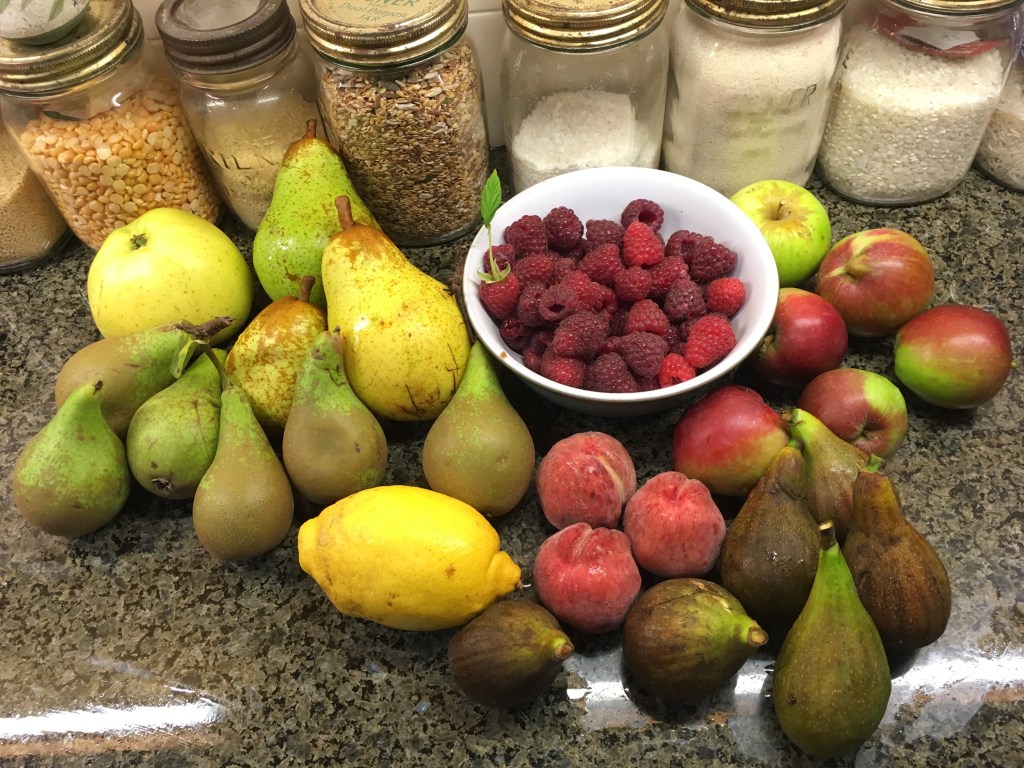
Back in the greenhouse, all the staging is cleared and jet washed down. Any spiders are relocated to the poly tunnel. I can’t kill anything. Slugs and snails go into a dry ditch beyond the boundary hedge. Food for other creatures, I hope.

When I’ve cleaned the glass and repaired the sliding door mechanism, I’ll push the citrus trees back in for the winter. It’s been a good summer for lemons and oranges. A few lemon cakes and orange marmalade might be in order….

Winter salads and micro veg are springing up in shallow terracotta pans. There will be more room now I’ve cleared out the huge pelargonium pots.

Luckily, there’s a few pots of colour left. This orange gerbera has been flowering for months. And my purple bougainvillea usually flowers into December. I haven’t quite finished polishing the glass, or replacing the comfy armchair, the biscuit tin and the radio. That will be tomorrow’s finishing touches. For today, after all that work, I’m collapsing in the summerhouse with a nice cup of tea and mulling over the autumn and winter season to come. I’m ready for anything the weather might throw at us.

Thank you for reading. Please feel free to share this post.

Follow me on twitter @kgimson

On instagram at karengimson1

On #sixonsaturday with https://thepropagatorblog.wordpress.com/2019/09/14/six-on-saturday-14-09-2019/

On #IAVOM with Cathy https://ramblinginthegarden.wordpress.com/2019/09/09/in-a-vase-on-monday-daisies-and-an-infiltrator-2/

Pelargoniums https://www.fibrex.co.uk/collections/pelargoniums/ivy-leaved?page=4

In a Vase on Monday – 9th September 2019

I’m trying to find alternatives to floral foam. Today, I’ve used raffia to attach a coffee jar to my willow heart. A small posy of flowers nestles in the centre of the heart. I’ll be able to change the water each day, and flowers should last at least a week.

We are all having to re-think ways of working. For years I’ve used floral foam blocks for door wreaths and table decorations. But recently it’s become apparent that foam is not recyclable. I’m concerned about inhaling dust from the foam, and also what happens when particles of foam are flushed down drains and end up in water courses. So I’m using jam jars and glass test tubes instead, and hiding the mechanics with moss and fabric.

There’s still plenty of flowers on the cut flower patch. I’m growing blue and white gladioli from Gee Tee Bulbs, planted in June for a late summer display. Gladioli bloom in 90 days, so they are a good reliable flower for special occasions such as weddings. You know you are going to get flowers in time. I’ve planted mine in between sweet peas in the middle of the hazel A frame, which gives them support. And also in the middle of late-planted dwarf beans, a combination I discovered by accident last summer, and I’ve repeated it this year. It’s a successful way of saving space. The beans use the gladioli stems for support.

Gladioli can be cut into sections with each flower having a small stem. These individual flowers are good for tiny jam jars. They also make pretty corsages. It makes tall flower stems go further.

There’s a pretty deep red dahlia flower each side of the posy. I’ve grown this long-flowering dahlia, Nuit d’Ete, for 20 years. It’s a cactus type with huge flowers that last at least two weeks in an arrangement. I’ve noticed that waterlily and cactus types keep opening up with many petals packed in the centre. Single dahlias, good for pollinators, are not so long lasting as cut flowers.

Tucked in around the dahlias are cosmos flowers. This year I’ve been delighted with the seashells cosmos, and also a very pretty ‘all sorts” mix.

Double cerise cosmos flowers have a striking pale pink centre. Cosmos last a week in water. Pollinators love them too. Bees, hoverflies and butterflies were enjoying these today. They followed the flowers across the garden and continued working them after I’d created my heart arrangement.

Cosmos flowers I’m growing this year are pale pink, cerise, and white, and I’m trying some pink and white striped types too.

I’ve propped the heart up on the potting shed window to add finishing touches. There’s some amaranthus tucked in at the base of the posy. My flower heart ended up over the summerhouse door. Hopefully we’ll have some late summer sunshine to enjoy the flowers, and, fingers crossed, we’ll have a few more weeks of nice weather to sit outdoors.

Thanks for reading. Enjoy your week. Hope it’s sunny where you are too.

Links : Cathy IAVOM. https://ramblinginthegarden.wordpress.com/2019/09/09/in-a-vase-on-monday-daisies-and-an-infiltrator-2/

Geetee bulbs :https://www.gee-tee.co.uk/bulbs/gladioli/large-flowered-gladioli

Dahlias: https://www.peternyssen.com/nuit-d-ete.html

Cosmos: https://www.mr-fothergills.co.uk/Flower-Seed/Cosmos-Seed/Cosmos-Seashells-Mixed-Seeds.html#.XXbU5YzTWfA

Cosmos candy stripe :https://www.mr-fothergills.co.uk/Flower-Seed/Cosmos-Seed/Cosmos-Candy-Stripe-Seeds.html#.XXbVPYzTWfA

Amaranthus https://www.thompson-morgan.com/p/amaranthus-caudatus-love-lies-bleeding/tm01657TM?source=aw&affid=176013&awc=2283_1568068975_9d1ac917267a4f2bf8b84f6e84c0b540

Flower wreaths and eco flower arranging courses : Common Farm Flowers https://www.commonfarmflowers.com/

In a Vase on Monday – A flower wreath for the summerhouse. Bank holiday flowers #IAVOM

Escaping the heat- it’s 31C here today- I’m sitting in the summerhouse. Facing north. There’s a slight breeze skimming over the horseshoe pond. It can’t really be described as cooling. Alongside us, there’s the sound of straw, drying and crackling in the sun. The harvest is safely gathered in, and now there’s bales of straw scattered all over the field, like some kind of land art installation.

As I’ve moved outdoors for a few days, I’ve made a sweet pea posy for the summerhouse coffee table, the last of my flowers no doubt. And a sunflower wreath, to match the sunny weather.

Here’s how I made my wreath. I’ve recycled an old moss wreath I bought a few years ago. You could use a wire, or willow ring and pad it with moss.

Rake some moss from the lawn. You’ll be doing your lawn a favour; now is the perfect time to scarify and aerate your lawn. Or, buy some from a garden centre or nursery. It’s usually sold for making hanging baskets. Soak it in a bucket of water for a few hours.

Squeeze the moss into thick sausages and place on the ring. Wind all around with string, kokadama style. Or use recylable u-shape metal pegs. These are commonly called German mossing pegs. They can be carefully saved and re-used.

Next, collect sprigs of foliage such as ivy. Any evergreen will do. Plunge them into a bucket of cold fresh water for a few hours, or overnight.

Use sharp florists’ snips -or a kitchen knife to cut the ivy into 15cm sprigs. Don’t use seceteurs for flowers or ivy as it crushes the stems, rather than cutting them cleanly.

Push the ivy into the moss all around the outside of the ring, facing outwards. Push some ivy into the centre of the ring, facing inwards. Push a few vertically down into the ring. You need about 10cm of the stem showing. Secure with mossing pegs if needed.

Cut flowers from your plot, or buy from florists. You will need three focal point flowers for the top. These can be anything of a larger scale than the other flowers being used. I’ve used sunflowers, but you can use lilies, rudbeckia, dahlias, daisies, or gerbera.

Place all flowers up to their heads in ice cold fresh water in a cool dark place such as a potting shed or garage overnight. This conditions the flowers and makes them last longer.

I’ve used white argyranthemums (daisies) of various sizes and my fluffy filler is ammi, sown in the spring.

I’ve also picked out the colour of the yellow centres with some spikes of verbascum. My cut flower patch took a pasting in the wind and rain, but flowers seem to have survived, even if they are now horizontal.

Place three focal point flowers at the top first. Then add the next focal point flowers – large white daisies in a triangle, at each side and bottom of the wreath. It’s difficult to push into the moss, so you will find the flowers naturally fall to different angles, which looks best anyway. Next add a few verbascums. These are angled upwards to form a halo of flowers. Add some cow parsley-like ammi as a filler. You could also use gypsophila. Finally add some tiny white oxyeye daisies and field cornflowers. Mine grew from a packet of wildflower seed.

Spray the moss and flowers with water twice a day to keep fresh. Your arrangement will last about a week. You can reuse the base and ivy, adding fresh flowers to keep it going. The ivy will last for around a month. If you’d like to add heavy flowers such as roses and lilies, you can buy some tiny glass test tubes and hide them amongst the moss before adding the ivy. Use wire or twine to secure them. You can top them up with water each morning and the flowers will last even longer. I do this in the spring when I want to put bunches of snowdrops and dwarf irises in my door wreath. Their flower stems are delicate; it’s easier to tie small bunches and place them in the hidden test tubes.

This is a simple silver birch twig wreath. Lengths of twigs are wound around and secured with twine. Ivy is poked into the birch. In January, ivy will last a month without being watered simply because it is cold and damp.

I wrote about the winter wreath here: https://pin.it/iw5zqyz5idkhbe

View from the summerhouse today. My sunflower wreath is in tune with the seasons. It took me about half an hour to make. I enjoy using flowers from my veg plot to create arrangements for the house and garden. All it cost me is a few packets of seed, a bit of string and a couple of florist supplies, which I guard carefully to re-cycle and reuse.

I don’t use floral foam as it can’t yet be recycled. It goes into landfill and doesn’t break down. It’s bad for the environment. Using moss is a good alternative – and it’s natural. At the end if its use, it can simply be composted.

Some tips on cutting flowers comes from Georgie Newbery at Common Farm, where I learned how to grow cut flowers and make natural arrangements.

1. Cut flowers in the morning when stems are full of water.

2. Remove all the lower leaves on the stems.

3. Place flower stems up to their heads in cold, fresh water. Leave overnight in a cool place.

Take care with poisonous plants such as aconitum. Wear gloves and remember to wash hands after handling.

NOTES :

I paid for my courses at Common Farm, and also bought Georgie’s books. I have no hesitation in recommending courses and flowers from Georgie.

Common Farm flowers and courses : https://www.commonfarmflowers.com/?SID=o3dsu9kotrkrq5n05qkulm0433

The Flower Farmer’s Year by Georgie Newbery https://www.amazon.co.uk/dp/0857842331/ref=rdr_ext_tmb

German mossing pegs :https://www.countrybaskets.co.uk/german-mossing-pegs-40-mm-004650

Wild flower seed mix: https://www.mr-fothergills.co.uk/Flower-Seed/Wildflower-Seed/Wildflower-Cornfield-Mixture.html#.XWQcAEzTWfA

Ammi majus seeds and advice https://higgledygarden.com/2013/01/16/sowing-ammi-majus-seeds/

In a Vase on Monday. Why not go over and see what Cathy and the others are making for their IAVOM. https://ramblinginthegarden.wordpress.com/2019/08/26/in-a-vase-on-monday-a-first/

Six on Saturday. Enjoy your Bank Holiday Weekend Everyone. Home is where I’m spending mine.

I often share views through the gap in the hedge. It’s a window on the changing seasons. Today, I thought you might like to see what’s growing in the hedgerow around my ‘window.”

Hawthorn. Crataegus monogyna. Berries are ripening fast. It seems too soon. It feels as if it’s only a short while since snowy white May blossom heralded the end of winter. And here we are, it’s harvest time. It’s a good year for berries. A larder for the wildlife. Hawthorn supports more than 300 species of insect. Flowers are eaten by dormice, and berries called ‘haws’ are rich in antioxidants and eaten by migrating birds such as redwings.

Hazel. Corylus avellana. Again, I feel it’s only a while since I posted photos of ‘lambs tail’ catkins. It’s a good year for nuts. Our garden is ‘raining’ hazel nuts. Even the squirrels can’t keep up with the crop, which is really saying something as their appetites are legendary. I’m often gathering them as fast as I can, while five or six brazen squirrels, adults and this year’s babies, bound across the top of the hedgerow. Multiple holes in the lawn show evidence of where they have ‘hidden’ their harvest. I hope they remember where they’ve left them. Hazel leaves are good for the caterpillars of many moths including the large emerald, small white, barred, umber and nut tree tussock.

The dormouse eats hazel nuts to fatten up for hibernation, and also eats caterpillars in the spring. Nuts are also eaten by woodpeckers, nuthatches, tits, wood pigeons, and jays. We’ve had an adult and baby green woodpecker in our garden all summer. It’s been fascinating watching the adult showing the baby where all the best spots are for food- the rotten wood pile, orchard and patch of grass where chafer grubs thrive.

Field Maple. Acer campestre. Winged seeds are turning red. They will soon be dispersed by the wind. And it can get very windy up here on the ridgeway. I really should have consulted an ordnance survey map before moving here. Gardening is a challenge in gale force winds. Next time, I’d like a nice secluded walled garden, please. Everyone reading this, knows there will not be a next time. I love this wild and peaceful place. I will never move from here.

The Woodland Trust tells me that maple leaves are eaten by several moths, the sycamore moth, small yellow wave, mocha, and the maple prominent, among others. Moths are on the decline so it is a good plant to have in any garden or hedgerow. We have some grown as trees, as well as mixed in the hedge.

Flowers provide nectar and pollen for bees and birds, and small mammals eat the fruit.

This hedgerow is full of dogwood. Cornus sanguinea. Stems and leaves turns a rich burgundy in winter. A wonderful sight on a cold day. Leaves are already starting to take on polished and burnished tints. Green berries will soon turn black.

Leaves are eaten by moths, including the case-bearer moth. Flowers are valuable for insects, and berries are eaten by birds and small mammals. We enjoy standing and watching bats flitting over the hedgerows at night- catching the moths and flying insects. They seem to follow a repeated circuit, a figure of eight, over our heads. You can almost anticipate where they will be seen next. A joyful way to spend a few minutes, or longer if time allows. Owls fly in across the fields to take the small mammals- mice, rats and field voles. We have little owls, tawny and barn owls here. It can be quite noisy some nights, when they call out across deserted fields. The sound carries. We stand quietly and listen.

Crab Apple. Malus sylvestris. Abundant this year. Leaves are valuable for the eyed hawk moth, green pug, Chinese character and pale tussock. Wonderful names that conjure up all kinds of pictures in my mind. I decide to learn more about moths.

Fruit is eaten by blackbirds, thrushes and crows, and also mice and voles. Foxes and badgers forage in ditches for them. When fruit ripens and falls it seems to ‘cook’ gently in the heat. It’s a fabulous scent and always reminds me of apple pie and crumbles.

I read somewhere that you can measure the age of a hedge by the number of different plants growing in it. Apparently, it’s approximately 100 years for each variety. Looking around, I know that farming has been here since medieval times. There are ridge and furrow fields across from our garden and also half way to the village. They are particularly noticeable when fields flood. Furrows pool with water, while the ridges stay high and dry. You can just wonder and imagine how they grew their crops using hand tools, without the aid of machines.

Speaking of machines, the sound right now is combine harvesters north and south. To the west and east, there’s the monotonous chug, chug, chug of bailing machine. Soon there will be ploughing, and the growing season starts all over again.
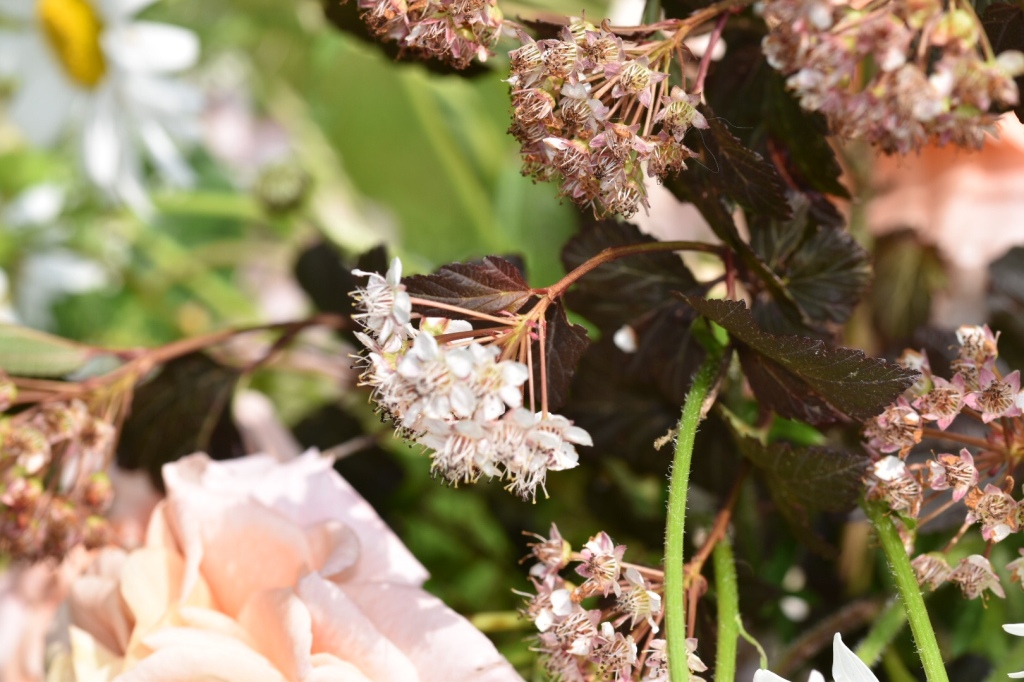
I hope you’ve enjoyed my view through the gap. I didn’t make the gap, nature did. But I look through it each day to spy the changes, and sometimes there’s hares, pheasants, fox cubs, all unaware that I’m watching.

Links : New hedging plants for my garden come from Hopes Grove Nursery, a family business in Tenterden. They supply ‘hedge-in-a-box collections for wildlife, cutflowers, gin making. Their latest collection is a horse-friendly range, suitable for field boundaries.

Hopes Grove Nursery.

Woodland Trust: https://www.woodlandtrust.org.uk/

Barn Owl Trust https://www.barnowltrust.org.uk/barn-owl-nestbox/owl-boxes-for-trees/

Plum Cake. Family Favourite Recipes

These delicious little cakes travel well and are perfect for picnics and parties. We always make them if we are invited round to a friend’s house. They are quick and easy to make and really tasty.
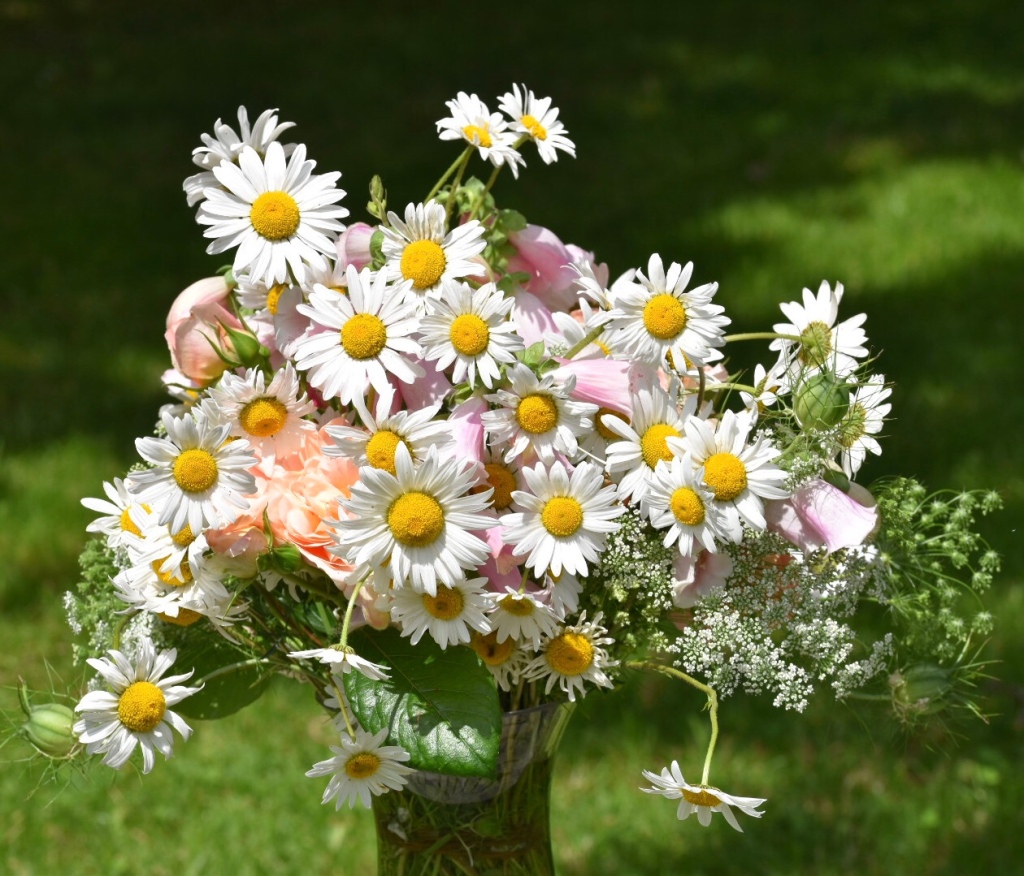
INGREDIENTS

Makes 12

12 plums, stones removed and fruit chopped into chunks.

For the sponge:

85g (3oz )sugar

85g (3oz ) margarine or butter.( I use Lurpack which doesn’t contain palm oil.)

1 egg

113g (4oz) self raising flour

1 level teaspoon baking powder

1 tablespoon milk

1 teaspoon good quality vanilla extract

Few blanched almonds for the top.

METHOD

Cream together the sugar, margarine and egg with an electric hand whisk. Add the flour and baking powder and whisk. Add the milk and vanilla extract, and whisk.

Place the chopped plums in the base of a silicon cup cake mold which has 12 ‘cups.’

Top with the sponge mixture. It will be about one large heaped tablespoon per cup. Sprinkle blanched almonds on top.

Cook for approx 15 mins at 180C, 356F gas mark. They are cooked when a knife comes out clean from the sponge. Take csre not to burn the almonds.

Leave to cool in the trays. Use a pallet knife to remove them. Sprinkle with sugar. Serve warm or cold.

Can also be frozen on the day of baking.

Enjoy!

You might also like Plum Crumble : https://bramblegarden.com/2019/08/20/plum-crumble-family-favourite-recipes/

Please feel free to share this on any social media. Thank you.

Six on Saturday. Wind-Swept Walk Around My Garden on 10th Aug 2019

I don’t like windy weather. It makes me unsettled. I worry about everyone’s gardens. So much effort goes into growing flowers, fruit and veg, it’s heartbreaking when it’s destroyed by the weather.

I’ve waited all day for the wind to drop. It hasn’t. So it’s a blustery, sort of a walk around my garden. My dahlia stems are pointing in all kinds of crazy directions. I should have staked them better. But I didn’t. This one is still looking lovely though. It’s a decorative double called David Howard. Beautiful, orange-blushed flowers 10cm across, set off by bronze-tinted foliage. Plants grow to about 75cm, unless toppled by the rain and wind……. sigh.

Double flowers like these last around two to three weeks in a vase. They keep on opening up, like a ripple effect, until the centre is revealed. Well-known florist Jonathan Mosley gave a demonstration at the Belvoir Castle Show recently and revealed a few tips on getting the best out of cut flowers: Use a very sharp kitchen knife to cut flowers, not secateurs which crush the stems rather than cut them cleanly. Walk round with a bucket of very cold fresh water, and drop stems straight in, so air bubbles don’t get the chance to form in the stems. Cut flowers early in the morning and stand them up to their heads in water in a cool dark place such as a potting shed or garage for at least 6 hours before using them in arrangements. Giving them a really good drink makes them last much longer.

I’ve decided to go for an apricot-coloured theme this week. It might help calm our shattered nerves. This is one of my favourite rambling roses, Ghislaine de Feligonde. It flowers in huge swathes in June, and then puts out the occasional flower right through the summer. Bees love it, it’s free flowering and doesn’t get blackspot. All cause for a celebration, I think. Plus is looks good in a a vase.

In keeping with the colour scheme, there’s some beautiful seedling spider day lilies bred by Pollie Maasz at Pollie’s Lilies. These ones don’t have a name as they are trial plants. Pollie selects the best from her trials and registers new names. It’s a fascinating process and I’m glad to have some of her “babies” to try out here.

I am very fond of New Guinea hybrid impatiens. They flower all summer for no effort other than watering and feeding with seaweed extract or liquid tomato fertiliser. I don’t even bother to dead head them, they seem to sort themselves out. This one is Magnifico Star Orange. Cheerful even when it’s raining and blowing a hooley in the garden. I can always pretend I’ve been transported to the tropics.

I love begonias. This one is from the Apricot Shades range and is good for containers and hanging baskets. It will flower its heart out until the first frosts, then I’ll bring it in to the frost free greenhouse for winter. Dried off and kept indoors, it can be started into growth each spring. A really good value plant and so many lovely colours to choose.

Finally, from my pelargonium collection, there’s this beauty. This is one of the species hybrid pelargoniums from Fibrex Nursery. I think it is Pelargonium Ignescens, but will stand to be corrected. I have quite a few from the nursery and the labels have long gone. This one dates back to the 18th century and has pretty soft, downy leaves too.

I hope you’ve enjoyed your walk round my garden today, despite the howling wind! This is the view from the far hedge, in the back field behind my garden. It’s a wonderful place to stand and observe the weather. You can see for miles and today the farmer has started – then stopped – harvesting the corn. In a day, the crop will be safely gathered in, and the scene will change again, with ploughing the next sound we’ll be hearing.

Links: sos are https://thepropagatorblog.wordpress.com/2019/08/10/six-on-saturday-10-08-2019/#comments

Dahlia David Howard: https://www.rhs.org.uk/Plants/57111/i-Dahlia-i-David-Howard-(D)/Details

Rosa Ghislaine de Feligonde https://www.ashwoodnurseries.com/shop/rosa-rambling-ghislaine-de-feligonde.html

Pollie’s dayliles https://www.polliesdaylilies.co.uk/

Fibrex https://www.fibrex.co.uk/

I’m Growing New Potatoes for Christmas.

New potatoes are more than just a treat for early summer, you can enjoy them into the winter too. Started now, they will be ready to eat by Christmas. Here’s how I’m growing mine.

Special seed potatoes are available online, in catalogues and in garden centres now. I’m growing Charlotte and Pentland Javelin which are favourites for taste. You can also buy Nicola and Maris Peer. These are cold stored potatoes, primed ready to plant in August. You can also hold back some of your spring-bought seed potatoes, but you have to keep them in the bottom of the fridge until now, before planting.

Royal Horticultural Trials at Wisley showed that potatoes grow best in bags rather than rigid-sided plastic plant pots. You can buy special potato sacks, but I’m re-using compost bags. It’s a good way to recycle them.

I’m using Dalefoot salad and vegetable compost. Roll the tops down to form a collar, spike the bags to give good drainage, and fill them with 30cm of loosened compost.

Sit the seed potatoes on top of the compost. Ensure they are not touching, place them about 20cm apart.

Cover the potatoes with 5cm compost and water well. Place outdoors on a sunny patio. As the shoots start to grow, cover them with more compost and roll up the compost collar. Keep doing this until there is a 5cm gap left at the top for watering. What you are doing is “earthing up” the potatoes, without all the effort involved on growing them in the ground.

Move the bags, before the first frosts, into a greenhouse, porch or conservatory. By now the top growth will have died back and can be removed. Stop watering and keep the potatoes stored in the dry compost until you want to cook them. Because they have not been harvested and exposed to sunlight and air, the potatoes will not form hard skins and will retain that new potato taste and texture. In the past growers would have stored them in damp sand. My grandfather used to make “clamps” for vegetables such as potatoes and carrots, when vegetables had to last right through the winter without the availability of fridges and freezers.

I use soil association-approved Dalefoot Compost which is made from sheeps wool and bracken. It gives farmers in the Lake District an income for their wool which might otherwise go into landfill. It’s 100 percent natural and peat free, and contains a source of potash which makes fruit and flowers grow well.

My summer potatoes did well this year. I’m hoping for a small but tasty crop of new potatoes just in time for my Christmas dinner.

After planting my potatoes, I am sitting in my summerhouse with Grace cat, enjoying sunny weather and 23C temperatures, thinking of winter days ahead. I’m sure those tasty treats will be so welcome when the days are cold and wet.

You can listen in to my 10 minute gardening tips during BBC Gardens Hour today at 1.40.47 on the timeline on Sounds https://www.bbc.co.uk/sounds/play/p07hst9m Each week we try something new, do pruning, take cuttings, grow something from seed, help wildlife. Sometimes our projects work, sometimes they fail, but it’s a lot of fun trying, aiming to get the best from our garden plots.

Links: Seed potatoes https://www.amazon.co.uk/Taylors-Autumn-Planting-Potatoes-Christmas/dp/B008M4MHFC

Dalefoot compost : https://www.dalefootcomposts.co.uk/

Karen twitter : https://mobile.twitter.com/kgimson/status/1149241935502225408

Karen on instagram: https://www.instagram.com/karengimson1/?hl=en

Please feel free to share this blog post. Thank you for reading!

You might also like to read: https://bramblegarden.com/about/

And : https://bramblegarden.com/2019/08/04/dancing-with-bees-a-journey-back-to-nature/

Response on twitter. @bimblegarden said:

Six on Saturday – a walk around my garden- 3rd August 2019

Short of time, I usually post photos of my garden at dusk in a last-minute dash about the place. Today, I got up early at 6am. And, surprisingly, the back fields are as misty as an October morning. We are having some really strange weather conditions this year.

I opened up the summerhouse in the hope of a nice day. The weather report says it’s going to be 23C.

Things I can hear at this time in the morning: Cows in the field opposite. They line up along the hedge to see what I’m doing. Snorting, sniffing and generally jostling for space, they are noisy and rather nosy neighbours.

I like to walk the perimeter of the plot twice a day, at dawn and dusk. We’ve made a kind of avenue of trees accidentally. We just happened to place the cherry, maple and ash trees wide enough apart to drive a lawn mower between. It makes a lovely calm leafy track, and the view out across the field changes daily. This path is good for watching the owls. They can’t see us, but we can see them.

On the other side of the trees, there’s a small paddock, an orchard and veg plot. This year, there’s more cut flowers than veg, although we are enjoying Charlotte Potatoes, and broad beans at the moment. I planted some French beans a fortnight ago and they will be cropping in another couple of weeks. The cut flowers have all been battered down by the rain. We had a whole month’s worth of rain in 36 hours. Floods are out in surrounding fields. Growing in a total jumble is Ammi, dahlias, rudbeckia, nicotiana, borage, verbascum, sweetpeas, cosmos and pot marigolds. There’s cabbage and garlic squeezed in there somewhere.

On the garden table there’s pots of the new Agapanthus Fireworks. My trial plants flowered from March and have now produced another three stems. I’m delighted with my plants and can highly recommend them. They are easy to grow and flower for a long period without needing anything more than watering.

My trial Aeonium plant is also looking really lovely. It’s a gorgeous colour and shape.

That’s my six photos for this week. I hope you’ve enjoyed your ramble around my garden- at an much earlier time than usual!

links :

Six on Saturday : https://thepropagatorblog.wordpress.com/2019/08/03/six-on-saturday-03-08-2019/

Agapanthus Fireworks : I wrote about them here : https://bramblegarden.com/tag/tulips/

Agapanthus from Wyvale Nurseries : http://www.wyevalenurseries.co.uk/news/news/agapanthus-fireworks-wins-new-product-award-at-glee/

Aeonium Review here : https://bramblegarden.com/2019/04/12/review-of-garden-beauty-web-shop-and-prize-draw-for-aeonium-schwarzkopf/

Please feel free to share this blog post.

Summer Lemon Biscuits Recipe

If you were listening in to the radio for Garden Hour, these are the biscuits I took in for the team. I made the lemon and white chocolate version yesterday. Today I made them with dark chocolate. Delicious!

Recipes featured here use produce from my garden. I’m always looking for ways to use up my citrus fruit from the greenhouse. This is a favourite recipe. It only takes ten minutes to make. Perfect if friends turn up unexpected and you want to give them a quick home-made treat.

Ingredients

180g biscuits ( I’ve used home-made Scottish shortbread, but you can use any biscuits. Custard creams are delicious, as are chocolate bourbons.)

3 tbsp lemon curd. Home-made (recipe below) is totally delicious, but any will do.

100g best quality dark chocolate, or white chocolate.

Few bits of fine lemon peel for decoration

Recipe

Crush the biscuits in a food processor, or in a plastic bag, bashing them with a rolling pin.

Add the lemon curd and mix to combine.

Use a melon baller or a 7.5ml measuring scoop to form balls. Press them slightly while in the scoop so they hold together.

Tap out on to a tray covered with foil. Place in a fridge.

Melt the chocolate in a Pyrex bowl suspended over a pan of boiling water. Ensure the water doesn’t get into the chocolate mixture. Or melt in a microwave in several 10 second bursts. Take care not to over cook.

Drizzle the chocolate over the biscuits in long lines. Add some fine lemon peel to decorate. Return to the fridge to set.

Will keep in the fridge for 3 days. But they won’t last that long. They are truly delicious!

Lemon Curd Recipe

Makes 1.15kg

Ingredients

6-8 large lemons (unwaxed, organic, or home-grown)

225g butter

575g caster sugar

5 large eggs

Recipe

Grate the zest from the lemons on the finest setting. Squeeze the juice and strain into a jug. You will need 300ml of juice.

Cut the butter into small pieces and put into a glass bowl along with the sugar, zest and juice. Set over a pan of hot water and stir until the sugar has dissolved. The bottom of the bowl must not touch the water which must simmer and not boil.

Lightly beat the eggs in a bowl but don’t whisk them. Strain the eggs through a sieve into the lemon mixture. Simmer on a low heat, sitting continuously until the mixture thickens. Will take about 20 minutes. Do not allow to boil or it will curdle.

Pour into warmed sterilised jars. (pop the washed jars in an oven for 10 minutes until sterilised).

Place wax disk over the lemon curd ( wax -side down). Smooth down the disk to remove any air.

Cover with dampened cellophane circles, label and store in the fridge.

Makes a lovely filling for cakes and scones.

Can also be orange, lime or grapefruit curd.

Enjoy!

Six on Saturday. A peaceful walk around my garden. 20th July 2019

Looking west.

Field boundaries awash with seedling clematis. I never cut them back. They grow as they please. Clematis Betty Corning is very similar. Long flowering in the shade of the hedge.

Rosa American Pillar survives without much care. This one came from a holiday cutting taken (with permission) from the front garden of a cottage at Sandsend. We used to rent the school house at the bottom of the valley for summer holidays with the family. A lovely reminder of sunny days, sea and sand.

Protected by tall hedges, the plot provides all the cut flowers, fruit and veg we need. No sprays or chemicals are used here. It’s a haven for wildlife – as well as me. Don’t look too closely. There’s plenty of weeds.

Flowers from the plot. On sale at Six Acre Nursery, Costock, Leicestershire. All proceeds to Rainbows Hospice for children and young people.

Sometimes I make door wreaths from the flowers. Here’s one I made this week.

Enjoy your weekend.

Links :

Six on Saturday : https://thepropagatorblog.wordpress.com/2019/07/20/six-on-saturday-20-07-2019/

Seeds from : https://higgledygarden.com/

Rainbows Hospice: https://www.rainbows.co.uk/

You might like to read : https://bramblegarden.com/2019/07/19/infection-update-19th-july-2019-gardening/amp/

Also, In a Vase on Monday: https://bramblegarden.com/2019/06/03/in-a-vase-on-monday-3-june-2019/

About Bramble Garden : https://bramblegarden.com/about/

Please share on any social media.

I’m @kgimson on twitter. https://mobile.twitter.com/kgimson?lang=en

karengimson1 on instagram https://www.instagram.com/karengimson1/?hl=en

In a Vase on Monday – 15th July 2019

I’ve discovered, by accident, the magical effect of a sunset on sweet peas. It turns them into mini “stained glass” windows.

Picking them at 9pm, I suddenly find it’s too dark to take photos. Nights are rapidly drawing in. Mid-summer lulls you into a relaxed state of mind. Surely there will always be time to meander round the garden. Then, quite soon after the solstice, everything changes. There’s no streetlights here; dusk means picking your way through tall corridors of dark trees, along grassy paths, past the horseshoe wildlife pond. If you are lucky, you’re accompanied by a barn owl, sweeping along the hedge in eerie silence. You’ll marvel how such a large bird can ever catch any prey without being seen. But they make not the slightest sound and pass by like a shadow. If they see you, they don’t panic and madly swerve as some birds would. They barely acknowledge your intrusion, calmly changing direction and floating over the hedge to continue on the other side. They seem not to flap their wings, but soar and glide as if carried by the wind.

Our boundaries are made from farm posts and galvanised pig wire. We like to keep a connection with the surrounding fields. After all, our garden was once part of the farmland. We’ve simply borrowed the ground to grow fruit and flowers.

There are 10 beds, 1.3m wide by 3m long, divided by narrow slab paths. This year it’s a muddle of potatoes, broadbeans, Sweet williams, daisies and verbascum. A rickety A-frame of hazel rods runs through the centre, for sweet peas. This year I’m growing a combination of heritage types from Easton Walled garden and Higgledy Garden, and new varieties on trial from Mr Fothergills.

Amethyst and rubies; sweet pea flowers shine like jewels in the sunset.

My flowers are being sold at Six Acre Nursery, Costock, Leicestershire, with all proceeds going to Rainbows Hospice for children and young people. I am a voluntary fund-raising ambassador for Rainbows, and I also give slide shows and talks to garden groups for charity.

I hope you’ve enjoyed this peaceful walk around my garden at dusk. There’s much to see, even in the gloom.

Links : Cathy In a Vase on Monday : https://ramblinginthegarden.wordpress.com/2019/07/15/in-a-vase-on-monday-think-pink/

Easton Walled Gardens : https://www.visiteaston.co.uk/

Higgledy Garden Seeds. https://higgledygarden.com/

Mr Fothergill’s Seeds https://www.mr-fothergills.co.uk/Flower-Seed/Sweet-Pea-Seed/

Barn Owl Trust https://www.barnowltrust.org.uk/barn-owl-facts/

Notes: Most birds make a flapping, swooping sound when they fly. Owls have special edges to the front of the wing that breaks the air into small streams of wind that rolls to the end of the wing. Comb-like feathers further break down the air into even more smaller streams to create almost silent flight.

Six on Saturday – a walk around my garden 29 June 2019

Foxglove. Sutton’s Apricot.

Ethereal. “Extremely delicate and light in a way that seems not to be of this world.”

Exquisite, dainty, graceful, lovely. Will it seed about and make a glade. I hope so. There is so much hope in gardening.

Already seeding about successfully; pale geraniums. A hybrid, crossed with the native geraniums all along the lane, and my Johnson’s Blue varieties inside the garden gate. Looks just as beautiful at dusk when moths find the flowers irresistible. Seedlings vary from white though mauve to deep violet. Always a lovely surprise to see what turns up. You can buy a similar variety called Geranium Mrs Kendall Clark, or grow your own from seed.

I wrote about geraniums in my garden here https://bramblegarden.com/tag/wild-geraniums/

Wild dog roses – Rosa canina. The scent. The essence of a summer’s day. And beetles are welcome here too. Food for the bluetits and wrens currently feeding noisy fledglings all around the garden.

Rosa New Dawn. Another pale beauty. Easy to grow, climbs to the top of a willow tree and drips petals on to the pond. Never needs any sprays or pruning. Just looks after itself.

I hope you’ve enjoyed your walk around my garden today. After all that rain, it feels like summer is starting at last. It’s sunny and the temperature is 28C. I’ll be spending a lot of time sitting in the shade. Enjoy your weekend.

Links: SOS : https://thepropagatorblog.wordpress.com/2019/06/29/six-on-saturday-29-06-2019/

Foxglove Sutton’s apricot: https://www.mr-fothergills.co.uk/Flower-Seed/Foxglove-Seed/Foxglove-Suttons-Apricot.html#.XRdUymfTWfA

Geranium pratense: https://www.rhs.org.uk/Plants/7914/Geranium-pratense/Details

Rosa canina : Hopes Grove Nursery

Rosa New Dawn :https://www.davidaustinroses.co.uk/new-dawn

You might also like to read : https://bramblegarden.com/tag/wild-geraniums/

https://bramblegarden.com/about/

In a Vase on Monday- All White

I’m practicing for wedding flowers. You never know when you might need some….

White larkspur and Ammi majus. Such a simple combination. I’d probably add white sweet peas for scent. I’ve got heritage variety Mrs Collier growing on the hazel A frame. And some white love-in-a-mist. The bouquet would be tied with white satin and pearl pins, and not grey twine. But you get the idea.

Larkspur White King was sown on 4th September in 12″ pots in the polytunnel. I used a 50 /50 mixture of peat- free multi purpose compost and John Innes no 2 compost with some added grit for drainage. I used Sarah Raven/ Johnsons Seed, sown thinly, covered with a sprinkle of compost and left to grow on without pricking them out.

I also chose seeds from Higgledy Garden. These were part of a cut flower patch kit. Very good value and nice fresh seed. Everything germinated and grew well. Highly recommended. Plus, I like to support independent companies such as Ben’s.

White “cow parsley” type flowers in my bouquet are Higgledy Garden’s Ammi majus. This lovely airy flower always does better from an autumn sowing. Once you start cutting them lots of side shoots appear and you can harvest flowers right through the summer.

Higgledy’s larkspur mix contains some beautiful ice blue flowers, shell pinks and whites. All packets of seeds cost between £1 and £2.50 each. I probably spent less than £10.

Once I’d sown the seeds, I laid the packets on the pots and took photos to remind me what I’d grown and when. Labels have a habit of moving – all by themselves- on my plot!

Seedlings germinated by 21st September.

I had a bit of a problem with mice. Luckily they just thinned the seedlings for me. I put down peanuts and bird food for them, which they preferred. Hopefully the barn owl will have helped me out over the summer. I know she is feeding fledglings as we see her most nights, and we hear them calling for food. Loudly.

Those few pots of plants have been supplying me with posies for a several weeks now. I’m not sure they produce blooms any sooner than plants grown outdoors; but they have super long stems with plenty of flowers and haven’t been damaged by rain.

I particularly love the green markings on the back of the petals.

Green-tinged buds make a lovely contrast to the white flowers.

If anyone wants to get married next summer- I have the perfect plan for the flowers! Just saying.

links : Cathy IAVOM : https://ramblinginthegarden.wordpress.com/2019/06/24/in-a-vase-on-monday-respite/

Sarah Raven / Johnsons Seeds : https://www.johnsons-seeds.com/Flower-Seed_0/Annuals_3/Larkspur-White-King.html#.XRDKaGfTWfA

Higgledy Garden, Ben Ranyard : https://higgledygarden.com/

Cut flower growing and arrangements -courses and books: Georgie at https://www.commonfarmflowers.com/

First Polytunnels :https://www.firsttunnels.co.uk/

Dalefoot peat free composts :https://www.dalefootcomposts.co.uk/

Twine : https://nutscene.com/collections/twines/products/candytwist-twine-nutscenes-bakers-twine-large-spools

Please feel free to share this post on any social media platform.

You might also like to read :

https://bramblegarden.com/2019/06/23/prize-draw-winner-hansford-coil-spring-chair/

And

https://bramblegarden.com/2019/06/20/ngs-garden-visit-oak-tree-house/

Or

https://bramblegarden.com/2019/06/15/six-on-saturday-a-walk-around-my-garden-15-june-2019/

Thank you 😊

In a Vase on Monday – 10th June 2019

It’s the much-awaited summer. And it’s raining. It’s pouring. And it’s 9C. So only one photo today for my Vase- and it’s sweet williams and sweet peas again. They are loving the cool temperatures and moisture. I must admit, I am not.

My dark red sweet williams, Dianthus barbatus Sooty, are suddenly providing buckets of flowers. Sweet williams are such good value plants. For a couple of pounds for a packets of seed, you can have a steady supply of flowers three months or more. They are like dark velvety chocolate. Dark colours don’t show up in photos very well, so I’ve screen shot the picture and homed in on the flowers.

There’s a few forget me nots left to go with the love in a mist. And sweet peas are also flowering faster than I can pick them.

Calendulas are looking fab with peach butterfly antirrhinums, and blue chives are being thrown in every bowl of salad, as well as every vase of flowers. Such a versatile perennial herb to grow. The antirrhinums are flowering for their second year, but I’ll sow some more seed for next summer, just in case they don’t overwinter. They last for nearly a fortnight in a vase, if you change the water each day.

I do hope the weather is better where you are. Hopefully we will all get some sunshine again soon. Meanwhile, it’s dark clouds and white cow parsley -aplenty!

Links :

I’ve been to visit the Cotswold Wildlife Park. Here’s a blog I wrote about it: https://bramblegarden.com/2019/06/10/the-cotswold-wildlife-park-a-celebration-of-the-gardens/

Here’s my recent blog listing the varieties of sweet peas I’m growing: https://bramblegarden.com/2019/06/03/in-a-vase-on-monday-3-june-2019/

Don’t forget to leave a comment on my blog review of Hansford Coil spring garden chairs- there’s one chair to win in our prize draw competition. They are wonderfully comfortable and easy to carry about the garden: https://bramblegarden.com/2019/05/31/product-review-hansford-coil-spring-chair/

In a Vase on Monday : https://ramblinginthegarden.wordpress.com/2019/06/10/in-a-vase-on-monday-the-very-pink-of-perfection/

In a Vase on Monday -3 June 2019

The first sweet peas are always for my Mum.

I’m growing a mix of old and new. Heritage varieties: Mrs Collier (cream) and Dorothy Eckford (white). New this year: Capel Manor. Old favourites: High Scent, Wiltshire Ripple Mix, Albutt Blue and Chatsworth.

The best Blue is Chatsworth. Five or six flowers per stem, prettily ruffled and gloriously scented. Long lasting in a vase, and flowers until the first frosts. The Duchess of Devonshire, the last of the Mitford Sisters, lived at Chatsworth and was president of the Sweet Pea Society for many years.

High Scent and Albutt Blue are modern grandiflora varieties with a picotee edge. Albutt Blue, bred by Harvey Albutt I’m 1999, has a blue rim on a white ground. High Scent is a cream flower with a mauve edge. High Scent is also known as April in Paris.

Seeds are planted in root trainers in October. Use 50/50 compost and grit for drainage. I start mine in a propagator at 15C. As soon as a green shoot is spotted, I remove them from the propagator and grow on in a cold poly tunnel. Sweet peas can cope with cold, but shouldn’t be too wet or they will rot. To out-wit the mice, I stand the root trainers in a deep straight-sided plastic storage box. When the seedlings are 3-4″ tall, I pinch out the tips to make bushy plants. The tips can be grown on as cuttings. Very useful if you are growing heritage varieties and only have a few seeds in the packet.

I planted mine in April in no-dig beds. I mulch the bed with Plant Grow (plant based) fertiliser. This feeds and holds in moisture, and seems to deter slugs and snails.

My sweet peas scramble up an A-frame of hazel rods. I grow them in the same place for four years, then move them to a different bed to prevent the build up of pest and diseases. By then, the hazel rods are collapsing anyway and need replenishing. Each year I weave in a few more twigs to strengthen the supports. I water with a liquid Plant Grow feed.

In front of the sweet peas there’s a row of calendulas and highly-scented pinks. Every space is crammed with flowers.

Alongside, there’s dianthus barbatus (sweet williams). These are sown in summer, make good strong roots and leaves in the first year, and flower in the next. This year I’m growing a dark red variety called Sooty which is just coming into bloom. Sweet williams follow wall flowers to give a continuous supply of cut flowers. I learned how to grow cut flowers at Common Farm Flowers with Georgie Newbery in Somerset.

Little extras in this posy are the last of the forget-me-nots and some pink alliums I always harvest, as a way of controlling them. They can become invasive.

And finally, a favourite pelargonium. This originally came as a cutting from my grandfather Ted Foulds. He loved his garden and each week came to visit and “inspect the plot.” He never arrived without a pot of something, a few seeds, an offset, a cutting. Half my garden came from my grandfather and my Mum. He died 22nd May 2005 aged 83. Still desperately missed, but not forgotten. I faithfully take cuttings of his pelargoniums each autumn, and they flower every summer, as a lovely reminder of him.

Links : In a Vase on Monday :https://ramblinginthegarden.wordpress.com/2019/06/03/in-a-vase-on-monday-oops/

Sweet peas at Easton :https://www.visiteaston.co.uk/whats-on/coming-up

Ripple Mixed varieties : https://www.mr-fothergills.co.uk/Flower-Seed/Tall_3/Sweet-Pea-Ripple-Mixed-Seeds.html#.XPTo-4zTWfA

Plant Grow fertiliser : http://www.plantgrow.co.uk/our-products.html

Root Trainers : https://www.haxnicks.co.uk/garden-products/rootrainers

Sweet William seed: https://www.mr-fothergills.co.uk/Flower-Seed/Sweet-William-Seeds/#.XPTptYzTWfA

Common Farm : https://www.commonfarmflowers.com/

You also might like to take part in a prize draw for a Coil Spring garden chair : https://bramblegarden.com/2019/05/31/product-review-hansford-coil-spring-chair/

Product Review – Hansford Coil Spring Chair

*Please leave a comment at the end of this review to be entered in a prize draw to win a Hansford Coil Spring Chair.

Gardening is hard work. By this time of the year, I’m starting to groan at the size of the brambles and painful stinging nettles. It’s a job to keep up with the weeds. So I really look forward to flopping down on a comfortable chair at the end of a gardening session.

I jumped at the chance to try out a Hansford Coil Spring Chair. I didn’t pay for this product. As usual, words and opinions are my own. By now, you’ll know I always give my honest view on books, products, composts, seeds, and plants that come to the potting shed for review.

My chair arrived three days after ordering. Email updates were reassuring and meant I was at home when the box arrived.

The chair arrived well packaged and undamaged. It took five minutes to assemble the chair which comes in two parts. Tools, a spanner and some screws, were included. I meant to take photos of the before and after, but it was so quick to put together, I got carried away.

The chair is light enough to carry about the garden and so I tried it out in various locations, under the sweet chestnut tree, in the wild flower border and in the orchard. I didn’t find it too difficult to move about.

I love the way the chair blends in to the planting, and doesn’t dominate the scene. It looks lovely set amongst cow parsley and pink campion. Which is just as well as 90 percent of my garden is cow parsley at the moment.

I have a black painted greenhouse and summerhouse, so I chose a black chair. Alternative colours are duck egg blue and green.

The mesh seat is comfortable in hot weather, and very lovely with lavender and rosemary poking through. I will probably have to buy another one to go with my review chair, as really a pair is needed. You could add cushions, but the chair is comfortable enough without them to be honest.

Information sheets that come with the chair say the product is powder coated and there’s a one year warranty. The web site states the chair is suitable for indoors, conservatories, and outdoors.

James, who set up Hansford Furniture with a friend is offering one chair as a prize draw win to readers of this blog and my instagram page. Please leave a comment below to be included in the draw. No purchase is necessary and Hansford are running this competition. James will randomly select (pull a name out of a hat) on 13 June at Gardeners World Live, where they have a stand this year. Please also say if you do not wish to be entered in the prize draw, which is also fine. Sorry, uk entries only, and there’s no cash alternative. Hansford decisions are final.

Information from the website:

*look in the comments below, James has sent a link for 15% off the price, for readers of bramblegarden.com. This discount is a promotion being offered by Hansford Furniture and I am simply passing on the information.

Links: https://hansfordfurniture.com/

Instagram https://www.instagram.com/karengimson1/?hl=en

Twitter : https://mobile.twitter.com/kgimson?lang=en

Six on Saturday. A view of my garden on 11 May 2019

Here’s some photos from my garden diary today for #sixonsaturday. I’ll be sad to say goodbye to the tulips. They’ve provided colour and joy for two months. Surviving the torrential rain and hail, they are tougher than they look.

Carnival de Nice. Reminds me of summer days with striped bunting, deckchairs and raspberry ripple ice cream.

Angelique. Like apple blossom. Petals start a deep blush pink then fade to translucent white. I love the colour-changing beauty of tulips.

Black Parrot. More elegant than some of the parrot tulips around. A joy in terracotta pots amongst grey lavender. Viola Antique Shades provides a perfect match with purple and coppery tones. These have been flowering since last October. Good value.

Darwin hybrids, from a cut flower mix, planted at Christmas. Reminds me of a peach sundae.

I’ll be lifting these tulips and planting them in the orchard to flower next year. One tiny patch provides so much variety, planted only 1″ apart. I’ve earmarked the spot for cosmos and larkspur. Cut flowers until October. Behind them, sweet peas planted only a fortnight ago are half way up their hazel rod supports. There will be sweet-scented flowers by June.

Links : https://thepropagatorblog.wordpress.com/2019/05/11/six-on-saturday-11-05-2019/

Cut flower mix tulips : https://www.gee-tee.co.uk/bulbs/tulips/cutting-mixture-tulips

Carnival de Nice https://www.farmergracy.co.uk/products/tulip-carnaval-de-nice-bulbs-uk

Angelique : https://www.sarahraven.com/flowers/bulbs/tulips/tulip_angelique.htm

Black Parrot tulip https://www.gee-tee.co.uk/bulbs/tulips/parrot-tulips/tulip-black-parrot

You might like to read My Cut Flower Patch : https://bramblegarden.com/2018/06/18/in-a-vase-on-monday-my-cut-flower-patch/

Six on Saturday 4th May 2019

When it’s a freezing cold north wind and only 7C, the best place to be is in the greenhouse. So I’m starting this week’s tour of the garden, indoors.

Star of the greenhouse bench today is this bright pink amaryllis, or hippeastrum. It’s aptly named Flamingo. I’m not sure I’ve ever seen one with as many flowers before. The bulb came from Taylors in Holbeach during their centenary open day and sale. I’ll certainly visit them again next year for my summer bulbs. The quality is first class and all the bulbs are bargain prices. Like most things, it’s best to go direct to get the best deals.

I wrote about my visit to Taylors here : https://bramblegarden.com/2019/04/13/fields-of-gold-and-white-taylors-daffodil-day-2019/

My tulips are still looking colourful- despite the high winds. Most of the photos I took today are blurred because of the windswept conditions. It’s just starting to hail! I can hear it bouncing off the greenhouse roof. Luckily it’s nice and warm in here. A cedar greenhouse has few drafts in the winter; the wood expands with the cold wet weather and seals the gaps. A slabbed floor also absorbs any heat from the sun and act as a kind of storage heater.

I’ve nipped next door to the poly tunnel which is just 1m from the greenhouse and runs parallel. It was a 40ft tunnel when we bought it second hand, but we reduced it down to 20ft to match the greenhouse and fit the space. It has opening doors both ends through which the wind is billowing today. I can’t close them as I’m trying to harden off some plants to go into the veg plot. In one of the raised beds I’ve planted 50 mixed tulips for cut flowers. This one is either Uncle Tom or Hero. Either way, the double late tulips are fabulous this year. They are lasting a long time because of the cold.

In the cutting mix is this delicate pink tulip. It looks a little like Angelique, or could be Upstar. The flower started a deeper pink and faded to this almost translucent shell colour in a week. Very pretty in a vase with blue forget me nots and white crab apple blossom.

Braving the weather, I’ve stepped outdoors to look at my latest acquisition, Agapanthus Fireworks from Wyevale Nurseries ( not to be confused with Wyevale garden centres). It’s in a terracotta pot, so I could whizz it indoors, but it seems to be standing up to the weather and looks pretty on the trolley outside the greenhouse doors. Wyevale also sent me a new raspberry, a dwarf patio variety called Yummy, to try out. I hope it lives up to its name.

Not at all bothered by the cold is this calendula/ pot marigold that’s come through the winter undeterred and is flowering beautifully now. It is a seedling of Sunset Buff. I was also growing Orange Fizz last year, so it could be a mix of the two, calendulas being prone to hybridising. I love the extra little petal in the centre of the flower. And I’m fond of petals that look as if they have been cut with pinking shears.

Finally, I’ve ventured to the top of the garden to watch the clouds skimming across the ridgeway. It’s too cold to go for a walk. I think I’ll stay in the warm and potter in the greenhouse. There’s plenty to do inside at this time of the year. What’s in flower in your garden right now?

Links: Six on Saturday : https://thepropagatorblog.wordpress.com/2019/05/04/six-on-saturday-04-05-2019/

Taylors Bulbs : https://taylors-bulbs.com/

Gee Tee Bulbs cutting mixture : https://www.gee-tee.co.uk/bulbs/tulips/cutting-mixture-tulips

Wyevale Nurseries Agapanthus Fireworks :http://www.wyevalenurseries.co.uk/news/news/agapanthus-fireworks-wins-new-product-award-at-glee/

Mr Fothergills Seeds : Calendula :https://www.mr-fothergills.co.uk/Flower-Seed/Calendula-Seed/CALENDULA-Sunset-Buff.html#.XM2WOIzTWfA

Six on Saturday 20 April 2019

A quick whizz around my garden today. I’m busy watering, watering, watering. We have had no rain for weeks and the water barrels are low.

Amaryllis. Planted in October. Should have flowered at Christmas. I did all the right things, watered it, pampered it. I’m happy it is finally flowering in time for Easter. It was sold as Lemon Star. As with many spring bulbs, they sometimes turn out to be different from the name on the packet. Very pretty though. A table centre on its own, I think.
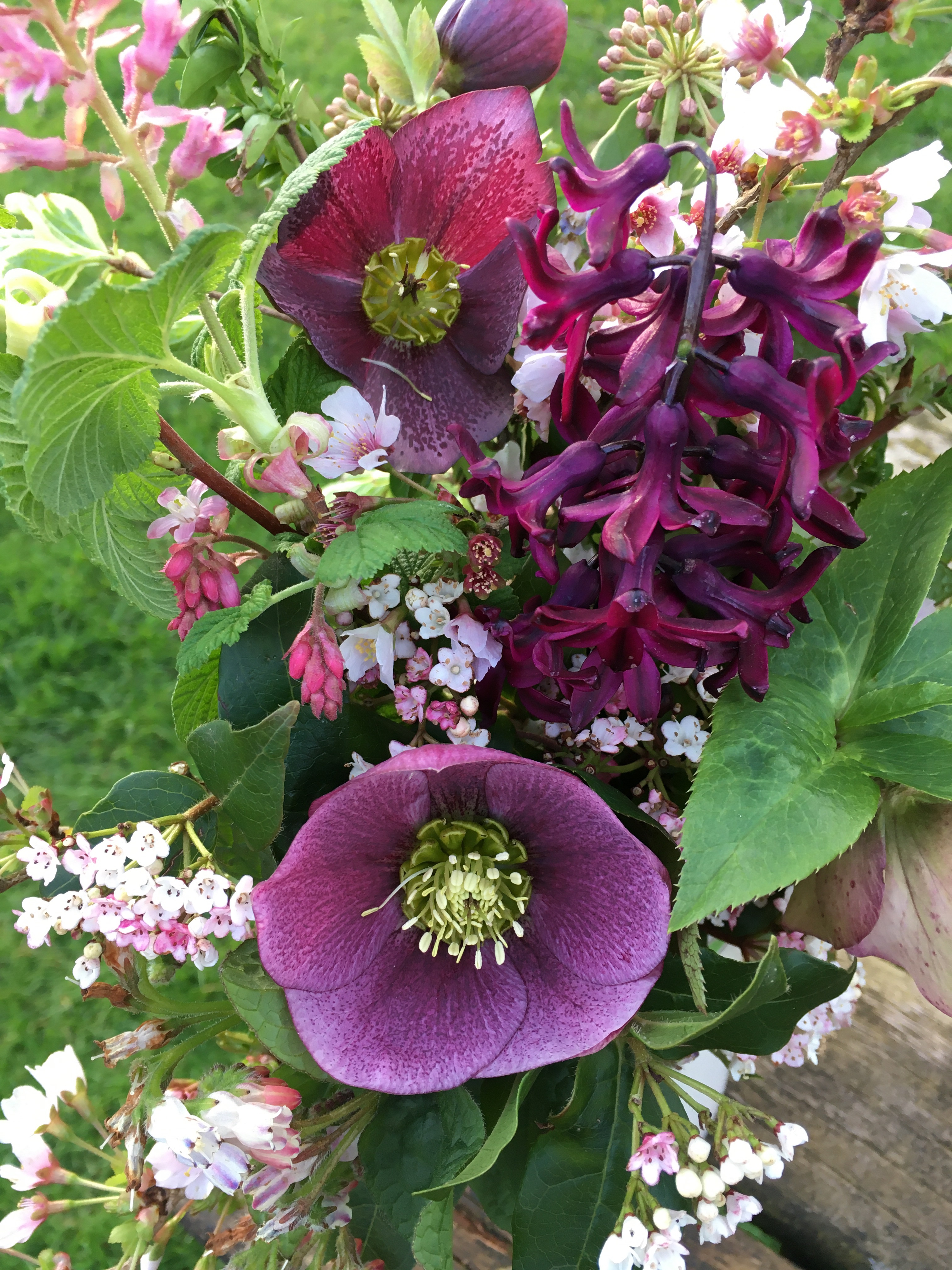
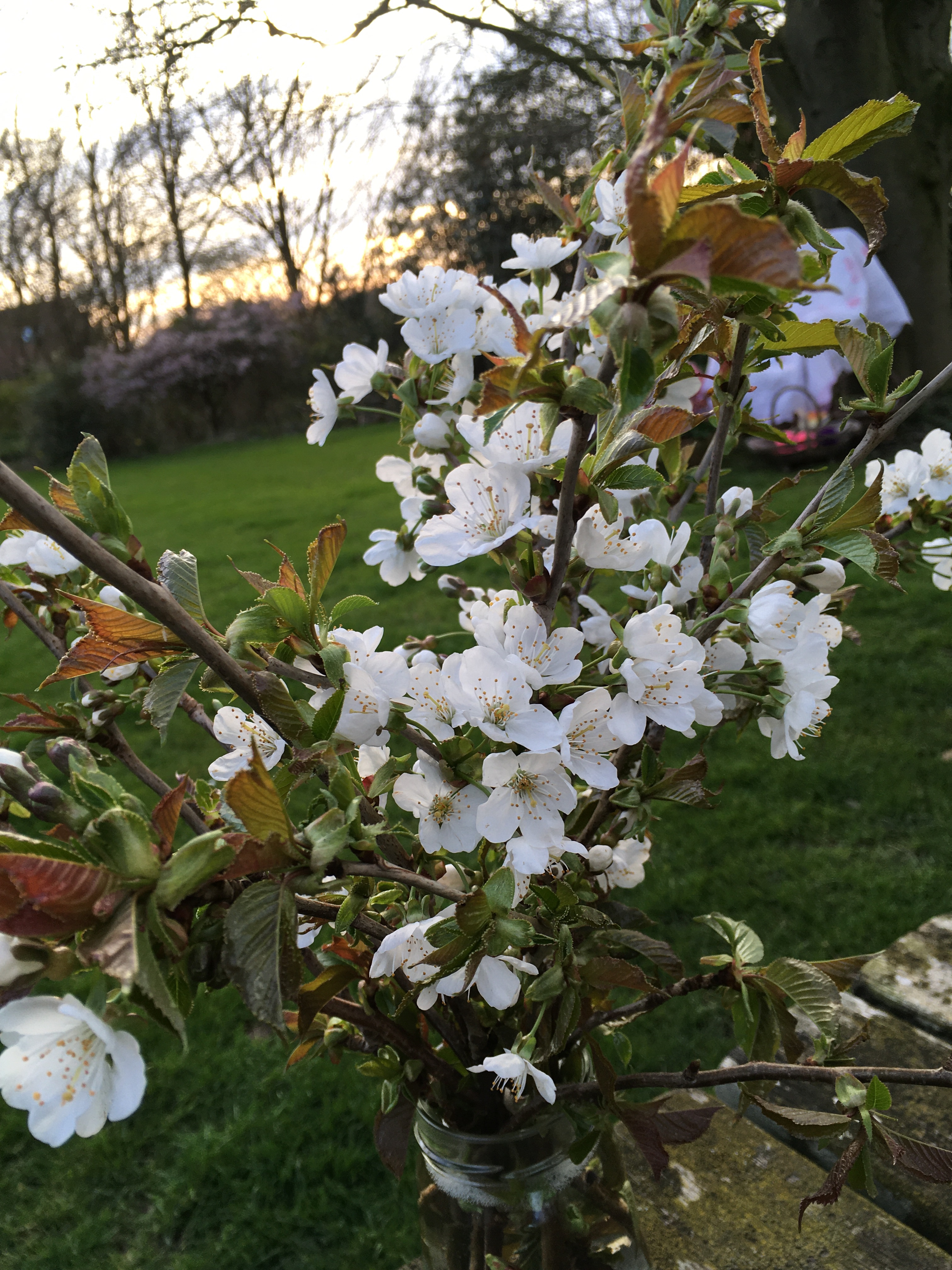
Tulip Mount Tacoma. Also just in time for Easter table arrangements. Fluffy, very double. As beautiful as a swan, wouldn’t you agree.

Forget me nots make a lovely ground cover for Mount Tacoma here.

Still on the theme of cream and white, new tulip Exotic Emperor. A delight to watch opening from a tight bud. I love the flashes of green on the edges of the petals. One I will grow again next year.

Here they are growing in a large Italian pot by my back door. A north facing position suits them well. They last longer out of the sunshine. Above them, the lime green new leaves of an Acer Palmatum Dissectum are just starting to unfurl. Perfect to complement the stripe in the tulips.

In the Exotic Daylily Border, my favourite quince is in flower. Chaenomeles speciosa Kinshiden starts off the colour of Devon clotted cream and fades to white. A lime green eye adds a simplicity to this beautiful double flower. 200 Tulip Orange Emperor form a backdrop. A recommended tulip for reliably coming back each year, and good for planting between low maintenance daylilies. I hardly ever have to work this border. It virtually looks after itself.
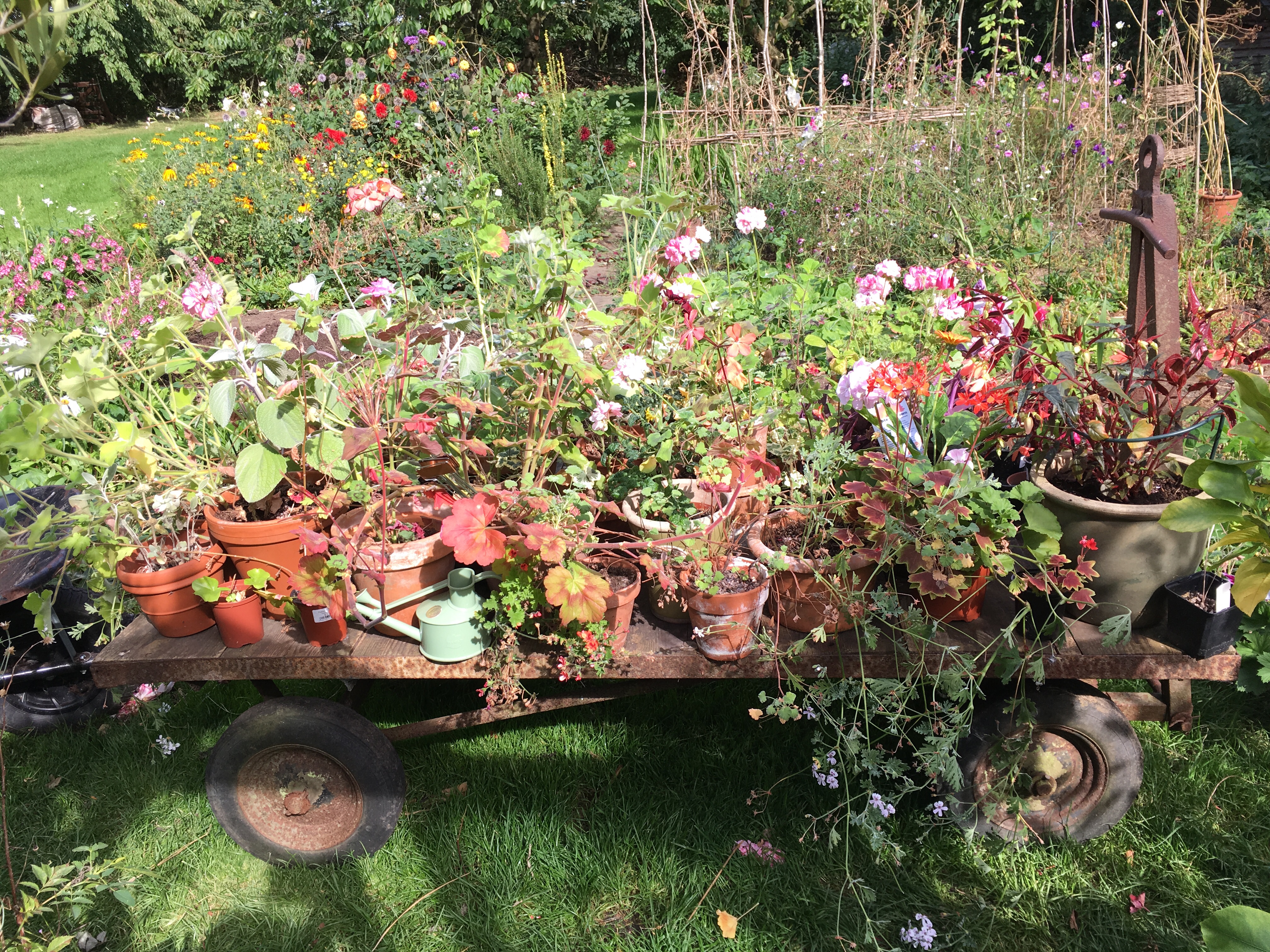
Wishing you all a very and happy and peaceful Easter. I hope you are getting some lovely sunny weather, as we are here. It’s 21C today- and 38C in the greenhouse! I have opened all the doors and windows! And now I must get back to that watering…. Enjoy your gardening.

Links

Dalefoot bulb composts https://www.dalefootcomposts.co.uk/products/bulb-compost.p.aspx

Six https://thepropagatorblog.wordpress.com/2019/04/20/six-on-saturday-20-04-2019/

Lemon Star : https://www.sarahraven.com/flowers/bulbs/amaryllis/amaryllis_lemon_star.htm

Mount Tacoma https://www.peternyssen.com/mount-tacoma.html

Tulip Exotic Emperor https://www.farmergracy.co.uk/products/tulip-exotic-emperor-bulbs-uk?gclid=Cj0KCQjwhuvlBRCeARIsAM720HpBjLnKuSBteZOYQAoqbVUBnXKLyKYitNQifojAteMGWV5JVRSKz2UaAt9oEALw_wcB

Quince Kinshiden https://www.shootgardening.co.uk/plant/chaenomeles-speciosa-kinshiden

karen Gimson on Twitter https://mobile.twitter.com/kgimson?ref_src=twsrc%5Egoogle%7Ctwcamp%5Eserp%7Ctwgr%5Eauthor

karen Gimson Instagram https://www.instagram.com/karengimson1/?hl=en

Facebook https://m.facebook.com/pages/category/Local-Business/bramblegarden/posts/