
I tour garden clubs in the East Midlands giving inspiration for growing cut flowers at home. An hour’s talk is only long enough to give a flavour of the subject. Here are some notes to accompany my talks.
Chose a backbone of useful shrubs:
Dogwoods:

Cornus Westonbirt has the brightest red stems in winter. Only a few stems are needed to add a vertical element to flower arrangements. To get the brightest stems, cut the shrubs back to 20cm in March. New stems will grow back strongly.
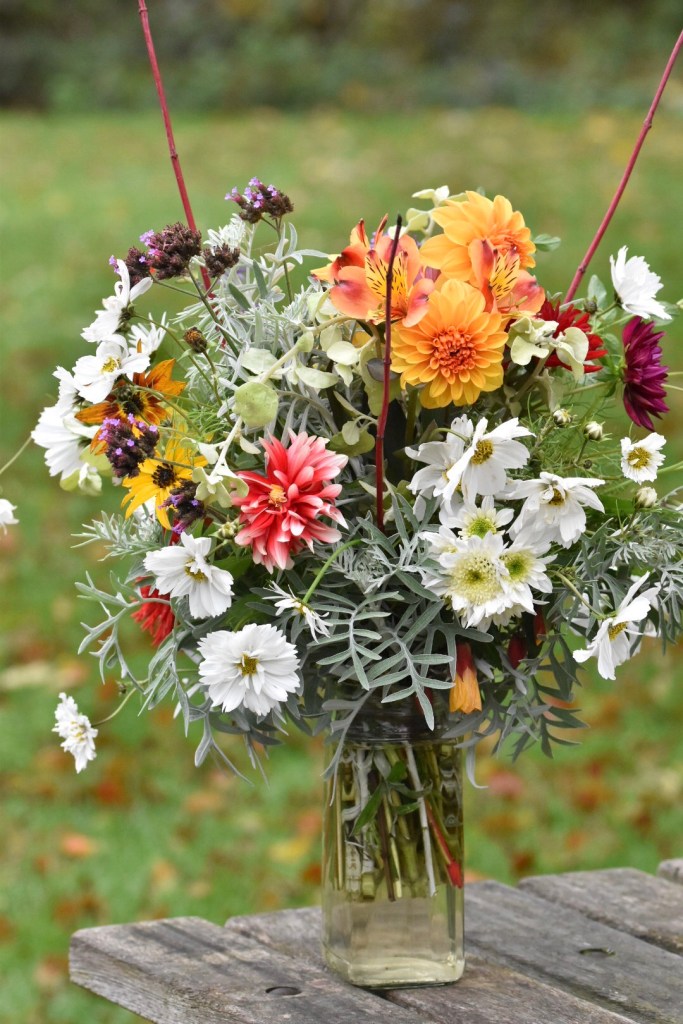
Physocarpus Diabolo:

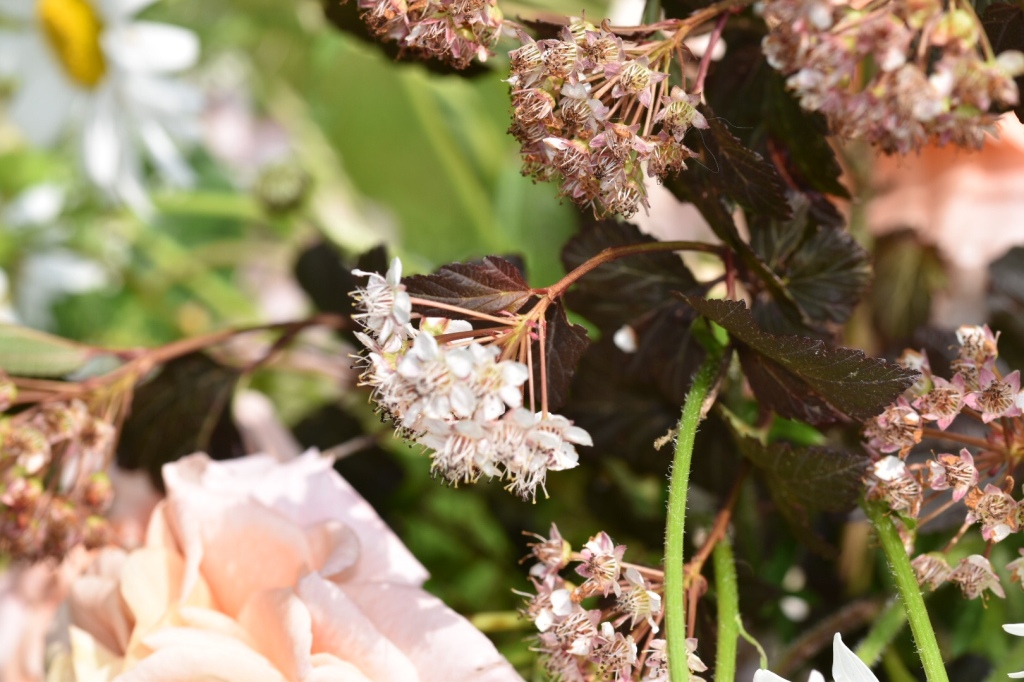
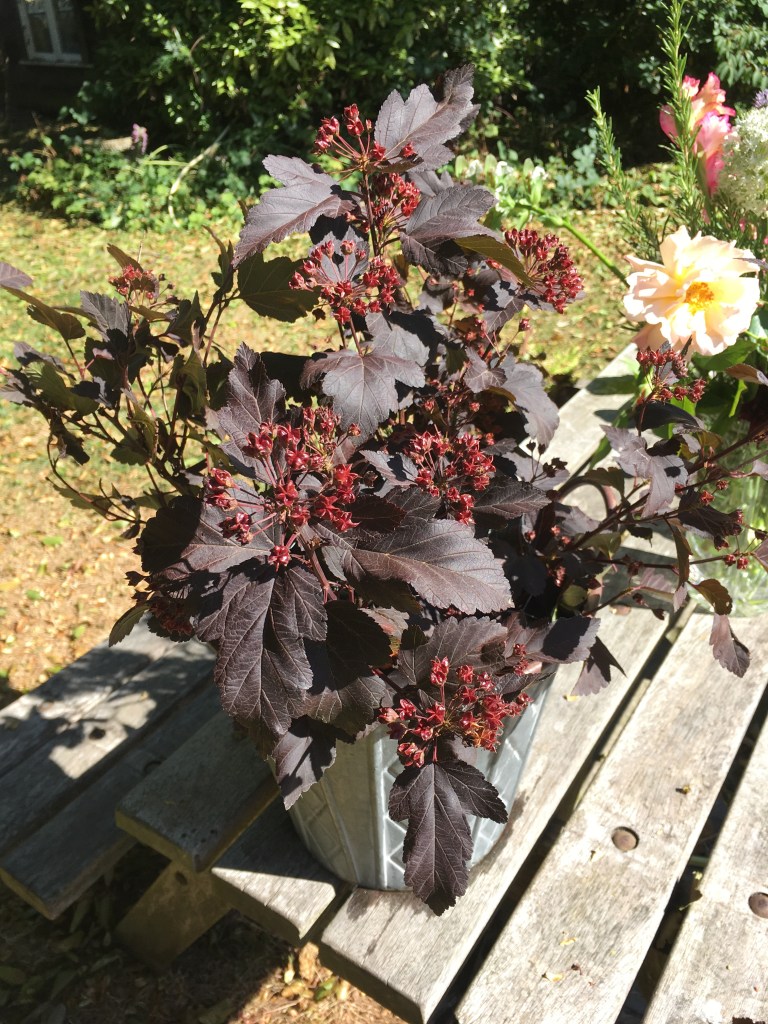
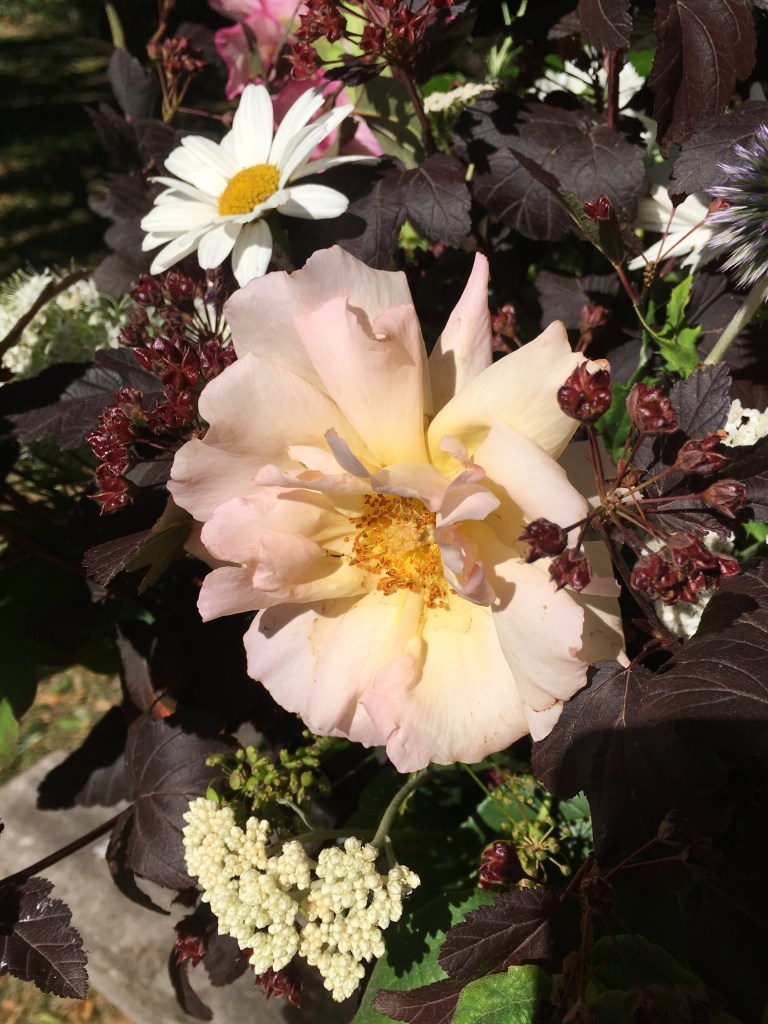
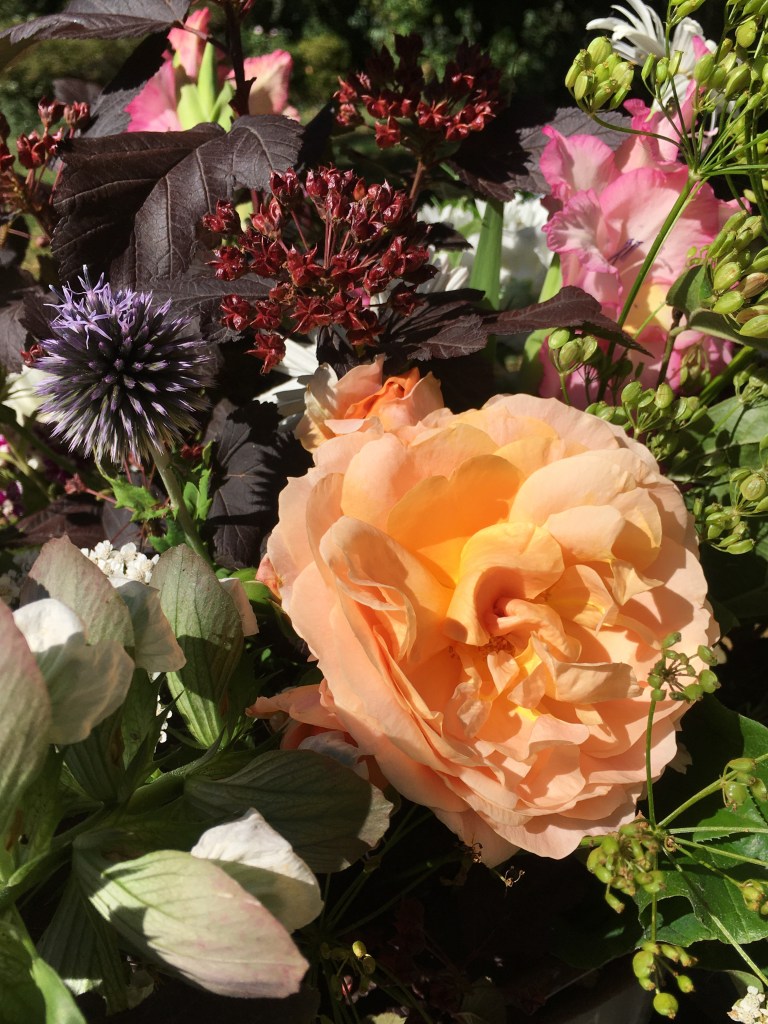
A beautiful backbone shrub, growing to 8ft. Comes into leaf early in spring. Produces pretty pinkish white flowers. Flowers then produce interesting seed heads. good strong stems for floristry and a lovely dark colour to set off all flower colours. I grow mine on a north-facing border directly in front of a hawthorn hedge. Copes with dry soil and semi-shade.

Viburnum Eve Price
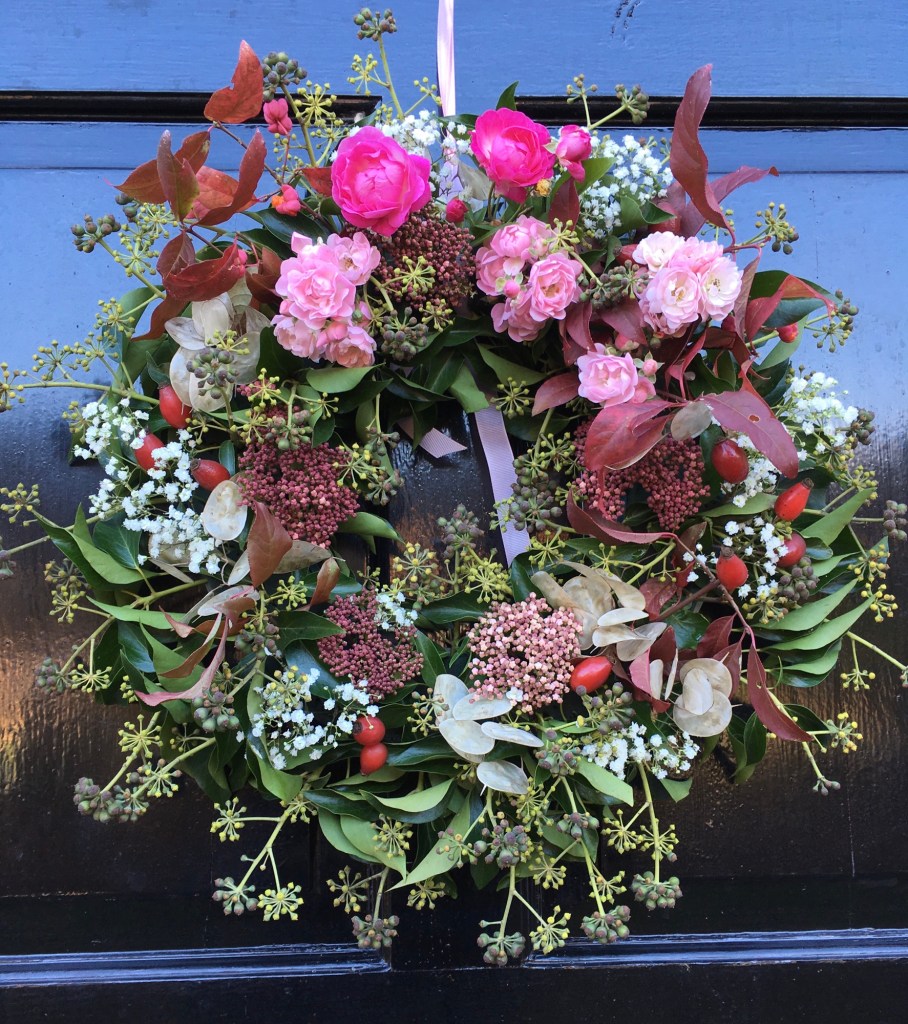
Viburnum Eve Price flowers all winter. It has evergreen leaves and is tough and hardy.
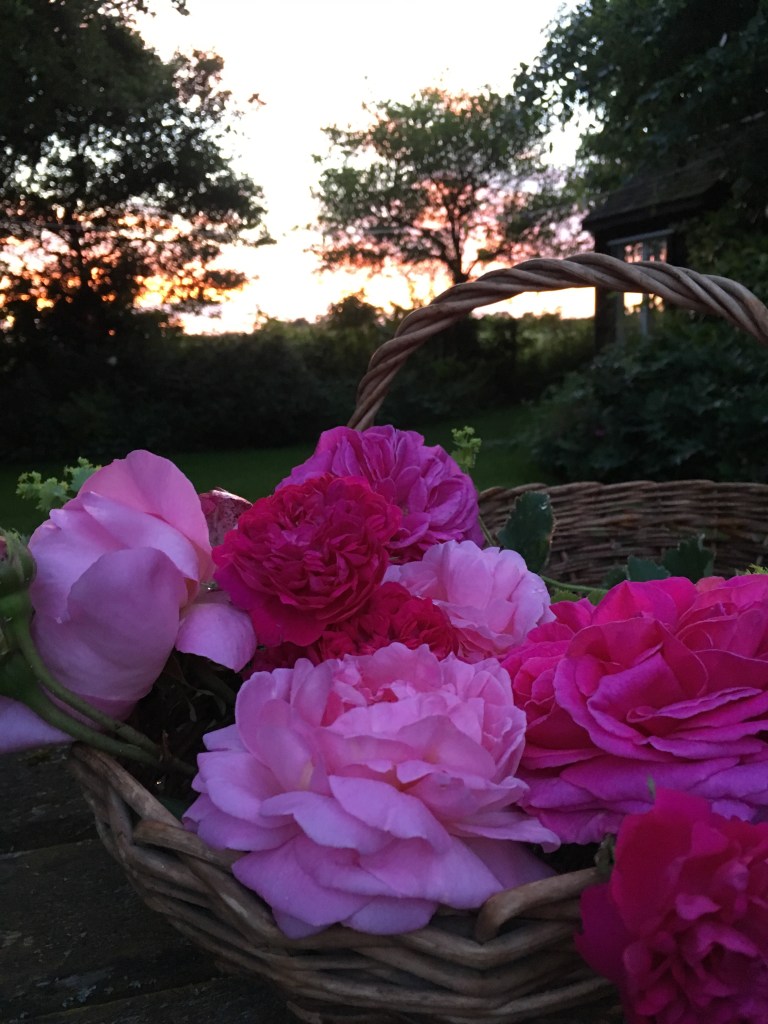
Plant Roses:

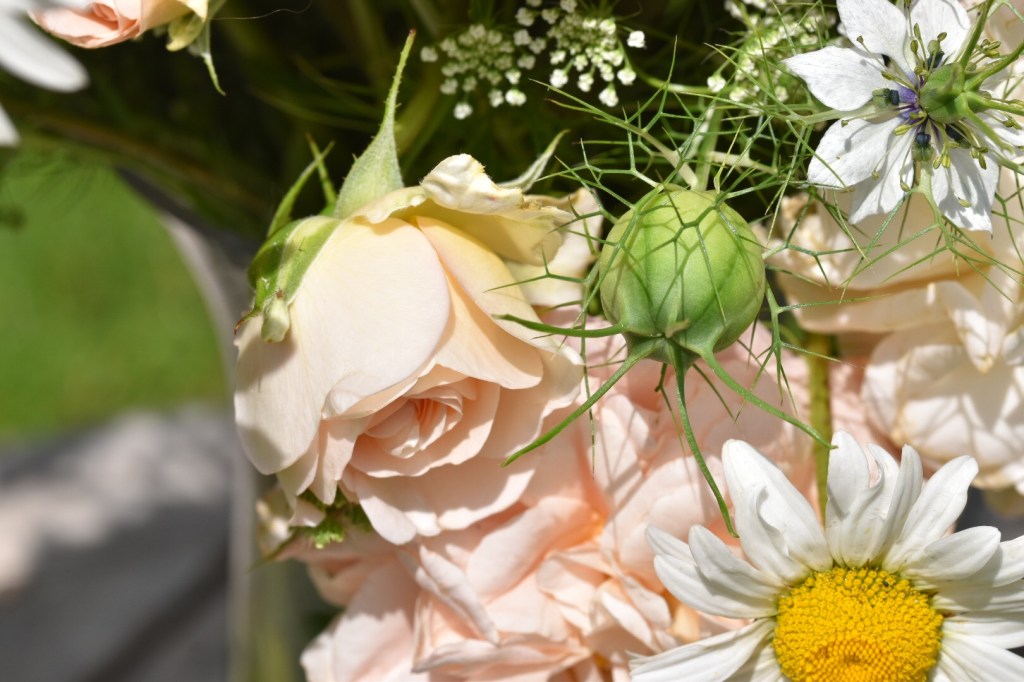
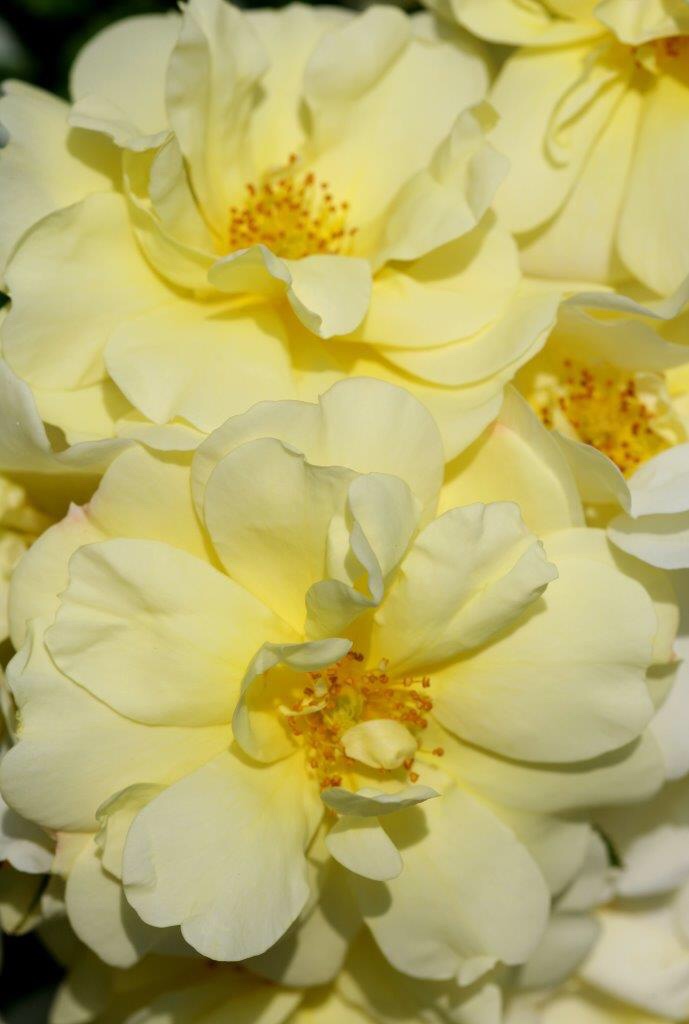
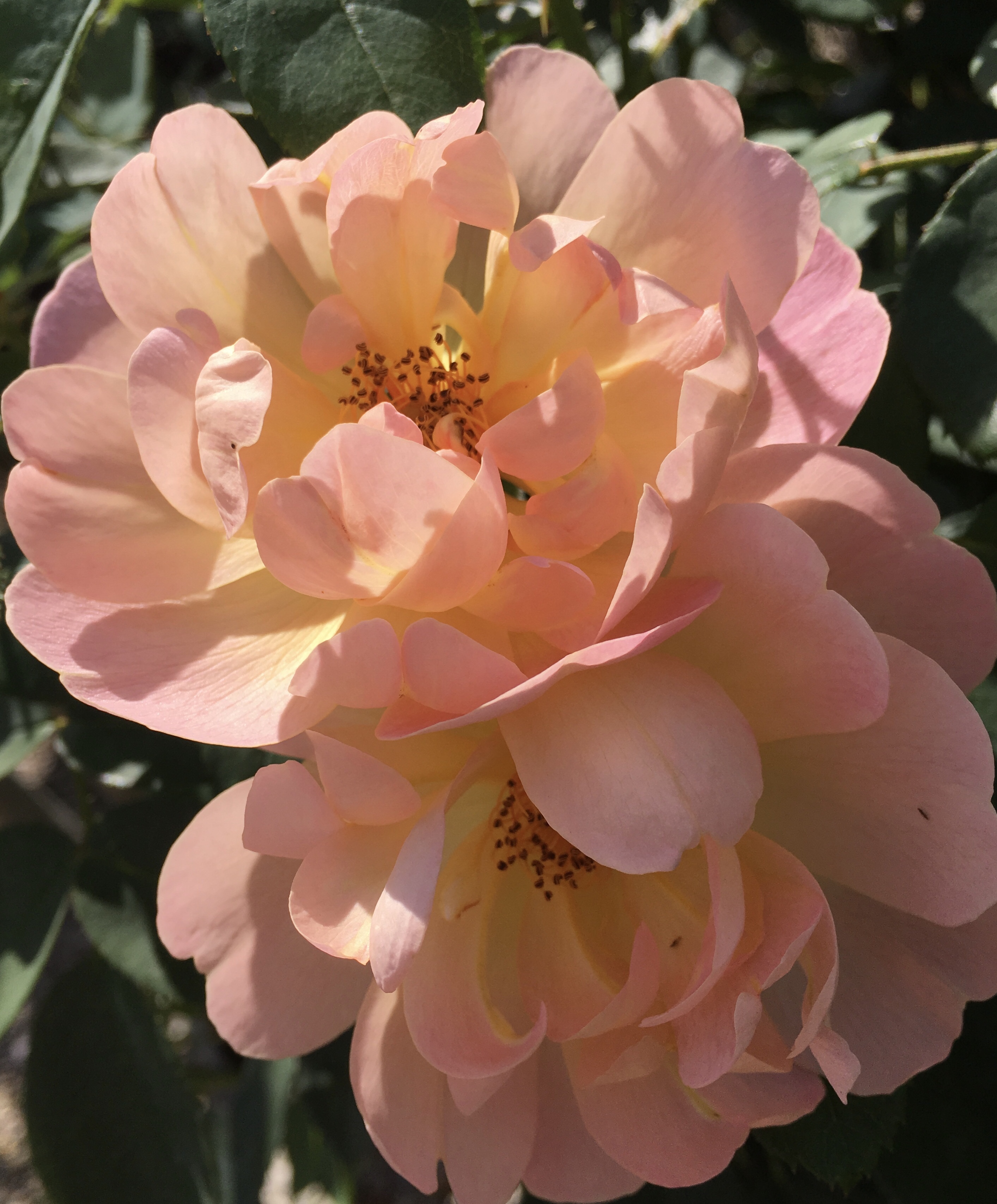
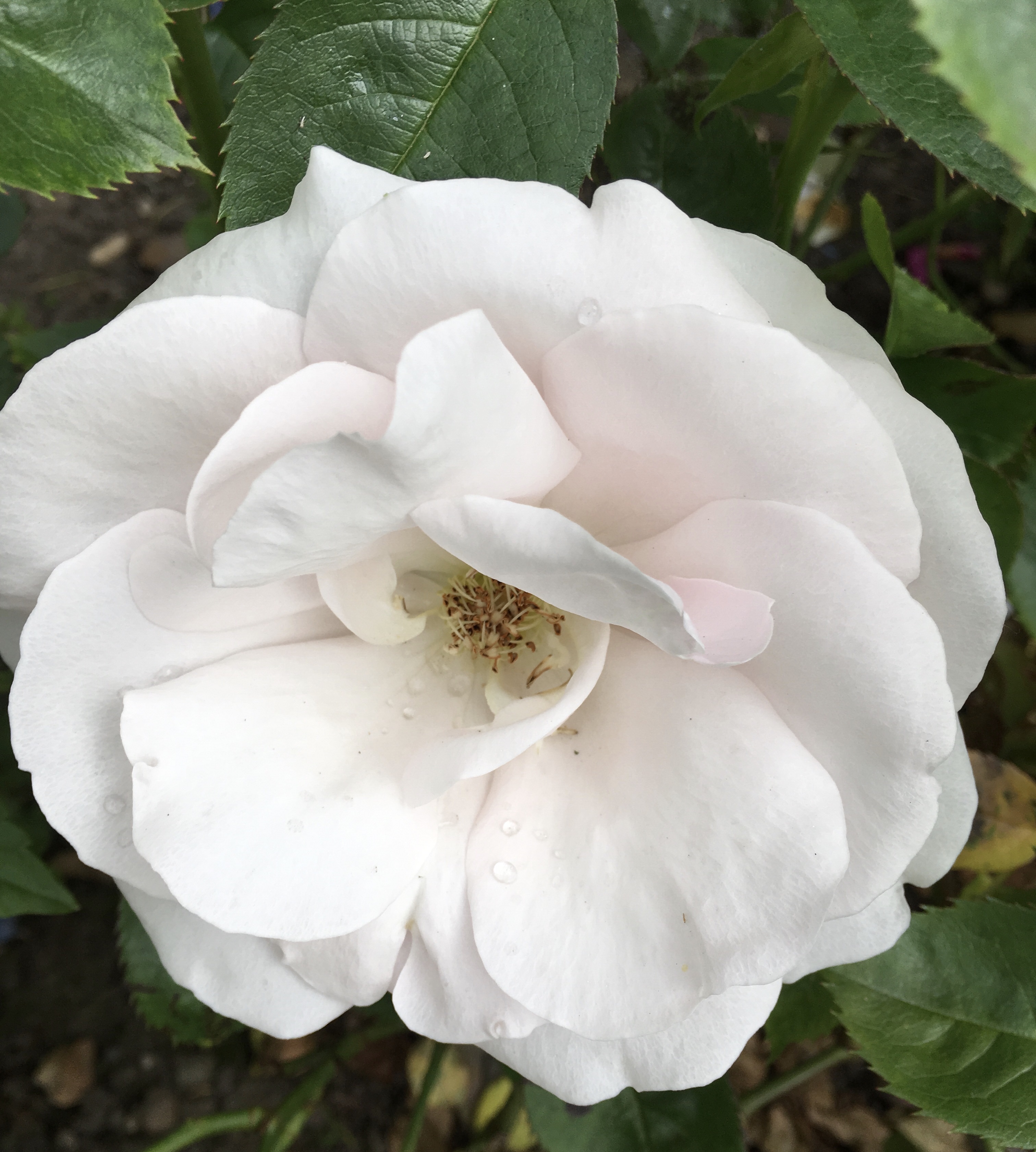
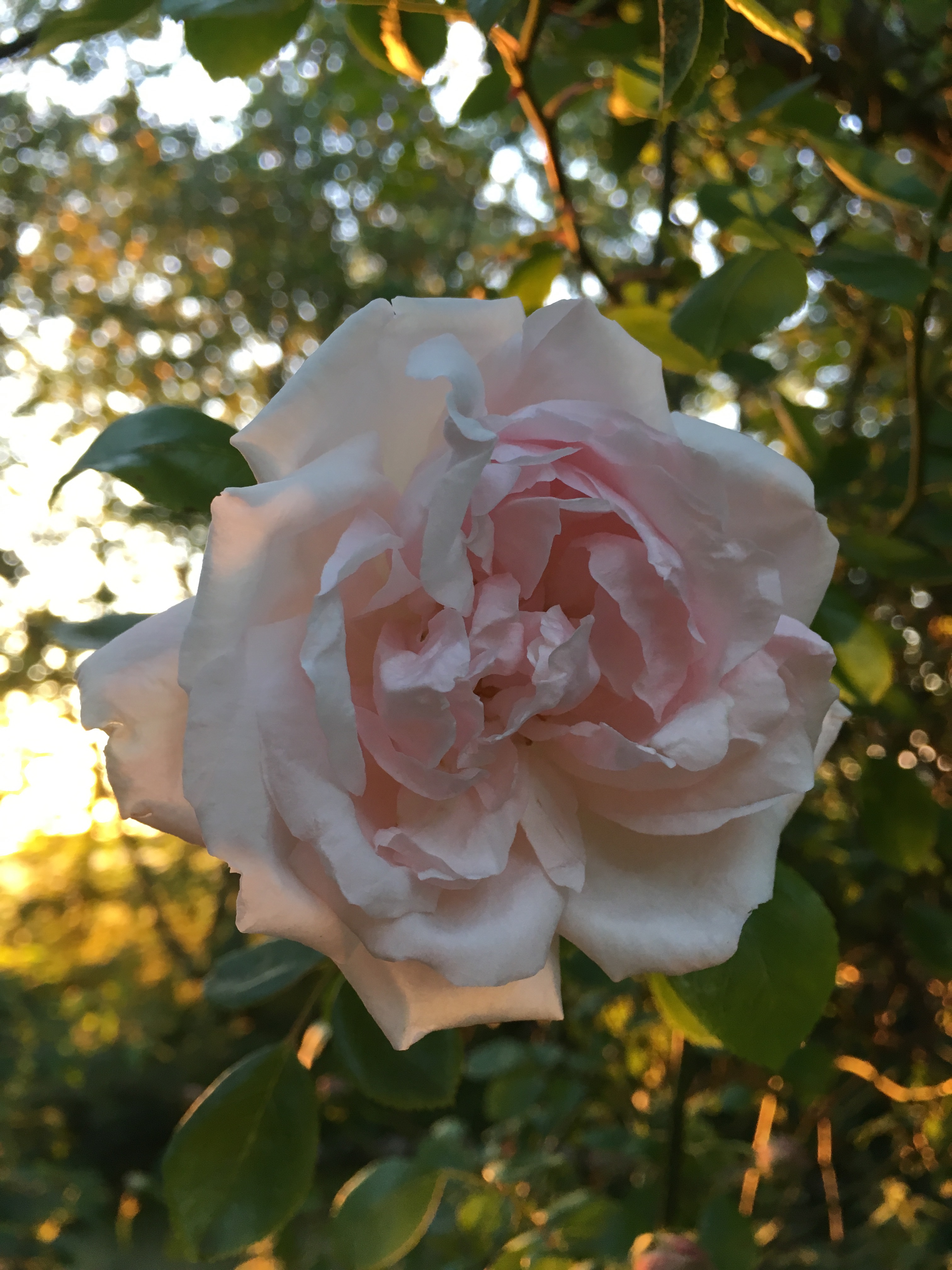
Timeless Cream and Timeless Purple are part of the new home florists’ range . Few thorns and wonderful scent.

Grow a patch of wildflowers:

I have a bed 3m long by 1.2m wide with paths surrounding it. Grown from a packet of wild flower seeds (Mr Fothergill’s or Sarah Raven). The plants that emerged included white oxeye daisy, blue cranesbill geranium, pink campion. These come back every year. The grasses grow in a strip along the edge of the lawn. Quaking grass is particularly lovely.
More perennial plants: Grow white argyranthemums.

Argyranthemum or shasta daisies grow to 70cm and can be grown in a garden border in full sun. They need dividing every three years and will need staking. They provide flowers from June to September. Most garden centres sell these plants.
Annuals to grow for cut flowers :
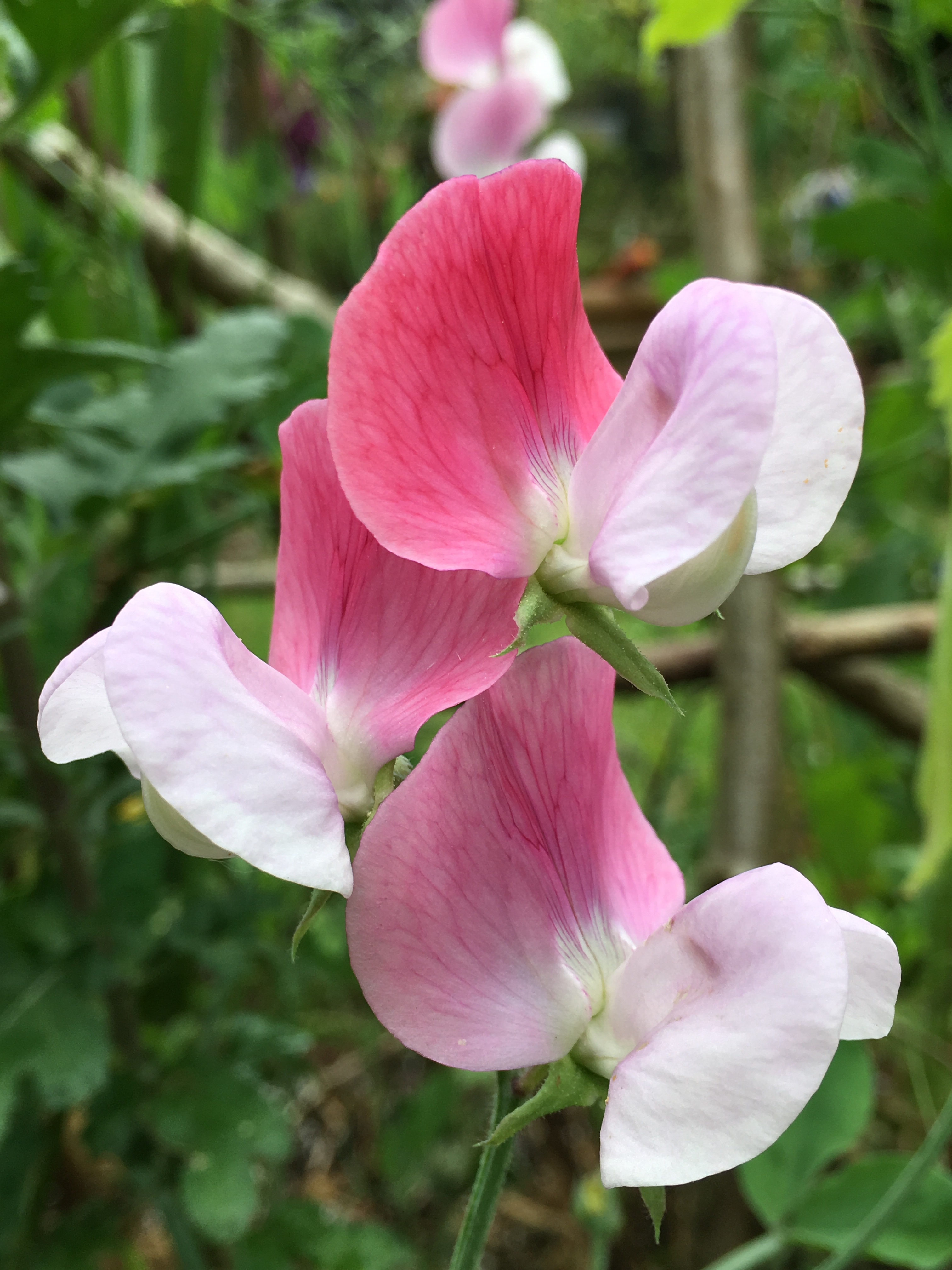
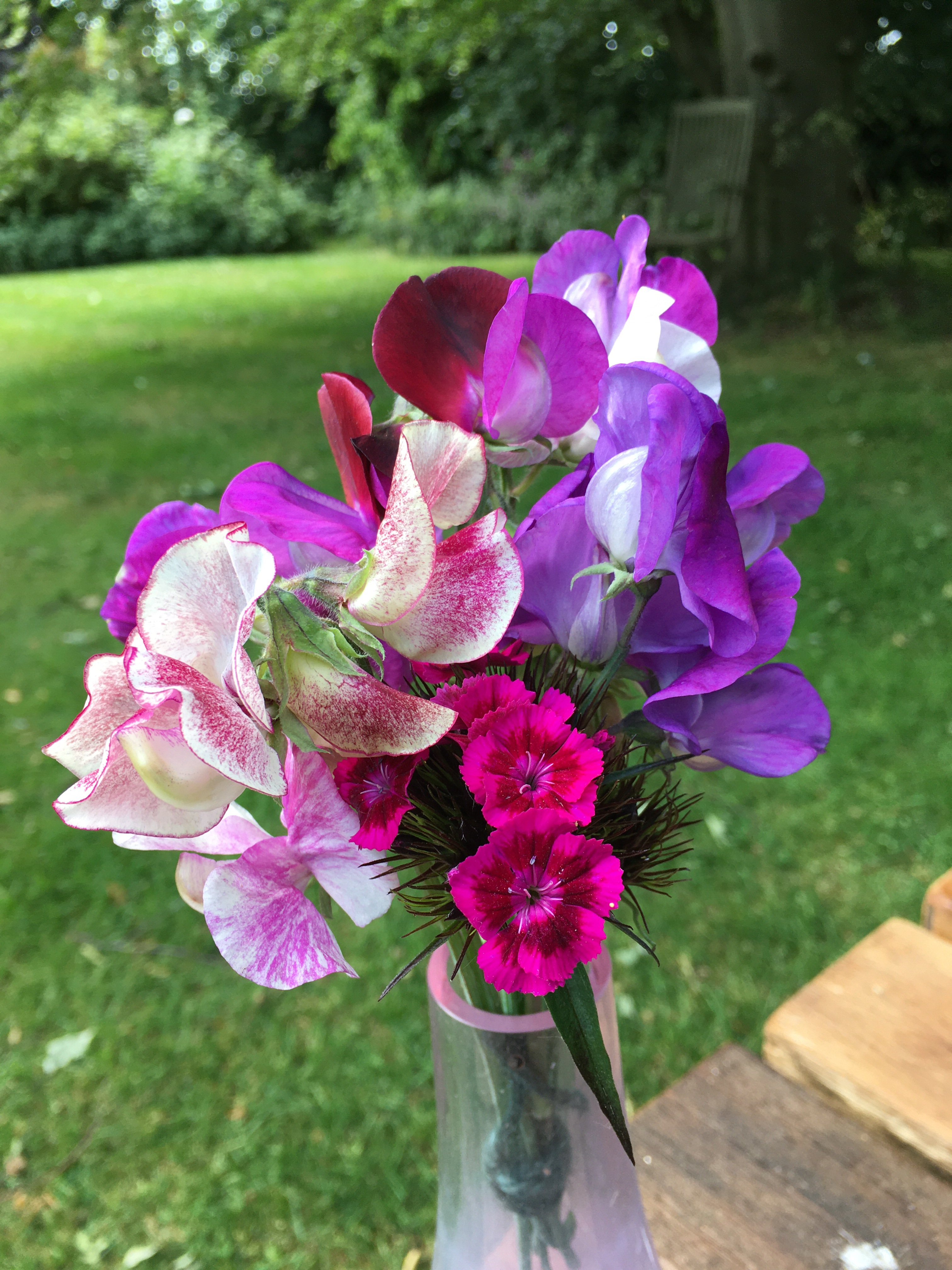
Sweet Peas:

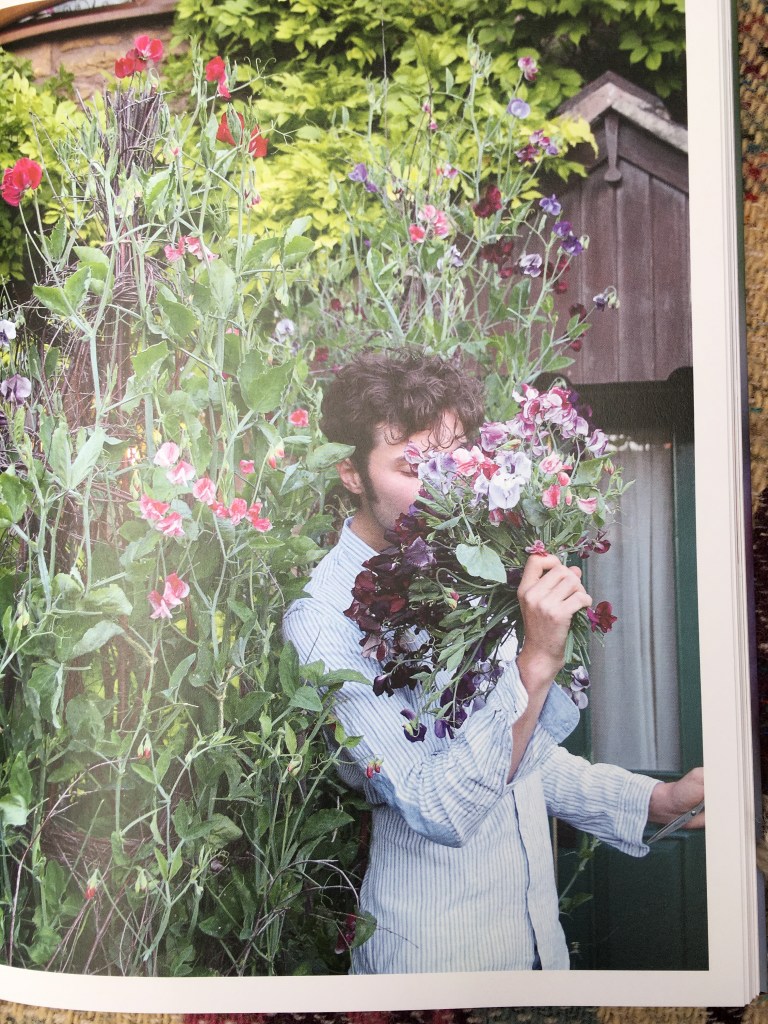
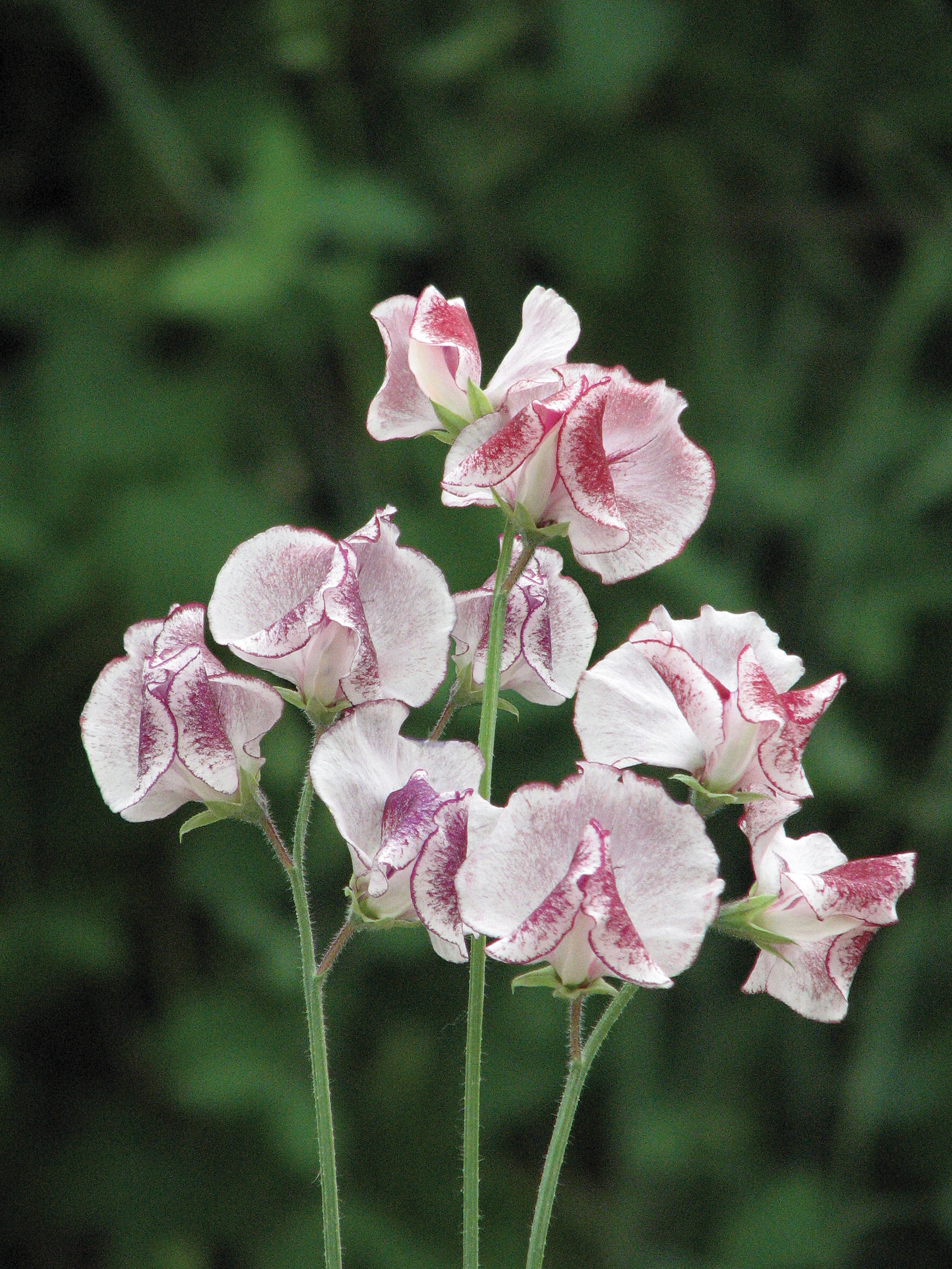
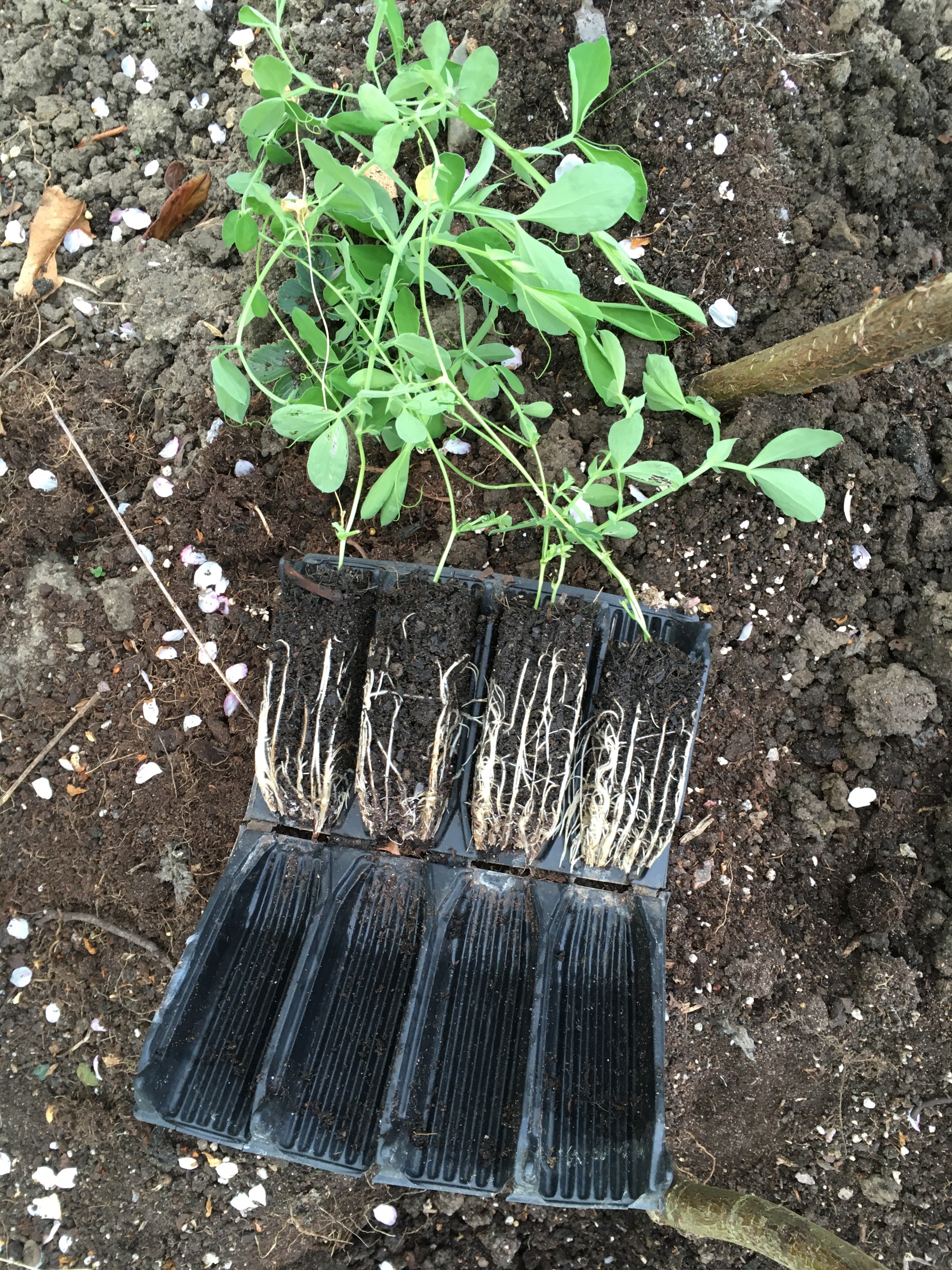
Sow Sweet Peas in October in long root trainers with 50 percent compost and 50 percent grit for drainage. Place the pots inside a clear plastic storage box to protect from mice and the weather. Storage boxes can be brought indoors and stacked up like a mini greenhouse if the temperatures go below freezing. Lids can be removed in good weather. Do not allow seedlings to get too wet over winter. Plant out in good soil in April.

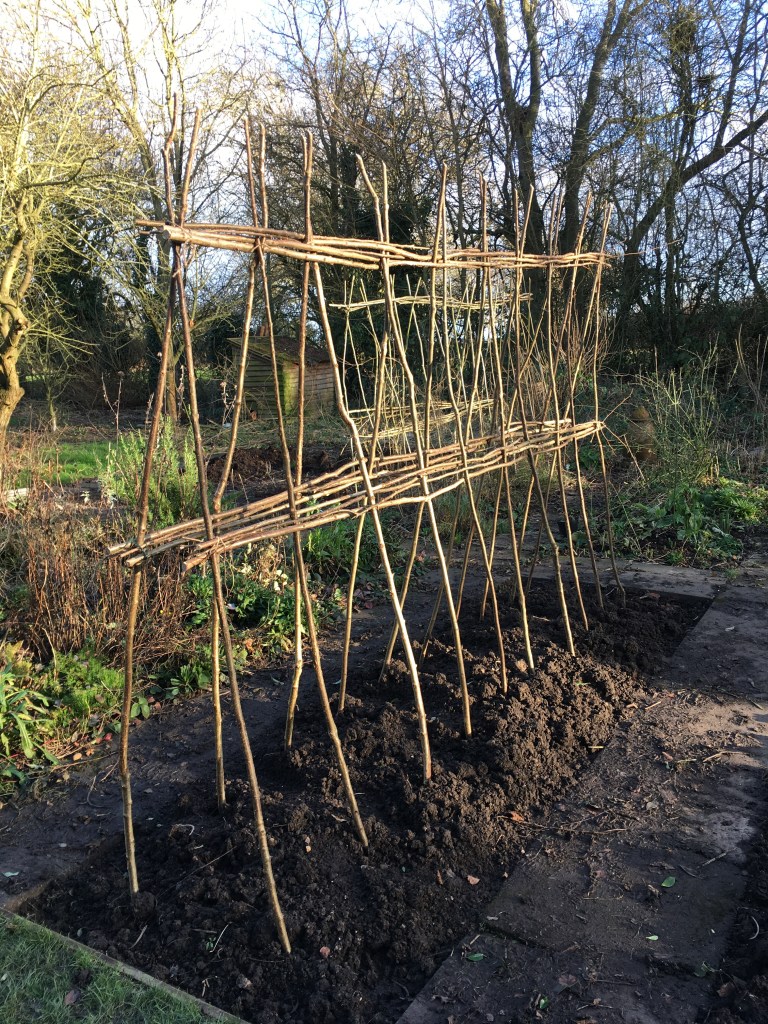
Locally, Musson Fencing sell bundles of hazel rods in winter and early spring. They sell out quickly so it’s best to order your supplies.
https://www.davidmussonfencing.com/
Alternatively, Rutland Willows make bespoke willow and hazel supports and frames and run courses to make your own. We have had many hurdle fences and supports from them and have been very happy with everything.
https://www.rutlandwillows.com/
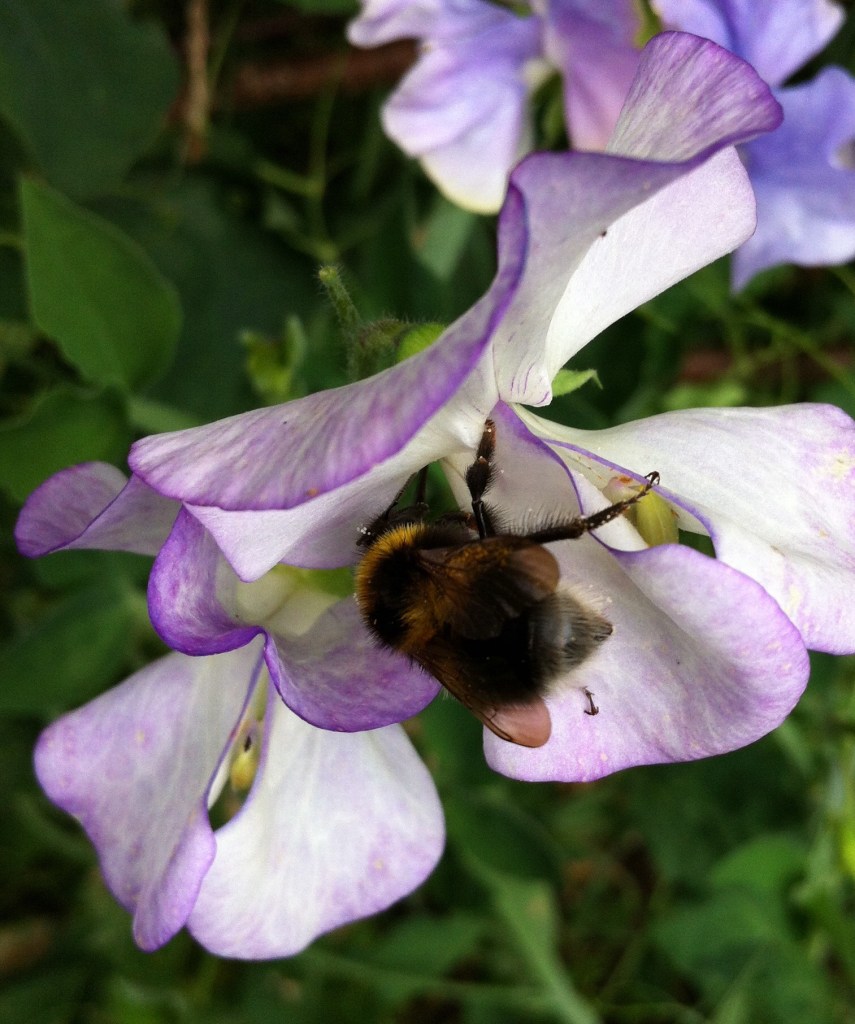
At this time of the year (mid-May at the time of writing) I would probably buy in pre-grown plants from Easton Walled Gardens. A good excuse to visit them and have a walk around the beautiful cut flower gardens and landscape. Order your seed now to be delivered in late summer for October planting.
Annuals:Calendulas.

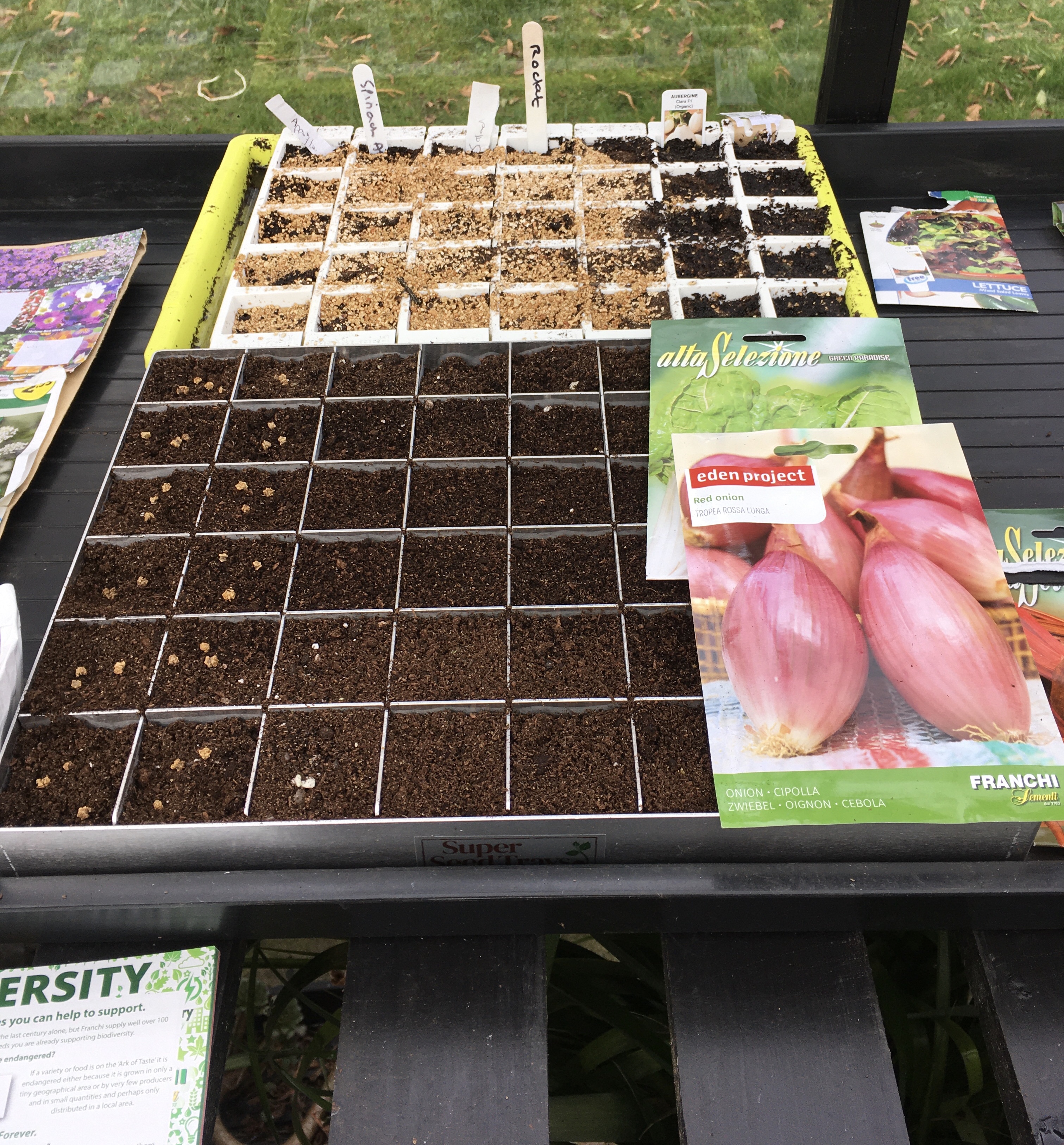
Sow calendulas in autumn and overwinter them in pots in a greenhouse. Or sow now. Use plug plant trays, one seed per cell. Use seed compost with 50 percent vermiculite. Cover seed with vermiculite. This helps with drainage. Most seed sowing failures are due to watering – either over or under watering. A soggy compost is death to seedlings. Better to be on the dry side that too wet.
A note about compost: I use peat-free Melcourt seed compost and I add vermiculite, or horticultural sand whichever I have to hand. I don’t use multi-purpose compost for seed sowing. It contains fertiliser which burns delicate seedling roots. I move plants on quickly, water with seaweed extract every time I water and get plants in the ground or into big pots as soon as possible.
Tips on seed sowing:
Use spotlessly clean pots and seed trays.
Warm the compost in the greenhouse before using. Or bring indoors. Never use cold, wet, soggy compost – especially old compost from the bottom of pallets at garden centres.
Read the back of the seed packets for information such as whether to cover the seeds or not. Also follow germination temperatures and time to sow guidelines.
Use fresh seed. Home-saved seed is always likely to germinate faster than bought seed.
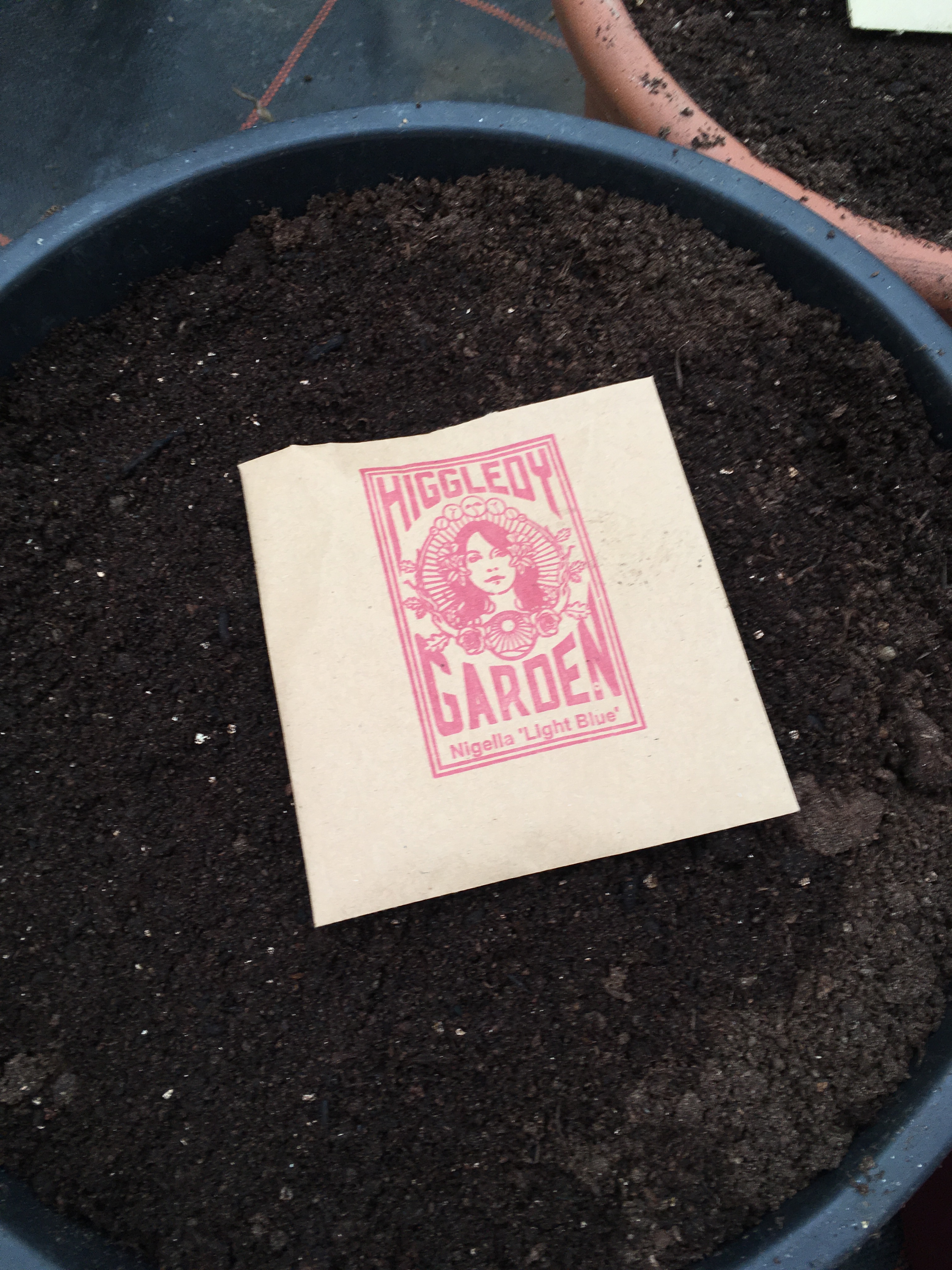
Buy seed from the best companies – Mr Fothergills, Chiltern Seeds, Higgledy Seeds. Do not buy from garden centres where seed will have been too hot, too old, or might have got wet. Best to buy mail order.
Water with a fine rose so as not to disturb the seeds. Always use tap water as water barrels contain pathogens which might cause seeds to wilt and die.
Protect new seedlings from too much sunlight. They are like babies.
Sow very thinly to prevent damping off. Make sure you ventilate the greenhouse in hot weather also to prevent mould and damping off problems.
Only sow half a packet at a time. If that fails for any reason, you’ve got a second chance with the other half of the seeds.
Always harden off plants before planting outside. This takes about seven days and involves bringing the plants in at night be putting them out in the day.
Soil Improvers:
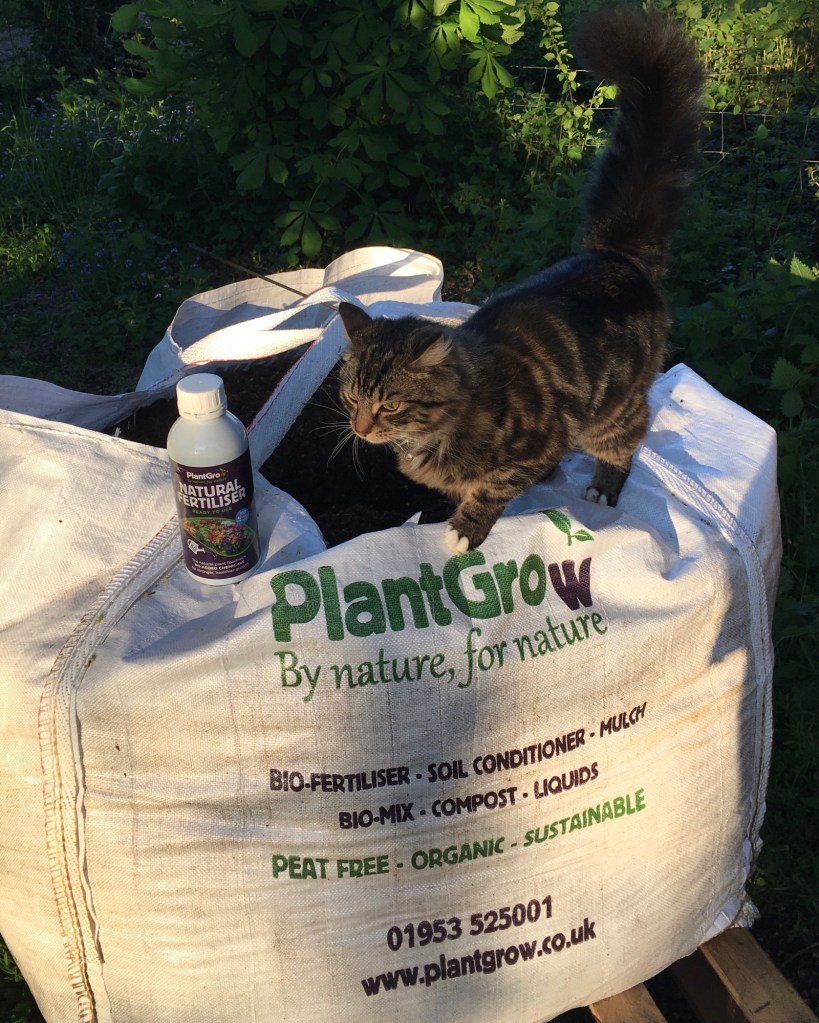
We use and highly recommend PlantGrow fertiliser and mulch. There’s also a liquid feed which I use on established plants needing a boost. The 10 percent discount code for blog readers is bramble10. I’m not paid to recommend them, but I do like to support family companies and this one is based in Norfolk.
More annuals: Cosmos:

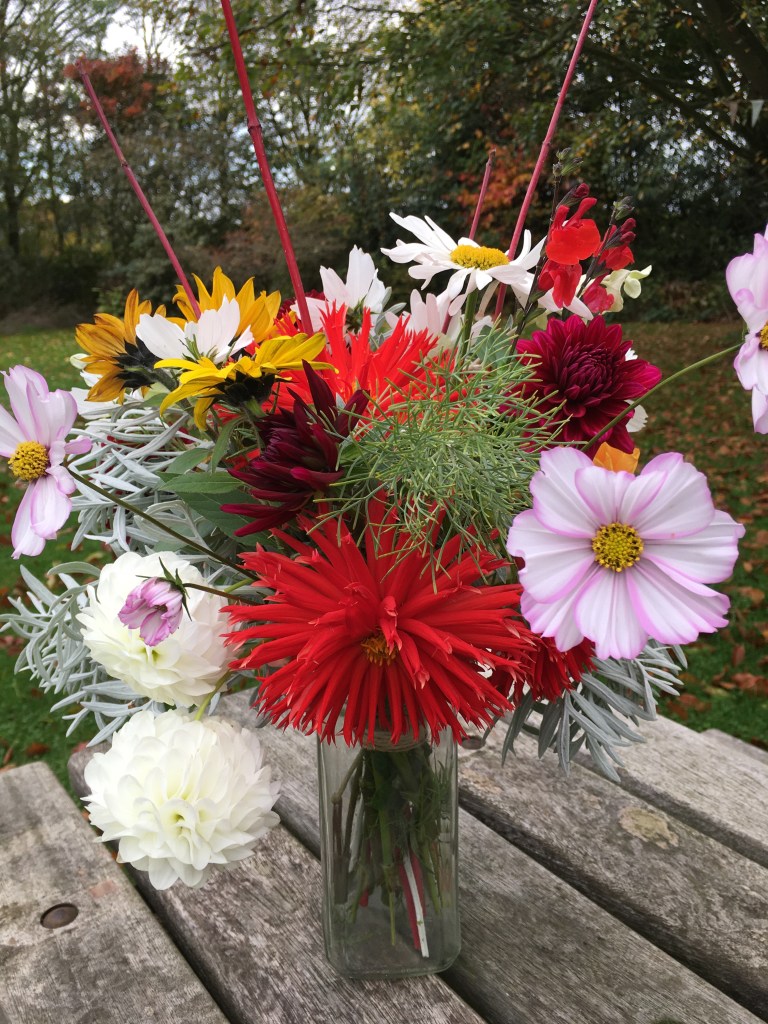
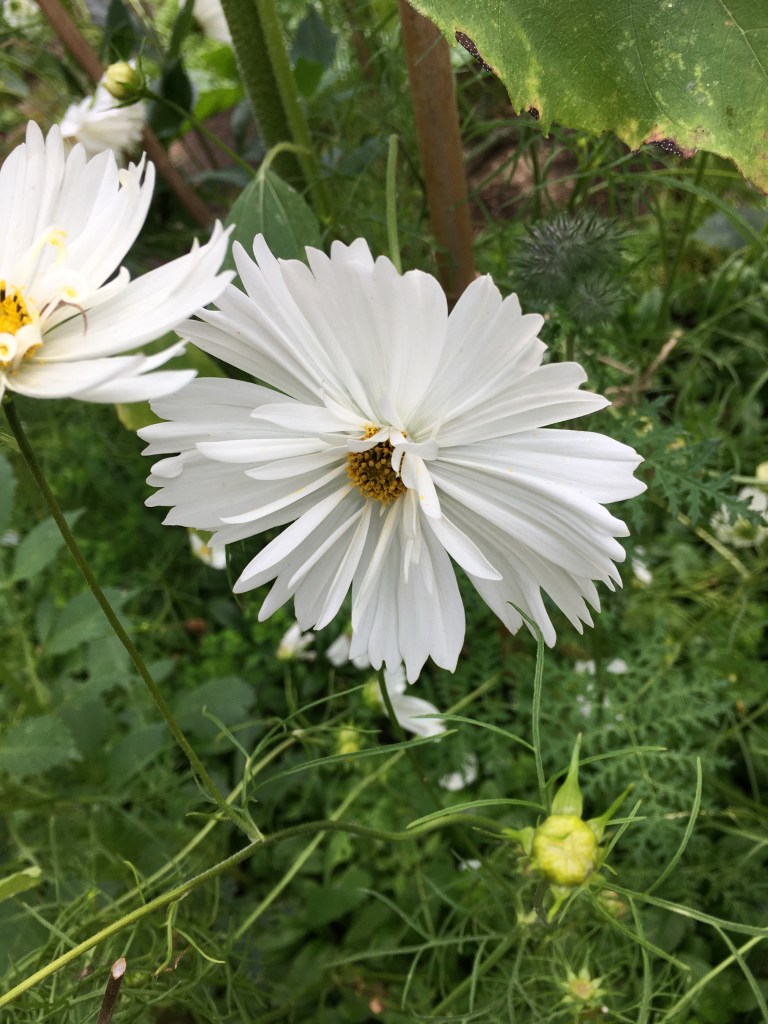
Cosmos should be started early as it needs a long growing season. It’s best to start seeds in February in a heated propagator at 18C. Most garden centres are selling pre-grown plants now. Sarah Raven sells small plants in spring. It’s safe to plant them out in the first week of June. They will flower until first frosts. My tip is to grow just a few but grow them really well. Pinch out the tips to make them bushy when they are about 4” tall. Support them with canes and tie them in well as they rock about in windy weather.

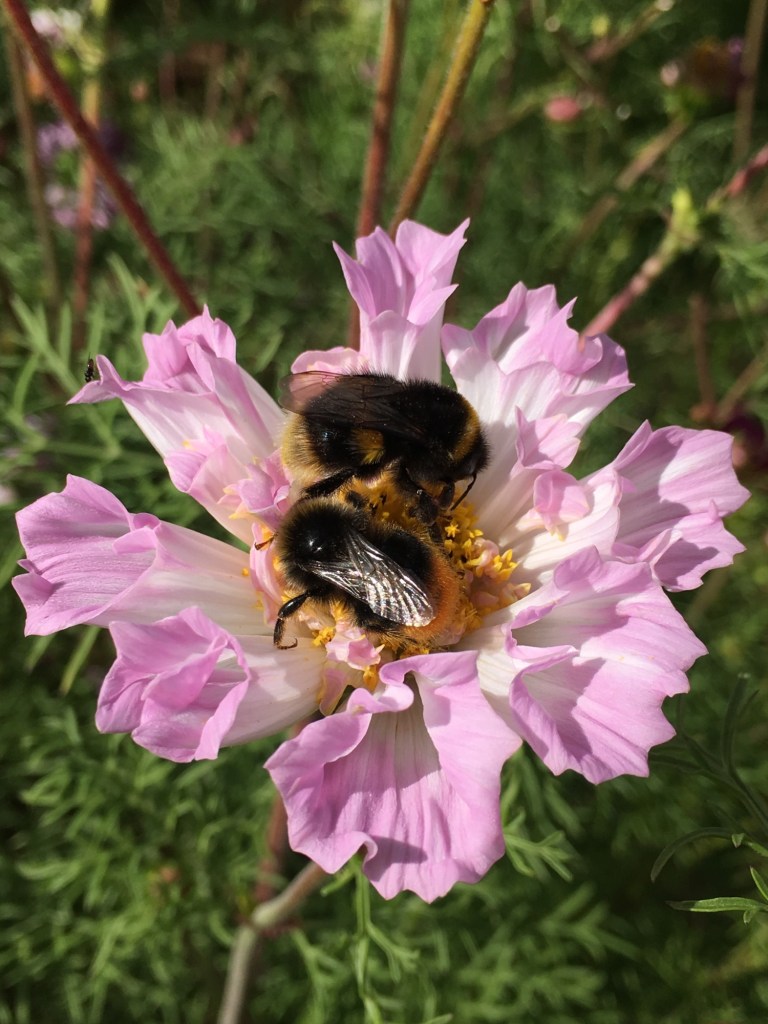

More Annuals: Sunflowers

Sunflowers can be sown in April and May. Earth Walker and Velvet Queen are good varieties. Look out for the multi-headed dwarf sunflowers. I grow mine amongst the sweetcorn and the vegetables help to hold the sunflowers upright in stormy weather. Calendulas and courgettes are grown at the base.

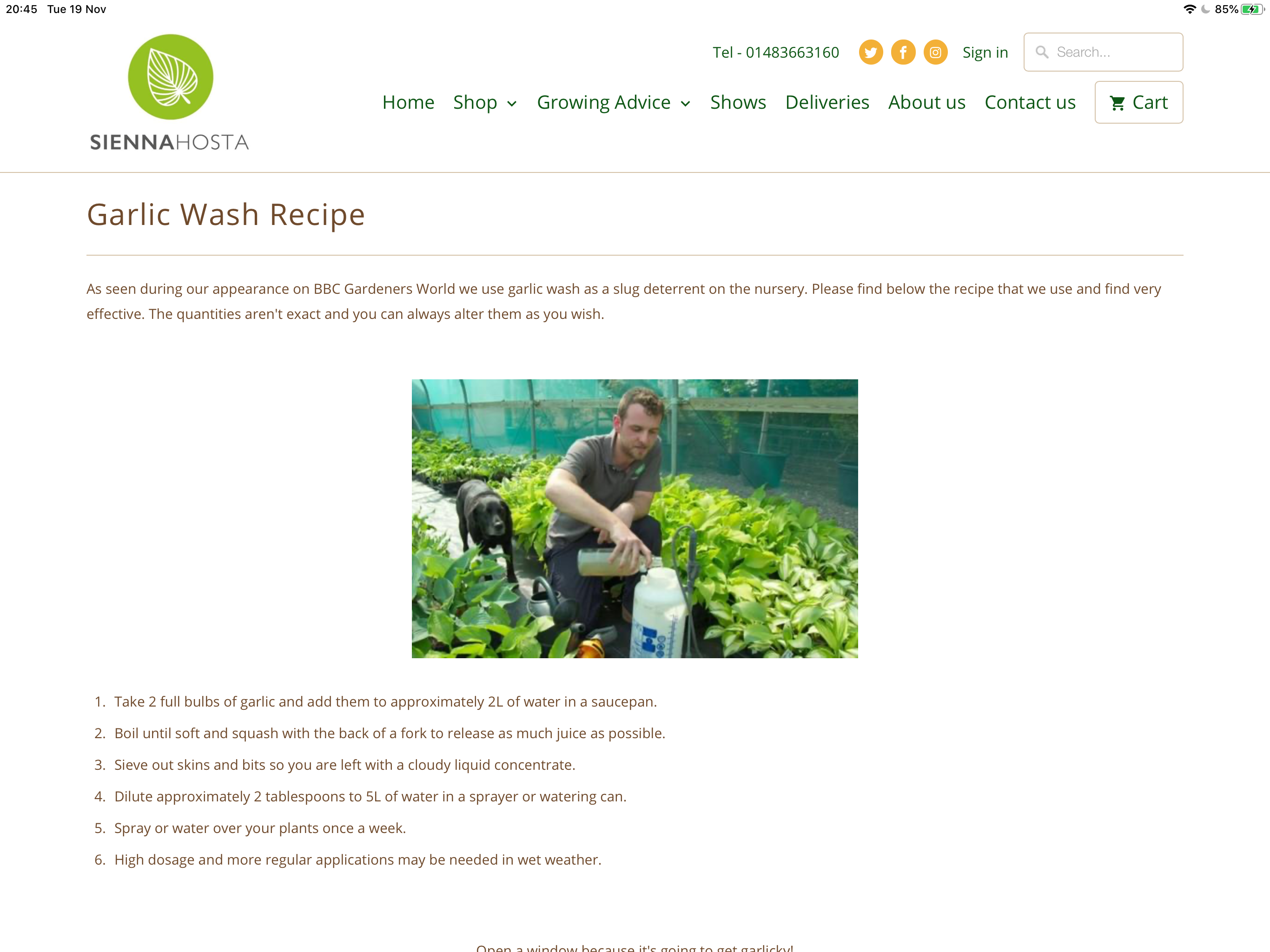
I start seed off in a propagator at 18C. Plants are grown on until they are about 20cm tall. Any smaller and the slugs will eat them. Spray with garlic extract to protect from slugs and snails. The recipe is on the blog in the search bar.
Dahlias:

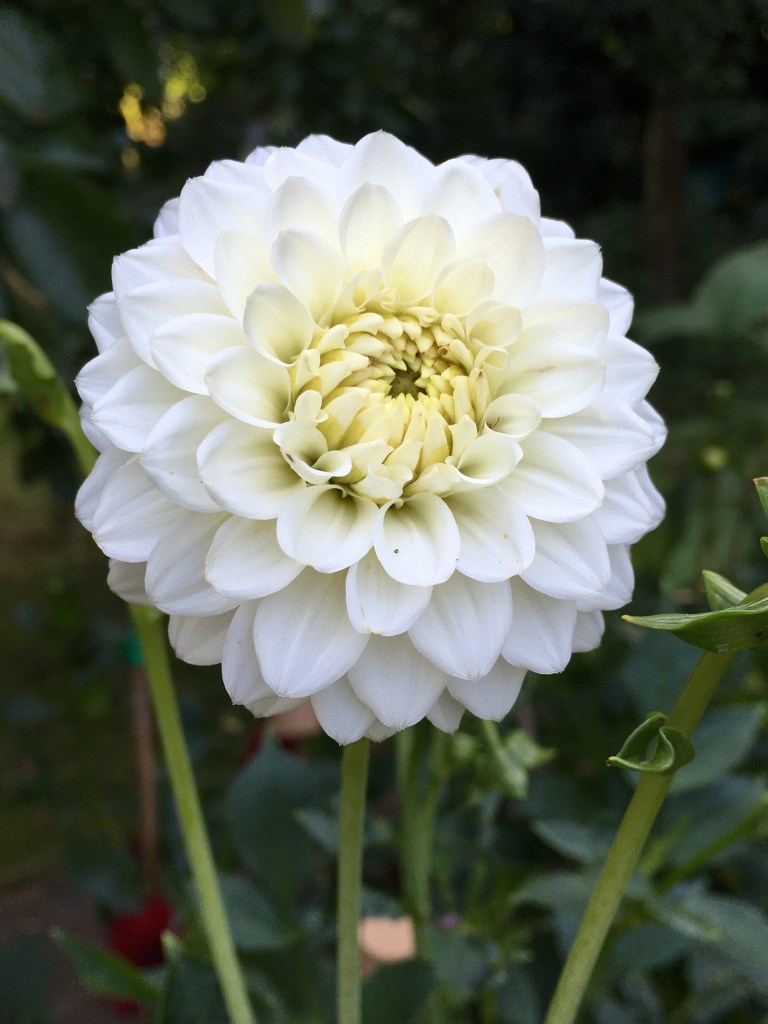
There’s still time to buy dahlia tubers from the garden centre and pot them up indoors. Take cuttings now to get more plants. Each tuber can provide 7 cuttings without detriment to the mother plant. Cuttings need to be tiny, 2-3cm only and placed in a 9cm pot with the 50/50 compost vermiculite mix in a propagator at 18C. They will readily root and can be planted out the first week of June. Cuttings will flower this year. If buying potted plants, there are some good mail-order nurseries offering stock. Todds Botanics are recommended.



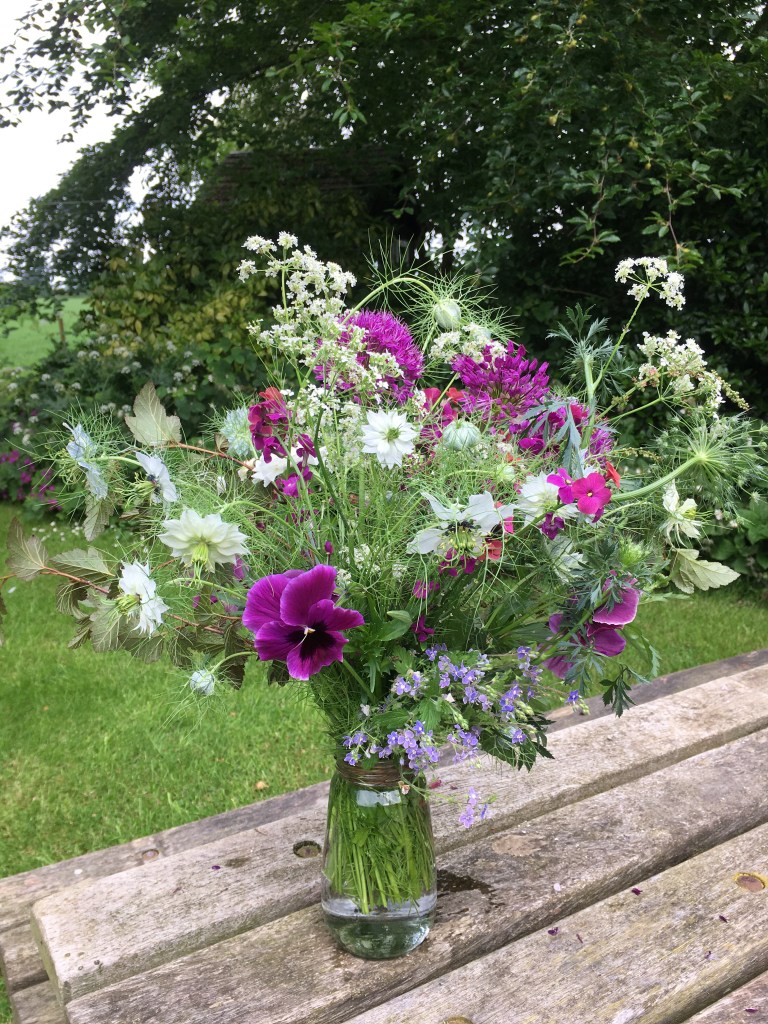
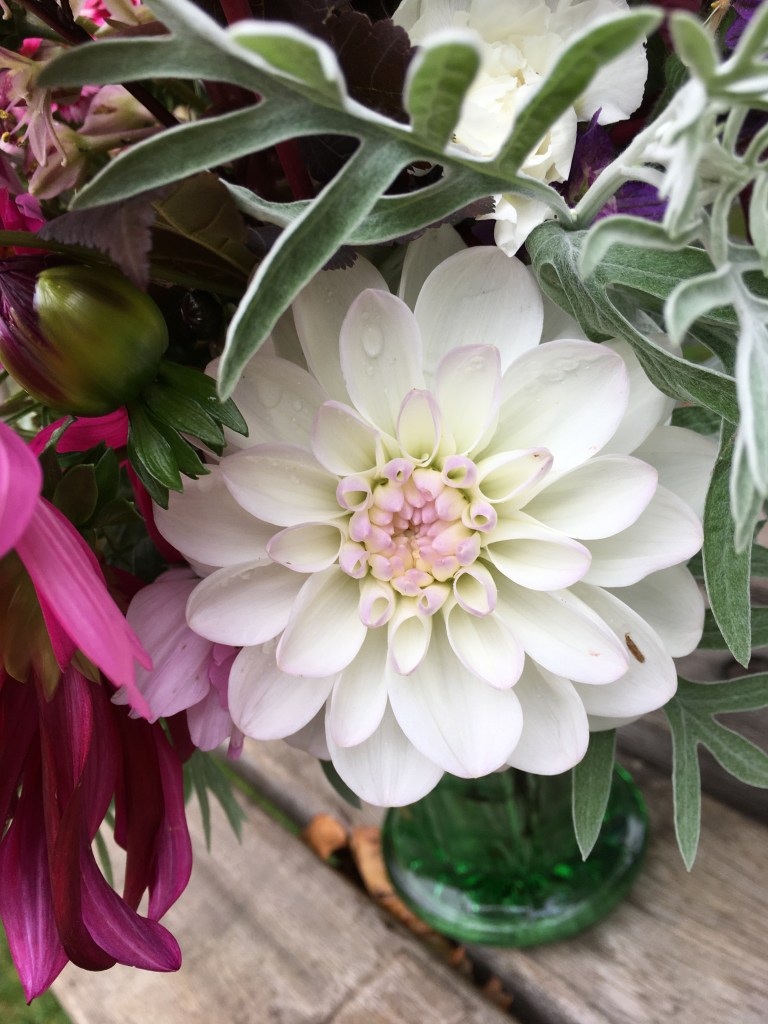
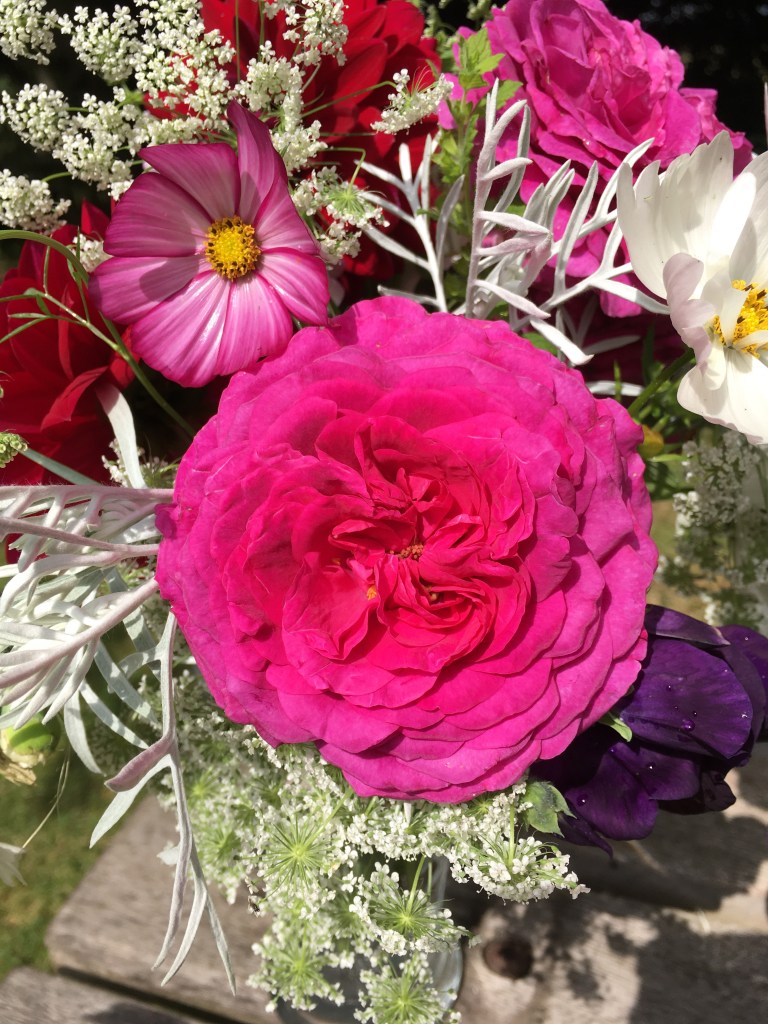
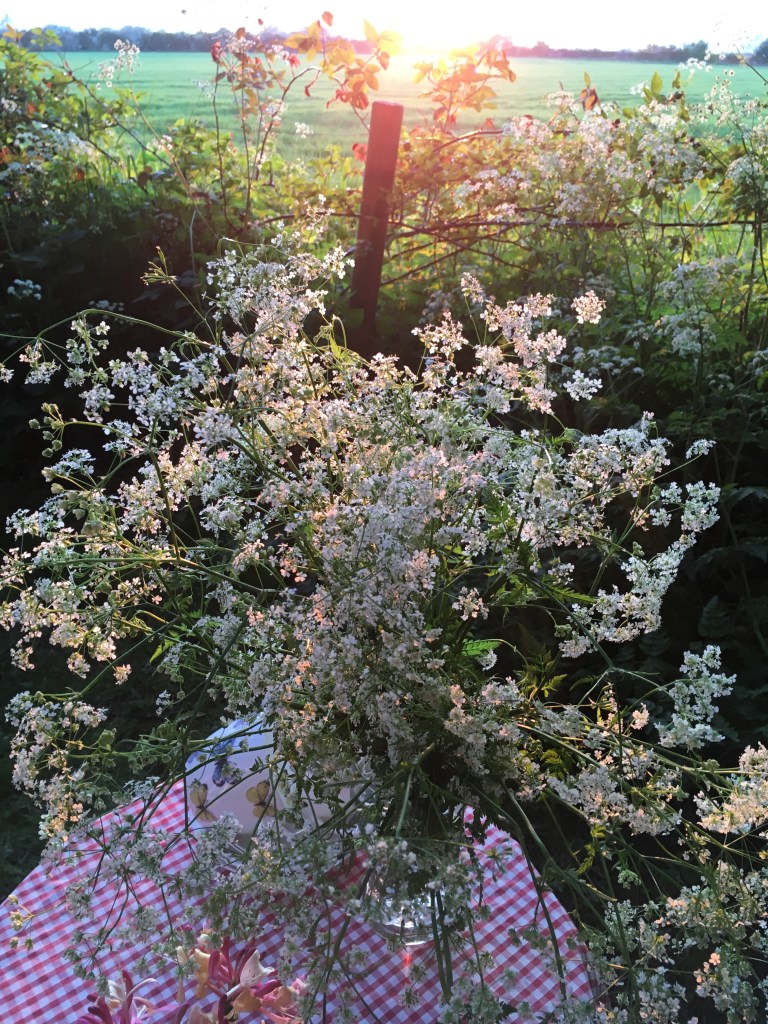
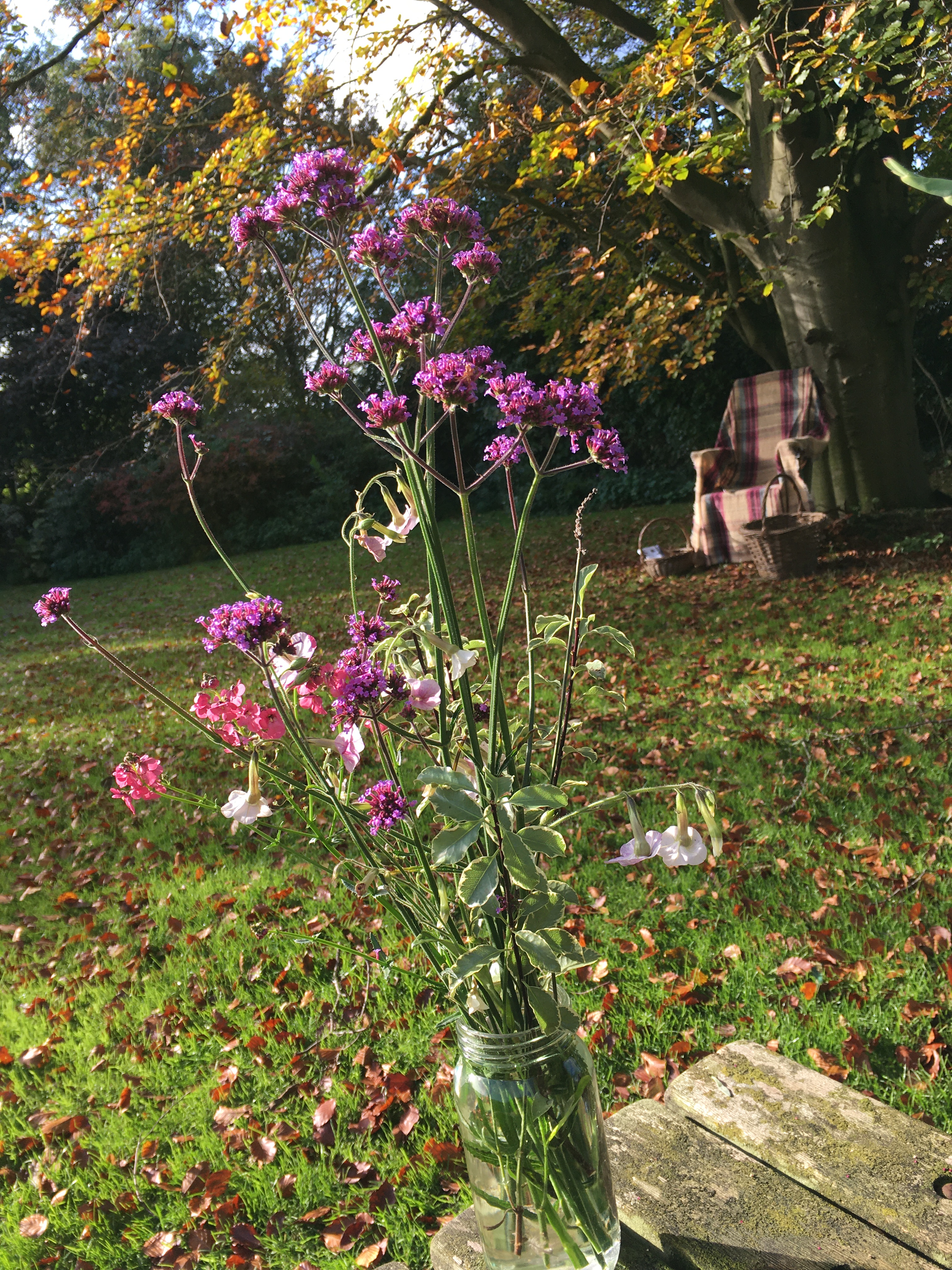
Don’t forget to just look around the garden and use what you have! I have cow parsley, poppies, alliums, Dutch iris, aquilegia and violas just now. Not many flowers are needed to make a jam jar posy. These were not planted specifically for cut flowers, but taking just a few won’t harm the spring display.
Answering questions from last night’s talk: How do you grow cow parsley?
Chose plug plants from. https://www.naturescape.co.uk/product/cow-parsley/
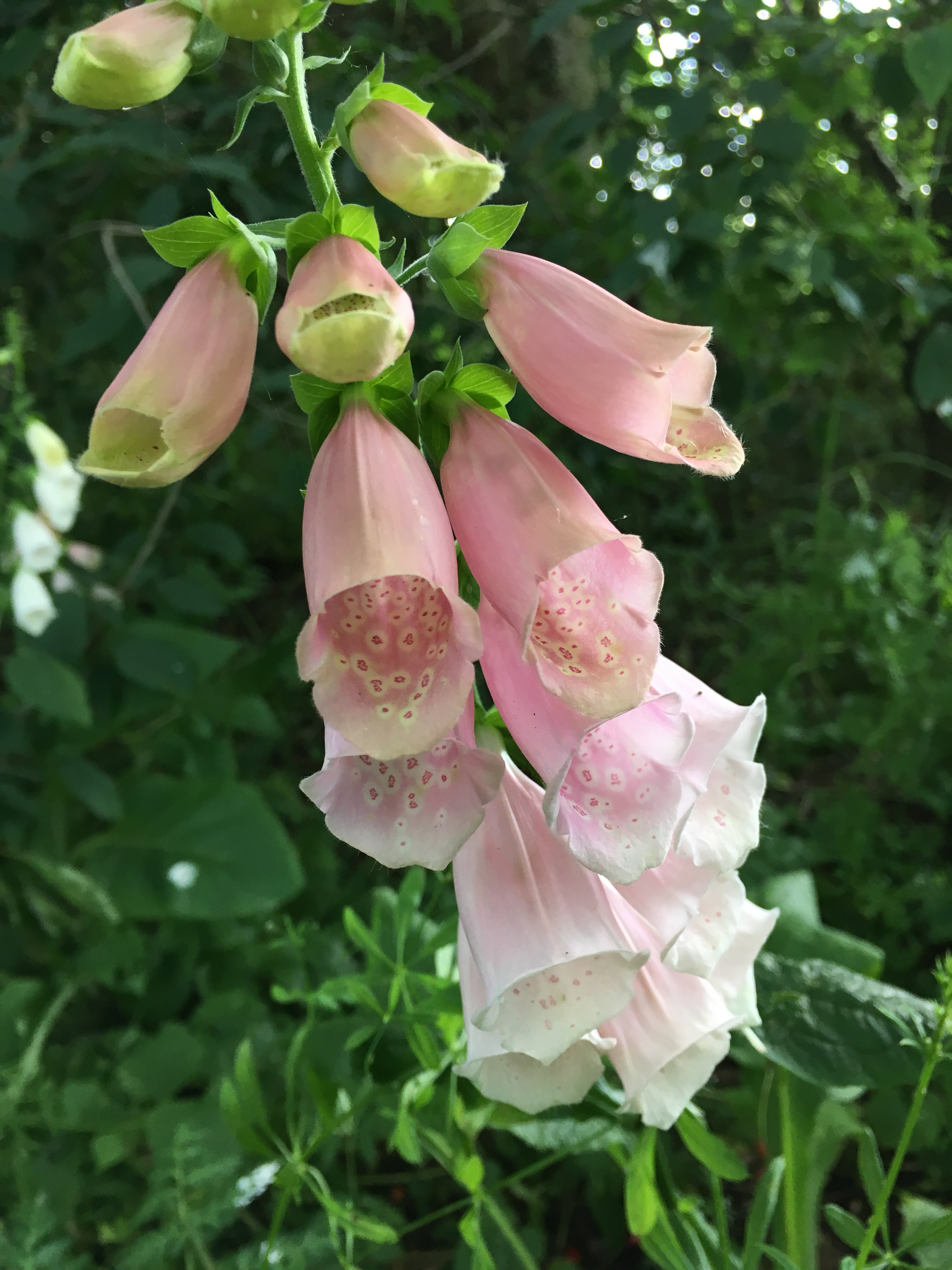
These won’t compete with lush grass, so use a spade to lift a patch of turf. Plant plug plants into the bare soil. Plant with cranesbill and foxgloves. Plants will die, but will set seeds for next year. Keep the patches free from vigorous grasses. You can plant delicate shaking grass though. If you have a large enough space, I would plant a swathe of them to get the best effect.

Question 2: What honeysuckle are you growing?

Common honeysuckle, Lonicera periclymenum caprifoliaceae. I recommend Jekka’s Herbs for plants. Wonderful scent and beautiful red berries. Plant with the roots in the shade and it will climb to reach the sun. If you plant the roots in the sun, the plant often succumbs to mildew and aphids. It is a woodland plant, essentially. Its habit is to climb and then flop down. In nature you often see plants dangling from high up in trees. So it is not ideal to try to control it and plant it over an arch or on a trellis. It will always want to go skywards. It wants to use other trees and shrubs as a climbing frame. Be careful when buying honeysuckle as some varieties do not have any scent, which is such a disappointment if you’ve waited several years for the plant to flower!
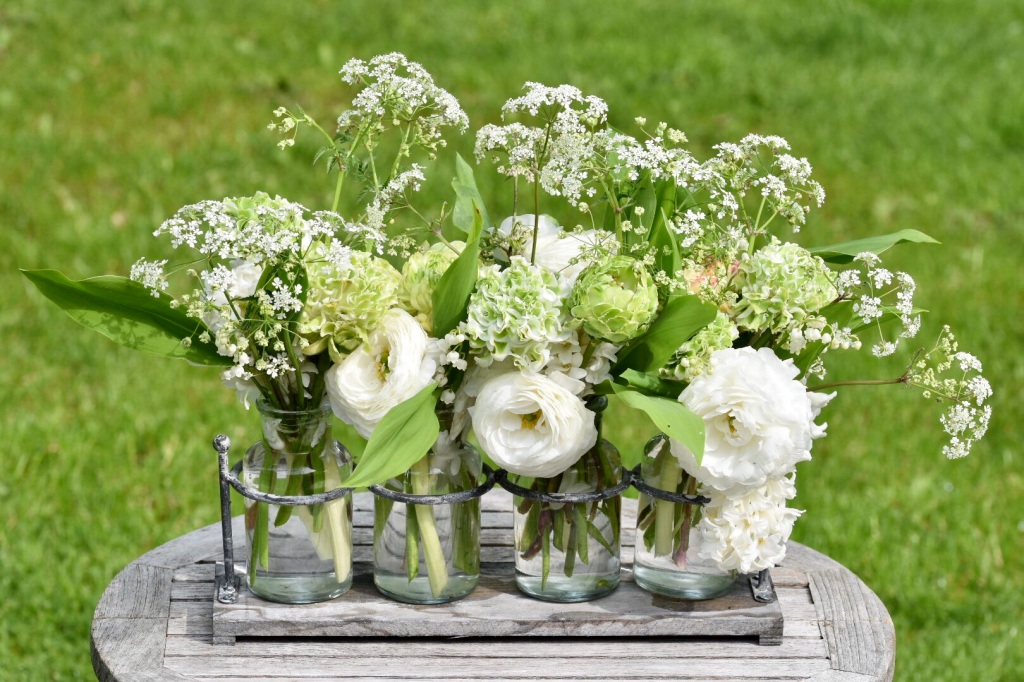
Question 3. Where can you buy the little wooden and metal stand containing four glass bottles for flower arranging?
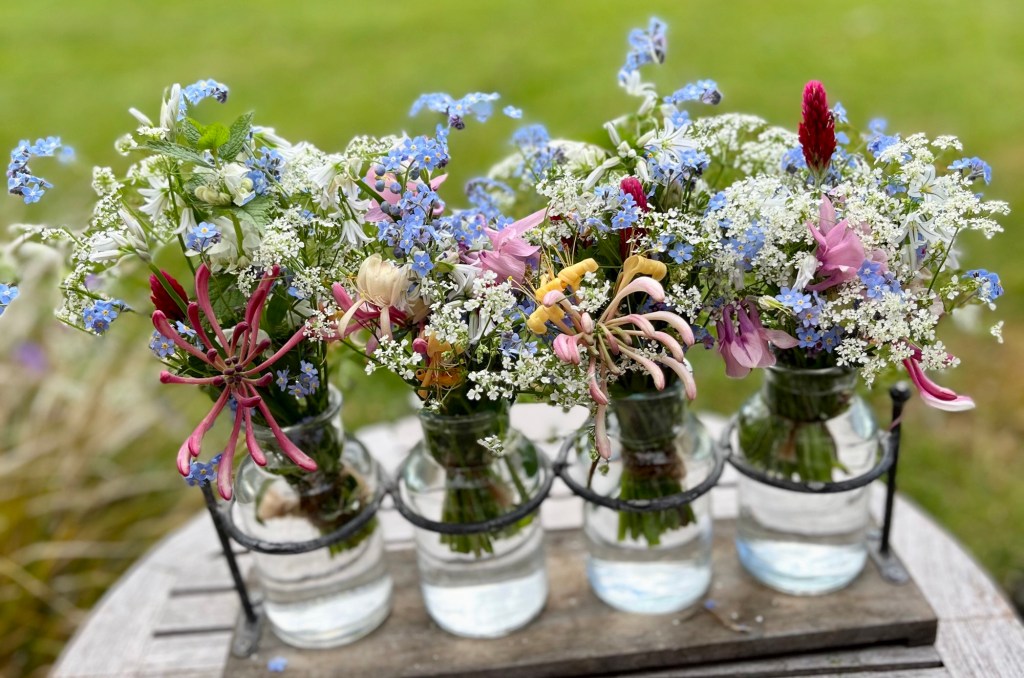
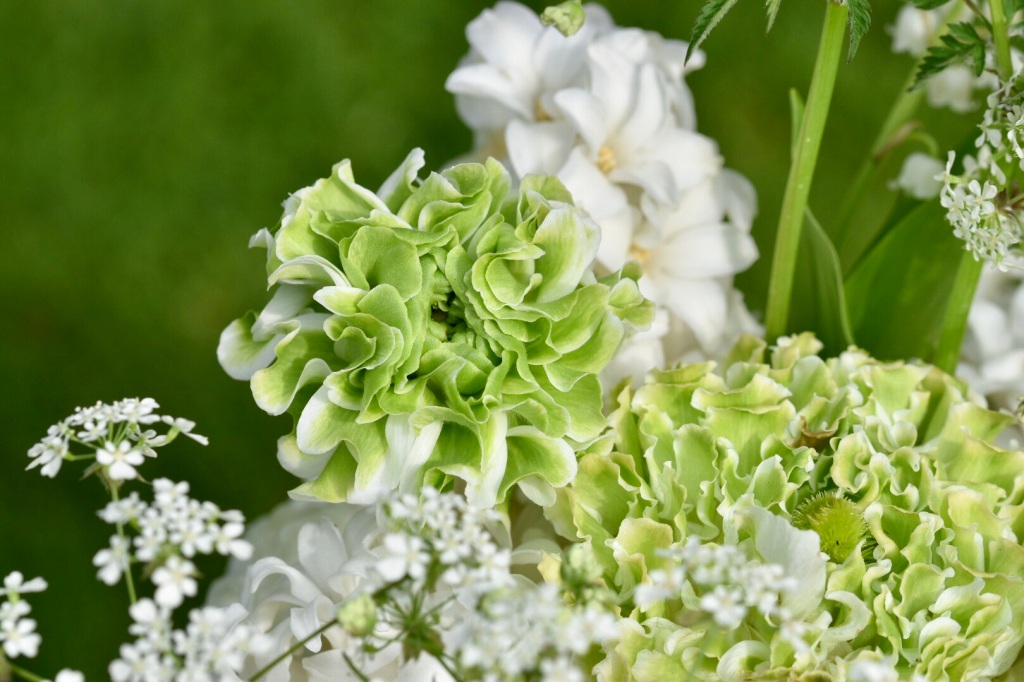
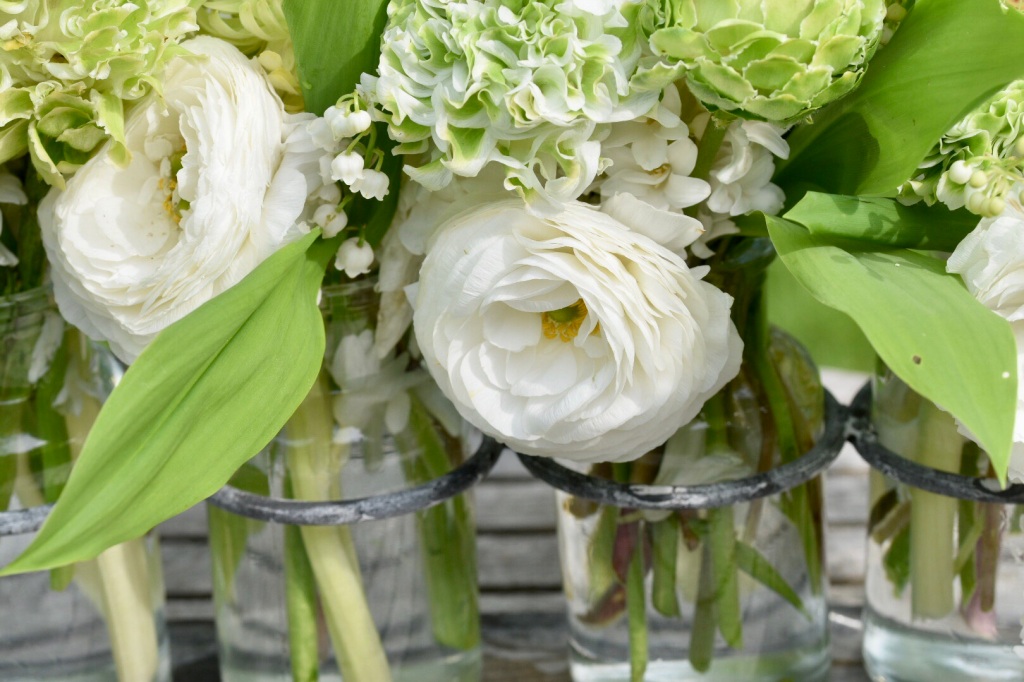
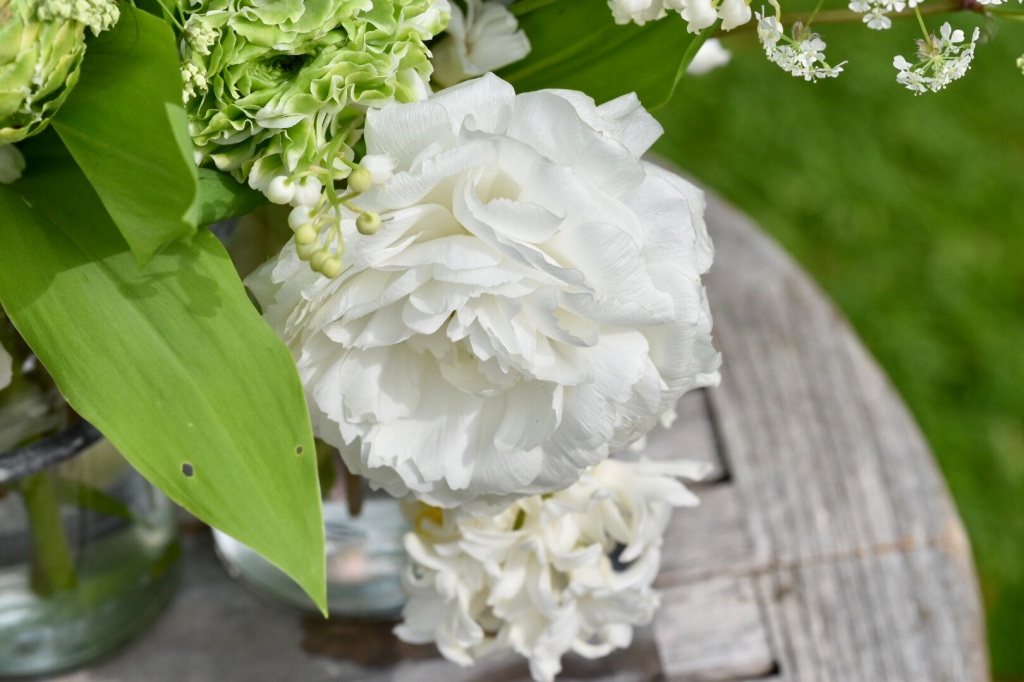
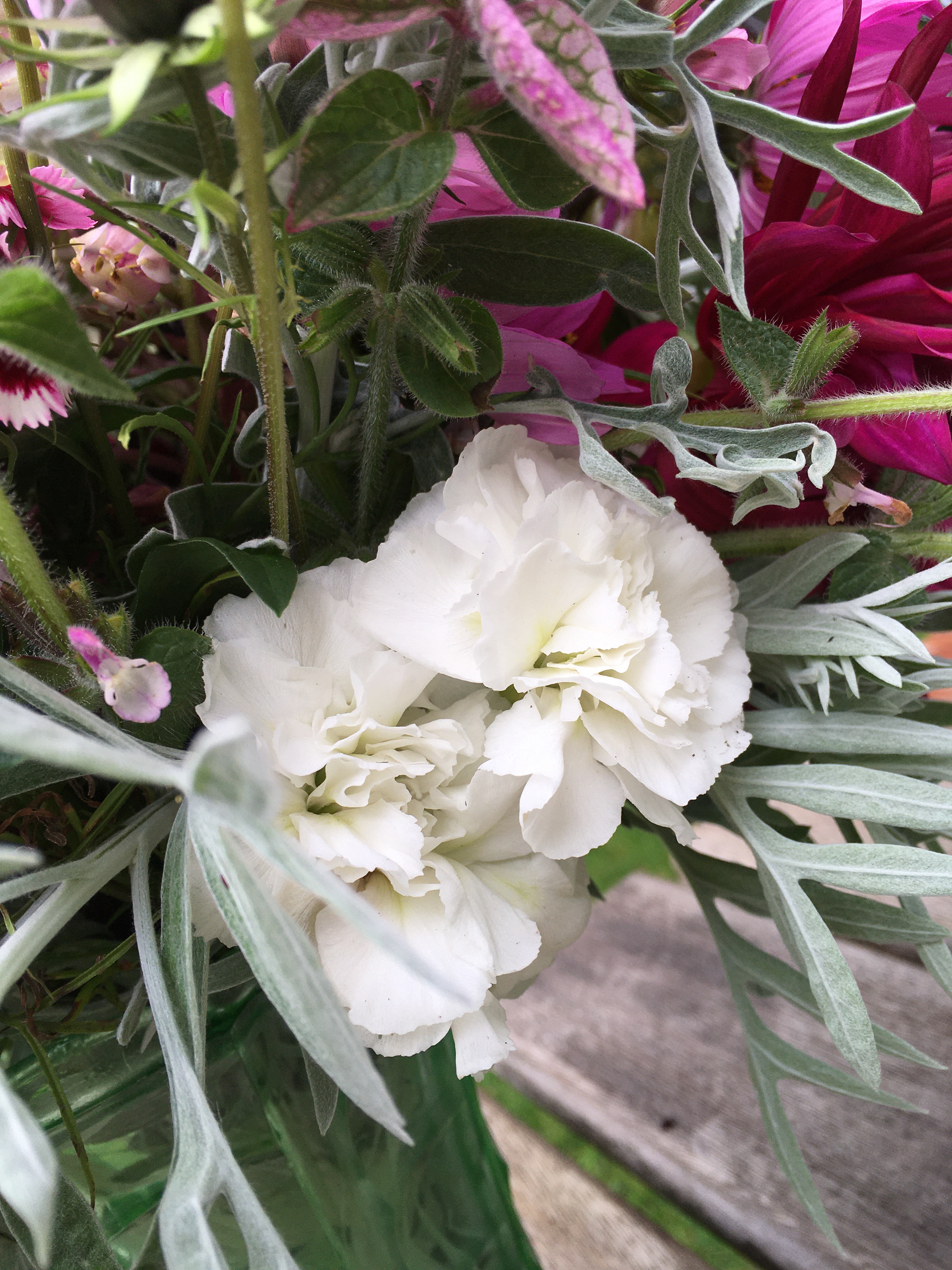
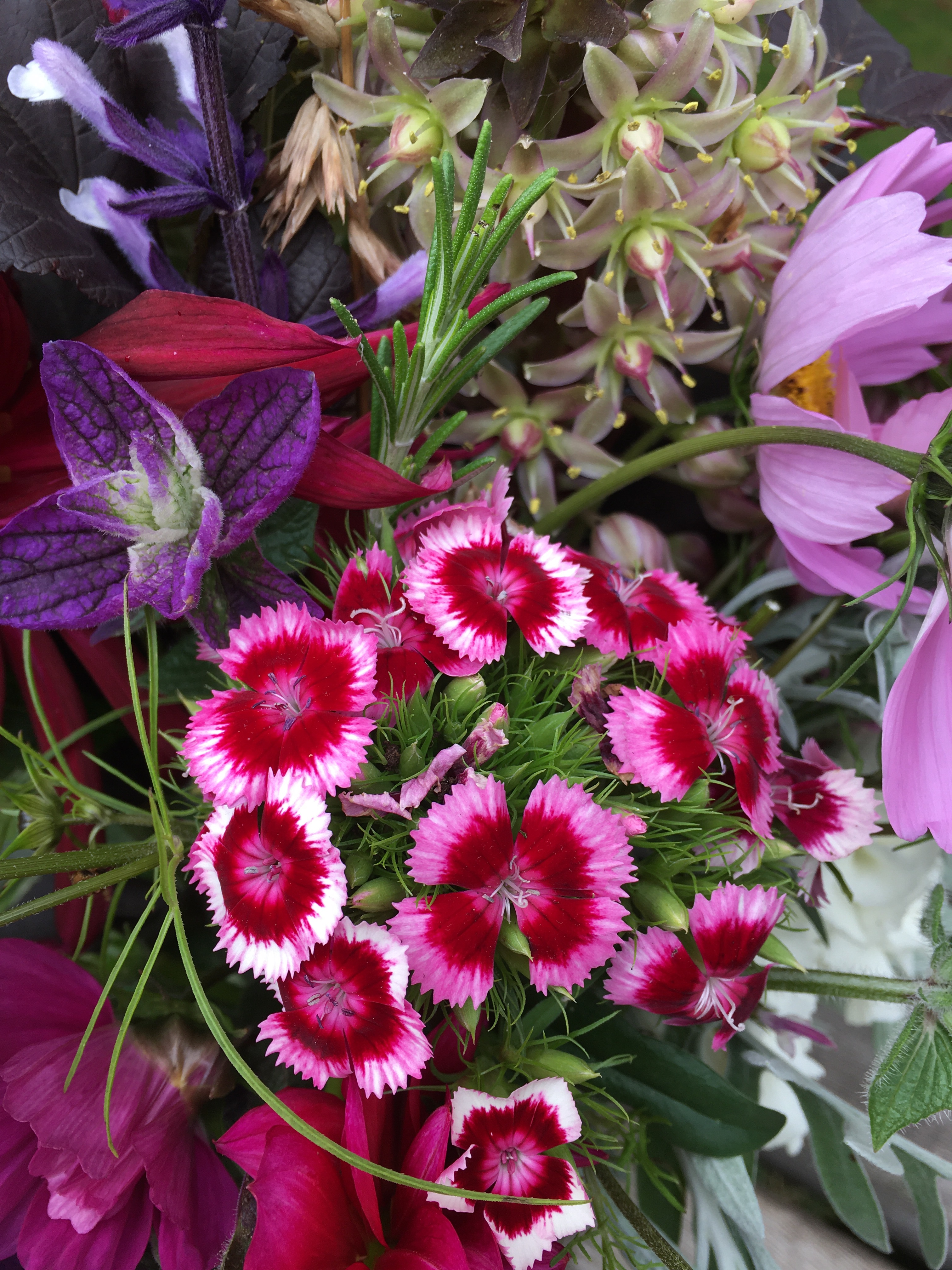
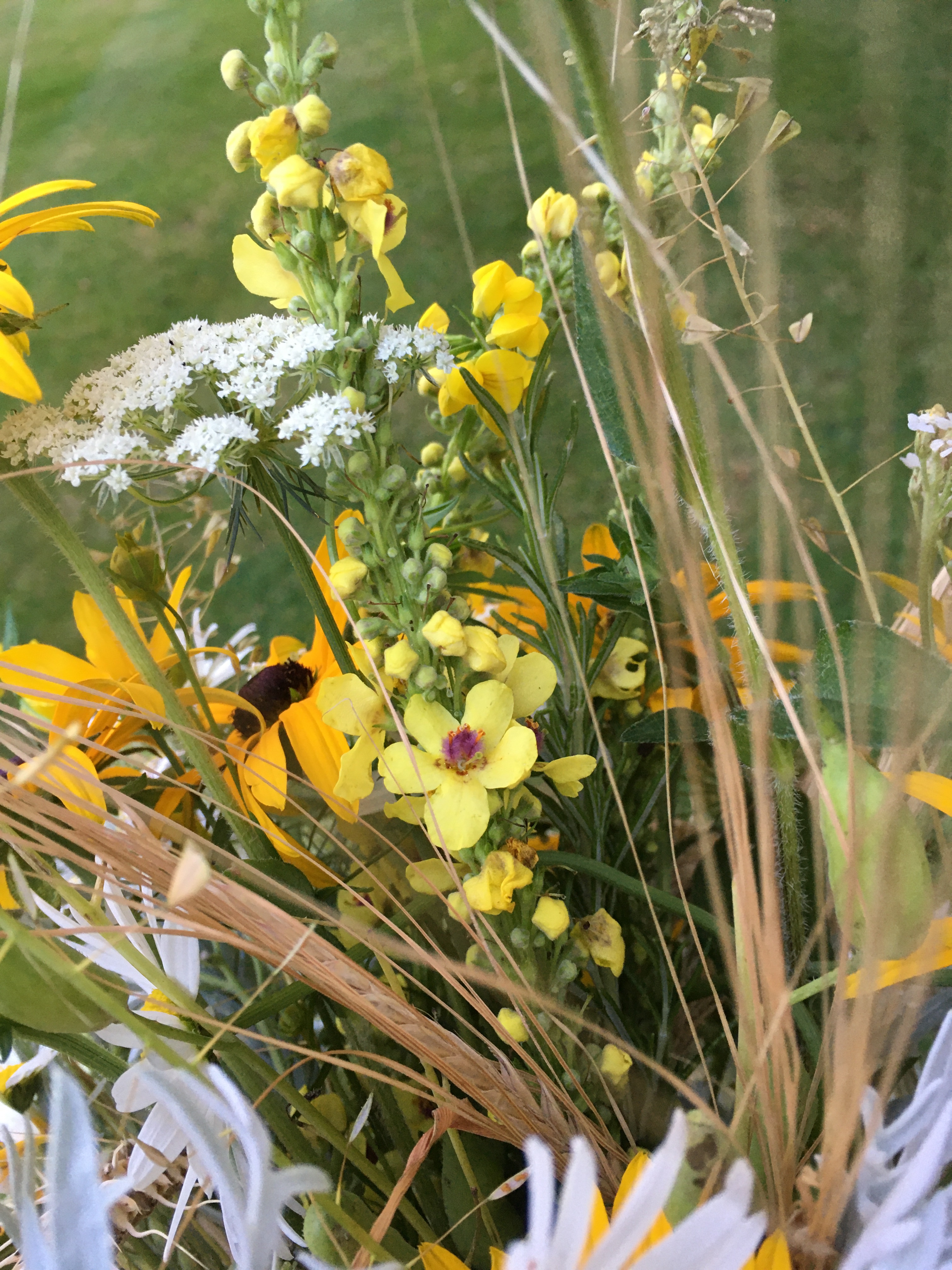
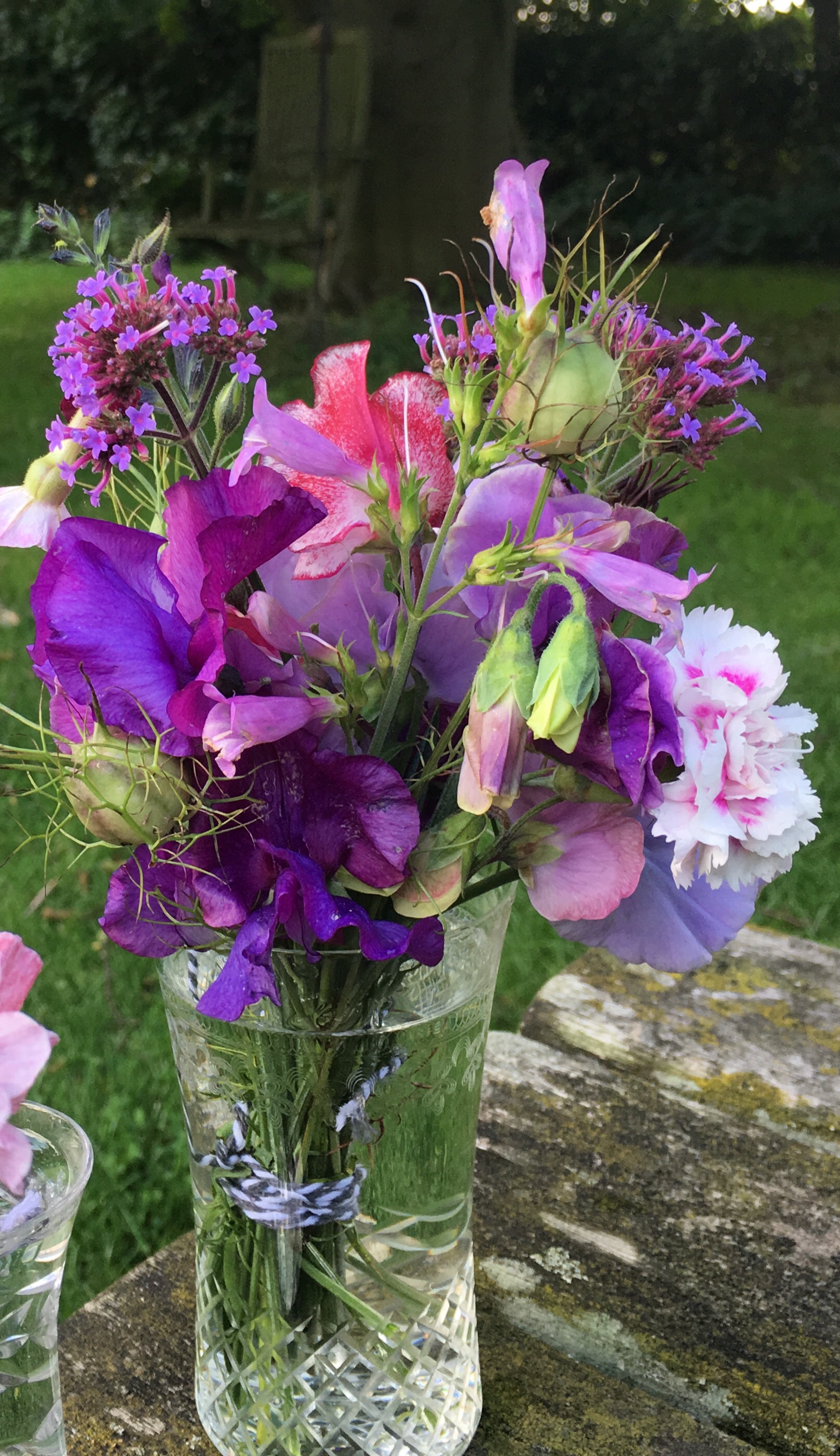
My stand came from Jonathan Moseley. He sells floristry materials, flower cutting snips and vases at various flower shows all over the country. He also has an online shop. I use this stand every day and place it down the centre of the kitchen table. Vases can also be arranged in a circle with a pillar candle in the centre. I have created mini posies for this photo, but equally you can just pick a few stems and place them directly in the jam jars and they look ‘arranged.’
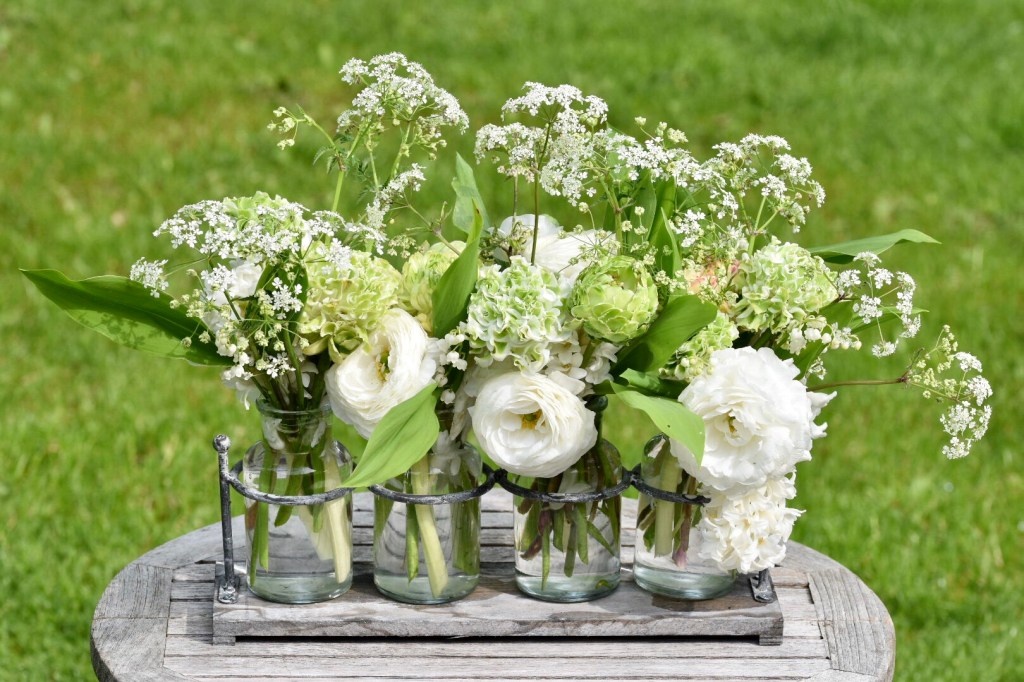
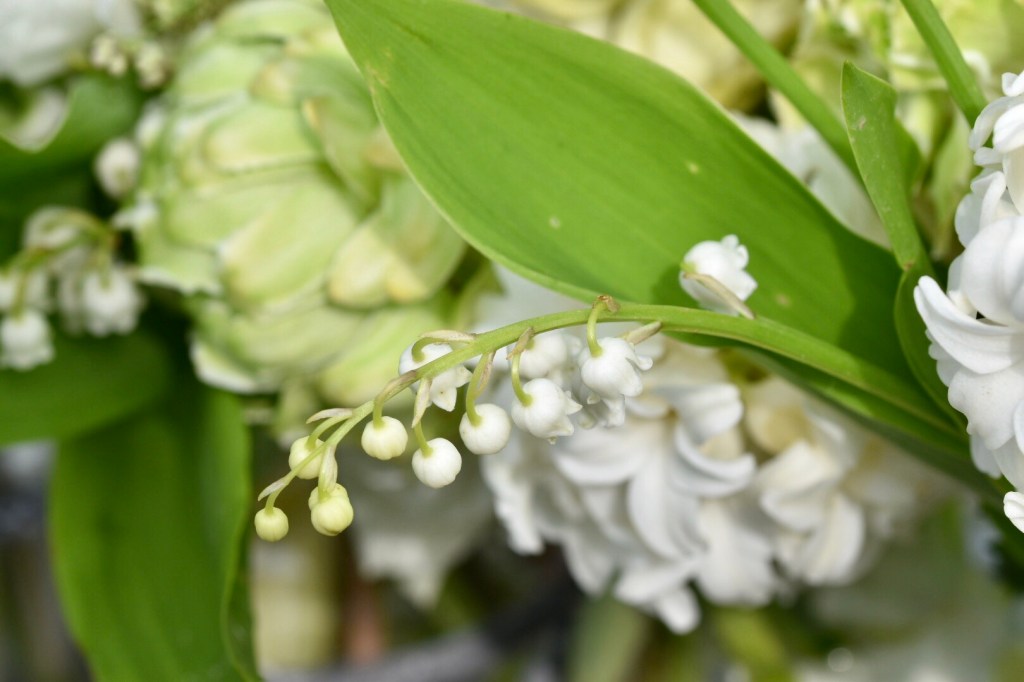
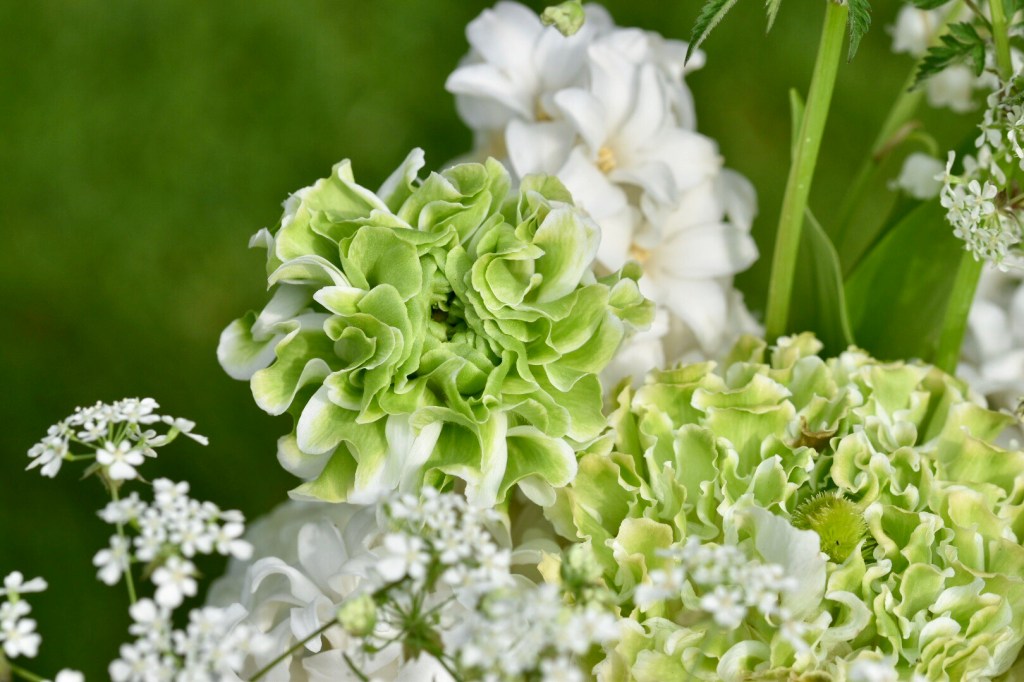
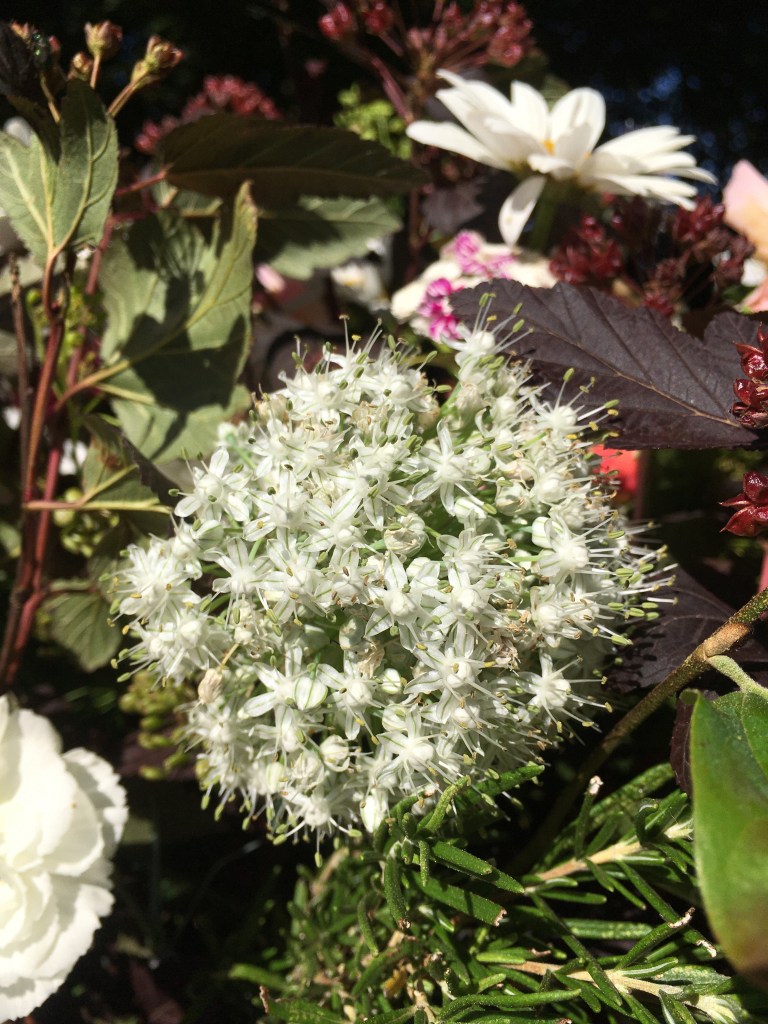
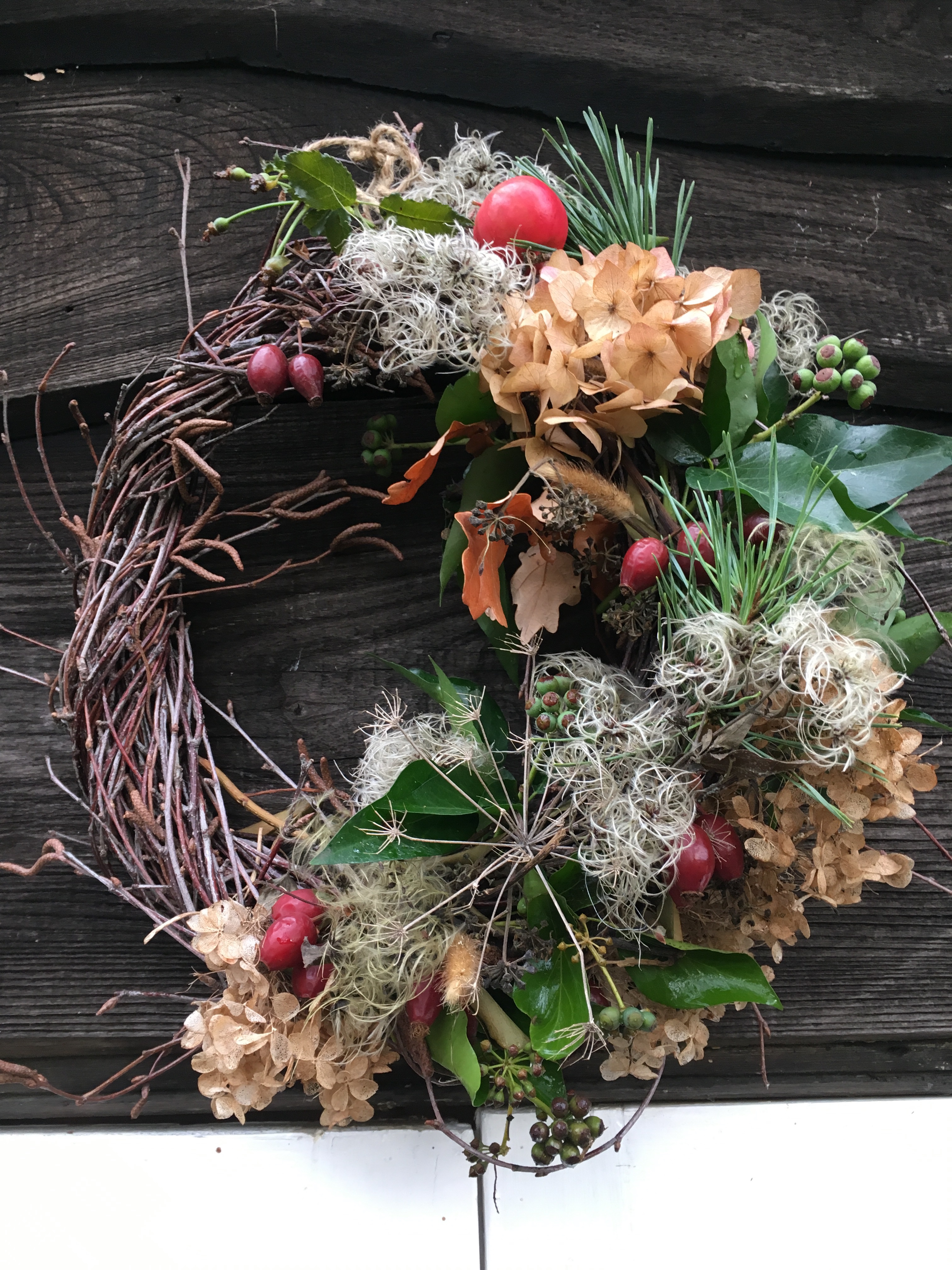
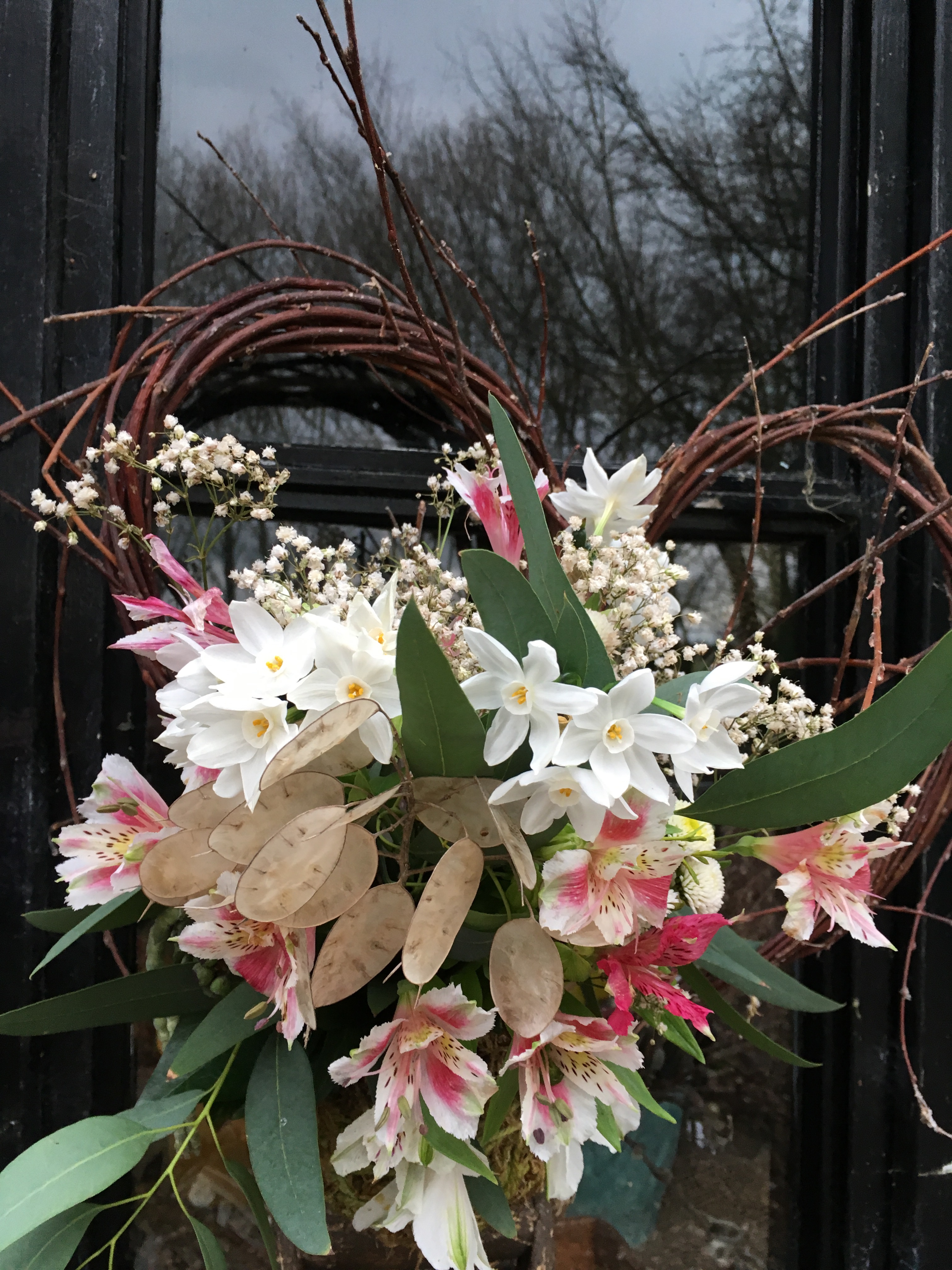
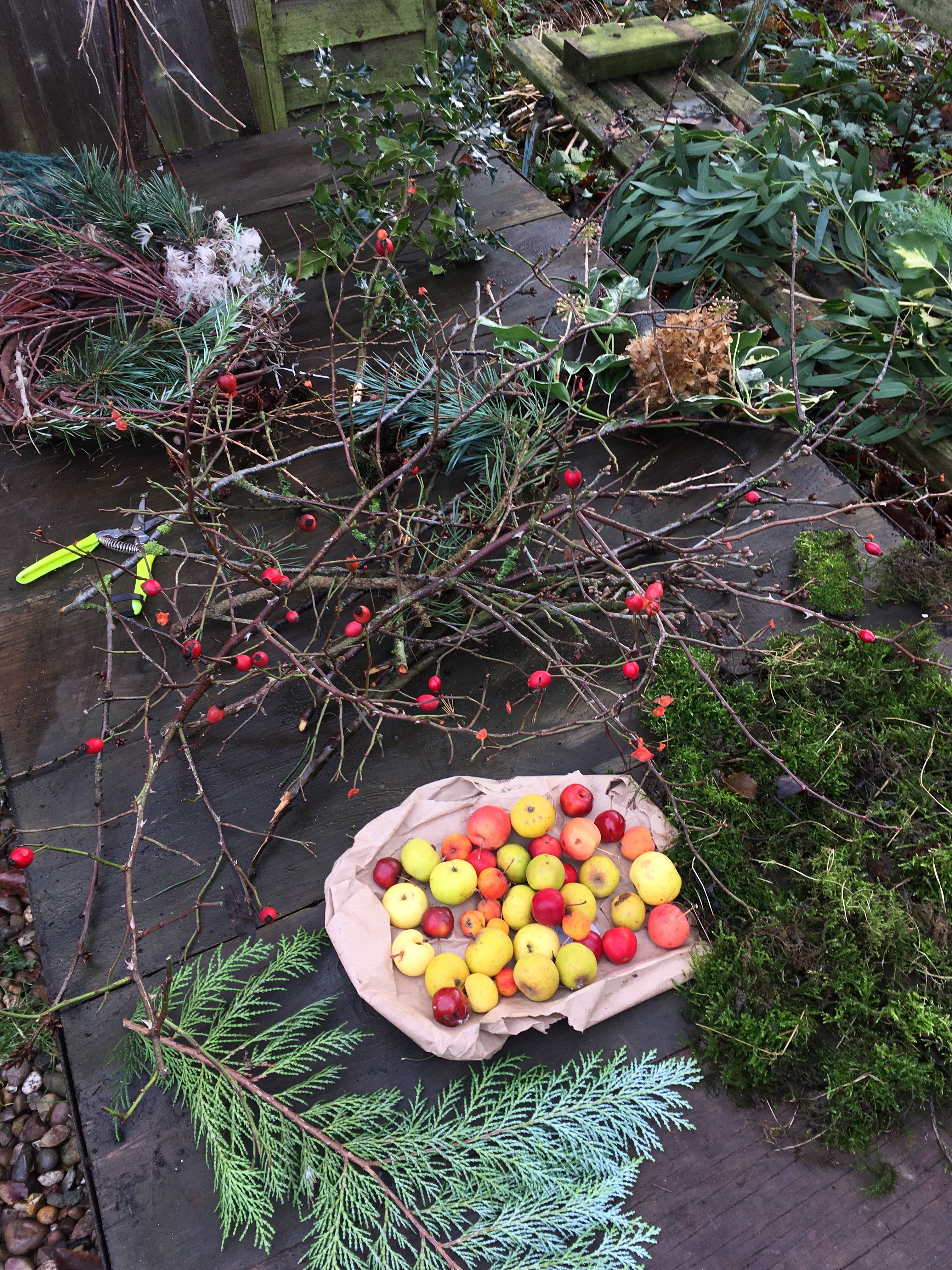
Don’t forget that cow parsley can be used even when the flowers are going over. The little lime green seed heads are still attractive. I also use seed heads of parsnip, onion, carrot, chives, mustard and leeks. I found out by accident by leaving some vegetables to go to seed. I now leave them on purpose to supply free seed heads for floristry. Fluffy clematis seeds are also saved for winter decorations.
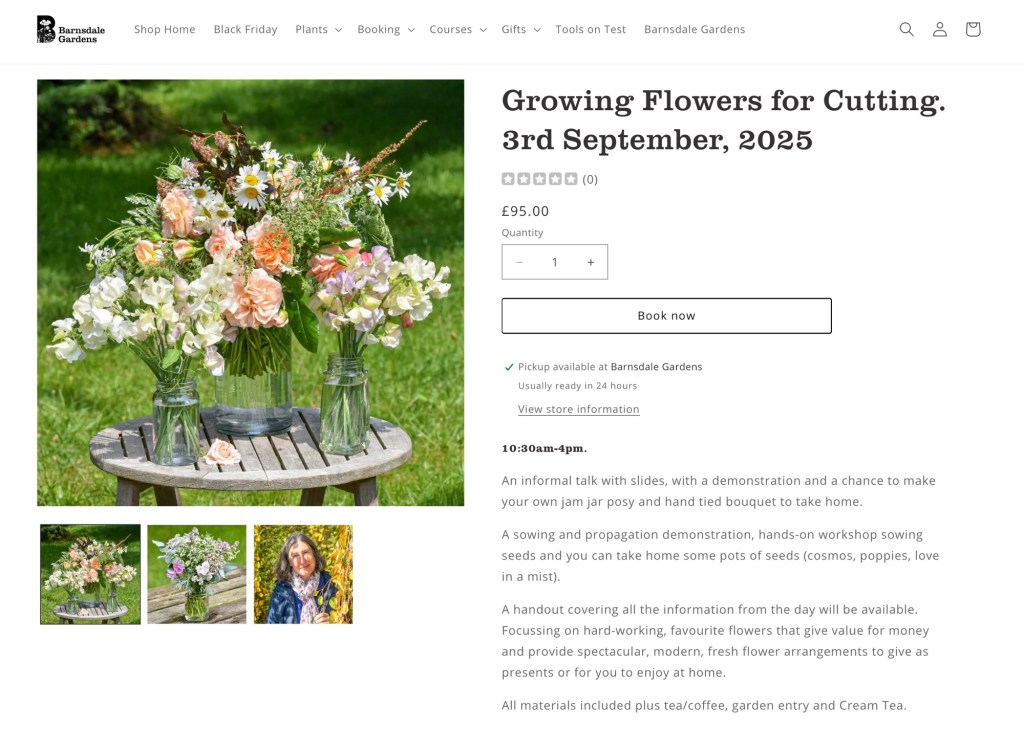
If this has inspired you to grow something for your own cut flowers, then I’m very happy. I’m hosting a cut flower course at Barnsdale in September. It’s a lovely garden and the owners are kind and generous people. There’s a lot included in the price. I can highly recommend the cream tea!
Link : https://shop.barnsdalegardens.co.uk/products/growing-flowers-for-cutting
Thanks for reading my blog. Please leave a comment below if you have any questions and I’ll do my best to answer them. Or e mail at k.gimson @btinternet.com.
Also visit Cathy’s blog for more inspiration:
https://ramblinginthegarden.wordpress.com/2025/05/12/in-a-vase-on-monday-sundae-on-monday/















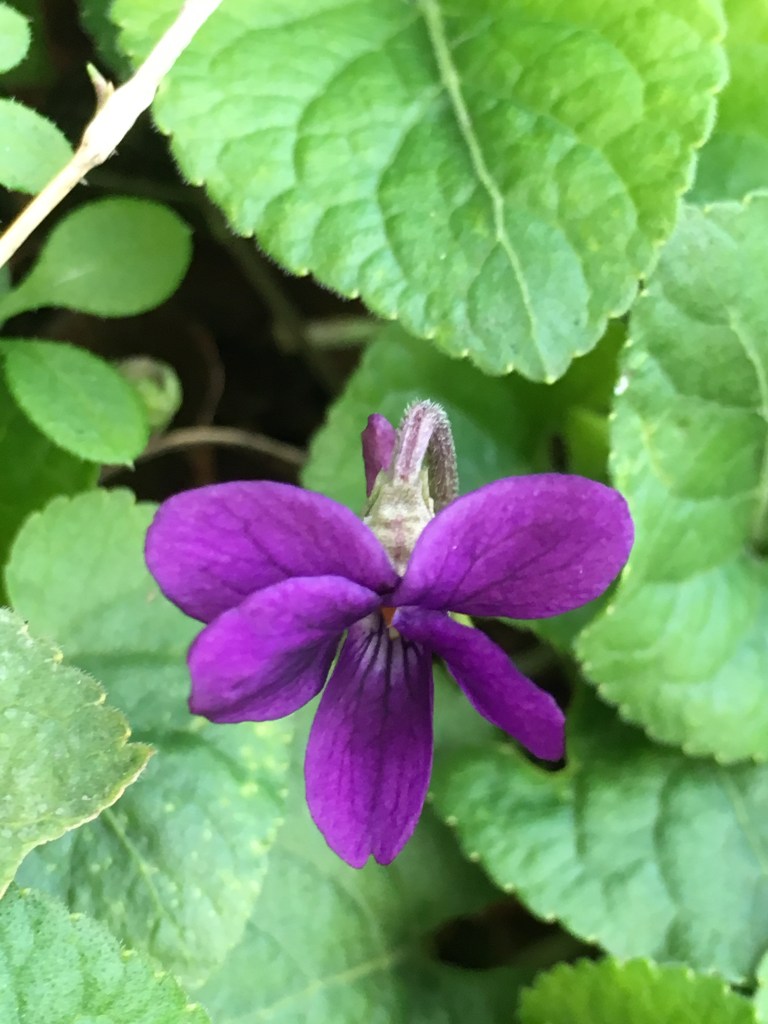







































































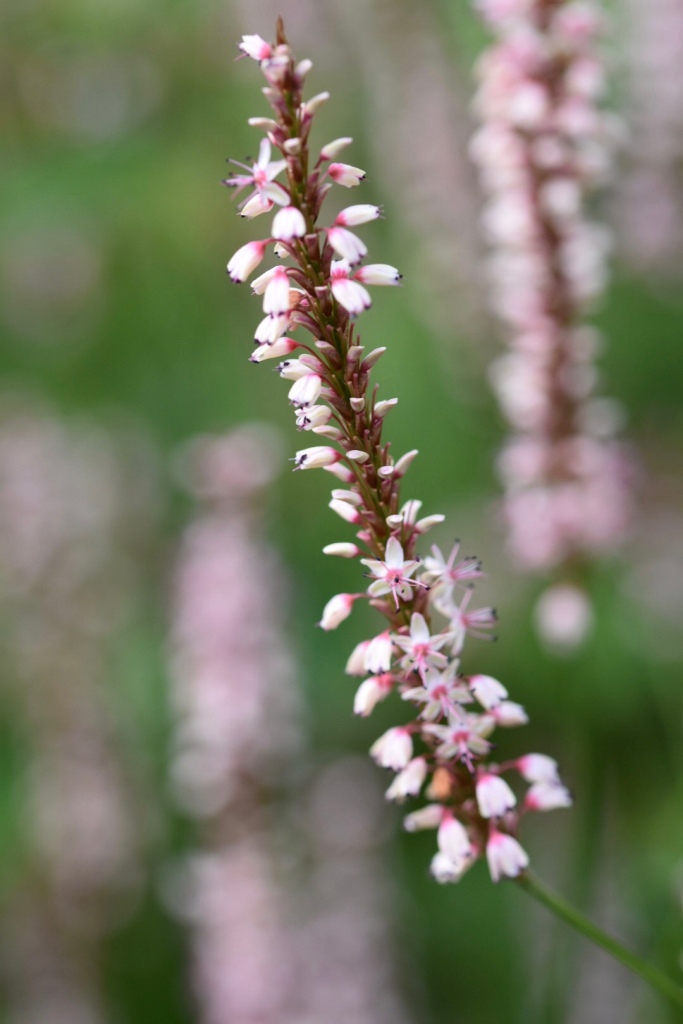


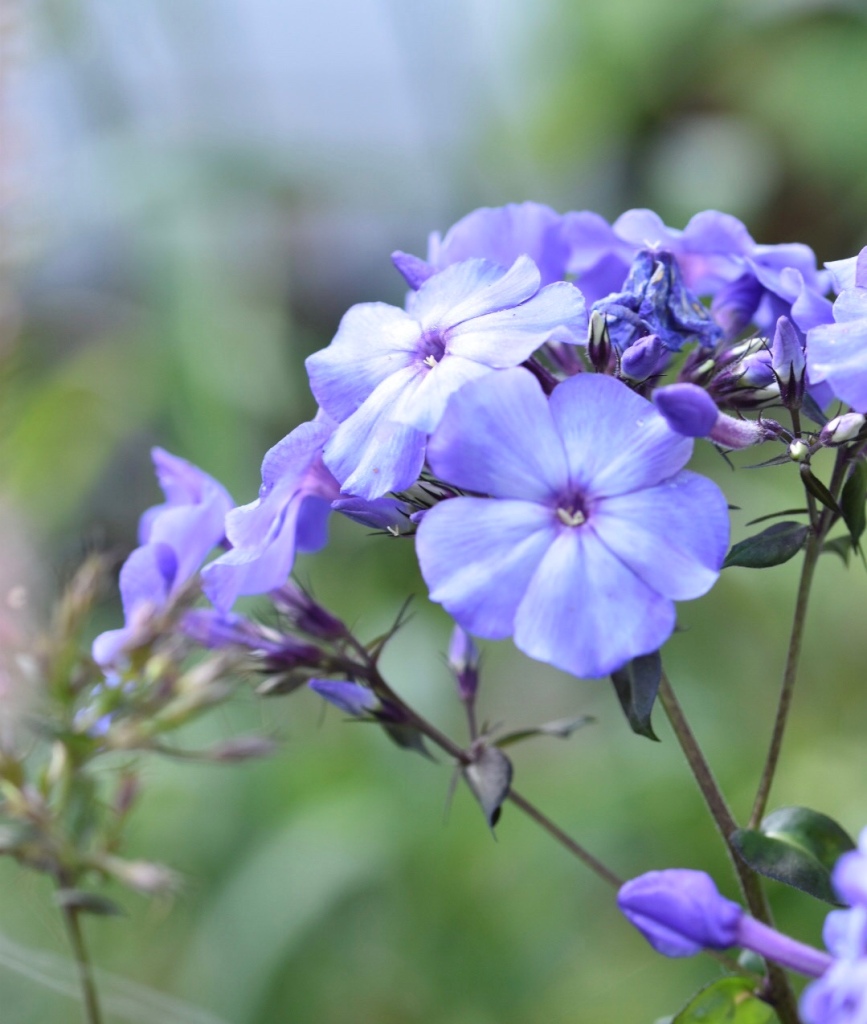


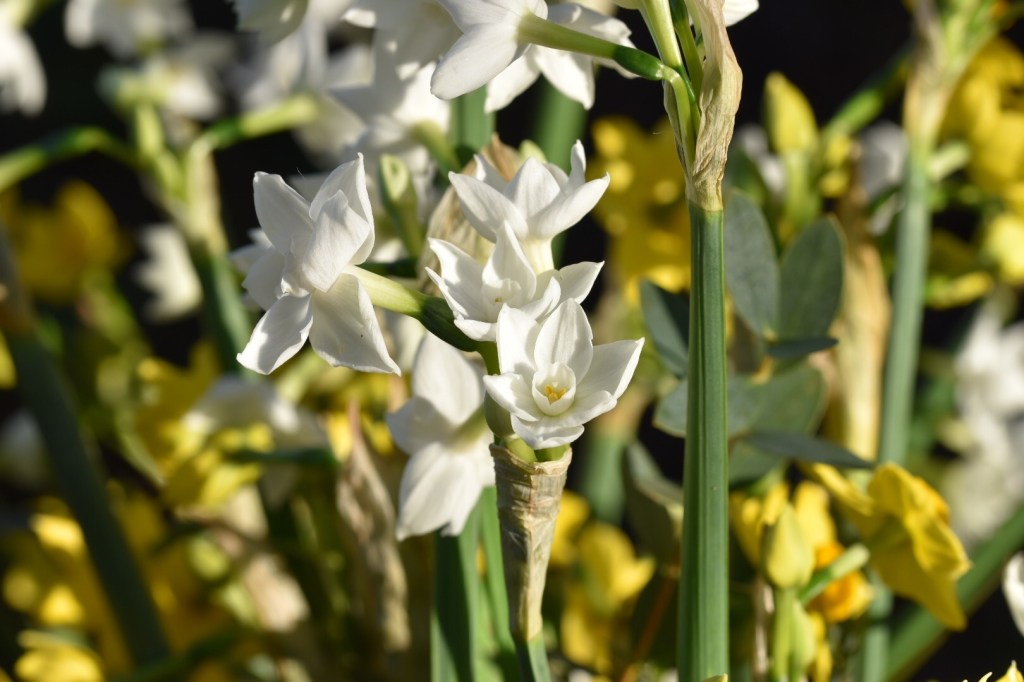














































































































































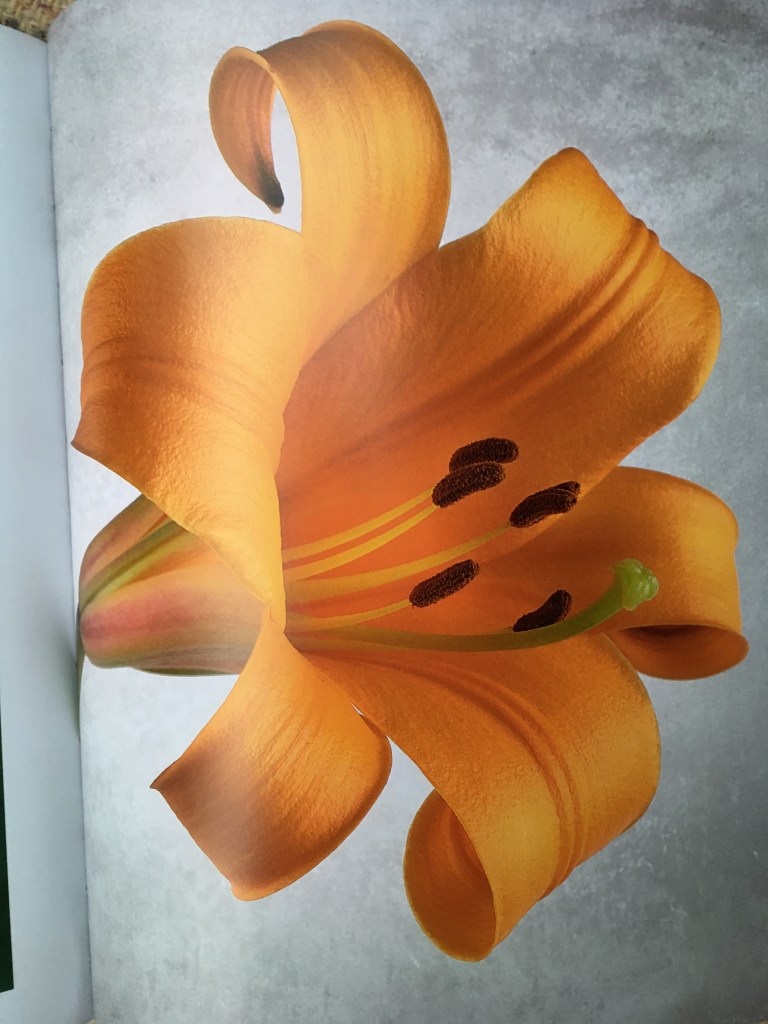
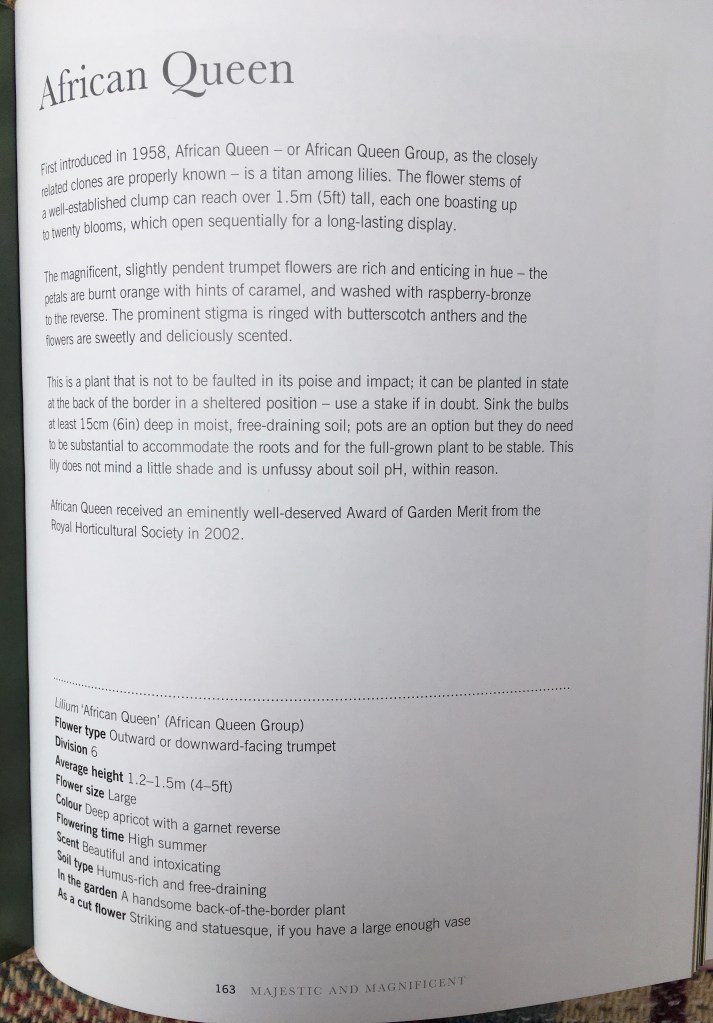











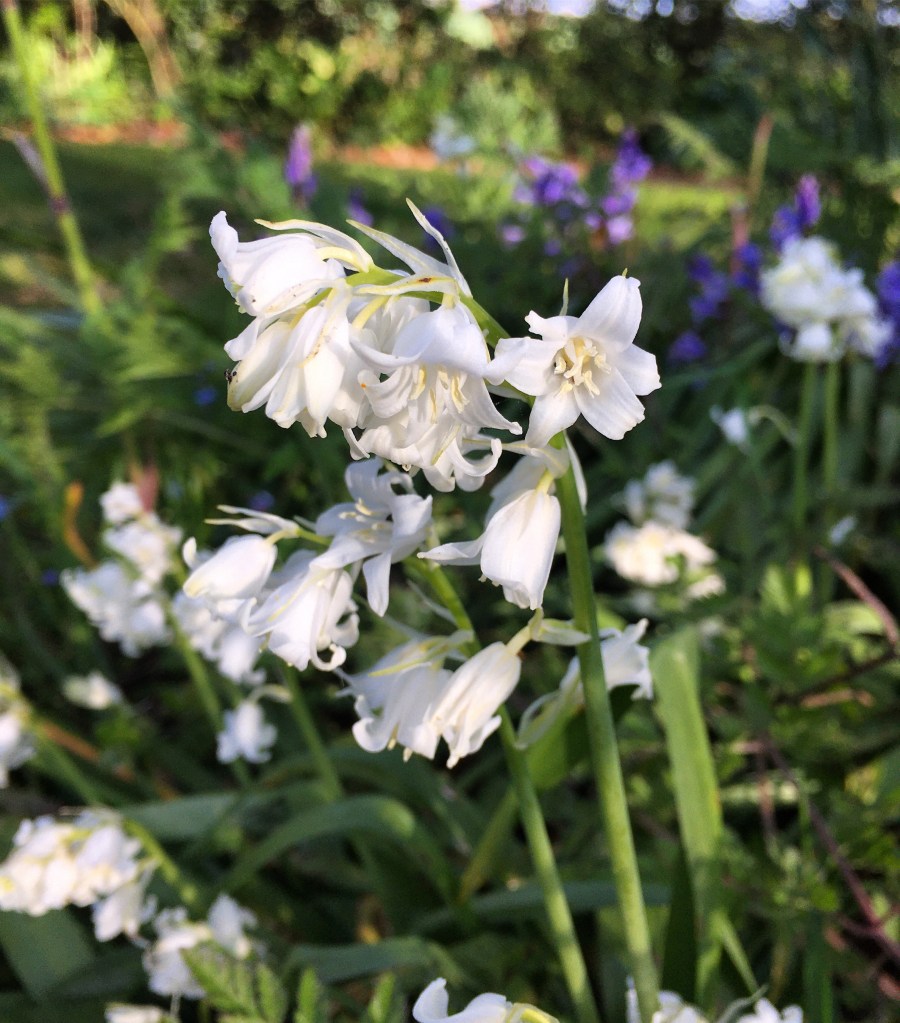
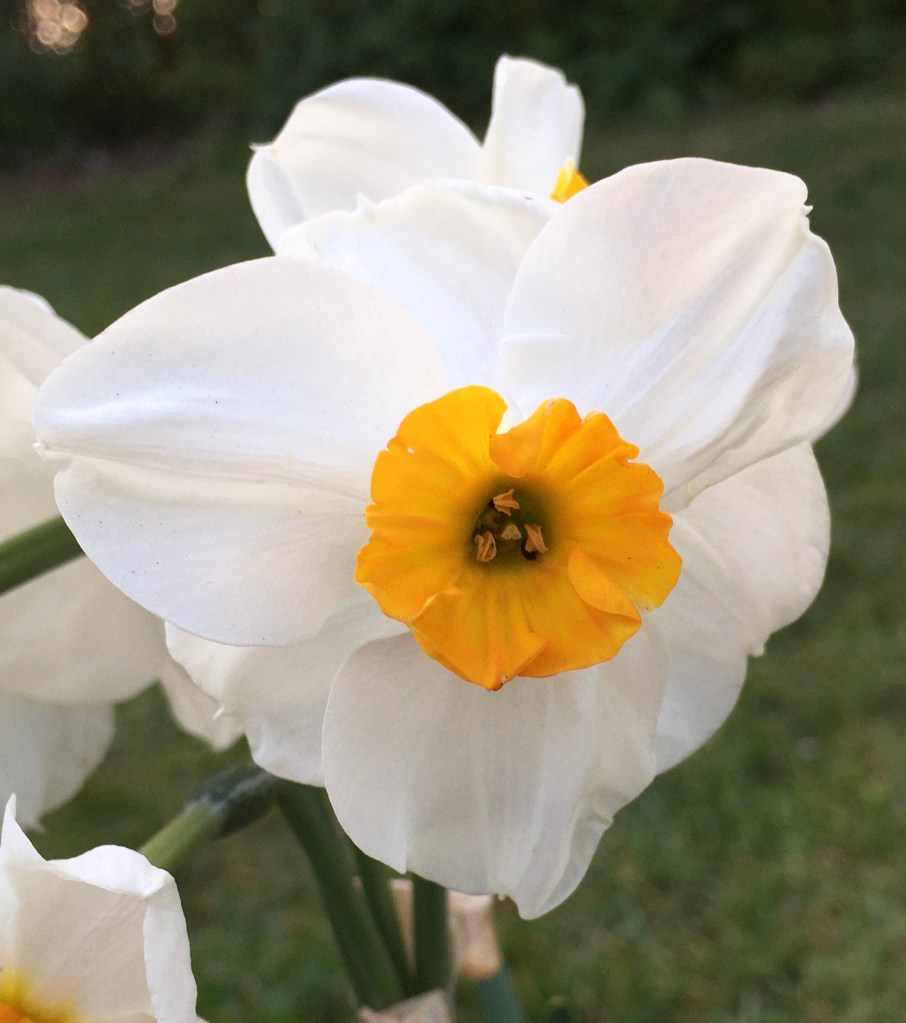
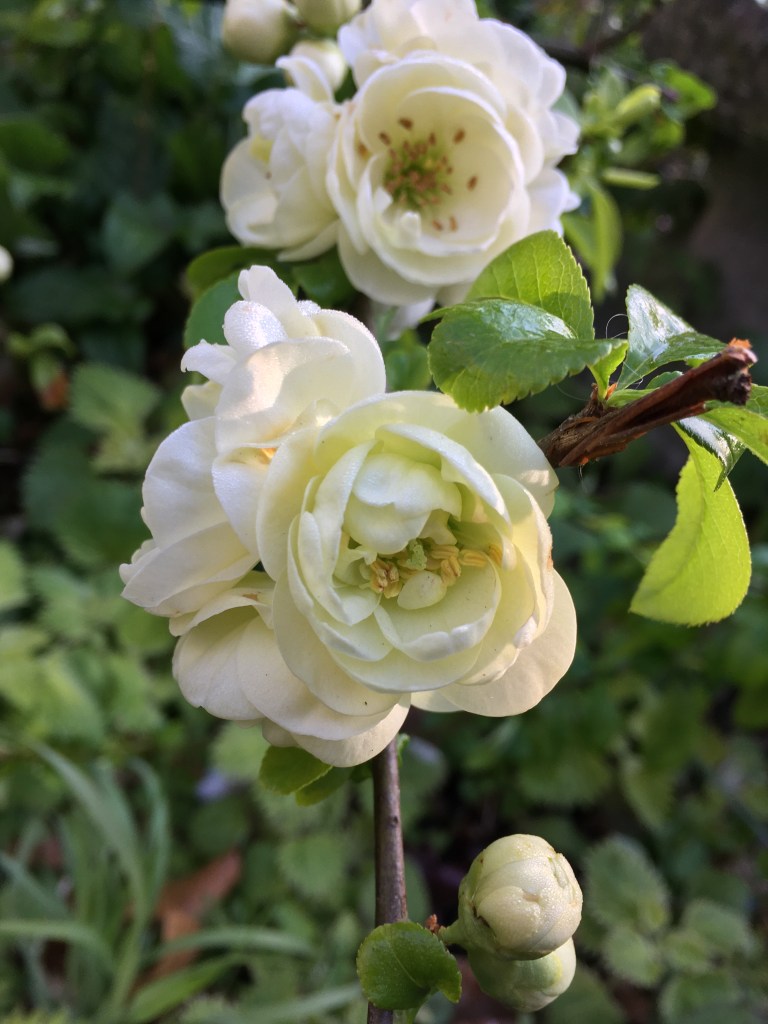


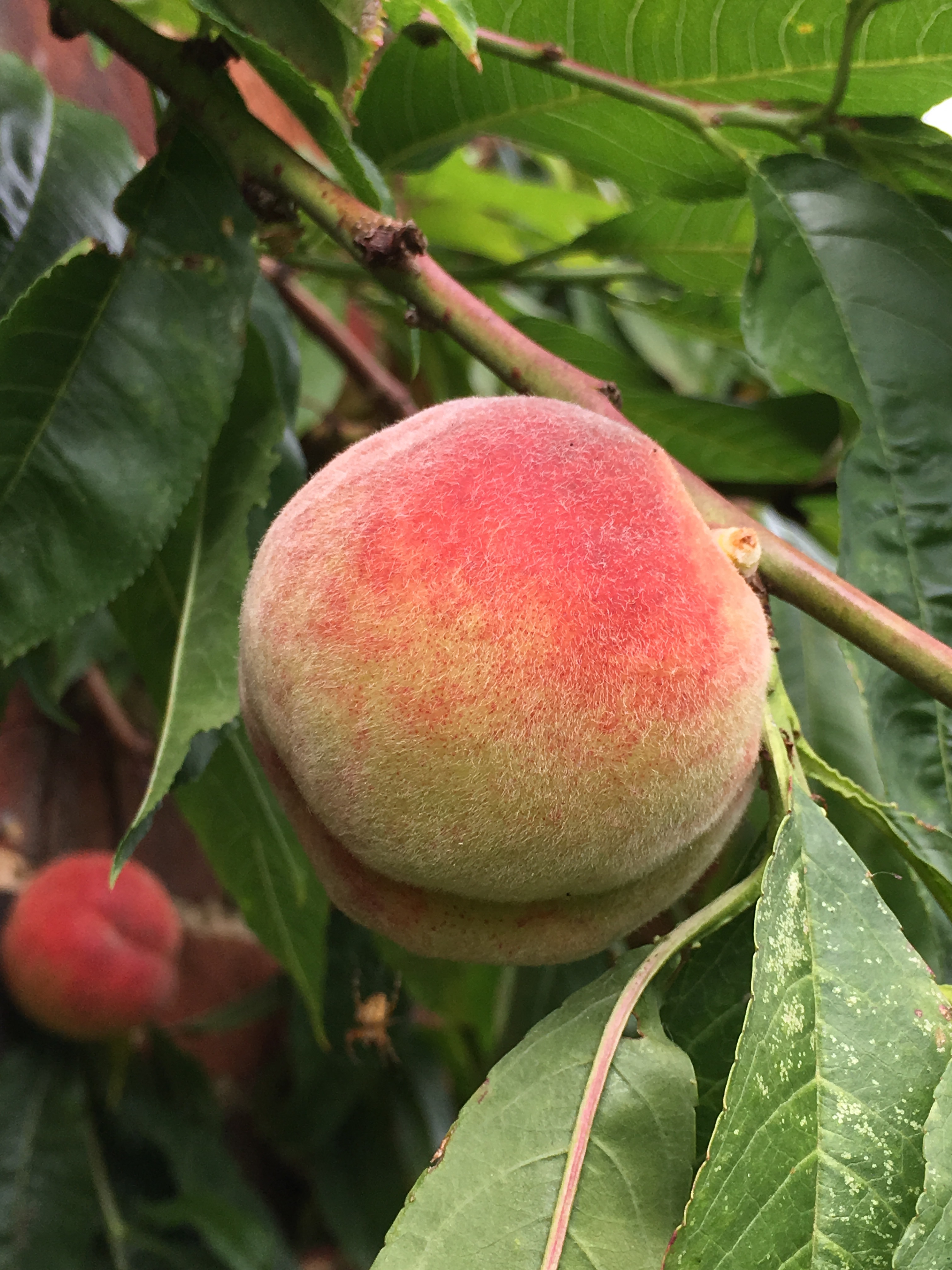








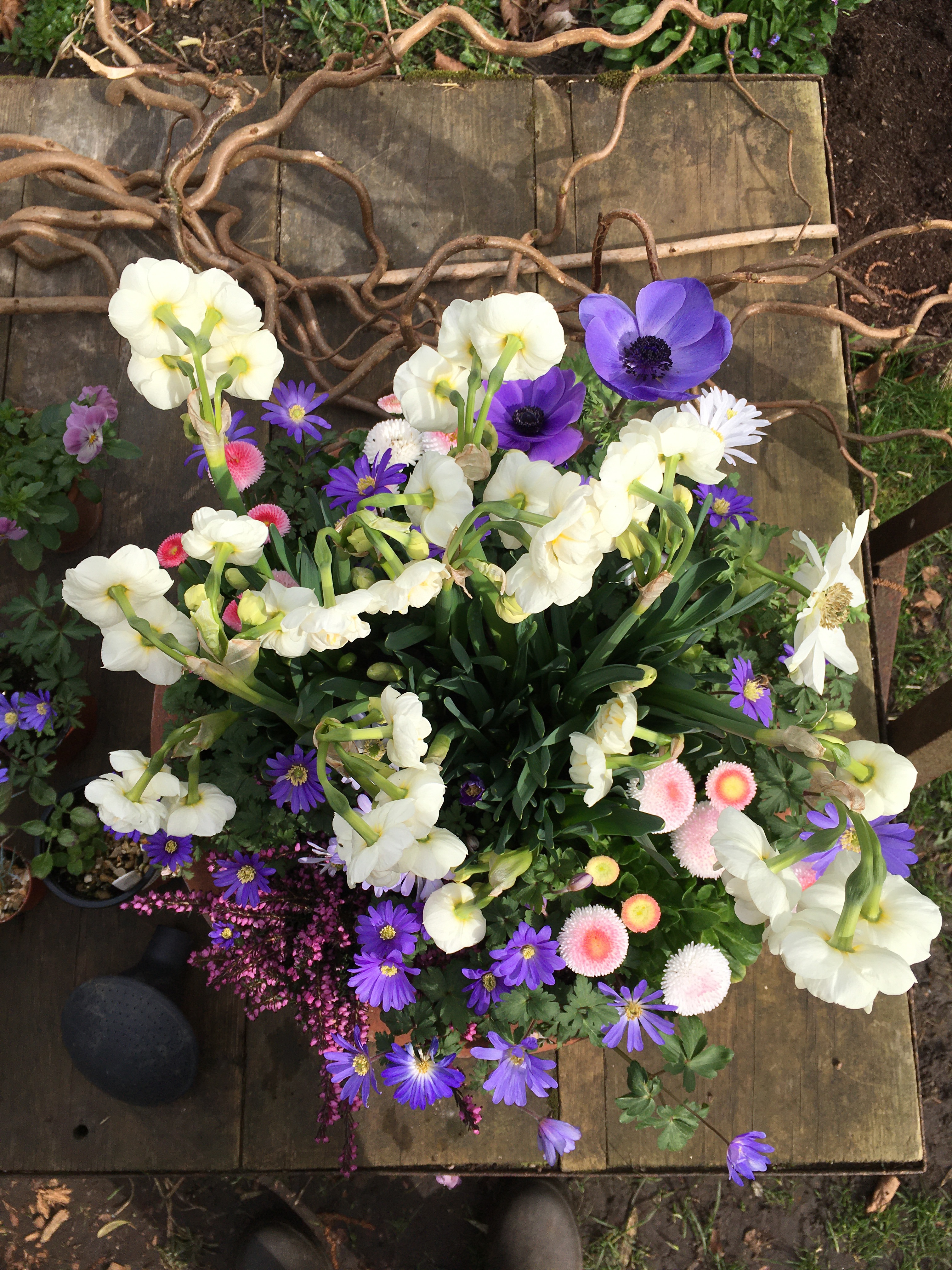
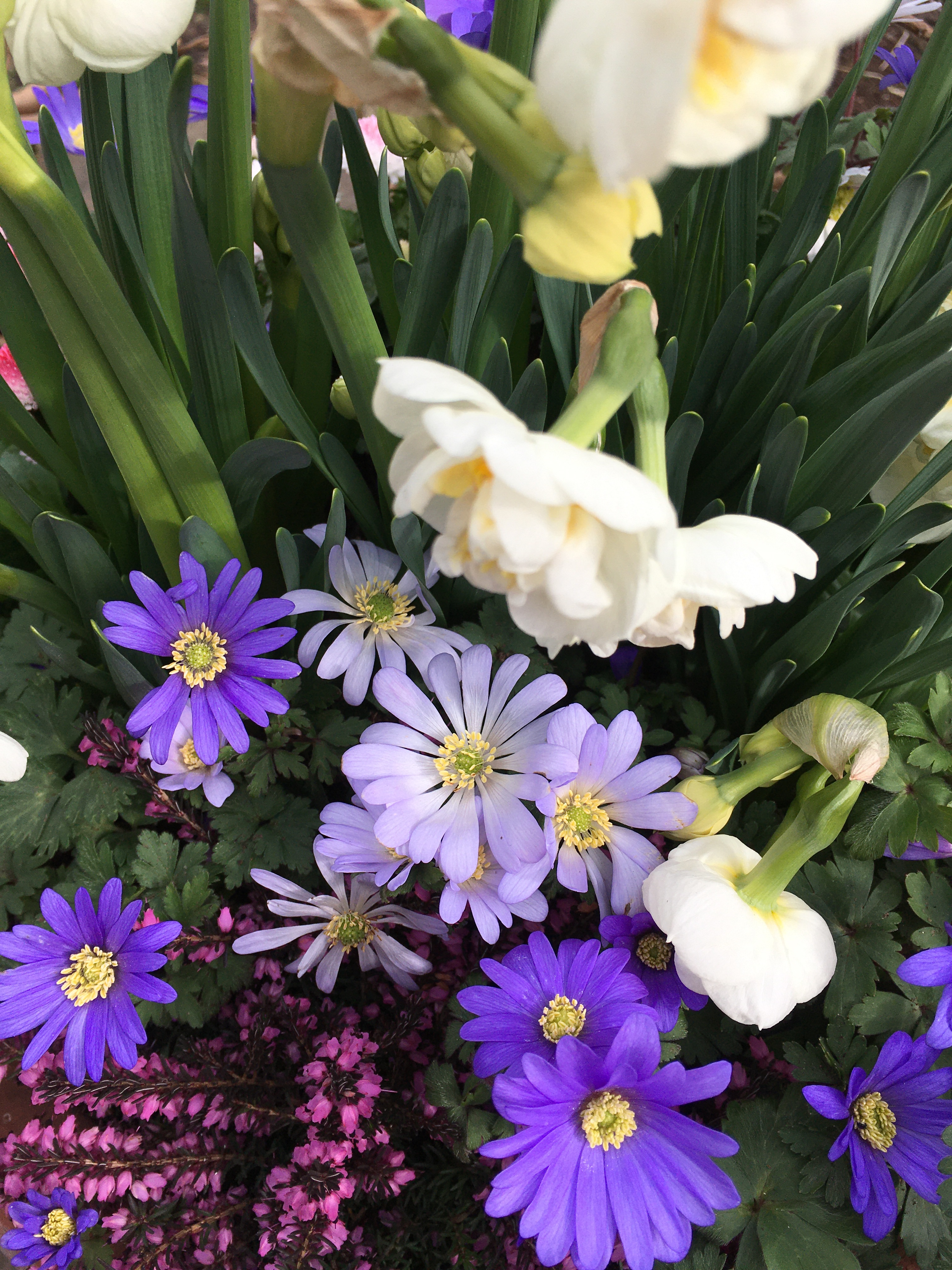

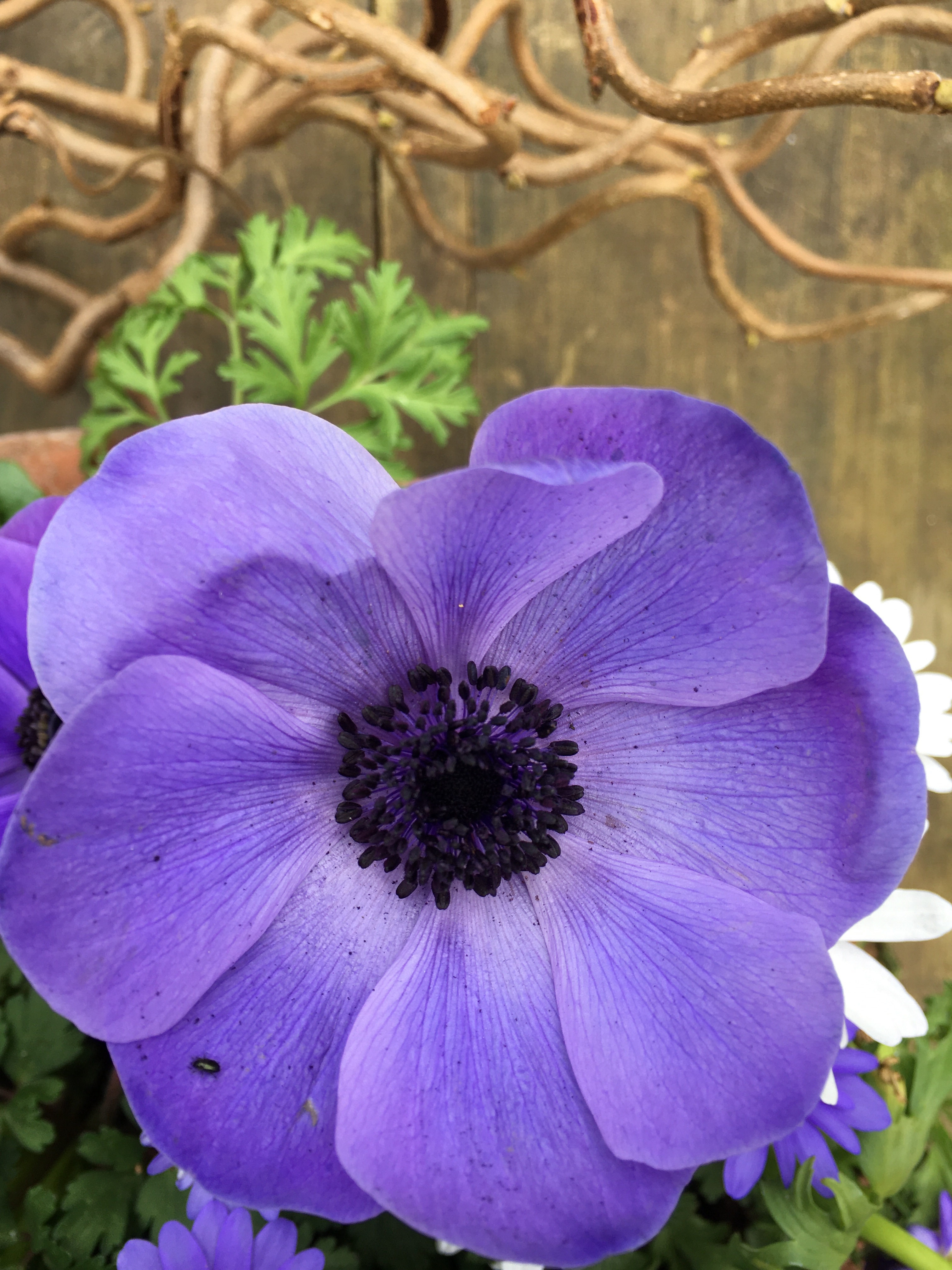







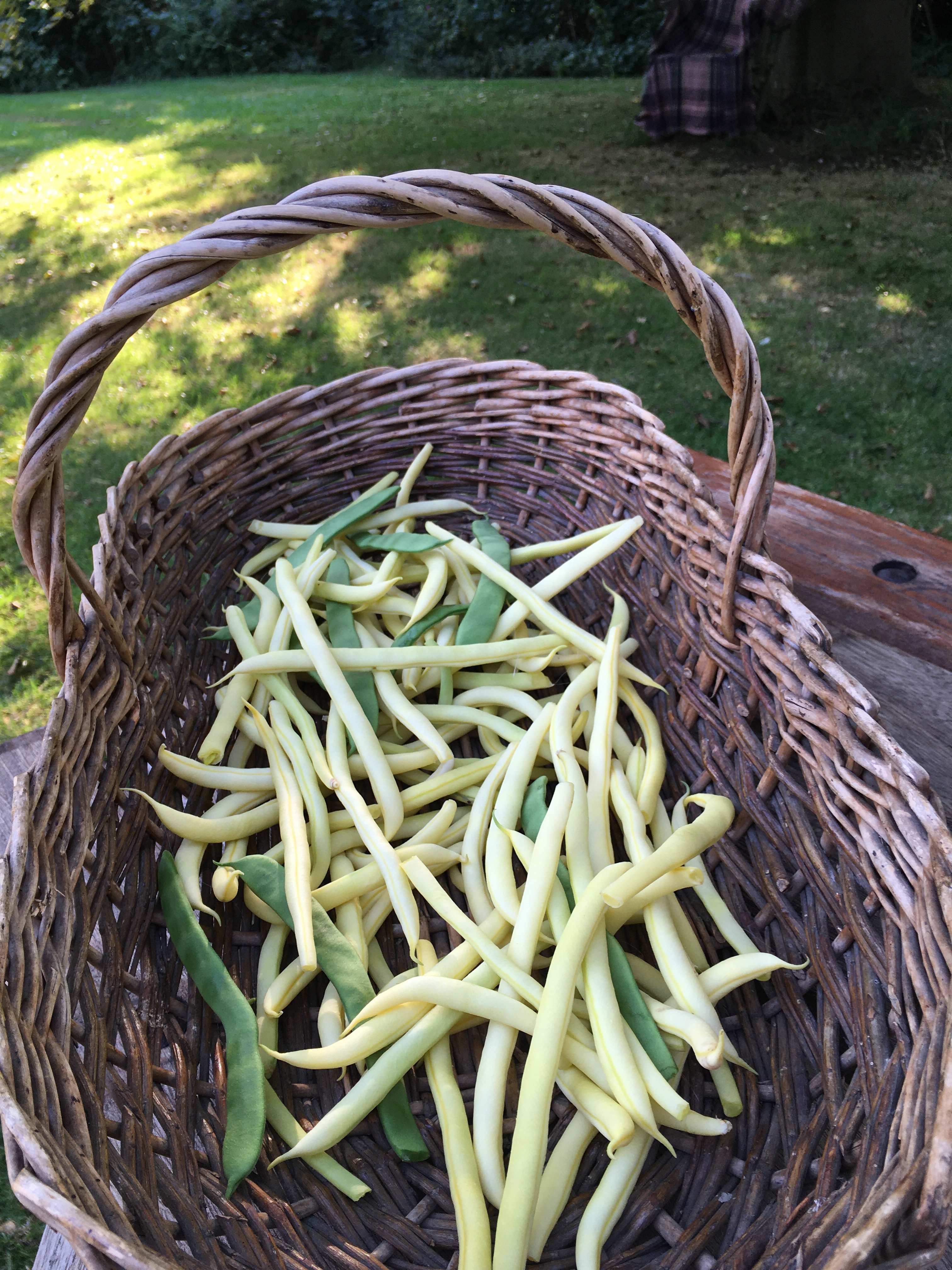







































 Now for the ‘blue’ photos this week. I’ve chosen morning glory, Ipomoea purpurea. This is a seedling from a selection I’ve grown for years. Morning glory is an annual climber reaching 4-5m given a warm sunny fence or wall. Mine grow up through my climbing French beans. I’m hoping the flowers will attract pollinators which will benefit my vegetables. You can see the nectar guides in this photo. Flowers have visible and UV guides or lines directing bees to the nectary. Sunshine has highlighted the lines. It’s almost mesmerising. I save my seed each summer and store it in a cool, dark place over winter. I’ll start them off again in 3″ pots on the kitchen windowsill in February. Recommended varieties include Star of Yelta, Grandpa Ott and Heavenly Blue. All easy to grow, and once you’ve bought a packet of seed, you’ll have morning glory for ever more. Such a lovely thought!
















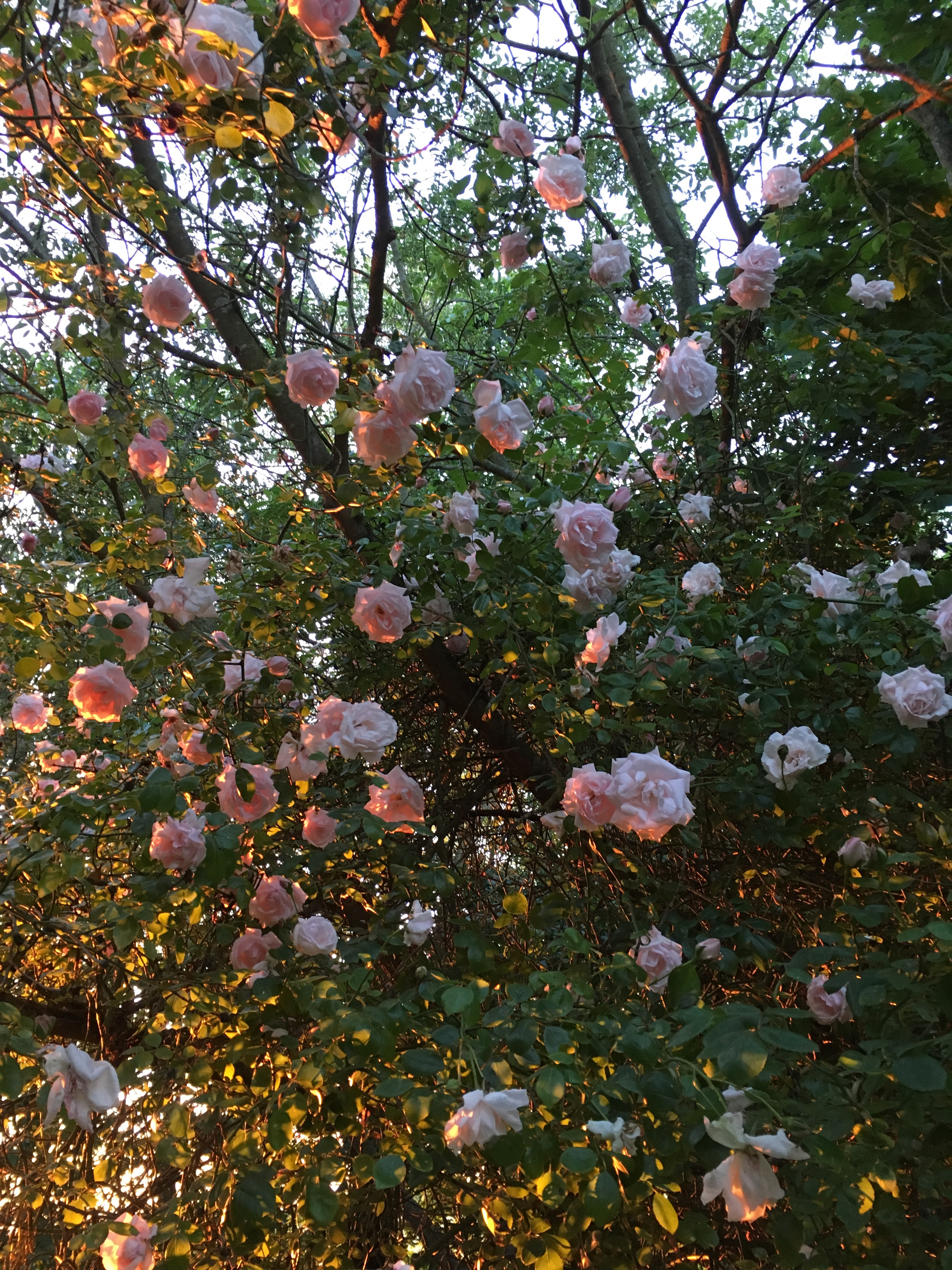


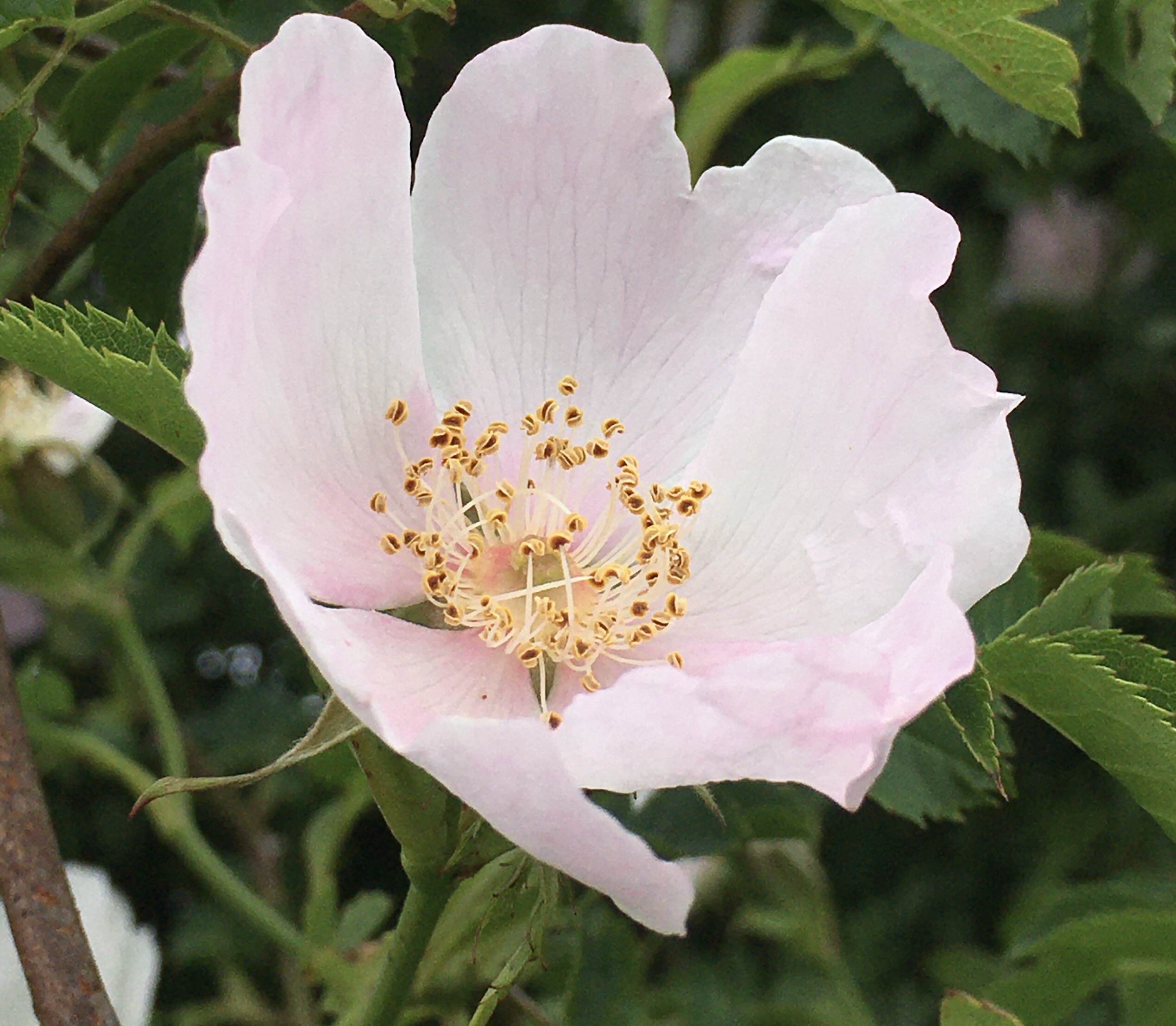

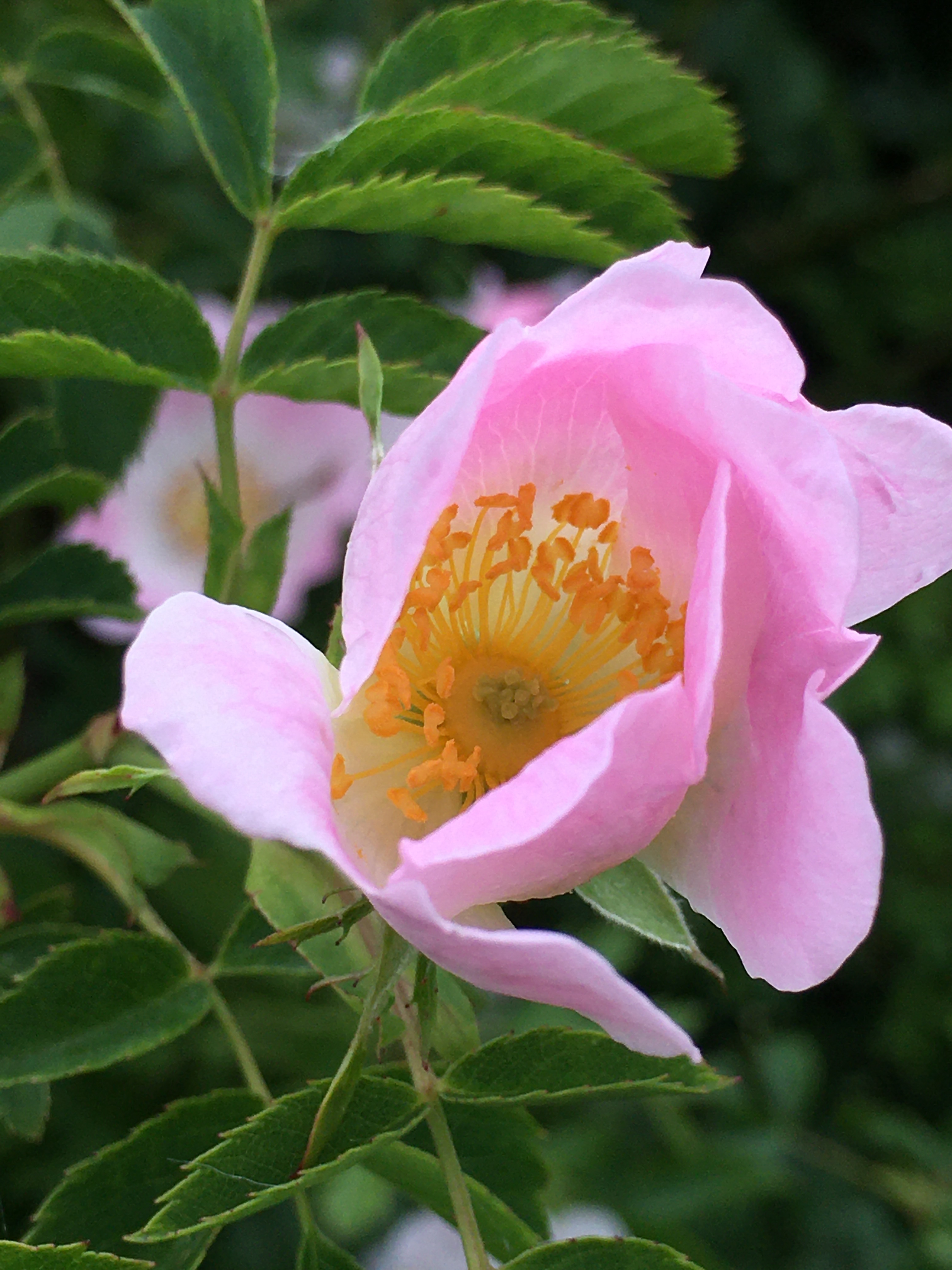


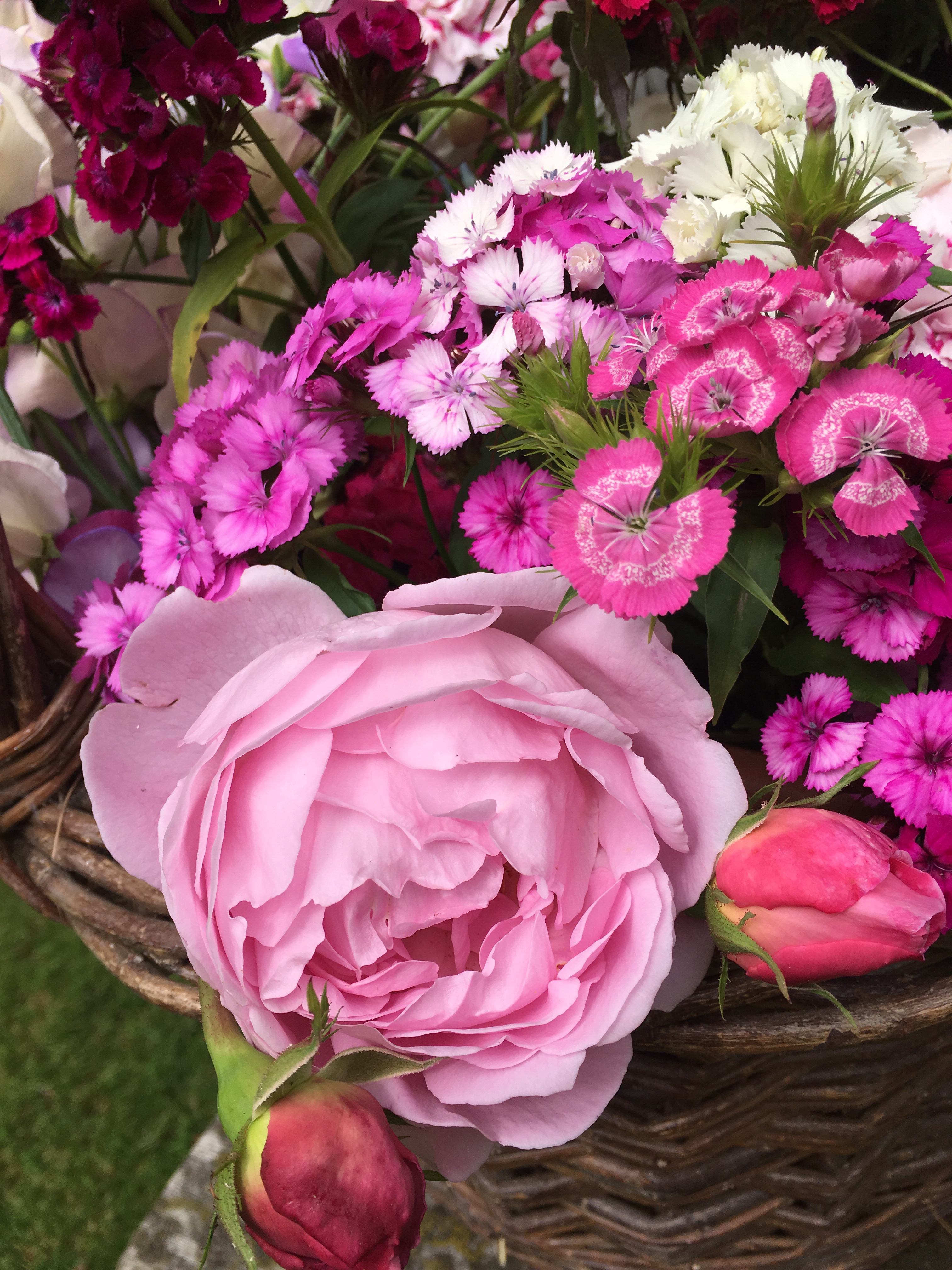












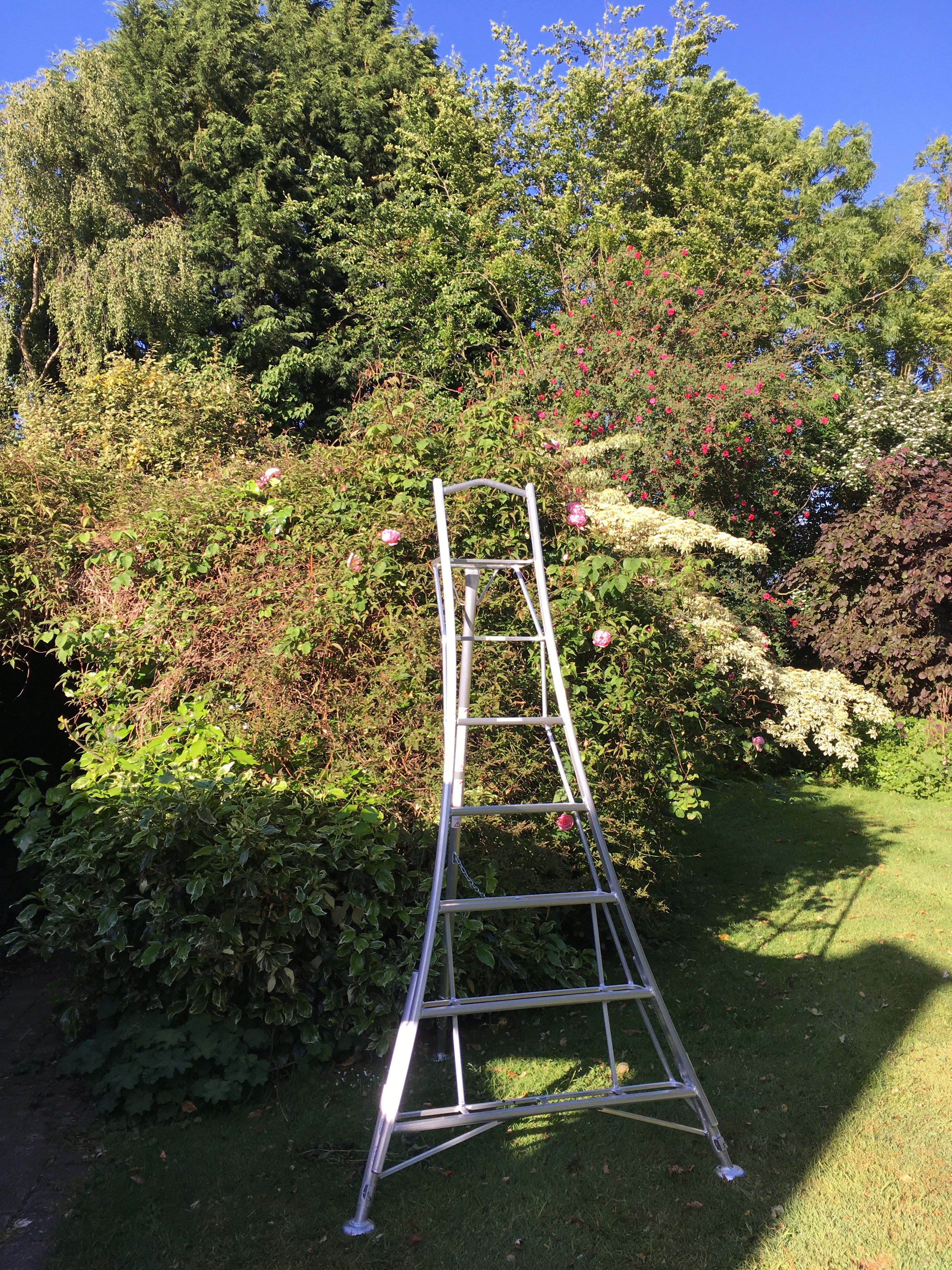



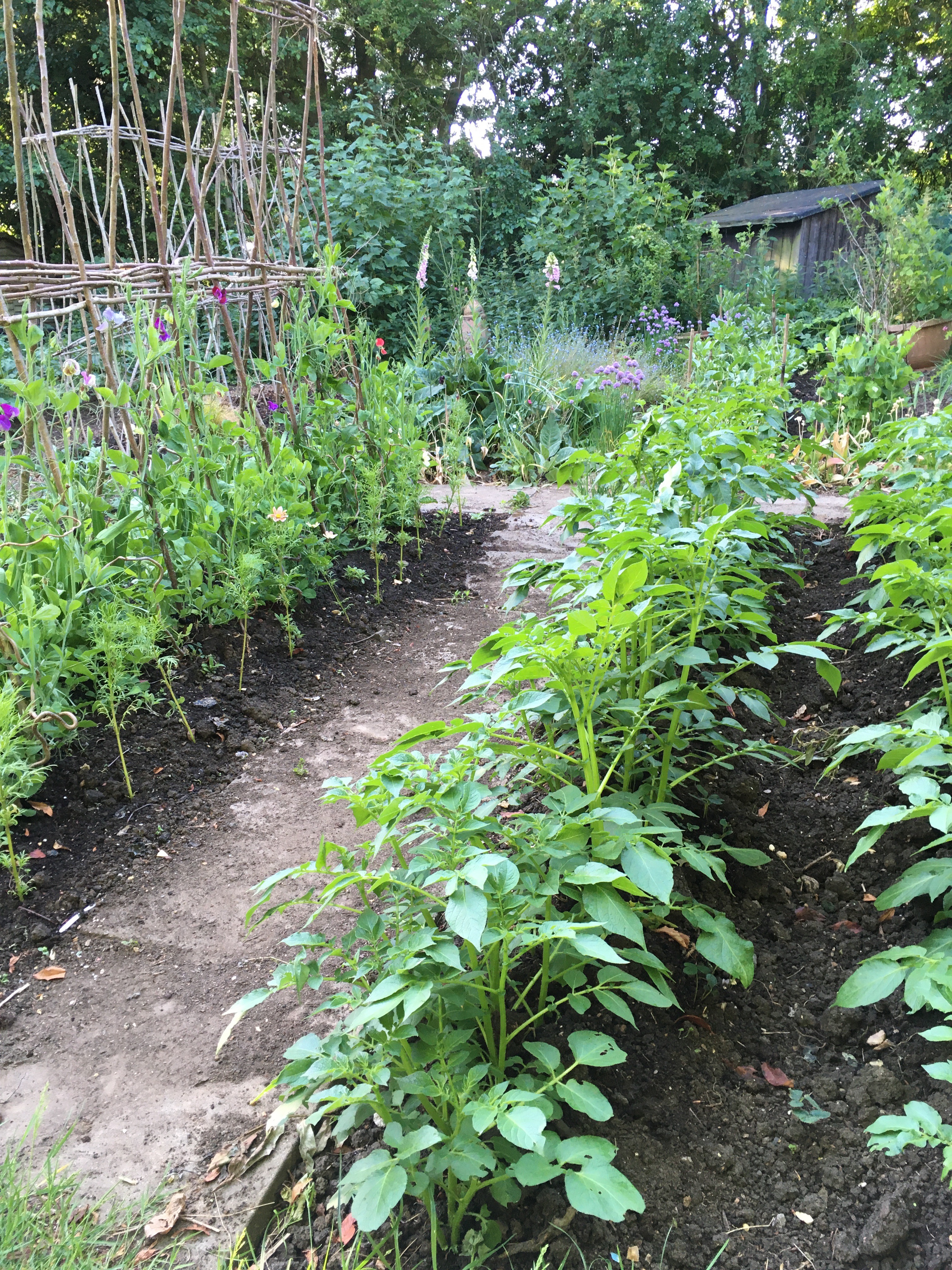


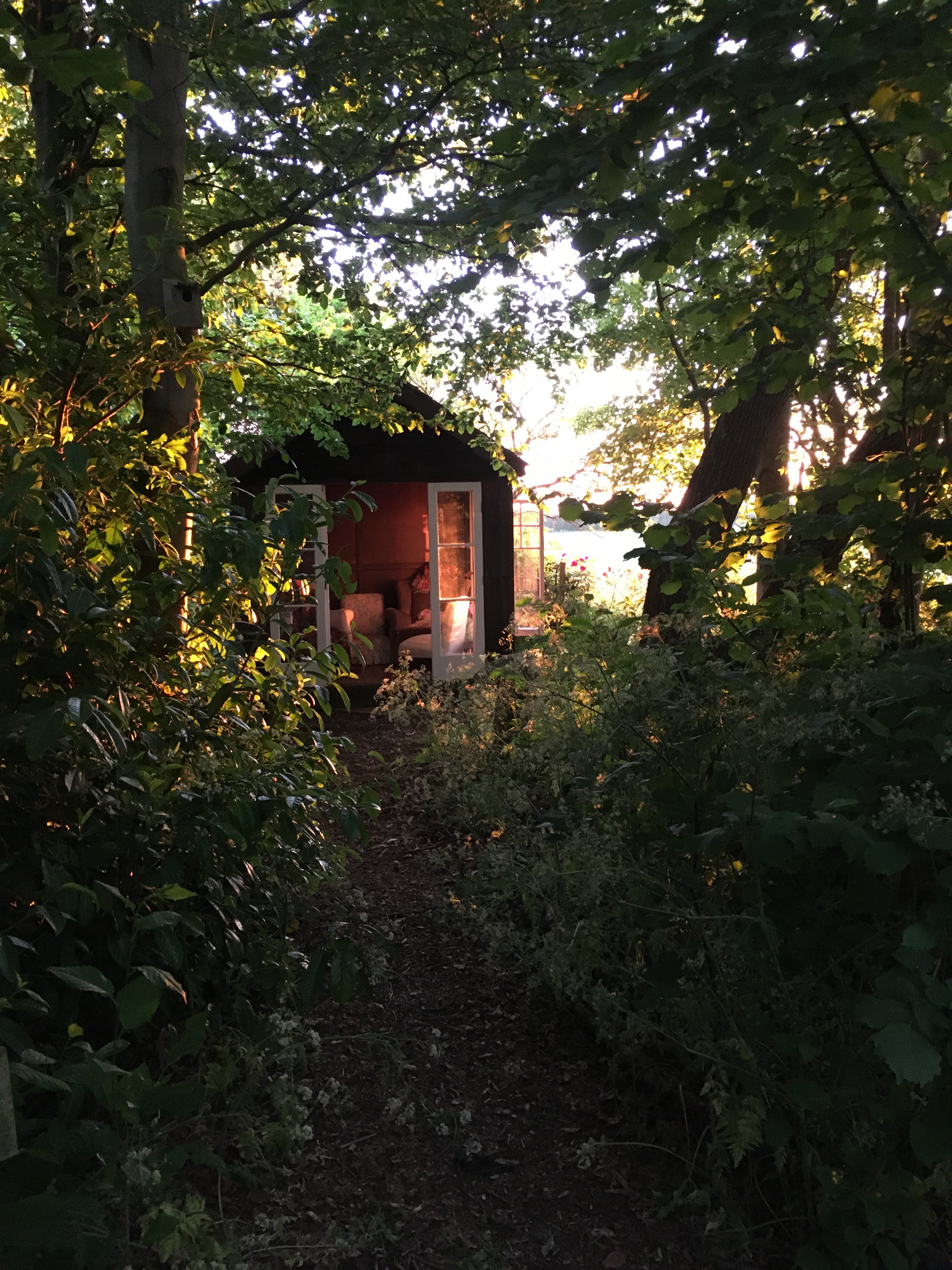
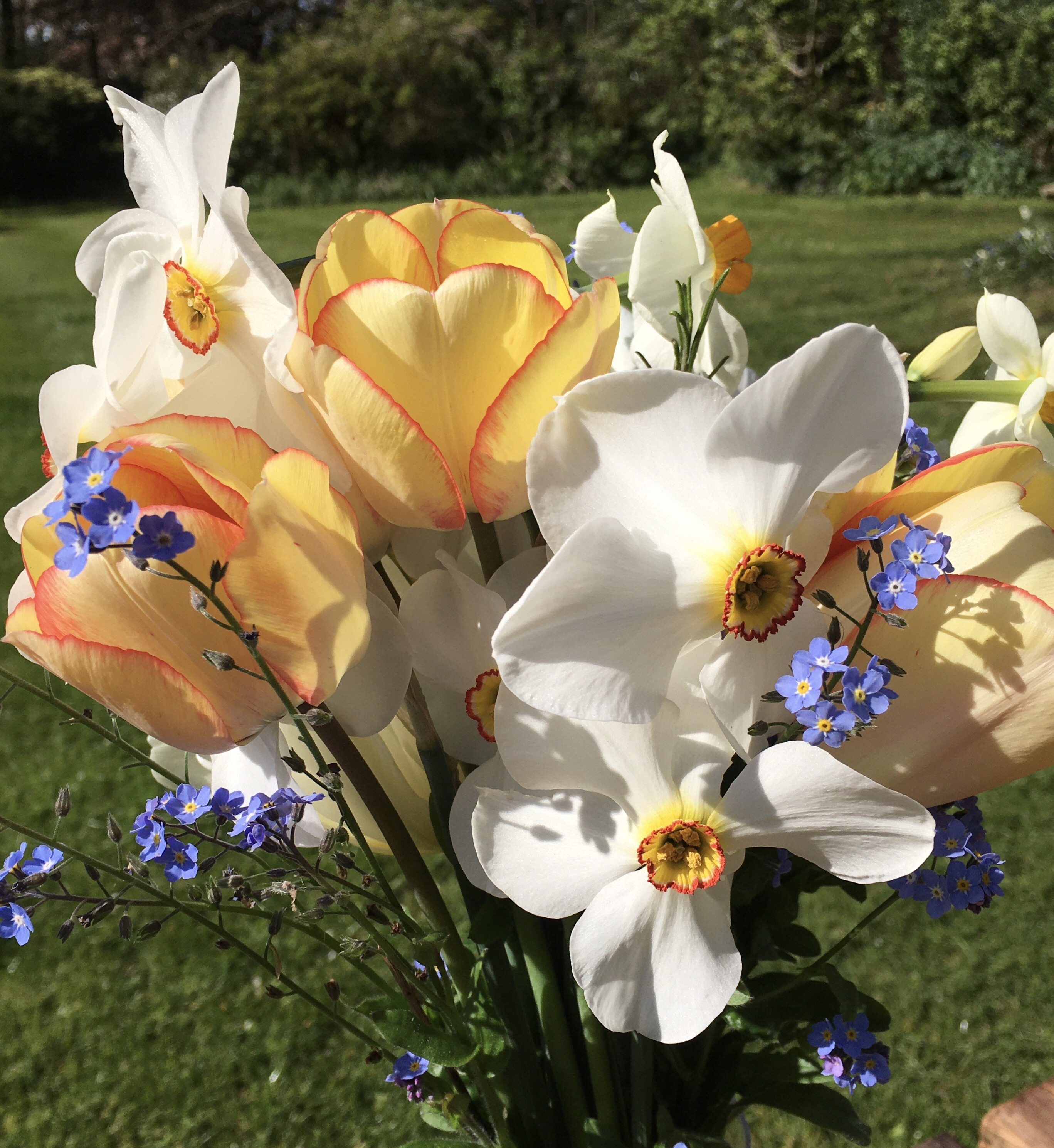


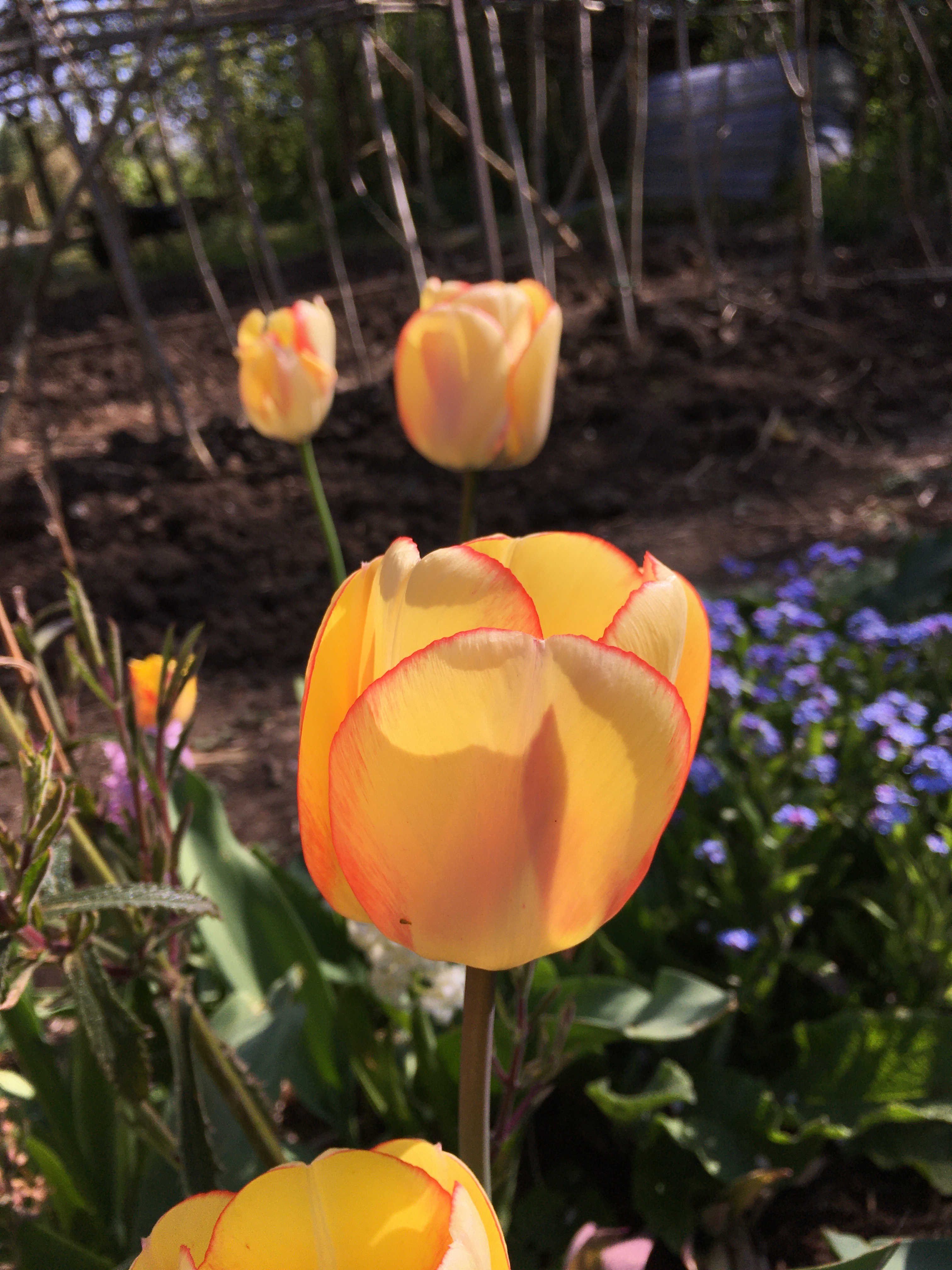



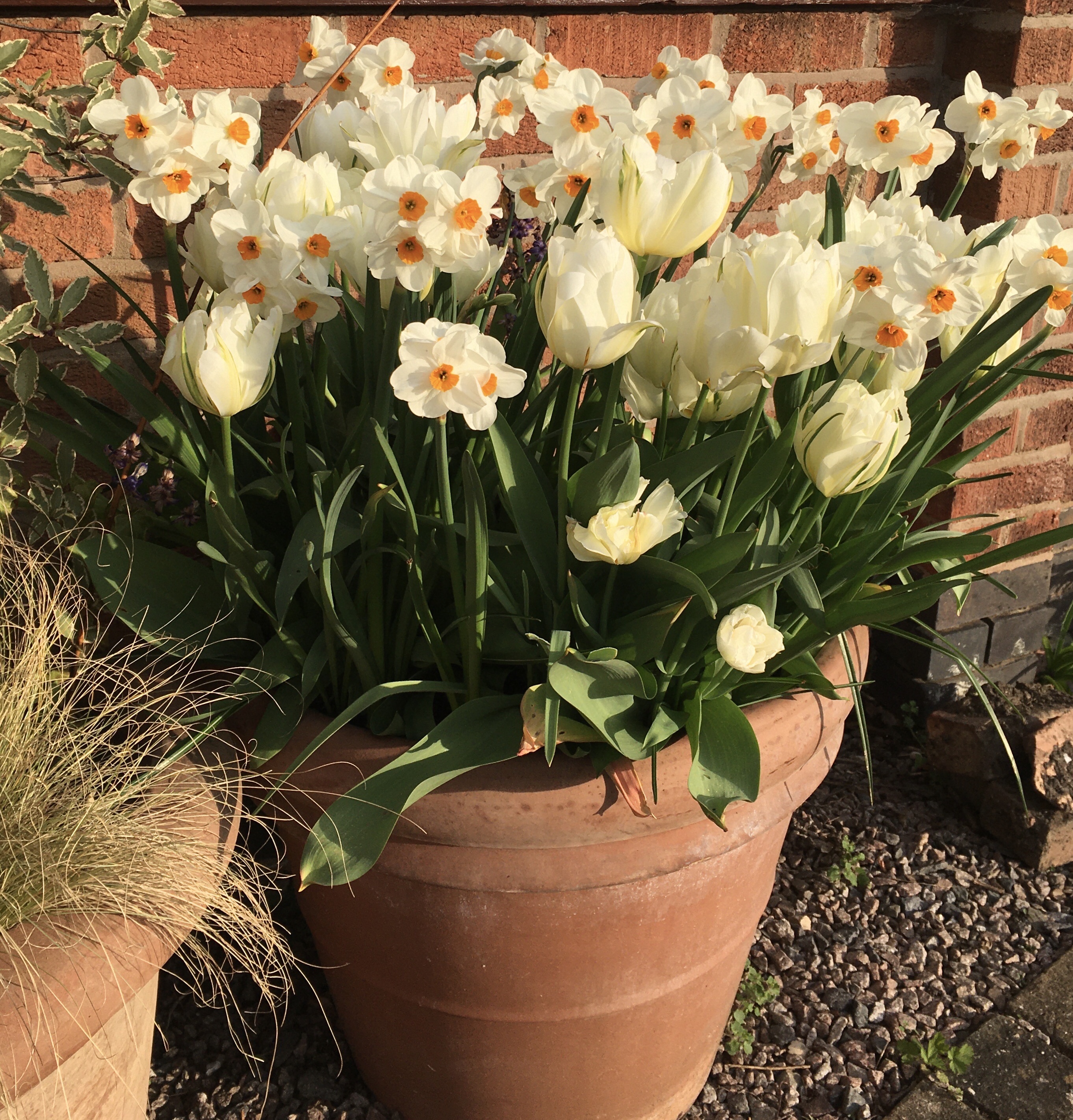


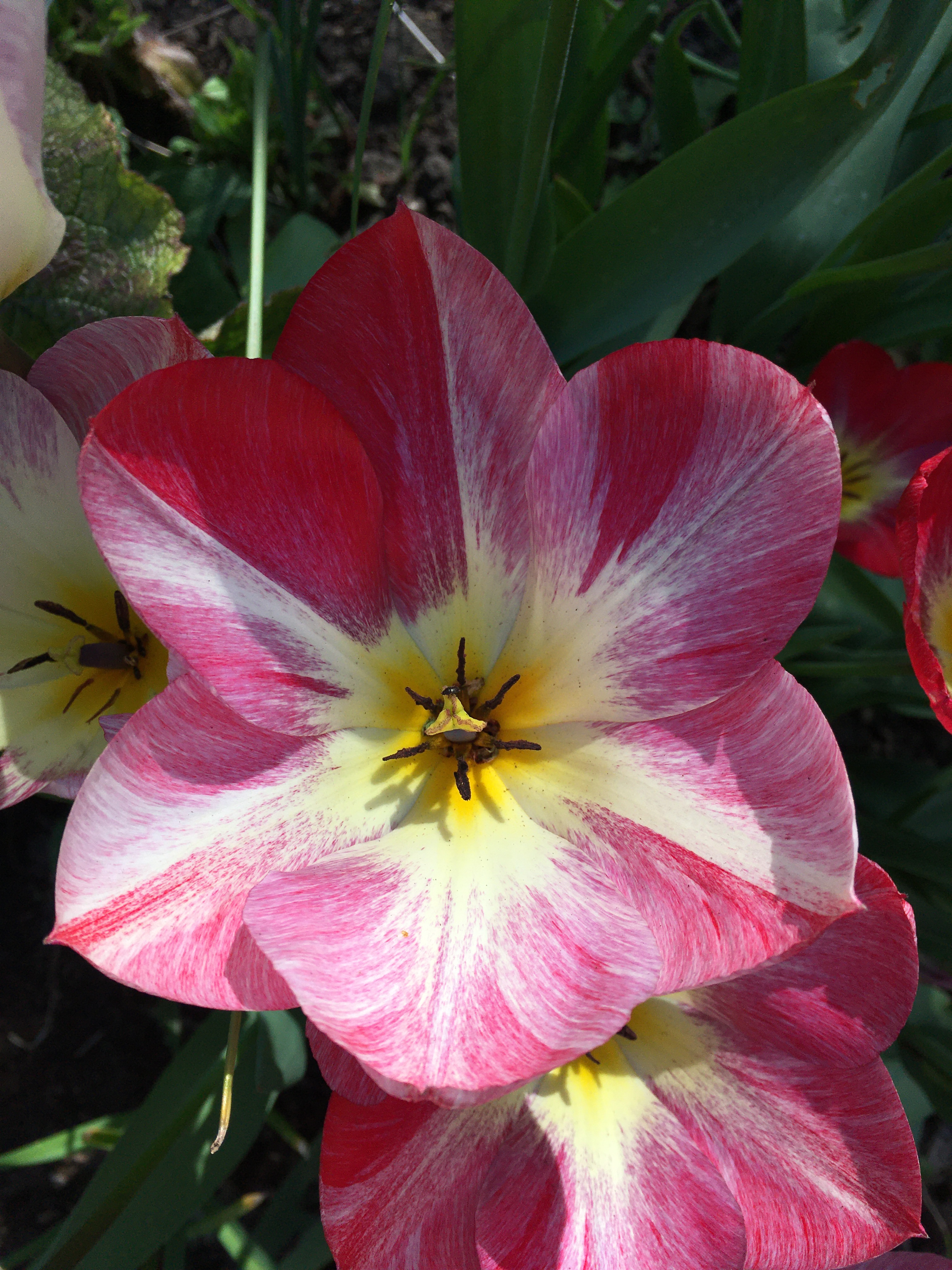


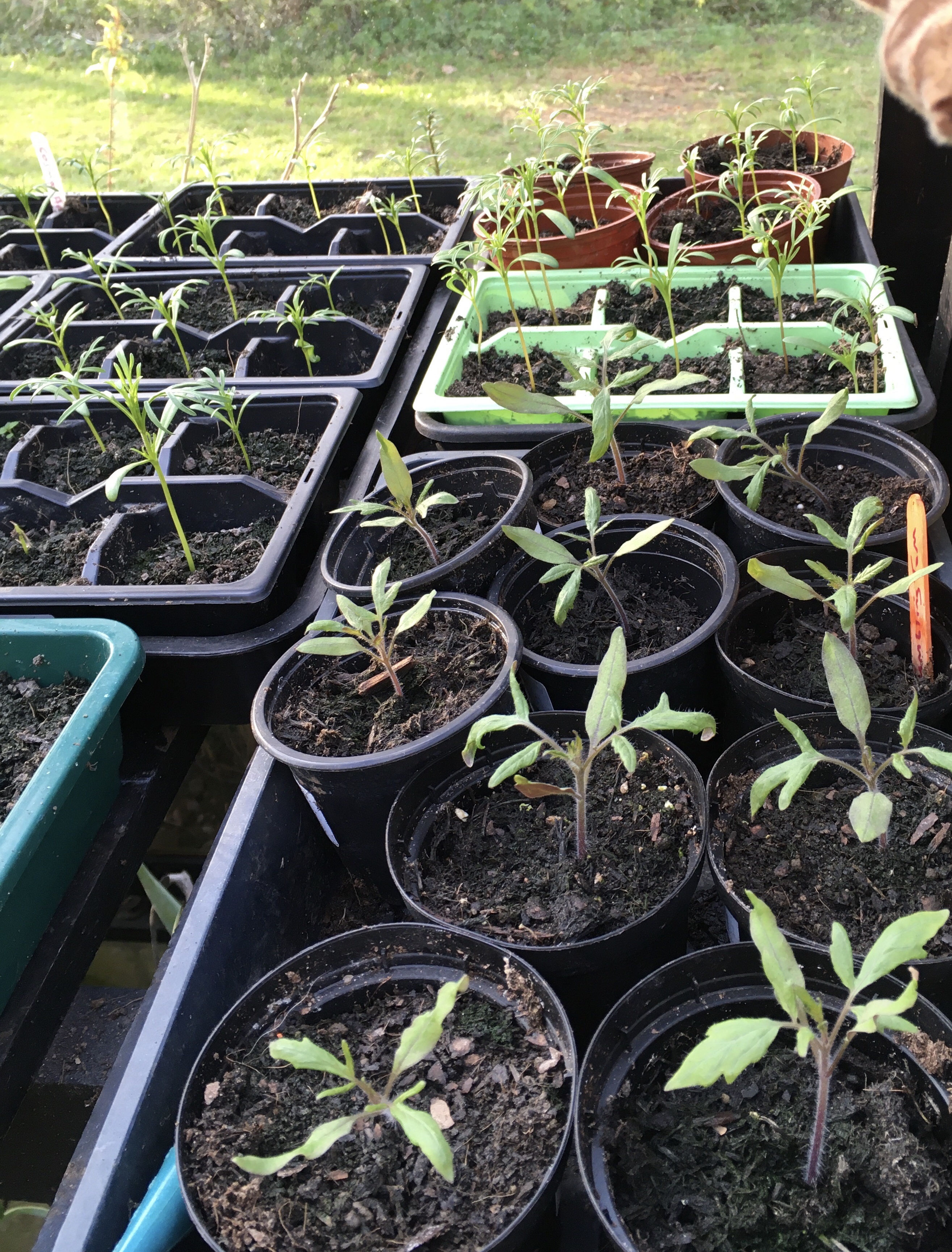


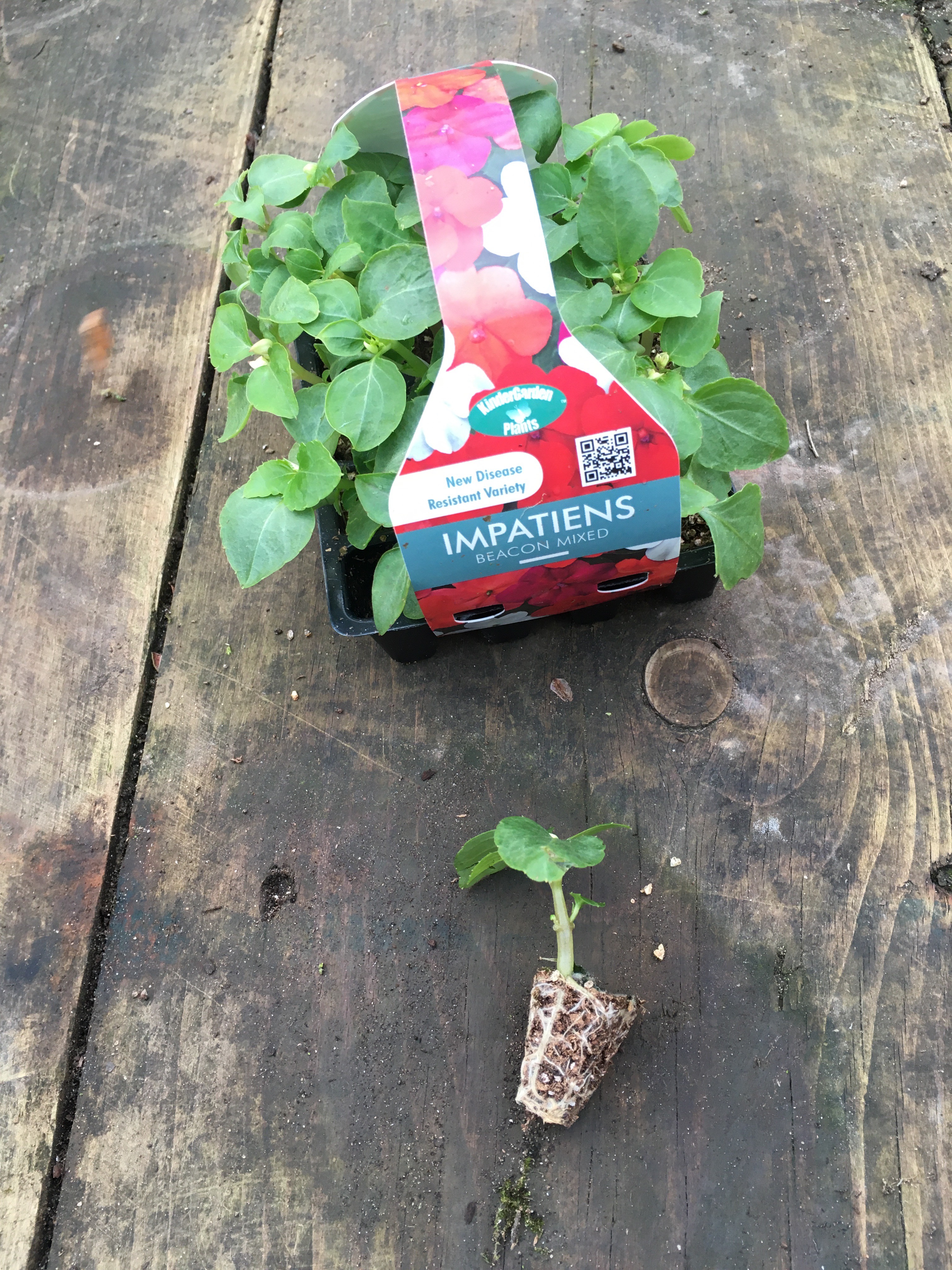

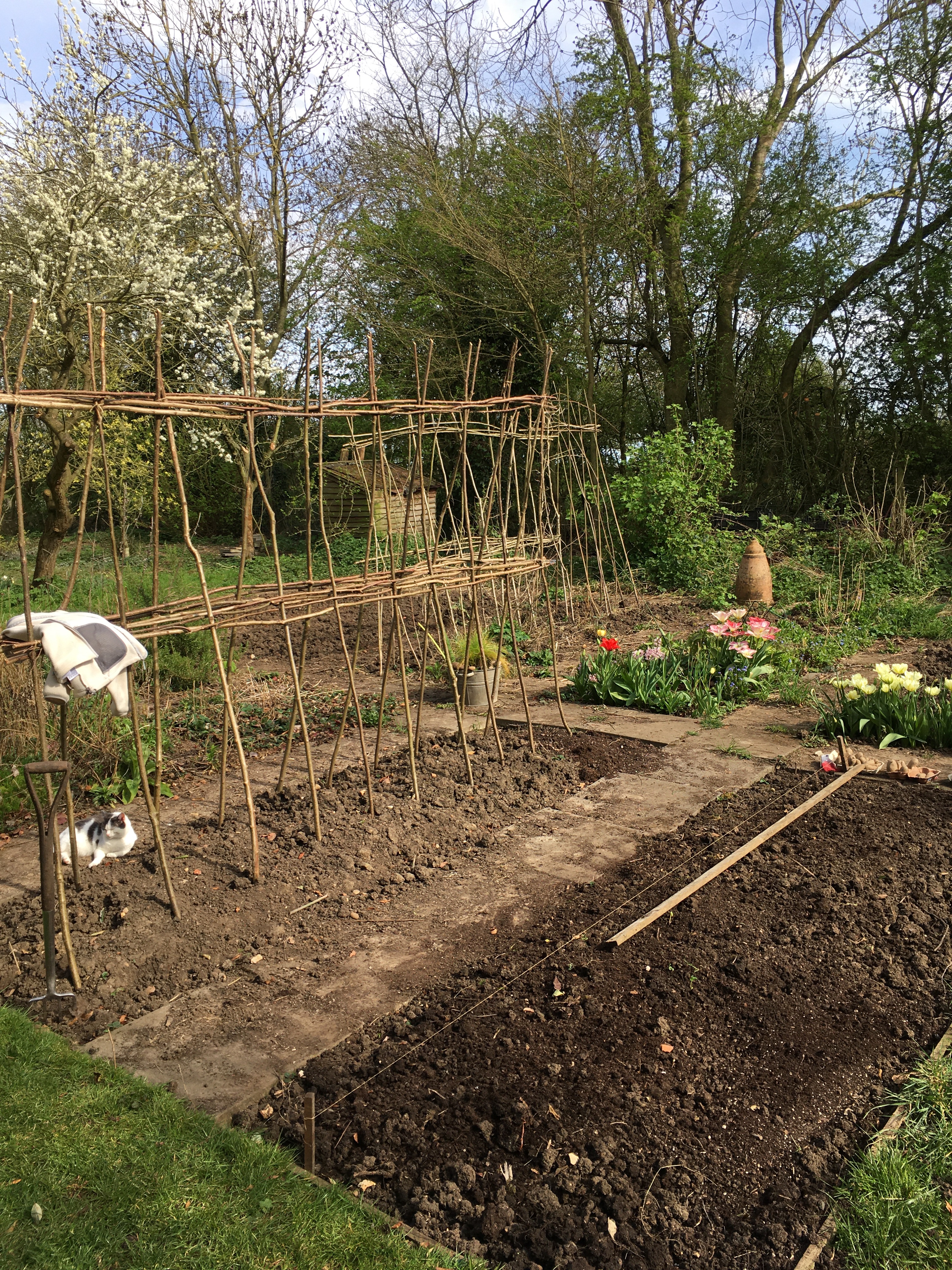


















































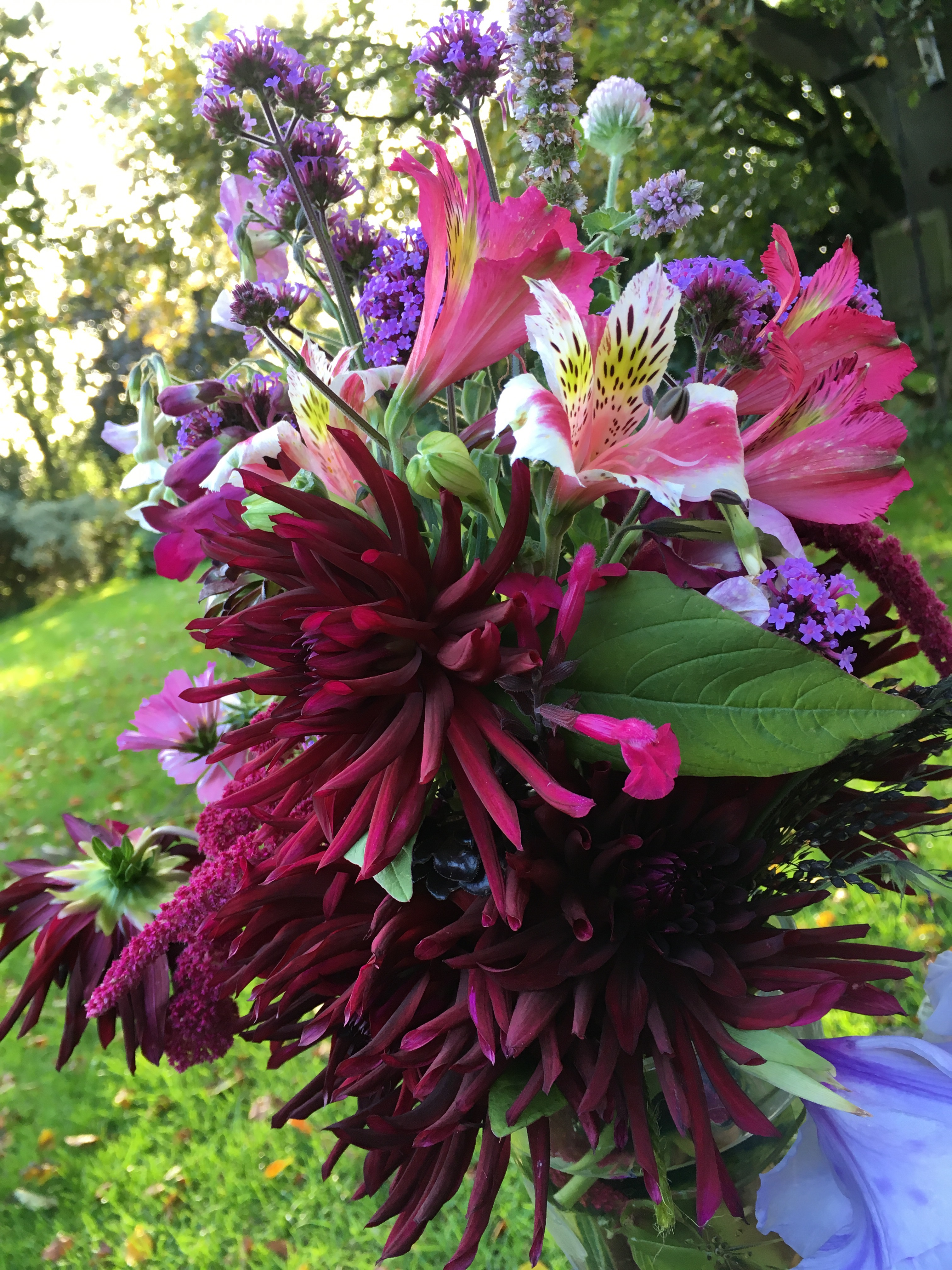









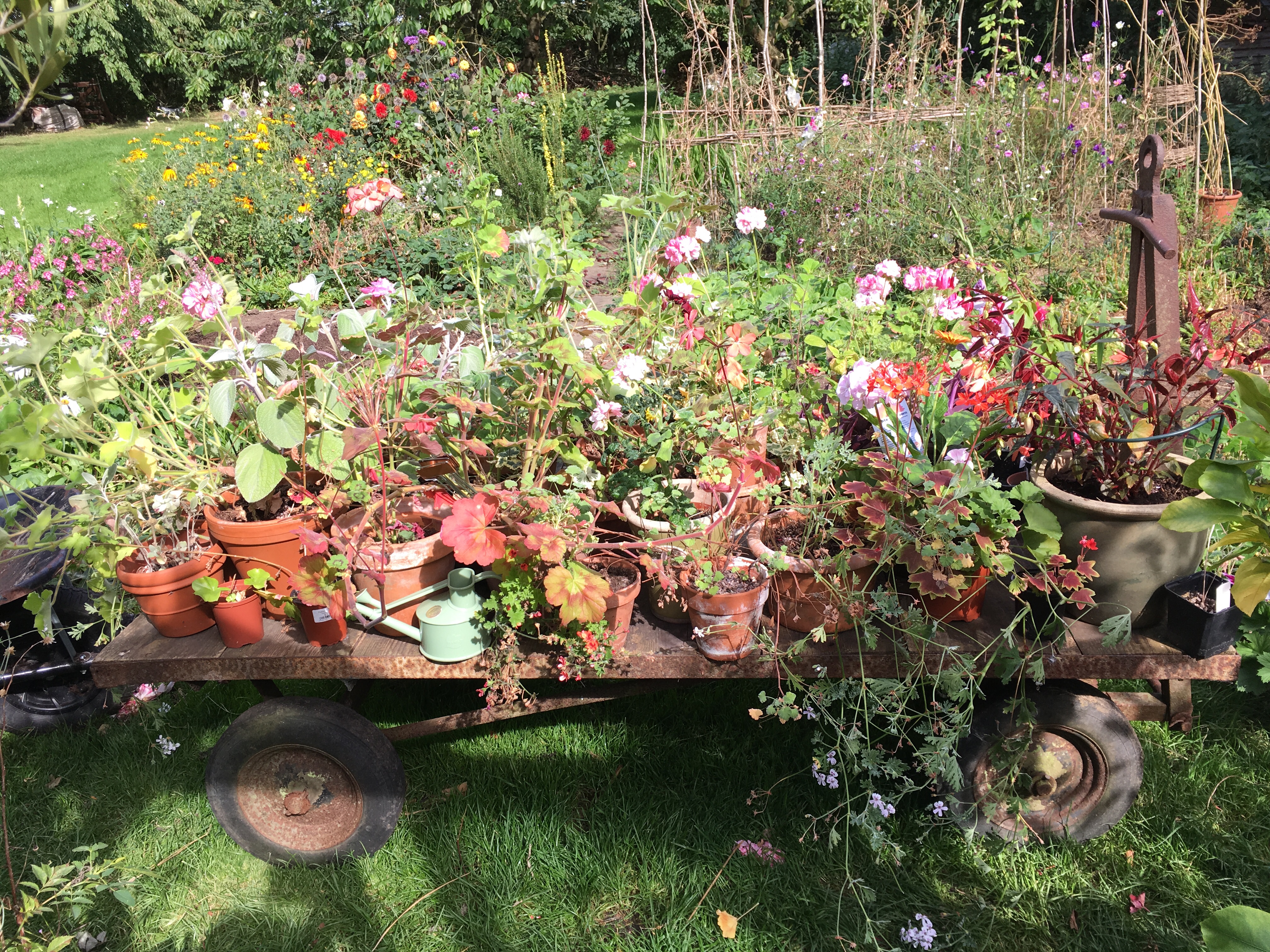


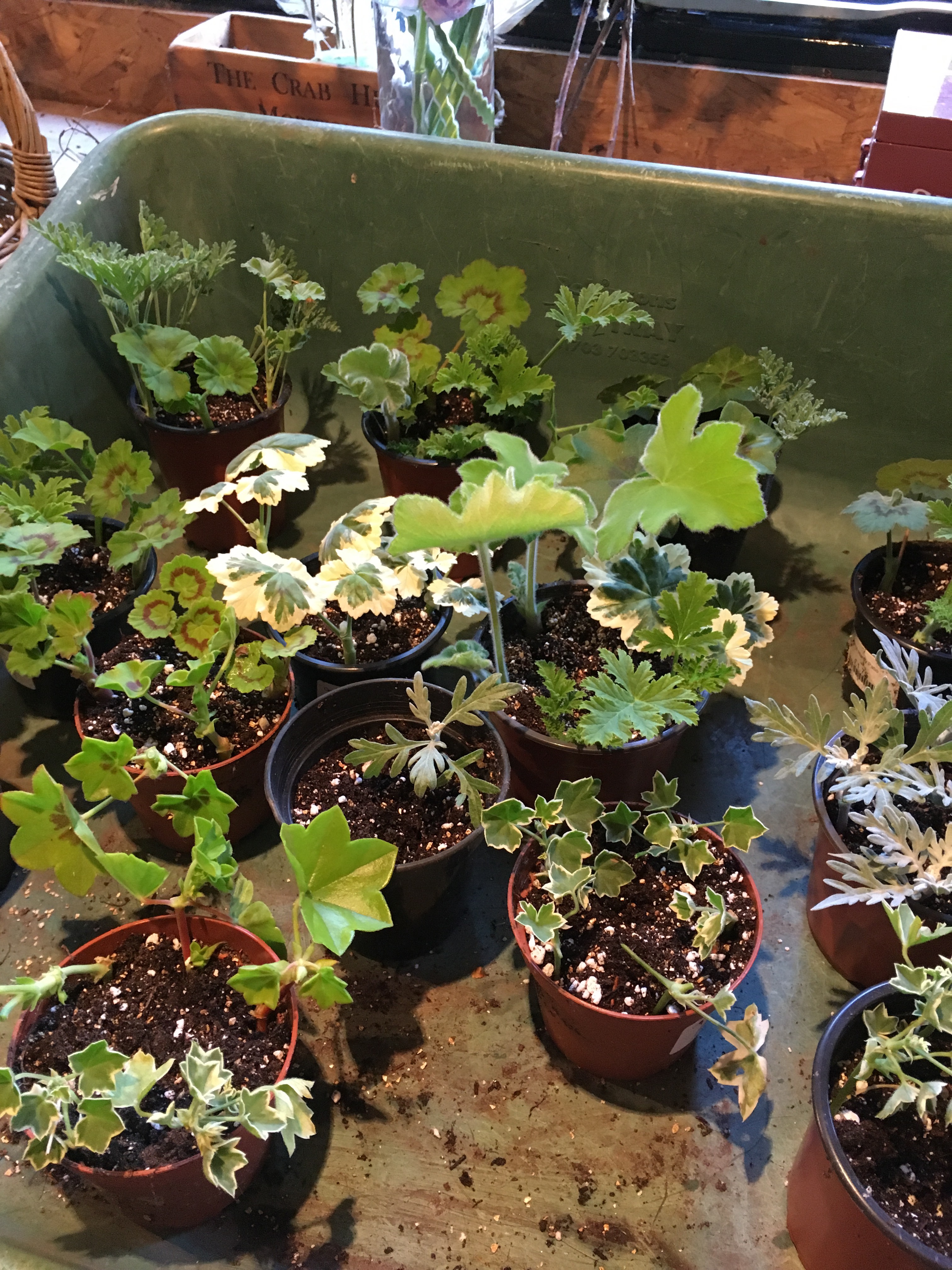







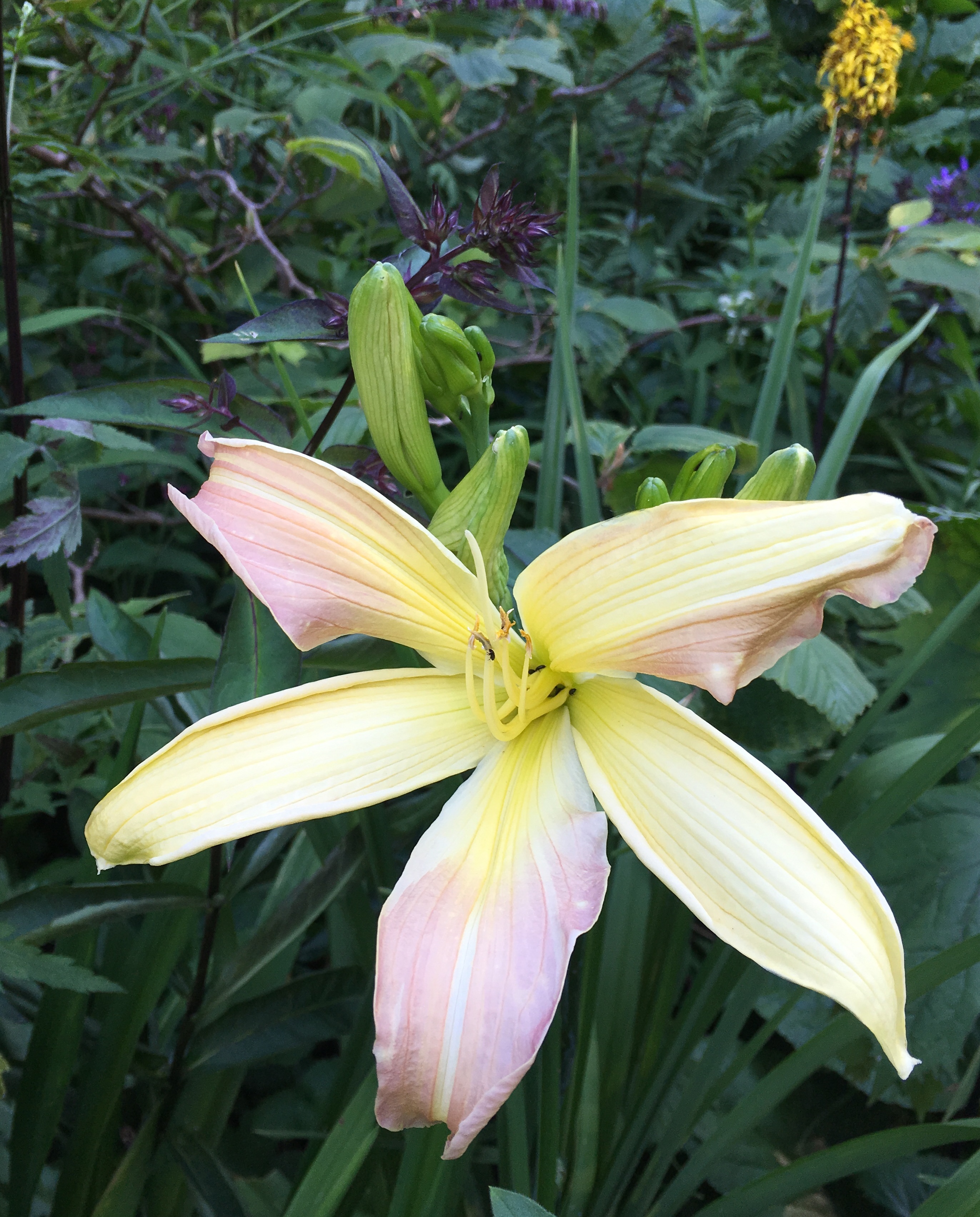









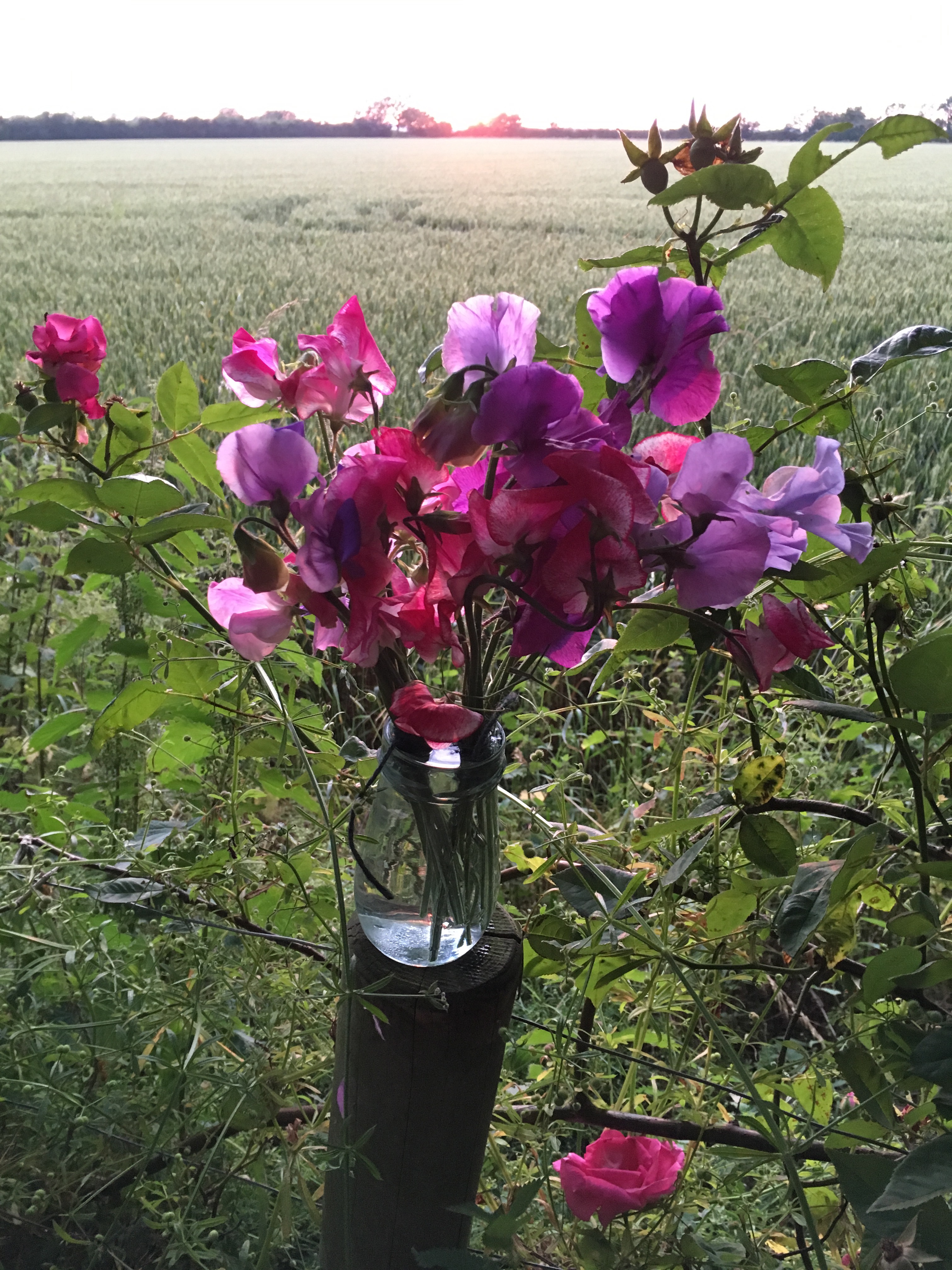













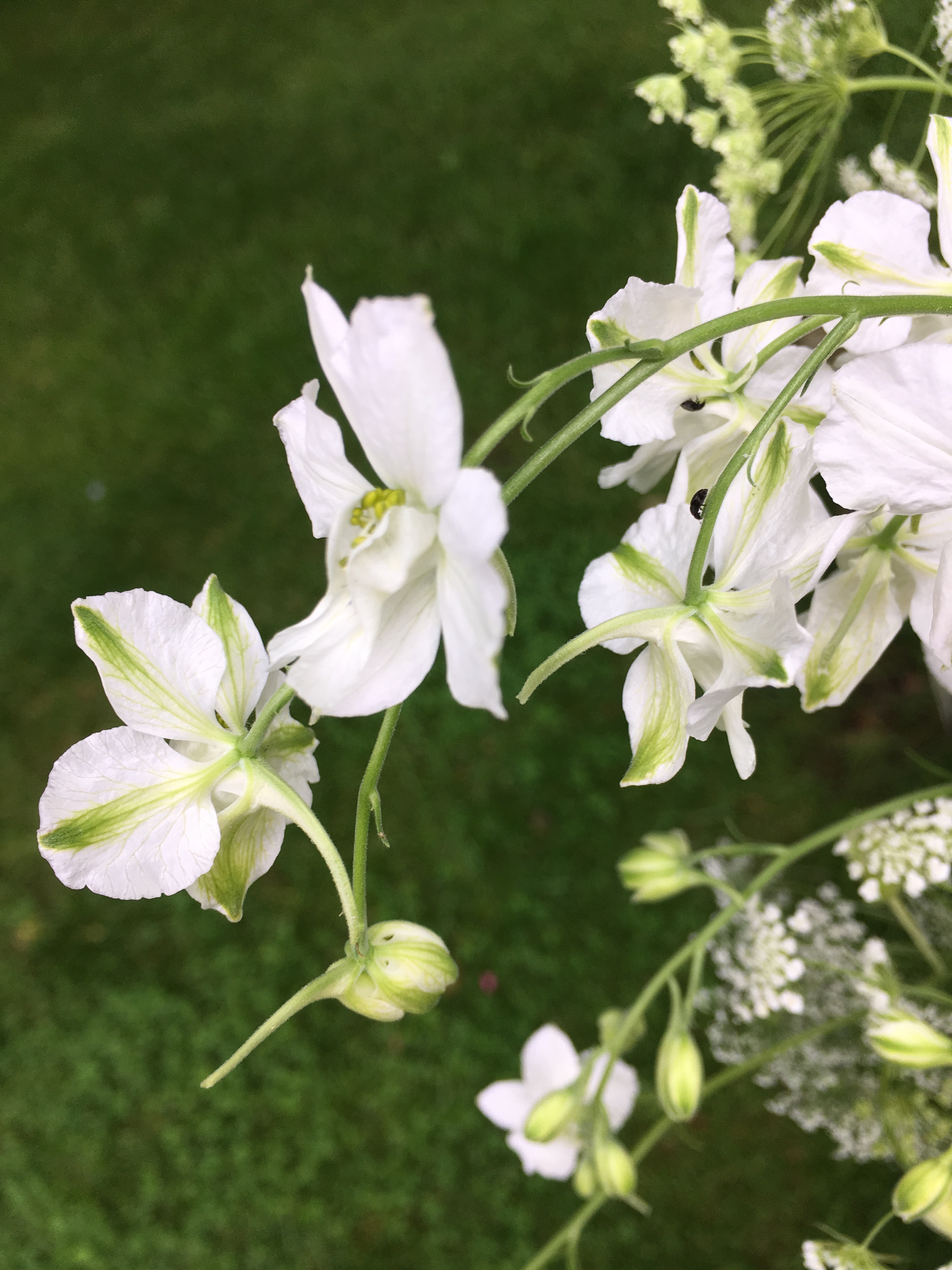
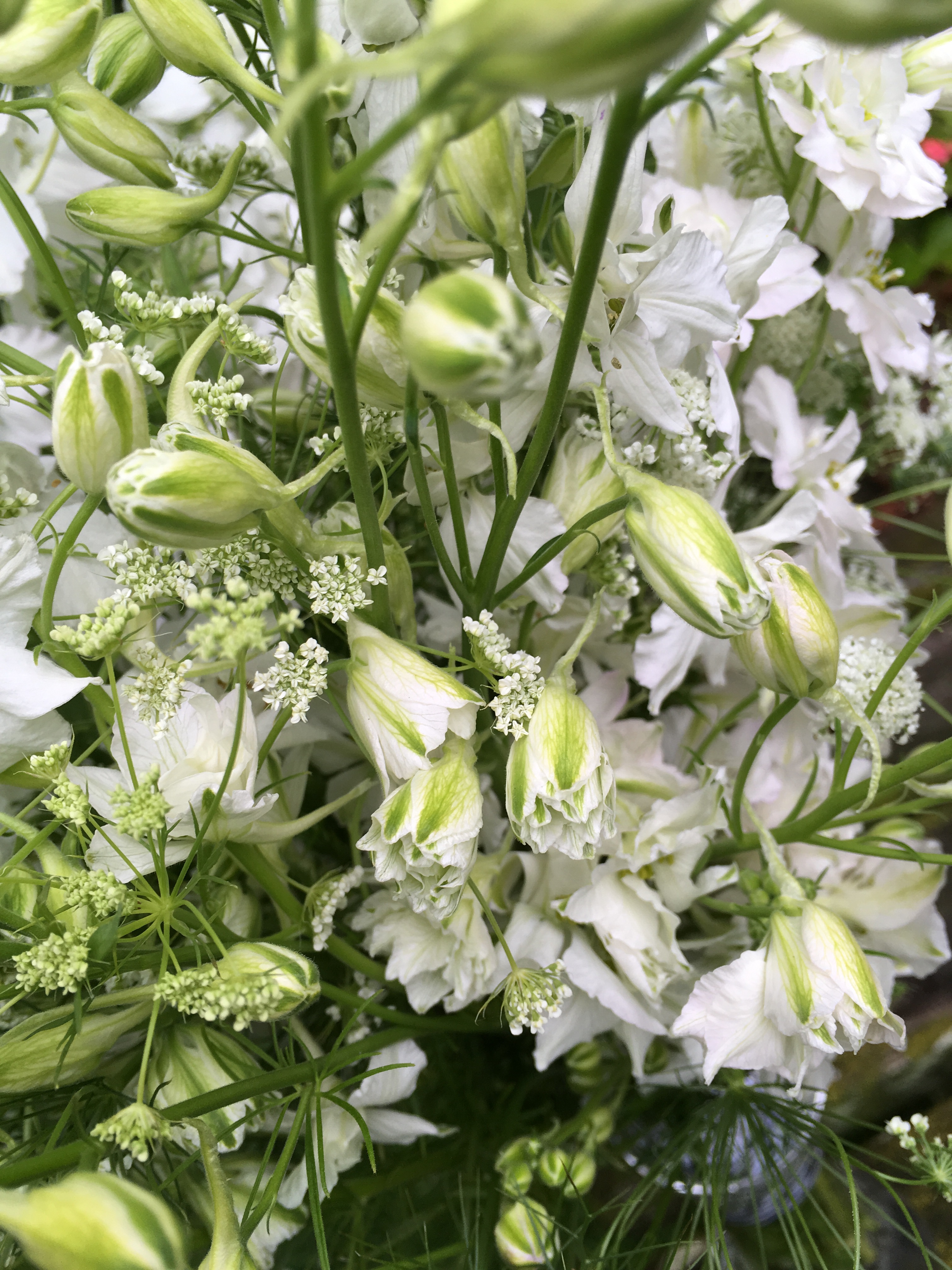


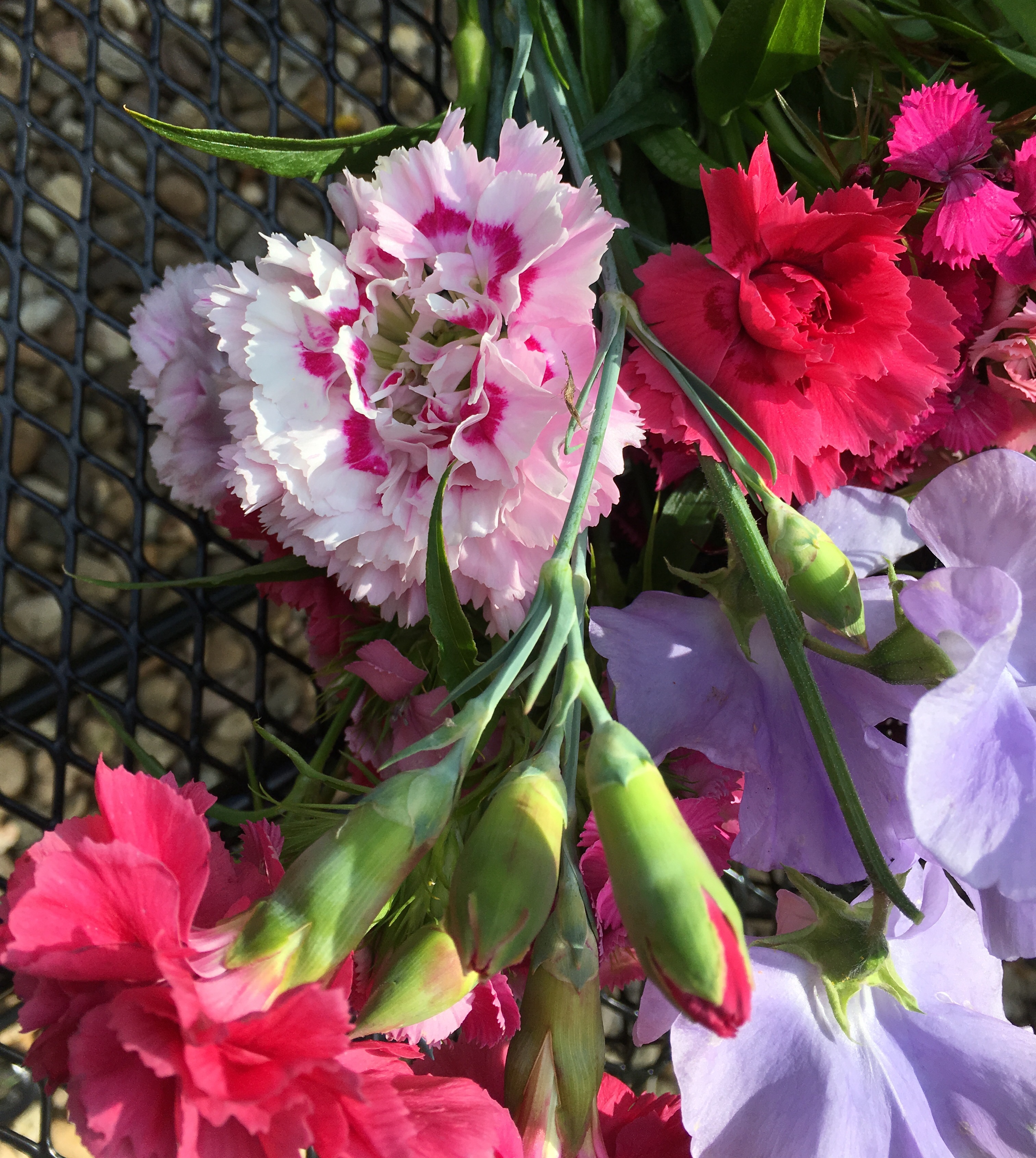

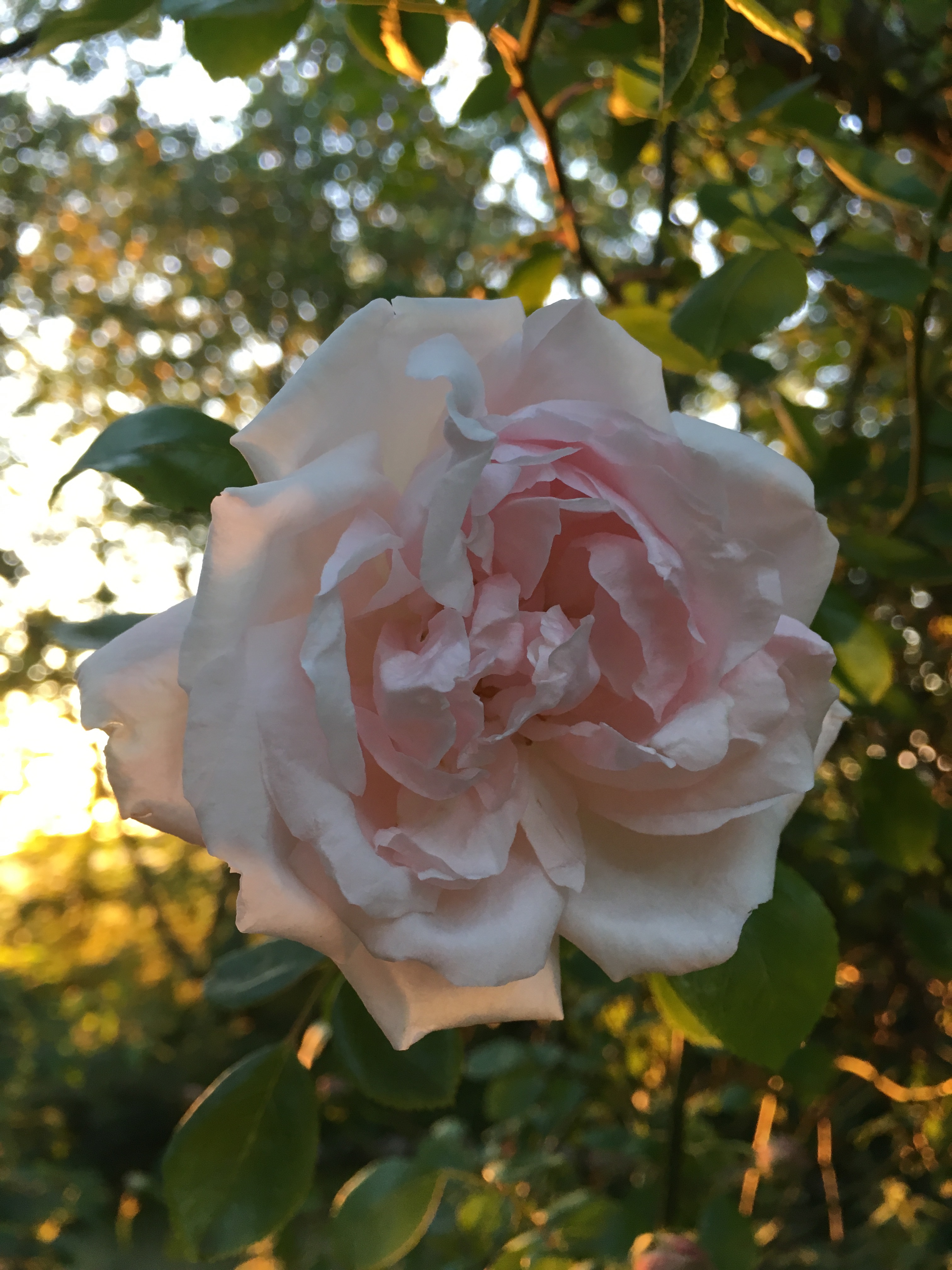














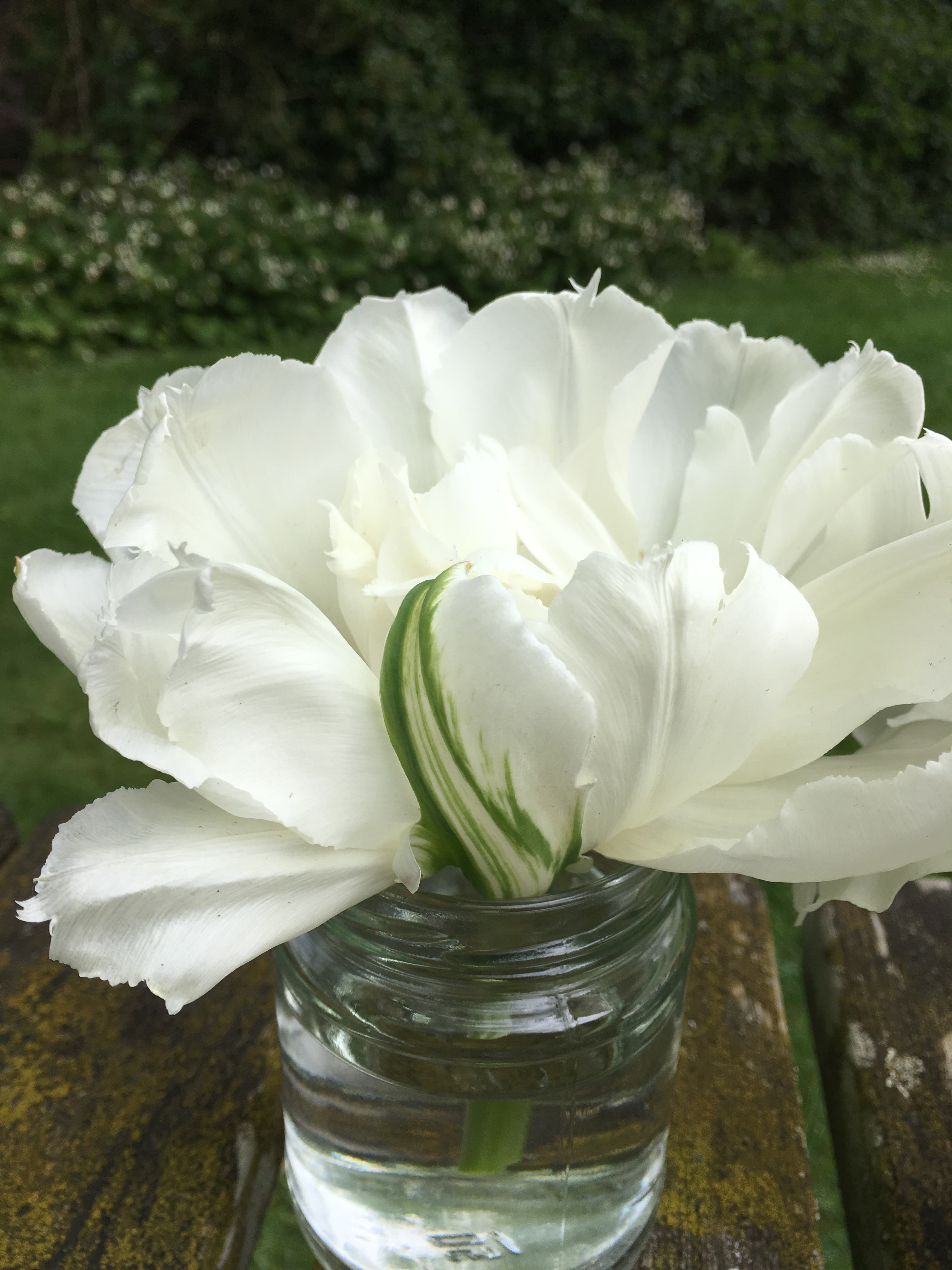


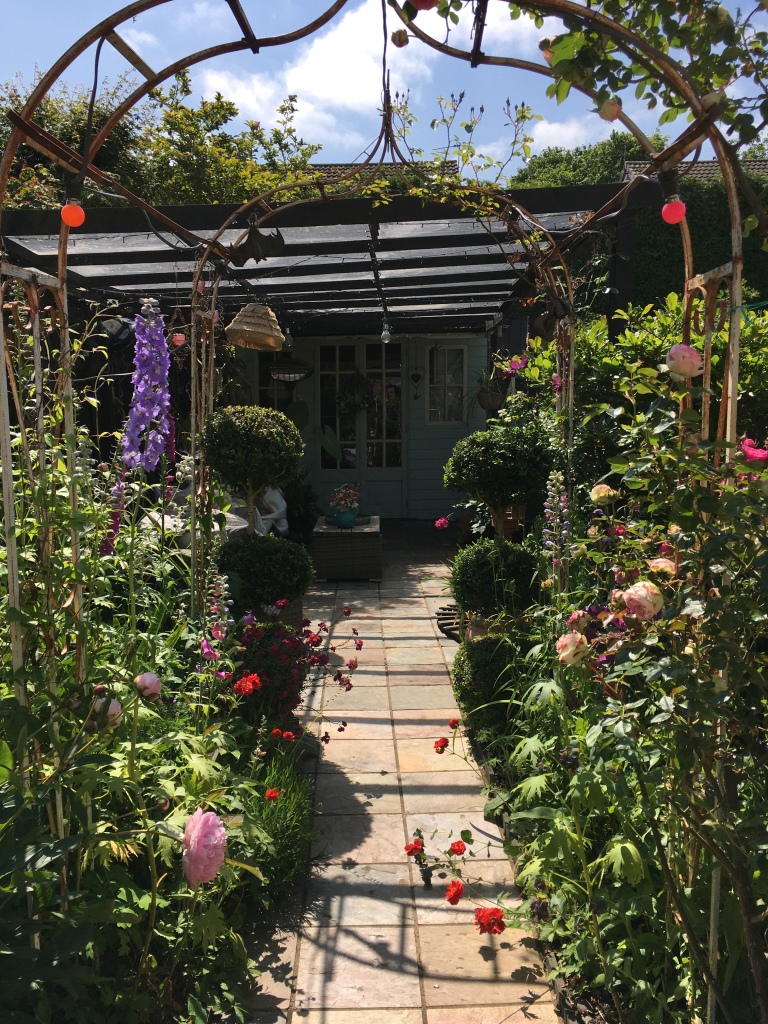
 Here’s a view of the garden today. The hawthorn hedge looks like seafoam in the wind. Looks like there will be more rain, judging by the colour of that sky.
 Bramble Garden