Plum Crumble- Family Favourite Recipes

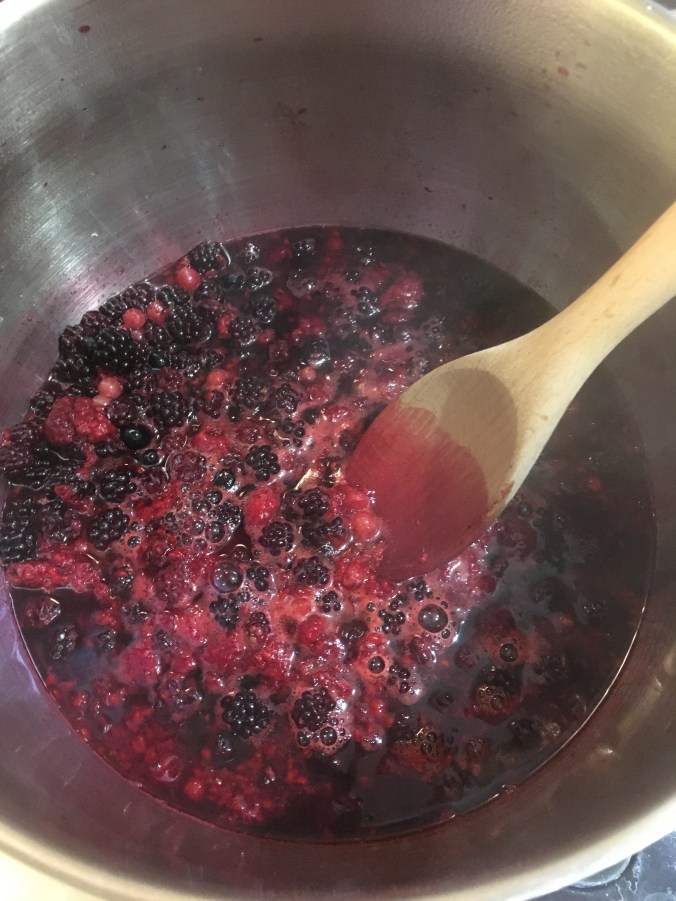
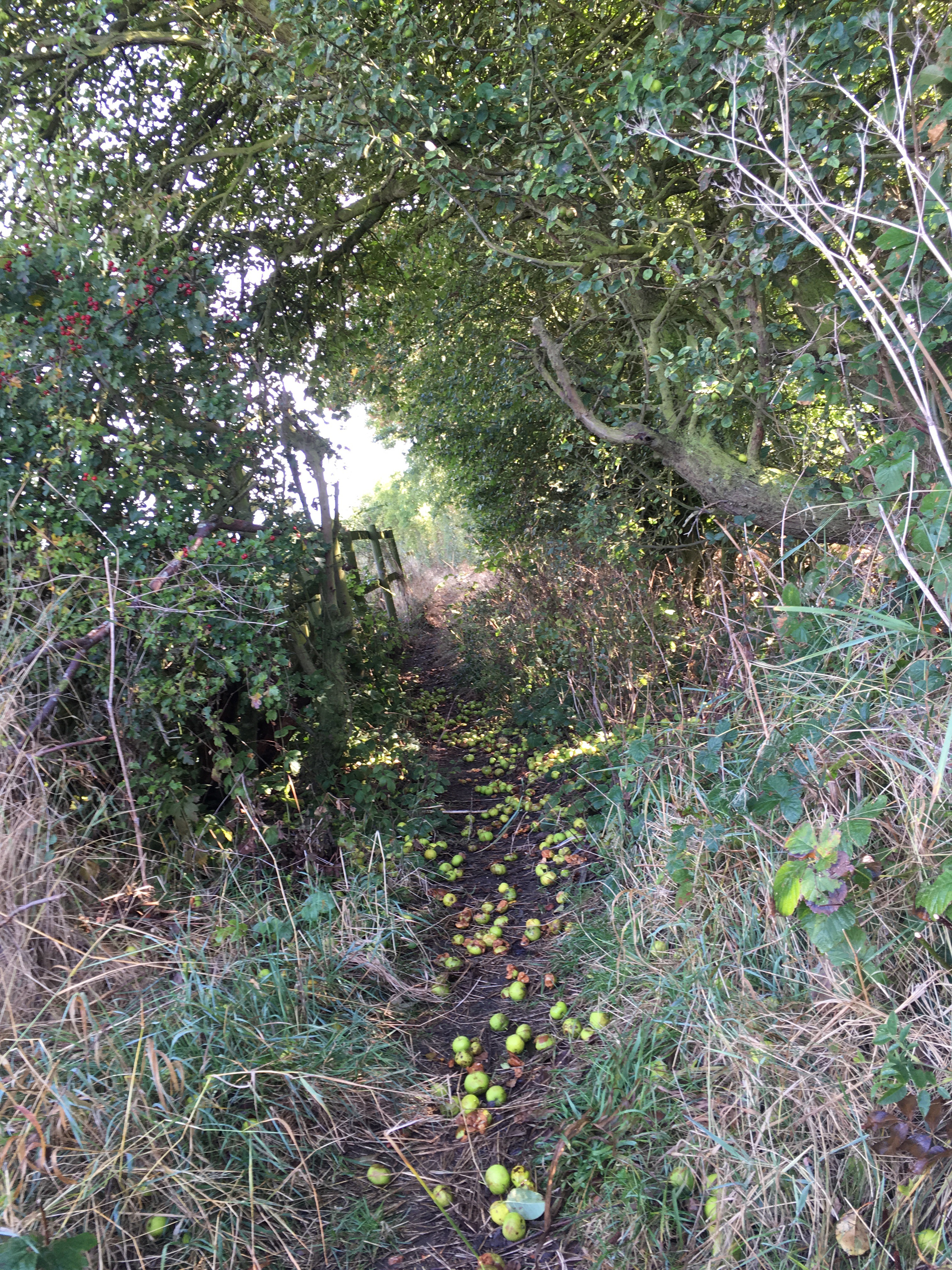
Crumbles are a simple family pudding which can be varied according to the fruits in season. At the moment, we have plums from our Victoria plum tree. We’ve filled the freezer and made jam. Here’s my favourite plum crumble, using a recipe that came from my grandmother.

BASIC CRUMBLE TOPPING

Ingredients:

225g (8oz) plain flour

150g (5oz) soft brown sugar

75g (3oz) butter

1 level teaspoon baking power

METHOD

Place all the ingredients in a food processor, or rub in with your fingertips, until combined.

You can freeze this mixture until needed, if required.

Sprinkle the mixture all over the fruit in a 1.75 litre (3 pint) pie dish, spreading it out with a fork.

Bake for 30-40 minutes or until the top is tinged with brown.

Oven temperature : 180C 350F gas mark 4

FRUIT SUGGESTIONS

Plum, Ginger and Almond : Add 1 teaspoon of powdered ginger to approx 900g plums cut in half with stones removed. Top the crumble mixture with a sprinkle of sliced almonds or chopped nuts. Take care not to burn the almonds.

Rhubarb and Ginger: 900g chopped rhubarb, 1 level teaspoon powdered ginger, 75g brown sugar.

Gooseberry: 900g fruit, topped and tailed. 6oz caster sugar.

Apple: 900g apples, 25g soft brown sugar, quarter teaspoon cloves, 1 level teaspoon ground cinnamon, 75g raisins. Cook all the ingredients in a saucepan until the apple is soft. Remove cloves and place apple mixture in a pie dish. Cover with the crumble topping.

Enjoy 😊

More fruit from the garden. Blueberries and blackberries. Can be added to apples for a delicious alternative crumble.

You might also like

https://bramblegarden.com/2017/08/22/peaches-and-plums-crumble-and-jam/

https://bramblegarden.com/2018/07/26/summer-fruit-harvest-and-making-garden-jam/

Garden Visit : Little Ash Bungalow, Devon NGS

Plant Paradise

It takes a lot for me to leave my cosy potting shed. I’ve created a happy little haven, with all creature comforts; kettle, toaster, comfy chair, reading corner. Cat and new puppy for company. But, I was enticed out recently to visit a garden I’ve heard a lot about, Little Ash Bungalow at Fenny Bridges, Devon. And I’m happy to say, it was well worth the journey. The garden is a delight. Rare and unusual perennials, trees and shrubs. A plant paradise. Here’s a photo ‘slide show’ of my visit. The garden is open this Sunday, 18th August from 1-5 for the National Gardens Scheme.

Francoa sonchiflolia. Known as bridal wreath. An evergreen perennial with lance-shaped basal leaves and 80cm tall spires of rich pink flowers. Not totally hardy in more exposed gardens.
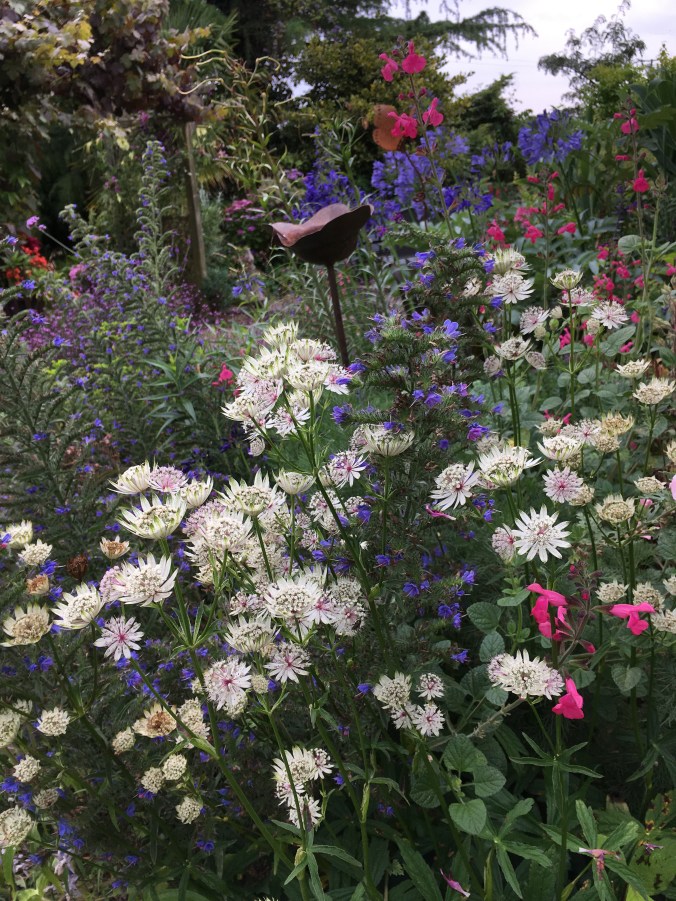
Astrantia Little Ash Seedling, blue echium vulgare and pink Salvia Penny’s Smile. A lovely contrast of flower forms. This combination has a long flowering season. Astrantias have a good ‘skeleton’ structure once the flowers have gone over.

Purple Veronicastrum Fascination partnered with red Persicaria amplexicaulis and white Persicaria alpina. I’ve just discovered ‘persicum’ is Latin for peach and refers to the long peach-like leaves.

Grey-leaved Melianthus major (honey flower) creates a background to blue agapanthus, bright pink Diascia personata and mauve Verbena officianalis grandiflora Bampton.

Agapanthus thrive in the well-drained gravel beds up by the house. The evergreen agapanthus is deep blue africanus variety.

From the top terrace, looking down the right hand side of the garden, to the glorious East Devon country views beyond.

Owner Helen Brown has made the most of the views. Here she’s framed them with a series of arches covered with climbers such as ornamental vine, Vitis Purpurea and scrambling viticella clematis.

In the gravel just in front of the steps, there’s Dierama, known as angel’s fishing rods. Grass-like leaves with tall graceful flowering spikes. The flowers dangle down, hence the common name. I’ve found this difficult to grow in my wet Leicestershire clay. It’s a plant that needs a perfect balance of good fertile soil with excellent drainage. Not easy to achieve.

The view through the second arch. There’s a white clematis Paul Farges, or summer snow, on the right.

At the end of the view, there’s a granite and metal sculpture. These were originally rollers in wooden frames, pulled by horses to flatten clods in the surrounding fields. The metal parts came from more modern Cambridge rolls, pulled by tractors. In the background you can see an area of moisture-loving planting alongside a stream, with a path leading to a pond.

A focal point metal seed head sculpture in the centre of the mini-meadow.

Umbellifers in the meadow. Very attractive to bees, butterflies and hoverflies.

Looking over a low farm fence, there’s a paddock full of grasses and wild flowers such as yellow rattle and yellow Lotus corniculatus, bird’s foot trefoil.

The whole field is covered in tiny white flowers. We know this as stitchwort, a type of stellaria.

Helen leaves flowers to set seed for birds to enjoy. This is a Silybum marianum with thistle-like seeds just about to take flight. I’m glad I captured the moment, and I’m glad I made the effort to leave my potting shed to see Helen’s garden in all its glory.

Little Ash Bungalow is a 1.5 acre garden regularly open for the NGS, and also open by arrangement for groups of 10 or more on pre-arranged dates. Admission is £4 adults, children are admitted free. Cakes and refreshments usually available. Dogs on leads welcome.

Little Ash Bungalow, Fenny Bridges, Devon, EX14 3BL

https://ngs.org.uk/view-garden/21320/

Notes:

Other plants I noted, if you are a keen plants person: Roscoea Royal Purple, Crinum powellii Album, umbellifera Conopodium majus, Hedychium spicatum, Buddleja weyeriana, Clethra alnifolia for perfume, Grevillea victoriae, Cuphea blepharophylla, Buddleja lindleyana, pitcher plants, rudbeckia, Catalpa erubescens Purpurea, Phlox Starfire, Crinodendron patagua, Lobelia urens, Gladiolus papilio Ruby, Miaianthemum racemosum, bamboos, pond plants, bog plants and clematis – many unusual varieties.

Six on Saturday. Wind-Swept Walk Around My Garden on 10th Aug 2019

I don’t like windy weather. It makes me unsettled. I worry about everyone’s gardens. So much effort goes into growing flowers, fruit and veg, it’s heartbreaking when it’s destroyed by the weather.

I’ve waited all day for the wind to drop. It hasn’t. So it’s a blustery, sort of a walk around my garden. My dahlia stems are pointing in all kinds of crazy directions. I should have staked them better. But I didn’t. This one is still looking lovely though. It’s a decorative double called David Howard. Beautiful, orange-blushed flowers 10cm across, set off by bronze-tinted foliage. Plants grow to about 75cm, unless toppled by the rain and wind……. sigh.

Double flowers like these last around two to three weeks in a vase. They keep on opening up, like a ripple effect, until the centre is revealed. Well-known florist Jonathan Mosley gave a demonstration at the Belvoir Castle Show recently and revealed a few tips on getting the best out of cut flowers: Use a very sharp kitchen knife to cut flowers, not secateurs which crush the stems rather than cut them cleanly. Walk round with a bucket of very cold fresh water, and drop stems straight in, so air bubbles don’t get the chance to form in the stems. Cut flowers early in the morning and stand them up to their heads in water in a cool dark place such as a potting shed or garage for at least 6 hours before using them in arrangements. Giving them a really good drink makes them last much longer.

I’ve decided to go for an apricot-coloured theme this week. It might help calm our shattered nerves. This is one of my favourite rambling roses, Ghislaine de Feligonde. It flowers in huge swathes in June, and then puts out the occasional flower right through the summer. Bees love it, it’s free flowering and doesn’t get blackspot. All cause for a celebration, I think. Plus is looks good in a a vase.

In keeping with the colour scheme, there’s some beautiful seedling spider day lilies bred by Pollie Maasz at Pollie’s Lilies. These ones don’t have a name as they are trial plants. Pollie selects the best from her trials and registers new names. It’s a fascinating process and I’m glad to have some of her “babies” to try out here.

I am very fond of New Guinea hybrid impatiens. They flower all summer for no effort other than watering and feeding with seaweed extract or liquid tomato fertiliser. I don’t even bother to dead head them, they seem to sort themselves out. This one is Magnifico Star Orange. Cheerful even when it’s raining and blowing a hooley in the garden. I can always pretend I’ve been transported to the tropics.

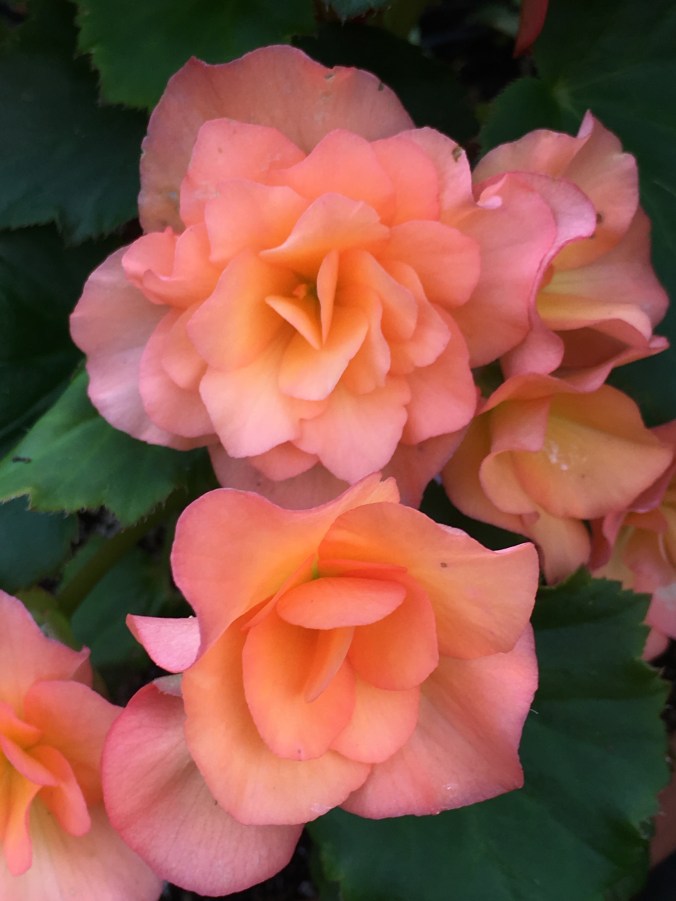
I love begonias. This one is from the Apricot Shades range and is good for containers and hanging baskets. It will flower its heart out until the first frosts, then I’ll bring it in to the frost free greenhouse for winter. Dried off and kept indoors, it can be started into growth each spring. A really good value plant and so many lovely colours to choose.

Finally, from my pelargonium collection, there’s this beauty. This is one of the species hybrid pelargoniums from Fibrex Nursery. I think it is Pelargonium Ignescens, but will stand to be corrected. I have quite a few from the nursery and the labels have long gone. This one dates back to the 18th century and has pretty soft, downy leaves too.

I hope you’ve enjoyed your walk round my garden today, despite the howling wind! This is the view from the far hedge, in the back field behind my garden. It’s a wonderful place to stand and observe the weather. You can see for miles and today the farmer has started – then stopped – harvesting the corn. In a day, the crop will be safely gathered in, and the scene will change again, with ploughing the next sound we’ll be hearing.

Links: sos are https://thepropagatorblog.wordpress.com/2019/08/10/six-on-saturday-10-08-2019/#comments

Dahlia David Howard: https://www.rhs.org.uk/Plants/57111/i-Dahlia-i-David-Howard-(D)/Details

Rosa Ghislaine de Feligonde https://www.ashwoodnurseries.com/shop/rosa-rambling-ghislaine-de-feligonde.html

Pollie’s dayliles https://www.polliesdaylilies.co.uk/

Fibrex https://www.fibrex.co.uk/

Dancing with Bees- prize draw winner. And The Good Bee Review. New books

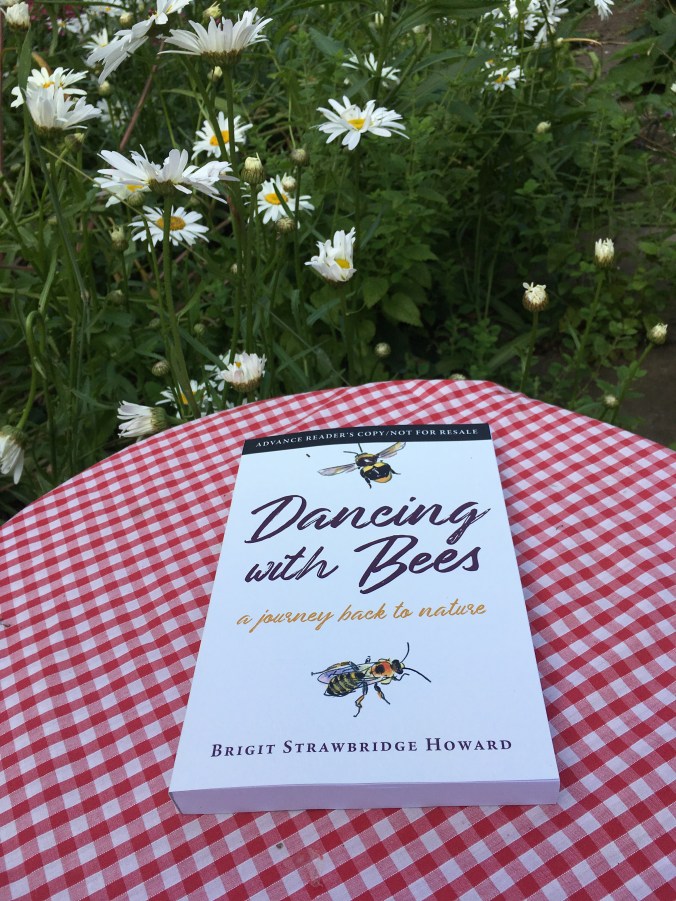
Thank you everyone who left a comment on my review of Brigit Strawbridge Howard’s new book, Dancing with Bees. All names were put in a hat and a winner randomly selected. A copy will be posted to Debi Holland when it’s published on 5th September.

photo: Bees loving Echinacea White Swan in my cut flower patch.

I wrote about Brigit’s new book here: https://bramblegarden.com/2019/08/04/dancing-with-bees-a-journey-back-to-nature/

Chelsea Green Publishing. Publication date: 5th September. £20, hardback.

Meanwhile, more new books….I have one prize draw copy to give away of :

The Good Bee- A Celebration of Bees and How to Save Them

by Alison Benjamin and Brian McCallum.

Published by Michael O’Mara Books, 2019.

Hardback. £9.99

It’s a delightful little book, full of insights into the secret lives of bees. The section on gardening for bees is particularly helpful. There are five simple steps to start helping bees:

* plant year round flowers, shrubs and trees

*provide nesting sites and materials

*ditch the weedkiller and bug sprays

*leave the mower in the shed

*create a bee watering hole.

There’s ideas for making DIY bee hotels and info on where to site them. A charming, well-written book packed full of interesting facts. It would make a perfect stocking -filler present for anyone wanting to know more about bees.

Alison Benjamin and Brian McCallum discovered their passion for bees and beekeeping twelve years ago. Since then they’ve set up Urban Bees, working with communities, charities, businesses and the public to raise awareness about all bees and support bee populations through education. They established a number of apiaries around London, including in Regent’s Park. They have written three books together, including their bestseller, A World Without Bees.

Please leave a comment below to be included in the draw. No purchase is necessary. A name will be randomly selected by the publishers. There’s no cash alternative.

Links:

The Good Bee : https://www.mombooks.com/book/the-good-bee/

Dancing with Bees : https://www.chelseagreen.com/product/dancing-with-bees/

Next Review coming up, with a prize draw copy is:

The Garden Jungle, or Gardening to Save the Planet, by Dave Goulson.

https://www.penguin.co.uk/authors/1070593/dave-goulson.html

It’s been a fantastic summer for books- for wildlife-friendly gardeners.

Annual Lecture- Kim Wilkie- Funds for LRGT schools gardening projects

Photo credit: Boughton House

21st Century Garden

https://leicsrutlandgardenstrust.blogspot.com/2019/07/lrgt-annual-lecture-september-2019.html

I’m Growing New Potatoes for Christmas.

New potatoes are more than just a treat for early summer, you can enjoy them into the winter too. Started now, they will be ready to eat by Christmas. Here’s how I’m growing mine.

Special seed potatoes are available online, in catalogues and in garden centres now. I’m growing Charlotte and Pentland Javelin which are favourites for taste. You can also buy Nicola and Maris Peer. These are cold stored potatoes, primed ready to plant in August. You can also hold back some of your spring-bought seed potatoes, but you have to keep them in the bottom of the fridge until now, before planting.

Royal Horticultural Trials at Wisley showed that potatoes grow best in bags rather than rigid-sided plastic plant pots. You can buy special potato sacks, but I’m re-using compost bags. It’s a good way to recycle them.

I’m using Dalefoot salad and vegetable compost. Roll the tops down to form a collar, spike the bags to give good drainage, and fill them with 30cm of loosened compost.

Sit the seed potatoes on top of the compost. Ensure they are not touching, place them about 20cm apart.

Cover the potatoes with 5cm compost and water well. Place outdoors on a sunny patio. As the shoots start to grow, cover them with more compost and roll up the compost collar. Keep doing this until there is a 5cm gap left at the top for watering. What you are doing is “earthing up” the potatoes, without all the effort involved on growing them in the ground.

Move the bags, before the first frosts, into a greenhouse, porch or conservatory. By now the top growth will have died back and can be removed. Stop watering and keep the potatoes stored in the dry compost until you want to cook them. Because they have not been harvested and exposed to sunlight and air, the potatoes will not form hard skins and will retain that new potato taste and texture. In the past growers would have stored them in damp sand. My grandfather used to make “clamps” for vegetables such as potatoes and carrots, when vegetables had to last right through the winter without the availability of fridges and freezers.

I use soil association-approved Dalefoot Compost which is made from sheeps wool and bracken. It gives farmers in the Lake District an income for their wool which might otherwise go into landfill. It’s 100 percent natural and peat free, and contains a source of potash which makes fruit and flowers grow well.

My summer potatoes did well this year. I’m hoping for a small but tasty crop of new potatoes just in time for my Christmas dinner.

After planting my potatoes, I am sitting in my summerhouse with Grace cat, enjoying sunny weather and 23C temperatures, thinking of winter days ahead. I’m sure those tasty treats will be so welcome when the days are cold and wet.

You can listen in to my 10 minute gardening tips during BBC Gardens Hour today at 1.40.47 on the timeline on Sounds https://www.bbc.co.uk/sounds/play/p07hst9m Each week we try something new, do pruning, take cuttings, grow something from seed, help wildlife. Sometimes our projects work, sometimes they fail, but it’s a lot of fun trying, aiming to get the best from our garden plots.

Links: Seed potatoes https://www.amazon.co.uk/Taylors-Autumn-Planting-Potatoes-Christmas/dp/B008M4MHFC

Dalefoot compost : https://www.dalefootcomposts.co.uk/

Karen twitter : https://mobile.twitter.com/kgimson/status/1149241935502225408

Karen on instagram: https://www.instagram.com/karengimson1/?hl=en

Please feel free to share this blog post. Thank you for reading!

You might also like to read: https://bramblegarden.com/about/

And : https://bramblegarden.com/2019/08/04/dancing-with-bees-a-journey-back-to-nature/

Response on twitter. @bimblegarden said:

Products on Trial- Bloomin’ Amazing Soil Enricher

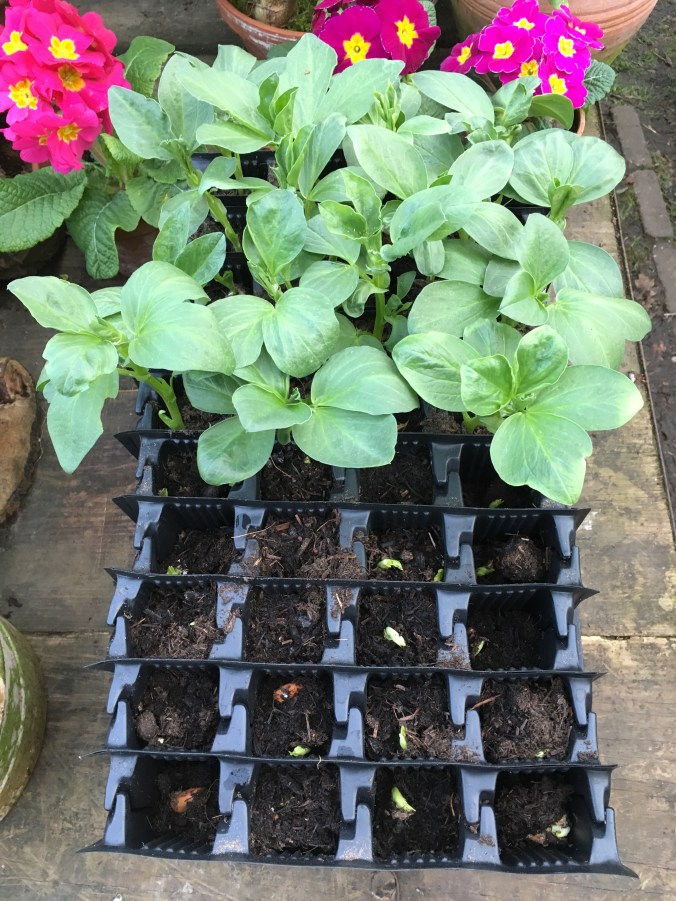
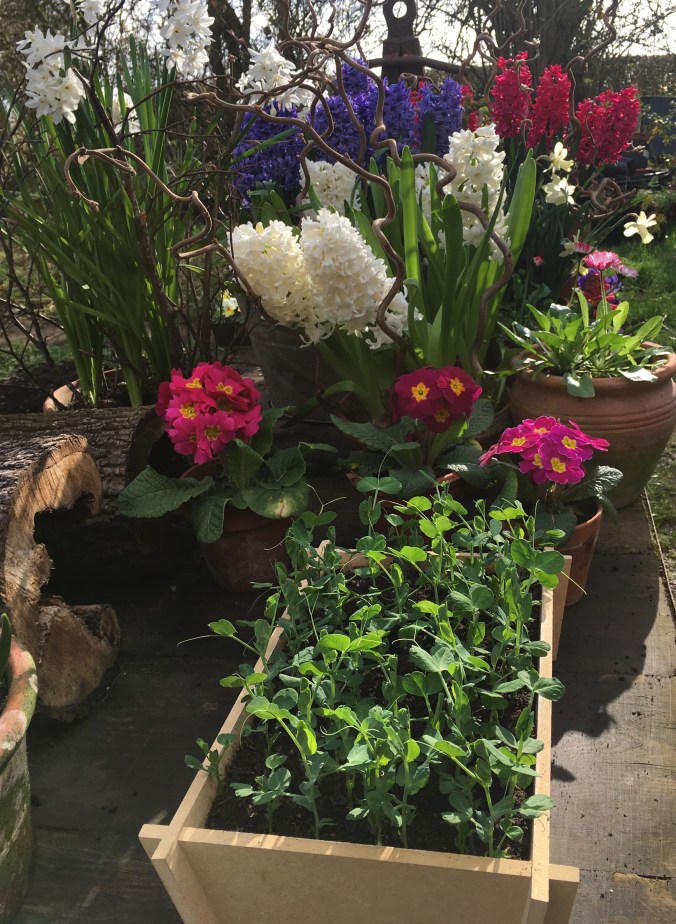
As we are in August now, it might seem odd starting with a photo taken on the 5th March. There’s scented spring bulbs in pots, and root trainers contain broad beans. Summer days full of flowers, fruit and veg are months away.

But I’ve been carrying out a six month trial of new soil improver, Bloomin’ Amazing. So I needed to re-wind back to spring, where it all started. I sowed broad bean De Monica on February 25th, but half were eaten by mice. I re-sowed the root trainers March 1st, and you can just see they sprouted by March 5th.

On March 25th I weeded the plot and spread the soil improver. I have 10 beds, 1.3m wide by 3m long, with little slab paths between. It’s a no-dig garden following the system of growing made famous by Charles Dowding. No-dig means no heavy double digging over the winter. Basically, after harvesting crops, you just add a few inches of compost and plant through. Not digging the soil means weed seeds are not brought to the surface to germinate. And soil creatures such as worms and black beetles are not damaged. Worms are left in peace to aerate the soil, and beetles eat the slugs.

Bloomin’ Amazing is a by-product of a renewable energy business, following from a joint venture between the Duchy of Cornwall and three farmers. It’s made from farm crops, maize and rye.

I found it easy to handle. It’s fairly light, I didn’t have any difficulty manoeuvring the bag, and the product is dry and easy to spread.

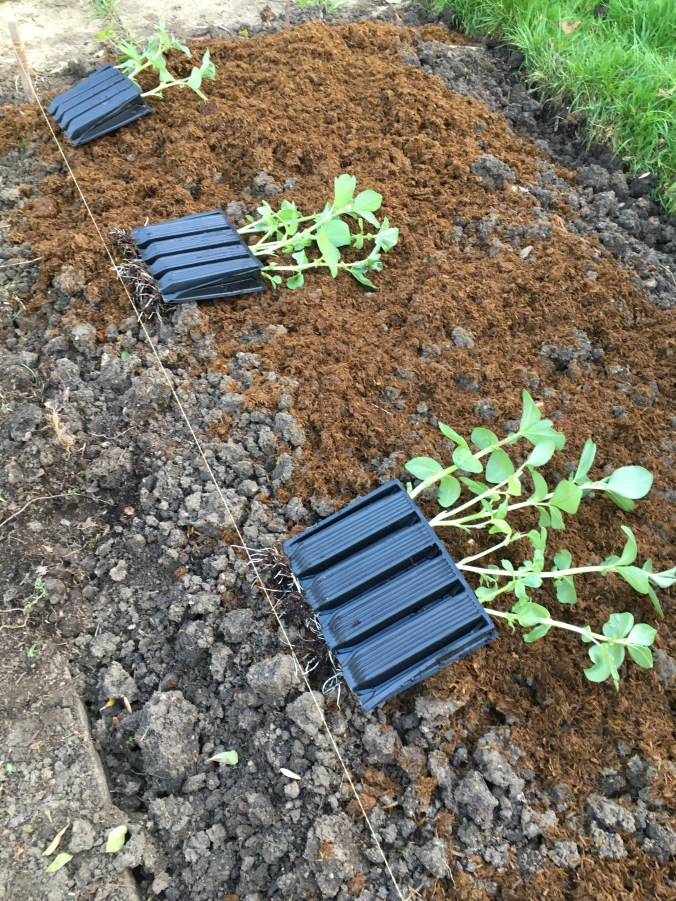
I set out my broad beans in two rows along the bed, and then drew the soil improver around them as a mulch.

The plants thrived and grew strongly. The mulch seemed to deter slugs. I didn’t use any other slug killers or deterrents and the plants were hardly touched. I realise this might be partly down to the weather. It was a cold spring and few slugs were about initially.

I started off with really good, healthy plants using the Haxnicks root trainers. Although they are plastic, I will carefully wash and re-use them. They are strong enough to last for years. I must admit, I ordered them before we all became aware of the problems with plastic.

I didn’t have time to weed or work on this bed again until July 12th when these photos were taken. I’m really delighted with the weed -control element of the mulch, and it must have fed the beans because they are the best I’ve ever had. No other fertilisers were used on this bed.

We’ve been eating broad beans for weeks, and I’ve filled the freezer too so there will be a little taste of summer in the middle of winter.

In amongst the beans I grew Lady Christl and Charlotte potatoes. I didn’t have time to earth them up, just relying on the mulch to keep in the moisture and exclude the light. And again, none of the potatoes were munched by slugs. Usually a few have holes in them.

Links : Blooming Amazing and supplier info: https://www.bloominamazing.com/

De Monica broad beans: Mr Fothergill’s : https://www.mr-fothergills.co.uk/Vegetable-Seeds/Broad-Bean-De-Monica-Seeds.html#.XUmuNmfTWfA

Charlotte potatoes: https://www.marshalls-seeds.co.uk/charlotte-seed-potatoes-pid1890.html

Lady Christl potatoes : https://www.mr-fothergills.co.uk/Potatoes/Early-Seed-Potatoes/Potato-Extra-Early-Lady-Christl.html#.XUmvL2fTWfA

Charles Dowding no dig courses: http://www.charlesdowding.co.uk/courses/

Six on Saturday – a walk around my garden- 3rd August 2019

Short of time, I usually post photos of my garden at dusk in a last-minute dash about the place. Today, I got up early at 6am. And, surprisingly, the back fields are as misty as an October morning. We are having some really strange weather conditions this year.

I opened up the summerhouse in the hope of a nice day. The weather report says it’s going to be 23C.

Things I can hear at this time in the morning: Cows in the field opposite. They line up along the hedge to see what I’m doing. Snorting, sniffing and generally jostling for space, they are noisy and rather nosy neighbours.

I like to walk the perimeter of the plot twice a day, at dawn and dusk. We’ve made a kind of avenue of trees accidentally. We just happened to place the cherry, maple and ash trees wide enough apart to drive a lawn mower between. It makes a lovely calm leafy track, and the view out across the field changes daily. This path is good for watching the owls. They can’t see us, but we can see them.

On the other side of the trees, there’s a small paddock, an orchard and veg plot. This year, there’s more cut flowers than veg, although we are enjoying Charlotte Potatoes, and broad beans at the moment. I planted some French beans a fortnight ago and they will be cropping in another couple of weeks. The cut flowers have all been battered down by the rain. We had a whole month’s worth of rain in 36 hours. Floods are out in surrounding fields. Growing in a total jumble is Ammi, dahlias, rudbeckia, nicotiana, borage, verbascum, sweetpeas, cosmos and pot marigolds. There’s cabbage and garlic squeezed in there somewhere.

On the garden table there’s pots of the new Agapanthus Fireworks. My trial plants flowered from March and have now produced another three stems. I’m delighted with my plants and can highly recommend them. They are easy to grow and flower for a long period without needing anything more than watering.

My trial Aeonium plant is also looking really lovely. It’s a gorgeous colour and shape.

That’s my six photos for this week. I hope you’ve enjoyed your ramble around my garden- at an much earlier time than usual!

links :

Six on Saturday : https://thepropagatorblog.wordpress.com/2019/08/03/six-on-saturday-03-08-2019/

Agapanthus Fireworks : I wrote about them here : https://bramblegarden.com/tag/tulips/

Agapanthus from Wyvale Nurseries : http://www.wyevalenurseries.co.uk/news/news/agapanthus-fireworks-wins-new-product-award-at-glee/

Aeonium Review here : https://bramblegarden.com/2019/04/12/review-of-garden-beauty-web-shop-and-prize-draw-for-aeonium-schwarzkopf/

Please feel free to share this blog post.

Summer Lemon Biscuits Recipe

If you were listening in to the radio for Garden Hour, these are the biscuits I took in for the team. I made the lemon and white chocolate version yesterday. Today I made them with dark chocolate. Delicious!

Recipes featured here use produce from my garden. I’m always looking for ways to use up my citrus fruit from the greenhouse. This is a favourite recipe. It only takes ten minutes to make. Perfect if friends turn up unexpected and you want to give them a quick home-made treat.

Ingredients

180g biscuits ( I’ve used home-made Scottish shortbread, but you can use any biscuits. Custard creams are delicious, as are chocolate bourbons.)

3 tbsp lemon curd. Home-made (recipe below) is totally delicious, but any will do.

100g best quality dark chocolate, or white chocolate.

Few bits of fine lemon peel for decoration

Recipe

Crush the biscuits in a food processor, or in a plastic bag, bashing them with a rolling pin.

Add the lemon curd and mix to combine.

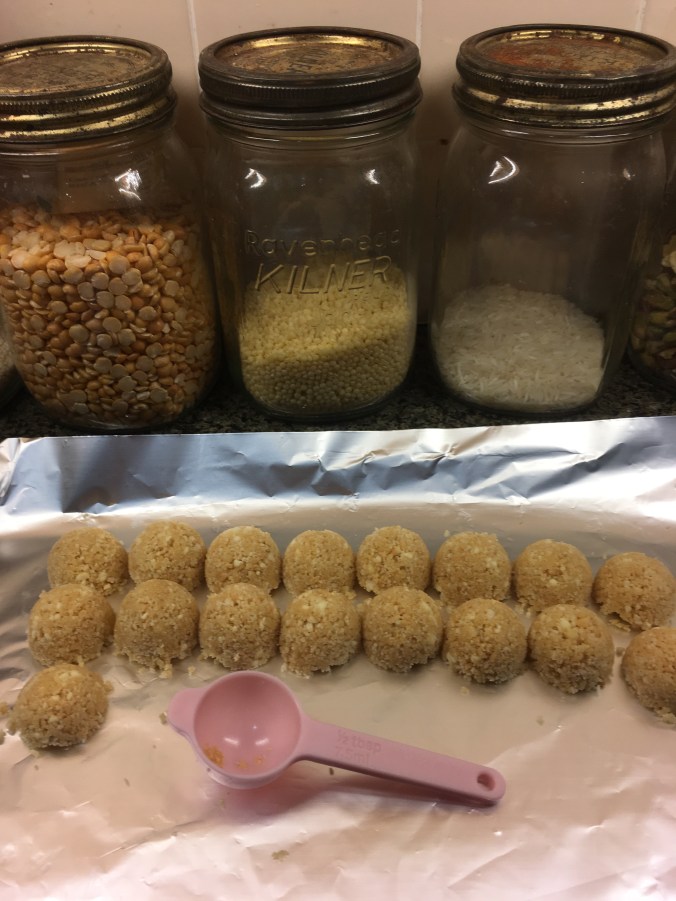
Use a melon baller or a 7.5ml measuring scoop to form balls. Press them slightly while in the scoop so they hold together.

Tap out on to a tray covered with foil. Place in a fridge.

Melt the chocolate in a Pyrex bowl suspended over a pan of boiling water. Ensure the water doesn’t get into the chocolate mixture. Or melt in a microwave in several 10 second bursts. Take care not to over cook.

Drizzle the chocolate over the biscuits in long lines. Add some fine lemon peel to decorate. Return to the fridge to set.

Will keep in the fridge for 3 days. But they won’t last that long. They are truly delicious!

Lemon Curd Recipe

Makes 1.15kg

Ingredients

6-8 large lemons (unwaxed, organic, or home-grown)

225g butter

575g caster sugar

5 large eggs

Recipe

Grate the zest from the lemons on the finest setting. Squeeze the juice and strain into a jug. You will need 300ml of juice.

Cut the butter into small pieces and put into a glass bowl along with the sugar, zest and juice. Set over a pan of hot water and stir until the sugar has dissolved. The bottom of the bowl must not touch the water which must simmer and not boil.

Lightly beat the eggs in a bowl but don’t whisk them. Strain the eggs through a sieve into the lemon mixture. Simmer on a low heat, sitting continuously until the mixture thickens. Will take about 20 minutes. Do not allow to boil or it will curdle.

Pour into warmed sterilised jars. (pop the washed jars in an oven for 10 minutes until sterilised).

Place wax disk over the lemon curd ( wax -side down). Smooth down the disk to remove any air.

Cover with dampened cellophane circles, label and store in the fridge.

Makes a lovely filling for cakes and scones.

Can also be orange, lime or grapefruit curd.

Enjoy!

Incognito Insect Repellent- Review and Prize Draw

Working in the garden, I’m often trying to fend off flies and mosquitoes intent on biting me. Flapping my arms around is my usual method of defence. It doesn’t always work. And as I found out recently, a bite or sting can turn into a nasty infection – or even blood poisoning.

I wrote about a recent accident in the garden here :

https://bramblegarden.com/2019/07/05/infection-a-warning-to-gardeners/

Readers replied with their own stories – as well as those who suffered serious infections from insect bites.

https://bramblegarden.com/2019/07/19/infection-update-19th-july-2019-gardening/

My write-up has been viewed 122,000 and liked, retweeted and commented on 31,000 times. It’s obviously a subject that resonates with many gardeners.

Since then, I’ve been careful to always wear gloves. I’ve got different gloves for the various jobs in the garden. And I make sure I cover my arms and legs – and use insect repellent.

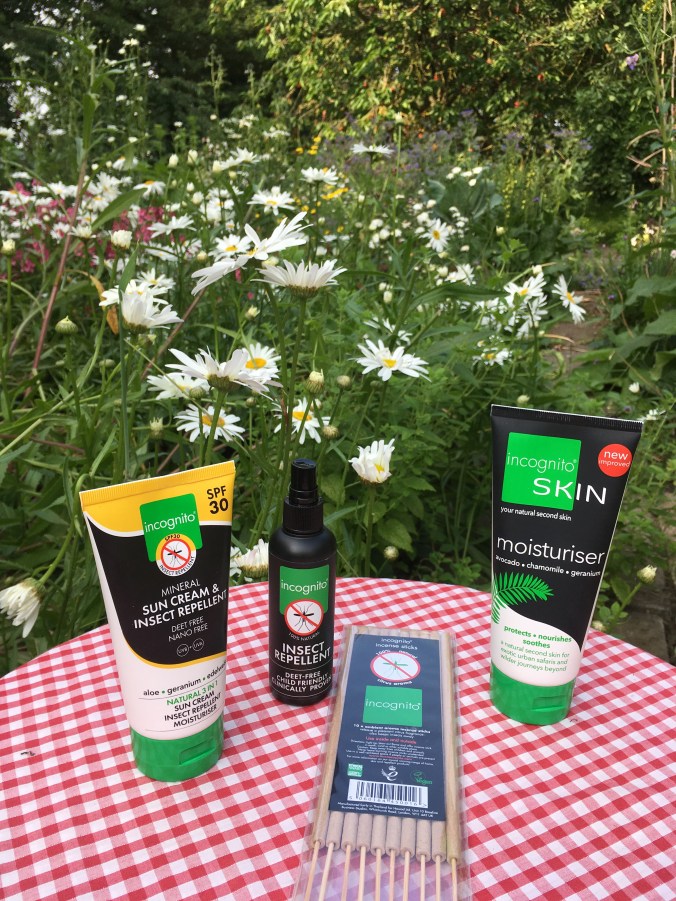
Through Twitter, I learned about UK company Incognito and sent off for some samples to try out.

I love the anti- mosquito spray which is quick and easy to apply first thing in the morning, under and over clothing. Mosquitoes and other blood sucking insects home in on ears, wrists and ankles where blood vessels are nearer the surface. So I pay particular attention to those areas.

I’m liberally spraying the insect repellent over my clothing as well to repel ticks.

Here’s a summary of what I liked about Incognito insect repellent:

* Deet Free

* 100 percent natural ingredients

* Protects against malaria, dengue and zika-carrying mosquitos

* Recommended by NHS Public Heath England for use anywhere in the world

* Easy to apply and doesn’t leave skin feeling sticky or greasy

* Pleasant citrussy scent (oil of lemon eucalyptus )

*Protection lasts up to 4 hours against daytime biting. Easy to reapply for extended evening coverage.

I found the products to be easy and pleasant to use, and I can report that a horsefly and a whole cloud of mosquitoes were sharing my gardening space, and didn’t come anywhere near me. Also, I spent a day working alongside a lake, a situation I usually dread in the summer. And again, no bites while using the spray and creams.

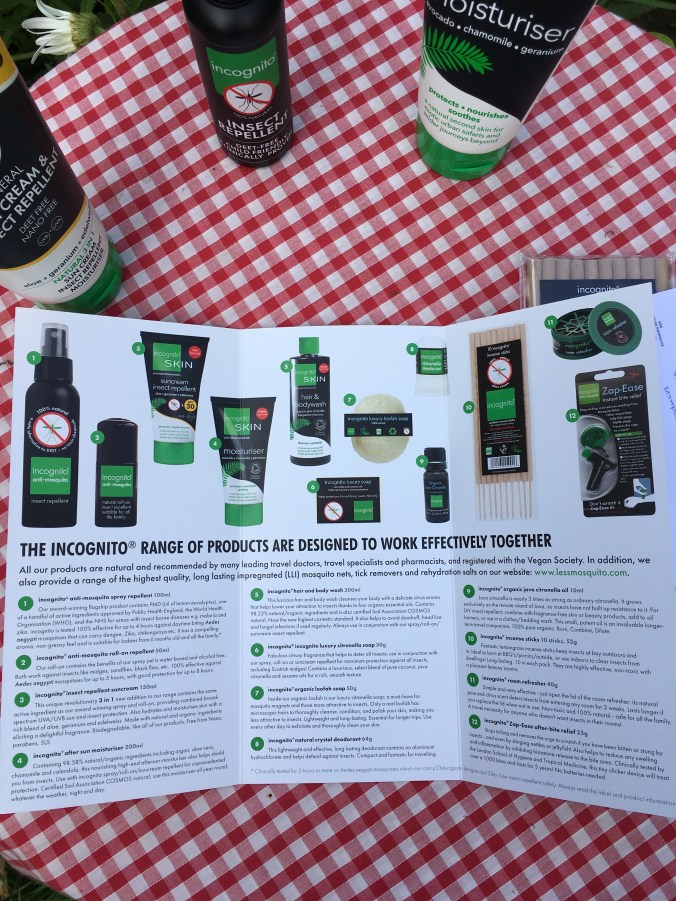
I tried out the combined sun cream and insect repellent. Very useful for SPF 30 requirements. And there’s a natural moisturiser too, containing avocado, chamomile and geranium. I haven’t had a chance to try the incense sticks yet, but we are planning a family party in the garden soon where they will be very useful. They are non-toxic and have a lemony aroma.

Incognito is offering a prize of a 100ml anti-mosquito spray, and a 150ml insect repellent suncream. Please leave a comment below to be included in the draw. No purchase is necessary. Incognito will draw the winning name “out of a hat” and post the prize direct. Please also say if you don’t want to be included in the draw. All comments are very welcome.

Please feel free to share this blog post on any platform.

I am https://mobile.twitter.com/kgimson?lang=en on twitter

Also https://www.instagram.com/karengimson1/?hl=en

Links : Incognito https://lessmosquito.com/

NHS advice re insect bites : https://www.nhs.uk/conditions/insect-bites-and-stings/

NHS advice re sepsis : https://www.nhs.uk/conditions/sepsis/

UK Sepsis Trust https://sepsistrust.org/

You might also like my recent posts : https://bramblegarden.com/

About: https://bramblegarden.com/about/

* Currently (25 July) the repellent spray and roll-on are buy one,get one half price at Boots.

Six on Saturday. A peaceful walk around my garden. 20th July 2019

Looking west.

Field boundaries awash with seedling clematis. I never cut them back. They grow as they please. Clematis Betty Corning is very similar. Long flowering in the shade of the hedge.

Rosa American Pillar survives without much care. This one came from a holiday cutting taken (with permission) from the front garden of a cottage at Sandsend. We used to rent the school house at the bottom of the valley for summer holidays with the family. A lovely reminder of sunny days, sea and sand.

Protected by tall hedges, the plot provides all the cut flowers, fruit and veg we need. No sprays or chemicals are used here. It’s a haven for wildlife – as well as me. Don’t look too closely. There’s plenty of weeds.

Flowers from the plot. On sale at Six Acre Nursery, Costock, Leicestershire. All proceeds to Rainbows Hospice for children and young people.

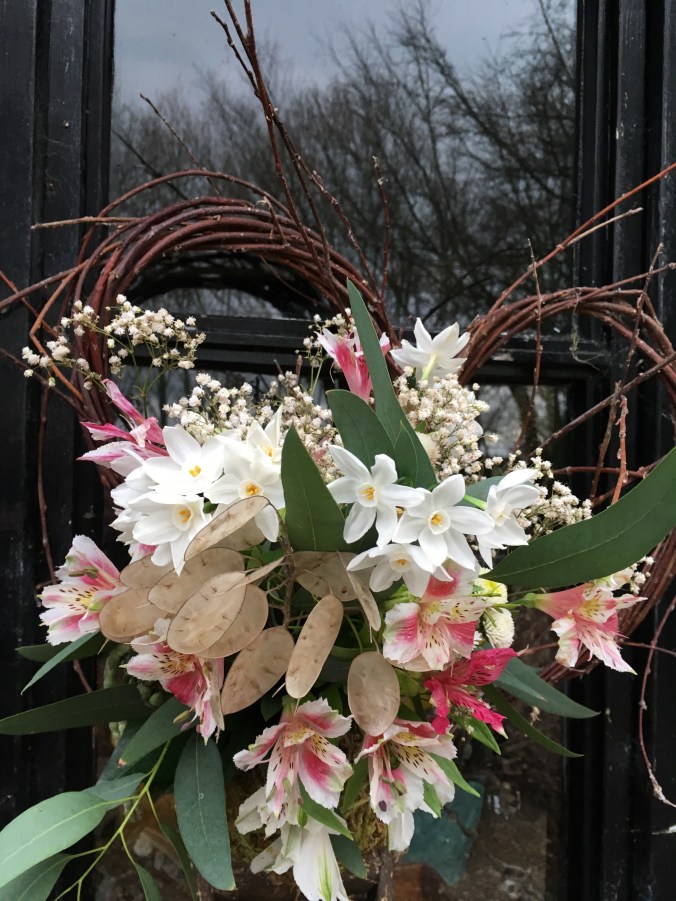
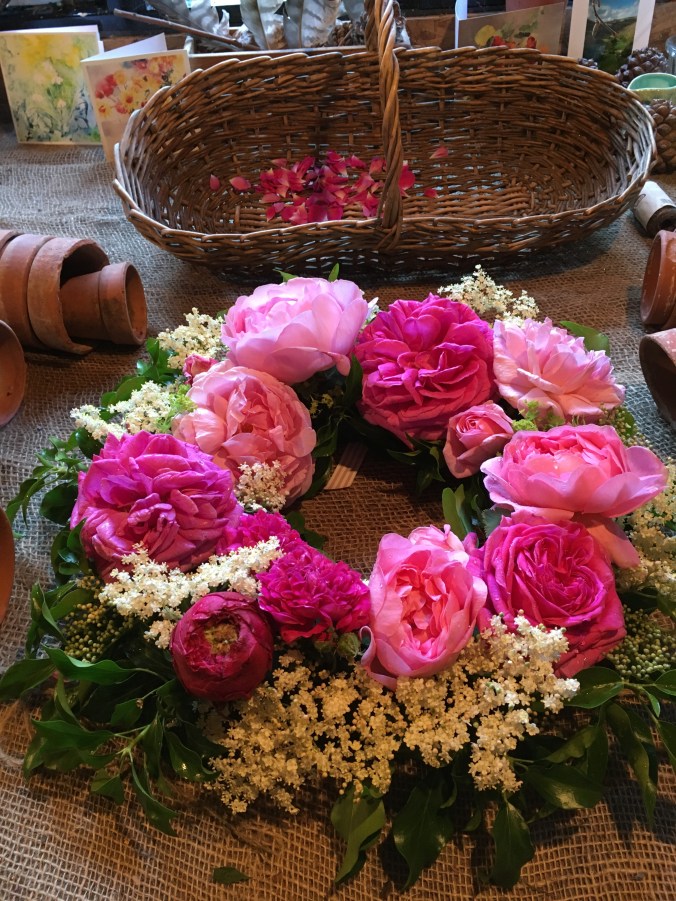
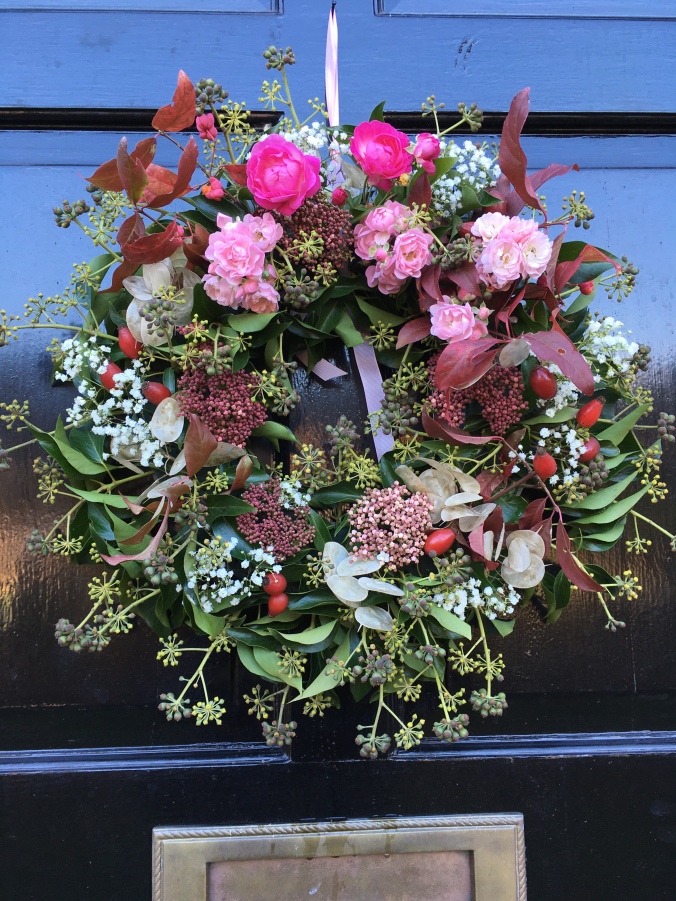
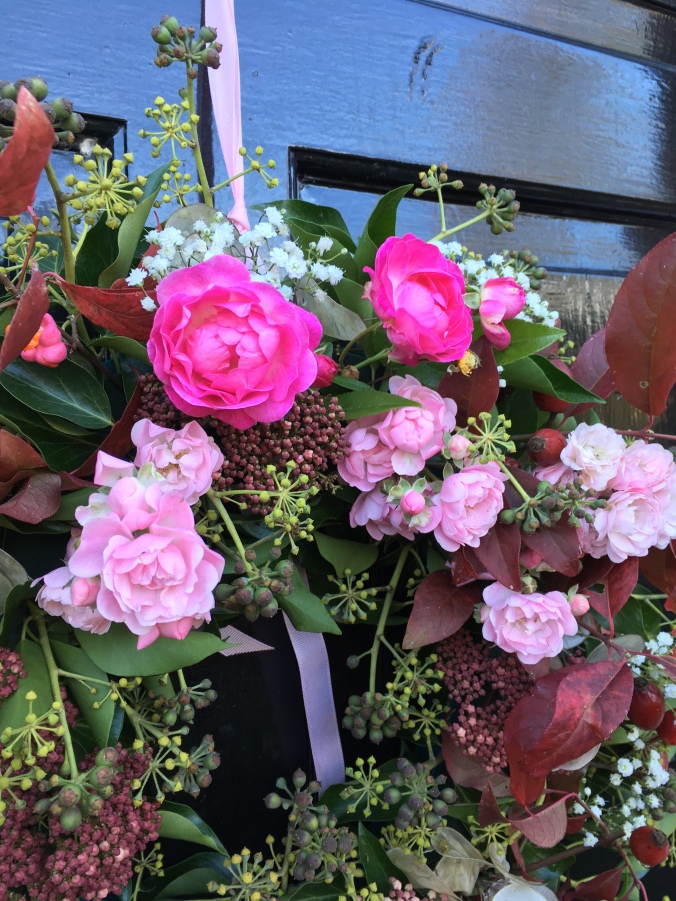
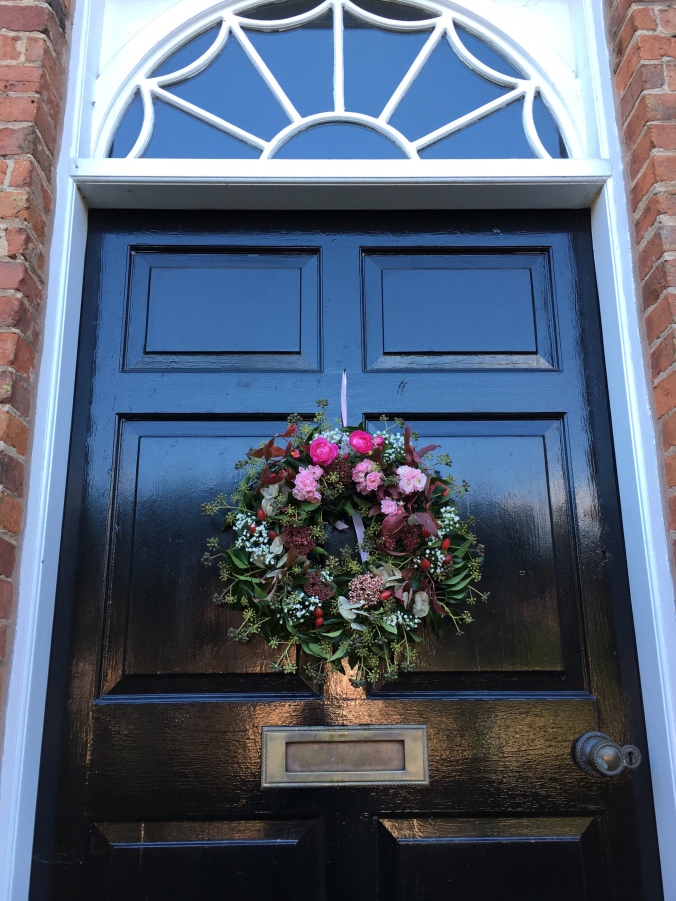
Sometimes I make door wreaths from the flowers. Here’s one I made this week.

Enjoy your weekend.

Links :

Six on Saturday : https://thepropagatorblog.wordpress.com/2019/07/20/six-on-saturday-20-07-2019/

Seeds from : https://higgledygarden.com/

Rainbows Hospice: https://www.rainbows.co.uk/

You might like to read : https://bramblegarden.com/2019/07/19/infection-update-19th-july-2019-gardening/amp/

Also, In a Vase on Monday: https://bramblegarden.com/2019/06/03/in-a-vase-on-monday-3-june-2019/

About Bramble Garden : https://bramblegarden.com/about/

Please share on any social media.

I’m @kgimson on twitter. https://mobile.twitter.com/kgimson?lang=en

karengimson1 on instagram https://www.instagram.com/karengimson1/?hl=en

Infection – Update- 19th July 2019 #gardening

I’ve just had a few weeks I would rather forget. I’ve spent a lot of time sitting here, recovering from an infection.

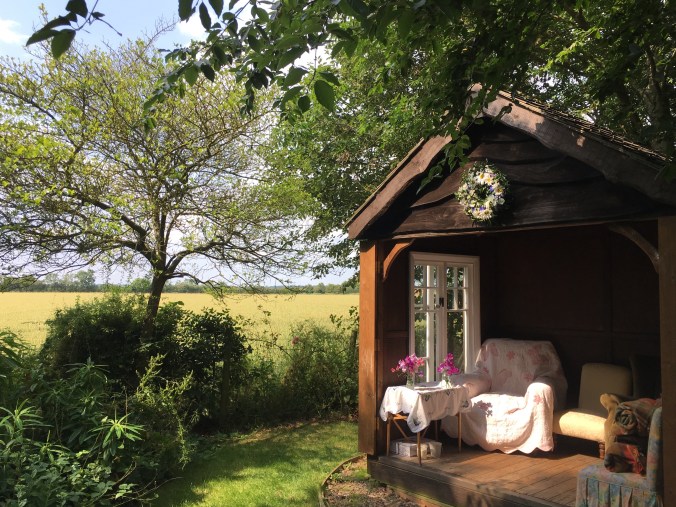
We spent a year renovating our 1930s summerhouse; it’s on a turntable, so it can follow the sun. I’ve watched the sunrise and sunset from my armchair, pondering on how a simple gardening injury can cause a potentially serious illness.

A few weeks ago I got a splinter in the palm of my hand. I was gardening and sweeping out my potting shed. A tiny drop of blood, it didn’t look serious. So I finished sweeping up before heading to the kitchen. I washed my hands in hot soapy water and extracted the splinter, put on a plaster and never gave it a second thought. I’ve had many thorns and splinters over the years, and always got away with it. This time I wasn’t so lucky and my hand became infected.

I wrote about it here: https://bramblegarden.com/2019/07/05/infection-a-warning-to-gardeners/

The infection spread another 10cm up my arm before stopping, thanks to antibiotics. This is called “tracking” and the pen line is a way of monitoring how fast the infection is progressing. Recovery has been challenging. I had a bad reaction to the tablets and the wound was slow to heal. I’ve finished two courses of antibiotics, but it’s possible there’s still a splinter in my hand as it is still red and sore.

What surprised me was the response on social media. My ‘warning to gardeners” post was viewed almost 120,000 times. It clearly resonated with many people.

I’m sharing some of the responses here. Hopefully it will spread the message to get urgent advice if you think you have any kind of infection, blood poisoning or sepsis. Speed is of the essence. If you don’t have time to read through, follow @SepsisUK and get to know the symptoms of serious infection so you can ask the question “Could it be sepsis.”

Infections were caused by gardening and other outdoor activities. Insect bites, plant sap allergic reactions and accidents with tools and equipment also featured amongst the 31,000 responses.

Here’s some snapshots from my twitter feed:

Abbie Jury wrote:

….

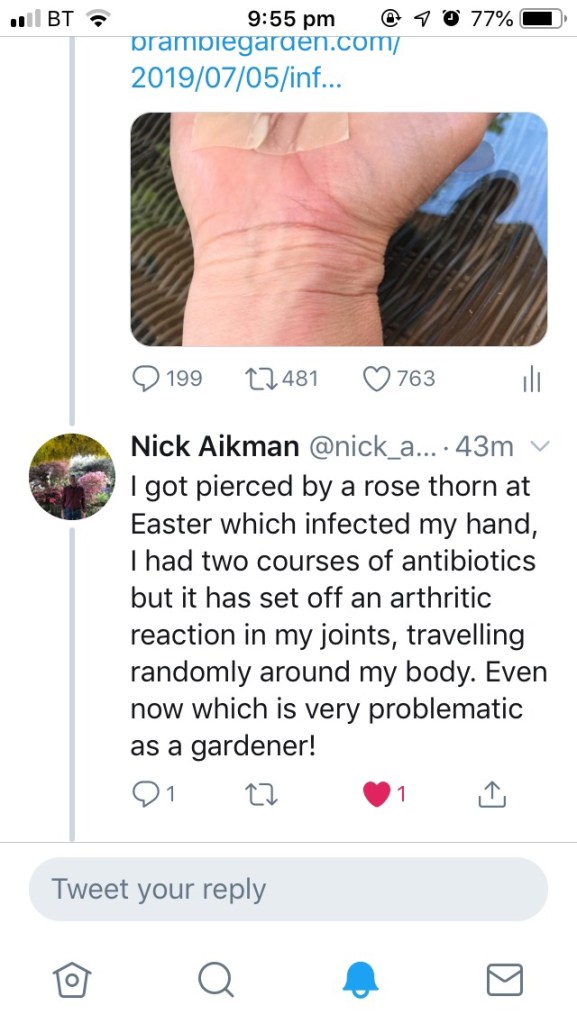
Nick Aikman wrote :

Georgie Newbery from Common Farm Flowers commented:

Vergette Gardens wrote:

T Dev wrote

Ella Beard wrote:

Owen Griffiths wrote:

Tara wrote :

Lucy Clements wrote:

Lou Nicholls wrote:

Reaction caused by cutting hellebores.

Mike Bray wrote:

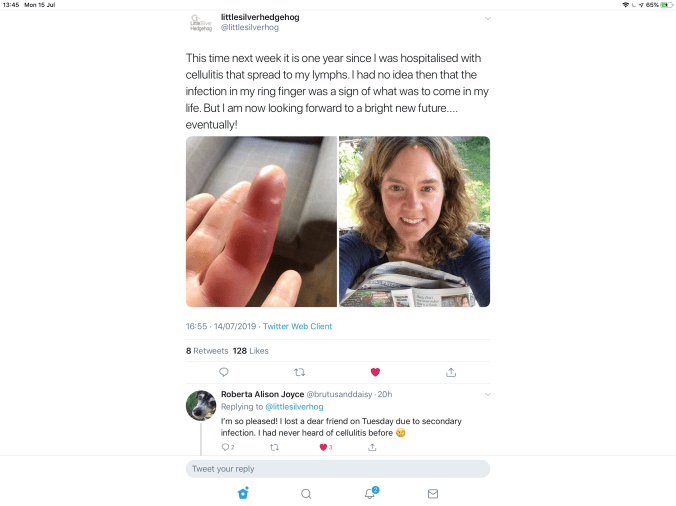
Little Silver Hedgehog wrote:

Mrs Brambledown wrote:

Lunacy Towers wrote:

Janice Mills wrote:

Claudia de Yong wrote:

Plot Garden Design wrote:

Grow Like Grandad wrote:

Dorinda Sweales wrote:

Lynn Nothegger wrote:

Caroline Barrett wrote: ….

Fiona -Green Rhapsody- wrote:

Wee C wrote:

Peter Caton Books wrote:

Tanya Anderson wrote :

Val Bradley -Sun Gardening – wrote :

Dorinda Sweales wrote:

Jean Vernon wrote :

Elizabeth Atherton wrote:

Constance Craig Smith- Daily Mail Gardening – wrote:

Links:

karen Gimson on twitter @kgimson, https://mobile.twitter.com/kgimson?ref_src=twsrc%5Egoogle%7Ctwcamp%5Eserp%7Ctwgr%5Eauthor

Instagram : karengimson1, https://www.instagram.com/karengimson1/?hl=en

UK Sepsis Trust for further advice https://sepsistrust.org/

For good garden gloves : http://www.goldleaf-gloves.com/

For insect repellents, there’s currently 20 percent off on their website : https://lessmosquito.com/?gclid=Cj0KCQjw1MXpBRDjARIsAHtdN-02E9MDRwt0HxoUuXwEEnzH1EVBglUh_Bh0IrBNWvQnVr4sqPiWsNAaAlxDEALw_wcB

Weeding/ gardening gloves : https://bramblegarden.com/2019/05/11/mastergrip-gloves-on-trial

NHS 111 advice https://www.nhs.uk/using-the-nhs/nhs-services/urgent-and-emergency-care/nhs-111/

In a Vase on Monday – 15th July 2019

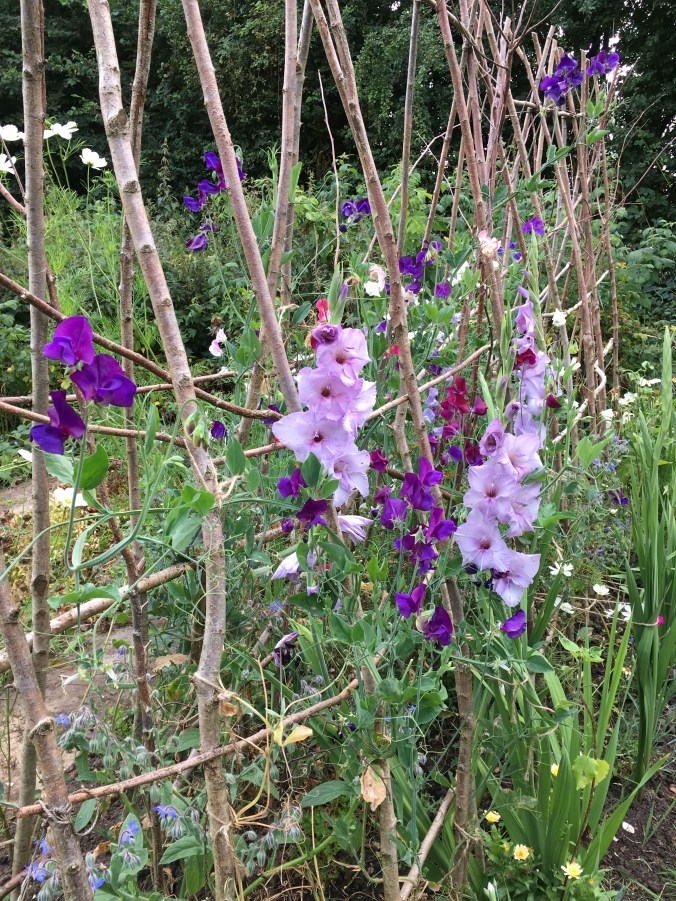
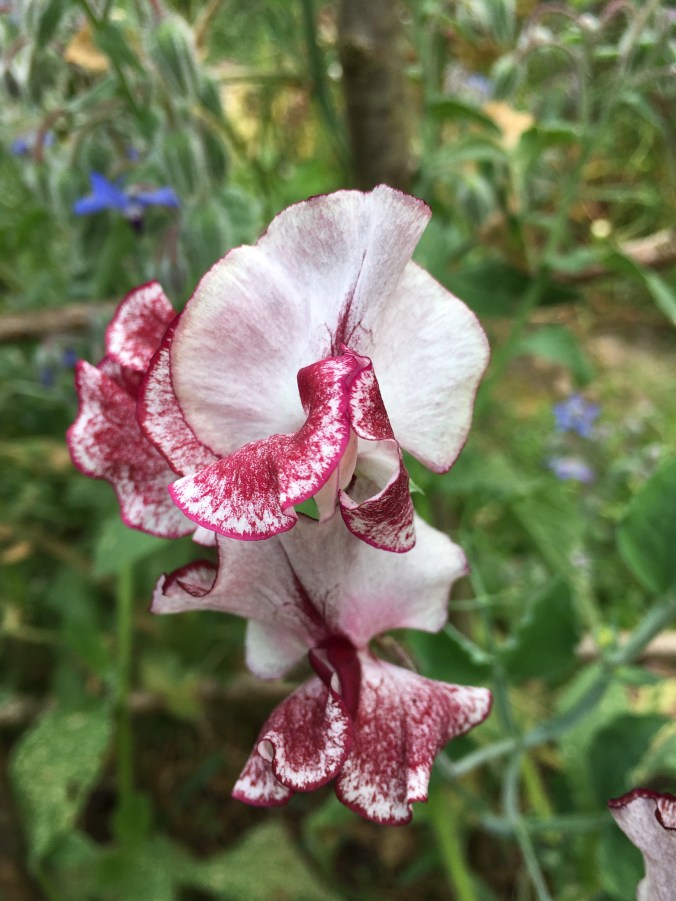
I’ve discovered, by accident, the magical effect of a sunset on sweet peas. It turns them into mini “stained glass” windows.

Picking them at 9pm, I suddenly find it’s too dark to take photos. Nights are rapidly drawing in. Mid-summer lulls you into a relaxed state of mind. Surely there will always be time to meander round the garden. Then, quite soon after the solstice, everything changes. There’s no streetlights here; dusk means picking your way through tall corridors of dark trees, along grassy paths, past the horseshoe wildlife pond. If you are lucky, you’re accompanied by a barn owl, sweeping along the hedge in eerie silence. You’ll marvel how such a large bird can ever catch any prey without being seen. But they make not the slightest sound and pass by like a shadow. If they see you, they don’t panic and madly swerve as some birds would. They barely acknowledge your intrusion, calmly changing direction and floating over the hedge to continue on the other side. They seem not to flap their wings, but soar and glide as if carried by the wind.

Our boundaries are made from farm posts and galvanised pig wire. We like to keep a connection with the surrounding fields. After all, our garden was once part of the farmland. We’ve simply borrowed the ground to grow fruit and flowers.

There are 10 beds, 1.3m wide by 3m long, divided by narrow slab paths. This year it’s a muddle of potatoes, broadbeans, Sweet williams, daisies and verbascum. A rickety A-frame of hazel rods runs through the centre, for sweet peas. This year I’m growing a combination of heritage types from Easton Walled garden and Higgledy Garden, and new varieties on trial from Mr Fothergills.

Amethyst and rubies; sweet pea flowers shine like jewels in the sunset.

My flowers are being sold at Six Acre Nursery, Costock, Leicestershire, with all proceeds going to Rainbows Hospice for children and young people. I am a voluntary fund-raising ambassador for Rainbows, and I also give slide shows and talks to garden groups for charity.

I hope you’ve enjoyed this peaceful walk around my garden at dusk. There’s much to see, even in the gloom.

Links : Cathy In a Vase on Monday : https://ramblinginthegarden.wordpress.com/2019/07/15/in-a-vase-on-monday-think-pink/

Easton Walled Gardens : https://www.visiteaston.co.uk/

Higgledy Garden Seeds. https://higgledygarden.com/

Mr Fothergill’s Seeds https://www.mr-fothergills.co.uk/Flower-Seed/Sweet-Pea-Seed/

Barn Owl Trust https://www.barnowltrust.org.uk/barn-owl-facts/

Notes: Most birds make a flapping, swooping sound when they fly. Owls have special edges to the front of the wing that breaks the air into small streams of wind that rolls to the end of the wing. Comb-like feathers further break down the air into even more smaller streams to create almost silent flight.

Infection – a Warning to Gardeners

I’ve been quiet for a few days. Here’s why.

Four days ago, I was sweeping out the potting shed when I got a tiny splinter in the palm of my hand. It looked like nothing serious. A tiny dot of blood. I inspected the wooden broom handle and could see a rough patch. I hadn’t noticed it before. I nearly always wear gloves. But this time I was in a hurry, and didn’t put them on. I finished sweeping before popping back to the house to run my hand under cold water. I fished out the splinter with tweezers, popped on a plaster and carried on gardening. And I never thought any more about it.

There’s always plenty to do here. Flowers to pick, weeds to pull out. But I started to feel ill. Not quite my usual chirpy self. I couldn’t think straight. I went on the radio on Wednesday, and I couldn’t think of any plant names. It seemed odd. I was struggling. Somewhat preoccupied with family matters, I didn’t notice my hand starting to itch and turn red. But on Thursday morning, I woke up at dawn and my hand was swelling and stiff. And there was a red line creeping up my arm.

I rang my local doctors surgery and told the receptionist what I was seeing. I said I thought it was an infection. I might have mentioned that I’d had sepsis before, three years ago. She said there were no appointments, but she could offer me a telephone consultation, which I accepted. Then I sat and thought about it. The doctor would surely want to see my hand. That would take time. If it was an infection I needed antibiotics, quickly. So I phoned 111, and explained what was wrong. The nurse on the line made an immediate appointment for me at the urgent care centre in Nottingham. I was there within 20 minutes and was seen by a triage nurse 20 minutes later. Within three and a half hours I had a prescription for oral antibiotics. I still had to find a chemist to buy them though, which can be a problem when you are feeling ill. Our chemist in the village closes at lunchtime, which can cause a delay.

Luckily, the antibiotics kicked in straight away and I started to feel better within a few hours. Today, the pain is easing, the redness is less and the line has disappeared. I feel exhausted and “not quite right,” but that might be the antibiotics, as well as the infection.

So the reason I am sharing this today is to remind everyone, especially gardeners, to look out for the symptoms of sepsis, blood poisoning, septicaemia or any kind of infection, and don’t delay in seeking help. Even a simple thing such a splinter, a rose thorn or a tiny cut can be deadly. An insect bite can be equally dangerous.

And listen to your inner voice. If you think you should get urgent help, ring 111 for advice or go straight to the A and E. I was embarrassed to ring up about a splinter! I apologised several times. Also, I’ve been brought up to do as I’m told by people in authority. So when told I must wait for a telephone consultation – I nearly did just that. But having experience of sepsis – following an operation three years ago- I knew not to take chances and delay treatment.

The first signs to look out for are listed on the NHS website :

. High or low temperature

.Chills and shivering

.Uncontrollable shaking

.Fast or irregular heart beat

.Feeling or acting differently from normal- you do not seem your usual self

. A feeling that something just isn’t “quite right”

There are 250,000 cases of sepsis in the uk every year. 46,000 people die every year as a result of the infection – says the UK Sepsis Trust.

Remember, it’s never too trivial a matter to seek advice. An infection can follow from a dental appointment, a tiny cut, a graze, a thorn, a splinter, an illness of some kind, such as a kidney infection. A throat infection. It can follow an operation.

I previously thought only babies or elderly people suffered from sepsis. Before I got it three years ago, I had never heard of a normal healthy adult getting sepsis.

Anyway, after this week’s episode, I’m sure I’ll feel much better in a few days. The antibiotic course is for 7 days and the doctor stressed the importance of taking all of the tablets to the end of the course.

This evening, I’m well enough to walk slowly to the gap in the hedge. The crop is ripening. It will soon be harvest time.

Links : NHS Advice https://www.nhs.uk/conditions/sepsis/

They say – Seek help immediately if you think you have an infection of any kind.

I am really grateful to the NHS for the excellent 111 service and walk-in centre. Nurses deserve a medal for all they do.

https://sepsistrust.org/get-support/support-for-survivors/post-sepsis-syndrome/

I’m on twitter @kgimson

On instagram karengimson1

Please share this post on social media.

Update: I’ve had to change antibiotics twice due to a bad reaction.

PLEASE NOTE: I am not medically trained to give advice. This blog post is merely re-telling my experience and hopefully promoting discussion and further thought. I am amazed to see this post has been viewed 140,000 times. It’s obviously a subject that resonates with many readers.

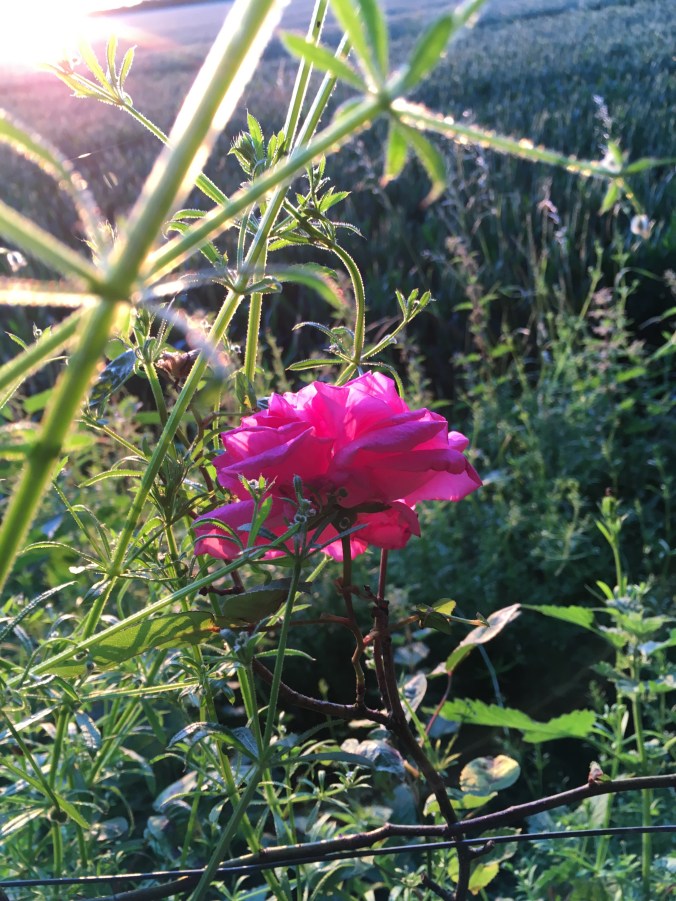
  • The red rose is Louis XIV introduced in 1859. Very thorny. I shall be wearing gloves to prune it! I’ve included a photo because I was standing next to it, mesmerised by the blood red of the rose and the matching slowly creeping red line on my arm. I kept looking from one to the other deciding what to do. It never occurred to me pottering around doing a bit of gardening could lead to a medical emergency. Hopefully, now you will recognise the signs and get help quickly.
  • https://www.classicroses.co.uk/louis-xiv-shrub-rose.html

Six on Saturday – a walk around my garden 29 June 2019

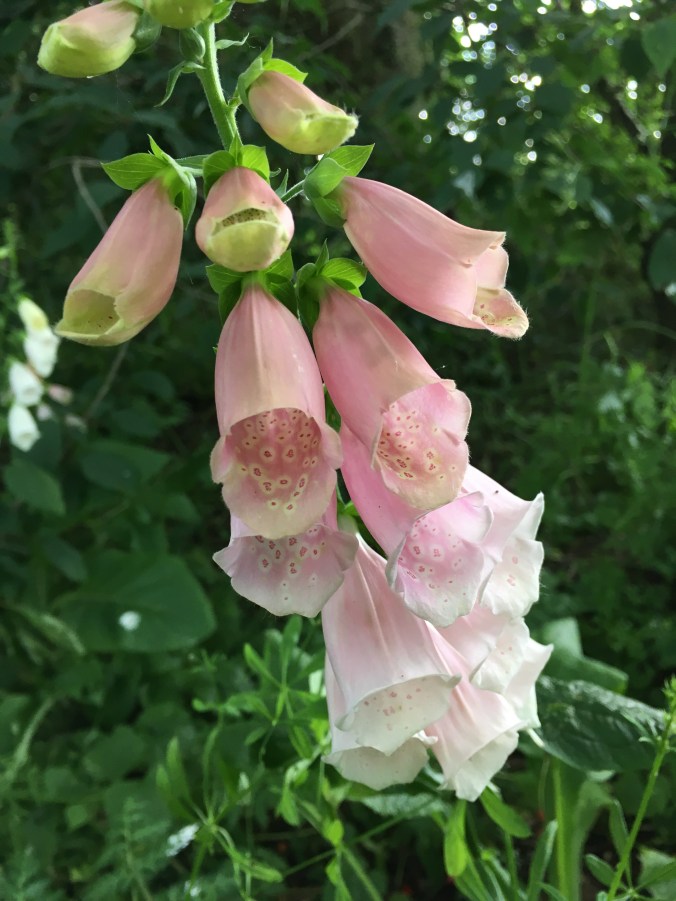
Foxglove. Sutton’s Apricot.

Ethereal. “Extremely delicate and light in a way that seems not to be of this world.”

Exquisite, dainty, graceful, lovely. Will it seed about and make a glade. I hope so. There is so much hope in gardening.

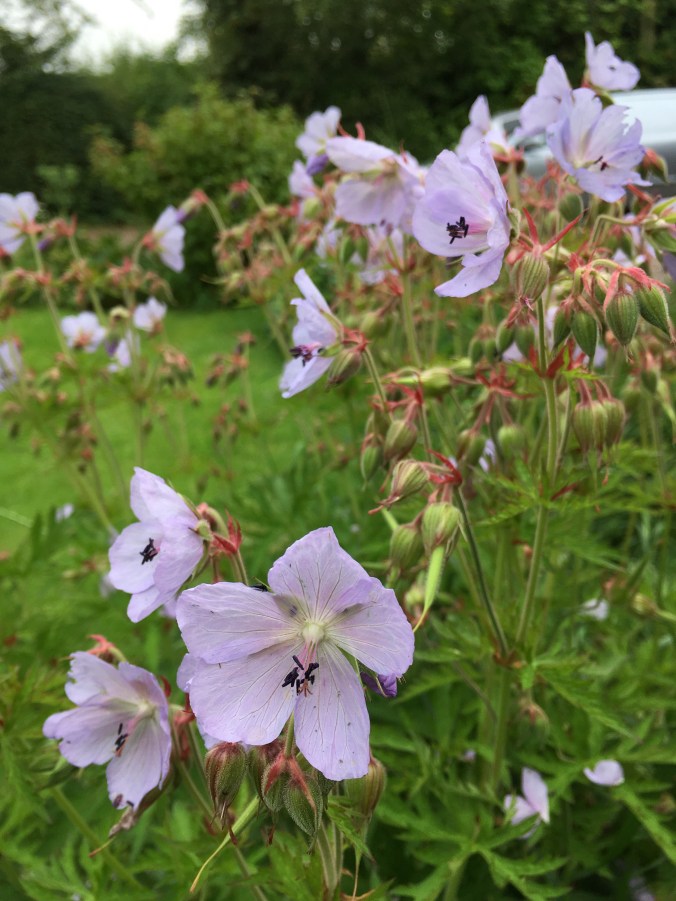
Already seeding about successfully; pale geraniums. A hybrid, crossed with the native geraniums all along the lane, and my Johnson’s Blue varieties inside the garden gate. Looks just as beautiful at dusk when moths find the flowers irresistible. Seedlings vary from white though mauve to deep violet. Always a lovely surprise to see what turns up. You can buy a similar variety called Geranium Mrs Kendall Clark, or grow your own from seed.

I wrote about geraniums in my garden here https://bramblegarden.com/tag/wild-geraniums/

Wild dog roses – Rosa canina. The scent. The essence of a summer’s day. And beetles are welcome here too. Food for the bluetits and wrens currently feeding noisy fledglings all around the garden.

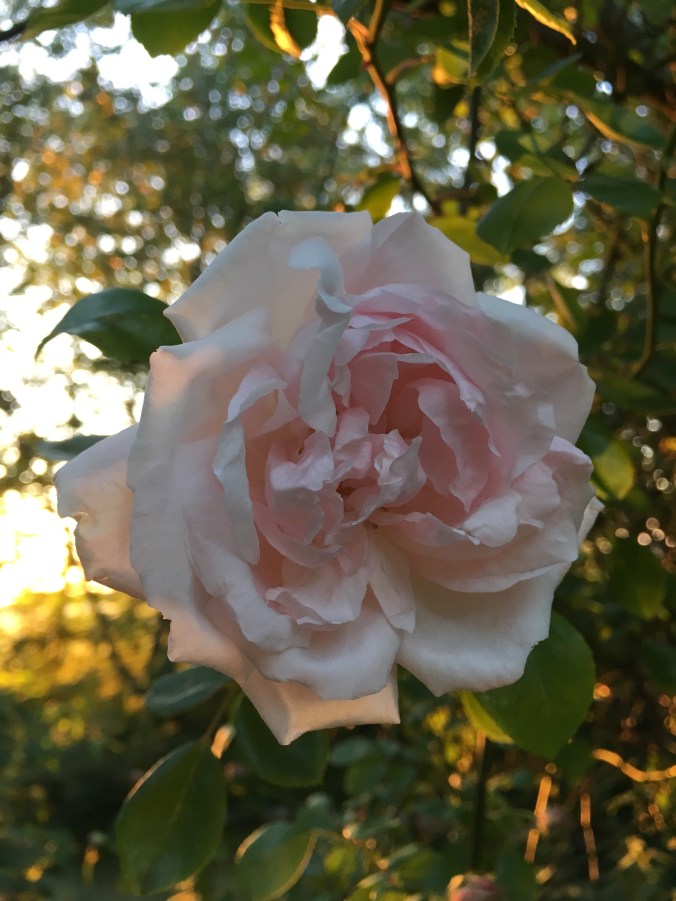
Rosa New Dawn. Another pale beauty. Easy to grow, climbs to the top of a willow tree and drips petals on to the pond. Never needs any sprays or pruning. Just looks after itself.

I hope you’ve enjoyed your walk around my garden today. After all that rain, it feels like summer is starting at last. It’s sunny and the temperature is 28C. I’ll be spending a lot of time sitting in the shade. Enjoy your weekend.

Links: SOS : https://thepropagatorblog.wordpress.com/2019/06/29/six-on-saturday-29-06-2019/

Foxglove Sutton’s apricot: https://www.mr-fothergills.co.uk/Flower-Seed/Foxglove-Seed/Foxglove-Suttons-Apricot.html#.XRdUymfTWfA

Geranium pratense: https://www.rhs.org.uk/Plants/7914/Geranium-pratense/Details

Rosa canina : Hopes Grove Nursery

Rosa New Dawn :https://www.davidaustinroses.co.uk/new-dawn

You might also like to read : https://bramblegarden.com/tag/wild-geraniums/

https://bramblegarden.com/about/

Favourite Roses – Desprez a Fleur Jaune

None of the roses in my garden are sprayed. Desprez a Fleur June is tough and hardy and repeat flowers all summer. And it has a most beautiful scent.

Typically, all stages of flowering are on show at the same time. New buds are opening as the old flowers fade. It’s a beautiful combination. I love the range of colours from peach and apricot through to yellow and pink. One spray of roses could make a bouquet on its own.

Rose Type

Old fashioned heritage climber. Bred in France by Jean Desprez in 1830. Each rose has 26 to 40 petals, cluster flowering.

Habit

Climbing, up to 5m. I’m growing it on a trellis 1.5m wide, so it will be pruned to fit.

Repeat flowers, if deadheaded.

Very disease resistant. Leaves are pinnate, light green, glossy.

Very fragrant. Fruit salad/ pineapple scent.

Suitable For

Pergolas,arches, trellis, walls, fences, cut flower gardens, cottage gardens.

Soil Type

Any soil, but best on heavy clay, improved with well rotted farmyard manure, plant-based fertiliser and garden compost. As I’m a vegetarian gardener, I don’t use any bonemeal or chicken fertiliser pellets any more. My roses are beautiful- without causing any cruelty to any animal. I don’t use growmore either.

Planting position

Full sun, west and east facing. Can cope with semi-shaded position. Mine gets sun for a few hours in the morning. Then it’s in shade for the rest of the day.

Zones

Hardy in USDA zones 5/6/7/8/9

Tips

Mulch over the winter to conserve moisture. If there are aphids on the rose, tap the bush gently with a cane to dislodge ladybirds. As they are heavy, they will fall to the ground unhurt. Then blast the foliage with a hose pipe which will wash the aphids off. Water is a great natural inhibitor of sap-sucking aphids.

Links :https://www.classicroses.co.uk/desprez-a-fleurs-jaunes-climbing-rose.html

Also : https://www.davidaustinroses.co.uk/desprez-a-fleur-jaune

https://www.trevorwhiteroses.co.uk/shop/climbing-roses/desprez-a-fleurs-jaunes/

Mum’s Favourite Fruit Cake Recipe, with orange slices

If you were listening in to Gardens Hour today, this is the fruit cake we were eating in the studio. It’s a recipe from my Mum. You can put fresh fruit on top of the cake when you serve it. I put slices of mandarin orange on mine today. I’ve served it with slices of peach and pineapple too. Very moist and tasty. Can be served with cream or custard as a pudding, it is very versatile. Perfect for picnics too.

INGREDIENTS

285g SR flour

85g butter, softened

110g golden caster sugar

180g mixed dried fruit

1 tsp. mixed spice

1/2 tsp. bicarbonate of soda

1 egg

280ml milk

7″ round cake tin

METHOD

Mix flour and butter together. Add sugar, mixed fruit, spice and bicarbonate of soda. Mix well.

Beat egg and milk together. Mix in with dry ingredients.

Turn into a well-greased cake tin.

Cook at gas mark 4, 170C oven for 1 hr 15 minutes. Check after 1 hour and put foil on cake if it is getting too brown.

Citrus Trees Update

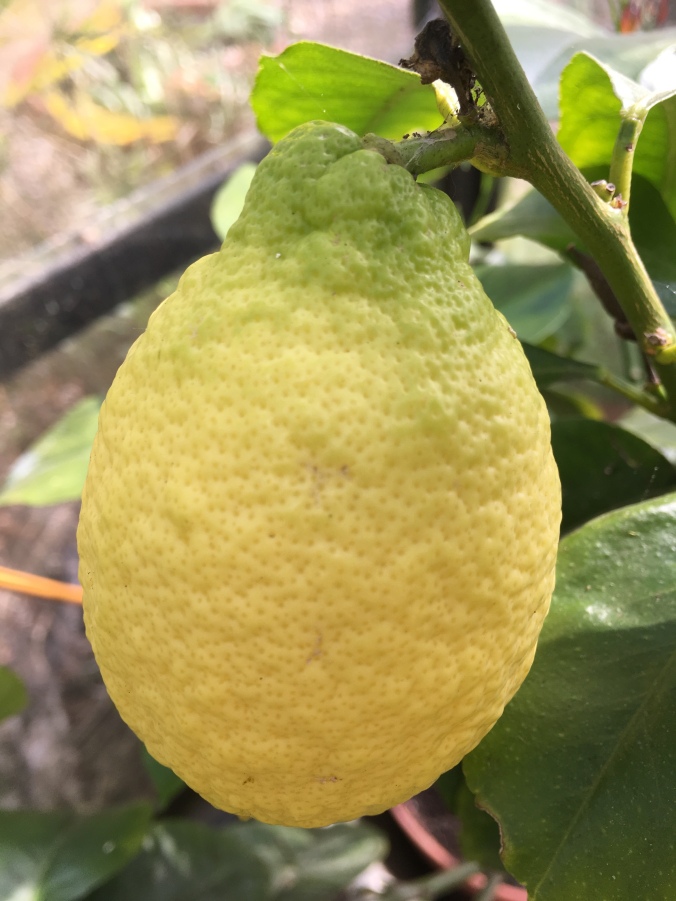
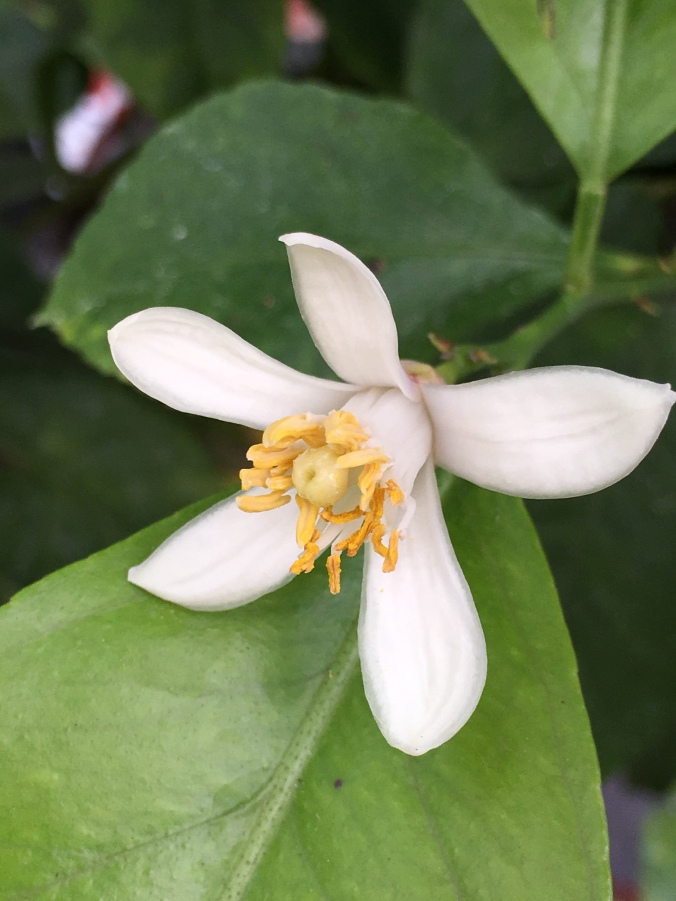
I’ve started to move my citrus fruit trees out of the greenhouse into the garden for the summer. I’ll start them off in a shady position until the plant cells have become accustomed to the outdoors. After about four days, you can gradually move them into full sun. Moving straight from greenhouse to bright sunshine can cause

leaf scorch.

In a Vase on Monday- All White

I’m practicing for wedding flowers. You never know when you might need some….

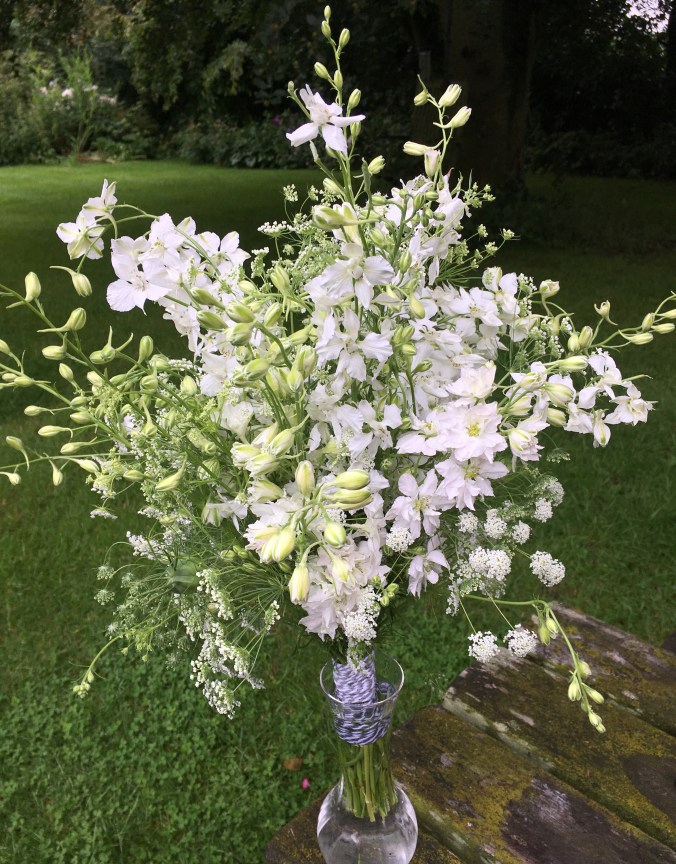
White larkspur and Ammi majus. Such a simple combination. I’d probably add white sweet peas for scent. I’ve got heritage variety Mrs Collier growing on the hazel A frame. And some white love-in-a-mist. The bouquet would be tied with white satin and pearl pins, and not grey twine. But you get the idea.

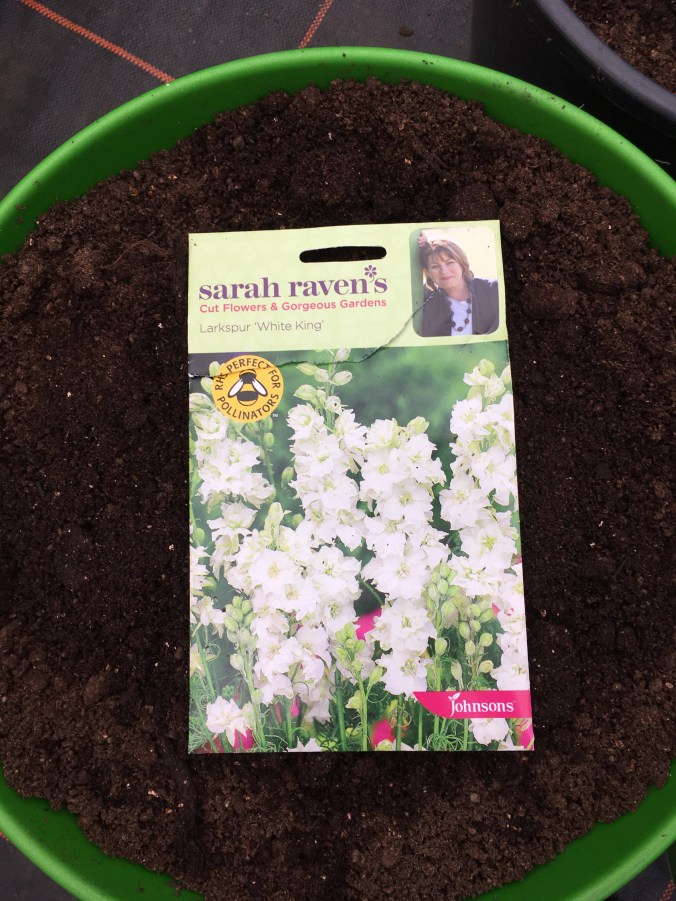
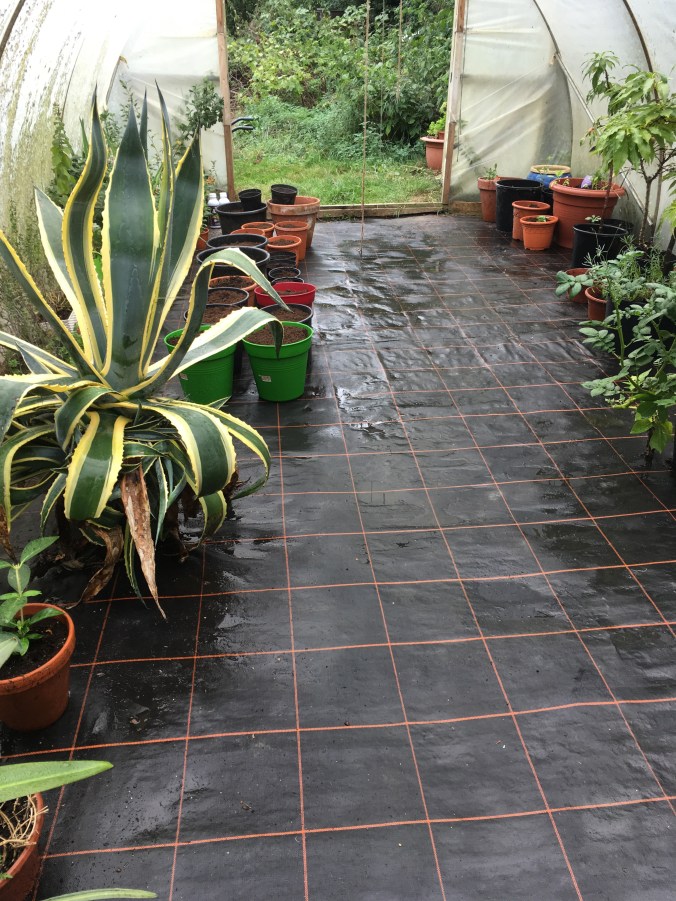
Larkspur White King was sown on 4th September in 12″ pots in the polytunnel. I used a 50 /50 mixture of peat- free multi purpose compost and John Innes no 2 compost with some added grit for drainage. I used Sarah Raven/ Johnsons Seed, sown thinly, covered with a sprinkle of compost and left to grow on without pricking them out.

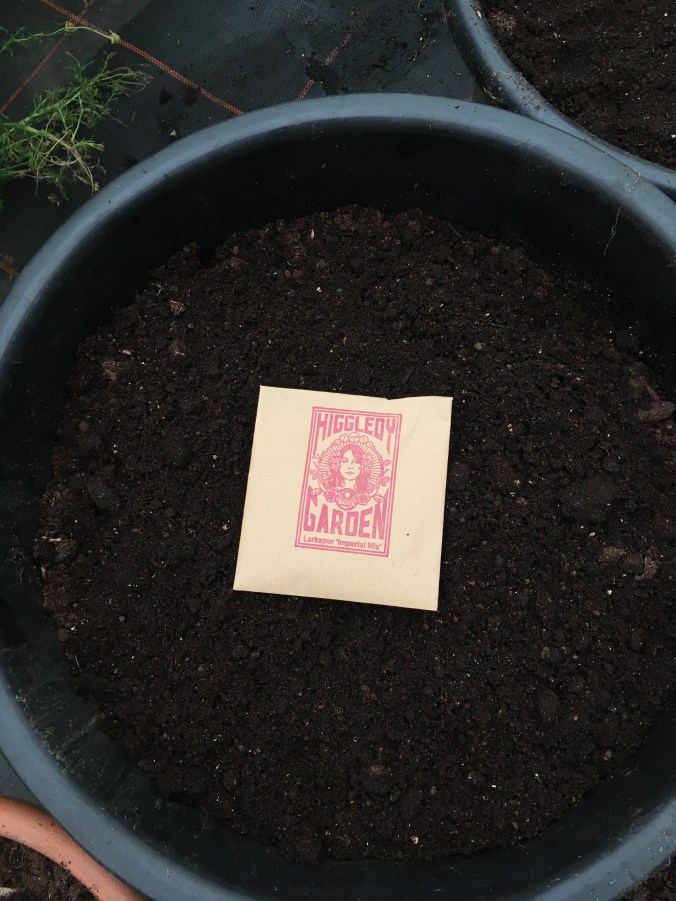
I also chose seeds from Higgledy Garden. These were part of a cut flower patch kit. Very good value and nice fresh seed. Everything germinated and grew well. Highly recommended. Plus, I like to support independent companies such as Ben’s.

White “cow parsley” type flowers in my bouquet are Higgledy Garden’s Ammi majus. This lovely airy flower always does better from an autumn sowing. Once you start cutting them lots of side shoots appear and you can harvest flowers right through the summer.

Higgledy’s larkspur mix contains some beautiful ice blue flowers, shell pinks and whites. All packets of seeds cost between £1 and £2.50 each. I probably spent less than £10.

Once I’d sown the seeds, I laid the packets on the pots and took photos to remind me what I’d grown and when. Labels have a habit of moving – all by themselves- on my plot!

Seedlings germinated by 21st September.

I had a bit of a problem with mice. Luckily they just thinned the seedlings for me. I put down peanuts and bird food for them, which they preferred. Hopefully the barn owl will have helped me out over the summer. I know she is feeding fledglings as we see her most nights, and we hear them calling for food. Loudly.

Those few pots of plants have been supplying me with posies for a several weeks now. I’m not sure they produce blooms any sooner than plants grown outdoors; but they have super long stems with plenty of flowers and haven’t been damaged by rain.

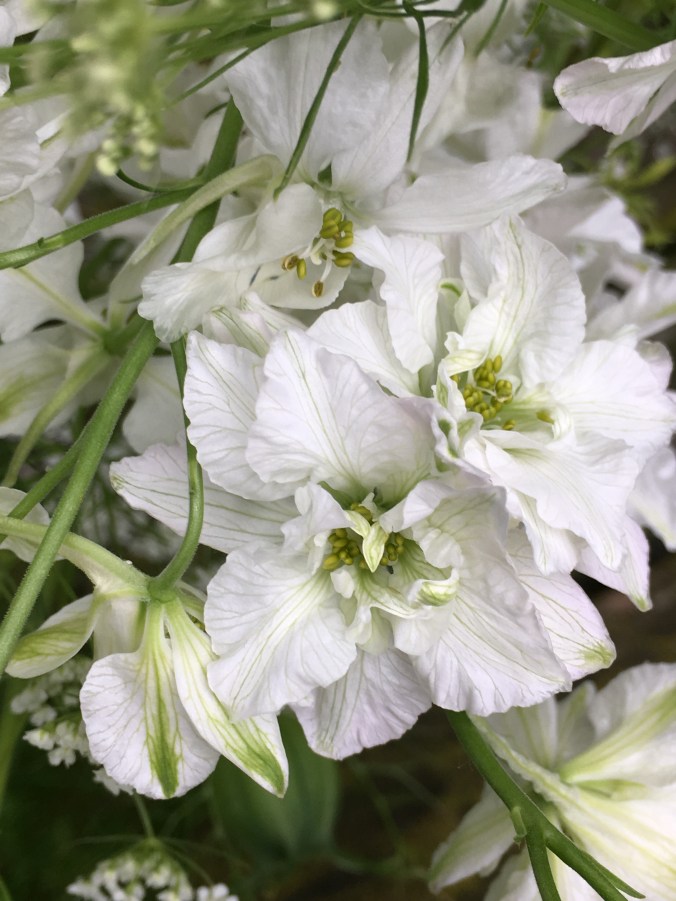
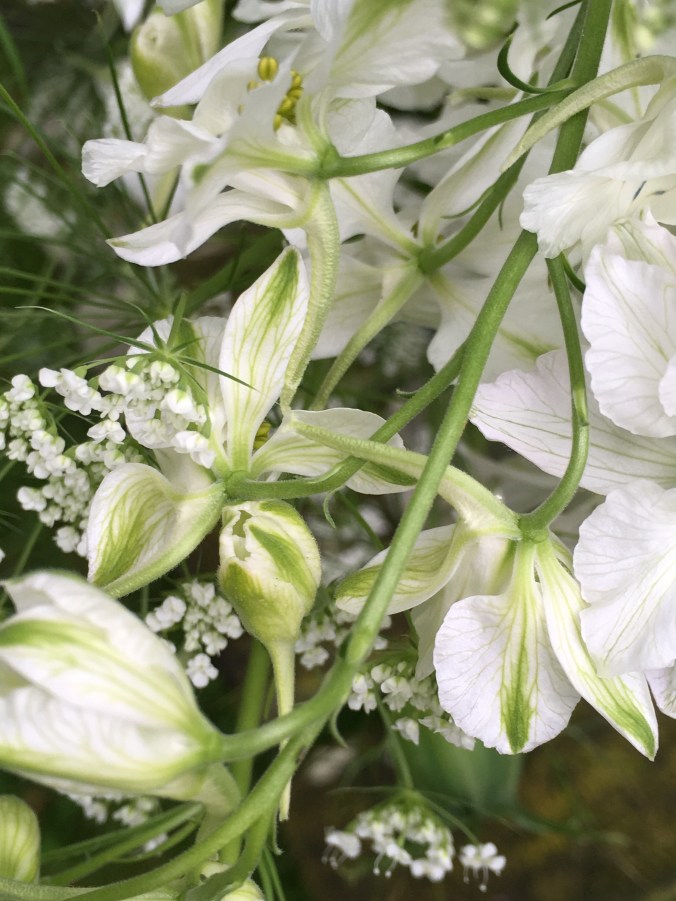
I particularly love the green markings on the back of the petals.

Green-tinged buds make a lovely contrast to the white flowers.

If anyone wants to get married next summer- I have the perfect plan for the flowers! Just saying.

links : Cathy IAVOM : https://ramblinginthegarden.wordpress.com/2019/06/24/in-a-vase-on-monday-respite/

Sarah Raven / Johnsons Seeds : https://www.johnsons-seeds.com/Flower-Seed_0/Annuals_3/Larkspur-White-King.html#.XRDKaGfTWfA

Higgledy Garden, Ben Ranyard : https://higgledygarden.com/

Cut flower growing and arrangements -courses and books: Georgie at https://www.commonfarmflowers.com/

First Polytunnels :https://www.firsttunnels.co.uk/

Dalefoot peat free composts :https://www.dalefootcomposts.co.uk/

Twine : https://nutscene.com/collections/twines/products/candytwist-twine-nutscenes-bakers-twine-large-spools

Please feel free to share this post on any social media platform.

You might also like to read :

https://bramblegarden.com/2019/06/23/prize-draw-winner-hansford-coil-spring-chair/

And

https://bramblegarden.com/2019/06/20/ngs-garden-visit-oak-tree-house/

Or

https://bramblegarden.com/2019/06/15/six-on-saturday-a-walk-around-my-garden-15-june-2019/

Thank you 😊

Prize draw winner – Hansford Coil Spring Chair

Congratulations to Julie Skelton who has won a Hansford Coil Spring garden chair. Hansford’s James Samuels drew the name (out of a hat) at the Gardeners’ World Live Show where the garden furniture company staged a display.

I wrote a review of the chair here : https://bramblegarden.com/2019/05/31/product-review-hansford-coil-spring-chair/

Thank you to James for helping to organise the prize draw and supplying the chair.

Mine is perfect for relaxing after a long day in the garden. I particularly like the rocking element of the design, which is quite soothing if you suffer from a bad back. I’ve been sitting in mine while listening to the birds, watching the fledglings find their way around the wild garden. It’s been a joy this week. All the nests are now empty and I can report that the blackbirds who made precarious nests just 3ft off the ground, under the house windows, have successfully fledged their chicks.

Today, mum came to visit, and we planted out the rest of the dahlias grown from cuttings. We planted anything we could find in the greenhouse. I like taking cuttings, but I’m slow to move plants on. They languish in little pots. Eventually, I take pity on them, and plant the whole pot in a clump. More or less thrown into the ground. It’s amazing how resilent plants are. Mum goes home with two posies we cut from the garden; one of white flowers, and the other sweet williams, pinks, carnations and sweet peas.

The chair is light enough to carry around the garden. When I’ve finished working on the plot, I move it under a cascading New Dawn Rose. The evening scent is fabulous.

I never prune or spray this rose, it just looks after itself. Wonderful as the sun sets behind it and shines through delicate shell pink petals.

A lovely place to sit at the end of the day.

Links : https://hansfordfurniture.com/

Julie Skelton : https://www.julieskelton.com/category/garden/

NGS Garden Visit- Oak Tree House

Pam Shave has a garden packed full of plant treasures. There’s wonderful scented roses, clematis, special perennials, and a whole border of foxgloves. And the good news is, you can visit the garden and see them too. Pam is county organiser for the NGS-Yellow Book – open gardens scheme, which raises money for cancer care and nursing charities.

I was lucky enough to visit today for a preview. Here’s a slide show of plants that caught my eye.

Foxgloves stand out in a border packed full of geraniums, campanulas, poppies and day lilies galore.

Thalictrum aquilegifolium or meadow rue. A pretty filler between the standard and bush roses.

David Austin Roses are beautifully healthy and deliciously scented. This one pictured above is Princess Alexandra of Kent. Blue herbaceous geranium provides a pretty weed-smothering ground cover beneath them.

This James Galway rose with very frilled petals is growing along the boundary fence. The scent is like a summer fruit salad, all pineapple, peaches and melon combined.

Pink sanguisorba is a lovely “fluffy filler” in amongst the roses and echoes the spires of the foxgloves.

Geranium Summer Skies is a perennial worth searching for. It makes a statement plant mid-June, and then blooms again if cut to the ground after flowering.

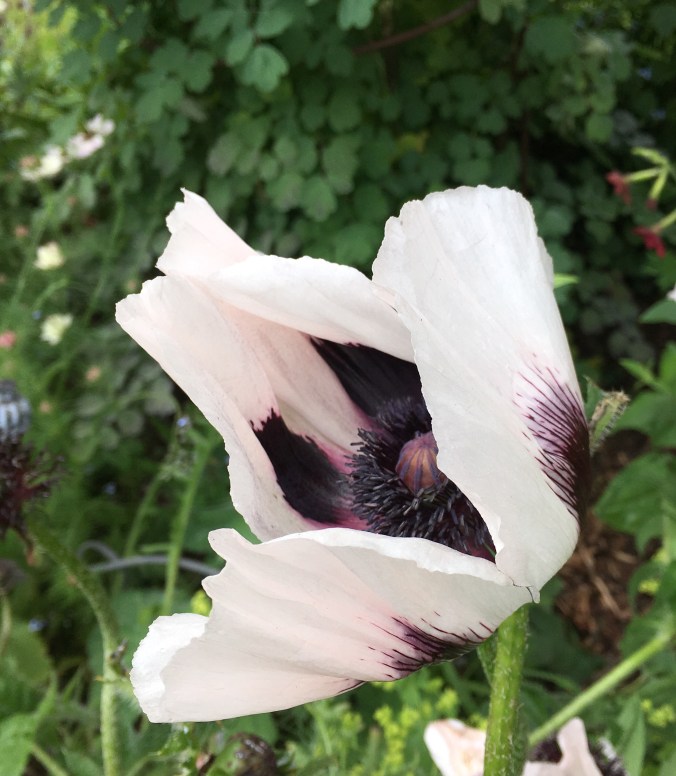
Oriental poppies are another high summer attraction, and this one is a particularly pretty pale pink, with ink-black stamens. It’s called Papaver Royal Wedding.

I grow blue and white love-in-a-mist. I wouldn’t be without its delicate starry flowers and pretty seed heads. Pam grows this variety, with a range of pinks and whites, called Nigella Mulberry Rose.

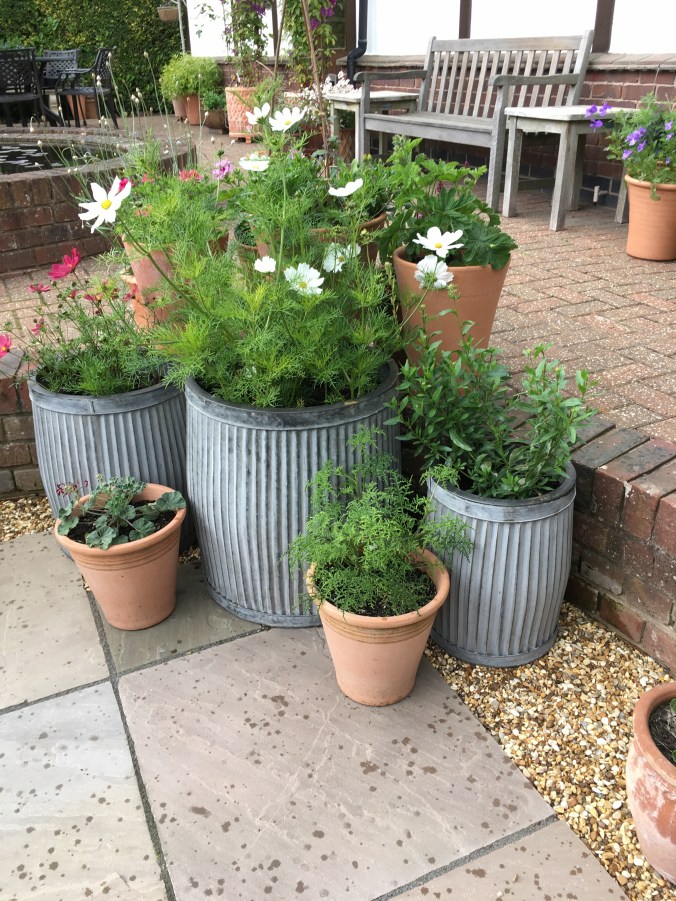
There are little collections of containers all around the garden. I’ve never seen so many in one garden. Even some of the vegetables are grown in pots. Here there’s annual cosmos with scented-leaved pelargoniums.

Roses also grow in huge 50cm terracotta pots. This is a David Austin rose. I’m just waiting for confirmation on the names of some of these plants. I was enjoying my visit so much, I forgot to look at the labels. (Pam has reported back- this one is Lady Emma Hamilton. A must-have for me.)

Clematis Versailles grow in 45cm pots, as a pair, each side of the back door. Such a beautiful purple colour, with a deeper stripe down the centre of each petal.

Underplanting for the clematis is this pretty scented nemesia, an annual which can be kept going from one year to the next by taking cuttings and overwintering in a frost -free greenhouse .

Masses of flowers and full of bees and hover flies .

Bees love the violas, also growing in a collection of plant pots. Viola Florence and Martin came from Jack and Laura at Bouts Nursery.

A raised brick-edged pond spills into another horseshoe-shaped pond on a lower level. We sat on the pond side, watched the fish and admired the miniature water lilies.

Exotic-looking gazanias grow well in free draining compost with added grit, in a sunny spot, or in containers.

Oak Tree House opens this Weekend, 22 and 23 June. North Road, South Kilworth, Leicestershire, LE17 6DU.

Links : NGS Oak Tree House https://www.ngs.org.uk/find-a-garden/garden/20265/

David Austin Roses: https://www.davidaustinroses.co.uk/

Perennials : https://www.hardysplants.co.uk/

clematis : https://www.raymondevisonclematis.com/

Many thanks to the Garden Media Guild for organising today’s visit : https://www.gardenmediaguild.co.uk/

Please feel free to share this post and spread some good news. And follow me on twitter @kgimson, on Instagram karengimson1 . Thank you 😊

BBC Gardeners’ World Live- Photos of Show Gardens

I’ve written about the Watchmaker’s Garden, which has a family connection, here : https://bramblegarden.com/2019/06/14/bbc-gardeners-world-live/

The Watchmaker’s Garden by Alexandra Froggatt.

Here are some of the other show gardens I saw on preview day this week.

Onward and Upward

Designer: Andy Tudbury

Andy’s 10th Show garden for BBC Gardeners’ World Live highlights the benefits of horticultural therapy, pioneered by the charity HighGround. A pathway takes you through the edge of a birch stand and wild flower meadow area, past a sculpture by Simon Probyn. The journey represents hope, re-birth and a new beginning. The path then leads you “Onward and Upward” to the recovery and leisure areas. HighGround focuses on horticultural therapy as rehabilitation for injured service personnel. They are based at a new DNRC centre at Stanford Hall near Loughborough, Leicestershire.

We watched the filming with Joe Swift on Andy’s garden.

Sculpture by Simon Probyn during the build for Onward and Upward.

Andy Tudbury http://www.halcyondays.biz/

HighGround https://highground-uk.org/

Canal & River Trust Garden- Making Life Better by Water

Designer: Chris Myers

Construction: Canal and River Trust volunteers

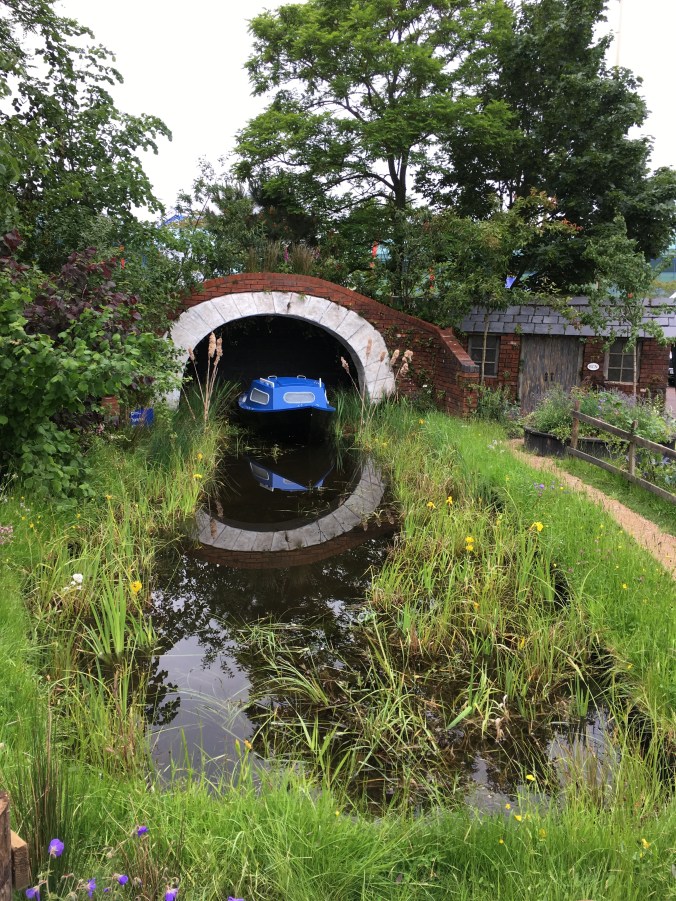
Inspired by ideas from trust volunteers David and Hilary Godbehere, lock keepers on the Birmingham & Fazeley Canal. The garden surrounds a central canal with a veg plot and flower garden alongside. The charity is dedicated to caring for 2,000 miles of canals and rivers in England and Wales.

High Line

Designer: Lucy Bravington

Contractor Dan Ryan of Design It Landscapes

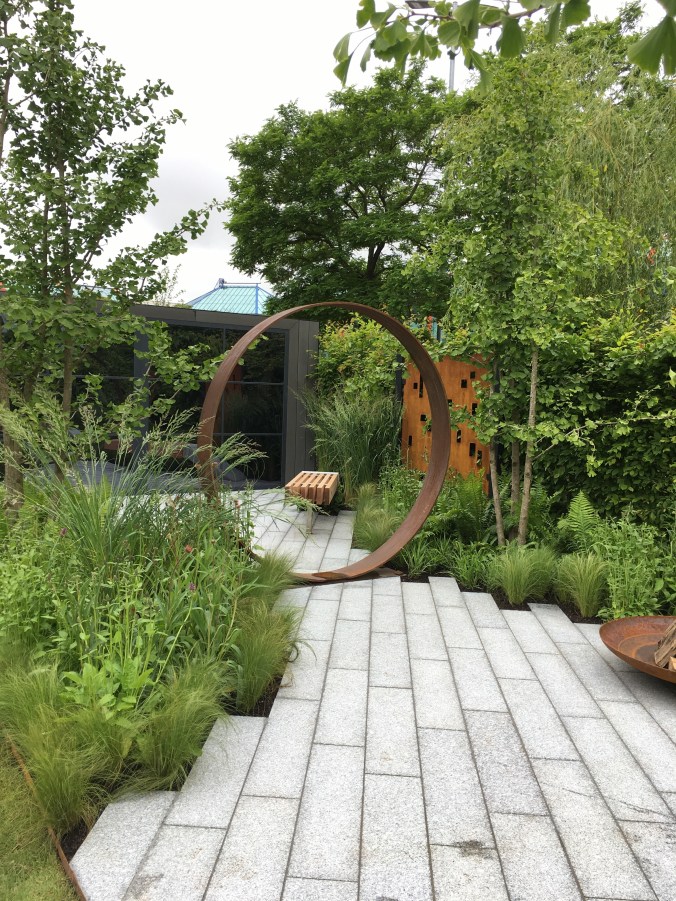
Based on the elevated public park in New York where Lucy visited last year. Features Corten steel, industrial elements and naturalistic planting with three focal point trees, grasses and ferns.

A Glimpse of South East Asia

Designer: Robyn Brookes

Contractor Timotay Landscapes

Inspired by South East Asian adventures, the garden combines a tropical planting palette with a simple selection of natural hard landscaping materials. Antique silver paving, yellow paddle stones and Caledonian boulders contrast with charred timber. Water cascades into a shallow pool, creating a feeling of calm.

Oasis of Peace

Designer: Anna Pawlowska

Contractor: Morgan Oates

A space inspired by Moroccan and Mediterranean style. You can slip your shoes off and cool your feet in the rill on a hot summer’s day. Water encloses an island to create the feeling of a relaxing hideaway.

Gadd Brothers Garden Getaway

Designers : Dr Catherine Macdonald and Rhiannon Williams

Contractor: Gadd Brothers

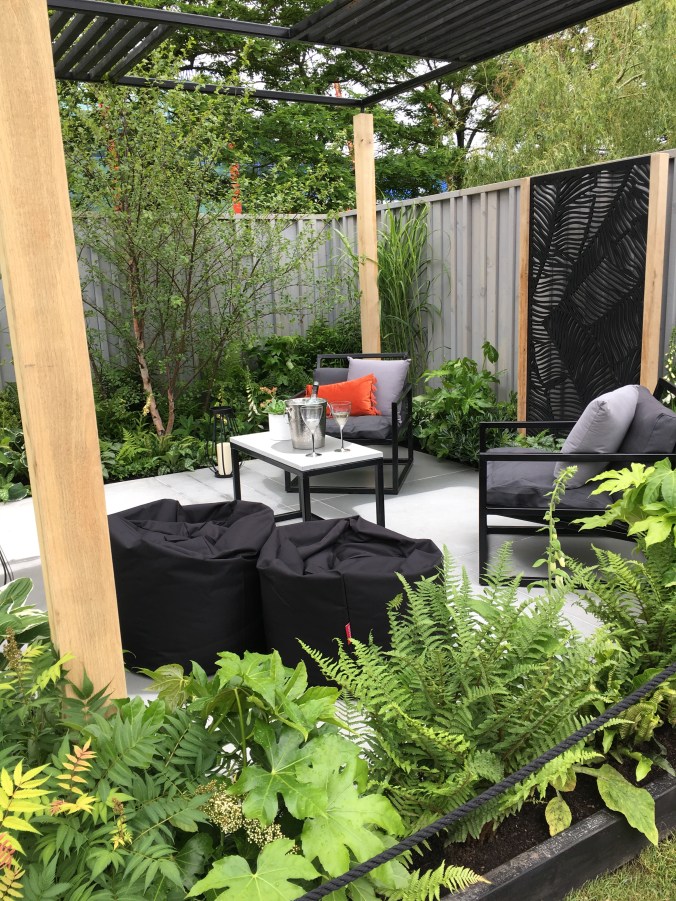
Garden for a young professional couple who have recently had an extension to their period style home. It’s designed to suit a small linear garden which is accessed by simple sliding doors. Height comes from the multi-stem trees and wood and metal pergola. There’s a water feature and two seating areas.

Revelation

Designer Mike Baldwin of Derby College

Mike designed the garden based on a combination of scripture and garden history. The four horses charging out of metal gates (Revelation and Versailles) flanked by an avenue of photinia Red Robin. The middle section of the garden was inspired by “In my father’s house are many rooms, ” (Hidcote and Sissinghurst-esqe).

The Macmillan Legacy Garden

Designer Martyn Wilson

Contractor: Big Fish Landscapes

Inspired by the gifts left in wills to Macmillan Cancer Support and celebrates the idea of leaving a legacy. These vital legacy donations make up over a third of its funding and help support people living with cancer. The “presents” in Martyn’s garden will each contain a different species of tree and symbolise gifts left in wills to Macmillan.

The Home Solutions by John Lewis Garden

Designer; Waitrose partner Shaun Beale

Contractor : Golden Gardens and the APL

Takes its inspiration from the beautiful gardens within the Leckford Estate and combines them with a contemporary functional, useable space. The John Lewis Home Solutions service aims to give customers access to a wide range of tradespeople, all of whom have the John Lewis seal of approval.

Harborne Botanics

Designer: Toby Pritchard

Contractor : Creative Roots

Marshalls Symphony paving takes you from the house to the patio. Matching paving takes you along the rill and on to the hardwood decking. The planting features a variety of leaf shapes and sizes, suggesting a more exotic location than the British climate can always offer. Walling and charred timber create surrounding screens.

The Dahlia Garden

Designer Jon Wheatley

Contractor Stonebarn Landscapes

Below is a fruit, vegetable and flower garden. It was fascinating watching the filming. Although I didn’t stand and stare, as it must be hard enough to remember what to say without an audience watching! Needless to say, the plants in this garden are total perfection. An amazing array and such an achievement after a very difficult growing season.

BBC Gardeners’ World Live runs until June 16.

https://www.bbcgardenersworldlive.com/whats-on

BBC Gardeners’ World Live

We did a little dance in celebration when The Watchmaker’s Garden at BBC Gardeners’ World Live won platinum and best in show. Our family’s nursery grew some of the plants for the garden.

I was lucky enough to attend the preview and meet the designer, Alexandra Froggatt.

Birmingham’s Jewellery Quarter is a bustling, cosmopolitan area steeped in history. In the late Victorian era it was booming with trade as the jewellery and watchmaking industries expanded. Craftsmen set up workshops in their back gardens to meet demand. Alexandra’s design is inspired by these 19th century back garden horologists. Inside the workshop, the city’s iconic Chamberlain clockface is in mid-production with a workbench covered in original tools and artefacts. Antique specialists loaned jewellers’ equipment to add authenticity to the scene.

Outside the workshop, the garden is full of heirloom and heritage vegetables, including some varieties which would have been grown in the Victorian era; herbs growing alongside cottage garden plants.

I love the doorway planting. You really want to walk through that door to see what’s on the other side.

Wild flowers grow in the grass surrounding the garden, and nasturtiums, peas and beans scramble over fences and supporting hazel posts.

Sponsors for the garden include Odeon Antiques, St Paul’s Church, La Mons Jewellery, Stonebarn landscapes, Terry Porter- plants, Vande Moortel- landscaping materials, and RPG Herbs, run by my brother-in-law Paul Gimson and his wife Rozanne.

Gardeners’ World Live runs until 16 June at Birmingham NEC.

https://www.bbcgardenersworldlive.com/

RPG Herbs http://www.rpgherbs.co.uk/conta.html

Alexandra Froggatt http://www.alexandrafroggatt.com/

The Cotswold Wildlife Park – A Celebration of the Gardens

BOOK REVIEW

By Harriet Rycroft and Tim Miles

Produced by Reef Publishing for Cotswold Wildlife Park

£18 inc p&p.

Looking through the mansion window, I see a pretty stone terrace, balustrading covered in rambling roses, mighty English oak trees in the distance. And a rhinoceros. Or two. I’m at the Cotswold Wildlife Park and it’s not your traditional garden view!

I can hear blackbirds, robins -and yes, there’s a lion’s roar, and black siamang gibbons “whooping.” I’m having a special behind the scenes tour with head gardener Tim Miles and gardener and writer Harriet Rycroft.

Tim and Harriet have spent the past 18 months working on a new book The Cotswold Wildlife Park- A Celebration of the Gardens. And there’s plenty to celebrate. The gardens are a paradise of exotic plants, special trees and shrubs, and wild flowers.

Photo: Front cover.

There are more than 250 species of animals and birds living at the wildlife park where important conservation and breeding work is being undertaken. The star attraction is undoubtably the white rhinos – saved from poachers in Africa, and now producing offspring.

Photo: my i-phone pic of page 60 in the book. Original photo credit: Harriet Rycroft.

Rhinos appear to have free rein in the parkland setting, but in fact, their paddock is ringed by a ha ha. It means there are no fences. They can clearly be seen from all surrounding paths. When I say “clearly seen,” I might add that the paths meander around flower beds containing thousands of ornamental onions, Allium hollandicum Purple Sensation, and grasses such as Stipa gigantea (giant oat grass) and cultivars of Miscanthus and Cortaderia (pampas grass). It’s rather a wonderful combination. Rhinos and alliums. You’ll not see that anywhere else in the world.

Planting provides browse material for many species, but also, importantly, shelter for the animals. This might be shade from summer sunshine, or protection from wind and rain. Planting must, of course, let visitors see into enclosures, but it is so exhuberant that the the lines are blurred between visitors, animals and the wider landscape.

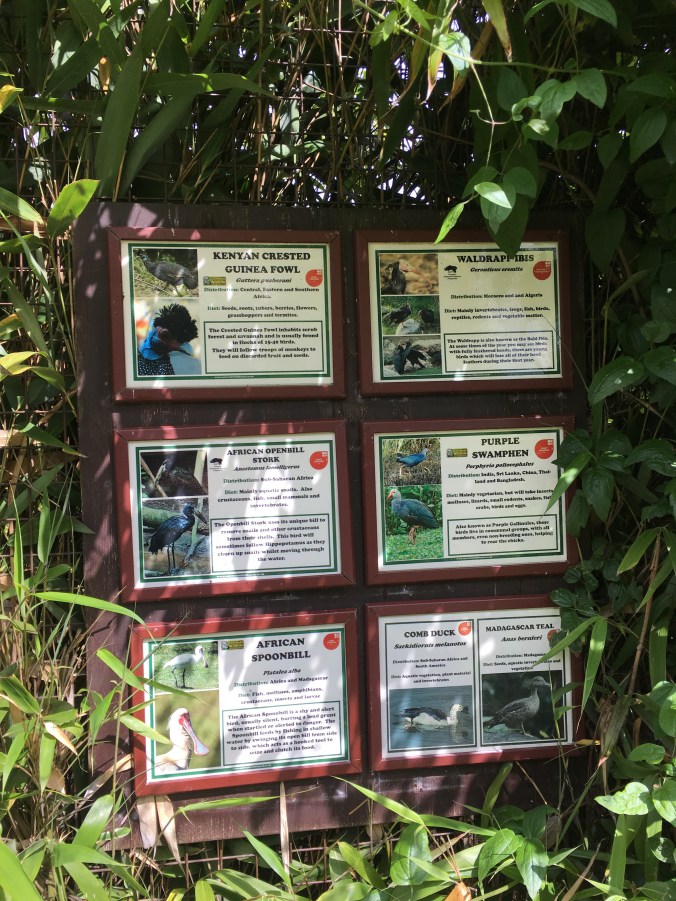
I did manage to get a good look at African Spoonbills and Madagascan Teal. But if they wanted to hide from me, they could.

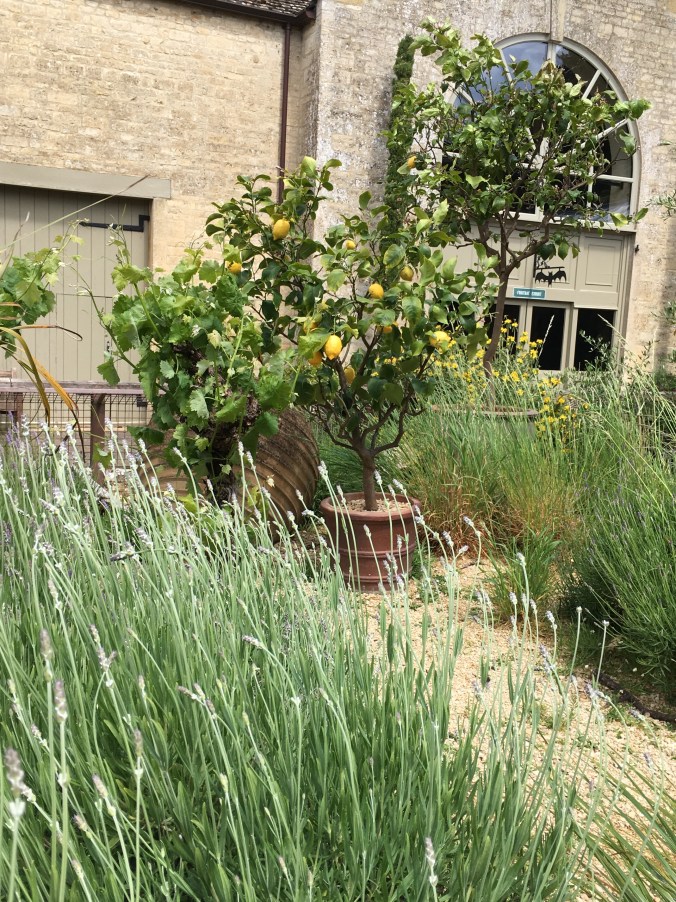
It is interesting to see trained fruit trees along the walled garden enclosures. There’s a perfectly-pruned fig, and around the corner there are espalier cherry and pear trees, fruiting kiwi and grape vines. Bamboo, a favourite fodder for many animals, grows inside and outside of the enclosures, again blurring the boundaries between them.

In the Tropical House I spy a Linne’s Two-towed Sloth. It’s the first time I’ve seen one. He’s nestled in amongst the foliage, rubber plants (Ficus elastica) cheese plants (Monstera deliciosa) and bromeliads and orchids. Branches of oak provide “perches” and there’s an illusion that house plants have “escaped” to take root in this mini-jungle. In a fascinating insight into the relationship between keepers and gardeners Tim explains that any plant plagued with pests such as greenfly, is given to the keepers to be placed in the Tropical House. Exotic birds clean up the plants by eating the pests. A win-win situation all round. Natural pest control at its best.

Continuing the tropical theme, in the protection of the Walled Garden, there’s palm trees, bananas and cannas interplanted with dahlias, Begonia luxurians and Begonia fuchsioides. Plants overspill onto the paving so you don’t notice the concrete kerbs. Creeping plants such as Tradescantia, Plectranthus and Verbena cascade and intermingle.

Phormiums, banana plants and bedding such as geraniums and coleus (solenostenum) provide a contrast in form, colour and texture.

Container planting features fuchsias, begonias, scented pelargoniums, trailing Scaevola Sapphire, twining Thunbergia African Sunset, nemesia- and even a Protea cynaroides (king protea). It’s rightly described as a “theatre with plants.”

There’s a conservatory- leading to the Bat House and Reptile House- where I spotted a pretty pink Cantua buxifolia.

Some sort of pink grevillea also thrives in the protection of the glass.

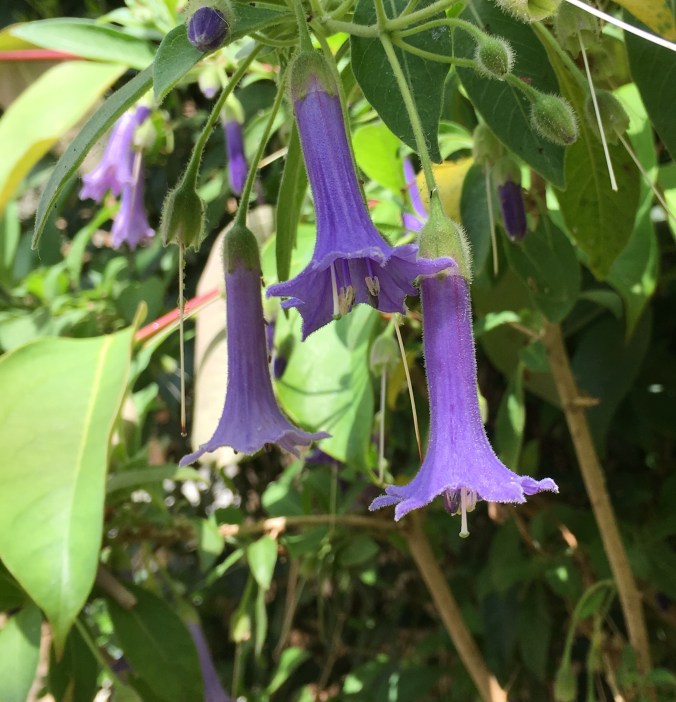
I’m still searching for the name of this pretty blue flowering plant. Let me know if you have a name for it. It’s rather lovely to visit a garden and find something you haven’t seen before.

No surface seems to be left without cover. This is the end wall of the rhino house, smothered in golden-flowering Fremontodendron California Glory.

We just throw our weeds in a compost bin, but certain weeds growing at the park provide food for the animals. Giant tortoises love stinging nettles, and goose grass or cleavers are relished by some of the herbivorous reptiles. Banana leaves are popular with stick insects and locusts, but are also given to squirrel monkeys. Honey treats are stuck to the leaves. The monkeys have fun picking off the treats, and then spend time cleaning themselves of the delicious sticky honey.

Gardeners don’t just get requests for plant material for food and nesting; prunings such as lavender and rosemary provide useful enrichment / active entertainment for the lions. Keepers fill bags with the clippings to make giant catnip toys.

With so many rare and glorious plants, the gardens at Cotswold Wildlife Park are a delight to visit all year round. Visiting transports you to another world. A world that’s been created with imagination and passion. There’s nowhere else quite like it.

All pics, apart from the front cover and the baby rhino, are i-phone photos from my head gardener tour.

Links:

Harriet and Tim’s book is available from Cotswold Wildlife Park https://shop.myonlinebooking.co.uk/cotswoldwildlifepark/shop/product-list.aspx?catid=8

Product Review – Hansford Coil Spring Chair

*Please leave a comment at the end of this review to be entered in a prize draw to win a Hansford Coil Spring Chair.

Gardening is hard work. By this time of the year, I’m starting to groan at the size of the brambles and painful stinging nettles. It’s a job to keep up with the weeds. So I really look forward to flopping down on a comfortable chair at the end of a gardening session.

I jumped at the chance to try out a Hansford Coil Spring Chair. I didn’t pay for this product. As usual, words and opinions are my own. By now, you’ll know I always give my honest view on books, products, composts, seeds, and plants that come to the potting shed for review.

My chair arrived three days after ordering. Email updates were reassuring and meant I was at home when the box arrived.

The chair arrived well packaged and undamaged. It took five minutes to assemble the chair which comes in two parts. Tools, a spanner and some screws, were included. I meant to take photos of the before and after, but it was so quick to put together, I got carried away.

The chair is light enough to carry about the garden and so I tried it out in various locations, under the sweet chestnut tree, in the wild flower border and in the orchard. I didn’t find it too difficult to move about.

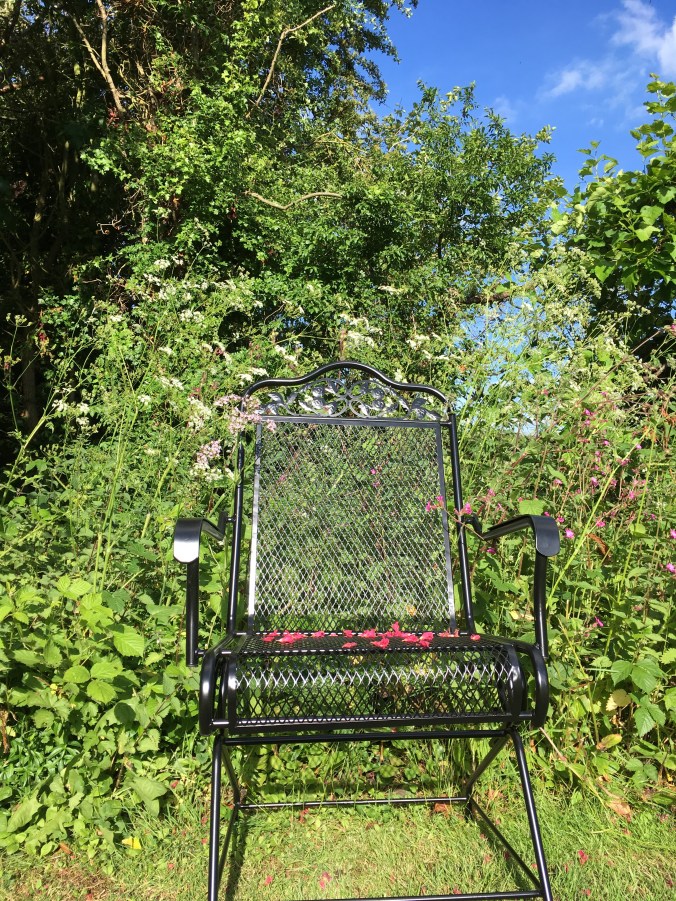
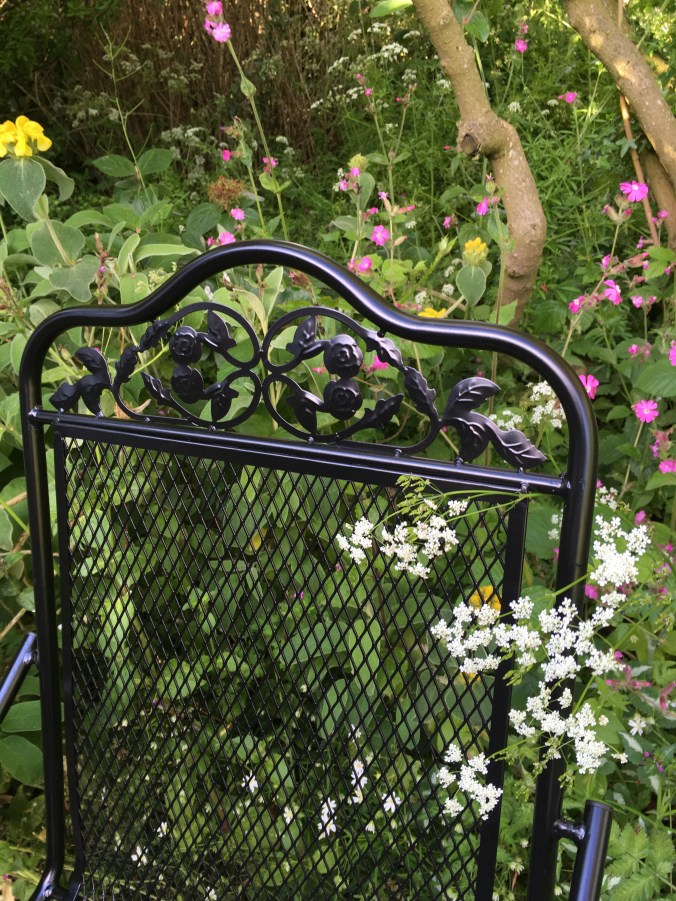
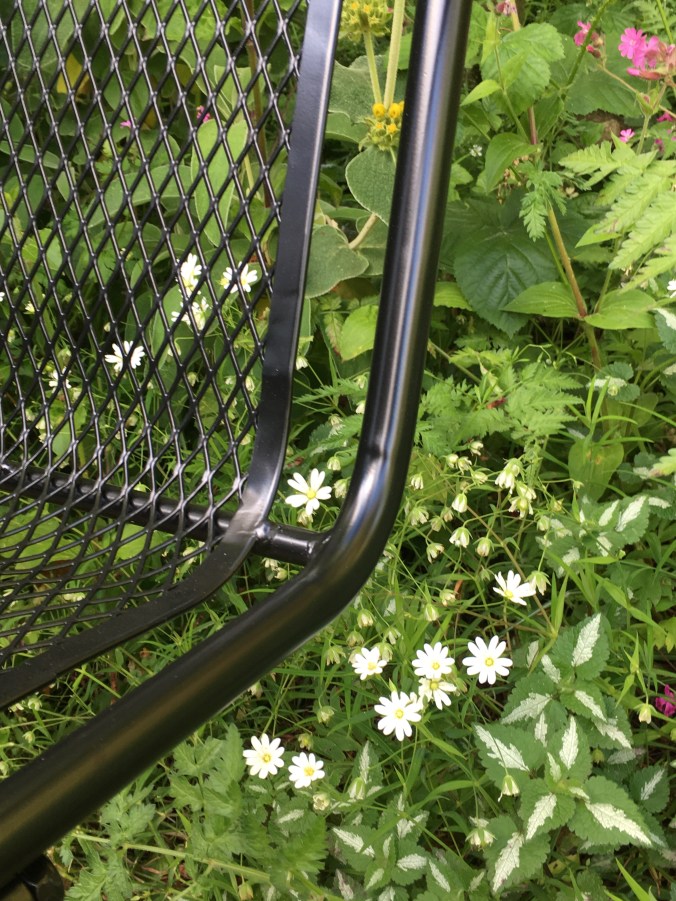
I love the way the chair blends in to the planting, and doesn’t dominate the scene. It looks lovely set amongst cow parsley and pink campion. Which is just as well as 90 percent of my garden is cow parsley at the moment.

I have a black painted greenhouse and summerhouse, so I chose a black chair. Alternative colours are duck egg blue and green.

The mesh seat is comfortable in hot weather, and very lovely with lavender and rosemary poking through. I will probably have to buy another one to go with my review chair, as really a pair is needed. You could add cushions, but the chair is comfortable enough without them to be honest.

Information sheets that come with the chair say the product is powder coated and there’s a one year warranty. The web site states the chair is suitable for indoors, conservatories, and outdoors.

James, who set up Hansford Furniture with a friend is offering one chair as a prize draw win to readers of this blog and my instagram page. Please leave a comment below to be included in the draw. No purchase is necessary and Hansford are running this competition. James will randomly select (pull a name out of a hat) on 13 June at Gardeners World Live, where they have a stand this year. Please also say if you do not wish to be entered in the prize draw, which is also fine. Sorry, uk entries only, and there’s no cash alternative. Hansford decisions are final.

Information from the website:

*look in the comments below, James has sent a link for 15% off the price, for readers of bramblegarden.com. This discount is a promotion being offered by Hansford Furniture and I am simply passing on the information.

Links: https://hansfordfurniture.com/

Instagram https://www.instagram.com/karengimson1/?hl=en

Twitter : https://mobile.twitter.com/kgimson?lang=en

In a Vase on Monday -27th May 2019

It’s been raining on and off all day, so by 8.30pm it was now or never to pick my Monday Vase. I just caught the last of the light. But the flowers are full of raindrops.

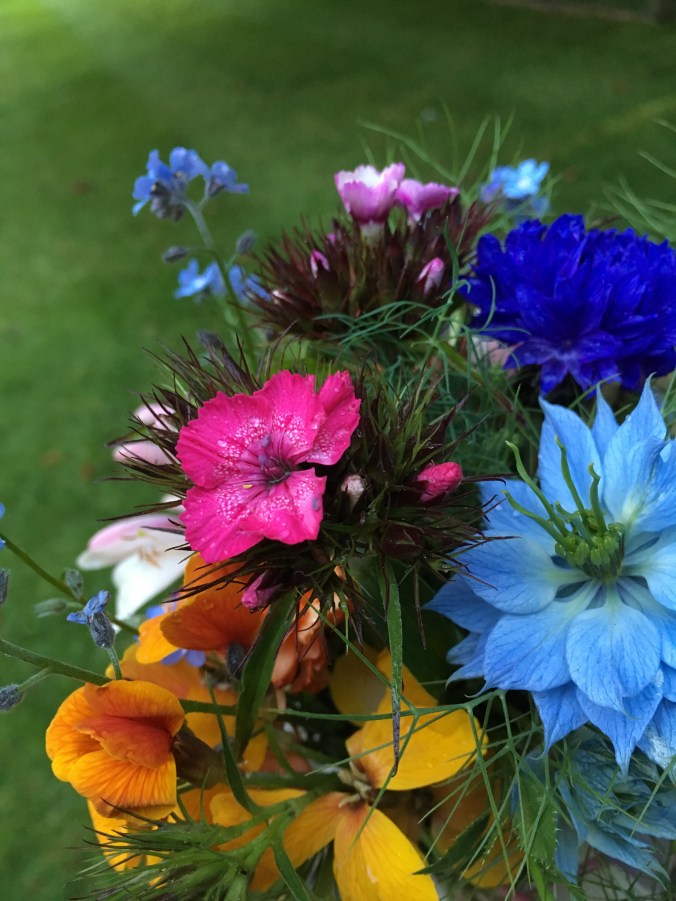
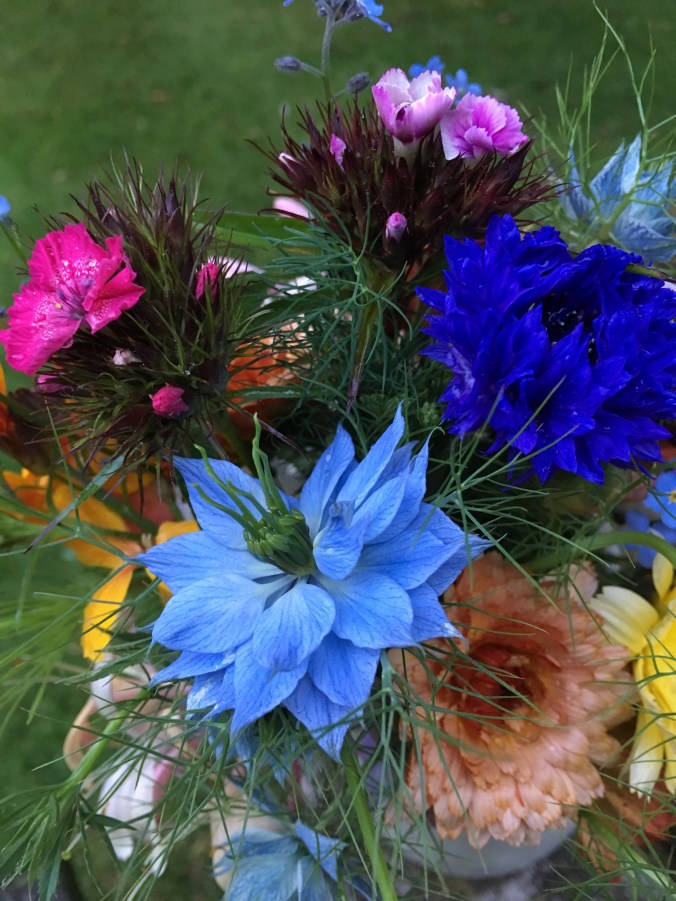
There’s a “first and last” theme to tonight’s posy. It’s the last of the forget me nots. They have been glorious for months, providing a blue accompaniment to all the spring bulbs. And it’s the last of the wallflowers. Their wonderful scent has drifted across the veg plot for weeks. The variety is Persian Carpet, and I’m just about to sow some more seed for next year’s display.

It’s a first for the dianthus barbatus ( sweet williams). I have some self-seeded magenta flowers, and some rows of a new dark red, almost black variety, called Sooty.

There’s the first flowers from the sweet peas too. I’ve got heritage varieties, Mrs Collier (white) and Dorothy Eckford (cream) – alongside modern varieties High Scent and Wiltshire Ripple, and new this year, Capel Manor.

It’s also first for the blue love-in-a-mist and Blue Diadem cornflower. The cornflowers will flower right through to October. Seed was sown last October and plants were over-wintered in the poly tunnel. To be honest, the flowers only seem a week or two earlier than the ones grown outdoors, so I probably won’t bother trying to over-winter them again. They took up a lot of space and needed a lot of watering. Too much trouble for something that grows so readily outside.

Self-seeded pot marigolds are putting on an early show. I love these pale orange flowers, sisters of a variety called Orange Fizz. I’ll definitely grow these again. I’ve just planted some tiny plug plants to flower until the first frosts. Variety unknown, as they came from my Mum. Her labelling system is worse than mine! I’m not complaining, as she’s also brought annual pinks, stocks, cosmos and some kind of daisies. I can’t wait to see what they look like. We hoed out a trench and planted them in rows, mum passing me the plants and me setting them in the ground. We got a system going and planted them in half an hour.

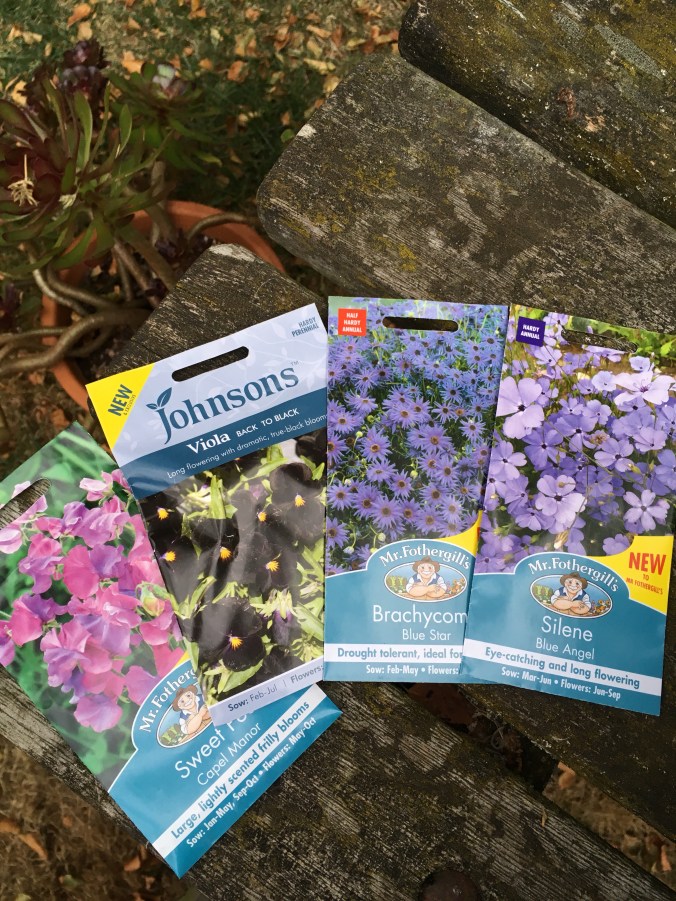
The last of the winter pansies have grown long and leggy. Perfect for jam jar flowers at this time of the year. I’ve just sown some new black varieties. They look as sumptuous as velvet on the seed packets.

As soon as I’d picked my flowers, the light began to fade. How lovely to still be able to wander about in the garden in the evening though. If I’m lucky I’ll catch sight of the barn owl again.

Links : In a Vase on Monday: https://ramblinginthegarden.wordpress.com/2019/05/27/in-a-vase-on-monday-more-sweeties/

Links : Dianthus Sooty https://www.chilternseeds.co.uk/item_450K_dianthus_barbatus_sooty

Mastergrip Gloves on Trial.

Review and prize draw for gardening gloves.

I’m not keen on cold wet hands, so I always wear gloves in the garden. Town and Country sent me some new Mastergrip gloves to try out.

The problem with gloves is you’ve often got a choice of wearing gloves- or doing some gardening. They aren’t always very flexible. So I’m often taking them on and off- and losing them.

In the past, I’ve just worn kitchen rubber gloves, but they are not ideal. They get hot and uncomfortable, and are easily damaged. However, Mastergrip have the advantage of being flexible and breathable.

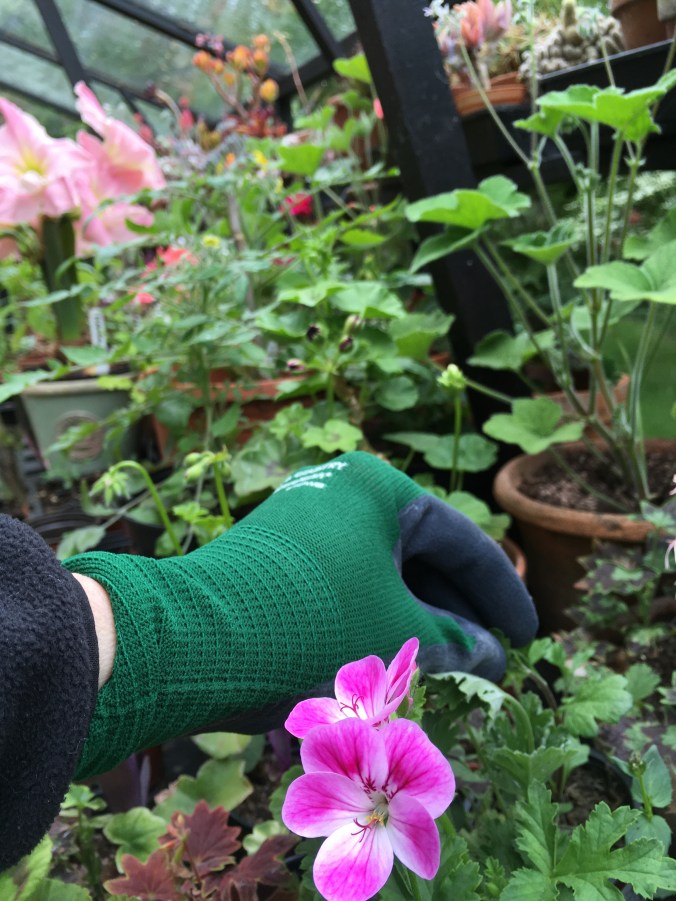
I used them for dead heading in the greenhouse.

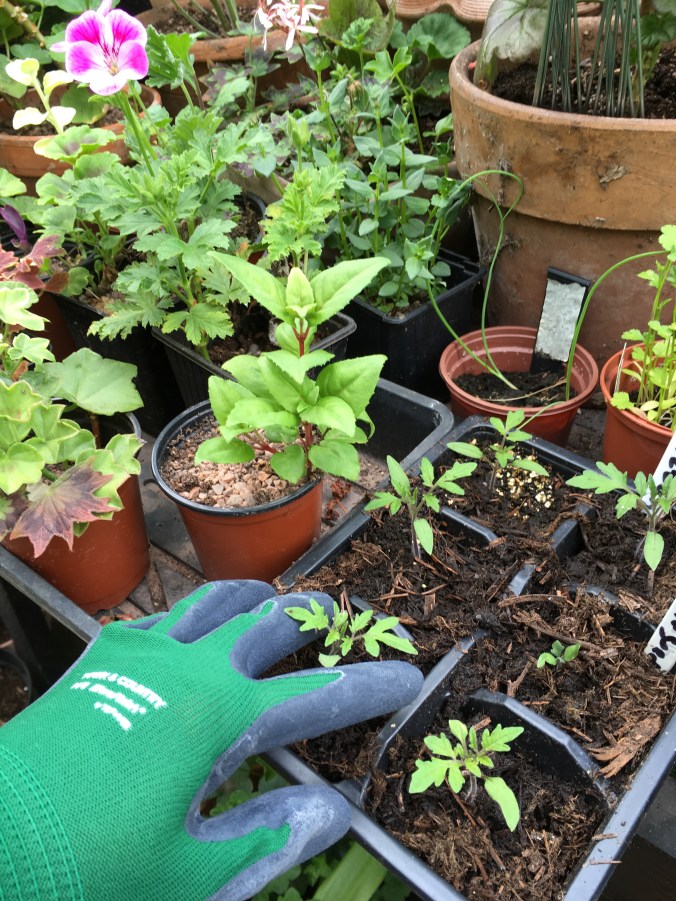
Pricking out and transplanting the delicate cherry tomatoes.

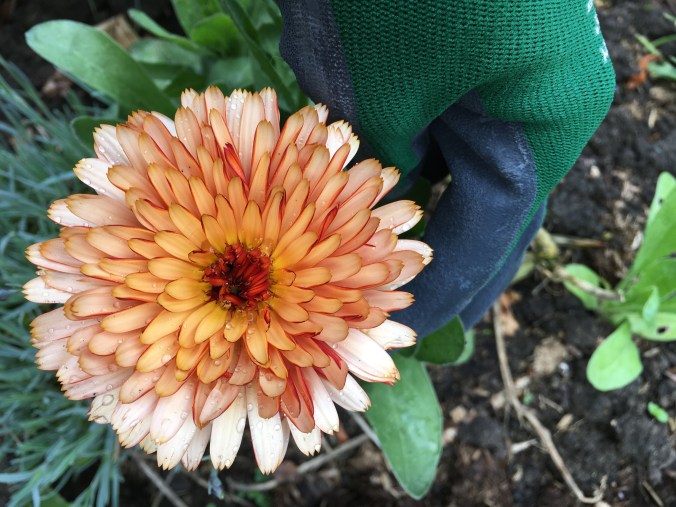
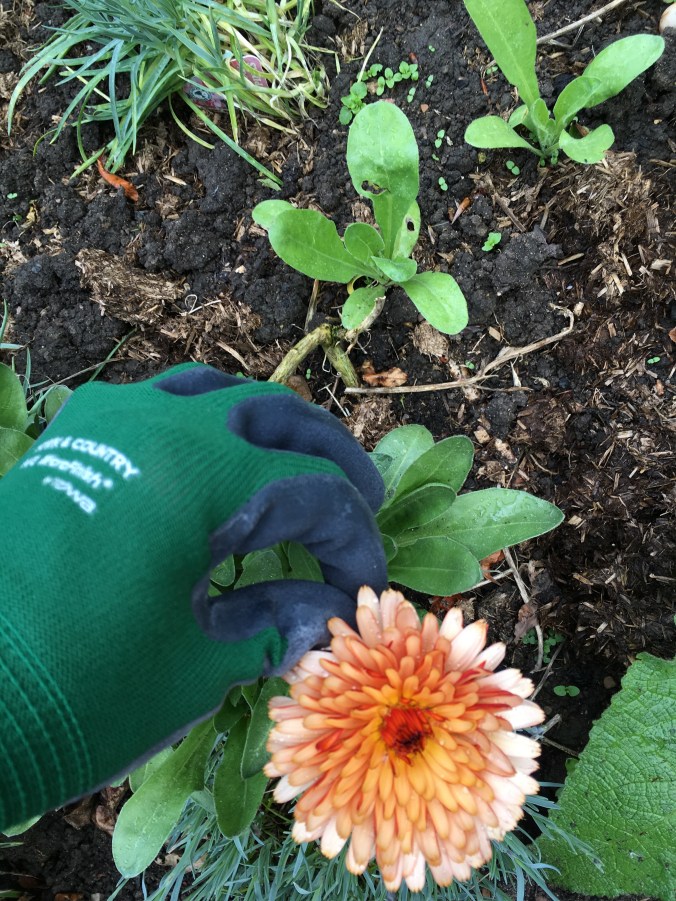
Weeding around the pot marigolds. These are seedlings of last year’s Calendula Orange Fizz.

The gloves are flexible enough to pick out tiny weeds. I’m not using any chemicals, so trying to keep on top of weeds is important for me.

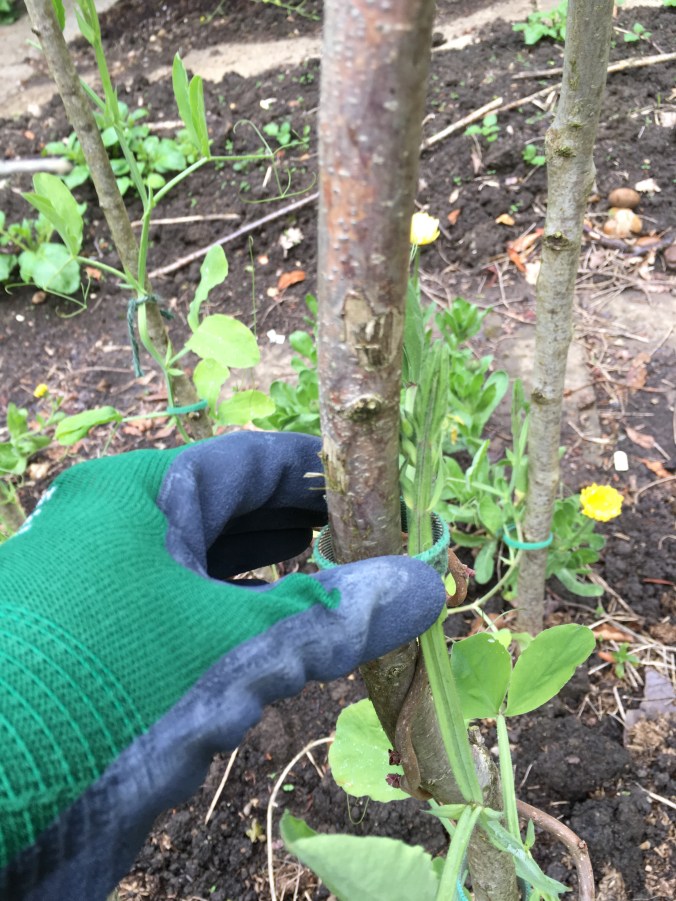
Usually, I have to take my gloves off to do fiddly jobs like tying in the sweet peas. Luckily these gloves were easy to wear and stayed on for the whole morning while I was working in the veg plot, cut flower patch and greenhouse.

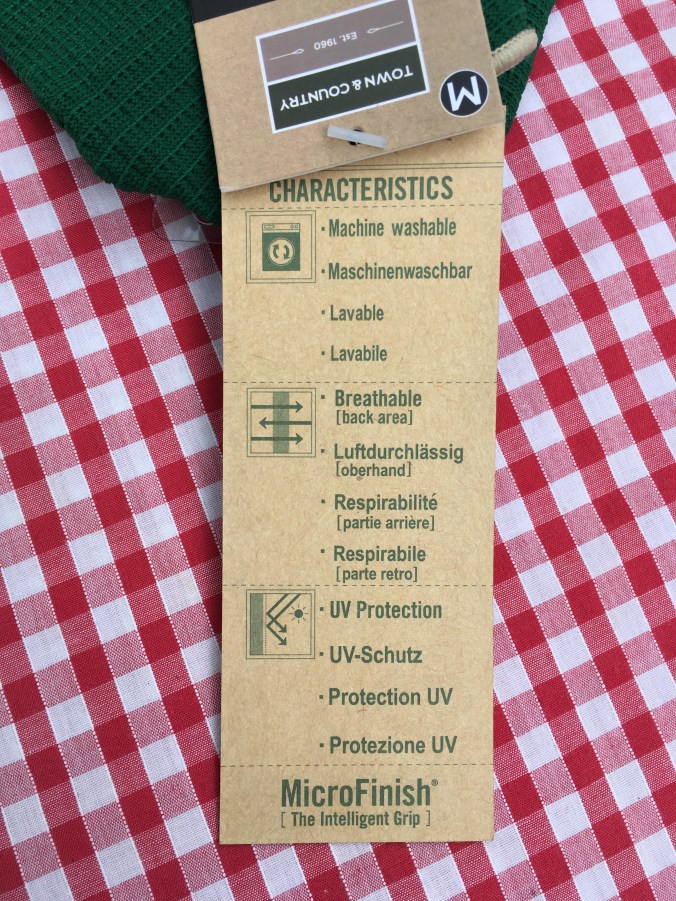
The information that comes with them says the palm and fingers have a latex coating. The back of the gloves are made from a breathable material for comfort and flexibility.

Mastergrip gloves, for everyday tasks, costs £6.99. There’s also Mastergrip Pro for tougher tasks, A thermal version for winter warmth, and a Mastergrip Patterns version for lighter tasks. There’s also versions for children, which is great. I’m always keen to get youngsters involved in gardening. They don’t usually take much persuading.

Town and Country sent these gloves unconditionally for a trial. I didn’t pay for them. However, I’ve been delighted with them, and I’m happy to recommend them.

The company has offered one pair for a prize draw. Please leave a comment below to be included in the draw. No purchase is necessary; names will be randomly selected by the company, and their decision is final. There’s no cash alternative. The deadline is Sunday 12th May, 8pm. Please also say if you don’t want to be included in the draw as all comments are welcome here. Enjoy your weekend gardening.

Links : https://www.townandco.com/

Six on Saturday 20 April 2019

A quick whizz around my garden today. I’m busy watering, watering, watering. We have had no rain for weeks and the water barrels are low.

Amaryllis. Planted in October. Should have flowered at Christmas. I did all the right things, watered it, pampered it. I’m happy it is finally flowering in time for Easter. It was sold as Lemon Star. As with many spring bulbs, they sometimes turn out to be different from the name on the packet. Very pretty though. A table centre on its own, I think.

Tulip Mount Tacoma. Also just in time for Easter table arrangements. Fluffy, very double. As beautiful as a swan, wouldn’t you agree.

Forget me nots make a lovely ground cover for Mount Tacoma here.

Still on the theme of cream and white, new tulip Exotic Emperor. A delight to watch opening from a tight bud. I love the flashes of green on the edges of the petals. One I will grow again next year.

Here they are growing in a large Italian pot by my back door. A north facing position suits them well. They last longer out of the sunshine. Above them, the lime green new leaves of an Acer Palmatum Dissectum are just starting to unfurl. Perfect to complement the stripe in the tulips.

In the Exotic Daylily Border, my favourite quince is in flower. Chaenomeles speciosa Kinshiden starts off the colour of Devon clotted cream and fades to white. A lime green eye adds a simplicity to this beautiful double flower. 200 Tulip Orange Emperor form a backdrop. A recommended tulip for reliably coming back each year, and good for planting between low maintenance daylilies. I hardly ever have to work this border. It virtually looks after itself.

Wishing you all a very and happy and peaceful Easter. I hope you are getting some lovely sunny weather, as we are here. It’s 21C today- and 38C in the greenhouse! I have opened all the doors and windows! And now I must get back to that watering…. Enjoy your gardening.

Links

Dalefoot bulb composts https://www.dalefootcomposts.co.uk/products/bulb-compost.p.aspx

Six https://thepropagatorblog.wordpress.com/2019/04/20/six-on-saturday-20-04-2019/

Lemon Star : https://www.sarahraven.com/flowers/bulbs/amaryllis/amaryllis_lemon_star.htm

Mount Tacoma https://www.peternyssen.com/mount-tacoma.html

Tulip Exotic Emperor https://www.farmergracy.co.uk/products/tulip-exotic-emperor-bulbs-uk?gclid=Cj0KCQjwhuvlBRCeARIsAM720HpBjLnKuSBteZOYQAoqbVUBnXKLyKYitNQifojAteMGWV5JVRSKz2UaAt9oEALw_wcB

Quince Kinshiden https://www.shootgardening.co.uk/plant/chaenomeles-speciosa-kinshiden

karen Gimson on Twitter https://mobile.twitter.com/kgimson?ref_src=twsrc%5Egoogle%7Ctwcamp%5Eserp%7Ctwgr%5Eauthor

karen Gimson Instagram https://www.instagram.com/karengimson1/?hl=en

Facebook https://m.facebook.com/pages/category/Local-Business/bramblegarden/posts/

Fields of Gold- and White. Taylors Daffodil Day 2019

Today I’m trying to describe the scent from 341 acres of daffodils- that’s about 300 football pitches. I’m almost lost for words. It’s like a tidal wave of “spring.” That scent at dawn on an April morning. Dew on the flowers, and the sun just starting to shine. Bees buzzing all around. And then it hits you. Pure joy!

I am at Taylors’ bulb fields in Lincolnshire for their Daffodil Day to celebrate the company’s centenary. And what a celebration! Daffodils as far as the eye can see. Birds singing, blue skies and a line of trees in the distance. The trees are so far away they look like miniatures. I’ve never seen anything like it. Bands of gold and yellow daffodils ripple in the wind. And wow, is it windy here. I’m holding on to my hat.

Taylors grow around 500 daffodil varieties on their farm at Holbeach near Spalding. It’s a real treat to learn how they are grown, the machinery used, and the processes involved.

Daffodils are planted in August – 850 tonnes of them. Bulbs remain in the ground for two years and are harvested over a six week period in June and July. The daffodil lifting machine digs up about one tonne per minute. Around 2,000 tonnes are harvested annually.

It’s the same machine that’s used for lifting potatoes. Daffodils are taken by trailer to a sorting conveyor belt machine that separates the bulbs from soil and stones.

Bulbs then go to a grading machine that sorts them into sizes. 7-10cm bulbs are kept to replant. Sizes then are separated into 10-12, 12-14, 14-16. The largest will obviously be the premium bulbs that will cost the most, but provide the best flower display.

Here’s John Cubley explaining the grading process. The bulbs pass through a kind of riddle to separate the sizes. John has worked for Taylors for 25 years. In fact, I spoke to three other workers who’ve all been there for at least 25 years. It’s obviously a company that attracts dedicated and loyal staff.

Here’s the grading machine inside the warehouse. Bulbs travel along a conveyor belt to be stored or packed into individual sizes and varieties.

It’s a treat to see any behind-the-scenes production. I’ve now got a better understanding of just what goes into growing and selling the bulbs I buy and plant each year.

These are some of the varieties I picked out as favourites. I particularly love the scented white daffodils and narcissi.

Kimmeridge. Pure white broad petals with a bowl crown of deep orange red.

Tibet. Creamy white, frilled cup, with a green “eye.”

High Society. Pure white with pink-edged centre. Good strong stems.

Pastorale. Pale lime yellow flower. The corona becomes white.

Tranquil Morn. Very pretty rounded pure white perianth. White flat disk, almost geometrically perfect. My favourite.

Pueblo. A jonquil. Multi -headed lemon flowers that become white as they mature. Simply stunning.

I’m looking out for some of the new varieties for 2019: Worcester- a creamy white variety. Pacific Rim- yellow with an orange rim; Arctic Bells- a white hoop petticoat type; Sinopel- unusual white with a green cup.

I came home laden down with catalogues, packets of summer bulbs, Taylors also sell these, dahlias, lilies, gladioli- and bunches of beautiful cut flowers. I’ve no need to travel to Holland. Lincolnshire – and Taylors Bulbs -is the place to see spring flowers in all their glory. And I’ve found the word I was searching for to describe the scent. It’s heavenly!

Links: Taylors Bulbs also home of Walkers Daffodils : http://www.taylors-bulbs.com/

Walkers Bulbs : https://bulbs.co.uk/

In a Vase on Monday – Venetian Shades

Monday 8th April 2019

Dashed home from work and, what a joy! It’s still light enough to run round the garden and cut some flowers. Photos taken at 7.30pm. I’ve chosen rich purple tones for my flower posy today.

Hyacinths have been the highlight of the garden this spring. I’ve managed to get them into flower from Christmas through to April, just by staggering the planting times and bringing them into light and warmth at different times. My favourite is hyacinth Blue Jacket, but today’s posy features deep plum/ purple hyacinth Woodstock. The scent is drifting across the garden as the light of the day fades to dusk.

Just unfurling is Anemone de Caen, pale pink with plum coloured streaks and black stamens. Planted last october in 4″ pots, these will be planted in the wild garden to flower again next year.

Hellebores are still looking good. This one is a seedling from a plant I bought at Hodsock Priory several years ago. It tones beautifully with spring bulbs. The tiny flowers alongside are Daphne Jacqueline Postill, and from the veg patch, some winter salad and mustard- which has run to seed.

Nestled in along side is pink comfrey flowers. I grow this for bees. They simply adore the plant. An important nectar source, early in the season. Also lasts for a week in a vase as a cut flower. There’s plenty for everyone.

When they have finished flowering, I cut the whole plant down to the ground. It will regrow and flower a second time. Nothing is wasted. The leaves are put into a barrel and topped up with water. After a few weeks, the resulting noxious -smelling brew makes a fabulous high potash liquid feed. Just dilute it 1 to 10 when you use it. Free plant food is always welcome.

Forget me nots form a cheerful frill around the base of my posy. Such a pretty biennial, it seeds itself freely around here and is growing in the wild garden- and where it shouldn’t- in all the gravel paths. Cutting them for vases stops forget me nots self seeding and is my attempt to control them, a little.

I hope you’ve enjoyed a mad dash round the garden with me. The sun set within minutes of taking these photos. Still, we must not complain. I’ve more than once has to cut flowers by torchlight, while tripping over the cat. Roll on lighter evenings. That’s what I say!

Thank you to Cathy for hosting In a Vase on Monday. https://ramblinginthegarden.wordpress.com/category/gardens/in-a-vase-on-monday/

Anemone :https://www.rhs.org.uk/Plants/26664/i-Anemone-coronaria-i-De-Caen-Group/Details

Hyacinth Woodstock : https://www.gee-tee.co.uk/bulbs/hyacinths/ordinary-hyacinths/ordinary-hyacinth-woodstock

Comfrey. https://www.rhs.org.uk/Plants/92452/Symphytum-Hidcote-Pink/Details

Book Review – 10-a-day, the easy way

JAMES WONG

Published by Mitchell Beazley

Hardback £20

ISBN 978-178472-476-4

I’m always looking for new ways to add more fruit and vegetables into our cooking. We grow much of our own veg in the summer, but often run out of ideas, especially when there’s masses of kale or courgettes, for example. I enjoyed James Wong’s How to Eat Better book, so when I saw his new title, 10-a-day the easy way, I had to try the recipes.

I tried the Haddock with Ratatouille recipe which is easy to follow and quick to make- very important after a busy day at work. I cooked diced onions, aubergines, courgettes, red pepper in 2 tbpsn olive oil. Then added a can of tomato passata and a tin of chickpeas. 2tbspn soy sauce, 2 tbsp herbs de Provence, and 4 garlic cloves (crushed) added flavour. I wouldn’t have thought of adding finely-grated zest and juice of half a lemon, but it’s the twist the recipe needs to make it different from anything I’ve made before. I didn’t have any bay leaves, but 2 were mentioned in the recipe. The pan was covered and simmered for 15 minutes while I baked the fish in the oven and added boiling water to a pan of couscous. It was delicious! A nice speedy weekday dinner, incorporating lots of veg, with the minimum of fuss. Sorry there are no photos of the finished meal. It was so tempting- we ate it straight away!

Here are a few sample pages from the book. First there’s an explanation on the science behind 10- a day. There’s no doubt that eating more fruit and veg is good for us. The book is split into sections on breakfast, lunch, dinner, deserts, snacks, sauces, cakes and bakes.

I am going to make the peanut butter cookies next. They sound delicious.

I could see us starting the day with these light and fluffy banana and peanut butter pancakes. Breakfast can be quite boring in our house as we just grab a box of cereal each day.

Fruit crepes with cottage cheese, blueberries and kiwi fruit. Looks and tastes amazing.

Triple Berry Hotcakes- using frozen berries. I have a freezer full of home-grown blueberries and raspberries . Frozen fruit is just as nutritious as fresh, and sometimes cheaper to buy. Incorporated into batter for a pancake – genius idea. Breakfasts will never be the same again!

So, what is a portion? James says it’s 80g of whole fruit or veg or 30g dried fruit or veg. I am surprised to see 30g of tomato purée is 1 portion. I’m now adding it to soups and stews and topping up pasta dishes. Easy. James says people tend to misjudge how small an 80g portion is. When it comes to apples, pears, peaches and avocados, a single fruit is actually 2 portions. Even dried foods count. So you could snack on raisins or add dried mushrooms to a risotto to boost your intake.

I’ve enjoyed working my way through the 80 recipes in James’ new book. His message is clear- eating more fruit and veg is good for your health. But he’s never preachy. He says, if you can’t manage 10 a day, that’s ok. Just eat more than you do at the moment. And that’s what I’m aiming for. The recipes are certainly tasty, and quick to make.

The publishers have one free copy to give away in a prize draw. Please leave a comment below and let me know if you’d like to be included in the prize draw. It’s ok if you don’t wish to be included as well. The publishers will pull a name out of a hat to randomly select a winner. There’s no cash alternative and the publisher’s decision is final. The book can be sent to international addresses as well as UK.

Six on Saturday – 30 March 2019

Suddenly, there’s blossom and flowers everywhere. Sunny 17C days. Cold 1C nights. In the cut flower patch, there’s rows of double narcissi Bridal Crown and Winston Churchill. Single daffodil Geranium is a favourite. Wonderful in a vase. Highly scented. They seem to shout “spring is here.”

Tulips are a few weeks early. I hope there’s some to come for Easter. This one’s new to me. Exotic Emperor. Double creamy white with green feathering. A glorious sight at dawn, all covered in tiny beads of dew.

Above the cut flower beds, a plum tree spreads it’s branches. Such a wonderful sight on a beautiful sunny morning.

My plot is edged by a bank of wild cherry trees. There’s Tenby daffodils at their feet. Small and simple. They look “right” in their semi-wild setting.

Looking up, I can hear the bees working the pollen. There will be plenty of cherries this year.

I hope you’ve enjoyed a walk around my garden today. What flowers and trees are you seeing today?

Links : six on Saturday https://thepropagatorblog.wordpress.com/2019/03/30/six-on-saturday-30-03-2019/#comments

Narcissi bridal crown https://www.gee-tee.co.uk/bulbs/daffodils-narcissus/double-narcissi/narcissus-bridal-crown

Narcissi geranium https://www.gee-tee.co.uk/bulbs/daffodils-narcissus/special-mixtures-of-daffodils-narcissi/mixed-daffodils-narcissi

Wild Cherry https://www.woodlandtrust.org.uk/visiting-woods/trees-woods-and-wildlife/british-trees/a-z-of-uk-native-trees/wild-cherry/

Plum https://www.chrisbowers.co.uk/category/plums/

Karen on twitter @kgimson

On instagram at karengimson1

Join us also for In a Vase on Monday : https://ramblinginthegarden.wordpress.com/2019/03/25/in-a-vase-on-monday-goodbye-to-all-that/

Death in the Garden – Book Review

Poisonous Plants & Their Use Throughout History

Michael Brown

Pen and Sword Books. Paperback £16.99

ISBN 1526708388

I once turned up at a client’s garden to find foxgloves growing amongst the cut-and- come-again lettuce. Horrified, I carefully weeded them out, but decided I couldn’t be sure I’d found them all. The whole plot had to be dug up and replanted. Growing flowers in the veg plot has become fashionable. But mixing flowers with salads and veg can be deadly. We know foxgloves or digitalis has links with modern medicine to treat heart disorders. All parts of the plant are, however, highly poisonous. Michael Brown, in his book Death in the Garden, says on a toxicity scale of 1 to 20, with 1 being the most lethal, foxgloves are at number 3. The difference between a beneficial and lethal dose being minute.

Foxgloves are just one of the plants listed in Brown’s fascinating book. I’ve grown up knowing about the dangers of deadly and woody nightshade, and giant hogweed. But who knew that aquilegia could be poisonous.

Brown describes how powdered aquilegia seeds were used historically as medicine for jaundice and liver problems right up until the early nineteenth century. The plant, apparently high in vitamin C, was also rather dubiously used to treat scurvy. Luckily, modern medicine has moved on and the plant has reverted back to being used just to decorate our gardens.

Other plants I’ll look at in a different light in future include autumn crocus, bindweed, broom, cherry laurel, daffodils, morning glory and celandine, to name but a few.

And as for basil, I’ll not be able to eat it again without thinking of Brown’s rather bizarre and gory murder story involving a severed head and a pot of herbs! His book is a mixture of fact and fiction – all revolving around plants and poisons. Highly entertaining as well as informative. But you might not be able to sleep at night after reading it.

The book cover says :” Mankind has always had a morbid fascination with poisonous plants; how their poisonous properties were discovered and developed will most likely be left unknown. Over the centuries poisonous plants have been used to remove garden pests, unwanted rivals, and deceitful partners. They have also been used for their medicinal qualities, as rather dangerous cosmetics, even to help seduce a lover, when perceived as an aphrodisiac.

“Death in the Garden is based on Michael Brown’s most popular talk, popular as this subject holds a strange interest, for many will enjoy learning about these treacherous and peculiar plants, their defensive and deadly traits as well as the folklore that has grown around them. ”

Michael Brown has been a head gardener, a college lecturer and designed the medieval gardens at Prebendal Manor, Nassington. He now gives talks and demonstrations on historical gardening .

The publishers have one copy to give away. Please leave a comment below to be included. Comments without wishing to be in the draw are also fine.

Please do not try any of the “recipes” or remedies mentioned in the book.

DISCLAIMER: All the plants mentioned in this blog piece and the above book can cause death or injury. The contents of the review and book are for interest only and the author and publisher accept no liability for any injury caused by the use of the plants.

Links : kindle https://www.pen-and-sword.co.uk/Death-in-the-Garden-Kindle/p/14944

Amazon https://www.amazon.co.uk/Death-Garden-Poisonous-Throughout-History/dp/1526708388

Prize Draw Winner -Slot Planter

Last week I wrote about Slot Planters as an alternative to plastic. Company owners Kay and Colin kindly offered a planter for a prize draw. Names were put into a cheese dome, apparently. Kay and Colin didn’t have a hat! I couldn’t stop laughing, to be honest. Anyway, a name was randomly pulled out of the cheese dome and Creoscribe won the draw.

I am delighted with my planter and I wish Colin and Kay all the best with their new product. They are a lovely couple with lots of enthusiasm, and a sense of humour – which always helps! I like to support British companies, and although I’m not giving up my plastic trays, I’m trying not to buy any more if I can help it. The plastic I have here will be carefully used, washed and reused. But if I can think of alternatives I’ll try them out and report back on the blog. I’ll be buying several more planters in different sizes for the coming growing season.

I’m just about to transplant my edible peas into the veg plot. Peas are hardy, but it’s best to start them off indoors as they are a tasty treat for mice and pigeons. I’m going to use the Slot Planter for sweet peas now. Here’s what the cut flower patch looked like last summer. Gladioli came from Tee Gee Bulbs.

Sweet pea Wiltshire Ripple is a favourite. Flowers over a long period and is very pretty. Lasts well in a vase.

Thank you everyone who read the review, commented and took part in the prize draw. Please let me know if you have tried anything new in your garden. It’s good to share ideas.

Links: I wrote the review here : https://bramblegarden.com/2019/03/14/slot-planter-seed-tray-on-trial/

Slot Planter :https://slotplanter.co.uk/wooden-planter.html

Sweet peas : https://www.mr-fothergills.co.uk/Flower-Seed/Sweet-Pea-Seed/

Gee Tee Bulbs: https://www.gee-tee.co.uk/bulbs/gladioli

Slot Planter Seed Tray- On Trial

Searching for alternatives to plastic, I’ve come across a new product called a Slot Planter. And if you’d like to try it, there’s one available in my prize draw this week.

The Slot Planter is made from interlocking panels and comes flat packed through the post.

It’s well packaged with recyclable cardboard materials.

Opening the parcel, I find four panels that simply slot together. No screws, glue or fixings are needed.

Drainage holes are already drilled.

I filled mine with good quality compost. I use Dalefoot salad and vegetable peat-free compost made from sheeps wool and bracken. I sowed some Twinkle seeds from Suttons. These produce tasty pea shoots, and after three harvests, can be planted outside and allowed to grow on.

Grown in a greenhouse with the heater set at 5C, the pea shoots looked like this after three weeks. I’ve only watered the compost once.

After another couple of weeks, the pea shoots are ready to harvest. Just pinch out the top two or three inches, and the peas will branch out and grow back.

The Slot Planter has proved sturdy enough to be moved about from potting shed to greenhouse and outdoors for the photos to be taken. I’m delighted with it so far. It could also be used for sweet peas or broad beans. I’m going to try sweet corn and salads too.

It’s made from Medite Tricoya Extreme. The blurb that comes with the planter says this is a durable, sustainable, environmentally-friendly wood panel product with a 25 year guarantee against rot and decay. Planters are available in various sizes. The seed tray size above costs £12.99, or £35.99 for three. £3.50 postage per order.

I have one seed tray, as shown above, worth £12.99, to give away in a prize draw. Please leave a comment and let me know if you would like to be included in the draw. The owners Colin and Kay Thompson will pull a name out of hat. Winners are randomly selected and our decision is final. There’s no cash alternative. No purchase is necessary to take part. A winner will be selected on Sunday 17th March.

What products have you found, as alternatives to buying plastic for the garden? Let me know. We are all trying our hardest to recycle and reuse what plastic pots we have. It’s interesting to see alternative materials and products come on to the market, specially designed for gardeners.

Links for more information: slotplanter.co.uk Order online or telephone 01728 684433

https://slotplanter.co.uk/

Colin and Kay Thompson, from Tuddenham, Suffolk, also make beautiful wooden garden obelisks. https://woodengardenobelisk.co.uk/slot-planter-wooden-plant-pot.htm

Dalefoot compost https://www.dalefootcomposts.co.uk/

Sutton’s seeds https://www.suttons.co.uk/

In a Vase on Monday

It’s 25th February- and it feels like May. There’s a steady low hum of bumble bees on the hellebores by the front door. I’ve just seen a wren making a nest under the bedroom window; there’s been a nest there every year for the past 30 years. And joy! There’s frogs in the pond. So hopefully there will be frogspawn soon. Today I’m sharing a selection of photos of my containers. So it’s not strictly in a Vase on Monday- but rather in a container on Monday. I thought I would share photos of the places where I’m taking flowers from to make my daily arrangements for the summerhouse, and kitchen table. And of course some of the flowers will always go to the care home where my in-laws are now living. They can’t easily get out to see gardens, so I shall take spring joy to them.

These narcissi are Snow Baby, new to me, and a real beauty. Grows to only 6″ with flowers the same size as tete-a-tete. Flowers start off the colour of clotted cream and fade to white. Perfect in every way, and the bees love them too.

It’s good to try new varieties, while still planting old favourites such as February Gold and Paperwhites.

Speaking of Paperwhites, I’ve still got pots of deliciously scented flowers on my garden trolly next to the greenhouse. Very handy for picking and adding to bouquets. They are propped up with hazel twigs from the wild garden.

Hazel catkins- “lambs’ tails” – are a much awaited treat. A joyful sight. So full of bees today. I’ve never seen as many out in February before.

White crocus Joan of Arc has joined the trolly display. Also a wonderful pollen supply for bees.

Giving months of interest is hyacinth Delft Blue . Such a wonder to watch it slowly forming a flower spike and starting to unfurl. The scent is heavenly too!

I’m very fond of hyacinth Carnegie too. I love the green tinge to the petals followed by pure white flowers. Well worth growing.

And finally, even the humble daisy is putting on a show right now. Some of these dainty flowers will be going into my jam jar posies. I’m leaving plenty behind for the bees.

I hope you’ve enjoyed my roundup of what’s in flower in my garden. Thanks to Cathy for hosting In a Vase on Monday. Why not go over and see what Cathy and the others all around the world are growing and displaying in their pots, vases and containers this week. It’s a fascinating read.

Links : #IAVOM https://ramblinginthegarden.wordpress.com/2019/02/25/in-a-vase-on-monday-it-had-to-be-you-2/

Paperwhites https://www.gee-tee.co.uk/bulbs/daffodils-narcissus/tazetta-poetaz-narcissi/narcissus-paperwhite-grandiflora

Hazel https://www.woodlandtrust.org.uk/visiting-woods/trees-woods-and-wildlife/british-trees/native-trees/hazel/

Narcissi Snow Baby https://www.peternyssen.com/narcissus-snow-baby.html

crocus Joan of Arc https://www.gee-tee.co.uk/bulbs/crocus/large-flowering-crocus/crocus-joan-of-arc

Hyacinth Blue Jacket https://www.gee-tee.co.uk/bulbs/hyacinths/ordinary-hyacinths/ordinary-hyacinth-blue-jacket

Hyacinth Carnegie https://www.peternyssen.com/prepared-hyacinths-carnegie.html

Congratulations to the Winner of The Wild Remedy Prize Draw

Congratulations to Kathy Lewington who has won my prize draw for a copy of Emma Mitchell’s wonderful new book The Wild Remedy.

The publishers Michael O’ Mara Books kindly offered one copy to give away.

I wrote a review of Emma’s book here : https://bramblegarden.com/2019/02/14/the-wild-remedy-book-review/

I love the book and can’t recommend it highly enough. I’ve always enjoyed Emma’s drawings and photographs on social media. To have them in a book I can look at every day of the year is a special treat. A treasury of nature.

Thank you to everyone to read my review and left a comment. There will be many more books and gardening products to follow.

Links : https://bramblegarden.com/2019/02/14/the-wild-remedy-book-review/

Amazon :https://www.amazon.co.uk/Wild-Remedy-Nature-Mends-Diary/dp/1789290422

Michael O’Mara Books https://www.mombooks.com/

Review of Making Winter https://bramblegarden.com/2017/12/16/last-minute-christmas-present-ideas-for-gardeners/

Please share on any social media platform you like. Thank you.

The Wild Remedy- Book Review

A Diary. How Nature Mends Us.

Emma Mitchell

Michael O’Mara Books. Hardback £14.99

ISBN: 978-1-78929-042-4

It’s entirely appropriate for a review of Emma Mitchell’s diary The Wild Remedy to appear here on Valentine’s Day. For Emma’s beautiful new book is a love letter to nature.

In almost 200 pages, Emma walks with us through woodland and the quiet country lanes of her Cambridge home. Through her eyes, we see wild flowers, birds and wildlife, bees and insects. It’s an inspiring and joyful journey. Her commentary is like taking a walk with a friend. She’s talking about how she feels and I’m nodding agreement at her side. Sometimes I find myself mumbling soft words of comfort and encouragement.

It’s a personal journey, written from the heart. Emma has suffered from depression for the past 25 years. Her response to illness is to walk, taking photographs and drawing what she sees. As I follow her journey, I’m hoping she finds solace in the beauty around her, in being outdoors in fresh air and sunshine. And although she never simplifies the struggles of depression and mental illness, Emma shines a light on her own discoveries, detailing how her encounters with nature significantly influence her mental well-being. Emma touches on new research into natural remedies, how nature affects our neurochemistry, for example.

Fortunately, I’ve never suffered from depression. But I’ve watched friends and relatives suffer, and felt lost and helpless to know what to do for the best. Alongside the medical treatments available, we are all realising that maybe nature has more to offer. Reconnecting with nature might be the salve we need as life becomes more pressured and stressful.

It can only be a good thing to take time to stop, look about us, and appreciate the beauty of simple things; watching the birds, finding a feather, turning over a smooth stone in our hands. Simple things. Powerful as any medicine, maybe.

The publishers have kindly offered one book free for a prize draw. Please comment below to be included. There’s no cash alternative and the publisher’s decision is final. The publishers will randomly pull a name out of a hat and will send the book direct from their offices.

Thank you for reading, and please feel free to share this review on any social media platform. The pictures above are my camera phone photos from Emma’s book.

Links :

The Wild Remedy contains 100 hand-drawn illustrations and 35 colour photographs.

The Wild Remedy https://www.amazon.co.uk/Wild-Remedy-Nature-Mends-Diary/dp/1789290422.

I wrote about Emma’s book, Making Winter here: https://bramblegarden.com/2017/12/16/last-minute-christmas-present-ideas-for-gardeners/

About Emma Mitchell https://silverpebble.net/about-me

About Michael O’Mara Books https://www.mombooks.com/

In a Vase on Monday 11th February 2019

Spring flowers and a silver birch wreath. A honey -scented display for the summerhouse today.

Arriving home late from work, I’ve run round the garden and picked a few spring flowers to decorate the wreath.

This week, tete-a-tete narcissi and Iris Eye Catcher join the snowdrops in my display. I can report, the little test tubes I mentioned last week are working a treat. The double snowdrops have lasted seven days.

The test tubes arrived attached to a bouquet of orchids, a gift from a friend. As usual, I put them in the potting shed until I’ve thought of a use for them. We are all trying to manage without oasis florists foam, which is not recyclable and adds to pollution.

I twist a wire around the top of the test tube and press it into the twiggy wreath. It stays there securely, despite high winds. Storm Erik bashed the garden, but didn’t damage the display- with the summerhouse turned to face the shelter of the trees. I patch in some emerald green moss and fresh ivy to hide the workings.

Here’s where the flowers are growing, in the wild garden under beech, oak and cherry trees.

Double snowdrops came from Hodsock Priory. Singles, Galanthus nivalis, from Easton Walled Gardens.

Yellow aconites are finally starting to spread. They are slow to establish and like lots of leafmould.

I finish the day walking down the lane to pick willow stems for valentine hearts. And joy! The first lamb, born today. What a lovely surprise, and I’m glad it is a glorious sunny day. Not like last year, when they arrived in a snowstorm. Today is a good day to be born. I stand for a while watching the tiny lamb find its feet. Within minutes it’s jumping, all four feet off the ground. A sight I’ll never tire of, and another sure sign spring is not far away.

Links:

IAVOM with Cathy https://ramblinginthegarden.wordpress.com/2019/02/11/in-a-vase-on-monday-and-so-it-goes/

Easton Walled Gardens https://www.visiteaston.co.uk/

Hodsock Priory http://www.hodsockpriory.com/

Yellow aconites https://www.gee-tee.co.uk/bulbs/eranthis/eranthis-hyemalis

Floristry supplies Googies Flower Shop https://en-gb.facebook.com/googiesflowers/

Last week’s IAVOM https://bramblegarden.com/2019/02/04/in-a-vase-on-monday-february-4th-2019/

In a Vase on Monday-February 4th 2019

I’m starting to miss sunshine and warm weather. I’m muffled up with coat, scarves, gloves, two pairs of socks, and still the cold seeps in. There’s been such a cold wind. The ground is frozen and the pond iced over. And yet, mooching about looking for something cheerful, I find chinodoxa- untroubled by the cold, the colour of Mediterranean skies. A little bit of hope.

A circle of silver birch twigs makes a pretty background for spring flowers. I just twist the branches like rope and tie the ends together. I’m trying not to use florists’ foam as it’s currently not recyclable. I’ve found a solution. A friend sent me a box of orchids, each one with a 7cm test tube of water, keeping them fresh. Recycling them, I twist a piece of wire around the necks and stick them in amongst the twiggy coils. Topped with moss, and hidden with ivy, no one will know they are there. I just have to top up the water each morning, and at the same time, add fresh flowers as I please. The wreath here was made on Saturday with wild clematis -old man’s beard- ivy and winter flowering honeysuckle lonicera fragrantissima. It survived high winds, mostly. Silver honesty lasted a day, then blew into the back field hedge where it glistens like a tiny mirror. And the star-like cow-parsley seed heads have gone. It’s an arrangement that changes with the weather. I like that. It’s real life. A reflection of what’s happening in my garden today.

So this morning, I’ve picked some snowdrops and chinodoxa and added them to the arrangement. Chinodoxa known as “glory of the snow” seems untroubled by the cold north wind. Such a delicate flower, and yet so hardy.

To add my own sunshine, I’ve found some aconites, Eranthis hyemalis. We called these gold coins when we were growing up.

Snowdrops nestle amongst the foliage. I bought the single variety , galanthus nivalis, from Easton Walled Gardens. A little bit of history now growing in my wild garden. There’s been a garden at Easton for at least 400 years. A renovation project started almost 20 years ago, has rescued the garden for future generations to enjoy. The double snowdrops came from Hodsock Priory. Another favourite place to visit with my Mum.

My wreath sits above the doors on our 1930s turntable summerhouse. We’ve turned our backs to the wind and swung the summerhouse around to face the wild garden. There’s wild garlic thriving on the right, under the willow. I’m really pleased to see snowdrops I planted three years ago starting to form little clumps. How long, I wonder, before the scene is a sea of white. I shall have to wait and see.

Links :

I’m joining Cathy for her IAVOM meme. https://ramblinginthegarden.wordpress.com/2019/02/04/in-a-vase-on-monday-skinny/

Chonodoxa https://www.gee-tee.co.uk/bulbs/chionodoxa/chionodoxa-violet-beauty

Eranthis https://www.gee-tee.co.uk/bulbs/bulbs-in-the-green/eranthis-hyemalis-winter-aconite

Easton Walled Gardens https://www.visiteaston.co.uk/

Hodsock Priory snowdrops http://www.hodsockpriory.com/about-us/the-gardens/snowdrops/

NGS snowdrop gardens to visit https://www.ngs.org.uk/find-a-garden/snowdrop-gardens/

Lonicera fragrantissima https://www.rhs.org.uk/Plants/68665/i-Lonicera-fragrantissima-i/Details

Six on Saturday- photos from my garden

My grandfather Ted Foulds’ Sankey terracotta pots being put to good use on the potting shed window. Snowdrops from Hodsock Priory open day sales. Trees in the wild garden, reflected in the glass.

Iris Katherine’s Gold, a new sport of Katherine Hodgkin, thrives in my tiny terracotta pots in 50 /50 grit and compost for good drainage. Arriving home from work, I open the greenhouse door and all the iris flowers unfurl and pop open. A heart-lift moment in the middle of winter. Reminds me of a dragon fly, metamorphosing.

Citrus in the greenhouse. Each day I watch them ripen. I mull over my favourite recipes. Orange shortbread fingers. Lemons drizzle cake. Citrus marmalade. Pancakes. Lemon tea. What will it be? Scent from the flowers is another joy. Flowers open 12 months of the year.

In the potting shed, I wind some silver birch twigs into a circle. Winter flowering honeysuckle. Pale and beautiful. Lonicera fragrantisimma. A perfect partner for wispy wild clematis, old man’s beard. As always there’s ivy full of green berries. Simple beauty. And silver coins or honesty. Translucent in the February sunshine.

Perhaps a few snowdrops will match the icy chill in the garden today. It’s cold enough for snow.

Enjoy your weekend, and keep warm! I’m trying to weather the winter – any way I can. The garden is certainly helping. Though signs of spring are more than welcome.

I’m taking part in the Six on Saturday meme. Why not go over and join in. Here’s the link : https://thepropagatorblog.wordpress.com/2019/02/02/six-on-saturday-02-02-2019/

Prize draw winners – The Immortal Yew

Tony Hall

Kew Publishing. Hardback. £25

ISBN : 978 1 84246 658 2

One of the pleasures of writing a blog is sharing a love of gardening with like-minded people. Books are also a passion of mine, particularly anything with a horticultural theme. So I was happy to be invited to write a review of The Immortal Yew, written by Kew Gardens manager Tony Hall. Stories of myths and legends surrounding yews dating back 2,000 years had me glued to the pages from start to finish. I was drawn in by the sight of the “lion’s paw” yews flanking the doors at St Edward’s Church, Stow-on-the-wold, a sight said to have inspired JRR Tolkien when he was writing about the gateway to Moria in Lord of the Rings. A photo of these strange, ancient yews provides the cover picture for the book. The publishers, Kew Publishing, very generously offered three copies for a prize draw on the blog. The winners, randomly selected, are Sharon Moncur, Philippa Burrough and Alison Levey. Thanks to everyone who left comments on the blog. If you didn’t win, please keep reading as there are many more books to follow over the next few weeks, including The Wild Remedy by Emma Mitchell, Island Gardens by Jackie Bennett, the English Country House Garden, George Plumptre, Oxford College Gardens, Tim Richardson, and The Christmas Tree by Barbara Segall. Winter is a great time to catch up with reading, before tasks in the garden entice us outdoors again.

To read my review, please click here : https://bramblegarden.com/2019/01/25/the-immortal-yew-book-review/

What books would you recommend to gardening friends? What are your favourite books?

Links : Immortal Yew https://www.amazon.co.uk/Immortal-Yew-Tony-Hall/dp/1842466585/ref=sr_1_1?s=books&ie=UTF8&qid=1548966993&sr=1-1

Kew Gardens https://www.kew.org/

Kew Publishing https://www.kew.org/files/kew-publishingjpg

Sharon Moncur https://renaissancegardener.org/

Philippa Burrough http://www.ultingwickgarden.co.uk/

Alison Levey https://www.blackberrygarden.co.uk/

Please feel free to share this blog on any social media platform, linking back to this site https://bramblegarden.com/

Nest Boxes and Bird Feeders for the Garden

#BigGardenBirdWatch – My survey results.

Looking out of my potting shed window, I can see plenty of pigeons and a few robins. But where have all the song birds gone? Last weekend I took part in the RSPB Big Garden Birdwatch, and I was shocked by the results. Hardly any birds in my garden.

The Big Garden Birdwatch is in its 40th year, starting out in 1979. Over half a million people take part; it’s the world’s largest garden wildlife survey. But what it has shown over the years is a downward trend, a drastic decline in the number of thrushes, starlings and sparrows.

Results show:

  • Song thrushes down 75 percent
  • Starlings down 80 percent
  • Blackbirds down 41 percent
  • House sparrows down 57 percent
  • Greenfinches down 57 percent
  • Robins down 31 percent

Birds on the increase are

  • Wood pigeons up 950 percent
  • Collard doves up 307 percent.

In my one hour survey I spotted:

1 great tit

3 blackbirds

2 robins

1 wren

1 pheasant

1 chaffinch

5 pigeons

It’s about five years since we heard the tap- tapping of a song thrush breaking open a snail shell on the garden path. And I can’t remember the last time we spotted a sparrow. It must be 10 years at least.

So, with plummeting numbers, what can we do to help. One positive action is to put up a nest box. Loss of habitat might be a factor in the decline of the sparrow. We are all keeping our homes in better repair, meaning there are fewer gaps under the tiles where sparrows like to nest.

I asked Shropshire company CJ Wildlife for advice on buying and siting a nest box and here’s some hints and tips I’ve gathered.

Each bird has its preference for a particular nest box. The entrance opening is a determining factor.

  • 28mm hole- suitable for blue tit, coal, great, crested, marsh and willow tits, pied flycatcher and tree sparrow
  • 32mm – house sparrow, tree sparrow, great tit, crested tit, nuthatch
  • Oval entrance hole – house sparrow, nuthatch and redstart.
  • Open fronted box- well hidden in foliage- robin, wren, spotted flycatcher, redstart, black redstart, pied and grey wagtail, song birds.

Buying a bird box

  • Choose one made from high quality wood, up to 18mm thick, for insulation.
  • Look for an FSC label – certified products contain wood in accordance with Forest Stewardship Council regulations. The council promotes responsible forest management
  • Birds will often return year after year to the same box, choose one that is going to last. WoodStone is a mix of wood and concrete which has good insulating properties and a long life. A 10 year guarantee is given.
  • Metal or some ceramic nests might not be suitable, as they could have low insulation properties.
  • The best bird boxes come with a metal plate protecting the entrance hole from predators. These plates can also be purchased for a few pounds to protect existing boxes that don’t have this feature.

Maintenance of bird boxes

Bird boxes should be emptied every year between the end of October and January 31st. This will help to prevent parasites building up. Wear gloves and a dust mask. Wash the bird box in hot soapy water, or use bird-safe cleaners. Leave to dry for a few days in a garage or shed, and return the bird box to its original position.

Bird boxes can be painted, outside only, with non-toxic water- based paint.

Siting a bird box

  • Chose a north or east- facing position, as bright sunshine will overheat and possibly kill young birds
  • If mounting bird box on a tree, use the dry side and avoid the side where water rushes down in heavy rainfall.
  • Choose a secluded place, away from patios and barbecues
  • Site near vegetation so that young birds making their first flight will have some cover
  • Protect open nest boxes with thorny vegetation around them
  • The best height for bird boxes is between 1.5m and 5.5m
  • A clear flight path into the box is needed
  • Avoid sites such as the top of a fence, where predators can easily access the bird box.

In my garden, I’ve started off with boxes for robins, sparrows and great tits. And I’m hoping to attract a nuthatch or two. I’ll keep you posted on how I get on. I’m saving up for one that has a camera inside. I’d love to watch nesting birds in action.

Many thanks to CJ Wildlife for supplying bird food, and feeders, which I’ll talk about next time, and substantial, high quality nest boxes. I’m looking forward to attracting more birds to my plot, and doing my bit towards reversing the downward trend in garden bird numbers.

Here are some links you might find useful.

BTO https://www.bto.org/volunteer-surveys/gbw

Woodland Trust https://www.woodlandtrust.org.uk/visiting-woods/trees-woods-and-wildlife/animals/birds/

CJ Wildlife https://www.birdfood.co.uk/bird-feeders.html

CJ Wildlife nest boxes https://www.birdfood.co.uk/nest-boxes.html

Big Garden Birdwatch https://www.rspb.org.uk/get-involved/activities/birdwatch/


Please leave a comment below to be included in a prize draw for a Jupiter feeder and 1k suet pack, currently on sale for £18.99. Names will be randomly selected and there’s no cash alternative. Sorry, UK entries only. CJ Wildlife decision is final.

Photos of birds credit :CJ Wildlife.

Don’t forget to use the hashtag #BigGardenBirdWatch and #Winterwatch on social media to share your findings and stories from your weekend survey. And please feel free to share this blog piece on any social media platform. It all helps. Thank you.

In a Vase on Monday

I always seem to be wandering about in the gloom. I rush home from work just in time to check over the greenhouse and poly tunnel. It’s always a delight to see what’s burst into flower while I’ve been away. So today, I’m sorry to say, my flower arrangements are a little dark- again.

Luckily, there’s just enough light to pick a few stems of Paperwhite narcissi. The scent is such a joy in winter. It’s a little overwhelming indoors, but three stems in a posy are just right.

I’ve partnered the Paperwhites with a chocolate hellebore. I bought this last spring at Ashwood Nurseries where the owner John Massey very kindly gave our group a tour of his private gardens, as well as delicious lunch in his cosy kitchen. It’s a memory I will always treasure, thanks to John’s kindness and generosity.

My little posy came on an outing with me to Leicester for the gardening phone-in programme at Radio Leicester. After answering listeners’ questions on everything from sowing seed to pruning, I set off for my Mum’s house. The posy looks just perfect on her sunny kitchen window.

Pittosporum has a purple wavy picottee edge in winter. I’m cutting back my eucalyptus gunii this spring as it’s got to about 8ft. Trimmings make a lovely background for any flower. I’m also cutting back a giant white jasmine. The foliage is almost every green, and there are a few purple-tinged seed heads that look very pretty.

By the time I finish messing about with flowers and foliage, the trees in the back field are charcoal outlines. I stand and marvel. Is there anything more beautiful than a native oak. The farmer who planted this has long gone, and his son also. We live next to the farm. No doubt, this tree will outlive me. Meanwhile I’ll stand and gaze, and make a promise to protect it, should anything ever come along to threaten it.

I’m joining Cathy again this week for her IAVOM meme. Here’s the link to join in and read about what the others are growing and putting in their vases this week.

Links:

Cathy https://ramblinginthegarden.wordpress.com/2019/01/28/in-a-vase-on-monday-it-makes-scents/

Ashwood Nursery black hellebores : https://www.ashwoodnurseries.com/shop/helleborus-xhybridus-single-black-pearl.html

I wrote about my visit to Ashwood here https://bramblegarden.com/2018/02/26/in-a-vase-on-monday-ashnurs-gdnmediaguild/

I wrote about growing Paperwhites here https://bramblegarden.com/2017/12/01/fairy-lights-for-the-greenhouse-and-an-update-from-this-weeks-bbc-radio-programme-for-gardeners/

Visit Ashwood https://www.ashwoodnurseries.com/visit-us/

The Immortal Yew- Book Review

Tony Hall

Kew Publishing. Hardback. £25

ISBN: 978 1 84246 658 2

I’ve often walked under cathedral-like arches of ancient yew trees and wondered what stories they could tell. Their dense evergreen canopy means low light levels- adding an air of drama and mystery. It’s easy to let imagination run wild. No wonder the yew is linked to so many strange myths and legends.

Here’s my view of the yew walk at Melbourne Hall in Derbyshire on a cold January day a few weeks back. Almost a living sculpture. Hundreds of years of history captured in every twist and turn. I stood and marvelled at its strangeness and beauty.

Tony Hall, Manager at Kew, started on a quest to record our ancient yew trees after a visit to Devon where he found a huge male yew tree in a churchyard in Kenn. He was amazed by its immense size, and wondered just how many other trees there were like this. He set out to travel around Britain and Ireland in search of these venerable trees, and The Immortal Yew is the resulting book.

The book profiles 75 publicly-accessible yews, with details on their appearance, location, folklore and history, accompanied by 100 colour photographs. Each tree has its own story to tell- from fragmented, sprawling trunks, to ones you can sit inside. And there are some that have possibly inspired writers.

Author J.R.R. Tolkien is said to have found inspiration for the gateway to Moria in the Lord of the Rings from visiting the two guardian yews at Stow- on-the -Wold. The two yews flank the door at St Edward’s Church, like a pair of giant lion’s paws. Their photo makes a stunning cover picture for the book.

The Ankerwycke Yew near Wraysbury, Middlesex, is thought to be up to 2,500 years old, making it the oldest known tree on National Trust land. It’s possible the tree was the one under which the Magna Carta was agreed. And where Henry VIII courted the ill-fated Anne Boleyn. In 2002 it was chosen as one of the ’50 Great British Trees,’ to celebrate the Queen’s Golden Jubilee. Not far from the tree are the remains of St Mary’s Priory, a Benedictine convent built in the 12th century in the reign of Henry II. The yew would already have been a notable ancient landmark, substantially more than 1,000 years old, when the priory was built.

Much Marcle Yew, in St Bartholomew’s Church, Ledbury, Herefordshire has an unusual feature. The hollow interior is fitted with wooden benches which seat 12 people and were installed in the 18th century. The bulbous, fluted trunk has a circumference of over 9m. Some of the lower branches are still held up by old Victorian gas lamp columns.

A timeline highlights some key dates in the history of the yew. I have selected just a few of the dates which caught my attention.

  • 140 million years ago Taxaceae (yew family) fossils formed
  • 200BC Herbalist Nikander describes the painful death caused by yew toxin
  • 1066 Battle of Hastings: King Harold killed by an arrow that supposedly pierced his eye, fired from a Norman yew longbow.
  • 1215 Magna Carta signed under the Ankerwycke Yew

More modern dates include

  • 1986 anti-cancer drug Docetaxel, extracted from the leaves of European yew, was patented and later approved for medicinal use.
  • 1994 synthetic cancer drug Taxol was developed.
  • This book is a wonderful celebration of our native yew trees, and all the stories that go with them. It would be a fabulous starting point to a journey around Britain and Ireland. I for one would love to have the opportunity to visit these trees and stand and wonder at their beauty. Perhaps one day I will get the chance to set out on an grand tour. For now though, I’ll dip into Tony’s book and enjoy all the fascinating stories of mythology and folklore. It’s a journey into the past. And also, it would be interesting to see what scientists discover in the future, as I’m sure we haven’t learned all there is to know about these strange and much-valued trees.

    Tony Hall is Manager of the Arboretum and Gardens at the Royal Botanic Gardens, Kew, where he has worked for the past 17 years. His fascination with natural history began at a young age. He has been working in horticulture for 40 years. Tony is author of Wild Plants of Southern Spain (Kew Publishing, 2017 ).

    The publishers have one free copy to give away in a prize draw for readers of this blog. Please leave a comment below, by Sunday 27th Jan, to be included in the draw. The publisher’s decision is final and there is no cash alternative. UK and international entries are welcome.

    Here is the Amazon link for Tony’s latest book: https://www.amazon.co.uk/Immortal-Yew-Tony-Hall/dp/1842466585/ref=sr_1_1/258-7276364-2203519?ie=UTF8&qid=1548447890&sr=8-1&keywords=the+immortal+yew

    Have you any favourite yew trees? I regularly visit Easton Walled Gardens near Grantham, where evidence of the Tudor-style walks and walls indicate there has been a garden on the site for at least 400 years. The yew tree tunnel is a much-photographed focal point of this historic restoration project started in 2001.

    Links:

    Melbourne Hall Gardens https://www.melbournehallgardens.com/

    Easton Walled Gardens https://www.visiteaston.co.uk/

    Kew Gardens https://www.kew.org/

    Kew publishing https://www.kew.org/about-our-organisation/business-services

    In a Vase on Monday. Daylight photos

    I feel rather guilty for the dark, poor quality photos posted last night. I shouldn’t have lingered on the footpath, looking at the wildlife. It was dark by the time I reached home.

    So today, I rushed back – and it was still daylight! It feels as if it is getting lighter. It’s a month past the shortest day and plants in the garden are moving. The sap is starting to rise.

    Anyway, thank you for your kind comments on all my photos – even when the quality leaves a lot to be desired.

    Here’s the same flowers that were posted yesterday for IAVOM – in daylight conditions today.

    The “workings ” are a willow heart with a kokedama vase tied on with string. I’m not using florists foam as there’s growing concern about it polluting water courses and not being recyclable. No one would ever know that the vase is a jam jar covered in moss from the garden, with green twine wound over and over to make the kokedama “nest.”

    It’s easy to top up the water every day, and the flowers seem to last just as long. In fact they probably last longer, because each day you can fish out the posy and trim a tiny amount off the stems. Refresh the water, and all’s well.

    We are all trying to find our way through the new circumstances we find ourselves in. No one can ”un- see” David Attenborough’s Blue Planet programme. The film of the whale carrying its dead calf will stay with us always. As will the pictures of the beeches and ocean polluted with plastic. I for one will find alternatives for florists foam, until a recyclable ”green” alternative is produced. I’m using test tubes and mini glass vases, hidden in moss. I don’t feel as if my flower arrangements are suffering.

    Thank you to Cathy for hosting IAVOM at https://ramblinginthegarden.wordpress.com/category/gardens/in-a-vase-on-monday/.

    In a Vase on Monday – flowers from my garden

    I should have taken my photos in daylight. But a last minute walk around the fields won instead. We were just in time to see a buzzard swoop from the bottom field oaks across to the lane. By the time we’d walked around the margins of the field, the buzzard was on the move again. It flew overhead. We could see it was a young bird, one of last summer’s fledglings. Three quarters of young buzzards die before they mature at three years old. We are lucky to have them here. Every day we look for them. Often we hear their mewing cry before we see them. The sound carries into the potting shed where I’m working.

    On the potting shed table today, I’ve a few stems of alstroemeria and some paper white narcissi. I’m growing alstroemeria in the unheated poly tunnel, protected under two layers of fleece. There’s a few stems with buds which I hope will open.

    I spend a few minutes separating the layers from the honesty seed heads. A bit of silver is more than welcome in the winter gloom.

    There’s a few sprigs of chrysanthemum White Stallion, and a halo of dried gypsophillia saved from the summer.

    Emerging from the potting shed with my posy of flowers, there’s just enough light to follow the garden path home.

    I’m joining with Cathy for this week’s IAVOM. Why not go over and see what everyone else is growing and cutting for their vase of flowers this week.

    In a Vase on Monday https://ramblinginthegarden.wordpress.com/category/gardens/in-a-vase-on-monday/

    Here’s this week’s links to find out more. RSPB on buzzards: https://www.rspb.org.uk/birds-and-wildlife/wildlife-guides/bird-a-z/buzzard/breeding-nesting-habits/

    RHS growing Paperwhites : https://www.rhs.org.uk/Plants/48820/Narcissus-papyraceus-(13)/Details

    Alstroemeria from http://www.postalplants.co.uk/

    RHS advice on Honesty https://www.rhs.org.uk/Plants/98034/Lunaria-annua/Details

    Six on Saturday- Photos from my Garden, 19th January 2019

    Is there anything more beautiful than a January rose.

    One of favourites is Rosa Pearl Drift. Rarely out of flower all summer. Throws out the occasional joyful surprise through winter. We had a posy of blooms for Christmas. Disease resistant and low maintenance. I can highly recommend this beautiful, hardy rose.

    Picked at 4.30pm today: Paperwhite Narcissi from the unheated poly tunnel, black hellebore bought last spring from Ashwood Nurseries. Similar varieties are Hellebore Black Pearl. Partnered with blue green eucalyptus stems and jasmine. A joy for my potting shed window. I love fresh flowers in winter, probably more than in summer. There’s more need for cheer in the dark days of January.

    Planted broad bean De Monica in my new hinged deep root trainers from Haxnix.

    I planted Aquadulce in October and overwintered them in the greenhouse. They’ll be planted out next month for an early crop. De Monica will provide a successional crop later in spring.

    I’m trialling a new peat-free potting compost from Westland being launched this year. I’ll report back as plants start to grow over the next few months. So far, so good. It’s nice to use, free draining, and consistent. There are no large lumpy bits in it. And it doesn’t grow a green algae on the surface of pots, like some of the compost I’ve tried in the past.

    A view of the wild garden, taken from the summerhouse. I’ve been planting 200 foxgloves, grown from two packets of seed, sown in mid summer. It would have been expensive to buy ready-grown plants. These cost £4 for seed, and a few pounds for compost. It’s a good way to create a maplanting effect, on a budget. You can start sowing seed now to catch up. Plants grown this spring should provide some flower spikes late in summer. They will bulk up and provide a real show the following spring.

    Scattered all around my garden are piles of twigs and logs, covered with leaf mould. Homes for invertebrates. Beetles, bugs and insects mean food for hedgehogs, frogs, toads and birds. My army, all ready to munch on pests such as slugs and snails. It’s a fair exchange, I think. I give them a home, they look after me.

    And finally a day-time view, past the summerhouse, down the field to the woods where our tawny and barn owls live. At dusk we sit in the summerhouse and watch them glide by, silent as the night. The emerald green field is a joy in January. You can virtually see the crop growing! It’s almost a month past the shortest day, and the sap’s rising and plants are getting going.

    I’m joining in with for Six on Saturday. Why not go over and see what others are posting for their six photos today. Here’s the link : https://thepropagatorblog.wordpress.com/2019/01/19/six-on-saturday-19-01-2019/.

    LINKS:

    I wrote about John Massey and Ashwood hellebores here ; https://bramblegarden.com/2018/02/26/in-a-vase-on-monday-ashnurs-gdnmediaguild/

    Hellebores: https://www.ashwoodnurseries.com/shop/plants/hellebores/helleborus-xhybridus-single-black-pearl.html

    Paperwhites came from Gee Tee Bulbs https://www.gee-tee.co.uk/ and were planted in October.

    Vegetable seeds / foxglove seeds from Mr Fothergills http://www.mr-fothergills.co.uk/?gclid=CjwKCAiAsoviBRAoEiwATm8OYG3vsJS9JxyNd2rIPtJ1lZ4saSuPRVFTatI-9eqArW1r61_7P6cLbxoCQygQAvD_BwE

    Deep root trainers for sweet peas and broad beans https://www.haxnicks.co.uk/deep-sherwood-rootrainers

    Westland composts https://www.gardenhealth.com/product/natures-haven-multi-purpose-compost

    Leek and Potato Pies -Veg from the Garden

    I love the quiet time after Christmas. It’s so peaceful here. No rushing about trying to keep up with the world. I hold on to that feeling of calm for as long as I can. I’m reluctant to drive to the shops. So I look about the house and garden. Leeks and potatoes are plentiful, so I make one of my favourite recipes, Leek and Potato pie. They are easy to make, and it’s lovely to come indoors from a session in the garden and find tasty little pies for tea. Dashing about, dealing with shopping, parking and self service tills that never seem to work, can all wait for another day.

    INGREDIENTS

    A quantity of shortcrust pastry, or 2 rolls of filo or 2 packs puff pastry, rolled out and cut into approx 12cm squares.

    800g potatoes, chopped into approx 2.5cm chunks

    2 leeks

    2 red onions

    25g butter

    1 heaped tbsp plain flour

    200ml milk

    130g cheddar cheese

    Pinch of salt/black pepper

    Optional. If you have them:

    Pinch of paprika and cayenne pepper

    Half tsp Lea and Perrins Worcestershire Sauce

    Pinch of mustard powder

    Chopped chives, sage, thyme, marjoram, parsley.

    1 beaten egg for glazing

    METHOD

    Boil the potatoes until they are just cooked, but still slightly firm. Drain and set aside to cool.

    Melt the butter and add the leeks and onions and cook gently until soft.

    Add the flour and cook gently for 2 minutes, stirring the mixture so it doesn’t burn.

    Remove from the heat and add a few tablespoons of the milk and stir well to incorporate. Add the rest of the milk, a bit at a time, stirring well.

    Return to the heat and cook for a few minutes until the sauce thickens, stirring to prevent burning.

    Remove from the heat while you grate the cheese.

    Add the grated cheese, the seasoning and optional ingredients.

    Gently fold the sauce mixture into the cooked potatoes.

    Divide the mixture between the pastry squares. Transfer to a parchment-lined baking tray.

    Pull the four corners inwards to meet in the centre, folding one corner over the other like closing an envelope. Pinch along the folds to hold the folds together. Some beaten egg will help the pastry to stick together.

    Brush the pies with beaten egg.

    Cook for 15 to 20 minutes, until the pastry is puffed and the filling is piping hot. The parcels may open up a little as they bake.

    Sprinkle over some reserved fresh herbs.

    TIP

    Make picnic versions by using silicone muffin trays.

    Vary the recipe by adding whatever vegetables you have in store. If you eat fish, you can add tuna. If you are vegan, use soya margarine, soya milk and brush the pies with almond milk. Add chestnut mushrooms and chopped nuts instead of cheese.

    PASTRY RECIPE

    300g plain flour

    1tbsp or 15ml baking powder

    150g butter or margarine

    3-4tbsp or 45-60ml water.

    METHOD

    Put the flour and baking power in a basin. Rub in the fat until the mixture resembles fine breadcrumbs. Add sufficient water to give a soft but manageable dough.

    Note: use warm water if using wholemeal flour.

    The photo below shows filo pastry pies, made in muffin trays.

    They don’t have to be perfect shapes. Enjoy!

    Six on Saturday – My Tribute to David Austin

    I’m ignoring the sudden plunge in temperatures. Instead I’m dreaming of summer- and roses in particular. This is my tribute to the wonderful rose grower David Austin who died last month aged 92.

    My first roses planted here were David Austin’s. Constance Spry, a glorious old fashioned-looking rose, drapes along the 40 foot pergola. A wonder. Such beauty when it’s in bloom. A fleeting glory, gone in just a few weeks. But the anticipation, waiting for the scent, is worth it.

    I gather a basket of blooms. Soon the scent fills the potting shed. In a few moments, I’ve wound the roses into a mossy ring. A halo of elderflower completes the wreath.

    I always prop up flower arrangements in the potting shed window to look for gaps, and to add finishing touches.

    Then it’s on to the summerhouse. The evening breeze sends the scent through the open doors. A perfect place to sit and contemplate the day’s work.

    You can read more about David Austin here https://www.theguardian.com/lifeandstyle/2019/jan/01/david-austin-obituary. A life- and work which brought so much joy to so many people, including me. My garden wouldn’t be the same without my David Austin roses.

    Joining in with the Propagator for Six on Saturday meme, https://thepropagatorblog.wordpress.com/2019/01/05/six-on-saturday-05-01-2019/ . Why not go over and see what others are choosing for their six photos today.

    What roses are you planning to grow in your gardens this year?

    A walk around my garden 2nd January 2019

    Cyclamen Coum. A cheering sight in a quiet corner of the wild garden. Perhaps I’ve missed my chance to clear away fallen cow parsley stems. They will just have to compost down naturally with the autumn leaves- which also didn’t get raked up last year. Time just evaporated.

    I found hibernating ladybirds. They are welcome here. I hope they’ll munch the greenfly in the summer. I left them undisturbed.

    And early snowdrops. Mrs Macnamara, bought from a sale at Hodsock Priory a few years ago. There seems to be an early flowering seedling too. I wonder if it’s a new variety.

    Hellebores seem to get earlier every year. A sign of our changing unpredictable seasons.

    Algerian Iris unguicularis suddenly flowers. Baked at the base of a south facing wall, it’s always a heart-sing moment. Such delicate blue flowers. How can they survive the cold.

    Vinca, periwinkle is rarely out of flower. I love the sky blue hue – against a grey sky.

    By the front gate, and all along our hawthorn hedge, there’s violets. Such a joy on a cold day. The scent is something you’ll never forget.

    Thanks to Helen for hosting #EOMV meme at https://patientgardener.wordpress.com/. What’s flowering in your garden at the start of the new year?

    Happy New Year!

    Wishing you all a happy, peaceful and healthy New Year. All the best for 2019.

    IAVOM https://ramblinginthegarden.wordpress.com/category/gardens/in-a-vase-on-monday/ . Enjoy your garden x

    Six on Saturday. Simple Christmas Decorations from the Garden.

    I should be making mince pies. Or cleaning the house. Instead, I creep outside and lose an hour or two, messing about with twigs and foliage. I am happy.

    This simple wreath is made from silver birch twigs, twisted in a circle and bound with twine. It’s an ever-changing scene. Ephemeral. A fleeting beauty. Blackbirds feast on the rosehips. Gusts of wind carry off the old man’s beard, back to the hedgerow where it belongs. It mirrors nature. Nothing is static. I add fresh ivy leaves, Scots pine, crab apples. Dried hydrangea flowers amongst cow parsley “stars.”

    For the front door, I’m copying an American idea. I’m mocking up a container. I cut some branches of blue fir and pine and stand them in a favourite terracotta plant pot.

    Scrunched- up newspaper holds everything in place. I add coloured willow and dogwood stems. In front, I place a potted skimmia, as a focal point. You could add a white hellebore, or white cyclamen if you wish. A few hazel branches with cheerful early catkins complete the display.

    A collar of moss hides the newspaper. It’s a cross between gardening and floristry and no one will know I’ve just used twigs and not splashed out on lots of new plants.

    As a final flourish, I add mouldable fairy lights with thin copper wire. They cost £2.50 from Wilkinson’s and can be used with rechargeable batteries.

    I’m joining in with Six on Saturday, https://thepropagatorblog.wordpress.com/2018/12/22/six-on-saturday-22-12-201/. Why not go over and see what others are doing in their garden at this time of the year.

    As it’s Christmas, I’m sure no one will mind if I add a bonus photo. I made this heart from two willow stems. Hold them both in one hand, bend the first one over and then hold in the middle. Bend the second one over, and secure with twine. Easy, and costs nothing to make.

    I’m heading indoors now to make those mince pies! I feel so much better for spending time in fresh air, and the house, garden – and me – are all ready for Christmas!

    Have a wonderful, peaceful and happy Christmas. Try to make some time to “escape” to the garden, when you can.

    Karen

    Last Minute Christmas Presents for Gardeners

    Here’s my last minute recommendations. I would love to receive any of these. They all last longer than Christmas Day. Prices vary, depending on special offers and discounts.

    1. Vouchers for a course at Common Farm Flowers.

    https://www.commonfarmflowers.com/workshops.html .

    I joined the Grow Your Own Cut Flower Patch course a few years ago, and I’m self-sufficient in flowers for my friends and family. There was enough information to grow plants commercially, if I had wanted to. I’m delighted to be able to wander about my garden at any time of the year and create beautiful hand tied bouquets and pretty jam jar posies. There’s something special about home-grown flowers. It’s all a matter of planning and knowing what varieties to grow. Georgie is an excellent teacher. After attending one of her courses, you feel as if you can conquer the world. It’s a rather wonderful feeling!

    Courses on offer range from £15 for a garden tour to £290 for a painting course.

    Courses: Flower Farming, encouraging wildlife, social media for small businesses, starting a kitchen table business, grow your own wedding flowers, hand tied bouquets.

    2. RHS Membership. From £61.

    Develop your gardening skills with an RHS membership package. Membership includes unlimited entry to RHS gardens, discounts for show tickets, personalised advice, and entry to 200 partner gardens. The RHS magazine,The Garden, is worth the membership price alone. It is packed full of inspiring ideas and information. Written by experts we all trust. I always look forward to my copy, and it keeps me up to date with new plants, ideas for recycling, using less plastic in the garden and information on the latest research into plant diseases. It’s great to see The Garden magazine will be delivered in recyclable paper packaging instead of single-use plastic next spring.

    https://www.rhs.org.uk/shop/special-offers/active-offers/rhs-gift-membership-offer

    3. Support the Woodland Trust with a membership package. £48.

    Explore 1,000 Woodland Trust woods. A walk in a wood lifts your mood and re-energises you. It will do you a power of good.

    https://www.woodlandtrust.org.uk/membership/

    4. Membership for St Tiggywinkles wildlife hospital. £36.

    We all rely on our wildlife, hedgehogs in particular, to help us combat slugs. This is a wonderful way to support wildlife and learn more about them.

    https://www.sttiggywinkles.org.uk/top-navigation/help-us/membership.html

    5. Join The Hardy Plant Society. £17 a year.

    A great way to discover more about hardy plants, find like- minded gardeners and join in with events such as talks and slide shows, conservation and plant sales. There’s two issues of the The Hardy Plant magazine a year, free advice and a chance to take part in the free seed distribution scheme.

    http://www.hardy-plant.org.uk/whyjoinus

    6. Charles Dowding No-dig course. Various prices. Approx £150 a day.

    Learn all about growing all kinds of vegetables and fruit, productively and with less effort. Charles has helped me to garden with a poorly back. I fractured my spine in a car crash 15 years ago. Without his advice, I would probably have had to give up my one acre garden. With his no-dig techniques, I have managed to keep on top of weeds, and grow all the fruit, veg and flowers I want to, without aggravating my spinal injuries.

    I hope these last-minute suggestions have been useful. If not for Christmas, they make a lovely birthday present.

    What’s the best course, or membership, you would recommend? Let me know so I can share your ideas too.

    Coming up in the new year, I’ve been invited to try out some weekend holidays for gardeners. I’ll let you know how I get on. I’ll be taking my Mum with me, of course. Something to look forward to in 2019.

    Six on Saturday -Making Light

    Midwinter. I love saying the word. It’s like a sigh. Midwinter. Dark and gloom until 21st of December – and then the days get lighter. Hurray! Meanwhile, to bring some cheer, there’s fairy lights.

    It’s mild today, 9C but windy, so I wrap up warm and head off down the lane to forage for foliage. Sound seems to carry further in winter. I can hear our neighbouring farmer calling his cows. They are as tame as pets, and well tended. The calves line up along the hedge to watch me.

    I find willow stems; soft grey catkins breaking through already. There’s plenty of twigs with dried oak leaves. On one side the hedges have been trimmed. But across the lane, the hedges are high. Dog roses wind around the trees and mingle with wild clematis. I have a basket to carry the findings home. There’s fluffy seed heads from Clematis vitalba, and rosehips as red as sealing wax.

    Scott’s pine and trailing ivy will be useful evergreen. Above my head, a robin sings, quite unconcerned by my intrusion. It’s good to see a young hare in the field. He crouches down in the long grass when he spots me, but I can still see his ears.

    Back through the field gate. A pheasant has taken up residence in our paddock this winter. He’s a joy to see, strutting around and flying into the cherry trees to roost at night. I hope he survives the winter – and evades the hunters. We can hear the guns from our garden. Glad to provide a sanctuary to any creature needing safety.

    I’ve decorated the five bar gate with a circle of dried clematis stems. Not a perfect circle. Not a perfect gate. We’ve had it since we moved here. It’s covered in moss and creaking loudly, but I can’t bear to replace it. I get attached to old familiar things. Dried hydrangea heads make a focal point, and there’s always rosemary for scent.

    Back to the potting shed to make my arrangements.

    I’ve saved some Chinese’s lanterns, physalis, from the garden. It’s hanging from the rafters to dry, along with hydrangea heads. To add a bit of glitz (unusual for me, I know) I give the hydrangea heads some silver spray. It highlights the delicate flowers of hydrangea Annabel. So beautiful in summer, and winter too. It’s a favourite of mine. The fairy lights are mouldable wire florists lights from Wilkos. You can use rechargeable batteries.

    I turn around and there’s a robin and two wrens in the potting shed roof. I shall have to leave the door open for them. They can stay, as long as they don’t eat all of my rosehips.

    Luckily there’s a kettle in the potting shed. Time for tea, and a piece of Mum’s fruit cake. I hope you’ve enjoyed this ramble around my garden and down the lane. I’m joining with with https://thepropagatorblog.wordpress.com/2018/12/08/six-on-saturday-08-12-2018/ for his SixOnSaturday. Feel free to look around at my other posts while you are here. Catch up with you next Saturday.

    Family Favourite Recipes – Chocolate Marzipan Cherries.

    When I started this blog, my intention was to write down all our family favourite recipes in one place. It occurred to me that our much loved recipes exist on tatty pieces of paper. My children might want to find Aunty Betty’s toffee apple recipe, or the Gimson Christmas trifle. Stained and ripped pieces of paper might be difficult to find. So recipes are deposited here for future reference. Today I’m sharing my home made cherry chocolate recipe that I make every year. It’s a money saving recipe if you use your own fruit. And it’s simple to make. Even little children can have a go.

    Ingredients

    Home grown cherries, preserved in brandy. Choose good quality fruit that is slightly under ripe. Only preserve the best fruit, and none that has any blemishes.

    Or

    200g glacé cherries

    500g marzipan

    200g good quality dark chocolate.

    Method

    Soak the glacé cherries in cherry brandy overnight. Drain and reserve the liquid for adding to cakes.

    If using your own preserved cherries, drain and gently pat dry with a clean tea towel.

    Break the block of marzipan into four, and microwave for a few seconds to soften.

    Take tablespoons of marzipan (about 13g).

    Roll into a ball, and then flatten to enclose a cherry. Roll gently in the palm of your hand to smooth the marzipan. Leave to dry for a few hours.

    Melt the chocolate in the microwave. Drop each marzipan cherry into the chocolate and use a spoon to roll them about to coat.

    Stand the chocolates on foil until set.

    Keeps for about 1 week in a cool dry place. If you can resist them that long!

    Enjoy 😊

    I made mine in the summerhouse, with the radio on and sunshine streaming through the open doors. It’s amazingly mild for December. We’ve had 12C for days, although last night it was -2 and we woke to a frost.

    Here’s the ingredients. It’s a really simple recipe. Wonderful if you have a cherry tree in the garden.

    I used white marzipan, but you can use golden if you like.

    Drop into the chocolate. Make sure you don’t get any water in the chocolate, or it will go dull.

    They take about an hour to set. The recipe makes about 35 cherry chocolates. There’s enough marzipan and chocolate to make another 30 if you buy more cherries. Or make 30 almond marzipan chocolates.

    Simply enclose one whole blanched almond in the marzipan as above, and coat in the chocolate. Delicious! You can also use whole Brazil nuts and use milk or plain chocolate.

    How to Preserve Cherries

    450g cherries

    75g sugar

    2 drops almond essence

    600ml brandy.

    Remove the cherry stalks and stones and prick all over with a sterilised needle or cocktail stick.

    Layer the cherries with the sugar in a large sterilised preserving jar, fill to within 2.5cm of the top. Add almond essence.

    Pour the brandy to cover the cherries. Seal the jar and shake well.

    Keep in a cool, dark place for at least three months to allow the flavours to develop. Shake the jar from time to time.

    Strain the cherries through a funnel lined with muslin. Put the cherry brandy into sterilised bottles to give as presents. Use the cherries in the chocolate marzipan recipe above, or in pastries, ice cream and other winter treats. Enjoy 😊

    Book prize draw winner- The Creative Kitchen

    It’s been a good year for new books. One of my favourites recently arrived in the potting shed is The Creative Kitchen by Stephanie Hafferty.

    The publishers kindly offered one free copy for a prize draw for this blog. I’m always grateful for a chance to pass on goodies to readers. And I’m delighted to announce that the winner is June at https://thecynicalgardener.com/ .

    Please take a look at the discount code on my review which gets you the book for £16 including postage. Here’s the link for the review https://bramblegarden.com/2018/11/18/the-creative-kitchen-book-review/

    I’m making peppermint creams for Christmas presents using Stephanie’s idea for mint sugar. The kitchen smells divine, and the mints look really pretty.

    Thank you for reading this blog. Keep popping back for more news. A whole pile of books have just arrived in the potting shed and I’m just starting to work my way through them, so keep an eye open for more prize draws and offers.

    Are you making any Christmas presents this year? Get in touch and share your favourite recipes and ideas for gardeners and cooks. It’s great to share hints and tips with each other.

    I always look forward to your comments. Please also feel free to share this blog on any social media platform you like. It all helps to spread the news.

    In a Vase on Monday. White and Green.

    A slide show of flowers from my garden. Paperwhite narcissi, Hellebore Jacob Royal, white heather, Ice Princess. Variegated pittosporum, hebe, juniper, ivy, conifers, Mossy green apple twigs, woven in.

    It’s 12C today. No wonder the Paperwhites won’t wait until Christmas. I’ve planted more, a fortnight apart in 10″ pots in the poly tunnel.

    There’s still some bees and hoverflies about. But the wasps have stopped coming. They left an empty paper nest in the long grass in the wild garden. We knew they were there and kept a respectful distance. We’ve had no trouble with aphids all summer; wasps have zoomed in and feasted on them with relish.

    Dusk seems to descend all of a sudden. One moment I am mooching in the greenhouse, the next I’m plunged into darkness. I’ve strung some mouldable wire fairy lights through the lemon trees. They make little heat and will only be left on for an hour or so. Enough to cheer me through the gloom of December days to come.

    Winter sunsets are glorious though. I stay out until the very last minute. Hopefully, I’ll spot a tawny owl before it’s time to go indoors.

    Thanks to Cathy https://ramblinginthegarden.wordpress.com/ for this IAVOM meme. Why not go over and see what Cathy and all the others are growing and arranging this week. Let me know what’s looking good in your garden at the moment too.

    Six on Saturday. A peek in my greenhouse

    On such a horrible wet day, the only place to be is in my greenhouse.

    Cacti and succulents rule on the top shelf. They virtually look after themselves. I won’t water them until the end of February. Perfect for anyone with a busy life.

    There’s always baby plants to pot up. I’m using these in a Christmas wreath next week. I’ll make a circle of willow, cover it in sheet moss, and wire in the succulent cuttings. They’ll soon root into the moss and grow on. I’ll post some how-to photos as I go. The wreath can hang on the front door, or become a table setting with a candle in the middle.

    The temperature in here is 10C today. A Parwins electric fan heater is set to 5C. Providing I keep the plants on the dry side, they survive the winter. It’s the wet that kills more plants than the cold. This pinky orange bougainvillea remains colourful right through until spring. I’ll prune it right back next March and it will produce fresh bracts on the new season’s growth. This one is being trained into a pyramid and I’ve also got a purple one trained into a ball.

    Down the left of the greenhouse is a row of potted citrus plants. These are fabulous for making cakes. I never use chemicals, so the zest is safe to use. There’s oranges, tangerines, lemons and limes. I’m searching for something called a Buddhas Hand which apparently produces large quantities of peel for jams and marmalade.

    I bring pots of herbs and annuals into the greenhouse in October to overwinter. My nasturtiums are still flowering. I’ll use the flowers and leaves in salads. Anything to cheer up dark and rainy days of December.

    I hope you’ve enjoyed my whistle-stop tour of my greenhouse. I love to have somewhere to mooch when it’s horrible outdoors. What’s growing in your greenhouses, coldframes or porches this winter? Get in touch and let me know what you are nurturing, indoors.

    Joining in with https://thepropagatorblog.wordpress.com/2018/12/01/six-on-saturday-01-12-2018/. Why not go over and see what the the others have chosen for their Six on Saturday slideshow photos.

    Six on Saturday. Joining in for the first time.

    Six photos from my garden and potting shed this week.

    Catching the light in my potting shed window: Old Man’s Beard, wild clematis vitalba. Commonly called traveller’s joy. I stand on tip toe, reaching into hedgerows to harvest long stems with silver seed heads. They’re a lovely addition to winter flower arrangements.

    Silver coins. Honesty seeds. Hanging from the rafters to dry. They will be tucked in amongst rosehips, holly and ivy for Christmas decorations.

    Chinese lanterns, harvested in October. I love the various shades of orange. They fade to a delicate papery apricot colour. And left long enough, they become transparent.

    My potting shed window looks out onto the wild garden. So heartening to see hazel branches with lambs-tail catkins. A welcome reminder that spring will return. The twigs make useful supports for my paperwhite narcissi and hyacinths which are in the dark under my point shed bench at the moment.

    The last few golden leaves are fluttering in the breeze. Hazel, maple, ash trees make a mini woodland. I’ve planted 200 foxgloves in the wild garden. We sowed the seed in mid summer, pricked them out in August, and planted out, they will sit making roots over winter. I’m growing Sutton’s Apricot, a glorious silky, peach- coloured foxglove, and Pam’s Choice- white with a blackcurrant thumb print in each flower.

    It’s dusk before I finish planting. I stand by the pond watching blackbirds taking a last-minute bath. I wonder how they can stand the cold water. I expect it keeps their feathers in good condition. A tawny owl glides silently along the field hedge. Short-tailed voles live in the long grass here. Within minutes, it’s dark. It’s not like in summer, where there’s enough moonlight to potter around. November dark is cold, pitch black. Time to go indoors, light a fire and make hot chocolate.

    I hope you’ve enjoyed a walk around my garden with me tonight. I’m joining https://thepropagatorblog.wordpress.com/ for his Six on Saturday meme. What jobs are you doing in your garden this weekend?

    In a Vase on Monday – flowers for a christening.

    Pink roses for a baby girl. Just the right flower. That’s what I decided when a friend asked me to make a door wreath for her granddaughter’s christening.

    Setting out with a wicker basket, I spend a happy hour searching the hedgerows around the garden. I’m looking for ivy leaves, and their lime green and black flower heads and seeds. The perfect background for any circle of flowers. I find jewel-like Euonymus europaeus, or spindle tree, growing wild amongst the ivy, dogwood and hawthorn. Their bright pink fruit split apart to reveal orange seeds inside. Leaves turn a burnished bronze and then red. I add them to the basket. It’s like finding treasure.

    I find some silver coins. Well, they look like coins. Honesty seed heads have turned a glorious silvery grey. Perfect for tucking in amongst the flowers. I love the way they catch the light. No need for fairy lights here.

    I search around for some sprigs of a newly- planted viburnum. This winter-flowering gem is called Viburnum tinus Lisarose. Clusters of small pink and white flowers look lovely at all stages from bud to fully open. It flowers from November to April, just when we most need some cheer.

    It’s my lucky day. I’ve found some late-flowering roses. My favourites, The Fairy and Pearl Anniversary. They have small clusters of pearly pink semi-double flowers. Both are compact, easy to grow varieties. Mine are thriving in containers and are moved into the greenhouse to provide flowers right up until Christmas. Pearl Anniversary is a compact, patio rose, and The Fairy is a small shrub rose. Both are repeat flowering and disease resistant.

    Roses make the perfect focal point at the top of the wreath. Not many are needed to make a display.

    Rosehips. So glossy they look as if they’ve been dipped in varnish. They cascade from the top of the hedgerows. The birds will have a feast. I harvest some for today, and some for Christmas, not taking them all. It’s best to share. I weave them in and out of the ivy. It’s a happy combination of hedgerow and garden. Just perfect for a baby girl’s special day.

    Each week I join Cathy for her IAVOM Meme. Luckily flowers don’t have to be in a vase to be included. Why not go over and see what Cathy and all the others are growing and harvesting for their flower arrangements this week. Let me know if you have ever made flowers for a special occasion like I have. It’s lucky when the garden and hedgerow provides such bounty, even in November.

    Cathy : https://ramblinginthegarden.wordpress.com/

    The Creative Kitchen – Book Review

    By Stephanie Hafferty

    Published by Permanent Publications. November 2018

    *Win a free copy in the prize draw by leaving a comment at the end of the blog. And there’s a discount code for readers.

    New reading in the potting shed this week is Stephanie Hafferty’s latest book on seasonal recipes for meals and drinks and making items for the garden and home.

    I have to admit, I have a passion for cookery books. Many of my favourites have been handed down through the family. I’ve got Bero baking books from my grandma Betty, which bring back happy memories of delicious cakes. She never ate them herself, but just liked to make everyone smile. All our trips to the seaside- and local beauty spots such as Bradgate Park – would be accompanied by her butterfly fairy cakes. Her trifles were liberally sprinkled with hundreds and thousands. And I bet my brothers remember her home-made toffee apples. It’s amazing our teeth survived, but they did.

    When you think about it, many of our strongest memories relate to sitting around a table together, sharing food. All our celebrations, birthdays, anniversaries- and Christmas being the highlight of the year- revolve around food.

    With my own family and friends, I’ve tried to carry on the cooking and nurturing tradition. Although, it’s not always easy to get everyone together at the same time. We live such busy lives. When I do manage to corral the family together, I’ll usually make a massive pot of soup, a casserole, a cheese and potato pie, a vegetable lasagne, or similar. And for afters, there’s nearly always something involving apples- we have them in store all winter, and they’re free.

    My cooking revolves around what I’m growing. And this is where Stephanie’s new book comes in handy; all the recipes are seasonally based. So they are relevant to what I’m growing all year round. I always start with what I’ve got available, rather than choosing a recipe. Stephanie helps by suggesting what I can do with the gluts of the season. I often have that “what-on-earth-am-I-going-to-do-with-all-this-kale” moment. Hearty bean and vegetable soup might be the answer.

    I’m very keen on throwing everything in a pan together and just leaving it to cook. It gives me more time to garden- and chat. My two favourite pastimes! Stephanie must have written this book specially for me. Her Bean Stew with Red Wine is simple to make, fabulously tasty, and looks pretty too.

    Alongside the main meals, soups and salads, there’s recipes for store cupboard ingredients such as flavoured salts, vinegars, herb mixes, and infused sugars. I’m definitely going to try making mint sugar. Imagine adding it to hot chocolate. Such a treat on a freezing cold day.

    I’ve been thinking about what to do about vegetable stock powers since my favourite brand decided to add palm oil to its ingredients. There will be no palm oil in my house. Apart from not trusting the “ethically sourced” statement, we do not want or need palm oil. Only if we reject it will the rainforests be saved. I am just one person, but it seems the message is getting stronger. People are picking up packets of food and reading the labels and realising that palm oil has insidiously crept into so many food and household products. Anyway, now I can make my own stock powers with Stephanie’s recipes for wild herb, mushroom and tomato bouillon. And there’s a fruit bouillon for adding to yoghurts, cakes and biscuits. Such a clever idea, and easily do-able.

    I’ve had a go at making herb teas, but never tried gin or brandy recipes. Stephanie’s Rhubarb and Sweet Cicely Gin sounds- and looks glorious. And wouldn’t it make a fabulous present for someone.

    Sugar Plum Brandy looks equally divine. Apparently, this makes a lovely after dinner liqueur as well as a cocktail base. I’d probably add it to fruit cakes as well.

    You wouldn’t think you could fit so many good ideas into one book, but Stephanie seems to have thought of everything. I particularly love her Gardeners’ Hand Scrub, Floral Bath Bombs, and Herb Candles. I’m going to be busy for the next few weeks, trying all the recipes and making presents for friends. And I’m going to enjoy every single minute of it.

    Stephanie’s book is paperback and £19.95 from https://shop.permaculture.co.uk. There’s a discount code for blog readers purchasing from the shop which is BRAMBLE. Apply the code in the discount section at checkout to obtain the book for £16. Postage is extra. The book is also available via Amazon here https://www.amazon.co.uk/Creative-Kitchen-Seasonal-Recipes-Drinks/dp/1856233235 . There’s one copy available in the prize draw. Names will be randomly selected. Publisher’s decision is final. There’s no cash alternative. Worldwide delivery, for a change. Usually it’s UK only. Nice to have an international prize.

    Meanwhile, the view from the potting shed is sunny today. As well as reading, I’ll be deciding what to grow next year, and Stephanie’s book will come in handy while I’m making my seed lists. What books are you enjoying at the moment? What are you planning to grow on your plots for 2019? Get in touch and let me know.

    In a Vase on Monday- Autumn Jewels

    It always seems as if flowers in mid November shine brighter than at any other time of the year. They are making a last ditch attempt to attract attention.

    Dahlia David Howard, a glorious marmalade orange, takes centre stage. It’s on borrowed time. All the foliage is tipped black, touched by frost. Just a few flowers have escaped. For now.

    The first pair of my 3 metre long cut flower beds lie under a weeping plum tree. The branches hang down almost to the ground. The canopy of branches gives just enough protection from the frost to extend the flowering season.

    Making a backdrop to the beds is a small but prolific orchard. There’s two cherry trees, three apples, two pears- and a new quince tree that’s provided it’s first proper harvest this year.

    It looks like this from the far side of the orchard. There’s plenty of pruning to do this winter.

    My ten flower and veg beds are 3 metres long, by about 1.3 metres wide, with narrow paths between. I now garden on a no-dig system, following the principals made famous by Somerset farmer Charles Dowding. When each crop is finished, I don’t disturb the soil. I simply add two inches of compost and plant straight through. That way, weeds aren’t brought to the surface and the worms and mini- creatures living in my soil are not chopped into pieces. It seems to be working a treat, and my back appreciates being let off all that digging!

    Dotted about, in amongst the kale and the cabbages, are patches of flowers. I wrote about annual chrysanthemum rainbow mixed https://bramblegarden.com/tag/chrysanthemums/ here. Seeds from Mr Fothergills cost £1.75 and were sown in March and planted out in May. They have been providing non-stop flowers since.

    I particularly love this orange chrysanthemum. It is a perfect match for the autumn hues in this little bunch of flowers.

    I’m lucky enough to be given new seeds to try out. This summer, my favourite calendula was Orange Flash from Mr Fothergills. It’s been an outstanding performer. http://www.mr-fothergills.co.uk/Flower-Seed/Calendula-Seed/Calendula-Orange-Flash.html#.W-nyCyenyfA

    There are a few tiny coreopsis left. And yellow, orange and burgundy nasturtium flowers. Very welcome in posies – and the salad bowl where nasturtiums add a lovely peppery tang to the winter mizuna, mustard and miners lettuce. Such a treat as the weather turns cold.

    I rarely take part in prize draws, but this week, on a whim, I joined in with one from the English Garden Magazine. It must have been my lucky day as I won! Now I’ve got some new music to garden to. Just as well, as I’ve found some more tulips I’d ordered and forgotten about. That’s my job for tomorrow sorted.

    David Howard dahlias came from https://www.gee-tee.co.uk/bulbs/dahlias/dark-leaved-dahlias/dahlia-david-howard.

    As always, I’m linking with Cathy for this week’s IAVOM. Why not go over and see what Cathy and all the others are growing and picking for their flower vases this week. And don’t forget to let me know what plants are still in flower in your garden this autumn. https://ramblinginthegarden.wordpress.com/.

    The Bumblebee Flies Anyway

    Book Review

    Kate Bradbury. Published by Bloomsbury Wildlife. Hardback £16.99

    It’s been a difficult year. I’m only just getting over serious illness myself, and then three relatives have been ill. I’ve been stretched to the limits trying to help everyone. So when I picked up Kate Bradbury’s book, it seemed to have been written specially for me. There’s a message of hope on every page.

    Kate’s struggling too. Some kind of crisis. A broken heart. She ends up homeless, sleeping on friends’ sofas. She has to leave London and make a new home in a damp dark, basement flat. Even worse, the garden is a dead place. Decked over and full of rubbish. And yet, Kate’s book is not a tale of woe. It’s about struggling and striving. But ultimately, there’s a message of hope. After pain and suffering there can be triumphs and happiness again. It’s a message I needed to hear. I made myself a reading corner in the greenhouse and tried to absorb the positive vibes. It’s not easy when you are in the middle of a crisis. Sometimes I’d read the same paragraph over and over again, without registering the words. Stress is such a debilitating thing.

    Kate turns her decked-over garden into a wildlife paradise. She makes a pond, puts up bird boxes and revels in every creature that comes to live in her tiny plot. It’s not just a book about rescuing a garden, it’s about rescuing a person too. It’s about the resilience of the human spirit. We may be bowed down and almost defeated by life’s events, but we will triumph. Nature, wildlife and gardens are a balm. Wouldn’t you agree.

    I particularly love Kate’s descriptions of making a bee hotel and building a pond. I learn that a pond doesn’t need to be more than 30cm deep to be of value to wildlife. I could manage that. There’s plenty of places where I could fit a pond. And her tales of rescuing bees. I’d heard about giving bees spoons of sugar. Kate talks about finding an exhausted bumblebee on the pavement. She pops it in her pocket to keep it warm while she walks home. I’d never thought of doing that. She puts the red-tailed bee in a box with a pop bottle lid full of sugar water. It’s too cold and wet for the bee to go outside, so Kate gently places some shredded paper in the box to make a cosy nest until the morning. Apparently, some bees can be helped by gently stroking their thorax. I looked it up. That’s the part of the body between the wings. I can have a go at that too, if needed. Kate gives me confidence to try. Next day, Kate releases the revived and now grumbling bee. She searches for a mahonia plant to give the bee the best chance of survival.

    There are lots of hints and tips sprinkled through the book for anyone wanting to make a wildlife garden.

    Regular readers will know that we planted a mini-wood when we moved here, and I grow flowers and plants for pollinators. Now I have a few more good ideas for helping wildlife in my garden. Kate’s inspiring book and joyful message was just the pick-me-up I needed, to be honest.

    The publishers have kindly given one free book as a prize for readers of this blog. Usual rules apply. One name will be randomly selected in the prize draw. There’s no cash alternative. Publishers decision is final. Please leave a comment to be included in the draw. Sorry, UK entries only.

    Sunflowers for Joan

    I’m glad I planted sunflowers on every spare inch of ground this summer. Somehow, I must have known we would need them.

    When my mother-in-law Joan was diagnosed with Alzheimers a few years ago, I started a cut flower garden. Each week I’d run round picking twigs from shrubs and flowers from the patch, anything to give her an idea of what my garden looked like- and keep her connected to me.

    In my heart, I knew that one day I would simply be, the girl who brings flowers.

    Nothing could have prepared me for the heartbreak when that moment arrived. It was literally overnight. One minute, I was her Karen, married to her son for 30 years. Mum to her two granddaughters. With all our shared memories of the ups and downs of family life; illnesses overcome, failures commiserated, success celebrated. The pain and triumphs of ordinary family life. A life shared. And the next, I was just someone. Someone who brought flowers.

    The sense of loss is overwhelming. I’m standing on their front doorstep, flowers in my hand, and she doesn’t really know who I am. I have to remind myself to breathe. I’m literally holding my breath, hoping I’m wrong.

    I stay overnight – we’ve all been taking it it turns. I’m part of a large and very supportive family. Everyone has stepped in over the past few years to help out. No one could have done more. Next morning, I find Joan standing by my bed. “Tell me who you are, and who am I to you?” she asks. I try not to cry. It wouldn’t help. I say we’ll have tea and toast and over breakfast I’ll explain everything. I can’t face the task without a cup of tea. Simple things. One step at a time. We have a really lovely breakfast together. There’s hand embroidered table cloths and pretty china cups. Joan tells me she loves honey because her father kept bees at the bottom of the garden when she was little. I didn’t know that. She likes honey every day because it reminds her of him. After breakfast I get out the family photo album and explain who everyone is. She’s delighted to have such a large happy family. Joan was an only child and always wanted a big family. Her three children have produced five grandchildren and one great grandson. And she’s always been very close to all of them. And yet. On this day. She can’t remember any of them. Only her father who she says is upstairs. Did I know he was there, she asks? I gently explain he’s been dead a long time. Five minutes later, we are still taking about her Dad. I can’t face telling her again that he’s not here. Joan seems to be going back in time. A parallel universe. I’m going forward, she’s going back. Only when we talk about flowers are we in the same world. The sunflowers look so cheerful, she says. It’s the only thing we can both agree on.

    The cruelty of the illness is that it is like a bereavement. I’ve “lost” someone who always backed me up. Someone I could always turn to for help and support. A recipe, a knitting pattern. A costume for my daughter when she came home from school and cheerfully announced she needed a reindeer outfit for the play- the next day. Joan had a brown zip up suit she’d made for her son when he was eight. She’s kept it safe, and could put her hand on it straight away. How I love her resourcefulness. Make do and mend. Help everyone if you can. Nothing wasted. A lesson in life for all of us.

    Now Joan needs our help and support and love. And luckily there are a lot of us willing and able to give it. The family have been amazing. But this blog is just about my thoughts and feelings and how I face challenges in life. And so I only mention what I am doing. Their stories are their own to speak about. But I want to make clear that everyone has played their part and been unstinting in their help.

    I’m not the kind of person to be defeated by anything. So I have a new challenge now. My cut flower bouquets will fill the window ledges of the care home Joan’s just moved to. She’s there with her wonderful husband of 65 years. There will be flowers for the dining room tables, and flowers for the reception hall. I’ve sowed hardy annual seeds. Larkspur, calendula, love-in-a-mist, cornflowers. And I’ve ordered my sunflower seed for next spring.

    I read somewhere about living in the “now” and creating moments of joy. My beloved Joan has a life made up of lots of moments of joy. We are all helping her find reasons to smile. And who can fail to smile when they see a sunflower.

    Thank you to Cathy and everyone from IAVOM who have supported me these last few years when I’ve posted my posies for Joan. And for all the kind messages these past few weeks. They have been much appreciated.

    For more information look on the Alzheimers Society website Here

    These sunflowers were grown from Mr Fothergills All Sorts Mix. Click on the link to see the varieties. Sown in March in a propagator. Pricked out in April and planted out the first week of June. They’ve been providing multi-headed flowers all summer long.

    Book Review winner – The Almanac by Lia Leendertz.

    Thank you everyone who commented on my review for Lia Leendertz’ New Almanac for 2019. The review was published Here

    The winning name selected is https://watchingthedaisies.com.

    Thanks again to everyone who read the review and took part in the prize draw. I’m grateful to the publishers for supplying a copy to give away.

    I shall be buying several copies for Christmas presents. A little bit of joy for every day of the year. Lovely to dip into to keep pace with the seasons.

    Here’s my gap-in-the-hedge view from the top field. A lovely spot to stand and gaze at nature, while gathering rosehips and crab apples for autumn preserves. There are lots of enticing seasonal recipes in the new Almanac. A good excuse to try something new.

    The Almanac – A Seasonal Guide to 2019

    Book Review

    Lia Leendertz. Illustrated by Celia Hart

    Octopus Books/ Mitchell Beazley. Hardback £10. September 6 2018.

    Captivated from the first page, I keep dipping into the new Almanac, published this week. I loved Lia Leendertz’ first seasonal guide created for 2018. The new version for 2019 is just as magical, if not better.

    I’ve made a kind of nest in the summerhouse, heaping cushions and old quilts on a comfy armchair. It’s peaceful in here, only the sound of thrushes tap taping snail shells on the stone path. It’s just the place to settle down and delve into Lia’s book.

    There’s something comforting about being in tune with the natural world around us. Checking the times for sunrise and sunset, sea temperatures, tides, moon phases. I haven’t tried planting by the moon, but there’s dates and times to get me started. It seems to make perfect sense. I love the little moments of joy. Reading that day length increases by 1 hour and eight minutes during the course of January. It gives hope when it’s needed most. Here’s the page for January. Plough Monday is included in the dates listed. I heard my grandfather talk of Plough Monday- traditionally the start of the agricultural year. The book is like a siren call leading me back through time to my farming family ancestors. A reminder to keep in my heart their customs and celebrations.

    There’s recipes such as Epiphany tart, a kind of jam pastry, with a star made with overlapping triangles and each “well” containing a different flavour. I hadn’t heard of this; it sounds delicious. There’s a tradition dating back to the 1600s of creating tarts with intricate pastry patterns, coloured with different jams. I wonder if my great grandmother Annie Foulds – who was head cook at Bradgate House- would have made such a dish. She made the most delicious cakes at home at Carters Rough Cottage, Groby.

    Lia’s writing is perfectly complemented by illustrations from artist Celia Hart. The prints are so beautiful they draw you in, much as a photograph of a glorious scene makes you want to step into the landscape. It’s impossible not to stare longingly at Celia’s drawings- and wish you could step into the page. I’d like to see those swifts and swallows soaring above my head and turn over the seashells she so wonderfully captures.

    A mesmerising read, totally spellbinding. A beautiful month by month companion for me. For anyone, like me, who tries to weave the stories of the past into the journey to the future.

    The publishers have kindly offered one copy to give away. Please leave a comment below if you’d like to be included in the prize draw. The publishers will pick a name and send out a copy. The publisher’s decision is final. Sorry UK entries only.

    Please share this review on any social media platform you like. Thank you.

    Here is the Amazon Link for The Almanac.

    In a Vase on Monday – cut flowers from my garden

    Despite the drought, my cut flower beds provide a steady flow of blooms for my MIL Joan and my Mum Marion. Here are a few of my favourites for this week’s IAVOM.

    Chrysanthemum Rainbow Mixed- from Mr Fothergill’s – were sown in March, planted out at the end of May, and flower right through June to October. Seeds cost £1.75 a packet. I’m always looking for good value for money and these fit the bill.

    In this tiny posy, I’ve placed them with cosmos, fringed dianthus, and sprigs of blue agapanthus. They’ll last five days in a vase.

    Colours range from white and pale pink to red, all with lovely chocolate coloured centres.

    Looks good with white goat’s rue, Galega Alba from Chiltern Seeds. Pure white spikes of pea-like flowers from June to September.

    With white Catanache alba from Mr fothergill’s seeds.

    With fringed pinks, meant to be grown as annuals, but are in their second year. Chiltern Seeds have a pretty frilly variety here.

    Add in some easy to grow cosmos. This one is Seashells from Thompson and Morgan. Ferny foliage is an added bonus and excellent for making button holes or filling out bouquets.

    Looks fabulous with Verbena Pink Spires, a perennial plant from Miles Nurseries, Hoby, Leicestershire. Never seems to be out of flower.

    I wrote about my cut flower garden – and sharing the plot with hedgehogs and other wildlife Here.

    Thanks to Cathy for hosting this IAVOM meme. Why not take a look to see what Cathy and all the others are growing and displaying. It’s fascinating to see that sometimes we are growing the same varieties in different countries all around the world.

    Please kindly share this via any social media you like, and don’t forget to leave a comment in the box below.

    Tour of MrFothergill’s Seed Trial Grounds

    Photo : Silene Blue Angel. New for 2018/19

    Growing plants from seed is a passion for me. It’s an affordable way to bulk up annual, perennial and biennial displays in the garden. And each year I try something new, as well as sticking with tried and trusted old favourites.

    Next spring, I’ll be adding Silene Blue Angel to my seed sowing plans. It’s one of the new varieties on offer at Mr Fothergill’s. And this week I was absolutely delighted to be invited to view the trial grounds at the company’s headquarters in Suffolk.

    These are the plants that caught my eye. The silene was top of my list. A hardy annual, sown in March and planted out in early June. Plants form neat cushions 25cm tall. For a continuous display, I’ll sow a few seeds at two to three week intervals. I’m picturing drifts of electric blue flowers running through the borders and flowering all summer long.

    Brachycome Blue Star is another new variety available for 2019. I’m going to partner it with this one I spotted from the Brachycome Blue/White Mix range. I’ve always loved any kind of daisy flower.

    Regular readers know I also love sweet peas. I grow a range of heritage and modern varieties along a rather wonky hazel wigwam structure. Next year I will be adding new variety Capel Manor to the garden. It’s a pretty pinky blue and has a delicate, though not overpowering scent.

    I always plant cosmos in the cut flower garden. They are easy to grow and provide flowers from early summer right through to the first frosts. I spotted this beautiful new white variety called Snow Puff. Bees seem to love cosmos, so that’s a bonus too. I’m always trying to find ways to help pollinators.

    Here’s some photos of the trial grounds. It was fabulous to wander about amongst so many beautiful flowers, jotting down names for future planting plans. The scent in the heat of the day just added to the wow factor.

    Mr Fothergill’s is celebrating its 40th anniversary. In May, the company won Product of the Year at RHS Chelsea for its new Optigrow range of seeds. Optigrow is a revolutionary non-chemical seed priming treatment that uses only water and air to get the seeds biologically ready for germination. I’ll be trying out some of the 19 vegetable varieties available – including tricky to grow parsnips- next spring. I’ll need to write another post about all the new vegetable varieties. There are quite a few I’ve made a note of. And there are many more new flower varieties. I’ve just picked out a few. I’ll definitely have to write another post soon….

    Please share this via any social media you like, and don’t forget to say hello in the comments box below. Let me know what new seed you are planing to try out for the spring growing season. I am @kgimson on twitter and karengimson1 on instagram.

    Wordless Wednesday -Cosmos Snow Puff

    I’ve had a wonderful day at the field trials ground at Mr Fothergill’s Seeds in Suffolk. This new cosmos caught my eye. Perfect for pollinators. More words to follow when I’ve recovered from the journey. I will be growing this and many other new seeds next spring.

    Please feel free to share on social media, and say hello in the message box below.

    Summer fruit harvest and making garden jam

    What a summer! My poor garden is burned to a crisp and everything’s wilting, including me. But the fruit garden is producing bumper crops. You’d think they would shrivel in 32C heat, but the black and red currants, gooseberries and blackberries are sweet and juicy.

    Last night I wandered round the garden collecting a basket of fruit to make jam. I had planned to make strawberry jam from the pots of runners planted in April. But the tiny plants only yielded a handful of fruit. So delicious though. The plants only cost 60p each, mail order. I wrote about planting them Here. I’m hopeful of larger crops next summer.

    The blackberries were the best I’ve ever seen though. A bumper crop and large fruit. Sometimes wild blackberries are so tiny they are hardly worth picking. But these soon filled a basket.

    I threw the whole lot in a heavy based pan to make garden jam. Wow, what a scent. If it’s possible to capture sunshine and summer in a jar, this is the way to do it.

    Garden Jam

    To make 2 jars I used 500g fruit, 500g sugar 75ml water, juice of 1 lemon.

    Method:

    Place a saucer in the freezer for testing the setting point later.

    Put fruit, water and lemon juice in a heavy based pan. Cook the fruit gently until soft.

    Add sugar and simmer carefully until all the sugar crystals are absorbed.

    Increase the heat to a rolling boil. After 10- 15 minutes, put a teaspoon of jam on the plate and gently push. If it wrinkles, it has reached setting point. If not, cook for another 5 minutes, taking care not to burn the jam.

    Stand for 15 minutes

    Pot into sterilised and warmed jars.

    Fresh scones :

    3oz butter

    1lb plain flour

    Pinch salt

    1oz caster sugar

    1.5 tsp. baking power

    2 eggs and 6floz milk beaten together.

    Add all the dry ingredients and rub together. Add liquids and mix carefully. Don’t over handle the mixture

    Roll out thickly and cut into circles. Brush top with a little of the reserved egg/ milk mixture.

    Bake for 10 mins until golden, oven temp. 230C, gas mark 8

    Eat whilst still warm – or as soon as possible. Can be frozen as soon as cooled, to keep fresh.

    I often ask twitter friends for recipes and gardening advice. Here’s a reply that came from Bob Flowerdew. I’m looking forward to trying his recipe.

    And this came from June Girvin, which is similar to the recipe I ended up with. It’s absolutely delicious.

    After all that foraging and cooking, we sat in the 1930s summerhouse, turned to face the cool woodland and pond and feasted on the jewels of the garden.

    Surrounding us, there’s sounds of harvesting and baling. There’s a scent of new hay and oats on the breeze, and we watch entranced as barn owls swoop across the empty fields, like ghosts. They don’t notice us sitting quietly amongst the trees.

    Here’s this week’s Garden Hour on BBC Radio Leicester where I chat away about what’s happening in my garden. Put your feet up and have a listen in sometime. The programme starts at 2.10.27 on the timeline. And the music’s not bad this week too.

    http://www.bbc.co.uk/programmes/p06cd1bd

    I am @kgimson on twitter and karengimson1 on instagram. Please share this on any social media platform you like, and don’t forget to leave a comment below. Thank you.

    We made a garden for Rainbows Hospice : Belvoir Show 2018

    My very wise Welsh grandmother was full of quaint little sayings. I used to laugh at the time. “Pick yourself up, dust yourself down; ” and “Something good always comes out of adversity.” But I didn’t heed them at the time. Then two years ago, suddenly, out of the blue, I became seriously ill. In the middle of the crisis, those words came back to me.

    While I was lying in my hospital bed, I decided, if I survived, I would raise money for Rainbows Hospice for children. Being so ill was frightening, and it took all my inner resources to cope. How much worse, I thought, must it be for a child to be ill and in pain. Since then, I’ve been hosting garden club talks, afternoon teas and book launch events. But my biggest challenge came last weekend when I helped build a show garden.

    And this is how it started. Over the bridge is the lake-side setting for the first ever Belvoir Castle Flower and Garden Festival. It’s a glorious Capability Brown landscape with rolling hillsides and ancient oak plantations.

    We had four and a half days to make a garden. It’s a historic site, so we couldn’t dig down or hammer anything into the ground. Everything had to be built up from a protective ground cover.

    We had no budget. Everything was begged or borrowed. Any money, I thought, should go to Rainbows.

    David Greaves co-designed the garden and donated all the labour for the build. While I concentrated on the plants, David co-ordinated all the materials and deliveries we would need.

    First the garden was marked out. Lewis lays the foundation for the dry stone wall. Alfie’s on the cement mixer.

    The first stone is laid.

    The beautiful honey -coloured stone was donated by Goldholme Stone.

    A lorry load of topsoil arrives, a donation from Richard Fenton.

    Such a stunning setting for a garden. Everyone works at breakneck speed, in 28C heat. There’s Sam, Pete, Gareth and David cracking on, mindful of the deadline.

    Parents told me being given devastating news your children are not going to live long and full lives is like a hammer blow. They feel as if they’ve been knocked down and can’t get back up. One mother said she felt like Rainbows “picks you up and gives you a hug. ” Something she said was most needed when you’re at your lowest ebb. So I made a seating area in the shape of open arms, or a hug.

    This is the artist’s impression of the garden. We designed the garden in two halves. On one side is a parent’s garden with the hug-shape seat set in a woodland glade with native trees and plants. It’s a calm haven. The idea was to highlight the message that Rainbows isn’t just for children; it’s for parents, relatives and siblings who need help, counselling and support.

    Parents said, when told their child had a life-limiting illness, all their hopes and dreams for the future collapse. They can’t see what lies ahead. The future is clouded. The Perspex screens puts their words into our garden.

    On the other side of the screens is the children’s garden, giving an idea of what it’s like at Rainbows; an insight for anyone who has never visited. There’s a music therapy corner, bird watching hide and wildlife area, water play wall, and a quiet retreat with swing seat covered in rainbow-coloured cushions.

    I’ve been going back and forth to the hospice for months, helping the children and young people to grow their own plants for the containers. I loved working with them. I wanted them to share in telling the Rainbows story. Here’s my daughter Clare helping with the planting of seeds and bulbs.

    Although nothing was said, I realised some of the children couldn’t see. They enjoyed the feel of dry compost running through their fingers and they spent a long time turning over and feeling the different shaped bulbs- gladioli, lily and begonia. It was an experience I will never forget.

    The containers were sited in the middle of the chidren’s garden, and also all around a fund-raising marquee set up by Rainbows alongside our garden.

    All the beautiful trees, shrubs and perennials were grown by Miles Nurseries Hoby Leicestershire. Thanks to Tom, Bel and Lawson for providing such fabulous plants. And for all your deliveries to the site. We could not have built the garden without your kind support.

    Our water play and music wall.

    Here’s the Duchess of Rutland viewing our garden, with David Greaves explaining the design. The good news is we won Best in Show. And even better, the garden is going to be re-built in the castle grounds.

    The duchess tried out the drum kit in the music therapy corner.

    My Mum, who’s been very ill too this year, recovered enough to come and see the garden. That really made my day to be honest.

    This little visitor to the show was enchanted by the butterflies that arrived as soon as we’d planted the garden.

    I hope you’ve enjoyed my diary of building a show garden. We raised several thousand pounds with donations, pledges and people joining the Rainbows lottery. Here’s the link if you would like to support the work of this amazing hospice.

    Rainbows Hospice – Ways you can help.

    With many thanks to all our sponsors: David Greaves Landscape Design and Construction for co-design and build , Miles Nurseries for all trees, shrubs and plants, Bagforce Aggregates , William Hercock Builders Merchants , CED paving and stone Belvoir Saw Mill, Chris Cooper-Hayes for artists impression, Goldholme Stone , David Musson Fencing , Motorpoint for perspex screens and leaflets, Richard Fenton for topsoil ,Melcourt for compost and bark, Burgon and Ball children’s tools and kneeling pads, Mr Fothergill’s Seeds for children’s pots, Gee Tee Bulbs for children’s container bulbs, Elho for children’s containers and plant pots, CJ Wildlife for bird and wildlife corner supplies, Cooks Lane Herbs , Sitting Spiritually swing seat, Pete Brown Carpentry, Libby Greaves for planning and co-ordination, publicity and planting.

    Also many thanks to Soo Spector, Marissa Ewing-Gerrard, Clive Gimson for planting and Gary and Alison at Rainbows for helping me; Emma Scarborough for mentoring, and Sue Blaxland who taught me everything at Brooksby College.

    Please share this on twitter, facebook, and any other social media platform, and don’t forget to say hello below.

    Winner of Dahlias book by Naomi Slade

    Congratulations to June at The Cynical Gardener who has won my prize draw for a copy of Naomi Slade’s new book, Dahlias.

    I wrote a review of the book Here.

    I absolutely love the book, and find I’m dipping into it whenever I sit down and rest a moment in my potting shed armchair.

    The book features mouth-watering photographs by Georgianna Lane. It’s easy to read and there are lots of hints and tips on getting the best out of your dahlias.

    Who could resist these lovely, brightly-coloured single varieties.

    Here’s some photos of my own dahlias in my cut flower patch. I’m looking forward to trying out some of the newer varieties highlighted in the book. I’m particularly keen to try the dark red and chocolate types, as well as the cheerful sounding “happy” series.
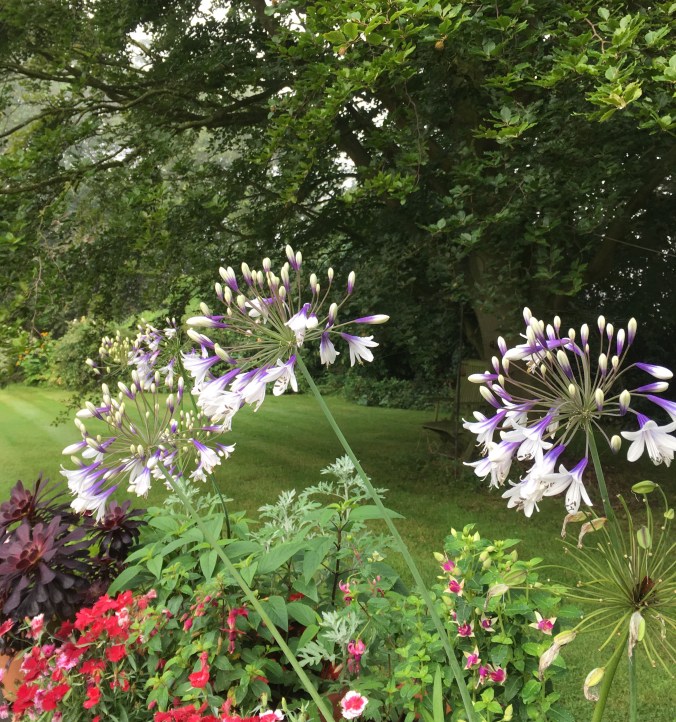
    Some of mine have been grown from seed. They produce good size plants in one year.

    Dahlias will be published by Pavilion Books on 2nd August, RRP price £25. Here’s the Amazon link for more information.

    Please kindly share this blog on twitter, Pinterest, facebook or any other social media platform. Thank you. And don’t forget to say hello in the comments below.

    #wordlesswednesday – RHS Chatsworth

    Cosmos Razzmatazz. 12,000 of them!

    This is the first mass planting at an RHS Flower Show. Cosmos, an annual daisy that hails from Mexico, is planted on a bank between Chatsworth House and the River Derwent. There will be two more mass plantings this summer; Verbena bonariensis at RHS Hampton Court and Rudbeckia Prairie Sun at RHS Tatton Park.

    Packets of annual seeds are relatively inexpensive. They often contain hundreds of seeds. So you too could create your own “river of flowers.” Bees and butterflies love them too.

    RHS Chatsworth is open until 10th June.

    Visit to Bowood House and Gardens

    My invitation read: “Come and visit Bowood’s famous spring planting; and Lord Lansdowne will lead a tour of his woodland garden.”

    Who could resist such a missive. Not me! So I set off for Wiltshire- dreaming of camellias, magnolias, rhododendrons and azaleas galore!

    And what I found was one of the best spring gardens I’ve ever visited. Over two miles of paths meander through the 30 acre garden- set within a former quarry. A stream runs through the valley with banks of ferns, candelabra primroses and bluebells either side.

    Now, I’ve been on these garden visits before, where tours are promised. The owner is often there for a welcoming reception- but then frequently hands over to staff for the tour itself. So I was surprised and pleased to see Lord Lansdowne standing by his offer and giving us a walking tour of his garden – and one that ran an hour longer than planned.

    If you come to visit my garden, I’ll take you around, show you the tree I planted when we moved here, my favourite seat, my favourite shrub and the plants I inherited from my grandparents’ garden. To be honest, our visit to Bowood felt just like that; a keen gardener showing us around his plot – with all his favourite trees and shrubs and viewing points. As soon as we arrived, Lord Lansdowne pointed to a group of cornus dogwood trees and described them as his “pride and joy.” And then followed a chat about how difficult they are to grow, and how “wonderful” they look when the white bracts appear in spring. His enthusiasm is something we all share as gardeners. We nurture and plant something, and then stand back and admire it, and want to share that moment with fellow gardeners. It’s something I recognise and understand.

    One thing I haven’t got though (ok, there’s no rolling acres and stately home either) is a rhododendron named after me. This one is Lord Lansdowne’s – it’s rather lovely, with peachy cream petals and pink buds.

    I can see why this is one of his favourite views, looking out from the garden. We are standing on the mausoleum steps looking out across the tops of the rhododendrons through a gap in the trees.

    Some of the rhododendrons are called Bowood Hybrids, and Lord Lansdowne showed us the nursery beds where his selected seedlings are planted. He said they could be sitting there for 10 years before he’d know if they were something special or not. Patience is obviously a virtue when you are growing new varieties like these.

    I must admit, there were a dizzying array of variety names as we walked through the woods. I should have written them down, but I was just listening to the commentary and enjoying what turned out to be a most unusual and special day. I mean, how often can you report that you were meandering through the woods and suddenly there on the path is the celebrated plantsman Roy Lancaster!

    Roy, who is writing about the gardens, stopped for a chat and joined our group for a photo. It was fascinating to hear the two friends talking, the Latin names flying back and forth. And later, we visited a patch called Roy’s Corner, where specimens brought back from Roy’s plant-finding expeditions are being nurtured. Altogether, it had been, a day like no other.

    Bowood Woodland Garden opens from 28th April until early June. Check the website for details. http://www.bowood.org

    No wonder the owner admits he spends every Saturday lunchtime having a picnic in the gardens. I think I would too.

    Many thanks to the Garden Media Guild for organising this visit to Bowood. If you work in horticulture, you can become an associate member. Membership is open to anyone working in garden writing, broadcasting and photography. Probationary membership may also be available for new starters in the profession and there are training courses and mentoring schemes available.

    Weeds. Geranium robertianum

    I’m writing a piece about weeds at the moment. Suddenly, in the sunshine, after all that cold weather, weeds have gone whoosh!

    In my woodland garden, there are thousands of wild geranium, robertianum. It has so many common names: herb Robert, stork’s bill, crane’s bill, red robin, stinking Bob, fox geranium, cuckoo flower.

    “Herb Robert is very familiar. It lives with man: much as the robin flips into his garden and to his back door” – Geoffrey Grigson- The Englishman’s Flora.

    I’m enjoying reading up and investigating more about this common weed we usually pass by without noticing. And meanwhile, a posy of herb Robert sits in my potting shed window today. Mixed in with some wild violets -which are so numerous they could be considered a weed. Both very pretty indeed.

    What “weeds” are growing in your garden right now.

    End of the Month View -April 2018

    We leave cold, wet April behind, and May finally brings some warm, settled weather.

    The potting shed window ledge soon has a jug of cow parsley and forget-me-nots from the wild garden.

    We’ve waited for this display all winter. Wild cherry trees in the paddock. Alive with bees. An avalanche of white blossom.

    Scented narcissi Geranium pop up in the long grass around the pond. I love the egg yolk centres.

    Needing some work this summer, the pond is ringed with marsh marigolds and lady’s smock wild flowers- and brambles and stinging nettles! A bit of cutting back and control is planned.

    Our front lawn is a blue haze. My Grandfather Ted Foulds brought the first wild violets here, seedlings from his garden. They spread over the whole plot, and I love them.

    I’ve planted my sweet peas. The hazel rods are a bit ramshackle, but they’ll soon be covered with flowers. I planted seed in October. I’m growing old favourites: High Scent, Wiltshire Ripple and creamy white Mrs Collier, plus heritage varieties from Easton Walled Gardens .

    Suddenly, these dog’s tooth violets pop up through cow parsley in the woodland. I forget I’ve planted them – and then they emerge. Sunshine on a cold, cloudy day. Erythronium Pagoda is the variety growing here.

    Shining out from the shade, Tulip Purissima. Reliably comes back every year. Copes with everything the weather throws at it.

    I grow Orange Emperor tulips in the daylily bed in front of the greenhouse. Another good do-er. Always comes up every year if planted deeply on a bed of grit for drainage.

    Favourite shrubs in flower at the moment are daphne and quince. This one is Japanese quince, Chaenomeles Kinshiden. Double flowers open pale lime green and change to clotted cream as they age.

    Pleased to see my plectranthus has survived the winter, tucked up in the greenhouse. A striking plant for summer containers. Easy to grow from cuttings.

    There will be plenty of citrus fruit for summer preserves. This plant flowered all winter, filling the greenhouse with such a wonderful scent.

    We do quite a bit of owl watching from the top of the garden. Delighted to report the barn owls and tawny owls have survived the freezing winter. We’re hoping they bring their fledglings into our garden again this summer.

    Another cause for celebration. The hedgehogs- we think they are last year’s babies- also survived the cold, and have come out of hibernation, ravenous. They are doing a great job of clearing pests in the garden.

    I hope you’ve enjoyed this slide show of my garden at the end of April and into the first week of May. Enjoy your Bank Holiday weekend. I’m hoping to spend some time just sitting in my favourite garden chair. If I can possibly ignore all the weeds growing rampant in the background!

    Thanks to Helen Patient Gardener for hosting the EOMV. Why not go over and see how Helen’s garden looks at the end of April.

    What are your plans for the garden over the coming weeks? Get in touch and let me know.

    How to Plant Prepared Hyacinths. Fairy Lights for the Greenhouse- and an update from this week’s BBC radio programme for gardeners

    It’s amazing how a few little touches can make all the difference. In defiance of the cold, dark days, I’ve brightened up the greenhouse with mouldable lights. These are tiny fairy lights on a copper wire. They can be twisted around floral arrangements and basically they hold their shape without damaging the flowers. I’ve used chrysanthemums from the poly tunnel for this display. It makes a lovely warm glow at a time when we all need some winter cheer.

    I’ve chosen indoor battery-powered lights from the Christmas range at Wilco . The 2.2m cable contains 20 warm white lights for £3.50 and includes the battery. I’m going to wrap them around plant pots in the greenhouse next.

    We talked about mouldable lights on this week’s BBC radio gardener’s phone-in programme. You can listen in on your phone or computer on the i-player. I wrote about how to tune in Here. https://bramblegarden.com/tag/radiogardening-howto-i-player-bbc/.

    You can listen to any radio programme for 28 days after the broadcast. And there are special programme clips and podcasts too. The gardeners’ phone-in is on BBC Radio Leicester every Wednesday between 11am and 12 noon on 104.9 FM and digital. And on Sunday there’s local radio’s longest-running gardening programme, Down to Earth hosted by Dave Andrews, between 12 and 1pm. We will be taking phone calls live in the studio this coming Sunday, December 3rd.

    Here’s a link to this week’s Wednesday programme hosted by Ben Jackson. http://www.bbc.co.uk/programmes/p05m8p6x. Move the timeline round to 2.07.57 where the programme starts. We talk about making Christmas presents from materials found in the garden- including jam jar succulents and cacti, and making bird feeders with fir cones. And our mid-morning studio treat, for all the staff, was Chocolate Tiffin made with fresh autumn raspberries from the plot.

    Here’s some details on the prepared hyacinths we mentioned. These are some I grew to flower for Christmas 2016.

    You will need to buy “prepared” hyacinths which means they have been put into cold storage to fool the bulbs into thinking they have had winter already. To complete the treatment at home, place the bulbs in John Innes No2 compost in 3″ pots. Put the pots in a cold dark cupboard in the potting shed, garage or basement. Or put them into a black plastic bag. Store them for 9 to 10 weeks at 9C. Water just once. At the end of 10 weeks, check over the pots and those with about an inch of leaves and a flower tip showing can be brought out into a cool bright place to grow on. You can make up displays for Christmas by selecting bulbs that look about the same height and putting them into larger plant pots together. Don’t bring them straight into a centrally heated house or the flowers won’t develop properly. The bulbs need to be grown on in cool conditions for another 22 days.

    Here’s some hyacinths and forced narcissi I used to create an early spring display this year. You can also bring twigs of cherry blossom into the house and they will give an earlier flowering too. I wrote about forcing Paperwhites Here.

    The scent is quite glorious. Interestingly, different varieties of hyacinths need varying periods of cold/dark treatment. The variety Pink Pearl needs 10 weeks, but Anna Marie needs just 8. So experimentation is needed if you wish to mix the varieties in a display. I would set the 3″ pots at weekly intervals and grow more than I needed so that I could select the right number of plants for my display. Just a reminder- always wear gloves when handling bulbs as they can cause skin irritation.

    A very quick and cheap Christmas present idea we mentioned was jam jar succulents. Here’s the materials I took into the studio. You will need a small recycled jam jar, handful of ornamental washed shingle, small amount of moss from the garden, and a succulent or cacti from the garden centre. Mine is an offset from one of my own plants. You half fill the jar with shingle, wrap the succulent stem with moss and plant. Finish the present with a ribbon. Plants need virtually no water over the winter. In summer, water once a week with a tablespoon of water. Tip the jar up to allow any excess water to drain out. Do not allow the succulent to become waterlogged.

    This one has been in the jam jar for two years.

    Talking of Christmas presents ideas I love these RHS Gold Leaf Gloves. I’m practically living in them, they are so comfortable. I may be a fairly scruffy gardener, with old trousers and holes in my jumpers, but my hands are glamorous.

    Here’s a quick peek of Ben’s garden, which we talk about on the show. It’s a 2.5 by 2m raised bed, a bit overshadowed and plagued by slugs. But we’ve planted winter veg, salads and flowers – to see how much we can grow in a small, less than perfect plot. The kale and chard keeps growing through the cold weather. You just harvest the outer leaves, leaving the growing tips to keep going. I’ll keep popping by now and again to see how Ben’s getting on with the project. I’ve got a matching plot at home so we can compare progress. I have to say, Ben’s is looking better than mine at the moment. My plot is on a windswept ridge, and his is in a pretty, walled garden.

    And after all that talking- we tucked into my Chocolate and Raspberry Tiffin. I wrote the recipe the recipe Here. Click on the link to see the recipe.

    Do you have any recipes to share – or ideas for Christmas presents using materials from your garden? I’d love to hear your views.

    #wordlesswednesday – Smoke

    Gardener’s Cottage at dusk at Easton Walled Gardens in Lincolnshire.

    Visiting the Food Fair in the courtyard. Famous for its jam and chutney, fudge and cake. The gardens look fabulous. Wonderful to see the topiary pruned and the beds prepared – all ready for Snowdrops 17-25 February. A highlight of our winter calendar. The photo below was taken this February.

    Meanwhile. Some more autumn photos to brighten your day:

    I worked here, the winter before last. Such a beautiful place. Historic gardens dating back 400 years. Visit the website to see more photos. Sadly the house was demolished after the war.

    The terraces and walled gardens have been lovingly restored.

    A special place to visit at any time of the year. Do you have a favourite garden you like to visit to see the changing seasons?

    Taking Mum to the Dahlia Show

    Regular readers will know that Mum and I spend every Sunday visiting gardens -especially NGS gardens raising money for charity. But this week – we had a change in our routine, we visited a dahlia show.

    We marvelled over the blousy, dinner plate- size flowers. None were nibbled by slugs or dashed by the weather, like mine have been.

    We loved these huge white flowers, Kenora Challenger. They won the prize for best exhibit in show. They were literally perfect.

    Here’s a slide show of our favourites. I loved this coral pink cactus dahlia.

    Mum loved this single ruby collarette-type dahlia called Mills Purple Velvet.

    My favourite was this small cactus dahlia with needle-like petals. Such a pretty delicate pink.

    The show by Leicestershire Dahlia Society was held at Palmers Plant Nursery in Enderby. Mum and I have signed up for more information and will go along to talks and events to find out more. And in November there’s an event where members sell off their spare tubers. I’ve earmarked a few for my cut flower patch.

    Best of all- at the end of the show, the flowers were sold off in an auction. I came home with armfuls for my MIL Joan. All her window ledges are now bursting with colour. Happy memories of when my dear Father-in-law had an allotment full of cut flowers- dahlias and chrysanthemums – and regularly came home with an array of first prize awards.

    Have you attended -or entered any produce or flowers in any shows this year? I’d love to know how you got on.

    Wordless Wednesday 

    Still mild enough to sit in the summerhouse. Heaps of cosy woollen blankets to hide under. So I made an autumn wreath out of beech leaves, rosehips and cowparsley seed heads.


    My wreath is made from a woven willow base. I learned how to make them from  Georgie Newbery at Common Farm Flowers. I can highly recommend the courses. I attended one for creating a cut flower patch and posy tying. I’ve never had to buy any flowers for my house and family since. I’m planning to attend one next year on growing flowers for weddings and special occasions. I’ve already bought my voucher for the course. It’s great to have something to look forward to as winter starts to bite.


    The Persian ironwood shrub, Parrotia Persica still looks like a bonfire of colour.


    Orange tulips, a present from a friend- the view inside the summerhouse today.

    Have you got a favourite place you like to sit in the garden?

    The Tuesday View- 25th October 

    Autumn has always been my favourite season. Nature seems to gather up its glories for one last burst of beauty.  


    The beech trees make a golden backdrop for the wedding cake tree – Cornus Controversa Variegata. Cotinus Grace is  starting to turn from chocolate to a glowing red.


    Left to right, the wedding cake tree , prunus Kojo no Mai, and Parrotia Persica. Backbone shrubs that stand out in spring and autumn. Summer colour is woven through these plants.


    Looking like it’s been varnished – Parrotia is also called the Persian ironwood tree. Its bark is a  beautiful mottled  iron grey.


    Summerhouse in the mist. The field-side border contains eucalyptus, magnolia, flower carpet rose, and two matching crataegus prunifolia mop -headed trees  framing  the view. The 1920s summerhouse is on a turntable and facing the ploughed field today. Beyond the summerhouse is a small copse of trees where  a Spotted woodpecker nested this summer. 

    My ancestors would have used different words for the seasons. 

    Until the 1500s, autumn was called harvest. The word comes from the old Norse word for haust- which means to gather or pluck. 

    The French gave us automne. And the Romans gave us the Latin name autumnus. But “autumn”didn’t come into common English usage until the 18th century.  

    Cathy at Words and Herbs  Hosts the Tuesday View. Go along and see what’s happening in her garden and feel free to join in with photos of your garden too. 

    Wordless Wednesday 

    Fluffiest bee award in my garden goes to this tiny Common Carder bumble bee. Even the small cosmos flowers- the last of the season- are sought after. Flowers open smaller as the season winds down. And the bees should surely hibernate soon.


    Cosmos Antiquity seed- sown in February this year. Still in flower October 19. 

    In a Vase on Monday- the view from my potting shed.

    Seeds are so inexpensive these days, there’s really no need to save our own. One packet of seed can produce hundreds of plants-for just a few pounds. And yet, there’s something about autumn that makes you want to dash round the garden gathering everything in. Every coat pocket at the moment contains a paper bag full of seeds of every shape and size. It’s my natural inclination to harvest, store up, preserve – to make ready for winter. I’m doing the same with jams and chutney. Capturing the summer. My defence against the cold. 

    For this week’s Vase on Monday, there’s white cosmos, sweet peas, rudbeckias, verbascum, malmaison carnations and grasses  all grown this summer from seed. 


    My favourite sweet pea is  the variety High Scent. It’s a deliciously creamy colour flower with a blue picotee edge. These were direct sown in June to give a late show until the first frosts. The scent is glorious on a sunny day, but at this time of the year it’s less evident in the garden. A posy on a bedside table in October though, is a joy. Heat from the log fire seeps right through the house,  bringing out the most wonderful scent. 


    Rudbeckias flower all summer, whatever the weather. Reliable and long lasting in a vase. There’s usually a few stems to pick every day, until November. 


    Seed originally came from Higgledy Garden. I’ve got my eye on some new seed – persicaria orientalis , and lavender larkspur for next year. But for now, my collected  seed is laid out in little containers in the potting shed, drying off and waiting to be sown again next season.  

    Thanks to  Cathy for hosting this theme. 

    Wordless Wednesday


    Ligularia The Rocket. Seeds and leaves, 12th October 2016. 

    In a Vase on Monday 

    For the past two years, I’ve run round my garden on a Sunday and created a posy of “everything in flower” for my mother-in-law, Joan. Sadly, she can’t visit us as often as she would like. My father-in-law no longer drives, and they are both in their late eighties. So I try to create a series of mini- posies, one with scent, another with foliage. It’s a flavour of the garden that I’m after. They are simply tied with string and not arranged. Joan takes great delight in studying each stem and making her own creations.  It’s my way of sharing my garden with my in laws. Keeping the dialogue going and asking advice.  It’s become a kind of tradition. One I am happy to have started.
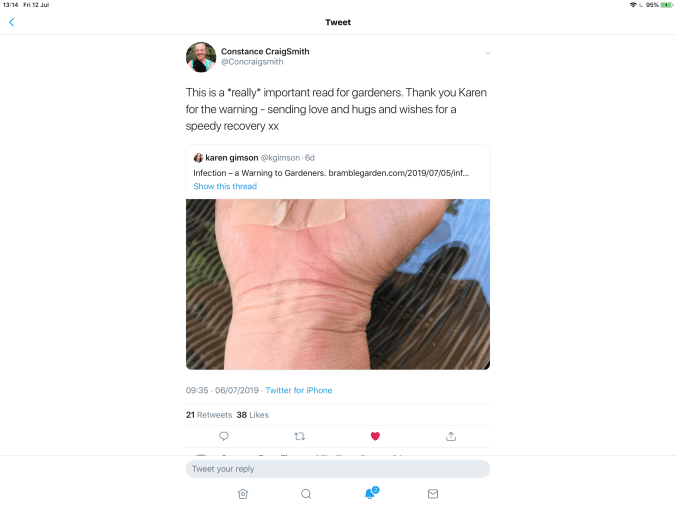

    Blue Aster Monch, Clematis Polish Spirit, Persicaria, white Cosmos Purity and white Aster Monte Casino.


    I  prepare the posies in my potting shed, stripping off the lower leaves and plunging the flowers in a bucket of fresh cold water for a few hours before tying them with string. Conditioning them like this means they will last for at least a week in the vase. More information on growing cut flowers and preparing them from  Georgie at Common Farm Flowers


    Sweet pea High Scent, well named- and reliable. Blue Aster Monch, Diascia rigescens, and  Antirrhinum Black Prince. I’m sowing more sweet peas this week. Heritage varieties from  Easton Walled Garden, historic renovation project near Grantham, Lincs.


    Verbena Bonariensis seeds itself around the cut flower patch and provides pickings from May to November. Alstroemeria flowers all year round in a cold poly tunnel.  

    Gardening and growing flowers-  such simple pleasures-  much better when they are shared with someone. 

    Thank you to   Cathy at Rambling in the Garden  for hosting In a Vase on Monday. 

    Wordless Wednesday. The hedgerow 5th October. 


    Clematis against an October blue sky.

    Tuesday View 4th October. The view from my garden.

    Step out of my garden gate, and cross the ploughed field at the back of the house and this is the autumn view.  Rich fertile farming land. Harvested now. And waiting. Ploughing sounds drone all around.  I can remember a time when the fields stood brown all winter. Now there’s barely a pause. Winter wheat, barley, oats and oil seed will be sown by November.


    Hedgerows show the first  shades of autumn, while the oak and ash still stand as green as summer.


    We stand and watch a kestrel quartering the fields. A rich hunting ground now the oil seed crop has been harvested. A set aside strip runs round the field margins.


    Along the hedgerow walk, there’s a delicious smell reminiscent of apple pie. Crab apple fruit gently cook in the heat. It’s been 20 degrees here today. We collect the ripening fruit to make jelly. Whenever I open my kitchen cupboard doors in the winter, the jars of pink jelly will be there to lift my spirits. Little things  matter in the dark depths of winter. 

    Goldfinch  feast on thistle and teasel seeds. The flash of yellow brings more welcome cheer on cold dark days. 

    Rosehips galore. The blackbirds love them. We still make rosehip syrup. I grew up on a spoon of rosehip syrup each day before school. It tasted of summer. 


    Viburnum opulus or Guelder Rose with sealing wax berries. As beautiful as any garden shrub. 

    I hope you’ve enjoyed this walk along the hedgerows and the view from my garden. I have cheated really as Cathy at Words and Herbs asks us to share a view of our garden and  show how it changes throughout the year. My plot is mostly a wildlife garden with patches of brambles and stinging nettles. So as a first time contributor to this meme, I thought I would show you the setting for my garden. And hopefully then you will forgive my weeds and forgotten corners where I tread carefully and hedgehogs curl up in the leafmould with geranium leaves for a roof. 

    End of the Month View 

    Summers end- and the garden’s still glowing. Butterflies are feasting on fallen apples. Bats overfly the pond at night. And the borders fair rustle and crunch  to the sound of hedgehogs- surely the noisiest visitors to my garden after dark. 


    The garden is still full of colourful blooms. 

    And yet, the season has tipped over the balance. Michaelmas, on September 29th, traditionally signals the beginning of autumn- the shortening of days. My ancestors,who were servants to grand houses, would have been paid, hired or fired on Michaelmas day. And  for later generations, who were farmers, Michaelmas signalled the end of the productive season, a completion of harvests. The end of one cycle of growing  and  the start of a new one. 

    Growing must be in my blood. I can’t be happy unless I am tending and planting food, flowers, fruit and veg. I often wonder if  this need for gardening  keeps me connected to the past, to those hard working and tenacious ancestors. 


    I remember my Grandfather pointing out the Harvest Moon and speaking of the Autumnal Equinox- Softly spoken words that delighted me. I always had a fascination for such things. 

    There are two equinoxes each year in September and March when the sun shines directly on the Equator and the length of day and night is nearly equal. In 2016 the Equinox was on Thursday 22nd September, when some of these photos were taken. Autumnal Equinox


    Cosmos plants flower until the first frosts. 

    Calendula pot marigolds seed themselves along the veg garden paths


    Schizostylis/ Hesperantha coccinea- a September glory. Also known as crimson flag lily.


    Sweet peas sown late will flower until October. The scent combines with the late summer roses still blooming here. 


    Dahlias left in the ground over winter did much better than potted plants kept in the greenhouse.Slugs seem to like the softer growth of the cosseted plants. 


    Sunflowers in such sumptuous colours. Seeds for the birds over winter. 


    Rosa Shakespeare puts on a good late summer show, and the scent is reminiscent of old moss roses. 


    Aster Monch. My favourite -totally reliable and a magnet for bees and butterflies. 


    White phlox paniculata. Grown here in deep shade and poor soil at the back of the garage. Such a beautiful scent. A plant that shines out in dark places.


    Sweet pea seeds came from Easton Walled Gardens where I had the most dreamy job last winter, promoting the gardens. It wasn’t difficult to say nice things about this glorious historic garden renovation project. 


    Soon my garden will be full of seed heads- and I will treasure them just as much as the flowers that came before. 

    Until then, to quote Alison :”It feels like autumn is holding its breath.”

    Thanks to Helen for hosting this End of the Month View. 


    Wordless Wednesday


    My favourite thing in gardening is finding unexpected treasures -or plants I’ve forgotten about. I planted this Eucomis bicolor  (pineapple lily)  years ago. Each autumn  it’s always a surprise- pushing up through an umbrella of geranium leaves. What plants have you “found” that have delighted you? 


    Wordless Wednesday


    Echinacea White Swan. I could sit and gaze at this flower and bee all day. 

    WordlessWednesday 


    Echinacea Green Jewel. Mesmerising. 

    Wordless Wednesday


    Things I make. A welcome to the front door. 

    Wordless Wednesday


    Pelargonium Appleblossom Rosebud. Perfectly named. Such beauty. 

    This cultivar has been around for over 100 years. It grows well, with plenty of flowers, but needs lots of sunshine to provide a strong colour. My plant was at the shady end of the greenhouse, which is why it is a greenish-pink. But I love the delicate folds and pink-tipped flowers. They are perfect for flower arranging, lasting a week in water. It’s one of my favourites. This plant came from my Mum, but I can highly recommend Fibrex Nursery -holders of the national collection of pelargoniums- at Stratford, Warwickshire. Their mail order service is first class. I can spend many happy hours gazing at their gorgeous catalogue. http://www.fibrex.co.uk and on Twitter @FibrexNurseries 

    When we came here we planted trees

    Our garden was a field of wheat when we bought the house. We had to wait until the autumn harvest. Then the farmer ploughed our plot and we threw around handfuls of grass seed with wild flowers mixed in. We planted 250 sapling trees. Oak, ash, hornbeam, willow. And we waited. We planted a boundary hedge of hawthorn, crabapple and rowan for the birds.  Hazel for coppicing.

    violets in a race against time to flower and set seed before cowparsley and campions tower over them

    Violets in a race against time to flower and set seed before cow parsley and  campions tower over them. The violets have escaped from the woodland and are thriving in the lawn. For weeks in April and May, the lawn is studded with sweet-scented violets. We set the mower blades high, and skim over them.

    We planted closely, so each tree and shrub shelters its neighbour. This is a good way to create a “woodland” feel in a short space of time. We coppice the hazel and use the twigs for growing climbing beans and sweet peas. There’s always plenty of kindling for winter fires.

    Wild anemones stream out along the woodland floor, searching for sunlight. I planted a few at one end of the wild garden. The anemones moved to where they were happiest. I often find that plants pop up in unexpected places. Sometimes they move from one side of the garden to the other. Nature seems to know best.

    there will be cherries for the birds

    We planted a bank of cherry trees- enough for us, and to share with the birds. There’s always enough for everyone.
    Thanks for reading. Please stop by again to see the garden through the seasons. It’s a peaceful haven for wildlife and humans. I don’t mind sharing.

    Hello world!

    Here are some photos from my garden. Please say hello, so that I know I’m not talking to myself on here. Thanks for reading.